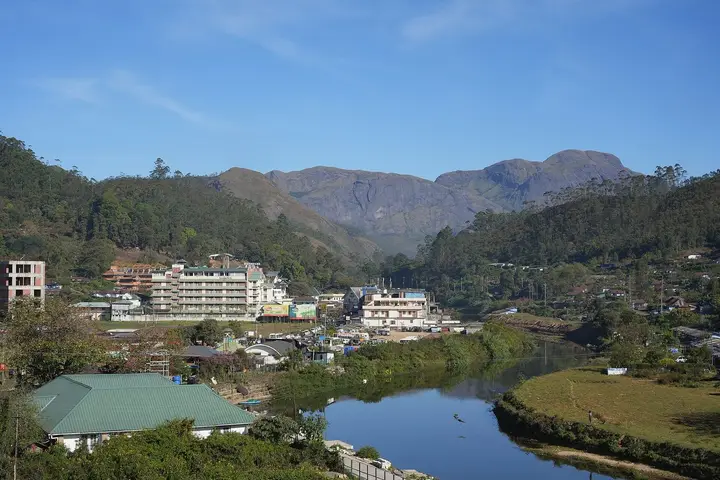
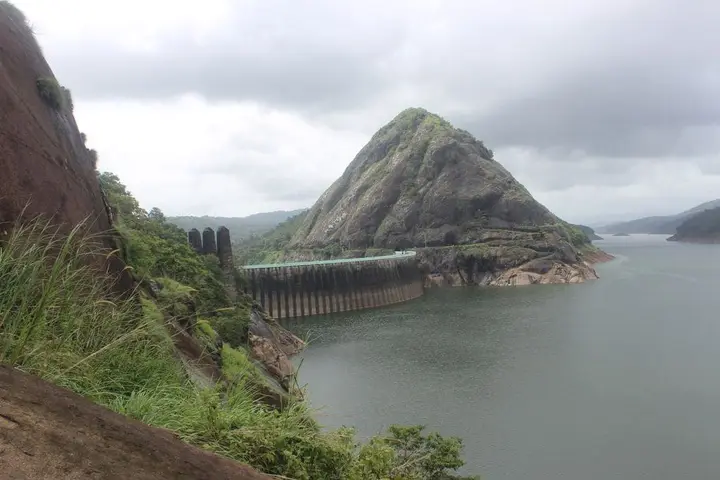
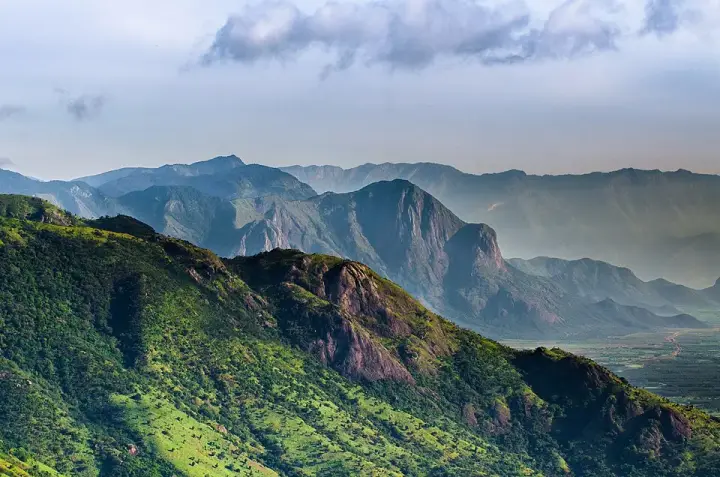
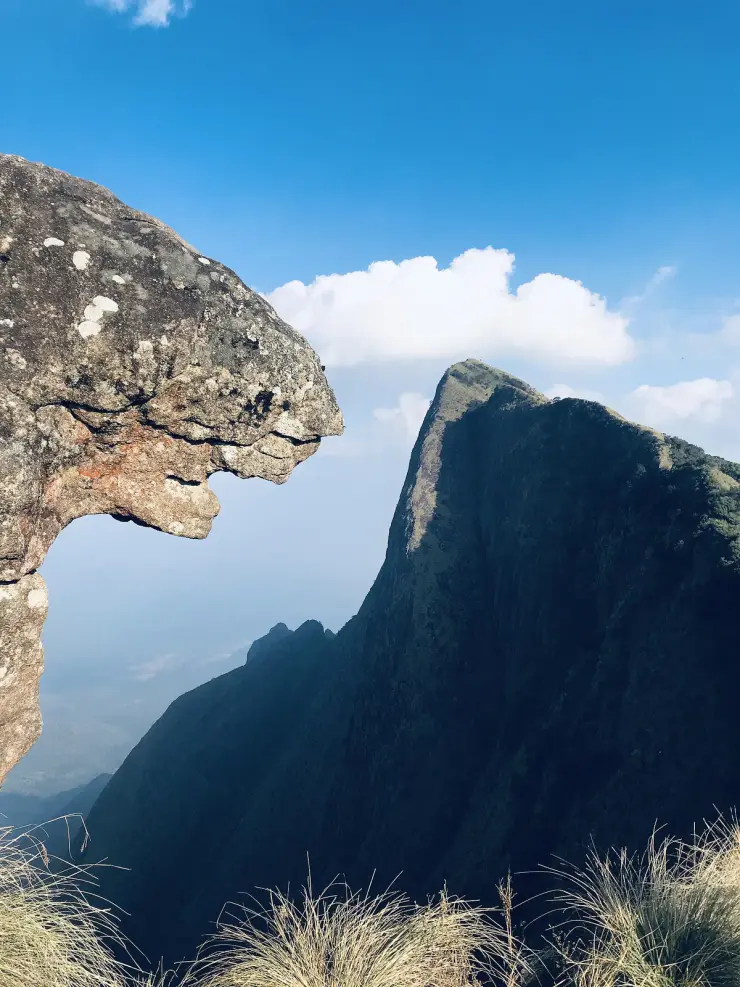
Straddling the Idukki–Kottayam border at around 1,100 metres in the Western Ghats, Vagamon is a cool, misty highland of rolling green meadows, whispering pine forests and terraced tea slopes. Famous for paragliding and for its rare trio of tri-faith hills — Murugan Mala, Thangal Para and Kurisumala — it is one of Kerala’s most romantic and quietly spiritual hill stations.
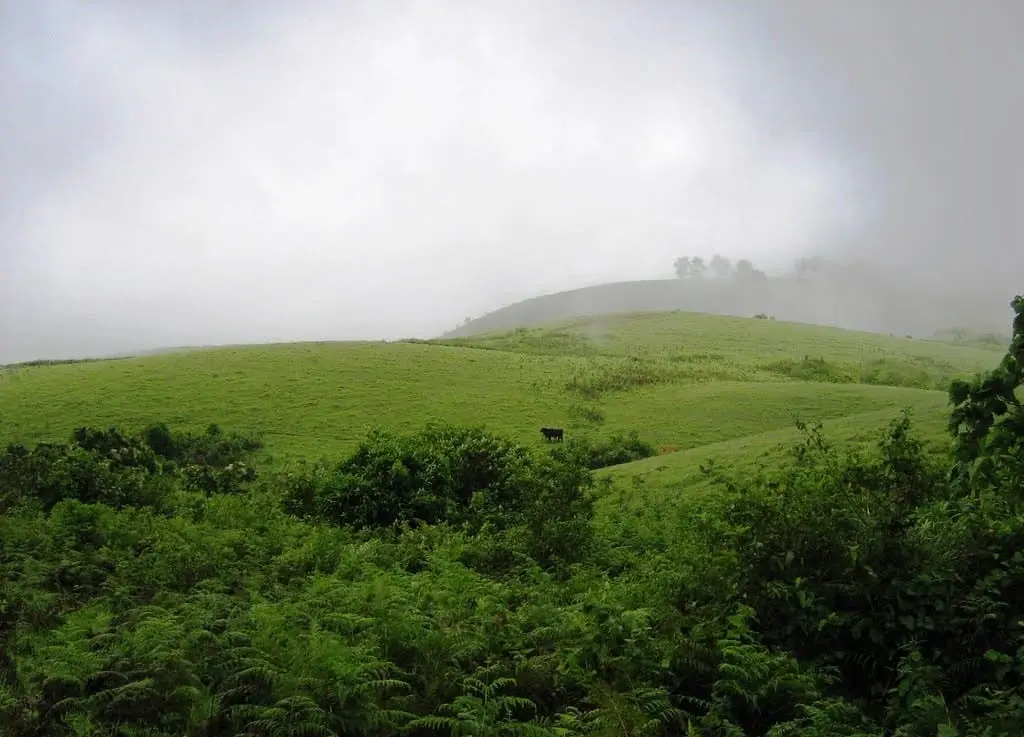
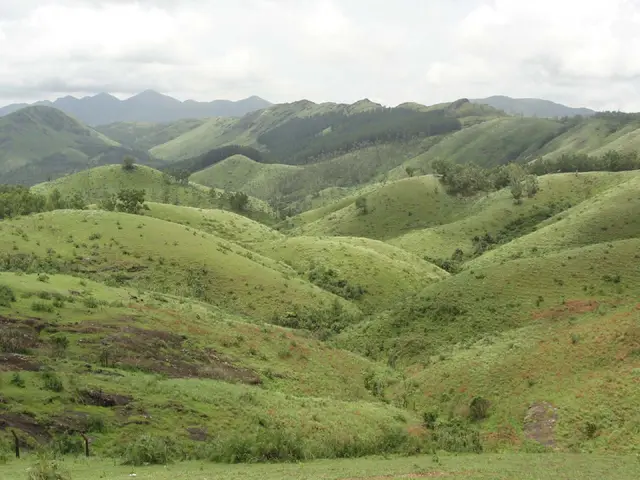
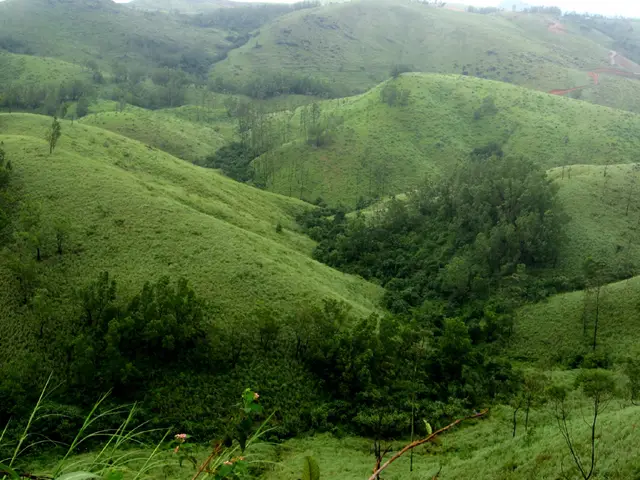
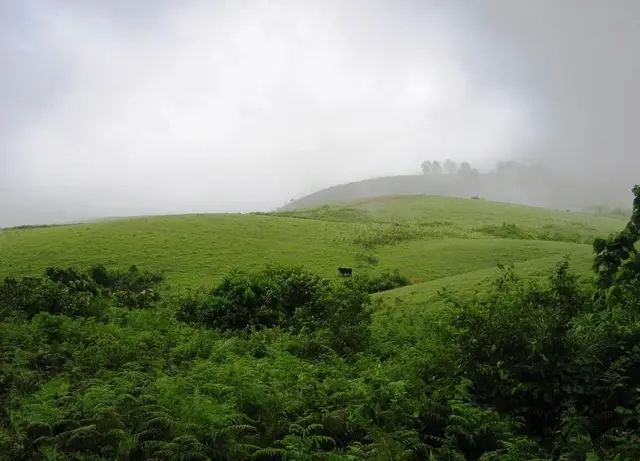
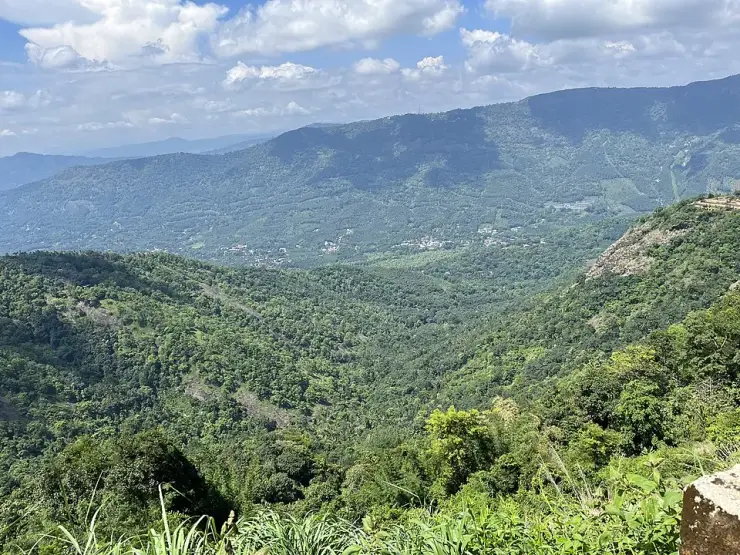
The first thing that stays with you at Vagamon is the green. Undulating grassland rolls away in every direction, folding over hill after hill like a rumpled velvet blanket, dotted with grazing cattle and crossed by nothing louder than the wind. In the early morning the meadows glisten with dew, and by afternoon a soft mist often creeps in from the valleys, softening every ridge until the horizon simply dissolves. These treeless downs — locally beloved and endlessly photographed — are what give Vagamon its dreamlike, almost otherworldly reputation.
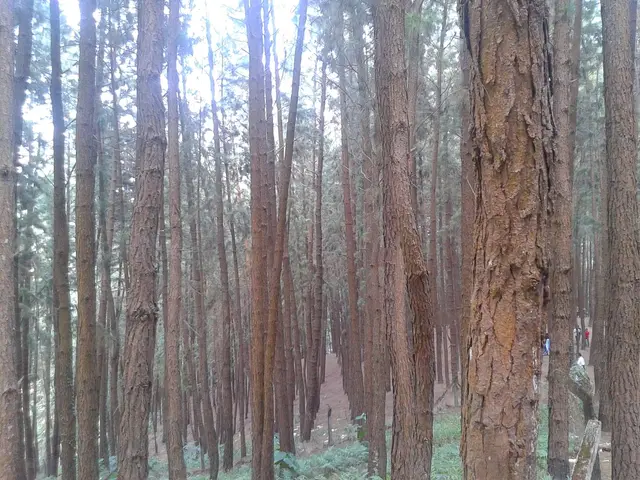
Then there is the pine forest, a place apart. Tall, slender conifers stand in neat, planted rows, their canopy filtering the light into long golden shafts and carpeting the ground with a soft cushion of fallen needles. Walking beneath them is hushed and cathedral-like; the temperature drops, the air smells of resin, and the only sound is the wind moving through the high branches. It is a favourite of film crews and honeymooners alike, and on a misty day it feels genuinely enchanted.
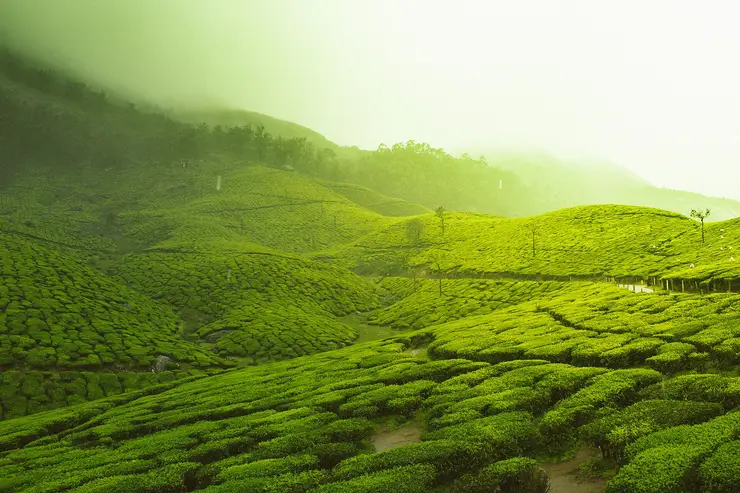
Vagamon is also tea country. Sloping estates drape the hillsides in geometric green, the bushes clipped into a continuous rolling carpet that catches the light differently through the day. Narrow paths wind between the rows, and women with baskets still move through them at plucking time. The plantations, first laid out in the colonial era, give the landscape its cultivated, patterned beauty and frame some of the finest viewpoints in the highlands.
For the adventurous, Vagamon has become one of South India’s premier paragliding destinations. Launching mostly from the grassy heights around Thangal Para and Kolahalamedu, gliders ride the reliable highland thermals and float out over a patchwork of meadow, forest and tea, with the Western Ghats rippling away to the horizon. The annual paragliding festival draws pilots from across India and abroad, and for a few unforgettable minutes it lets ordinary visitors trade the hilltops for a bird’s-eye view of the whole valley.
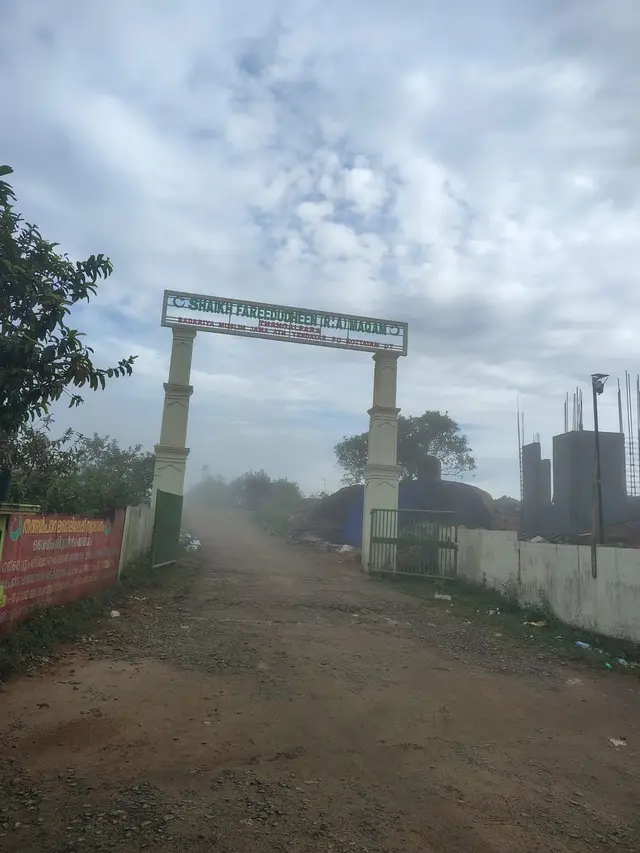
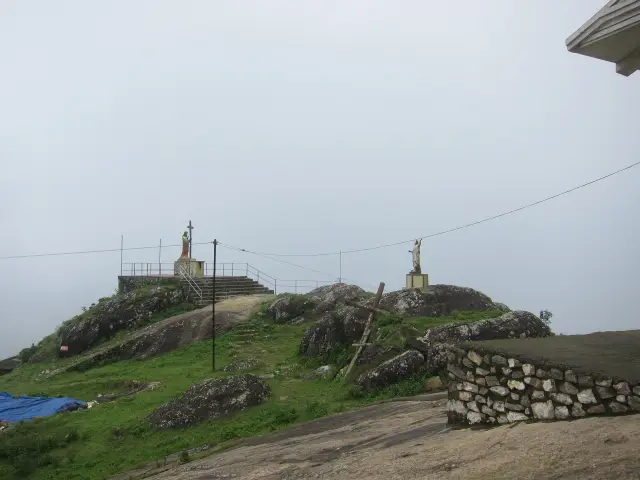
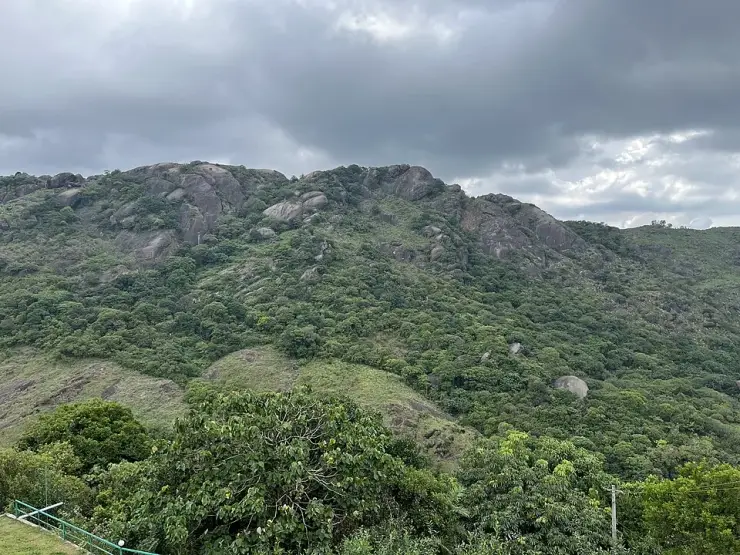
What truly sets Vagamon apart is its cluster of three sacred hills, each belonging to a different faith and standing almost within sight of one another. Murugan Mala is a Hindu shrine, Thangal Para a revered Muslim dargah crowned by a mysterious spherical rock, and Kurisumala a Christian pilgrimage hill and monastic retreat. Pilgrims of all three religions climb these slopes, and the quiet coexistence of the shrines has made Vagamon a gentle emblem of Kerala’s religious harmony.
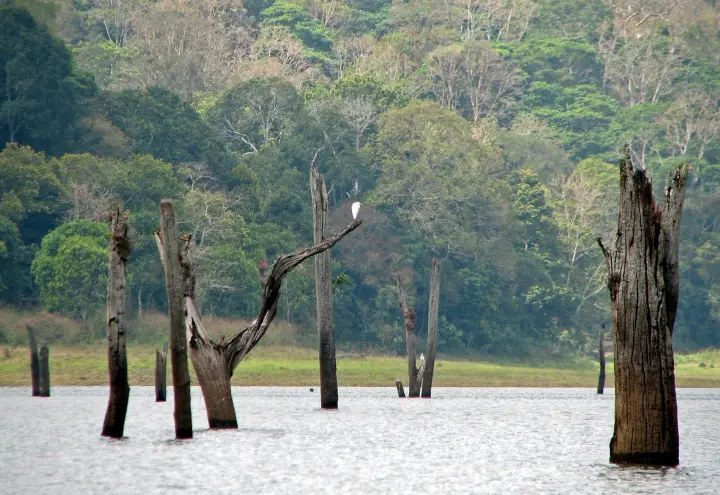
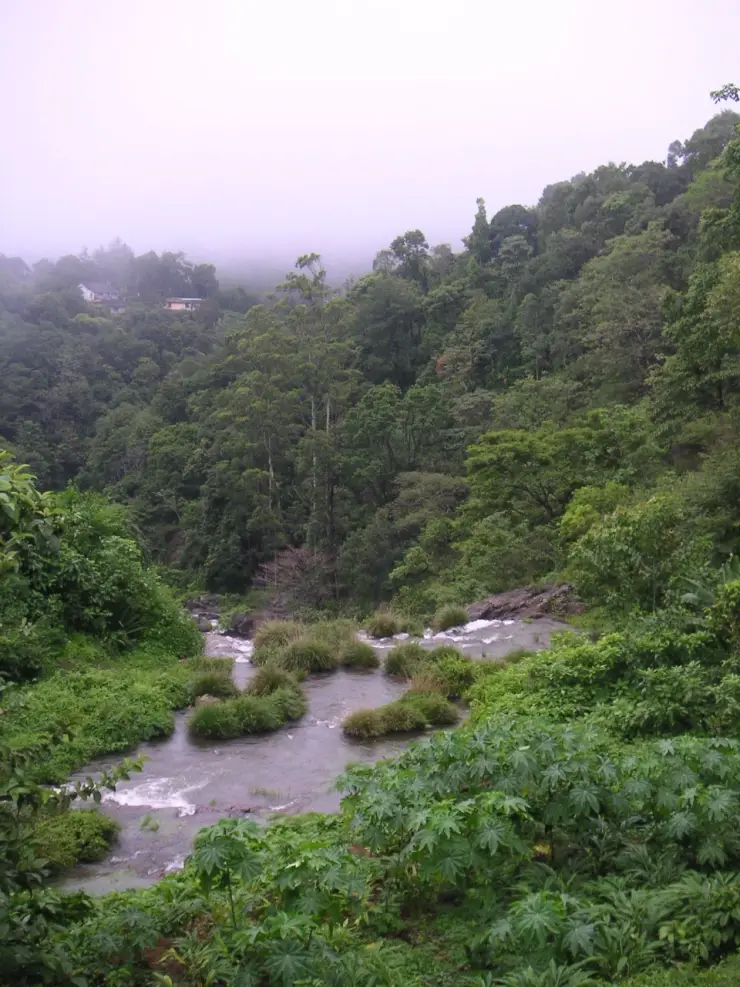
Above all, Vagamon is about stillness and cool, clean air. Summer temperatures rarely climb far, and the evenings turn genuinely chilly, wrapping the hills in mist and the smell of wet grass. There are lakes to sit beside, waterfalls tucked into the folds of the ghats, and long empty roads made for slow walks. It is a place people come to slow down — to watch the clouds roll over the meadows and let the quiet do its work.
Legend & myth
Legend holds that Thangal Para is the resting place of Hazrat Sheikh Fariduddin Baba, a Sufi saint said to have travelled from Afghanistan to these hills some 800 years ago. As the story is told locally, the saint used a small stone to grind his betel leaves, and after his death that humble pebble is believed to have miraculously swelled into the great spherical boulder that now crowns the hill — a rock devotees revere as a sign of his sanctity.
More about Vagamon
History
Vagamon’s modern history is bound up with the coming of the tea planters. Like much of the surrounding High Range, its cool, high slopes drew British and European planting interest in the colonial era, and the terraced tea estates that still pattern the hillsides date from that period of estate development, when the wet, temperate climate proved well suited to tea.
The hill takes a central place in the story of Kerala’s Christian monasticism through Kurisumala Ashram. It was founded in 1958 by Father Francis Mahieu — later known as Francis Acharya — a Belgian-born Cistercian (Trappist) monk from Scourmont Abbey, who had been invited to Kerala to establish a contemplative community rooted in Indian and Syro-Malankara Christian tradition.
Mahieu was joined in the venture by the English Benedictine monk Bede Griffiths, and together the monks acquired land and made their way up to the mountain the locals called Kurisumala, the ‘hill of the cross’. There they built a simple monastery and, over the following years, transformed the bare, windswept slopes into gardens, meadows and vegetable plots.
To support themselves, the monks established a dairy farm, importing Jersey cattle and pioneering high-altitude dairying that also benefited the surrounding villages. The ashram grew into a well-known centre of Indian Christian contemplative life and inter-religious dialogue, and remains an active monastic community and pilgrimage site today.
The rolling downs that make Vagamon so distinctive have long been grazing land, and the highland grasslands were used to pasture cattle well before tourism arrived — a legacy still visible in the herds that move across the meadows and in the dairying tradition the ashram helped strengthen.
Why visit
Endless rolling green meadows and downs that are among the most photogenic landscapes in Kerala.
A serene, planted pine forest with golden light and a hushed, almost mystical atmosphere.
One of South India’s top paragliding spots, with reliable thermals and an annual festival.
The rare tri-faith hills — Murugan Mala, Thangal Para and Kurisumala — a gentle symbol of religious harmony.
A genuinely cool, misty climate offering respite from the heat of the plains.
Tea estates, quiet lakes and waterfalls perfect for slow walks, drives and unhurried retreats.