What to expect
Highlights
- Temple visit at Kottiyoor Temple
- Kerala temple architecture and rituals
- Local food, shops and pilgrim services nearby
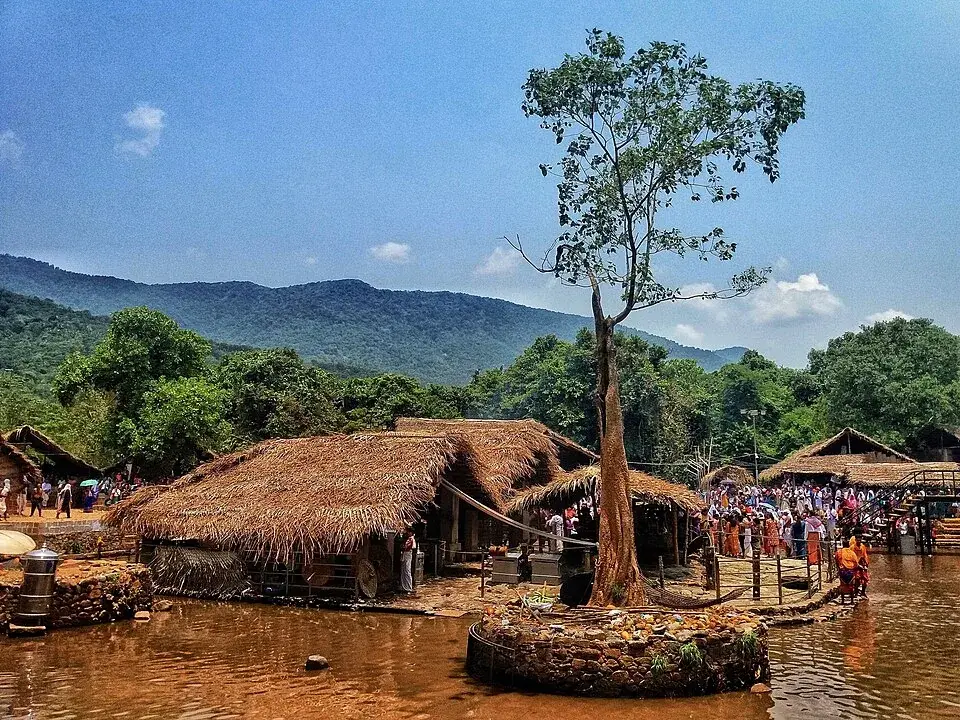
A remote forest Shiva shrine on the Bavali river, site of the ancient 28-day Kottiyoor Vaisakha Mahotsavam pilgrimage; the Akkare shrine has no permanent roof and is open only during the festival.
Check entry arrangements. Ask temple staff about visitor entry, dress requirements and access to the inner shrine before you travel, especially if you are visiting as a non-Hindu.
Dress respectfully and follow the institution’s admission and photography rules.
Deep in the forested hills where Kannur climbs towards the Wayanad border, Kottiyoor Sree Mahadeva Temple is one of Kerala’s most extraordinary Shaiva pilgrimage sites — a shrine with no permanent sanctum, worshipped in the open beside a river, and famed as the mythic ground of Daksha’s ill-fated sacrifice. Split across two banks of the Bavali river as Akkare Kottiyoor and Ikkare Kottiyoor, it comes alive for barely a month each year during the great Vaishakha Mahotsavam, when the jungle clearing fills with pilgrims, ghee, tender coconuts and the white bamboo-flowers of the Odappoovu.
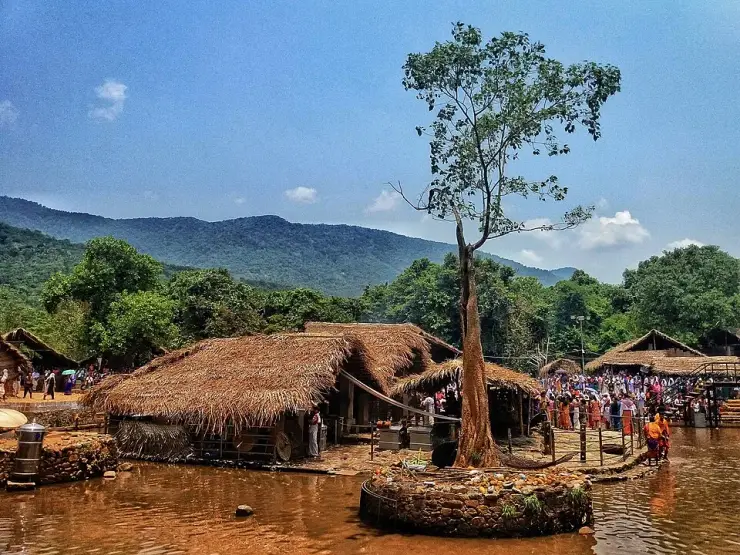
There are two Kottiyoors, and understanding the difference is the whole story. On the near bank of the Bavali river stands Ikkare Kottiyoor, a conventional temple with a roofed sanctum where the deity is worshipped through most of the year. Directly across the water lies Akkare Kottiyoor — and there is almost nothing there to see. No towering gopuram, no ornate mandapam, no permanent Sreekovil. Instead a natural, self-manifested stone believed to be a swayambhu Shiva linga rests in the open on a raised platform of river stones, ringed by water, in the middle of a forest clearing. This far bank is regarded as the truly sacred spot, and it is opened to worship only during the annual festival.
For the rest of the year, Akkare Kottiyoor is left almost untouched, reclaimed by the forest. When the festival season arrives, temporary shelters of palmyra and bamboo are raised over the sacred platform, transforming the clearing into a living Yajnabhoomi — a sacrificial ground. It is one of the very few major temples in India where the deity has, by tradition, refused a permanent building, and where the ritual space is rebuilt from leaves and reeds each year and then dismantled again when the festival ends.
The setting is as memorable as the theology. Kottiyoor sits on the foothills of the Western Ghats at the eastern edge of Kannur district, and the marquee festival falls at the onset of the south-west monsoon. Pilgrims wade towards a shrine set among dripping green forest, mist on the hills, the Bavali running high — a temple that feels less like architecture and more like a rite performed directly on the land. Kerala Tourism describes it, aptly, as a festival of nature.
The rituals are ancient and strikingly earthy. Proceedings are traditionally set in motion when a sword is carried from Muthirerikavu in Wayanad. Worship opens with Neyyattam, the pouring of ghee over the linga, and builds towards Elaneer Vaikkal, when devotees carry thousands upon thousands of tender coconuts to the shrine; the collected coconut water is later poured over the deity in the ritual called Elaneerattam. White artificial flowers fashioned from split bamboo — the Odappoovu — line the path to the shrine, and pilgrims carry them home as blessed keepsakes.
Worship at Kottiyoor is also notable for who takes part. The festival weaves together communities and traditions that rarely share a single ritual — tribal and forest-dwelling groups, various caste communities, and Brahmin priests all hold defined roles, and the rites blend older folk and Tantric practice with Vedic ceremony. Specific offerings and duties are assigned to specific families and villages by long custom, so the Mahotsavam is as much a social inheritance as a religious one.
Because so much of Kottiyoor lives only during the festival — the shelters, the pathways, the deity itself on the far bank — a visit outside the season is a very different, quieter experience. What draws lakhs of pilgrims is not a grand building to photograph but a rare, time-bound event: the chance to worship at an open-air swayambhu shrine in a monsoon forest, on ground that Shaiva tradition holds to be one of the holiest in the south.
Kottiyoor’s fame rests on the legend of Daksha Yaga, and it is best understood as sacred story rather than documented event. As the legend is told, Daksha Prajapati — a mighty patriarch — was displeased with the marriage of his daughter Sati to Shiva, the ascetic lord of the mountains. To slight his son-in-law, Daksha is said to have organised a great yagna, a fire sacrifice, and pointedly failed to invite either Sati or Shiva.
Sati, according to the legend, came to the sacrificial ground anyway, only to be humiliated by her father before the gathered guests. Unable to bear the insult to herself and her husband, she is said to have given up her life through her own yogic power. Tradition marks the raised platform at Akkare Kottiyoor — known as the Manithara (also called Ammarakkal Thara) — as the very spot associated with Sati’s self-immolation.
The legend continues that when news reached Shiva he arrived in terrible wrath, his fury destroying Daksha’s sacrifice, and Daksha himself was beheaded. Later, so the story goes, the other gods pleaded with Shiva, who relented; the sacrifice was restored and Daksha was brought back to life, given the head of a goat in place of his own. The white bamboo Odappoovu carried by pilgrims is popularly said to represent the beard of the decapitated Daksha — a striking link between a myth and a keepsake you can hold in your hand.
From this legend flows Kottiyoor’s identity as a supremely sacred Shaiva ground, honoured with the title Dakshina Kashi — the Kashi, or Varanasi, of the south. The swayambhu linga worshipped in the open is regarded as self-manifested rather than installed by human hands, which in tradition explains why no ordinary temple could be built over it and why the deity is served in the open air. These accounts are matters of faith and folklore; they are cherished as legend, and are presented here as such.
Beyond the mythology, Kottiyoor’s documented past is bound up with the ritual traditions of Malabar and the temple’s unusual open-air form. The near-bank shrine, Ikkare Kottiyoor, is by tradition associated with the sage Parashurama, the mythic figure credited across Kerala with founding many of its temples; such attributions place the site firmly within the region’s oldest layer of temple lore rather than giving a fixed calendar date.
What is historically distinctive is the temple’s refusal of permanence. For centuries the sacred worship on the far bank has been conducted only during the festival window and then suspended, the ritual structures raised from palmyra, bamboo and reed and afterwards taken down. This pattern — a shrine that is assembled and dissolved each year rather than housed in stone — has been sustained across generations by the customary duties of particular families and villages, a system of hereditary rights and offerings that still governs the festival today.
The administration of the temple in the modern era falls under the Kottiyoor Devaswom, which manages the shrine, the annual Mahotsavam and the flow of pilgrims. Over the twentieth and twenty-first centuries the festival has grown from a remote forest observance into a major event on the north Kerala pilgrimage calendar, drawing large crowds each May and June while the core rituals have been carefully preserved.
The rituals themselves preserve an older, composite religious culture. The blend of Vedic and Tantric rites, and the defined roles held by tribal communities alongside Brahmin priests, point to a long history of overlapping traditions meeting at a single sacred site — a layering more characteristic of Kerala’s ancient sacred geography than of temples built to a single plan in a single age.
In recent decades improved forest roads and transport have made the once genuinely isolated site far easier to reach, and Kottiyoor now features on regional heritage and pilgrimage circuits associated with the Kannur and Thalassery region. Even so, the essential character has been guarded: a monsoon-season, open-air festival on ground that its custodians treat as too sacred to enclose.
It is one of the rare temples in India worshipped with no permanent sanctum — a swayambhu Shiva linga served in the open on a stone platform beside a river, rebuilt from leaves and bamboo each year and then dismantled. There is genuinely nowhere quite like it.
The setting is unforgettable: a forest clearing on the Western Ghats foothills, on the Kannur–Wayanad border, at the onset of the monsoon, with the Bavali river running through the sacred ground. Kerala Tourism calls it a festival of nature, and it earns the name.
It carries the weight of the Daksha Yaga legend and the title Dakshina Kashi, making it one of the most revered Shaiva sites in south India — a place of deep significance for pilgrims, not just sightseers.
The Vaishakha Mahotsavam is a living, participatory spectacle — Neyyattam, the great Elaneer Vaikkal offering of tender coconuts, Elaneerattam, and the striking white Odappoovu flowers lining the path — rather than a monument you simply look at.
It is a rare surviving example of a festival where tribal communities, various caste groups and Brahmin priests share defined ritual roles, blending folk, Tantric and Vedic practice in one place.
For travellers exploring the forested interior of Kannur — the hills, rivers and plantations of the Western Ghats edge — Kottiyoor is a profound and offbeat highlight, well away from the coastal tourist trail.
Choose the intended bank and shrine before arranging transport. Akkare Kottiyoor is associated with the temporary festival setting, while Ikkare Kottiyoor is a separate temple across the Bavali. An old photograph of the festival cannot promise that the same spaces are open on an ordinary day. For Vaisakha, use the Devaswom’s current programme and leave extra time for the announced approach and crowd arrangements.
Road km to Kannur; ghat roads and traffic vary — allow extra.
Morning or early evening is usually best; festival days can be powerful but crowded.
Live forecast loads in your browser.
Sunset is in about 3 hours.
Sun and moon are calculated for this location and shown in IST. Photography windows are the hour around sunrise and sunset; the sunset bearing is degrees clockwise from true north. Moon phase is accurate to about half a day.
Browse listed stays, food, activities, sights, shops and rentals around Kottiyoor Temple. Check each listing’s locality and contact the business directly for current arrangements.
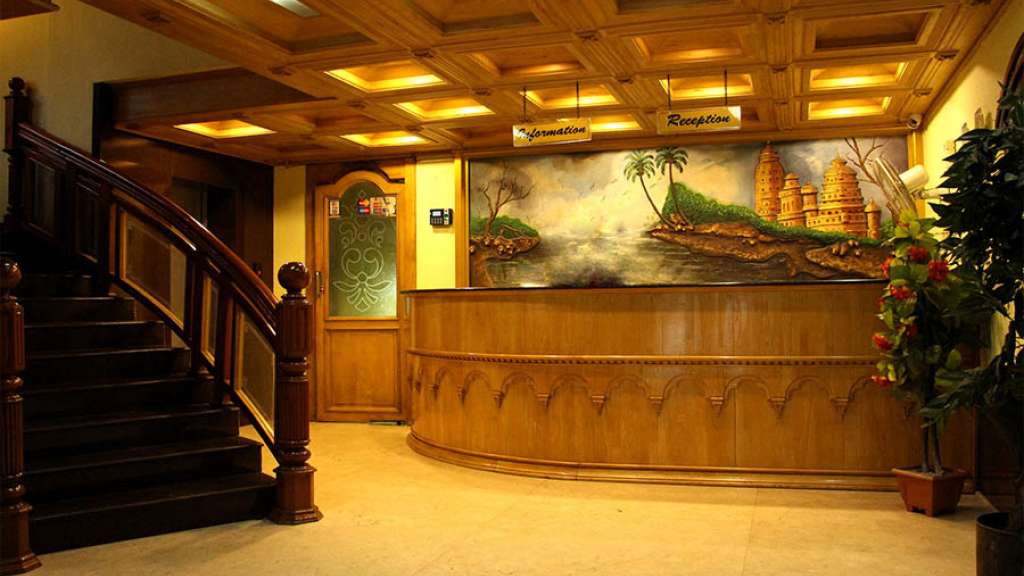
Loom Land is KTDC’s city hotel near Police Club in Kannur. The operator lists Royal Suite, Suite, Premium and Executive rooms, a restaurant and conference space. Compare the room category and meal plan for your dates, and arrange arrival with the hotel through its current contact.
Ayurvedic beach resort on Payyambalam Beach Road at Palliyamoola. Panchakarma packages use medicines from GMP-certified parent Asoka Pharmaceuticals.
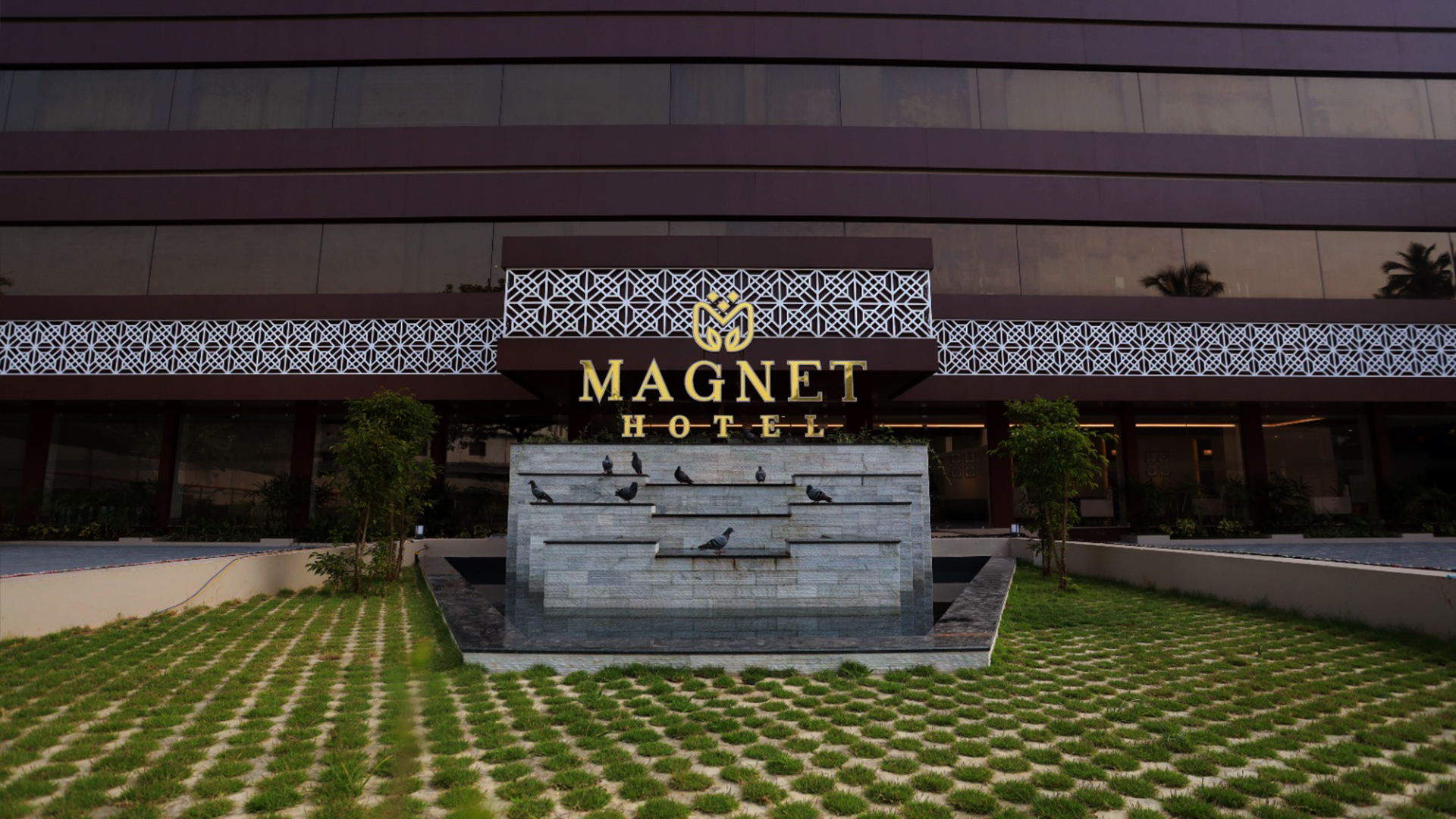
Four-star facility hotel at Chirakkal, Puthiyatheru, on the northern edge of Kannur city. It offers luxury air-conditioned rooms, multi-cuisine dining and banquet and event spaces as one of the city’s newer upmarket hotels.
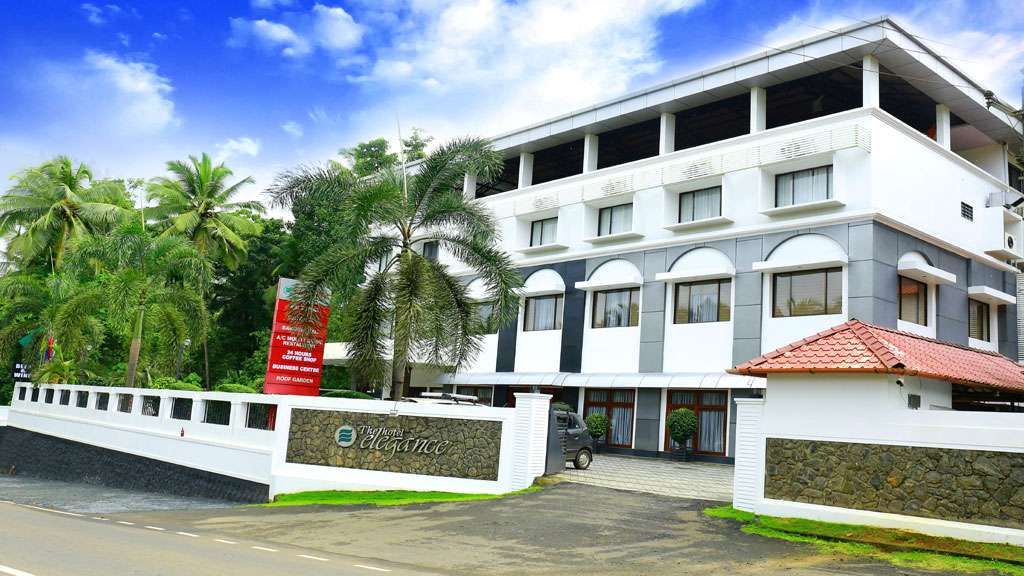
Kerala Tourism-classified 4-star hotel on the banks of the Tejaswini river at Karuvanchal, Alakode, in the eastern highlands of Kannur district. It offers luxury air-conditioned rooms and suites, a coffee shop, business centre and roof garden as an upmarket riverside base.
Affordable business hotel at Metro Tower, Thavakkara Road, in central Kannur, positioned by Kerala Tourism as meeting travellers’ needs at surprisingly affordable rates. It provides value air-conditioned rooms, a restaurant and city-centre access close to the railway station and bus stand.
Kerala Tourism-classified 2-star deluxe hotel opposite the Railway Muthappan Temple at Thavakkara in central Kannur, within walking distance of Kannur Railway Station. It offers affordable air-conditioned rooms, a restaurant and banquet facilities as one of the city’s most economical KT-classified hotels.
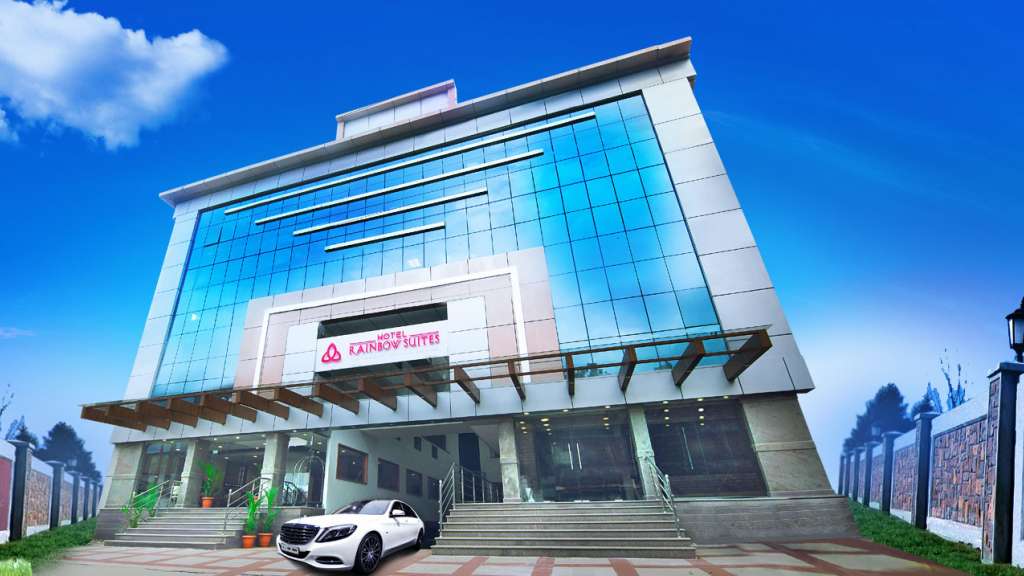
Kerala Tourism-classified three-star business hotel at Thavakkara in the heart of Kannur city, about a three-minute walk from Kannur Railway Station. It offers 42 air-conditioned rooms and suites, the multi-cuisine Barka Restaurant and a banquet hall, and is billed as the first three-star hotel in Kannur.
Kerala Tourism-listed hotel opposite Kannur railway station. Kannur railway station, Business hotel, City stay.
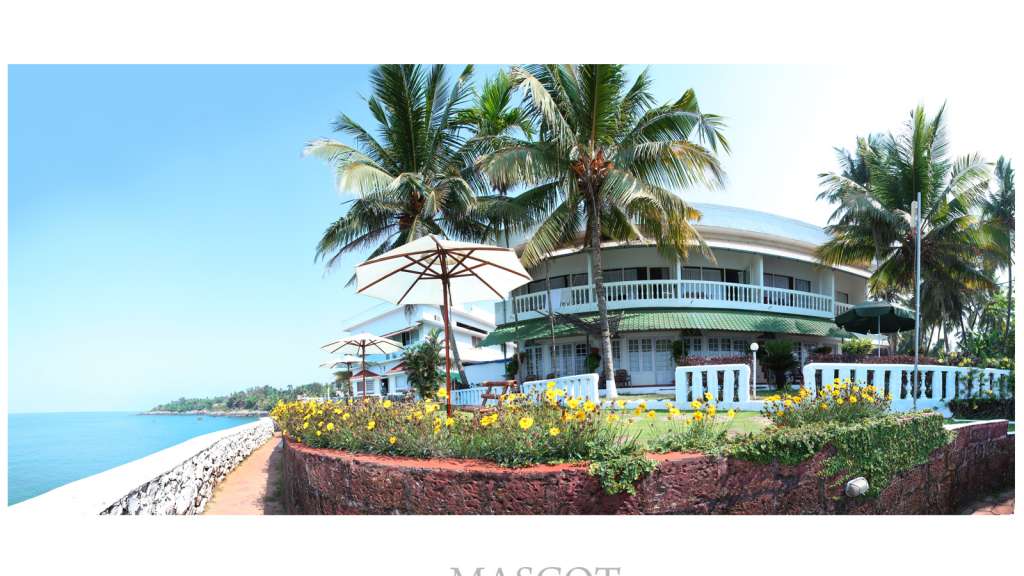
Kerala Tourism-listed cliff-facing beach resort near Kannur city. Mascot Beach Resort, Kannur resort, Sea view.
Kerala Tourism-listed four-star hotel on S.N. Park Road, Kannur. Kannur hotel, S N Park Road, City stay.
Kerala Tourism-listed four-star hotel near Thavakkara, Kannur. Kannur hotel, Thavakkara, City base.
Cliff-top resort overlooking the Arabian Sea near Baby Beach. Over 30 rooms with a pool, Malabar restaurant and an in-house Ayurveda centre.
Kannur's first three-star hotel, set in the central Thavakkara district. Its Barka restaurant serves multi-cuisine fare beside a large banquet hall.
Heritage homestay in a restored hand-loom factory a short walk from Thottada Beach. Home-cooked Keralan meals and guided Theyyam-festival visits.
Four-star hotel on S.N Park Road, half a kilometre from Payyambalam Beach. A fifth-floor rooftop pool sits above three in-house dining venues.
Three-star hotel in central Kannur run by the Omars Group's quarter-century hospitality arm. Its Paris restaurant offers 24-hour Indian and continental dining.
Beachfront homestay of independent Kerala-style houses on Thottada Beach. Guests get private access to the quiet five-kilometre Ezhara coastline.
Private beachside resort on Thottada Beach in North Malabar. Offers an Ayurvedic spa plus a dedicated centre for yoga and meditation.
Simple beachfront homestay facing the Arabian Sea on Kizhunna Ezhara Beach. Rooms open to sea views beside a working fishing village south of Kannur town.
Kerala Tourism-listed four-star business hotel in Kannur city. Broad Bean, Kannur hotel, City base.
Kanav Homestay rents the entire upstairs as one unit, with two bedrooms, two bathrooms, separate living and dining areas, a kitchen and a balcony. The accommodation is in Chalad, near Payyambalam in Kannur; the Kerala Tourism listing describes it as a traditional Kerala-style homestay.
Homestay Mannath is listed in Chettipeedika, Kannur, with a direct host phone number and email. Its Kerala Tourism accommodation page contains information submitted by the property owner. The listing advertises air-conditioned accommodation, a refrigerator and a work desk.
Kannur Beachway Homestay is at Chal Beach in Azhikode, outside central Kannur. The host describes home-style food, drinks and snacks with a Malabar emphasis, alongside a beach setting that differs from a town-centre room.
Book with the place itself. India’s cyber-crime coordination centre warned in April 2025 that convincing copies of hotel and pilgrimage booking sites are being pushed through sponsored search and social ads, taking payment for rooms the property never hears about. Use the contact and source details on each profile to confirm the exact business and booking channel. A directory entry or map pin alone does not establish an operator’s identity or current availability. Roampedia takes no commission and does not collect booking payments. If a booking page reached you through an ad, check the address bar against the property’s own site before you pay. Fraud can be reported on cybercrime.gov.in or on 1930.
Find food, accommodation and activities across Kannur city. Browse the guides for places to eat, stay and explore along your route.
8 more places around Kannur city. Open a guide to plan the visit and onward journey.
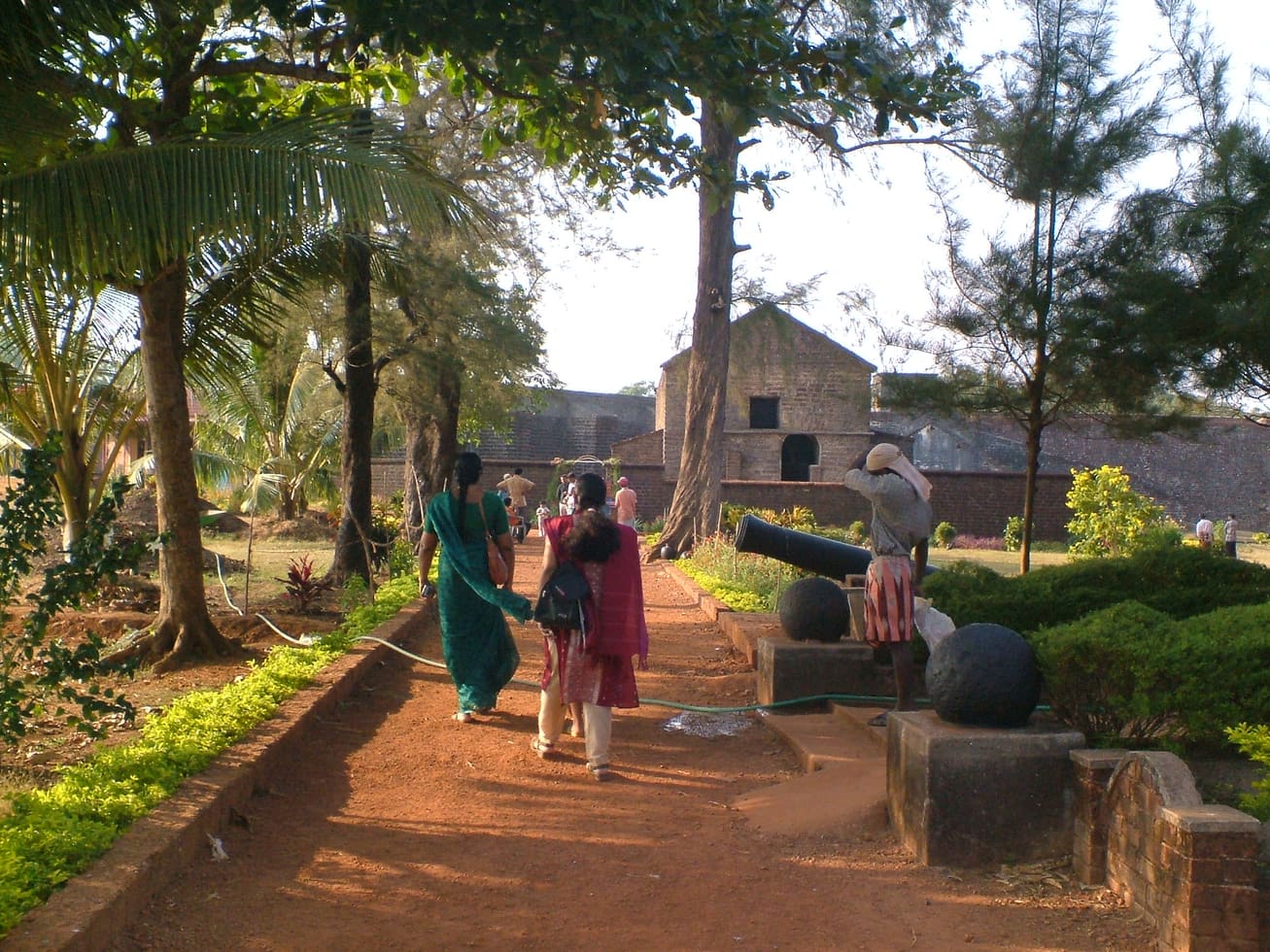
Sea-facing laterite fort built by the Portuguese in 1505, later held by the Dutch, the Arakkal royal house and the British — Kannur city’s great coastal landmark overlooking Mappila Bay.
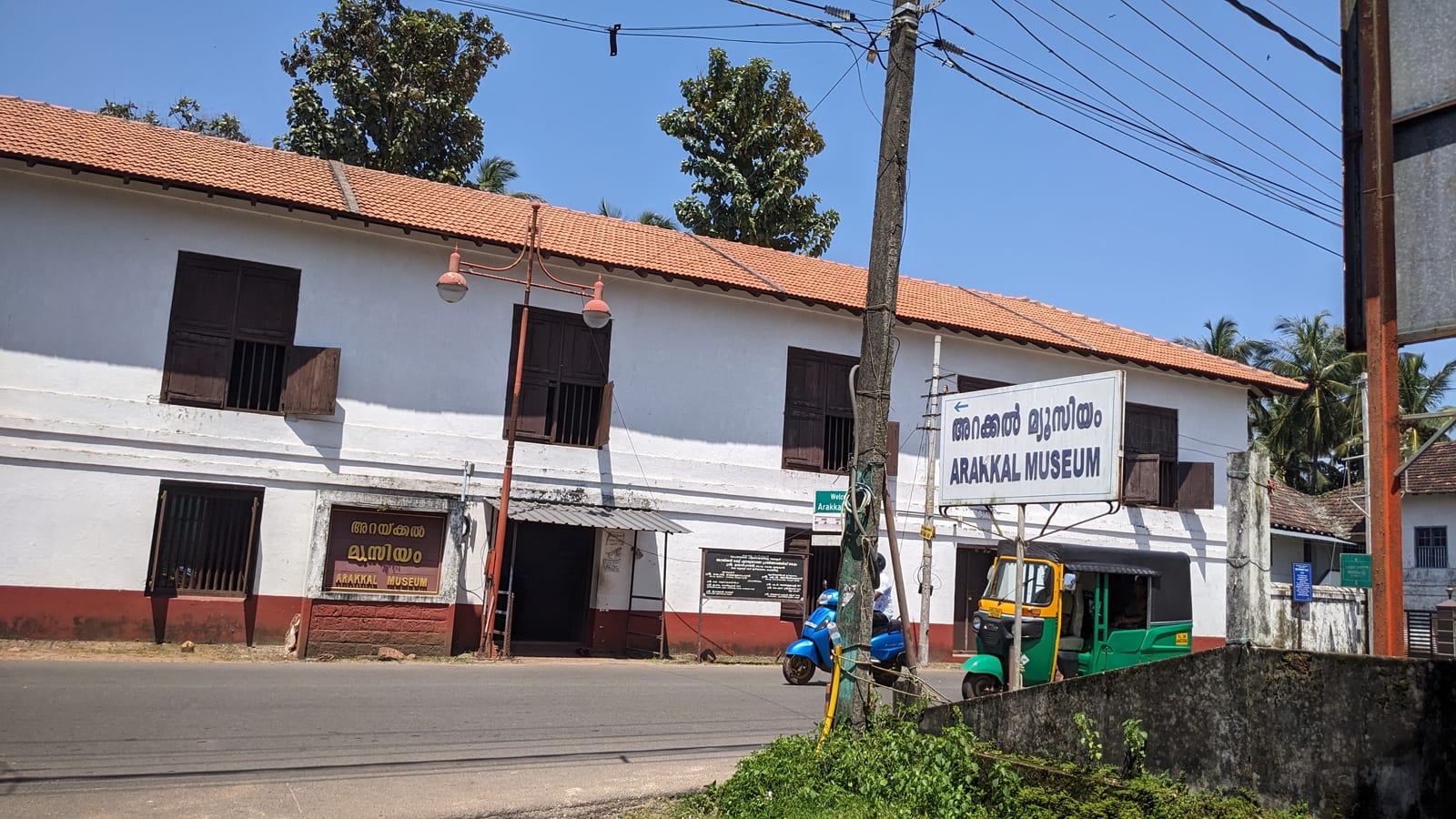
The Arakkal Kettu (palace museum) of the Arakkal Ali Rajas — Kerala’s only Muslim royal house, matrilineal so ruled at times by a Beevi (queen).
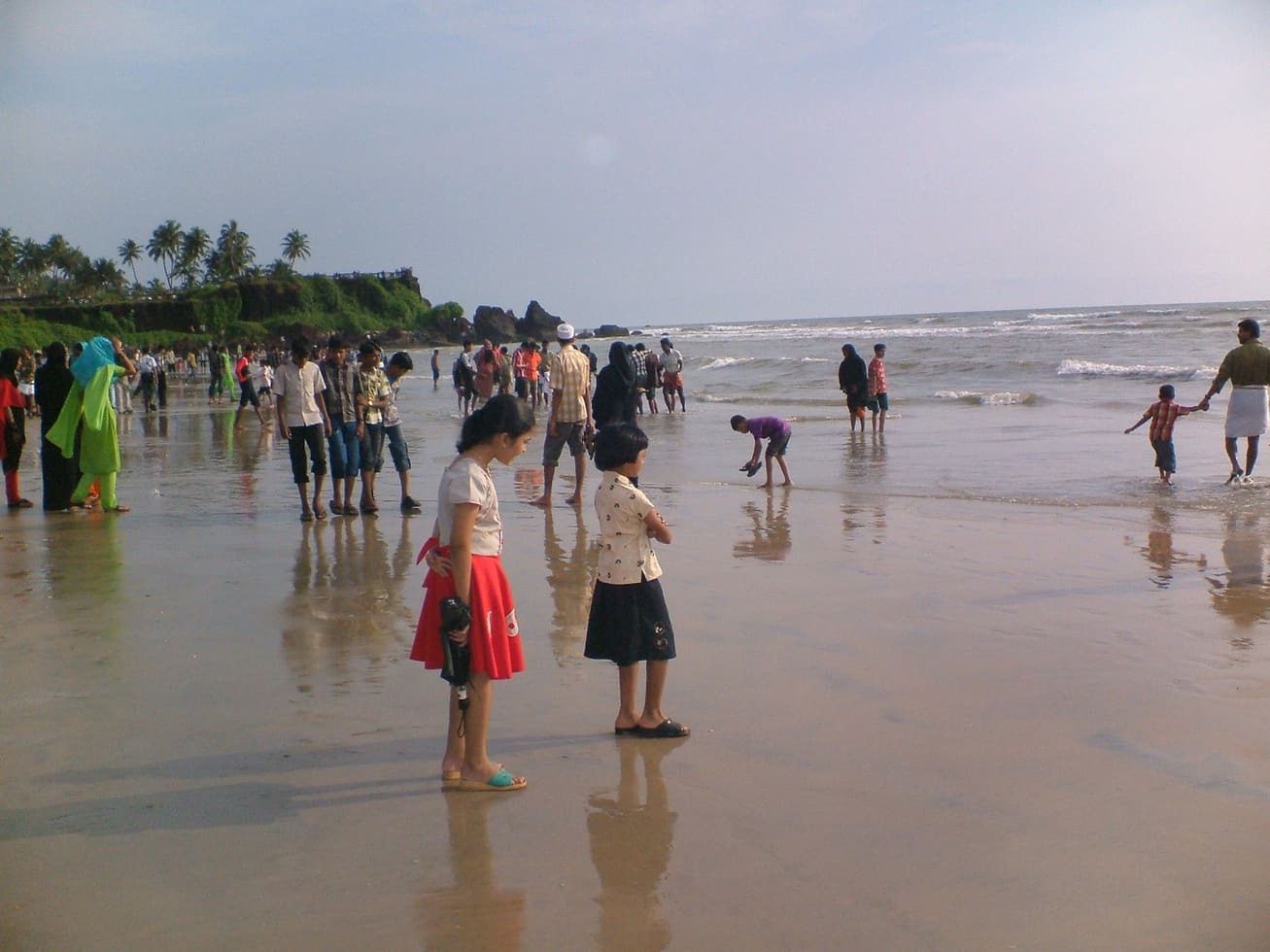
Kannur city’s main beach, with a landscaped garden, the mother-and-child sculpture and long sunset walkways.
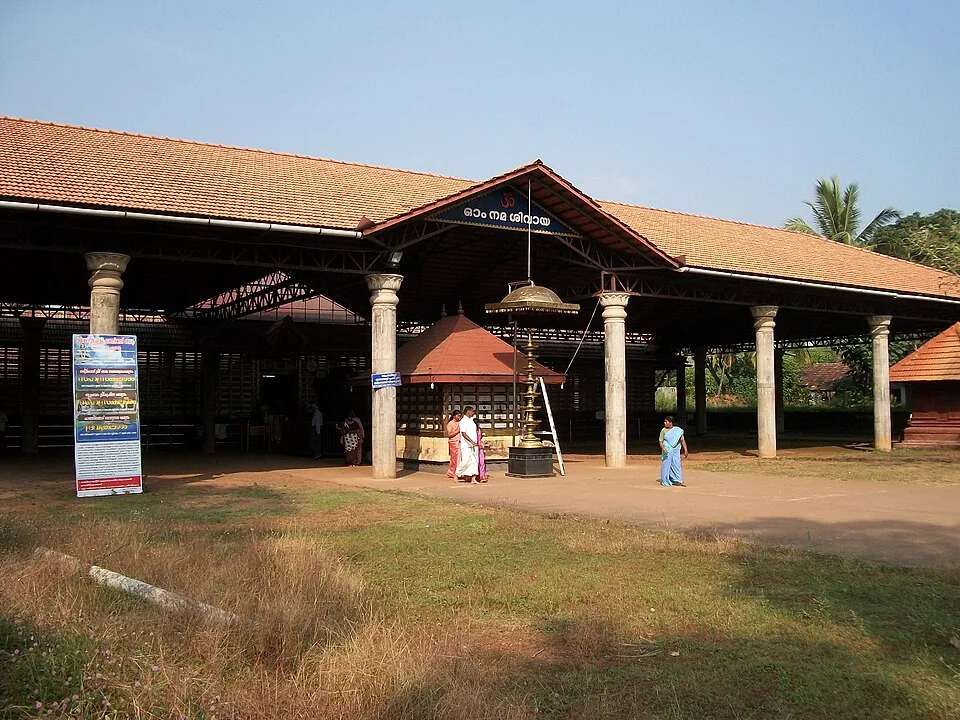
An ancient Shiva temple at Taliparamba, one of the 108 Shiva temples and the Dwadasha Shivalayams of old Kerala; men remove their shirt to enter and photography is restricted.
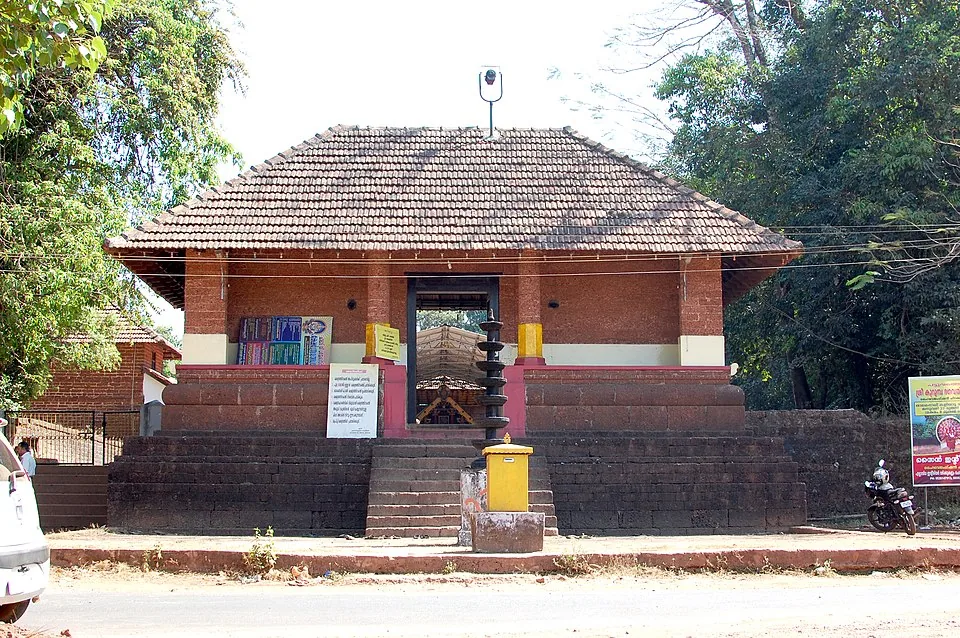
A Bhagavathy temple near Valapattanam regarded as the mother shrine of Kalaripayattu — Kerala’s martial art — where Theyyam is performed; the goddess is guardian of the kalari.
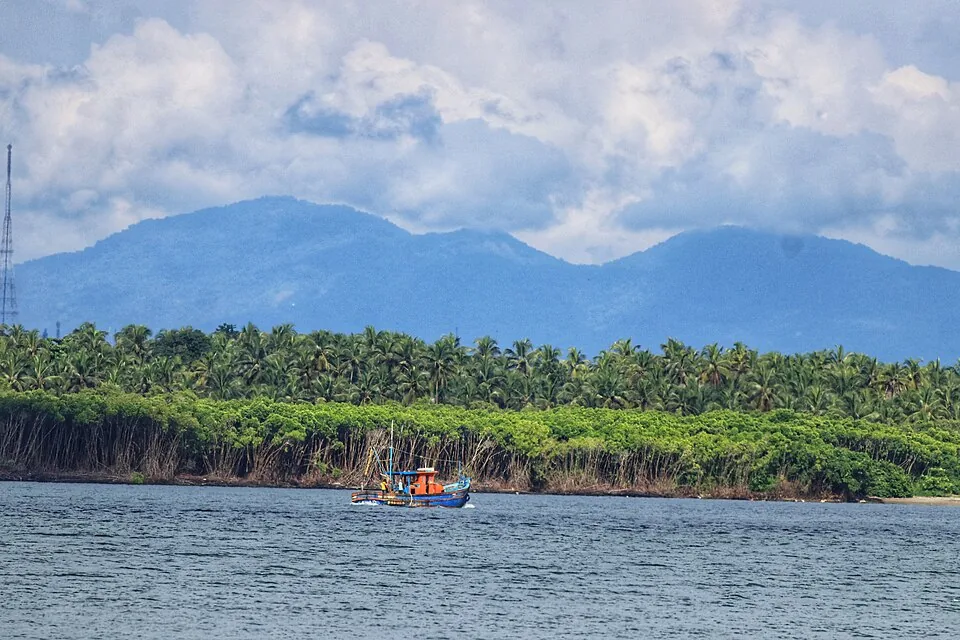
A dramatic 286 m headland near Payyannur, now home to the Indian Naval Academy — the hill itself is off-limits, but the beach and views below are open; rich in legend and rare herbs.
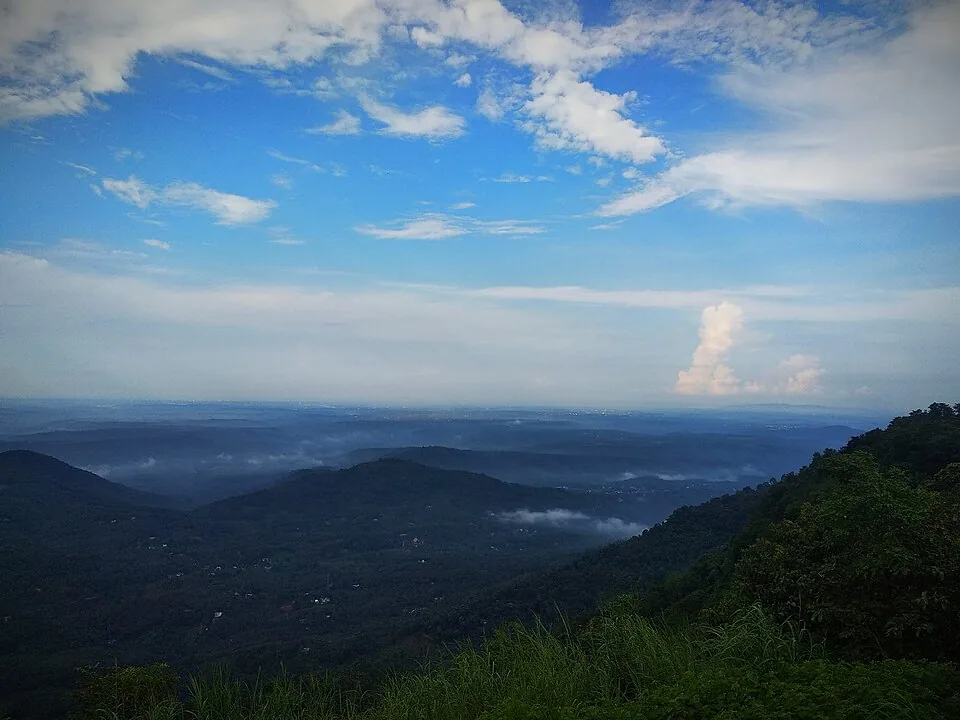
49.3 km · straight line
A misty grassland hill viewpoint in the Western Ghats near Kolari, ~3,000 ft, known for cloud-touched meadows, a small waterfall and adventure activities.
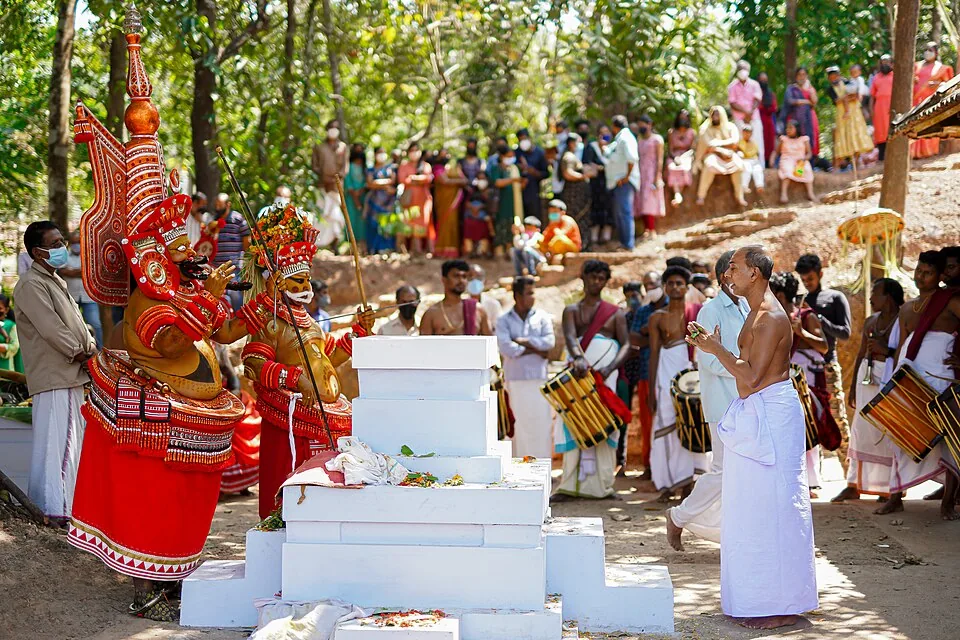
A man of the Vannan or Malayan community is painted, dressed and crowned until the shrine treats him as the deity, and the people who come kneel to someone most of them would not have eaten beside within living memory. The season is set by the Malayalam calendar — the tenth of Thulam, about mid-October, to the middle of Edavam at the end of May — and outside it the kavus are quiet. The exception is Parassinikkadavu, north of the city, where Muthappan is performed most mornings and evenings for most of the year, though it too stops for six weeks each autumn. These are rituals, not ticketed shows.
Roampedia is commission-free — own or know a stay, eatery, guide or shop near Kottiyoor Temple? Submit public business details for review.
Add a nearby businessEntry: Free — there is no entry fee for darshan. Specific offerings, poojas and vazhipadu are paid separately as per the temple tariff.
Dress code: Traditional Kerala temple dress code applies. Men typically remove their shirt and wear a mundu or dhoti; women wear a saree, or a churidar with a shawl. Modest, respectful attire covering the shoulders and legs is expected, and revealing or Western wear is best avoided.
Festivals: The Kottiyoor Vaishakha Mahotsavam (Kottiyoor Vysakha Utsavam) is the temple’s great annual festival — a roughly 27–28 day forest observance in May–June, running from the Chothi asterism of Edavam to the Chithira asterism of Midhunam in the Malayalam calendar. Signature rites include Neyyattam (ghee offering), Elaneer Vaikkal and Elaneerattam (the tender-coconut offering and its pouring over the deity), the Odappoovu bamboo-flowers, and the concluding Thrikkalasham. Exact dates change each year.
Photography: Photography rules are restricted, especially during festival rituals and inside sacred areas; the site is a place of intense worship rather than a photo attraction, and mobile-phone and camera use may be prohibited in and around the shrines. Always follow posted signs and staff instructions, and ask before photographing rituals or pilgrims.
If you are travelling by bus or ferry, check the return service with the operator before setting out. Leave time to reach the stop or jetty after your visit.
Ask at the bus stand for the time of the last service back, not the next one. If you miss it, an auto or app cab is the fallback — agree the fare before you get in.
If you need step-free access, contact the site before travelling. Ask about a level entrance, steps along the route, the nearest drop-off point, seating and accessible toilets.
Charge cap and free-transaction limits: Reserve Bank of India, ATM FAQ updated 4 July 2025; checked 4 October 2026.
These services are listed within about 1.2 km of Kottiyoor Temple. Walking distances follow mapped routes; access and opening hours can change. Other services may be closer but are not included here.
Published emergency and visitor-assistance contacts. For an immediate emergency, call 112. Shared Kerala contact sources checked 4 October 2026; publication does not establish a tested live response.
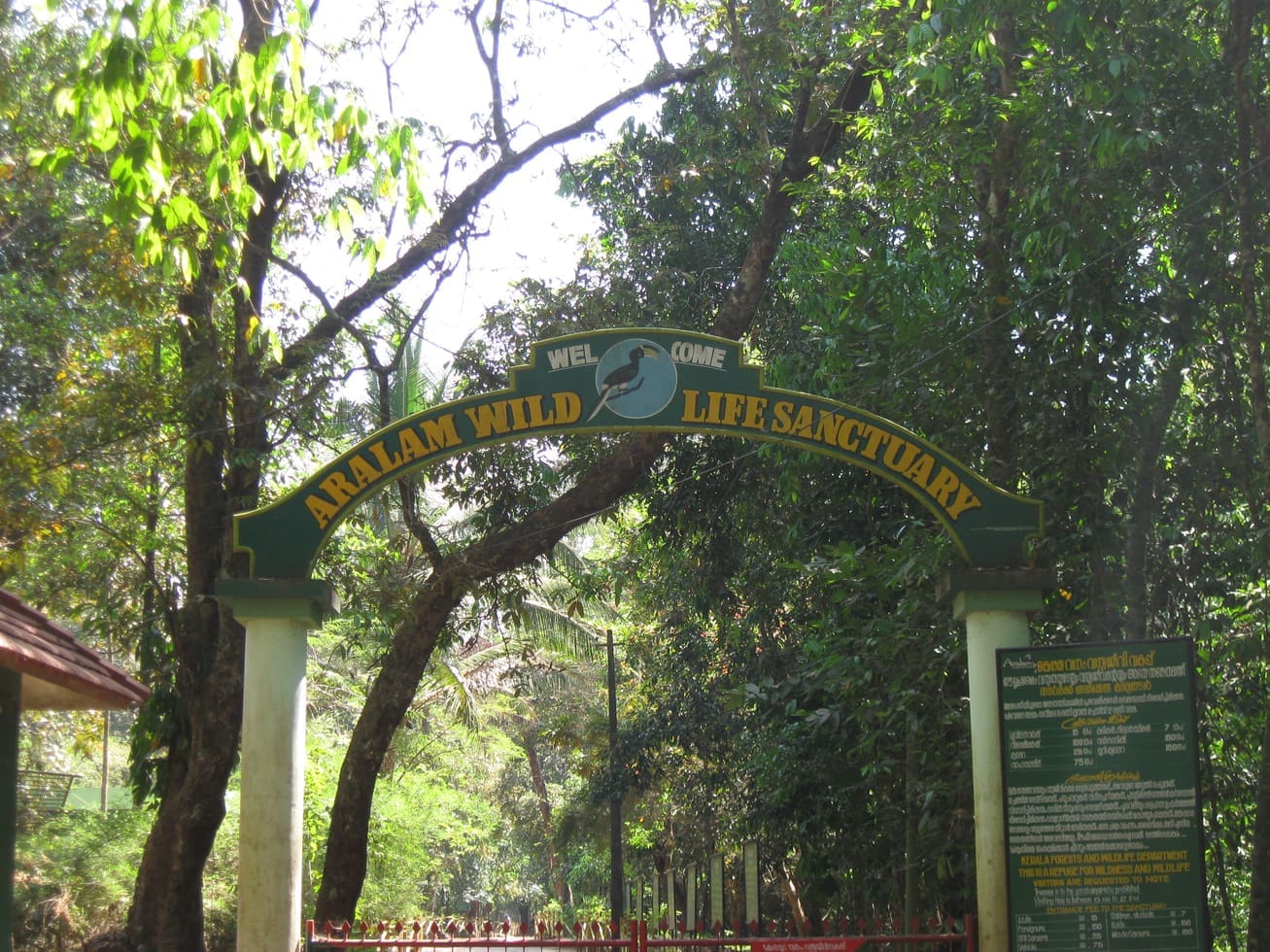
Forest sanctuary in the eastern highlands of Kannur district.
8.7 km · straight lineGuided forest trekking in the Aralam Wildlife Sanctuary, Kannur’s easternmost highland forest, rich in elephants, gaur and butterflies.
9.2 km · straight line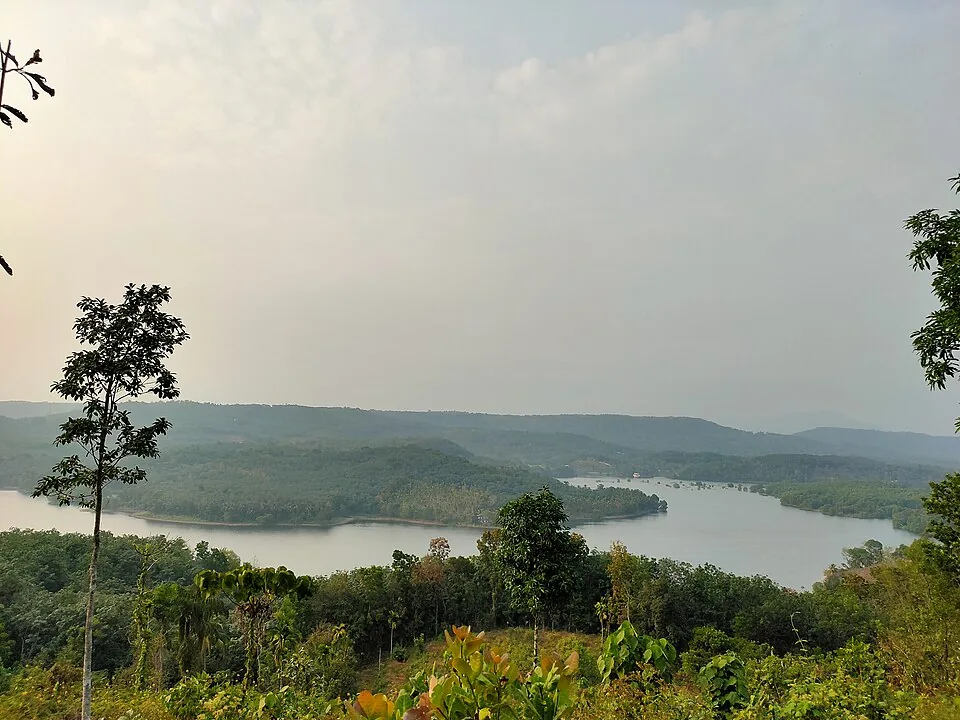
An earthen dam on the Valapattanam river near Mattannur, with a garden, boating and a hanging bridge — named after the freedom-fighter king Pazhassi Raja.
29.5 km · straight line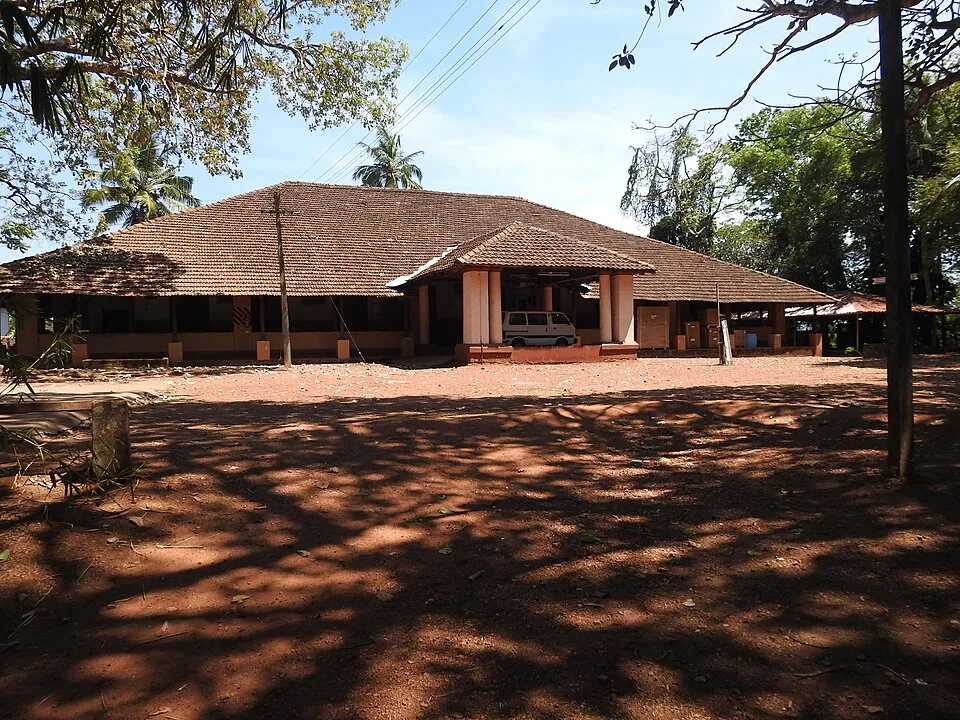
At Illikkunnu near Thalassery, the hillside home of the German missionary-scholar Hermann Gundert, who compiled the first Malayalam–English dictionary and grammar here in the mid-1800s.
43.0 km · straight line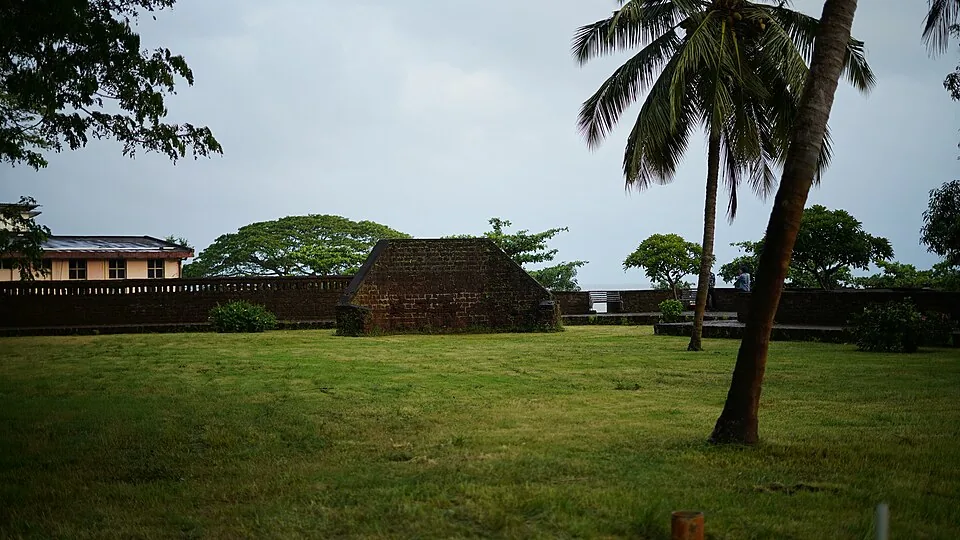
A square laterite fort built by the English East India Company in 1708 at Thalassery (Tellicherry), heart of the old Malabar pepper and cricket town, with secret sea tunnels.
43.1 km · straight line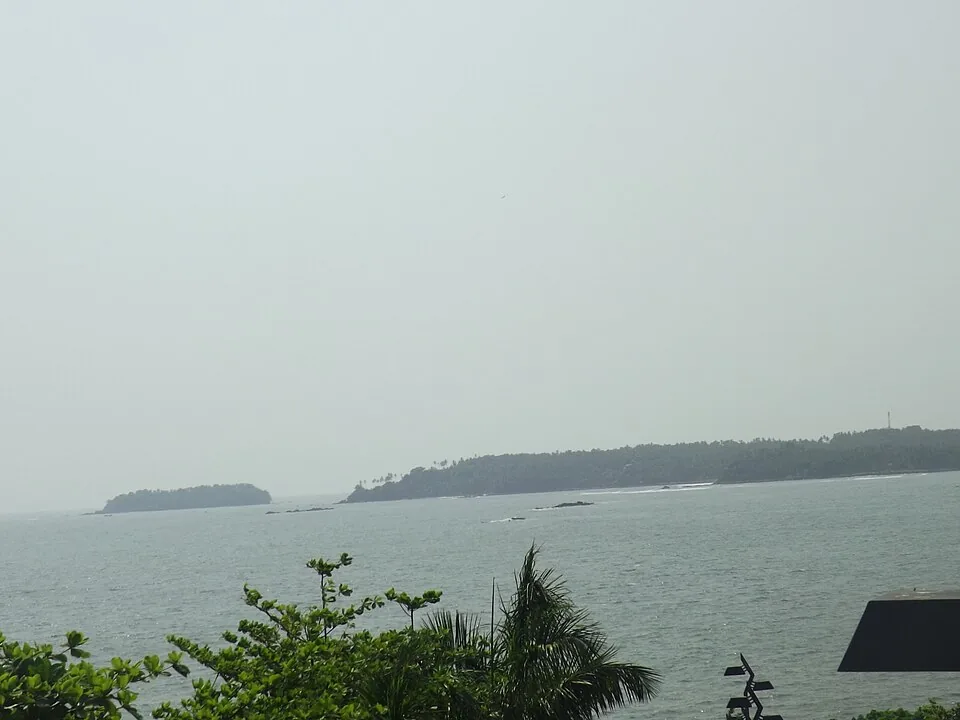
A cliff-top garden viewpoint over the sea at Thalassery, named after E.N. Overbury, a British judge of the 1870s who began but never finished a mansion here.
43.2 km · straight line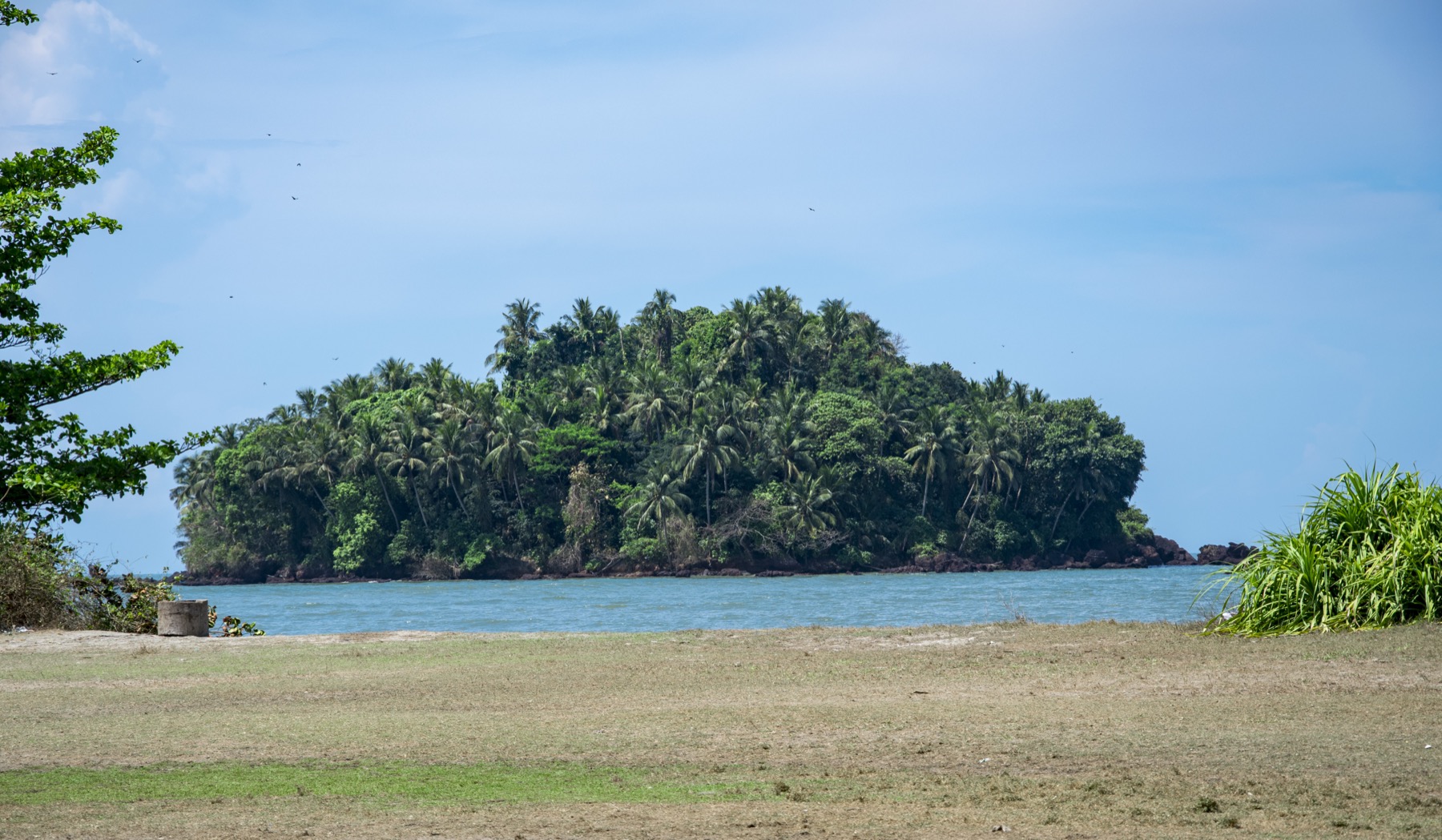
A small green private island off Muzhappilangad, reachable on foot across the sand at low tide (viewing only; landing is restricted).
46.1 km · straight line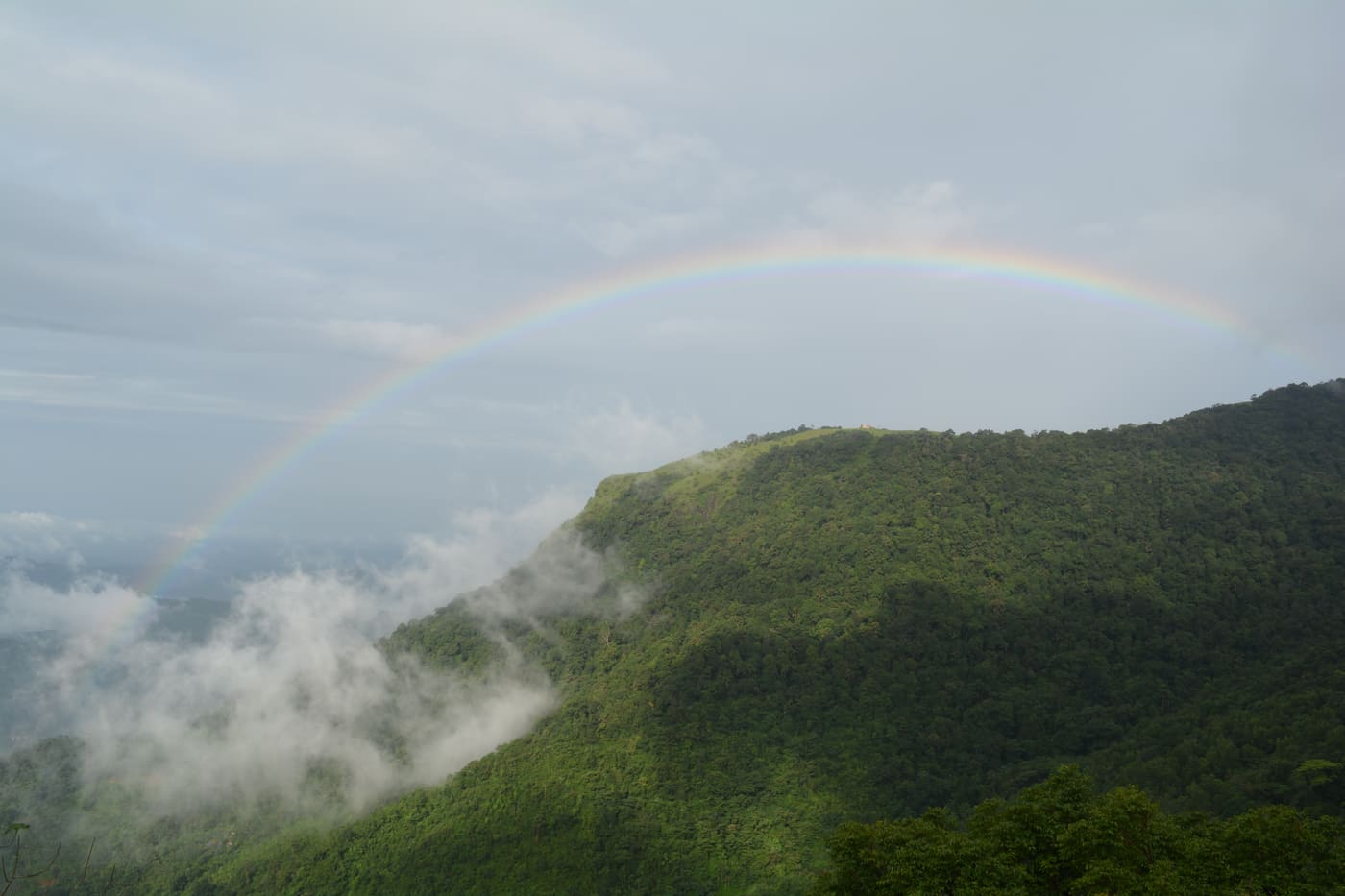
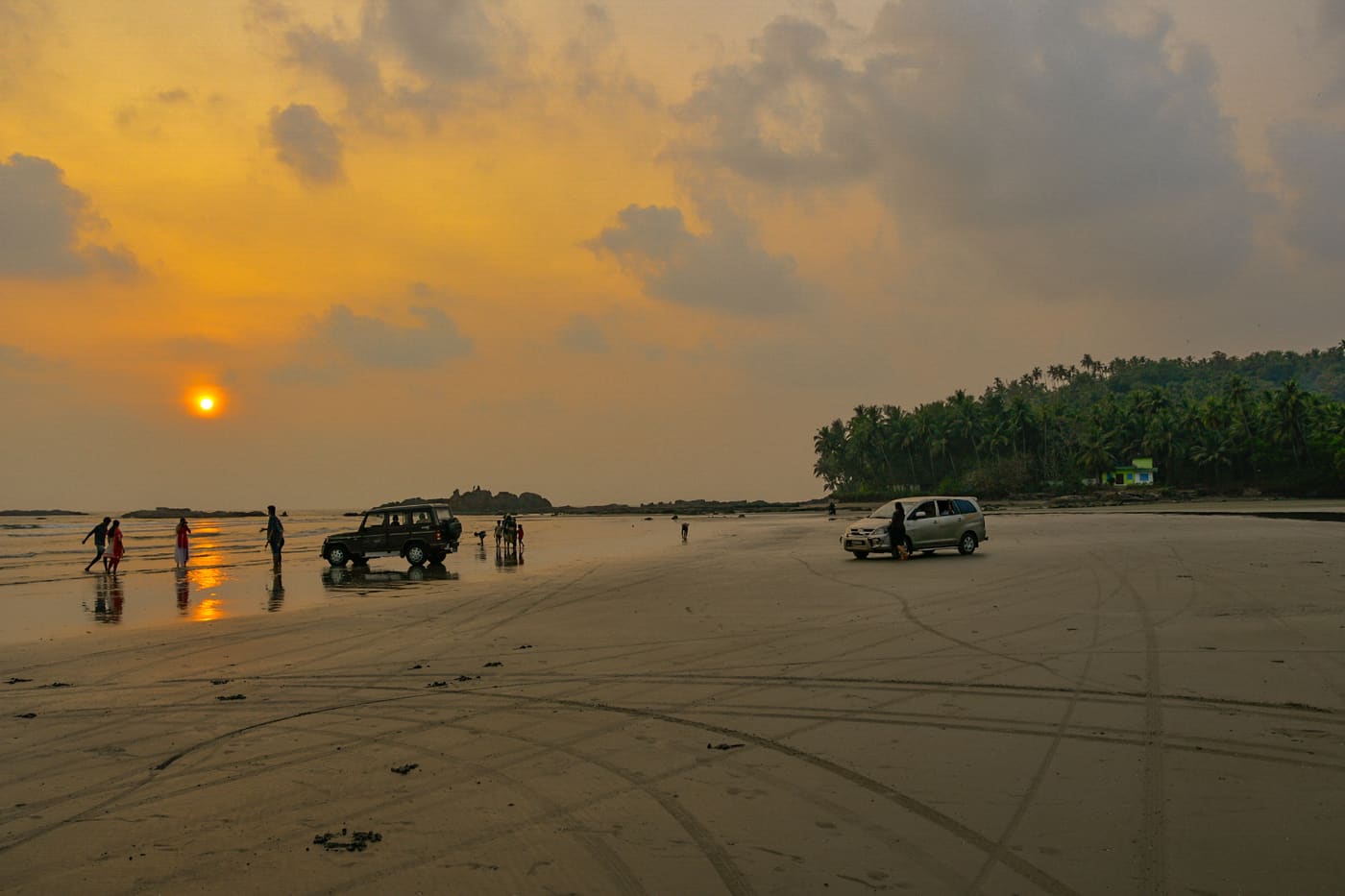
A ~4 km hard-sand beach, the longest drive-in beach in India — you can drive along the sand at low tide; Dharmadam Island lies just offshore.
46.4 km · straight line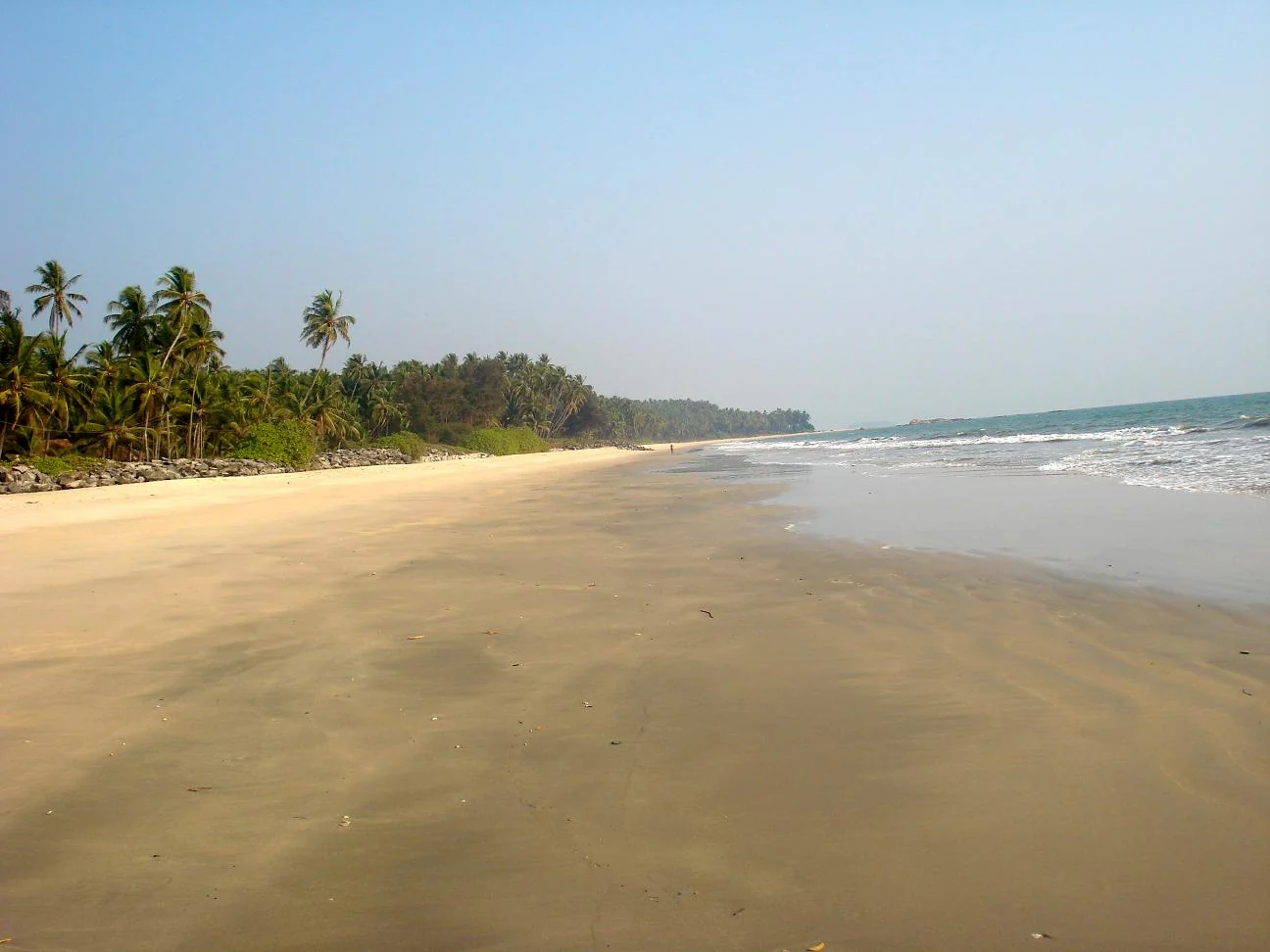
Kizhunna’s sandy shore lies between Thottada and Ezhara, with palm-backed village edges and the Cherakallu rock formations breaking up the coastline.
49.1 km · straight lineA misty grassland hill viewpoint in the Western Ghats near Kolari, ~3,000 ft, known for cloud-touched meadows, a small waterfall and adventure activities.
49.3 km · straight line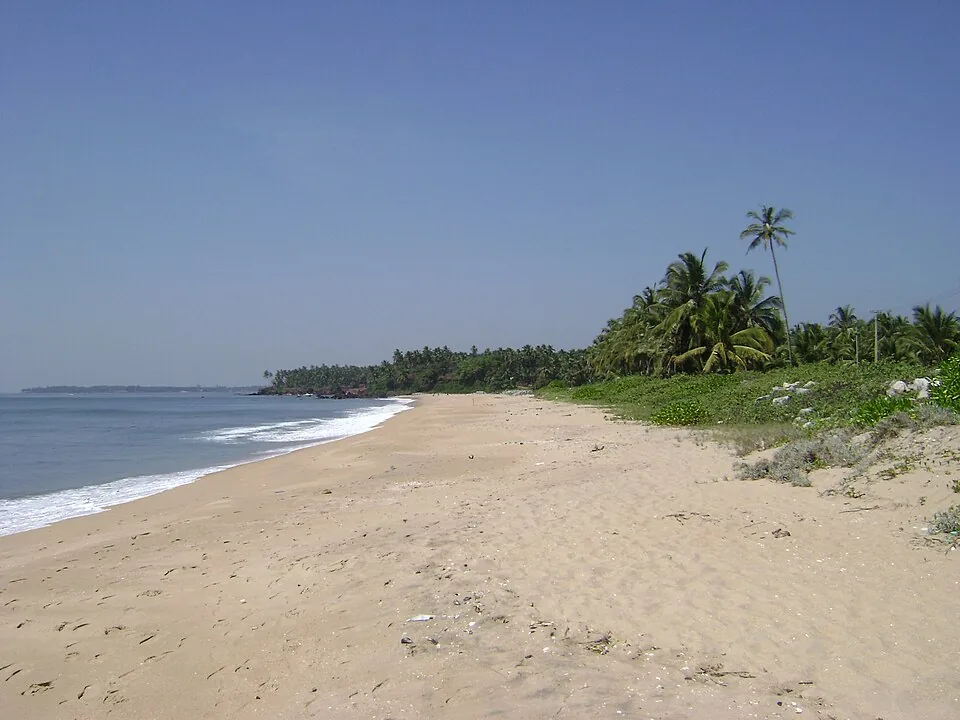
A quiet, unspoilt cove-and-stream beach south of Kannur city, known for its homestays and calm, uncrowded sands.
49.7 km · straight lineNearby toilets, pharmacies, ATMs, seating and vets are community-mapped and may be incomplete or out of date. Map data © OpenStreetMap contributors | Walking times © openrouteservice.org by HeiGIT
They are two shrines on opposite banks of the Bavali river. Ikkare Kottiyoor, on the near bank, is a conventional roofed temple worshipped for most of the year. Akkare Kottiyoor, on the far bank, is the truly sacred spot — an open-air swayambhu linga on a stone platform with no permanent building, opened to worship only during the annual Vaishakha Mahotsavam. When Akkare opens, Ikkare traditionally closes.
No — and this is the single most important thing to know before you plan a trip. Akkare Kottiyoor is accessible only during the annual festival, roughly a 27 to 28 day window in May–June. Outside the festival there is essentially nothing to visit on the far bank, and worship happens at Ikkare Kottiyoor instead.
By tradition, Kottiyoor is believed to be the site of the mythic Daksha Yaga — the fire sacrifice held by Daksha where his daughter Sati is said to have given up her life, prompting Shiva’s wrath. The raised platform called the Manithara is associated with that legend, and the site is honoured as Dakshina Kashi. These accounts are cherished as legend rather than documented history.
Key rites include Neyyattam, the pouring of ghee over the linga that opens the worship; Elaneer Vaikkal, when devotees bring vast numbers of tender coconuts to the shrine; Elaneerattam, when the collected coconut water is poured over the deity; and the carrying of the white bamboo Odappoovu flowers. The festival is set in motion by a sword brought from Muthirerikavu in Wayanad and concludes with the Thrikkalasham ceremony.
The Odappoovu is a white artificial flower made from split bamboo. These flowers line the pathway to the shrine during the festival, and pilgrims carry them home as blessed keepsakes. In popular belief the Odappoovu represents the beard of Daksha, who — in the legend — was beheaded and later revived with a goat’s head.
Kottiyoor lies in the forested hills of eastern Kannur district, north-east of Kannur town near the Wayanad border. It is genuinely off the beaten track, reached by road through the Kelakam and Manathana area. The nearest airport is Kannur International Airport, and the nearest major railheads are Thalassery and Kannur (distances are approximate — confirm current routes and the road condition locally, especially in the monsoon).
Morning or early evening is usually best; festival days can be powerful but crowded.
Entry: Free — there is no entry fee for darshan. Specific offerings, poojas and vazhipadu are paid separately as per the temple tariff. Timings: Akkare Kottiyoor — the open-air sacred shrine on the far bank — is open only during the annual Vaishakha Mahotsavam (roughly 27–28 days in May–June). For the rest of the year worship takes place at Ikkare Kottiyoor on the near bank, which generally follows typical Kerala temple hours with morning and evening darshan sessions and a midday break.
Base yourself in Kannur city or a nearby town in Kannur, then confirm the last-mile route locally before leaving. Check temple entry customs, dress rules and festival crowd conditions before arrival. If the visit depends on forest, temple, boat, ferry, weather or seasonal access, check the official/local rule on the day before travel.
45 minutes to 2 hours, longer during festival or queue periods.
Nearby you can pair Aralam Wildlife Sanctuary (8.7 km, approximate straight-line separation), Aralam trek (9.2 km, approximate straight-line separation), Pazhassi Dam (29.5 km, approximate straight-line separation), Gundert Bungalow (43.0 km, approximate straight-line separation).
Use official counters for offerings/tickets where applicable. Keep footwear and valuables secure in crowded areas.
Written about Kottiyoor Temple itself — its history, its legends and the arguments about them.
Route-level itineraries and practical guides for the rest of Kerala.
Photographs: Devbagavathi (CC BY-SA 4.0), Vinay (Public domain), Deepesh ayirathi (CC BY-SA 3.0). Wikimedia Commons.