What to expect
Highlights
- Temple visit at Kadampuzha Devi Temple
- Kerala temple architecture and rituals
- Local food, shops and pilgrim services nearby
A revered Devi temple near Vettichira with no idol — the goddess is worshipped in a natural rock fissure; devotees offer the poomoodal and muri-pooja. Founded by legend of Adi Shankara.
Check entry arrangements. Ask temple staff about visitor entry, dress requirements and access to the inner shrine before you travel, especially if you are visiting as a non-Hindu.
Dress respectfully and follow the institution’s admission and photography rules.
At Kadampuzha, near Kottakkal in Malappuram, the goddess has no idol at all — devotees pour their prayers, flowers and shattered coconuts into a small perpetually-moist hole in the ground, believed to be the very spot where the Divine Mother once vanished from human sight.
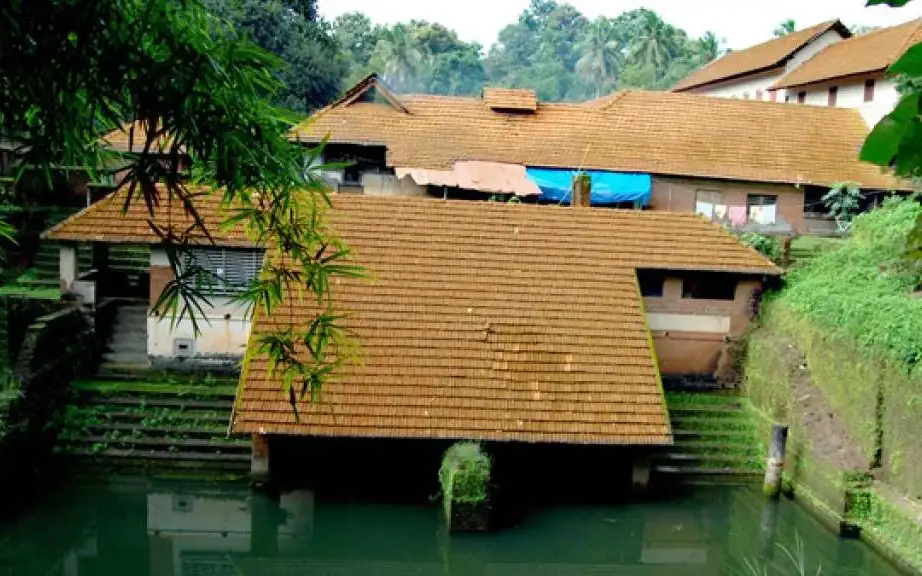
Kadampuzha Devi Temple, also called Kadampuzha Bhagavathy Temple, sits amid what was once dense forest near Kadampuzha village, a short drive from the medicine town of Kottakkal and roughly a dozen kilometres from Kuttippuram in Malappuram district. It is among the most-visited Devi shrines in Kerala, drawing a steady stream of pilgrims from across the state and beyond, particularly those carrying wishes, worries and long-held vows to lay before the goddess.
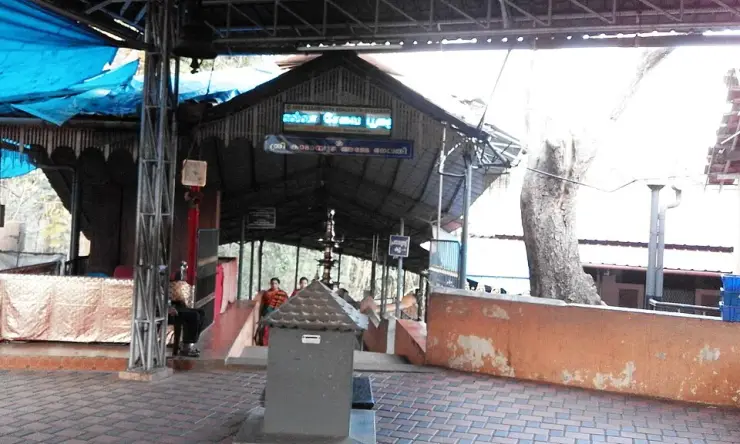
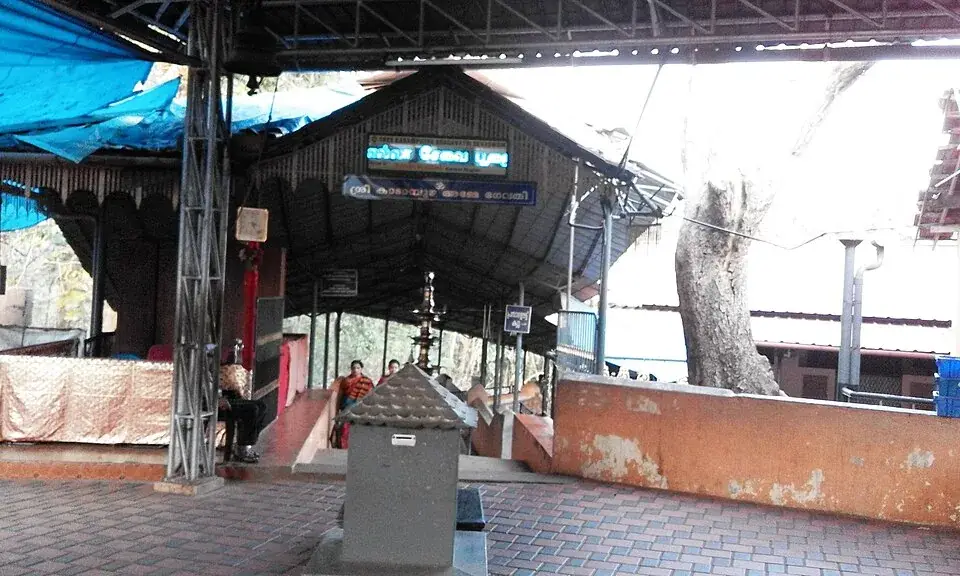
What sets Kadampuzha apart from almost every other Kerala temple is startlingly simple — there is no idol. The sanctum holds no carved image of the goddess. Instead, the Devi is believed to be self-manifested (swayambhu) and present within a small pit or hole in the ground, kept perpetually moist by an underground spring. Priests perform the daily rituals facing and into this hole, and it is here that every offering is finally directed. Standing before an empty-seeming sanctum and feeling that the Mother is nonetheless intensely present is, for many devotees, the whole point of coming.
The goddess is worshipped here as a form of Parvati in her fierce, forest-dwelling aspect — Kiratha Parvathy, the huntress, and Durga in her woodland form. By tradition the Devi is honoured through the day in three distinct forms: Vidya Durga in the morning, Vanadurga (the forest Durga) in the afternoon, and Aadi Durga in the evening. This layered worship reflects the belief that the same divine energy shows different faces to the devotee through the hours of the day.
The temple is defined by two signature offerings that have become almost synonymous with its name. The first is Muttarukkal — the breaking of coconuts — where devotees dash coconut after coconut against a stone, each broken shell carrying a prayer for the removal of obstacles, the fulfilment of a wish, or relief from some difficulty. On busy mornings the sound of splitting coconuts is near-continuous, and the sheer volume of coconuts broken here is legendary. The second is Poomoodal — the covering, or literally the burying, of the deity's spot beneath a blanket of wild thechi (Ixora) flowers, a lavish and much-sought offering associated with cooling the goddess and answering deeply-held prayers.
These vazhipadu (ritual offerings) are the beating heart of Kadampuzha's daily life and, in effect, its economy. Families book Muttarukkal and Poomoodal in advance, coconuts and thechi flowers are supplied in enormous quantities, and the temple hums with the logistics of channelling thousands of devotees and their offerings through the sanctum each day. For many pilgrims a trip to Kadampuzha is specifically undertaken to perform one of these vazhipadu, often in thanksgiving for a wish already granted.
The setting adds to the temple's pull. It lies close to Kottakkal, home of the world-renowned Arya Vaidya Sala and Kerala's Ayurveda heritage, so pilgrimage and wellness journeys often overlap here. Crowds swell heavily on auspicious days, and the atmosphere ranges from the quiet intensity of an early-morning darshan to the dense, fervent press of a festival crowd — but the still point at the centre is always the same modest hole in the ground into which centuries of prayers have been poured.
The best-known legend of Kadampuzha reaches back to the Mahabharata and the episode retold in the Kiratarjuneeyam. As tradition holds it, the Pandava prince Arjuna undertook severe penance in the forest to win the Pashupatastra, the invincible weapon of Lord Shiva. To test the depth of his devotion, Shiva and Parvati are said to have appeared before him disguised as a Kirata (a tribal hunter) and his huntress wife. A fierce duel broke out — famously over a wild boar both claimed to have shot — and Arjuna, humbled and defeated by the hunter, at last recognised the divine couple before him. In one telling the arrow loosed by the Kirata (Shiva himself) struck the earth here and opened the very hole in which the goddess is now worshipped, giving the place its name and its spring.
The temple as a place of worship is, by tradition, credited to Adi Shankaracharya. The story goes that while passing through this then-forested tract on his travels, Shankaracharya sensed an overpowering divine aura rising from the undergrowth and found his path arrested by an unseen presence. Realising after meditation that it was the living presence of Sree Parvathy — the forest Vanadurga — he is said to have consecrated the spot as a temple, installing Narasimha and the Sudarshana Chakra before the Devi and Dharmasastha and the Nagakanyakas to the sides, and laying down the rituals still followed. The Poomoodal offering of flowers is linked in tradition to the mythic shower of blossoms upon the divine, and the goddess is believed to have vanished into the hole after revealing herself to the Acharya.
These accounts are devotional tradition and sacred legend rather than documented history, and the details vary between tellings — but they are inseparable from how the temple is understood and worshipped, and they explain both the absence of an idol and the reverence for the small pit at the shrine's heart.
Kadampuzha's defining historical peculiarity is its complete absence of an idol — an unusual arrangement even among Kerala's many ancient shrines. Rather than a consecrated image, worship is directed into a hole in the ground held to be self-manifested and fed by a perpetual underground spring, and the daily poojas are performed into this pit. This mode of worship is treated as the temple's oldest and most essential feature.
By long-standing tradition the temple's consecration is attributed to Adi Shankaracharya, the eighth-century philosopher-saint, who is said to have recognised the divine presence in the forest and established the shrine and its ritual order. The temple website and pilgrimage accounts record that he consecrated it on the Karthika day in the Malayalam month of Vrischikam (roughly November–December), and that day is still marked as the temple's principal festival. As with many temples of great antiquity, the Shankaracharya attribution is a matter of tradition rather than firmly-dated record.
The temple's fame rests heavily on its two great offerings. Muttarukkal — the ritual breaking of coconuts — is performed by devotees seeking the removal of obstacles and the granting of wishes, and Kadampuzha is renowned for the sheer scale of coconuts broken here; this particular offering is traditionally done in the morning hours (commonly cited as around 5 a.m. to 7 a.m. on weekdays). Poomoodal, the covering of the deity's spot with wild thechi (Ixora) flowers, is the other celebrated and much-booked vazhipadu, associated in tradition with cooling and pleasing the goddess.
In its worship the Devi is venerated as Kiratha Parvathy / Durga in the forest-huntress form, and is honoured through the day in successive aspects — commonly described as Vidya Durga, Vanadurga and Aadi Durga across morning, afternoon and evening. Alongside the Devi, subsidiary deities including Narasimha, the Sudarshana Chakra, Dharmasastha and the Nagakanyakas are part of the temple's traditional layout.
Today Kadampuzha is one of the busiest Devi temples in the Malabar region, its calendar and finances shaped by the constant flow of Muttarukkal and Poomoodal offerings. Its proximity to Kottakkal and the Arya Vaidya Sala, and its position within easy reach of Kuttippuram, Tirur and the wider Malappuram road network, keep it firmly on both pilgrimage and tourist itineraries through the year.
Witness a genuinely rare form of Hindu worship — a major temple with no idol, where the goddess is present in a hole in the ground fed by a perpetual spring.
Perform or observe Muttarukkal, the dramatic breaking of coconuts for the removal of obstacles and the granting of wishes.
See Poomoodal, the deity's spot buried beneath a blanket of wild thechi flowers — one of Kerala's most striking floral offerings.
Connect with living Mahabharata legend — the Kirata-Arjuna episode and the tradition of consecration by Adi Shankaracharya.
Feel the intense devotional atmosphere of one of Malabar's most-visited Devi shrines, especially at dawn.
Combine the visit easily with nearby Kottakkal and its famed Arya Vaidya Sala Ayurveda heritage.
Road km to Malappuram; ghat roads and traffic vary — allow extra.
Morning or early evening is usually best; festival days can be powerful but crowded.
Live forecast loads in your browser.
Sunset is in about 3 hours.
Sun and moon are calculated for this location and shown in IST. Photography windows are the hour around sunrise and sunset; the sunset bearing is degrees clockwise from true north. Moon phase is accurate to about half a day.
Browse listed stays, food, activities, sights, shops and rentals around Kadampuzha Devi Temple. Check each listing’s locality and contact the business directly for current arrangements.
Kerala Tourism Diamond House-classified heritage homestay in a centuries-old Namboodiri illam at Chembrassery, Pandikkad, in the hill country of Malappuram district. Guests stay in the traditional mana beside its temple tank with home-cooked vegetarian Kerala meals, a genuine heritage stay rather than a hotel.
Malappuram hotel support in Malappuram town. Woodbine Foliage, Kavungal Bypass Road, Malappuram, Kerala 676505 · Malappuram hotel support.
Kerala Tourism-listed four-star hotel at Kavungal, Malappuram. Malappuram hotel, Kavungal, Four star.
Book with the place itself. India’s cyber-crime coordination centre warned in April 2025 that convincing copies of hotel and pilgrimage booking sites are being pushed through sponsored search and social ads, taking payment for rooms the property never hears about. Use the contact and source details on each profile to confirm the exact business and booking channel. A directory entry or map pin alone does not establish an operator’s identity or current availability. Roampedia takes no commission and does not collect booking payments. If a booking page reached you through an ad, check the address bar against the property’s own site before you pay. Fraud can be reported on cybercrime.gov.in or on 1930.
Find food, accommodation and activities across Malappuram town. Browse the guides for places to eat, stay and explore along your route.
3 more places around Malappuram town. Open a guide to plan the visit and onward journey.
A green river-and-hill viewpoint in the Edavanna area; the popular nickname is retained without claiming any ecological connection to the Amazon.
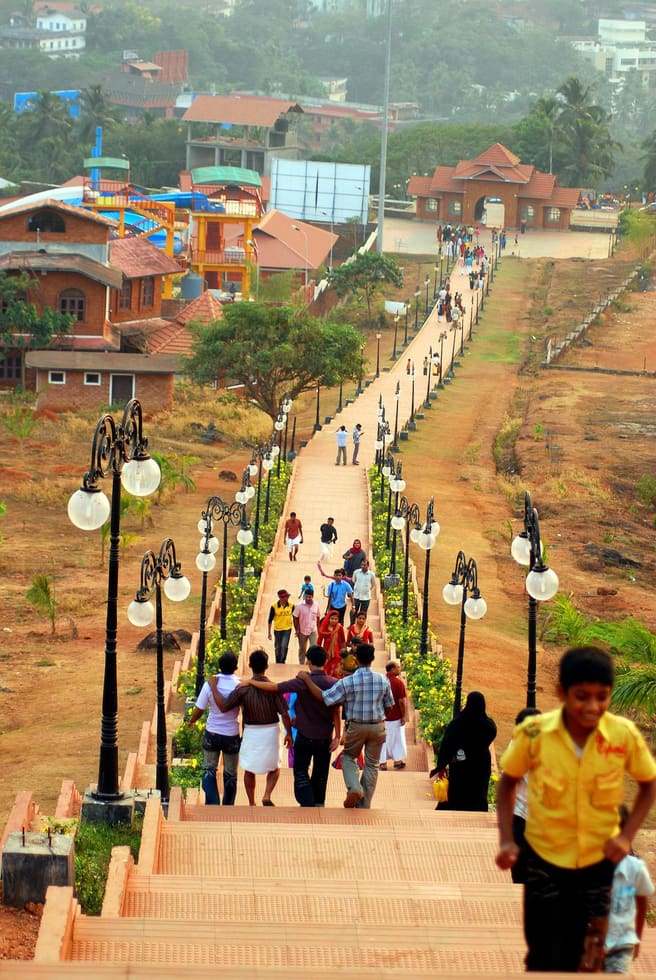
12.4 km · straight line
A hill garden and cultural park in Malappuram town, with an art gallery, open-air theatre and amusement attractions — a popular family picnic spot.
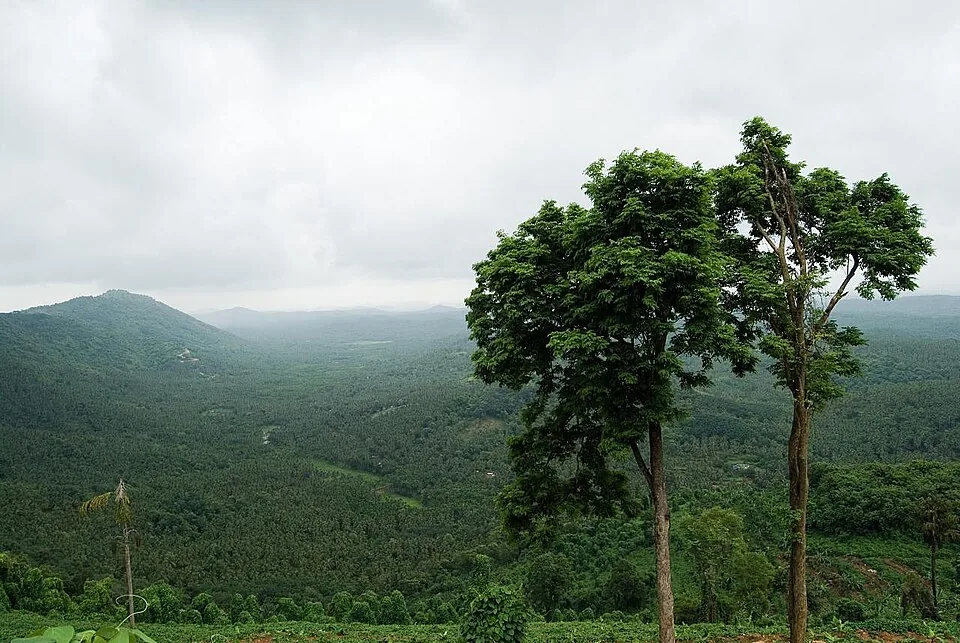
A grassy hill viewpoint near Kondotty (~1,050 ft) nicknamed “Mini Ooty”, with panoramic views over green valleys — popular for sunrise, sunset and paragliding.
Roampedia is commission-free — own or know a stay, eatery, guide or shop near Kadampuzha Devi Temple? Submit public business details for review.
Add a nearby businessEntry: Darshan is free. Ritual offerings such as Muttarukkal (coconut-breaking) and Poomoodal (flower-covering), and other vazhipadu, carry set charges and are often booked in advance; rates vary and change over time.
Dress code: Traditional temple attire is expected — men often bare-chested or in a mundu, women in saree or other modest dress; avoid shorts and casual western clothing. Confirm the current dress code locally.
Festivals: The main annual festival falls on the Karthika day in the Malayalam month of Vrischikam (around November–December), traditionally marking the temple's consecration. Other Devi-related and monthly observances are also kept. Exact dates follow the Malayalam calendar and vary year to year.
Photography: Photography is typically restricted inside the sanctum and around the shrine; rules may vary and are sometimes tightened on busy days. Check and follow the temple's instructions on the spot.
If you are travelling by bus or ferry, check the return service with the operator before setting out. Leave time to reach the stop or jetty after your visit.
Ask at the bus stand for the time of the last service back, not the next one. If you miss it, an auto or app cab is the fallback — agree the fare before you get in.
If you need step-free access, contact the site before travelling. Ask about a level entrance, steps along the route, the nearest drop-off point, seating and accessible toilets.
These services are listed within about 1.2 km of Kadampuzha Devi Temple. Walking distances follow mapped routes; access and opening hours can change. Other services may be closer but are not included here.
Published emergency and visitor-assistance contacts. For an immediate emergency, call 112. Shared Kerala contact sources checked 4 October 2026; publication does not establish a tested live response.
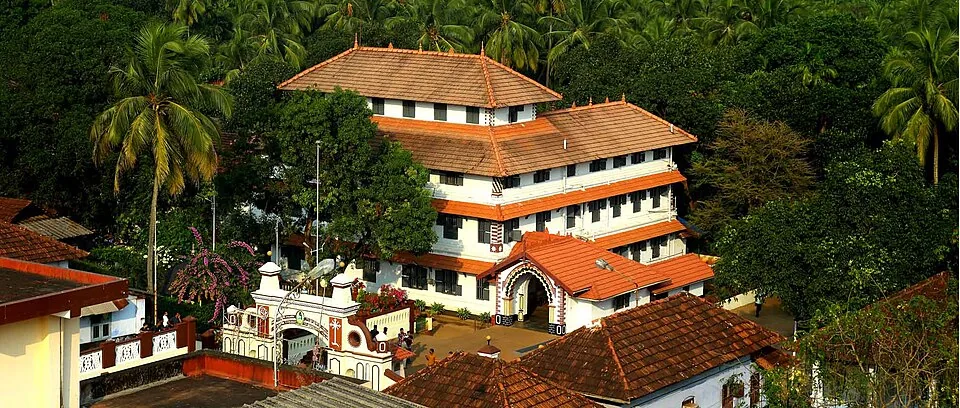
The famous Ayurveda institution at Kottakkal, founded in 1902 by Vaidyaratnam P.S. Varier — hospital, medicine-making, herb gardens and the PSV Natyasangham Kathakali academy.
7.0 km · straight line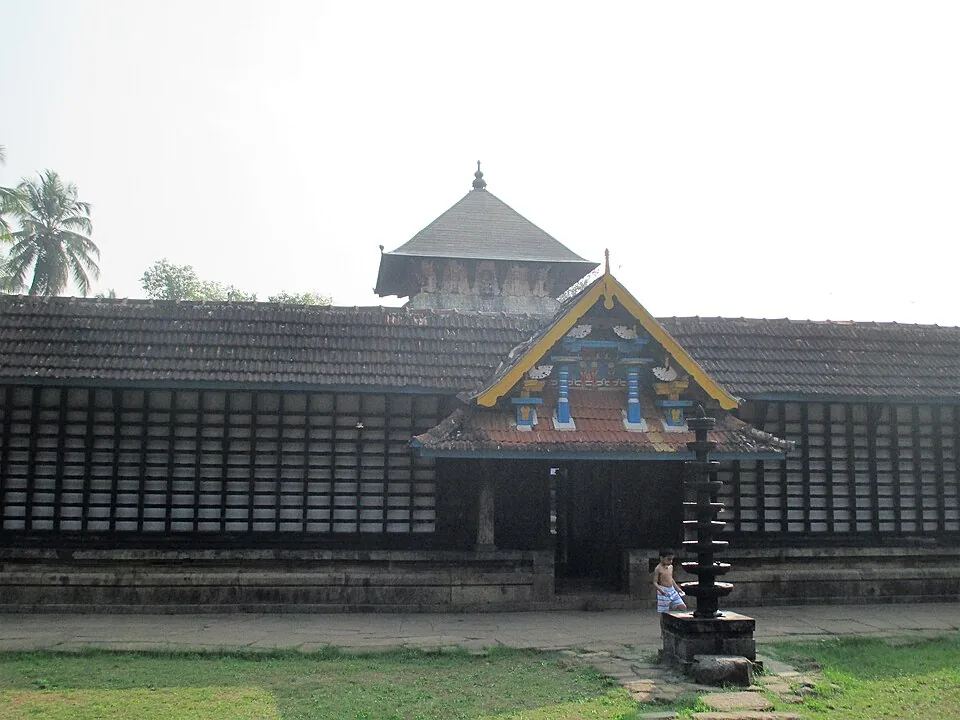
An ancient Vishnu temple on the Bharathapuzha at Thirunavaya, near the historic Mamankam fair-ground and a major venue for ancestral (bali/shraddha) rites.
8.7 km · straight lineA hill garden and cultural park in Malappuram town, with an art gallery, open-air theatre and amusement attractions — a popular family picnic spot.
12.4 km · straight line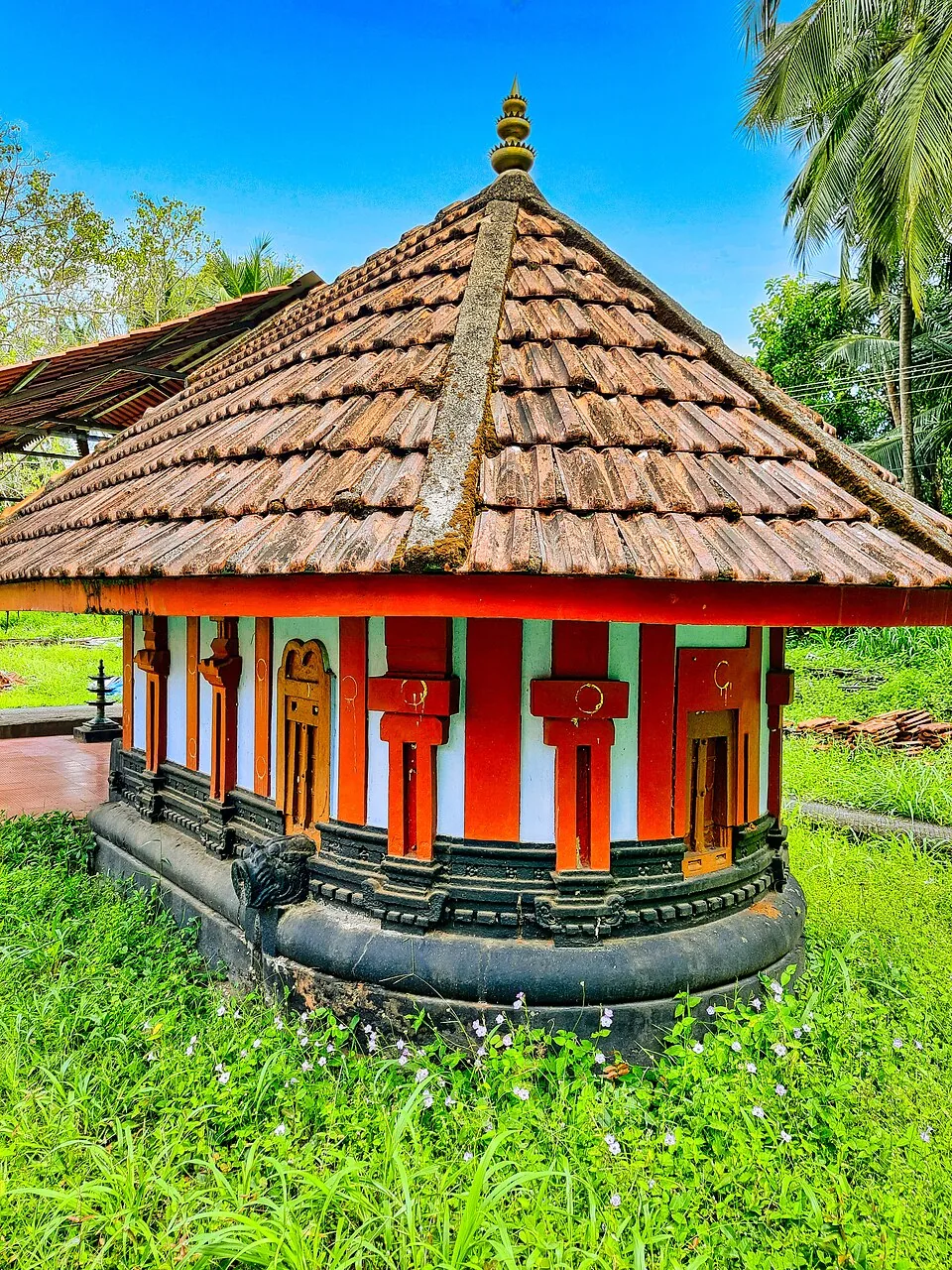
One of the hundred and eight Shiva temples of Kerala, a kilometre from Thunchan Parambu — an apsidal ninth-century shrine that opens at half past two in the morning because the god here was installed at dusk.
13.8 km · straight line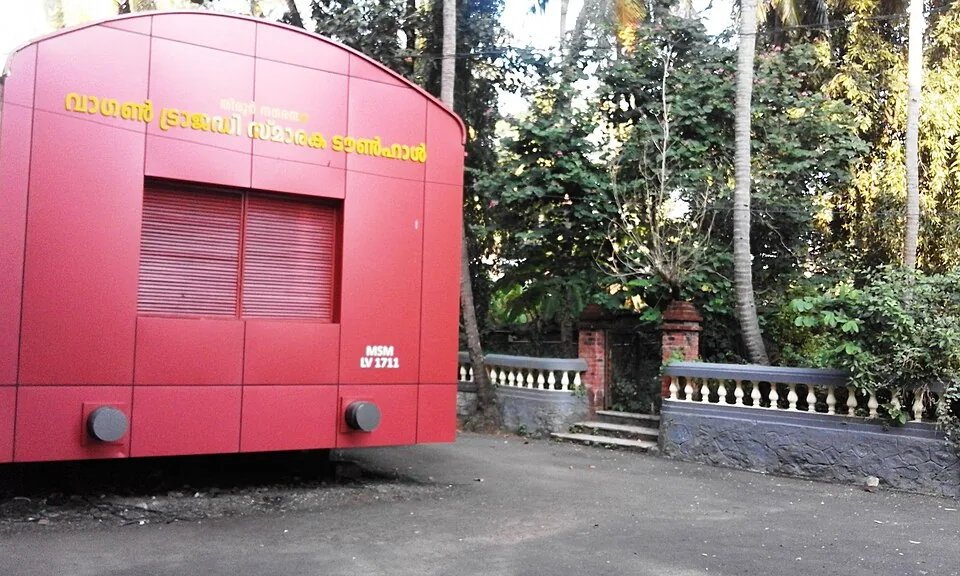
Tirur's town hall, built as a full-size railway goods wagon in signal red and lettered MSM LV 1711 — the memorial to the hundred prisoners shut into wagon 1711 at the station down the road on 19 November 1921.
13.8 km · straight line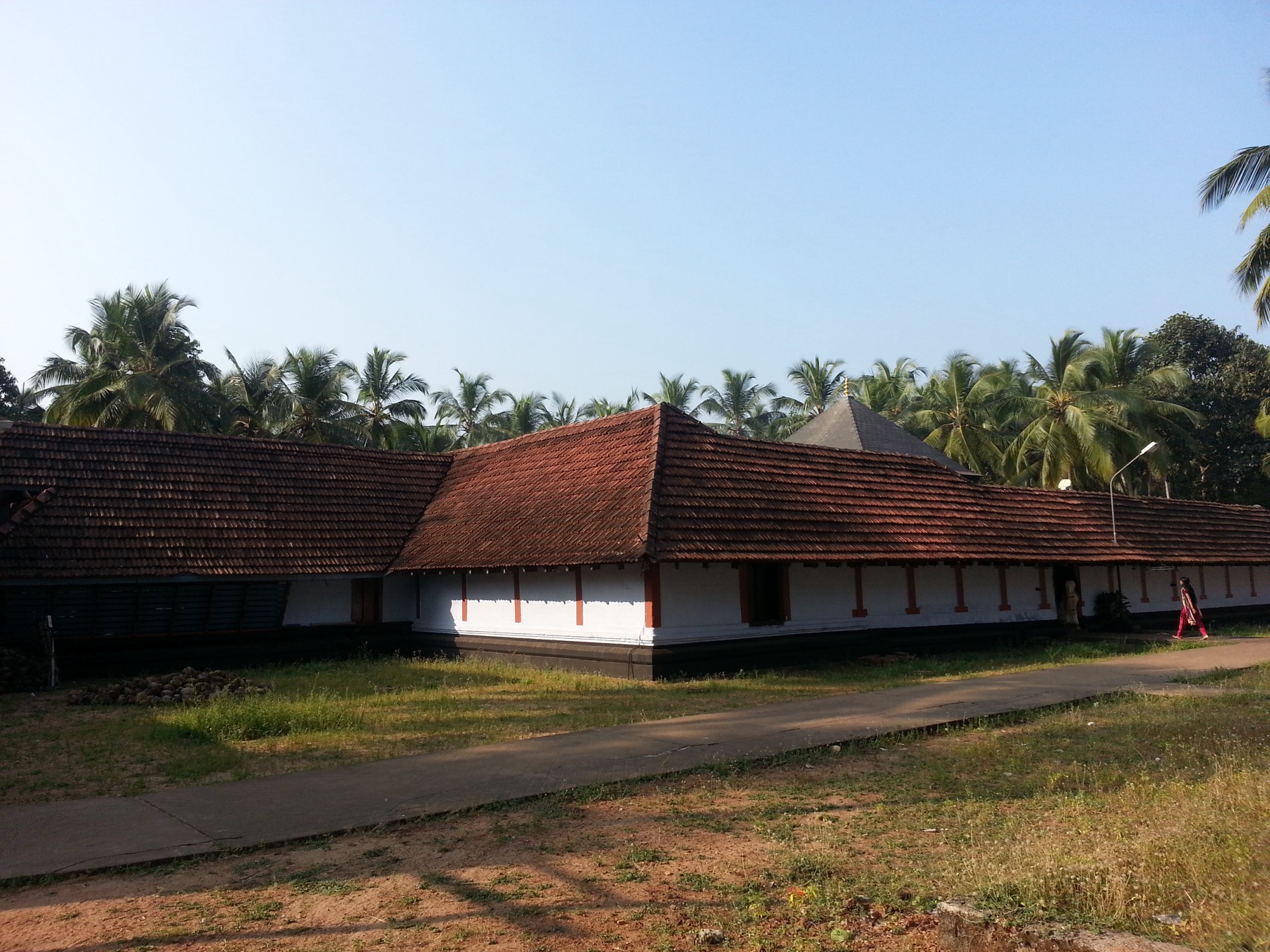
The Alathiyur Perumthrikkovil near Tirur, where the sanctum holds Sri Rama alone and the Hanuman carved outside it — leaning, caught in the act of listening to his orders — is the figure the crowds come for.
13.9 km · straight line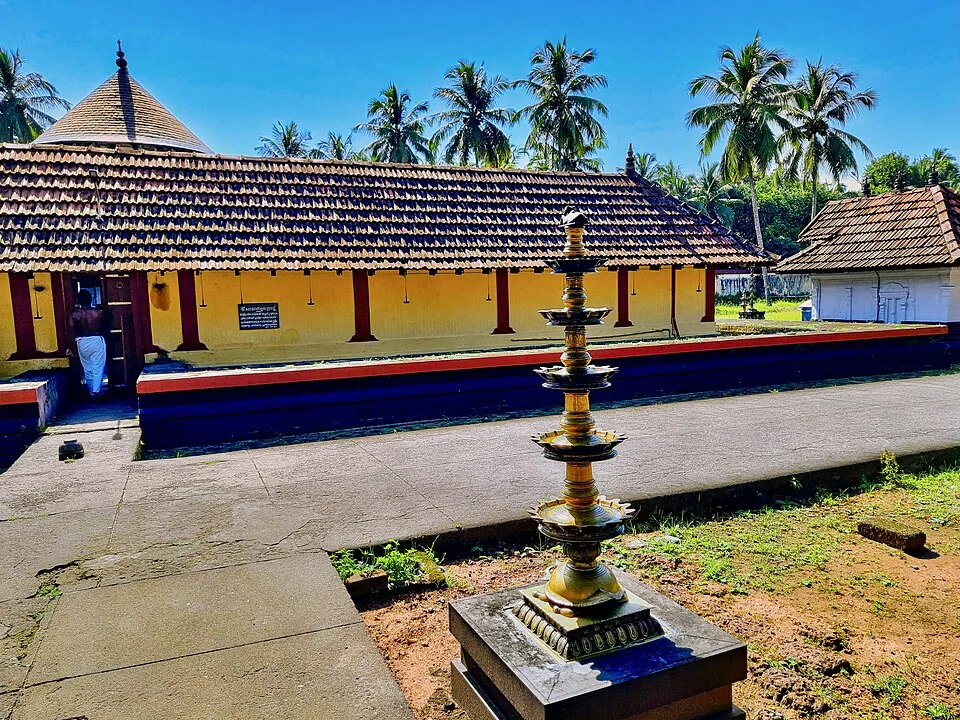
A west-facing Shiva temple south of Tirur, nine shrines inside six acres, built around the moment Shiva came out of the linga to stop Death taking the boy Markandeya.
14.3 km · straight line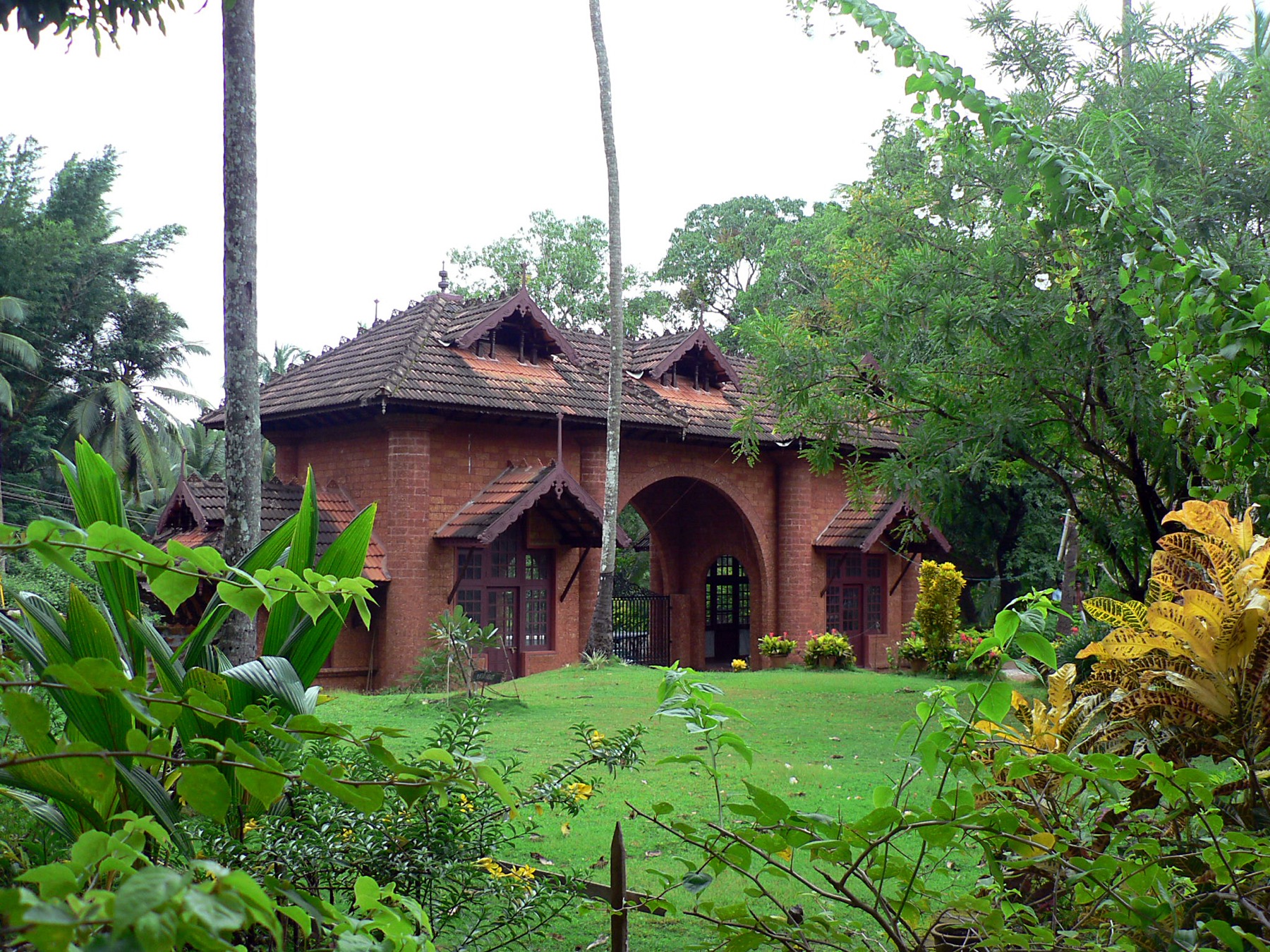
At Tirur, the ground of Thunchath Ezhuthachan, the “father of the Malayalam language” — a working literary institution with a museum, a manuscript library and the Vidyarambham first-letters tradition at Vijayadashami.
14.5 km · straight line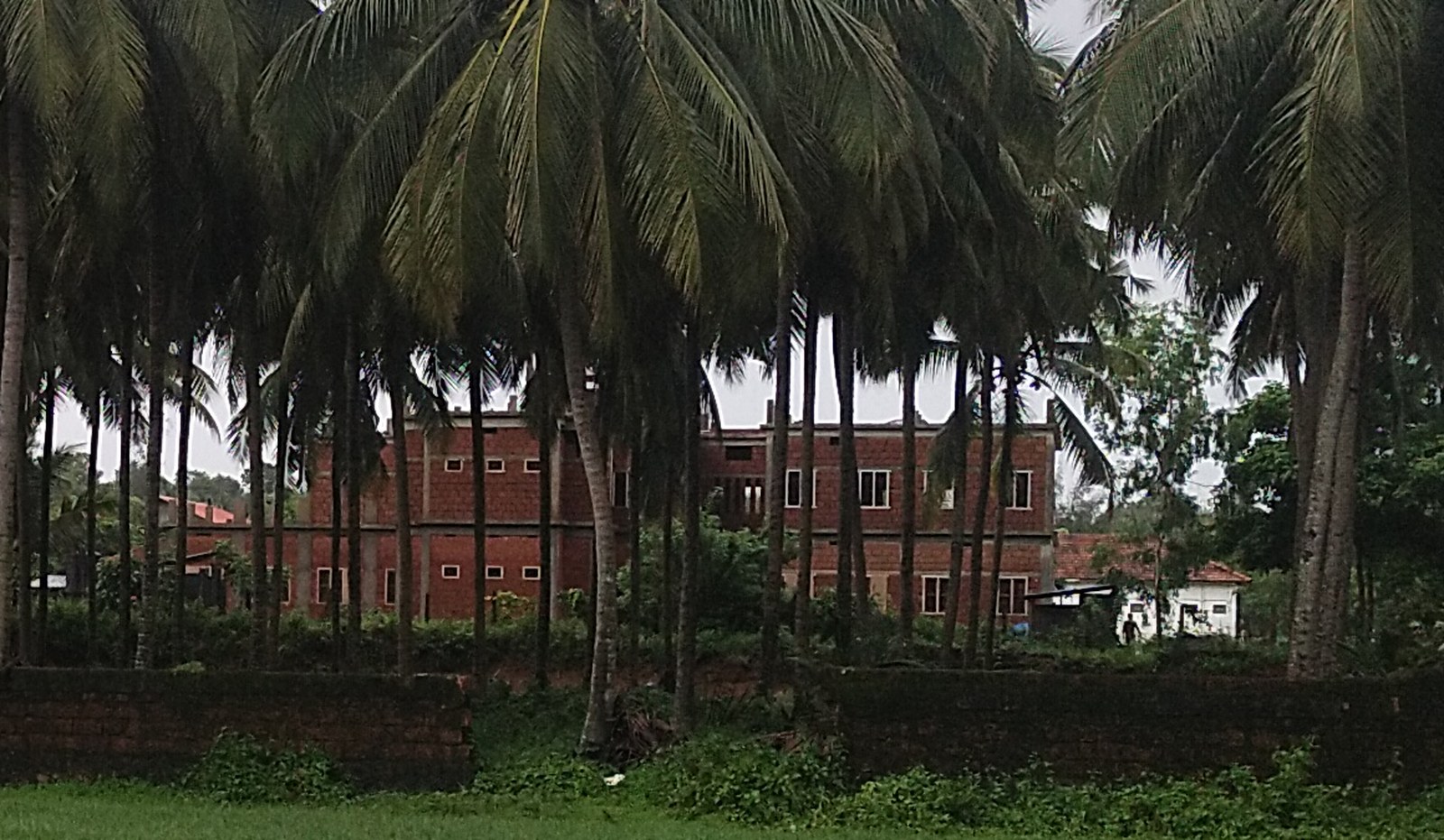
The state university at Vakkad, four kilometres west of Thunchan Parambu, founded in 2012 to teach the humanities and social sciences through Malayalam rather than English.
17.6 km · straight line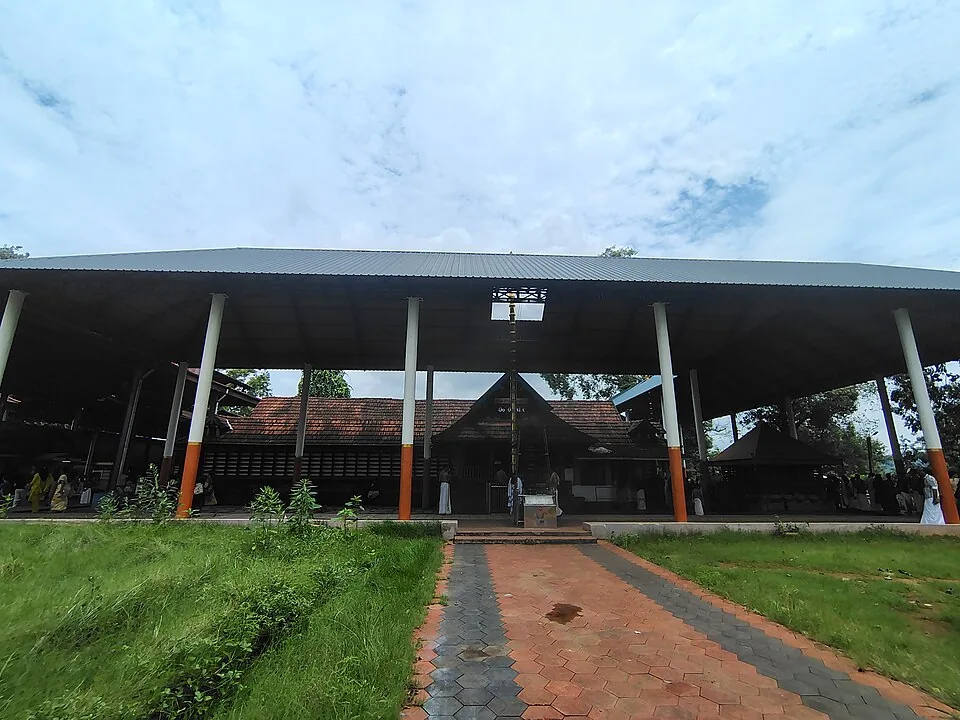
The Thirumandhamkunnu Bhagavathy (Durga) temple at Angadipuram — a major Devi pilgrimage and the paradevata shrine of the old Valluvanad rajas, famous for its Pooram festival.
17.7 km · straight line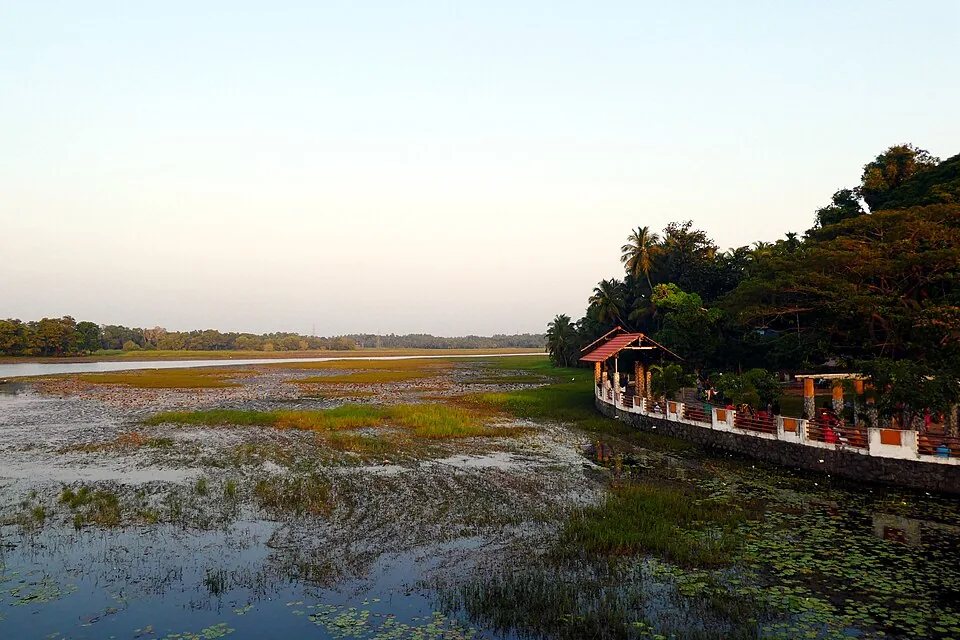
A calm coconut-fringed backwater and park near Ponnani, with boating and kayaking — a quieter, lesser-known alternative to the Alappuzha backwaters.
19.6 km · straight line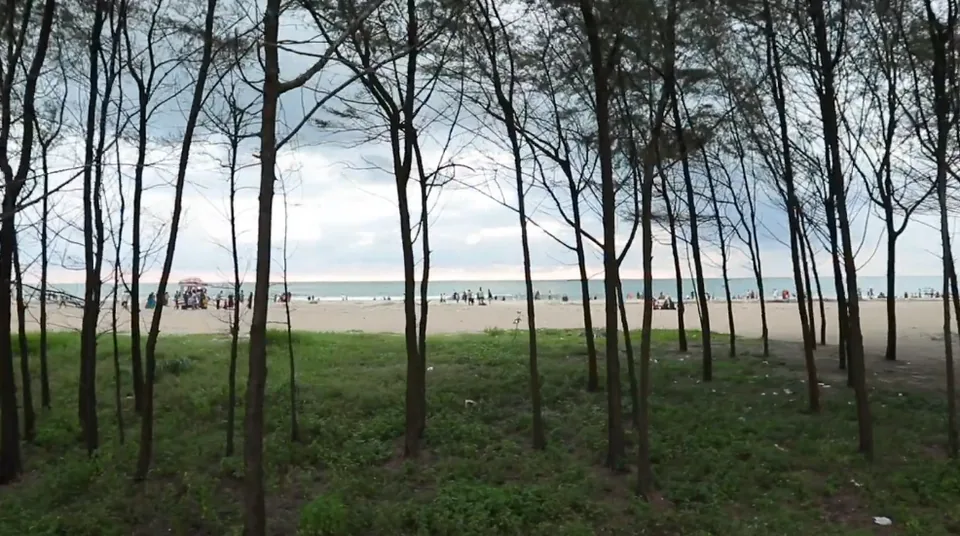
The sea-facing beach on the Padinjarekkara sandspit, with a casuarina belt behind the sand and a government park at the end of Tipu Sultan Road.
22.3 km · straight lineNearby toilets, pharmacies, ATMs, seating and vets are community-mapped and may be incomplete or out of date. Map data © OpenStreetMap contributors | Walking times © openrouteservice.org by HeiGIT
Kadampuzha is unusual in having no carved image of the goddess. The Devi is believed to be self-manifested and present within a small hole or pit in the ground, kept moist by an underground spring, and all rituals and offerings are directed into this spot. Tradition holds the goddess vanished into the hole after revealing herself, which is why worship is offered there rather than to an idol.
Muttarukkal is the temple's signature offering of breaking coconuts. Devotees dash coconuts against a stone, each carrying a prayer for the removal of obstacles or the fulfilment of a wish. It is traditionally performed in the morning hours (often cited as roughly 5 a.m. to 7 a.m. on weekdays), and Kadampuzha is famous for the enormous number of coconuts broken here.
Poomoodal is the offering in which the deity's spot is covered — literally buried — under a heap of wild thechi (Ixora) flowers. It is one of the temple's most celebrated and sought-after vazhipadu, linked in tradition to cooling and pleasing the goddess, and is usually booked in advance.
The main legend ties to the Mahabharata: while Arjuna performed penance to win Shiva's Pashupatastra, Shiva and Parvati are said to have appeared as a hunter (Kirata) and huntress to test him. The temple as a place of worship is by tradition credited to Adi Shankaracharya, who is said to have sensed the goddess's presence in the forest and consecrated the shrine. These are devotional traditions rather than documented history.
As with many traditional Kerala temples, entry customs and any restrictions on non-Hindus can apply and vary. Visitors are advised to check the current norms locally before planning a visit.
Traditional temple dress is expected. Men commonly remove upper garments or wear a mundu, and women dress modestly in a saree or similar; shorts and casual western wear are typically discouraged. Confirm the current dress code locally before you go.
Morning or early evening is usually best; festival days can be powerful but crowded.
Entry: Darshan is free. Ritual offerings such as Muttarukkal (coconut-breaking) and Poomoodal (flower-covering), and other vazhipadu, carry set charges and are often booked in advance; rates vary and change over time. Timings: Generally open for darshan in two sessions — roughly 4:30 a.m. to around noon in the morning and about 3:30 p.m. to 7:00 p.m. in the evening. Muttarukkal is traditionally offered only in the early-morning window (commonly cited as around 5 a.m. to 7 a.m. on weekdays). Timings vary on festival and special days.
Base yourself in Malappuram town or a nearby town in Malappuram, then confirm the last-mile route locally before leaving. Check temple entry customs, dress rules and festival crowd conditions before arrival. If the visit depends on forest, temple, boat, ferry, weather or seasonal access, check the official/local rule on the day before travel.
45 minutes to 2 hours, longer during festival or queue periods.
Nearby you can pair Kottakkal Arya Vaidya Sala (7.0 km, approximate straight-line separation), Thirunavaya Nava Mukunda Temple (8.7 km, approximate straight-line separation), Kottakkunnu (12.4 km, approximate straight-line separation), Trikkandiyoor Mahadeva Temple (13.8 km, approximate straight-line separation).
Use official counters for offerings/tickets where applicable. Keep footwear and valuables secure in crowded areas.
Written about Kadampuzha Devi Temple itself — its history, its legends and the arguments about them.
Route-level itineraries and practical guides for the rest of Kerala.
Photographs: Prof tpms (CC BY-SA 4.0), Sabarinathcnair (CC BY-SA 4.0), Naseem770 (CC BY-SA 3.0). Wikimedia Commons.