Wagon Tragedy Memorial

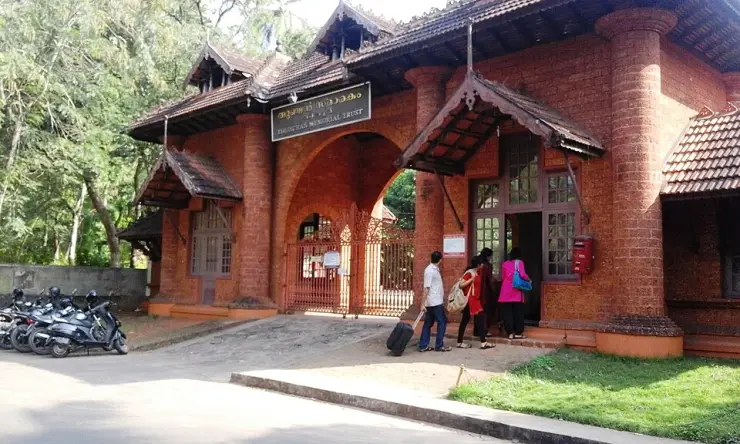
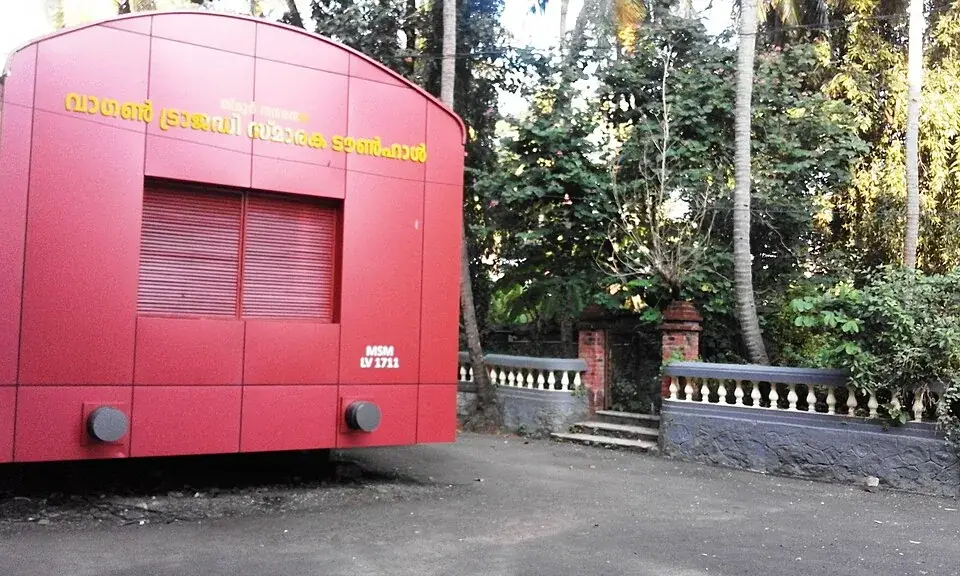
The town hall at Tirur is a railway goods wagon. Not a hall with a wagon outside it: the building itself was put up as one, in signal red on Railway Station Road, with MSM LV 1711 lettered on its flank in white, buffers modelled on the corners and its name across the side in Malayalam. On the evening of 19 November 1921, during the suppression of the Malabar rebellion, about a hundred Mappila prisoners were shut into a closed goods van of that number at the station half a kilometre away and sent to Podanur, 140 kilometres off, because the jails of the district were full. The doors were opened after midnight and the men inside had asphyxiated.

Wagon Tragedy Memorial, Tirur
Practical guide

Plan Wagon Tragedy Memorial

Who's going?Tailor Wagon Tragedy Memorial to your trip
Typeheritage
Nearest baseTirur
DistrictMalappuram
Best timeAny dry month
Time neededTwenty minutes for the building and the…
EntryNothing is charged
Places to visit7Listed businesses5

There is very little here that explains itself, and that is worth knowing before you come. The building is a working municipal hall, hired out for functions. The station is a short walk away and still in daily use. Forty-four of the dead lie at the Korangath Juma Masjid and eleven at the Kot Juma Masjid, both in the town, both places of worship rather than sites laid out for visiting. Read about what happened before you arrive, or the hall is only an odd shape by the road.

The story

The town hall at Tirur is a railway goods wagon. Not a hall with a wagon outside it — the building itself is built as one, painted signal red on Railway Station Road, with MSM LV 1711 lettered on its flank in white, buffers modelled on the corners and its name across the side in Malayalam: വാഗൺ ട്രാജഡി സ്മാരക ടൗൺഹാൾ, the Wagon Tragedy Memorial Town Hall. Half a kilometre away by road — three hundred metres as the crow flies — is the platform the original was coupled at. Nothing about the building is subtle and nothing about it is meant to be: on the evening of 19 November 1921 a hundred or so prisoners were shut into a closed wagon here, and most of them did not arrive.

The story of Wagon Tragedy Memorial

The wagon was a goods van of the Madras and Southern Mahratta Railway, numbered 1711. It was a closed one. Prisoners on this line were normally moved in open carriages, and the van used that night had been sealed — the accounts describe its remaining gaps stopped with sand and wire and the body freshly painted over. It was coupled to a passenger train heading for Madras.

The train left Tirur at about a quarter past seven in the evening and ran east and then south, stopping at Shoranur, then Olavakkode outside Palakkad, and finally at Podanur Junction, which it reached around half past twelve. The distance is not great; the journey took the better part of six hours.

When the doors were opened at Podanur the men inside had asphyxiated. The survivors were carried out and sent on to Coimbatore, and more died there. The prisoners had been taken during the suppression of the Malabar rebellion and were being moved south because the jails of the Malabar district were full.

One of the men who came out alive published his account of it sixty years later. Connolly Ahmad Haji's memoir, titled simply Wagon Tragedy, appeared in 1981, and the sentence of his that is always quoted is the moment he found out he was not dead: someone poured cold water into the wagon, his body shivered, and only then was he found to be alive.

The transport was ordered and supervised by Richard Harvard Hitchcock, District Superintendent of Police for Malabar. The men loaded were peasants — about a hundred of them, of whom four were Hindus, the rest Mappila Muslims — and the destination was a jail 140 kilometres away because there was no room left in the district's own.

The building the town put up in answer to that is not a plinth with a plaque. It is a full-size goods van rendered in concrete and painted signal red, standing at the roadside with its name across the flank in Malayalam letters a foot high, buffers modelled on the corners and shuttered openings where the van's doors would be. The lettering MSM LV 1711 is picked out in white on the lower panel: the Madras and Southern Mahratta Railway, its livestock-van class, and the number of the wagon itself.

The bodies were brought back up the line to Tirur. Forty-four of them were buried at the Korangath Juma Masjid in the town and eleven at the Kot Juma Masjid. Those two graveyards are the other half of this memorial and they are a short distance from the hall.

The other buildings are worth an hour if the shape has caught your interest. Libraries and school blocks around the town were put up in the same form — long, red, round-shouldered, with the buffers modelled on — so the wagon recurs in ordinary civic architecture across Tirur rather than standing once as a monument. A town that builds its reading rooms in the shape of the thing that killed its people has made a decision about memory that is hard to find anywhere else.

The two graveyards complete it and they are the part most visitors miss. The bodies came back up the same line they had gone down. Forty-four were buried at the Korangath Juma Masjid and eleven at the Kot Juma Masjid, both within the town, both places of worship in daily use rather than sites laid out for visiting. There is no interpretation and no signage; there are graves.

The town did not stop at one building. Libraries and school buildings in Tirur have also been put up in the shape of a wagon, so the form repeats through the town in ordinary civic architecture — a reading room, a school block — rather than being confined to a monument. It is an unusual way for a place to remember something, and it means the memorial is not really a single site at all.

Legend & myth

The numbers are the part of this that has never settled, and the disagreement is old enough to be part of the story. English-language accounts give seventy dead — sixty-four inside the wagon and six afterwards in hospital. Malayalam accounts more often give sixty-four as the official count, and put the number of men shut in as high as a hundred and twenty-two. Reporting at the centenary described more than a hundred detained and sixty-four dead of asphyxiation. A newspaper account of the station mural in 2018 described sixty-seven of ninety.

There is no photograph of what happened. Nothing was taken inside the wagon and nothing was taken at Podanur when the doors came open, so every image of the event is a later work: a painting, a re-enactment staged in the street by a commemorative committee, a mural. That is why the argument about the mural at the station in 2018 was an argument about the only kind of picture that exists.

The date moves too, for a simple reason: the train left on the evening of 19 November and the doors were opened after midnight, so 19 and 20 November are both defensible and both are printed, and some accounts have drifted to the 21st.

What is not in dispute is the finding. An inquiry held that the maker of the wagon, the transport officer and the sergeant had all been negligent in using a closed van instead of an open one. All of them were acquitted.

The memory has stayed contested into living politics. In November 2018 a mural of the tragedy was painted at Tirur railway station and painted over within days after complaints; the Palakkad railway division said the public had found it objectionable on station premises and that it was not beautiful, the mural having shown bodies spilling out of a wagon. The chief minister called the removal an insult to the freedom struggle. A hundred years on, the argument at Tirur is still about whether the thing may be depicted.

Read the full history of Wagon Tragedy Memorial 664 more words

History

The rebellion this belongs to began in the Ernad and Valluvanad taluks in August 1921 and was suppressed over the following months with mass arrests. By November the district jails were full, which is the whole administrative reason a hundred men were on a train at all.

The rebellion had begun in the Ernad and Valluvanad taluks in August 1921 after a police raid on a mosque at Tirurangadi, and by the autumn it had been put down with a scale of force that is now estimated to have killed more than ten thousand people in Malabar over the decade. The wagon is remembered above the rest of it partly because the number is small enough to hold in the mind and partly because the mechanism was so exactly bureaucratic: nobody swung anything, somebody chose the wrong van.

That is also why the acquittals sit so badly. The finding was not that the deaths were unforeseeable but that three named roles had been negligent, and the punishment that followed the finding was none. The memorial does not mention it. The building simply reproduces the object.

The station they left from was already sixty years old that night, and had been in continuous use since the line through it opened. That is the platform's story rather than the memorial's, and Tirur's own page tells it.

What the rebellion was is still argued about, and the argument reaches this building. One reading holds it a peasant rising against British power and the landlord system that British rule underwrote, in which religion supplied the organisation rather than the motive. Another holds it a communal outbreak that happened to be aimed at a colonial state. Both readings have serious historians behind them and neither is going to win, because the rising was large, long and not uniform across the district.

That dispute became an administrative act in the centenary year. In August 2021 a committee of the Indian Council of Historical Research proposed removing 387 Mappila names from the national Dictionary of Martyrs of India's Freedom Struggle, on the ground that the rising was communal rather than anti-colonial. The men who died in wagon 1711 belong to that period and to that argument. A visitor standing in front of a red concrete goods van in a small Kerala town is therefore standing in front of an unfinished national quarrel, which is not obvious from the road.

The town's own position has never been in doubt. It built the memorial, it built libraries and school blocks in the same shape, it holds the commemoration every November, and when the mural at the station was painted out in 2018 the objection came from outside the town, not from it. Whatever the wider argument concludes, Tirur has settled its own.

The centenary in 2021 was marked publicly across Malabar, and the anniversary is observed in Tirur each November. The hall itself is a working municipal building — it is hired for functions and meetings like any other town hall — which is the ordinary afterlife of most memorials and is worth knowing before arriving expecting a museum.

Why visit

The building is a memorial in the literal sense: a town hall built in the shape of the goods wagon that killed the men it commemorates.

It carries MSM LV 1711 on its side in white lettering, and the memorial statue stands a few paces away.

The platform the wagon was coupled at is half a kilometre off, still in daily use, and is the oldest working railway station in Kerala.

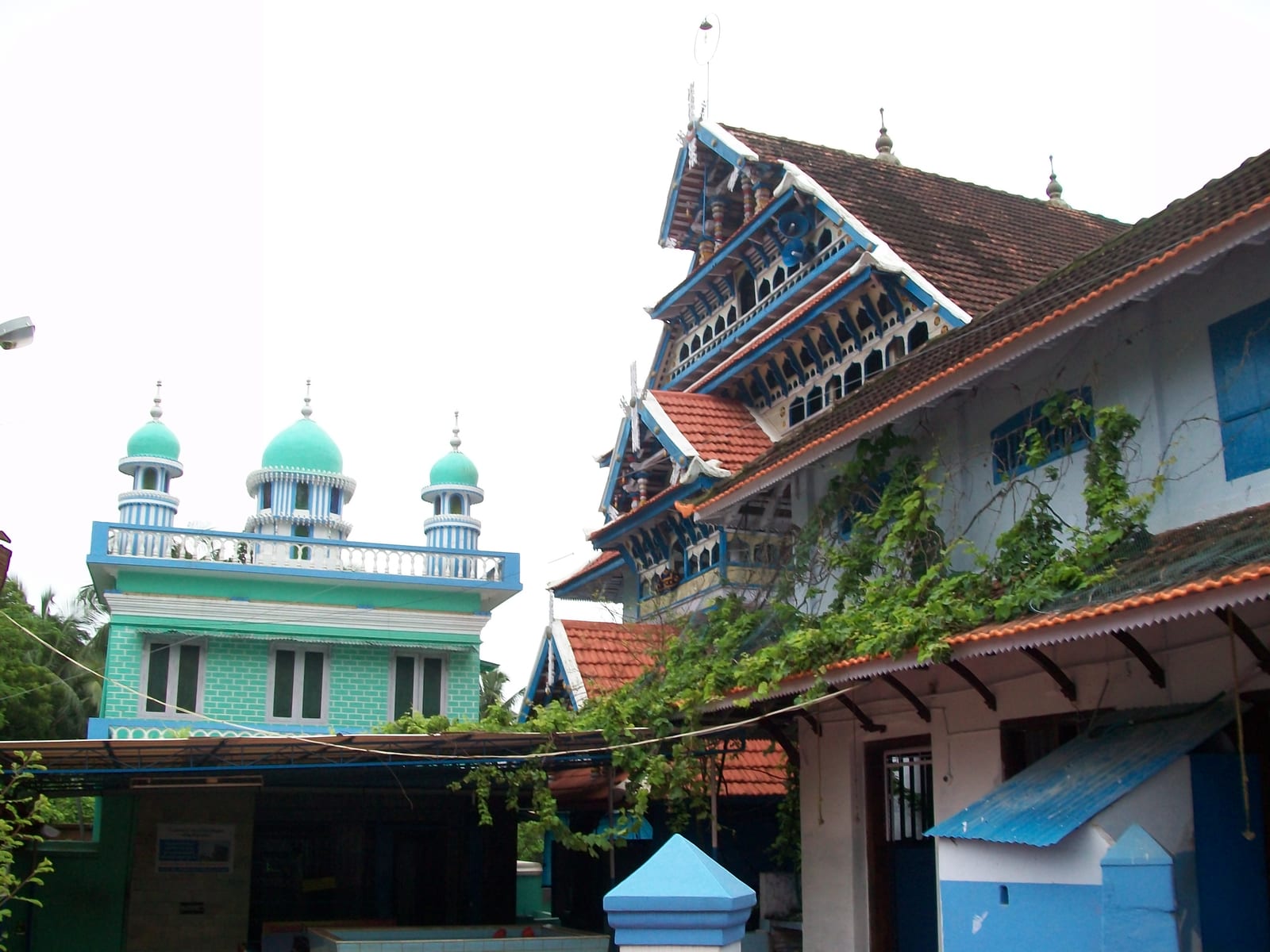
Forty-four of the dead are buried at the Korangath Juma Masjid and eleven at the Kot Juma Masjid, both a short walk from the hall.

Libraries and school buildings elsewhere in the town repeat the wagon shape, so the memorial runs through ordinary civic architecture rather than standing alone.

A survivor's own account of the night was published in 1981 and is the reason the human detail of it is recoverable at all.

What to expect

Highlights

  • A town hall built as a full-size goods wagon, lettered MSM LV 1711 for the Madras and Southern Mahratta Railway van the men died in.
  • The memorial statue a few paces from it, mapped separately and standing on the same road.
  • Tirur station, half a kilometre away — the oldest working railway station in Kerala, and the platform the wagon was coupled at.
  • Libraries and school blocks elsewhere in the town built in the same wagon shape, so the memorial recurs through ordinary civic architecture.
  • The Korangath and Kot Juma Masjids, where the bodies brought back up the line were buried.
Getting there

How to visit

  • Walk from Tirur station. It is half a kilometre by road and about three hundred metres in a straight line, and everything on this page is within a kilometre of the platform.
  • Start at the wagon end of the building, where the lettering and one of the modelled buffers are in the same view, then stand back far enough to see that the building is the wagon.
  • Walk down to the platform afterwards. Standing on it is the part of this that lands.
  • Visit the two graveyards quietly and dressed as you would for any mosque; they are in daily use and there is no interpretation at either.
  • Give it an hour and a half on foot, or half a morning if you are also going up to Trikkandiyoor and Thunchan Parambu.

Distance by road

  • Kozhikode49 km
  • Coimbatore133 km
  • Kochi168 km
  • Mysuru192 km
  • Mangaluru277 km

Road km to Malappuram; ghat roads and traffic vary — allow extra.

Timing

Best time

Any dry month; October to March is the comfortable half of the year. The anniversary falls in November and is marked in the town each year, which is the one time there is anything organised to see. Weekday mornings are busy on Railway Station Road, so early is easier for photographs.

Weather in Wagon Tragedy MemorialSeasonal guide

Live forecast loads in your browser.

Today at Wagon Tragedy Memorial
Sunrise6:17 am
Sunset6:37 pm
Golden hour best light5:37 pm–6:37 pm
Blue hour after sunset6:37 pm–7:02 pm
Sun sets toward compass bearingW · 279°
Moon tonight🌖 Waning gibbous · 83%
South-west monsoon. June to September is the south-west monsoon in Kerala. Expect heavy showers, mostly in bursts rather than all day — carry rain cover, allow extra time for getting around, and note that ferries and open-air sites are the first things affected.

Sun and moon are calculated for this location and shown in IST. Photography windows are the hour around sunrise and sunset; the sunset bearing is degrees clockwise from true north. Moon phase is accurate to about half a day.

Visitor notes

  • This is a working town hall and what is open depends on what is booked in it. The building, its lettering and the statue are outside and can be seen at any time.
  • Nothing on the site sets out the history. The account is on this page because it is not on a board there.
  • A mural of the tragedy was painted at the railway station in November 2018 and painted over within days after complaints, so do not go looking for it.
  • The number of dead is given differently by different accounts and the disagreement is old. Seventy is the usual English figure; Malayalam accounts often give sixty-four as the official count and put the number of prisoners as high as a hundred and twenty-two.
Safety

Good to know

  • Railway Station Road is a busy town-centre street with narrow footways and heavy auto traffic.
  • The station platforms are live and electrified. Photographs of the track are best taken from the platform rather than from the line.
Stay · eat · do · rent · see · shop

Stays, food & things to do near Wagon Tragedy Memorial

Verified hotels, homestays, restaurants, experiences, sights, shops and rentals around Wagon Tragedy Memorial — commission-free, with direct contact. Filter by what you need.

Grace Residency Restaurant Tirur — Hotel restaurant in Tirur
Top pick Verified
Hotel restaurant · Tirur
Grace Residency Restaurant Tirur

The dining side of Grace Residency, the budget hotel at Thazhepalam in central Tirur. The hotel's own site lists breakfast among its services and gives no separate name, address or phone for a restaurant, so treat this as the hotel's kitchen rather than a place in its own right.

Commission-freeView details
Grace Residency Tirur — Direct Tirur city hotel in Tirur
Top pick Verified
Direct Tirur city hotel · Tirur
Grace Residency Tirur

A budget-friendly hotel in the heart of Tirur town with AC suites and deluxe rooms. It sits within walking distance of Thunchan Parambu.

Commission-freeView details
Alathiyur Hanuman Temple — Temple in Tirur
Top pick Verified
Temple · Tirur
Alathiyur Hanuman Temple

A Hanuman temple at Alathiyur, about six kilometres south of Tirur, where the deity is shown leaning forward as though listening. It is a working temple with its own timings and customs, so check locally before planning a visit around it.

Commission-freeView details
Trikkandiyoor Mahadeva Temple — Temple in Tirur
Verified
Temple · Tirur
Trikkandiyoor Mahadeva Temple
1.1 km · 13 min walk

One of the hundred and eight Shiva shrines of Kerala, a kilometre from Thunchan Parambu in the same locality. It opens at about half past two in the morning, which is earlier than almost any temple in the state, and its signature hour is the pradosha twilight worship.

DirectionsView guide
Triprangode Maha Shiva Temple — Temple in Tirur
Verified
Temple · Tirur
Triprangode Maha Shiva Temple
7.2 km · ~18 min by auto

A ninth-century Shiva temple complex about six kilometres south of Tirur, in the same direction as Alathiyur. It is a working temple with its own timings, and it is a separate place from the Trikkandiyoor shrine in the town.

DirectionsView guide
P
Prosland Hotel
Place to stay
Top pick
Hotel · Tirur
Prosland Hotel

A contemporary hotel at B.P Angadi in central Tirur with suites and a party hall. Its kitchen serves regional and global cuisine, plus spa services.

Commission-freeView details
J
Just Loaf
Where to eat
Top pick
Restaurant · Tirur
Just Loaf
Burgers & Fries

A homegrown burger-and-fries joint that launched in Tirur. Started by seven school friends, it now has branches in Calicut, Thrissur, Kochi and Bengaluru.

Commission-freeView details
T
Thunchan Smaraka Pusthakapura
Shop
Verified
Bookshop and reading room · Tirur
Thunchan Smaraka Pusthakapura
890 m · 11 min walk

The Thunchan Memorial Trust’s own book house, on the memorial grounds at Trikkandiyoor. It sells the Trust’s publications alongside other Malayalam publishers, and the reading room beside it keeps different hours from the rest of the grounds.

Directions Commission-freeView details
T
Thunchath Ezhuthachan Malayalam University
Sight
Verified
University · Tirur
Thunchath Ezhuthachan Malayalam University
4.5 km · ~11 min by auto

Kerala’s only Malayalam-medium university, named for the poet whose ground lies four kilometres east at Thunchan Parambu. It was inaugurated in 2012 and teaches the humanities and social sciences through Malayalam from a campus at Vakkad.

DirectionsView guide
T
Tirur Town Hall and the Wagon Tragedy Memorial
Sight
Verified
Memorial · Tirur
Tirur Town Hall and the Wagon Tragedy Memorial
10 m · 1 min walk

The town hall itself is built as a full-size railway goods wagon, in signal red and lettered MSM LV 1711 — the memorial to about a hundred prisoners shut into wagon 1711 at Tirur station on 19 November 1921. A memorial statue stands a few paces away.

DirectionsView guide

Book with the place itself. India’s cyber-crime coordination centre warned in April 2025 that convincing copies of hotel and pilgrimage booking sites are being pushed through sponsored search and social ads, taking payment for rooms the property never hears about. Every listing here links to the business’s own contact details and its own Google or Bing profile — we take no commission and sit in nobody’s payment path. If a booking page reached you through an ad, check the address bar against the property’s own site before you pay. Fraud can be reported on cybercrime.gov.in or on 1930.

Ranked

The best of Tirur, ranked

Wagon Tragedy Memorial sits in Tirur, and these rank everything verified across the town rather than this one spot — built from the same listings shown above, ordered by the strength of the source evidence behind each entry rather than by anyone's star score. Every card shows how many places are really on it. Nobody pays to appear.

Across the whole of Tirur

Ranked guides

Top experiences around Tirur

6 more places around Tirur, each worth a day of its own.

templeThirunavaya Nava Mukunda Temple

7.8 km · ~20 min by auto

An ancient Vishnu temple on the Bharathapuzha at Thirunavaya, near the historic Mamankam fair-ground and a major venue for ancestral (bali/shraddha) rites.

templeAlathiyur Hanuman Temple

5.2 km · ~13 min by auto

The Alathiyur Perumthrikkovil near Tirur, where the sanctum holds Sri Rama alone and the Hanuman carved outside it — leaning, caught in the act of listening to his orders — is the figure the crowds come for.

templeTrikkandiyoor Mahadeva Temple

1.1 km · 13 min walk

One of the hundred and eight Shiva temples of Kerala, a kilometre from Thunchan Parambu — an apsidal ninth-century shrine that opens at half past two in the morning because the god here was installed at dusk.

templeTriprangode Maha Shiva Temple

7.2 km · ~18 min by auto

A west-facing Shiva temple south of Tirur, nine shrines inside six acres, built around the moment Shiva came out of the linga to stop Death taking the boy Markandeya.

heritageThunchath Ezhuthachan Malayalam University

4.5 km · ~11 min by auto

The state university at Vakkad, four kilometres west of Thunchan Parambu, founded in 2012 to teach the humanities and social sciences through Malayalam rather than English.

heritageThunchan Parambu

900 m · 11 min walk

At Tirur, the ground of Thunchath Ezhuthachan, the “father of the Malayalam language” — a working literary institution with a museum, a manuscript library and the Vidyarambham first-letters tradition at Vijayadashami.

Roampedia is commission-free — own or know a stay, eatery, guide or shop near Wagon Tragedy Memorial? List it and it appears here once verified.

Add a nearby business
Before you go

Wagon Tragedy Memorial — at a glance

TimingsNo visitor hours are published, because this is a working town hall rather than a museum. The memorial outside it is in the open and is always accessible.

Entry: Nothing is charged. The wagon, the statue and the building can be seen from the road at any time; the hall itself is a municipal venue and what is open depends on what is booked.

Photography: The frame is the red end of the building from the road, with the lettering and one of the modelled buffers in shot. The memorial statue stands a few paces away and the station name board is a short walk down the road.

Parking: Street parking in the town centre, which is busy on weekday mornings. Most people arrive on foot from the station.

Getting here

How to reach Wagon Tragedy Memorial

  • ✈︎ By air Calicut International Airport at Karipur is about 35 km by road.
  • 🚆︎ By train Tirur station is the arrival point — half a kilometre by road and an easy walk. It is the oldest working railway station in Kerala and it is the platform this memorial is about.
  • 🚗︎ By road Railway Station Road, in the town centre. Thunchan Parambu is 1.6 km away and Trikkandiyoor about two kilometres.
  • 🚌︎ By bus Tirur bus stand is close by in the town centre; everything here is within walking distance of everything else.
Getting back

Work out your return before you settle in for the sunset. Public transport here thins out sharply in the evening, and Wagon Tragedy Memorial is easier to reach than to leave. We do not publish departure times: there is no official live feed we are permitted to republish, and a wrong time here would strand you. Check the operator directly on the day.

Ask at the bus stand for the time of the last service back, not the next one. If you miss it, an auto or app cab is the fallback — agree the fare before you get in.

Do

Things to do

  • Read the lettering on the flank — MSM LV 1711 — and then stand back far enough to see that the building is the wagon.
  • Walk down to the station platform, which is where the wagon was coupled and is still in daily use.
  • Go to the Korangath Juma Masjid, where forty-four of the dead are buried, and to the Kot Juma Masjid, where eleven are.
  • Notice the other wagon-shaped buildings in the town — libraries and school blocks were built to the same form.
Plan

Good to know

  • There is nothing here that explains itself at length. Read about what happened before you come, or the building is just an odd shape.
  • The hall is hired out for functions, so it may be busy, closed or full of a wedding. The memorial outside is unaffected.
  • Everything on this page is within a kilometre of the station, so it is a walk rather than a drive.
  • The graveyards are places of worship in daily use; visit them quietly and dress accordingly.
Getting around Wagon Tragedy Memorial

We have not assessed physical access at this place yet. Across India, step-free routes, handrails and accessible toilets are the exception rather than the rule, and pavements are often interrupted — if step-free access matters to you, contact the site or a local operator before committing to the trip.

If you need help at Wagon Tragedy Memorial
112All emergencies (police · fire · medical)The single number to call in any emergency (ERSS).

Emergency numbers are verified against official government and state tourism sources. 112 works anywhere in India.

Nearby

What’s near Wagon Tragedy Memorial

heritageThunchan Parambu 900 m · 11 min walk · straight line
templeTrikkandiyoor Mahadeva Temple 1.1 km · 13 min walk · straight line
heritageThunchath Ezhuthachan Malayalam University 4.5 km · ~11 min by auto · straight line
templeAlathiyur Hanuman Temple 5.2 km · ~13 min by auto · straight line
templeTriprangode Maha Shiva Temple 7.2 km · ~18 min by auto · straight line
templeThirunavaya Nava Mukunda Temple 7.8 km · ~20 min by auto · straight line
heritageKottakkal Arya Vaidya Sala 13.3 km · ~22 min by cab · straight line
beachPadinjarekara Beach 13.7 km · ~23 min by cab · straight line
templeKadampuzha Devi Temple 13.8 km · ~23 min by cab · straight line
backwaterBharathapuzha estuary 14.2 km · ~24 min by cab · straight line
mosquePonnani Juma Masjid 15.1 km · ~25 min by cab · straight line
backwaterBiyyam Kayal 15.3 km · ~26 min by cab · straight line

All 7 places to visit in Tirur →

On the map

Where Wagon Tragedy Memorial is

Good to know

Wagon Tragedy Memorial — frequently asked

What was the wagon tragedy?

On the evening of 19 November 1921, during the suppression of the Malabar rebellion, about a hundred Mappila prisoners were shut into a closed goods wagon of the Madras and Southern Mahratta Railway, numbered 1711, at Tirur station and sent to Podanur because the Malabar jails were full. The train left at about 7.15 pm and reached Podanur around 12.30 am. When the doors were opened the men had asphyxiated.

How many died?

The accounts differ and it is worth knowing that they do. English sources give seventy — sixty-four in the wagon and six later in hospital. Malayalam accounts often give sixty-four as the official count and put the number of prisoners as high as a hundred and twenty-two. Centenary reporting gave more than a hundred detained and sixty-four dead; a 2018 newspaper account gave sixty-seven of ninety.

Was anyone punished?

No. An inquiry found the wagon's maker, the transport officer and the sergeant negligent for using a closed van rather than an open one. All three were acquitted.

Why is the town hall shaped like a wagon?

It is the memorial — the building was put up as one, in signal red with MSM LV 1711 lettered on its flank and buffers modelled on its corners, and the memorial statue stands a few paces away. Libraries and school buildings in Tirur have been built in the same shape.

Where are the dead buried?

The bodies brought back from Podanur were buried in the town: forty-four at the Korangath Juma Masjid and eleven at the Kot Juma Masjid.

Did anyone survive?

Yes. Connolly Ahmad Haji lived and published his account, titled Wagon Tragedy, in 1981. He described being found alive only when someone poured cold water into the wagon and his body shivered.

Who ordered the men onto the train?

Richard Harvard Hitchcock, District Superintendent of Police for Malabar, ordered and supervised the transport. The prisoners were about a hundred peasants, of whom four were Hindus and the rest Mappila Muslims, and they were being moved 140 kilometres to Podanur because the Malabar jails were full.

Why is the rebellion still argued about?

Because two serious readings of it survive: a peasant rising against colonial power and the landlord system it upheld, in which religion supplied the organisation; and a communal outbreak aimed at a colonial state. In August 2021, the centenary year, a committee of the Indian Council of Historical Research proposed removing 387 Mappila names from the national Dictionary of Martyrs on the second reading. The dispute is unresolved and the men of wagon 1711 are inside it.

Are there photographs of what happened?

None. Nothing was photographed inside the wagon or at Podanur when it was opened, so every image of the event — the paintings, the street re-enactments, the station mural — is a later reconstruction.

Can you go inside?

It is a working municipal town hall, hired for functions and meetings, so what is open depends on what is on. The building, its lettering and the statue are all outside and can be seen at any time.

Is the station worth walking to?

It is half a kilometre by road, three hundred metres straight-line, and it is the oldest working railway station in Kerala. A mural of the tragedy was painted there in November 2018 and painted over within days after complaints.

Which date is right, 19 or 20 November?

Both are used, for a straightforward reason: the train left Tirur on the evening of the 19th and the wagon was opened at Podanur after midnight on the 20th. Some accounts have drifted to the 21st.

When is the best time to visit Wagon Tragedy Memorial?

Any dry month; October to March is the comfortable half of the year. The anniversary falls in November and is marked in the town each year, which is the one time there is anything organised to see. Weekday mornings are busy on Railway Station Road, so early is easier for photographs.

What are the entry fee and timings at Wagon Tragedy Memorial?

Entry: Nothing is charged. The wagon, the statue and the building can be seen from the road at any time; the hall itself is a municipal venue and what is open depends on what is booked.. Timings: No visitor hours are published, because this is a working town hall rather than a museum. The memorial outside it is in the open and is always accessible.

How do I reach Wagon Tragedy Memorial?

Walk from Tirur station. It is half a kilometre by road and about three hundred metres in a straight line, and everything on this page is within a kilometre of the platform. Start at the wagon end of the building, where the lettering and one of the modelled buffers are in the same view, then stand back far enough to see that the building is the wagon. Walk down to the platform afterwards. Standing on it is the part of this that lands. Visit the two graveyards quietly and dressed as you would for any mosque; they are in daily use and there is no interpretation at either. Give it an hour and a half on foot, or half a morning if you are also going up to Trikkandiyoor and Thunchan Parambu.

How much time do I need for Wagon Tragedy Memorial?

Twenty minutes for the building and the statue; an hour and a half if you walk the station and the two graveyards, which is the version worth doing.

What else is near Wagon Tragedy Memorial?

Nearby you can pair Thunchan Parambu (900 m), Trikkandiyoor Mahadeva Temple (1.1 km), Thunchath Ezhuthachan Malayalam University (4.5 km), Alathiyur Hanuman Temple (5.2 km).

What should I know before visiting Wagon Tragedy Memorial?

Railway Station Road is a busy town-centre street with narrow footways and heavy auto traffic. The station platforms are live and electrified. Photographs of the track are best taken from the platform rather than from the line.

Read before you go

Wagon Tragedy Memorial guides, stories & itineraries

Stories & history of Wagon Tragedy Memorial

Written about Wagon Tragedy Memorial itself — its history, its legends and the arguments about them.

Around Tirur

Wagon Tragedy Memorial sits in Tirur, so these cover the streets, buildings and surroundings around it.

In-depth guides to Tirur

Written about Tirur as a whole rather than about Wagon Tragedy Memorial — its history, its streets, and how to spend a day in it.

Kerala-wide guides & itineraries

Route-level itineraries and practical guides for the rest of Kerala.

See all 27 Malappuram guides & stories →

Photographs: Nmkuttiady (CC BY-SA 3.0), Unknown author (Public domain), New York Times (Public domain), The Advocate (Tasmania) (Public domain), Gnoeee (CC BY-SA 4.0), Ganesh Mohan T (CC BY-SA 4.0), Dr. Chinchu C. (CC BY 4.0), Sidheeq (CC BY-SA 3.0), Mediacityindia (CC BY-SA 4.0). Wikimedia Commons.

Image credits
  • Wagon Tragedy Memorial:Prof tpms · CC BY-SA 4.0