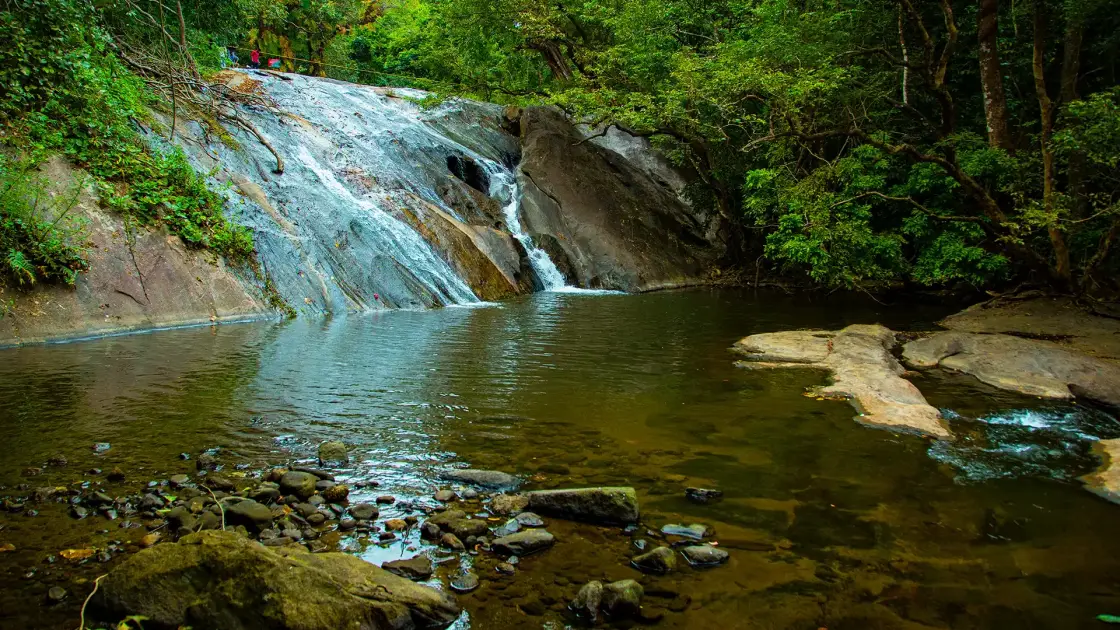
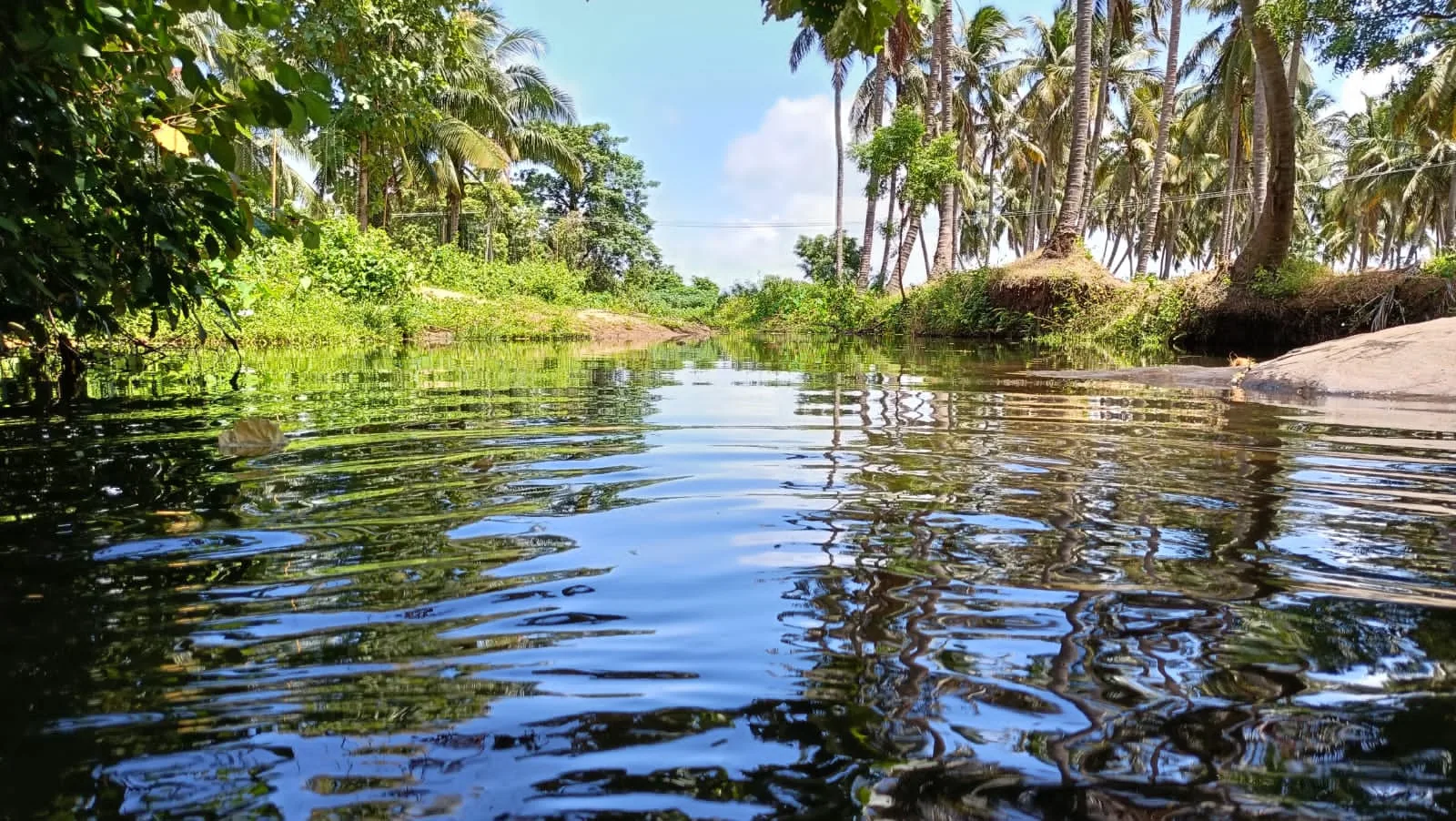
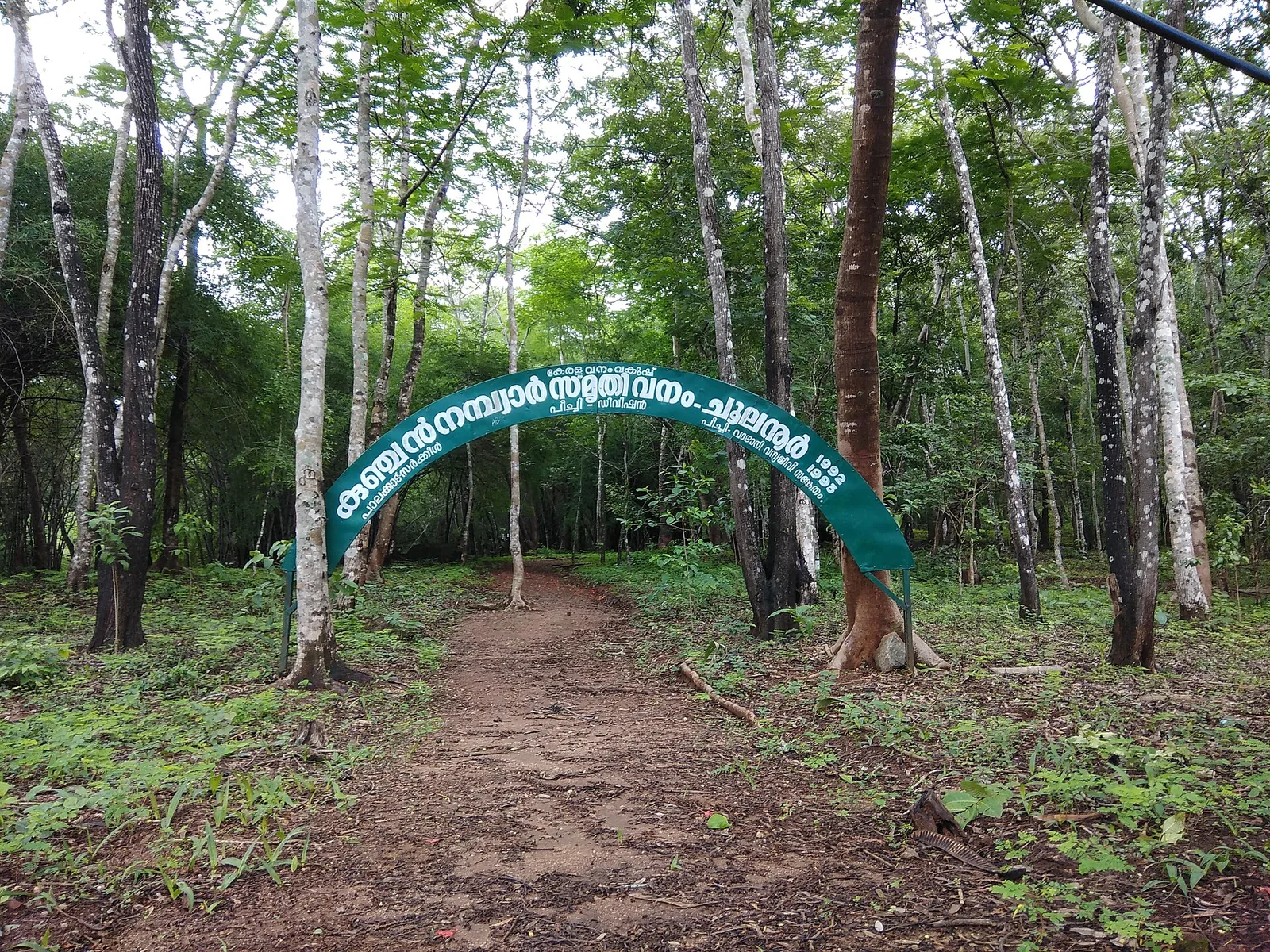
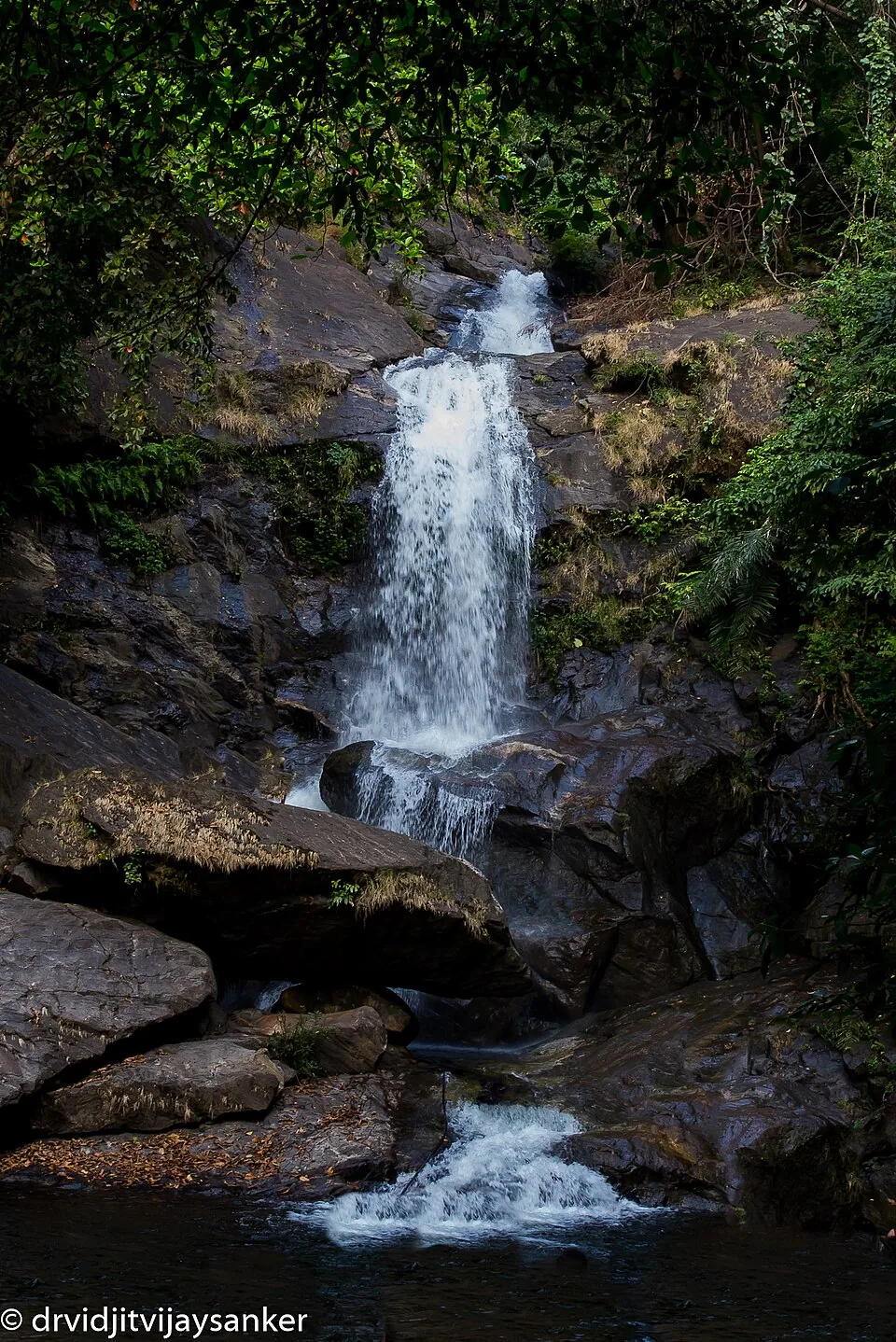
The water at Dhoni is framed by the forest. Branches lean over the rock and the lower channel, while the path reaches the cascade through trees rather than an open promenade. The walk makes the arrival a change in sound and surface as well as a view.
The story of Dhoni Waterfalls trek
The approach belongs to Dhoni’s reserve-forest setting. Kerala Tourism describes a guided trek from the base of the hills, while the Forest Department administers the visitor programme. That combination is important: the route is more than a public road ending at a natural feature, and access is organised through the forest staff.
The trees create several layers of observation. Near the path, roots, fallen leaves and sloping ground shape the pace. Farther away, overlapping trunks and branches limit the view into the forest. A visitor who treats the approach only as distance to be covered can miss the part of Dhoni that gives the waterfall its atmosphere.
The cascade’s form becomes clearer when the flow is moderate. Water can spread thinly across a broad sloping slab and gather into a stronger channel beside it before entering the pool. At another water level, the white flow can dominate the same rocky setting. These are different conditions of a living stream, not evidence that a quieter visit has reached the wrong waterfall.
The lower water continues across rock beneath the canopy. A photograph can make that surface look smooth and approachable, but the same sheen may conceal an uncertain foothold. Observation from the allowed position is enough to understand the movement of the water; entering the channel is not necessary to experience the cascade.
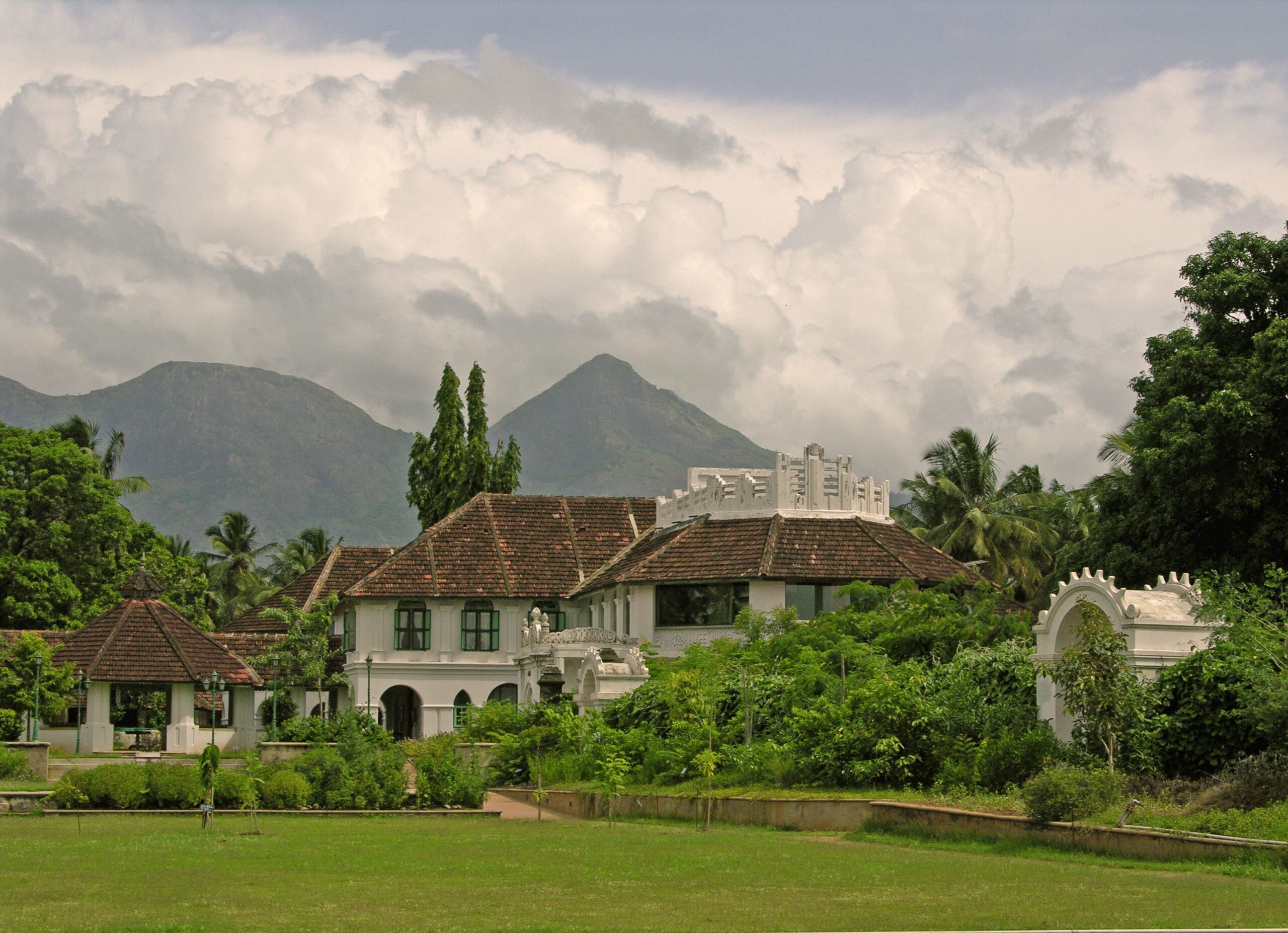
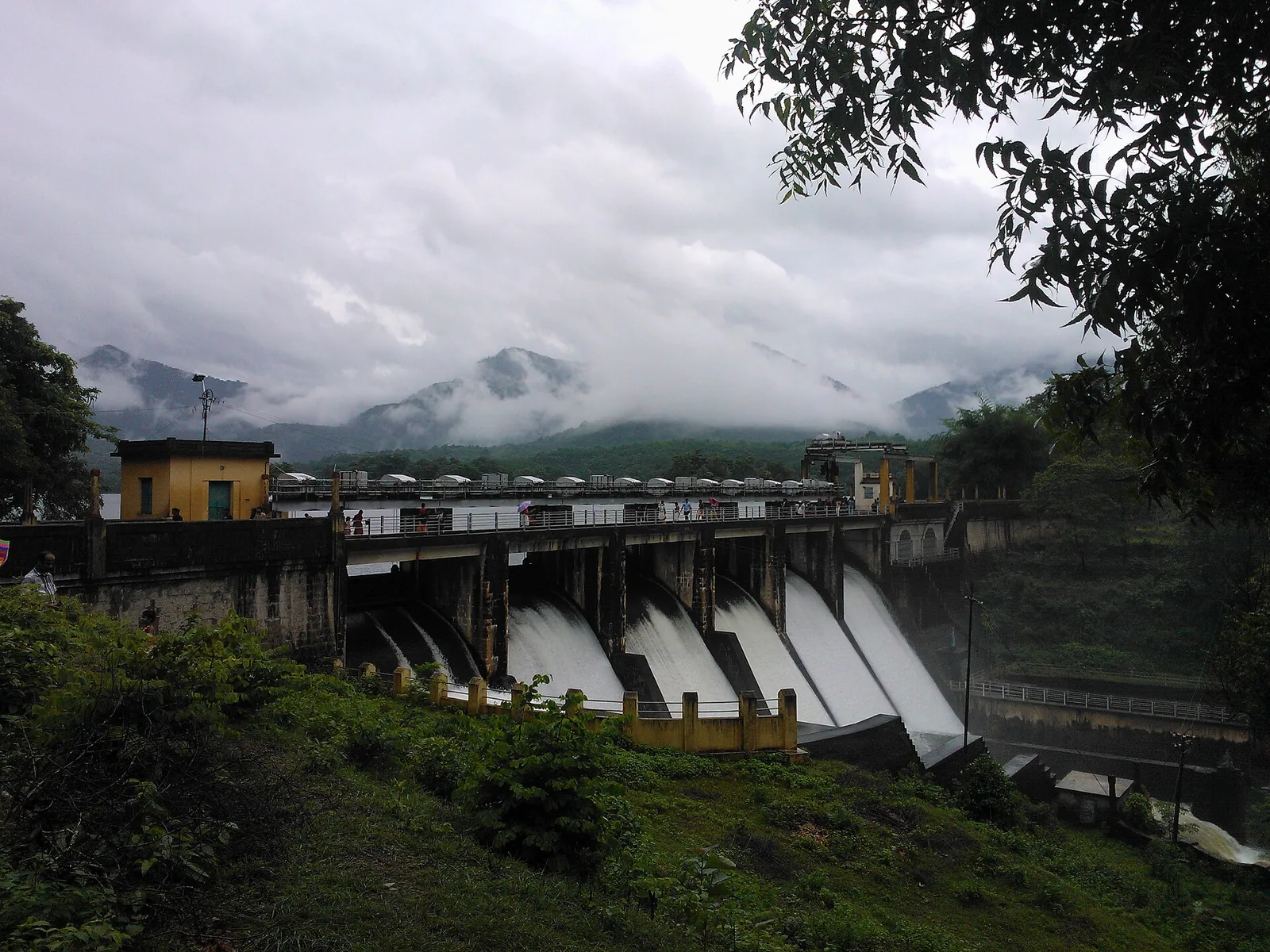
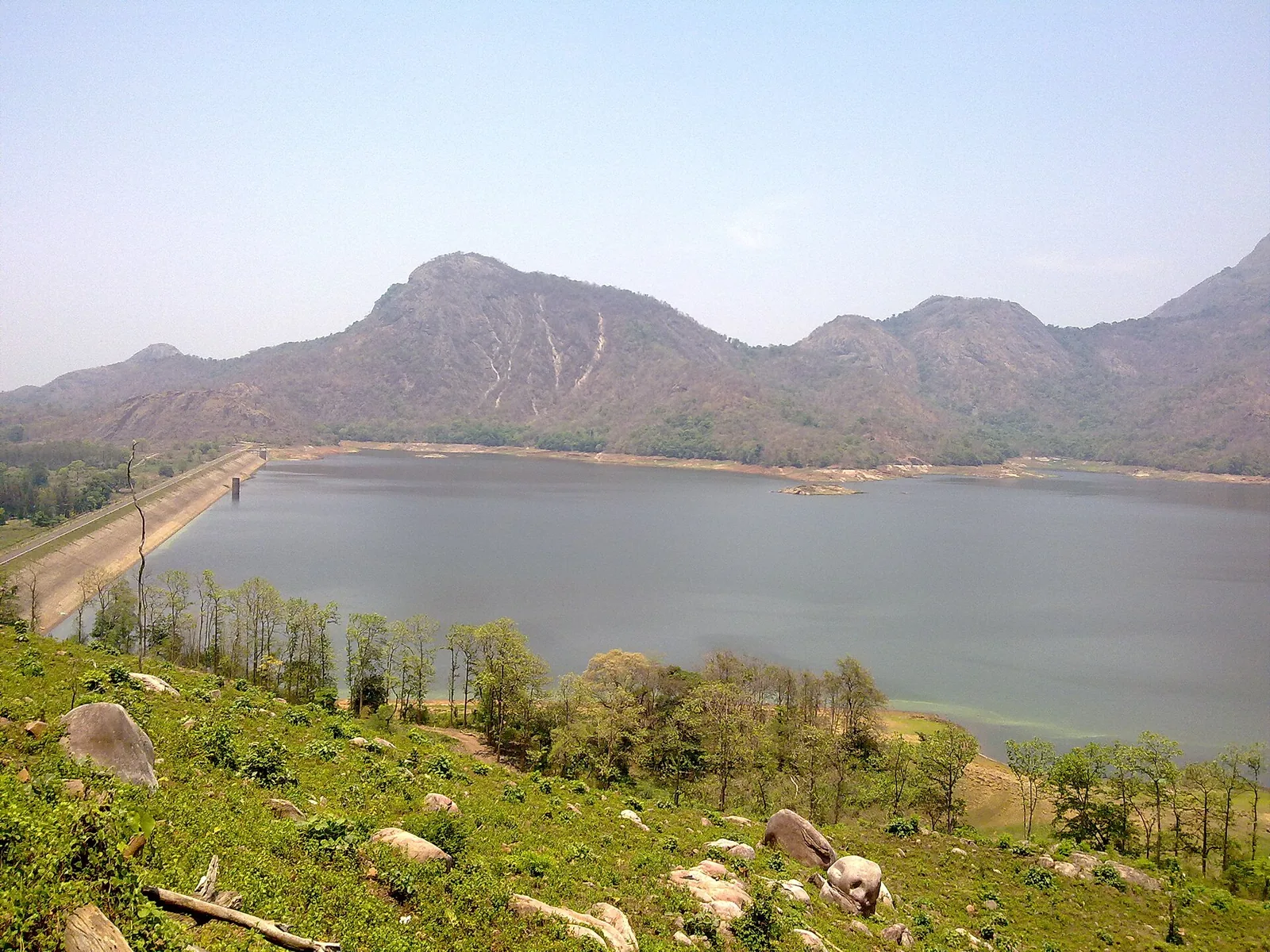
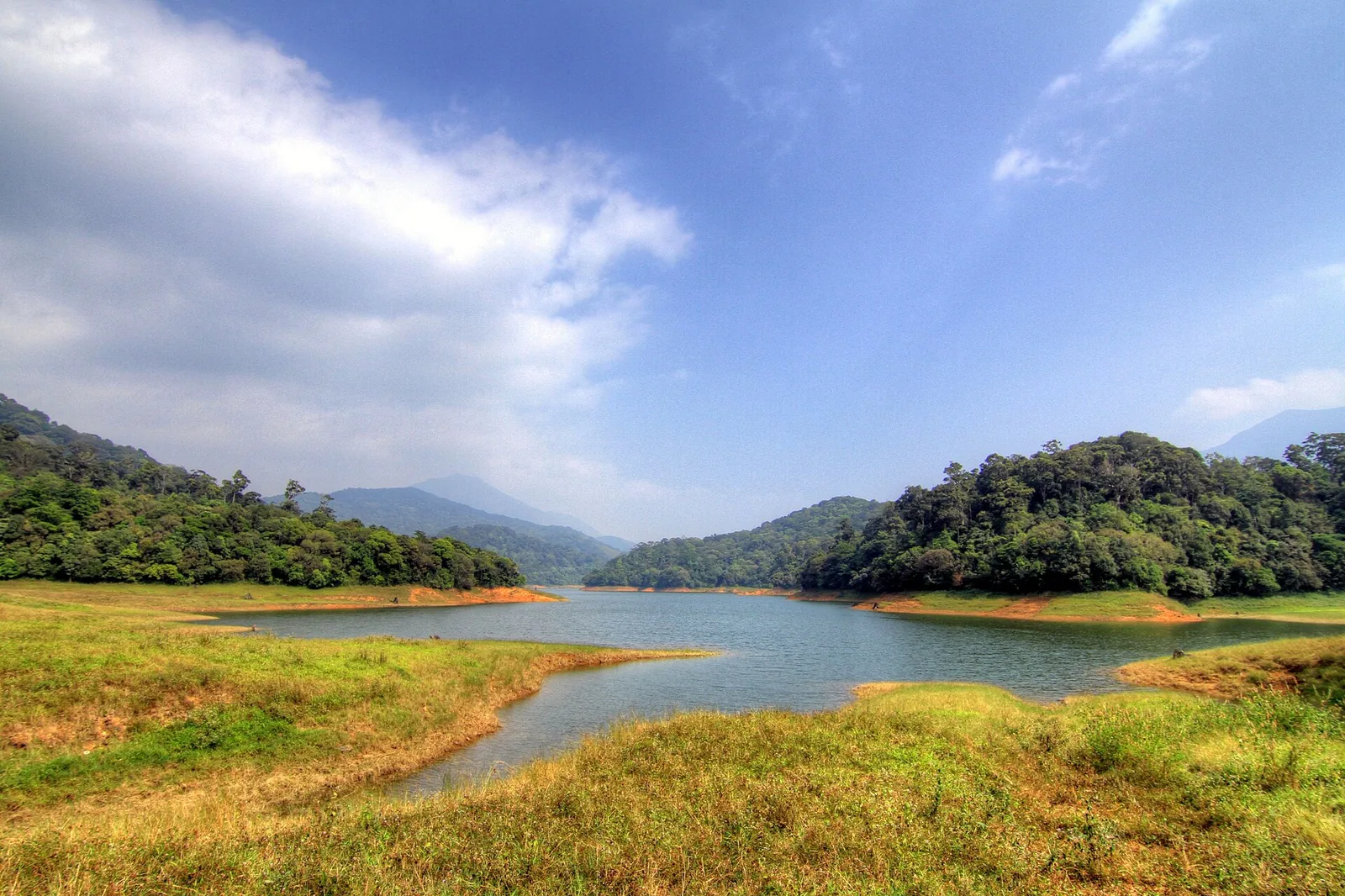
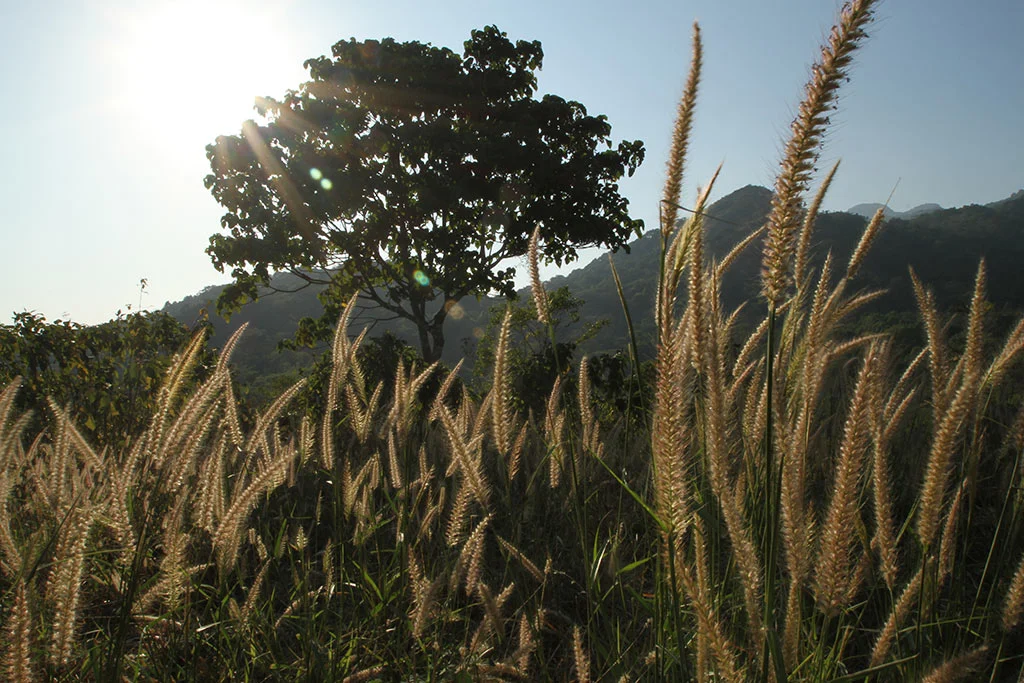
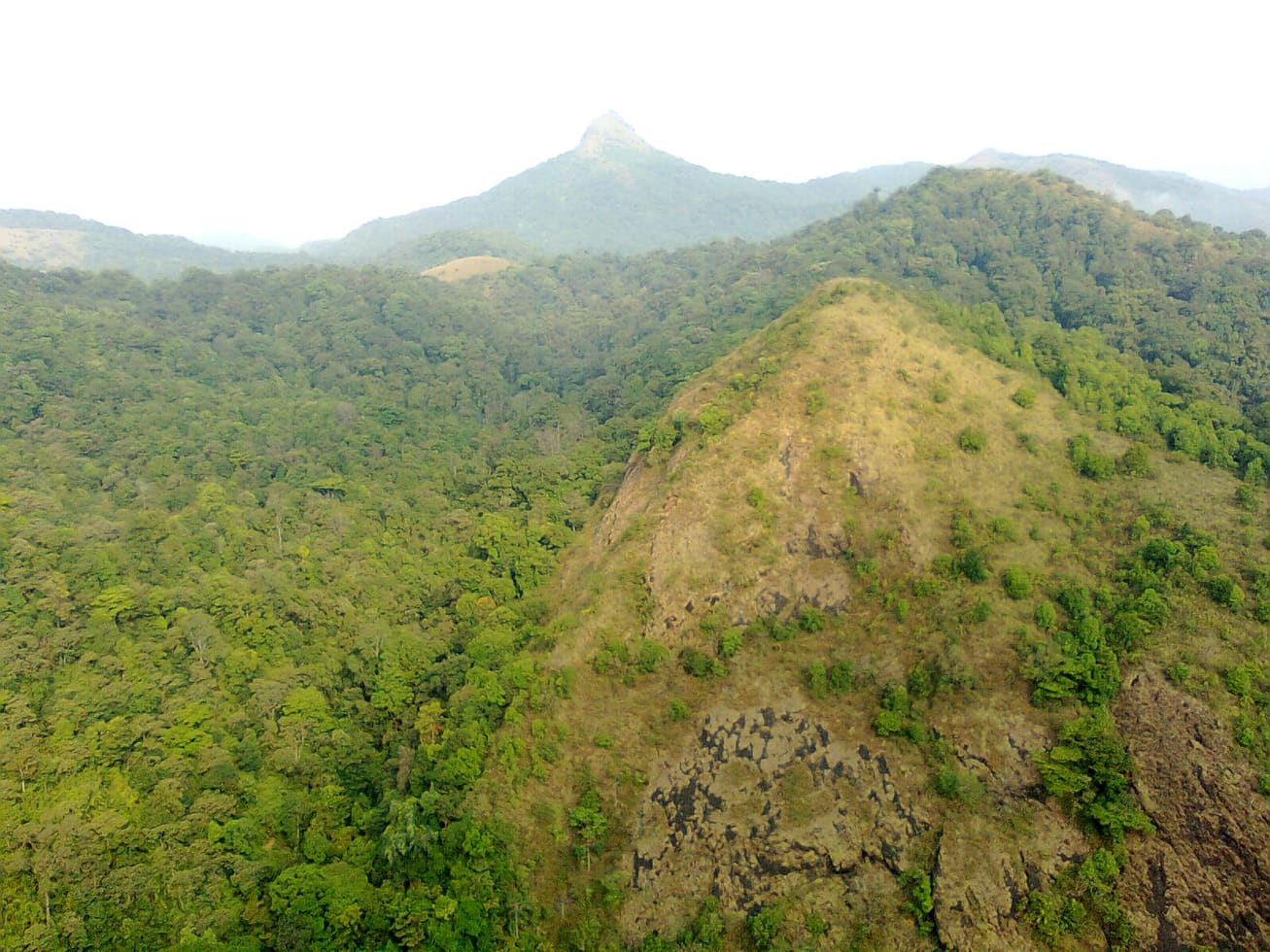
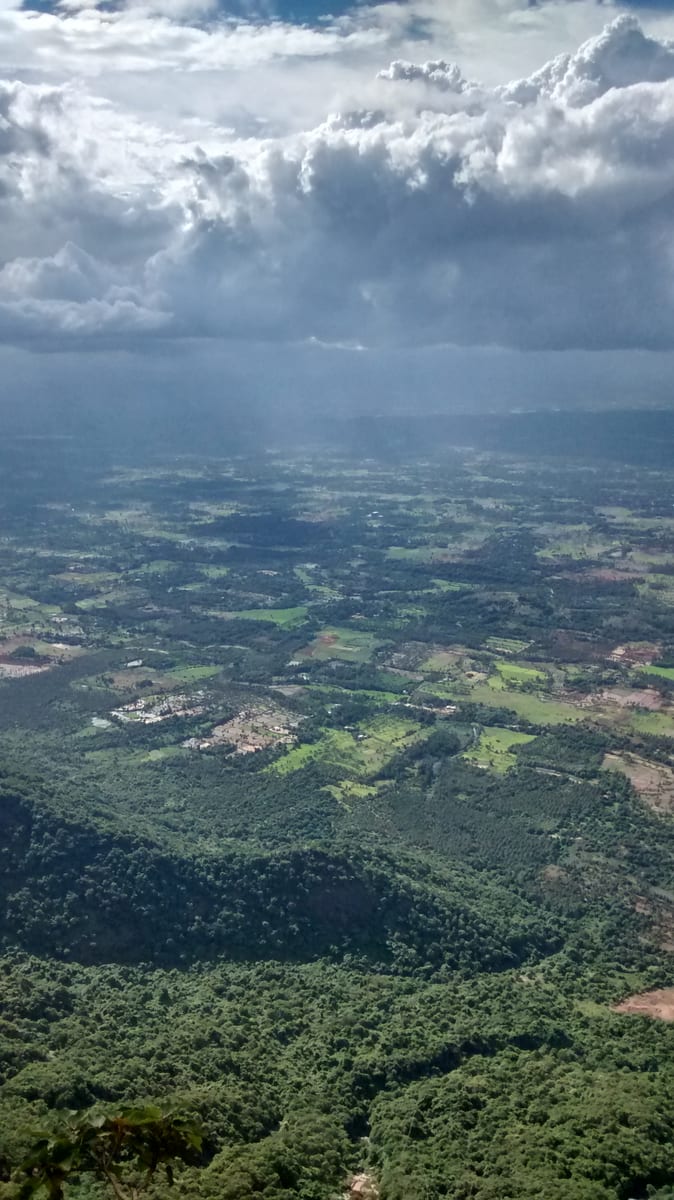
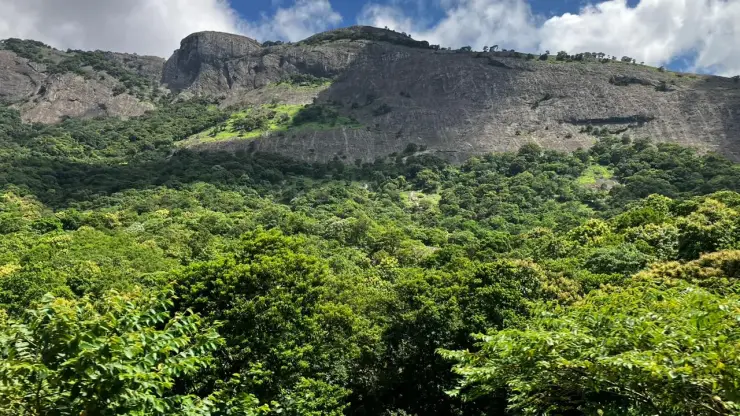
Dhoni Hills is a wider landscape than the waterfall route. Photographs of open rock slopes and cloud-covered hills show the foothill setting, but they should not be mistaken for a map of the guided waterfall trek. A visitor booking this outing is not automatically booking a climb onto every visible rock face.
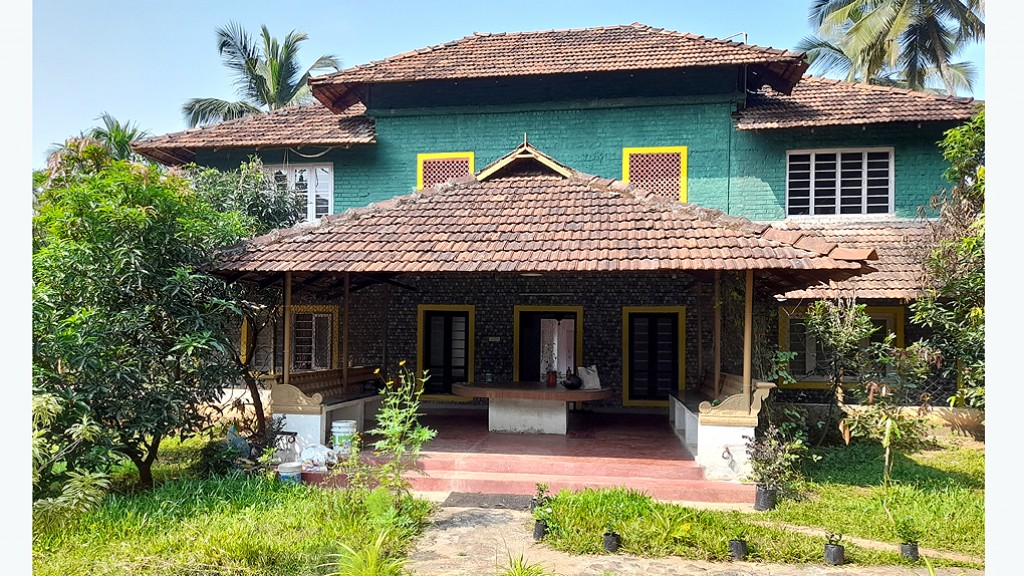
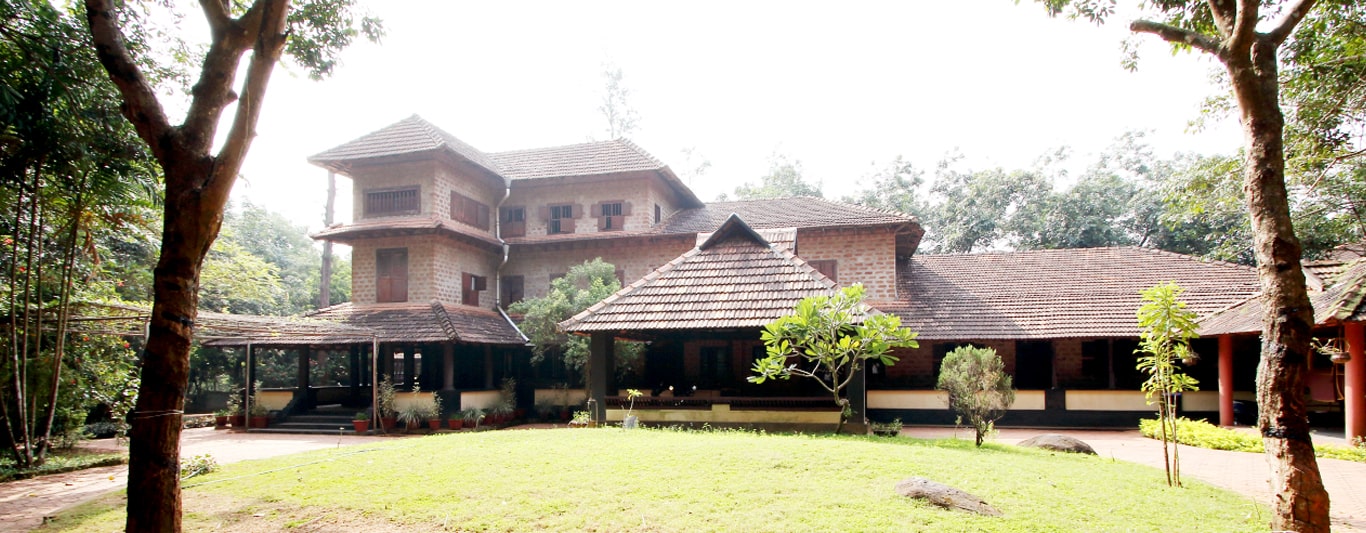
The separate Kavarakunnu stay listing reinforces that distinction. An overnight forest product has its own reporting, accommodation and programme conditions. Combining names from the same area can create an itinerary that the waterfall staff never offered. Keep the selected activity attached to its own admission and instructions.
The return through the trees is part of the forest visit. Light can fall differently across the path, and fatigue can change how a descent feels. Leave enough time to follow the group without rushing, especially if the cascade has encouraged a longer pause. The most useful final view may be the forest receding behind the walkers rather than another photograph at the water.
Read the full history of Dhoni Waterfalls trek 263 more words
History
Dhoni entered a new scientific record in 2025, when zoologists Nikhila Sudhakaran and Manju Elizabeth Kuruvila described the millipede Gnomognathus dhoni in Zootaxa. Its name refers directly to Dhoni Reserve Forest in Palakkad, the locality from which the species was described.
The study records material collected in August 2024 near a stream beside teak plantations, including individuals found in soil and leaf debris. It gives a precise picture of habitat at a scale easily missed by someone concentrating only on the waterfall. The discovery concerns the reserve forest; it does not identify every part of the visitor trail as a collecting site.
The authors distinguished the species using detailed anatomy, particularly structures examined in males. A walker seeing a brown millipede should therefore avoid assuming that colour and locality alone establish this species. The scientific finding is a reason to value the forest floor, not an invitation to handle or collect its animals.
The name also gives Dhoni a story beyond the cascade. A familiar visitor destination can remain a place where careful biological work adds new knowledge. Leave soil, leaf litter and stream margins undisturbed so the habitat retains more than the portion visible in a holiday photograph.
Why visit
Choose Dhoni when a forest walk is as welcome as the waterfall at its end.
The shaded cascade and the rock-and-water detail offer a different scale from Palakkad’s broader hill panoramas.
An accompanied visit provides a manageable framework for entering the reserve forest from the town area.
The route can introduce the distinction between a foothill locality and the particular activities permitted within it.