Places to Visit in Aranmula

Temple, river and craft village known for metal mirrors and boat traditions.

Aranmula
Practical guide

Plan Aranmula

Who's going?Tailor Aranmula to your trip
DistrictPathanamthitta
RoleHeritage base
Time neededHalf a day for the temple and a mirror…
Places to visit3Listed businesses10

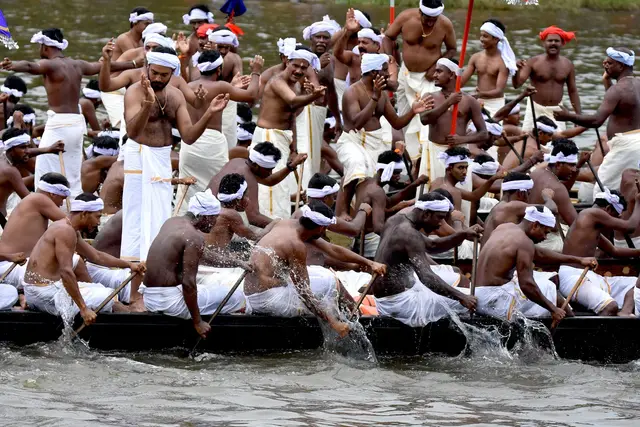
Everywhere else in Kerala a vallamkali is a race. At Aranmula it is not, and both Kerala Tourism and the Palliyoda Seva Sangham say so directly: the boat events here are ritual, "not as competition". Three occasions use the palliyodams — Thiruvonam, Uthrattathi and the Ashtami Rohini Vallasadya — and the one that catches people out is the Thiruvonathoni, a boat that leaves Kattoor at six in the evening and reaches the temple by four the next morning carrying a burning lamp and the ingredients for a meal, met on the water by floating lamps.

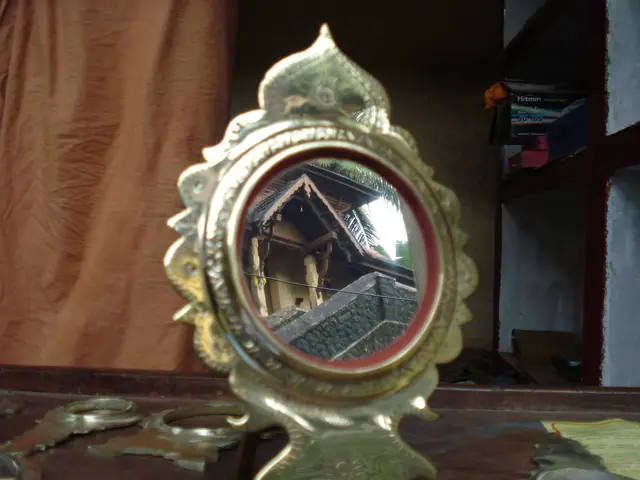
The other thing Aranmula is known for is a mirror with no glass in it. The Aranmula kannadi is a polished metal-alloy first-surface mirror, so it does not throw the faint second reflection a silvered glass mirror does; the alloy is a family secret, believed to be copper and tin, and it is still made by one extended family descended from Tamil Kammalar artisans. It took a GI tag in 2004–05. Above both sits the Parthasarathy temple, one of the 108 Divya Desams, where the idol is Krishna as Arjuna's charioteer and where Ayyappa's golden Thanka Anki is kept between journeys to Sabarimala. The sources call the temple ancient and give it no date, and neither do we.

What to expect

Highlights

  • Aranmula — Temple town on the Pamba, known for the Parthasarathy Temple, the Uthrattathi snake-boat race and the famous Aranmula Kannadi metal mirror.
  • Maramon Convention — The site of Asia’s largest Christian convention, held for about eight days each February on the vast Pamba river sand-bed beside the Kozhencherry bridge; organised by the Mar Thoma church since 1895, the tent seats well over a hundred thousand.
Getting there

How to visit

  • Nearest airport: Trivandrum (TRV), ~105–120 km
  • Rail gateway: Chengannur (CNGR) or Thiruvalla (TRVL)
Timing

Best time to visit Aranmula

October to March for pleasant weather. For the atmosphere, time your visit to the Onam season (Aug–Sep) for the Uthrattathi Vallamkali, or the Makara-month utsavam (Jan–Feb).

Weather in AranmulaSeasonal guide

Live forecast loads in your browser.

Today at Aranmula
Sunrise6:13 am
Sunset6:22 pm
Golden hour best light5:22 pm–6:22 pm
Blue hour after sunset6:22 pm–6:47 pm
Sun sets toward compass bearingW · 272°
Moon tonight🌓 First quarter · 52%
South-west monsoon. June to September is the south-west monsoon in Kerala. Expect heavy showers, mostly in bursts rather than all day — carry rain cover, allow extra time for getting around, and note that ferries and open-air sites are the first things affected.

Sun and moon are calculated for this location and shown in IST. Photography windows are the hour around sunrise and sunset; the sunset bearing is degrees clockwise from true north. Moon phase is accurate to about half a day.

The story

The story of Aranmula

Aranmula is a heritage temple village strung along the green banks of the Pamba river in Pathanamthitta district, where three of Kerala’s most storied traditions meet in one place — the ancient Parthasarathy Temple that honours Krishna as Arjuna’s charioteer, the thunderous Uthrattathi Vallamkali snake-boat regatta, and the mirror-bright Aranmula Kannadi, a metal looking-glass made nowhere else on earth.

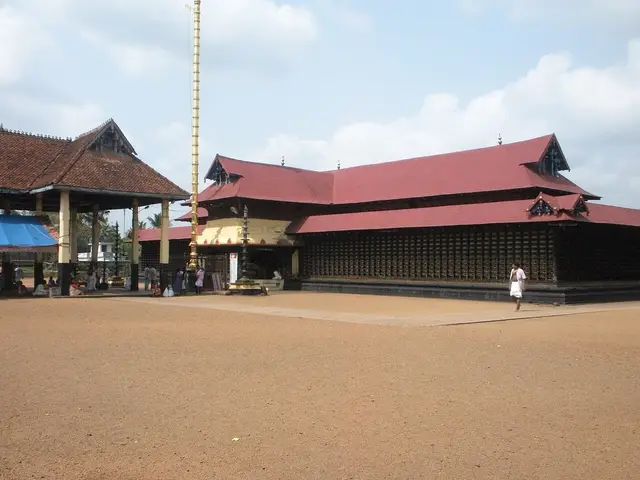
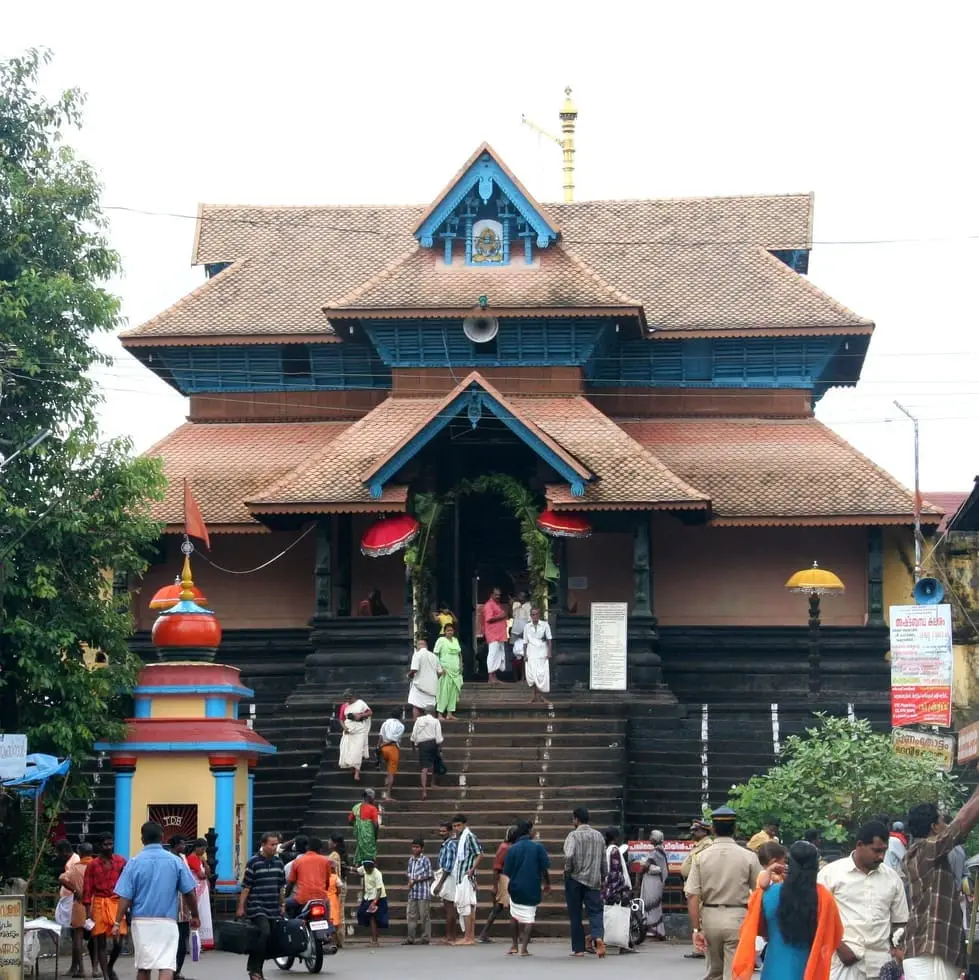
Few Kerala villages carry as much myth, craft and river-song in one bend of water as Aranmula. The Pamba slides past quietly here, and along its southern bank rises the Aranmula Sree Parthasarathy Temple — one of the 108 Divya Desams, the sacred abodes of Vishnu hymned by the Alvar poet-saints. The deity is Krishna, but worshipped in a very particular guise: Parthasarathy, the charioteer of Partha (Arjuna) who steered the prince through the Kurukshetra war and delivered the Bhagavad Gita on the battlefield. To stand before the sanctum is to stand before the friend-and-guide of the Mahabharata rather than the flute-playing cowherd of Vrindavan.

The temple sits within a broader sacred landscape. The Pamba is Kerala’s own holy river, and Aranmula is one of the ancient shrines woven into the Sabarimala pilgrimage geography — the temple is the custodian of the Thiruvabharanam, the sacred ornaments of Lord Ayyappan, which are carried in solemn procession to Sabarimala each Mandala season. That link places Aranmula on the spiritual map of millions of pilgrims, even those who never pause at its gopuram.

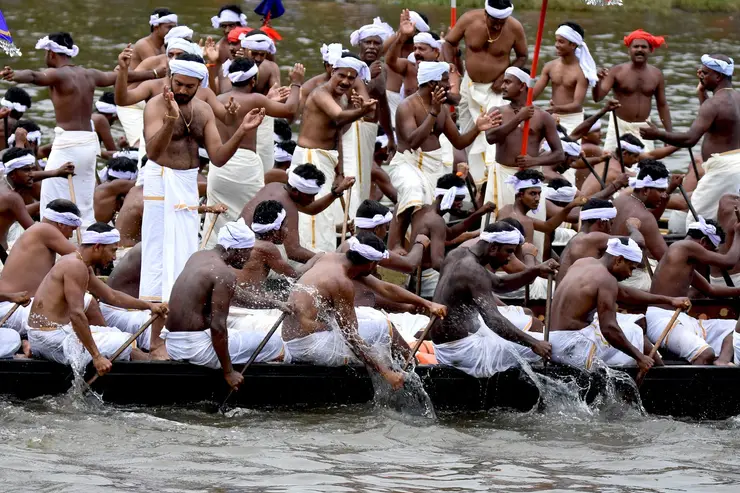
But the village’s fame travels far beyond the temple walls. On the Uthrattathi asterism during the Onam season, the Pamba erupts into the Aranmula Uthrattathi Vallamkali — a snake-boat spectacle unlike the sporting regattas elsewhere in Kerala. Here the long boats are called palliyodams, revered as the personal vessels of Lord Krishna, and the event is fundamentally a temple offering rather than a race for trophies. Crews in white mundus stand and row in rhythm to vanchippattu boat-songs, the water churning silver under a wall of sound.

Then there is the Aranmula Kannadi — the handmade metal mirror that has made this village a byword for a craft secret. It is not glass silvered on the back but a polished front-surface alloy, giving a reflection with no double-image and startling clarity. The formula is a closely guarded family inheritance, and the mirrors are still made by hand over long months in a handful of workshops. In 2005 the craft won a Geographical Indication (GI) tag, protecting the Aranmula name.

All of this has earned Aranmula official recognition as a heritage village, a place where traditional architecture, temple ritual, boat culture and metalcraft are actively conserved rather than merely remembered. Cultural institutions such as the Vijnana Kala Vedi centre draw visitors — many from abroad — to learn Kathakali, Mohiniyattam, mural painting, Carnatic music and Kalari under resident masters.

For the traveller, Aranmula rewards a slow, respectful visit: an early darshan at the riverside temple, an unhurried look at the mirror workshops, and — if the calendar is kind — a place on the bank when the palliyodams come thundering down the Pamba. It is one of those rare Kerala destinations where faith, craft and community festival are still bound tightly together.

Legend & myth

The village’s name is itself a legend. It is said that the presiding image of the temple was brought to this spot on a raft lashed together from six lengths of bamboo — aaru-mula in Malayalam, six pieces — and from that humble float the name Aranmula is believed to descend.

By tradition the temple is one of five shrines said to have been raised by the five Pandava brothers along the Pamba, with Aranmula credited to Arjuna. One well-loved legend holds that Arjuna built the temple in penance — an act of atonement for having killed Karna, his own half-brother, by unfair means during the great war. In this telling, the warrior who was steered by Krishna returns to install his divine charioteer as an act of contrition.

The most celebrated legend belongs to the boat race. As the story goes, a devout Brahmin once vowed to supply, at his own cost, all the provisions for the great Thiruvona feast (sadya) offered to Lord Parthasarathy — and to bring them upriver each year by boat, the sacred Thiruvona Thoni. Legend recounts that on one journey the provision-boat was set upon by enemies, and the snake boats of the surrounding villages rushed to escort and protect it safely to the temple. From that act of devotion, it is said, grew the tradition of the Uthrattathi Vallamkali — the palliyodams gathering each year not to compete but to accompany the Lord’s own vessel and offer their rowing as worship.

These stories are cherished as living faith and folk memory rather than documented history; they are recounted here as the legends that give Aranmula its meaning, not as verified fact.

More about Aranmula

History

The Parthasarathy Temple is reckoned to be of great antiquity, with local tradition placing its origins many centuries — by some popular accounts well over a millennium and a half — in the past. Its inclusion among the 108 Divya Desams venerated in the Tamil devotional hymns of the Alvars places it firmly within the classical Sri Vaishnava sacred canon of South India.

The temple is built in the characteristic Kerala style, with its ritual life and administration today overseen by the Travancore Devaswom Board, the statutory body that manages a large number of temples across southern Kerala. Its position on the Pamba, and its role in safeguarding and escorting the Thiruvabharanam ornaments of Ayyappan to Sabarimala, tie it into one of India’s largest annual pilgrimages.

The boat-race tradition is itself old, growing out of the temple’s Thiruvona Thoni observance and the palliyodams maintained by the surrounding karas (village units). For most of its life the Vallamkali was a purely religious offering. In 1978 the Government of Kerala reframed the event as a competitive sporting spectacle; around 2000 the older religious character was consciously restored, returning the emphasis to devotion over prize-winning.

The Aranmula Kannadi craft is traditionally traced to artisan families said to have been brought to Aranmula generations ago from the Tirunelveli region of Tamil Nadu to serve the temple. Over time these metalworkers perfected the front-surface alloy mirror — a speculum-type blend understood by metallurgists to be based on copper and tin, with the exact recipe held as a family secret. Polishing is done painstakingly by hand, traditionally with a paste of rice bran and plant oils, over a period of months per piece.

Recognition of the craft’s uniqueness and heritage value culminated in the award of a Geographical Indication (GI) tag in 2005, and in Aranmula’s designation and promotion as a heritage village — a status that supports the conservation of its temple architecture, its boat-race culture and its endangered mirror-making tradition.

Why visit

Worship at a genuine Divya Desam — one of the 108 sacred abodes of Vishnu — where Krishna is honoured in his rare form as Parthasarathy, Arjuna’s charioteer of the Mahabharata.

Witness the Aranmula Uthrattathi Vallamkali, a snake-boat regatta unlike any other: the towering palliyodams are revered as Krishna’s own vessels, and the event is a temple offering rowed to the beat of vanchippattu songs rather than a race for medals.

See the making of the legendary Aranmula Kannadi, the handmade front-surface metal mirror that is a GI-tagged craft found nowhere else, and understand why its secret alloy has fascinated metallurgists.

Soak in the atmosphere of a designated heritage village on the banks of the holy Pamba — traditional houses, riverside ghats, and a slow rhythm of temple life far from the tourist crowds.

Engage with living arts at cultural centres such as Vijnana Kala Vedi, where visitors can watch or learn Kathakali, Mohiniyattam, mural painting and Carnatic music from resident masters.

Feel the link to the wider sacred landscape of Kerala — Aranmula guards the Thiruvabharanam ornaments of Ayyappan that travel to Sabarimala, connecting this quiet village to one of the largest pilgrimages on earth.
Before you go

Aranmula — at a glance

HoursTemple generally open approx. 4 am to 11 am and 5 pm to 8 pm.

Entry: No entry fee for the temple. Aranmula Kannadi mirrors are sold at workshops and outlets at prices varying by size.

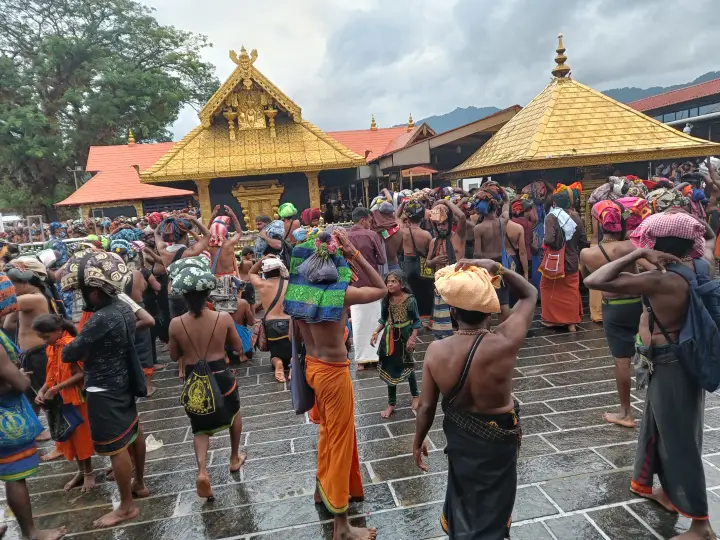
Dress code: Traditional dress required for temple entry: men typically remove upper garments and wear a mundu/dhoti; women wear a saree or salwar-kameez. Avoid shorts and revealing clothing.

Festivals: Aranmula Uthrattathi Vallamkali snake-boat regatta (Onam season, Aug–Sep); the ten-day temple Utsavam from Atham to Thiruvonam in the month of Makara (Jan–Feb), whose highlight is the Garuda Vahana procession; and Khandavanadahanam in the month of Dhanu (Dec–Jan), when a forest replica is ceremonially burned to symbolise the Khandava fire of the Mahabharata.

Photography: Photography is usually restricted or prohibited inside the temple sanctum — check and follow local rules. The boat race, river ghats and mirror workshops are rewarding to photograph.

Parking: Village parking near the temple on an ordinary day. On Uthrattathi and through Onam it is managed and remote — expect to leave the car well outside and walk in.

Getting here

How to reach Aranmula

  • ✈︎ By air Nearest airports are Thiruvananthapuram (Trivandrum/TRV) and Kochi (Cochin/COK), each roughly 3–4 hours away by road; hire a taxi or connect by train via Chengannur.
  • 🚆︎ By train Chengannur is the nearest railway station, about 10 km away, well-connected on the main line; take a taxi or bus onward to Aranmula.
  • 🚗︎ By road Aranmula is reached by road via Chengannur and Kozhencherry, with Pathanamthitta town nearby; well-served by taxis and autorickshaws.
  • 🚌︎ By bus KSRTC and private buses run to and via Chengannur and Kozhencherry, with local buses reaching Aranmula village.
Getting back

Check your return bus or ferry with the operator before setting out. Leave time to reach the stop or jetty after your visit, and arrange a return vehicle in advance for a remote outing.

Ask at the jetty or the stand for the time of the last service back, not the next one. If you miss it, an auto or a taxi is the fallback — agree the fare before you get in.

Do

Things to do in Aranmula

  • Take darshan at the Aranmula Sree Parthasarathy Temple, one of the 108 Divya Desams and sung in the Tamil Vaishnava canon. The idol is Krishna as Arjuna’s charioteer at Kurukshetra.
  • Count the steps. Eighteen ascend to the eastern tower; fifty-seven descend from the northern tower to the Pampa. The sources call the temple’s antiquity great and give no date — neither will we.
  • Ask to see the Thanka Anki. Ayyappa’s golden ornaments from Sabarimala are kept here and carried up before Makaravilakku.
  • Watch an Aranmula kannadi being made. It is a first-surface metal mirror, not silvered glass, so it shows no second ghost reflection — the reason it is worth what it costs.
  • Accept that you will not learn the recipe. The alloy is a family secret; specialists take it for a copper-and-tin speculum metal. It is made by one extended family, descended from Tamil Kammalar artisans brought here centuries ago, and it carries a GI tag from 2004–05.
  • Understand that the boat event is not a race, whatever it is called. The Palliyoda Seva Sangham is explicit that the Aranmula vallamkali is ritual rather than competition — the one place in Kerala where that is true.
  • Watch for the Thiruvonathoni if you are here at Onam: a boat leaves Kattoor at six the previous evening and reaches the temple by four in the morning, carrying the food for the feast and a burning lamp, with devotees floating lit lamps to meet it.
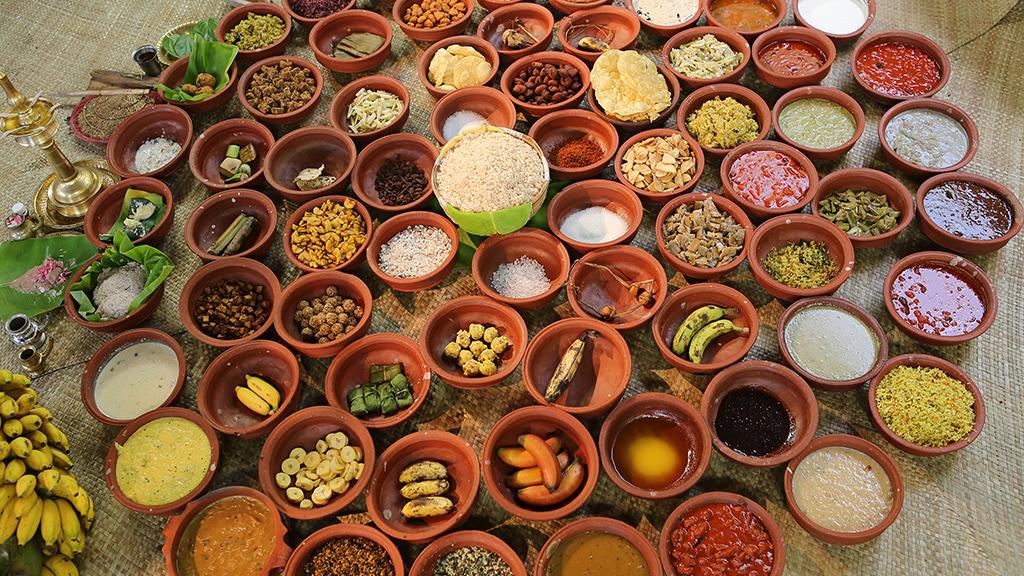
  • Stay for the Vallasadya — the feast the temple serves the oarsmen, preceded by a parade of the snake boats.
  • Walk the ghats and the heritage village along the Pampa, and look in at the Vijnana Kala Vedi centre where the performing arts are taught.
Plan

Good to know

  • Buy the mirror from a recognised Aranmula workshop, not a roadside stall. Imitations are common, the real thing carries the GI mark, and the price difference is the whole point.
  • Temple dress is enforced: men remove the upper garment and wear a mundu, women a saree or salwar-kameez. Shorts will not get you in.
  • The Uthrattathi Vallamkali falls in the Chingam month, around Onam in August or September. It moves every year with the Malayalam calendar — check the date before booking anything.
  • On regatta day the village is full and the riverbank is packed hours before anything happens. Come early, park far away and walk.
  • Chengannur, about 10 km off, is the railhead and where the hotels are. Aranmula itself is a village.
  • The temple shuts in the middle of the day. Morning or evening, not lunchtime.
Facilities

On site

  • The temple has its own facilities and a queue system that expands for festivals; the ghats are public.
  • Mirror workshops and outlets through the village, several open to visitors.
  • The Vijnana Kala Vedi cultural centre, which takes residential students in the traditional arts.
  • Tea shops and small eateries in the village; hotels, banks and pharmacies at Chengannur and Pathanamthitta.
  • Autorickshaws and taxis from Chengannur station; local buses via Kozhencherry.
Stay safe

Safety

  • The Pampa is a real river with current, and it rises fast in the monsoon. The ghats are for bathing and ritual, not for swimming out.
  • On regatta day the crowd along the bank is dense and the ground is wet and sloping. Keep children away from the edge.
  • Aranmula was among the areas hit in the 2018 Kerala floods. In a red-alert monsoon week, take the district warnings seriously.
  • Ordinary care at the temple: the fifty-seven steps down to the river are steep and worn, and they are taken barefoot.
Getting around AranmulaPartly wheelchair accessible
Terrain
Some steps
Steps
Eighteen steps ascend to the eastern tower of the Parthasarathy temple; fifty-seven descend from the northern tower to the Pampa.
From the entrance
Village lanes, level and sealed, up to the temple precinct. The river ghats are reached only by the northern flight.
Step-free access
The village and the approach are level. The temple is entered up a flight of eighteen steps and the river is fifty-seven steps below the northern tower, both taken barefoot. We have not been able to confirm whether any alternative entrance exists, so ask at the temple office rather than assuming.
Prams
Fine through the village; the two temple flights need the pram left or carried.

Temple facilities, expanded for festivals.No accessible toilet or wheelchair loan is advertised at the temple or the ghats.

  • On Uthrattathi Vallamkali and through Onam the riverbank is packed and the ground is wet and sloping — not a day to attempt with a wheelchair or a pram.
  • The fifty-seven steps to the river are steep, worn and taken barefoot.

Checked 21 August 2026 against source 1source 2. Conditions change and surfaces vary with weather — if step-free access is essential, confirm with the site before you travel.

Practical things near Aranmula
What the cash actually costs
  • Withdrawing from a bank that is not your own is free for a set number of times a month, then costs up to ₹23 plus GST — about ₹27 a withdrawal. This is not one of the RBI’s six metro centres, so the allowance here is the higher one: at least five free other-bank withdrawals a month, and at least five at your own bank.
  • That free allowance belongs to Indian bank accounts. On a card issued abroad your own bank’s international withdrawal and exchange charges apply instead. If the machine offers to bill you in your home currency, choose rupees — the conversion rate on that offer is set by the machine, not by your bank.
  • Choose a well-lit ATM, preferably at a bank branch. Shield your PIN, avoid help from strangers and use your bank’s support number if a withdrawal fails or the machine retains your card.

Charge cap and free-transaction limits: Reserve Bank of India, in force since 1 May 2025.

These services are listed within about 1.2 km of Aranmula. Walking distances follow mapped routes; access and opening hours can change. Other services may be closer but are not included here.

In the district

Where Aranmula sits in Pathanamthitta district

District HQPathanamthitta
LandscapePamba river basin, pilgrim towns and forest edges

Pathanamthitta district is known for: Sabarimala pilgrimage, Gavi eco-tourism, Konni and Aranmula river heritage.

Sabarimala TempleGavi and Adavi eco-tourismAranmula and Konni
Stay · eat · do · rent · see · shop

Places in Aranmula

Every verified place in Aranmula — filter by what you’re after.

1 place to eat in Aranmula

Aranmula Valla Sadya Official Feast — Ritual feast in Aranmula
Top pick Verified
Ritual feast · Aranmula
Aranmula Valla Sadya Official Feast

Kerala Tourism-sourced Valla Sadya ritual feast experience at Aranmula. Aranmula, eat, Ritual feast.

Directions Commission-freeView details

Book with the place itself. India’s cyber-crime coordination centre warned in April 2025 that convincing copies of hotel and pilgrimage booking sites are being pushed through sponsored search and social ads, taking payment for rooms the property never hears about. Every listing here links to the business’s own contact details and its own Google or Bing profile — we take no commission and sit in nobody’s payment path. If a booking page reached you through an ad, check the address bar against the property’s own site before you pay. Fraud can be reported on cybercrime.gov.in or on 1930.

Places to visit

The places themselves, around Aranmula

The best tourist places to visit in Aranmula — temples, viewpoints, lakes, heritage and nature, each with a full guide, how to reach it and what to see nearby.

For hotels, homestays and local businesses

Get listed in Aranmula for free

Roampedia is commission-free. Travellers discover your business, book directly and contact you through official details. Basic listings are free, while Gold and Platinum package upgrades can be requested from the owner dashboard after approval.

List your business — free
Read before you go

Aranmula guides, stories & itineraries

Stories & history of Aranmula

Written about Aranmula itself — its history, its legends and the arguments about them.

Nearby in Pathanamthitta

Wider reading from Pathanamthitta. The stories about Aranmula itself are above.

Planning a trip to Aranmula

The practical half — what is actually here, in what order to see it, and how to arrive.

Kerala-wide guides & itineraries

Route-level itineraries and practical guides for the rest of the state.

See all 33 Pathanamthitta guides & stories →

Map

Where things are in Aranmula

FAQ

Aranmula travel FAQs

What is the Aranmula Parthasarathy Temple famous for?

It is one of the 108 Divya Desams — sacred Vishnu shrines hymned by the Alvar saints — and enshrines Krishna as Parthasarathy, the charioteer of Arjuna in the Mahabharata. It is also renowned for the annual snake-boat regatta on the Pamba and its role in safeguarding the sacred ornaments carried to Sabarimala.

When is the Aranmula boat race held?

The Aranmula Uthrattathi Vallamkali takes place on the Uthrattathi asterism in the Malayalam month of Chingam, during the Onam season — usually falling between mid-August and mid-September, a few days after Thiruvonam. Exact dates shift each year with the lunar calendar, so confirm the current year’s date before planning.

What makes the Aranmula Kannadi mirror special?

Unlike an ordinary glass mirror silvered on the back, the Aranmula Kannadi is a polished metal front-surface mirror, so the reflection sits on the very surface with no double-image or distortion. It is handmade from a secret copper-tin-based alloy by a few families, takes months to craft, and holds a Geographical Indication (GI) tag awarded in 2005.

What are the temple timings?

The temple is generally open in the morning from around 4 am to 11 am and in the evening from about 5 pm to 8 pm.

How do I reach Aranmula?

The nearest railway station is Chengannur, roughly 10 km away, with good connections by taxi and bus. Onward road links reach Kozhencherry and Pathanamthitta town, and the nearest airports are at Thiruvananthapuram and Kochi (Cochin), each a few hours by road.

Is there anything to do in Aranmula besides the temple?

Yes — visit the Aranmula Kannadi mirror workshops to see the craft firsthand, stroll the heritage village and Pamba riverside ghats, and drop in at a cultural centre such as Vijnana Kala Vedi to watch traditional Kerala performing arts. The boat race, if your visit coincides with the Onam season, is the standout spectacle.

What are the best places to visit in Aranmula?

Top places to visit in Aranmula include Aranmula Parthasarathy Temple, Aranmula vallamkali, Aranmula mirror workshops — each has a full guide with how to reach it and what to see nearby on this page.

What is the best time to visit Aranmula?

October to March is the driest and most comfortable season to visit Aranmula and the rest of Kerala. The June–September monsoon is lush and green but wet, and often brings lower low-season prices.

Photographs: Rajeshodayanchal (CC BY-SA 3.0), Rojypala (CC BY-SA 3.0), Vinayaraj (CC BY-SA 3.0), Ssriram mt (CC BY-SA 4.0), Gnoeee (CC BY-SA 4.0), Pdhang (CC BY-SA 4.0), Sudhirn (CC BY 3.0), MissvainOriginal author: User:Dvellakat (CC BY-SA 4.0), Rajesh Nair from Bangalore, India (CC BY 2.0), Vishnuvxyz (CC BY-SA 4.0), Krishnakumarvairassery (CC BY-SA 3.0), Alenalexp (CC BY-SA 4.0), rajaraman sundaram (CC BY 3.0), Arun Sinha from India (CC BY 2.0), Suresh Babunair (CC BY 3.0). Wikimedia Commons.

Image credits