Highlights
- Red-cliff coastline, Papanasam Beach, sunset cafes and walkable North Cliff.
- Janardanaswamy Temple and pilgrimage rituals near the beach.
- Services here come down to stays, cafes, yoga/Ayurveda centres, surf schools and transfers.
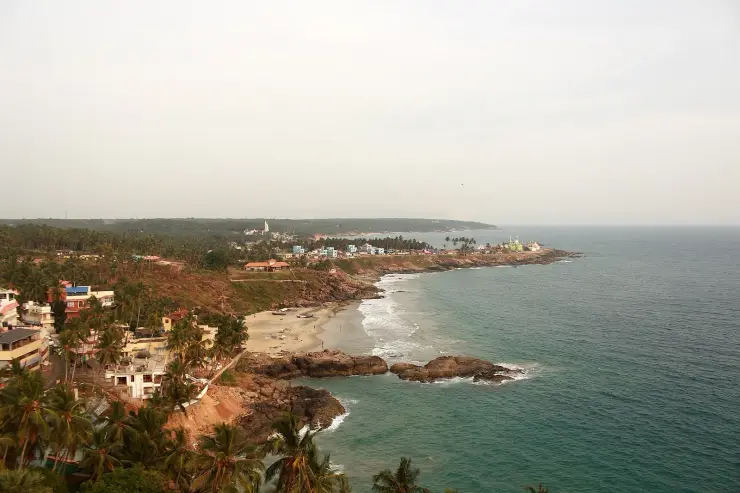
Varkala is Kerala's cliff-and-beach town, where red laterite cliffs drop towards Papanasam Beach and the Arabian Sea. It is one of the few places on the Kerala coast where the geology itself is the attraction, with cliff paths, cafes, yoga, Ayurveda stays and sunset viewpoints packed into a walkable strip.

The town also has a pilgrimage layer around Janardanaswamy Temple and Papanasam Beach, so the best guide page should balance beach travel with local customs and cliff safety. Varkala is easier by train than most beach towns, making it a strong independent-traveller base.
Varkala is the one place on Kerala's long, flat coast where the land rises up to meet the sea. A wall of red laterite cliff runs for kilometres above Papanasam Beach, and along its rim sits a ribbon of cafés, sunset-facing terraces and yoga shalas looking straight out over the Arabian Sea. It is at once a Hindu pilgrim town of ancient temples and holy springs, and one of India's best-loved backpacker beaches — a rare combination that gives Varkala its particular, slightly bohemian charm.
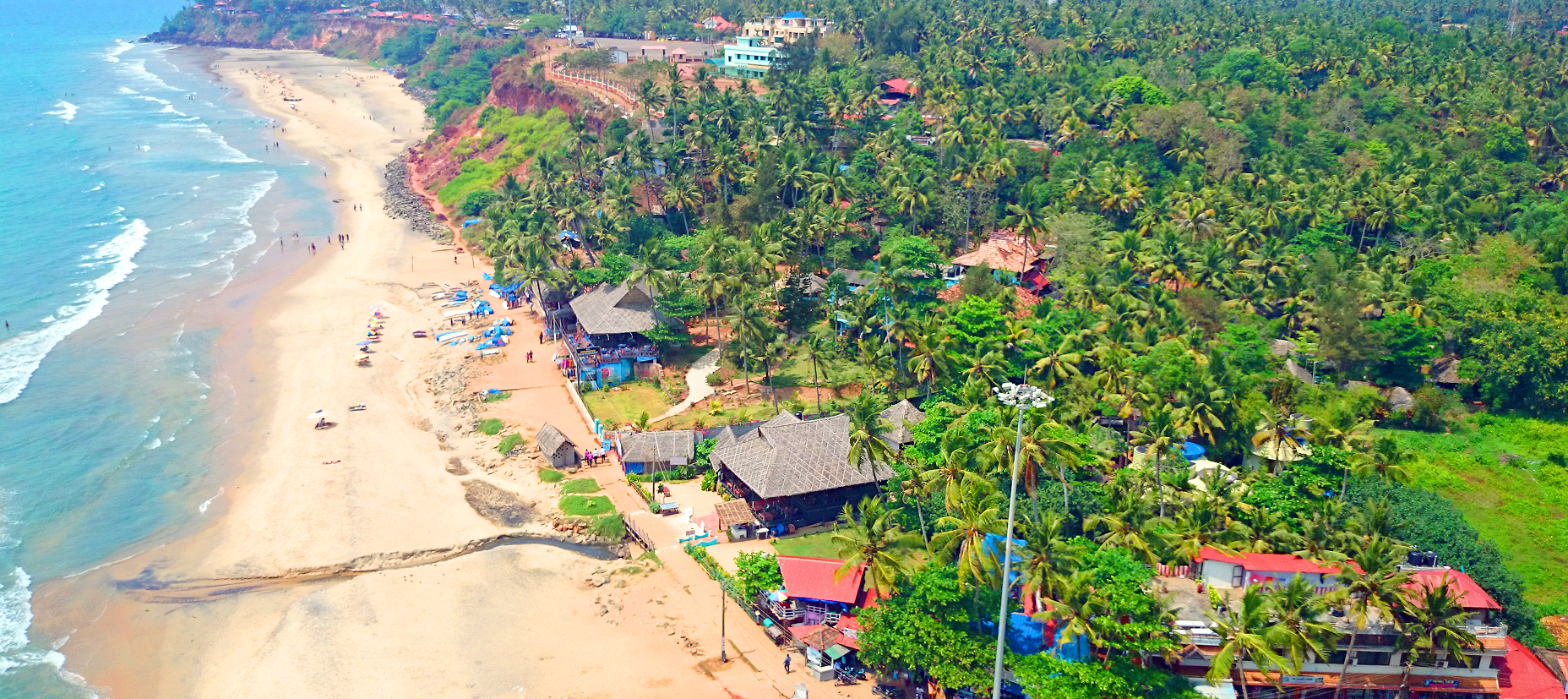
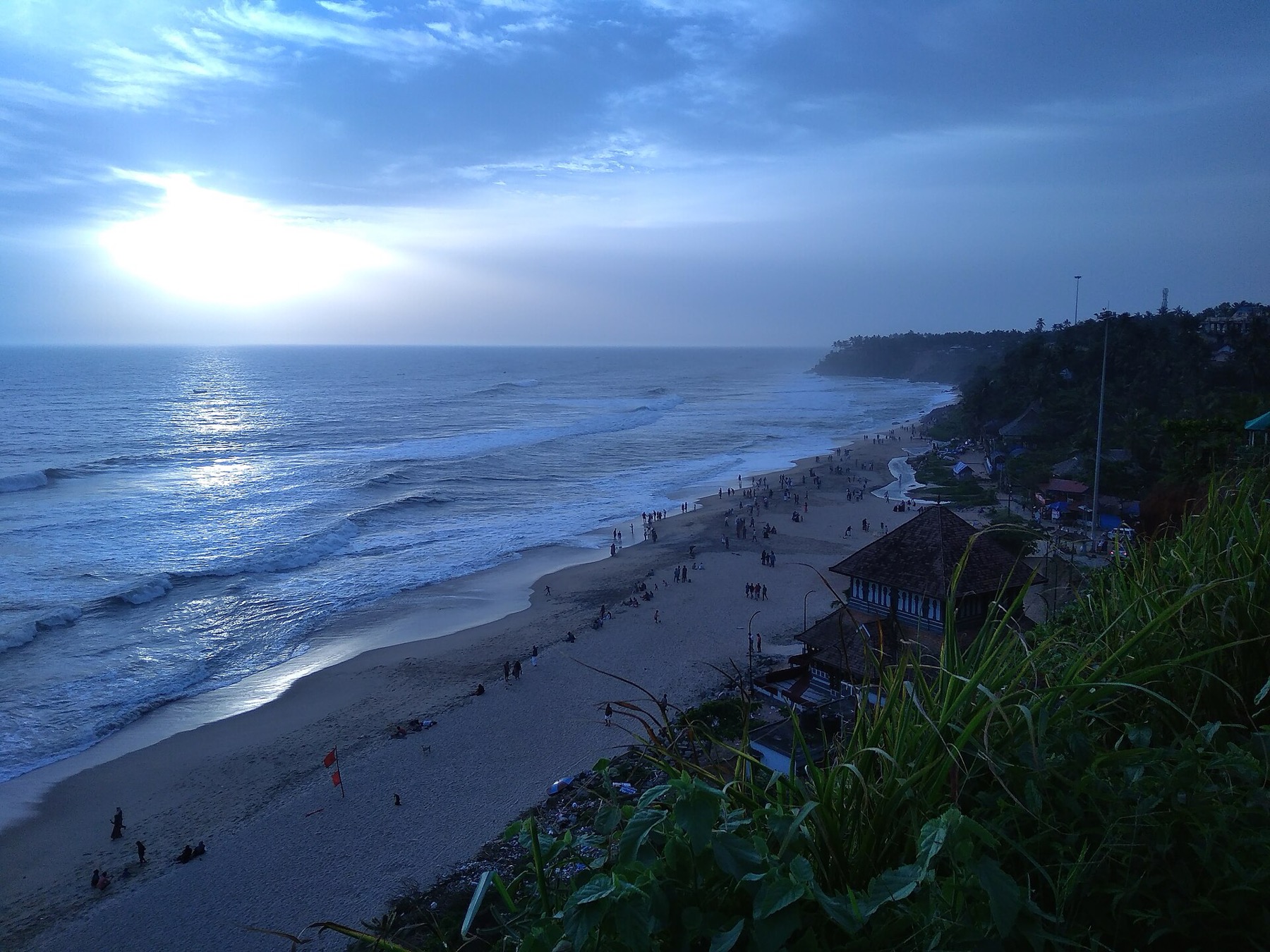
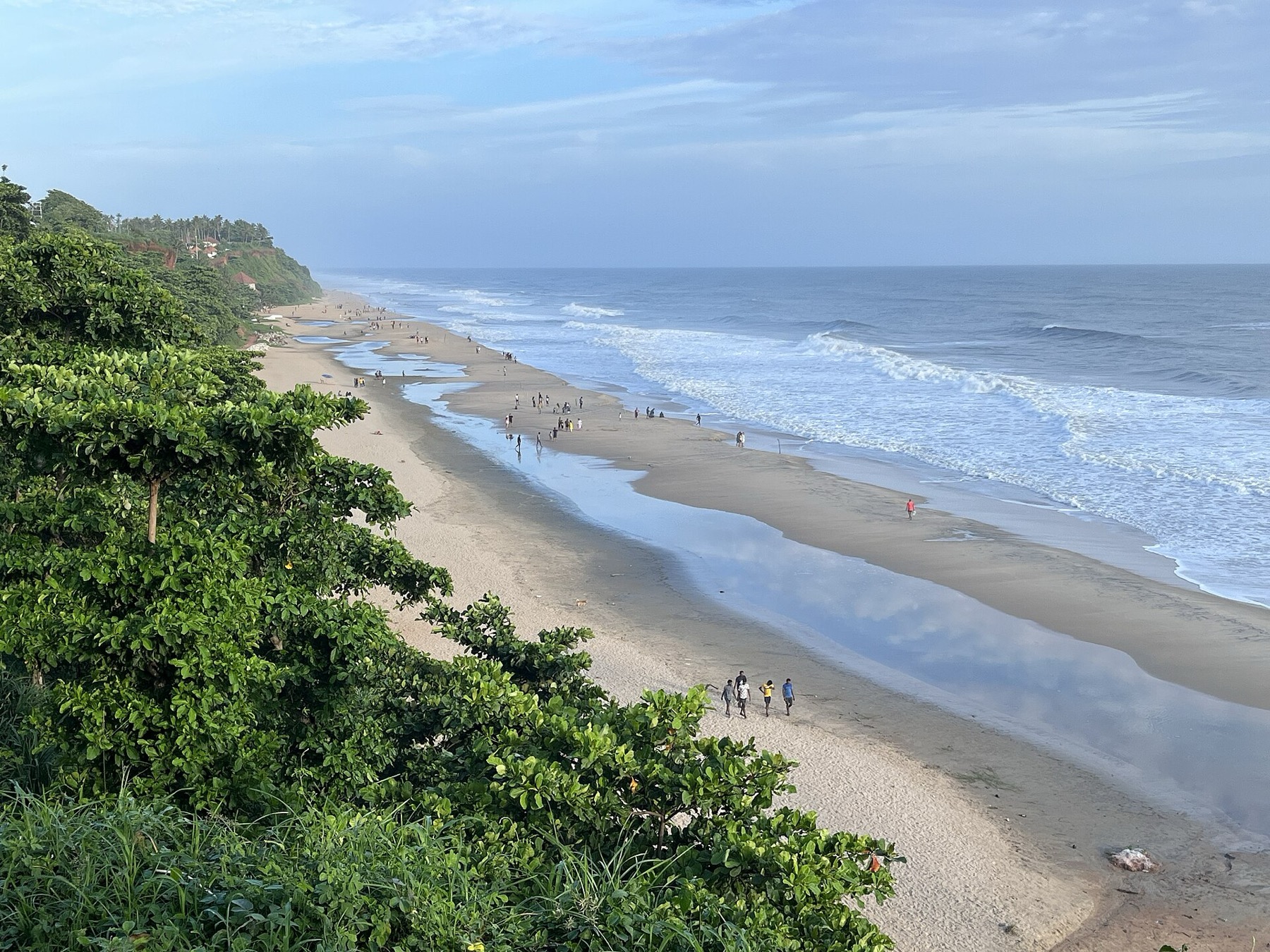
The cliff is the thing you remember. Nowhere else on Kerala's coastline does the shore climb into a sheer, rust-red escarpment tumbling down to the sand, and standing on its edge with the whole Arabian Sea spread out below is the defining Varkala experience. The laterite glows deepest orange in the low light of morning and evening, streaked with bands of white and ochre sandstone, and a paved path runs the length of the rim so you can walk the entire cliff-top from end to end.
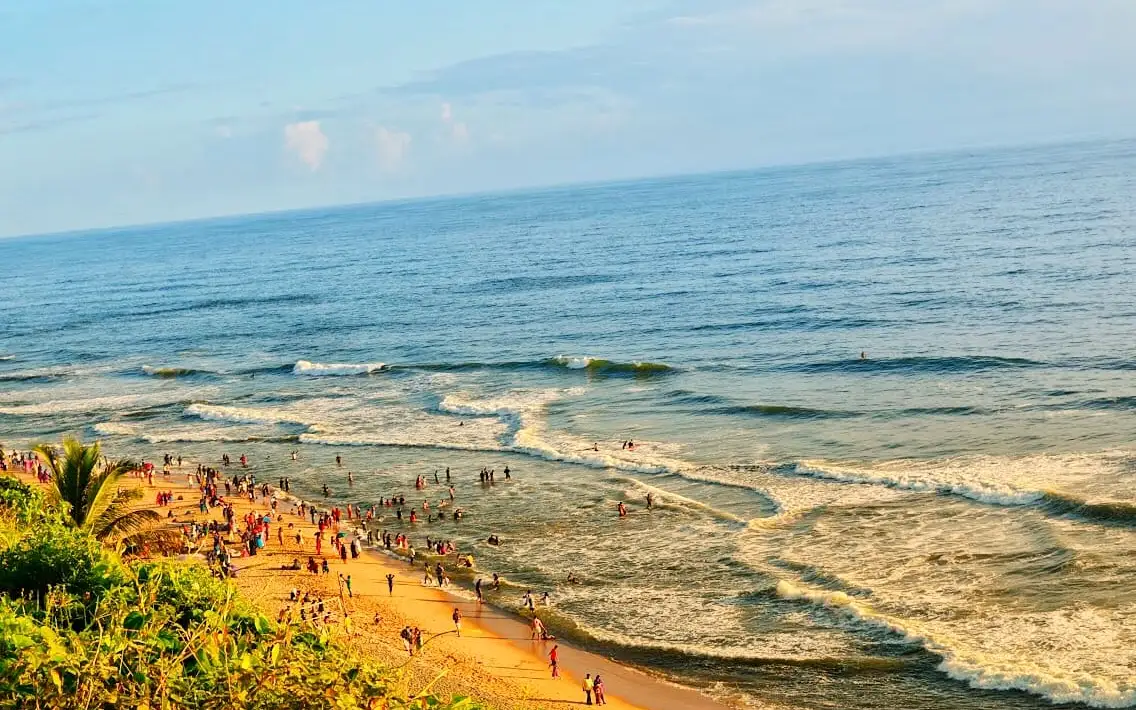
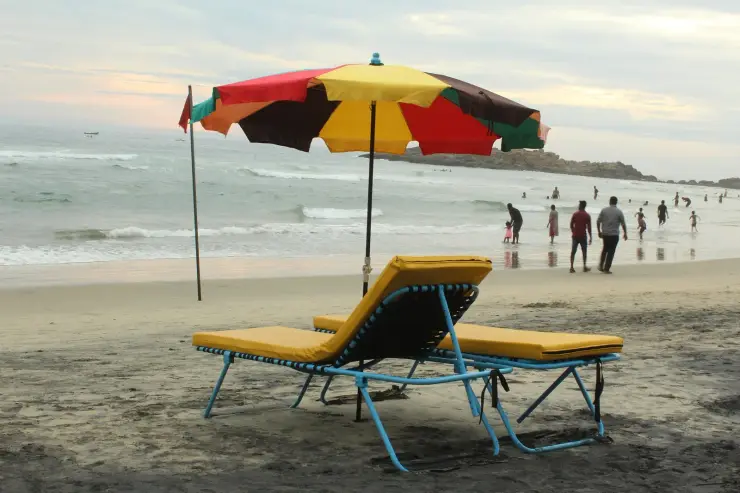
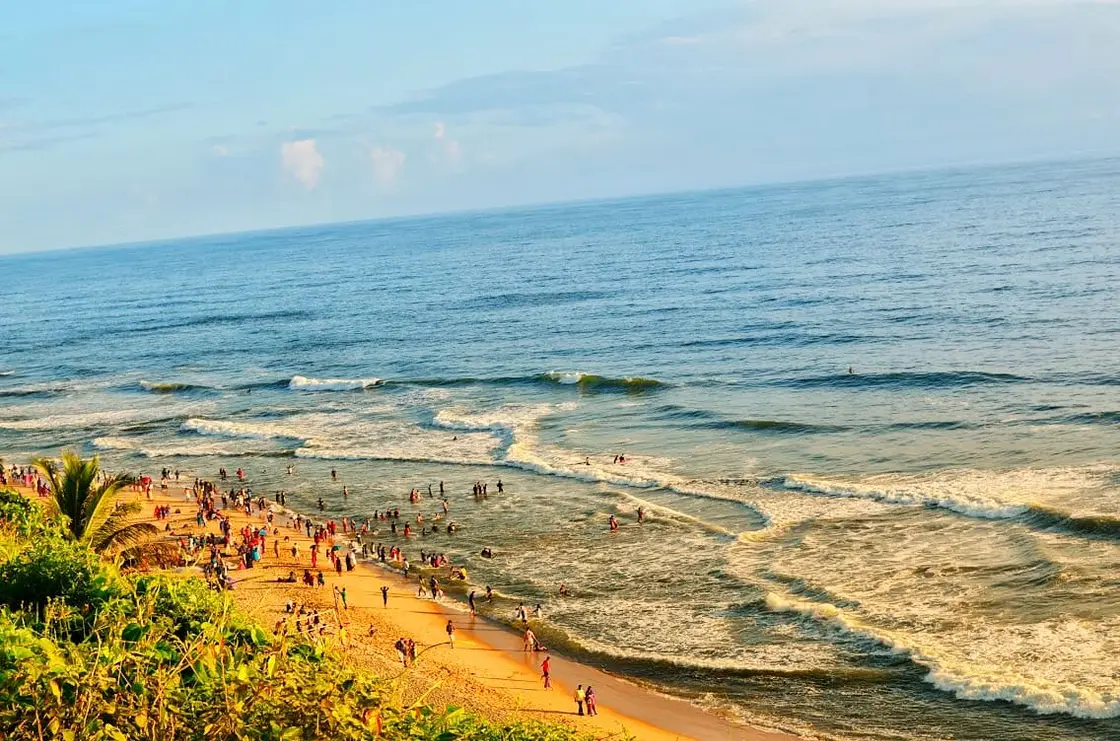
At the foot of the cliff lies Papanasam Beach, reached by steep flights of steps cut into the rock. This is the working heart of Varkala's shoreline — a broad crescent of pale sand where pilgrims perform rituals in the surf, families paddle in the shallows, and sunbathers stretch out through the long afternoon. The waves here can be strong and the currents lively, so most swimmers stay close to shore and heed the lifeguards; the beach is as much a place to sit and watch as to bathe.
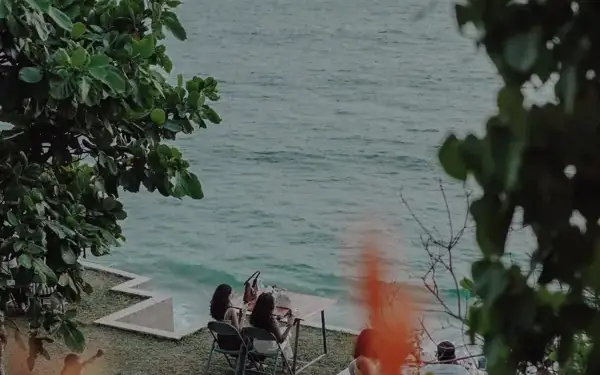
The cliff-top strip is where Varkala earns its reputation as a traveller haven. A near-continuous line of open-fronted cafés, seafood shacks, craft stalls and guesthouses hugs the edge, tables angled so every seat has the sea in view. Days drift by over long breakfasts, Ayurvedic massages, drum circles and browsing for silver jewellery and printed cottons; the pace is unhurried and the mood distinctly laid-back, a little world of its own perched above the water.
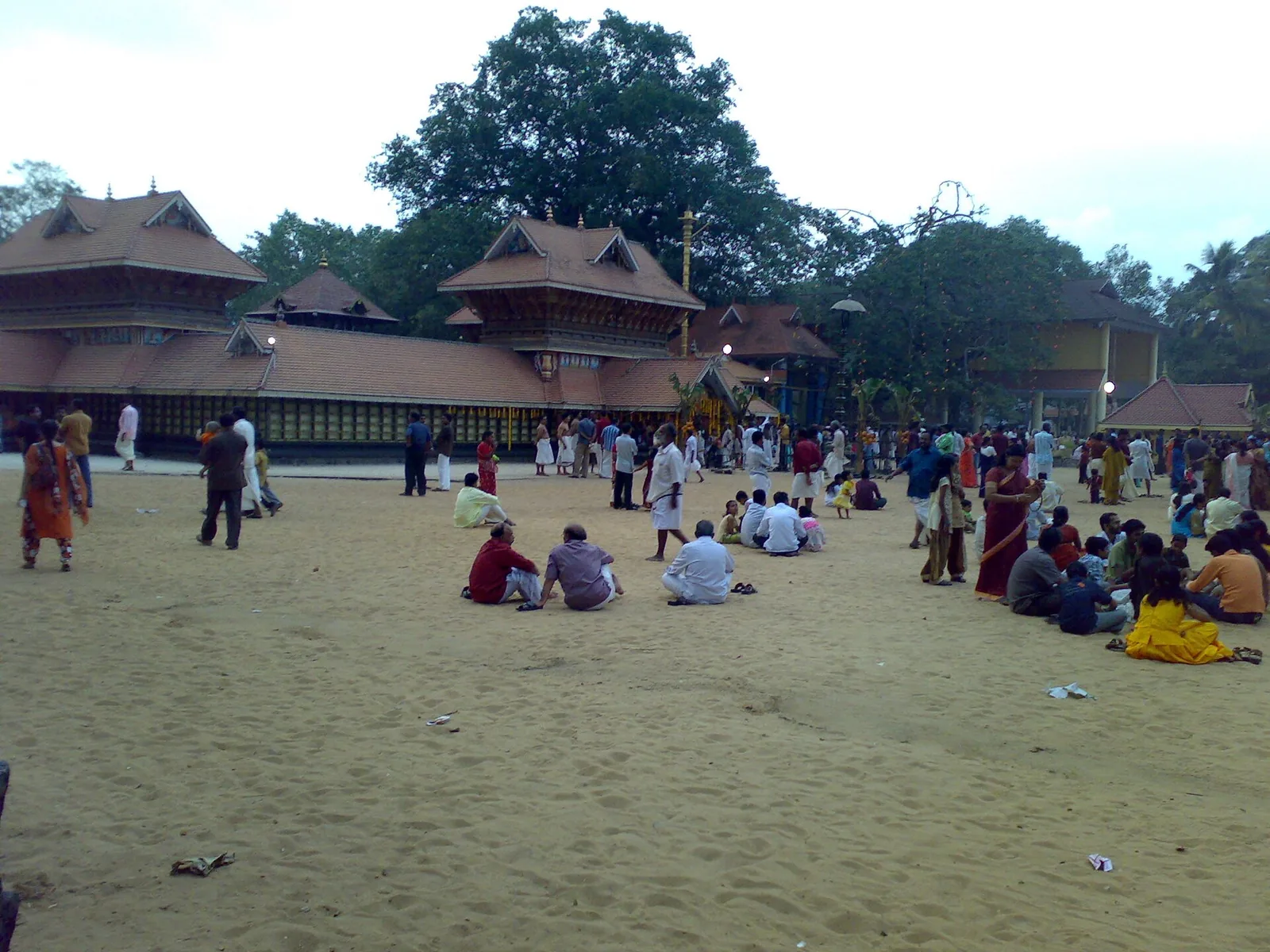
For all the beach culture, this is first and foremost a sacred town. The Janardanaswamy Temple crowns a rise above the shore, drawing a steady flow of devotees, and Papanasam has been a place of ritual bathing for many centuries — the name itself carries the promise of washing away sin. A short way inland, the white terraces of the Sivagiri Mutt mark the resting place of the great social reformer Sree Narayana Guru, making Varkala one of the most significant pilgrimage centres in southern Kerala.
Threading through it all are the springs. Fresh mineral water seeps from the base of the laterite cliff at Papanasam and gathers in bathing spots long held to have healing, therapeutic qualities. Pilgrims and visitors alike dip in these natural springs, and their presence — water emerging from stone at the sea's edge — is part of what has drawn people to Varkala since long before the cafés arrived.
And then, every evening, the town turns to face the horizon. Because the cliff looks due west over open ocean, Varkala serves up some of the finest sunsets in Kerala, the sky flaring pink and gold as the sun sinks into the Arabian Sea. The cliff-top fills, cameras come out, and for a few minutes the whole strip falls quiet — a nightly ritual as reliable as the temple bells, and one nobody who stays here seems to tire of.
Papanasam Beach takes its name from the Sanskrit for 'destroyer of sin' — papa, sin, and nasam, destruction — and legend holds that a dip in its waters washes away the sins of a lifetime. Devotees come to perform last rites and ancestral offerings on the sand, believing the sea here purifies both the living and the departed.
One legend tied to the Janardanaswamy Temple tells that pilgrims who could not make the long journey to Varanasi were promised equal spiritual merit by bathing at Papanasam and worshipping at Varkala instead — earning the town its old epithet as the 'Kashi of the South'. These stories are told as devotional legend rather than documented history, and are shared here in that spirit.
The name Varkala is usually explained through the same story: that a sage's staff, or in other versions the hand of Brahma, tore open the ridge to make a bathing place, varkala being read as the place where the cut was made. The more prosaic derivation runs through valkalam — bark cloth, the garment of an ascetic — and it is worth flagging that Kerala Tourism's own page renders valkalam as cloth made of deer's skin. That is a different garment entirely. A valkalam is bark; the ascetic's deerskin is the krishnajina. The bark reading is the one the etymology depends on, and the official source has it wrong.
Two modern claims about Varkala circulate more widely than any of the legends, and both are wrong. The first is that Varkala is a UNESCO geopark, or India's first geopark. It holds no geopark status of any kind. What it does hold is a Geological Survey of India notification from 2014 making the Varkala Cliff Section the country's 27th National Geological Monument, one of only two in Kerala alongside the laterite section at Angadipuram. Separately, on 27 August 2025 the Natural Heritage of Varkala was entered on India's UNESCO World Heritage Tentative List. A tentative listing is a declared intention to nominate. It is not an award, and it is not a geopark.
The second is the size of the cliff itself, and this site had it wrong too. Tourism copy — including, until recently, our own — describes an escarpment running about two kilometres along the shore. The geological literature puts it at roughly 6.1 to 7.5 kilometres, standing between about 10 and 46 metres high; the 25 to 30 metres usually quoted belongs to the central section. The two-kilometre figure describes the built-up stretch with the cafés on it, which is the part visitors walk, and it has quietly been repeated as though it were the whole formation. The difference matters, because a cliff of the real length has several named beaches at its foot rather than one, and because the protected monument is the whole exposure, not the promenade.
A third thing worth unlearning: the cliff is not a laterite cliff, despite being described as one everywhere including on its own signage. The laterite is a cap a few metres thick. Almost all of the exposed height is soft Mio-Pliocene sandstone, and that distinction is the whole reason clifftop drainage and construction destabilise it so readily. Similarly, the springs at the foot are not mineral springs in the sense the word implies — they are fresh groundwater emerging where a bed of carbonaceous clay stops it sinking further, carrying some dissolved iron from the sandstone it passed through. The therapeutic reputation is old and genuine as belief; it has no published analysis behind it.
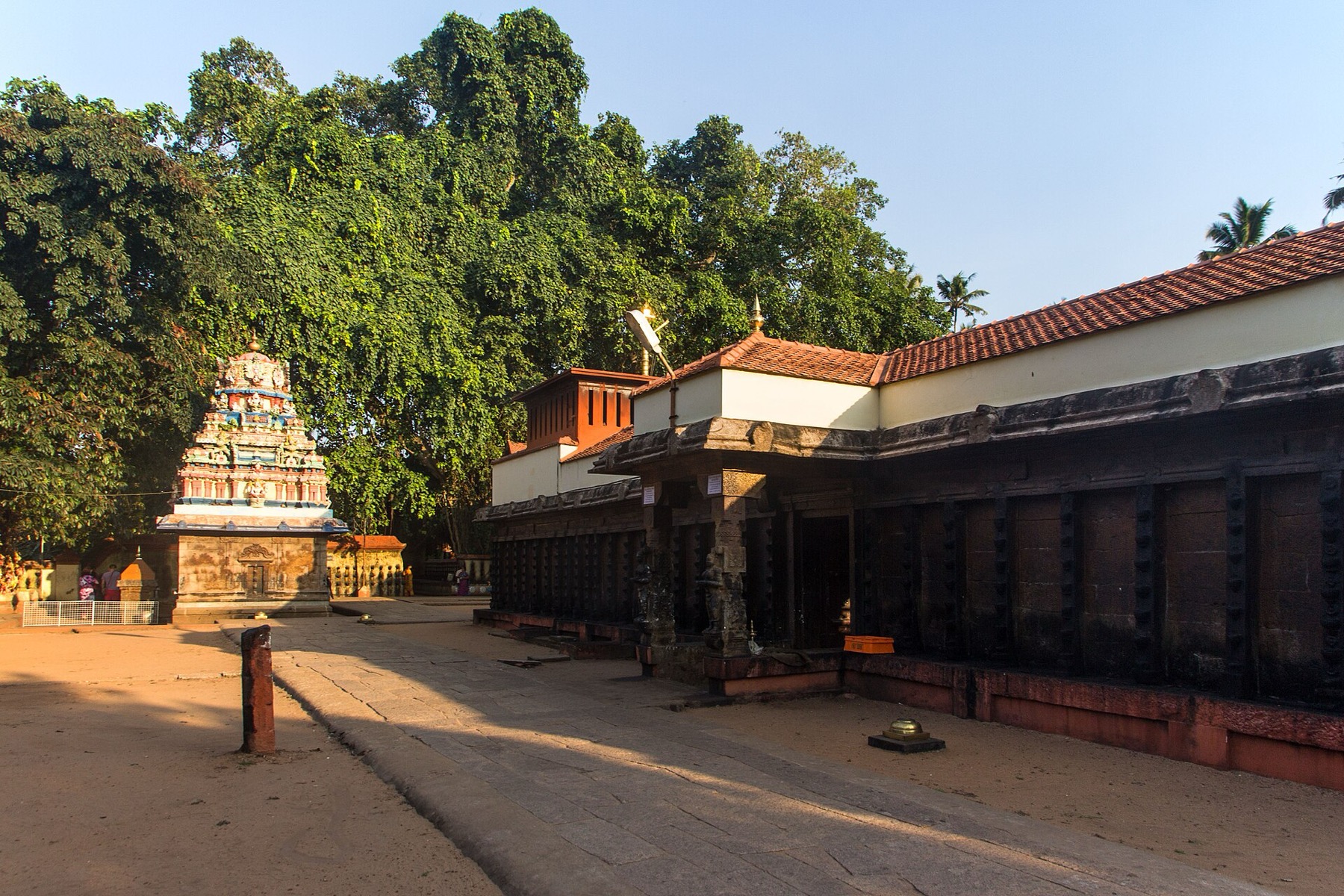
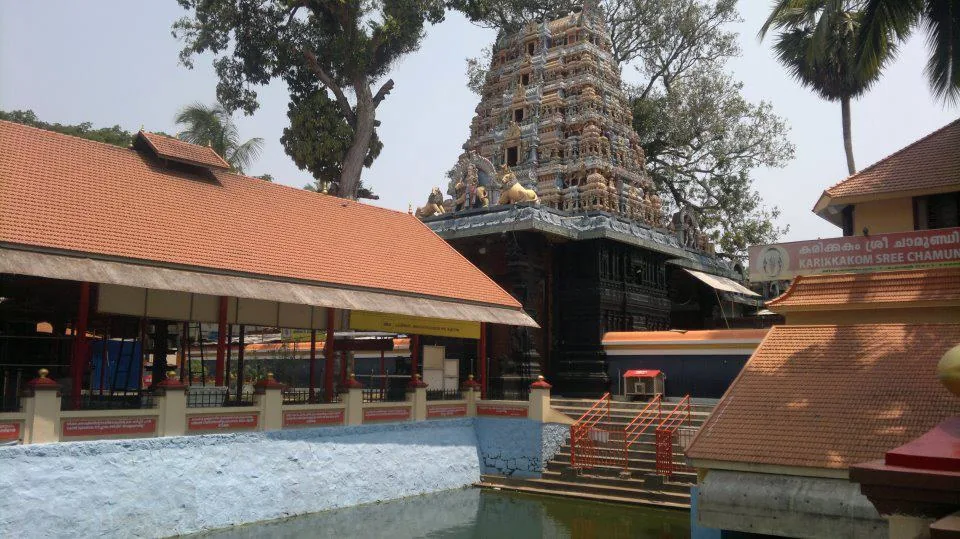
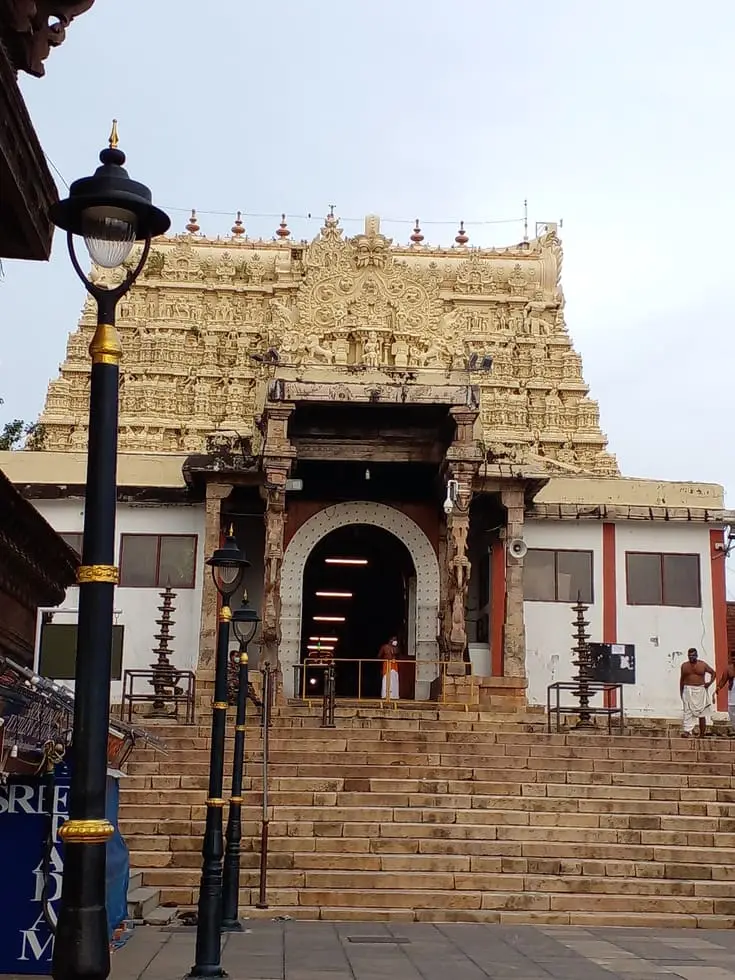
The Janardanaswamy Temple, dedicated to Lord Vishnu, is the historic anchor of the town. Inscriptions and tradition credit it with an age of some 2,000 years, though the present structure is generally dated much later, to around the medieval period, with significant renovation associated with Umayamma Rani, who ruled the region in the late 17th century (indicative — confirm locally). Its circular sanctum, copper-sheathed conical dome and mandapa ceiling carved with the Navagrahas reflect classical Kerala temple architecture.
The town's second great landmark is more recent. In 1904 the philosopher and social reformer Sree Narayana Guru, drawn by the calm and beauty of the hill, established a hermitage on Sivagiri; the Travancore state later granted him the hill and it grew into the Sivagiri Mutt, headquarters of the Sree Narayana Dharma Sangham. The Guru attained samadhi on 20 September 1928 and his resting place here became a major pilgrimage site. The annual Sivagiri Theerthadanam, held from 30 December to 1 January, brings pilgrims in yellow robes flocking to the Mutt. It is worth being clear that this pilgrimage is not the Guru's birth anniversary, as is often written: his Jayanti falls in the Malayalam month of Chingam, around August or September. The Guru himself approved the pilgrimage and laid down how it should be observed in early 1928, but it was not held until 1933, after his death.
Papanasam's springs and sacred bathing tradition made Varkala a pilgrim destination for centuries before it was ever a beach resort. Its transformation into a traveller hub is a much more recent story, gathering pace from the late 20th century as backpackers discovered the cliff and its west-facing sunsets, and the ribbon of cliff-top cafés and guesthouses grew up to serve them.
In geological terms Varkala is exceptional. The cliff exposes the Mio-Pliocene sediments of the Warkalli (Varkala) Formation — beds of red and white sandstone, lignite and lateritic cap laid down over roughly the last 20-odd million years — and Varkala is the designated type area for this formation, one of the few places on India's west coast where sediments of this age are exposed at the surface (indicative — confirm locally).
In recognition of this the Geological Survey of India notified the site in 2014 as a National Geological Monument — the 27th in the country, on a roster that now stands at 34, and the second in Kerala after the Angadipuram laterite section. Its official name is the unglamorous ‘Varkala Cliff Section’. Wider recognition followed on 27 August 2025, when ‘Natural Heritage of Varkala’ was entered on India’s UNESCO World Heritage Tentative List among seven natural sites added together, taking India from 62 tentative entries to 69. One thing to discount as you read around the subject: Varkala is repeatedly described as a UNESCO geopark or ‘India’s first geopark’, and it is neither. A tentative listing is a declared intention to nominate, and it is not the same award.
The dramatic red laterite cliff — the only stretch of Kerala's coast where the shore rises into a sheer sea-facing escarpment.
Papanasam Beach at the cliff's foot, a sacred bathing shore and a fine place to swim, sunbathe and people-watch.
The cliff-top café strip: open-air restaurants, seafood shacks, Ayurveda and yoga, all angled at the sea.
Sunsets over the Arabian Sea, among the best on the whole Kerala coast, watched nightly from the cliff edge.
A living pilgrim town — the ancient Janardanaswamy Temple, the natural mineral springs, and the Sivagiri Mutt of Sree Narayana Guru.
A geological wonder underfoot: the Warkalli Formation cliff, a National Geological Monument millions of years in the making.
Road km to Thiruvananthapuram; ghat roads and traffic vary — allow extra.
November to February is the most comfortable season. Monsoon is dramatic but brings rough seas, cliff-edge risk and possible access disruption.
Live forecast loads in your browser.
Check the official alert before you travel. Kerala’s beaches, waterfalls and trekking routes close at short notice during heavy rain, and district alert levels change day to day. We do not publish an alert level of our own — read it from the state authority: Kerala State Disaster Management Authority, or the district control room on 1077.
Sun and moon are calculated for this location and shown in IST. Photography windows are the hour around sunrise and sunset; the sunset bearing is degrees clockwise from true north. Moon phase is accurate to about half a day.
Photographs: Tuderna (CC BY 3.0), Akhilan (CC BY-SA 4.0), Alexey Komarov (CC BY 3.0), Shantham11 (CC BY-SA 4.0). Wikimedia Commons.
Verified hotels, homestays, restaurants, experiences, sights, shops and rentals around Varkala — commission-free, with direct contact. Filter by what you need.

Official Kerala Tourism destination page for Varkala Beach, Papanasam, cliffs and adventure-sports context.

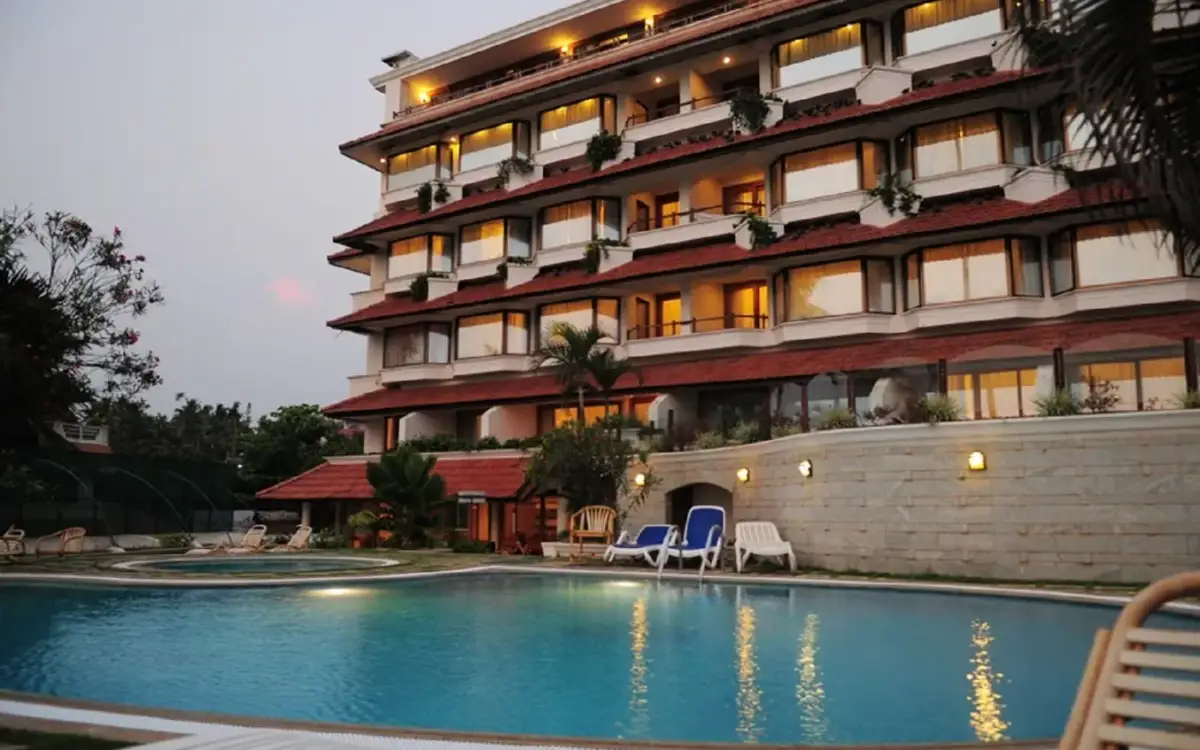
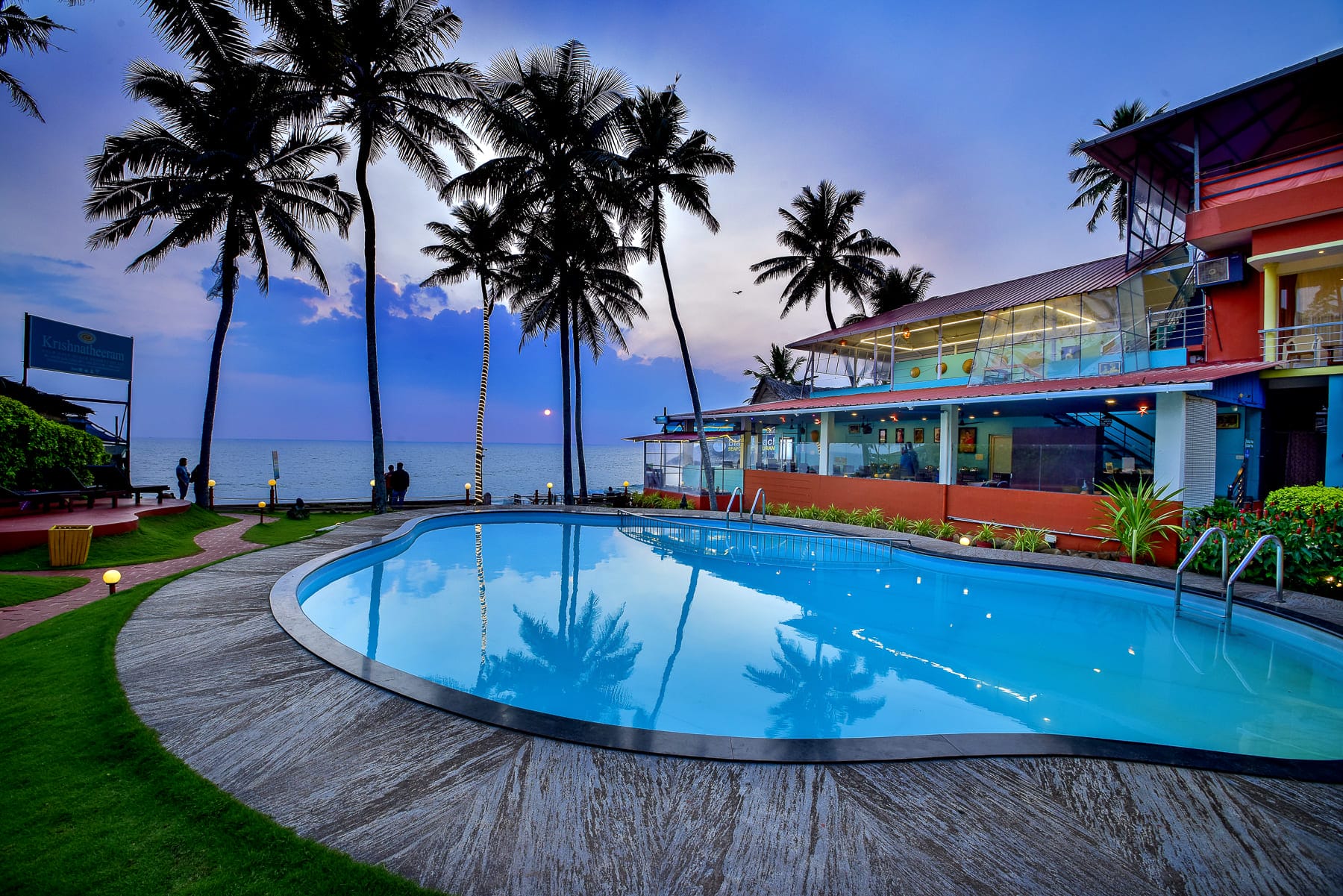
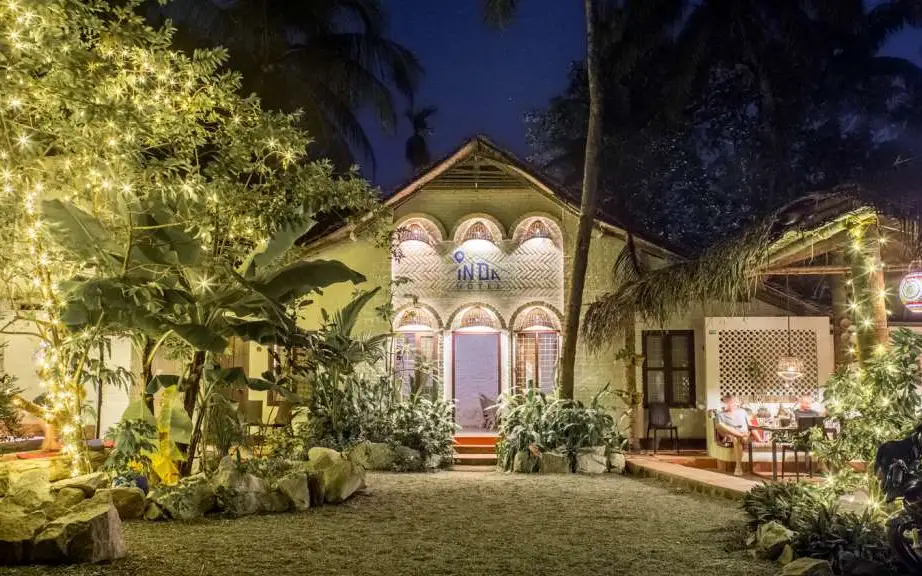
Varkala Cliff hotel with pool, spa and multi-cuisine restaurant near the helipad cliff road. Hotel, Varkala Cliff, restaurant.

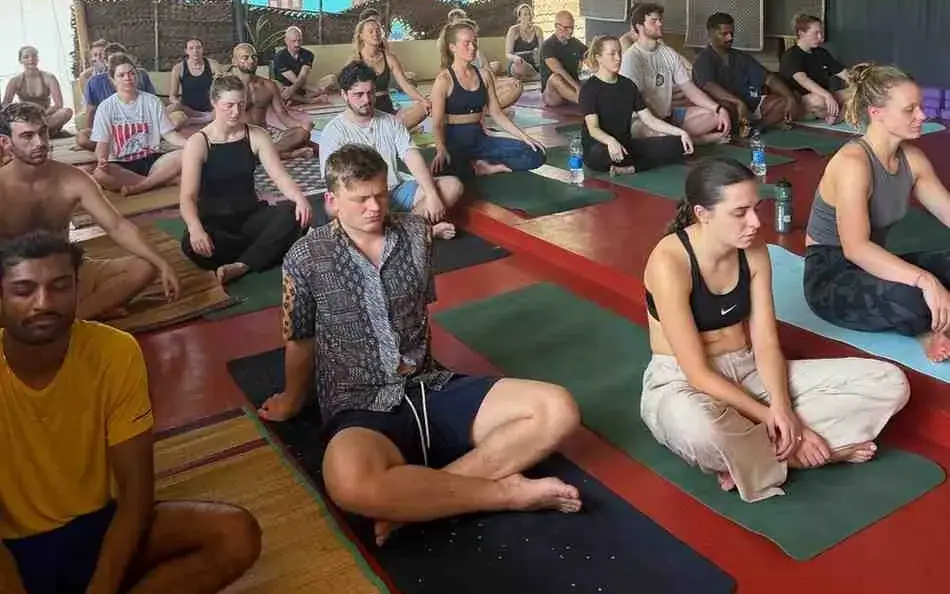
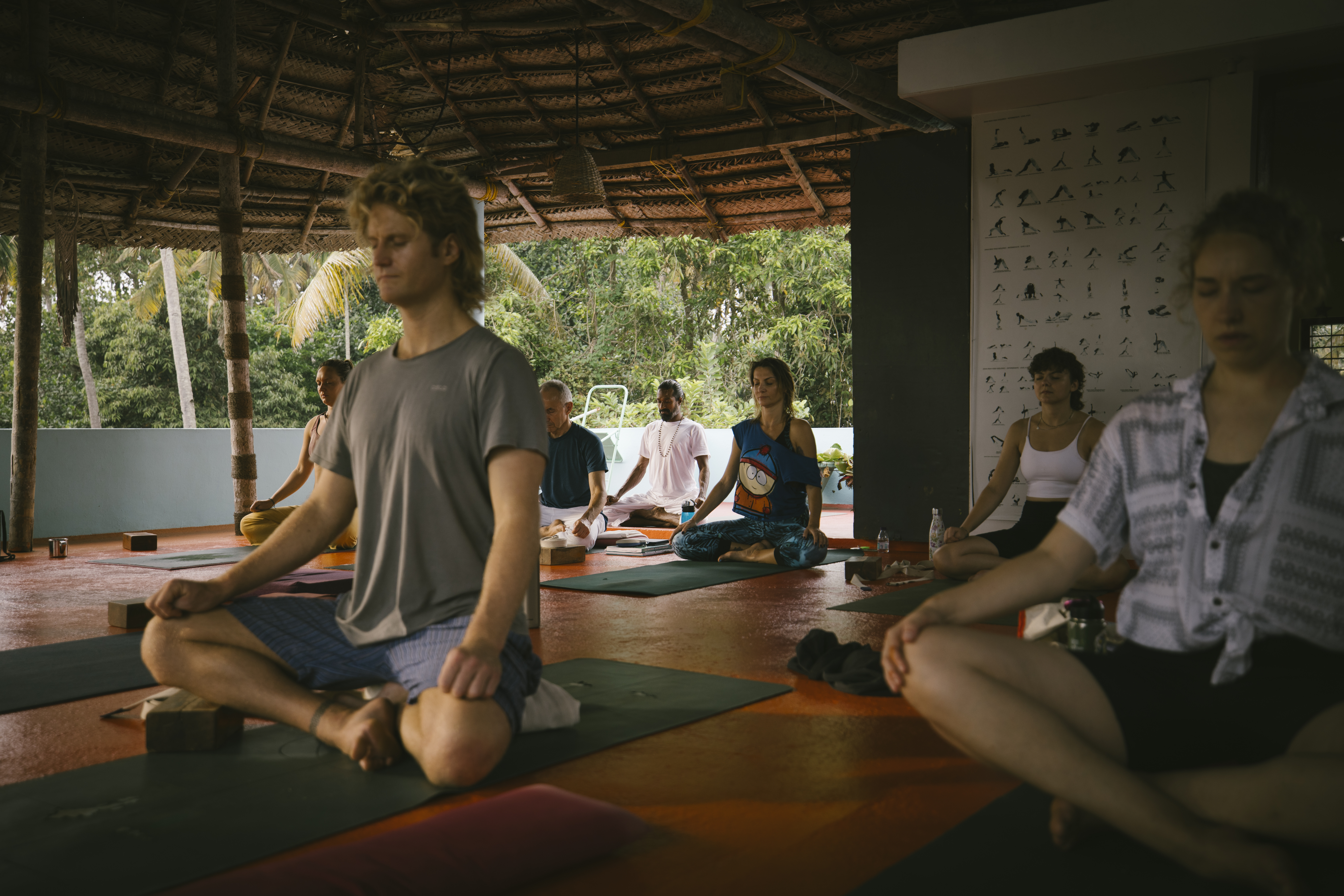
Odayam-based yoga school offering Yoga Alliance teacher trainings, yoga programs and Ayurveda retreats.

North Cliff taxi service offering local sightseeing, airport taxi, railway transfer and outstation cab services.

North Cliff Ayurveda beach resort with yoga, Ayurveda therapy, dining and direct reservations. Ayurveda, yoga, beach resort.

Standalone cafe and restaurant near the North Cliff helipad with direct phone, WhatsApp and social links.

Kurakkanni yoga school offering 100, 200 and 300 hour teacher trainings plus drop-in and online classes.

Kurakkanni yoga and Ayurveda school with teacher trainings, retreats, Ayurveda courses and direct contact details.

Kurakanni cliff yoga school offering teacher trainings and retreats with accommodation near the beach.

Surf school at Elixir Cliff with booking phone, instructor evidence and South Cliff resort location.

Papanasam Beach stay between Varkala's North and South cliffs with restaurant, yoga and Ayurveda course context.

Varkala cab rental provider for local tours, airport transfers and custom Kerala tour packages. Cab rental, taxi, local tour.

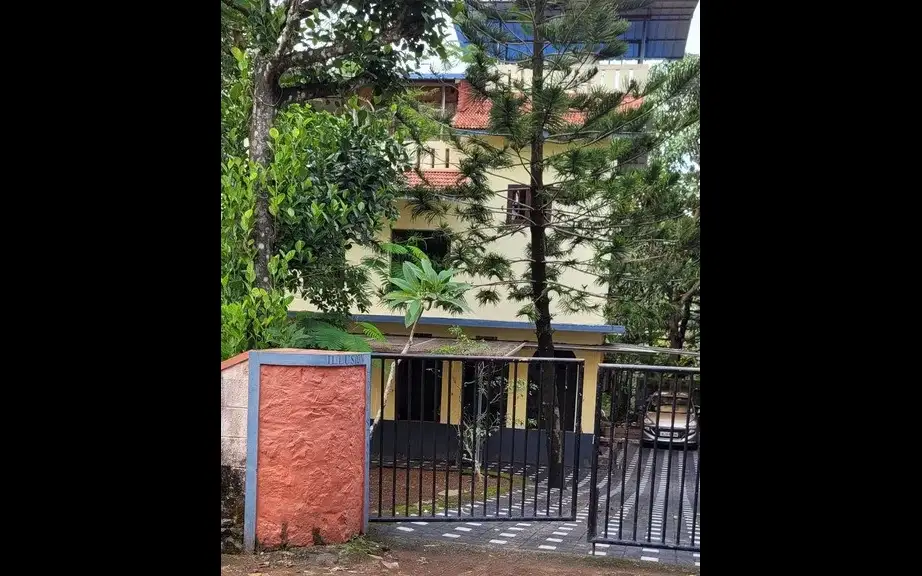
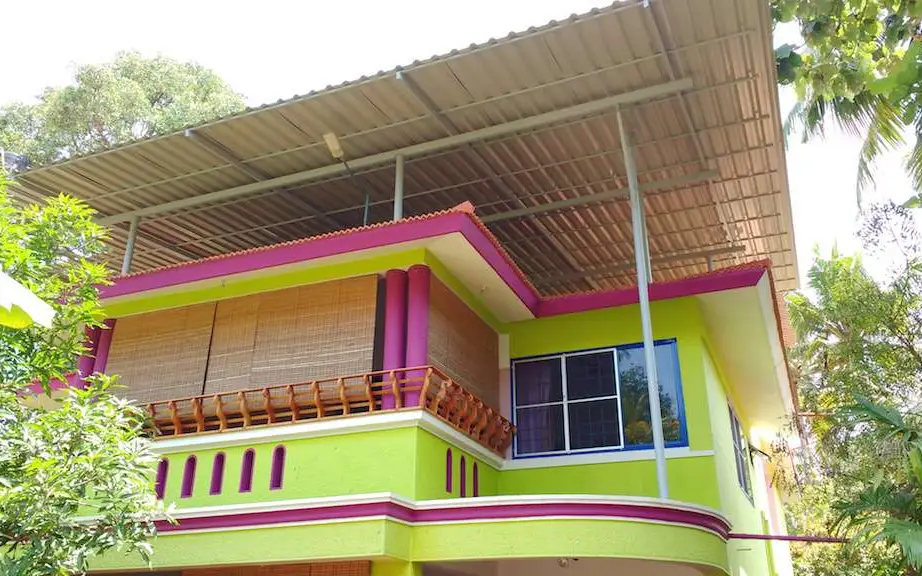
Kerala Tourism-classified homestay in the heart of Varkala, just west of the Janardhana Swamy Temple and a short walk from Papanasam Beach and the North Cliff. It offers air-conditioned and non-air-conditioned guest rooms with parking and Wi-Fi in a quiet family home, a host-led base for exploring the Varkala cliffs.

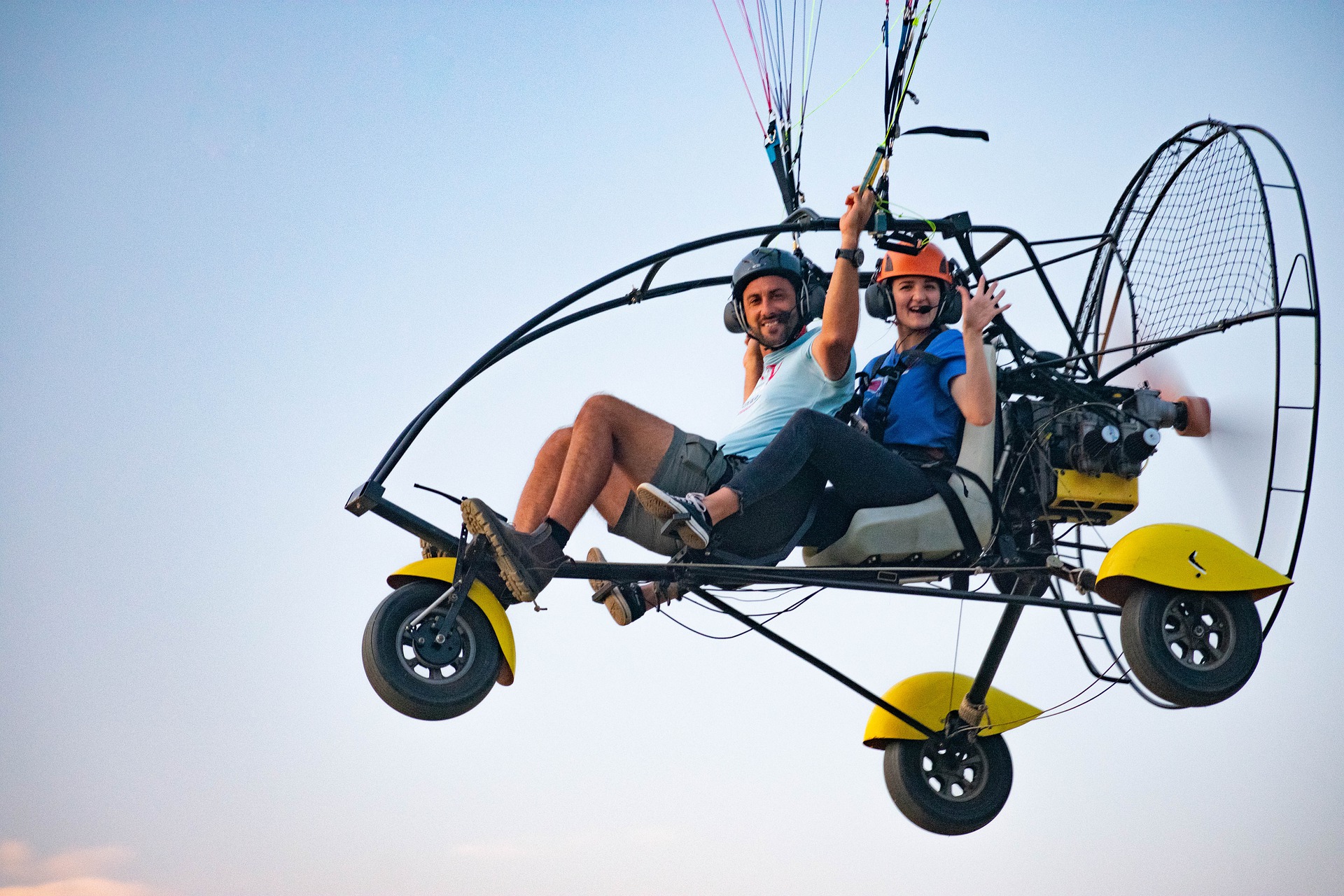
Kerala Tourism-listed paragliding and adventure operator for Varkala cliff and beach trips. VMC 28/710, Varkala-Kallambalam Road, Helipad, Varkala P.O., Thiruvananthapuram, Kerala 695141 · Contact direct / check current rules · varkala, do, Paragliding and adventure operator.
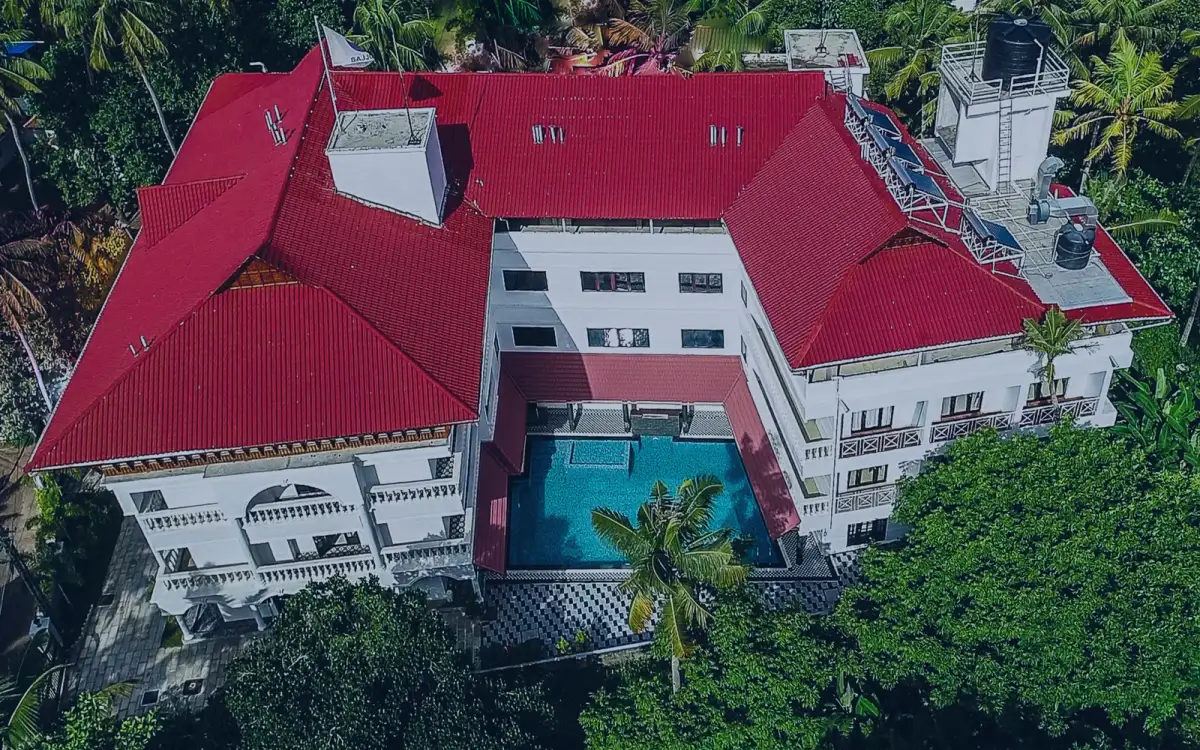
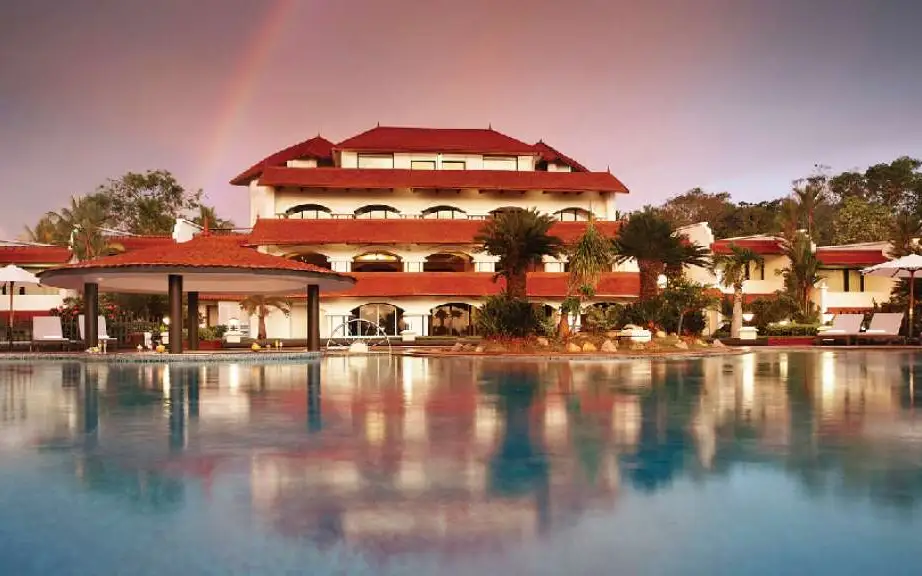
Beachfront Varkala resort on Papanasam Beach with pool, health spa, rooftop restaurant and travel desk.
Cliffside cafe and restaurant on South Cliff with ocean views, reservation phone and daily hours. Cafe, restaurant, South Cliff.
Odayam Beach cottages in Varkala with traditional Kerala food, map link and direct phone/email contacts.
Book with the place itself. India’s cyber-crime coordination centre warned in April 2025 that convincing copies of hotel and pilgrimage booking sites are being pushed through sponsored search and social ads, taking payment for rooms the property never hears about. Every listing here links to the business’s own contact details and its own Google or Bing profile — we take no commission and sit in nobody’s payment path. If a booking page reached you through an ad, check the address bar against the property’s own site before you pay. Fraud can be reported on cybercrime.gov.in or on 1930.
Varkala sits in Varkala, and these rank everything verified across the town rather than this one spot — built from the same listings shown above, ordered by the strength of the source evidence behind each entry rather than by anyone's star score. Every card shows how many places are really on it. Nobody pays to appear.
Ordered by a real routed walk from Varkala itself — the walking network, not a line on a map, which understates a real walk by about half again. A different question, and a different answer, from the town-wide lists below.
Roampedia is commission-free — own or know a stay, eatery, guide or shop near Varkala? List it and it appears here once verified.
Add a nearby businessEntry: No entry fee for the beach or cliff (indicative — confirm locally).
Dress code: For the Janardanaswamy Temple, dress modestly with shoulders and legs covered as a mark of respect; traditional attire is customary and a stricter dress code may apply near the sanctum (confirm at the temple).
Festivals: The Sivagiri Pilgrimage honouring Sree Narayana Guru runs from about 30 December to 1 January; the Janardanaswamy Temple also observes its own festival days through the year (indicative — confirm locally).
Photography: Photography is welcome along the cliffs and beach; restrictions typically apply inside the temple, so check before photographing there (indicative — confirm locally).
Work out your return before you settle in for the sunset. Public transport here thins out sharply in the evening, and Varkala is easier to reach than to leave. We do not publish departure times: there is no official live feed we are permitted to republish, and a wrong time here would strand you. Check the operator directly on the day.
Ask at the jetty or stand for the time of the last service back, not the next one. If you miss it, an auto or app cab is the fallback — agree the fare before you get in.
Checked 4 August 2026 against source 1source 2. Conditions change and surfaces vary with weather — if step-free access is essential, confirm with the site before you travel.
Charge cap and free-transaction limits: Reserve Bank of India, in force since 1 May 2025.
Mapped within about 1.2 km of Varkala, with real walking routes rather than straight-line distances. Community-mapped data: opening hours are shown only where they are recorded, and this is not a complete list — something unmapped may well be closer. Please confirm on the ground.
Emergency numbers are verified against official government and state tourism sources. 112 works anywhere in India.
Walking and driving times are real routed distances, except the few marked “straight line”, which are direct-line estimates and will read short. Fare figures are estimates from Kerala’s notified auto/taxi tariff and exclude waiting and night charges. Routing: © openrouteservice.org by HeiGIT | Map data © OpenStreetMap contributors
Nearby toilets, pharmacies, ATMs, seating and vets are community-mapped and may be incomplete or out of date. Map data © OpenStreetMap contributors | Walking times © openrouteservice.org by HeiGIT
Varkala is famous for its red laterite cliff rising above the Arabian Sea, the café-lined cliff-top strip, Papanasam Beach with its sacred springs, spectacular west-facing sunsets, and its status as both a pilgrim town and a relaxed traveller hub.
Yes, many visitors swim at Papanasam Beach, but the surf and currents can be strong. It is best to swim close to shore, follow the lifeguards' guidance and avoid going out at rough times (indicative — confirm locally).
Its name means 'destroyer of sin', and a dip in its waters is traditionally believed to wash away sins and benefit departed ancestors. Devotees perform ritual bathing and last rites on the beach, and natural mineral springs at the cliff base add to its sacred reputation.
The key sights are the cliff itself and its café strip, Papanasam Beach, the roughly 2,000-year-old Janardanaswamy Temple, the natural mineral springs, and the Sivagiri Mutt — the resting place of social reformer Sree Narayana Guru, a short way inland.
The cooler, drier months from roughly October to March are generally the most comfortable for the beach and cliff, with the annual Sivagiri Theerthadanam pilgrimage around the turn of the year; the monsoon months bring heavy rain and rougher seas (indicative — confirm locally).
Varkala lies to the north of Thiruvananthapuram city, and Trivandrum International Airport is roughly 50–57 km away, while Varkala Sivagiri railway station is only about 2–3 km from the cliff (indicative — confirm locally).
No, and the claim is repeated constantly. Varkala holds no geopark status of any kind, from UNESCO or anyone else. What it does have is a Geological Survey of India notification from 2014 declaring the Varkala Cliff Section India's 27th National Geological Monument — one of only two in Kerala, the other being the laterite section at Angadipuram. Separately, on 27 August 2025 the Natural Heritage of Varkala was added to India's UNESCO World Heritage Tentative List, which is a declared intention to nominate rather than an inscription or an award.
Longer than most descriptions suggest. Geological studies give the escarpment as roughly 6.1 to 7.5 km, with heights ranging from about 10 to 46 m; the 25 to 30 m usually quoted describes the central section. The commonly repeated figure of about two kilometres actually describes the built-up promenade stretch that visitors walk, not the whole formation — which is why several separately named beaches, including Papanasam, Thiruvambadi, Odayam and Edava, lie along the same cliff line.
The Sivagiri Theerthadanam runs from 30 December to 1 January, when pilgrims in yellow robes converge on the Sivagiri Mutt. It is often described as marking Sree Narayana Guru's birth anniversary, which is not correct — his Jayanti falls in the Malayalam month of Chingam, around August or September, and he attained samadhi on 20 September 1928. The Guru approved the pilgrimage and set out how it should be observed in early 1928, but the first one was not held until 1933.
Entry: No entry fee for the beach or cliff (indicative — confirm locally).. Timings: The beach and cliff promenade are open-access public areas that can be visited through the day; the Janardanaswamy Temple keeps separate morning and evening darshan hours (indicative — confirm locally).. Fees and timings are indicative — confirm on site before you travel.
Arrive by train at Varkala Sivagiri or by road from Thiruvananthapuram, then choose North Cliff, South Cliff or quieter beach pockets as your base. Walk the cliff path in the morning or evening and keep beach time around tide and lifeguard advice. For temple or ritual areas, dress modestly and follow local photography and access customs.
One full day minimum; 2 to 4 nights for beach, yoga and slow travel.
Nearby you can pair Janardanaswamy Temple (1.3 km), Papanasam Beach (1.6 km), Varkala Cliff (2.3 km), Kappil Beach (8.5 km).
Stay back from unstable cliff edges and avoid shortcuts down eroded slopes. Do not swim during rough-sea warnings or after dark. Use verified wellness providers and avoid medical claims from unqualified operators.
Written about Varkala itself — its history, its legends and the arguments about them.


Route-level itineraries and practical guides for the rest of Kerala.