Places to Visit in Thrissur city

Temple festivals, museums and Kerala’s cultural capital.

Thrissur city
Practical guide

Plan Thrissur city

Who's going?Tailor Thrissur city to your trip
DistrictThrissur
RoleCulture base
Time neededHalf a day to walk the Round and the…
Places to visit8Listed businesses41
What to expect

Highlights

  • Ariyannur Temple and Megalithic Site — An old temple landscape near Kandanassery with nearby megalithic remains; living worship and archaeological evidence must be described as separate layers.
  • Chemmapilly Hanging Bridge — A narrow pedestrian suspension bridge over the Karuvannur river at Chemmapilly, best visited as a working local crossing rather than a staged thrill attraction.
  • Holy Cross Church, Mapranam — A longstanding Catholic pilgrimage church at Mapranam associated with the Holy Cross and annual feast observances.
  • Kunjalipara — A lesser-known rocky hill destination in Thrissur district where the exact approach, safe stopping point and public access require local confirmation.
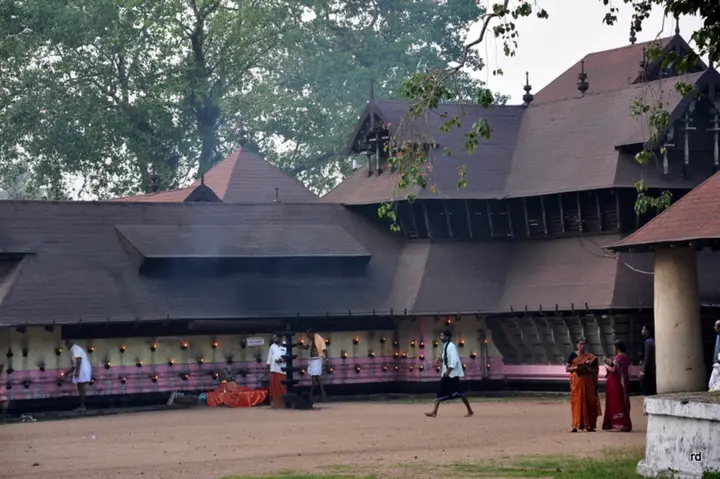
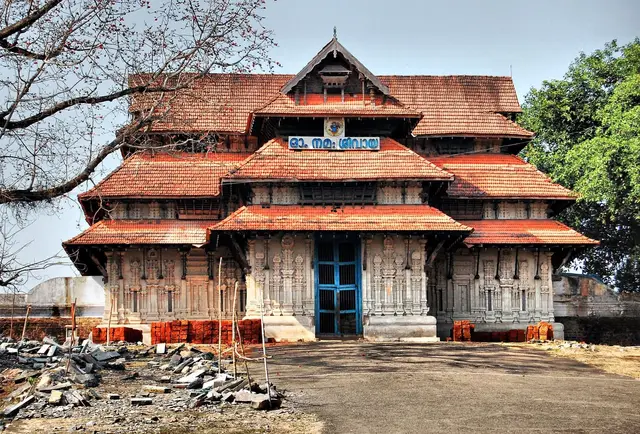
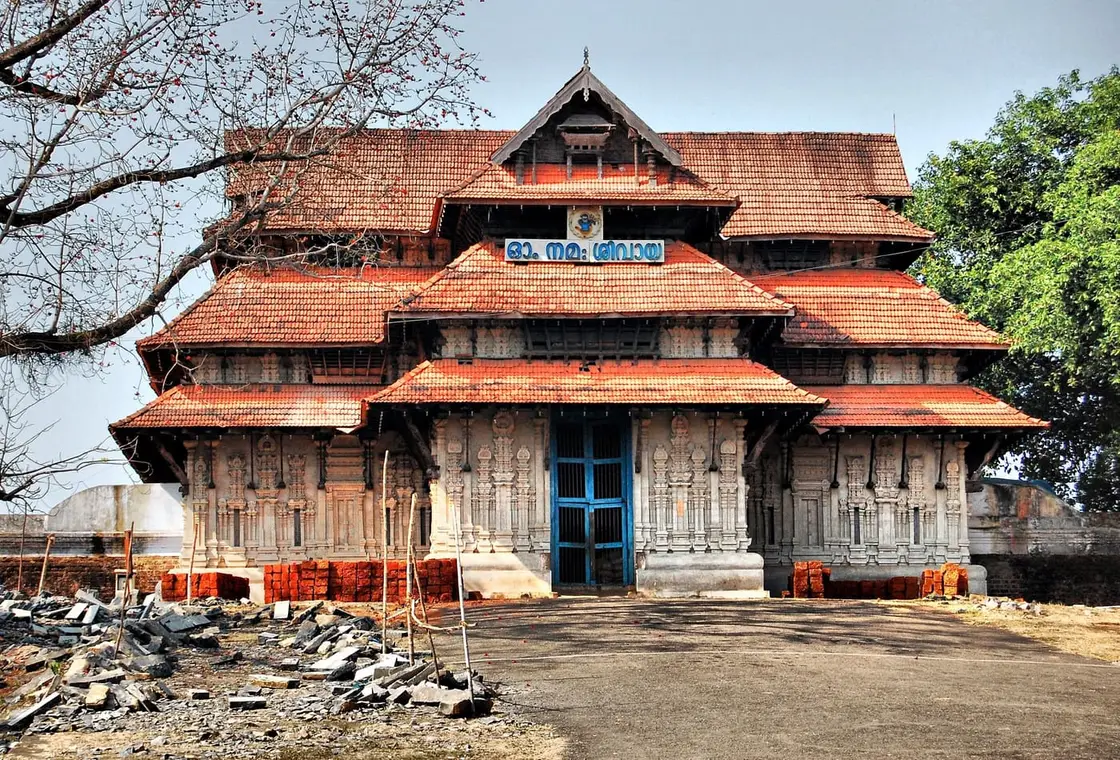
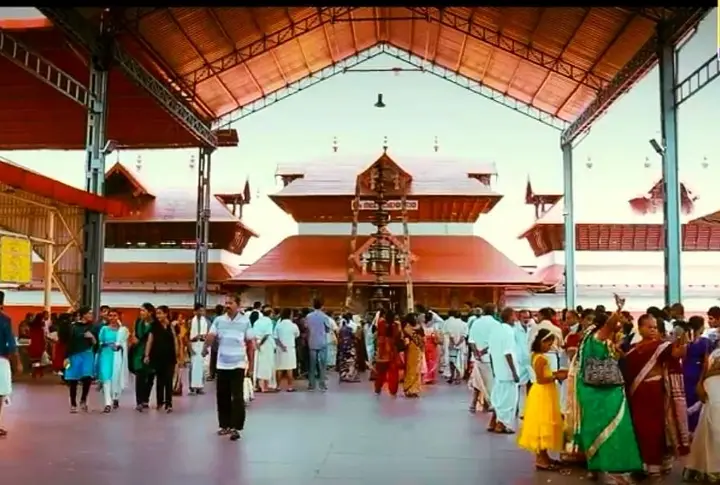
  • Vadakkunnathan Temple — Ancient temple at the centre of Thrissur’s round, associated with Thrissur Pooram.
  • Chimmony trek — The official guided 5 km, roughly 3-hour forest route from Virakuthodu, one kilometre beyond the check post, to Choorathala inside Chimmony Wildlife Sanctuary.
Getting there

How to visit

  • Nearest airport: Cochin (COK), 52 km
  • Rail gateway: Thrissur (TCR)

Distance by road

  • Kochi86 km
  • Coimbatore114 km
  • Kozhikode124 km
  • Mysuru264 km
  • Madurai273 km
  • Thiruvananthapuram279 km

Road distances measured on real routed roads to Thrissur city itself, not to the district headquarters, on 22 August 2026. Driving time is deliberately not published: free-flow routing badly understates a Kerala ghat road, so allow more than the distance suggests.

Timing

Best time to visit Thrissur city

October to February for comfortable walking weather. For the two events that take over the ring road: Thrissur Pooram falls on the Pooram asterism in Medam, generally late April or early May, with the Pooram Exhibition running 40–50 days around it; Pulikali is on the fourth day of Onam (Nalaam Onam / Chathayam), generally late August or September. Both dates move with the calendar — check the current year.

Weather in Thrissur citySeasonal guide

Live forecast loads in your browser.

Today at Thrissur city
Sunrise6:14 am
Sunset6:24 pm
Golden hour best light5:24 pm–6:24 pm
Blue hour after sunset6:24 pm–6:49 pm
Sun sets toward compass bearingW · 272°
Moon tonight🌓 First quarter · 52%
South-west monsoon. June to September is the south-west monsoon in Kerala. Expect heavy showers, mostly in bursts rather than all day — carry rain cover, allow extra time for getting around, and note that ferries and open-air sites are the first things affected.

Sun and moon are calculated for this location and shown in IST. Photography windows are the hour around sunrise and sunset; the sunset bearing is degrees clockwise from true north. Moon phase is accurate to about half a day.

Visitor notes

  • The Pooram exhibition occupies the Thekkinkadu Maidan for forty to fifty days around the festival — the largest exhibition in Kerala by attendance — so the open ground you expect may be a fairground when you arrive.
  • This is a business city with business hotels — a bargain outside Pooram season and impossible during it.
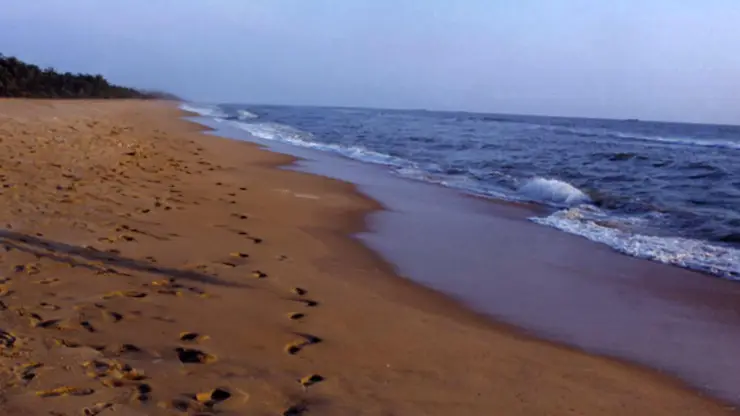
  • The coast is about half an hour's drive away at Snehatheeram and Chavakkad. Thrissur is not a seaside town.
The story

The story of Thrissur city

Thrissur is the only city in Kerala that is built as a ring. At its centre stands a wooded hillock of about 65 acres, the Thekkinkadu Maidan, with the Vadakkunnathan temple on the crown of it; around the base runs a circular road roughly two kilometres long, the Swaraj Round, with some seventeen streets feeding into it. Addresses here are quadrants — Round North, Round East, Round South, Round West — and the whole commercial and civic life of the place is arranged along that circle. The shape is not accidental. It was cut out of teak forest at the end of the eighteenth century by Rama Varma IX of Cochin, the ruler Kerala remembers as Sakthan Thampuran, who moved his capital here and deliberately built a trading town around a temple hill. Everything Thrissur is now — its academies, its banks, its goldsmiths, its festivals — sits on that plan.

Stand anywhere on the Round and the geometry declares itself. The ground in the middle is not a park and not a plaza; it is a low laterite rise carrying old trees, footpaths worn by shortcuts, and at the top the grey bulk of the Vadakkunnathan temple behind its wall. The ring road holds it the way a setting holds a stone. English Wikipedia calls the Swaraj Round the largest roundabout in South Asia and the largest circular road surrounding a ground in India; whether or not the superlative survives scrutiny, the practical effect is plain enough. There is no square, no single high street, no grid. There is a circle, and everything in the old city is described by which arc of it you are standing on.

That makes the Round the city’s address system and its shopfront at once. Jewellery showrooms, textile houses, banks, bookshops and malls face inward across the road at the maidan; two pedestrian subways — one near the Paramekkavu temple, one at the M.O. Road junction — exist because crossing on foot is otherwise a contest with the traffic. On ordinary days it is simply a very busy ring road. On a handful of days a year the traffic is stopped, the circle becomes a stage, and tens of thousands of people stand on the same tarmac watching elephants, drummers or painted tigers go round it.

The plan is the work of one man and one decision. Raja Rama Varma (1751–1805), Rama Varma IX of the Cochin line, became Maharaja in 1790 and was crowned in 1791. He shifted the working seat of the kingdom from Thripunithura to Thrissur, rebuilt the Vadakkechira palace here in 1795, and cleared the teak wood — the thekkin kadu that gives the maidan its name — from in front of the Vadakkunnathan temple, opening it as public ground and making it, in the words of the Malayalam Wikipedia article citing a 2007 Malayala Manorama piece, fit for people to move through freely. He drove roads out through the countryside and had shade trees planted along them; Kottarathil Sankunni’s Aithihyamala records that he planted areca palms between the eastern gate of the Thripunithura temple and the eastern fort gate and forbade anyone to damage them, and that householders were required to sweep the road in front of their own doors daily.

He also populated the town on purpose, and the honest version of that story is more mixed than the brochures allow. The Malayalam Wikipedia account, drawing on Cochin state histories, says he gave land on generous lease terms to Syrian Christian families and resettled some of them from Angamaly and elsewhere at Chalakudy, Thrissur and Thripunithura specifically to build up trade, and that the bronze elephant-lamp he gifted to the church at Kanjoor, near his birthplace of Vellarappilly, stands as evidence of that relationship. The Konkani Gowda Saraswat Brahmins, who had grown rich on Dutch connections, were treated very differently: when he demanded higher taxes and they worked their Dutch influence and falsified their accounts, he sent officers to seize part of the treasure they kept at their Thirumala Devaswom temples, foiled an attempt to move the valuables to Alappuzha, and had three men executed, among them the merchant leader named in the sources as Devareshakini. Latin Christian merchants who refused the general land tax lost land and were driven out. The town he built was open to trade; it was not open to non-payment.

Two centuries later the commerce is still the point, and it has taken a shape you can see from the pavement. Thrissur has been called a banking town since the 1930s, when — by the figure English Wikipedia gives — fifty-eight banks had their head offices in the city. Three of them are still trading. The Catholic Syrian Bank, now CSB Bank, was registered on 26 November 1920 with capital of five lakh rupees and opened for business on 1 January 1921. Dhanalakshmi Bank, renamed Dhanlaxmi Bank on 10 August 2010, was incorporated on 14 November 1927. The South Indian Bank commenced business on 29 January 1929 at Round South — that is, on the circle itself — out of the Swadeshi movement’s argument that Keralites needed banks of their own rather than moneylenders; it opened its first branch outside Kerala at Coimbatore in 1941 and became a scheduled bank on 7 August 1946.

The other trade is gold, and Thrissur is the national centre of it in a way that surprises visitors who expect Kerala’s jewellery to come from somewhere larger. Roughly three thousand ornament-manufacturing units operate in and around the city, employing about forty thousand artisans, with perhaps two hundred thousand people dependent on the trade directly and indirectly; at least twenty thousand of the workers have come from West Bengal and Odisha. The workshops sit in a belt within about twenty-five kilometres of the Round, concentrated at Cherpu, Perinchery and Ollur, and the published claim is that they work around eighty-five per cent of the gold that Kerala consumes daily. The International Gemological Institute chose Thrissur for its first laboratory in South Asia. Read the Round from north to west and the shopfronts tell you the same thing without a single statistic.

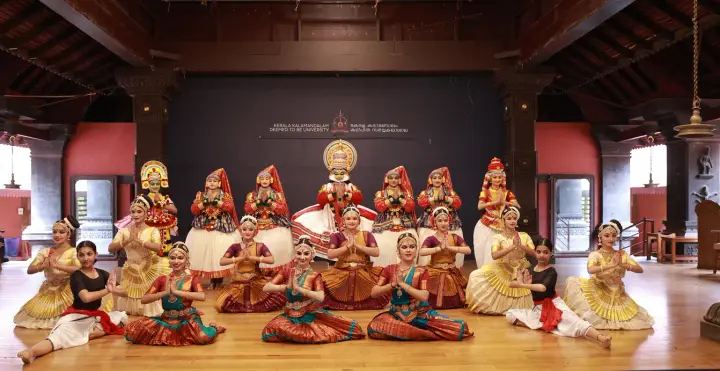
The claim to be Kerala’s cultural capital is usually made as a slogan and is in fact an administrative fact. Three of the state’s arts academies are headquartered here, and no other city has any of them. The Kerala Sahitya Akademi, for Malayalam language and literature, was inaugurated on 15 October 1956 by Chithira Thirunal Balarama Varma and moved to its present premises in September 1957; its awards date from 1958, it confers the Ezhuthachan Puraskaram, and it publishes Sahithyalokam, Sahithya Chakravalam and the English-language Malayalam Literary Survey. The Kerala Sangeetha Nataka Akademi, covering music, dance and theatre, was established on 26 April 1958 and inaugurated by Jawaharlal Nehru. The Kerala Lalithakala Akademi, for the visual arts, followed in 1962 and runs a gallery here as well as the Durbar Hall Art Centre in Kochi. Kerala Kalamandalam, the great teaching institution for Kathakali, Mohiniyattam and Koodiyattam, is also in Thrissur district, but it belongs to Cheruthuruthy on the Nila, thirty-odd kilometres away, and is properly read there rather than here.

Thrissur is also, quietly, one of the most institutionally Christian cities in India, and the arrangement is unusually layered. The Syro-Malabar Archeparchy of Thrissur traces to a vicariate apostolic erected on 20 May 1887 by Pope Leo XIII through the bull Quod Jam Pridem, with Adolph Medlycott as first Vicar Apostolic from 1887 to 1896; it covers roughly two thousand square kilometres, sixteen foranes, 215 parishes and thirty-six stations, and something over 460,000 faithful. Its metropolitan cathedral is Our Lady of Lourdes; the far more famous Basilica of Our Lady of Dolours, the Puthan Pally, serves as co-cathedral. Separately, and in the same city, the Marth Mariam Cathedral is the seat of the Chaldean Syrian Church — the Indian metropolitanate of the Assyrian Church of the East — whose congregation separated from the Catholic side in the nineteenth-century dispute around Bishop Elias Mellus. Two cathedrals, a basilica and two distinct East Syriac jurisdictions sit within a few minutes’ walk of one another on the ring.

Finally, the Round is where the city performs itself. On the fourth day of Onam — Nalaam Onam, the Chathayam asterism — the Pulikali troupes, the sangams, paint themselves as tigers and leopards in tempera powder mixed with varnish or enamel, a process that takes five to seven hours, and converge on the Swaraj Round to dance around it; women first took part in 2016. Four months before that, in Medam, the same maidan carries the Thrissur Pooram, and alongside it the Pooram Exhibition, which is a serious piece of the municipal economy in its own right: begun in 1932 as the Swadeshi Exhibition, run by the municipality until 1963 and by the Paramekkavu and Thiruvambadi devaswoms since, it now occupies the ground for forty to fifty days and is the largest exhibition in Kerala by both attendance and floor space, with around 180 stalls and seventy pavilions in 2025.

Legend & myth

Most Kerala towns explain themselves with a god. Thrissur explains itself with a king and a piece of clearing, and its central legend is not about how the temple came to the hill but about what it cost to cut the wood away from it. That story is told at length by Kottarathil Sankunni in the Aithihyamala, the great early-twentieth-century compendium of Kerala legend, in the chapter he devotes to Kochi Sakthan Thampuran, and it is the founding myth of the ground you are standing on rather than of the shrine above it.

In Sankunni’s telling, the teak forest around the Vadakkunnathan temple had grown so dense that the pradakshina path — the circuit worshippers walk — could not be completed, and the wood had become a hazard. Sakthan Thampuran ordered it cleared. The velichappadu, the temple’s oracle, opposed him absolutely, on the ground that the grove was the deity’s own and not the king’s to touch. The king challenged him, and drew. The oracle came at him, and the sword answered; Sankunni does not soften what happened next. The forest was then felled, the surroundings opened out and made handsome, and the circumambulation restored. That is the legend of the Thekkinkadu Maidan: an open ground bought with a killing, and remembered without embarrassment in the standard collection of Kerala’s own stories.

It is worth reading that tale for what it is actually about. Sakthan Thampuran’s reign is the moment when the Cochin crown broke the grip of the Namboothiri temple oligarchies — he brought Vadakkunnathan and the Peruvanam Mahadeva temple under royal control, ended the authority of the Yogiatirippad office, took devaswom administration into government hands, and confiscated the estates of over-mighty lords. A sword-fight between a king and an oracle over the right to cut trees is folk shorthand for exactly that constitutional argument, compressed into one afternoon and one blade. The maidan is the physical residue of a political settlement, which is why the story about it is violent rather than devotional.

The other legends attached to the man run the same way and were all, in their time, ways of explaining why the roads into this town were safe. Sankunni tells of a Namboothiri robbed by bandits near Karuppathanam on the way to Thrissur; the king summoned some five hundred men of the community the robbers came from to the water’s edge with large pots and lengths of rope, and told them that if the guilty did not come forward he would tie them all and sink them in the canal. The elders came instead, with gifts. He turned the gifts over to the robbed Namboothiri — more, the story notes, than had been taken from him — declared the matter closed, and warned that the whole community would answer for the next offence. A second version has three Namboothiri traders robbed on the same road, the thieves hunted down by his captain, identified by the victims, and drowned. Stories like these are told in Thrissur not as horror but as the price of a market town where a merchant could travel with money on him.

A third tale runs to weather rather than crime. In a year when the rains failed, the king had the Brahmin scholars assemble for a jala japam, the chanting over water that is supposed to bring the monsoon. On the twelfth day, with nothing in the sky, he is said to have appeared among them with his sword drawn and put the matter to them plainly. The rain came. He then doubled their fee. Whatever one makes of the meteorology, the shape of the anecdote is the same as all the others: an absolutely literal-minded ruler who treated results as a duty owed to him, and who is remembered with a kind of grim affection rather than with terror.

Pulikali carries its own body of belief and one very persistent error. It is widely repeated — including in the English Wikipedia article — that Sakthan Thampuran introduced the tiger dance around 1886. He died on 26 September 1805, so the date and the man cannot both be right, and we decline to print the combination. What the tradition itself holds is older and vaguer: that Pulikali, or Pulikkettikali, grew out of a martial, hunt-shaped Onam entertainment, the tiger and its prey and the hunter behind them, and that it has been done in Thrissur for something over two hundred years. Its living ritual is unambiguous and can be watched: before the troupes take the Round they offer coconuts at the Ganapati shrine, and only then begin the circuit. The dance goes around the hill, like everything else here.

It is equally worth saying what Thrissur does not claim. The Parashurama legend — Varuna’s land raised from the sea, Shiva installed on the hill — belongs to the Vadakkunnathan temple and is told there, not about the city. The story of the temples shut out of the Arattupuzha Pooram and invited here instead belongs to the Thrissur Pooram, and is told there. The Swaraj Round itself has no origin myth at all: it was surveyed and cut on a king’s order, it acquired its present name from the freedom movement rather than from any deity, and the honest account of how the city got its shape is an administrative one. In a state where almost every feature of the landscape has a legend attached, a two-kilometre circle of tarmac that is simply and only a decision is itself worth noticing.

More about Thrissur city

History

The name is the oldest thing here. Thrissur is a contraction of Thiru-Shiva-Perur — thiru being the Tamil honorific, Shivaperur the town of Shiva — which became Thrissivaperur, was written Trichur under the British, and settled into Thrissur after independence. The Shiva in question is Vadakkunnathan on the hill, so the city is named for the shrine at the centre of the ring, and the plan and the name say the same thing.

Sakthan Thampuran’s own chronology is well documented and worth having straight. He was born in 1751 at Vellarappilly near Kalady, lost his mother when he was three, received the Naalamkoor rank in 1761 and the Moonnamkoor in 1776, married first in 1782, became Maharaja in 1790, was crowned in 1791 and concluded a treaty with the English the same year, and died at Thrissur on 26 September 1805. He was cremated at the Vadakkechira palace he had rebuilt in 1795. On the founding date of the Thrissur Pooram the sources disagree and we print both: the English Wikipedia article places the precipitating Arattupuzha episode in 1796, while the Malayalam Wikipedia article gives the first Thrissur Pooram as Medam of Kollavarsham 977, which falls in 1802. Sankunni’s Aithihyamala preserves the text of the royal order itself — that the people should divide into Thiruvambadi and Paramekkavu sides, bring the neighbouring deities before Vadakkunnathan, meet the cost among themselves, and that the crown would supply whatever else was needed.

The twentieth century put politics on the same ground. In 1932 freedom-movement organisers began a Swadeshi Exhibition on the Thekkinkadu Maidan; it kept that name until 1947 and then continued as the Thrissur Pooram Exhibition, run by the municipality until 1963, when the two devaswoms took it over. The ring road’s own name records the same period: Swaraj — self-rule — is a nationalist word, not a royal or a religious one, and a city that was laid out by a maharaja ended up naming his circle after the movement that ended maharajas. The Round is still the site of the city’s Republic Day parade.

The Christian institutional history is the most tangled and the most local. Thrissur was made a vicariate apostolic on 20 May 1887 under Adolph Medlycott, and grew into what was once the largest Catholic diocese in India before Palghat was separated in 1973 and Irinjalakuda in 1978. The other tradition in the city descends from the nineteenth-century Mellusian dispute: Mar Abdisho Thondanatta was consecrated metropolitan by Patriarch Shimun XVIII in 1862 and set about reviving the East Syriac rite, and Mar Abimalek Timotheus, consecrated in December 1907 and arriving in India in February 1908, organised the Chaldean Syrian Church into its present form. He was canonised on 29 September 2019 and his tomb is in the Grave Chapel of the Marth Mariam Cathedral. Mar Aprem Mooken, metropolitan for half a century, retired in September 2021, and Mar Awgin Kuriakose was installed on 8 January 2023.

The modern civic city arrived in a short burst. The three state arts academies were placed here in 1956, 1958 and 1962; the banks that had made the town a financial centre in the 1930s consolidated into the three survivors; and the municipality became a corporation, governing a population recorded at 315,957 in the 2011 census. One piece of geography underwrites all of it. Thrissur sits low — the city’s average elevation is only a few metres above sea level — and it is the Kole wetlands to its west, the seasonally flooded paddy basin that takes the monsoon runoff, that serve as the city’s natural drainage and have spared it the worst of the floods that have hit other Kerala towns.

Why visit

You can walk the entire historic core in an afternoon, because it is a two-kilometre circle around a single hill and everything faces inwards onto it.

Thrissur is the only city in Kerala where you can see the state’s literature, performing-arts and fine-arts academies in one morning — all three are headquartered here.

The Round is a live commercial district rather than a preserved quarter: goldsmiths, textile houses and century-old banks trading on the same arc their founders chose.

Two cathedrals, a basilica and two separate East Syriac church jurisdictions sit within a few minutes of each other, which is a genuinely unusual concentration anywhere in India.

Time a visit to the fourth day of Onam and the ring road becomes the stage for Pulikali, one of the very few Kerala festivals that is secular, street-level and free to watch.

The Thekkinkadu Maidan is simply pleasant on an ordinary evening — an open, tree-shaded 65 acres in the middle of a busy city, and the kind of central open ground few Indian cities have kept.
Before you go

Thrissur city — at a glance

HoursThe Round and the maidan are open at all hours. The Kerala Sahitya Akademi and Kerala Sangeetha Nataka Akademi offices and galleries keep government hours, broadly 10am–5pm on working days and closed on Sundays and public holidays; the Kerala Lalithakala Akademi gallery follows exhibition schedules. Confirm before travelling, as all three close for state holidays.

Entry: No ticket — Thrissur city and the Swaraj Round are open public streets, and the Thekkinkadu Maidan is open ground. Individual sites inside the ring charge their own fees.

Getting here

How to reach Thrissur city

  • ✈︎ By air Cochin International Airport at Nedumbassery (COK) is 52 km south, about 54 minutes on the measured routed road — our own record has been saying 55 to 60 km, and the routed figure is shorter than that. Calicut International (CCJ) is 109 km north and is a genuine alternative on fare.
  • 🚆︎ By train Thrissur (station code TCR) is 2.8 km from the Round, on the main Shoranur–Ernakulam line, and is one of Kerala’s busiest stations. Punkunnam (PNQ) is closer at 1.6 km but takes passenger services only; Ollur (OLR) and Amalanagar (AMLR) are both 7.8 km out and are halts rather than alternatives.
  • 🚗︎ By road Kochi is 86 km, Coimbatore 114 km and Kozhikode 124 km, all measured on routed roads. Inside the ring, walking beats driving: the Round is about two kilometres and parking on it is difficult by design.
  • 🚌︎ By bus Three stands, none of them the same place. The Vadakke stand is 600 to 700 m from the Round, the private Shakthan Thampuran stand is 1.9 km and the KSRTC station is 2.4 km. A driver told only “the bus stand” will ask which, and the answer changes where you end up by two kilometres.
  • ⛴︎ By boat There is no water transport to Thrissur. The nearest mapped jetties are 27 km away on the Chettuva backwaters towards the coast, and they are a separate excursion rather than a way of arriving. We would rather say that than imply a boat exists.
Getting around

Getting around Thrissur city

Thrissur is built around the Swaraj Round — the temple rise in the middle, the streets radiating off it — so the centre is walked and everything nearer than the suburbs is a short auto hop. Autos are plentiful and metered; KSRTC and private buses fan out from the city stands.

  • 🚕︎ Online taxis They work, with a thinner fleet than Kochi. Uber runs cabs in Thrissur, including the intercity legs to and from Kochi, and Ola books cabs and autos; off-peak you may wait longer than you would in the metro cities. For the sights around the Round, an auto is usually quicker. Prices are set in-app, so we print no fares.
Getting back

Check your return bus or ferry with the operator before setting out. Leave time to reach the stop or jetty after your visit, and arrange a return vehicle in advance for a remote outing.

Ask at the jetty or the stand for the time of the last service back, not the next one. If you miss it, an auto or a taxi is the fallback — agree the fare before you get in.

Do

Things to do in Thrissur city

  • Walk the whole Swaraj Round — it is about two kilometres and the entire old city is arranged along it.
  • Cross into the Thekkinkadu Maidan and go round Vadakkunnathan on the outside — about 65 acres of open, tree-shaded laterite rise with footpaths worn across it, and the hill under the temple is the reason the city is here. An hour at dusk on the maidan tells you more about Thrissur than any monument.
  • See the Basilica of Our Lady of Dolours and its Bible Tower — 260 feet, the tallest church tower in India.
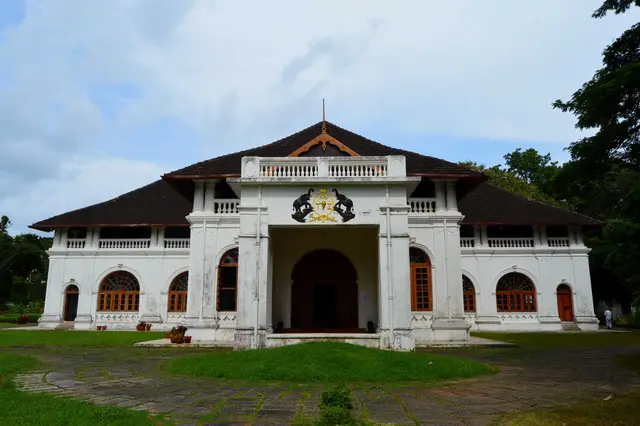
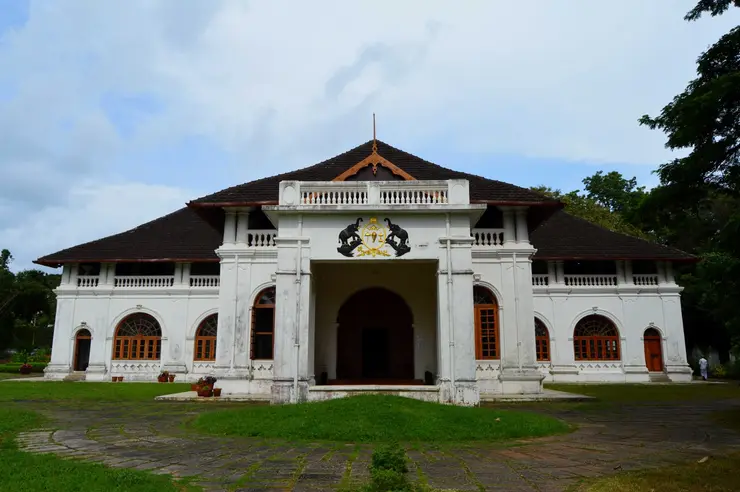
  • Take the Shakthan Thampuran palace slowly: rebuilt in 1795, literally half Dutch and half Kerala in its construction, and the state archaeological museum since 2005.
  • Do the three state arts academies in one afternoon — Sahitya, Sangeetha Nataka and Lalithakala — all within reach of the ring.
  • Go out to the Kole wetlands early on a second morning: 13,632 hectares of farmland up to a metre below sea level between Thrissur and Ponnani, with some of the largest bird counts in India.
  • Take the museum complex at Chembukkavu if you have a second day — the zoo animals moved to the new zoological park at Puthur in February 2026; the art and natural-history collections stay.
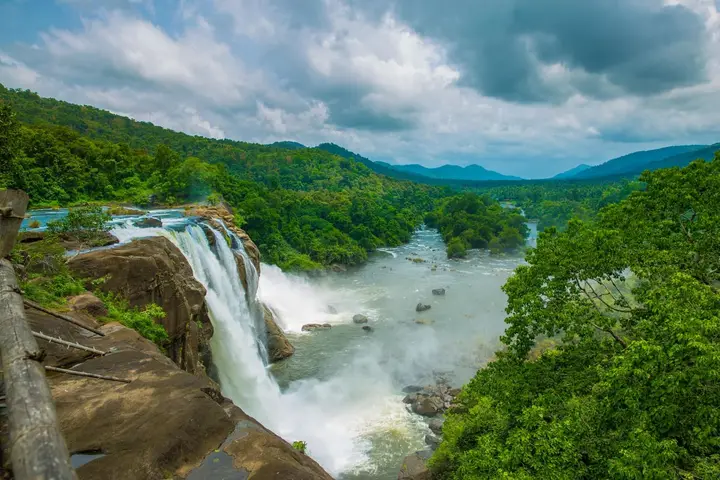
  • Day-trip the ring of the district — Guruvayur half an hour west, Athirappilly an hour south-east, Peechi closer, Kodungallur and the Cheraman mosque towards the coast. The city is a better base for all of them than they are for it.
  • Time a visit for Pooram or Pulikali if you want the city at full volume, and avoid those dates if you do not.
Plan

Good to know

  • Thrissur is a ring road around a wooded hill with a temple on top, and everything else faces inward across the road. Learn that and you have learned the city — there is no old quarter to find, because the whole thing is the old quarter.
  • Addresses in the old city are given as Round North, Round East, Round South or Round West rather than by street name — if you are looking for a shop or a bank, ask for the quadrant first. The South Indian Bank still has its registered office at Round South, where it opened on 29 January 1929.
  • The shops facing the maidan are the point, not an accident: jewellery showrooms, textile houses, banks and bookshops looking inward across the ring — the commercial arrangement the city was founded to create, and still is.
  • Pooram and Pulikali both move with the Malayalam calendar — Pooram on the Pooram asterism in Medam, generally late April or early May, Pulikali on the fourth day of Onam. Check the current year rather than the month.
  • Pooram runs through a day and a night. If crowds or fireworks are not for you, the daytime elephant processions can be watched from a distance and the night display skipped — and rooms for that week go months out.
  • Thrissur is the best base in Kerala for the temple-festival calendar generally, not only for Pooram. Ask locally which kovil is keeping its utsavam the week you are there; there is almost always one.
  • The Bible Tower's superlatives disagree: 260 feet is the height, but 'second tallest church tower in Asia' and 'third tallest' both circulate, each hedged. We print the height and let the ranking go.
  • The airport is 52 km south on the measured road, closer than the 55 to 60 km that gets quoted, and Calicut at 109 km is a real alternative on fare rather than a theoretical one. The city itself is on the main Ernakulam–Palakkad line and very well served — one of the better places in Kerala to travel to without a car.
  • The gold workshops are not on the Round. The manufacturing belt runs out to Cherpu, Perinchery and Ollur within about 25 km; what you see on the ring itself is retail. Do not expect to watch artisans at work in the city-centre showrooms.
  • The three arts academies are the concrete evidence behind the 'cultural capital' label — the Sahitya Akademi, the Sangeetha Nataka Akademi and the Lalithakala Akademi gallery, all walkable from the ring. Entry to the galleries is normally free, but exhibition programmes are irregular; check what is actually on before making a special trip.
  • What Thrissur lacks, plainly: no backwater, no hill station of its own — Peechi and Athirappilly are day trips, not stays — and no airport. Almost nothing here is presented for visitors: the banking history is branches and the arts academies are working institutions. This is a city to walk and read rather than to be shown around.
Facilities

On site

  • The Swaraj Round and the Thekkinkadu Maidan are open public ground at any hour. The palace museum, the basilica, the museum complex at Chembukkavu and the academy galleries all keep their own days and some close for state holidays.
  • The practical-things list further down this page is OpenStreetMap data routed on foot from the city centre — what is mapped, not a survey. Absence there means nobody has mapped it.
  • Not verified and deliberately not guessed: parking charges anywhere on or off the Round, current auto fares, and the opening hours and condition of public toilets around the maidan. During Pooram all three change anyway.
  • We have not re-surveyed step-free access in the city. Any step-free figure below is routed over OpenStreetMap’s sparse Kerala network and is not a statement that a route can be used in a wheelchair.
Stay safe

Safety

  • The Swaraj Round is a working ring road carrying heavy traffic around a pedestrian destination. Use the two subways — one near the Paramekkavu temple, one at the M.O. Road junction — rather than crossing at grade.
  • During Pooram and Pulikali the road closes and the crowds are very large. Pooram includes fireworks at night and caparisoned elephants in dense crowds; if you are bringing children or are uneasy in a crush, watch from a distance rather than from the front.
  • Vadakkunnathan is an active temple with its own access customs and dress expectations, not a monument with opening hours.
  • Monsoon here is heavy and the low ground around the maidan drains slowly. A downpour will strand you somewhere for an hour rather than for the day.
Getting around Thrissur city

If you need step-free access, contact the site before travelling. Ask about a level entrance, steps along the route, the nearest drop-off point, seating and accessible toilets.

Practical things near Thrissur city
ToiletsPublic toilet 685 m · 8 min walkMapped Nov 2023DirectionsBus stopsRound North Bus stop Bus stop95 m · 1 min walkMapped Jul 2026DirectionsTaxi & auto standsTaxi / auto stand 565 m · 7 min walkMapped Nov 2023DirectionsParkingParking 188 m · 2 min walkMapped Nov 2023DirectionsFuelHindustan Petroleum Fuel station805 m · 10 min walkMapped Sept 2020DirectionsPharmacySitaram Medical Store 599 m · 7 min walkMapped Jul 2022DirectionsHospitalMalabar eye hospital 549 m · 7 min walkMapped Jun 2022DirectionsClinicVERGCORP DENTACARE DENTAL CLINIC 772 m · 9 min walkMapped Nov 2023DirectionsPolice stationCyber Cell, Thrissur Police station1.3 km · 15 min walkMapped Jun 2022DirectionsFire stationDistrict Fire and Rescue Office Thrissur Fire station1.5 km · 17 min walkMapped Sept 2021DirectionsATMState Bank of India 266 m · 3 min walkMapped Jul 2024DirectionsBankUnion Bank of India 277 m · 3 min walkMapped Jul 2024DirectionsWater & snacksElite Supermarket 303 m · 4 min walkMapped Dec 2019DirectionsGroceries & bakeryBINI bakers Bakery165 m · 2 min walkMapped Dec 2019DirectionsBookshopBooks and Books Bookshop292 m · 4 min walkMapped Nov 2023DirectionsPost officeDHL India Courier Service Post office826 m · 10 min walkMapped Sept 2021DirectionsSomewhere to praySree Vadakkumnathan Temple 473 m · 6 min walkMapped Feb 2026DirectionsPark or gardenThrissur City Plaza Park1.3 km · 16 min walkMapped Aug 2024DirectionsPublic art & memorialsStatue 187 m · 2 min walkMapped Sept 2023Directions
What the cash actually costs
  • Withdrawing from a bank that is not your own is free for a set number of times a month, then costs up to ₹23 plus GST — about ₹27 a withdrawal. This is not one of the RBI’s six metro centres, so the allowance here is the higher one: at least five free other-bank withdrawals a month, and at least five at your own bank.
  • That free allowance belongs to Indian bank accounts. On a card issued abroad your own bank’s international withdrawal and exchange charges apply instead. If the machine offers to bill you in your home currency, choose rupees — the conversion rate on that offer is set by the machine, not by your bank.
  • Choose a well-lit ATM, preferably at a bank branch. Shield your PIN, avoid help from strangers and use your bank’s support number if a withdrawal fails or the machine retains your card.

Charge cap and free-transaction limits: Reserve Bank of India, in force since 1 May 2025.

These services are listed within about 1.2 km of Thrissur city. Walking distances follow mapped routes; access and opening hours can change. Other services may be closer but are not included here.

In the district

Where Thrissur city sits in Thrissur district

District HQThrissur
LandscapeCentral Kerala — temples & midland

Thrissur district is known for: Thrissur Pooram, temples and the cultural capital of Kerala.

Thrissur Pooram festivalVadakkunnathan TempleAthirappilly Falls (nearby)
Stay · eat · do · rent · see · shop

Places in Thrissur city

Every verified place in Thrissur city — filter by what you’re after.

17 places to stay in Thrissur city

Hotel Mangala Towers Thrissur — 4-Star hotel in Thrissur city
Verified
4-Star hotel · Thrissur city
Hotel Mangala Towers Thrissur
4-star

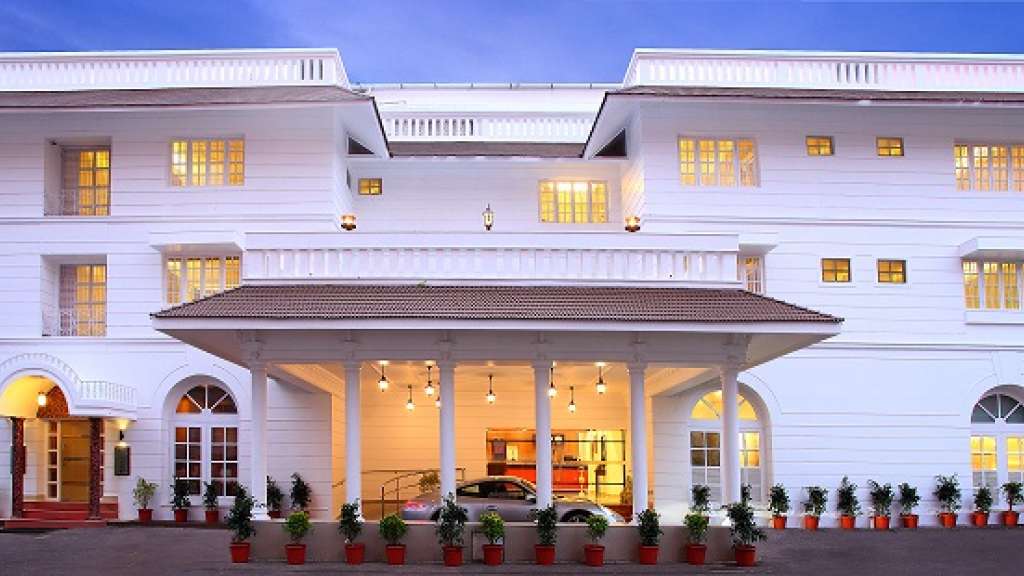
Four-star hotel on Paliyam Road near the North (Vadakke) bus stand in central Thrissur, with air-conditioned rooms, a restaurant and banquet facilities. Its Kerala Tourism provider record classifies it as a four-star property, a convenient upper-tier city base for Thrissur Pooram and business visitors.

Directions Commission-freeView details
Hotel Luciya Palace Thrissur — 3-Star hotel in Thrissur city
Verified
3-Star hotel · Thrissur city
Hotel Luciya Palace Thrissur
3-star

Long-running three-star hotel on Marar Road in the heart of Thrissur city, operating since 1984 with air-conditioned deluxe rooms, suites and double rooms. Its Kerala Tourism provider record and own website list a central location near the railway station with a restaurant and event facilities, making it a dependable mid-range city base.

Directions Commission-freeView details
Dass Continental Thrissur — Hotel in Thrissur city
Verified
Hotel · Thrissur city
Dass Continental Thrissur

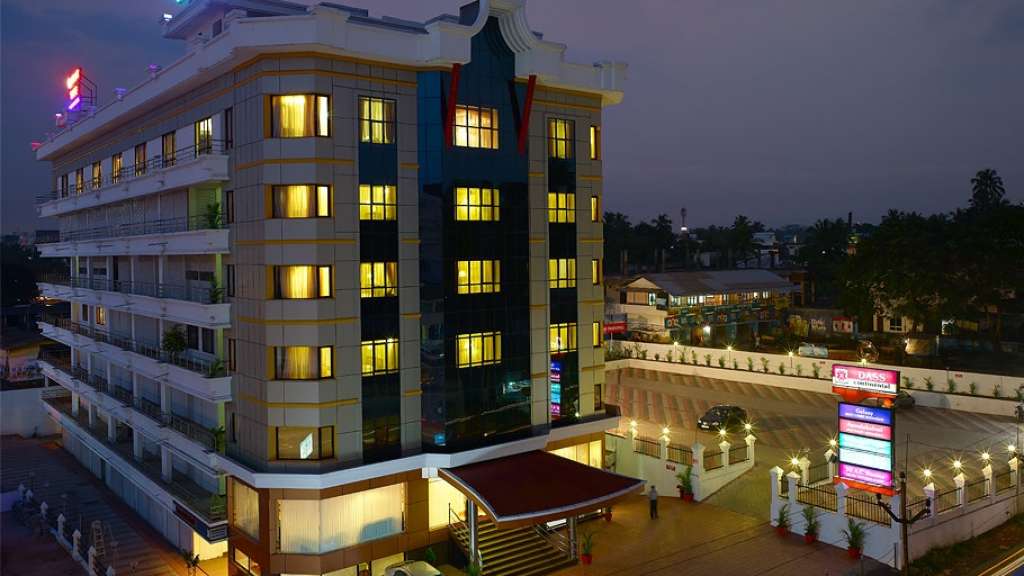
Sakthan Nagar city hotel with direct contact page and restaurant/spa facilities. Thrissur city, Sakthan Nagar, Hotel.

Directions Commission-freeView details
Joys Palace Thrissur — Hotel in Thrissur city
Verified
Hotel · Thrissur city
Joys Palace Thrissur

Joys Palace is a Thrissur city hotel near the transport and cultural core, useful for Pooram-season planning, city stays, dining and events. Thrissur city, Hotel, T.B. Road.

Directions Commission-freeView details
J
Joys Palace
Place to stay
Top pick
Hotel · Thrissur city
Joys Palace

Five-star business hotel near the Sakthan bus stand in Thrissur city. It has a multi-cuisine restaurant, spa and pool, on TB Road at Kokkalai.

Directions Commission-freeView details
C
Casino Hotels Ltd
Place to stay
Hotel · Thrissur city
Casino Hotels Ltd

Hotel near Thrissur Railway Station on T.B. Road, established 1980, with multi-cuisine restaurant and banquet halls.

Directions Commission-freeView details
C
Central Hotel
Place to stay
Hotel · Thrissur city
Central Hotel

Heritage hotel at Chembukavu in Thrissur city, established 1936. It offers rooms and an on-site family restaurant.

Directions Commission-freeView details
K
KTDC Tamarind Thrissur
Place to stay
Hotel · Thrissur city
KTDC Tamarind Thrissur

KTDC government-run budget hotel near the Indoor Stadium in central Thrissur. It has a restaurant and conference rooms.

Directions Commission-freeView details
L
Lulu International Convention Centre
Place to stay
Hotel · Thrissur city
Lulu International Convention Centre

Convention centre with hotel rooms at Puzhakkal, Thrissur, offering banquet halls, restaurant and business facilities.

Directions Commission-freeView details
H
Hotel Merlin International
Place to stay
Hotel · Thrissur city
Hotel Merlin International

Budget business hotel opposite the railway station on Poothole Road, Thrissur. It offers rooms and a multi-cuisine restaurant.

Directions Commission-freeView details
H
Hotel Niya Regency
Place to stay
Hotel · Thrissur city
Hotel Niya Regency

Four-star hotel on Kanjany Road, Olarikkara, in Thrissur. It has luxury rooms, a restaurant and banquet facilities.

Directions Commission-freeView details
H
Hotel Pearl Regency
Place to stay
Hotel · Thrissur city
Hotel Pearl Regency

Hotel in Thrissur city operating since 2003. It has a multi-cuisine air-conditioned restaurant plus banquet and conference halls.

Directions Commission-freeView details
B
Bini Heritage
Place to stay
Hotel · Thrissur city
Bini Heritage

Boutique hotel at Round North in central Thrissur. It has rooms, a multi-cuisine restaurant, a coffee shop and a spa.

Directions Commission-freeView details
H
Hotel Palace Tower
Place to stay
Hotel · Thrissur city
Hotel Palace Tower

Hotel near the North Bus Stand at Patturaikkal in Thrissur city. It has been run by the Koolas KPT group since 1978.

Directions Commission-freeView details
H
Hotel Luciya Palace
Place to stay
Hostel · Thrissur city
Hotel Luciya Palace

Four-star business-class hotel on Marar Road in central Thrissur, running for over 40 years. It offers multi-cuisine dining on site.

Directions Commission-freeView details
G
Government Guest House Ramanilayam Thrissur
Place to stay
Verified
Government guest house · Thrissur city
Government Guest House Ramanilayam Thrissur

Tourism Department-approved Ramanilayam government guest house in Thrissur. Thrissur stay, Government guest house, Ramanilayam.

Directions Commission-freeView details
H
Hyatt Regency Thrissur
Place to stay
Verified
Hotel · Thrissur city
Hyatt Regency Thrissur

Hyatt Regency Thrissur is a city hotel on Civil Lines Road, useful for cultural-capital stays, business travel, family bases and direct reservations. 5-star luxury hotel · Thrissur city, Hotel, Hyatt.

Directions Commission-freeView details

Book with the place itself. India’s cyber-crime coordination centre warned in April 2025 that convincing copies of hotel and pilgrimage booking sites are being pushed through sponsored search and social ads, taking payment for rooms the property never hears about. Every listing here links to the business’s own contact details and its own Google or Bing profile — we take no commission and sit in nobody’s payment path. If a booking page reached you through an ad, check the address bar against the property’s own site before you pay. Fraud can be reported on cybercrime.gov.in or on 1930.

Ranked

The best of Thrissur city, ranked

Nearest to the centre of Thrissur city, on foot

Ordered by a real routed walk from the town centre — a different question, and the one that decides what you can do before lunch. Straight-line distance understates a real walk by about half again, so these are walking-network figures, not lines on a map.

Everything around Thrissur city, by distance

Every place we hold for Thrissur city, ordered by a real routed drive from the town centre. Times are free-flow and a real road rarely is, so read them as the floor rather than the estimate — anything that routed over ninety minutes is left out rather than published as a number we do not trust.

Places to visit

The places themselves, around Thrissur city

The best tourist places to visit in Thrissur city — temples, viewpoints, lakes, heritage and nature, each with a full guide, how to reach it and what to see nearby.

Vadakkunnathan Temple, Thrissur city
PlaceVadakkunnathan Temple

Ancient temple at the centre of Thrissur’s round, associated with Thrissur Pooram.

Open guide →
Thrissur Round, Thrissur city
PlaceThrissur Round

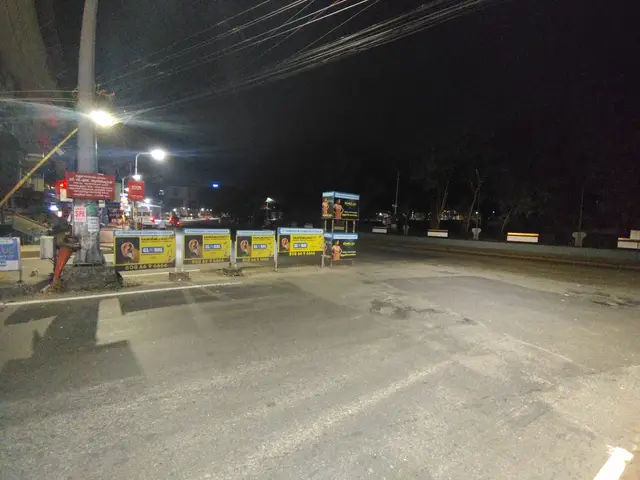
Not a place so much as a shape: a circular road roughly two kilometres round, enclosing the 65-acre Thekkinkadu Maidan with the Vadakkunnathan temple on the hillock in the middle, with seventeen roads feeding into it. Its own record claims it as the largest circular road around a ground in India. In April the maidan inside it holds Thrissur Pooram; for the rest of the year the Round is simply how the city is arranged, and walking it is the quickest way to understand Thrissur.

Open guide →
Zoo and museum, Thrissur city
PlaceZoo and museum

Check before you go, because the animals have gone. The city zoo at Chembukkavu, open since 1885, was emptied into the new Thrissur Zoological Park at Puthur — roughly 340 acres of forest about 12 km out, designed by the Australian zoo designer Jon Coe — which was inaugurated on 28 October 2025, with reports of a public opening on 28 February 2026. The Chembukkavu compound keeps its museums, the art collection and the natural history displays; what it no longer keeps is a zoo.

Open guide →
Sakthan Palace, Thrissur city
PlaceSakthan Palace

Rebuilt in 1795 in a Kerala-Dutch manner for Rama Varma Sakthan Thampuran, who ruled Kochi from 1790 to 1805 and started the Pooram — thick walls, high roofs and Italian marble floors on a nalukettu plan, formerly called the Vadakkechira Palace. It has been a state archaeology museum since 2005: bronzes of the twelfth to eighteenth centuries, granite sculpture of the ninth to seventeenth, coins, an epigraphy gallery, and a sarpakavu still standing in the grounds.

Open guide →
A
Ariyannur Temple and Megalithic Site
No photograph yet
PlaceAriyannur Temple and Megalithic Site

An old temple landscape near Kandanassery with nearby megalithic remains; living worship and archaeological evidence must be described as separate layers.

Open guide →
C
Chemmapilly Hanging Bridge
No photograph yet
PlaceChemmapilly Hanging Bridge

A narrow pedestrian suspension bridge over the Karuvannur river at Chemmapilly, best visited as a working local crossing rather than a staged thrill attraction.

Open guide →
H
Holy Cross Church, Mapranam
No photograph yet
PlaceHoly Cross Church, Mapranam

A longstanding Catholic pilgrimage church at Mapranam associated with the Holy Cross and annual feast observances.

Open guide →
K
Kunjalipara
No photograph yet
PlaceKunjalipara

A lesser-known rocky hill destination in Thrissur district where the exact approach, safe stopping point and public access require local confirmation.

Open guide →
Official eco & forest programmes

Forest stays, camping and treks around Thrissur city

Official/public-sector eco offerings mapped to this town base. Always confirm current availability, tariff, permits and reporting time before travelling.

Peechi, Thrissur city
wildlifeboatingviewpoint

Peechi eco visit

Peechi reservoir, garden and the sanctuary’s southern public edge; a dam visit rather than proof that a guided forest trail is operating.

Peechi
Official source →
Vazhani, Thrissur city
wildlifeboatingviewpoint

Vazhani eco visit

The Vazhani dam approach, garden and forest threshold from which official tourism material names four local trails and a trek towards Peechi.

Vazhani
Official source →
For hotels, homestays and local businesses

Get listed in Thrissur city for free

Roampedia is commission-free. Travellers discover your business, book directly and contact you through official details. Basic listings are free, while Gold and Platinum package upgrades can be requested from the owner dashboard after approval.

List your business — free
Read before you go

Thrissur city guides, stories & itineraries

Stories & history of Thrissur city

Written about Thrissur city itself — its history, its legends and the arguments about them.

Around Thrissur city

These are written about individual places you can reach from Thrissur city, rather than about the town as a whole.

Planning a trip to Thrissur city

The practical half — what is actually here, in what order to see it, and how to arrive.

Kerala-wide guides & itineraries

Route-level itineraries and practical guides for the rest of the state.

See all 46 Thrissur guides & stories →

Map

Where things are in Thrissur city

FAQ

Thrissur city travel FAQs

What is the Swaraj Round and why is Thrissur built in a circle?

The Swaraj Round is the roughly two-kilometre circular road that encloses the Thekkinkadu Maidan, the 65-acre wooded hillock carrying the Vadakkunnathan temple at the centre of Thrissur. About seventeen streets feed into it, and city addresses are given as Round North, East, South or West. The shape dates from the late eighteenth century, when Sakthan Thampuran, the Cochin ruler, cleared the teak forest around the temple and laid the ring road as the plan of his new capital.

Why is Thrissur called the cultural capital of Kerala?

Because three of the state’s arts academies are headquartered in the city and nowhere else: the Kerala Sahitya Akademi for literature (inaugurated 15 October 1956), the Kerala Sangeetha Nataka Akademi for music, dance and theatre (established 26 April 1958, inaugurated by Nehru) and the Kerala Lalithakala Akademi for the visual arts (1962). The title is an administrative fact before it is a slogan.

When is Pulikali and where do you watch it?

Pulikali, the tiger dance, is performed on the fourth day of Onam — Nalaam Onam, the Chathayam asterism, usually falling in late August or September. The troupes assemble across the city and converge on the Swaraj Round, offering coconuts at the Ganapati shrine before circling the ground. It is free, it is on the public road, and it is extremely crowded.

Is Thrissur really the centre of India’s gold jewellery trade?

For Kerala, unambiguously. Around three thousand manufacturing units operate in and around the city with roughly forty thousand artisans, concentrated in a belt taking in Cherpu, Perinchery and Ollur within about twenty-five kilometres of the Round, and published figures credit Thrissur workshops with the large majority of the gold Kerala consumes. The International Gemological Institute opened its first South Asian laboratory here. Individual tonnage figures quoted in the press vary a good deal, so treat any single number with caution.

Which banks were founded in Thrissur?

Three that still trade. CSB Bank, formerly the Catholic Syrian Bank, was registered on 26 November 1920 and opened on 1 January 1921; Dhanlaxmi Bank, then Dhanalakshmi, was incorporated on 14 November 1927; and the South Indian Bank began business on 29 January 1929 at Round South, on the ring road itself. English Wikipedia records that fifty-eight banks were headquartered in the city in the 1930s.

What is the Thrissur Pooram Exhibition and is it worth going to?

It is the trade-and-industry exhibition held on the Thekkinkadu Maidan alongside the Pooram, and it is a substantial event in its own right — around 180 stalls and seventy pavilions in 2025, running for forty to fifty days and described as the largest exhibition in Kerala by attendance and floor space. It began in 1932 as a Swadeshi Exhibition organised by freedom-movement figures, kept that name until 1947, was run by the municipality until 1963 and has been managed by the Paramekkavu and Thiruvambadi devaswoms since. Ticket prices are modest and change yearly — confirm locally.

Who was Sakthan Thampuran and why does the city keep talking about him?

Raja Rama Varma (1751–1805), Rama Varma IX of Cochin, Maharaja from 1790 and crowned in 1791. He moved the working capital to Thrissur, rebuilt the Vadakkechira palace here in 1795, cleared the teak wood to open the Thekkinkadu Maidan, laid the ring road, drove tree-lined roads through the countryside and settled merchant families in the town to build its trade. He also founded the Thrissur Pooram. He died at Thrissur on 26 September 1805 and was cremated at the palace. Effectively every distinctive thing about the city goes back to him.

What are the best places to visit in Thrissur city?

Top places to visit in Thrissur city include Vadakkunnathan Temple, Thrissur Round, Zoo and museum, Sakthan Palace, Ariyannur Temple and Megalithic Site, Chemmapilly Hanging Bridge, and more — each has a full guide with how to reach it and what to see nearby on this page.

How do I reach Thrissur city?

The nearest airport to Thrissur city is Cochin (COK), 52 km. The rail gateway is Thrissur (TCR).

What is the best time to visit Thrissur city?

October to March is the driest and most comfortable season to visit Thrissur city and the rest of Kerala. The June–September monsoon is lush and green but wet, and often brings lower low-season prices.

Photographs: Jpullokaran (Public domain), Arjuncm3 (CC BY-SA 3.0), Dr. Chinchu C. (CC BY 4.0), Vijayanrajapuram (CC BY-SA 4.0), Jinoy Tom Jacob (CC BY-SA 4.0). Wikimedia Commons.

Image credits