A city of about 233,000 people that has been famous for two entirely different things for most of two thousand years — the temples of a Pallava capital, and a saree woven on looms in the streets between them.
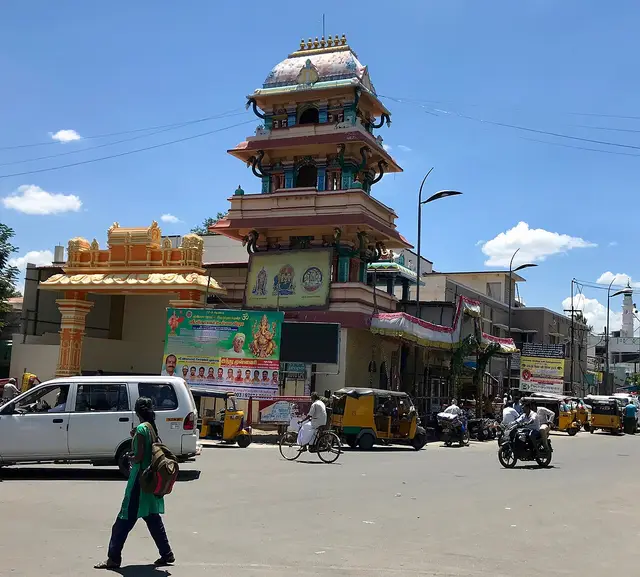
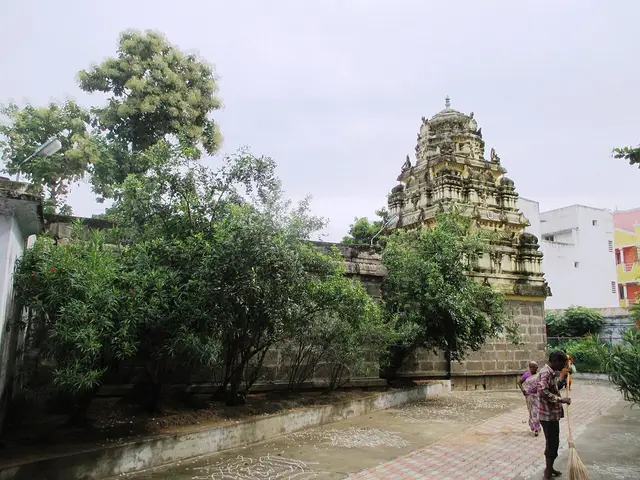
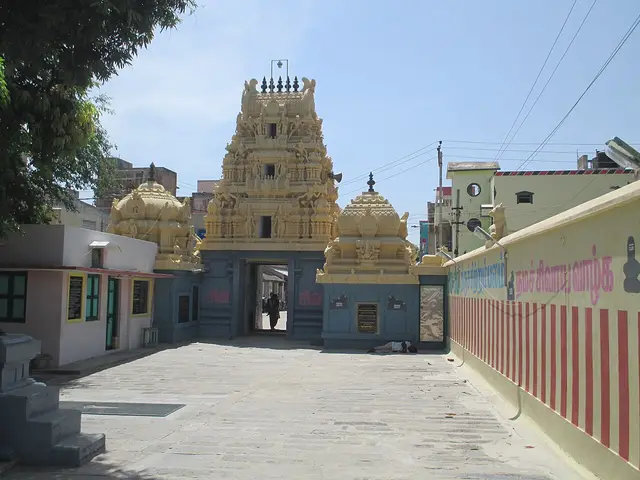
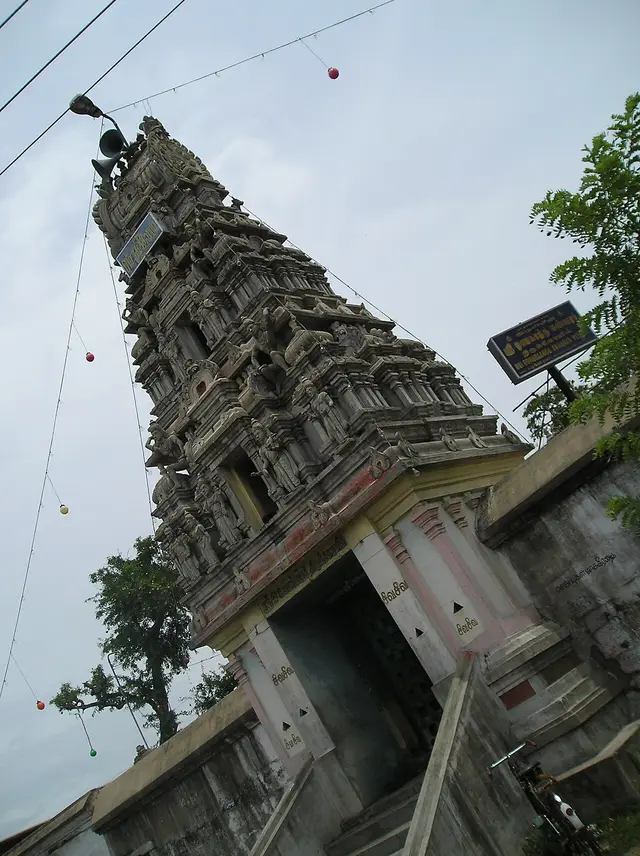
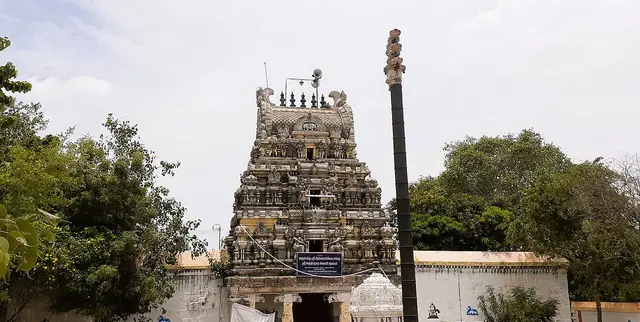
Kanchipuram sits 77 km from Chennai on the flat country between the Palar and the Vegavathy, and the first thing to understand about it is that it is not a monument in a field. It is a working municipality of 232,816 people (2011 census) over 36.14 square kilometres, the headquarters of its own district, with a bus stand, a market, three-storey commercial blocks, hoardings for silk showrooms across every junction, and a great deal of traffic. The temples are inside all of that rather than apart from it. Standing at the Gandhi Road junction you can see a traffic-police kiosk with a tiled roof, an Indian Oil forecourt, a cafe, and a hoarding for a saree shop giving its address as 87 Gandhi Road — and a gopuram over the roofline behind them.
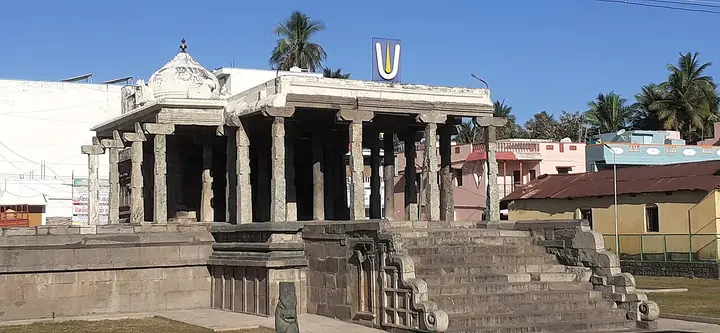
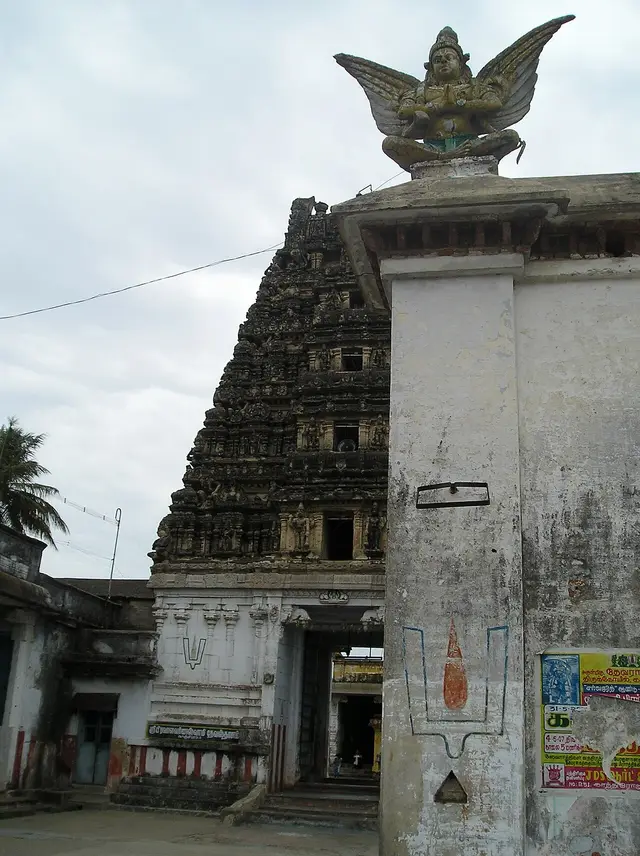
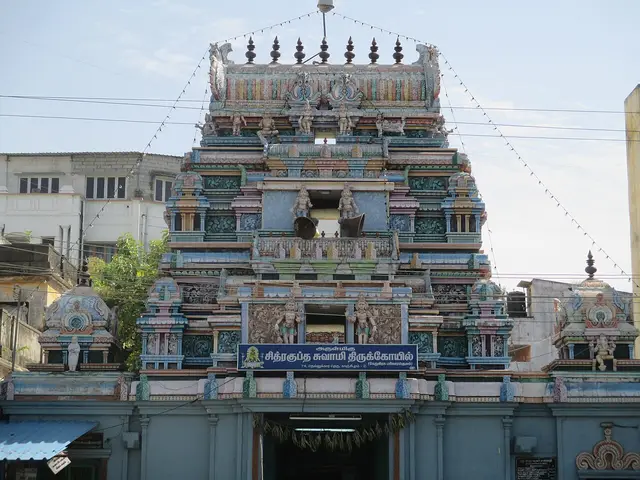
The city is split, and the split is the most useful thing a visitor can carry. Shiva Kanchi is the western half, and it holds Ekambareswarar, Kailasanathar, Kamakshi Amman and most of the small Shaiva shrines. Vishnu Kanchi is the south-eastern half, around Varadharaja Perumal, and it is a genuinely separate quarter with its own streets, its own priesthood and its own festivals. Between them, in the middle, sits Kumarakottam, the Murugan temple, so that the three together read as Shiva, the goddess and their son. Fifteen of the 108 Divya Desams — the Vishnu temples sung by the Alvar poets — are inside this one city, which is more than anywhere else on earth.
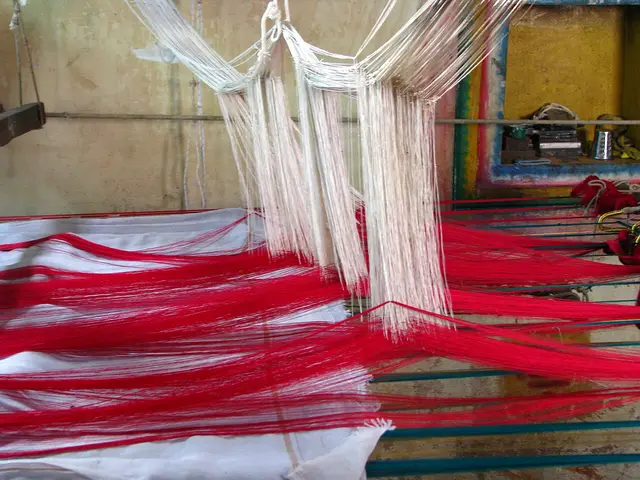
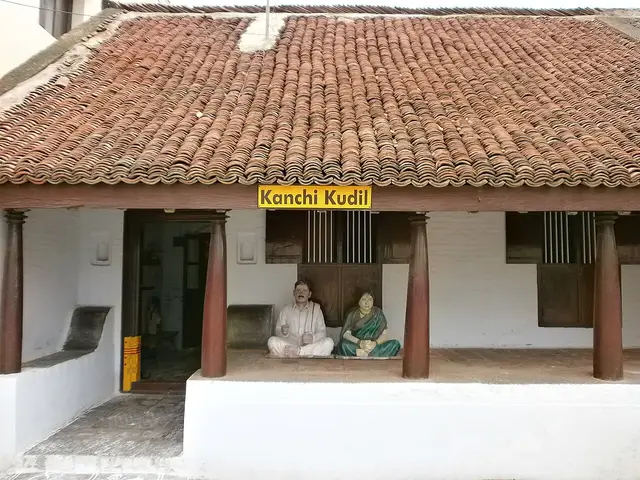
What the city does for a living, besides the temples, is weave. The Kanchipuram silk saree is made here on handlooms, and unlike almost every other Indian textile with a famous name, you can see it being made from the street. The looms sit in front rooms and side sheds off the residential streets; a weaver works with the warp running away from him under a wall of punched pattern cards, a shuttle in his hand and a second shuttle worked by an aide on the other side. As of 2008 an estimated 5,000 families were in the trade, with around 25 silk and cotton yarn businesses and 60 dyeing units in the region. Those are the figures the standard reference gives; nobody has published a more recent count we would stand behind.
The cloth itself is mulberry silk with real gold-and-silver zari, and the technical thing to know is how the border is joined. On a genuine Kanchipuram saree the body and the contrasting border and pallu are woven as separate pieces and then interlocked, thread by thread, where they meet — the join is strong enough that a saree can tear without the border coming away, and it usually shows as a fine zigzag line. Three shuttles are used to do it. That interlock is the single test worth learning before you walk into a shop, because everything else about a saree can be imitated and that cannot.
A note on where the materials come from, because the two silk towns on this site disagree and we would rather print the disagreement. The standard reference for the Kanchipuram saree says both the mulberry silk and the zari come from South India. The Thirubuvanam weavers, 300 km away in the Cauvery delta, say their zari comes up from Surat in Gujarat. Both statements are made by people with reason to know, and we have not found a source that reconciles them, so treat any sweeping claim about where Tamil zari comes from — including one you may be told in a showroom — as a claim.
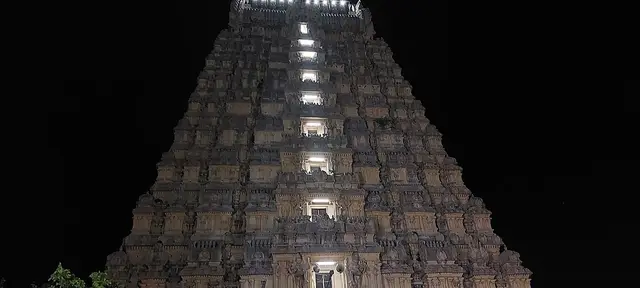
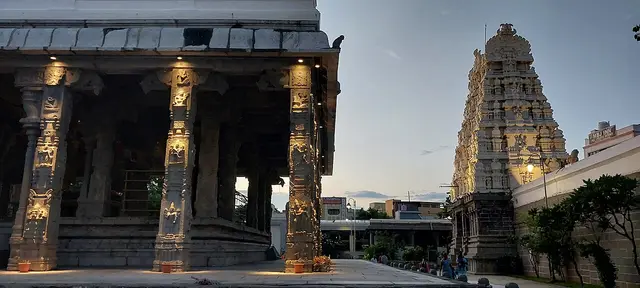
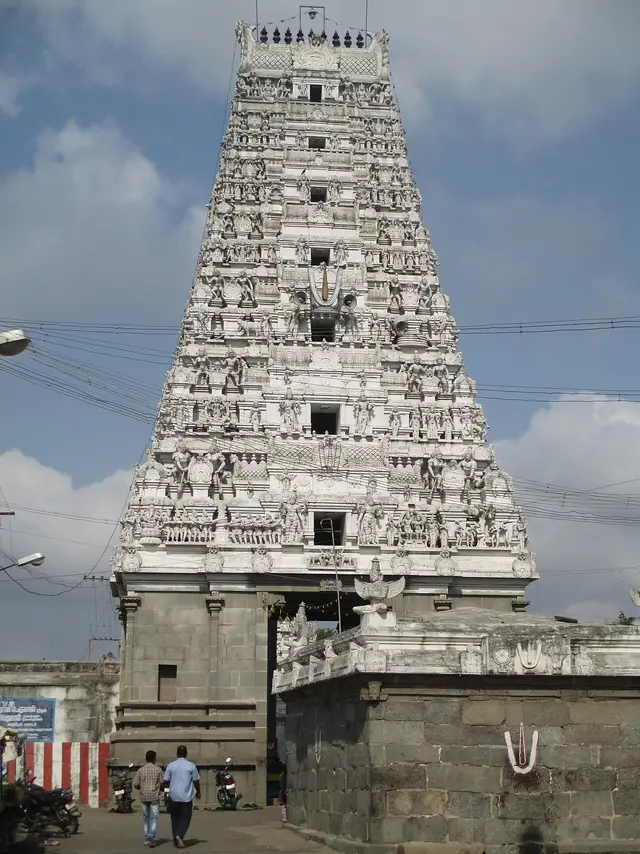
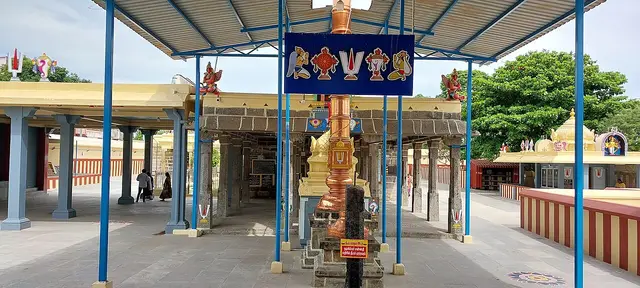
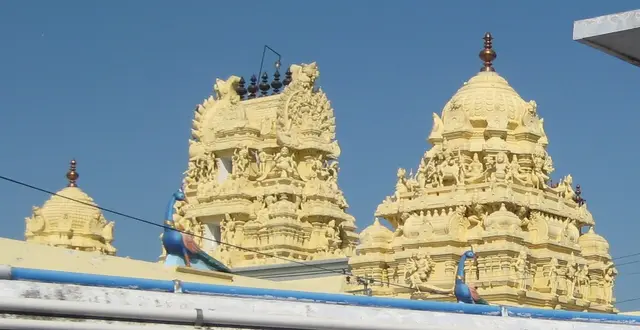
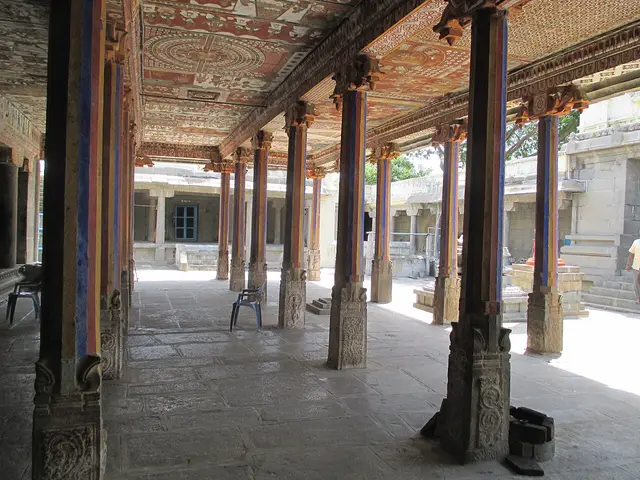
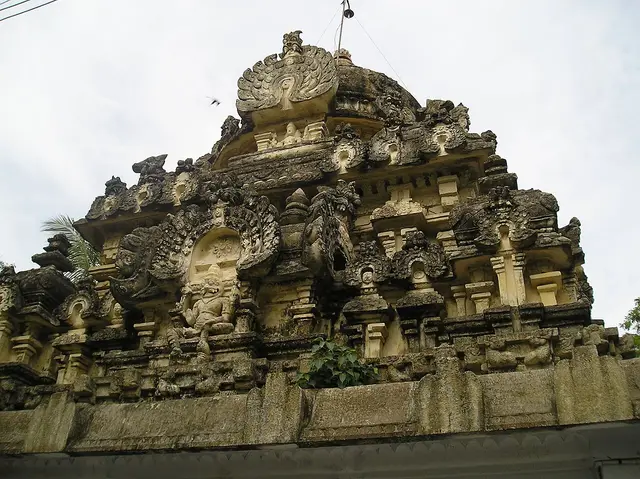
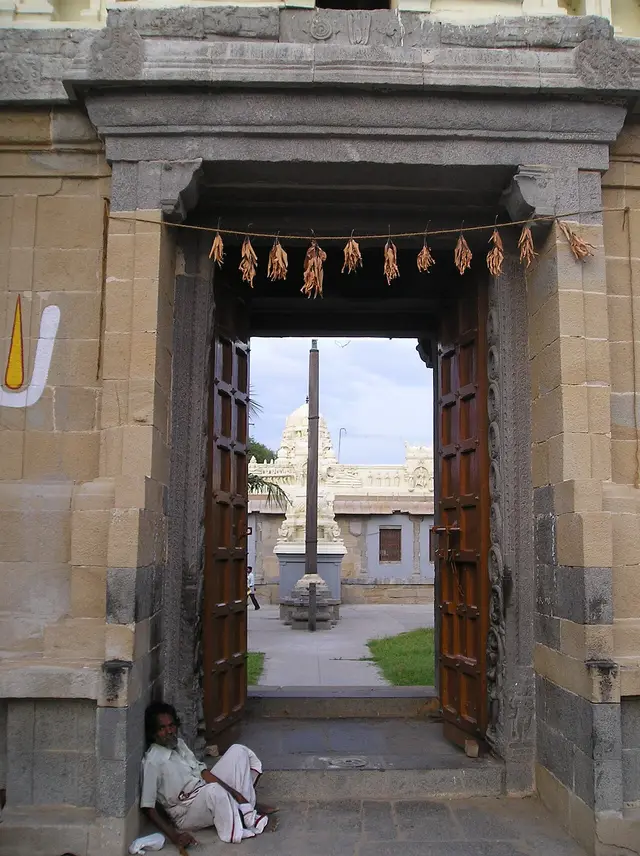
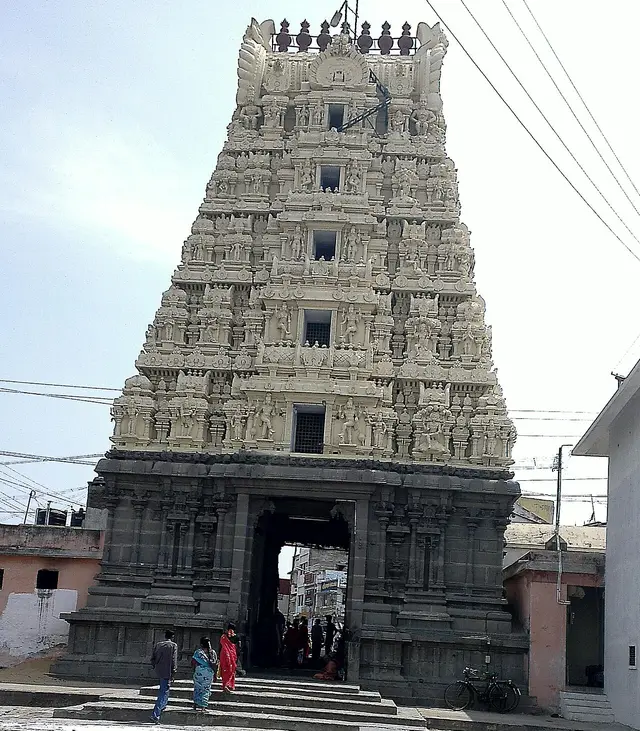
The temples are on a scale that takes a while to believe. Ekambareswarar alone covers about 10 hectares, twenty-five acres, which makes it one of the largest temple complexes in India, and its southern gateway is eleven storeys of stucco figures. Note that its own standard description gives that tower two different heights in two different places — 58.5 m in one paragraph and 57 m in another — so the honest statement is "about fifty-seven or fifty-eight metres, and one of the tallest in the country". Inside is a mango tree the tradition treats as the temple tree, and a Vishnu shrine, Nilathingal Thundam Perumal, which is itself one of the 108 Divya Desams: a Vaishnava pilgrimage site inside a Shiva temple, in a city that has spent centuries being both.
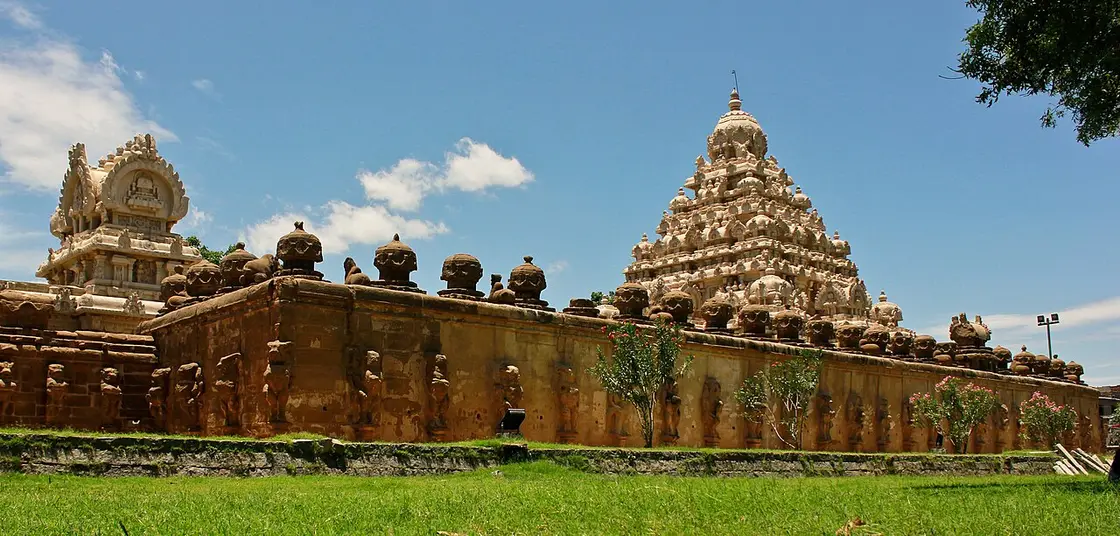
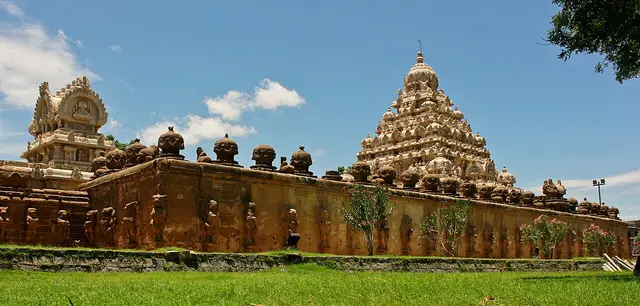
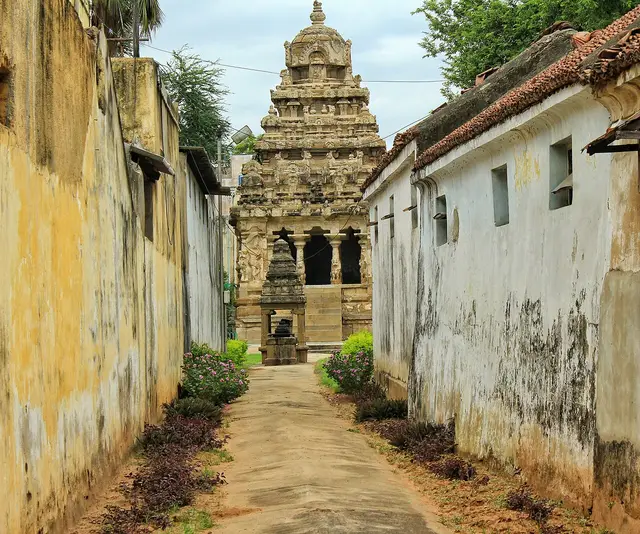
The oldest thing standing is smaller and quieter and out on the western edge. The Kailasanathar Temple was built around 700 CE by the Pallava king Narasimhavarman II, granite at the foundations and sandstone above, with fifty-eight small shrines cut into niches in the compound wall and early murals surviving inside those cells. It is looked after by the Archaeological Survey of India, which is why it feels different from the rest: there are no queues, no camphor smoke, no shop at the gate. It is also the building the Cholas are said to have studied before they built the Big Temple at Thanjavur.
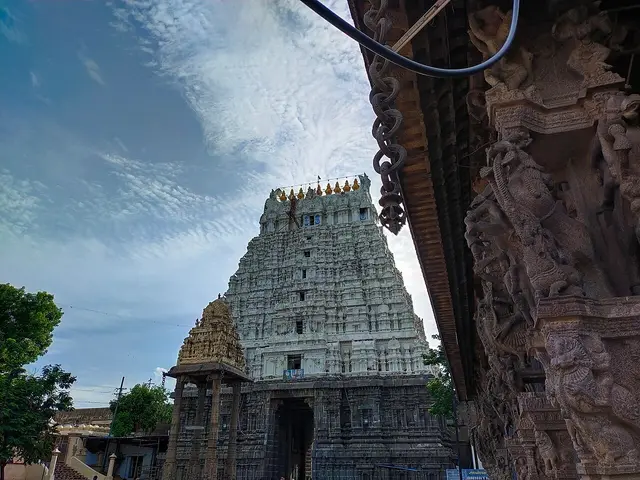
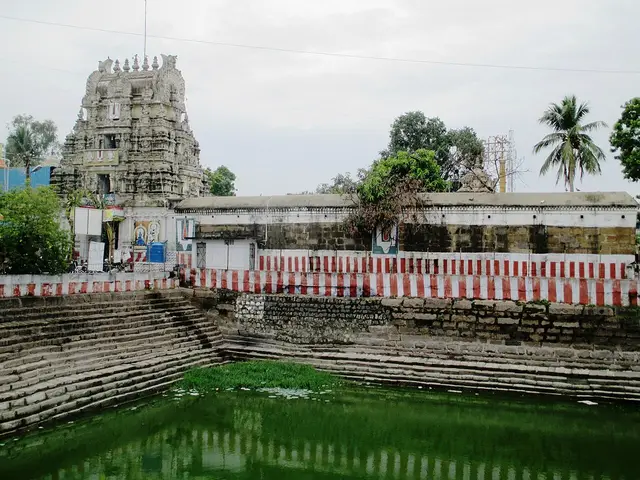
The single strangest thing in Kanchipuram is not on view. Inside the Varadharaja Perumal temple tank, in an underground chamber, lies a three-metre image of Vishnu carved from fig wood — the Athi Varadar, the temple’s original deity, hidden in the sixteenth century and replaced in the sanctum by stone when it could not be found again. It was rediscovered by accident in 1709 when the tank was emptied, and since then it has been raised and worshipped for forty-eight days once in about forty years: twenty-four days lying down, then twenty-four standing. The last time was 1 July to 17 August 2019. The next is due in 2059. The recorded dates before that — 1979, 1939, 1892, 1854 — show the interval is forty years in practice rather than by rule.
Kanchipuram is also, in the older sources, a city of learning rather than of pilgrimage. Kalidasa called it the best among cities. The Chinese pilgrim Xuanzang came in 640 CE and recorded a place six miles around whose people were known for bravery, piety and a regard for scholarship. Before that it was a centre of Jain and Buddhist teaching as much as Hindu, and the Jain temple at Tiruparuttikunram on the far side of the Vegavathy — Trilokyanatha, still standing, 4.5 km from the bus stand — is what is left of that on the ground.
And it still runs on trains and buses rather than tour coaches. The station is called Kanchipuram, code CJ, and the code is a fossil: it comes from Conjeevaram, the British name, and from a narrow-gauge line the Indian Tramway Company laid from Arakkonam in the 1860s. Locals call this one the New railway station, because the old one, about 1.5 km away, is still there and still open as Kanchipuram East (CJE). The board on the platform gives the PIN as 631502 and the height above sea level as 84 metres, which tells you most of what you need to know about the terrain.
Legend & myth
The city’s central story is about a woman doing penance under a mango tree, and it is told at Ekambareswarar. Parvati came to the bank of the Vegavathy to worship Shiva and made a lingam out of sand under the tree. Shiva tested her: first with fire, which Vishnu cooled by bringing the moon; then by sending the Ganga down to sweep the sand lingam away. Parvati is said to have argued the river out of it — they were sisters — and then held the lingam in her arms until the flood passed. Shiva appeared and married her, and the name he takes here, Tazhuva Kuzhainthaar, means roughly "he who melted in her embrace". The god of the temple is the Lord of the Mango Tree, and the tree in the courtyard is treated as that tree.
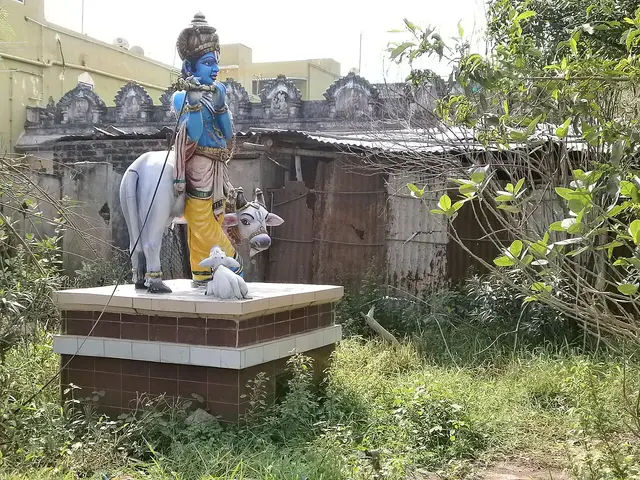
The story behind Varadharaja Perumal is an elephant and a lizard story. Indra was cursed by Saraswati to wander as an elephant, and was released by Vishnu, who appears here on the Hastagiri — the elephant hill — which is the mound the sanctum stands on. Indra is said to have set two lizards in silver and gold in the roof in gratitude, and they are still pointed out to visitors. A second legend gives the same lizards to the cursed disciples of the sage Gautama. Both are told at the temple; neither is offered as record.
The tank story is more interesting because part of it is documented. The legend says the fig-wood Varadar went into the water and stayed. The written history says the icon was hidden in the sixteenth century to keep it from invaders, that the hiding place was lost, that a stone image was installed in its place, and that the wooden one turned up in 1709 when the tank happened to be emptied. Where the legend and the record meet is the only place in this city they can be watched doing it.
The weavers have their own account of themselves, and like every weaving community in the Tamil country it is a migration story rather than a miracle. It is told with different emphases in different streets, and how much of it is documented and how much is a community explaining itself is genuinely hard to separate. What is not in doubt is that the trade and the temples grew up together: the sarees carry temple borders, checks, stripes and buttas, and the motifs are lifted off the buildings a few streets away.
More about Kanchipuram
History
Kanchipuram is older than almost anything it contains. The Sanskrit grammarian Patanjali refers to it between the 3rd and 2nd centuries BCE. It appears in the Sangam-era Tamil works Manimekalai and Perumpanarruppadai. The earliest Sanskrit inscriptions naming it are Gupta-period, from the 4th or 5th century CE, and they name it as the place where King Vishnugopa was defeated by Samudragupta — which is to say the city enters the written record as somebody else’s conquest.
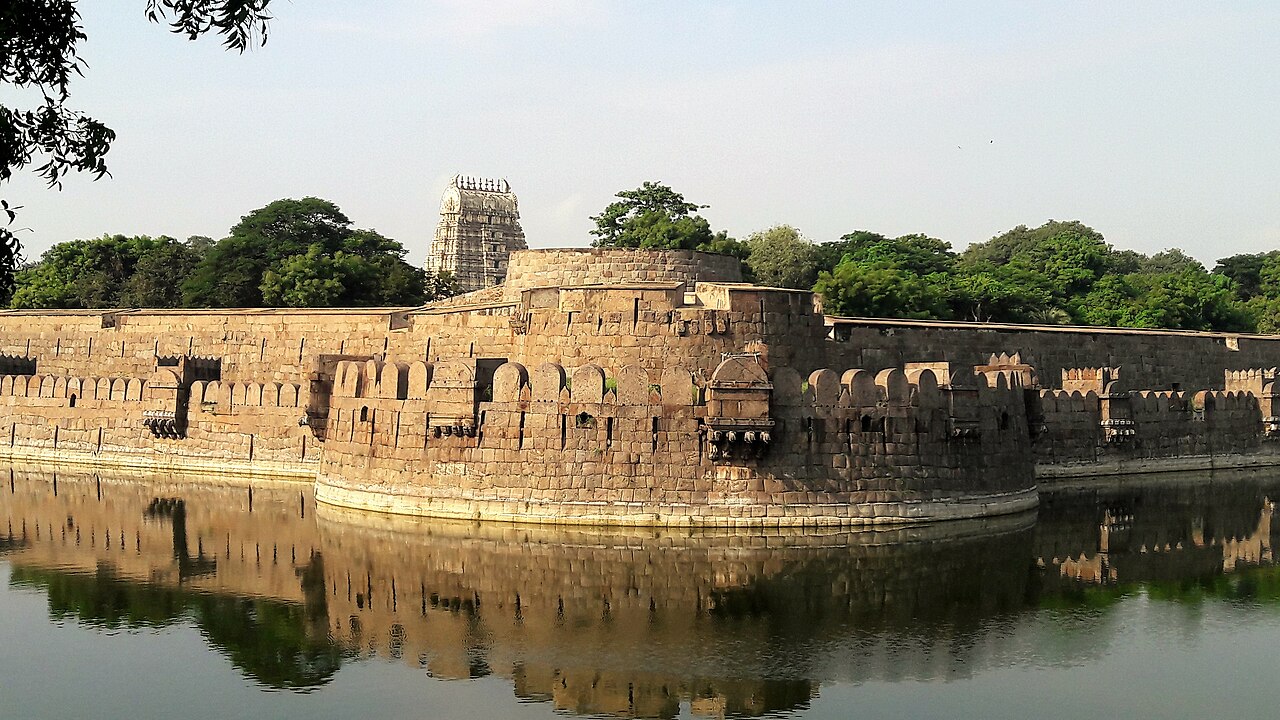
It became a capital in the 6th century, when the Pallavas moved south out of reach of northern invasion and fortified it with ramparts, moats and laid-out roads. That is the period the city is really made of. Mahendravarman I and his son Narasimhavarman I held it against the Chalukya king Pulakesin II — twice — and the second attempt ended with Pulakesin dead and his capital at Vatapi sacked. Under the Pallavas Kanchipuram was a centre of Hindu and Buddhist learning at the same time, and Xuanzang’s account of 640 CE is the outside evidence for it.
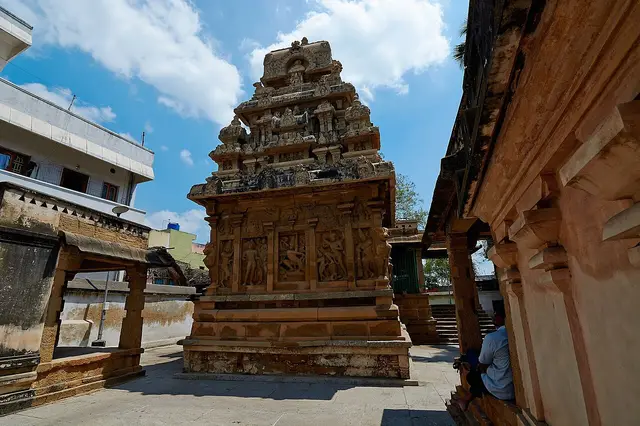
Narasimhavarman II, Rajasimha, is the king whose buildings you can still walk into: the Kailasanathar Temple around 700 CE, the Vaikunta Perumal Temple, and the Iravatanesvara Temple. His son Mahendravarman III finished the Kailasanathar front and its gateway. Everything before them in this city was wood or rock-cut; Kailasanathar is the first structural stone temple of the south, and the pattern for what came after.
After the Pallavas the city passed through the Medieval and Later Cholas, the Later Pandyas, the Vijayanagara Empire, the Carnatic kingdom and the British. Each left building work rather than replacing it. Ekambareswarar’s present masonry is Chola, 9th century, extended by the Vijayanagara kings, and its eleven-storey southern gopuram is Krishnadevaraya’s, built between 1509 and 1529. Varadharaja Perumal carries around 350 inscriptions from the Cholas, Pandyas, Kakatiyas, Hoysalas, Sambuvarayas and Vijayanagara — a donation record that doubles as a political history of southern India.
The silk has a much shorter documented history than the temples and a much better dated modern one. The Government of Tamil Nadu applied for a Geographical Indication for the Kanchipuram saree in 2005, and the Government of India registered it in the 2005–06 year. The Registrar’s own published list carries it as "Kancheepuram Silk", serial 6, application number 15 — note the registry’s spelling, which is not the city’s usual one. That registration is what makes it unlawful for a power loom in another district to sell cloth under this city’s name.
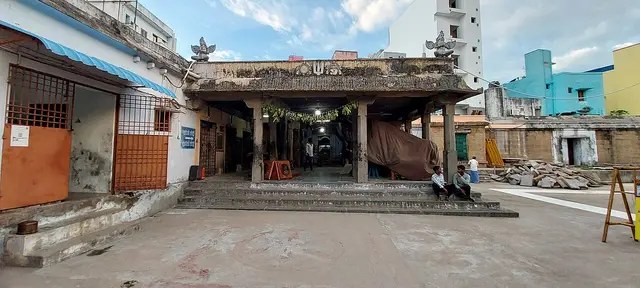
The modern municipality is a 1947 creation, a special grade municipality, and Kanchipuram was later picked as one of the cities under the central government’s HRIDAY heritage-city scheme. On the ground that has meant road work, barriers and pavement building around the temple approaches, which is what several of the photographs on this page are actually showing.
Why visit
Because no other city in India puts this much of this many centuries inside one municipal boundary. An 8th-century Pallava temple in original sandstone, a 25-acre Chola-and-Vijayanagara complex with a 57-metre tower, one of the eighteen Shakta Pithas, and fifteen Divya Desams — all inside a radius you can cross in a ten-minute drive. Kailasanathar is 2.3 km from the bus stand, Ekambareswarar 2.7, Kamakshi Amman 0.9 and Varadharaja Perumal 3.9.
Because Kailasanathar on its own repays the trip. It is the oldest thing standing here, it is under the Archaeological Survey rather than the endowments department, and it is the one temple in the city where you can look at 1,300-year-old carving in a quiet courtyard rather than in a moving queue. The 58 shrines set into the compound wall, and the early murals inside them, are not something the bigger temples can show you.
Because the saree is made in front of you. This is the rare craft town where the thing with the famous name is genuinely woven in the streets you are walking down, not in a showroom four hands later and not in a demonstration workshop built for visitors. Ask before you look into a doorway, ask before you photograph anybody at work, and expect no as an answer — but the looms are there.
Because of the timing, if you are lucky. The Athi Varadar comes out of the tank once in about forty years and the next occasion is 2059, so almost nobody reading this will see it. What you can see any day is the tank it lies under, at the Varadharaja Perumal temple, and the stone image standing in for it in the sanctum.
And because of where it is. Chennai is 77 km and about an hour, the Chennai airport 72 km, Mamallapuram 67 km, Vellore 69 km, Sriperumbudur 37 km. Kanchipuram is an easy day out of Chennai and a much better base for a night than that suggests — but be clear about what it is not. There is no old town preserved for walking, no riverfront, no viewpoint, and the traffic is real. You are visiting a working city that happens to be very old.