What to expect
Highlights
- Temple visit at Rajarajeswara Temple, Taliparamba
- Kerala temple architecture and rituals
- Local food, shops and pilgrim services nearby
An ancient Shiva temple at Taliparamba, one of the 108 Shiva temples and the Dwadasha Shivalayams of old Kerala; men remove their shirt to enter and photography is restricted.
Hindus only — non-Hindus are not admitted.Entry to the temple is restricted to Hindus.
Checked 4 August 2026 against source 1source 2. Check the institution’s current rules and visiting session before travelling.
One of the greatest and most ancient Shiva temples of Malabar, the Sree Rajarajeswara Temple at Taliparamba is reckoned among the 108 great Shiva shrines of old Kerala — and, by many traditions, foremost among them. A colossal granite structure ringed by towering brass lamp-posts, it is renowned for the prasna, for the ghee offering, and for the singular custom by which women enter the sanctum only after the evening worship.
You feel the age of this place before you understand it. The Rajarajeswara Temple stands at Taliparamba, an old market town on the road north of Kannur, and it has the gravity of a shrine that has been continuously worshipped for a very long time. Locals do not call the deity by a single name — he is Rajarajeswara, the great king among lords; he is Perumthrikkovilappan and Perumchelloorappan, titles that root the god to the ancient land of Perumchellur, as Taliparamba was once known. This is Shiva, but a Shiva reckoned above ordinary Shivas, which is exactly how the pilgrims of Malabar have always treated him.
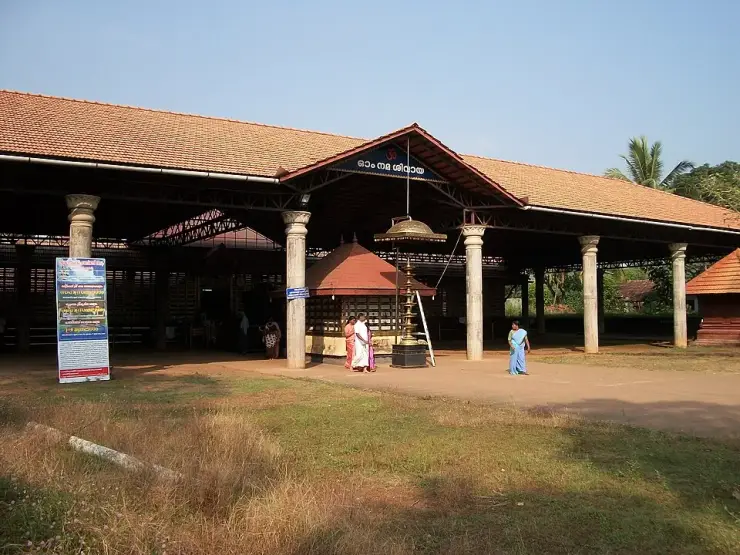
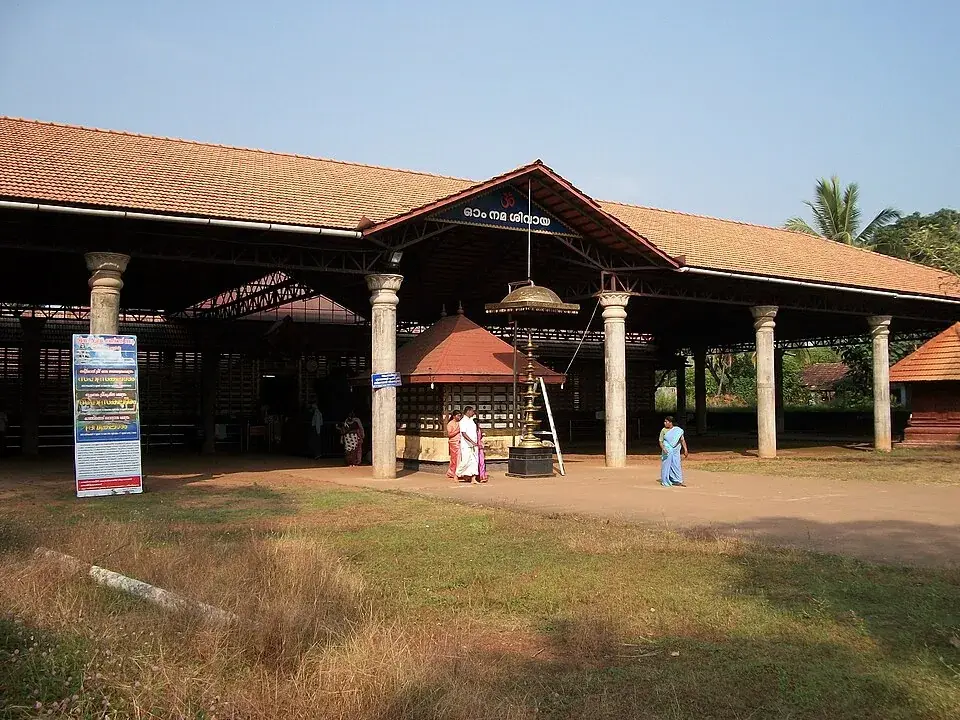
The temple is built almost entirely of granite, low and immense, its two-tiered sanctum roofed in copper that tapers to a golden kalasam. There is no soaring gopuram in the Tamil manner; the grandeur here is horizontal and heavy, a fortress of dark stone set within wide courtyards. Tall deepastambhams — brass lamp-columns — rise before the shrine, and when they are lit for the evening the whole enclosure seems to breathe fire. It is said the shrine once carried among the tallest sanctum-towers of its age in the region, and even in repose it dwarfs the visitor.
What sets this temple apart, more than its stone, is a living tradition of consultation. Across Kerala, when a doubt or a disturbance arises in the worship of another temple, the answer is sought here — through a prasna, the old astrological method of divination conducted on a raised platform outside the shrine. Devotees, too, are said to bring their private troubles to Rajarajeswara not by clamouring their petitions aloud but by placing their problems before the god quietly and awaiting his verdict through the prasna. In this sense the temple has long functioned as a kind of supreme court of Malabar devotion, the place to which other places turn.
The signature offering is ghee. Small pots of clarified butter — Neyyamruthu — are carried up and set upon the steps leading to the sanctum, an act tied to the founding legend of the shrine. On a grander scale devotees make the Ponkudam, pots of ghee in gold, silver and copper poured out in intense devotion. Among the harvest-season observances the temple keeps the Nira, and the nirapara — a para measure heaped high with the first new paddy — is offered in the manner of Kerala’s great shrines, a thanksgiving of the land laid before the god (details and eligibility are best confirmed at the temple office).
Then there is the custom that fascinates every first-time visitor. By long tradition, women do not enter the inner nalambalam of Rajarajeswara during the day; they are admitted only in the evening, after the Athazha pooja — the last worship of the day — is completed. The belief attached to the practice is gentle rather than exclusionary: at that hour Shiva is held to be in his most contented mood, seated in the company of his consort Parvati, so that a woman who enters then worships not one deity but two, and is thought most likely to have her prayers granted. Whether and how the timing is observed can change, so intending visitors should check the current rules on the day.
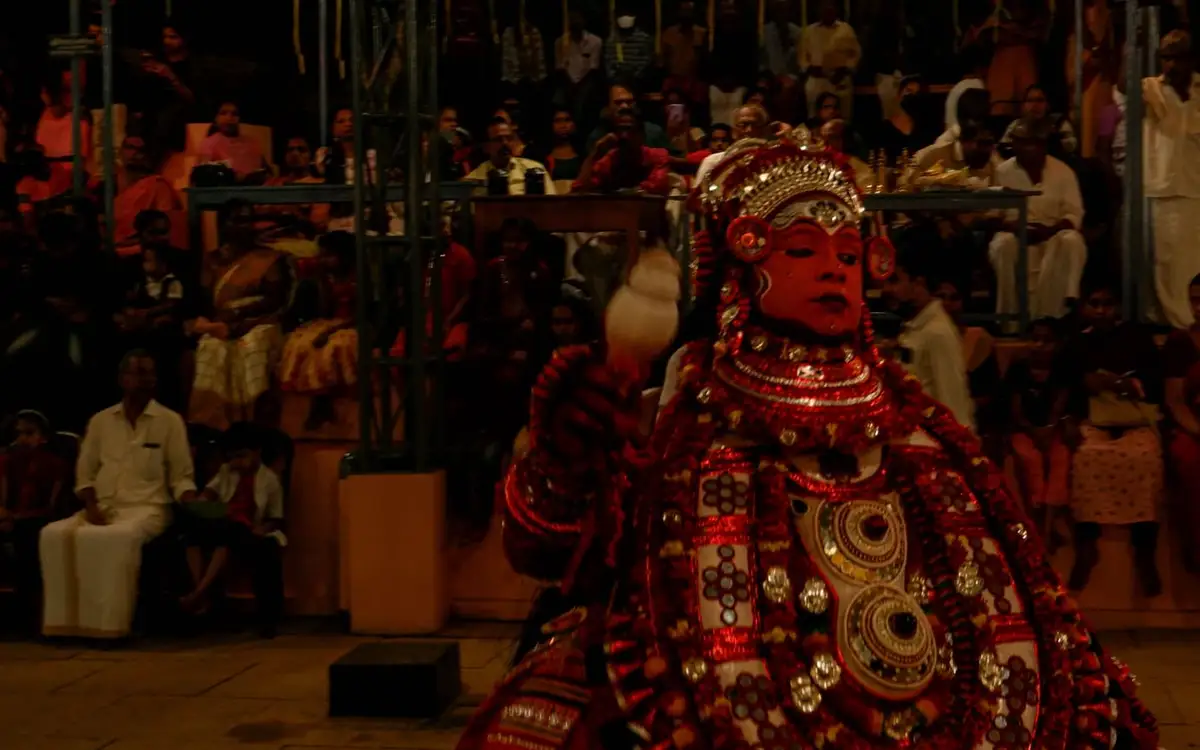
The temple is also a sanctuary of the classical arts. Its stage has for centuries been counted among the most sacred in Kerala for Koodiyattam and Chakyar Koothu, the ancient Sanskrit theatre of the region, and performers of the highest attainment have been honoured here with the Veerasrinkhala, a golden bracelet of recognition. To sit in these courtyards while the lamps are lit and the old temple theatre unfolds is to touch a continuity of ritual, drama and stone that very few places on earth still keep.
The founding legend of Taliparamba is told as the story of three kings and three lingas. It is said that Lord Shiva once gave three especially sacred Shiva lingas to the goddess for her worship, and that these passed, through her grace, into the hands of great sovereigns. King Mandhata, so the tale runs, propitiated the goddess with fierce penance and received one linga, on the condition that it be installed only where no cremation ground had ever been. He searched far and wide and found no spot purer than Taliparamba, and there he set the linga up — but after his death it sank away into the earth.
Then his son (in the retelling, Muchukunda) performed the same austerities and won a second linga, which he installed at the very same place; and it too, in the fullness of time, dissolved into the ground. At last a third king — remembered as Satasoma of the Mushika line — obtained the third and final linga and brought it to Taliparamba. This linga, too, began to sink. According to the legend it was the sage Agastya who intervened: lighting a ghee lamp and prostrating before the linga twelve times without success, he bowed a thirteenth time, and on that thirteenth prostration the linga at last stood firm and fixed in the earth. From that moment, the story says, ghee became the great offering of this shrine.
Because of these threefold origins the linga here is spoken of as swayambhu — self-manifest — and exceedingly powerful, and folk tradition links the shrine to the Mrityunjaya aspect of Shiva, the conqueror of death, sought by kings who longed to overcome mortality. Some accounts fold the temple among the jyotirlingas, the columns of light through which Shiva is said to have revealed himself. Taliparamba is also remembered in another legend as one of the ancient Shakti Peethams, where a portion of the goddess Sati is said to have fallen after her self-immolation and Shiva’s grief-maddened dance. All of this is the living lore of the place, told and retold as legend rather than as chronicle — but it is exactly this weight of story that has made Rajarajeswara so revered across Malabar.
The deity is counted among the 108 great Shiva temples said to have been consecrated by Parasurama when he raised the land of Kerala from the sea, and among the twelve most important of these — the Dwadasa Shivalayas — Taliparamba holds pride of place. To pilgrims here it is not merely one temple in a list; it is, by the reckoning of the old traditions, the first and greatest of them all.
The historical origins of the temple are lost in antiquity, but Taliparamba — the old Perumchellur — was clearly a major religious and political centre of north Malabar in early medieval times, and the Shiva shrine here stood at its heart. The temple belongs to the family of the 108 ancient Shiva temples of Kerala, and its fame ran alongside the greatest of them — the shrines of Vaikom, Ettumanur and the Vadakkunnathan at Thrissur — as one of the pre-eminent Shaiva centres of the land.
The shrine flourished under the patronage of the ruling houses of the north. It was closely associated with the Mushika dynasty and its successors the Kolathiri (Chirakkal) rajas, who governed Kolathunad, and it also received the devotion and gifts of the Zamorins of Kozhikode to the south — a rare instance of rival powers venerating a common shrine. That royal patronage is reflected in the very name of the deity, Rajarajeswara, the lord of kings.
The temple was substantially rebuilt in granite in later centuries, giving it the massive stone character it wears today. An inscription associated with the temple tank records a renovation in 1524 CE under a king named Satasoma of the Mushika Vamsa — the same name that appears in the founding legend of the third linga, so that history and myth here reach out and touch one another. Successive repairs and endowments by the Kolathiri house maintained the shrine as the ceremonial centre of the region.
Distinctive practices set the temple apart from its peers and speak to its unusual antiquity. It keeps no kodimaram (the ceremonial flag-mast that stands before most Kerala temples), holds no conventional annual festival with a flag-hoisting, and by custom the deity is never carried in procession beyond the temple precincts. Uniquely, Tulsi (holy basil) leaves are offered here rather than the Bilva leaves usual in Shiva worship, and certain observances associated with Vishnu are kept alongside those of Shiva — an intertwining that gives the shrine its Sankara-Narayana character.
Through all of this the temple has preserved its role as a seat of classical performance. Its courtyards have hosted Koodiyattam and Chakyar Koothu for many centuries, and it remains among the handful of temple stages regarded as most sacred for these ancient art forms — a rare surviving thread connecting the living present to the ritual theatre of the medieval Malabar temple.
To stand before one of the greatest and most ancient Shiva temples of Kerala — reckoned by tradition the foremost of the 108 great Shiva shrines and one of the twelve Dwadasa Shivalayas — in a colossal granite structure quite unlike the towered temples of the south.
For the singular atmosphere of a shrine that other temples consult: the home of the prasna, where troubles are laid quietly before Rajarajeswara and answered through divination rather than shouted petitions.
To see the great brass deepastambhams lit for the evening worship, and to witness the ghee offering — Neyyamruthu and the golden Ponkudam — that flows from the temple’s own founding legend.
For the rare and gently-told women-entry tradition, by which women worship in the sanctum after the Athazha pooja, when Shiva is believed to sit contentedly beside Parvati (observance can vary — confirm on the day).
For the depth of legend — the three kings and three lingas, Agastya and the thirteenth prostration, the swayambhu Mrityunjaya linga, the Shakti Peetham lore — woven through a place still worshipped exactly as it has been for centuries.
For the classical arts: a temple stage counted among the most sacred in Kerala for Koodiyattam and Chakyar Koothu, and an easy, rewarding detour from Kannur into the older, quieter heart of north Malabar.
Women planning darshan should confirm the evening entry window directly with the temple. Kerala Tourism’s own page gives slightly different starting times in its descriptive text and its timetable, so neither should be used here as a minute-exact promise. Agree the permitted arrival time before arranging a return ride; a general daytime sightseeing itinerary may not fit the temple’s worship rules.
Road km to Kannur; ghat roads and traffic vary — allow extra.
Morning or early evening is usually best; festival days can be powerful but crowded.
Live forecast loads in your browser.
Sunset is in about 3 hours.
Sun and moon are calculated for this location and shown in IST. Photography windows are the hour around sunrise and sunset; the sunset bearing is degrees clockwise from true north. Moon phase is accurate to about half a day.
Browse listed stays, food, activities, sights, shops and rentals around Rajarajeswara Temple, Taliparamba. Check each listing’s locality and contact the business directly for current arrangements.
Registered Ayurveda and panchakarma hospital at Puracheri, Ezhilode, north of Kannur city. It provides physician-led classical Ayurvedic treatment, panchakarma therapy and rejuvenation programmes in a dedicated treatment facility rather than a hotel spa.
Ayurvedic spa and wellness centre at the Malabar Beach Resort on Thottada Beach south of Kannur city. It offers Ayurveda massage, therapy and rejuvenation packages in a palm-fringed seafront garden setting, aimed at travellers combining coast and wellness.
Kerala Tourism Ayur-Silver classified Ayurveda nursing home at Mayyil in Kannur district, run by the traditional Itoozhi Namboothiri Ayurveda family. It offers physician-led panchakarma, classical treatments and residential Ayurveda care rooted in a long Namboothiri lineage.
DTPC Kannur Theyyam Calendar is the responsible first check for seasonal Theyyam venues, dates and local timing before planning a ritual-arts itinerary. Kannur district, Kerala · Public calendar; confirm locally · Theyyam, Kannur culture, DTPC calendar.
St. Angelo Fort is Kannur city sea-fort anchor, best planned with current entry, timing, heat and nearby Payyambalam or Arakkal context checked before travel. St Angelo Fort, Kannur Fort, Heritage.
RingCab publishes its contact address at Nadal, near Oorpazhachi Kavu, Edakkad P.O., Kannur 670663, with 92490 66061, 95735 10182 and [email protected]. Its website advertises local, airport and outstation trips and round-the-clock calls; those claims do not establish a vehicle for your requested time.
Kerala Tourism’s Kannur travel-agent directory lists Akbar Travels of India on Station Road, with 0497 2766805 and [email protected]. These are directory-published branch contacts; this profile does not establish today’s office hours or an issued ticket.
Air Travel Enterprises publishes a Kannur branch at Fortlight Complex on Fort Road, PIN 670001. Its current contact page gives 99958 09980 and [email protected] for Kannur; it also uses that contact for Calicut, so identify the Kannur branch in your enquiry.
Official DTPC Kannur contact anchor for district visitor planning. Public information · DTPC Kannur, Tourist information, Kannur planning.
Book with the place itself. India’s cyber-crime coordination centre warned in April 2025 that convincing copies of hotel and pilgrimage booking sites are being pushed through sponsored search and social ads, taking payment for rooms the property never hears about. Use the contact and source details on each profile to confirm the exact business and booking channel. A directory entry or map pin alone does not establish an operator’s identity or current availability. Roampedia takes no commission and does not collect booking payments. If a booking page reached you through an ad, check the address bar against the property’s own site before you pay. Fraud can be reported on cybercrime.gov.in or on 1930.
Find food, accommodation and activities across Kannur city. Browse the guides for places to eat, stay and explore along your route.
8 more places around Kannur city. Open a guide to plan the visit and onward journey.
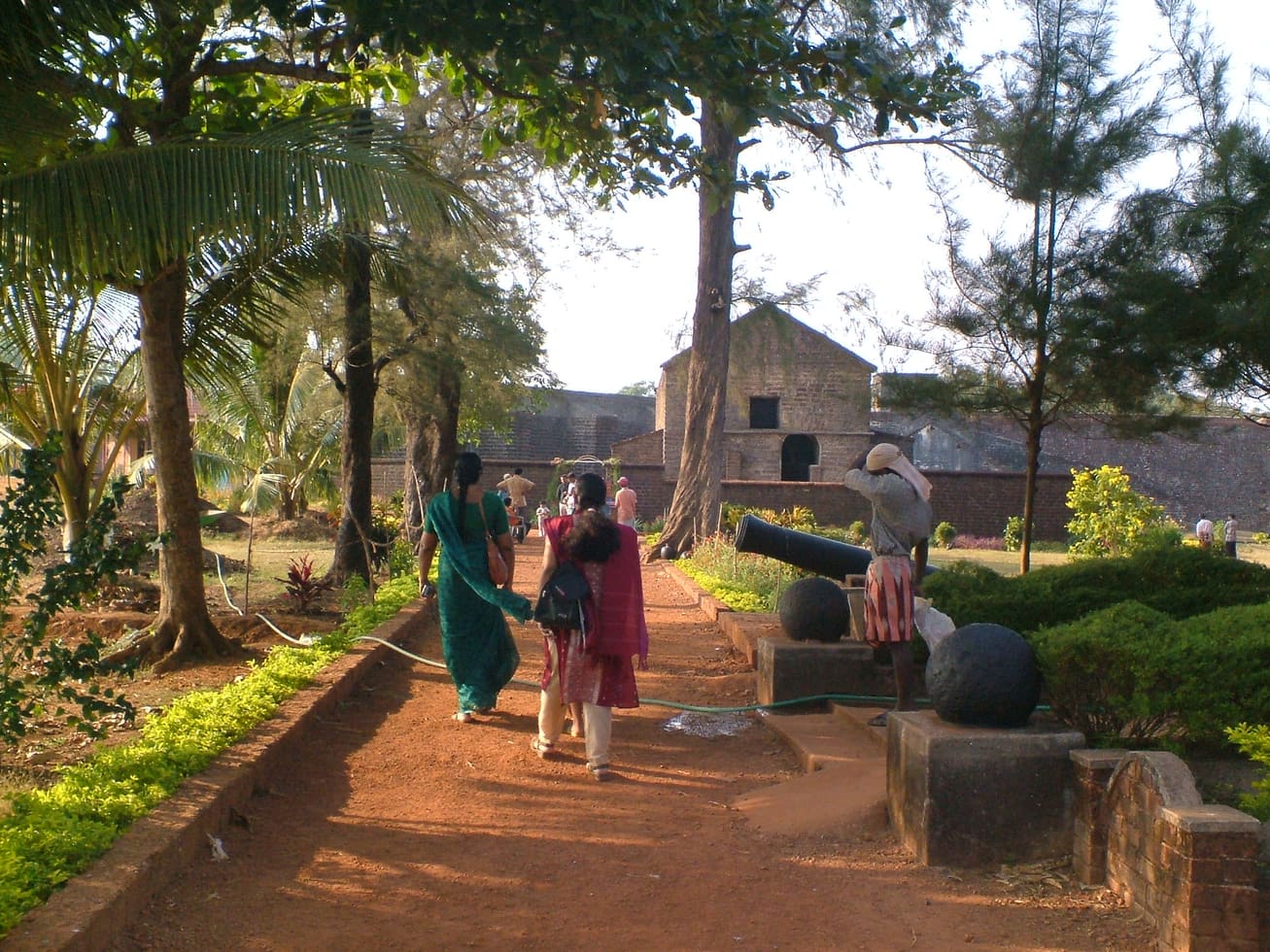
21.7 km · straight line
Sea-facing laterite fort built by the Portuguese in 1505, later held by the Dutch, the Arakkal royal house and the British — Kannur city’s great coastal landmark overlooking Mappila Bay.
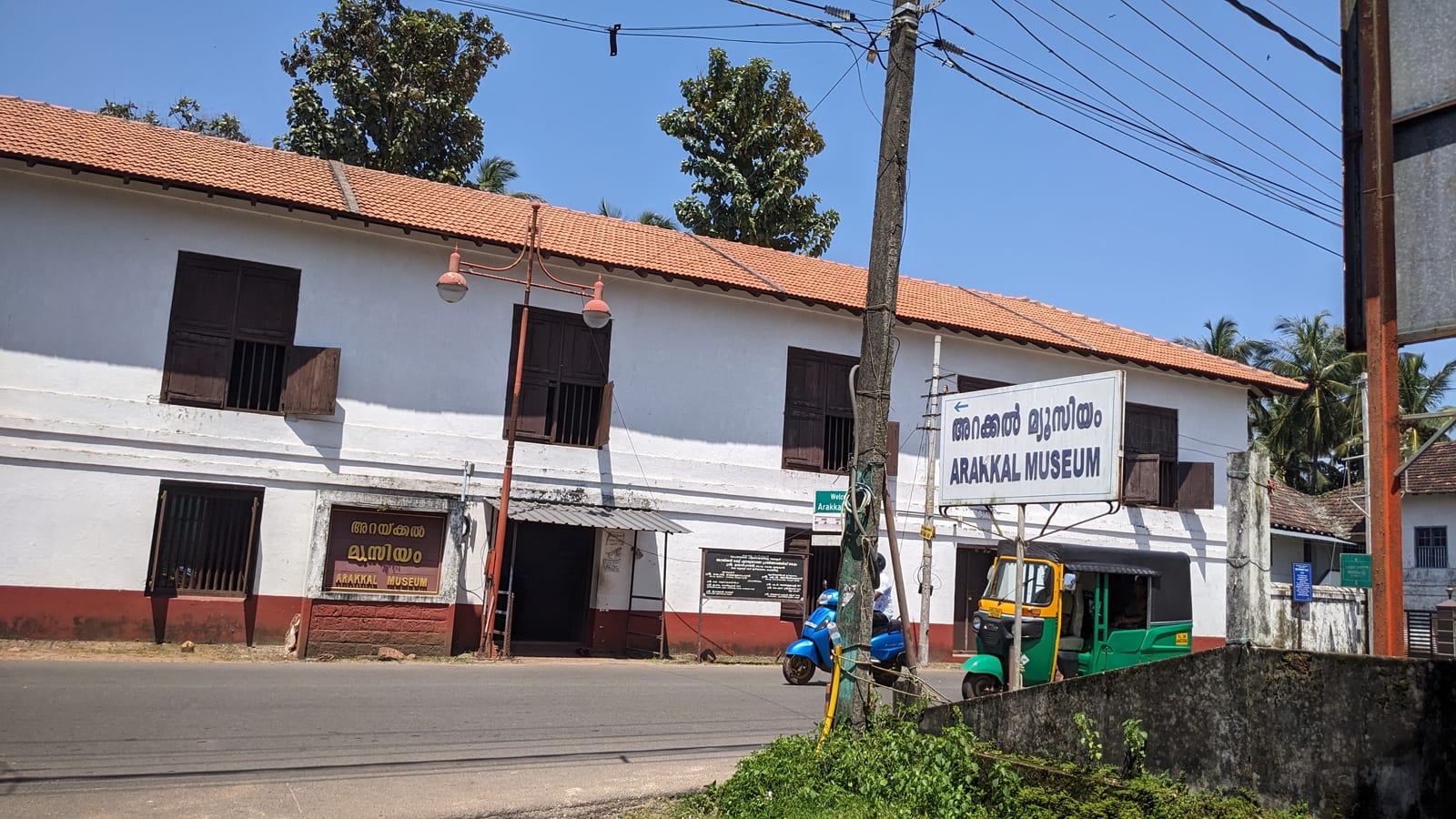
21.1 km · straight line
The Arakkal Kettu (palace museum) of the Arakkal Ali Rajas — Kerala’s only Muslim royal house, matrilineal so ruled at times by a Beevi (queen).
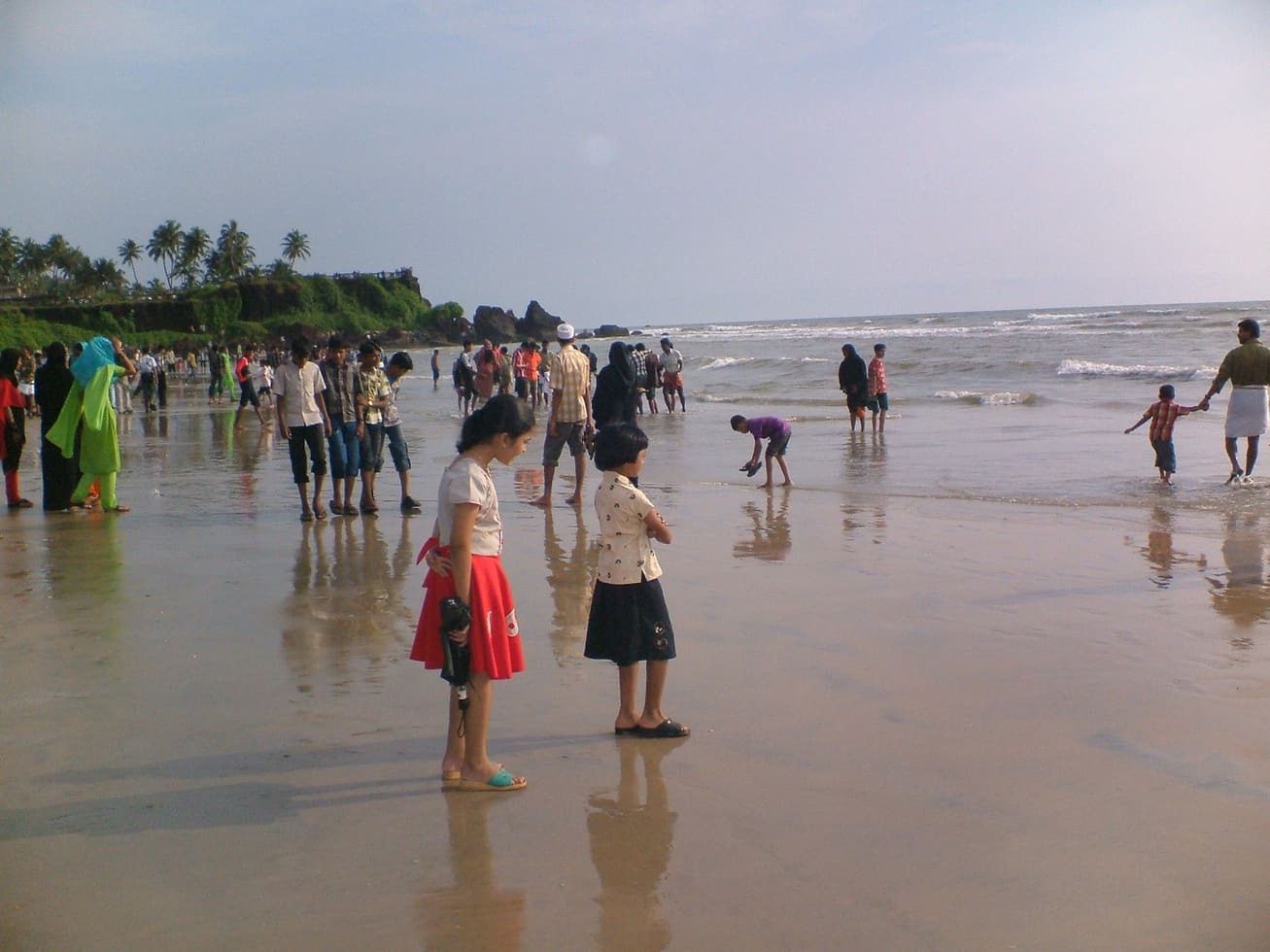
19.7 km · straight line
Kannur city’s main beach, with a landscaped garden, the mother-and-child sculpture and long sunset walkways.
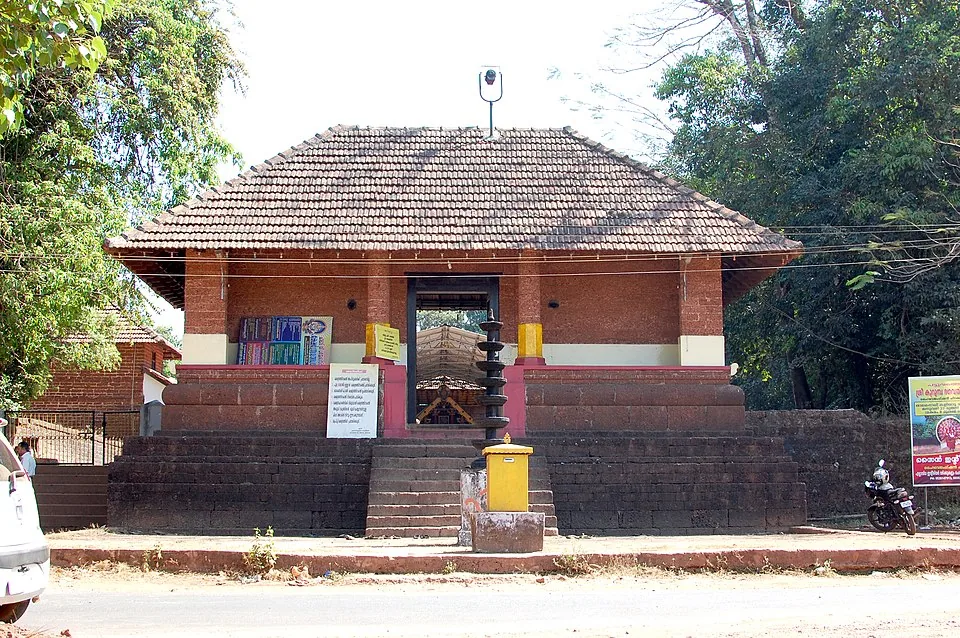
13.8 km · straight line
A Bhagavathy temple near Valapattanam regarded as the mother shrine of Kalaripayattu — Kerala’s martial art — where Theyyam is performed; the goddess is guardian of the kalari.
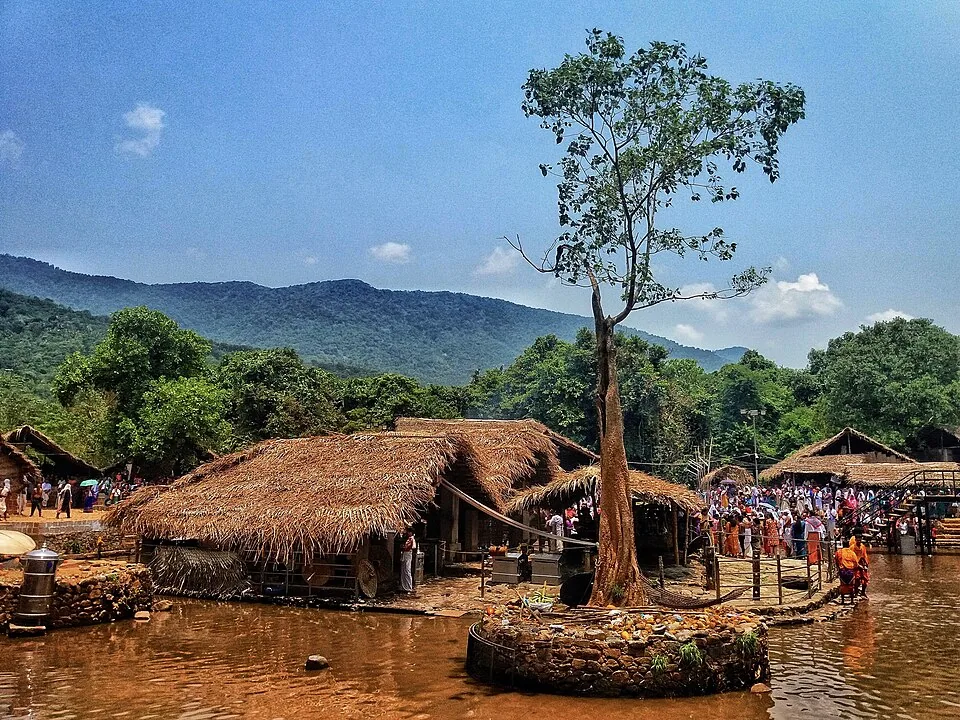
A remote forest Shiva shrine on the Bavali river, site of the ancient 28-day Kottiyoor Vaisakha Mahotsavam pilgrimage; the Akkare shrine has no permanent roof and is open only during the festival.
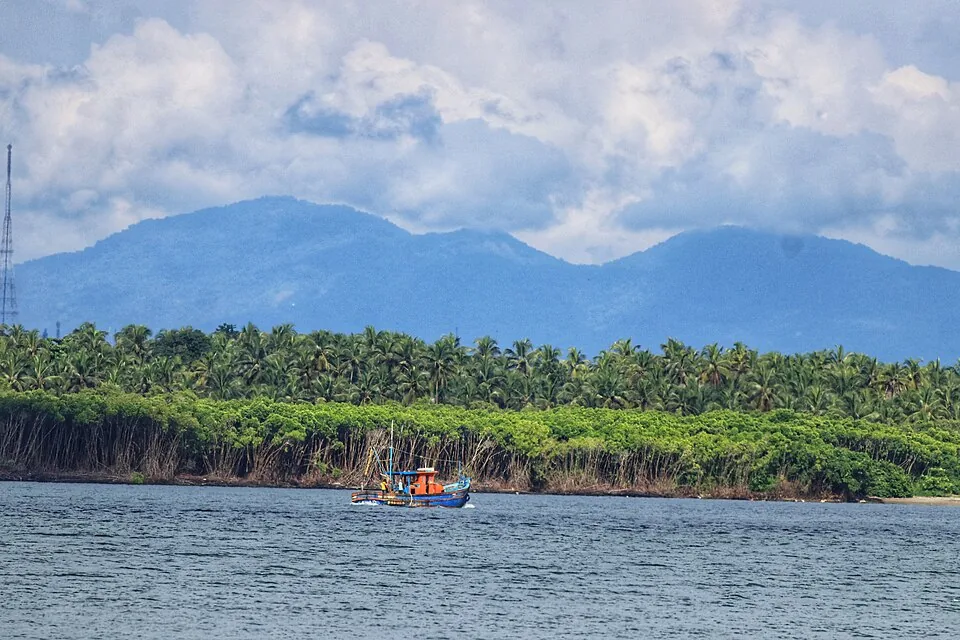
16.0 km · straight line
A dramatic 286 m headland near Payyannur, now home to the Indian Naval Academy — the hill itself is off-limits, but the beach and views below are open; rich in legend and rare herbs.
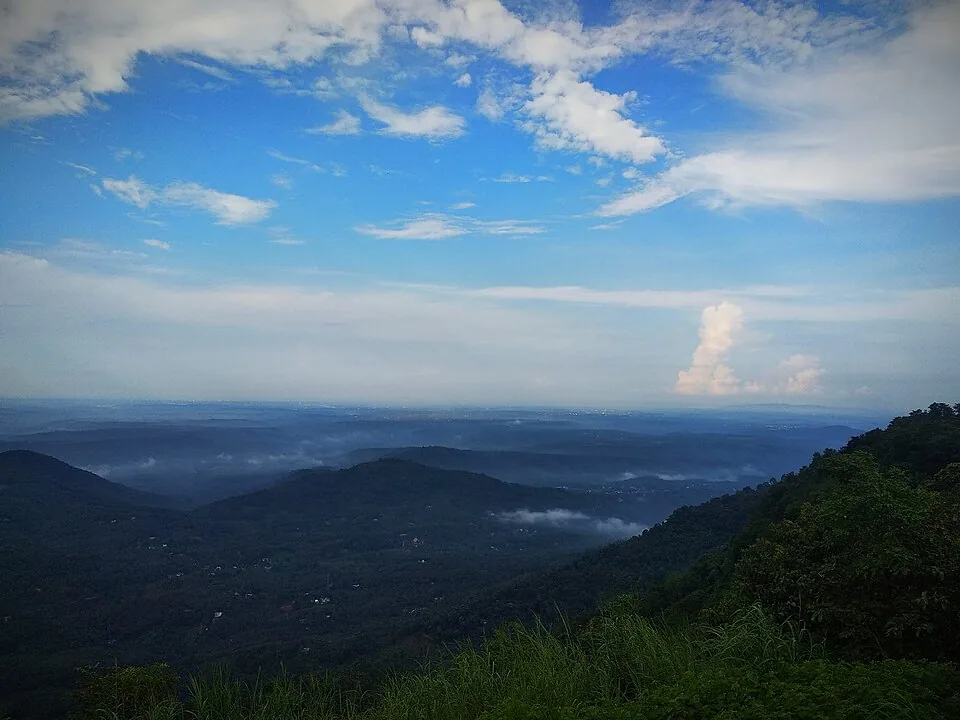
20.3 km · straight line
A misty grassland hill viewpoint in the Western Ghats near Kolari, ~3,000 ft, known for cloud-touched meadows, a small waterfall and adventure activities.
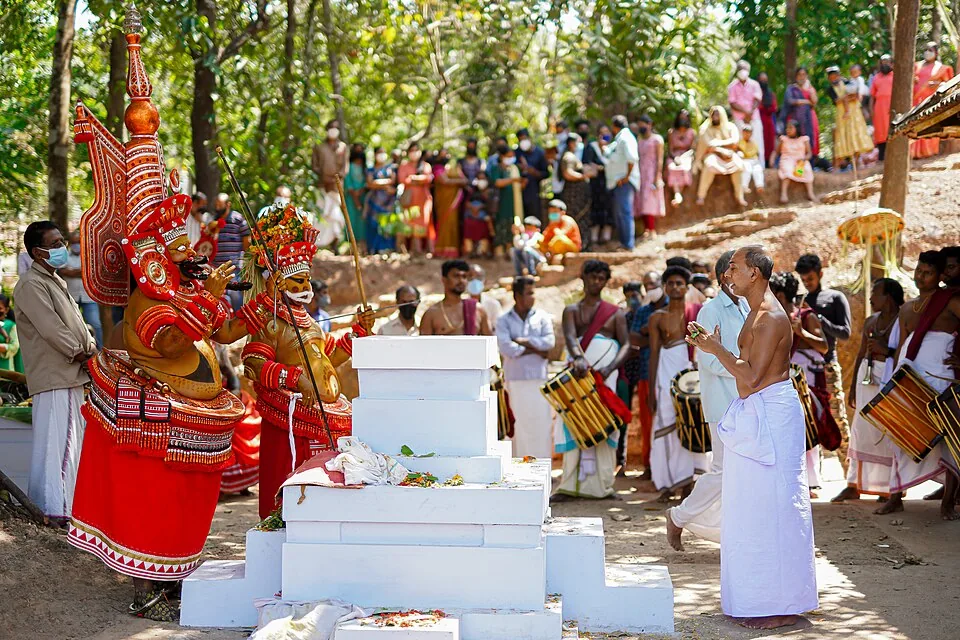
8.9 km · straight line
A man of the Vannan or Malayan community is painted, dressed and crowned until the shrine treats him as the deity, and the people who come kneel to someone most of them would not have eaten beside within living memory. The season is set by the Malayalam calendar — the tenth of Thulam, about mid-October, to the middle of Edavam at the end of May — and outside it the kavus are quiet. The exception is Parassinikkadavu, north of the city, where Muthappan is performed most mornings and evenings for most of the year, though it too stops for six weeks each autumn. These are rituals, not ticketed shows.
Roampedia is commission-free — own or know a stay, eatery, guide or shop near Rajarajeswara Temple, Taliparamba? Submit public business details for review.
Add a nearby businessEntry: No entry fee for darshan; offerings, poojas and vazhipadu such as Neyyamruthu and Ponkudam are paid separately at the temple counter.
Dress code: A strict traditional Kerala temple dress code applies. Men are generally required to remove their upper garment and enter bare-chested in a mundu or dhoti; women wear a saree, set-mundu or salwar (no shorts or revealing clothing). Entry is customarily restricted to Hindus. Note the women-entry tradition: by custom women are admitted to the inner sanctum only in the evening, after the Athazha (night) pooja, when Shiva is believed to sit with Parvati — practice and timing can vary, so confirm the current rule at the temple on the day.
Festivals: Maha Shivaratri (February–March) is the principal festival, marked with elephant processions of the Balibimbam and combined Sankara-Narayana worship; Vishu (mid-April) is celebrated from the previous evening. The temple also keeps harvest-season and calendar observances such as Puthari, Karkadaka Sankramam and Nira (with the nirapara offering). Unusually, it holds no flag-hoisting annual festival and takes the deity in no procession beyond the precincts.
Photography: Photography inside the sanctum and of the deity is generally not permitted, and mobile phones may be restricted at the entrance; exterior courtyard photography rules vary — always ask temple staff before photographing.
If you are travelling by bus or ferry, check the return service with the operator before setting out. Leave time to reach the stop or jetty after your visit.
Ask at the bus stand for the time of the last service back, not the next one. If you miss it, an auto or app cab is the fallback — agree the fare before you get in.
If you need step-free access, contact the site before travelling. Ask about a level entrance, steps along the route, the nearest drop-off point, seating and accessible toilets.
Charge cap and free-transaction limits: Reserve Bank of India, ATM FAQ updated 4 July 2025; checked 4 October 2026.
These services are listed within about 1.2 km of Rajarajeswara Temple, Taliparamba. Walking distances follow mapped routes; access and opening hours can change. Other services may be closer but are not included here.
Published emergency and visitor-assistance contacts. For an immediate emergency, call 112. Shared Kerala contact sources checked 4 October 2026; publication does not establish a tested live response.
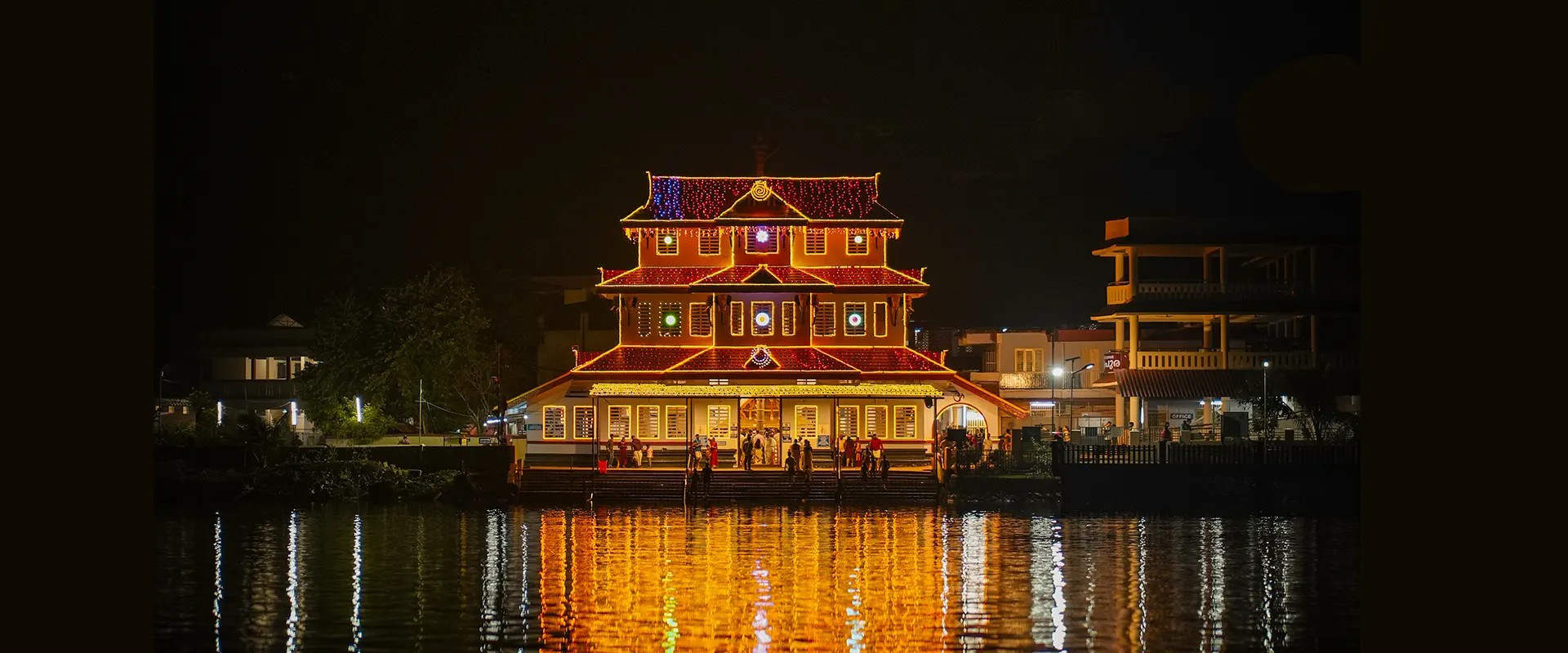
On the Valapattanam river, the temple of Muthappan — where the Muthappan Theyyam is performed morning and evening on nearly every day of the year, and where entry is open to all castes and religions; a snake park is nearby. The exception is the six weeks from the first of Thulam to the fifteenth of Vrischikam, when it stops, and the ritual year begins again with Puthari Thiruvappana around the first of December.
8.9 km · straight lineThe ritual season of north Malabar, in which a man of the Vannan or Malayan community is dressed, painted and crowned until the shrine treats him as the deity itself. It runs from the tenth of Thulam, about mid-October, to the middle of Edavam at the end of May, at kavus and household shrines rather than on any stage, and the peak is January to April. Outside the season the kavus are quiet — the exception is Parassinikkadavu, north of the city, which performs Muthappan on a fixed daily schedule and is the anchor this page is pinned to.
8.9 km · straight line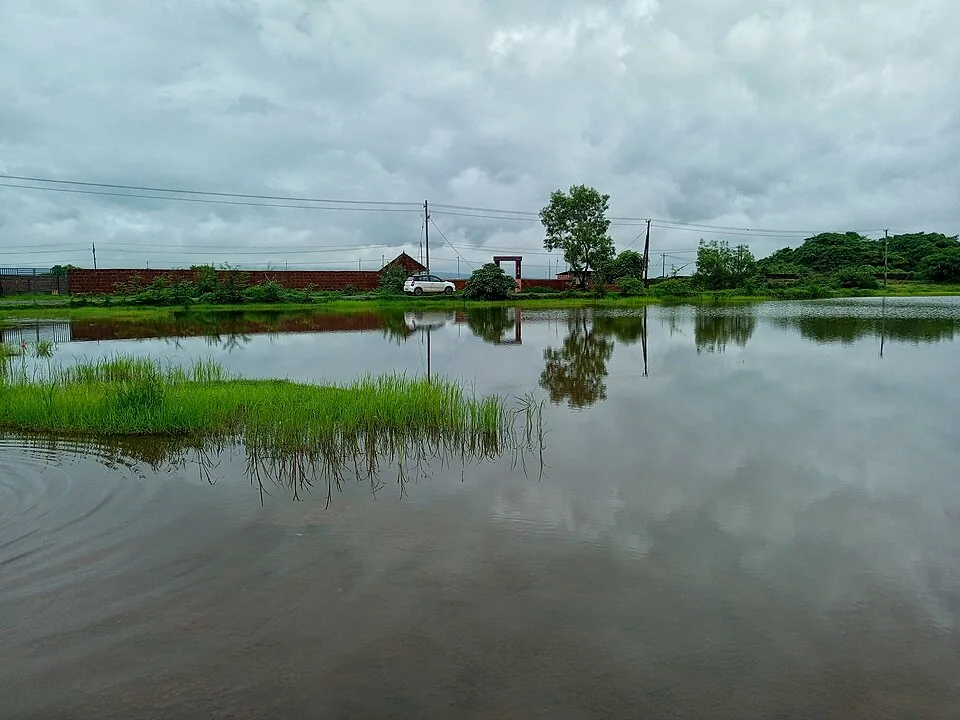
A vast laterite plateau near Pazhayangadi that bursts into wildflower bloom after the monsoon, with the Madayi Kavu, an old mosque and a temple pond — a botanist’s and birder’s hill.
11.1 km · straight line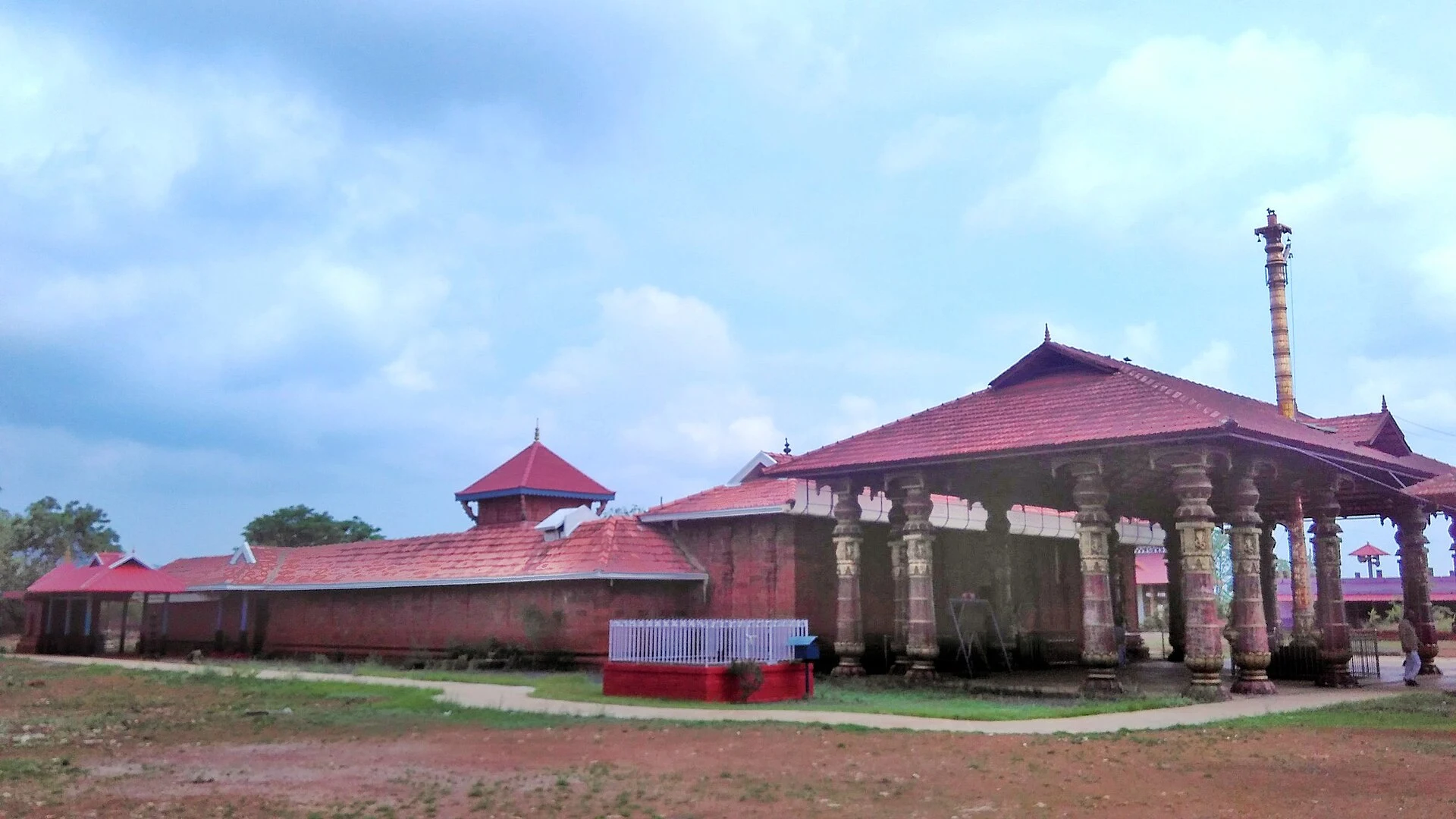
Madai Sree Vadukunda Siva Temple is the Shiva shrine beside the laterite plateau and sacred pond at Madayipara, near Pazhayangadi in Kannur. It is distinct from Thrissur’s Vadakkunnathan and from nearby Madayikavu.
11.3 km · straight lineA Bhagavathy temple near Valapattanam regarded as the mother shrine of Kalaripayattu — Kerala’s martial art — where Theyyam is performed; the goddess is guardian of the kalari.
13.8 km · straight lineA dramatic 286 m headland near Payyannur, now home to the Indian Naval Academy — the hill itself is off-limits, but the beach and views below are open; rich in legend and rare herbs.
16.0 km · straight lineKannur city’s main beach, with a landscaped garden, the mother-and-child sculpture and long sunset walkways.
19.7 km · straight lineA misty grassland hill viewpoint in the Western Ghats near Kolari, ~3,000 ft, known for cloud-touched meadows, a small waterfall and adventure activities.
20.3 km · straight lineA small rocky beach in the Kannur cantonment, an extension of Payyambalam and within a few minutes of St Angelo’s Fort and the Kannur lighthouse. Not a swimming beach — the draw is the rocks, the quiet and the lighthouse beam after dark.
21.1 km · straight lineThe Arakkal Kettu (palace museum) of the Arakkal Ali Rajas — Kerala’s only Muslim royal house, matrilineal so ruled at times by a Beevi (queen).
21.1 km · straight lineSea-facing laterite fort built by the Portuguese in 1505, later held by the Dutch, the Arakkal royal house and the British — Kannur city’s great coastal landmark overlooking Mappila Bay.
21.7 km · straight line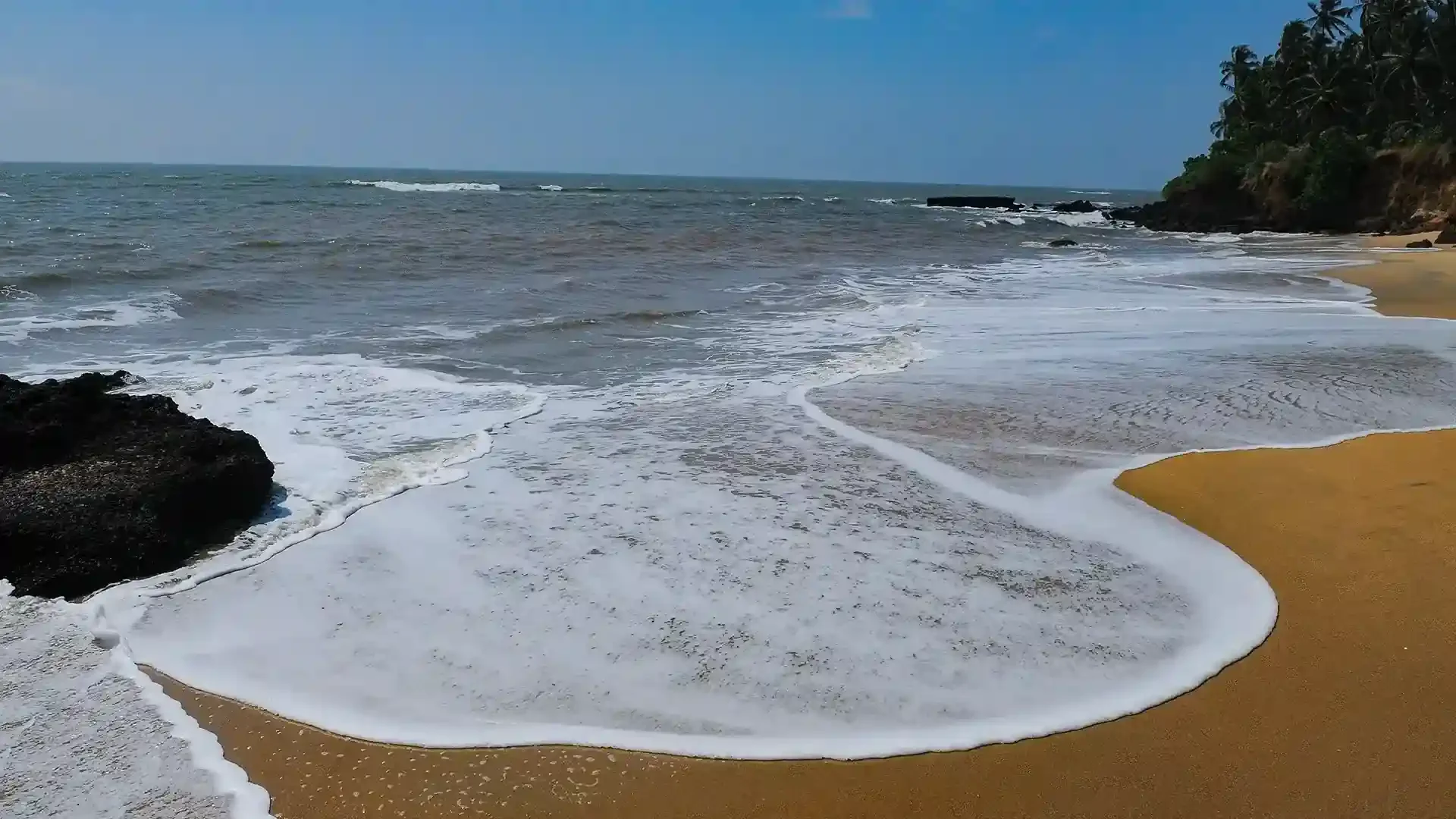
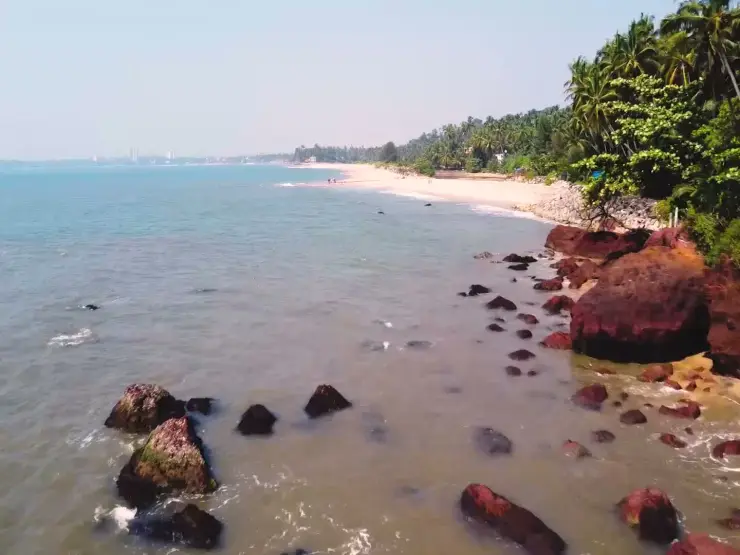
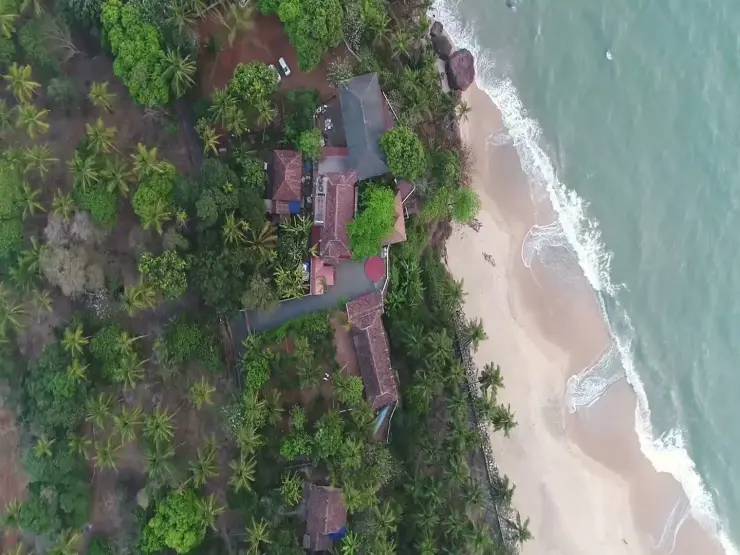
Adikadalayi Beach, also called Kadalayi Beach in Kerala’s coastal tourism study, is a Kannur shore with sandy pockets, exposed red coastal rock and palms above the water. It belongs to the Adikadalayi locality, not the separately named Thottada, Kizhunna or Ezhara beaches farther along the coast. Use the mapped public steps from Tippu Sulthan Beach Road as the arrival reference. Nearby cliff-side homestays have their own entrances and facilities, and should not be used as assumed public access.
23.1 km · straight lineNearby toilets, pharmacies, ATMs, seating and vets are community-mapped and may be incomplete or out of date. Map data © OpenStreetMap contributors | Walking times © openrouteservice.org by HeiGIT
It is counted among the 108 great Shiva temples said to have been consecrated by Parasurama, and among the twelve most important of these — the Dwadasa Shivalayas. By many traditions it is reckoned the first and foremost of them all, ranked alongside the celebrated shrines of Vaikom, Ettumanur and the Vadakkunnathan at Thrissur.
Prasna is the old astrological method of divination. Across Kerala, when a doubt or disturbance arises in the worship of another temple, an answer is often sought here through a prasna conducted on a raised platform outside the shrine. In the same spirit devotees are said to bring their private troubles to Rajarajeswara quietly and await the god’s verdict rather than clamouring their petitions aloud.
By long tradition, women do not enter the inner nalambalam during the day; they are admitted in the evening, after the Athazha (night) pooja is completed — around the closing hour of worship. The belief is that at that time Shiva is in his most gracious mood, seated with Parvati, so a woman worships both deities. Timings and exact rules can change, so it is best to confirm the current practice at the temple on the day of your visit.
Ghee. Small pots of clarified butter, called Neyyamruthu, are placed on the steps leading to the sanctum, a custom tied to the founding legend in which the sage Agastya fixed the linga with a ghee lamp. On a larger scale devotees offer the Ponkudam — ghee in gold, silver and copper pitchers. Unusually for a Shiva temple, Tulsi (holy basil) is offered here rather than Bilva leaves.
The shrine keeps no kodimaram (ceremonial flag-mast), holds no conventional festival with a flag-hoisting, and by custom the deity is never carried in procession beyond the precincts. These distinctive practices are among the marks of the temple’s great antiquity. Shivaratri and the Vishu observances are the principal celebrations kept within the temple.
The temple stands at Taliparamba, an old town on the road north of Kannur, roughly 20 km (about 23 km by some accounts) from Kannur town — not in the city itself. It is an easy road trip from Kannur, and the nearest railway station is at Pazhayangadi, with Kannur station and Kannur International Airport also within reach.
Morning or early evening is usually best; festival days can be powerful but crowded.
Entry: No entry fee for darshan; offerings, poojas and vazhipadu such as Neyyamruthu and Ponkudam are paid separately at the temple counter. Timings: Typically open in the morning from about 5.00 am to noon and again in the evening from about 5.00 pm to 8.30 pm, with the most auspicious Jyotirlinga darshans at Nirmalyam around 5.30 am and after the decorations are removed around 9.30 am.
Base yourself in Kannur city or a nearby town in Kannur, then confirm the last-mile route locally before leaving. Check temple entry customs, dress rules and festival crowd conditions before arrival. If the visit depends on forest, temple, boat, ferry, weather or seasonal access, check the official/local rule on the day before travel.
45 minutes to 2 hours, longer during festival or queue periods.
Nearby you can pair Parassinikadavu Muthappan Temple (8.9 km, approximate straight-line separation), Theyyam performances (8.9 km, approximate straight-line separation), Madayipara (11.1 km, approximate straight-line separation), Vadukunnu Siva Temple (11.3 km, approximate straight-line separation).
Use official counters for offerings/tickets where applicable. Keep footwear and valuables secure in crowded areas.
Written about Rajarajeswara Temple, Taliparamba itself — its history, its legends and the arguments about them.
Route-level itineraries and practical guides for the rest of Kerala.
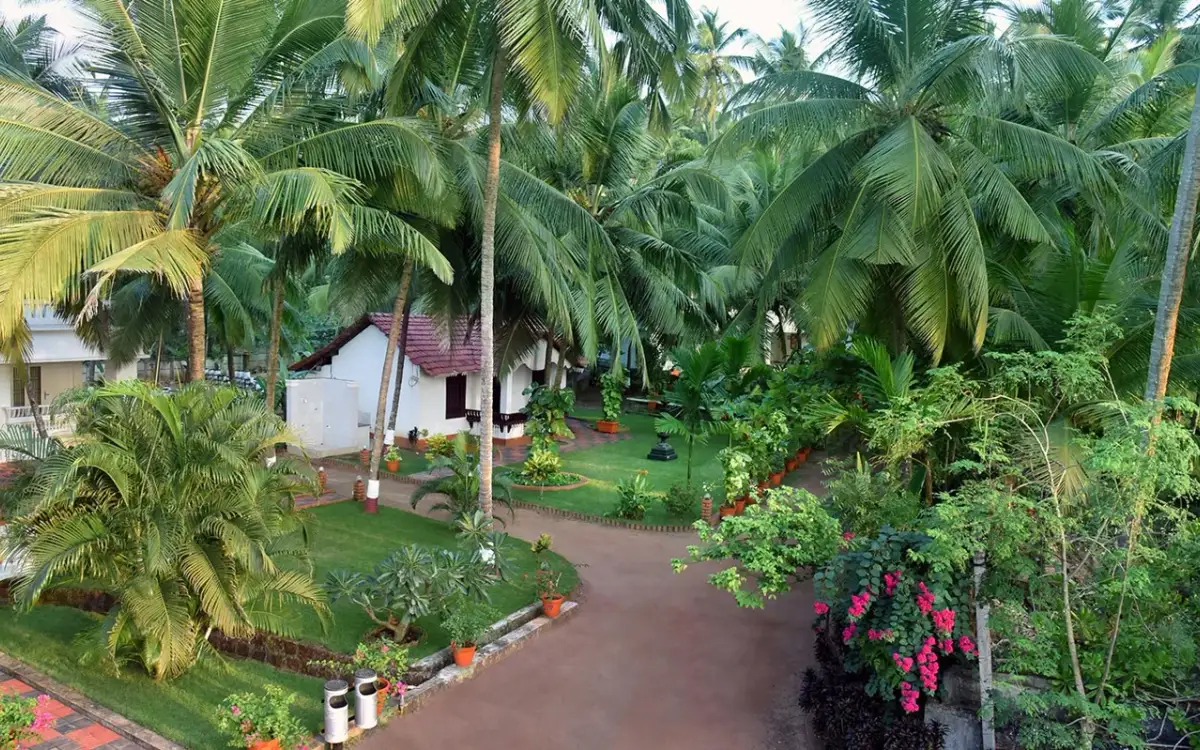
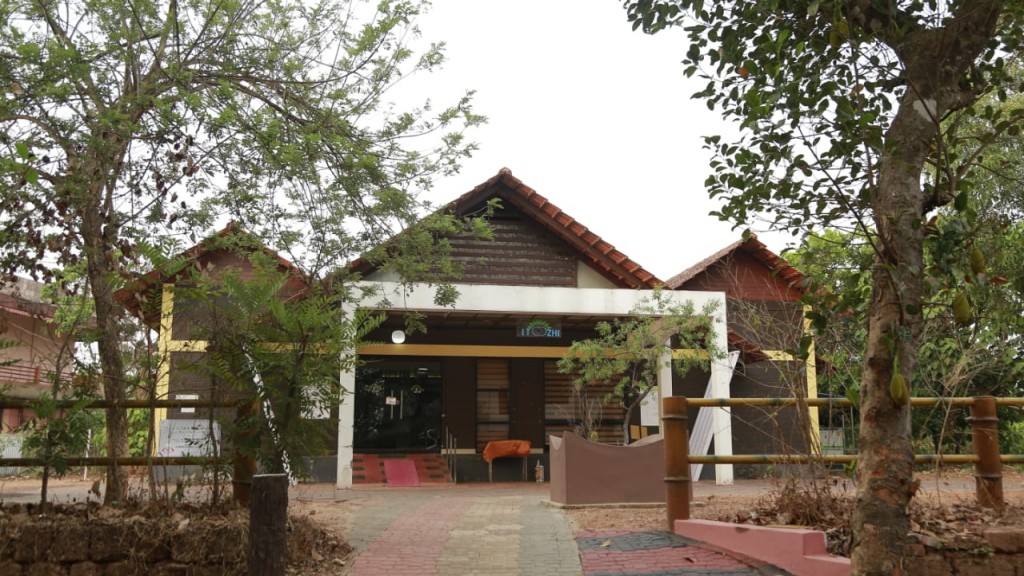
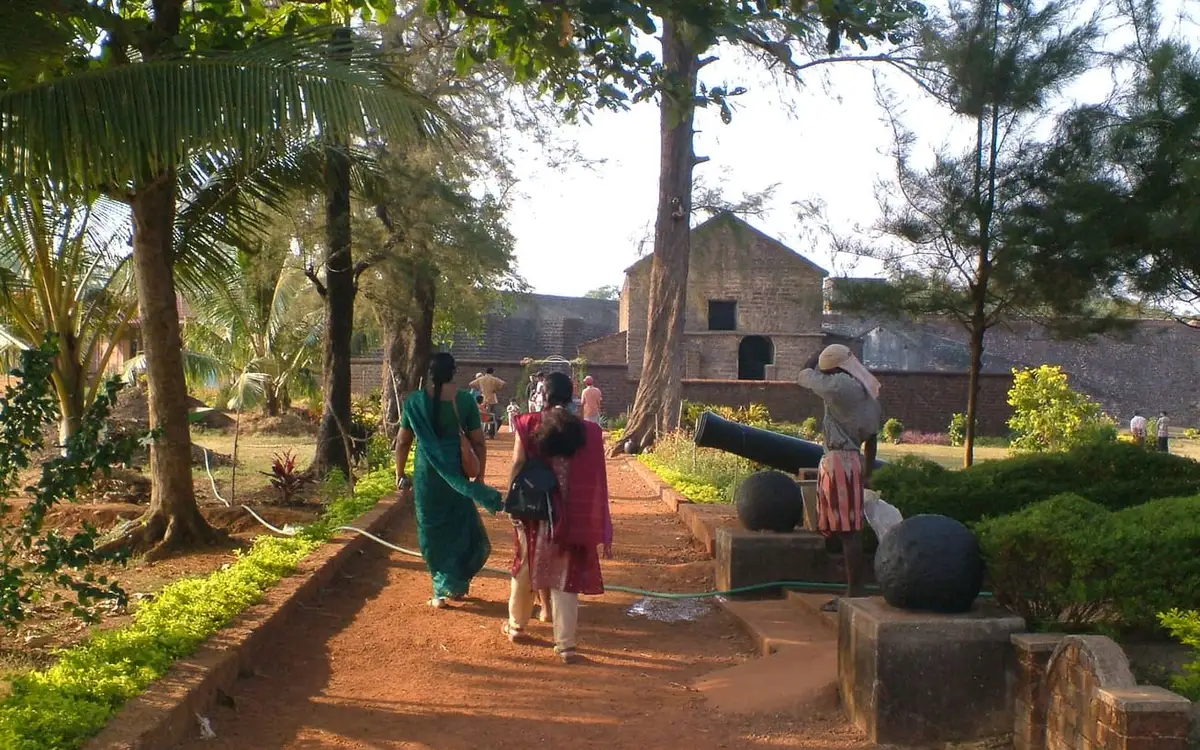
Photographs: Santhoshveliyannoor at Malayalam Wikipedia (Public domain), Kerala Tourism (© Kerala Tourism; externally hosted official photograph). Wikimedia Commons.