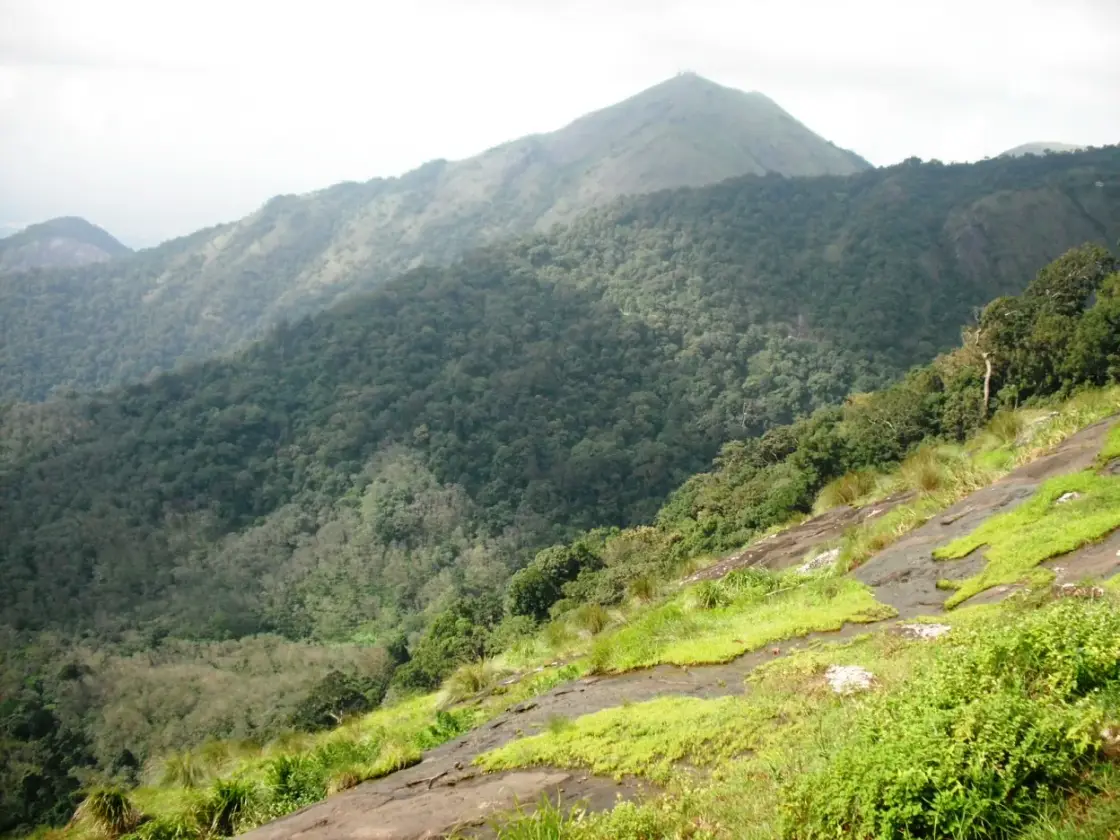
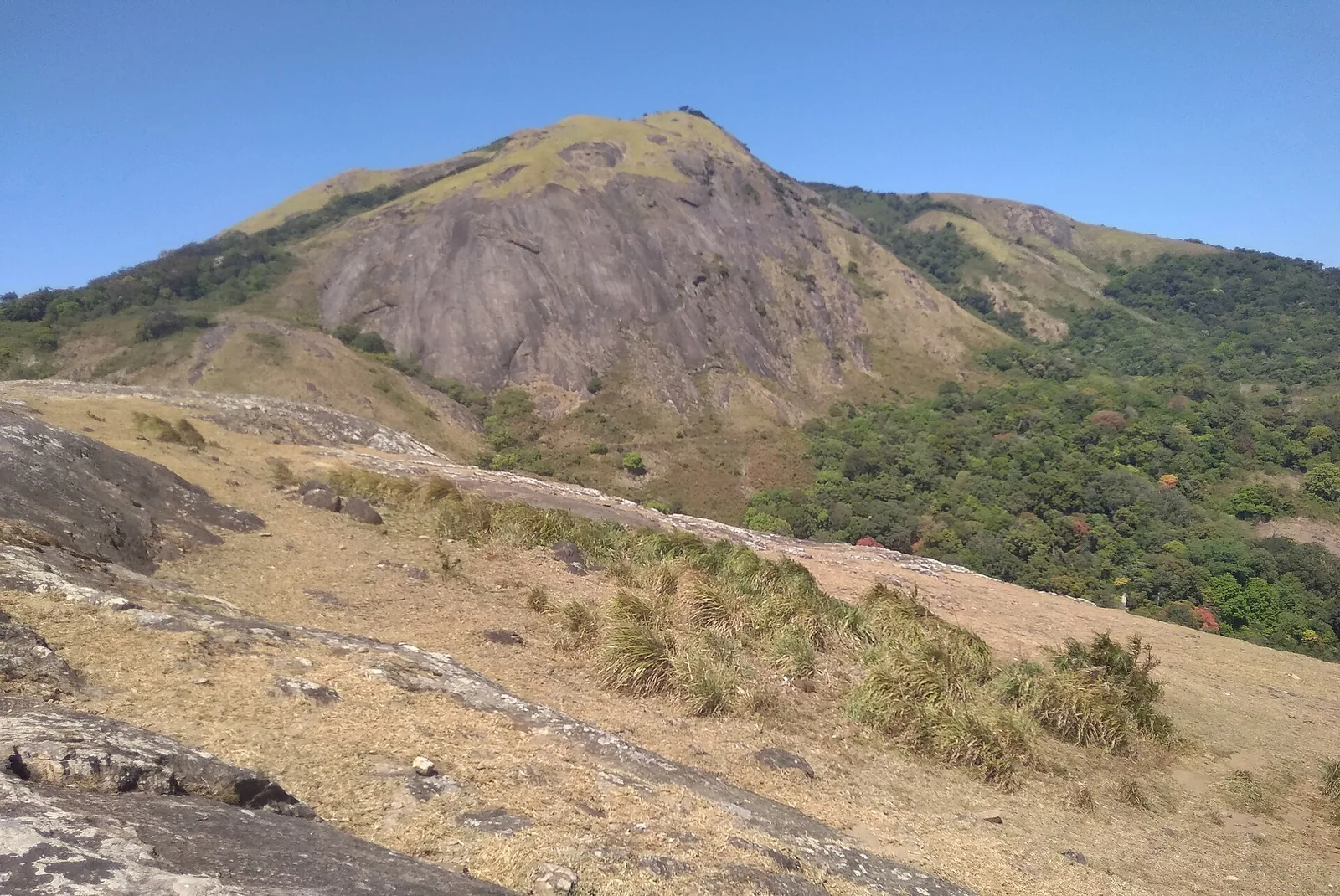
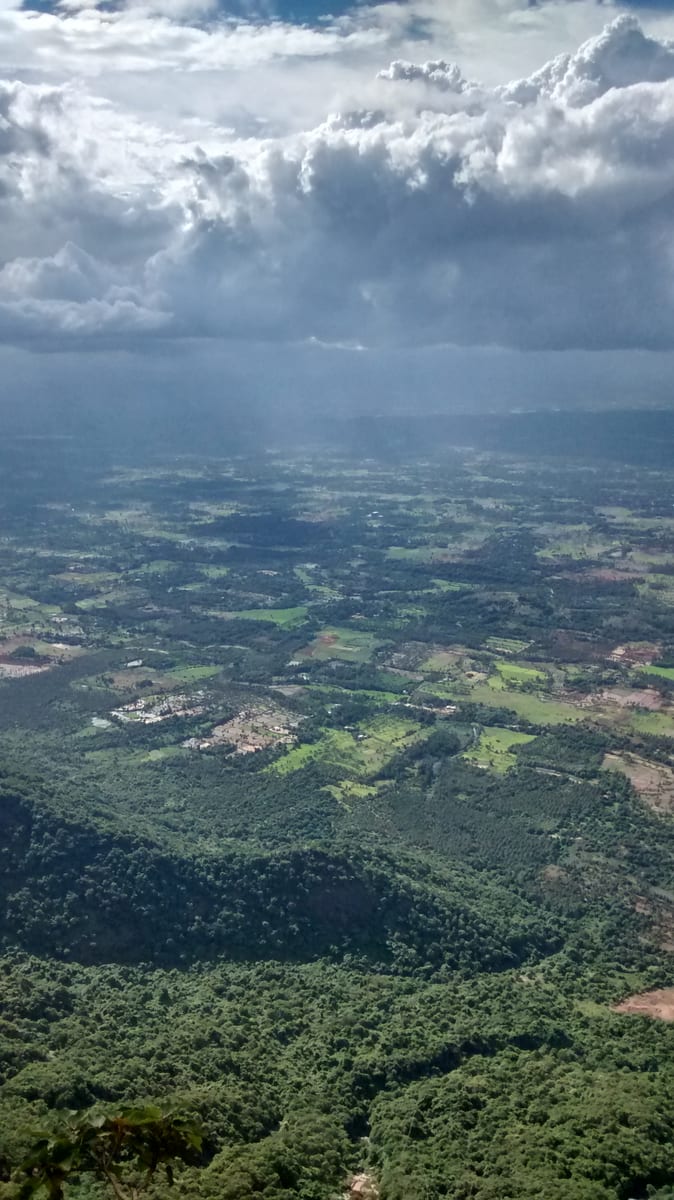
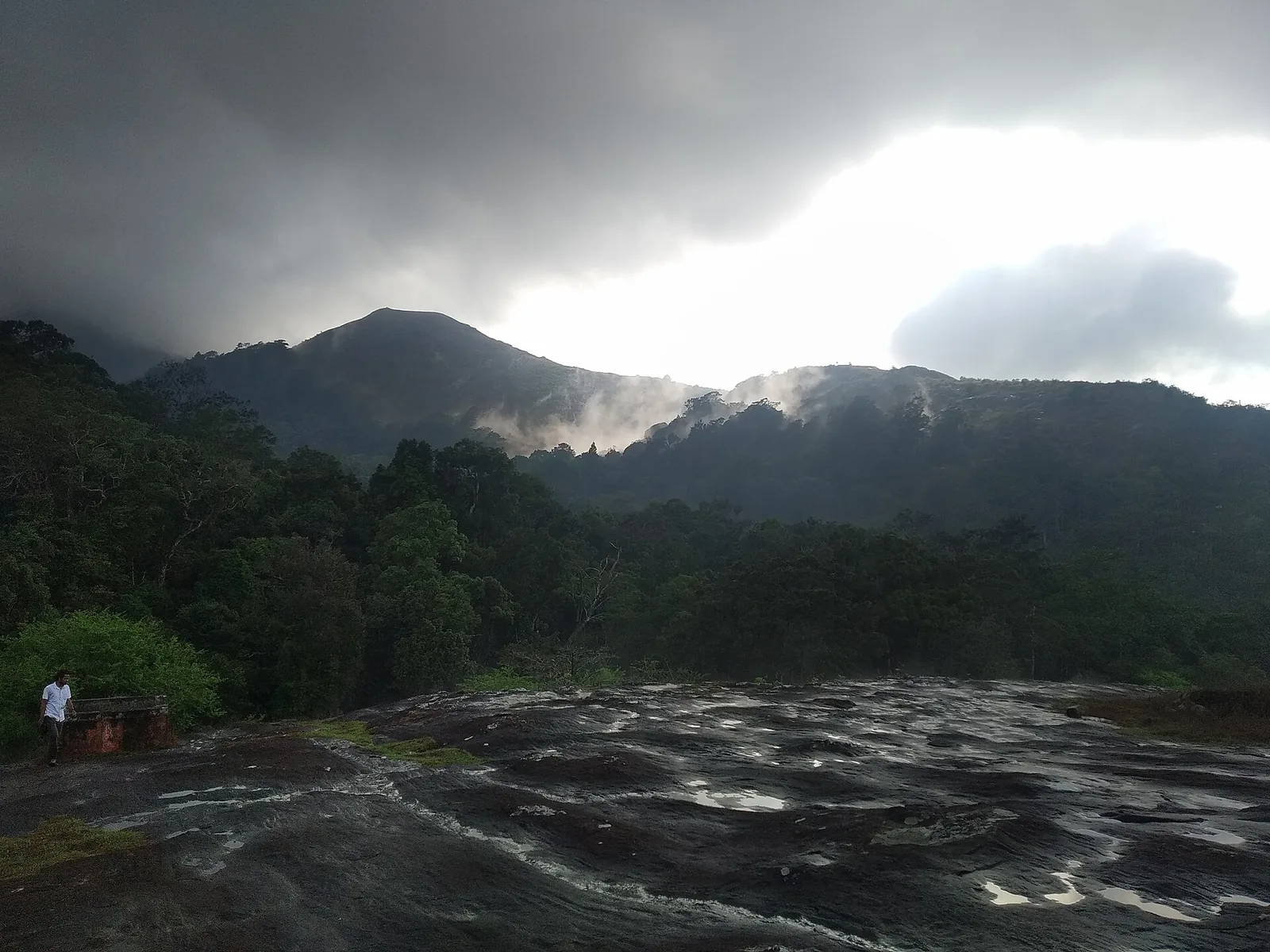
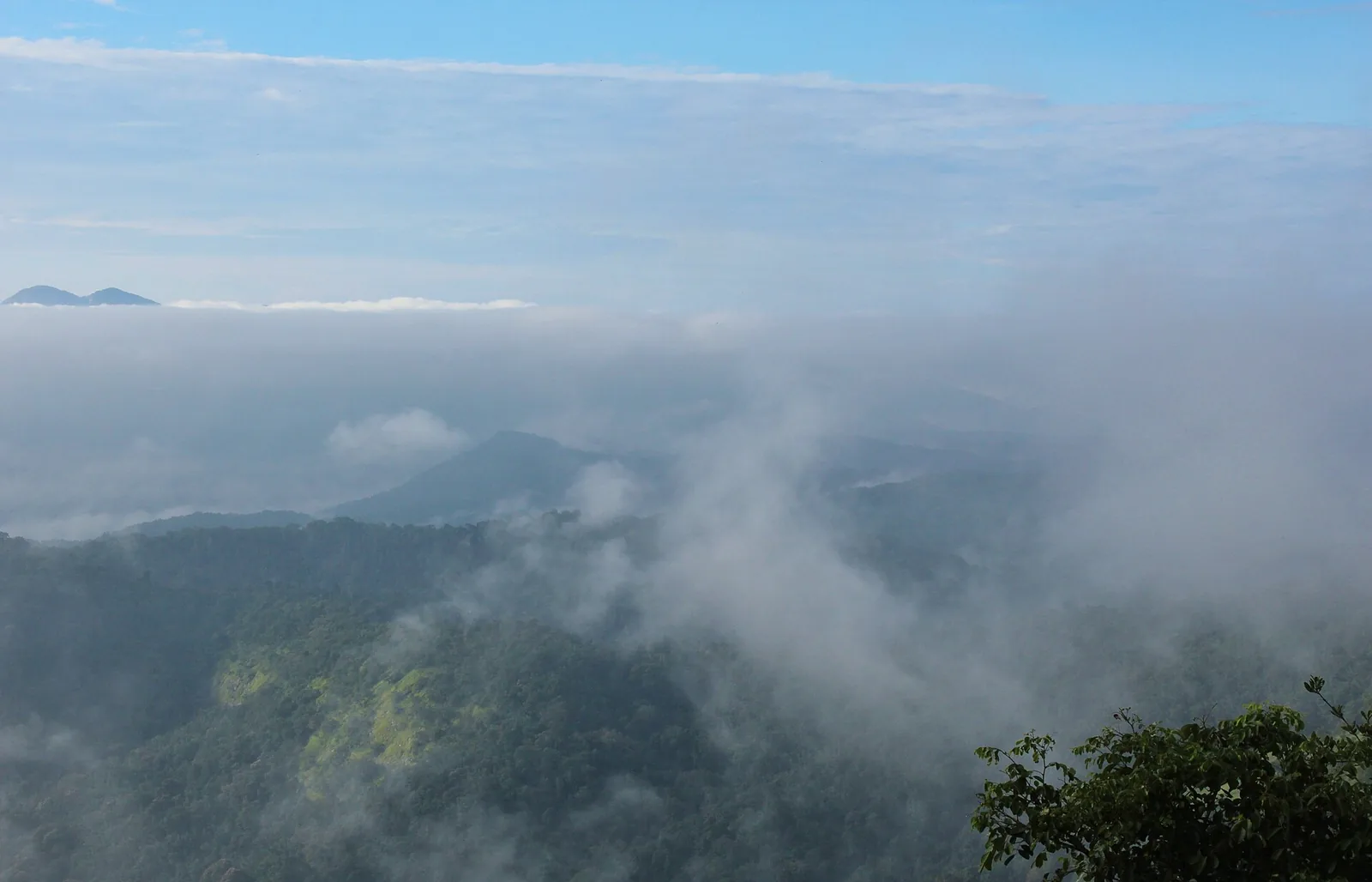
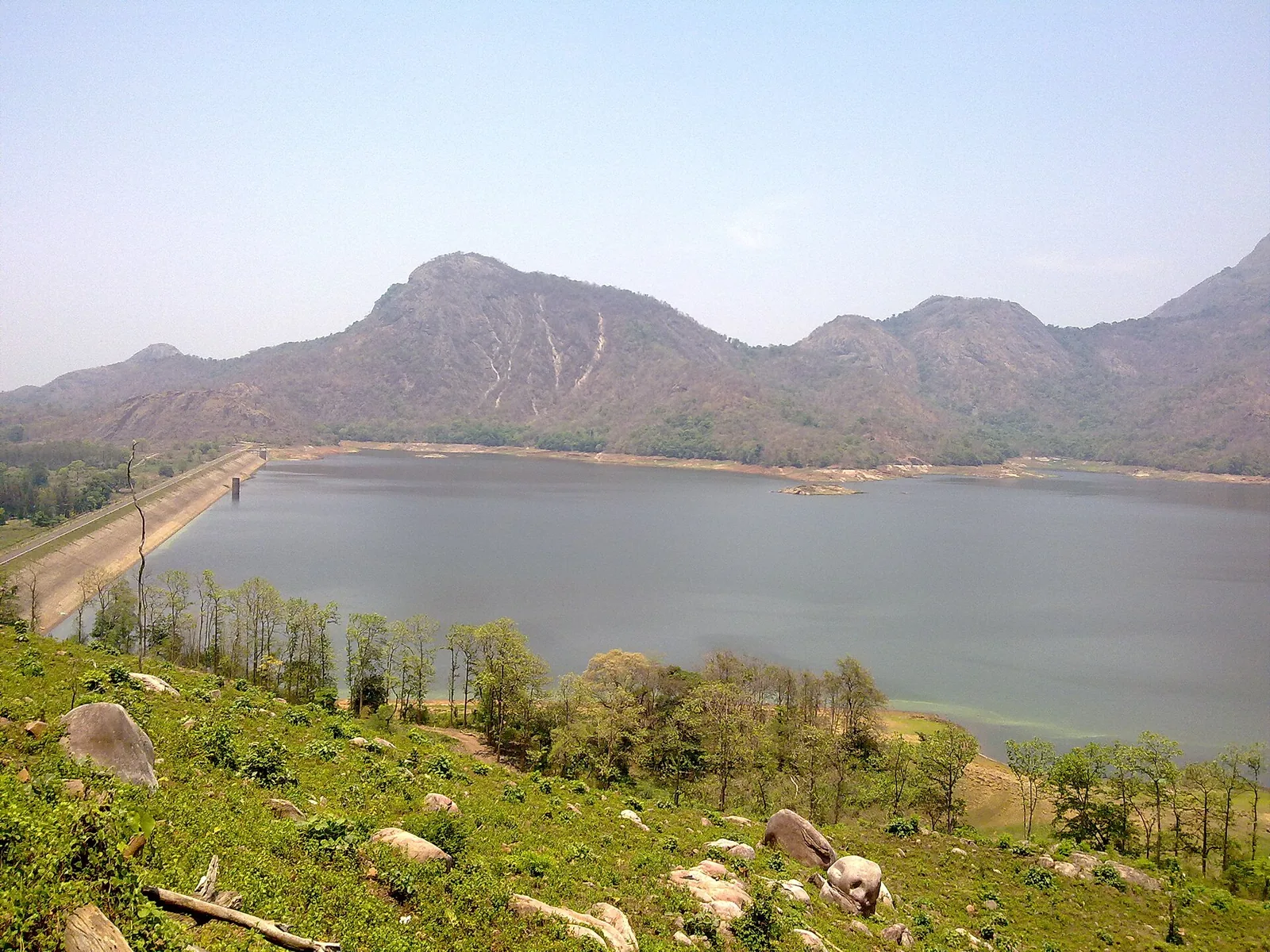
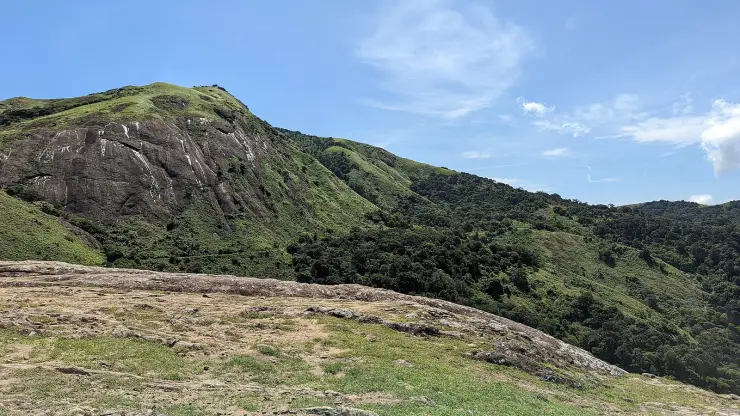
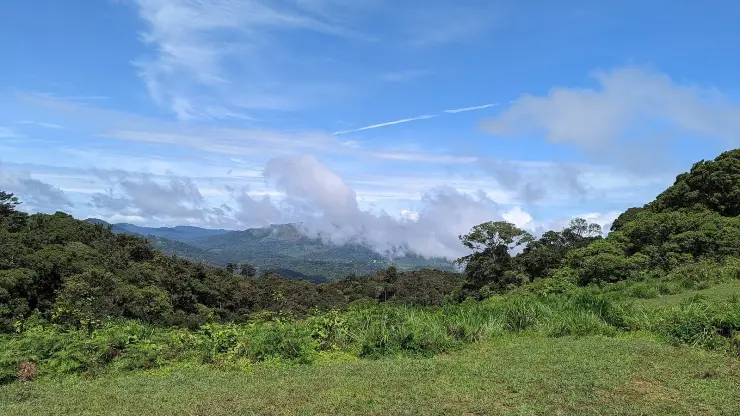
Karadipara is a shoulder of bare rock beside the Kaikatty–Nooradi road, a kilometre and a bit from the Kaikatty junction, and it is the viewpoint on this plateau that nobody stops at. What it looks out on is worth the stop: an entire fold of unbroken evergreen forest dropping away below the rock, and across it a steep conical peak standing above everything else on the ridge. There is no sign, no railing and no car park, which is precisely why it is usually empty.
The story of Karadipara
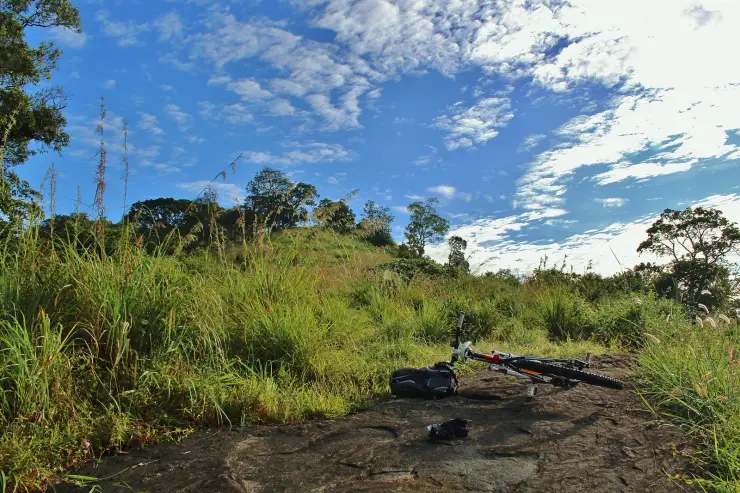
The rock itself is a tilted sheet of granite with grass and small tufted plants growing in its seams — the same bald-dome geology as Kesavan Para, which is only a few hundred metres away across the hillside, but smaller and right at the roadside. You step off the tarmac onto it. That is the whole approach.
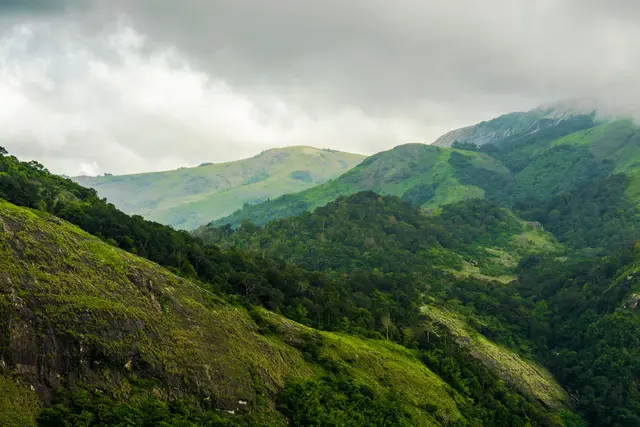
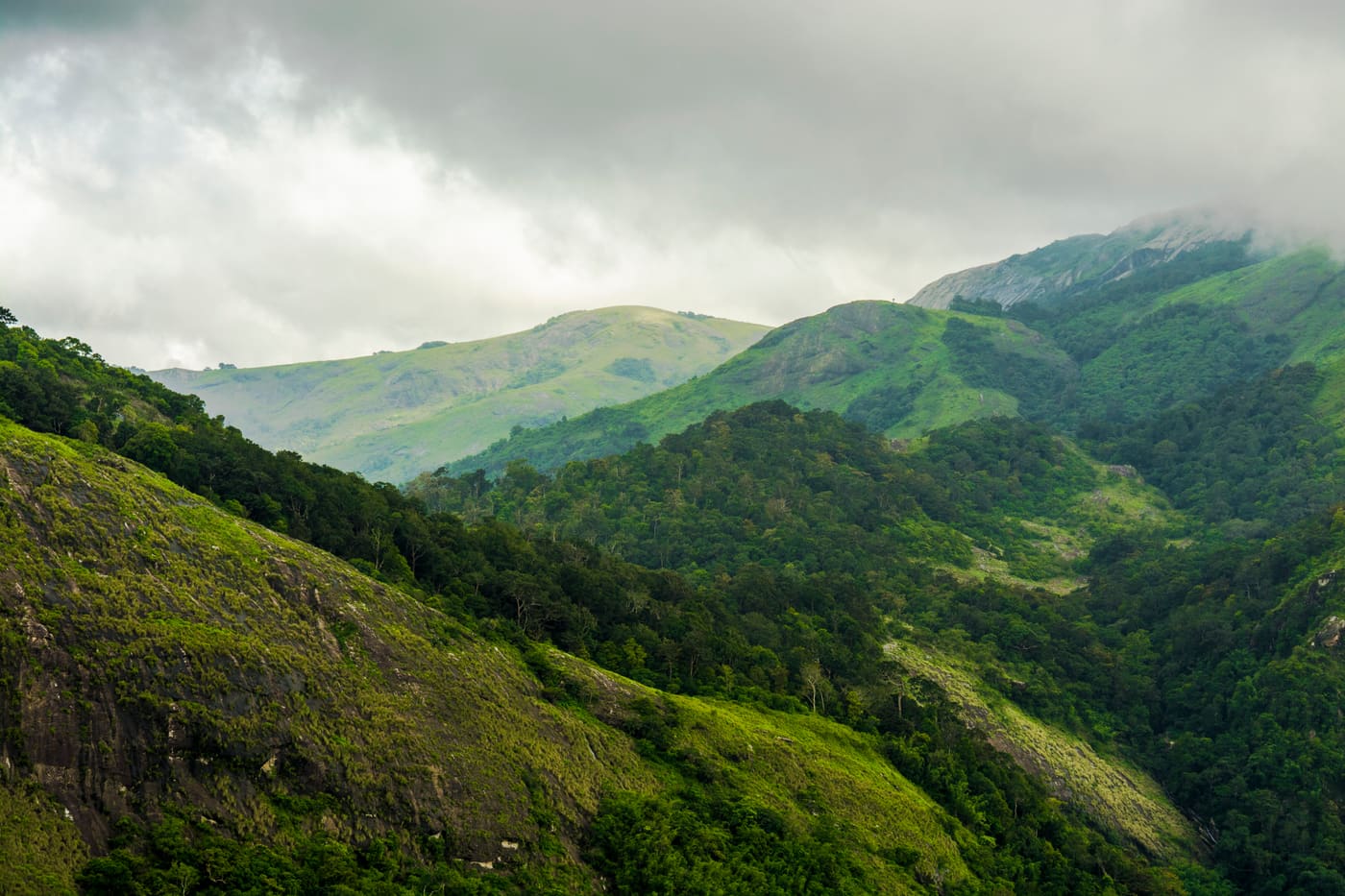
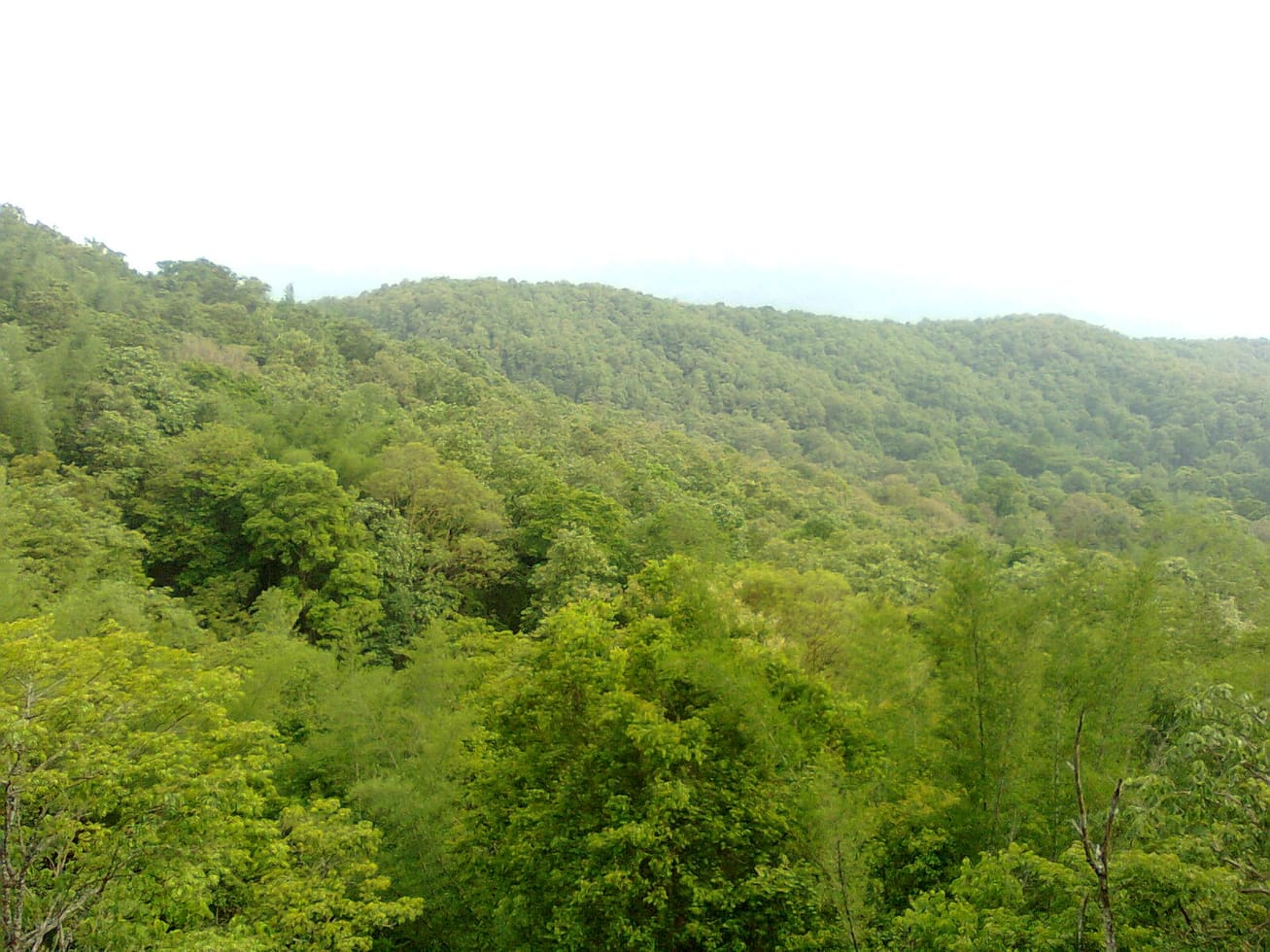
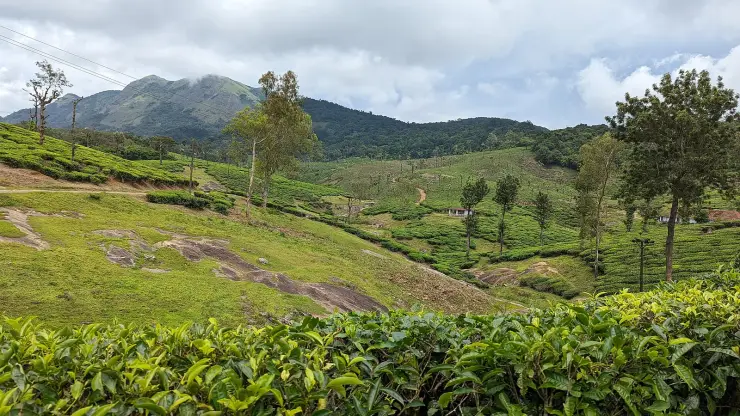
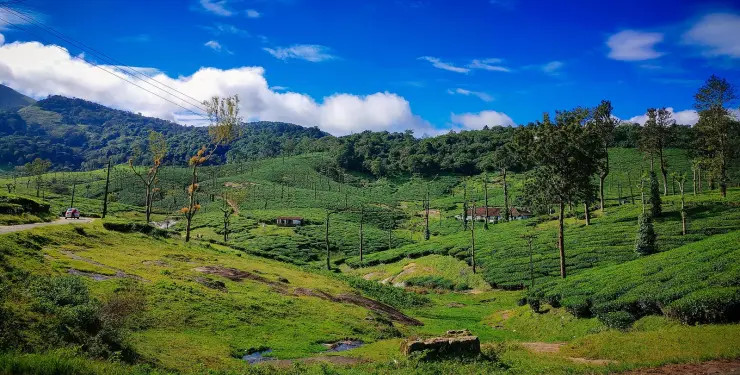
What makes the view unusual on this range is that there is no plantation in it. From most of the plateau's viewpoints you are looking down on tea, coffee or cardamom, and the landscape reads as worked. Here the fold below the rock is filled edge to edge with wet evergreen forest, unbroken, running down into a shaded valley and up the far side to the peak, with the Palakkad plain showing pale away to the west.
The forest below is part of why the ground here is protected: this shoulder falls inside the eco-sensitive zone proposed around the Parambikulam Tiger Reserve, which lies south over the ridge. What you are looking at is habitat rather than scenery, which is also why it is quiet.
Karadipara is one of the string of bare tops on the Manalaroo side of the plateau — Kesavan Para is in the same ward and reachable on the same road, and the footpaths that link the high points run through here. Doing the two together is the sensible way to spend a morning: Karadipara for the drive-up view over unbroken forest, Kesavan Para for the walk in and the bigger rock.
An eco-sensitive zone is not a park, and the distinction matters for what you are looking at. People live and farm inside one; what it restricts is the kind of development that breaks a continuous forest into fragments. The fold below this rock — canopy unbroken from the valley floor to the ridge — is precisely the sort of thing that designation exists to keep unbroken, and it is why the view has no planting in it while almost every other view on this plateau does.
It is worth knowing what a bear-rock name implies about the country. Sloth bears live in forest and scrub of this type across the Western Ghats, feeding largely on termites and ants and on fruit in season, and they are most active at night and around dawn and dusk. They are not commonly seen and they are not looking for people, but they are the animal in these hills that reacts worst to being surprised at close quarters, which is another argument for not wandering off the rock into the scrub at either end of the day.
The rock itself is the same granite as its neighbours, tilted rather than domed, with grass and small tufted plants holding on in the seams where a little soil has gathered. It is smaller than Kesavan Para and much easier to reach, and the trade is exactly what you would expect: less of an occasion, and no walk to earn it, but a view you can stop at on the way past and quite often have to yourself.
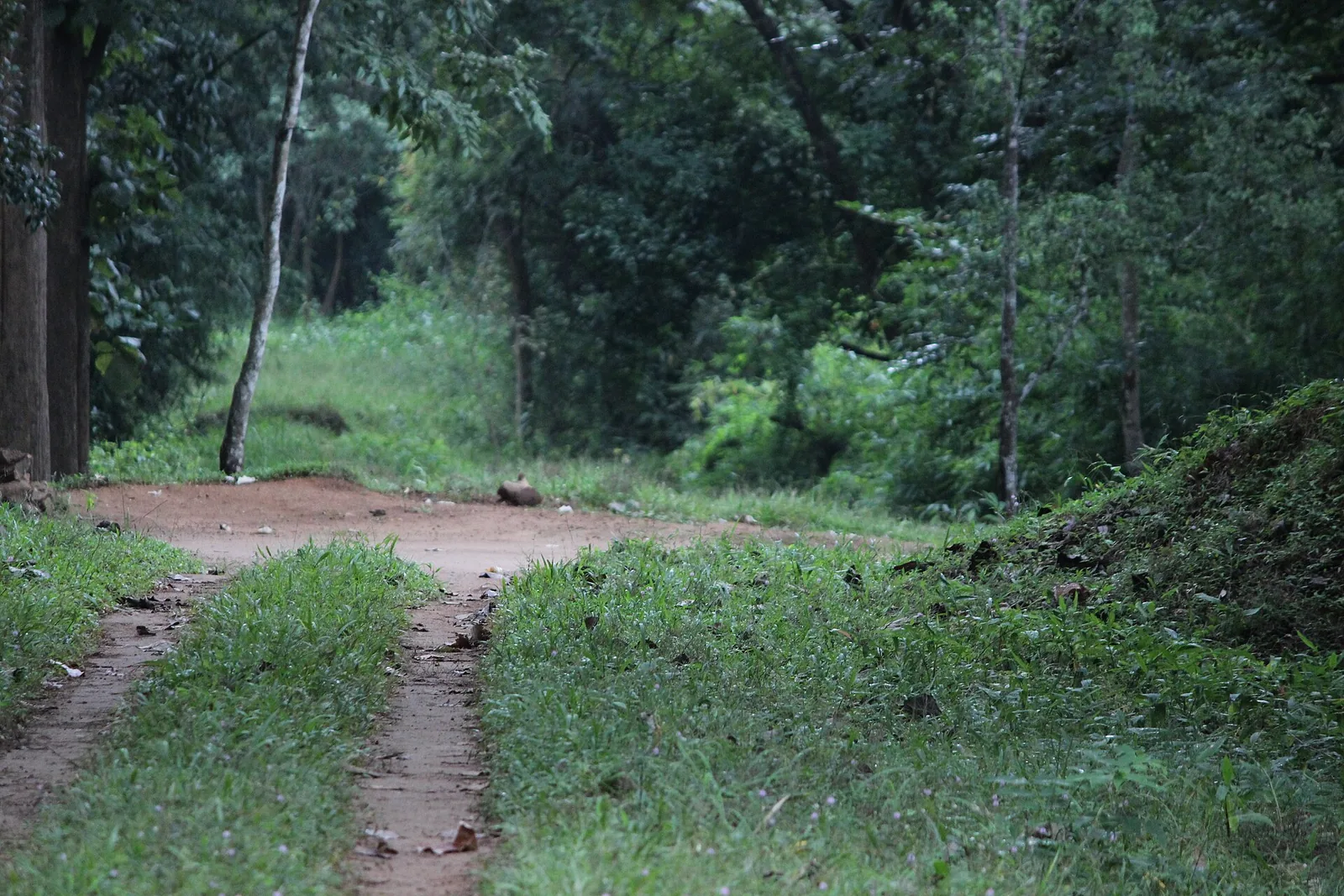
The road that gets you here is worth a sentence of its own. The Kaikatty–Nooradi road runs south-west off the main plateau road at the Kaikatty junction and works its way along the hillside through estate and forest towards Nooradi, and it is the artery for this whole side of the plateau: Karadipara, Kesavan Para and the paths up to the higher tops all hang off it. It is metalled but narrow, with rock on one side and a drop on the other in places, and there is no verge to speak of. Estate lorries use it, and they use the middle.
What you hear from the rock is as much of the attraction as what you see. With no shop, no railing and usually no other vehicle, the sound is cicadas, a great deal of wind moving through the canopy below, and — if you are there early — birds working the tops of the trees at eye level and below you, which is an angle you almost never get on a bird. Malabar giant squirrels are the animal most likely to give themselves away, by crashing about in a crown somewhere under your feet.
The season changes this view more than it changes most. Between November and February the air is dry and the far ridges come out sharp with the plain visible past them; in March and April the light goes hazy and flat; through the southwest monsoon the fold below fills with cloud and the rock is genuinely dangerous. Immediately after the rains, in October, everything below is at its greenest and there is water running in the valley — the best single fortnight of the year to stand here, and the one nobody plans for.