Places to Visit in Poovar

Estuary, beach and backwater boat-trip area near the Tamil Nadu border.

Poovar
Practical guide

Plan Poovar

Who's going?Tailor Poovar to your trip
DistrictThiruvananthapuram
RoleBackwater base
Time neededA backwater cruise with a beach stop…
Places to visit4Listed businesses6
What to expect

Highlights

  • Poovar — Backwater, estuary and beach landscape south of Kovalam.
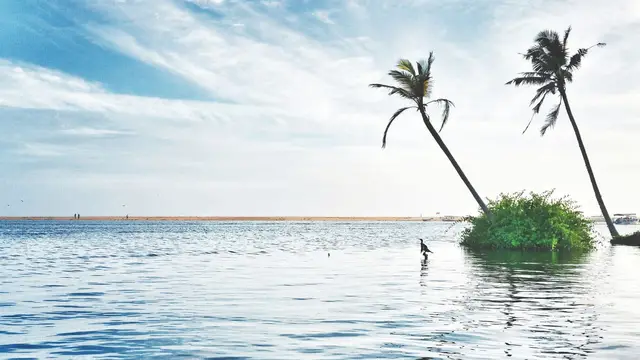
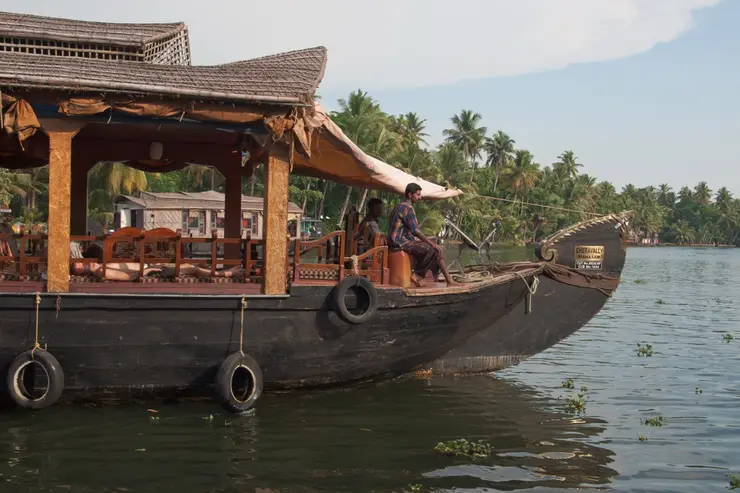
  • Poovar backwaters — Poovar’s backwater routes follow the Neyyar estuary past mangrove and a sandbar backed by the Arabian Sea. A small-boat trip is the clearest way to see how river and coast fit together.
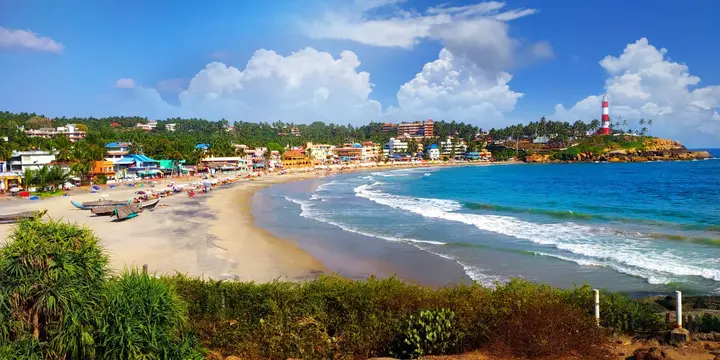
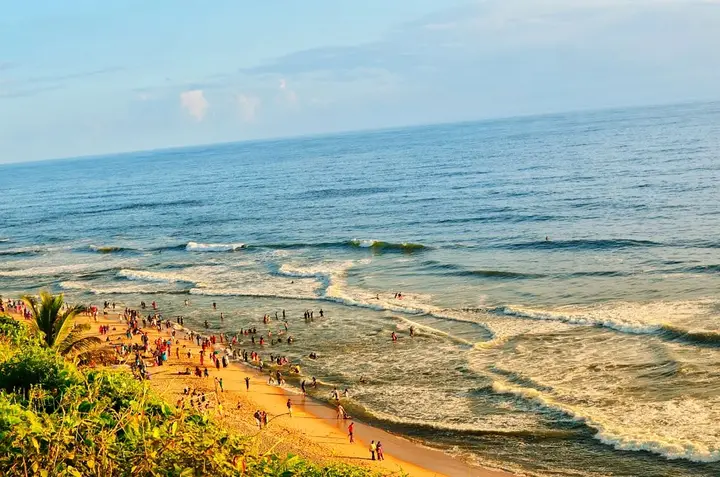
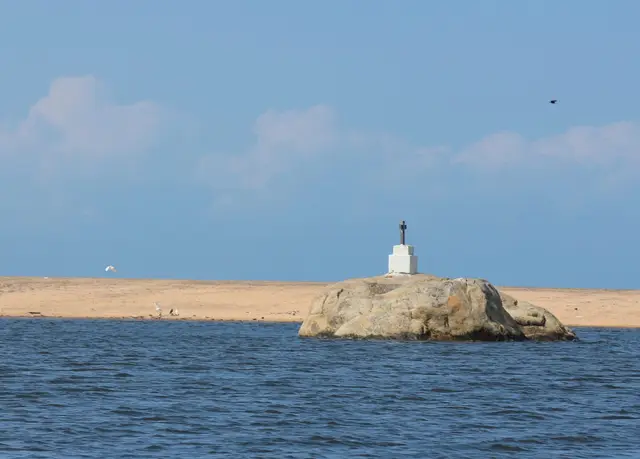
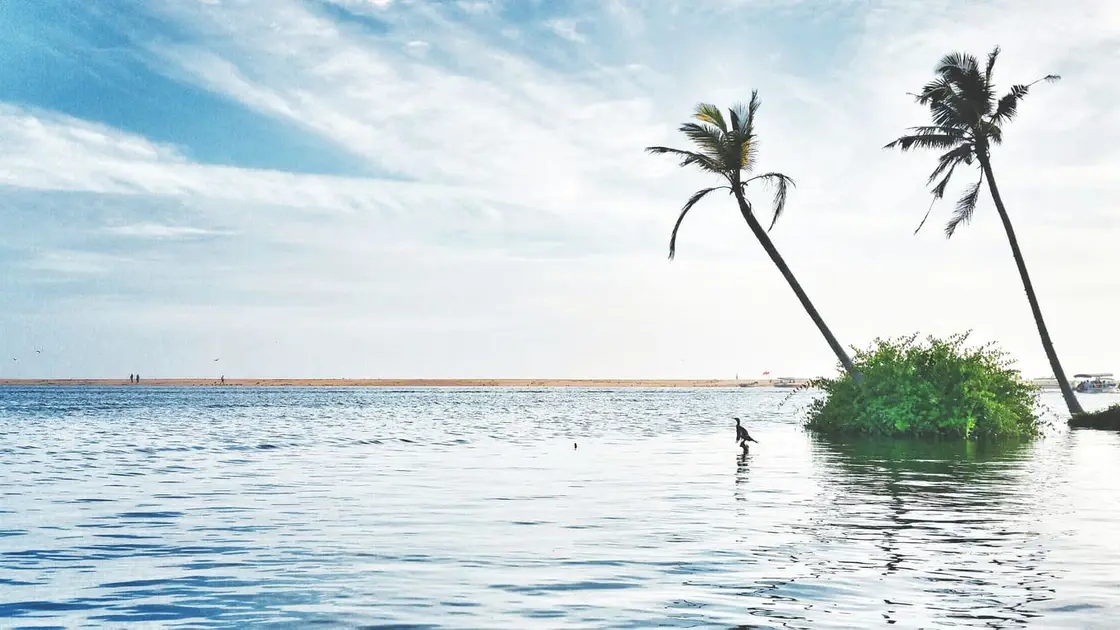
  • Poovar beach — Poovar Beach is the sandbar at the Neyyar River mouth, with backwater behind it and the Arabian Sea beyond. Its appeal is the coastal setting, reached as part of an arranged boat outing.
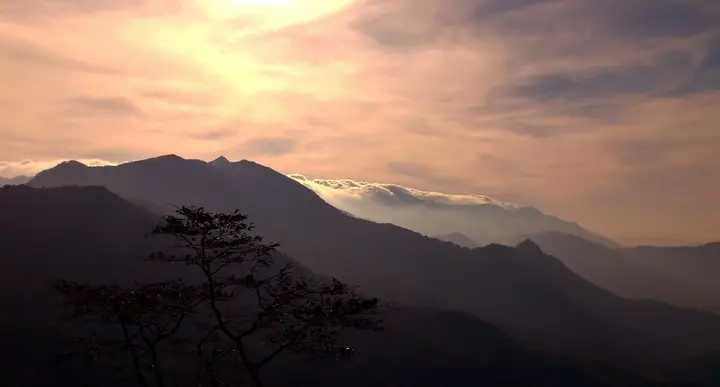
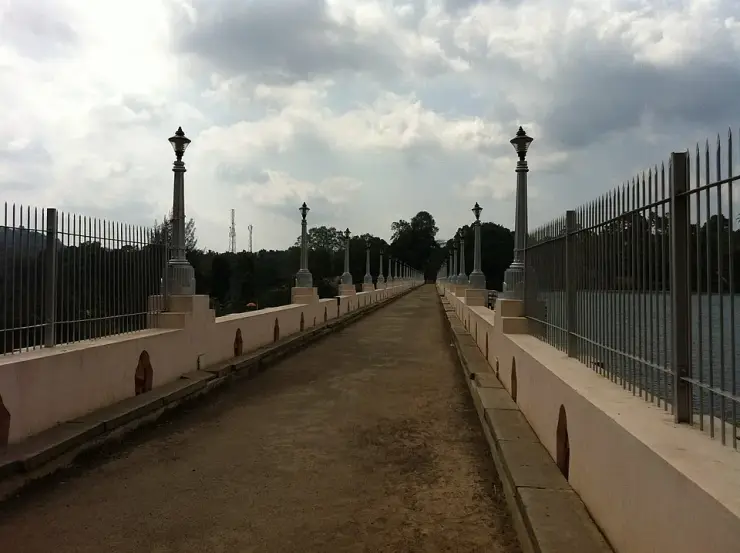
  • Neyyar Dam — Neyyar Dam opens onto a broad reservoir beneath the Agasthyamala foothills, inland from Thiruvananthapuram. Wooded hills frame the water, giving this outing a different pace from the city’s beaches.
  • Neyyar Wildlife Sanctuary — Neyyar Wildlife Sanctuary protects forest around the reservoir below Agasthyamala. A visit should centre on an authorised nature programme, with wildlife understood as habitat rather than a promised sighting.
Getting there

How to visit

  • Nearest airport: Trivandrum (TRV), in-district
  • Rail gateway: Thiruvananthapuram Central (TVC)
Timing

Best time to visit Poovar

Best from about November to February for pleasant, clear weather; the wider dry season roughly August to March is also good. Early morning cruises give the calmest water and best birdwatching, while late-afternoon cruises catch the sunset over the estuary. Avoid peak monsoon, when heavy rain can disrupt boating.

Weather in PoovarSeasonal guide

Live forecast loads in your browser.

Today at Poovar
Sunrise6:11 am
Sunset6:20 pm
Golden hour best light5:20 pm–6:20 pm
Blue hour after sunset6:20 pm–6:45 pm
Sun sets toward compass bearingW · 272°
Moon tonight🌓 First quarter · 52%
South-west monsoon. June to September is the south-west monsoon in Kerala. Expect heavy showers, mostly in bursts rather than all day — carry rain cover, allow extra time for getting around, and note that ferries and open-air sites are the first things affected.

Sun and moon are calculated for this location and shown in IST. Photography windows are the hour around sunrise and sunset; the sunset bearing is degrees clockwise from true north. Moon phase is accurate to about half a day.

The story

The story of Poovar

At the very southern tip of Thiruvananthapuram district, where the Neyyar river slips quietly into the Arabian Sea, Poovar is a coastal village of estuary, lagoon, mangrove and sandbar all folded into one small stretch of coast. It is famous for a secret golden-sand beach reachable only by boat, for slow backwater cruises through tangled mangroves, and for floating cottages that hover over still water — a gentler, quieter alternative to nearby Kovalam.

Poovar sits at one of those rare places where four landscapes meet at once — river, lagoon, sea and land. The Neyyar, having tumbled down from the Western Ghats and past Neyyattinkara, spreads out here into a broad, glassy backwater before finally breaching a thin ribbon of sand to join the Arabian Sea. The result is an estuary of extraordinary calm, its surface mirroring coconut palms and the low green wall of the mangroves that fringe the water.

The village’s signature experience is the boat cruise. Country boats and small motor craft set out from the jetties, threading narrow channels where the mangrove roots arch overhead and kingfishers dart between the branches. Guides point out the fishing hamlets along the banks, the nets drying in the sun, and the tidal creeks where the freshwater river and the salt sea trade places twice a day. For many visitors this two-hour glide through the backwaters — unhurried, shaded, and often shared with only a handful of other boats — is the whole reason to come.

The cruise almost always ends at Poovar’s celebrated golden beach. This is not a beach you can walk to: it is a long sandbar that separates the lagoon from the open ocean, and the only way across is by water. Boats nose up onto the estuary side and passengers step out onto fine, warm sand that genuinely glows amber in low light, with the calm backwater lapping one shore and the surf of the Arabian Sea pounding the other, just metres away.

Poovar remains, at heart, a working fishing village. Away from the resorts the rhythm of the place is set by the tides and the day’s catch, and much of the community still lives from the sea or, increasingly, from tourism. This blend gives Poovar its particular character — luxurious floating cottages and jacuzzi villas on one bank, weathered fishing canoes and net-menders on the other, the two coexisting along the same quiet waterway.

The mangroves are more than scenery. They are a nursery for fish and crab and a magnet for birds, which makes Poovar a favourite of birdwatchers and photographers. Cruises drift past herons stalking the shallows, cormorants drying their wings on stakes, and Brahminy kites wheeling overhead, and the relative quiet of the backwater — fewer boats than Kerala’s busier lagoons — means the wildlife is easy to watch undisturbed.

Because it lies about 18 kilometres beyond Kovalam and close to the Tamil Nadu border, Poovar is often folded into a southern-Kerala coastal itinerary. Yet it manages to feel a world apart: where Kovalam is lively and crowded, Poovar is hushed, low-rise and green, a place people come to slow down, take a boat, and watch a river become a sea.

Legend & myth

Poovar’s very name carries a legend. Tradition holds that it comes from the words Poo-Aar (also rendered as Poovin Aaru) — the river of flowers. The story goes that the Neyyar’s banks were once lined with flowering trees whose blossoms fell into the water and drifted downstream in such numbers that the river seemed to carry a carpet of petals to the sea. This flower-strewn river, so the tradition says, gave the village its name.

The naming is tied by local lore to Marthanda Varma, the 18th-century king who forged the kingdom of Travancore. As legend recounts, while fleeing his rivals the king reached this coast in the flowering season and was so struck by the sight of red blossoms floating down the Neyyar like a scarlet carpet that he christened the river Poo-Aar. Older tradition adds that the settlement was earlier known as Pokkumoosapuram, after a local merchant.

A companion tradition holds that Poovar sheltered Marthanda Varma during his years as a fugitive. As the story is told, during the internal revolts of Travancore and his flight from the powerful Ettuveetil Pillamar — the Lords of the Eight Houses — the young king was given refuge in the home of a Poovar merchant, remembered as Pokku Moosa Maraikkar. These accounts are cherished local tradition woven around a real historical king, and are best enjoyed as legend rather than documented fact.

We had been presenting those last two as separate traditions, and on rereading them that is the wrong way round: they are one story in two halves, and they only make sense in sequence. If the village was already called Pokkumoosapuram after the merchant Pokku Moosa Maraikkar, and if that merchant is the man who hid the fugitive prince, then the flower-river name is not an original naming at all. It is a renaming — the guest, once king, replacing his host's name on the place with a poetic one of his own. Told that way the two legends stop competing and become a single narrative with a beginning and an end, which is both more satisfying and rather more pointed about how places get renamed. The historical frame is at least real: Marthanda Varma reigned from 1729 to 1758 and his struggle with the Ettuveetil Pillamar is documented history, whatever the status of his stay here.

The port history needs a firmer hand than it usually gets. Descriptions commonly link Poovar to trade in the era of the Chola dynasty, and that phrasing — some accounts say — does a lot of quiet work. There is no primary record we can find placing a working port here in any specific dynasty's period, and a dating that cannot be sourced is not worth passing along. What is reasonable to say is narrower: this is a sheltered natural estuary on the spice coast, estuaries of this kind were used, and local tradition consistently remembers timber, sandalwood, ivory and spices moving through. That is an oral tradition about a plausible activity, not a documented chronology, and the honest version says so.

Two smaller things repeated everywhere about Poovar are worth setting straight. First, Poovar is not an island. The phrase Poovar Island is a resort brand, and it has been echoed so widely that visitors arrive expecting to reach the village by boat; the village is on the mainland and you drive to it. The only water crossing here is out to the sandbar. Second, the distance to Kovalam. This page said barely 15 kilometres and our backwaters page said 30 — a disagreement of a factor of two between two pages of the same site. The figure in general circulation is about 18 km, or roughly thirty to forty-five minutes by road, and that is what we now use throughout.

More about Poovar

History

Long before it was a resort destination, Poovar was a port. Its sheltered estuary made it a natural harbour on the spice coast, and historians describe it as an old trading centre dealing in timber, sandalwood, ivory and spices carried down the Neyyar from the interior and shipped out along the coast.

Local histories trace maritime activity here back a very long way, and the estuary is said to have functioned as a working port. Attempts to pin that to a named dynasty should be treated with caution — we have found no primary record fixing a period, and the Chola dating sometimes quoted is not one we can source. Its position near the southern extremity of the Malabar coast placed it on the sea lanes that connected the pepper-and-spice hinterland of the south-western coast to wider maritime networks.

By the 18th century Poovar lay within the orbit of the rising kingdom of Travancore, consolidated by Marthanda Varma. The village’s trade in timber and forest produce continued, and traditional accounts describe it as having commercial links reaching to international markets during this period — a small but useful port on Travancore’s southern flank.

The wider coast here shares in the long history of European engagement with Kerala’s spice trade, from the Portuguese arrival on the Malabar coast onwards. Poovar itself, however, is remembered less for grand monuments than for its quiet continuity as an estuary settlement of merchants and, above all, fishing families — a livelihood that still shapes the village today.

In recent decades Poovar’s fortunes have shifted from cargo to tourism. The same estuary, mangroves and golden sandbar that once served trade now draw travellers, and land-and-water resorts, floating cottages and backwater cruises have made this once little-known fishing village one of southern Kerala’s distinctive coastal getaways.

That shift is more recent and less complete than the resort brochures imply. Poovar was a fishing and farming village well into the late twentieth century, and its emergence as a destination follows the growth of Kovalam up the coast rather than preceding it. The fishing has not gone: canoes still work off the bar and nets still dry on the estuary bank, a few hundred metres from jacuzzi villas. It is a village doing two jobs at once, and the second one is only a few decades old.

Why visit

The golden beach is genuinely special: a sandbar you can reach only by boat, with the calm lagoon on one side and the open Arabian Sea crashing on the other — a rare place to stand between a river and an ocean at once.

The backwater cruise through the mangroves is the classic Poovar experience — a slow, shaded glide past fishing hamlets, tidal creeks and birdlife, usually far less crowded than Kerala’s busier lagoons.

It is a birdwatcher’s and photographer’s delight, with kingfishers, herons, cormorants, egrets and Brahminy kites regularly seen along the mangrove-lined channels.

The floating cottages and land-and-water resorts let you sleep almost on the water, an atmospheric and unusual stay just south of Kovalam.

Poovar offers the calm that Kovalam has lost — low-rise, green and quiet — making it ideal for honeymooners, families and anyone wanting to slow right down.

Its location near the Tamil Nadu border and about 18 kilometres from Kovalam makes it an easy, rewarding add-on to any southern-Kerala coastal trip.
Before you go

Poovar — at a glance

HoursPoovar village and its waterfront are open-access at any time. The golden beach itself, however, is reached only by boat, so in practice access follows cruise operating hours; boating generally runs through the day from the morning onwards.

Entry: There is no entry fee for the village or waterfront. Reaching the golden beach requires a paid boat cruise; costs vary by boat type, duration, group size and season, with shared rides cheaper per head and private boats dearer.

Dress code: No formal dress code. Light, comfortable clothing, sun protection and a hat are sensible for the open boat and beach. As this is a traditional fishing village, modest dress is appreciated away from the resorts.

Festivals: Poovar is a fishing village rather than a temple-festival hub, so its rhythms follow the sea and the wider Kerala calendar; Onam (around August–September) and Christmas–New Year are busy tourist periods. Confirm any specific local church or temple festival dates locally.

Photography: A superb spot for photography — the estuary, mangroves, birdlife and the golden beach at sunrise or sunset are all rewarding. Carry a zoom lens for birds and protect gear from spray and sun on the open boat.

Getting here

How to reach Poovar

  • ✈︎ By air The nearest airport is Trivandrum International Airport (TRV), about 30 km away (roughly 1 to 1.5 hours by road, traffic depending). Taxis and resort transfers are readily available.
  • 🚆︎ By train The nearest major railhead is Thiruvananthapuram Central, about 30 km away; smaller stations at Neyyattinkara and Balaramapuram are somewhat closer. From any of these, continue to Poovar by taxi or bus.
  • 🚗︎ By road Poovar is reached by road via NH66 and the coastal route south of Kovalam, near the Kerala–Tamil Nadu border. It is roughly 15 to 18 km from Kovalam and about 30 km from Thiruvananthapuram city, with taxis and autos widely available.
  • 🚌︎ By bus State and private buses run along the Thiruvananthapuram–Kovalam–southern-coast corridor; take a bus towards Poovar or the Kanyakumari/Tamil Nadu-border direction and alight near Poovar, then a short auto ride to the jetties. For comfort and convenience, most visitors prefer a taxi.
Getting back

Check your return bus or ferry with the operator before setting out. Leave time to reach the stop or jetty after your visit, and arrange a return vehicle in advance for a remote outing.

Ask at the jetty or the stand for the time of the last service back, not the next one. If you miss it, an auto or a taxi is the fallback — agree the fare before you get in.

Do

Things to do in Poovar

  • Take a backwater cruise through the mangroves to the golden beach
  • Relax on the boat-access-only golden sandbar between lagoon and sea
  • Watch birds — kingfishers, herons, egrets, cormorants and Brahminy kites
  • Stay in a floating cottage or land-and-water resort over the backwaters
  • See the confluence where the Neyyar river, lagoon and Arabian Sea meet
  • Watch village fishing life and net-mending along the banks
  • Combine a visit with nearby Kovalam’s beaches, about 15 km north
Getting around Poovar

If you need step-free access, contact the site before travelling. Ask about a level entrance, steps along the route, the nearest drop-off point, seating and accessible toilets.

Practical things near Poovar
Bus stopsBus stop 87 m · 1 min walkMapped Jul 2023DirectionsFuelFuel station 565 m · 7 min walkMapped Jun 2020DirectionsHospitalAnithara Hospital 203 m · 2 min walkMapped Nov 2019DirectionsClinicDr. Balachandran's Homeo Clinic 664 m · 8 min walkMapped Jul 2020DirectionsPolice stationPolice Station,Poovar 233 m · 3 min walkMapped Jun 2022DirectionsFire stationFair and rescue Station, Poovar 1.1 km · 13 min walkMapped Aug 2021DirectionsATMATM 287 m · 3 min walkMapped Jul 2023DirectionsBankCooperative Bank 1.3 km · 16 min walkMapped Aug 2021DirectionsWater & snacksLulu Shopping Supermarket131 m · 2 min walkMapped Aug 2023DirectionsGroceries & bakeryAayisha Bakery 126 m · 2 min walkMapped Jan 2020DirectionsPost officePost Office, Poovar 570 m · 7 min walkMapped Aug 2021DirectionsSomewhere to prayJumah Mosque Poovar 248 m · 3 min walkMapped Nov 2019Directions
What the cash actually costs
  • Withdrawing from a bank that is not your own is free for a set number of times a month, then costs up to ₹23 plus GST — about ₹27 a withdrawal. This is not one of the RBI’s six metro centres, so the allowance here is the higher one: at least five free other-bank withdrawals a month, and at least five at your own bank.
  • That free allowance belongs to Indian bank accounts. On a card issued abroad your own bank’s international withdrawal and exchange charges apply instead. If the machine offers to bill you in your home currency, choose rupees — the conversion rate on that offer is set by the machine, not by your bank.
  • Choose a well-lit ATM, preferably at a bank branch. Shield your PIN, avoid help from strangers and use your bank’s support number if a withdrawal fails or the machine retains your card.

Charge cap and free-transaction limits: Reserve Bank of India, in force since 1 May 2025.

These services are listed within about 1.2 km of Poovar. Walking distances follow mapped routes; access and opening hours can change. Other services may be closer but are not included here.

In the district

Where Poovar sits in Thiruvananthapuram district

District HQThiruvananthapuram
LandscapeState capital — coast & low hills

Thiruvananthapuram district is known for: The capital, Kovalam beaches and the Padmanabhaswamy Temple.

Kovalam BeachPadmanabhaswamy TempleNapier Museum
Stay · eat · do · rent · see · shop

Places in Poovar

Every verified place in Poovar — filter by what you’re after.

1 place to eat in Poovar

Ripples Restaurant Estuary Poovar — Multi-cuisine restaurant in Poovar
Top pick Verified
Multi-cuisine restaurant · Poovar
Ripples Restaurant Estuary Poovar

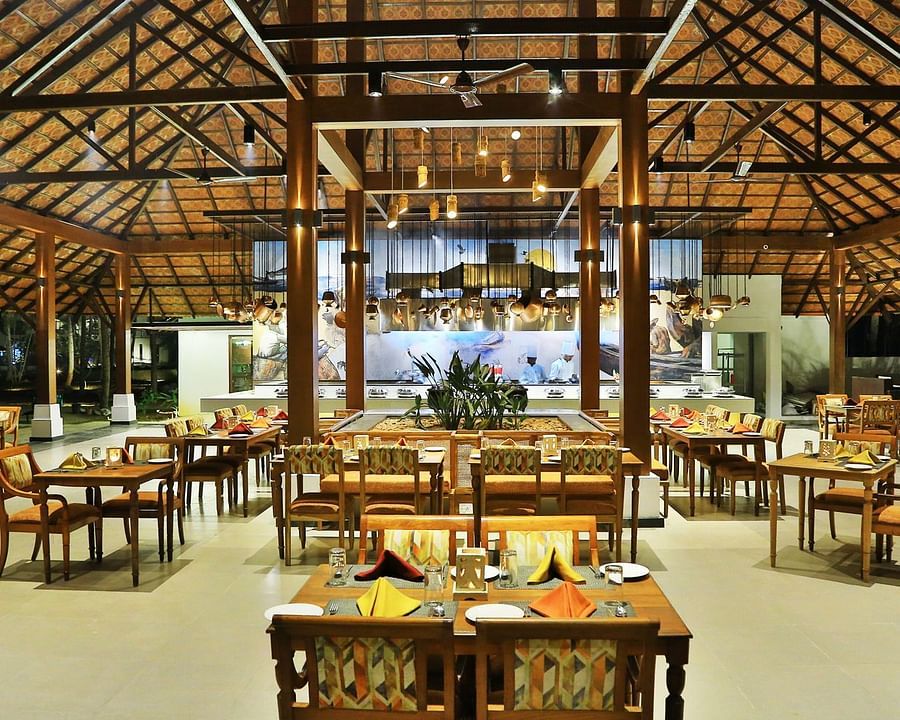
Multi-cuisine restaurant at Estuary Sarovar Premiere for Poovar backwater and beach visitors. Poovar, eat, Multi-cuisine restaurant.

Directions Commission-freeView details

Book with the place itself. India’s cyber-crime coordination centre warned in April 2025 that convincing copies of hotel and pilgrimage booking sites are being pushed through sponsored search and social ads, taking payment for rooms the property never hears about. Every listing here links to the business’s own contact details and its own Google or Bing profile — we take no commission and sit in nobody’s payment path. If a booking page reached you through an ad, check the address bar against the property’s own site before you pay. Fraud can be reported on cybercrime.gov.in or on 1930.

Official eco & forest programmes

Forest stays, camping and treks around Poovar

Official/public-sector eco offerings mapped to this town base. Always confirm current availability, tariff, permits and reporting time before travelling.

Neyyar, Poovar
wildlifesafariboating

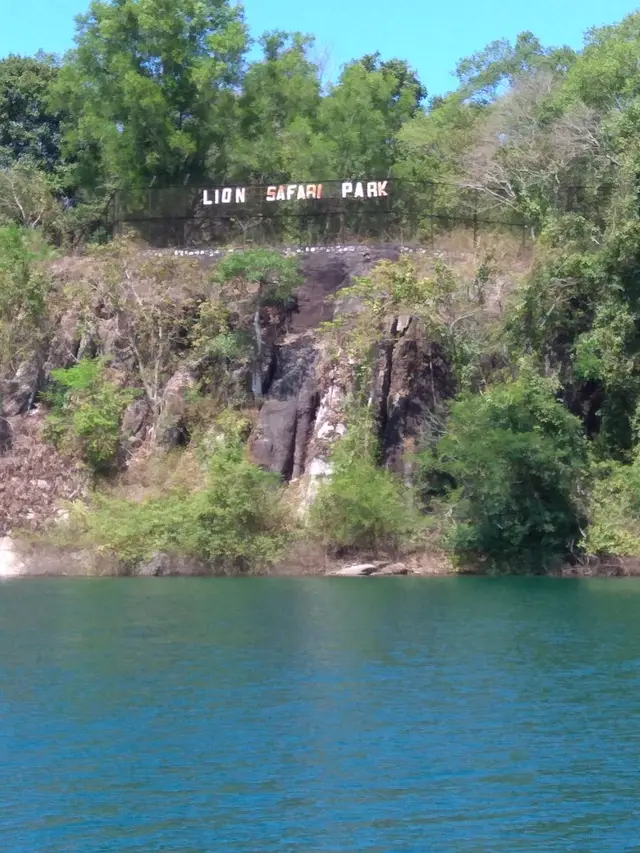
Neyyar wildlife and lion safari visit

Reservoir, forest and wildlife experience around Neyyar Dam and sanctuary, commonly paired with south Kerala trips.

Neyyar
Official source →
For hotels, homestays and local businesses

Get listed in Poovar for free

Roampedia is commission-free. Travellers discover your business, book directly and contact you through official details. Basic listings are free, while Gold and Platinum package upgrades can be requested from the owner dashboard after approval.

List your business — free
Read before you go

Poovar guides, stories & itineraries

Around Poovar

The town itself and the places around it — each written about one subject rather than as a general guide.

Kerala-wide guides & itineraries

Route-level itineraries and practical guides for the rest of the state.

See all 129 Thiruvananthapuram guides & stories →

Map

Where things are in Poovar

FAQ

Poovar travel FAQs

Can you walk to Poovar’s golden beach, or do you need a boat?

The famous golden beach is a sandbar separating the lagoon from the sea and is reached only by boat — it is not accessible on foot. Nearly every visitor gets there as part of a backwater cruise, which typically stops at the beach so you can spend time on the sand before returning.

How much does a Poovar backwater cruise cost and how long does it take?

Cruises are typically around two to two-and-a-half hours and usually include the mangroves, fishing villages, the estuary and a stop at the golden beach. Prices vary widely by boat type, duration and season — shared rides are cheaper per person, while private boats cost more (prices change and heavy discounting is common, so rates come from the operator or your resort).

What is the best time of year to visit Poovar?

The most comfortable months are roughly November to February, when the weather is pleasant and the skies are clear; the broader dry, cooler window from around August to March is also good. The monsoon months bring heavy rain, which can affect boating.

How far is Poovar from Kovalam and Thiruvananthapuram?

Poovar lies about 18 kilometres south of Kovalam (around a 30- to 45-minute drive) and about 30 kilometres from Thiruvananthapuram city and its airport. It sits close to the Kerala–Tamil Nadu border at the southern edge of the district.

What wildlife can you see on the cruise?

The mangroves and estuary are rich in birdlife — kingfishers, herons, egrets, cormorants and Brahminy kites are commonly seen, among others. The channels are also a nursery for fish and crab, and you will pass working fishing hamlets along the banks.

Is Poovar an island?

No. Poovar is a mainland village on the Neyyar estuary and you reach it by road like anywhere else. Poovar Island is a resort brand rather than a piece of geography, and it has been repeated widely enough that visitors turn up expecting a boat crossing to reach the village itself. The only crossing involved is the short hop out to the golden sandbar at the river mouth, which genuinely has no road to it. If a booking uses the island wording, check whether it means a resort on the estuary bank or one on a genuine islet within it — several sit on small parcels of land in the lagoon, which is where the name came from in the first place.

What is happening to the river that feeds the estuary?

It is under real pressure from sand mining. The lower Neyyar — roughly the thirty kilometres from Aruvippuram down to Poovar — has been mined intensively, and published work on the basin records bed lowering, bank erosion, falling groundwater and broad degradation of the river system. In 2015 the Kerala government banned sand mining outright on six rivers, the Neyyar among them, and illegal extraction continued regardless. This matters at Poovar because the sediment that builds the sandbar at the river mouth travels down the same channel, so the beach the boats land on sits at the bottom of a reach that is being actively depleted.

Is Poovar suitable for a relaxed or family holiday?

Yes. Poovar is quiet, green and low-key, with floating cottages and land-and-water resorts, gentle backwater cruises and a secluded beach — it suits honeymooners, families and anyone wanting a calmer alternative to busier beach towns. Note that swimming on the open-sea side of the sandbar can be rough, so take local advice.

What are the best places to visit in Poovar?

Top places to visit in Poovar include Poovar backwaters, Poovar beach, Neyyar Dam, Neyyar Wildlife Sanctuary — each has a full guide with how to reach it and what to see nearby on this page.

How do I reach Poovar?

The nearest airport to Poovar is Trivandrum (TRV), in-district. The rail gateway is Thiruvananthapuram Central (TVC).

Photographs: DrGSINGH (CC BY-SA 4.0), Gausanchennai (CC BY-SA 4.0), Maskaravivek (CC BY-SA 3.0), JVN5871 (CC BY-SA 4.0), Rahulbs4u (CC BY-SA 4.0). Wikimedia Commons.

Image credits