A small adjustment can hold an entire class: the angle of a wrist, the direction of a glance or the timing of a step. At Kalamandalam, the visitor sees performance being built through repetition. The finished costume is only one part of an art whose daily work is often quieter and more exacting.
The story of Kerala Kalamandalam
The kalari is a teaching space. Here the relation between guru and student is visible in demonstration, correction and practice. A person watching for the first time need not understand a full dramatic text to recognise concentration: several learners repeat an action, a teacher notices a difference and the sequence begins again. A respectful visit gives that process room to continue.
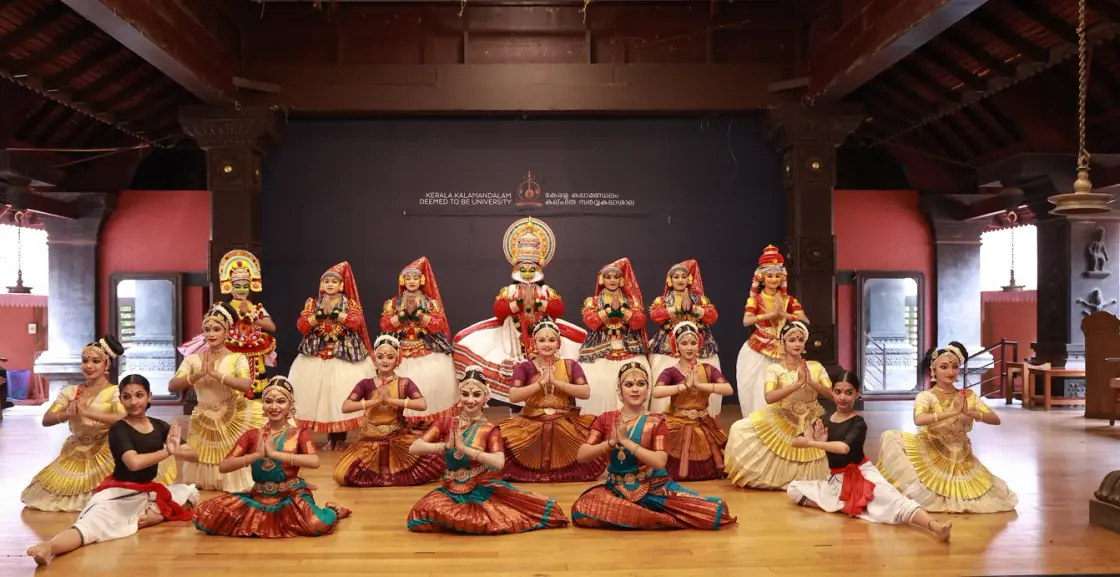
Kalamandalam brings together different disciplines, including Kathakali performance and music, Kutiyattam, dance and percussion. The variety matters because a staged work is not made by a single visible performer. Voice, rhythm, gesture, costume and make-up involve separate forms of training that meet in performance. A guided visit can explain those connections without pretending that every department will be demonstrating for visitors that morning.
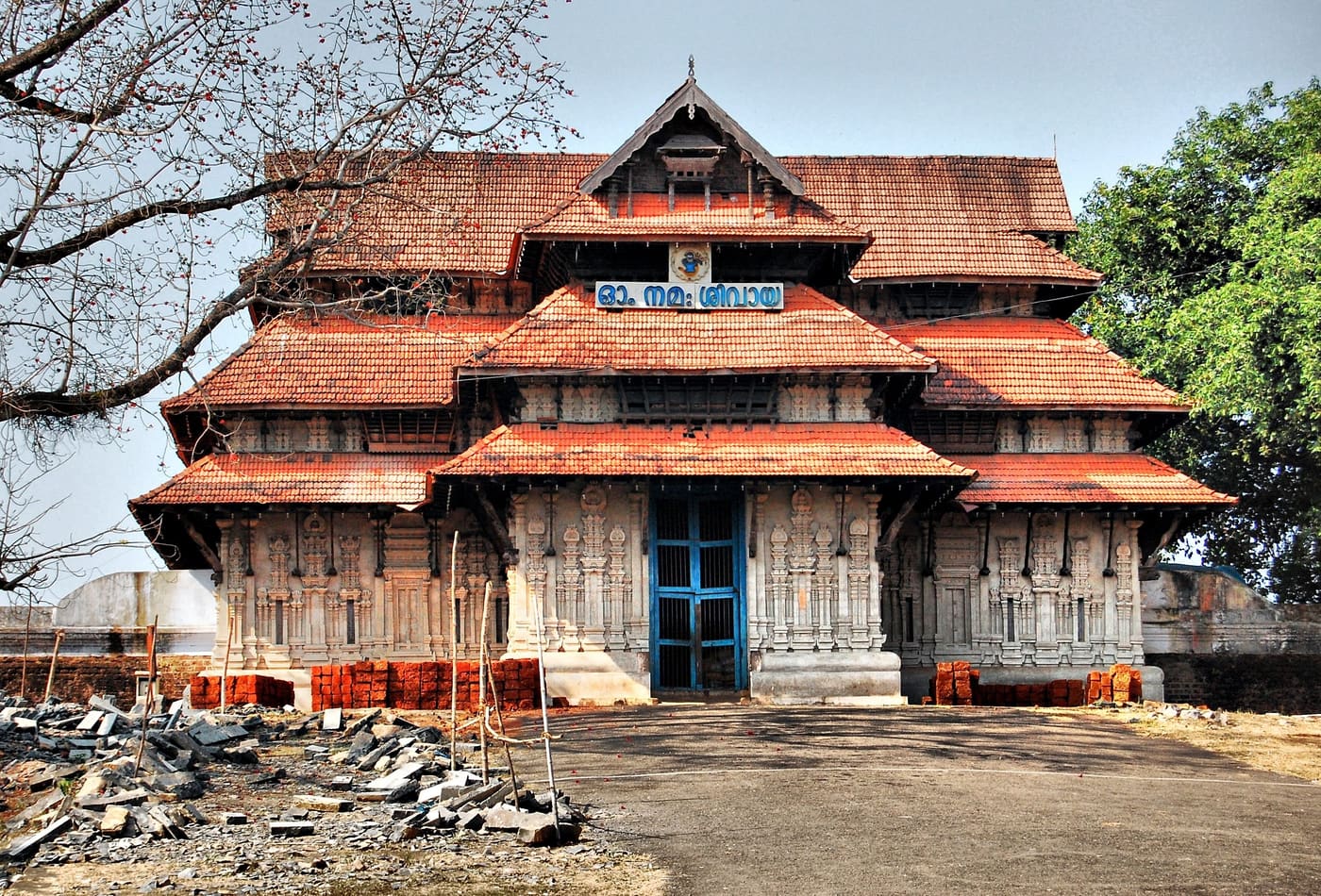
The Koothambalam gives architecture a role in the experience. Its layered tiled roof rises above timber sides and a dark raised base; the interior belongs to performance rather than a conventional classroom. Kalamandalam identifies the building with the principles of the Natyashastra and records its inauguration in 1977. It is a purpose-built theatre at the institution, not evidence that the campus itself is an ancient temple complex.
The institution credits architect D. Appukuttan Nair and master craftsman Elavally Narayanan Achari with the Koothambalam. Its account points to the 108 karanas represented in black granite and to a mural associated with the Pashupatham story. These details give a visitor something precise to ask the guide about, beyond admiring the roof from outside.
Kathakali training begins well before the elaborate costume. Kalamandalam’s account describes a progression from physical exercises and individual movement work to cholliyattam, where acting, dance, singing and percussion come together without the finished make-up. The hand-gesture vocabulary draws on the twenty-four basic gestures of Hastalakshanadeepika. This gives a visitor a more precise way to watch a kalari: follow one hand shape through a phrase, then notice how the eyes and body complete its meaning. A familiar gesture can belong to a different dramatic situation when its movement and context change. The classroom therefore rewards attention to a short sequence, even when the visitor does not know the play being rehearsed.
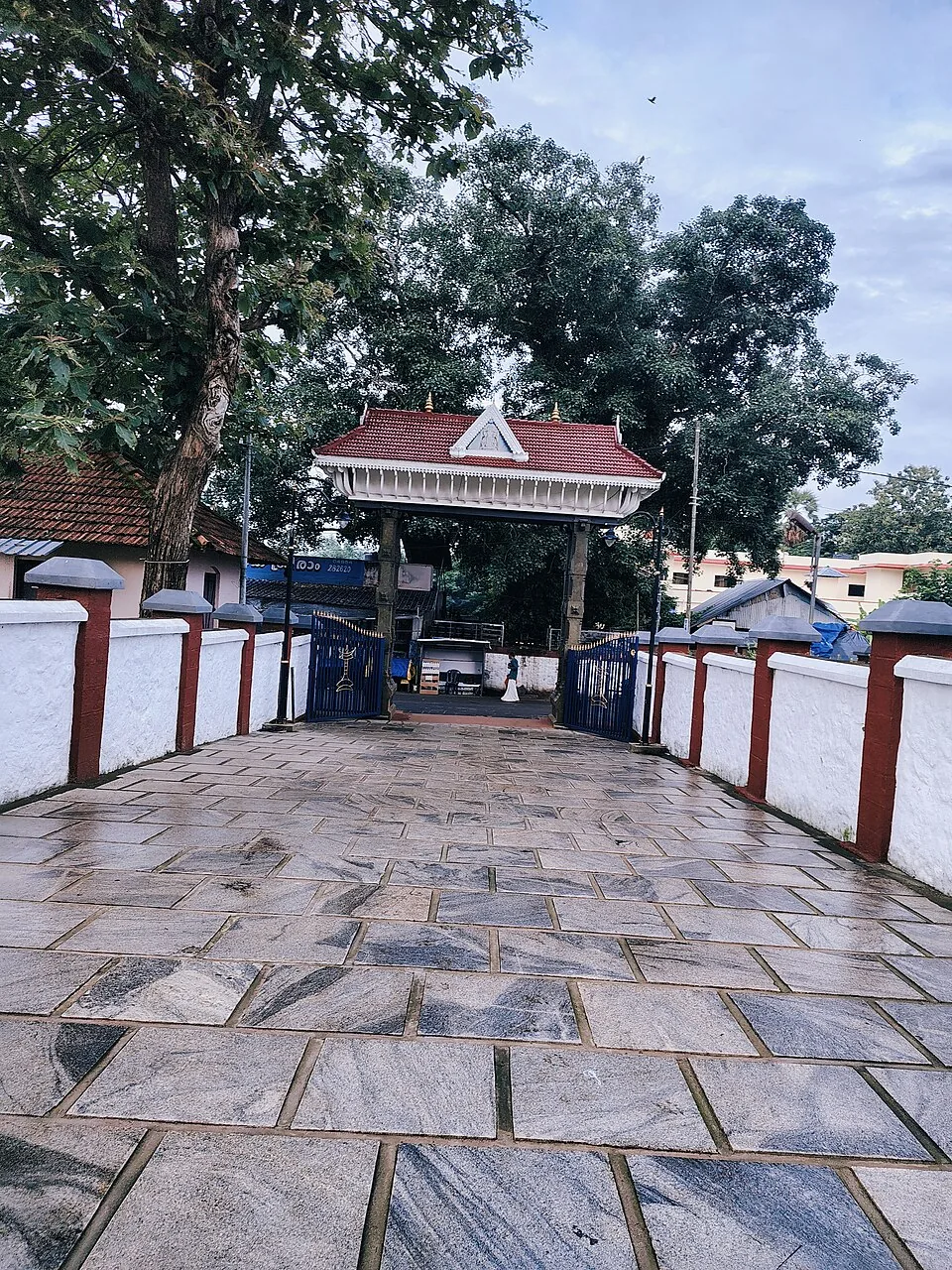
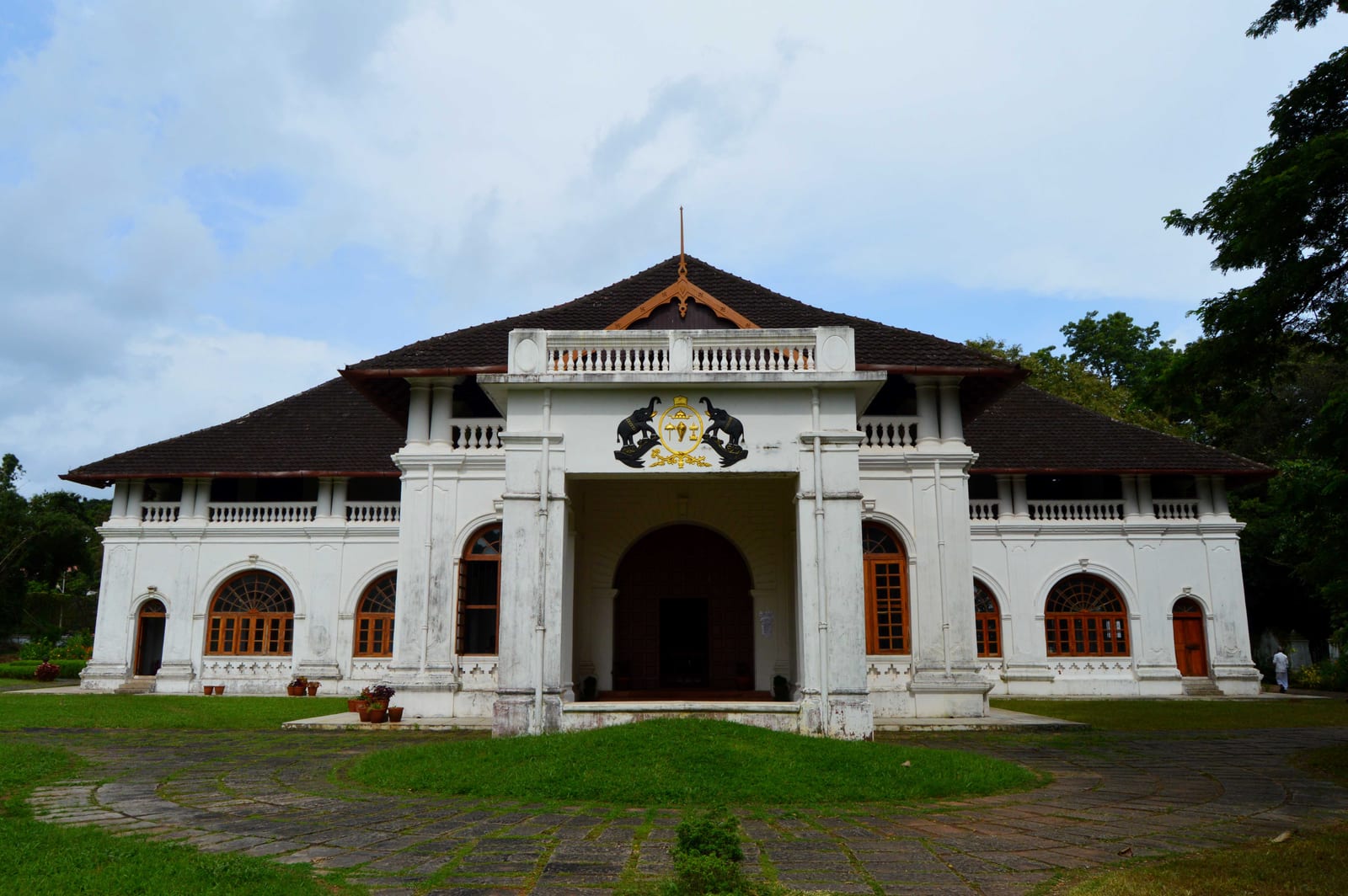
The older Nila-campus building changes the scale again. Its ochre walls, long tiled roofs and entrance steps belong to an earlier chapter of the institution beside the Bharathapuzha. Visiting it after the main campus helps keep the founding history attached to a real building and setting. It should not be mistaken for the main reporting point simply because an older photograph is the first search result.
Vallathol Museum adds a personal and literary strand. The institution describes manuscripts, notebooks, clothing, gifts, photographs and recorded poems among its material. These objects speak to the poet’s life and relationships, while the teaching campus continues the work he helped establish. The museum and the kalaris therefore complement each other without telling the same story.
The art gallery provides a vocabulary for the teaching spaces. Established in 2001, it presents costumed figures associated with Kathakali, Kutiyattam, Mohiniyattam and Thullal. Kalamandalam credits the artist Namboothiri with shaping the fibre figures and their expressive gestures. Look at the position of a hand as well as the face: the display brings posture, costume and character together. A figure that first appears to be a colourful mannequin becomes a way to understand how many visual decisions contribute to a stage presence.
Miniature facial paintings in the gallery offer another scale of observation. Large costumes organise the outline of a body, while smaller painted details help articulate a face. Move between the two scales rather than trying to memorise every character name at once. A guide can explain a particular example and connect it with an art form seen elsewhere in the visit. That is a manageable first encounter with a complex performance language, and it makes a later recital easier to follow.
Chutty has its own teaching department at Kalamandalam. The institution describes the preparation of Kathakali make-up through materials including rice paste, lime and coloured pigments, with detailed work taking hours. This brings an often overlooked craft into the foreground. A finished stage photograph compresses that work into one striking face; the department’s account makes clear that the visual transformation is a skilled practice in its own right. Where the guided route includes this subject, ask how a design helps express a character’s role.
The make-up and costumes also alter how an audience reads movement. A gesture takes place within a strongly defined outline, and the colour and shape of a face contribute to its expression. For a visitor at Kalamandalam, this provides a connection between the quieter preparation associated with Chutty and the movement observed in a teaching room. Look at them as cooperating disciplines. Learning to notice that relationship is more useful than applying a single colour rule to every figure in the gallery.
The Mizhavu department supplies a particularly revealing example of training. Its account describes students beginning on stone or wooden benches, advancing to hide-covered wooden stumps and using the actual instrument at a later stage. The pot-shaped drum, commonly made in copper today, is supported in a wooden frame and played with bare hands. A simple practice surface can therefore belong to a serious stage in musical education. What looks modest in a classroom may be part of the long preparation behind a powerful performance sound.
Kalamandalam explains the Mizhavu player’s task through close coordination with the actor’s mood, movement and hand gestures. Listen for that relationship if a permitted visit includes this teaching. The interest lies in the timing of a response and the shape of a rhythmic phrase, as well as in volume. Understanding why accompaniment must follow dramatic action also helps explain the institution’s arrangement of multiple specialist departments: performance is assembled from interdependent skills that require their own sustained practice.
Kathakali music adds the sung text to this relationship. The department identifies a lead singer, the ponnani, and an assisting singer, the shinkiti, with pitch and rhythm supported by their instruments. The singers coordinate with the actor’s movement and expression. On a first visit, the useful thing to notice is how a musical phrase makes space for an action. Someone unfamiliar with the language can still begin to hear the partnership between voice and gesture, then ask the guide about the words and dramatic situation.
This makes the campus a place for listening as much as looking. A dance photograph foregrounds colour and shape, but a guided academic visit can reveal the separate vocal and percussion practices that support a performance. Keep the sound of one authorised teaching stop in mind when entering the next. A repeated phrase, a pause for correction or a change of tempo can explain the work of rehearsal more clearly than a rapid circuit intended only to collect photographs of different costumes.
The Koothambalam carries dramatic imagery into the building itself. Kalamandalam’s description identifies a mural behind the stage showing Arjuna receiving the Pashupatha weapon from Shiva. The carved dance positions on the granite pillars supply another relationship between movement and material. These details give a visitor specific things to ask the guide to identify. They also help connect the theatre with the institution’s broader purpose: the architecture, the narrative image and the trained performer participate in the same artistic setting.
The campus visit and an evening recital offer complementary experiences. During a teaching visit, repetition and correction are valuable things to witness; in a performance, the audience encounters the coordinated result. If a recital is central to the trip, arrange it as a separate programme through the institution rather than expecting a daytime class to become a full show. The morning can still prepare you for that evening by introducing the instruments, character presentation and theatre space encountered along the guided route.
Thullal introduces a different relationship between performer and audience. Kalamandalam’s department describes a solo dance-theatre form in which epic episodes are sung in Malayalam and sharpened by humour and social criticism. Its three forms—Ottan, Seethankan and Parayan—differ in costume, make-up and aspects of metre and rhythm. These are useful distinctions when looking at the gallery’s figures: the institution is teaching several performance languages, not variations of one costumed dance. If Thullal appears in the day’s interpretation, ask which form is being discussed and how the spoken or sung joke reaches its audience.
Kutiyattam offers another way to understand the actor’s work. The department explains pakarnnattam, a technique in which one actor represents different roles through changes of position or a small adjustment to an element of costume. A spectator need not wait for a new person to enter to recognise a new character. This helps explain the attention given to controlled movement in training. During an authorised observation, following the performer’s position and the direction of attention can be a useful first step towards reading the scene.
The Kutiyattam account also distinguishes two kinds of theatre manual. Aattaprakaram concerns the actor’s presentation, while Kramadeepika addresses production matters such as staging and costume use. Those texts place what happens in the kalari within a transmitted body of practical knowledge. The campus therefore joins physical practice with an intellectual tradition: a gesture has to be learned by the body, but a performance also depends on remembered and written systems. A visitor interested in theatre can ask about that relationship without expecting access to a library collection or a specialist manuscript to be part of the ordinary tour.