Kerala Kalamandalam

Kerala Kalamandalam is a working institution for Kerala’s performing arts at Cheruthuruthy in Thrissur district. Its visitor programme offers a way into the daily practice behind Kathakali, Kutiyattam, dance and percussion: teaching spaces, instruments, costume traditions and the architecture built around performance. A guided morning belongs to an academic campus, not an all-day stage show.

Kerala Kalamandalam, Cheruthuruthy
Practical guide

Plan Kerala Kalamandalam

Who's going?Tailor Kerala Kalamandalam to your trip
Typeheritage
AreaCheruthuruthy
DistrictThrissur
Best timeChoose an academic working day for a…
Time neededThe published guided morning runs from…
Entry₹30
Places to visit4Listed businesses6

Start with the main campus at Vallathol Nagar. The older Nila campus and Vallathol Museum are separate stops, and the institution’s guided-tour description asks visitors to arrange their own vehicle for the old-campus transfer. Book around a working day if observing classes is the purpose of the visit.

The story

A small adjustment can hold an entire class: the angle of a wrist, the direction of a glance or the timing of a step. At Kalamandalam, the visitor sees performance being built through repetition. The finished costume is only one part of an art whose daily work is often quieter and more exacting.

The story of Kerala Kalamandalam

The kalari is a teaching space. Here the relation between guru and student is visible in demonstration, correction and practice. A person watching for the first time need not understand a full dramatic text to recognise concentration: several learners repeat an action, a teacher notices a difference and the sequence begins again. A respectful visit gives that process room to continue.

Kalamandalam brings together different disciplines, including Kathakali performance and music, Kutiyattam, dance and percussion. The variety matters because a staged work is not made by a single visible performer. Voice, rhythm, gesture, costume and make-up involve separate forms of training that meet in performance. A guided visit can explain those connections without pretending that every department will be demonstrating for visitors that morning.

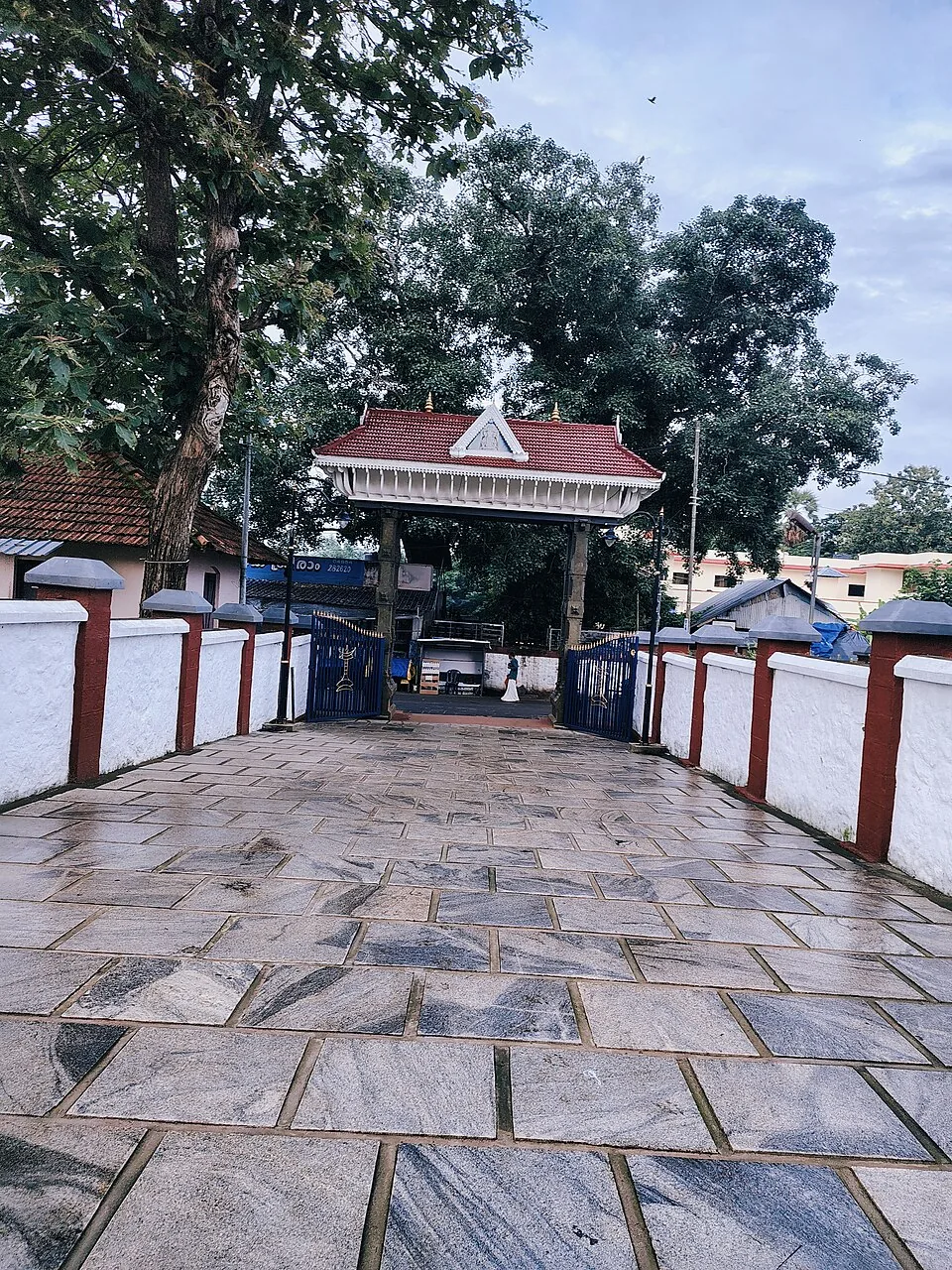
The Koothambalam gives architecture a role in the experience. Its layered tiled roof rises above timber sides and a dark raised base; the interior belongs to performance rather than a conventional classroom. Kalamandalam identifies the building with the principles of the Natyashastra and records its inauguration in 1977. It is a purpose-built theatre at the institution, not evidence that the campus itself is an ancient temple complex.

The institution credits architect D. Appukuttan Nair and master craftsman Elavally Narayanan Achari with the Koothambalam. Its account points to the 108 karanas represented in black granite and to a mural associated with the Pashupatham story. These details give a visitor something precise to ask the guide about, beyond admiring the roof from outside.

Kathakali training begins well before the elaborate costume. Kalamandalam’s account describes a progression from physical exercises and individual movement work to cholliyattam, where acting, dance, singing and percussion come together without the finished make-up. The hand-gesture vocabulary draws on the twenty-four basic gestures of Hastalakshanadeepika. This gives a visitor a more precise way to watch a kalari: follow one hand shape through a phrase, then notice how the eyes and body complete its meaning. A familiar gesture can belong to a different dramatic situation when its movement and context change. The classroom therefore rewards attention to a short sequence, even when the visitor does not know the play being rehearsed.

The older Nila-campus building changes the scale again. Its ochre walls, long tiled roofs and entrance steps belong to an earlier chapter of the institution beside the Bharathapuzha. Visiting it after the main campus helps keep the founding history attached to a real building and setting. It should not be mistaken for the main reporting point simply because an older photograph is the first search result.

Vallathol Museum adds a personal and literary strand. The institution describes manuscripts, notebooks, clothing, gifts, photographs and recorded poems among its material. These objects speak to the poet’s life and relationships, while the teaching campus continues the work he helped establish. The museum and the kalaris therefore complement each other without telling the same story.

The art gallery provides a vocabulary for the teaching spaces. Established in 2001, it presents costumed figures associated with Kathakali, Kutiyattam, Mohiniyattam and Thullal. Kalamandalam credits the artist Namboothiri with shaping the fibre figures and their expressive gestures. Look at the position of a hand as well as the face: the display brings posture, costume and character together. A figure that first appears to be a colourful mannequin becomes a way to understand how many visual decisions contribute to a stage presence.

Miniature facial paintings in the gallery offer another scale of observation. Large costumes organise the outline of a body, while smaller painted details help articulate a face. Move between the two scales rather than trying to memorise every character name at once. A guide can explain a particular example and connect it with an art form seen elsewhere in the visit. That is a manageable first encounter with a complex performance language, and it makes a later recital easier to follow.

Chutty has its own teaching department at Kalamandalam. The institution describes the preparation of Kathakali make-up through materials including rice paste, lime and coloured pigments, with detailed work taking hours. This brings an often overlooked craft into the foreground. A finished stage photograph compresses that work into one striking face; the department’s account makes clear that the visual transformation is a skilled practice in its own right. Where the guided route includes this subject, ask how a design helps express a character’s role.

The make-up and costumes also alter how an audience reads movement. A gesture takes place within a strongly defined outline, and the colour and shape of a face contribute to its expression. For a visitor at Kalamandalam, this provides a connection between the quieter preparation associated with Chutty and the movement observed in a teaching room. Look at them as cooperating disciplines. Learning to notice that relationship is more useful than applying a single colour rule to every figure in the gallery.

The Mizhavu department supplies a particularly revealing example of training. Its account describes students beginning on stone or wooden benches, advancing to hide-covered wooden stumps and using the actual instrument at a later stage. The pot-shaped drum, commonly made in copper today, is supported in a wooden frame and played with bare hands. A simple practice surface can therefore belong to a serious stage in musical education. What looks modest in a classroom may be part of the long preparation behind a powerful performance sound.

Kalamandalam explains the Mizhavu player’s task through close coordination with the actor’s mood, movement and hand gestures. Listen for that relationship if a permitted visit includes this teaching. The interest lies in the timing of a response and the shape of a rhythmic phrase, as well as in volume. Understanding why accompaniment must follow dramatic action also helps explain the institution’s arrangement of multiple specialist departments: performance is assembled from interdependent skills that require their own sustained practice.

Kathakali music adds the sung text to this relationship. The department identifies a lead singer, the ponnani, and an assisting singer, the shinkiti, with pitch and rhythm supported by their instruments. The singers coordinate with the actor’s movement and expression. On a first visit, the useful thing to notice is how a musical phrase makes space for an action. Someone unfamiliar with the language can still begin to hear the partnership between voice and gesture, then ask the guide about the words and dramatic situation.

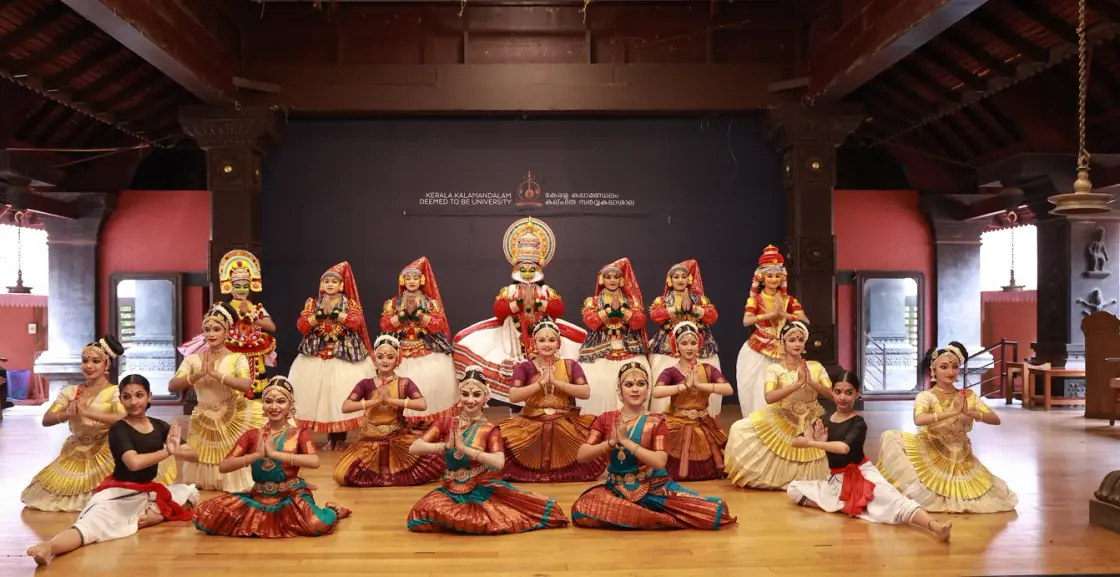
This makes the campus a place for listening as much as looking. A dance photograph foregrounds colour and shape, but a guided academic visit can reveal the separate vocal and percussion practices that support a performance. Keep the sound of one authorised teaching stop in mind when entering the next. A repeated phrase, a pause for correction or a change of tempo can explain the work of rehearsal more clearly than a rapid circuit intended only to collect photographs of different costumes.

The Koothambalam carries dramatic imagery into the building itself. Kalamandalam’s description identifies a mural behind the stage showing Arjuna receiving the Pashupatha weapon from Shiva. The carved dance positions on the granite pillars supply another relationship between movement and material. These details give a visitor specific things to ask the guide to identify. They also help connect the theatre with the institution’s broader purpose: the architecture, the narrative image and the trained performer participate in the same artistic setting.

The campus visit and an evening recital offer complementary experiences. During a teaching visit, repetition and correction are valuable things to witness; in a performance, the audience encounters the coordinated result. If a recital is central to the trip, arrange it as a separate programme through the institution rather than expecting a daytime class to become a full show. The morning can still prepare you for that evening by introducing the instruments, character presentation and theatre space encountered along the guided route.

Thullal introduces a different relationship between performer and audience. Kalamandalam’s department describes a solo dance-theatre form in which epic episodes are sung in Malayalam and sharpened by humour and social criticism. Its three forms—Ottan, Seethankan and Parayan—differ in costume, make-up and aspects of metre and rhythm. These are useful distinctions when looking at the gallery’s figures: the institution is teaching several performance languages, not variations of one costumed dance. If Thullal appears in the day’s interpretation, ask which form is being discussed and how the spoken or sung joke reaches its audience.

Kutiyattam offers another way to understand the actor’s work. The department explains pakarnnattam, a technique in which one actor represents different roles through changes of position or a small adjustment to an element of costume. A spectator need not wait for a new person to enter to recognise a new character. This helps explain the attention given to controlled movement in training. During an authorised observation, following the performer’s position and the direction of attention can be a useful first step towards reading the scene.

The Kutiyattam account also distinguishes two kinds of theatre manual. Aattaprakaram concerns the actor’s presentation, while Kramadeepika addresses production matters such as staging and costume use. Those texts place what happens in the kalari within a transmitted body of practical knowledge. The campus therefore joins physical practice with an intellectual tradition: a gesture has to be learned by the body, but a performance also depends on remembered and written systems. A visitor interested in theatre can ask about that relationship without expecting access to a library collection or a specialist manuscript to be part of the ordinary tour.
Read the full history of Kerala Kalamandalam 307 more words

History

Kerala Kalamandalam was founded in 1930 by poet Vallathol Narayana Menon and Mukundaraja. The institution’s history records an early home in a house provided by the Kakkad Karanavappad at Kunnamkulam, followed by a period at Ambalapuram. Its beginnings were not at the present main-campus entrance.

In 1936 Kalamandalam moved to its own premises at Cheruthuruthy beside the Nila, another name for the Bharathapuzha. The surviving old-campus setting helps explain why the river and Cheruthuruthy are important to its identity. The larger present institution and the earlier river-side home are stages of one history, not interchangeable addresses.

The institution records becoming grant-in-aid in 1975 and the introduction of formal schooling from the eighth standard in 1990. Those developments place the arts within a sustained educational structure. The student practising for a visitor is also part of an academic life, with classes, examinations and holidays.

Vallathol had rented a house in Cheruthuruthy in 1935. The institution’s museum account distinguishes the government’s purchase of that house in 1985 from the formal museum opening in April 1988. Keeping those events separate avoids giving a single date to two different stages of preservation.

The cultural-tourism programme “A Day with the Masters” began in 2003, according to Kalamandalam’s guided-tour history. Its purpose is to introduce visitors to the arts through the institution’s own spaces and people. The programme remains dependent on the working rhythm of the campus rather than replacing that rhythm with continuous tourist performances.

Why visit

Visit to understand the practice behind Kerala’s stage arts, including the relationship between performer, music and percussion.

The Koothambalam provides a substantial architectural subject with named designers and specific performance-related details.

The art gallery can make costume and character conventions more legible before or after watching a live performance elsewhere.

The old campus and Vallathol Museum connect a cultural institution with its founding places and personal history.

What to expect

Highlights

  • Observe the relationship between a teacher’s demonstration and students’ repeated practice in the kalaris.
  • Read the layered roof, timber structure and performance setting of the Koothambalam.
  • Connect the present institution with its early Nila-campus building and the memory of co-founder Vallathol Narayana Menon.
Getting there

How to visit

  • Contact Kalamandalam’s tourism office for the guided visit and confirm whether classes are running on the selected day.
  • Reach the main Vallathol Nagar campus before the confirmed reporting time; a map search for the older Kalamandalam building can lead to a different stop.
  • If the confirmed tour includes the old campus, arrange the separate vehicle transfer described by the institution. Keep the guide’s order of visits rather than entering teaching spaces independently.

Distance by road

  • Kochi85 km
  • Coimbatore115 km
  • Kozhikode130 km
  • Mysuru265 km
  • Madurai274 km

Road km to Thrissur; ghat roads and traffic vary — allow extra.

Timing

Best time

Choose an academic working day for a class-focused visit. The institution identifies a summer recess beginning in the third week of March and continuing through April and May, as well as Onam and Christmas breaks. Confirm the actual academic calendar for the year; a campus visit during recess cannot promise the same teaching activity.

Weather in Kerala KalamandalamSeasonal guide

Live forecast loads in your browser.

Today at Kerala Kalamandalam
Sunrise6:14 am
Sunset6:24 pm
Golden hour best light5:24 pm–6:24 pm
Blue hour after sunset6:24 pm–6:49 pm
Sun sets toward compass bearingW · 272°
Moon tonight🌓 First quarter · 53%
South-west monsoon. June to September is the south-west monsoon in Kerala. Expect heavy showers, mostly in bursts rather than all day — carry rain cover, allow extra time for getting around, and note that ferries and open-air sites are the first things affected.

Sun and moon are calculated for this location and shown in IST. Photography windows are the hour around sunrise and sunset; the sunset bearing is degrees clockwise from true north. Moon phase is accurate to about half a day.

Visitor notes

  • Classes are part of students’ training. Do not ask learners to stop, pose or repeat an action solely for a visitor’s photograph.
  • The costume gallery and a live class explain different parts of the arts. A displayed character figure is not a scheduled performance.
  • The institution’s performance-programme price list concerns separately commissioned programmes; it is not the admission tariff for an ordinary campus visit.
Safety

Good to know

  • Follow instructions on removing footwear before entering kalaris and other designated spaces.
  • Keep entrances and teaching-floor edges clear while a class is in progress.
  • Discuss stairs, walking distances and transfer needs with the tourism office before booking if anyone requires assistance.
Stay · eat · do · rent · see · shop

Stays, food & things to do near Kerala Kalamandalam

Verified hotels, homestays, restaurants, experiences, sights, shops and rentals around Kerala Kalamandalam — commission-free, with direct contact. Filter by what you need.

3 places to stay near Kerala Kalamandalam

Hortus Malabaricus Resort Cheruthuruthy — Resort in Cheruthuruthy
Top pick Verified
Resort · Cheruthuruthy
Hortus Malabaricus Resort Cheruthuruthy

Hortus Malabaricus Resort Cheruthuruthy is a garden-resort stay near Kerala Kalamandalam and the Nila river belt. Its direct contact page lists the Nedumpura address, phone and email, making it useful for culture-route travellers. Cheruthuruthy, Cheruthuruthy resort support, stay.

Directions Commission-freeView details
Eco Garden Resort Heritage Cheruthuruthy — Resort in Cheruthuruthy
Top pick Verified
Resort · Cheruthuruthy
Eco Garden Resort Heritage Cheruthuruthy

Eco Garden Resort and Heritage stay campus near Cheruthuruthy and Kerala Kalamandalam. Eco, Cheruthuruthy resort support, cheruthuruthy.

Directions Commission-freeView details
River Retreat Cheruthuruthy — Cheruthuruthy heritage stay in Cheruthuruthy
Top pick Verified
Cheruthuruthy heritage stay · Cheruthuruthy
River Retreat Cheruthuruthy

Heritage Ayurvedic resort on the Bharathapuzha/Nila side for Cheruthuruthy trips. River, Cheruthuruthy heritage stay, cheruthuruthy.

Directions Commission-freeView details

Book with the place itself. India’s cyber-crime coordination centre warned in April 2025 that convincing copies of hotel and pilgrimage booking sites are being pushed through sponsored search and social ads, taking payment for rooms the property never hears about. Every listing here links to the business’s own contact details and its own Google or Bing profile — we take no commission and sit in nobody’s payment path. If a booking page reached you through an ad, check the address bar against the property’s own site before you pay. Fraud can be reported on cybercrime.gov.in or on 1930.

Ranked

More ways to explore Cheruthuruthy

Cheruthuruthy is in Thrissur district beside the Bharathapuzha corridor. The main campus, the older Nila campus and Vallathol Museum are different stops within the visit.

Across the whole of Cheruthuruthy

Ranked guides

Top experiences around Kerala Kalamandalam

4 more places around Cheruthuruthy. Open a guide to plan the visit and onward journey.

trekPeechi-Vazhani trek

11.4 km · ~19 min by cab

A guided forest crossing described from Vazhani towards Peechi, plus shorter named trails on the Vazhani side. Current operation, meeting point and return transport must be confirmed with the sanctuary office.

templeVilwadrinatha Temple

16.4 km · ~27 min by cab

The Sree Rama (Vilwadrinatha) hill temple at Thiruvilwamala on the Nila river, reached by stone steps up the wooded rock.

viewpointVilangan Kunnu

23.3 km · ~39 min by cab

A low hill and park on the edge of Thrissur city, popular for sunset views and morning walks.

wildlifeThrissur Zoo

23.8 km · ~40 min by cab

State museum, art gallery and natural-history collection at Chembukkavu; the zoo animals moved to the new zoological park at Puthur, open since February 2026.

Roampedia is commission-free — own or know a stay, eatery, guide or shop near Kerala Kalamandalam? List it and it appears here once verified.

Add a nearby business
Before you go

Kerala Kalamandalam — at a glance

OperatorKerala Kalamandalam Deemed to be University for Art and Culture
TimingsPublished guided-tour timing: 9:30am–1pm on working days, with arrival by 9:15am. Classes and access follow the academic calendar, including summer, Onam and Christmas breaks; confirm the selected day.
Best timeChoose an academic working day for a class-focused visit. The institution identifies a summer recess beginning in the third week of March and continuing through April and May, as well as Onam and Christmas breaks. Confirm the actual academic calendar for the year; a campus visit during recess cannot promise the same teaching activity.
Entry price
Indian adult
₹30

Fees change without notice. Check the current rate at the counter.

Entry: The institution publishes ₹30 for Indian visitors, ₹10 for school students and ₹2,000 for A Day with the Masters. These are distinct categories, not a stated Indian-versus-foreign split. Confirm which visit is being booked and its inclusions with the tourism office.

Booking: Arrange the visit through Kerala Kalamandalam’s tourism office and confirm the working day, group size, fee category, included stops and old-campus transport.

Parking: Ask the tourism office where a visitor vehicle should wait on the main campus. Retain the vehicle arrangement if the visit includes the separate old-campus transfer; do not block teaching-building entrances for a quick stop.

Getting here

How to reach Kerala Kalamandalam

  • ✈︎ By air Cochin International Airport is a practical air gateway for a road journey towards Thrissur and Cheruthuruthy. Keep enough margin to arrive before the guided morning rather than counting flight arrival as campus reporting.
  • 🚆︎ By train Shoranur Junction is the major railway gateway for the Cheruthuruthy area. Vallathol Nagar station is also mapped nearby, but train stops differ; choose the station served by the actual train and arrange the final road transfer.
  • 🚗︎ By road Approach Cheruthuruthy on the Thrissur–Shoranur corridor and use the main Vallathol Nagar campus entrance from the Kodungallur–Shoranur road. Tell the driver that the older Nila campus is a separate stop.
  • 🚌︎ By bus Use buses serving the Cheruthuruthy–Vallathol Nagar section of the Thrissur–Shoranur corridor, then complete the last approach to the main entrance. Confirm the actual stopping point for the service rather than assuming every bus enters the campus.
Getting around

Getting around Kerala Kalamandalam

Follow the guide between the main-campus spaces and use the separately arranged vehicle where required for the old campus. Keep teaching-floor access under the institution’s direction.

Getting back

Allow the guided morning to finish and any old-campus transfer to be completed before committing to a railway departure. Share the full pickup location with the driver if the tour ends away from the main campus.

Do

Things to do

  • Watch how a teacher corrects gesture, movement or rhythm during an authorised kalari visit.
  • Ask the guide to explain the Koothambalam’s performance setting and carved details.
  • Compare character presentation in the art gallery with the movements seen in class.
  • Connect the older Nila-campus building and Vallathol Museum with the institution’s founding history.
Facilities

On site

  • The guided-tour page lists a visitors’ lounge, theatre and cafeteria. Confirm the cafeteria’s service on the chosen academic day.
  • A tourism office coordinates the visit and the access to teaching spaces.
  • The main campus, art gallery and separate heritage stops provide different kinds of interpretation; the booked route determines which are included.
Stay safe

Safety

  • Avoid blocking a class entrance or walking across the teaching floor without invitation.
  • Respect footwear and photography instructions in each space.
  • Keep groups together so a guided visit does not disrupt another class.
  • Agree any assistance requirement before beginning a route across several buildings.
Getting around Kerala Kalamandalam
From the entrance
Kerala Kalamandalam main campus, Vallathol Nagar, Cheruthuruthy
Step-free access
The visit can involve campus walking, thresholds, footwear removal and separate buildings with steps. The old-campus transfer adds another boarding movement. Describe specific mobility or seating needs to the tourism office so the route can be agreed; do not assume every teaching space and museum floor is step-free.

Checked 6 September 2026 against source 1source 2. Conditions change and surfaces vary with weather — if step-free access is essential, confirm with the site before you travel.

Practical things near Kerala Kalamandalam
What the cash actually costs
  • Withdrawing from a bank that is not your own is free for a set number of times a month, then costs up to ₹23 plus GST — about ₹27 a withdrawal. This is not one of the RBI’s six metro centres, so the allowance here is the higher one: at least five free other-bank withdrawals a month, and at least five at your own bank.
  • That free allowance belongs to Indian bank accounts. On a card issued abroad your own bank’s international withdrawal and exchange charges apply instead. If the machine offers to bill you in your home currency, choose rupees — the conversion rate on that offer is set by the machine, not by your bank.
  • Choose a well-lit ATM, preferably at a bank branch. Shield your PIN, avoid help from strangers and use your bank’s support number if a withdrawal fails or the machine retains your card.

Charge cap and free-transaction limits: Reserve Bank of India, in force since 1 May 2025.

These services are listed within about 1.2 km of Kerala Kalamandalam. Walking distances follow mapped routes; access and opening hours can change. Other services may be closer but are not included here.

If you need help at Kerala Kalamandalam
112All emergencies (police · fire · medical)The single number to call in any emergency (ERSS).

Emergency numbers are verified against official government and state tourism sources. 112 works anywhere in India.

Eat nearby

What to eat in Cheruthuruthy

Fit meals around the guided academic morning. Cheruthuruthy and the Shoranur corridor provide the town food plan, while the campus cafeteria’s availability should be confirmed for the visit day.

Explore food in Cheruthuruthy →
01

Breakfast before reporting

Eat before the 9:15am reporting arrangement so the group can begin together. A class visit cannot be delayed around an unfinished breakfast.

02

Lunch after the guided morning

A meal in Cheruthuruthy or on the Shoranur route fits after the tour and any separate heritage transfer are complete.

03

A campus cafeteria stop

The institution lists a cafeteria. Ask whether it is serving visitors that day, particularly during recess or a reduced academic schedule.

Nearby

What’s near Kerala Kalamandalam

trekPeechi-Vazhani trek

A guided forest crossing described from Vazhani towards Peechi, plus shorter named trails on the Vazhani side. Current operation, meeting point and return transport must be confirmed with the sanctuary office.

11.4 km · ~19 min by cab · straight line
templeVilwadrinatha Temple

The Sree Rama (Vilwadrinatha) hill temple at Thiruvilwamala on the Nila river, reached by stone steps up the wooded rock.

16.4 km · ~27 min by cab · straight line
viewpointVilangan Kunnu

A low hill and park on the edge of Thrissur city, popular for sunset views and morning walks.

23.3 km · ~39 min by cab · straight line
wildlifeThrissur Zoo

State museum, art gallery and natural-history collection at Chembukkavu; the zoo animals moved to the new zoological park at Puthur, open since February 2026.

23.8 km · ~40 min by cab · straight line
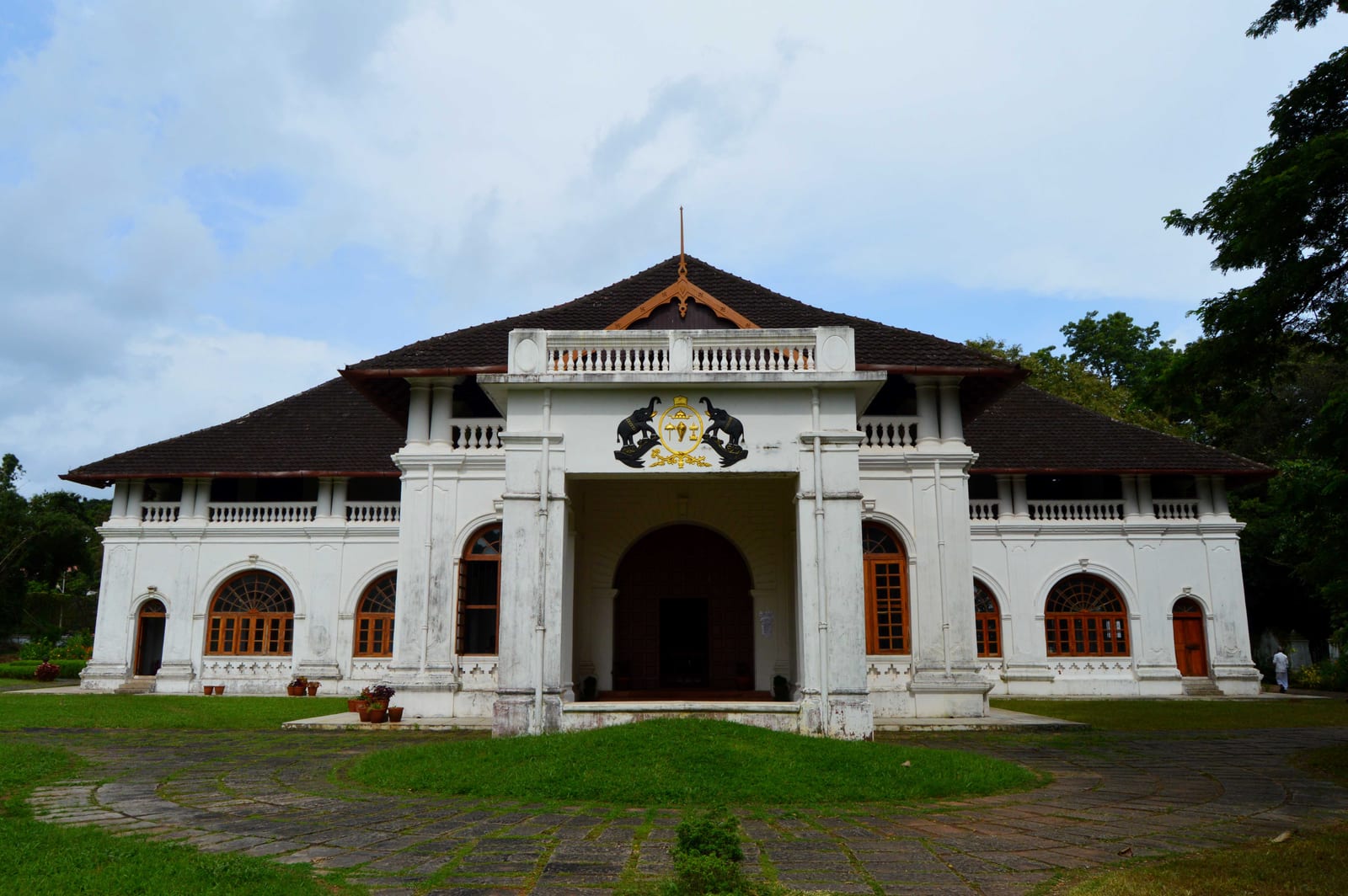
heritageShakthan Thampuran Palace

Restored palace and archaeological museum in Thrissur city, built by Raja Rama Varma Sakthan Thampuran.

23.9 km · ~40 min by cab · straight line
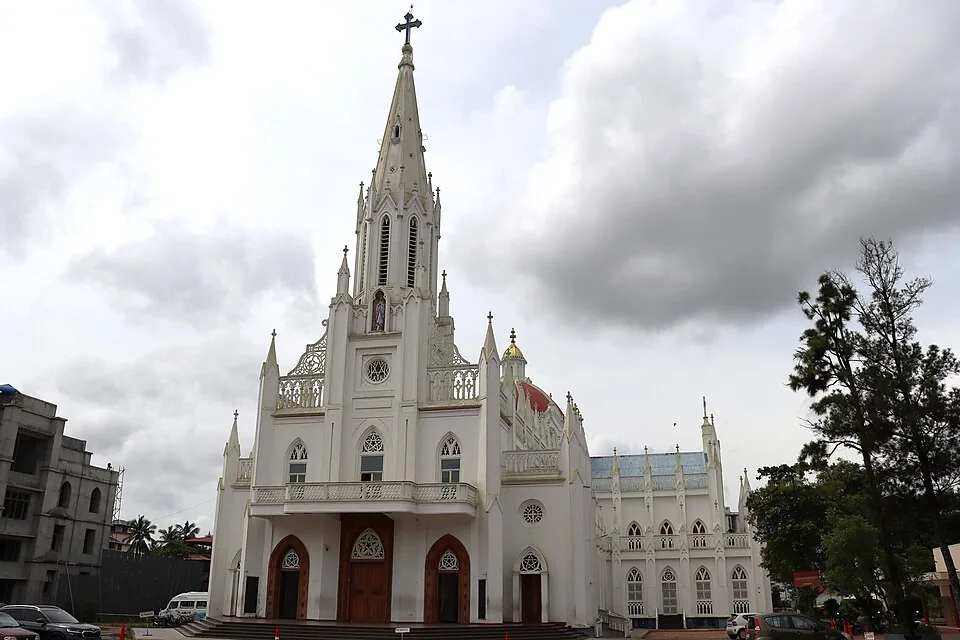
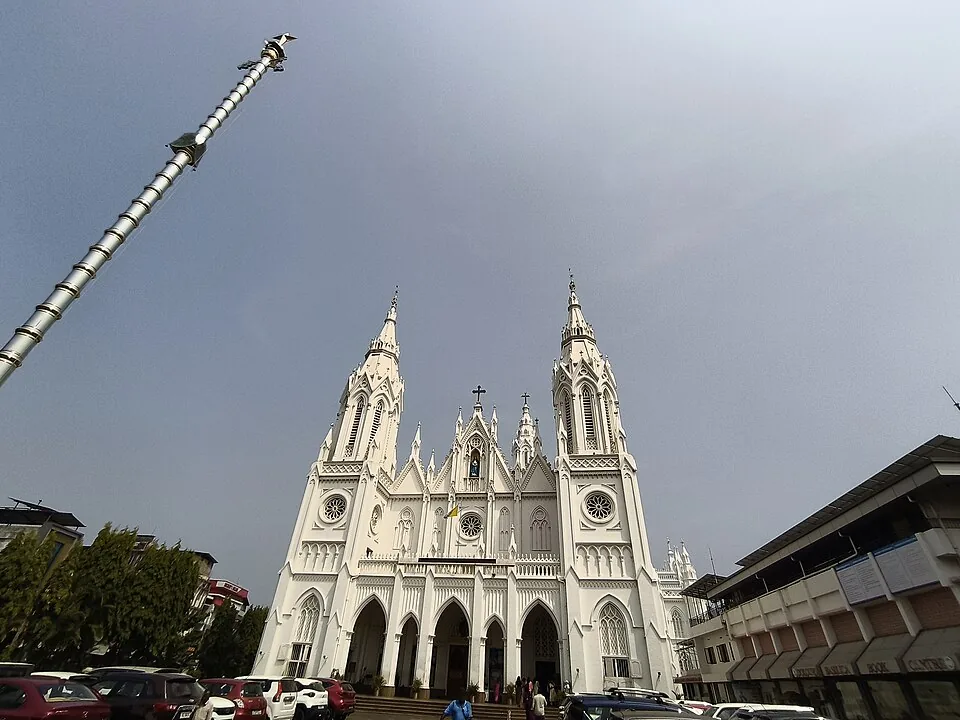
churchOur Lady of Lourdes Cathedral

A landmark Syro-Malabar cathedral in Thrissur city known for its Gothic facade and an underground shrine (rock church).

24.4 km · ~41 min by cab · straight line
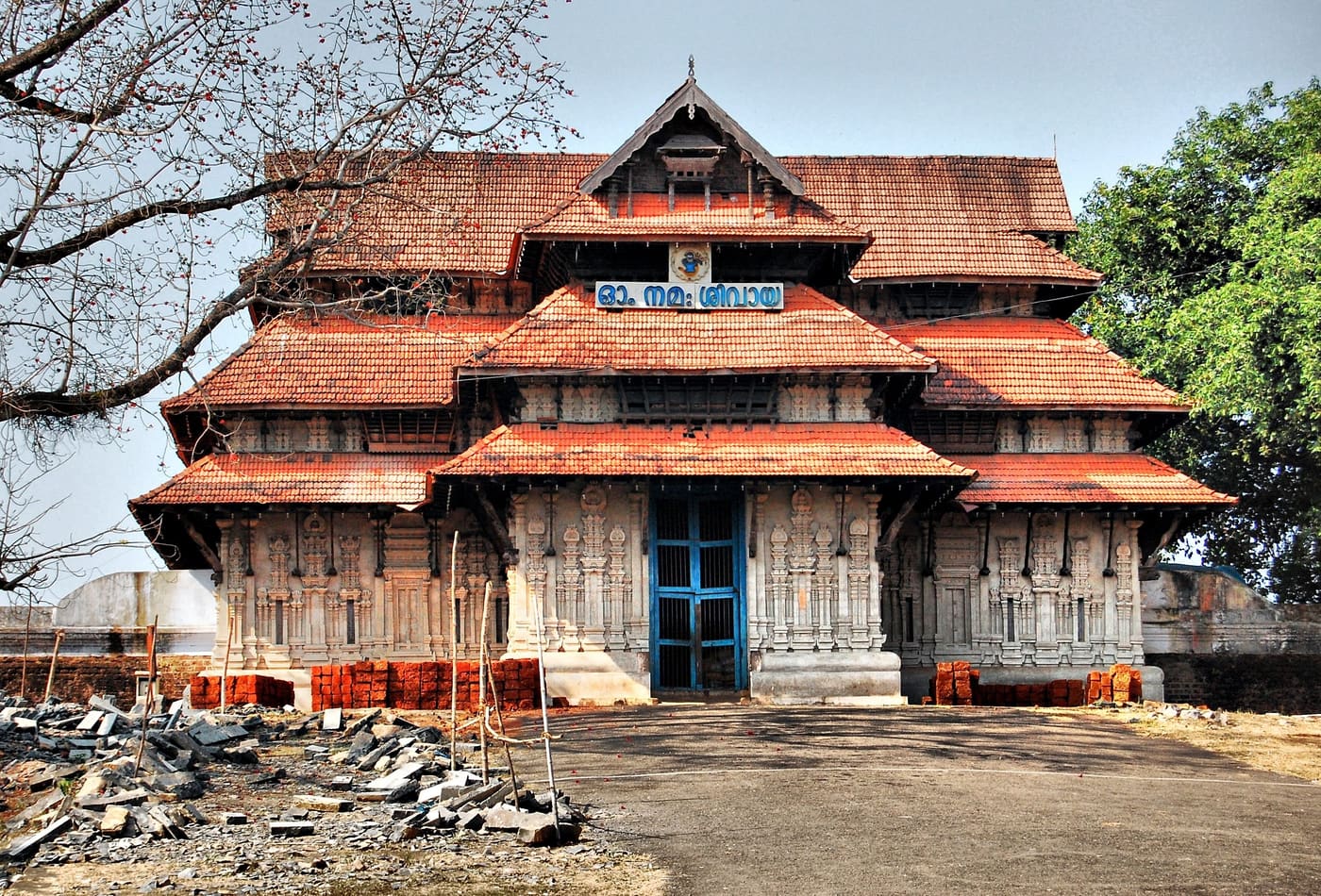
templeVadakkunnathan Temple

Ancient temple at the centre of Thrissur’s round, associated with Thrissur Pooram.

24.6 km · ~41 min by cab · straight line
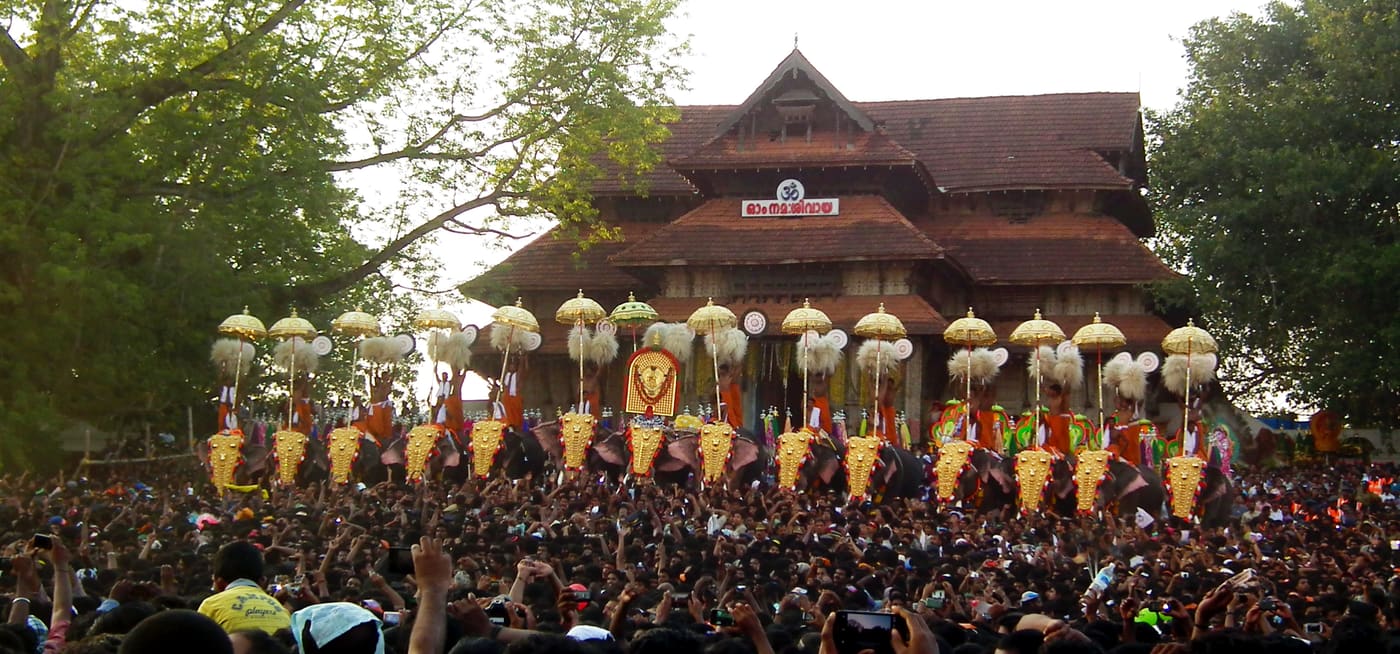
heritageThrissur Pooram

Kerala’s most famous temple festival, held around April/May at the Thekkinkadu ground around Vadakkunnathan.

24.6 km · ~41 min by cab · straight line
churchBasilica of Our Lady of Dolours

The “Puthan Pally” basilica in Thrissur, known for its Bible Tower — among the tallest church towers in Asia.

24.9 km · ~41 min by cab · straight line
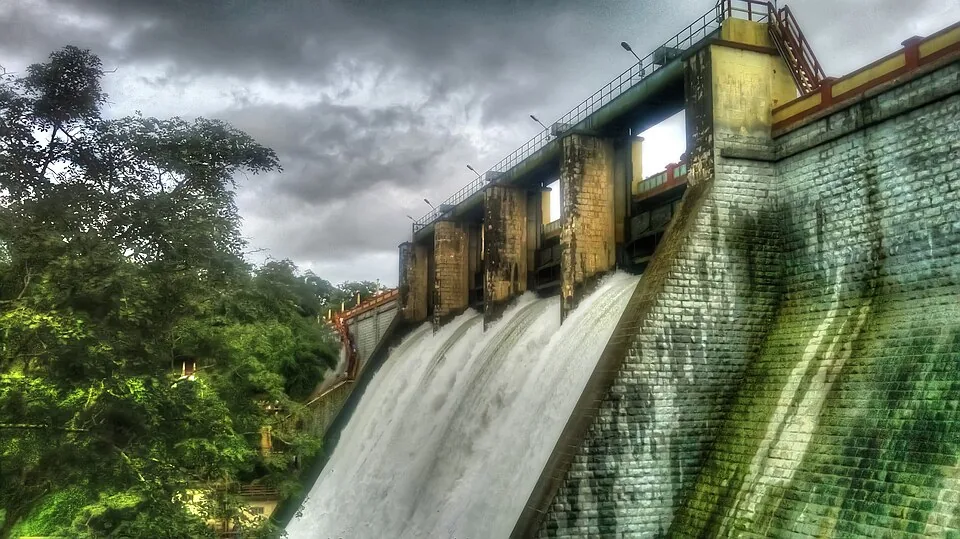
damPeechi Dam

Reservoir and garden at the edge of the Peechi-Vazhani sanctuary, with boating, about 20 km east of Thrissur.

25.2 km · ~42 min by cab · straight line
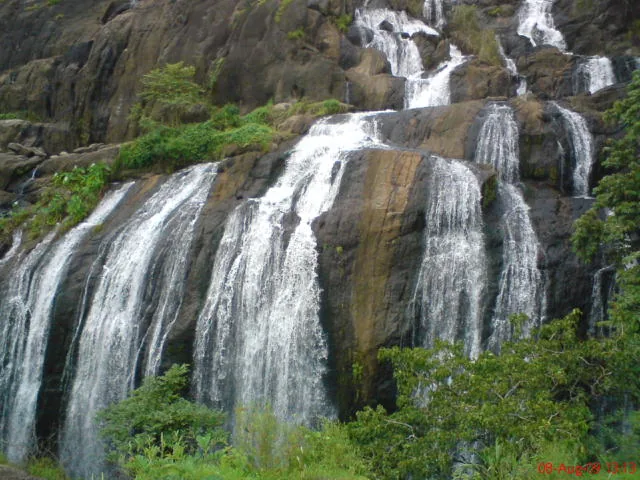
waterfallMarottichal Falls

A forest waterfall and fish sanctuary near Marottichal in the hills east of Thrissur, reached by a short walk.

29.5 km · ~49 min by cab · straight line
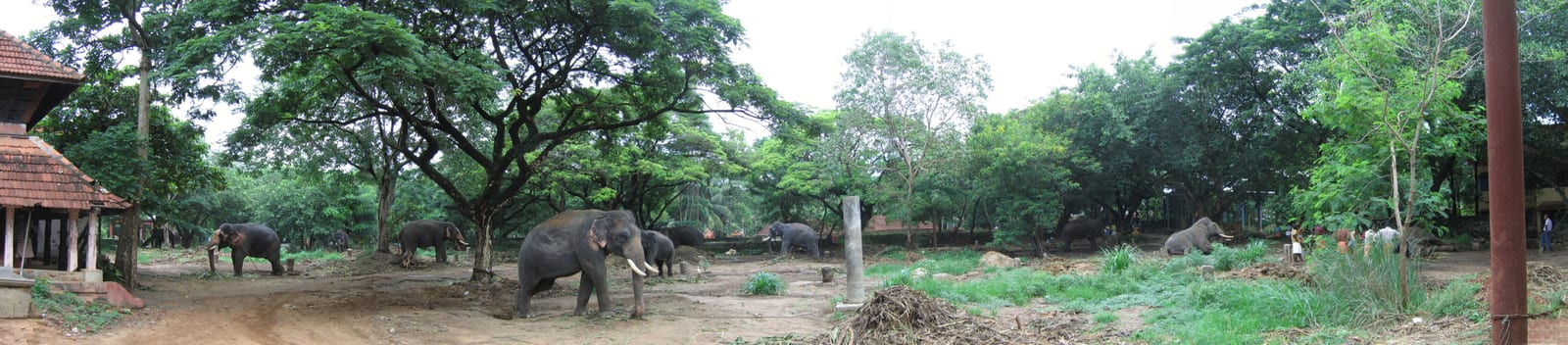
heritagePunnathur Kotta

The Guruvayur temple’s elephant sanctuary (Anakkotta) at Punnathur, where the devaswom’s elephants are housed.

30.3 km · ~51 min by cab · straight line

All 4 places to visit in Cheruthuruthy →

Nearby toilets, pharmacies, ATMs, seating and vets are community-mapped and may be incomplete or out of date. Map data © OpenStreetMap contributors | Walking times © openrouteservice.org by HeiGIT

On the map

Where Kerala Kalamandalam is

Good to know

Kerala Kalamandalam — frequently asked

Is Kerala Kalamandalam a daily Kathakali show?

It is a working arts institution. A guided visit can include teaching spaces and cultural interpretation, but it does not promise a full staged Kathakali performance on every visit.

Which Kalamandalam campus should I reach first?

Use the main campus at Vallathol Nagar, Cheruthuruthy, for the tourism-office reporting arrangement. Confirm the meeting point when reserving; the older Nila campus is a separate stop.

Can I see classes during the summer holiday?

Do not assume so. The institution identifies a summer recess from the third week of March through April and May. Confirm current teaching activity with the tourism office before travelling.

Is the old-campus transfer included in the guided tour?

The published description asks visitors to arrange their own vehicle for the old campus, described as about 2 km away. Confirm the route and included stops with the tourism office.

Can I photograph students during a kalari visit?

Follow the institution’s photography rules and the guide’s instructions. Do not interrupt a class or ask students to pose; professional photography requires permission.

What is special about Kalamandalam’s Koothambalam?

The institution’s theatre was inaugurated in 1977 and is associated with architect D. Appukuttan Nair and master craftsman Elavally Narayanan Achari. Its performance setting, roof and carved details are subjects for the guided visit.

Is Vallathol Museum the same as the art gallery?

No. The museum concerns Vallathol’s life and associated objects. The art gallery explains performance through character figures, costume and make-up presentation.

Can a large school group arrive without arranging a tour?

Contact the tourism office first. The guided-tour description sets a maximum 30 visitors organised into three groups of ten, so a larger group needs an agreed arrangement.

When is the best time to visit Kerala Kalamandalam?

A working academic morning is the useful choice for observing teaching. Confirm holidays, examinations and the particular day’s access before booking transport.

What are the entry fee and timings at Kerala Kalamandalam?

Ordinary visit categories and A Day with the Masters are priced separately. The published morning schedule and fee categories are explained in the practical visit information.

How do I reach Kerala Kalamandalam?

Kerala Kalamandalam main campus, Vallathol Nagar, Cheruthuruthy

How much time do I need for Kerala Kalamandalam?

The published guided morning runs from 9:30am to 1pm, with arrival by 9:15am. Add the approach and any separately arranged old-campus transfer, and allow time to return to the railway or bus connection afterwards.

What should I know before visiting Kerala Kalamandalam?

Classes are part of students’ training. Do not ask learners to stop, pose or repeat an action solely for a visitor’s photograph.

What else is near Kerala Kalamandalam?

Nearby you can pair Peechi-Vazhani trek (11.4 km), Vilwadrinatha Temple (16.4 km), Vilangan Kunnu (23.3 km), Thrissur Zoo (23.8 km).

Image credits

Photographs: Kerala Kalamandalam (© Kerala Kalamandalam; official destination photograph). Wikimedia Commons.