What to expect
Highlights
- Temple visit at Vilwadrinatha Temple
- Kerala temple architecture and rituals
- Local food, shops and pilgrim services nearby
The Sree Rama (Vilwadrinatha) hill temple at Thiruvilwamala on the Nila river, reached by stone steps up the wooded rock.
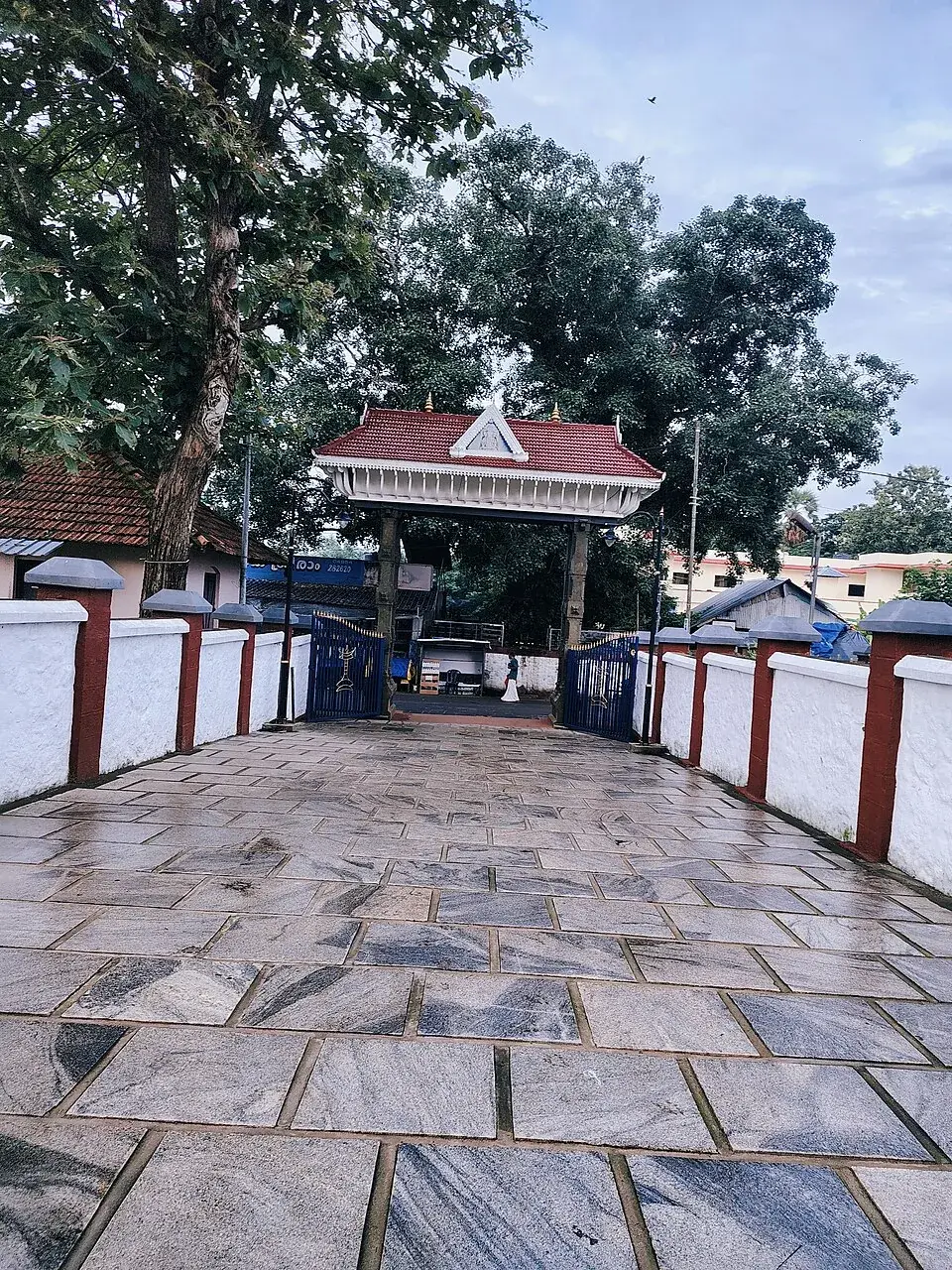
Check entry arrangements. Ask temple staff about visitor entry, dress requirements and access to the inner shrine before you travel, especially if you are visiting as a non-Hindu.
Dress respectfully and follow the institution’s admission and photography rules.
Crowning the low, wooded Vilwadri hill above the Bharathapuzha (the Nila) at Thiruvilwamala, the Sree Vilwadrinatha Temple is one of Kerala’s most distinctive Rama shrines — a place where, by tradition, both Sree Rama and his brother Lakshmana are enshrined and worshipped together as principal deities. It is best known beyond its walls for the Punarjani Noozhal, an arduous once-a-year rite of crawling through a natural rock tunnel that devotees believe washes away sin and offers a symbolic rebirth.
Thiruvilwamala sits in the eastern reaches of Thrissur district, close to the Palakkad border, where the broad sandy sweep of the Bharathapuzha — Kerala’s second-longest river, revered as the Nila — separates the district from Palakkad. The temple stands on a modest hillock said to rise around 30 metres (roughly 100 feet) above the surrounding land, so that from its precincts pilgrims look out over paddy, palm and the distant silver line of the river. The hill itself gives the shrine and the town their names: Vilwadri, the hill of the bilva (vilwa) tree, and Thiru-vilwa-mala, the sacred bilva hill.
What sets Vilwadrinatha apart from Kerala’s other great Rama temples is its dual dedication. Local tradition holds that the sanctum enshrines both Rama — worshipped here as Vilwadrinatha, the Lord of the Vilwa hill — and Lakshmana, given near-equal honour. Accounts differ on the precise arrangement, and visitors should treat the details as living tradition rather than settled fact: some descriptions speak of two adjoining sreekovils (sanctums) facing opposite ways, with a west-facing shrine for Rama and an east-facing shrine for Lakshmana; others frame it as the two brothers venerated together within the same complex. Either way, a standing image of Lakshmana as a principal deity is genuinely rare across India, and it is this that draws many devotees.
The presiding image of Rama is described in temple lore as swayambhu — self-manifested rather than sculpted by human hand — and is said to stand roughly five feet tall, carved (by tradition) from a rare dark stone locally called Pathalanjana Sila. The four-armed form is worshipped bearing the emblems of Vishnu — conch, discus, mace and lotus — reflecting the understanding of Rama as an avatar of Vishnu. Devotees should hold these material claims lightly and reverently; they are matters of faith and temple record rather than independent verification.
Vilwadrinatha is counted among the principal Rama temples of the region, spoken of alongside shrines such as Thriprayar, Kadavallur and Thiruvangad. Beyond Rama and Lakshmana, the temple complex is associated with a cluster of other deities honoured by pilgrims — among them Hanuman (fittingly, given the Ramayana connection), Ganapathi and Ayyappa — so a visit typically takes in several shrines rather than a single darshan.
The temple has weathered a long and sometimes turbulent history. Records point to early royal patronage and, later, to repeated fires in the nineteenth century, after which the present structures were rebuilt; today it is administered by the Cochin Devaswom Board. Yet for all its antiquity, the temple’s deepest fame rests less on its architecture than on the wild hillside about two kilometres away, where a natural fissure in the rock — the Punarjani cave — becomes, for one day each year, the stage for one of Kerala’s most physically demanding pilgrim rites.
For the traveller, Thiruvilwamala rewards those who come for atmosphere as much as for darshan: the climb up the hill, the river views, the old bathing tanks, and — on the right day in the Malayalam month of Vrischikam — the extraordinary sight of pilgrims queuing to crawl through the earth in search of renewal. It remains, first and last, a living place of worship, and its rhythms belong to the devout.
By tradition, the temple’s origins are woven into the legend of Parashurama, the axe-wielding sage-warrior avatar of Vishnu who, in myth, raised the land of Kerala from the sea. Having slain generations of warrior-kings, Parashurama is said to have sought release from the vengeful spirits that pursued him. The legend tells that Lord Shiva gave him an image of Vishnu that Shiva himself had worshipped on Kailasa, and that Parashurama consecrated it here on the Vilwa hill so that even restless ghosts might find darshan and peace — a story that later attaches itself to the neighbouring Punarjani cave, whose ordinary days are said to belong to the spirits.
Another strand of the temple’s lore speaks of a sage — remembered as Amalaka — who performed long and severe penance on the hill, until the Lord, moved by his devotion, manifested of his own accord as the swayambhu image now worshipped as Vilwadrinatha. It is from such tellings that the tradition of Rama and Lakshmana dwelling together on the hill is drawn.
The most famous legend surrounds the Punarjani Noozhal, the crawl through the cave. Devotees hold that passing through the narrow, lightless tunnel and bathing in its five sacred waters cleanses the sins of a lifetime and grants a symbolic rebirth — punar-jani meaning, quite literally, ‘born again’. The rite is understood as the pilgrim entering the body of the earth and emerging renewed. All of this is offered here as faith and folklore, cherished by devotees, and not as historical fact.
Vilwadrinatha is reckoned an ancient foundation. Temple records and popular histories trace royal patronage far back — one oft-repeated account places a grant of temple land under the Chera ruler Cheraman Perumal to the Perumpadappu Swarupam in the fourth century CE — though such very early dates are best treated as tradition rather than firmly documented history. What is clearer is that the shrine has long been a significant Vaishnava centre in the Nila valley.
The temple’s defining feature is its dual enshrinement of Rama and Lakshmana as principal deities — a rarity in Kerala and, indeed, across India, where independent standing images of Lakshmana are uncommon. Sources vary on the exact spatial arrangement — whether two opposed sanctums (a west-facing Rama and an east-facing Lakshmana) or the brothers honoured together within one complex — and travellers should regard the specifics as devotional tradition. The Rama image is revered as swayambhu and, by tradition, hewn from the rare Pathalanjana Sila stone.
Set on the Vilwadri hill above the Bharathapuzha, the temple’s sanctity is inseparable from its landscape. The river, held sacred as the Nila, flows a few kilometres to the north, and the hillside carries a scatter of sacred tanks and the celebrated Punarjani cave a couple of kilometres to the south-east — so the ‘temple’ is really a sacred hill, its shrines, steps and waters spread across the slope.
The Punarjani Noozhal is the temple’s most storied rite. The cave is described as a natural tunnel around 150 metres long threading a rocky cliff; the passage forces pilgrims to walk, then stoop, then sit, then crawl through stretches with little air or light, bathing in a sequence of five theerthams — remembered by such names as Ganapathi Theertham, Papanasini, Pathala Theertham, Ambu Theertham and Kombu Theertham — before and after the ordeal. By long tradition the cave is opened for this rite only once a year, on Guruvayur Ekadasi in the month of Vrischikam, and only men undertake the crawl; on all other days it is said to belong to the spirits.
The temple has not survived unscathed: nineteenth-century fires are recorded, after which the shrine was rebuilt, giving much of the present fabric a later date. It is today maintained by the Cochin Devaswom Board and remains an active pilgrimage centre, drawing its largest crowds around Ekadasi and the annual utsavam. Where dates, measurements and attributions are concerned, pilgrims and travellers alike should verify current specifics locally, as traditions and published accounts do not always agree.
It is one of very few temples anywhere to enshrine both Rama and Lakshmana as principal deities — worshipped here as Vilwadrinatha — making a darshan meaningful for anyone drawn to the Ramayana tradition.
The setting is quietly spectacular: a hilltop shrine on the Vilwadri hill with long views over the Bharathapuzha (the Nila) valley, best savoured on the climb up the temple steps.
The Punarjani cave and the once-a-year Noozhal rite give the place a mystique unmatched among Kerala temples — even outside Ekadasi you can walk the hillside and take in the setting where the ritual unfolds.
It is steeped in layered legend — Parashurama, the sage Amalaka, the swayambhu Rama image and the ‘born-again’ symbolism of the cave — rewarding travellers who enjoy places thick with story.
As one of the region’s major Rama temples, it pairs naturally with a wider pilgrimage circuit and with the riverside landscapes of the Nila for those exploring eastern Thrissur and the Palakkad border.
Away from Kerala’s busiest temple towns, Thiruvilwamala offers an unhurried, traditional atmosphere and a genuine sense of a living hill-shrine rather than a crowded monument.
Road km to Thrissur; ghat roads and traffic vary — allow extra.
Morning or early evening is usually best; festival days can be powerful but crowded.
Live forecast loads in your browser.
Sun and moon are calculated for this location and shown in IST. Photography windows are the hour around sunrise and sunset; the sunset bearing is degrees clockwise from true north. Moon phase is accurate to about half a day.
These are official or public-sector eco offerings that match this place, town or forest destination. Confirm availability, permits, tariffs and reporting times with the official operator before travel.

Peechi reservoir, garden and the sanctuary’s southern public edge; a dam visit rather than proof that a guided forest trail is operating.
Official source →
The Vazhani dam approach, garden and forest threshold from which official tourism material names four local trails and a trek towards Peechi.
Official source →Browse listed stays, food, activities, sights, shops and rentals around Vilwadrinatha Temple. Check each listing’s locality and contact the business directly for current arrangements.
The Shiva temple on the wooded hill inside the Swaraj Round — the reason the city is here. An active temple with its own access customs; the circuit outside the wall, across the Thekkinkadu Maidan, is a legitimate visit in itself.
One of the two principal devaswoms of Thrissur Pooram, on the eastern side of the Round — the Paramekkavu side brings its deity before Vadakkunnathan at the festival. A working Bhagavathy temple the rest of the year.
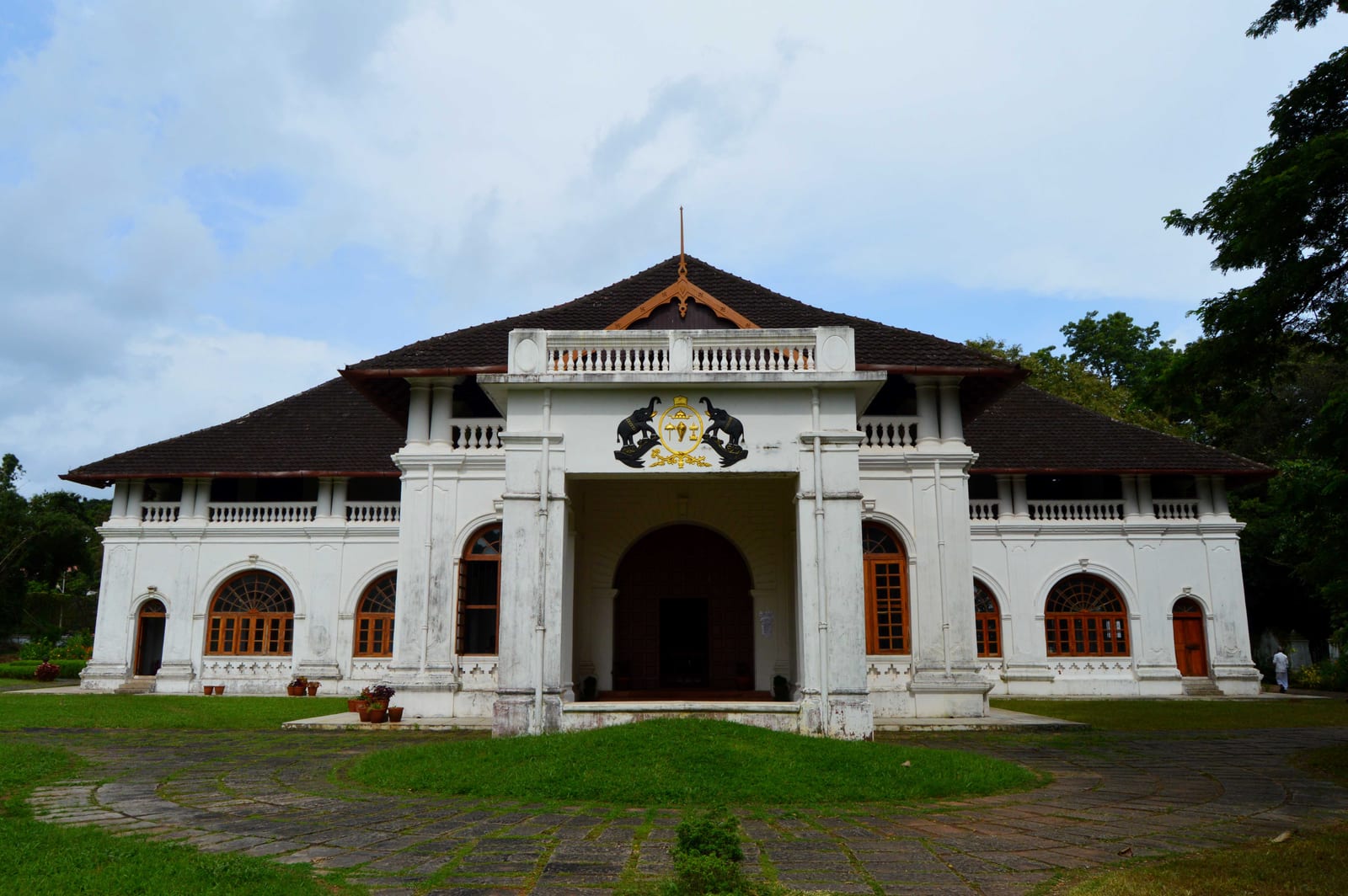
The palace rebuilt in 1795, literally half Dutch and half Kerala in its construction, and the state archaeological museum since 2005. One of the few ticketed sights in a city that mostly is not one.
The old northern tank of the town — its name says exactly that — now a working water body and an evening walkside rather than a ticketed sight.
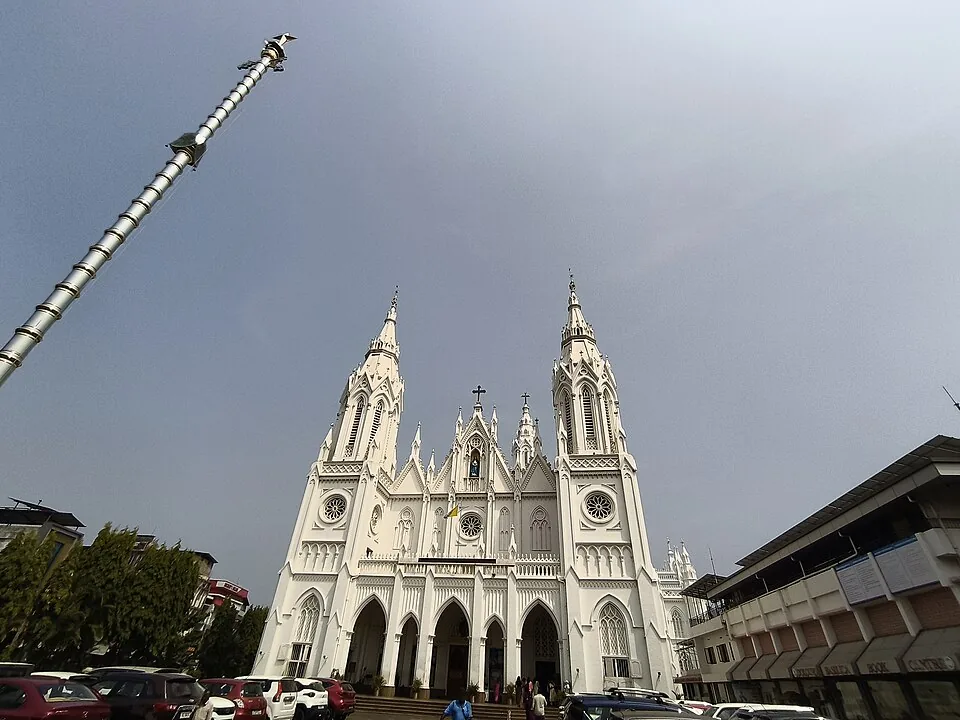
The basilica off the Round whose Bible Tower stands 260 feet — the tallest church tower in India. An active parish as much as a landmark.
Four-star hotel on Paliyam Road near the North (Vadakke) bus stand in central Thrissur, with air-conditioned rooms, a restaurant and banquet facilities. Its Kerala Tourism provider record classifies it as a four-star property, a convenient upper-tier city base for Thrissur Pooram and business visitors.
Long-running three-star hotel on Marar Road in the heart of Thrissur city, operating since 1984 with air-conditioned deluxe rooms, suites and double rooms. Its Kerala Tourism provider record and own website list a central location near the railway station with a restaurant and event facilities, making it a dependable mid-range city base.
Thrissur taxi provider near the railway station with Guruvayur and Athirappilly route evidence. Thrissur taxi, Railway station, Guruvayur transfer.
Thrissur call-taxi and app cab provider near the railway station. Thrissur taxi, Railway station, App cab.
Round The Global Diner is a Thrissur restaurant on Shornur Road at Peringavu, useful for travellers who want a city dinner stop beyond traditional vegetarian meals. Thrissur food, Peringavu, Restaurant.
Chinese restaurant on Bennette Road with direct contact and timing evidence. Thrissur food, Chinese, Bennette Road.
Sakthan Nagar city hotel with direct contact page and restaurant/spa facilities. Thrissur city, Sakthan Nagar, Hotel.
Joys Palace is a Thrissur city hotel near the transport and cultural core, useful for Pooram-season planning, city stays, dining and events. Thrissur city, Hotel, T.B. Road.
Official temple contact for Thrissur city central Shiva temple and Pooram anchor. Temple rules apply · Thrissur, Vadakkunnathan Temple, Temple.
Official Thrissur tourism contact context for city, Pooram and district trip planning. Thrissur, DTPC, Tourist information.
Café (coffee shop, pizza) on Kottappuram Road in Thrissur City. Coffee Shop, Pizza, AC.
Restaurant (regional) on Ikkanda Warrier Road in Thrissur City.
Restaurant (coffee shop, indian) on Thrissur-Shornur Road in Thrissur City.
Five-star business hotel near the Sakthan bus stand in Thrissur city. It has a multi-cuisine restaurant, spa and pool, on TB Road at Kokkalai.
Hotel near Thrissur Railway Station on T.B. Road, established 1980, with multi-cuisine restaurant and banquet halls.
Heritage hotel at Chembukavu in Thrissur city, established 1936. It offers rooms and an on-site family restaurant.
KTDC government-run budget hotel near the Indoor Stadium in central Thrissur. It has a restaurant and conference rooms.
Convention centre with hotel rooms at Puzhakkal, Thrissur, offering banquet halls, restaurant and business facilities.
Budget business hotel opposite the railway station on Poothole Road, Thrissur. It offers rooms and a multi-cuisine restaurant.
Book with the place itself. India’s cyber-crime coordination centre warned in April 2025 that convincing copies of hotel and pilgrimage booking sites are being pushed through sponsored search and social ads, taking payment for rooms the property never hears about. Use the contact and source details on each profile to confirm the exact business and booking channel. A directory entry or map pin alone does not establish an operator’s identity or current availability. Roampedia takes no commission and does not collect booking payments. If a booking page reached you through an ad, check the address bar against the property’s own site before you pay. Fraud can be reported on cybercrime.gov.in or on 1930.
Find food, accommodation and activities across Thrissur city. Browse the guides for places to eat, stay and explore along your route.
23 more places around Thrissur city. Open a guide to plan the visit and onward journey.
An old temple landscape near Kandanassery with nearby megalithic remains; living worship and archaeological evidence must be described as separate layers.
A narrow pedestrian suspension bridge over the Karuvannur river at Chemmapilly, best visited as a working local crossing rather than a staged thrill attraction.
A longstanding Catholic pilgrimage church at Mapranam associated with the Holy Cross and annual feast observances.
A lesser-known rocky hill destination in Thrissur district where the exact approach, safe stopping point and public access require local confirmation.
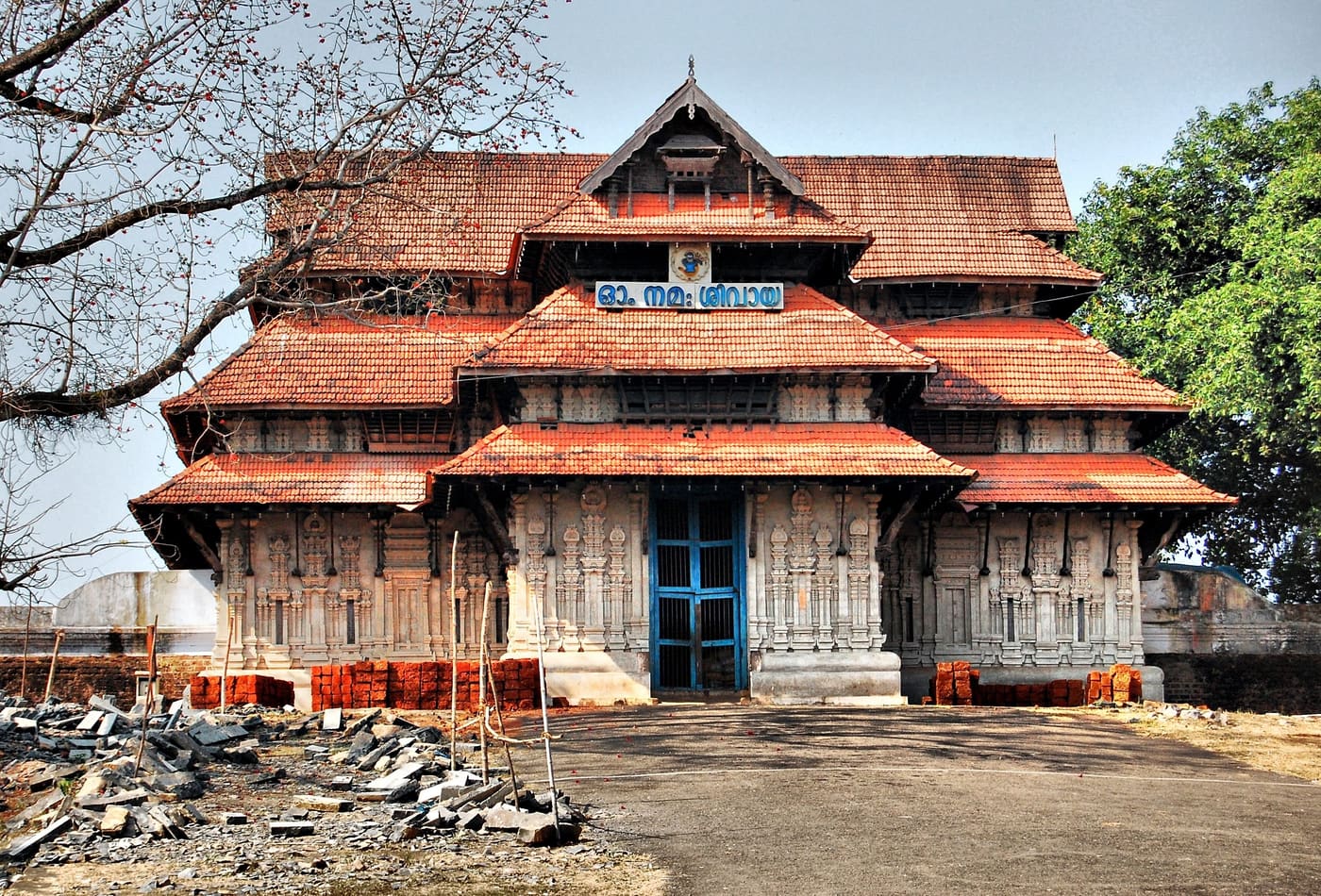
32.8 km · straight line
Ancient temple at the centre of Thrissur’s round, associated with Thrissur Pooram.
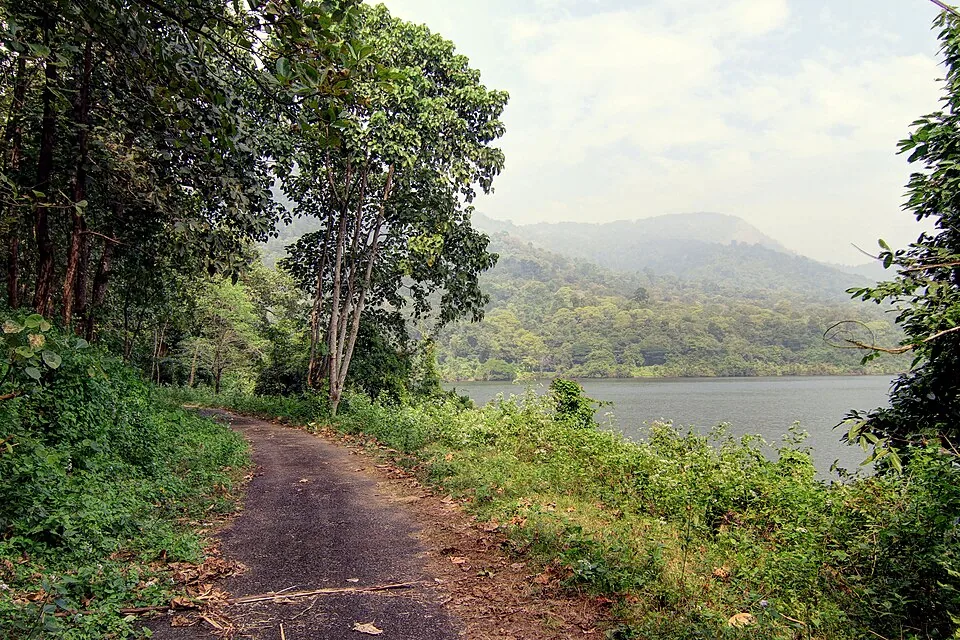
33.1 km · straight line
The official guided 5 km, roughly 3-hour forest route from Virakuthodu, one kilometre beyond the check post, to Choorathala inside Chimmony Wildlife Sanctuary.
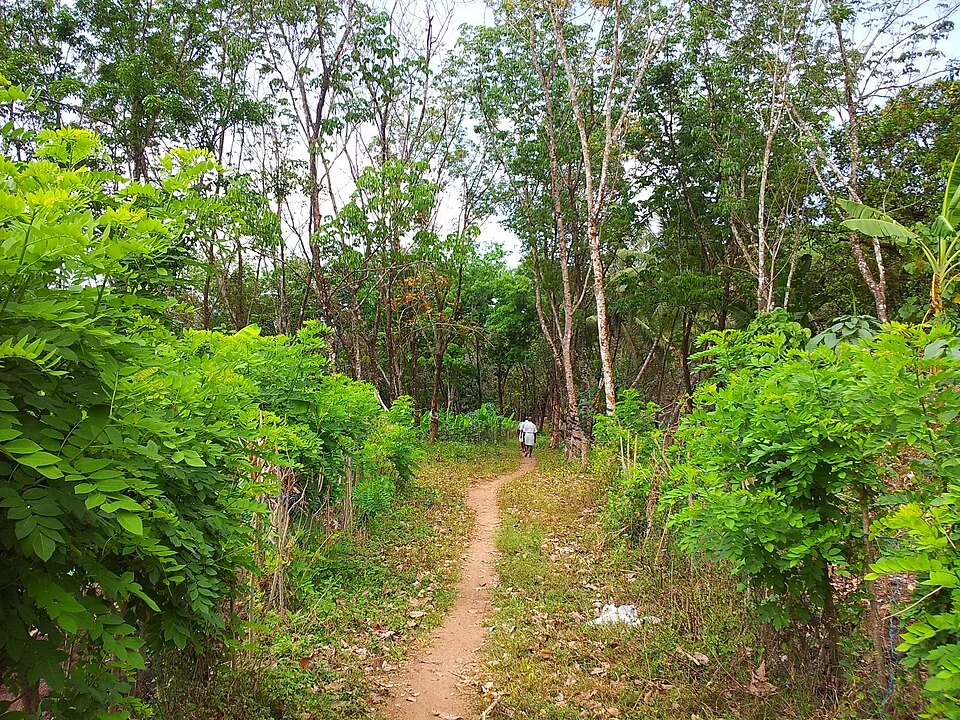
17.1 km · straight line
A guided forest crossing described from Vazhani towards Peechi, plus shorter named trails on the Vazhani side. Current operation, meeting point and return transport must be confirmed with the sanctuary office.
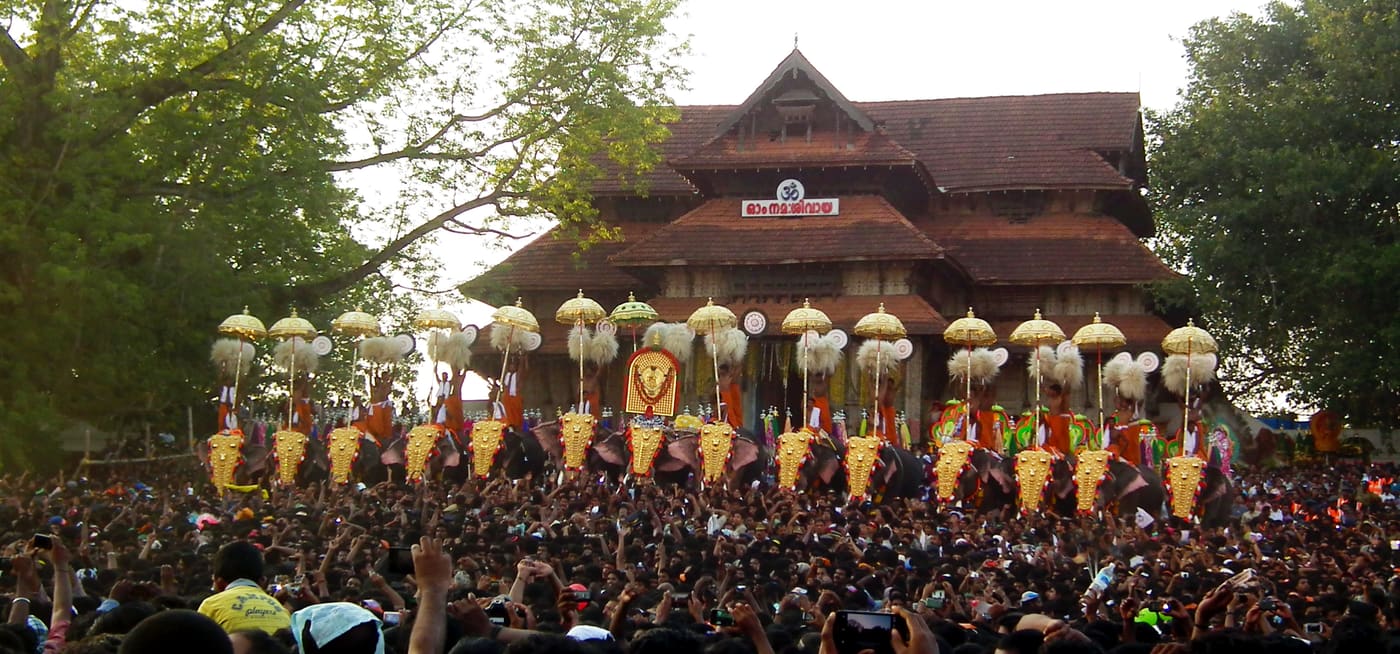
32.8 km · straight line
Kerala’s most famous temple festival, held around April/May at the Thekkinkadu ground around Vadakkunnathan.
32.1 km · straight line
Restored palace and archaeological museum in Thrissur city, built by Raja Rama Varma Sakthan Thampuran.
32.8 km · straight line
The “Puthan Pally” basilica in Thrissur, known for its Bible Tower — among the tallest church towers in Asia.
31.6 km · straight line
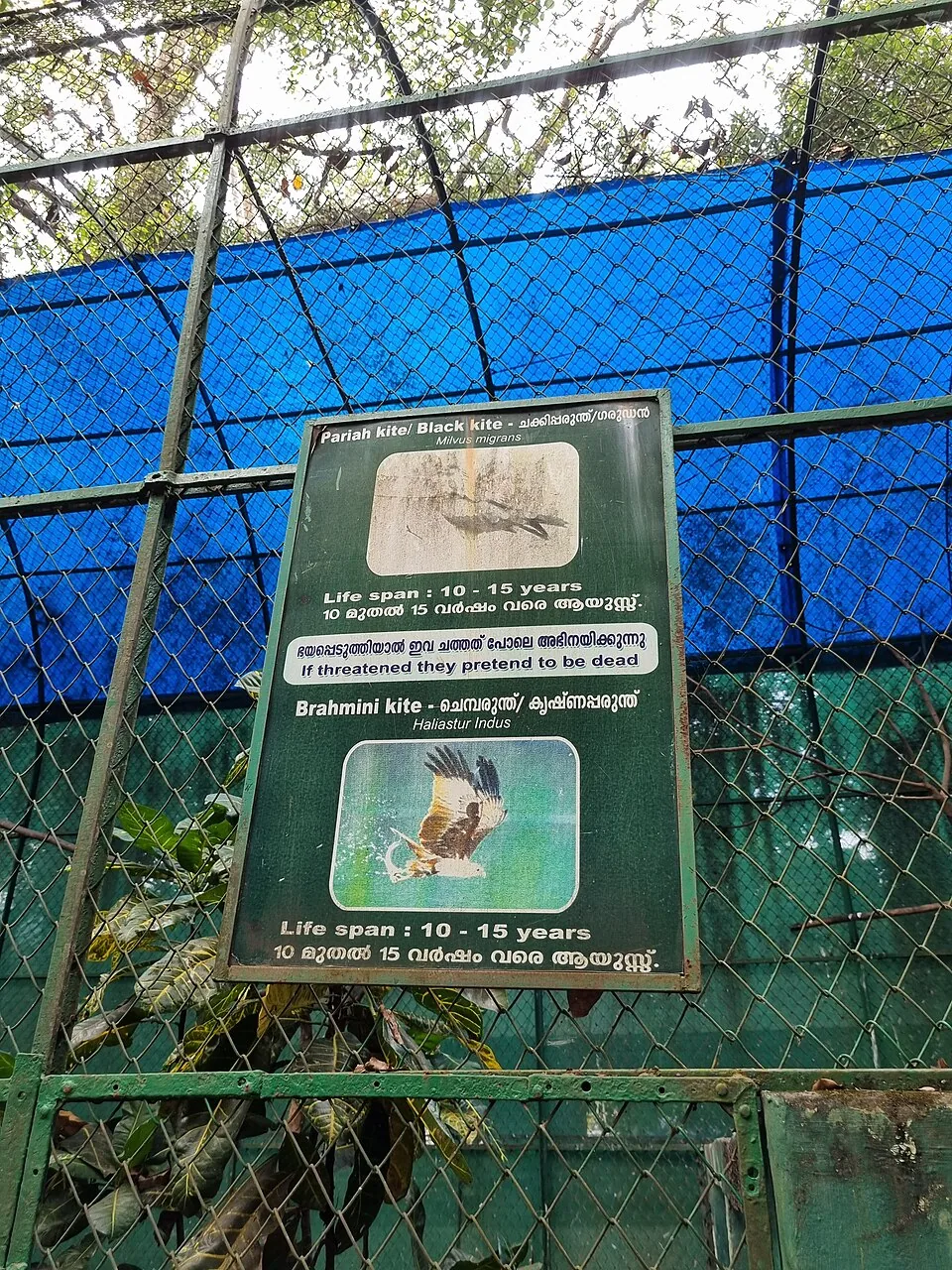
State museum, art gallery and natural-history collection at Chembukkavu; the zoo animals moved to the new zoological park at Puthur, open since February 2026.
23.3 km · straight line
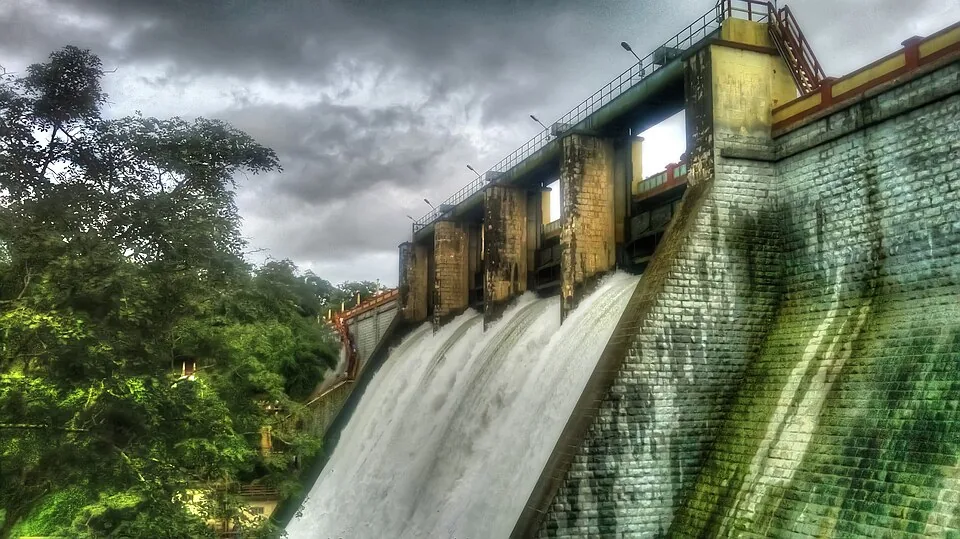
Reservoir and garden at the edge of the Peechi-Vazhani sanctuary, with boating, about 20 km east of Thrissur.
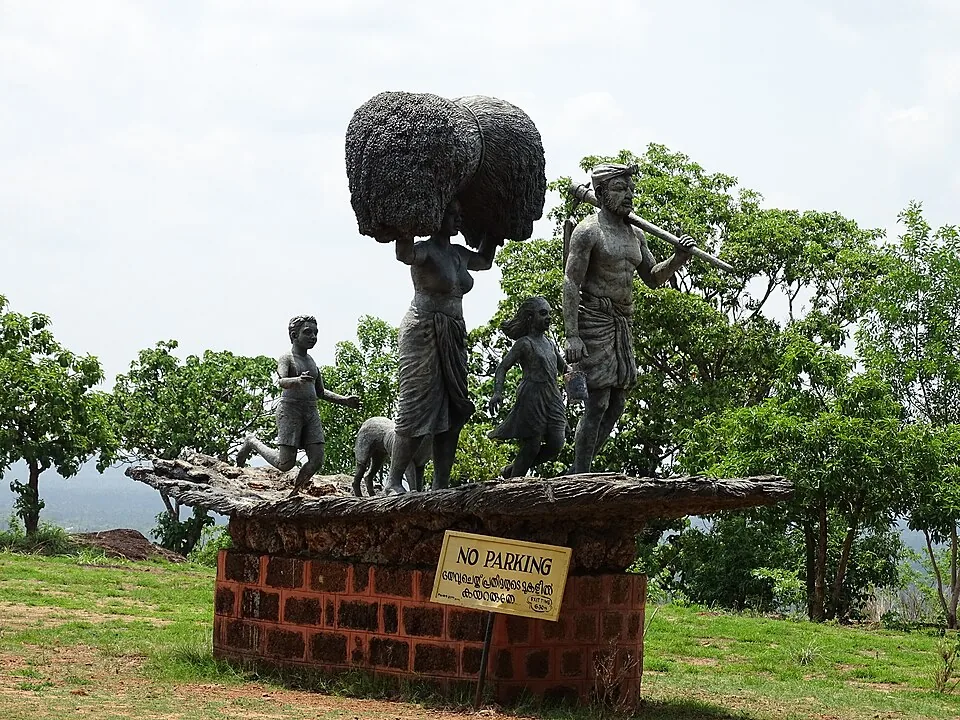
A low hill and park on the edge of Thrissur city, popular for sunset views and morning walks.
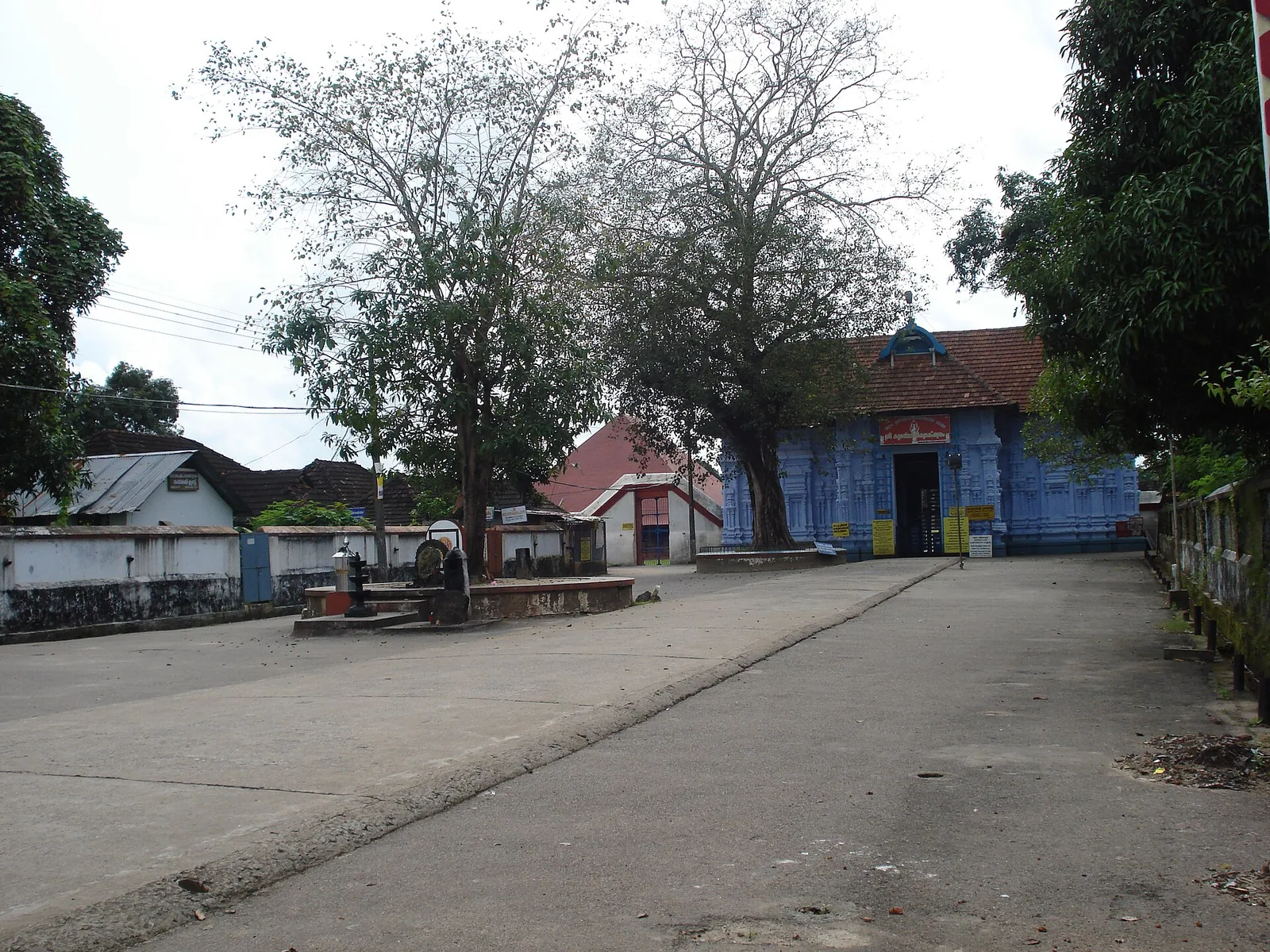
Rare temple at Irinjalakuda dedicated to Bharata, one of the Nalambalam (four-temple) Rama circuit shrines.
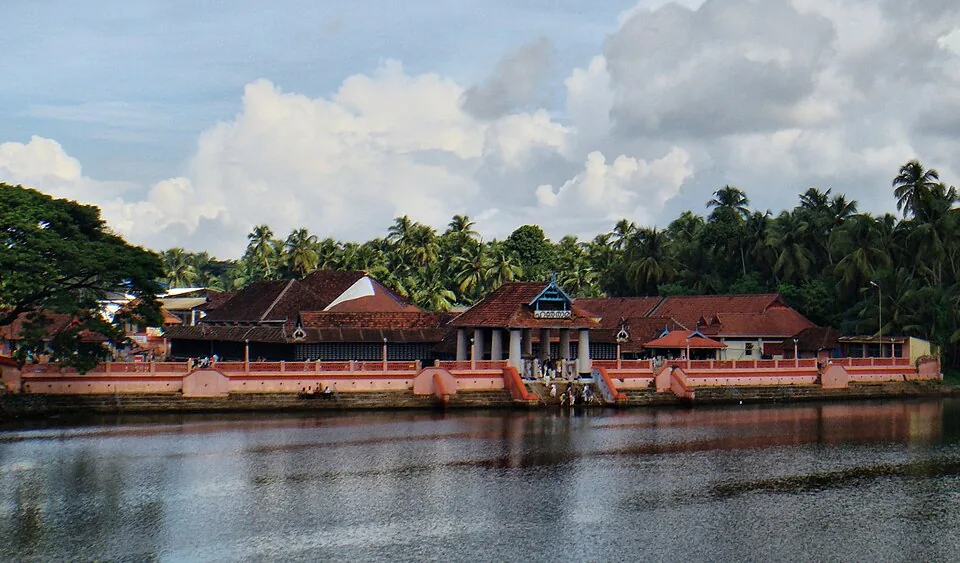
Sree Rama temple on the Theevra river near Triprayar, another of the Nalambalam circuit shrines.
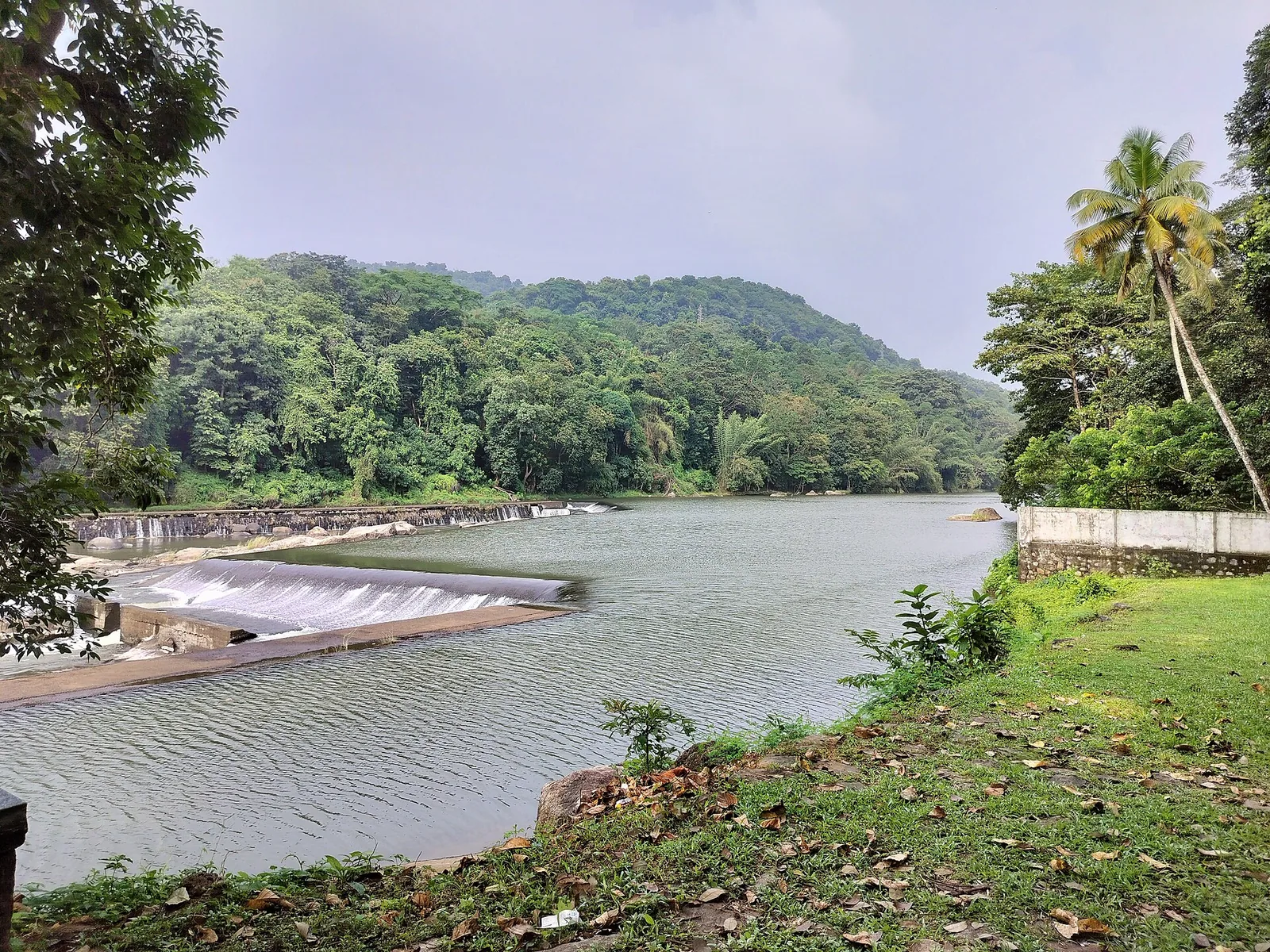
A check dam, hanging garden and butterfly garden on the Chalakudy river near Athirappilly, a popular picnic and day-trip stop.
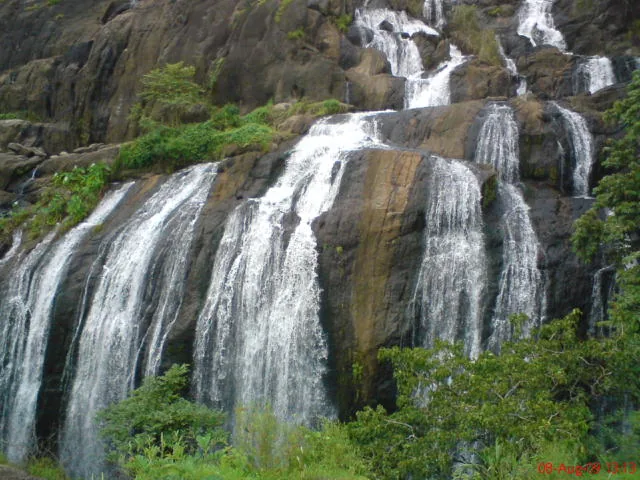
29.3 km · straight line
A forest waterfall and fish sanctuary near Marottichal in the hills east of Thrissur, reached by a short walk.
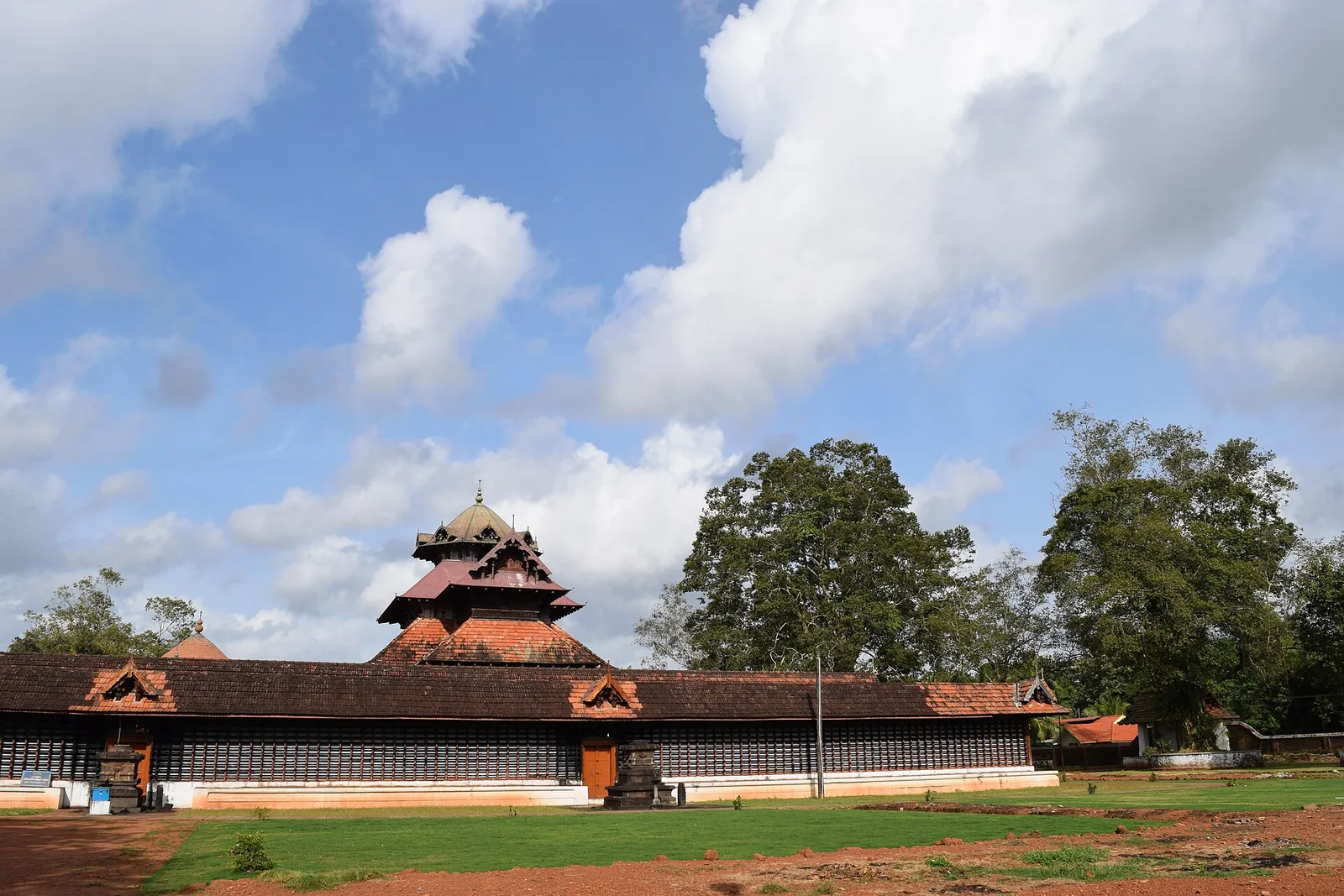
An ancient Shiva temple at Cherpu south of Thrissur, the ritual centre of the historic Peruvanam Pooram.
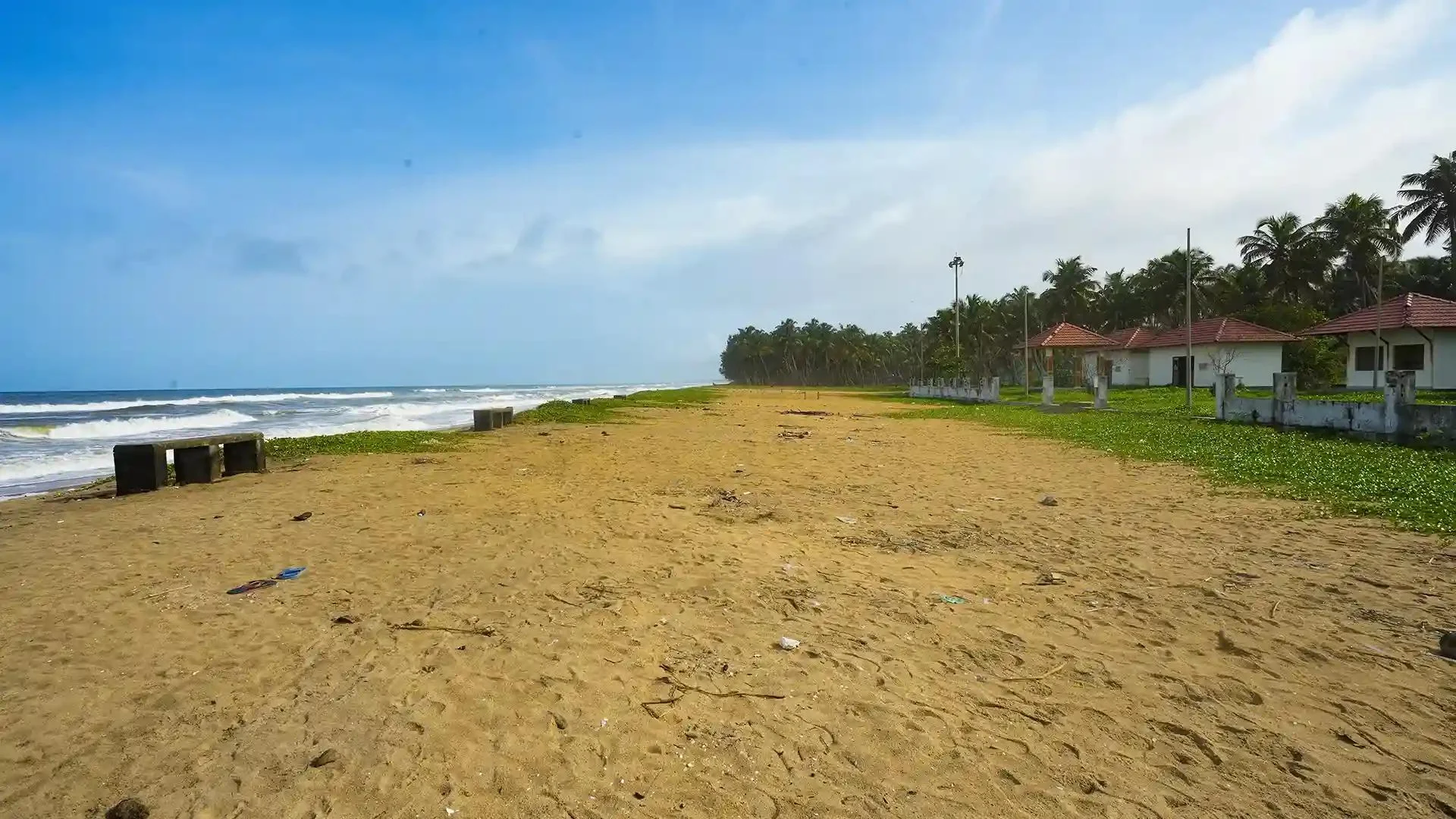
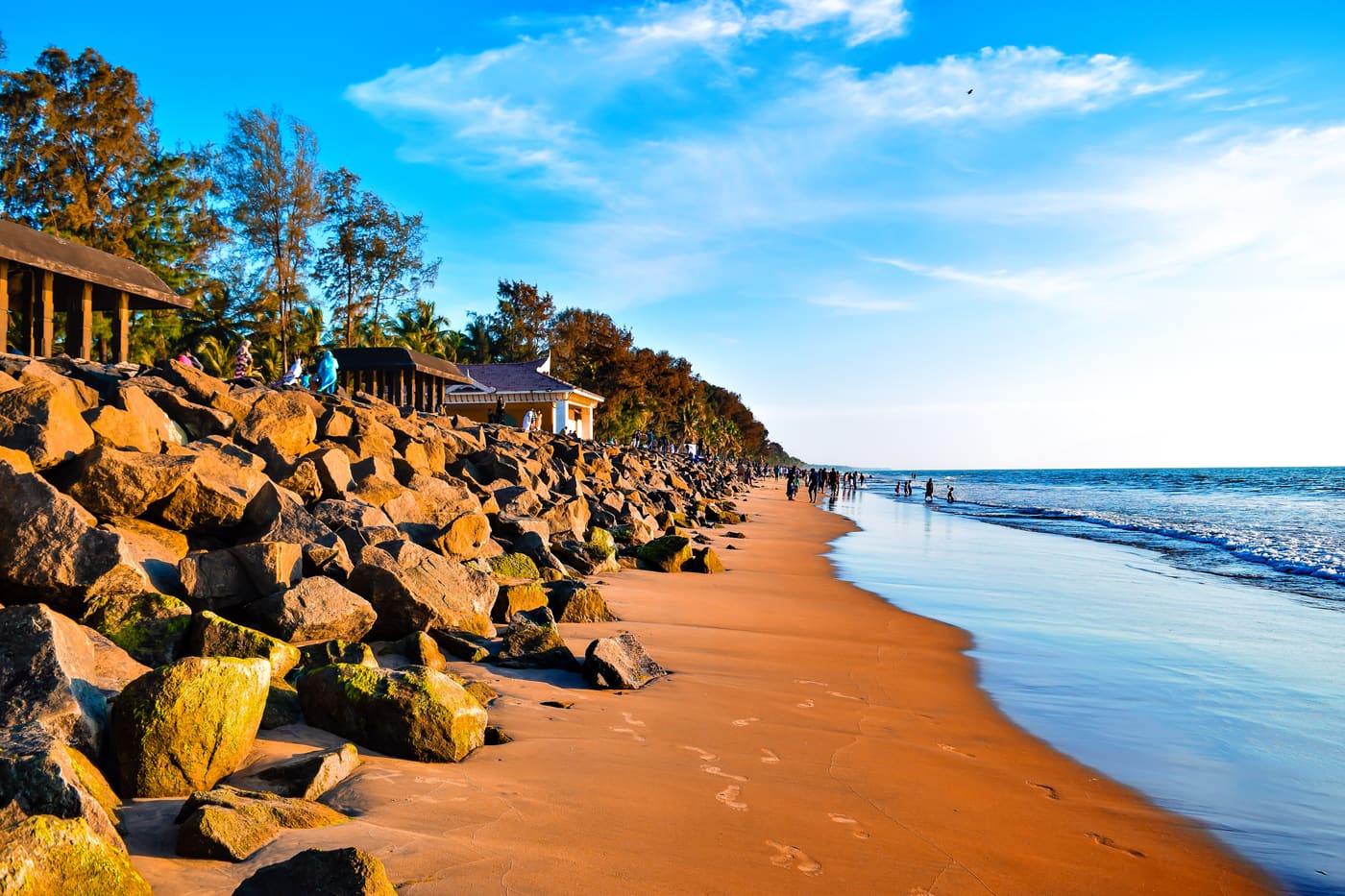
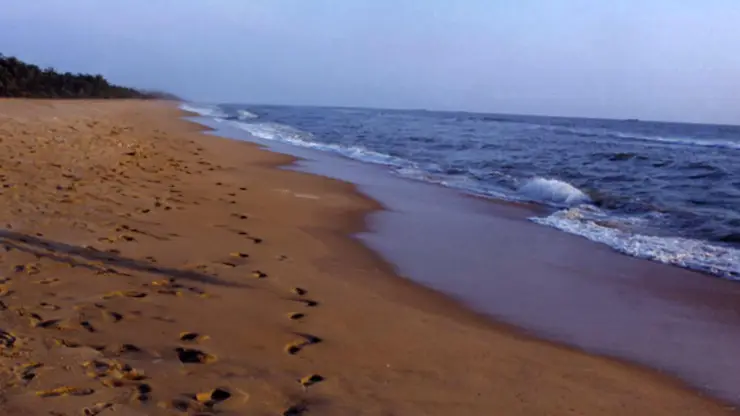
Nattika Beach is the Arabian Sea shore of Nattika in Thrissur district, also identified by Kerala Tourism as Attakuzhi Bandhar Kadapuram. Its long sand frontage, fishing-life connections and association with the Malayalam film Chemmeen give it a character distinct from a resort’s private grounds. Use the named public beach approach for a shore visit, with Nattika and Triprayar providing the wider town plan. The beach, Triprayar Sree Rama Temple and any accommodation property require separate arrival instructions.
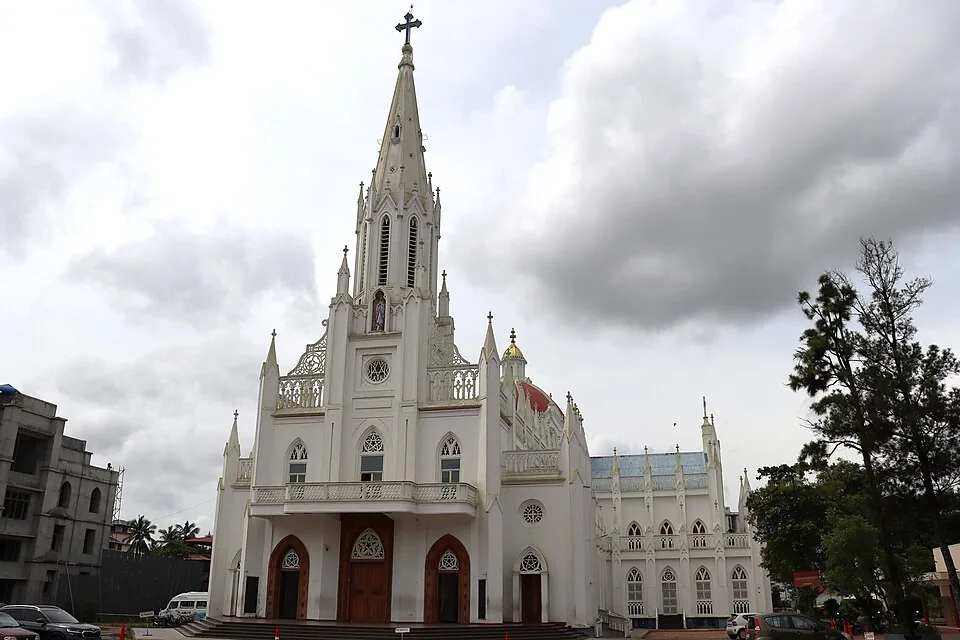
31.9 km · straight line
A landmark Syro-Malabar cathedral in Thrissur city known for its Gothic facade and an underground shrine (rock church).
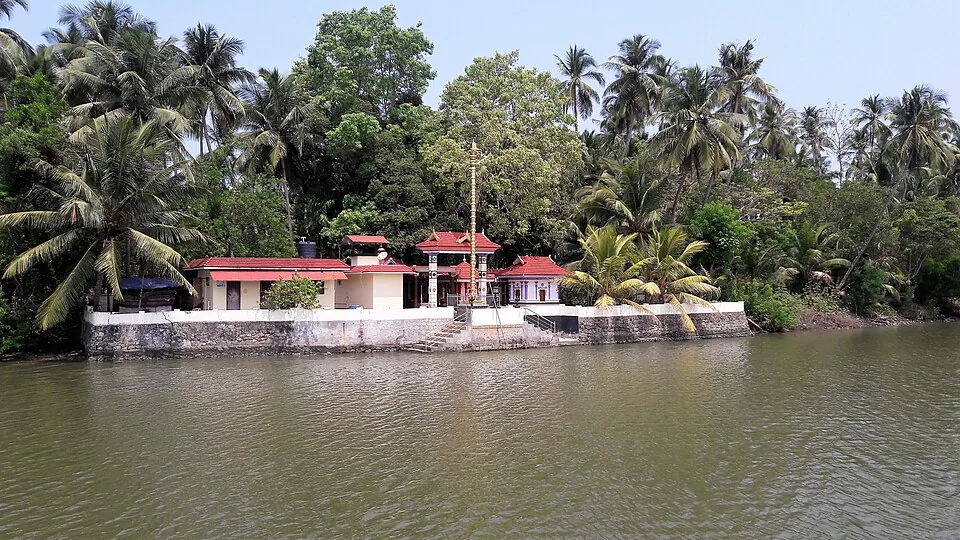
A calm estuarine backwater, mangroves and fishing-harbour belt on the Thrissur coast near Chavakkad, quieter than Alappuzha.
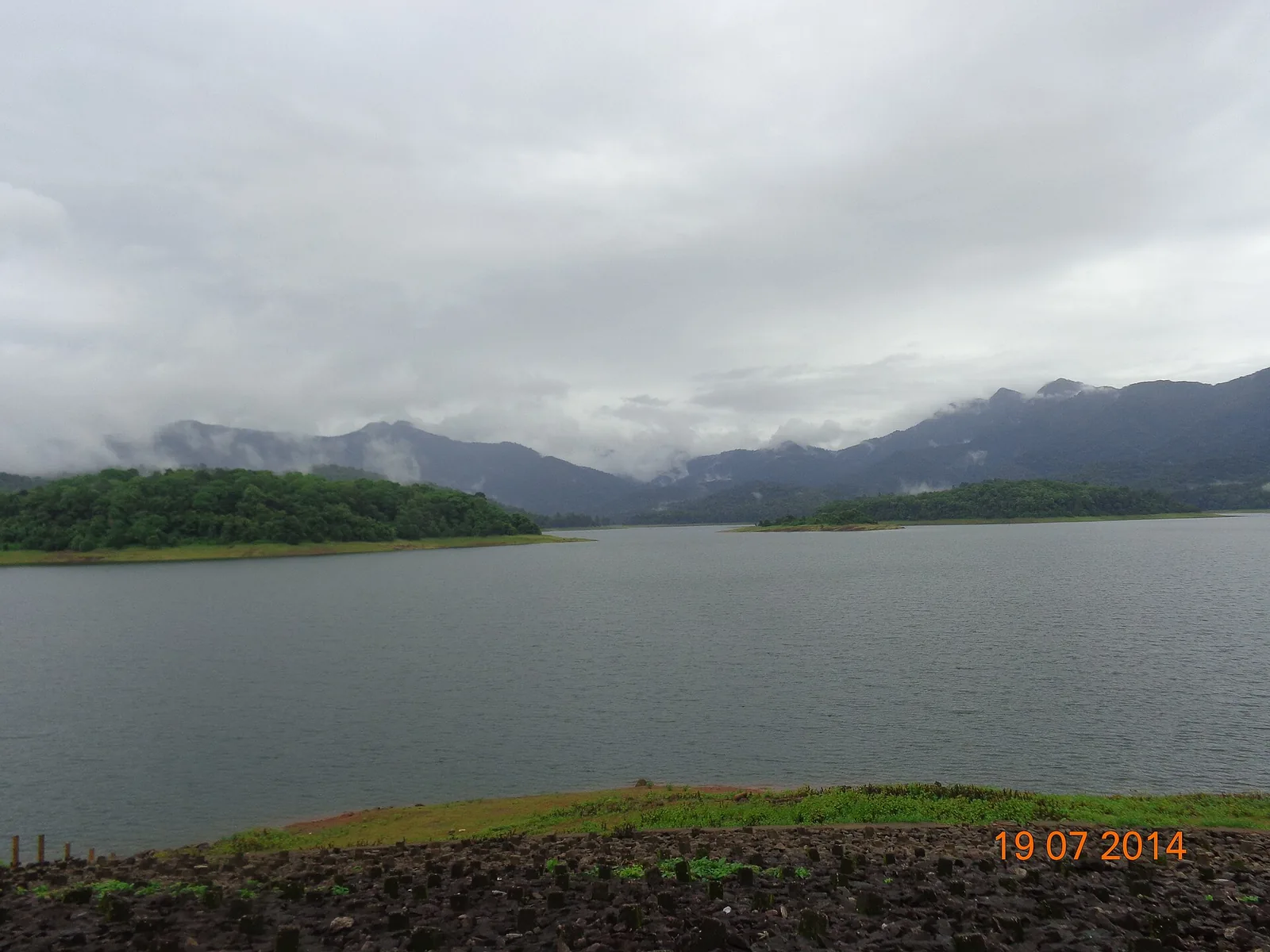
32.8 km · straight line
A reservoir and eco-tourism spot at the edge of the Chimmony Wildlife Sanctuary east of Thrissur, with boating and forest views.
Roampedia is commission-free — own or know a stay, eatery, guide or shop near Vilwadrinatha Temple? Submit public business details for review.
Add a nearby businessEntry: Darshan is generally free, as at most Kerala temples; specific poojas, offerings or vazhipadu are ticketed separately at the temple counter. Confirm current rates on site.
Dress code: Traditional temple attire is expected. By custom men remove their shirt and wear a mundu in the sanctum (lungis, vests and Western wear are discouraged inside), and women dress conservatively in saree, set-mundu or salwar. Norms can change — please confirm on arrival.
Festivals: The headline events are the Punarjani Noozhal on Guruvayur Ekadasi, in the Malayalam month of Vrischikam (typically around November–December), and the temple’s annual utsavam; Ekadasi observances draw the largest crowds. Exact dates follow the lunar/Malayalam calendar and shift each year, so verify the current year’s dates locally.
Photography: Photography is generally restricted or prohibited inside the sanctum and shrine areas, in keeping with Kerala temple custom; you may be able to photograph the exterior and hill setting. Check the posted rules and ask before taking pictures.
If you are travelling by bus or ferry, check the return service with the operator before setting out. Leave time to reach the stop or jetty after your visit.
Ask at the bus stand for the time of the last service back, not the next one. If you miss it, an auto or app cab is the fallback — agree the fare before you get in.
If you need step-free access, contact the site before travelling. Ask about a level entrance, steps along the route, the nearest drop-off point, seating and accessible toilets.
These services are listed within about 1.2 km of Vilwadrinatha Temple. Walking distances follow mapped routes; access and opening hours can change. Other services may be closer but are not included here.
Published emergency and visitor-assistance contacts. For an immediate emergency, call 112. Shared Kerala contact sources checked 4 October 2026; publication does not establish a tested live response.
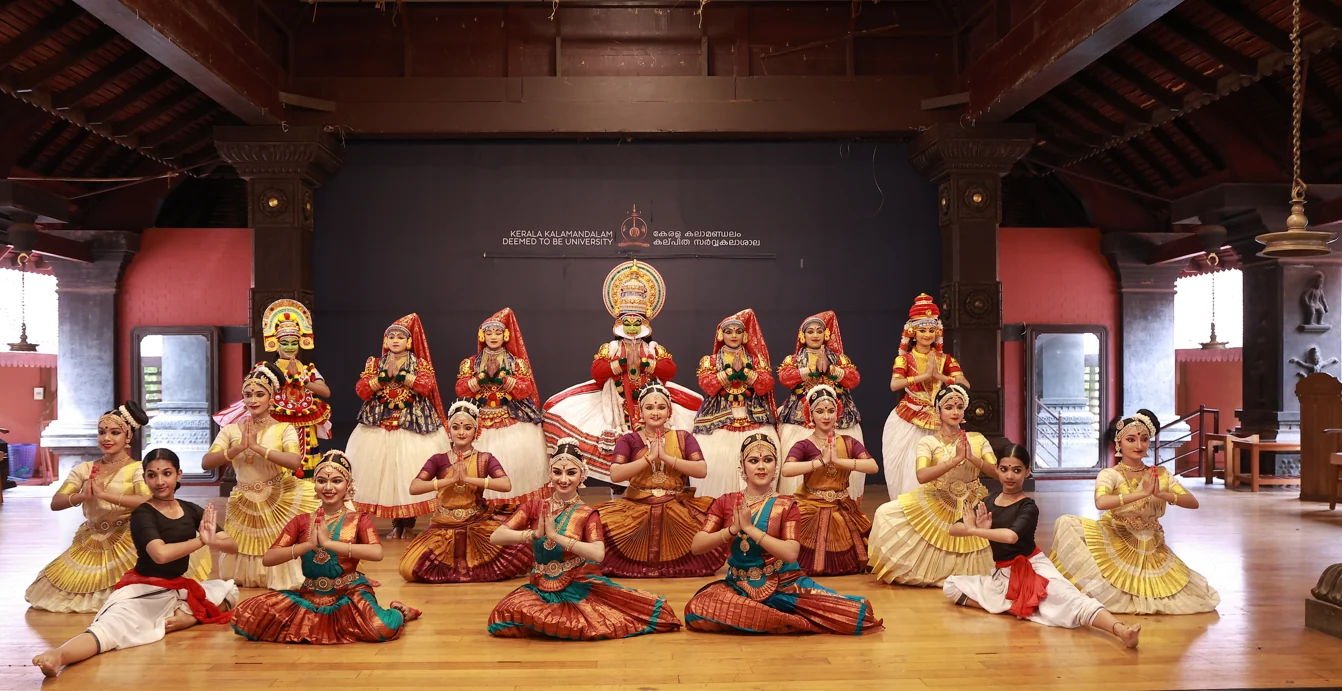
Kerala’s performing-arts institution at Cheruthuruthy, with guided visits to teaching kalaris, the Koothambalam and art gallery, and a separate older Nila campus and Vallathol Museum.
16.4 km · straight lineA guided forest crossing described from Vazhani towards Peechi, plus shorter named trails on the Vazhani side. Current operation, meeting point and return transport must be confirmed with the sanctuary office.
17.1 km · straight lineReservoir and garden at the edge of the Peechi-Vazhani sanctuary, with boating, about 20 km east of Thrissur.
23.3 km · straight lineA forest waterfall and fish sanctuary near Marottichal in the hills east of Thrissur, reached by a short walk.
29.3 km · straight lineState museum, art gallery and natural-history collection at Chembukkavu; the zoo animals moved to the new zoological park at Puthur, open since February 2026.
31.6 km · straight lineA landmark Syro-Malabar cathedral in Thrissur city known for its Gothic facade and an underground shrine (rock church).
31.9 km · straight lineRestored palace and archaeological museum in Thrissur city, built by Raja Rama Varma Sakthan Thampuran.
32.1 km · straight lineThe “Puthan Pally” basilica in Thrissur, known for its Bible Tower — among the tallest church towers in Asia.
32.8 km · straight lineAncient temple at the centre of Thrissur’s round, associated with Thrissur Pooram.
32.8 km · straight lineKerala’s most famous temple festival, held around April/May at the Thekkinkadu ground around Vadakkunnathan.
32.8 km · straight lineA reservoir and eco-tourism spot at the edge of the Chimmony Wildlife Sanctuary east of Thrissur, with boating and forest views.
32.8 km · straight lineThe official guided 5 km, roughly 3-hour forest route from Virakuthodu, one kilometre beyond the check post, to Choorathala inside Chimmony Wildlife Sanctuary.
33.1 km · straight lineNearby toilets, pharmacies, ATMs, seating and vets are community-mapped and may be incomplete or out of date. Map data © OpenStreetMap contributors | Walking times © openrouteservice.org by HeiGIT
The presiding deities are Sree Rama — worshipped here as Vilwadrinatha — and his brother Lakshmana, honoured together as principal deities, which is unusual. Accounts differ on the exact arrangement (some describe two opposed sanctums, a west-facing Rama and an east-facing Lakshmana; others speak of the brothers venerated together). Other shrines on the hill are associated with Hanuman, Ganapathi and Ayyappa. Treat the specifics as living tradition and confirm on site.
It is an arduous pilgrim rite in which devotees crawl through the Punarjani cave — a natural rock tunnel said to be about 150 metres long, roughly two kilometres from the temple — believed to cleanse sin and grant a symbolic rebirth. Pilgrims walk, stoop and finally crawl through dark, tight sections, bathing in five sacred tanks before and after. By tradition the cave is opened for this only once a year and only men take part; verify the current day and any conditions locally before planning.
By tradition it is held once a year on Guruvayur Ekadasi, in the Malayalam month of Vrischikam (usually falling around November–December). Exact dates shift each year with the lunar calendar, so check the current year’s date with the temple or Devaswom before travelling.
No. By long-standing tradition the crawl is undertaken only on the one Ekadasi day, and only by men; it is also physically demanding and unsuitable for anyone with claustrophobia or health concerns. On all other days the cave is not open for the rite. Please respect the tradition and confirm the rules locally.
Traditional dress is expected: by custom men remove their shirt and wear a mundu inside the sanctum, and women dress conservatively in saree, set-mundu or salwar. As with many Kerala temples, entry to the inner shrines may be restricted to Hindus, and photography inside is generally not permitted. Norms can change, so it is best to check current temple rules on arrival.
Thiruvilwamala lies in eastern Thrissur district near the Palakkad border. The nearest railheads are usually cited as Ottapalam and Shoranur (each within roughly 15–25 km), with Thrissur and Wadakkanchery also useful; the nearest airport is Kochi (Cochin International, Nedumbassery), a few hours by road. KSRTC and private buses serve Thiruvilwamala. Distances and connections are approximate — confirm current routes before travelling.
Morning or early evening is usually best; festival days can be powerful but crowded.
Entry: Darshan is generally free, as at most Kerala temples; specific poojas, offerings or vazhipadu are ticketed separately at the temple counter. Confirm current rates on site. Timings: Generally open in the early morning and again in the evening, with a long midday break — commonly cited as roughly 4:00 am to around noon and again from about 5:00 pm to 9:00 pm, following the usual Kerala temple pooja schedule. Timings vary seasonally and on festival days, so confirm locally before visiting.
Base yourself in Thrissur city or a nearby town in Thrissur, then confirm the last-mile route locally before leaving. Check temple entry customs, dress rules and festival crowd conditions before arrival. If the visit depends on forest, temple, boat, ferry, weather or seasonal access, check the official/local rule on the day before travel.
45 minutes to 2 hours, longer during festival or queue periods.
Nearby you can pair Kerala Kalamandalam (16.4 km, approximate straight-line separation), Peechi-Vazhani trek (17.1 km, approximate straight-line separation), Peechi Dam (23.3 km, approximate straight-line separation), Marottichal Falls (29.3 km, approximate straight-line separation).
Use official counters for offerings/tickets where applicable. Keep footwear and valuables secure in crowded areas.
We have not published a story about Vilwadrinatha Temple itself yet. These cover Thrissur city and the wider district, with separate journeys between stops.
These guides explore Thrissur city and the surrounding area. Choose a visit that fits your interests, allowing separately for travel between stops.


Route-level itineraries and practical guides for the rest of Kerala.
Photographs: Manukrishnan80 (CC BY-SA 3.0), Siby Varghese (CC BY-SA 3.0), Arayilpdas (CC BY-SA 3.0). Wikimedia Commons.