What to expect
Highlights
- Temple visit at Kodungallur Bhagavathy Temple
- Kerala temple architecture and rituals
- Local food, shops and pilgrim services nearby
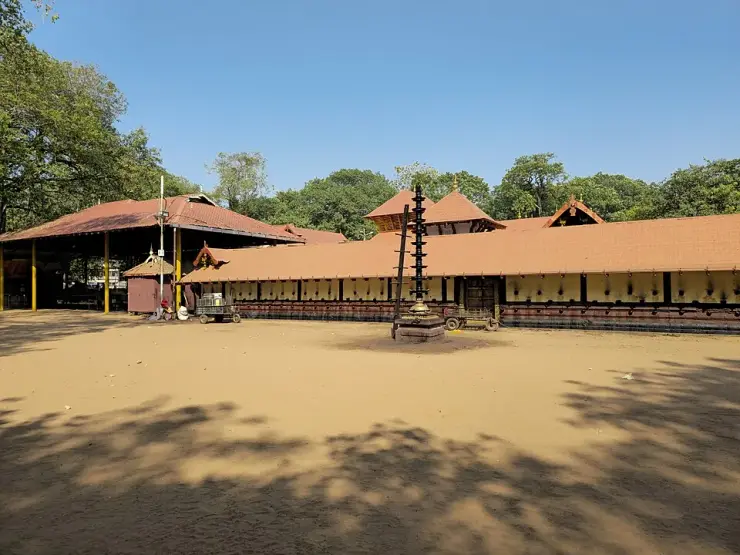
The Sree Kurumba (Bhagavathy) temple at Kodungallur, an ancient and powerful Devi shrine associated with the Bharani festival.
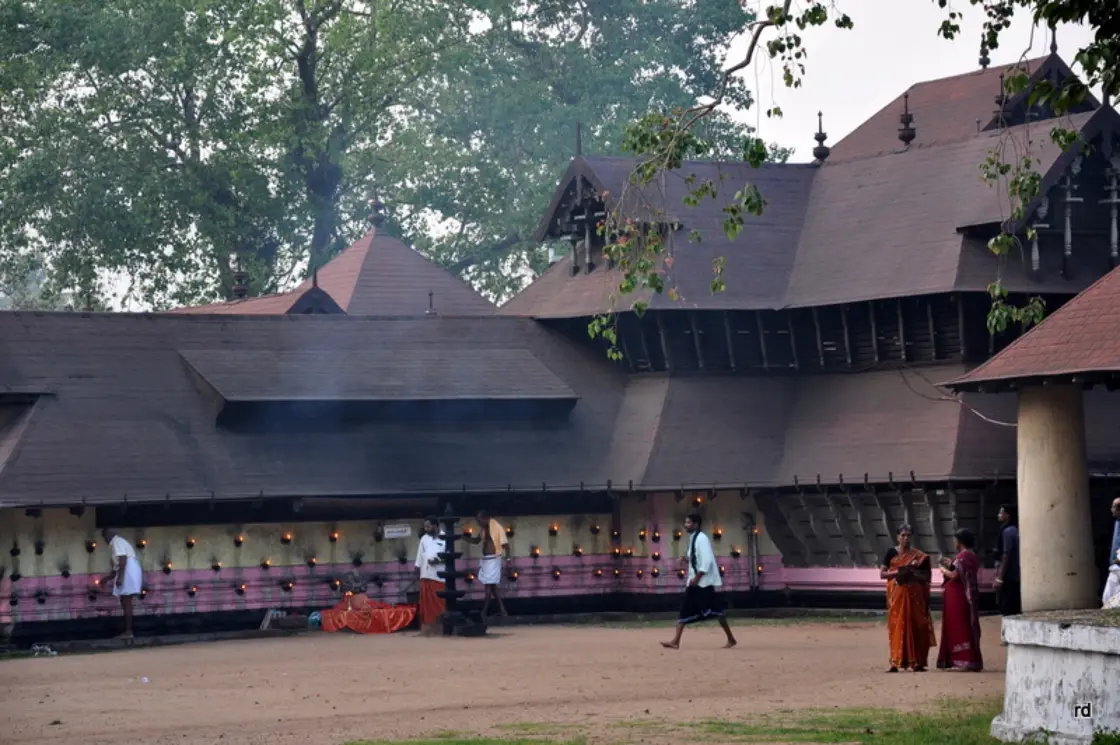
Check entry arrangements. Ask temple staff about visitor entry, dress requirements and access to the inner shrine before you travel, especially if you are visiting as a non-Hindu.
Dress respectfully and follow the institution’s admission and photography rules.
At the heart of ancient Kodungallur — the storied Muziris of the spice routes — stands the Sree Kurumba Bhagavathy Temple, one of the oldest and most powerful Devi shrines in Kerala. Worshipped as Sree Kurumba, a fierce form of Bhadrakali, she is affectionately called Kodungallur Amma, the Mother of Kodungallur, and is revered as the great mother-shrine from which many Kerala Bhagavathy temples trace their Devi.
Kodungallur Amma is no gentle household goddess. The presiding deity is Sree Kurumba, a fierce, war-like form of Bhadrakali, worshipped here as Mahakali and Aadi Parashakti. In the dim, lamp-lit sanctum sits a majestic wooden image, reported to stand around six feet tall, depicting the goddess in her ferocious aspect — eight-armed, facing north, holding among her attributes a sickle-shaped sword, an anklet, a bell and, in one hand, the severed head of the demon Daruka. To stand before her is to feel the raw, unsoftened power that has drawn devotees to this ground for close to two thousand years.
The temple is regarded as one of the oldest functioning temples in Kerala, and indeed in India. Local tradition places its origins in the Sangam age, roughly eighteen hundred to two thousand years ago, layering the Devi over what many believe was an even older Shiva shrine. This double sanctity — Shakta power set within an ancient Shaiva ground — is written into the very layout of the temple, and it gives Kodungallur a depth of atmosphere that few other shrines can match.
The sanctum is arranged in the rare Rurujit Vidhana pattern: Shiva stands at one end and Ganesha at the other, with the Sapta Matrikas — the seven mother-goddesses — ranged between them, and the Bhadrakali of Kodungallur presiding at the centre. Five Sri Chakras, traditionally ascribed to Adi Shankaracharya, are held to be the seat of the Deviʼs power. This is a temple built for the worship of shakti in its most concentrated form, and the rituals here have always carried an intensity that sets Kodungallur apart.
Above all, Kodungallur is a mother-shrine. The temple is honoured as the head of sixty-four Bhadrakali kavus across Malabar, and countless Bhagavathy temples of Kerala — the celebrated Chettikulangara Devi temple among them — trace the descent of their goddess back to this sanctum. For generations of families and village shrines, a pilgrimage to Kodungallur is a return to the source, a way of paying respect to the original Amma from whom their own Devi is believed to have travelled.
The colour of Kodungallur is red — the raktha-varna of the goddess. Red silk and red cloth are draped around the stones that surround the idol, red is worn by the oracles who serve her, and red offerings run through the templeʼs ritual life. That vivid, almost primal palette speaks to the character of the Devi herself: a goddess of blood and battle, of protection fiercely given, whom devotees approach not with timidity but with a kind of familial urgency, pouring out their sorrows and demands to a mother believed powerful enough to answer them.
The templeʼs greatest expression of this bond is the Kodungallur Bharani — one of the largest Devi festivals in Kerala, when tens of thousands of oracle-devotees converge on the shrine. For most of the year, though, the temple keeps a quieter rhythm: the steady round of daily poojas, the murmur of pilgrims, the smoke of lamps, and the sense — palpable to anyone who visits — of standing on ground that has been sacred for a very, very long time.
The best-loved tradition surrounding Kodungallur ties the temple to the great Tamil epic Silappadikaram and its tragic heroine, Kannaki. In the story, Kannakiʼs innocent husband is wrongly executed by the Pandya king; in her grief and fury she tears off one of her breasts and hurls it at the city of Madurai, which is consumed in flames. Deified as an embodiment of pure, avenging shakti — merged in tradition with Bhadrakali herself — she is believed to have journeyed on and, according to legend, attained moksha at Kodungallur after worshipping the goddess here.
Woven into this is the figure of the Chera king Cheran Chenkuttuvan, celebrated in the Silappadikaram itself. Tradition holds that the Chera monarch, moved by Kannakiʼs story, raised a shrine to the deified Kannaki-Bhadrakali and consecrated her worship at Kodungallur roughly eighteen hundred years ago, through the fierce Shakteya rites for which the temple remains famous. This account, cherished though it is, belongs to the realm of legend and living tradition rather than documented history, and it should be received in that spirit.
An older layer of legend reaches back to Parasurama, the axe-wielding avatar of Vishnu credited with raising the land of Kerala from the sea. In this telling, the sage — beset by the demon Darika (Darikan) — was counselled by Lord Shiva, and installed the goddess Bhadrakali beside an existing Shiva shrine so that she might destroy the demon. Bhadrakali, born of the fire of Shivaʼs third eye for exactly this purpose, slays Darika, and it is that triumphant, blood-stained victor who is believed to be enshrined at Kodungallur.
These strands — the martyred Kannaki, the Chera king who deified her, the Devi born to slay Darika, and the still older Shiva ground beneath — do not so much contradict one another as pile up, legend upon legend, into the extraordinary sanctity of the place. Whichever story a devotee holds closest, all agree on one thing: that Kodungallur is a fountainhead of Devi worship, the original Amma from whom a great family of Kerala goddesses is believed to flow.
Kodungallur is history layered upon legend. The town is widely identified with the ancient port of Muziris (Muchiri), the fabulous emporium of the pepper trade praised by Roman and Tamil sources alike, where merchants from Rome, West Asia and beyond once bartered gold for Malabar spices. As a seat of Chera power and one of the earliest gateways between India and the wider world, Kodungallur — later known as Cranganore — gave its temple a setting of remarkable antiquity, at the meeting point of empires, faiths and trade winds.
The temple itself is reckoned among the oldest continuously worshipped shrines in the region. Tradition attributes its consecration variously to Parasurama, to the Chera king Cheran Chenkuttuvan, and to the line of the Cheraman Perumals, and connects its early Shakta rites to priests drawn from the Malabar community. Beneath the layers of legend lies the plain fact of great age: for many centuries the Bhadrakali of Kodungallur has stood at the head of the Devi worship of Malabar, her festival and her sixty-four subordinate kavus binding a wide web of shrines to this one sanctum.
The temple was long associated with the local ruling house, the Kodungallur royal family, whose head traditionally holds a ceremonial role in the Bharani rites to this day. That older dispensation gave way to modern administration in 1950, when the Cochin Devaswom Board assumed management of the temple, as it does for many major shrines across the region — a transition that placed the ancient sanctum within the framework of Keralaʼs organised temple governance.
Kodungallurʼs turbulent later history is bound up with the Mysorean invasions of Malabar in the late eighteenth century. Local accounts hold that during Tipu Sultanʼs campaigns of around 1789 to 1790 — the same years in which the Cranganore (Kottappuram) fort changed hands and was ultimately destroyed — the temple suffered damage before being restored and reconsecrated in the years that followed. Precise details of what befell the sanctum are matters of tradition and reported memory rather than firmly settled record, and are best treated with due caution.
Today the temple sits at the centre of the wider Muziris Heritage Project, an ambitious effort to conserve and interpret the region's extraordinary past — its forts, spice-trade sites, ancient places of worship and the Pattanam excavations that have yielded tangible traces of the lost port. Visiting Kodungallur Amma, then, is also a way of stepping into one of the oldest continuously inhabited crossroads in India, where a fierce and ancient goddess still presides over ground that has been sacred, and cosmopolitan, for two millennia.
You stand before one of Keralaʼs oldest and most powerful Devi shrines — a mother-temple whose Bhadrakali is revered as the source from which a great family of Kerala Bhagavathy temples traces its goddess. Few places carry this much accumulated sanctity.
The sanctum is genuinely atmospheric: a large, fierce, north-facing wooden image of the eight-armed Devi holding the head of the demon Daruka, set within the rare Rurujit Vidhana arrangement of Shiva, Ganesha and the Sapta Matrikas, and surrounded by the red cloth and red offerings that give Kodungallur its unmistakable character.
History runs deep beneath your feet. This is ancient Muziris, the Roman-era spice port and Chera capital, so a visit weaves temple pilgrimage together with one of the most storied chapters of Indiaʼs trading past — the Muziris Heritage trail lies all around.
The living legends are unforgettable: the deified Kannaki of the Silappadikaram, the Chera king Cheran Chenkuttuvan, Parasuramaʼs installation of the Devi to slay Darika — a place where Tamil epic, Kerala myth and ancient Shaiva ground all converge.
If you can time it, the Kodungallur Bharani around Meena Bharani (March-April) is one of the great spectacles of Devi worship in Kerala, when red-clad oracle-devotees gather in their thousands — an intense, deeply traditional festival unlike anything else in the state.
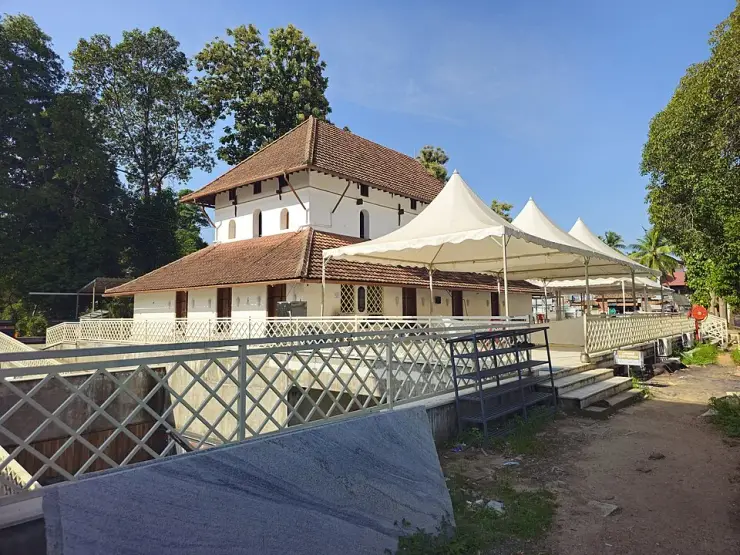
Nearby stand two more remarkable sites — the Cheraman Juma Masjid, traditionally held to be among the very first mosques in India, and the Kottappuram (Cranganore) Fort — making Kodungallur a rare spot where Hindu, Muslim, Jewish and Christian antiquity sit within a few kilometres of one another.
Road km to Thrissur; ghat roads and traffic vary — allow extra.
Morning or early evening is usually best; festival days can be powerful but crowded.
Live forecast loads in your browser.
Sun and moon are calculated for this location and shown in IST. Photography windows are the hour around sunrise and sunset; the sunset bearing is degrees clockwise from true north. Moon phase is accurate to about half a day.
Verified hotels, homestays, restaurants, experiences, sights, shops and rentals around Kodungallur Bhagavathy Temple — commission-free, with direct contact. Filter by what you need.

Kerala Tourism Muziris source for Munakkal Beach, seven kilometres from Kodungallur town. Munakkal Beach, Azhikode, Kodungallur.
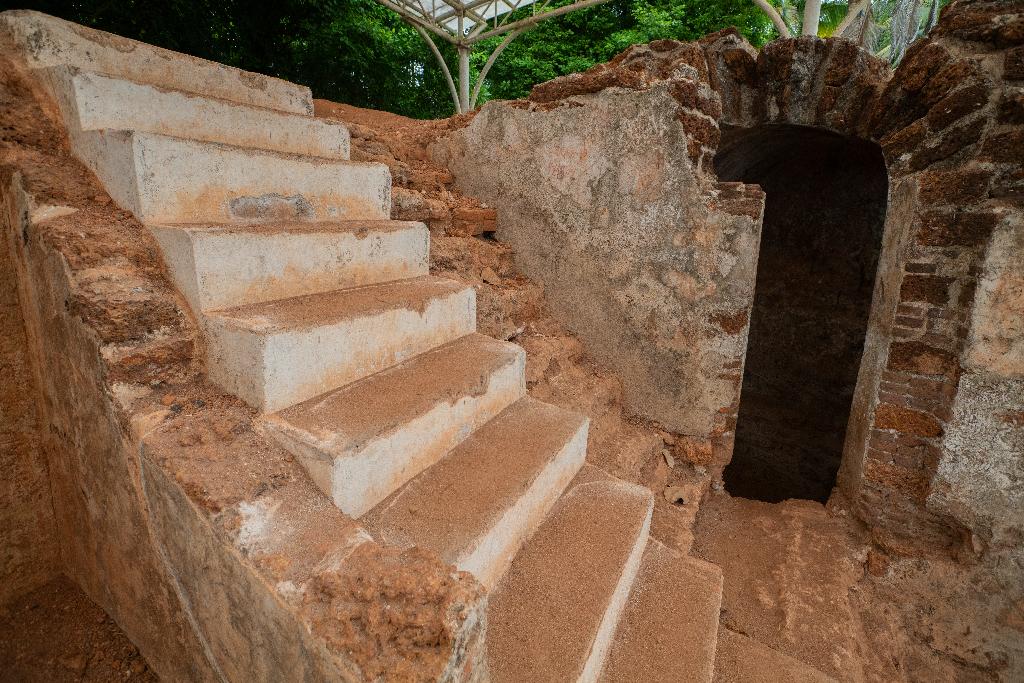
Kerala Tourism Muziris heritage-site source for Kottappuram Fort near Kodungallur. Kottappuram Fort, Muziris, Kodungallur.
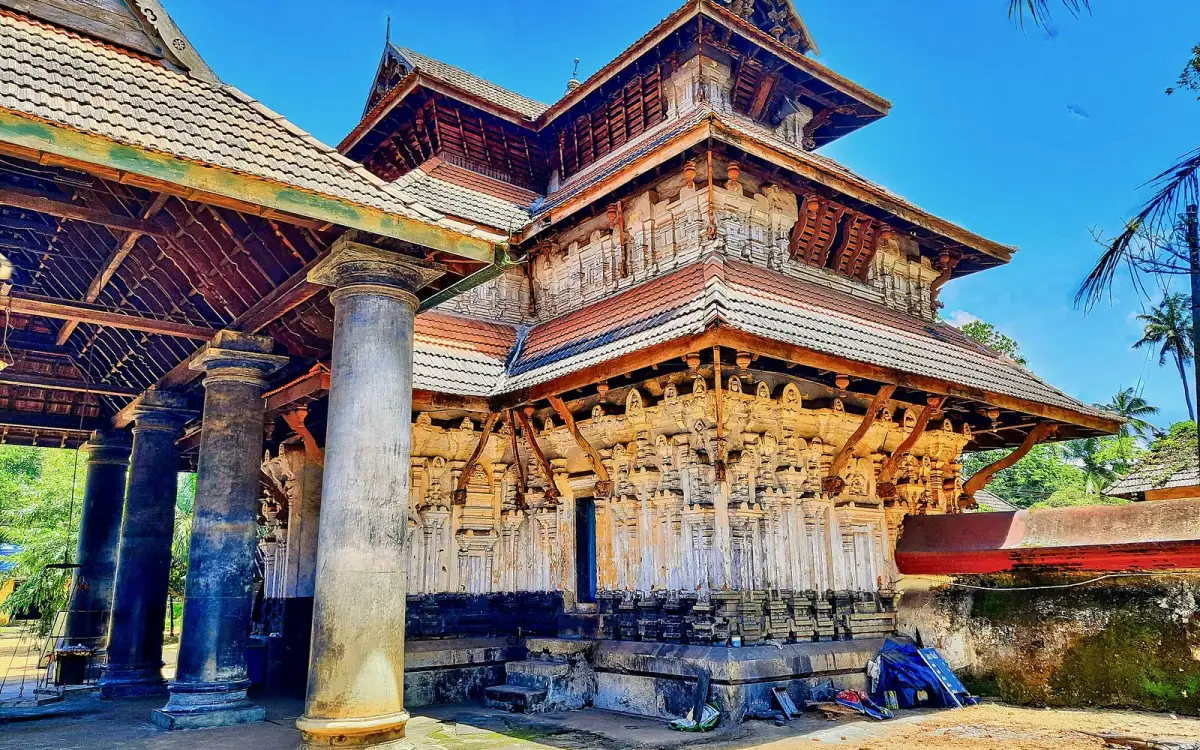
Thiruvanchikulam Mahadeva Temple is a historic Kodungallur-area Shiva temple and Muziris religious-site stop; use official sources for current pooja, offering and visitor details. Temple rules apply · Kodungallur, Thiruvanchikulam, Temple.
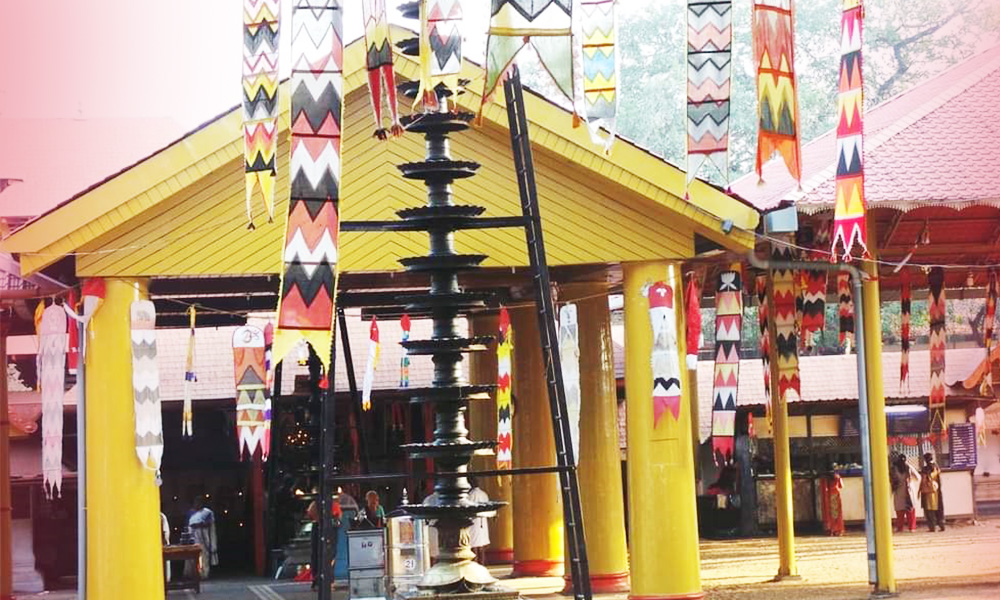
Official temple contact for Kodungallur Bhagavathy Temple at Thekkenada Road. Temple rules apply · Kodungallur, Bhagavathy Temple, Temple.
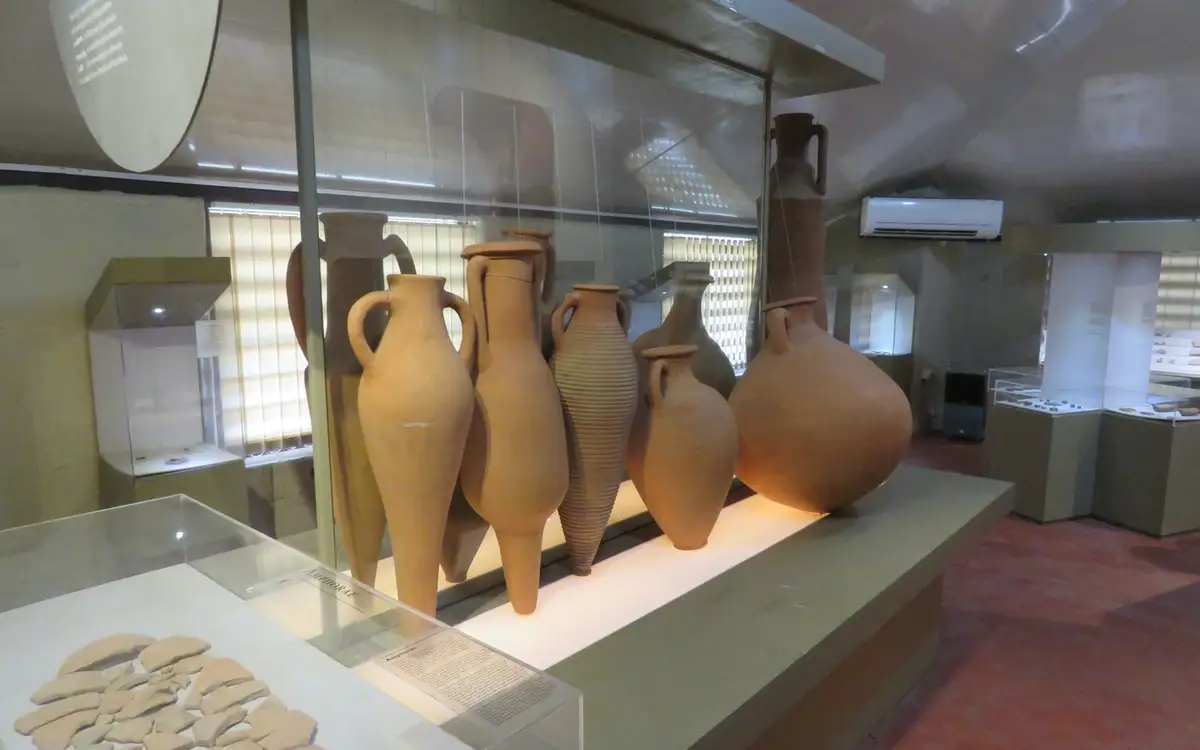
Muziris Heritage Project is the official heritage-conservation and visitor framework covering the Kodungallur and North Paravur heritage zone, useful for museums, hop-on hop-off boat service and local heritage planning. Muziris, Kodungallur, Heritage.
Cheraman Juma Masjid is a major Kodungallur heritage and pilgrimage stop, often described by Kerala Tourism as India first mosque; visitors should check current access and prayer-time etiquette before arrival. Mosque rules apply · Kodungallur, Cheraman Juma Masjid, Muziris.
Book with the place itself. India’s cyber-crime coordination centre warned in April 2025 that convincing copies of hotel and pilgrimage booking sites are being pushed through sponsored search and social ads, taking payment for rooms the property never hears about. Every listing here links to the business’s own contact details and its own Google or Bing profile — we take no commission and sit in nobody’s payment path. If a booking page reached you through an ad, check the address bar against the property’s own site before you pay. Fraud can be reported on cybercrime.gov.in or on 1930.
Find food, accommodation and activities across Kodungallur. Browse the guides for places to eat, stay and explore along your route.
2 more places around Kodungallur. Open a guide to plan the visit and onward journey.
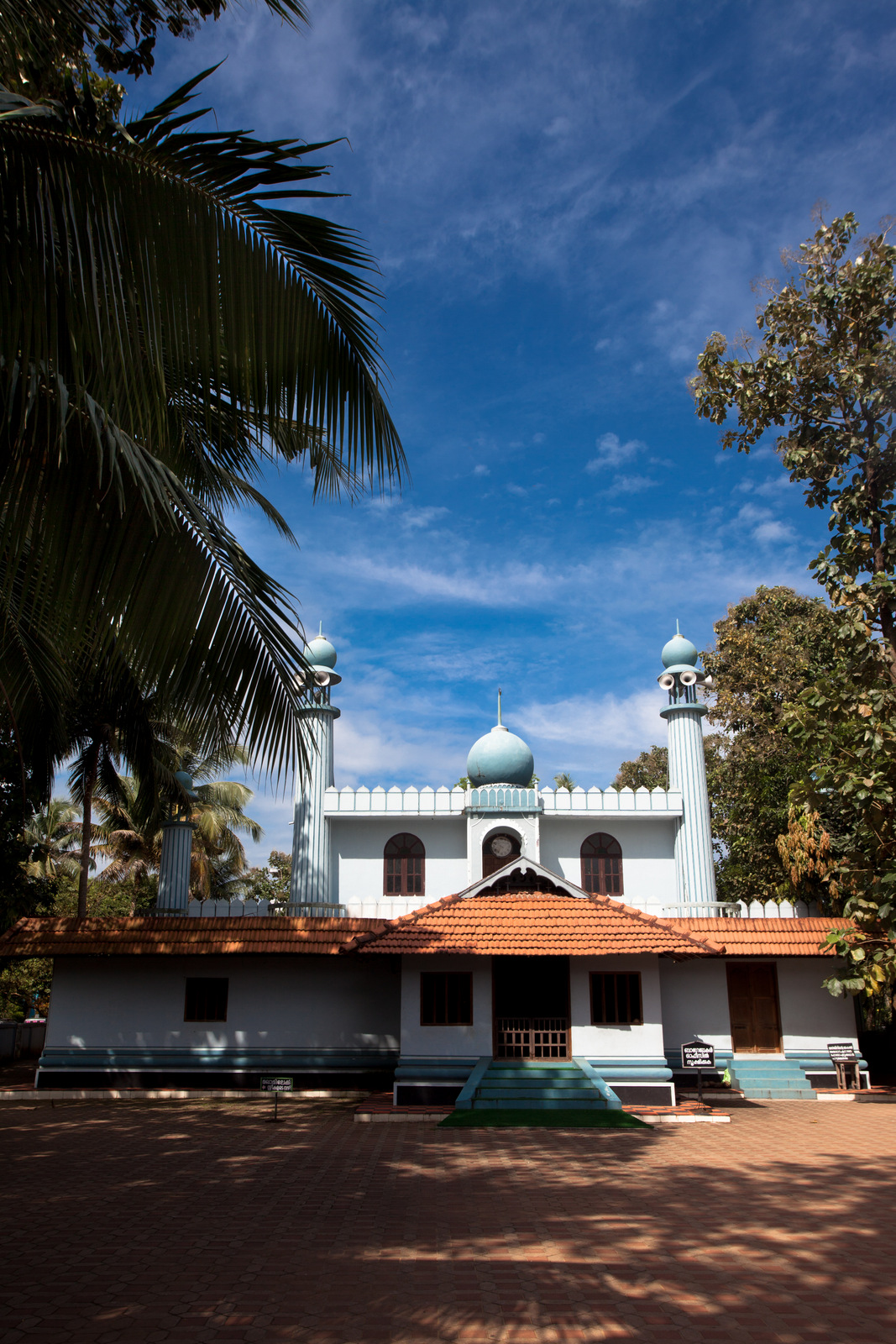
1.6 km · 20 min walk
At Kodungallur, held by tradition to be the oldest mosque in the Indian subcontinent (7th century).
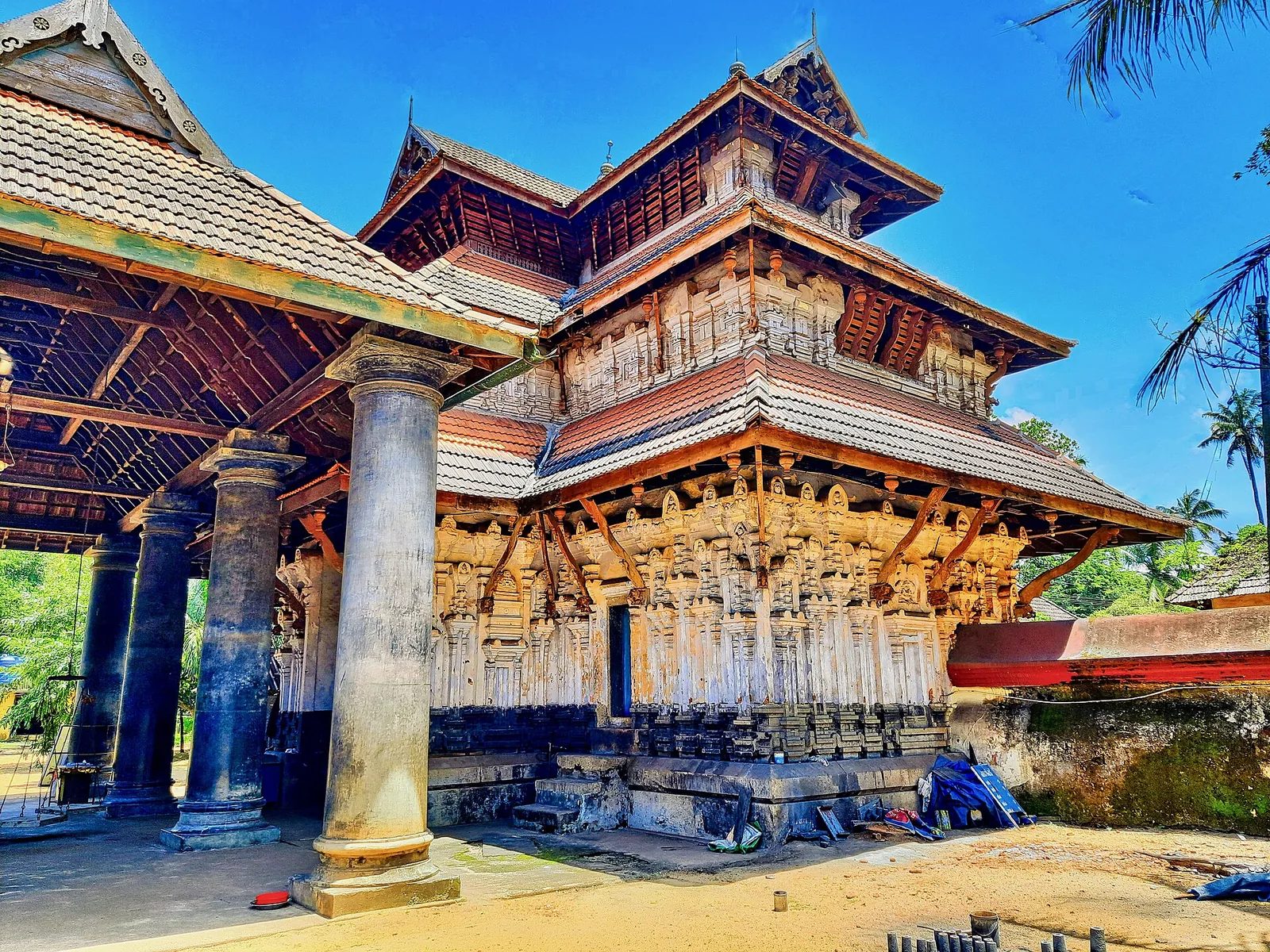
2.0 km · 26 min walk
Ancient Shiva temple at Kodungallur linked with the old Chera capital of Mahodayapuram.
Roampedia is commission-free — own or know a stay, eatery, guide or shop near Kodungallur Bhagavathy Temple? List it and it appears here once verified.
Add a nearby businessEntry: Free for general darshan; specific poojas, vazhipadu offerings and any special-darshan arrangements carry their own charges.
Dress code: Traditional Kerala temple dress code applies — men are generally expected to remove their shirts and wear a mundu or dhoti, and women should dress modestly in a saree, salwar-kameez or long skirt and blouse. Avoid shorts and revealing clothing (confirm current custom locally).
Festivals: The Kodungallur Bharani (Meena Bharani), spanning the Bharani days of Kumbham and Meenam, is the great annual festival — famed for its red-clad oracle-devotees, the Kavutheendal ceremony and the Bharani songs. The Thalappoli festival falls in the month of Makaram (around January-February), running several days from Makara Sankranthi with lamp-lit processions.
Photography: Photography rules inside the temple are restricted and can change, particularly around the sanctum and during festivals; please check and follow the temple authoritiesʼ guidance on the day, and be especially respectful during the Bharani rituals.
If you are travelling by bus or ferry, check the return service with the operator before setting out. Leave time to reach the stop or jetty after your visit.
Ask at the bus stand for the time of the last service back, not the next one. If you miss it, an auto or app cab is the fallback — agree the fare before you get in.
If you need step-free access, contact the site before travelling. Ask about a level entrance, steps along the route, the nearest drop-off point, seating and accessible toilets.
Charge cap and free-transaction limits: Reserve Bank of India, in force since 1 May 2025.
These services are listed within about 1.2 km of Kodungallur Bhagavathy Temple. Walking distances follow mapped routes; access and opening hours can change. Other services may be closer but are not included here.
Emergency numbers are verified against official government and state tourism sources. 112 works anywhere in India.
At Kodungallur, held by tradition to be the oldest mosque in the Indian subcontinent (7th century).
1.6 km · 20 min walk · straight lineAncient Shiva temple at Kodungallur linked with the old Chera capital of Mahodayapuram.
2.0 km · 26 min walk · straight line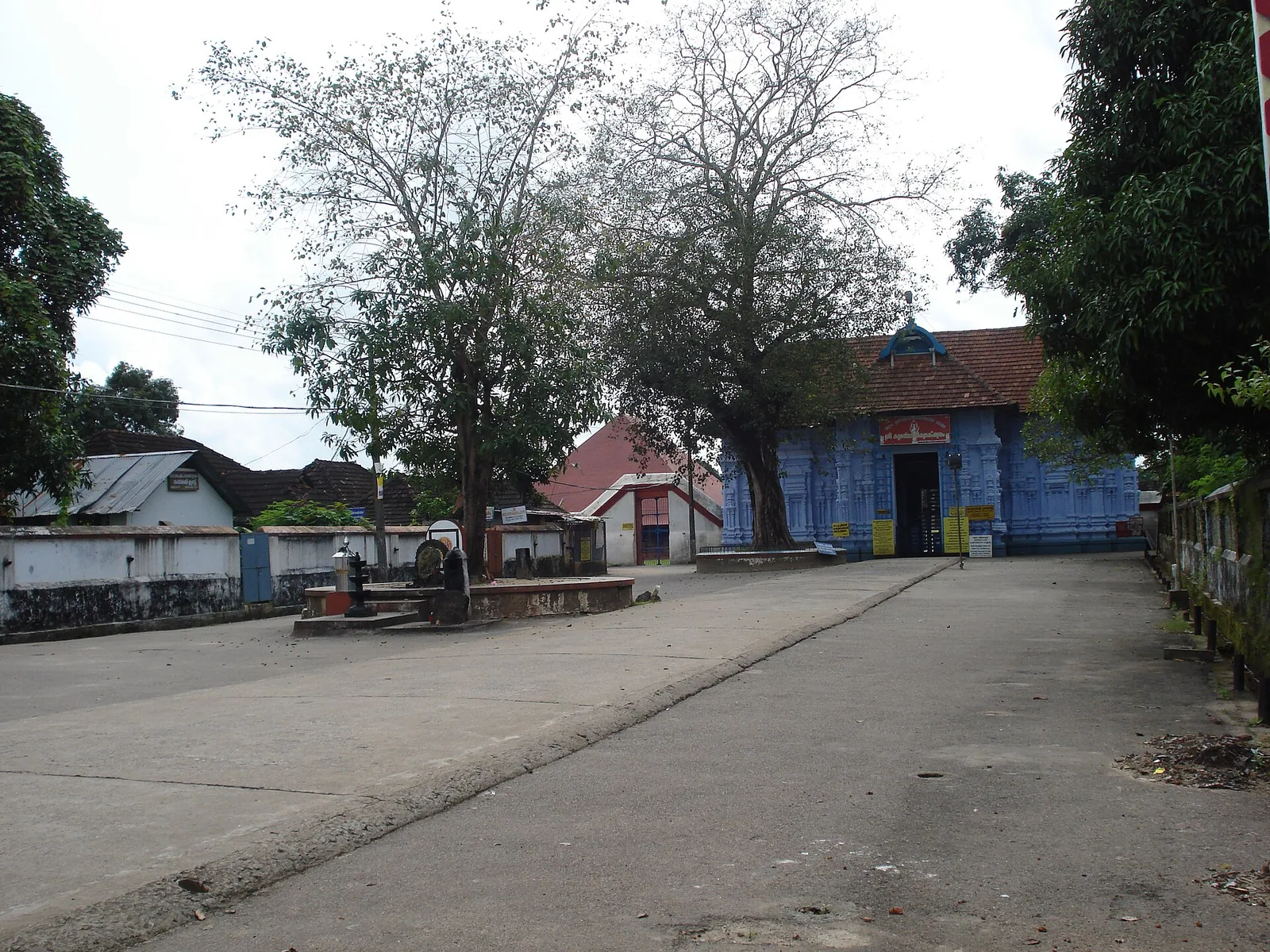
Rare temple at Irinjalakuda dedicated to Bharata, one of the Nalambalam (four-temple) Rama circuit shrines.
13.3 km · ~22 min by cab · straight line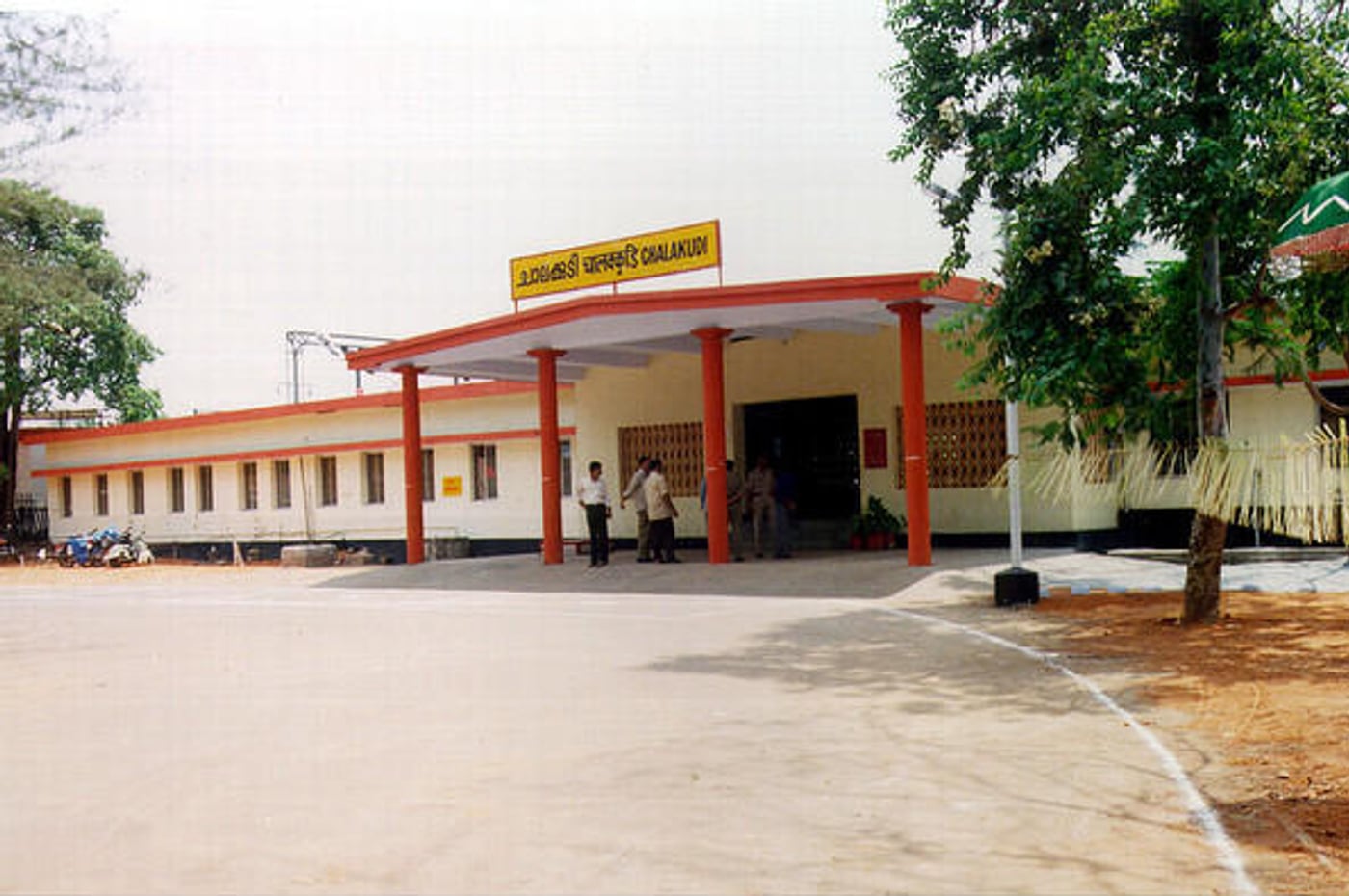
Chalakudi station, code CKI, on the Shoranur–Cochin Harbour section — the railhead the Cochin State Forest Tramway was extended to reach, and the transfer point for Athirappilly. About 1.4 km west of the highway, which catches most visitors out.
15.9 km · ~26 min by cab · straight line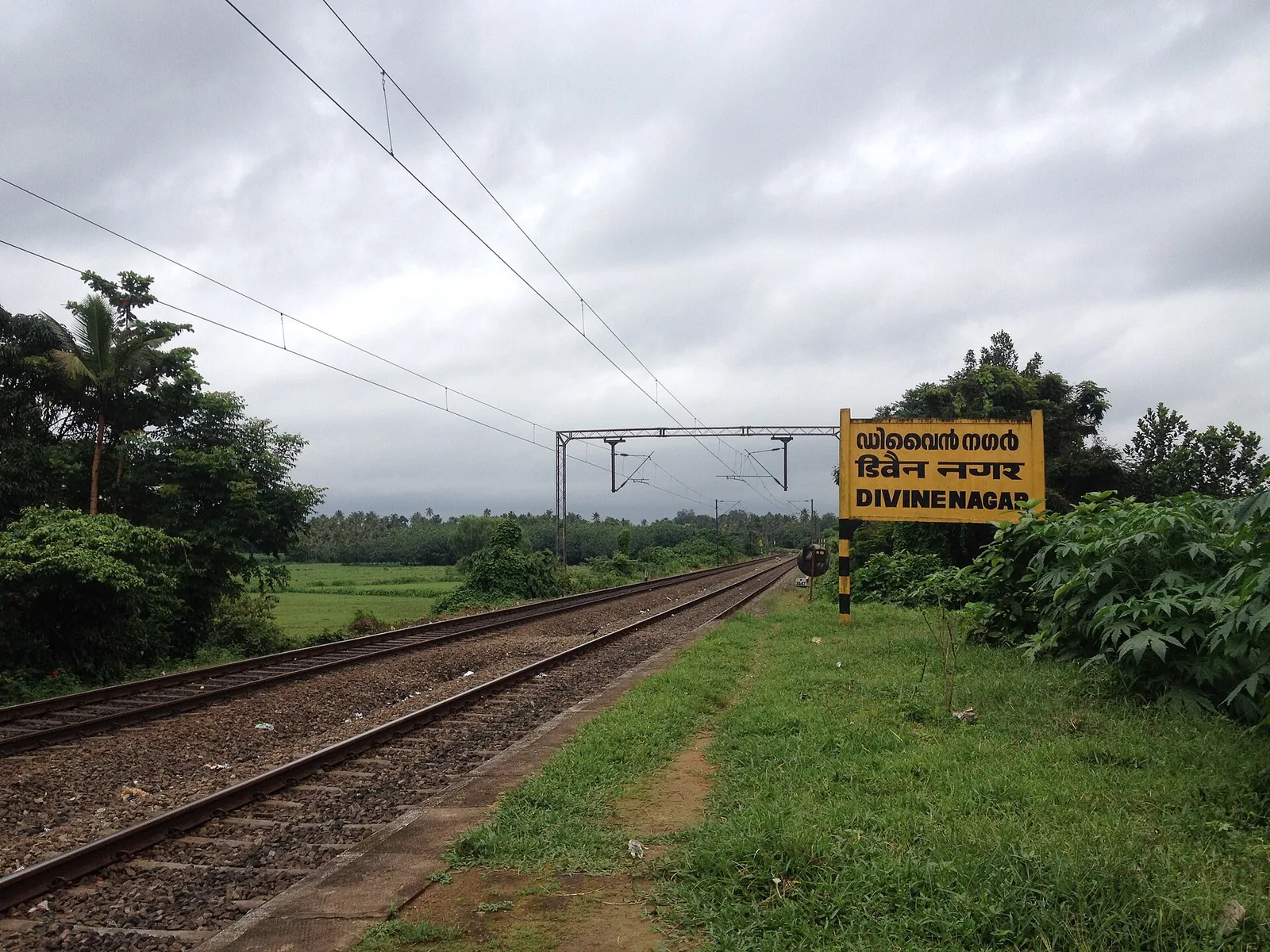
The Vincentian Congregation’s residential retreat centre on NH 544 at Muringoor, which by its own account takes about five thousand people a week for a six-day retreat in seven languages and houses two thousand more in five charitable homes — on volume, the largest organised draw in Chalakkudy taluk after the falls. Indian Railways opened a halt called Divine Nagar for it in 1996.
16.8 km · ~28 min by cab · straight lineA longstanding Catholic pilgrimage church at Mapranam associated with the Holy Cross and annual feast observances.
17.3 km · ~29 min by cab · straight line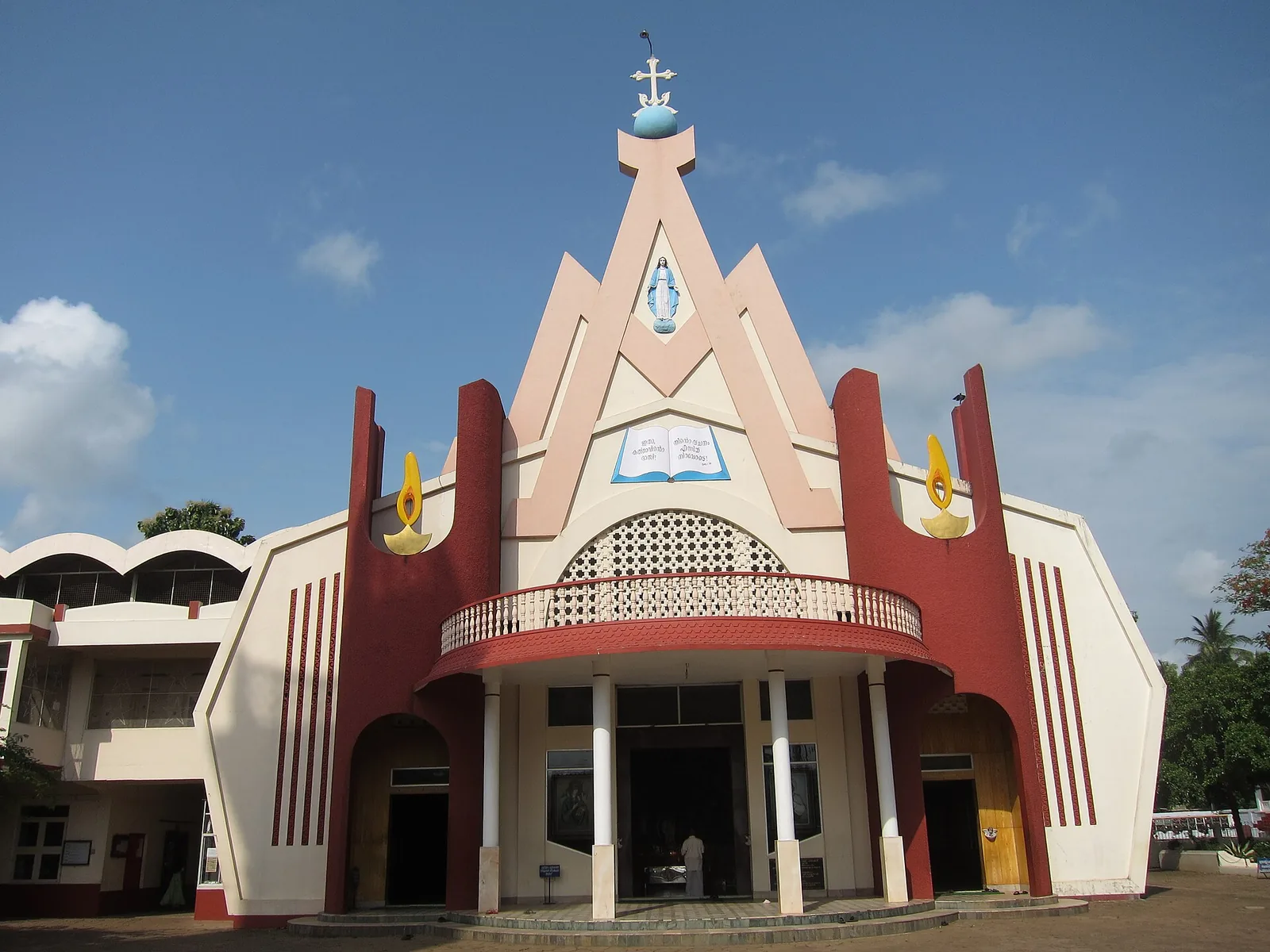
St Mary’s Forane Church on Church Road, the Syro-Malabar forane that governs seventeen daughter parishes across the Chalakkudy countryside and keeps the ambu perunnal, the arrow feast the town observes across community lines. The present building was rebuilt in 1987; the belfry is 1913 and the bell 1887.
17.6 km · ~29 min by cab · straight line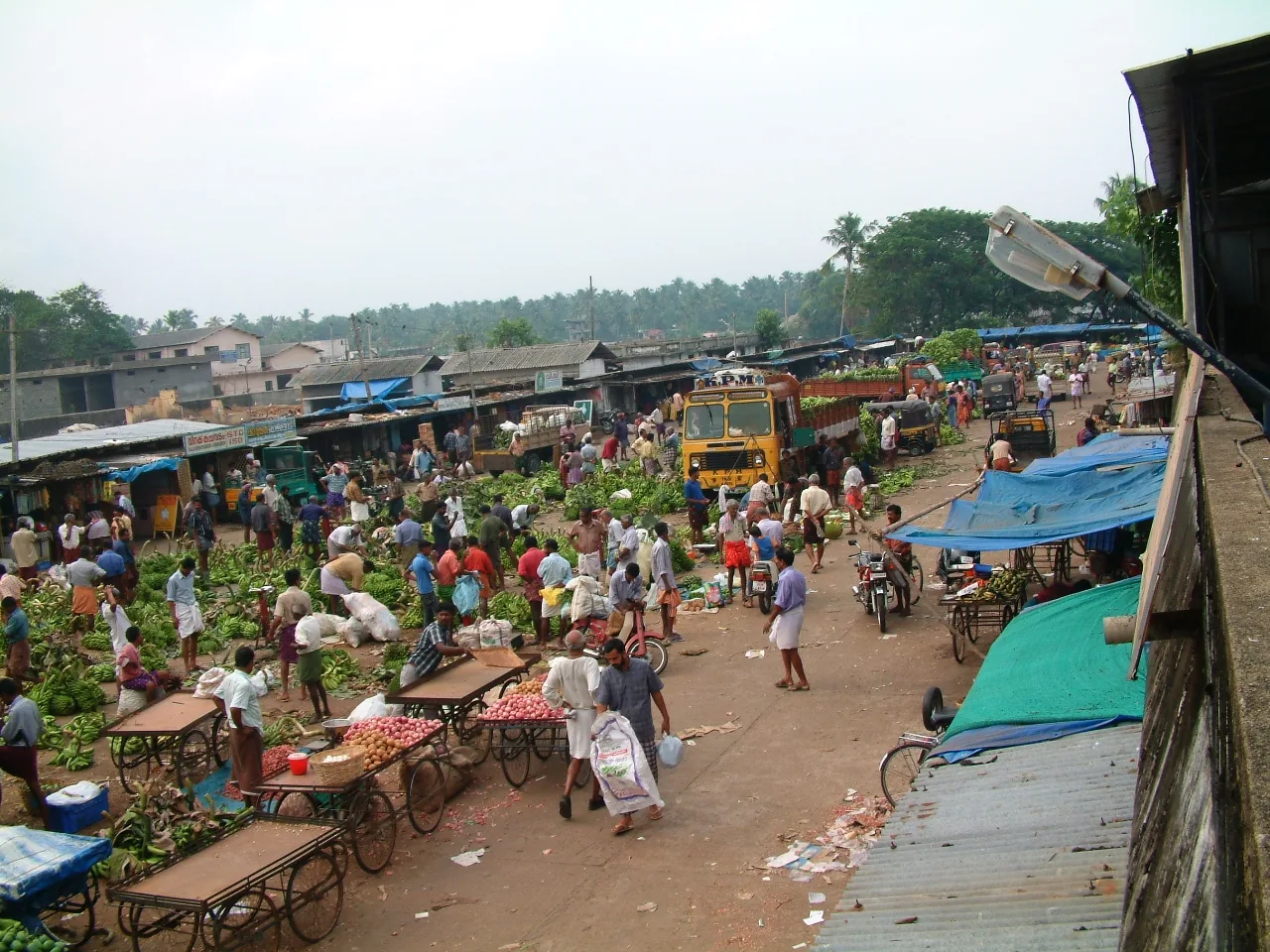
The town’s wholesale produce yard on Market Road, the oldest continuously working institution in Chalakkudy — a Sakthan Thampuran-era pandikasala that still holds its traditional Tuesday and Friday markets and takes hill produce down State Highway 21.
17.8 km · ~30 min by cab · straight line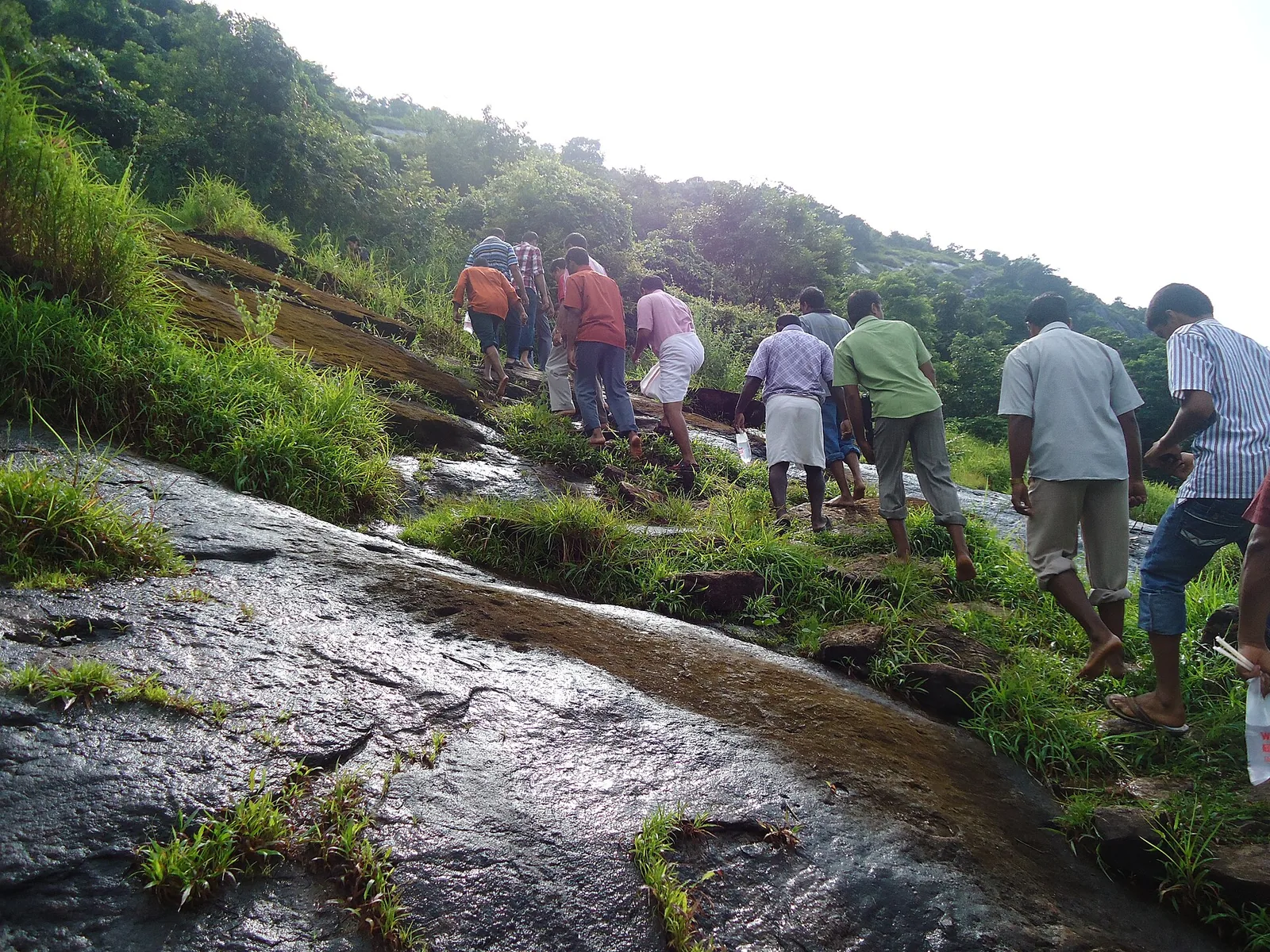
A hill of crosses about 5 km north of Chalakkudy that local devotion ranks with Malayattoor — fourteen crosses up a kilometre of bare sheet rock to a hilltop shrine at about 310 m. The pilgrimage was begun in 1940 by the vicar of Perambra after a dream; April is its busiest month.
21.5 km · ~36 min by cab · straight line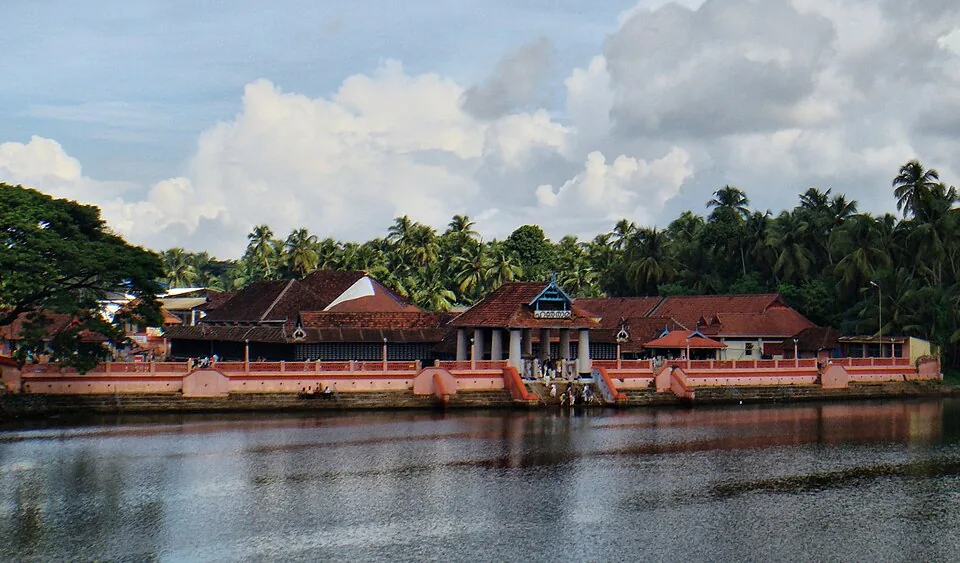
Sree Rama temple on the Theevra river near Triprayar, another of the Nalambalam circuit shrines.
22.7 km · ~38 min by cab · straight line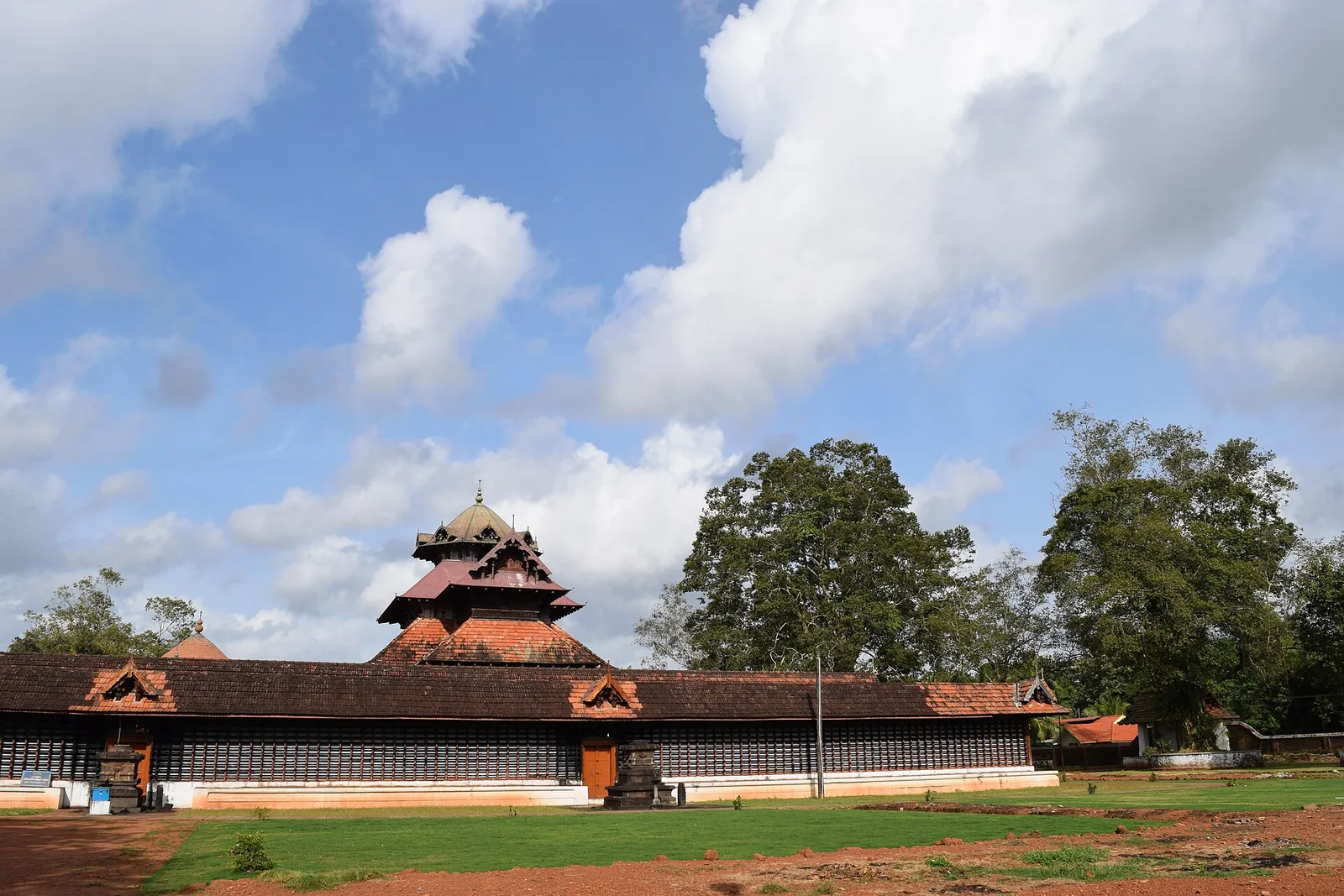
An ancient Shiva temple at Cherpu south of Thrissur, the ritual centre of the historic Peruvanam Pooram.
23.5 km · ~39 min by cab · straight line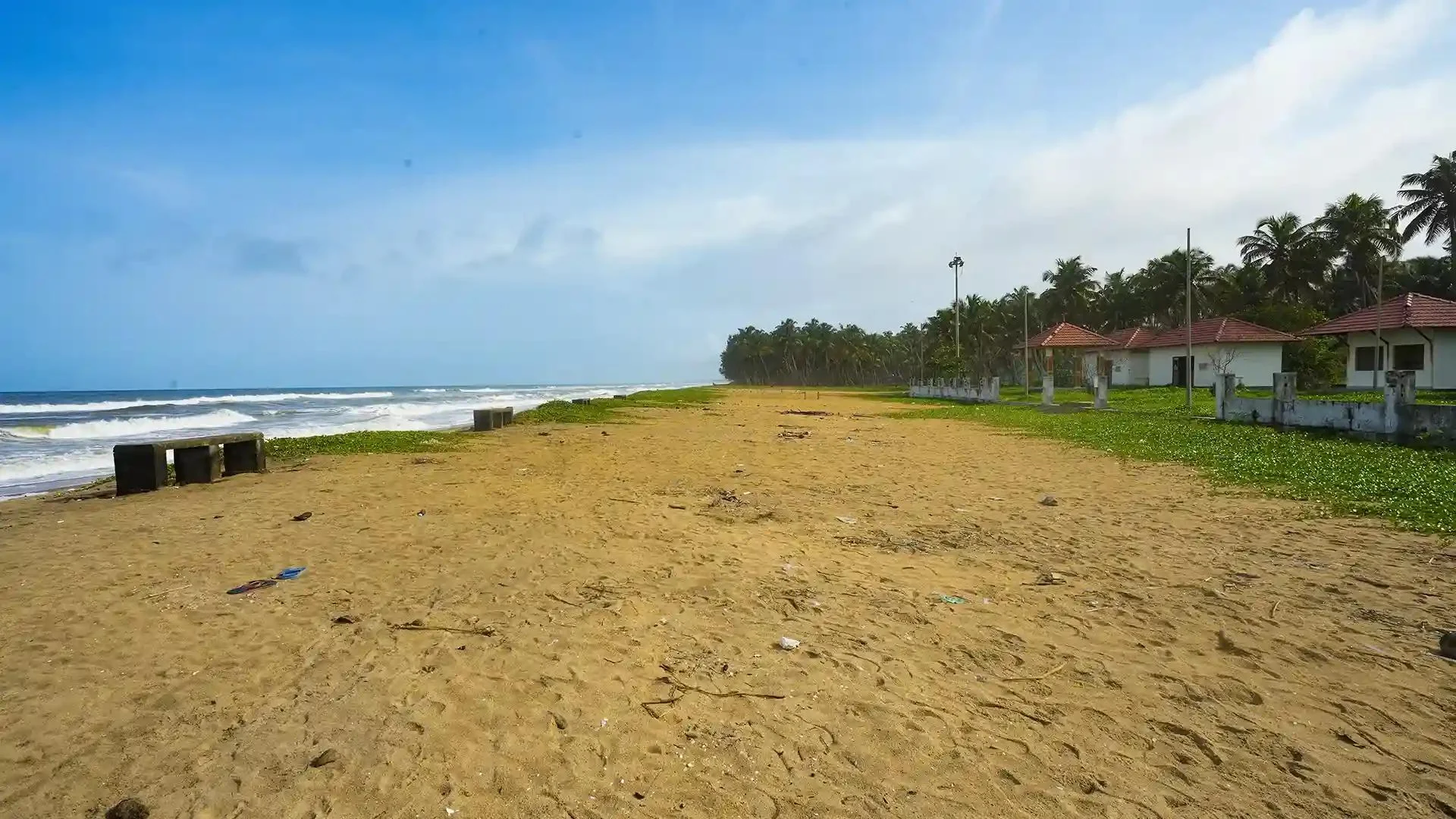
Nattika Beach is the Arabian Sea shore of Nattika in Thrissur district, also identified by Kerala Tourism as Attakuzhi Bandhar Kadapuram. Its long sand frontage, fishing-life connections and association with the Malayalam film Chemmeen give it a character distinct from a resort’s private grounds. Use the named public beach approach for a shore visit, with Nattika and Triprayar providing the wider town plan. The beach, Triprayar Sree Rama Temple and any accommodation property require separate arrival instructions.
24.2 km · ~40 min by cab · straight lineNearby toilets, pharmacies, ATMs, seating and vets are community-mapped and may be incomplete or out of date. Map data © OpenStreetMap contributors | Walking times © openrouteservice.org by HeiGIT
The presiding deity is Sree Kurumba, a fierce form of the goddess Bhadrakali (Mahakali / Aadi Parashakti), lovingly known as Kodungallur Amma, the Mother of Kodungallur. She is enshrined as a large, eight-armed, north-facing image, and the temple is honoured as the head of sixty-four Bhadrakali kavus across Malabar.
Kodungallur is revered as one of the original and most powerful Devi shrines in Kerala, and many Bhagavathy temples across the state — the well-known Chettikulangara Devi temple among them — traditionally trace the descent of their goddess back to this sanctum. For countless village shrines and families, a pilgrimage here is a return to the source.
According to tradition, the deified Kannaki — the tragic heroine of the Tamil epic Silappadikaram, merged in legend with Bhadrakali — is believed to have attained moksha at Kodungallur, and the Chera king Cheran Chenkuttuvan is said to have consecrated her worship here. This is a cherished legend and living tradition rather than documented history, and is best received in that spirit.
The Kodungallur Bharani is the templeʼs great annual festival, held around the Bharani asterism in the months of Kumbham and Meenam — the Meena Bharani, usually falling in March-April. It is one of the largest Devi festivals in Kerala, drawing huge numbers of oracle-devotees (velichappadu / komaram) dressed in red, and includes the Kavutheendal ceremony and the traditional Bharani songs (Bharani Pattu).
Local tradition holds that the temple suffered damage during the Mysorean invasions of Malabar around 1789 to 1790 — the period in which the nearby Cranganore (Kottappuram) fort was destroyed — and was afterwards restored and reconsecrated. The precise details are matters of tradition and reported memory rather than firmly settled record.
Entry for darshan is generally free. As with most traditional Kerala temples, a conservative dress code applies: men are typically expected to remove their shirts and wear a mundu or dhoti, and women should dress modestly in a saree, salwar or long skirt. It is best to check current customs at the temple before visiting.
Morning or early evening is usually best; festival days can be powerful but crowded.
Entry: Free for general darshan; specific poojas, vazhipadu offerings and any special-darshan arrangements carry their own charges. Timings: Darshan is typically available in the morning from around 5:00 am to 11:30 am and again in the evening from about 5:00 pm to 8:00 pm, with the temple closed to devotees during the midday interval.
Base yourself in Kodungallur or a nearby town in Thrissur, then confirm the last-mile route locally before leaving. Check temple entry customs, dress rules and festival crowd conditions before arrival. If the visit depends on forest, temple, boat, ferry, weather or seasonal access, check the official/local rule on the day before travel.
45 minutes to 2 hours, longer during festival or queue periods.
Nearby you can pair Cheraman Juma Masjid (1.6 km), Thiruvanchikulam Mahadeva Temple (2.0 km), Koodalmanikyam Temple (13.3 km), Chalakkudy railway station (15.9 km).
Use official counters for offerings/tickets where applicable. Keep footwear and valuables secure in crowded areas.
We have not published a story about Kodungallur Bhagavathy Temple itself yet. These cover Kodungallur and the wider district, with separate journeys between stops.
These guides explore Kodungallur and the surrounding area. Choose a visit that fits your interests, allowing separately for travel between stops.
Route-level itineraries and practical guides for the rest of Kerala.
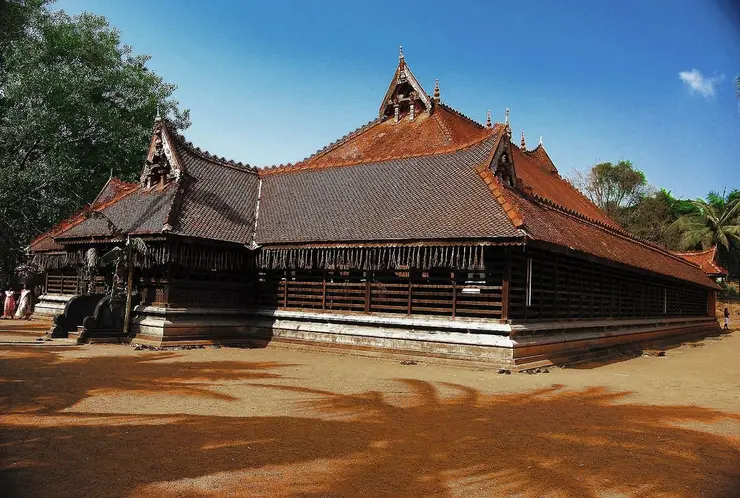
Photographs: Dinakarr (CC BY 3.0), Vis M (CC BY-SA 4.0), Ms Sarah Welch (CC0), Challiyan (CC BY-SA 4.0). Wikimedia Commons.