What to expect
Highlights
- Reservoir and dam views at Pazhassi Dam
- Engineering landmark or garden/viewpoint stop
- Pair with nearby hill, forest or town routes
An earthen dam on the Valapattanam river near Mattannur, with a garden, boating and a hanging bridge — named after the freedom-fighter king Pazhassi Raja.
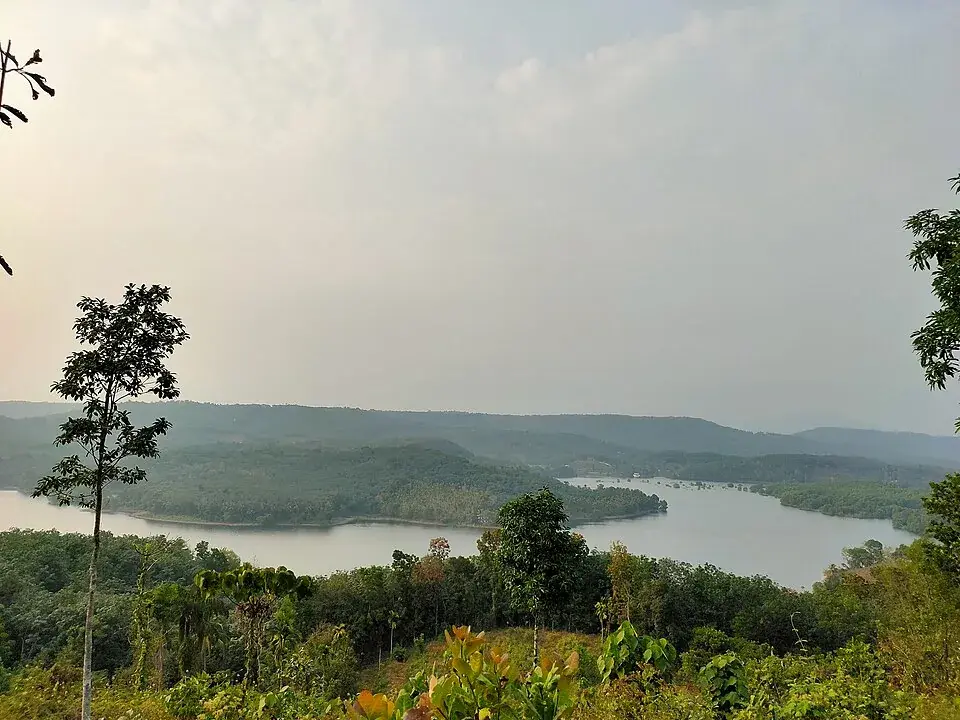
Cradled in the green folds of Kannur’s interior near Mattannur, Pazhassi Dam is where irrigation engineering quietly turned into one of North Malabar’s best-loved day-outings — a broad masonry wall holding back a glittering reservoir, a manicured riverside garden, pleasure boats fanning across still water, and a name that carries the thunder of Kerala’s fiercest anti-colonial rebel. It is not a temple and asks for no ritual; it asks only that you slow down, take a boat out, let the children loose in the park, and remember the Lion of Kerala whose name it wears.
The story of Pazhassi Dam begins with water and rice, not tourism. The plains around Mattannur, Iritty and the Valapattanam basin are fertile but were long at the mercy of the monsoon’s moods — abundant in the rains, parched in the dry months. To even out that rhythm, the state built the Pazhassi Irrigation Project, and the dam near Kuyiloor became its beating heart, storing and steering water out across a fan of canals so that fields far downstream could drink through the lean season.
The dam itself is a low, confident masonry structure — modest in height but generous in reach — that catches the flow of the Bavali, a west-flowing tributary in the Kabani–Valapattanam river country, and pools it into a long, tree-fringed reservoir (exact hydrology best confirmed with the Irrigation Department locally, as the river naming shifts between Bavali, Kabani-tributary and Valapattanam basin sources). What the engineers may not have fully anticipated was how beautiful the result would be: a sheet of calm water backed by low hills, catching the light at dawn and dusk, irresistible to anyone with an afternoon to spare.
Recognising that pull, the District Tourism Promotion Council (DTPC) shaped the site into a proper leisure destination. A well-kept garden was laid out along the bank with paved walkways, flowering beds and shady corners for families to spread a picnic; a children’s park was added for the youngest visitors; and an open-air amphitheatre was built to host cultural performances (event schedules are seasonal — confirm locally). The centrepiece attraction, though, is the boating — pedal boats and motor boats that let you push out onto the reservoir and see the dam wall from the water.
On an ordinary weekend the mood here is unhurried and thoroughly local: extended families arriving with tiffin carriers, teenagers queuing for the boats, couples walking the garden paths, and grandparents settling on a bench in the shade while the light softens over the water. It is the kind of place North Malabar comes to breathe out — close to Mattannur town, close to the airport, and yet feeling a world away from either.
And then there is the name. To call a dam and its serene garden after Kerala Varma Pazhassi Raja — the guerrilla king who bled the British East India Company white in these very hills — is a quiet act of remembrance. The forests where he fought and fell are not far to the east, in the Wayanad and Aralam ranges. Standing at the reservoir’s edge, it is easy to forget that this gentle water sits in a landscape that once witnessed one of the longest, hardest resistance campaigns the Company ever faced. The dam is calm; the name is not.
That layering — placid tourism over turbulent history — is exactly what makes Pazhassi Dam more than a pretty picnic spot. You come for the boats and the garden, and you leave carrying a little of the Lion of Kerala with you.
Kerala Varma Pazhassi Raja (born 3 January 1753, killed 30 November 1805) was the de facto head of the Kottayam (Cotiote) kingdom in the Malabar highlands, and is remembered by the epithet Kerala Simham — the Lion of Kerala. He is counted among the earliest organised resisters of British power in India, and his long war against the East India Company is known as the Cotiote War.
His resistance ran in two great phases. From roughly 1793 to 1797 he fought the Company over the management and revenue of Kottayam, refusing to accept the crushing tax demands the British tried to impose after they inherited Malabar from Tipu Sultan. After an uneasy pause, conflict flared again from about 1800 to 1805 over the question of who would master Wayanad (Wynad). Pazhassi Raja’s genius lay in refusing pitched battle: his Kurichiya and Kurumba archers and Nair fighters melted into the mountain forests of Wayanad and Aralam, struck the Company’s columns, and vanished — a guerrilla campaign that turned the terrain itself into a weapon.
The cost to the British was enormous. The war is remembered as one of the bloodiest and most gruelling the East India Company waged in South India, with some Presidency regiments said to have suffered staggering losses over a decade of jungle fighting (the sources cite the figures variously). Tradition also holds that Pazhassi Raja was among the very few Indian commanders to get the better of Arthur Wellesley — the future Duke of Wellington — in the field, a claim beloved locally and worth enjoying with a historian’s caution.
The end came on 30 November 1805 at Mavila Thodu, a small watercourse near the present Kerala–Karnataka border, where Pazhassi Raja died as Company forces finally closed in. How he died is told two ways and neither has displaced the other: the English account has him shot in the fighting, while the Malayalam tradition — carried by ml.wikipedia’s own article on his memorial — holds that he swallowed a diamond rather than be taken alive. With his death the Cotiote War petered out within months. The British carried the body to Mananthavady and cremated it with official honours, and his tomb and memorial there, the Pazhassi Smarakam (പഴശ്ശിരാജ സ്മാരകം), stand today — a separate site well to the east of this dam, and the more fitting place to pay direct homage to the man himself (visitors wanting the actual memorial should head to Mananthavady, not the dam).
The dam that carries his name belongs to a very different century. Built as the storage-and-diversion core of the Pazhassi Irrigation Project — with a barrage at Kuyiloor across the Valapattanam river feeding a long network of main, branch and distributary canals — it was, by the accounts available, dedicated in 1979 (some sources credit its commissioning to then Prime Minister Morarji Desai — confirm locally). Naming this piece of modern nation-building after an eighteenth-century rebel king ties Malabar’s freedom-struggle memory to its post-Independence development story in a single stroke.
Reservoir boating with a view of the dam. The DTPC pleasure boats are the signature experience — glide out across the calm reservoir, feel the openness of the water, and see the long masonry wall from an angle no roadside stop can offer.
A genuinely lovely garden. Unlike many utilitarian dam sites, Pazhassi has a properly landscaped riverside garden with paved walkways, flowering beds and shade — an easy, low-effort place to stroll, sit and picnic, and one of the reasons North Malabar families keep coming back.
Brilliant for families and children. A dedicated children’s park, open lawns and safe walking paths make this one of the most kid-friendly outings in the Kannur interior — space to run, boats to ride and greenery all around.
History woven into the name. Few day-outings let you sit by tranquil water while standing, in effect, on the doorstep of Kerala’s fiercest anti-colonial legend. The Pazhassi Raja connection gives the visit a depth of meaning that a simple picnic spot cannot.
Scenery that rewards the golden hours. The reservoir backed by low green hills is at its most photogenic in early morning and late afternoon, when the light goes soft and the water turns to mirror — a quietly gorgeous slice of interior Malabar.
Wonderfully easy to reach. Sitting close to Mattannur and near Kannur International Airport (the dam is about 33 km from Kannur city; KIAL puts the airport 26 km from Kannur town and 5 km from Mattannur), it is one of the most accessible green escapes in the district — an ideal half-day add-on to any Kannur itinerary.
Road km to Kannur; ghat roads and traffic vary — allow extra.
Post-monsoon and winter for scenery; monsoon access may change.
Live forecast loads in your browser.
Sun and moon are calculated for this location and shown in IST. Photography windows are the hour around sunrise and sunset; the sunset bearing is degrees clockwise from true north. Moon phase is accurate to about half a day.
Browse listed stays, food, activities, sights, shops and rentals around Pazhassi Dam. Check each listing’s locality and contact the business directly for current arrangements.
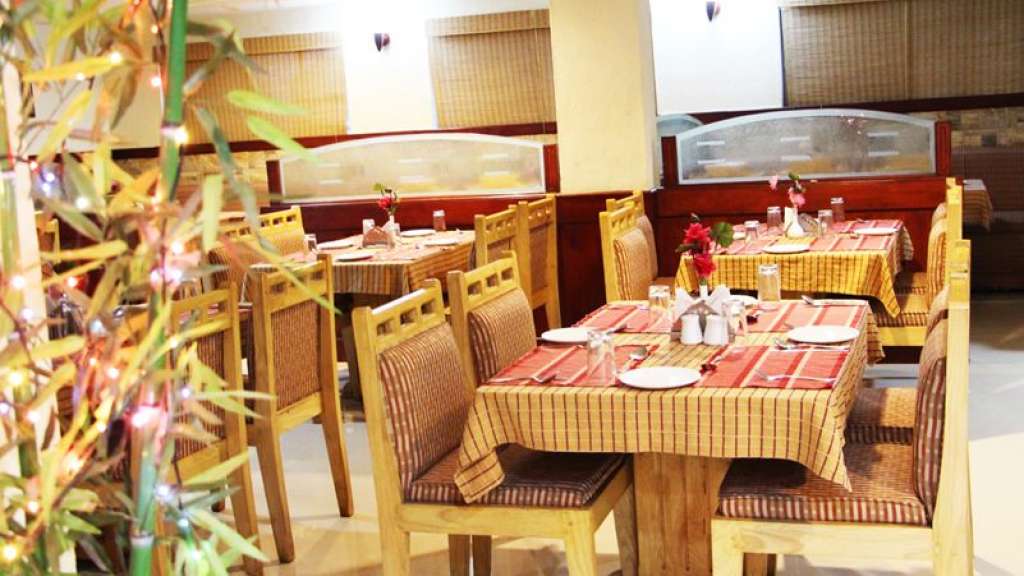
Restaurant at Kerala Tourism-listed Hotel Sky Park near Ashraya Hospital and Kannur airport access. Airport hotel restaurant.
Book with the place itself. India’s cyber-crime coordination centre warned in April 2025 that convincing copies of hotel and pilgrimage booking sites are being pushed through sponsored search and social ads, taking payment for rooms the property never hears about. Use the contact and source details on each profile to confirm the exact business and booking channel. A directory entry or map pin alone does not establish an operator’s identity or current availability. Roampedia takes no commission and does not collect booking payments. If a booking page reached you through an ad, check the address bar against the property’s own site before you pay. Fraud can be reported on cybercrime.gov.in or on 1930.
Find food, accommodation and activities across Mattannur and Airport. Browse the guides for places to eat, stay and explore along your route.
Roampedia is commission-free — own or know a stay, eatery, guide or shop near Pazhassi Dam? Submit public business details for review.
Add a nearby businessEntry: A small entry ticket for the garden is usual, with boating charged separately per boat or per person, and possible extra charges for camera and parking.
Dress code: No dress code — comfortable casual clothing and walking-friendly footwear for the garden paths. If boating, follow the operator’s safety instructions and wear the life jacket provided (confirm on site).
Festivals: No temple festival calendar applies here. The garden’s open-air amphitheatre occasionally hosts cultural performances and events, and visitor numbers rise on weekends and public holidays (event schedules seasonal — confirm locally).
Photography: Casual photography is generally welcome around the garden and reservoir, and the golden-hour views are the highlight; a small camera fee may apply, and drone use would need permission.
If you are travelling by bus or ferry, check the return service with the operator before setting out. Leave time to reach the stop or jetty after your visit.
Ask at the bus stand for the time of the last service back, not the next one. If you miss it, an auto or app cab is the fallback — agree the fare before you get in.
If you need step-free access, contact the site before travelling. Ask about a level entrance, steps along the route, the nearest drop-off point, seating and accessible toilets.
Published emergency and visitor-assistance contacts. For an immediate emergency, call 112. Shared Kerala contact sources checked 4 October 2026; publication does not establish a tested live response.
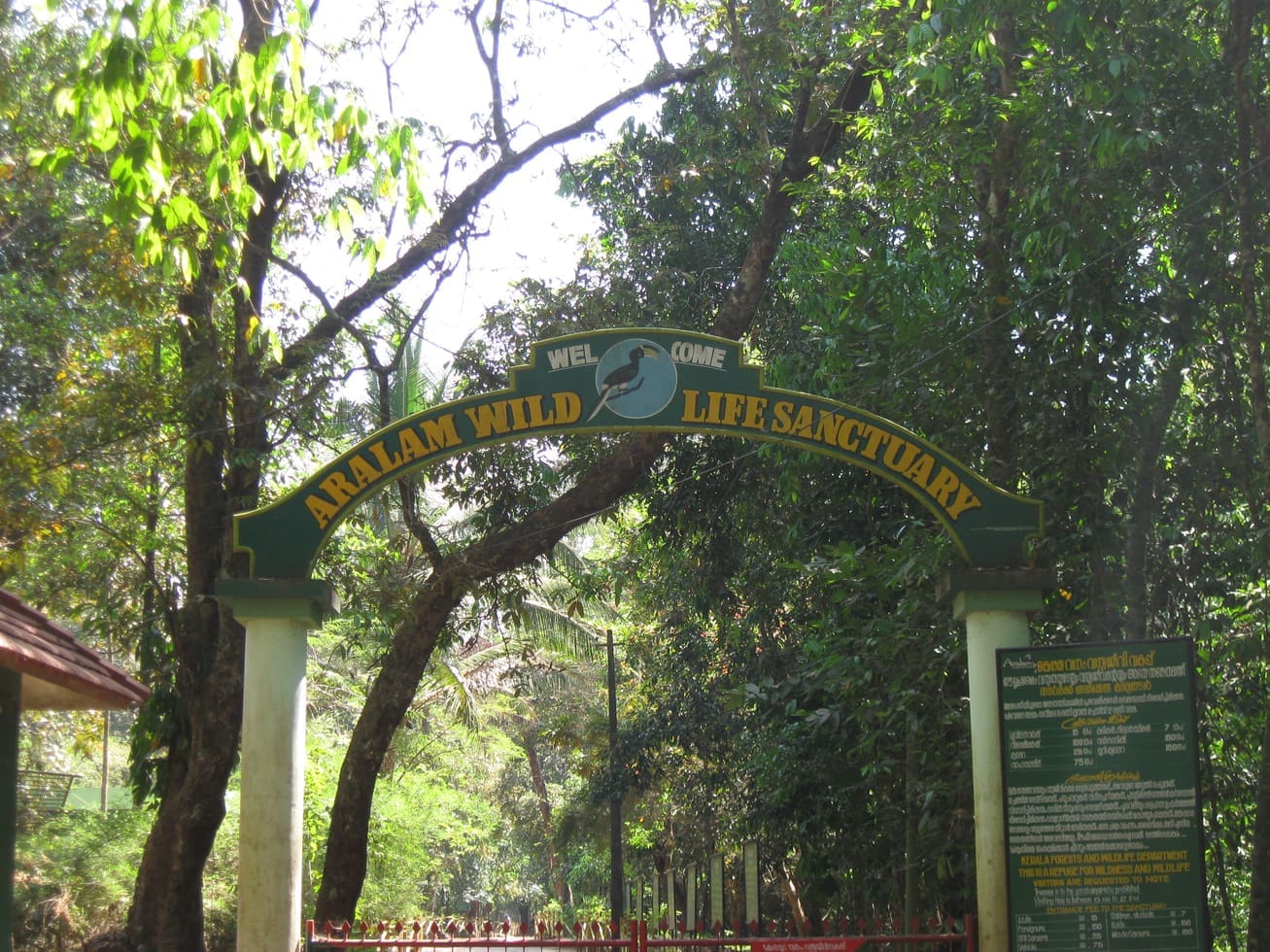
Guided forest trekking in the Aralam Wildlife Sanctuary, Kannur’s easternmost highland forest, rich in elephants, gaur and butterflies.
20.6 km · straight line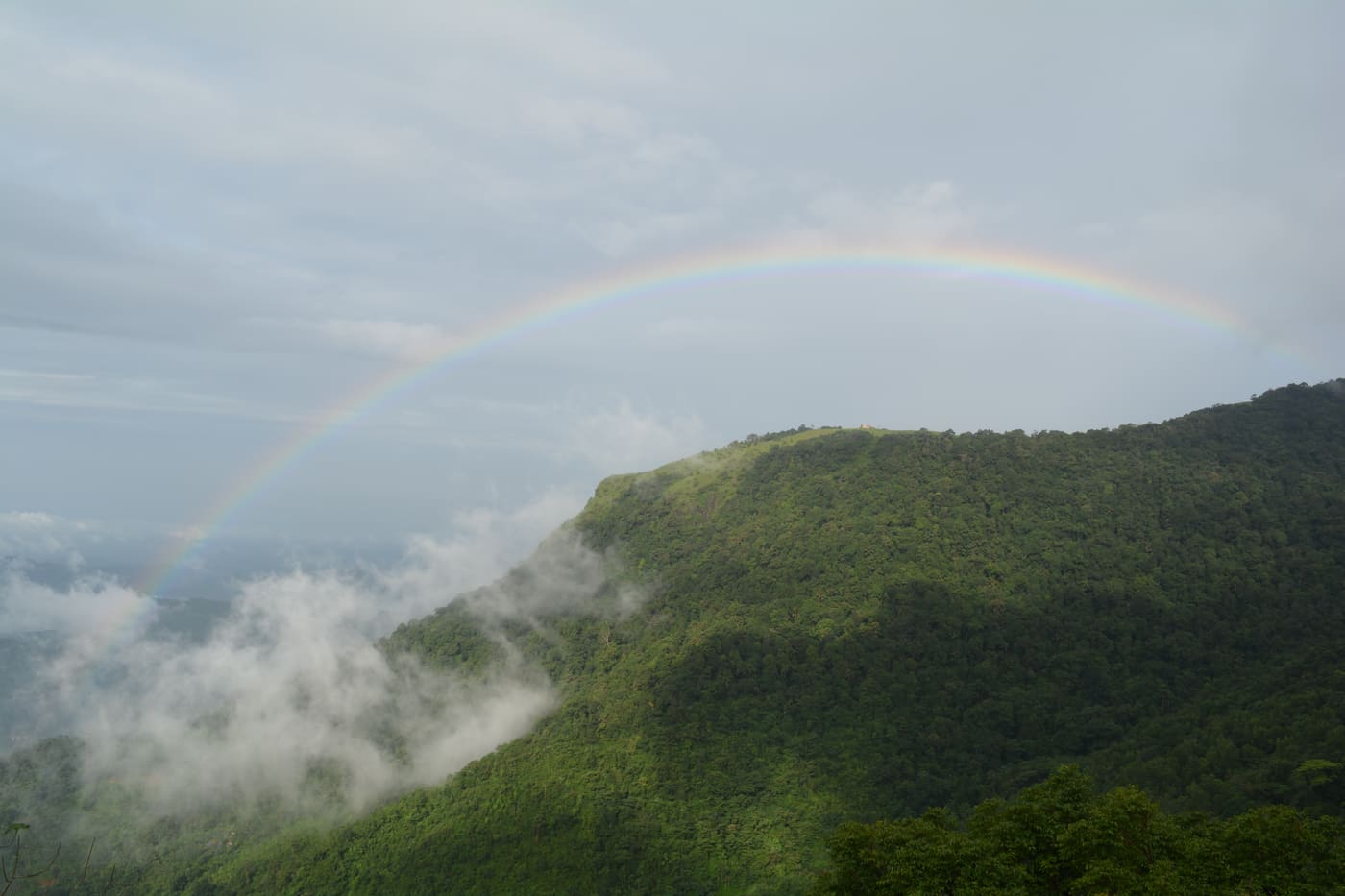
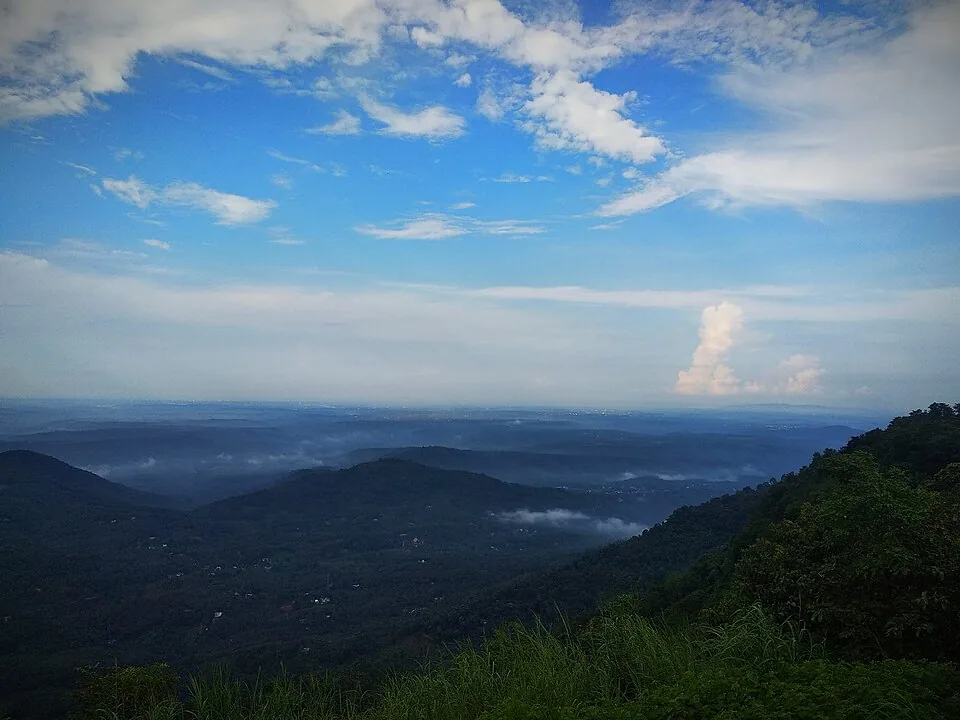
A misty grassland hill viewpoint in the Western Ghats near Kolari, ~3,000 ft, known for cloud-touched meadows, a small waterfall and adventure activities.
22.3 km · straight line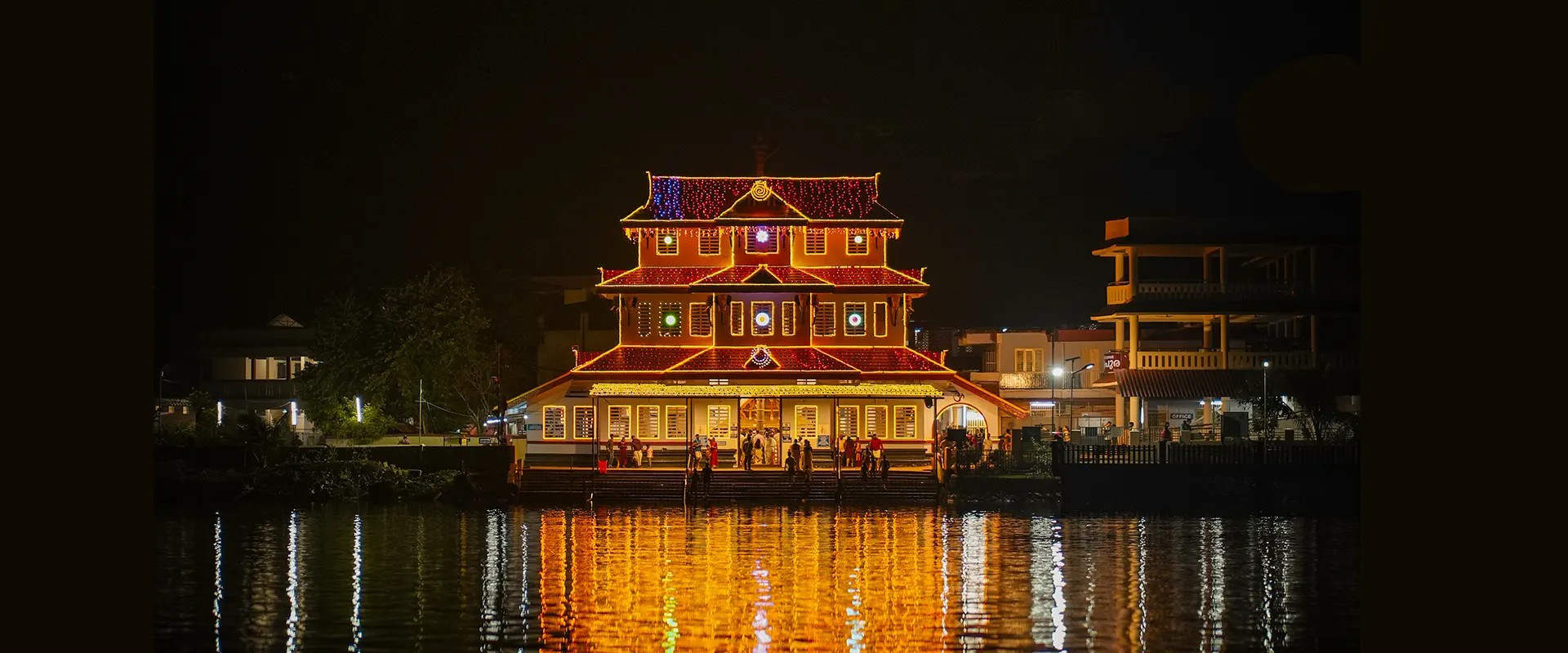
On the Valapattanam river, the temple of Muthappan — where the Muthappan Theyyam is performed morning and evening on nearly every day of the year, and where entry is open to all castes and religions; a snake park is nearby. The exception is the six weeks from the first of Thulam to the fifteenth of Vrischikam, when it stops, and the ritual year begins again with Puthari Thiruvappana around the first of December.
22.8 km · straight line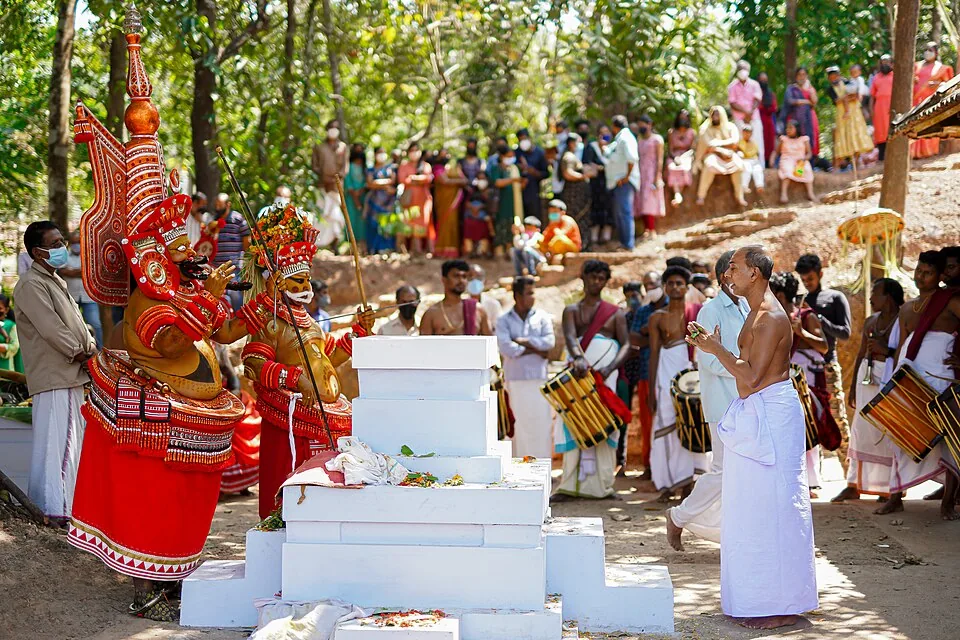
The ritual season of north Malabar, in which a man of the Vannan or Malayan community is dressed, painted and crowned until the shrine treats him as the deity itself. It runs from the tenth of Thulam, about mid-October, to the middle of Edavam at the end of May, at kavus and household shrines rather than on any stage, and the peak is January to April. Outside the season the kavus are quiet — the exception is Parassinikkadavu, north of the city, which performs Muthappan on a fixed daily schedule and is the anchor this page is pinned to.
22.8 km · straight line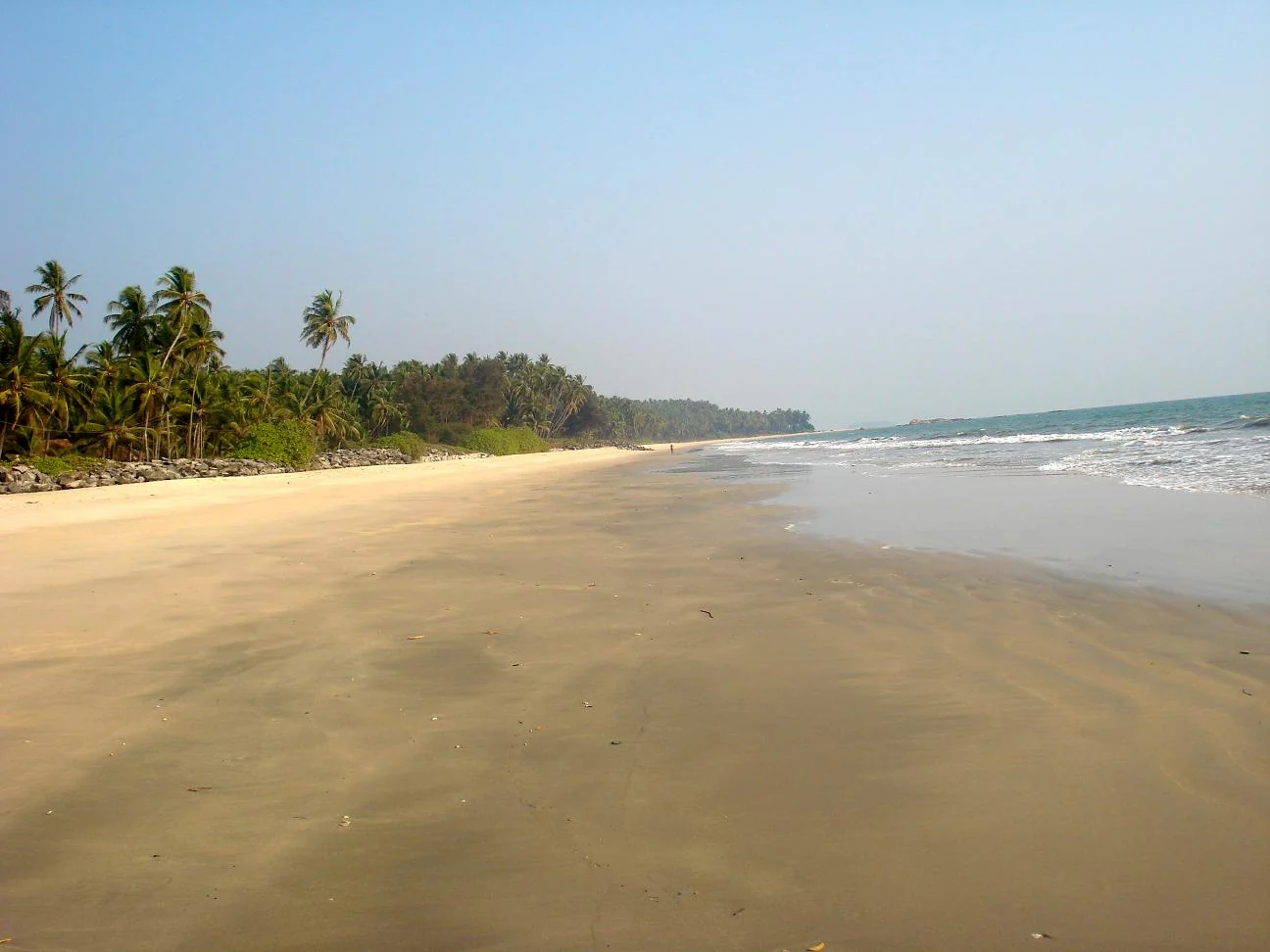
Kizhunna’s sandy shore lies between Thottada and Ezhara, with palm-backed village edges and the Cherakallu rock formations breaking up the coastline.
27.3 km · straight line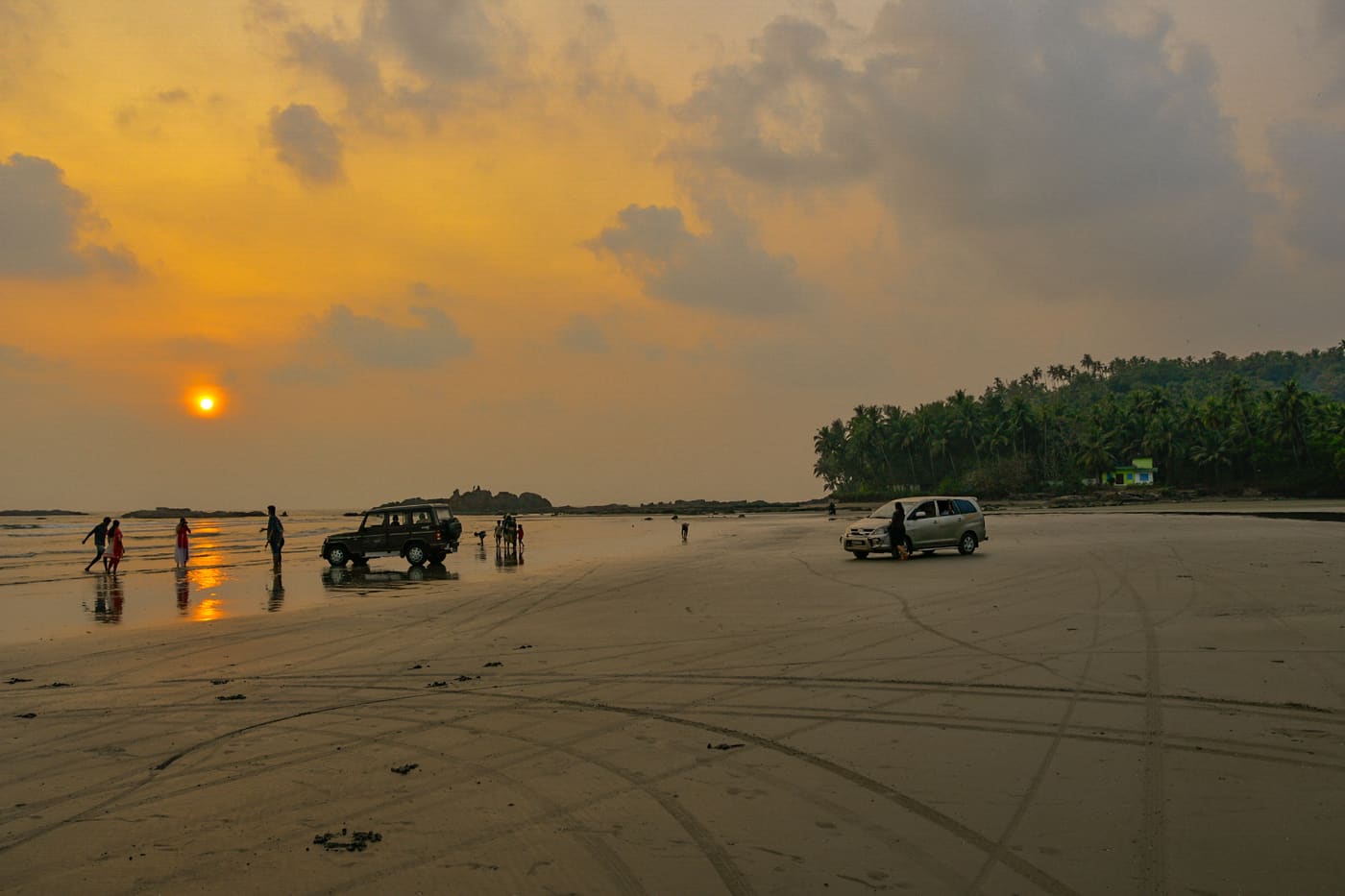
A ~4 km hard-sand beach, the longest drive-in beach in India — you can drive along the sand at low tide; Dharmadam Island lies just offshore.
27.4 km · straight line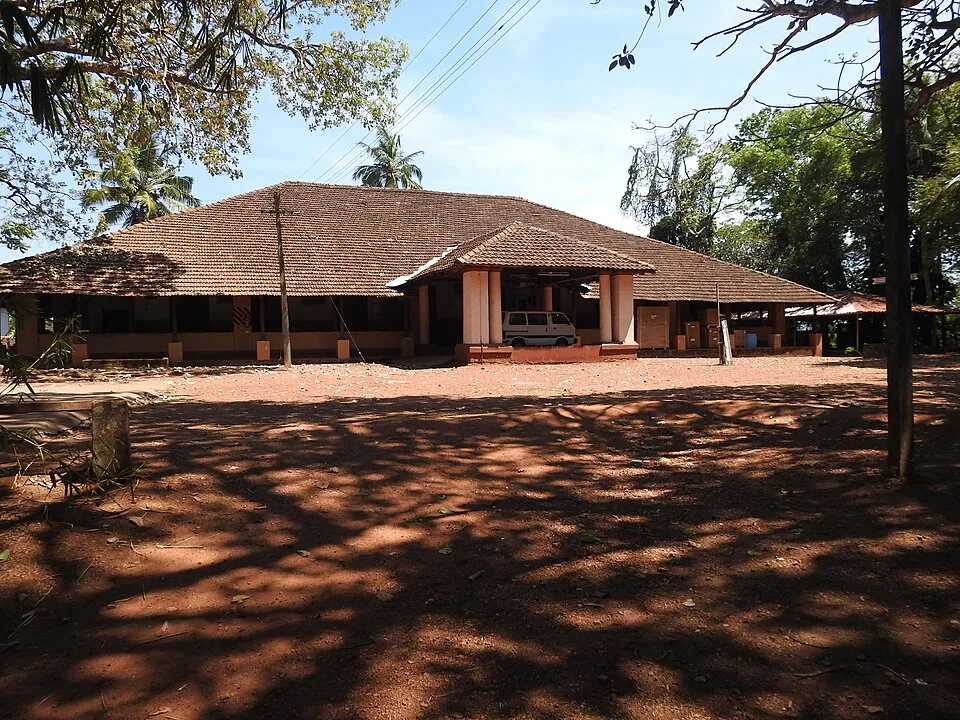
At Illikkunnu near Thalassery, the hillside home of the German missionary-scholar Hermann Gundert, who compiled the first Malayalam–English dictionary and grammar here in the mid-1800s.
27.4 km · straight line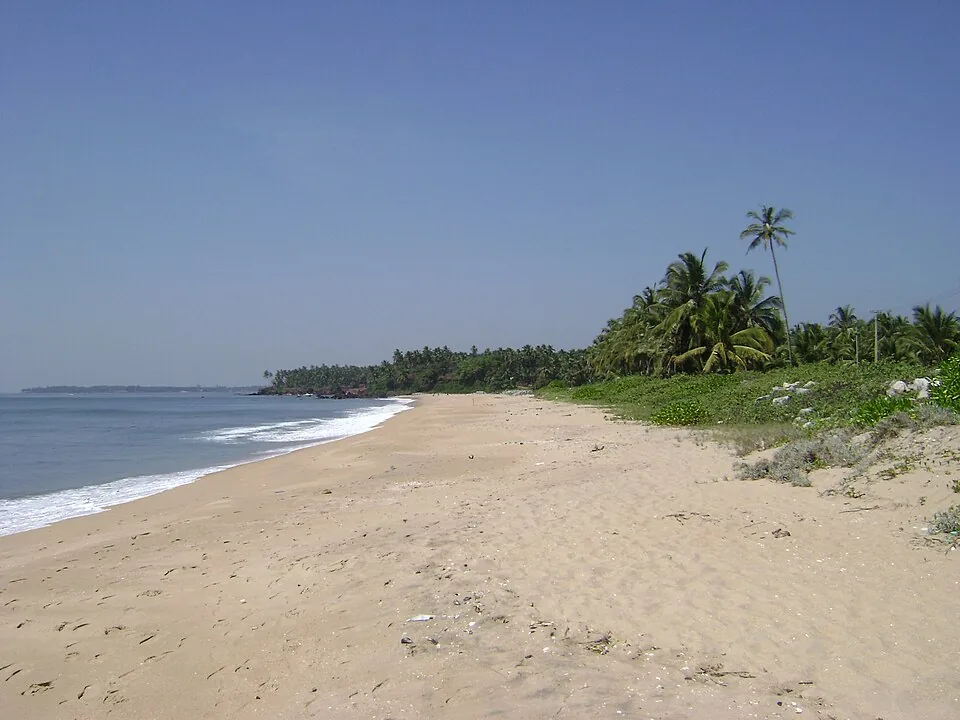
A quiet, unspoilt cove-and-stream beach south of Kannur city, known for its homestays and calm, uncrowded sands.
27.4 km · straight lineForest sanctuary in the eastern highlands of Kannur district.
27.6 km · straight line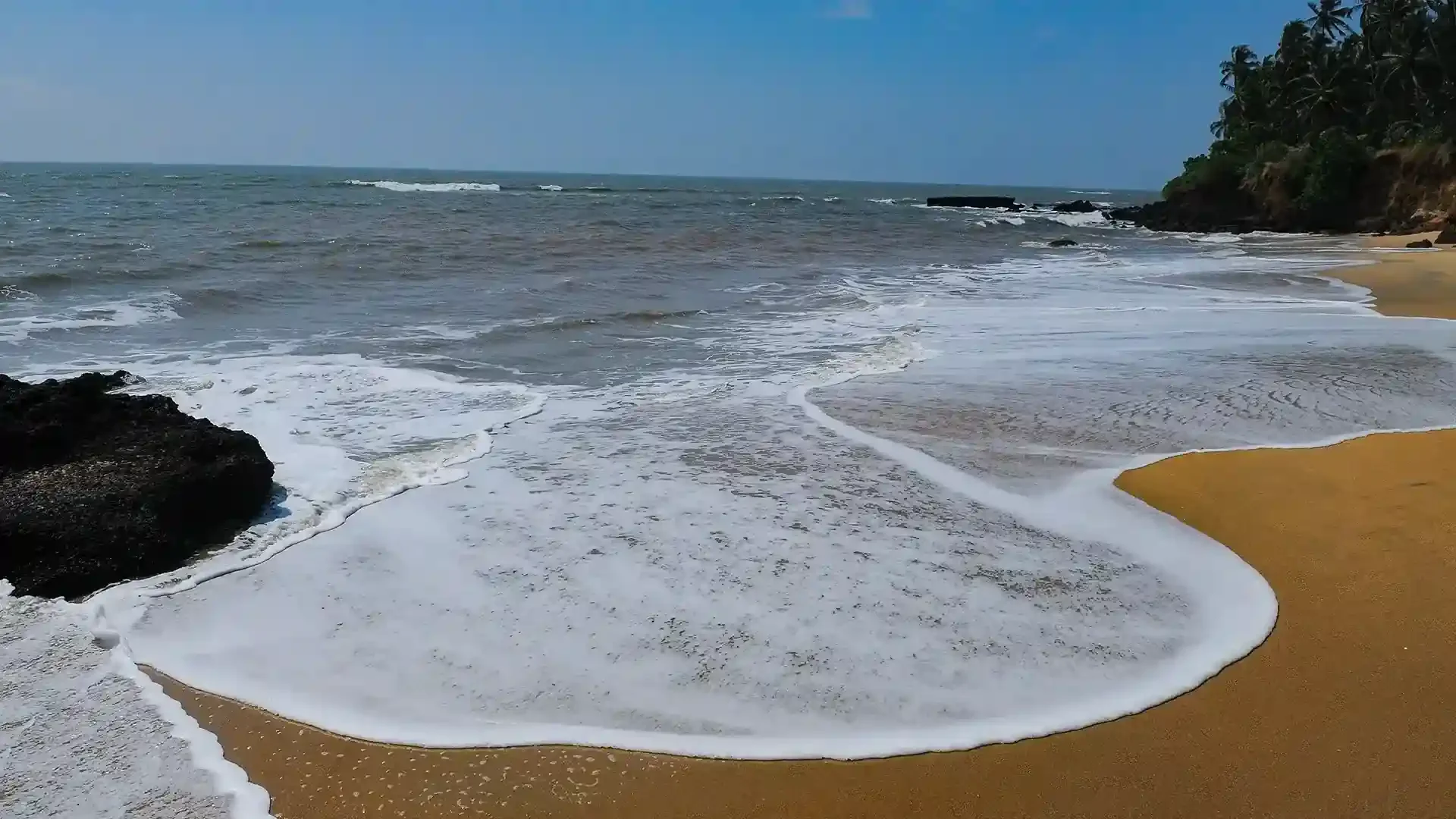
Adikadalayi Beach, also called Kadalayi Beach in Kerala’s coastal tourism study, is a Kannur shore with sandy pockets, exposed red coastal rock and palms above the water. It belongs to the Adikadalayi locality, not the separately named Thottada, Kizhunna or Ezhara beaches farther along the coast. Use the mapped public steps from Tippu Sulthan Beach Road as the arrival reference. Nearby cliff-side homestays have their own entrances and facilities, and should not be used as assumed public access.
27.8 km · straight line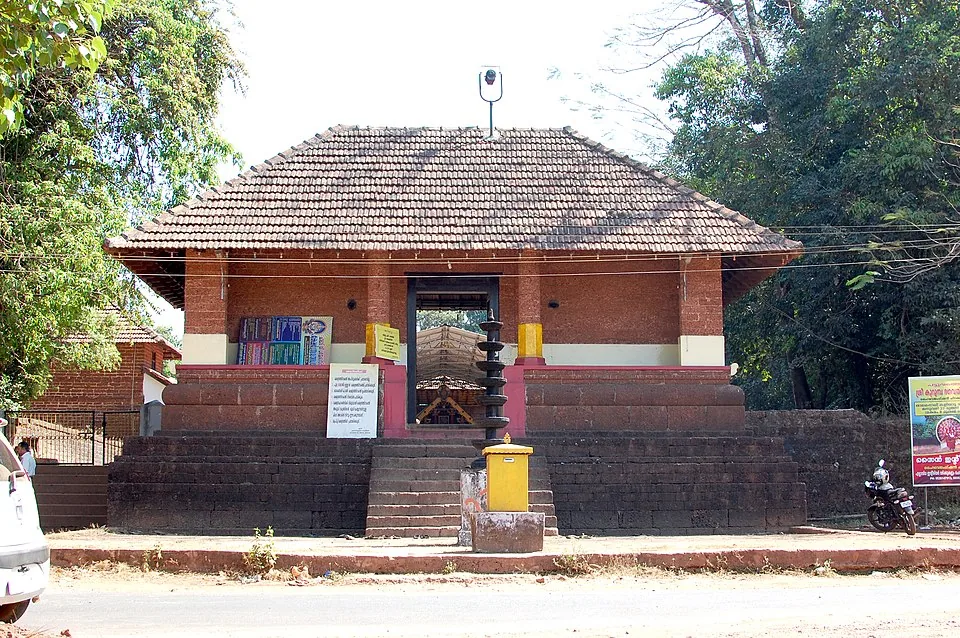
A Bhagavathy temple near Valapattanam regarded as the mother shrine of Kalaripayattu — Kerala’s martial art — where Theyyam is performed; the goddess is guardian of the kalari.
28.8 km · straight lineNo. Pazhassi Dam is a masonry irrigation dam with a landscaped garden, children’s park and reservoir boating — a family day-outing rather than a place of worship. It carries no ritual expectations and is named after the freedom fighter Pazhassi Raja, not a deity.
Yes — reservoir boating run by the District Tourism Promotion Council is the main attraction, and it is the headline reason most visitors come. Boat types, timings and fares vary and should be confirmed locally, and boating may be paused during high water or maintenance.
No. This dam only bears his name. Pazhassi Raja’s tomb and memorial — the Pazhassi Smarakam, sometimes called the Pazhassi Kudeeram — are at Mananthavady in Wayanad district, some distance to the east. Do not confuse it with the Pazhassi Raja Smrithi Mandiram, which is a different building altogether: a koothambalam-style memorial dedicated by Mattannur Municipality in 2014, in Kannur district. The Mananthavady tomb was declared a protected monument by the Kerala State Archaeology Department in 1980, and in December 2010 a museum opened beside it with introductory, historical, tribal, heritage and coin galleries, alongside a park with boating and an aquarium. If your aim is to pay homage at the memorial itself, visit Mananthavady rather than the dam (confirm timings locally).
Around two to three hours is comfortable for a boat ride, a walk through the garden and some time in the children’s park. Families with young children, or anyone wanting an unhurried picnic, could happily spend half a day.
The post-monsoon and winter months, roughly October to February, are generally the most pleasant, when the reservoir is full and the weather is kinder. Late afternoon into the golden hour gives the best light and cooler air.
A modest entry ticket is typically charged for the garden, with boating priced separately, and cameras or parking may attract small extra fees.
Post-monsoon and winter for scenery; monsoon access may change.
Entry: A small entry ticket for the garden is usual, with boating charged separately per boat or per person, and possible extra charges for camera and parking. Timings: Generally open daily through the day, commonly reported around 9:00 am to 6:00 pm, with the last boating slot before closing.
Base yourself in Mattannur and Airport or a nearby town in Kannur, then confirm the last-mile route locally before leaving. Check public access status before travel; dam areas often have security rules and seasonal entry limits. If the visit depends on forest, temple, boat, ferry, weather or seasonal access, check the official/local rule on the day before travel.
1 to 2 hours.
Nearby you can pair Aralam trek (20.6 km, approximate straight-line separation), Paithalmala trek (22.1 km, approximate straight-line separation), Palakkayam Thattu (22.3 km, approximate straight-line separation), Parassinikadavu Muthappan Temple (22.8 km, approximate straight-line separation).
Do not cross barriers or restricted zones. Follow release-warning and security instructions.
We have not published a story about Pazhassi Dam itself yet. These cover Mattannur and Airport and the wider district, with separate journeys between stops.
Route-level itineraries and practical guides for the rest of Kerala.