What to expect
Highlights
- Heritage experience at Gundert Bungalow
- Architecture, local stories and old trade/cultural routes
- Good fit for guided walks and nearby cafes/shops
At Illikkunnu near Thalassery, the hillside home of the German missionary-scholar Hermann Gundert, who compiled the first Malayalam–English dictionary and grammar here in the mid-1800s.
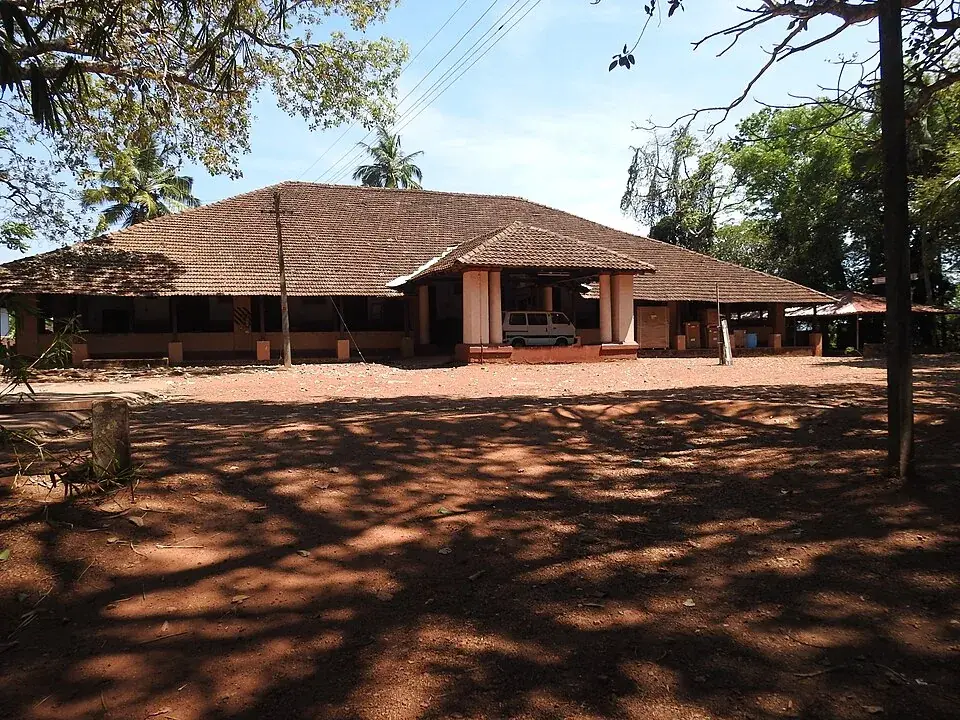
On a breezy laterite hill at Illikkunnu, a red-tiled colonial bungalow looks out over the Arabian Sea — the very rooms where a young German missionary quietly gave Malayalam its first great dictionary.
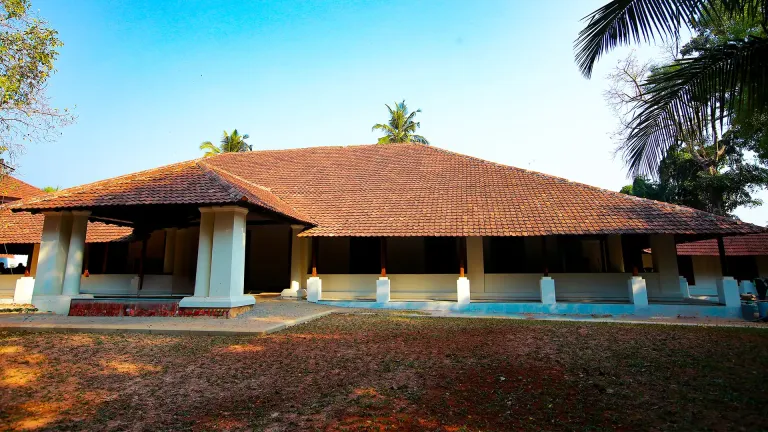
Perched on the little hill of Illikkunnu, a few kilometres from Thalassery (old Tellicherry) town and close to the Kuyyali river, the Gundert Bungalow is one of Kerala’s most understated but consequential landmarks. From the outside it is a graceful old Malabar house — thick laterite walls, deep shaded verandahs running on every side, tall wooden doors and shuttered windows, high ceilings and a sweeping sloped roof of red clay tiles. From the verandah the land falls away towards the sea, and the light and the salt air are much as they were when a scholarly German in his twenties sat here with a pen and an impossible task.
That German was Dr Hermann Gundert (1814–1893), a Basel Mission missionary and linguist who lived and worked at Thalassery for roughly twenty years, from about 1839 until ill health forced him home to Germany in 1859. He came as a preacher and educator, but it is as a scholar of the Malayalam language that he changed history. Immersing himself in the tongue of the Malabar coast, he set out to describe and codify it with a rigour that no one had attempted before — and he did much of that monumental work in and around this hilltop house.
The achievement that towers over the rest is his Malayalam–English dictionary, a scientifically compiled lexicon widely regarded as the first modern Malayalam dictionary and still consulted today (it was published in 1872, by C. Stolz for the Basel Mission press at Mangalore). He also produced an influential Malayalam grammar, the Malayalabhasha Vyakaranam (1851), translated large parts of the Bible, and — a small detail with huge consequences — helped introduce Western-style punctuation into Malayalam prose. Through Gundert’s hands the language acquired reference tools, standardised prose and a scholarly foundation that generations of writers would build on.
From Illikkunnu, Gundert also midwifed Malayalam journalism. In June 1847 he edited and issued Rajyasamacharam, generally counted as the first Malayalam newspaper, and followed it that October with Paschimodayam, a magazine of general knowledge. That these pioneering periodicals were set and printed in the Thalassery neighbourhood makes this quiet hill, in a real sense, a birthplace of the Malayalam press. Gundert wrote around a dozen Malayalam books during his Kerala years, and started a school here too.
There is a literary footnote that delights visitors: Gundert’s daughter Marie married into the Hesse family, and his grandson was Hermann Hesse — the German novelist and 1946 Nobel laureate who wrote Siddhartha. The scholar who spent two decades listening to Malayalam on this coast is thus grandfather to one of world literature’s best-loved names, and the museum today honours that thread with a Hermann Hesse library.
For decades the bungalow drifted quietly through private hands and near-obscurity, cherished mostly by scholars and by Thalassery locals who knew what had happened here. In 2022 the Government of Kerala restored the heritage building and reopened it as the Gundert Museum under the Thalassery Heritage Tourism Project, so that the story of one German’s devotion to Malayalam — and of the language’s coming-of-age — could finally be told in the place where it unfolded.
Hermann Gundert was born on 4 February 1814 in Stuttgart, in the German kingdom of Württemberg, and died on 25 April 1893 in Calw. He trained for missionary and scholarly work and joined the Basel Mission, the Swiss-German Protestant society then active on the Malabar coast. He married Julie Dubois, from French-speaking Switzerland, in 1838, reached India in the late 1830s, and settled at Tellicherry (Thalassery) from around April 1839, living there roughly two decades with Julie until poor health took the family back to Germany in 1859.
During those Thalassery years Gundert turned himself into arguably the finest European scholar of Malayalam of his age. His Malayalabhasha Vyakaranam (Malayalam grammar) appeared in 1851, and his crowning work, A Malayalam and English Dictionary, was published in 1872 by C. Stolz for the Basel Mission Book and Tract Depository at Mangalore. Prepared with unusual scientific care and drawing on classical and colloquial usage alike, it is regarded as the first advanced Malayalam dictionary and remains a reference point for scholars. (Some sources cite 1871–1872 for the printing; the widely used edition is dated 1872.)
Gundert was also a pioneer of Malayalam publishing and journalism from Thalassery. Rajyasamacharam, considered the first Malayalam newspaper, was launched under his editorship in June 1847, and Paschimodayam, a knowledge and news magazine, followed in October 1847 — both associated with the Illikkunnu neighbourhood. He translated scripture from Hebrew and Greek into Malayalam, wrote around thirteen Malayalam books during his residence, and is credited with helping bring modern punctuation into Malayalam prose. After returning to Germany he directed the Calw Publishing House from 1862.
The literary lineage is genuine and often retold: Gundert’s daughter Marie Gundert (1842–1902) was the mother of the novelist Hermann Hesse, making the Malayalam lexicographer the maternal grandfather of the 1946 Nobel laureate in literature. Hesse grew up steeped in his grandfather’s missionary-scholar world, and the family’s Indian connection echoes through parts of his work.
The bungalow itself is a 19th-century Malabar heritage building of laterite and timber under red clay tiles, standing on the Illikkunnu hill near the Kuyyali river (some tourism accounts give a construction date in the 1860s, so the exact building history is best treated as approximate — confirm locally). Long in private/lesser-known status, it was restored by the Government of Kerala at a cost of about Rs 2.21 crore under the Thalassery Heritage Tourism Project and opened to the public as the Gundert Museum on 7 May 2022, with zones on Gundert’s life and work, rare books, a Julie Gundert hall, a Hermann Hesse library, a Gundert statue and a digital book archive.
Stand in the actual rooms where Malayalam got its first great dictionary and its first newspaper.
A rare, atmospheric slice of Malabar heritage architecture — laterite, timber and red tiles on a sea-facing hill.
The surprising Hermann Hesse twist: the German scholar here was grandfather to a Nobel laureate.
A properly restored 2022 museum with rare books, a digital archive and dedicated exhibition zones.
Sweeping Illikkunnu hilltop views towards the Arabian Sea and the Kuyyali river.
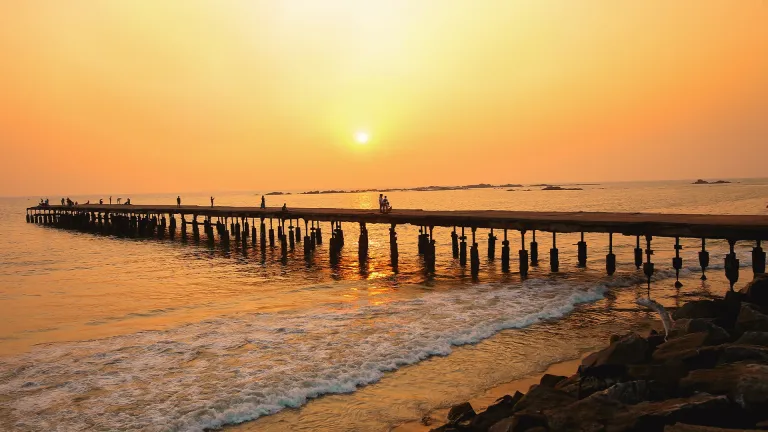
Pairs perfectly with Thalassery’s other landmarks — the fort, the pier and Overbury’s Folly — for a full heritage day.
Road km to Kannur; ghat roads and traffic vary — allow extra.
November to February and early mornings are best for walking; avoid midday heat where possible.
Live forecast loads in your browser.
Sunset is in about 3 hours.
Sun and moon are calculated for this location and shown in IST. Photography windows are the hour around sunrise and sunset; the sunset bearing is degrees clockwise from true north. Moon phase is accurate to about half a day.
Browse listed stays, food, activities, sights, shops and rentals around Gundert Bungalow. Check each listing’s locality and contact the business directly for current arrangements.
Tyndis runs a Thalassery biryani and Malabar cuisine food-tour experience, useful for travellers who want a guided, story-led local food route instead of only restaurant stops. Tyndis Travel, Co Orbit, 10th floor, Noel Focus, Infopark-Kakkanad Road, Kochi 682037; tour operates in Thalassery · Thalassery biryani, Food tour, Malabar cuisine.
Gundert Bungalow is the Kerala Tourism-listed Thalassery heritage museum connected to Hermann Gundert, Malayalam language history and early Malayalam newspapers. Gundert Bungalow, Thalassery heritage, Museum.
Thalassery is Kerala Tourism’s official heritage-town anchor for Kannur coast planning, covering Thalassery Fort, cricket history, food heritage, circus history and cultural landmarks. Public town; check attraction timings locally · Thalassery, Heritage town, Food heritage.
Muzhappilangad Beach is Kerala drive-in beach, best planned with current driving, beach safety, water-sport and Thalassery-route checks. Muzhappilangad, Drive-in beach, Thalassery.
Book with the place itself. India’s cyber-crime coordination centre warned in April 2025 that convincing copies of hotel and pilgrimage booking sites are being pushed through sponsored search and social ads, taking payment for rooms the property never hears about. Use the contact and source details on each profile to confirm the exact business and booking channel. A directory entry or map pin alone does not establish an operator’s identity or current availability. Roampedia takes no commission and does not collect booking payments. If a booking page reached you through an ad, check the address bar against the property’s own site before you pay. Fraud can be reported on cybercrime.gov.in or on 1930.
Find food, accommodation and activities across Muzhappilangad and Thalassery. Browse the guides for places to eat, stay and explore along your route.
4 more places around Muzhappilangad and Thalassery. Open a guide to plan the visit and onward journey.
5.3 km · straight line
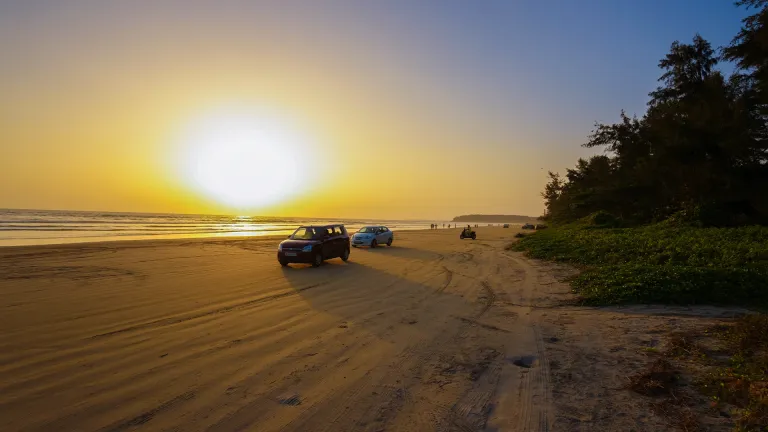
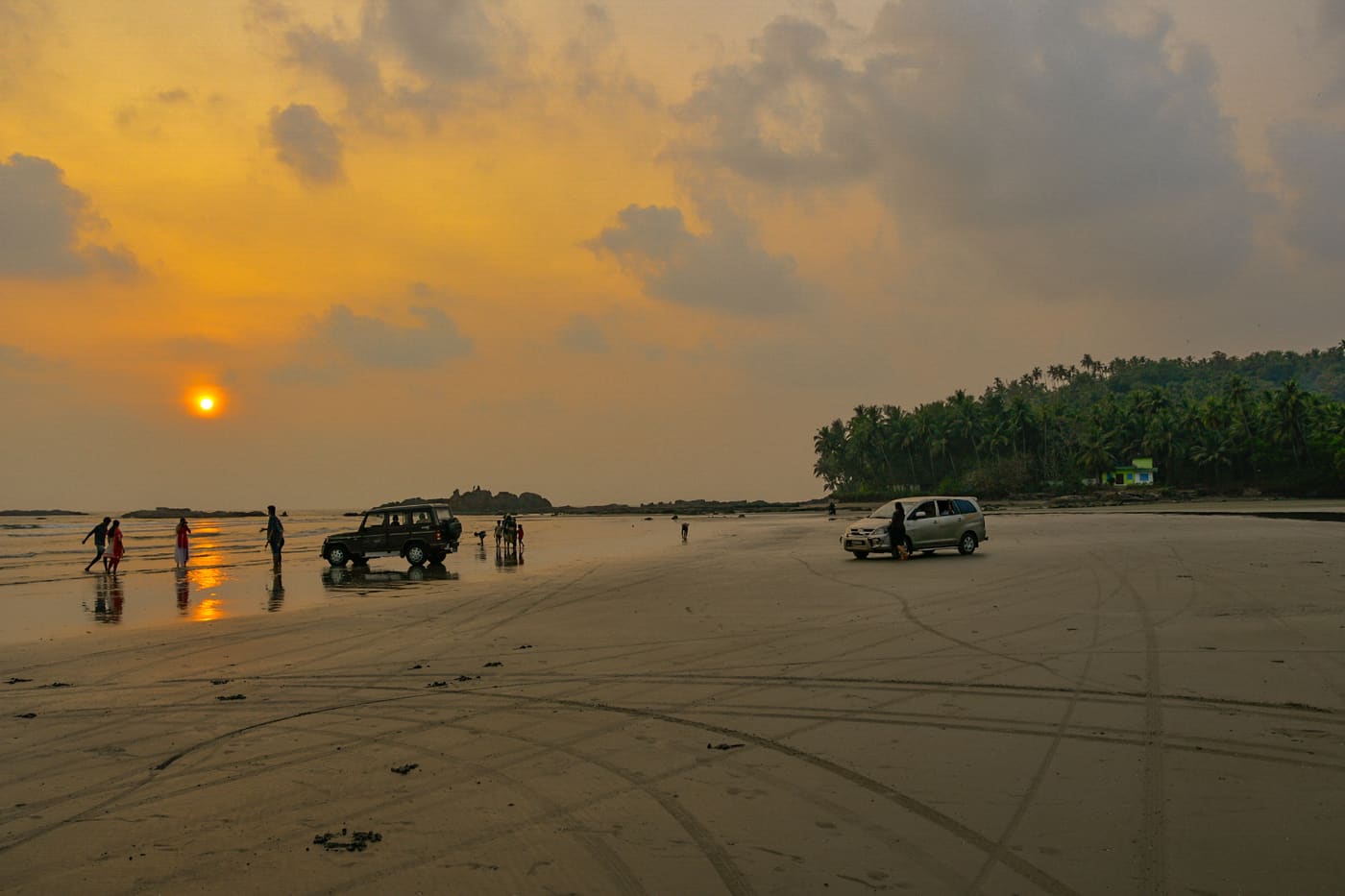
A ~4 km hard-sand beach, the longest drive-in beach in India — you can drive along the sand at low tide; Dharmadam Island lies just offshore.
3.3 km · straight line
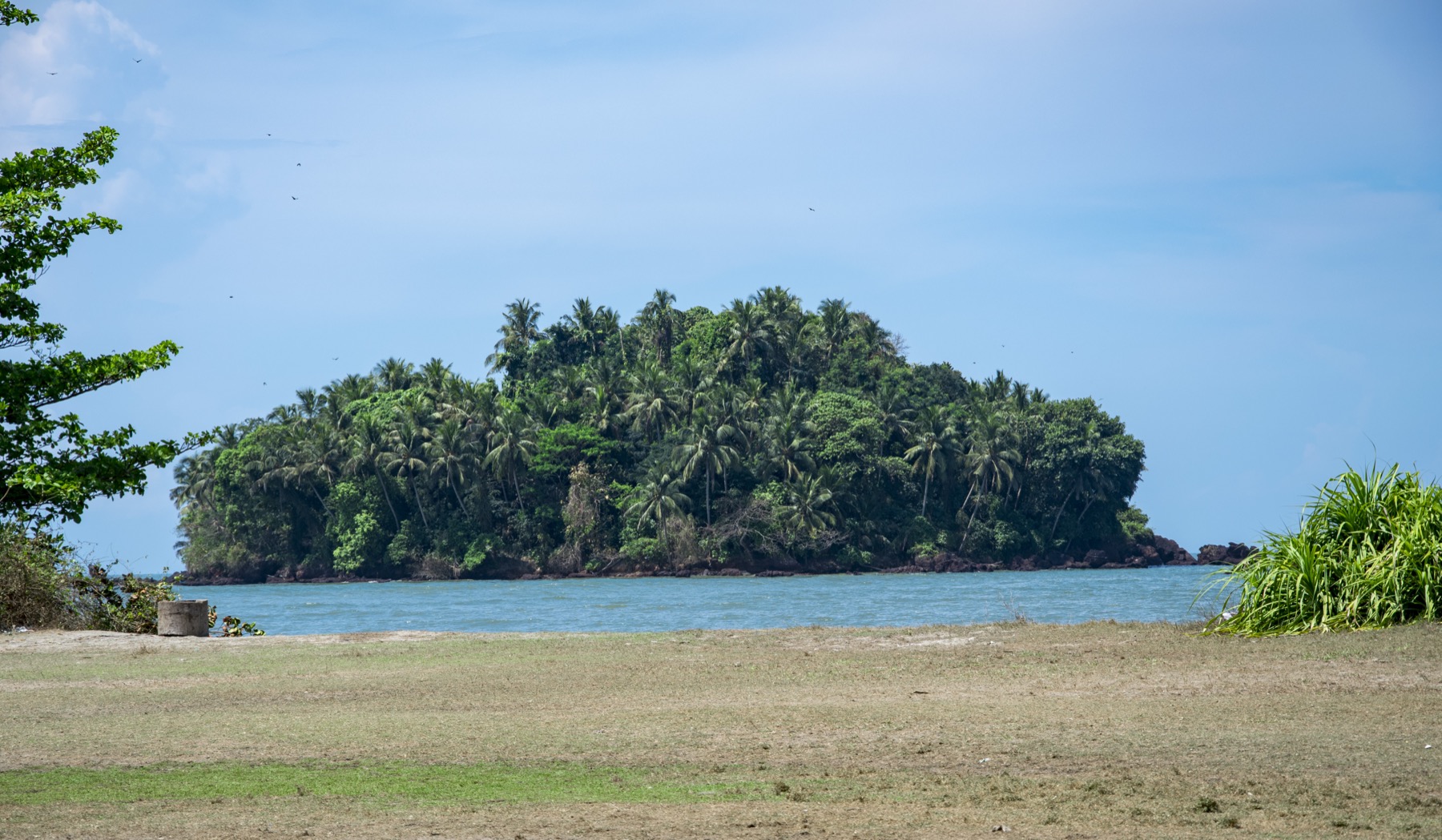
A small green private island off Muzhappilangad, reachable on foot across the sand at low tide (viewing only; landing is restricted).
2.2 km · straight line
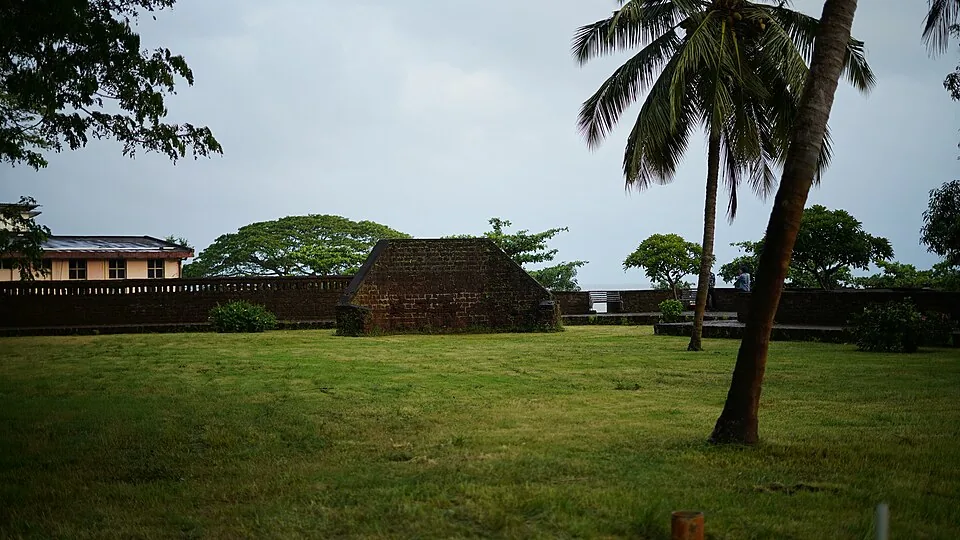
A square laterite fort built by the English East India Company in 1708 at Thalassery (Tellicherry), heart of the old Malabar pepper and cricket town, with secret sea tunnels.
2.0 km · straight line
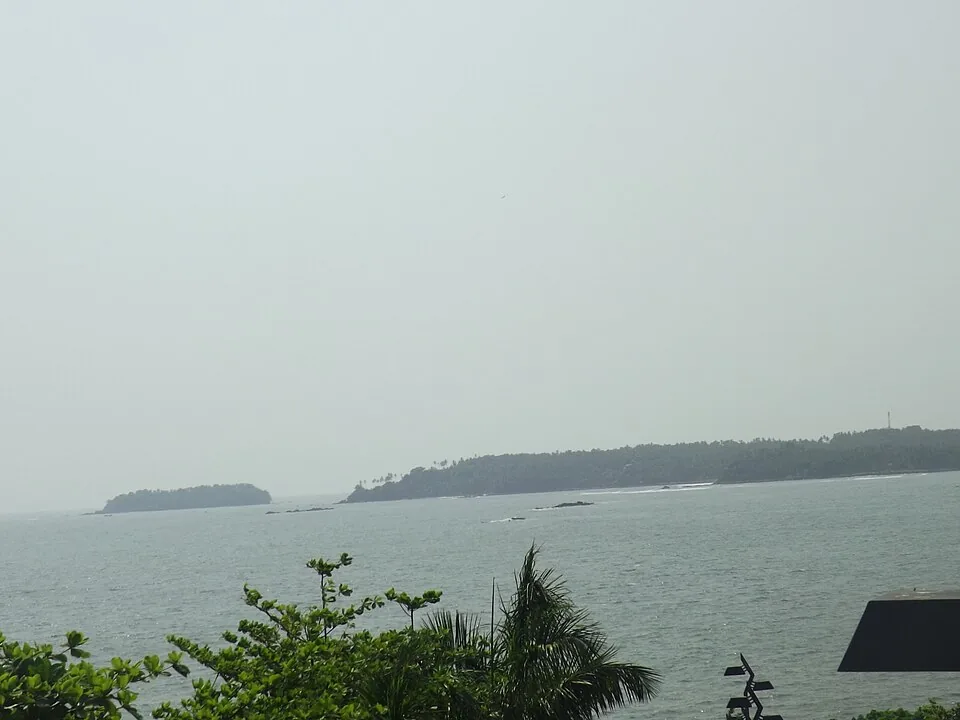
A cliff-top garden viewpoint over the sea at Thalassery, named after E.N. Overbury, a British judge of the 1870s who began but never finished a mansion here.
Roampedia is commission-free — own or know a stay, eatery, guide or shop near Gundert Bungalow? Submit public business details for review.
Add a nearby businessEntry: A nominal museum entry fee is charged — commonly reported at about ₹50 per person; confirm the current fee at the ticket counter.
Photography: The verandahs, tiled roofline and sea-facing hill are very photogenic; photography of interiors and exhibits may be restricted, so check the museum’s current photography rules on arrival.
If you are travelling by bus or ferry, check the return service with the operator before setting out. Leave time to reach the stop or jetty after your visit.
Ask at the bus stand for the time of the last service back, not the next one. If you miss it, an auto or app cab is the fallback — agree the fare before you get in.
If you need step-free access, contact the site before travelling. Ask about a level entrance, steps along the route, the nearest drop-off point, seating and accessible toilets.
Charge cap and free-transaction limits: Reserve Bank of India, ATM FAQ updated 4 July 2025; checked 4 October 2026.
These services are listed within about 1.2 km of Gundert Bungalow. Walking distances follow mapped routes; access and opening hours can change. Other services may be closer but are not included here.
Published emergency and visitor-assistance contacts. For an immediate emergency, call 112. Shared Kerala contact sources checked 4 October 2026; publication does not establish a tested live response.
A cliff-top garden viewpoint over the sea at Thalassery, named after E.N. Overbury, a British judge of the 1870s who began but never finished a mansion here.
2.0 km · straight lineA square laterite fort built by the English East India Company in 1708 at Thalassery (Tellicherry), heart of the old Malabar pepper and cricket town, with secret sea tunnels.
2.2 km · straight lineA small green private island off Muzhappilangad, reachable on foot across the sand at low tide (viewing only; landing is restricted).
3.3 km · straight lineA ~4 km hard-sand beach, the longest drive-in beach in India — you can drive along the sand at low tide; Dharmadam Island lies just offshore.
5.3 km · straight line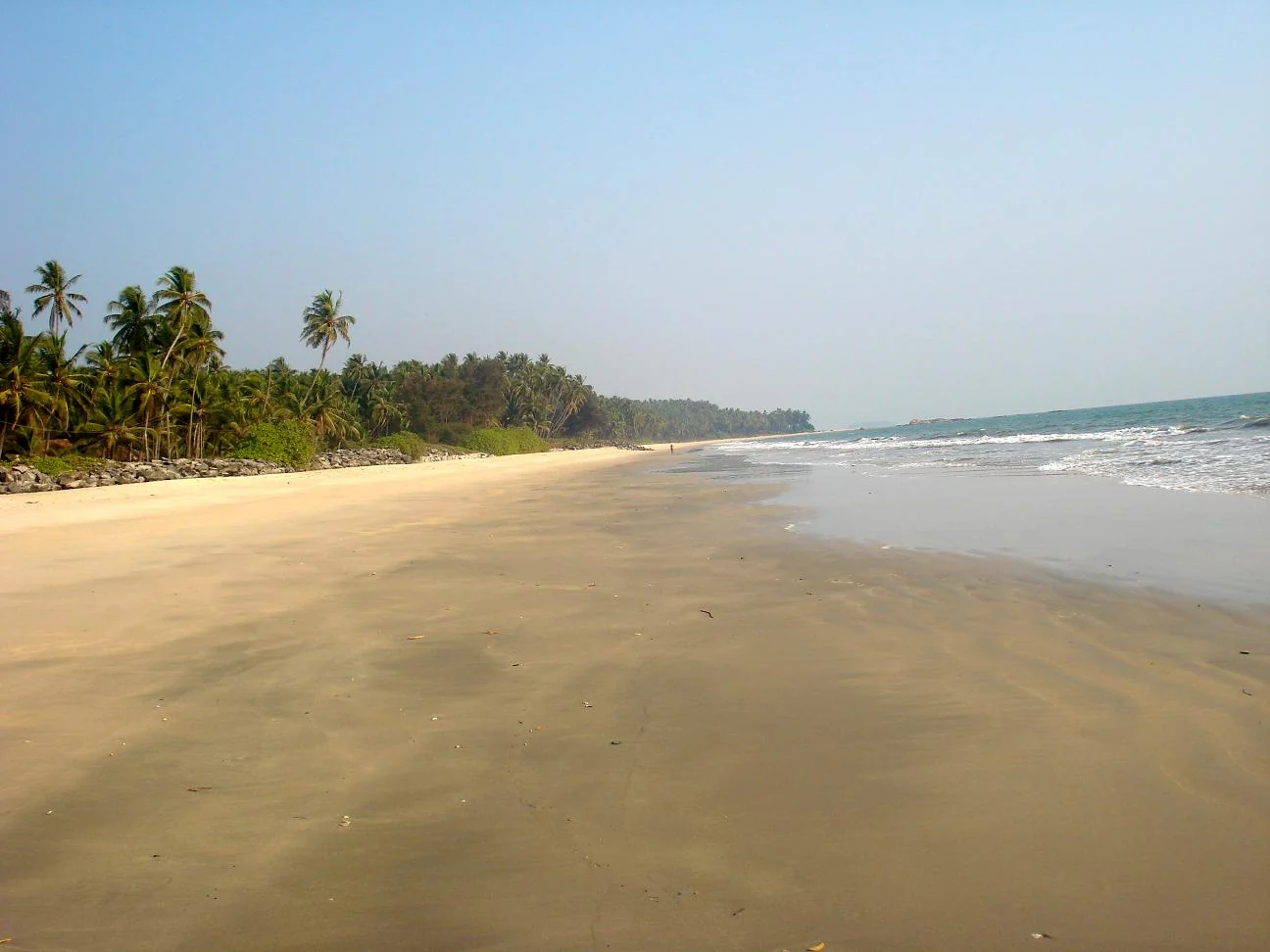
Kizhunna’s sandy shore lies between Thottada and Ezhara, with palm-backed village edges and the Cherakallu rock formations breaking up the coastline.
10.3 km · straight line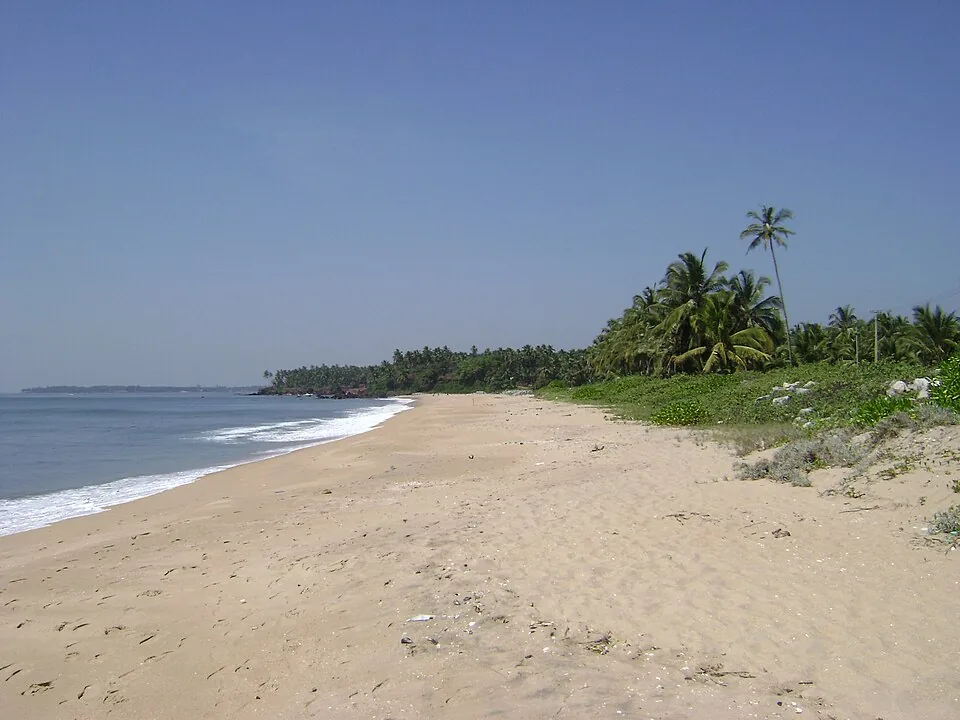
A quiet, unspoilt cove-and-stream beach south of Kannur city, known for its homestays and calm, uncrowded sands.
11.1 km · straight line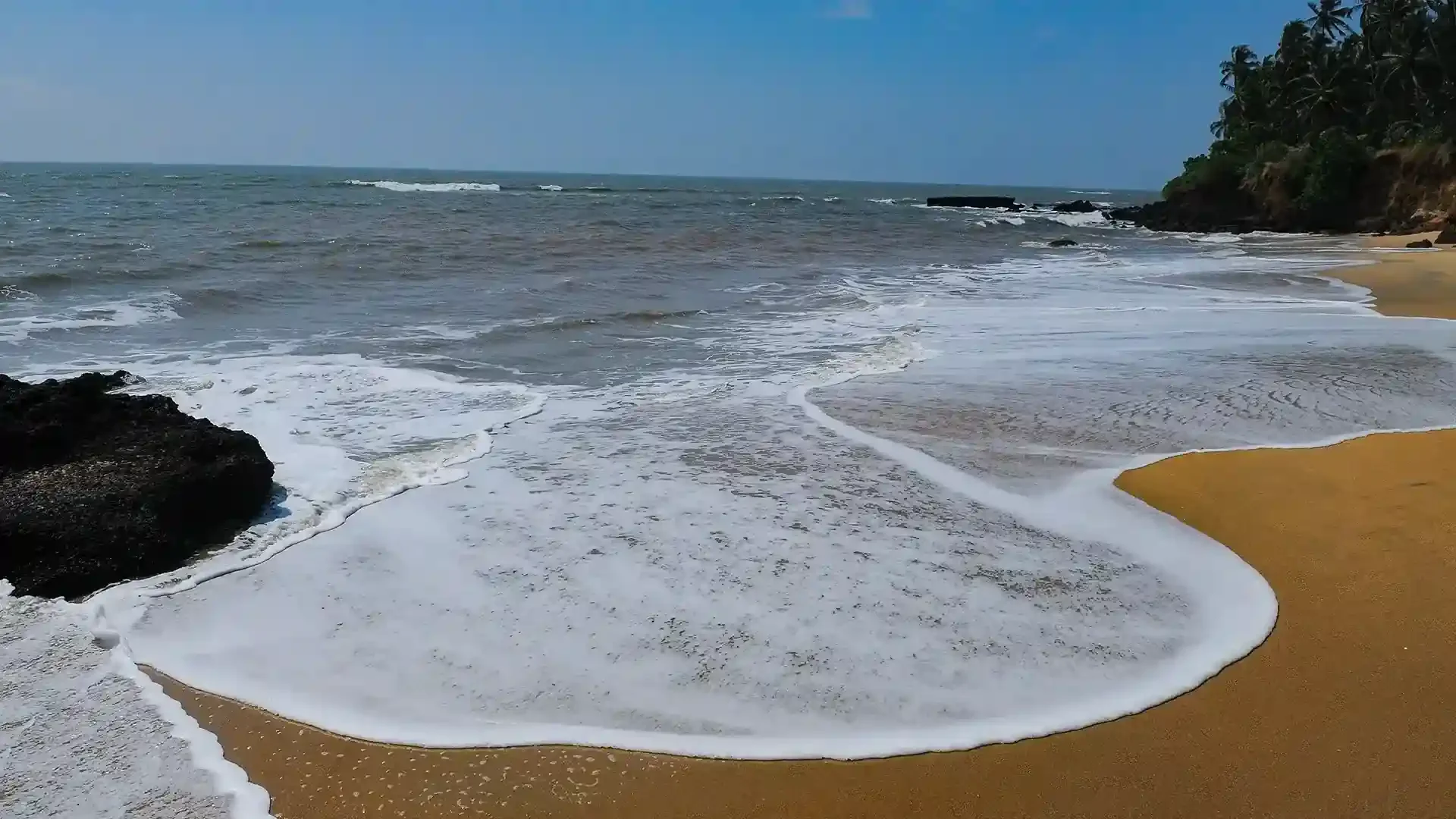
Adikadalayi Beach, also called Kadalayi Beach in Kerala’s coastal tourism study, is a Kannur shore with sandy pockets, exposed red coastal rock and palms above the water. It belongs to the Adikadalayi locality, not the separately named Thottada, Kizhunna or Ezhara beaches farther along the coast. Use the mapped public steps from Tippu Sulthan Beach Road as the arrival reference. Nearby cliff-side homestays have their own entrances and facilities, and should not be used as assumed public access.
12.5 km · straight line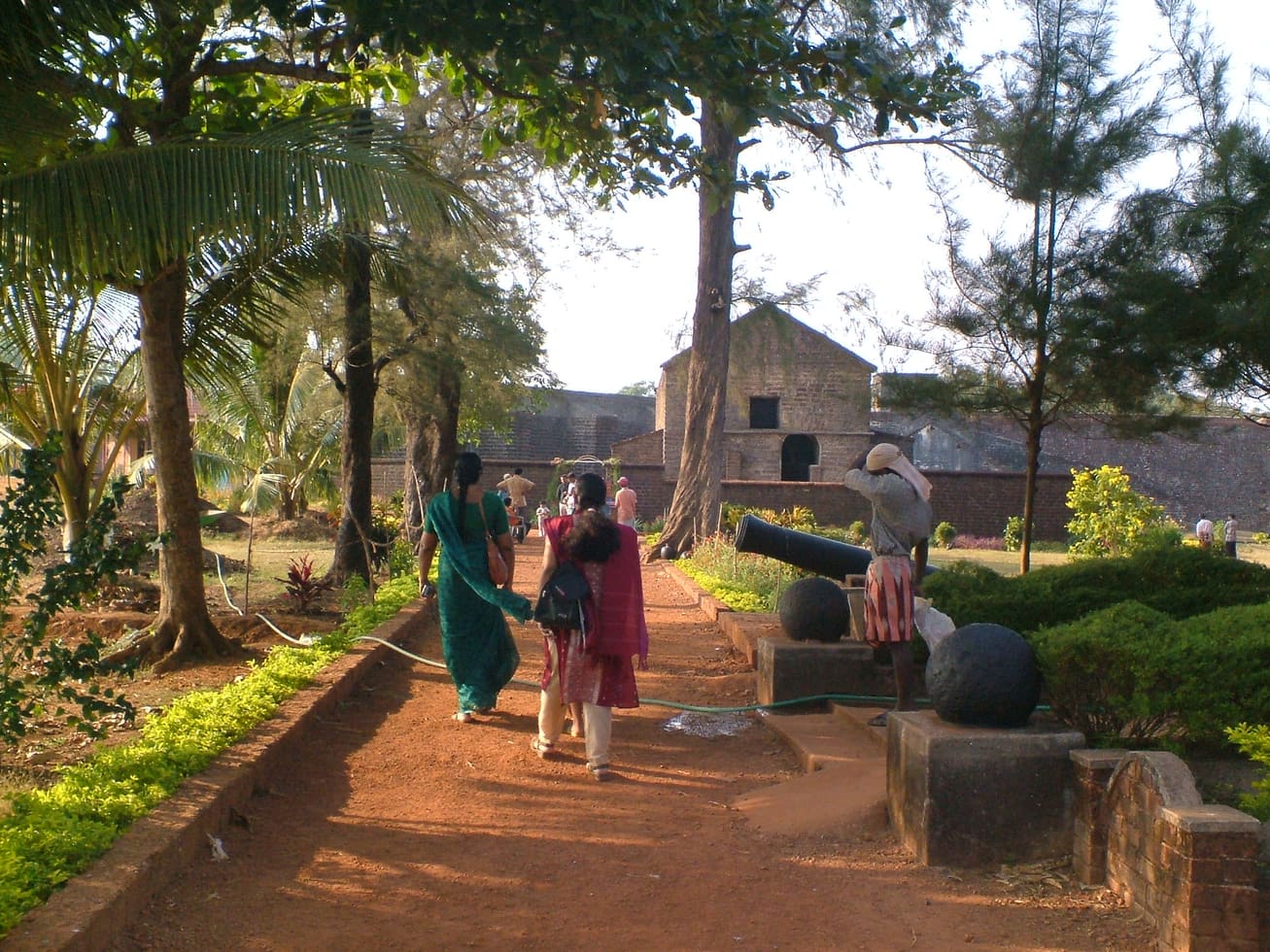
Sea-facing laterite fort built by the Portuguese in 1505, later held by the Dutch, the Arakkal royal house and the British — Kannur city’s great coastal landmark overlooking Mappila Bay.
15.3 km · straight line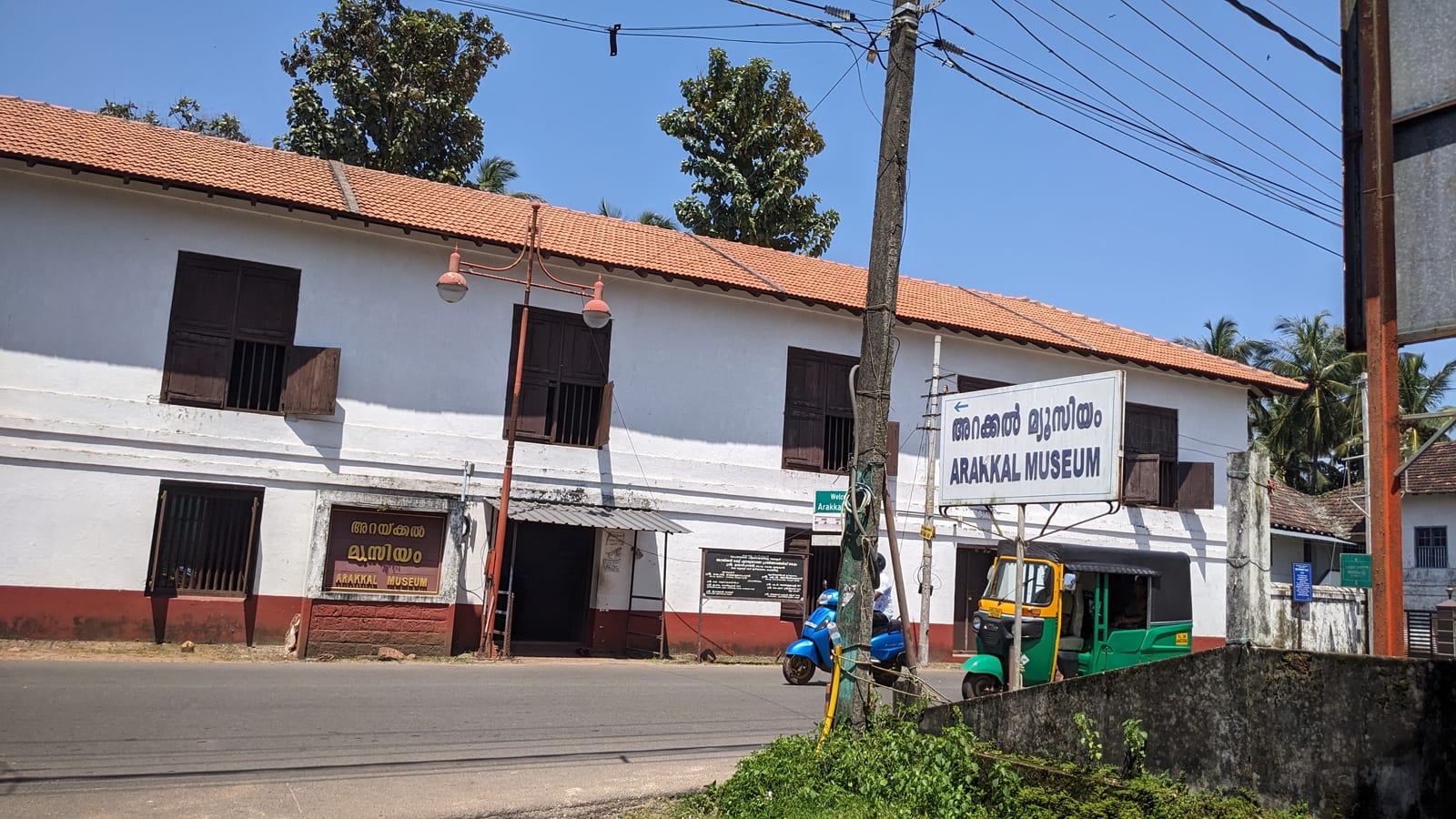
The Arakkal Kettu (palace museum) of the Arakkal Ali Rajas — Kerala’s only Muslim royal house, matrilineal so ruled at times by a Beevi (queen).
15.3 km · straight line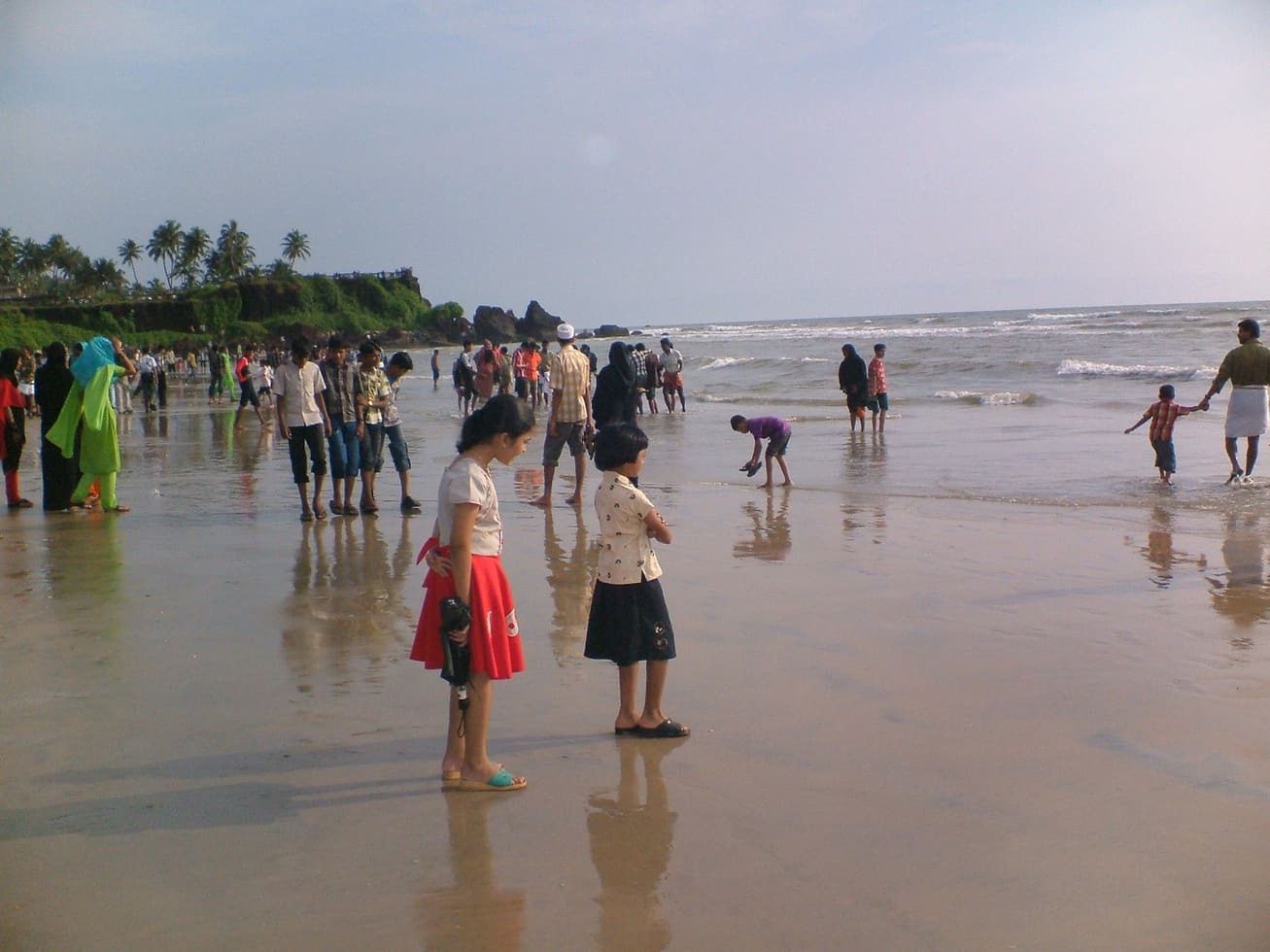
A small rocky beach in the Kannur cantonment, an extension of Payyambalam and within a few minutes of St Angelo’s Fort and the Kannur lighthouse. Not a swimming beach — the draw is the rocks, the quiet and the lighthouse beam after dark.
16.6 km · straight lineKannur city’s main beach, with a landscaped garden, the mother-and-child sculpture and long sunset walkways.
18.2 km · straight line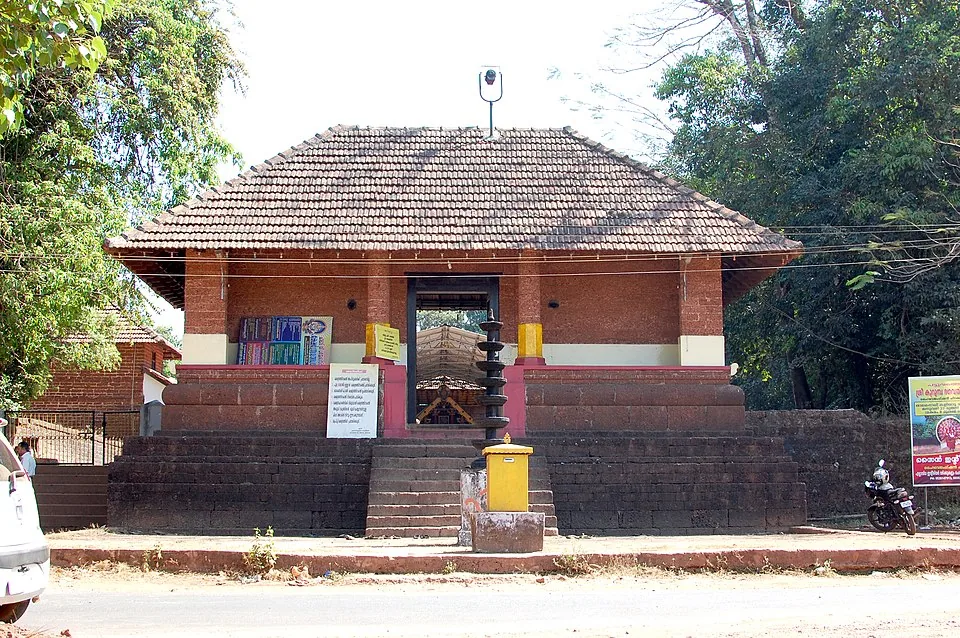
A Bhagavathy temple near Valapattanam regarded as the mother shrine of Kalaripayattu — Kerala’s martial art — where Theyyam is performed; the goddess is guardian of the kalari.
22.3 km · straight lineNearby toilets, pharmacies, ATMs, seating and vets are community-mapped and may be incomplete or out of date. Map data © OpenStreetMap contributors | Walking times © openrouteservice.org by HeiGIT
Dr Hermann Gundert (1814–1893) was a German Basel Mission missionary and linguist who lived at Thalassery for about twenty years from 1839. Working from this Illikkunnu hill, he compiled the first modern Malayalam–English dictionary (published 1872), wrote an early Malayalam grammar (1851) and launched the first Malayalam newspaper, Rajyasamacharam (1847). The bungalow is where much of that language-shaping work happened.
Yes. The Government of Kerala restored the building and reopened it as the Gundert Museum on 7 May 2022 under the Thalassery Heritage Tourism Project. Use the museum or heritage department’s published open-day notice before travelling.
Yes — the link is genuine. Gundert’s daughter Marie was the mother of the German novelist Hermann Hesse, the 1946 Nobel laureate who wrote Siddhartha. Gundert was thus Hesse’s maternal grandfather, and the museum includes a Hermann Hesse library.
The restored bungalow houses exhibition zones on Gundert’s life and work, rare book collections, a Julie Gundert hall, a Hermann Hesse library, a statue of Gundert and a digital book archive, all set within the heritage laterite-and-timber structure with its wide verandahs and sea-facing hilltop position.
The bungalow sits at Illikkunnu, roughly 4 km from Thalassery (Tellicherry) town centre. The easiest way is a short auto-rickshaw or taxi ride from town; Thalassery railway station and bus stand are the usual arrival points.
About 45 minutes to an hour is usually enough to see the museum and enjoy the views. Combined with Thalassery Fort, the pier and Overbury’s Folly it makes an easy half-day of Thalassery heritage.
November to February and early mornings are best for walking; avoid midday heat where possible.
Entry: A nominal museum entry fee is charged — commonly reported at about ₹50 per person; confirm the current fee at the ticket counter. Timings: Now open as the Gundert Museum (reopened 7 May 2022); mornings from around 10:00 a.m. are commonly cited as a good time to visit, and hours may vary (for example during Ramadan) — verify current opening days and times locally before going.
Base yourself in Muzhappilangad and Thalassery or a nearby town in Kannur, then confirm the last-mile route locally before leaving. Walkable heritage areas are best done slowly; combine nearby streets, museums, markets and food stops. If the visit depends on forest, temple, boat, ferry, weather or seasonal access, check the official/local rule on the day before travel.
1 to 3 hours.
Nearby you can pair Overbury’s Folly (2.0 km, approximate straight-line separation), Thalassery Fort (2.2 km, approximate straight-line separation), Dharmadam Island (3.3 km, approximate straight-line separation), Muzhappilangad Drive-in Beach (5.3 km, approximate straight-line separation).
Watch traffic on narrow heritage streets. Keep valuables close in crowded markets.
We have not published a story about Gundert Bungalow itself yet. These cover Muzhappilangad and Thalassery and the wider district, with separate journeys between stops.
Route-level itineraries and practical guides for the rest of Kerala.
Photographs: Jameela P. (CC BY-SA 4.0), Kerala Tourism, Government of Kerala (Official tourism image — externally hosted). Wikimedia Commons.