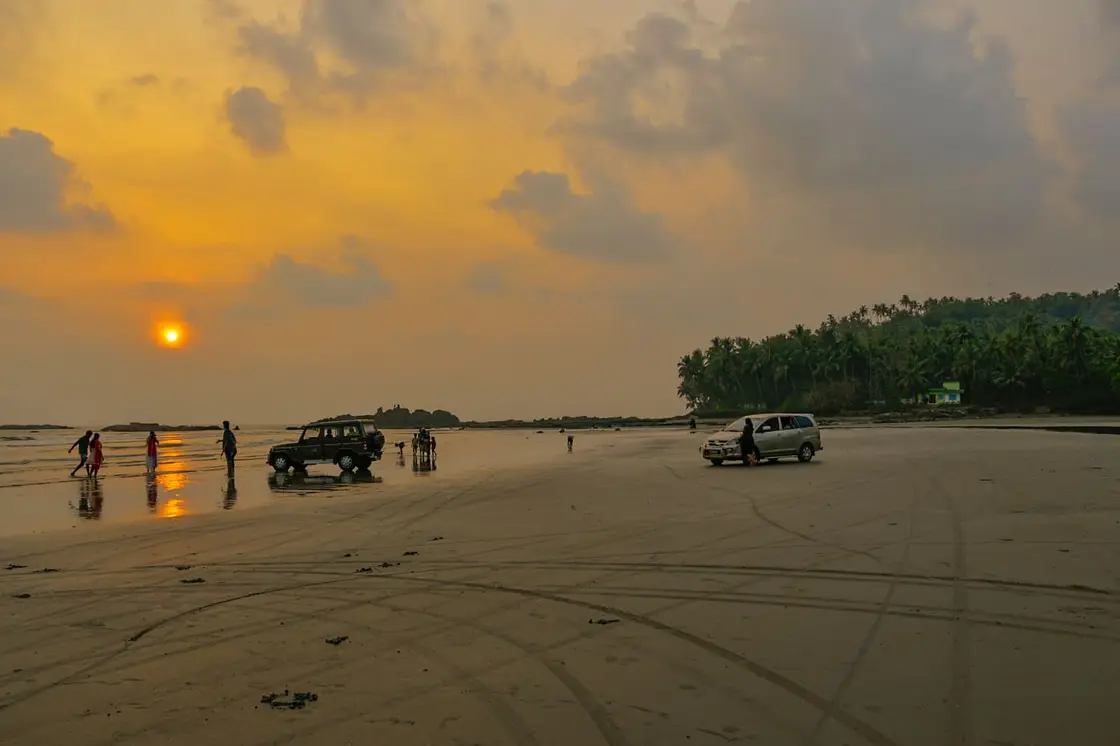
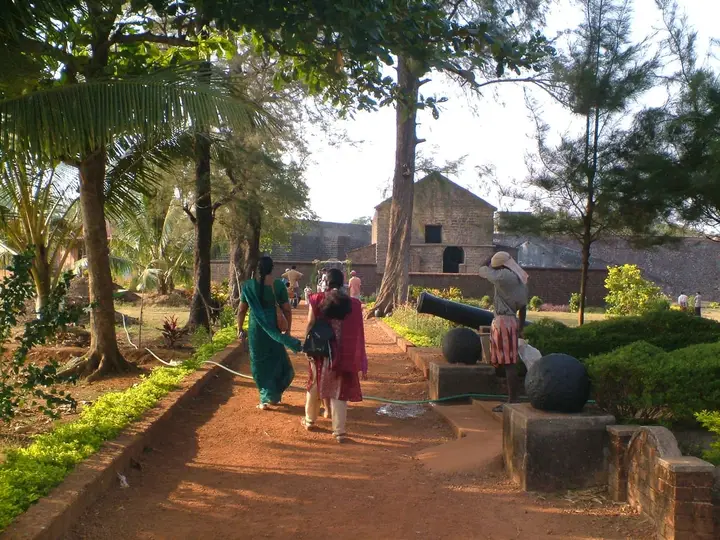
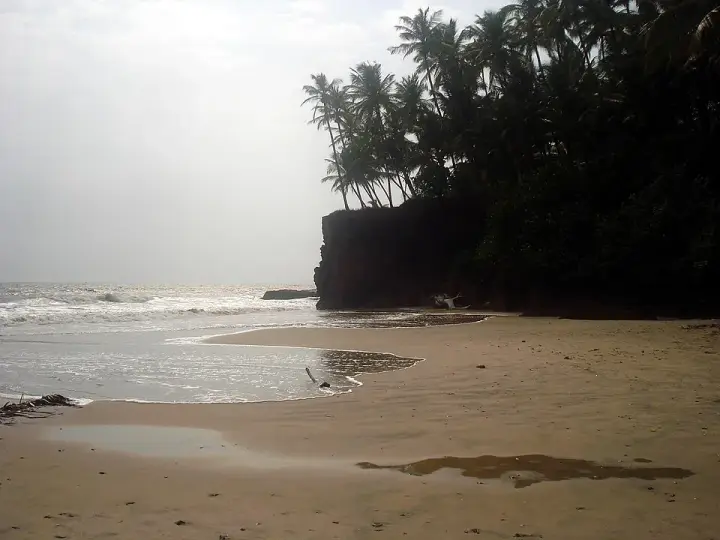
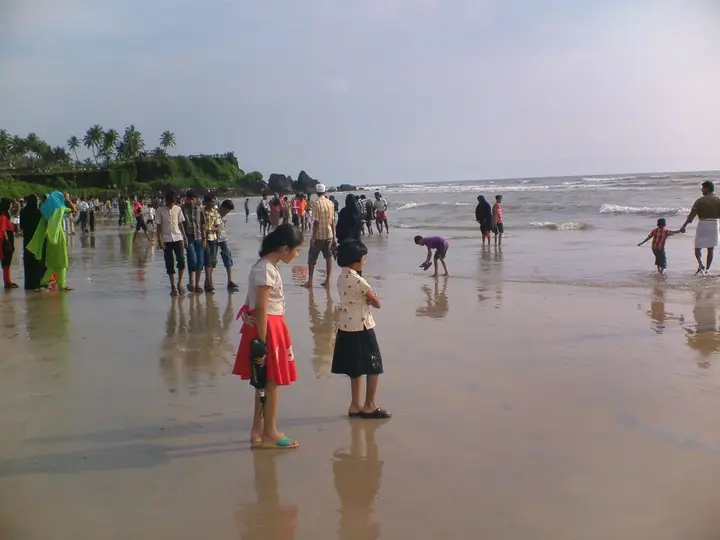
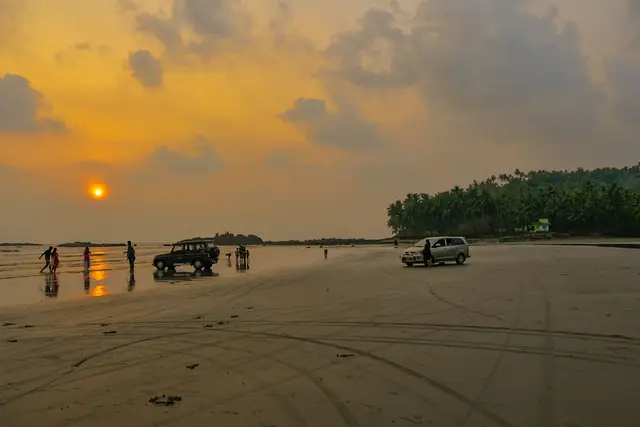
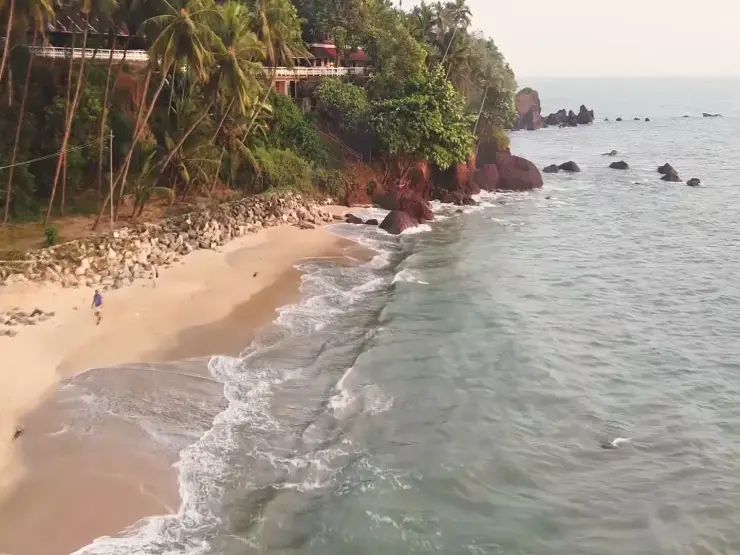
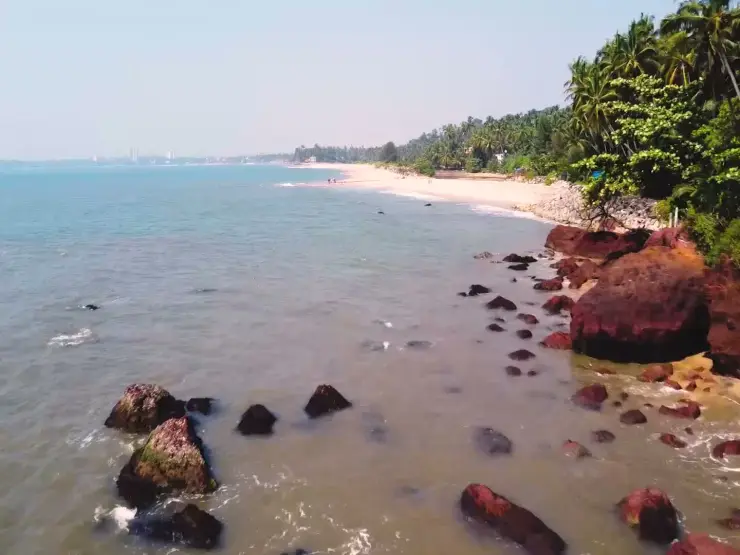
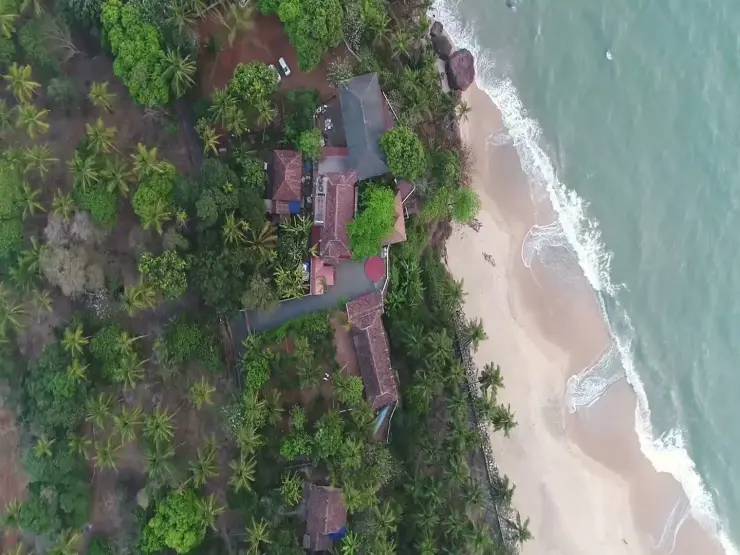
Two places share one hub here, and they are not the same kind of place. Thalassery — Tellicherry on the old charts — is a working municipality of just under 100,000 people packed into about 24 sq km of Malabar coast, a town that grew rich on pepper under the English East India Company and then spent the nineteenth century turning that trade into other things: mission weaving sheds, a printing press, a bakery, a cricket maidan, a gymnasium that fed India’s circus rings. Muzhappilangad, seven kilometres north, is a village of some 24,000 people on a peninsula with sea on three sides and the Anjarakandy river on the fourth, best known for a beach it is not allowed to keep to itself. Between them they hold the loudest set of claims in north Kerala, and most of those claims turn out to have a real mechanism behind them.
Thalassery’s reputation arrives before the town does. It is billed everywhere as the place of the three Cs — cricket, cake and circus — and to that the food writers add a fourth, the biryani. Superlatives of that kind usually dissolve when you push at them. These mostly do not. What they do is change shape: each one turns out to rest on a specific institution, a named person and a date that can be argued about, and the interesting story is the mechanism rather than the boast.
Take the circus, which is the strongest of the four. Keeleri Kunhikannan was born at Thalassery in 1858 and made his living as the gymnastics instructor at the BEMP school — the Basel Evangelical Mission Parsi High School, founded in the town in 1856 with German missionary support. He was also trained in kalarippayattu. When the Great Indian Circus, run by the Maharashtrian showman Vishnupant Chatre, came through, Kunhikannan agreed to supply it with trained performers; sources give the visit as 1887 or 1888 and do not agree. From 1888 he trained recruits at a kalari at Pulambil, and in 1901 he opened a dedicated circus school at Chirakkara — described as the first of its kind in Kerala and the second in India. Gemini Sankaran of the Gemini Circus was his student; so was Pariyali Kannan, who founded the Malabar Grand Circus in 1904; his nephew Kannan Bombayo performed. He died in 1939, and his disciple M. K. Raman founded the Keeleri Kunhikannan Teacher Memorial Circus and Gymnastic Training Centre at Chirakkara, which still exists. In 2008 the Kerala government announced a circus academy at Thalassery in his memory; it was inaugurated in 2010. That chain is worth stating plainly because it explains what the slogan hides. A German mission school in a Company port hired a kalari-trained man to teach gymnastics; a travelling Marathi circus needed acrobats; and for the next half-century a very large share of India’s circus performers came out of a few villages around Thalassery. It was an export industry in bodies and skills, and it ran on the same infrastructure — mission schooling, coastal shipping, colonial-era mobility — that moved pepper.
The cake is a good story and a thinner record. Mambally Bapu returned from Burma and founded the Mambally Royal Biscuit Factory at Thalassery in 1880, generally counted as Kerala’s first bakery. The account handed down by the family is that a Brown of the Anjarakandy cinnamon estate brought him a plum cake from England and asked for a copy; that Bapu, who had never made a cake, substituted a local cashew-and-banana spirit for the French brandy and had a blacksmith beat him a tin; and that the planter came back for a dozen more. The year is given as 1883 in most retellings and in the Wikipedia account, but at least two published versions date the delivery to 20 December 1884. No archival document has been produced for any of it — the sources are the descendants — and the honest description is a well-attested family tradition, not a record. The bakery is still trading.
Cricket is the claim with the loosest paperwork and the oldest ground. Arthur Wellesley, later Duke of Wellington, made Tellicherry his base in 1800, and the town maidan is where the game is said to have started. A Tellicherry Cricket Club is dated to 1830. Against that, the earliest actual match report anyone cites is in Malayala Manorama in 1890, describing a game between Thalassery and Kannur; and one widely repeated line has Wellesley founding the club in 1850, forty-five years after he left India, which cannot be right. The ground kept its bicentenary in 2002 with exhibition matches. Something certainly happened here early. Precisely how early is not established, and Thalassery’s claim competes with Kolkata’s and Mumbai’s.
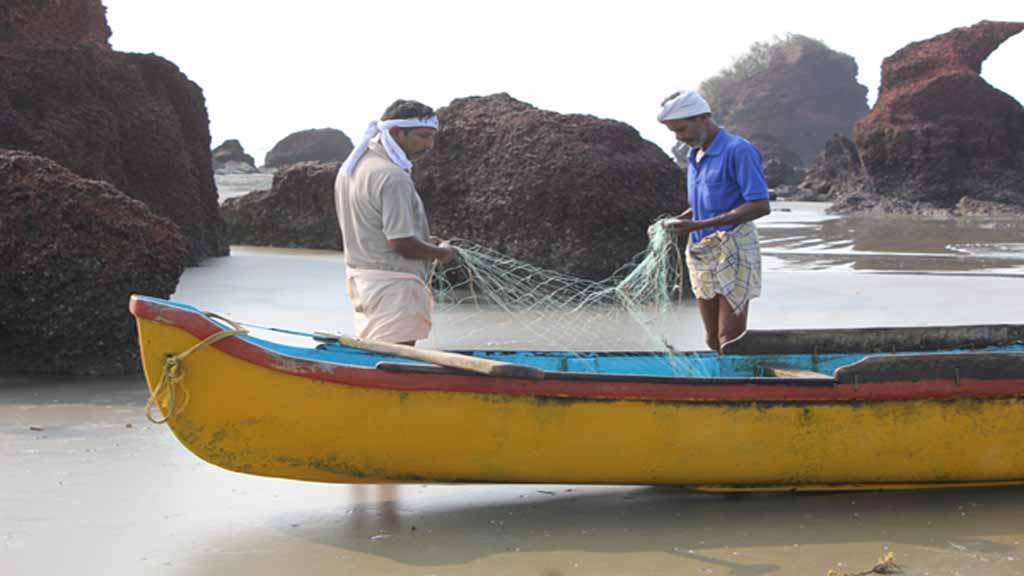
The biryani needs no hedging, only precision. Thalassery biryani is defined by its rice: not basmati but kaima, also called jeerakasala — a short, thin, intensely aromatic grain — cooked pakki-style, the meat and rice finished separately and then sealed together and dum-cooked with live coals set on the lid. It is markedly less oily than the Hyderabadi and Lucknawi versions, and it belongs specifically to the Mappila kitchen, the Malabar Muslim tradition formed out of centuries of Arab and Persian trade contact along this coast. The same kitchen produced chatti pathiri, the layered savoury pastry; unnakkaya, plantain rolled around sweetened coconut; aleesa for Ramadan; and the Thalassery faloodha. On the coast the mussel dishes — kallummakkaya fried, stuffed and pickled — come off the same black rocks that shelter the water at Muzhappilangad.
Behind all four is the trade, and behind the trade is a family. The Keyis were Malabar’s great Muslim merchant house; the word keyi is glossed as owner of ships. Aluppi Kakka bought a strip of foreshore at Thalassery from the Kottayam raja, put up a thatched godown and started dealing with the Europeans. His nephew Chovvakkaran Moosa — Moosa Kakka — dominated northern Malabar’s trade from about 1783, ran an ocean-going fleet, supplied the Company with rice and with the pepper the English called Malabar gold, held monopoly contracts by 1800 and lent the Company money. He stayed put when Tipu Sultan took Malabar in 1786 and was accused by Wellesley of dealing treacherously; Company officials, who needed him, ignored the complaint. He died in 1807, and in 1813 his son was described as the richest man on the Malabar Coast. The mosque he built in 1806, Odathil Palli, still stands in the middle of town.
The Basel Mission’s second life in Thalassery was industrial. Having set up handloom factories at Mangalore in 1844 and at Cannanore and Calicut in 1852, the mission replaced the traditional pit loom with a framed loom and a proper seat, standardised the cloth, and introduced the dye that gave the world khaki. It ran tile works — the first Mangalore-tile factory in India dates to 1860 — along with printing, bookbinding and watchmaking. The red clay tiles on half the roofs in this district are that mission’s legacy, and so is Kannur’s identity as a handloom town. Thalassery’s own claim on that history is the school, the press and the men it trained.
The town’s reforming streak is its least advertised asset. About a kilometre from the centre stands the Jagannath temple, consecrated by Sree Narayana Guru in 1908 and thrown open to all castes from the 1920s. Guru is said to have named the installed Siva image Ezhava Siva, making the point about who the temple belonged to; the rituals here are performed by non-Brahmins. The first statue of Sree Narayana Guru anywhere, cast in Italy, was installed in the temple grounds in 1927. Thalassery also produced Dr Ayyathan Gopalan, the physician and social reformer, and O. Chandu Menon, whose Indulekha (1889) is usually called the first proper Malayalam novel.
Muzhappilangad, meanwhile, is a working village and only incidentally a tourist site. Roughly 24,000 people live across about 7.5 sq km in some 4,500 households; the 2011 census records 28 per cent workforce participation and literacy above the state average at about 98 per cent for men and 95 for women. Rice, tapioca and cucumber were the old crops — the Edakkad tapioca had a name — and fishing, coir and coconut still matter, while the beedi trade has collapsed from over two hundred rollers to thirty-eight. The Kunjipuzha stream carries a mangrove stand of about 3.8 hectares that was declared a reserve forest in 2015. Edakkad station has been open since 1901 and once shipped dried fish and tapioca to Tamil Nadu; the Moythupalam bridge, completed in 1930, is what put the village on the trunk road.
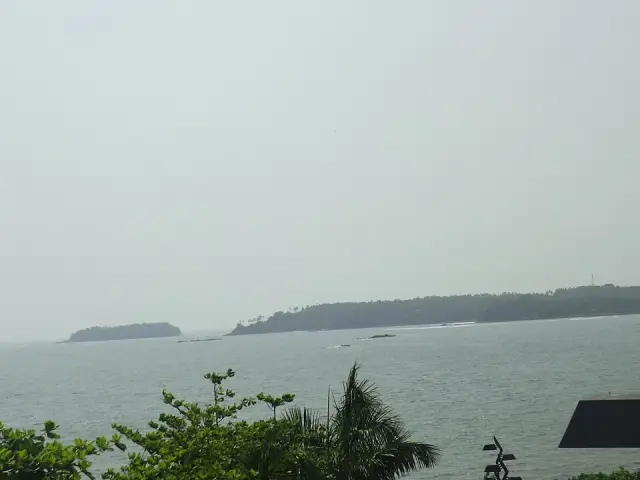
The best hour in Thalassery costs nothing. Walk out on the pier — the kadalpalam, a 500-foot structure built in 1910 to load ships that could not come close over the rocks and shallows, twenty-four metres wide at the shore and forty at the sea end, with rails down both sides and cranes at the head. The port declined, the cranes went, and the deck is now in poor enough condition that access has been restricted. It remains the town’s evening promenade, and standing on it you are looking at exactly the water that carried all of the above out.
Legend & myth
The oldest layer of story in this town is not about the British at all — it is a Sanskrit name and a curse. The 1885 Madras Presidency administration manual records Thalassery’s ancient name as Shwetaranyapura, the town of the white forest, and that name attaches to the Thiruvangad Sree Ramaswami temple on the eastern edge of the town, whose own Sanskrit form is given as Swetaranyapuram.
The legend runs like this. The sage Agastya, going down to the river for his bath, was set upon by two asuras named Neela and Sweta, and cursed them. When they repented, he did not lift the curse but prescribed its cure: each was to perform penance at a Siva shrine. Neela did his penance at the place that carries his name to this day, Nileshwaram in Kasaragod; Sweta did his here, and Thiruvangad became Sweta’s forest. A parallel tradition credits the temple’s consecration to a sage called Svetarshi, and the Kerala Mahatmyam — the text that assigns nearly every old Kerala shrine to the same founder — puts its building down to Parasurama. Three explanations for one temple, all of them stories about how a name got attached to a piece of ground, which is usually what temple legends are.
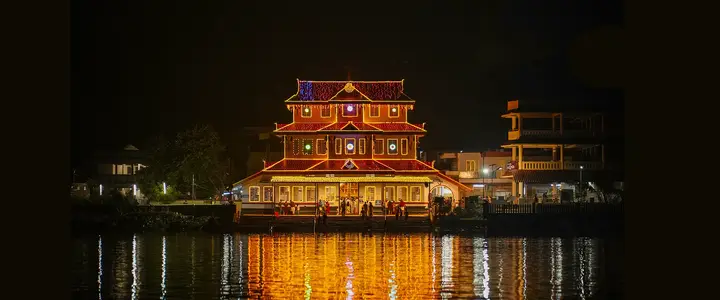
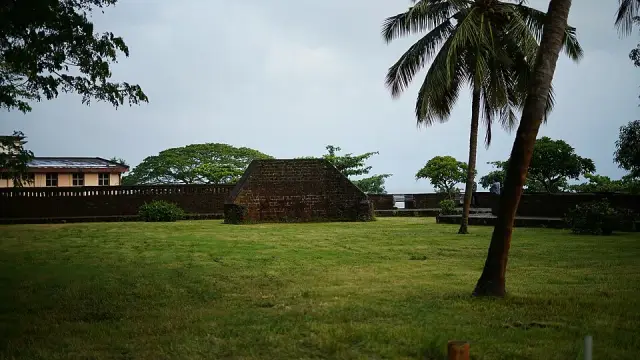
What is not legend is the fabric. Thiruvangad sits on a raised plot of about 2.75 hectares beside a tank of roughly a hectare, and its roof is sheeted in copper, which is why the English called it the Brass Pagoda. It carries stone inscriptions, it is counted among Kerala’s five principal Rama shrines alongside Thriprayar, Thiruvilwamala, Kadavallur and Thrinayamkudam, and its festival begins on Vishu in Medam and runs seven days. The Mani Chakyar family holds the hereditary right to perform Chakyar Koothu in its precincts. The eighteenth century used the place hard: Tipu Sultan’s forces damaged parts of it, and because it served as an outpost of the fort, Company officers and local chiefs met inside its walls to sign treaties. A myth about a repentant demon, and a room where an empire did paperwork, in the same compound.
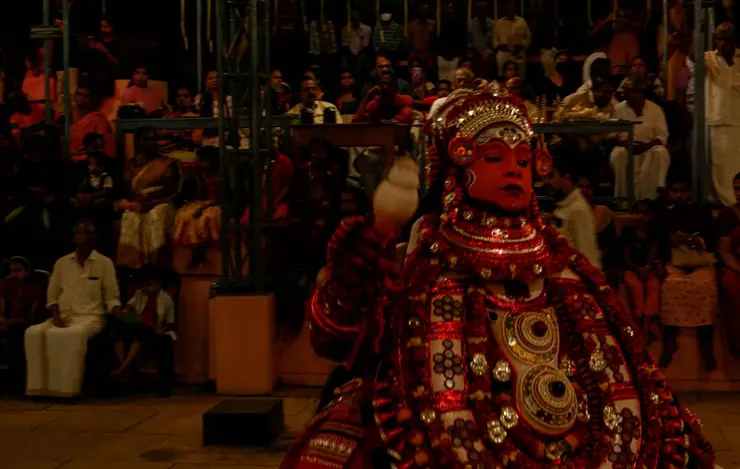
At Muzhappilangad the sacred geography is village-scale and still in use. The Sree Kurumba Kavu is the village’s principal shrine and its Thalappoli is the festival people travel for — the procession of women carrying the lamp-and-rice thalam, the form of worship that belongs to the Bhagavati groves of north Malabar rather than to the big temples. There is a Muthappan madappura, where the Muthappan of Parassinikkadavu is served; there is an old Siva temple on the southern hill with an Ayyappankotta below it to the west; and Vishnumoorthi theyyam is performed in the village, the fierce Narasimha form whose ritual includes the performer’s entry into the meleri, the bed of embers. That is the north Malabar pattern exactly: the god does not sit in a sanctum waiting, he arrives, in a costumed body, once a year, and speaks.
The village’s Muslim tradition claims a much older origin. The Juma-ath mosque at Pachakkara is held locally to date from the time of Malik ibn Dinar, the companion-era missionary credited with Kerala’s first mosques. That attribution is made for a great many Malabar mosques and is a tradition rather than a dated record, and it should be read as a community’s statement about its own antiquity — which, on this coast, is not an unreasonable one — rather than as a construction date.
The place-names carry their own arguments. Muzhappilangad is usually derived from Muzhu-pala-nadu, the wholly sandy country, and the derivation is tied to the Sangam-era tinai scheme in which palai is the parched sandy tract — a village named for its soil. Thalassery is read as Thalakkathe cheri, the upper or northern settlement, marking where Kolathunadu ended; an alternative splits it as thala, head, and cheri, a low-lying settlement, giving the head or beginning of the settlement. And on a hill in Muzhappilangad sits a name that has caused a good deal of speculation, Bhutathan Kunnu, which some read as a memory of Buddhist or Jain presence on this coast and others as exactly what it says, the hill of the bhutam, the spirit.
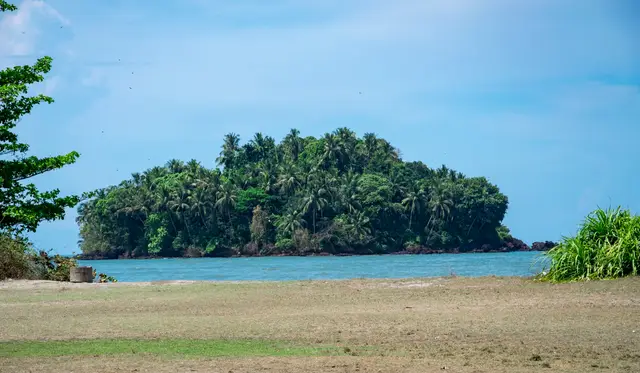
One legend on this shore is deliberately left alone here. The tradition that Dharmadam was Dharmapattanam, a Buddhist settlement whose name preserves the dharma, is the most quoted piece of lore in this parish — and it belongs to the island, which has its own page and tells it properly. Borrowing it would be the easy move and the wrong one. What is worth saying instead is that the island, the sandy tract, the spirit-hill and the white forest are all one story told four times: this coast has been continuously inhabited long enough that its oldest inhabitants survive only as syllables in place-names, and every generation since has read those syllables to mean what it needed them to mean.
More about Muzhappilangad and Thalassery
History
Thalassery enters the record as the northern edge of Kolathunadu, and enters world history as a purchase. In 1682 the English obtained permission from the Vadakkilamkur raja to open a trading post; by 1708 they had a fort. What they wanted was pepper and cardamom off the Wayanad ghats, and they got it, anglicising Thalassery to Tellicherry in the process. The fort’s own siege history belongs to its page. What belongs here is the consequence: from 1776 Tellicherry ran the Company’s business for northern Malabar, and after Tipu Sultan ceded the district in 1792 it became the administrative and judicial centre, its court’s jurisdiction reaching inland towards Mysore.
The ugliest chapter is inland, at Anjarakandy, ten-odd kilometres from the coast — the cinnamon estate still described as the largest in Asia. Its founding date is disputed and the usual figure is doubtful: Wikipedia and the tourism material give 1767, but the Company held no such authority in Malabar until 1792, and the documented sequence has the Scot Murdoch Brown (1750–1828), an Austrian Company trader turned Company servant, appointed overseer of the plantation at Randattara in 1797. Pazhassi Raja’s rebels destroyed the buildings and nearly all the pepper vines and coffee in 1803. The rebuilt estate was handed to Brown on a ninety-nine-year lease in 1817, and Brown died at Tellicherry in 1828.
Brown worked the estate with enslaved people, and this is not an inference. Complaining that the tahsildar was not supplying enough labour, he purchased around forty-five Pulaya women and children; his agent admitted that no fewer than four hundred children had been brought to Malabar from Travancore by 1811; the Company magistrate Thomas Baber raided the estate and recovered seventy-one people, many of them children, with over a hundred and twenty restored to liberty in all. The estate was investigated and found to have bought kidnapped women and children. It is still a working plantation, and it is still the reason the town has a cake story, since the planter who wanted the plum cake in the 1880s was a later Brown of that same estate — the founder having been dead more than fifty years by then.
The nineteenth century’s other arrival was the Basel Mission. Its people reached Malabar from 1834 and Gundert was at Thalassery from about 1839; the mission opened the BEMP school in 1856 and printed the first Malayalam newspapers from Illikkunnu in 1847. Its industrial side — weaving from 1852 on this coast, tiles from 1860, presses, bookbinding, watchmaking — ran until the First World War, when the German missionaries were interned and the businesses passed into other hands. Between the mission’s schools and the Company’s courts, Thalassery acquired a professional and literate middle class out of proportion to its size, which is the real reason so many Malayali firsts have this postmark.
The twentieth century built the connections and then watched the port lose. The pier went up in 1910; Edakkad station had opened in 1901; the Moythupalam bridge was finished in 1930 and tied Muzhappilangad to the trunk road that is now NH 66. Muzhappilangad’s people picketed salt shops and cut railway wires during the freedom struggle, and communist organising over agrarian grievances took hold from 1948. At the 1956 reorganisation the tract that had been divided between Muzhappilangad, Mammakkunnu and Edakkad was reshaped into the modern panchayat. Thalassery municipality now holds just under 100,000 people; the wider municipal-corporation proposal, taking in the surrounding panchayats, would cover 304,708 on 2011 figures.
Why visit
It is the rare Kerala town whose famous claims survive being checked — and the checking is more interesting than the claims.
Odathil Palli, built in 1806 by the merchant who bankrolled the Company, is one of the finest teak-and-copper mosques in Kerala and looks nothing like the mosques most visitors expect.
The Thiruvangad Sree Ramaswami temple gives you a copper-roofed shrine on its own tank, a demon’s penance, and a room where the East India Company signed treaties.
Thalassery biryani, made with kaima rice and finished under coals, is worth planning a day around, and the mussel and Mappila dishes around it are not tourist food.
The 1910 pier at sunset is the best free hour on this coast, and Muzhappilangad’s kavus, mangroves and mussel rocks give the village a life beyond its beach.
Anjarakandy’s cinnamon estate is a working plantation with a documented history of enslavement — a colonial site that has not been prettified.