Highlights
- Beach stretch near Bekal Fort with sunset and fort-coast pairing.
- Good base with Kanhangad, Kasaragod, Kappil and Valiyaparamba routes.
- Local services run to beach resorts, homestays, restaurants, drivers and family services.
Bekal Beach is the sea-side companion to Bekal Fort, giving travellers a coast stop below North Kerala's best-known fort landscape. It is usually strongest as part of a fort-plus-beach half day.

The fort, the beach, Kappil and the resort belt are four separate places. Many stays and restaurants use "Bekal" for the whole coastal zone, so check which one you are actually booking into.
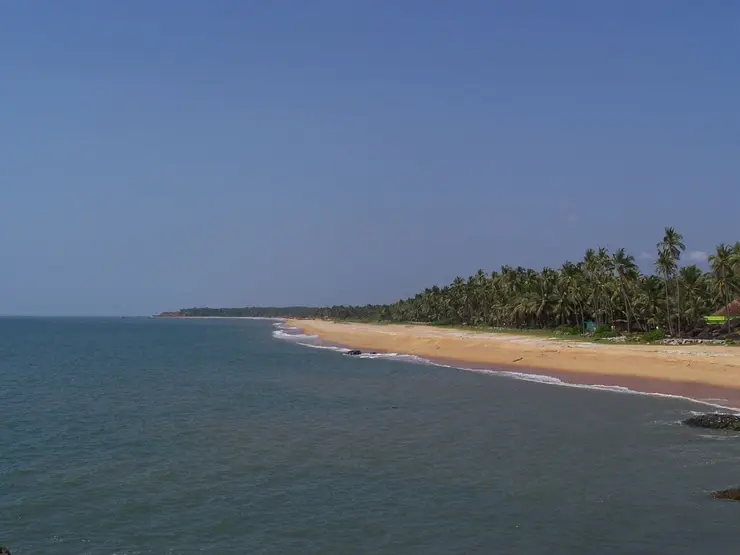
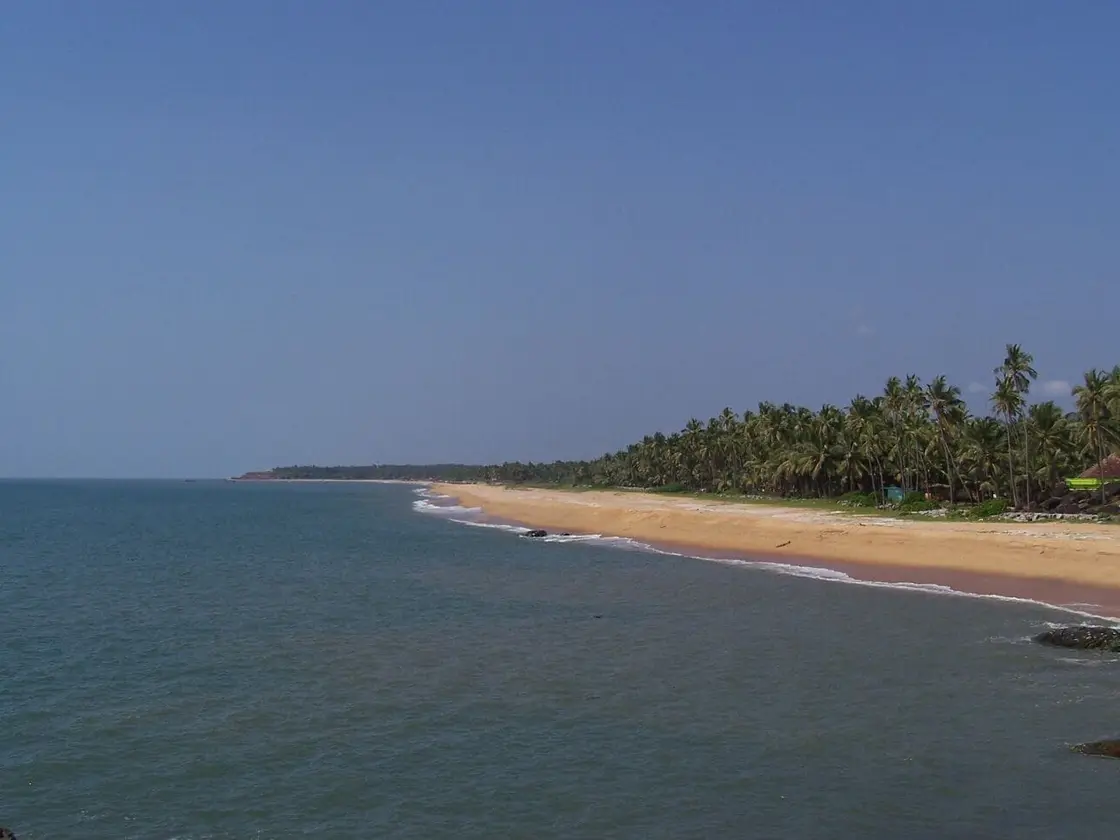
Bekal Beach is the golden crescent of sand that curls around the great laterite promontory of Bekal Fort in Kasaragod district, north Kerala — a landscaped, illuminated stretch on the Arabian Sea famed for its casuarina groves, laterite Theyyam sculptures and the storybook sunset that made it a Malayali film icon.
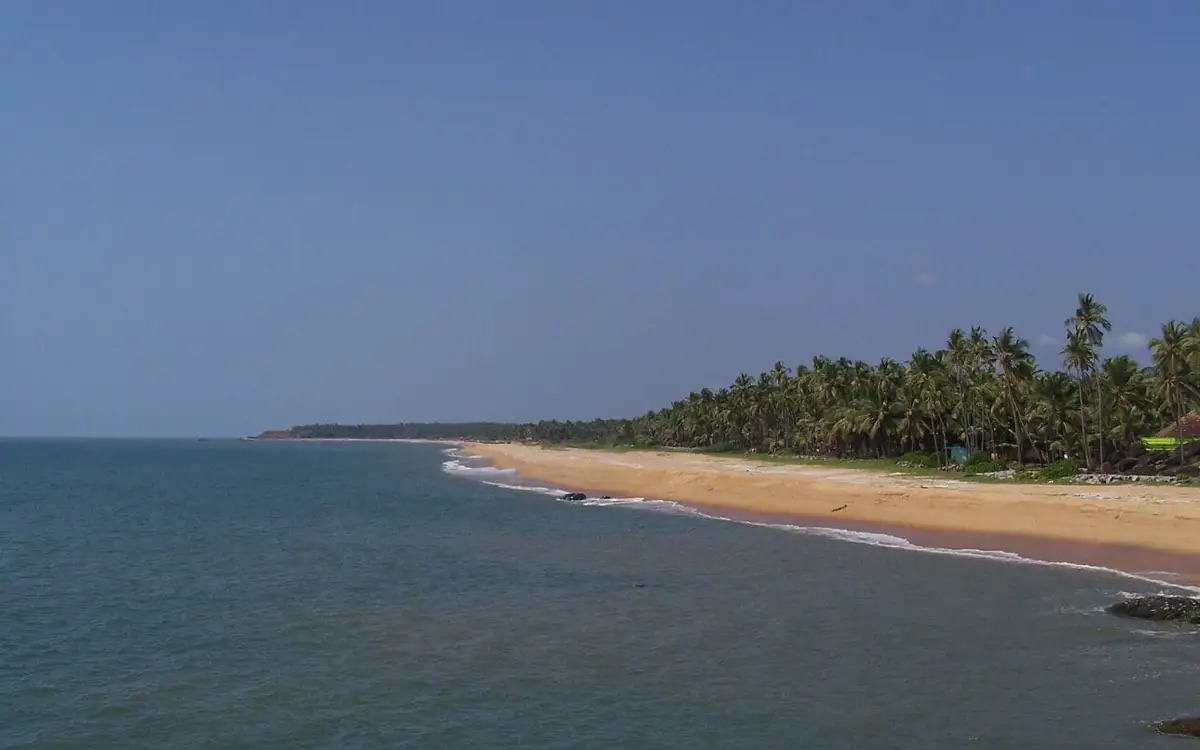
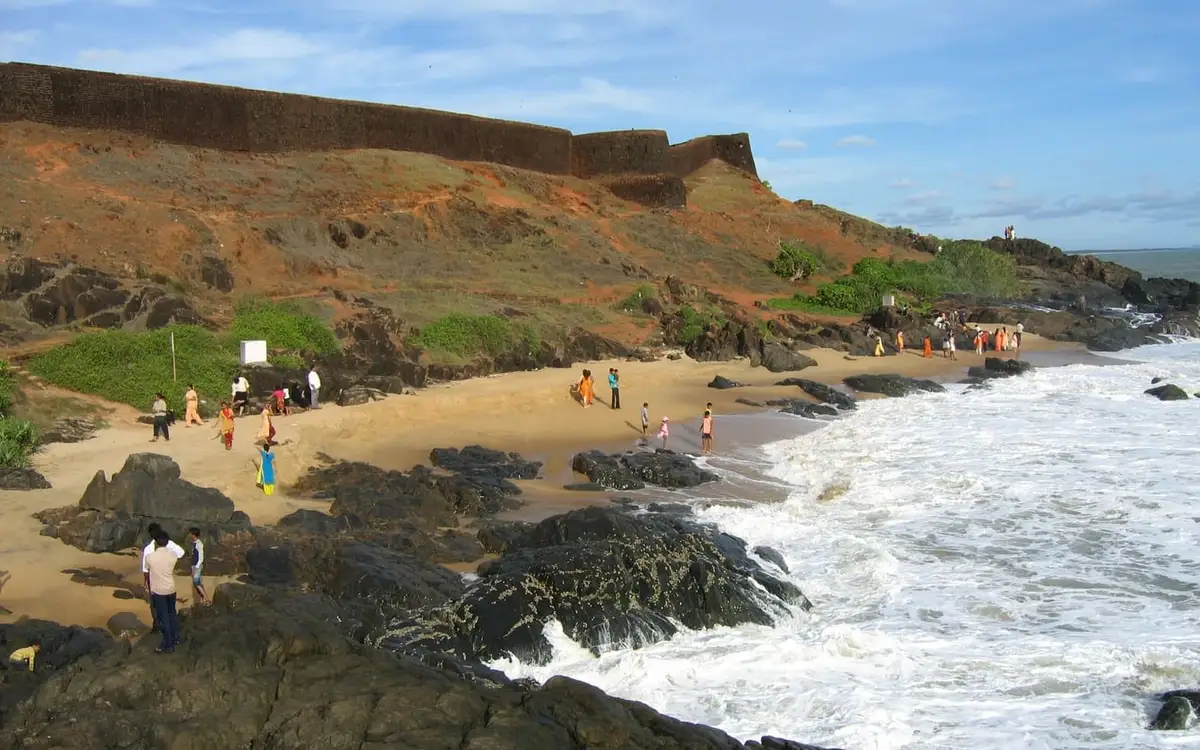
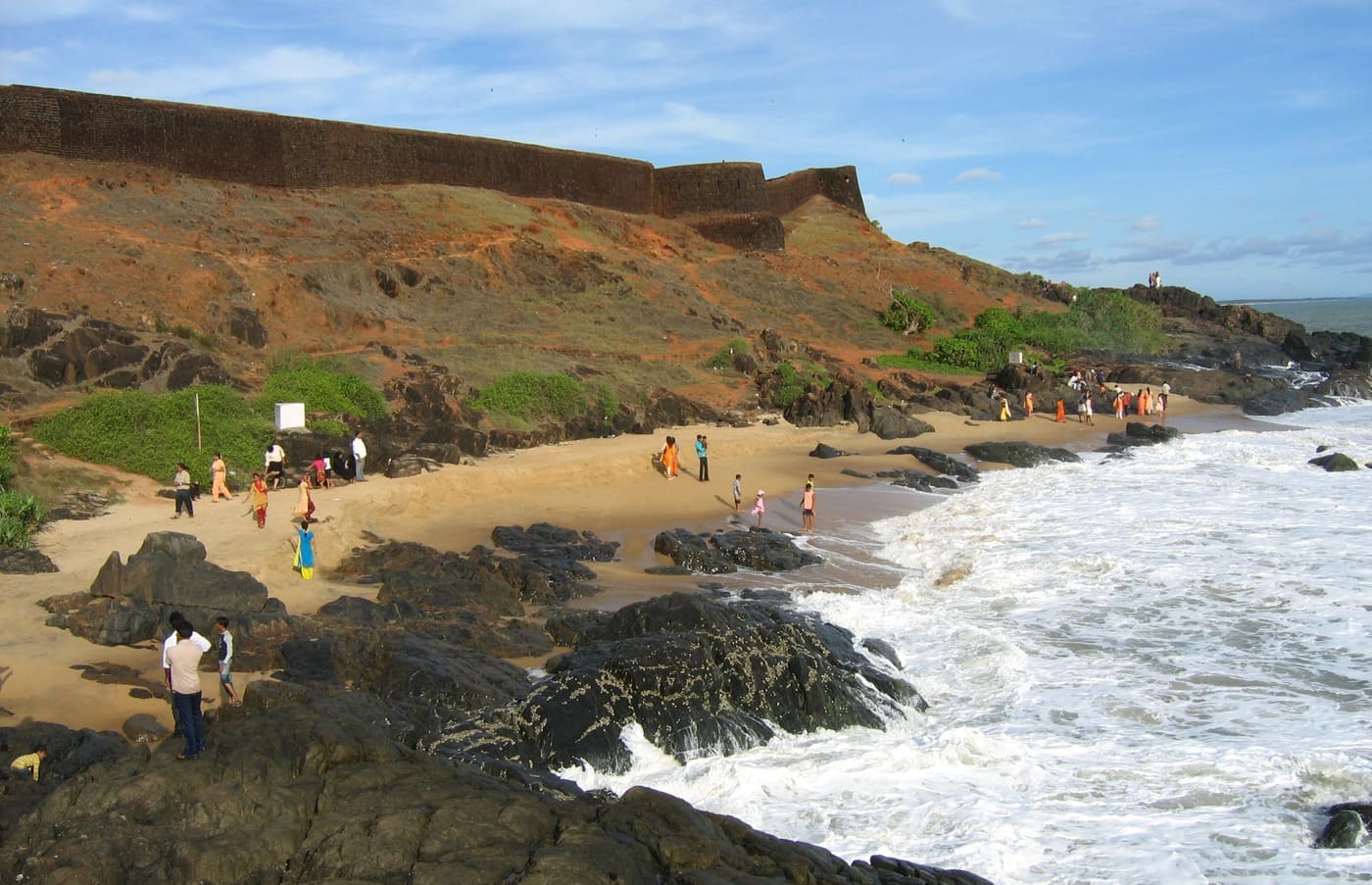
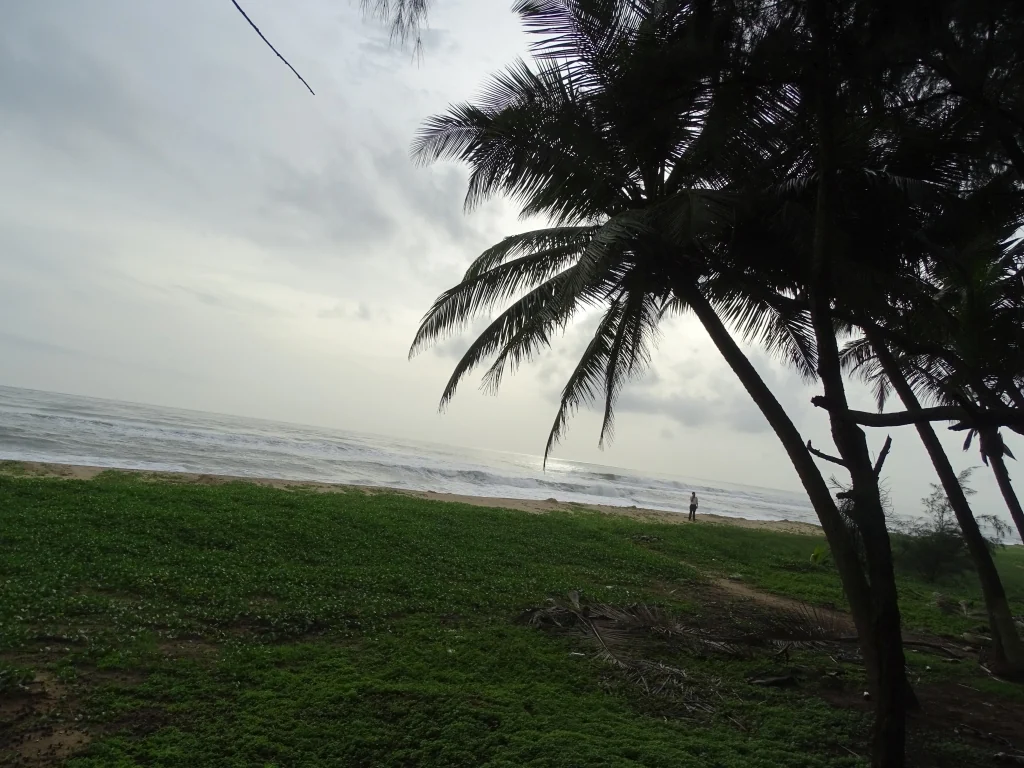
Some beaches are just sand and sea; Bekal is a beach with a fortress for a backdrop. As you walk the shoreline, the vast reddish-brown ramparts of Bekal Fort — one of the largest and best-preserved coastal forts in Kerala — rise from the headland to your north, its laterite walls glowing amber in the late-afternoon light while the Arabian Sea rolls in on your left. It is this rare pairing of monument and surf that gives Bekal Beach its distinctive character among Kerala's coastline.
The beach here has been deliberately shaped for wandering. The Bekal Resorts Development Corporation (BRDC) laid out the landscaped Bekal Beach Park along the fine coastal line, lining it with casuarina groves and threading a walkway through it so visitors can stroll the shore and drink in the panoramic view of the fort. Shaded multi-sheds and traditional resting pavilions locally called eru madams let you pause and simply let the sea breeze do its work — this is a beach engineered for slow, unhurried afternoons rather than crowds and commotion.
Look closely and you will find the beach doubles as an open-air gallery of north Kerala's own culture. BRDC installed sculptures of Theyyam — the fierce, painted ritual dance-deities of the Kasaragod-Kannur belt — carved from the region's characteristic laterite stone, and raised a shed whose walls carry murals painted by artisans from Nilambur. It is a quietly clever touch: the art roots the beach firmly in its own soil, so that even a casual visitor leaves with a hint of the Theyyam country they have wandered into.
For a whole generation of film lovers, though, Bekal means one thing: the song. Mani Ratnam shot the aching duet Tu Hi Re (Uyire in its Tamil version) for his 1995 film Bombay on this very promontory — Arvind Swamy and Manisha Koirala moving across the rain-washed ramparts and shoreline to A. R. Rahman's melody, filmed by cinematographer Rajiv Menon. That rain-drenched sequence of green, stone and sea turned Bekal into a place people came to feel rather than merely to see, and the association endures to this day.
As the afternoon tips over, the beach quietly fills for its main event. Bekal faces due west into the open Arabian Sea, so the sunset here is uninterrupted — the sky reddening behind the silhouetted fort and the water, with the beach illumination flickering on as dusk settles. Families spread out on the sand, children drift toward the play park, and photographers jockey for the frame where fort, sea and sky line up. Few Kerala sunsets come with so grand a stage.
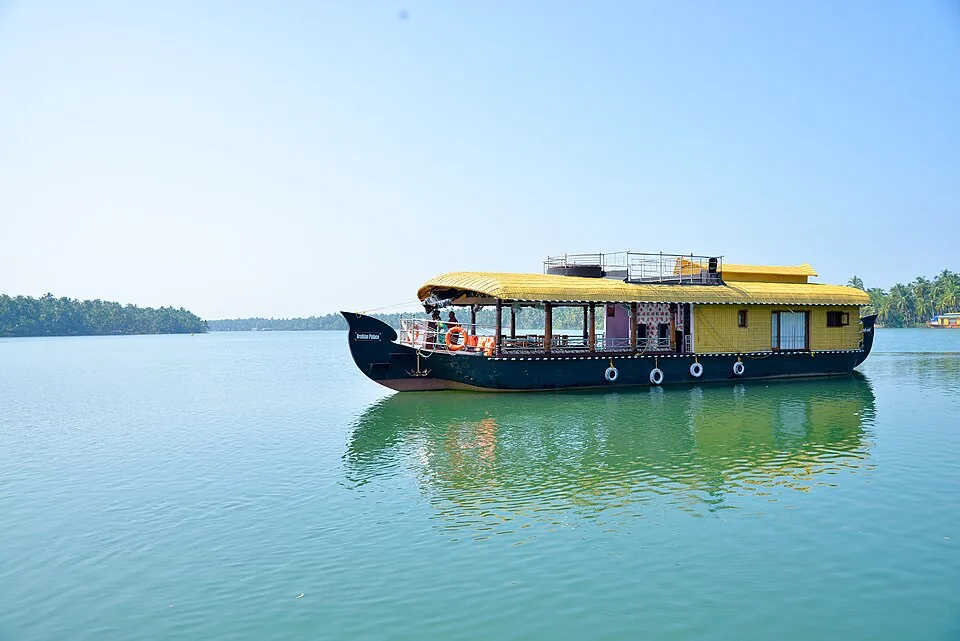
Bekal is also a gateway rather than a full stop. A short hop south lie the calm waters of Kappil Beach, where the Kappil river slips into the sea, and the languid backwaters around Nileshwar, where houseboats glide between coconut-fringed banks. Combined with the fort on the headland, they make Bekal Beach the natural base for a slow, unspoiled corner of Kerala that most of the tourist rush still overlooks.
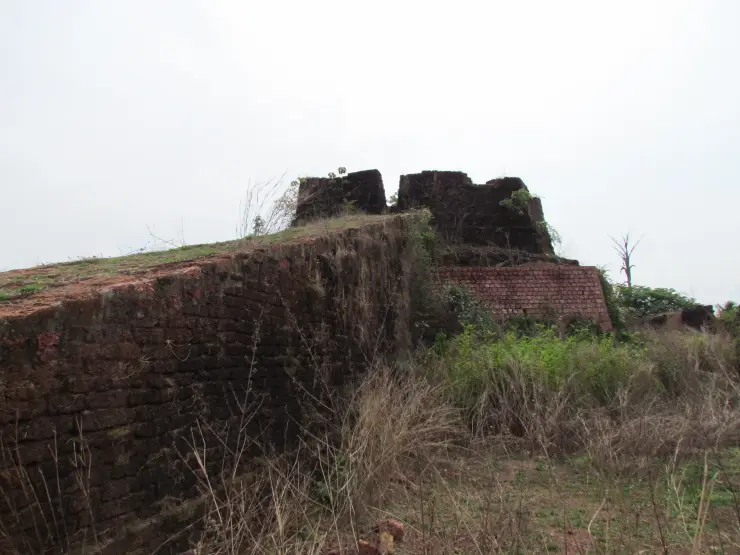
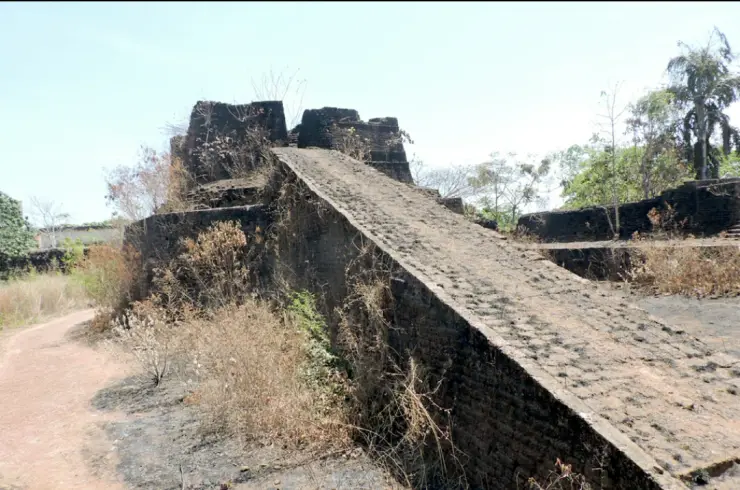
The story of Bekal Beach is inseparable from the fort that towers over it. The great circular laterite fortress on the headland is generally attributed to Shivappa Nayaka of the Keladi (Bednore) dynasty around the mid-17th century, though some accounts suggest an older fortification stood here earlier. Built for coastal defence, it was engineered with tiers of gun ports — the upper openings for long-range fire and the lower ones to strike ships that had drawn in close — commanding the very stretch of sea the beach now faces.
In the later 18th century the fort and its coast passed to the Mysore rulers Hyder Ali and Tipu Sultan, who used Bekal as an important military base on this frontier of their domain. The tall observation tower that still stands within the fort is associated with Tipu Sultan's period, a vantage point built to watch both land and the approaches from the Arabian Sea.
After Tipu Sultan's defeat by the British in the Fourth Anglo-Mysore War in 1799, the fort and surrounding territory came under the control of the East India Company, and Bekal eventually fell within the Madras Presidency's administration through the colonial era. The fort today is a protected monument under the Archaeological Survey of India, which conserves the ramparts that form the beach's dramatic backdrop.
The beach itself, as a designed visitor destination, is a far more recent creation. The Bekal Resorts Development Corporation (BRDC) was established in 1995 to develop Bekal as an international-standard beach tourism destination, working on eco-friendly lines across a large tract of the Bekal coast. It was under this programme that the landscaped Bekal Beach Park, its walkway, casuarina planting, resting sheds, children's play area and evening illumination were laid out along the shore beside the fort.
The beautification drive also gave the beach its cultural signature — the laterite Theyyam sculptures and the Nilambur-artisan murals that BRDC installed to root the modern beach park in the ritual and artistic heritage of the Kasaragod region.
The signature Kerala view: a broad Arabian Sea beach with the immense laterite ramparts of Bekal Fort rising directly behind it — a fort-and-surf pairing you will not find on any other Kerala shore.
One of Kerala's great west-facing sunsets, with the sun sinking into the open sea behind the silhouetted fort and the beach illumination coming alive at dusk.
The landscaped Bekal Beach Park — casuarina groves, a seaside walkway, shaded eru madam pavilions and a children's play area — designed for relaxed, unhurried strolling rather than crowds.
The laterite Theyyam sculptures and Nilambur-artisan murals that turn the beach into an open-air showcase of north Kerala's ritual and folk-art culture.
Cinematic pilgrimage: this is the setting of the beloved Tu Hi Re / Uyire song from Mani Ratnam's Bombay (1995), a draw for film lovers across south India.
A perfect base for exploring nearby Kappil Beach and the Nileshwar backwaters, making Bekal the anchor of a quiet, still-unspoilt corner of Kerala.
Road km to Kasaragod; ghat roads and traffic vary — allow extra.
November to February is most comfortable. Monsoon seas are dramatic but swimming conditions can be unsafe.
Live forecast loads in your browser.
Check the official alert before you travel. Kerala’s beaches, waterfalls and trekking routes close at short notice during heavy rain, and district alert levels change day to day. We do not publish an alert level of our own — read it from the state authority: Kerala State Disaster Management Authority, or the district control room on 1077.
Sun and moon are calculated for this location and shown in IST. Photography windows are the hour around sunrise and sunset; the sunset bearing is degrees clockwise from true north. Moon phase is accurate to about half a day.
Verified hotels, homestays, restaurants, experiences, sights, shops and rentals around Bekal Beach — commission-free, with direct contact. Filter by what you need.

Taxi service in Bekal. Near Udayamangalam Sree Mahavishnu Temple, Udma Nalamvathukkal, Kasaragod, Kerala 671319 · Bekal taxi, Udma, Airport transfer.

Bekal Beach is the coastal companion to Bekal Fort, useful for sunset, fort-pairing and Bekal resort-belt planning with official tourism context. Public beach; check current access · Bekal Beach, Bekal Fort, Kasaragod coast.

Bekal Fort is Kasaragod district sea-fort anchor, best planned with current timing, entry, beach and DTPC/BRDC context checked before travel. Bekal Fort, Kasaragod, Heritage.
Bekal Beach Park is a Pallikere beach activity and entertainment park, useful for family travellers adding a structured beach stop near Bekal Fort and Bekal Beach. Bekal Beach Park, Pallikere, Family activity.
Government-backed BRDC contact source for Bekal tourism and destination development. Bekal Resorts Development Corporation Limited, Kottakunnu, Bekal Fort P.O., Kasaragod, Kerala 671316 · Public tourism/development contact · BRDC, Bekal, Kasaragod tourism.
Book with the place itself. India’s cyber-crime coordination centre warned in April 2025 that convincing copies of hotel and pilgrimage booking sites are being pushed through sponsored search and social ads, taking payment for rooms the property never hears about. Every listing here links to the business’s own contact details and its own Google or Bing profile — we take no commission and sit in nobody’s payment path. If a booking page reached you through an ad, check the address bar against the property’s own site before you pay. Fraud can be reported on cybercrime.gov.in or on 1930.
Find food, accommodation and activities across Bekal. Browse the guides for places to eat, stay and explore along your route.
2 more places around Bekal. Open a guide to plan the visit and onward journey.

1.0 km · 12 min walk
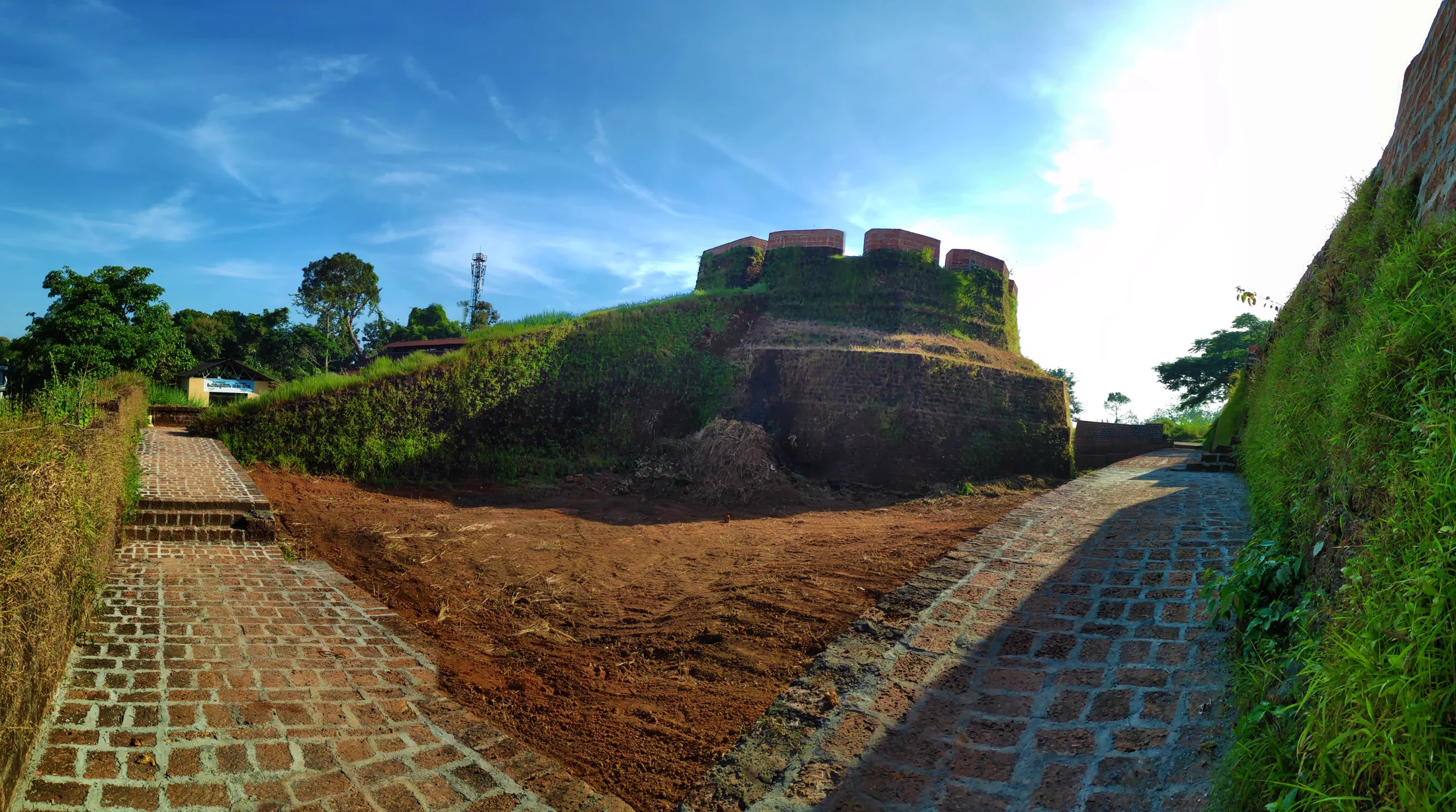
Kerala’s largest fort (~40 acres), a keyhole-shaped laterite bastion jutting into the Arabian Sea, built around 1650 by the Keladi Nayakas; its observation tower once mounted cannons.

A quiet cliff-and-cove beach a few kilometres north of Bekal, with the Kodi cliff viewpoint — much less crowded than the fort beach.
Roampedia is commission-free — own or know a stay, eatery, guide or shop near Bekal Beach? List it and it appears here once verified.
Add a nearby businessEntry: The beach is generally free; a small entry or parking charge may apply at the beach park. The adjacent Bekal Fort is separately ticketed — about 25 rupees for Indian/SAARC/BIMSTEC visitors and about 300 rupees for foreigners.
Dress code: No formal dress code for the beach; light, breathable clothing and sun protection are ideal. Dress modestly and respectfully, especially if combining the visit with the fort or nearby places of worship.
Festivals: The Kasaragod-Kannur region is Theyyam country, and the vivid ritual Theyyam performances of nearby temples typically run through the cooler season (roughly December to April). The beach itself hosts occasional cultural events and festivals organised around Bekal tourism.
Photography: Photography is freely allowed on the beach, and the fort-and-sea backdrop at sunset is the signature shot. On the adjacent ASI-protected fort, still photography is generally permitted but drones and any commercial or tripod shoots may need prior permission.
If you are travelling by bus or ferry, check the return service with the operator before setting out. Leave time to reach the stop or jetty after your visit.
Ask at the bus stand for the time of the last service back, not the next one. If you miss it, an auto or app cab is the fallback — agree the fare before you get in.
If you need step-free access, contact the site before travelling. Ask about a level entrance, steps along the route, the nearest drop-off point, seating and accessible toilets.
Charge cap and free-transaction limits: Reserve Bank of India, in force since 1 May 2025.
These services are listed within about 1.2 km of Bekal Beach. Walking distances follow mapped routes; access and opening hours can change. Other services may be closer but are not included here.
Emergency numbers are verified against official government and state tourism sources. 112 works anywhere in India.

Kerala’s largest fort (~40 acres), a keyhole-shaped laterite bastion jutting into the Arabian Sea, built around 1650 by the Keladi Nayakas; its observation tower once mounted cannons.
1.0 km · 12 min walk · straight line
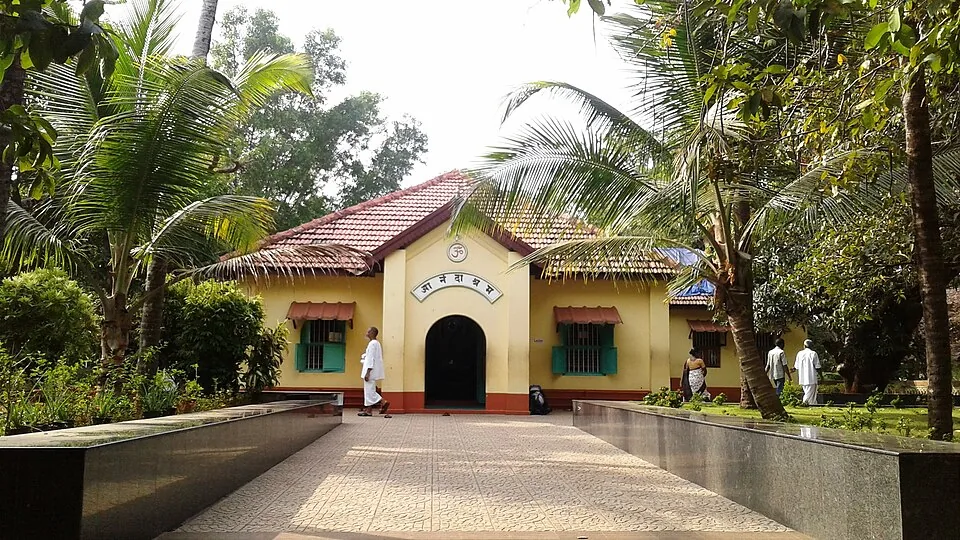
A tranquil spiritual retreat at Kanhangad founded in 1931 by Swami Ramdas (Papa) and Mother Krishnabai, set in quiet wooded grounds; open to visitors of every faith under its motto of “universal love and service”.
9.5 km · ~16 min by cab · straight line
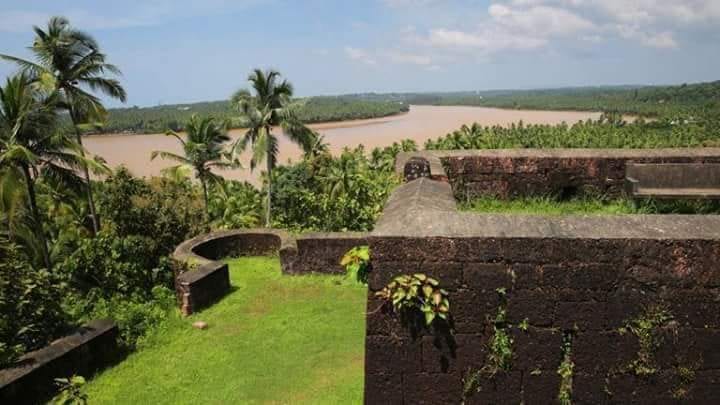
A 17th-century hilltop fort above the Chandragiri river built by the Keladi Nayakas, with sweeping views of the river mouth and the Arabian Sea — good at sunset.
9.9 km · ~17 min by cab · straight line
The hillside cave complex at Hosdurg where Bhagawan Nityananda cut meditation chambers by hand out of a single mass of laterite — 43 by the ashram’s own account — with the Nithyananda Temple built above them in 1963. Mobile phones are prohibited in the caves.
10.6 km · ~18 min by cab · straight line
The surviving laterite fort at Hosdurg in Kanhangad is associated with the Ikkeri Nayakas and recognised by its rounded bastion and broad ramp; Nithyananda Ashram is a separate neighbouring institution.
10.7 km · ~18 min by cab · straight line
Kanhangad Beach is the Hosdurg coastal frontage of Kanhangad in Kasaragod district, with a broad sandy shore and an established fish-landing setting. It is a beach visit from Kanhangad town, distinct from Hosdurg Fort, the town’s ashrams and the separately named beaches at Ajanur, Ozhinhavalappu and Thaikadappuram. Use the named beach approach rather than a generic Kanhangad map result. The shore’s working character is central to the visit: leave boats, nets and landing passages clear while enjoying the sea-facing sand.
11.5 km · ~19 min by cab · straight line
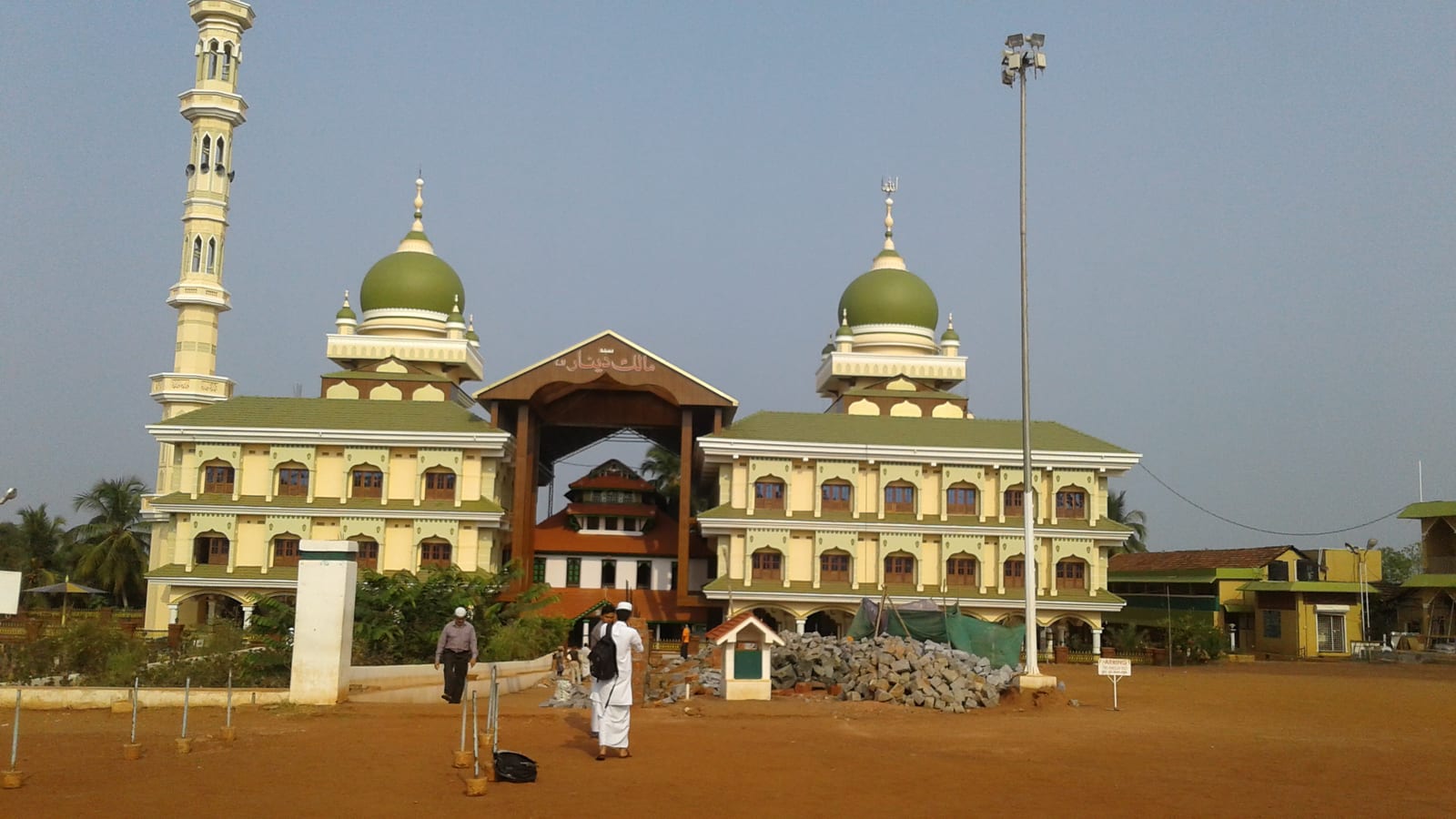
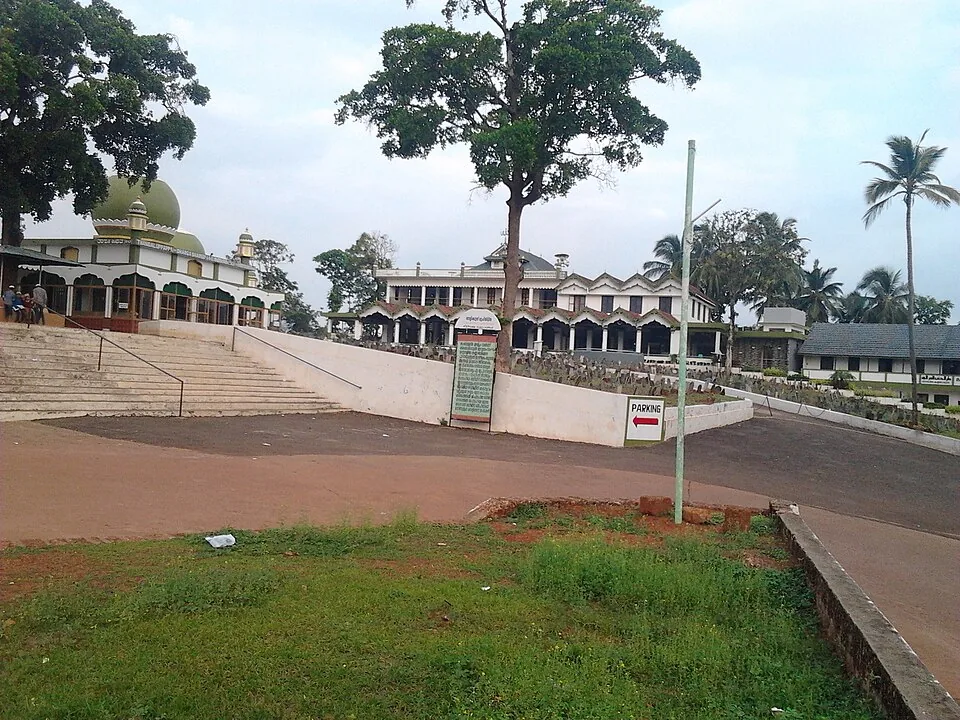
The Malik Ibn Dinar Juma Masjid in Thalankara, Kasaragod — by tradition among the oldest mosques in India, linked to the earliest arrival of Islam on the Malabar coast.
12.1 km · ~20 min by cab · straight line
The Nellikunnu Muhyaddin Juma Masjid, a Sunni Friday mosque and dargah near the Kasaragod town beach that houses the tomb of Saint Thangal Uppapa; a local pilgrimage centre whose annual Nercha draws large crowds.
14.1 km · ~24 min by cab · straight line
The cultural capital of Kasaragod — a Theyyam and folk-arts town on the Nileshwaram backwaters, with kovilakams, kavus and a lively ritual-arts season.
17.3 km · ~29 min by cab · straight line
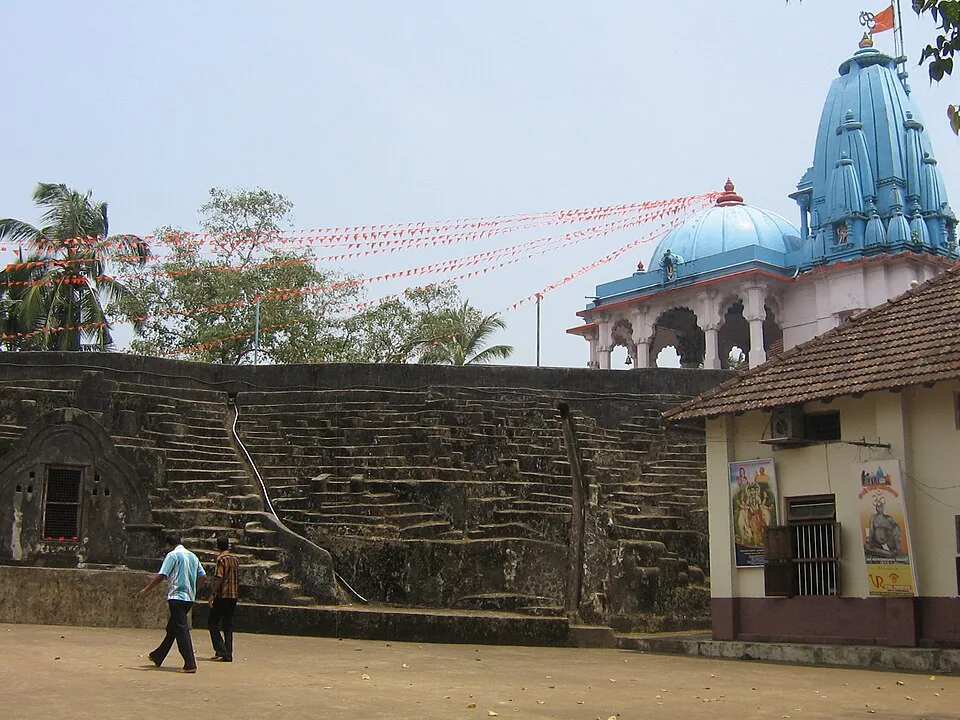
The Madhur Sree Madanantheshwara-Siddhivinayaka temple on the Madhuvahini river — a Shiva temple better known for its beloved “Bodajja” Ganapathi and a Tipu Sultan sword-mark on its well.
18.6 km · ~31 min by cab · straight line
Our Lady of Sorrows (Dolours) Church at Bela near Badiadka, built in 1890 — the oldest church and parish in Kasaragod district, founded by Konkani Catholics; a Gothic Revival church known for its statue of Mother Mary.
22.2 km · ~37 min by cab · straight line
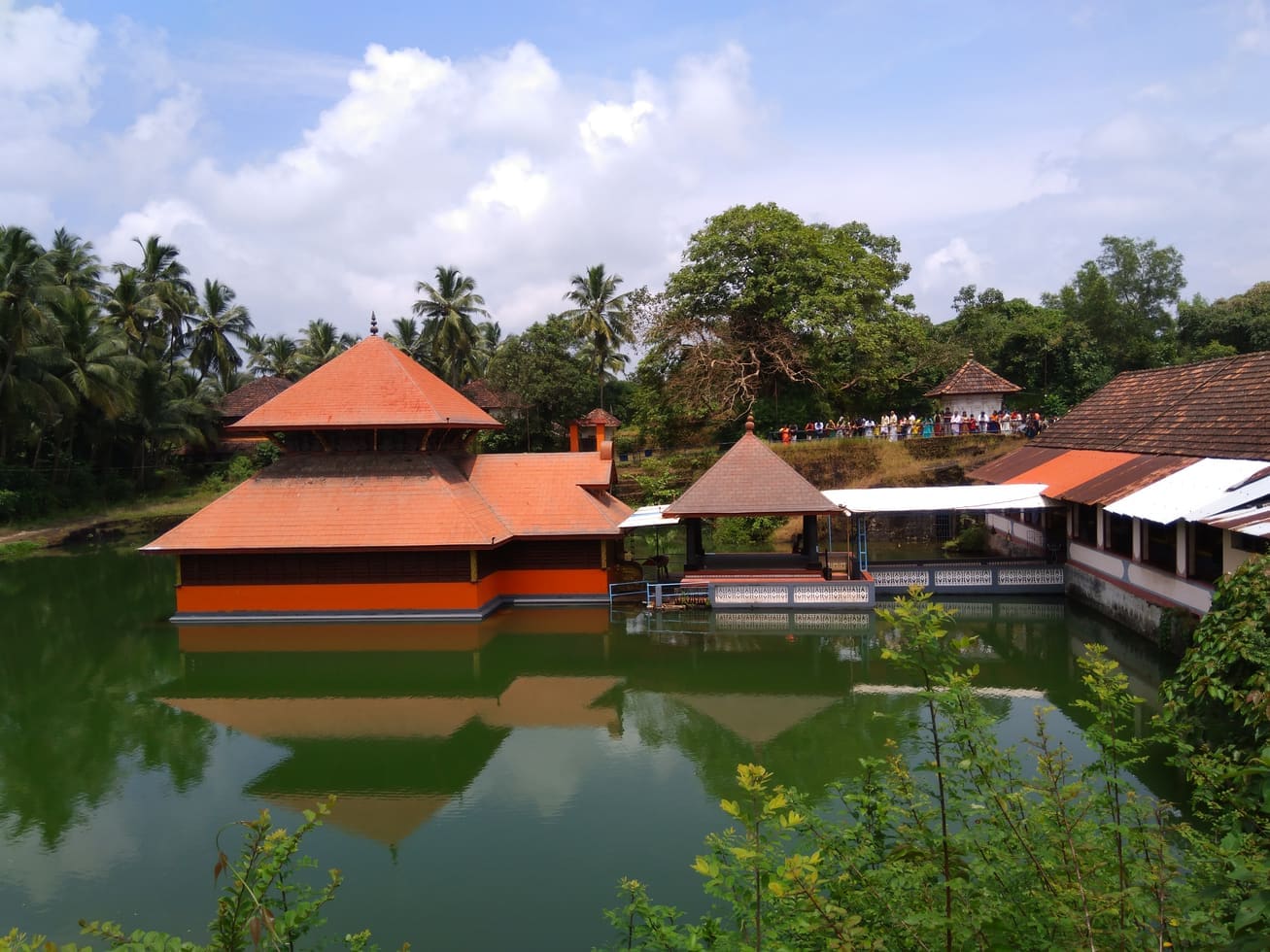
Kerala’s only lake temple, near Kumbla, the moolasthanam of Ananthapadmanabha — and home by tradition to Babiya, the temple’s resident vegetarian crocodile.
22.7 km · ~38 min by cab · straight lineNearby toilets, pharmacies, ATMs, seating and vets are community-mapped and may be incomplete or out of date. Map data © OpenStreetMap contributors | Walking times © openrouteservice.org by HeiGIT
The most pleasant months are roughly October to March, when the weather is dry and comfortable. Within any day, late afternoon into sunset is the finest time, both for the light on the fort and for the famous view of the sun setting over the Arabian Sea. The June to September monsoon brings heavy rain and rough seas but a lush, dramatic landscape.
The beach and beach park are generally free to walk on; a nominal fee or parking charge may apply at the beach park. The adjacent Bekal Fort is a separate ticketed monument — around 25 rupees for Indian and SAARC/BIMSTEC visitors and about 300 rupees for foreign nationals, so budget separately if you plan to combine the two.
Swimming and paddling are possible during the designated safe swimming season, mainly the calmer non-monsoon months, but the Arabian Sea here can have strong currents. Avoid the water during the monsoon and in rough conditions, heed any warning signs or lifeguard instructions, and keep children within reach at all times.
Yes — it is one of the highlights. The beach faces due west into the open Arabian Sea, giving an uninterrupted sunset with the sky reddening behind the silhouetted fort. The beach park's evening illumination adds to the atmosphere, so many visitors time their trip specifically for the last hour before dusk.
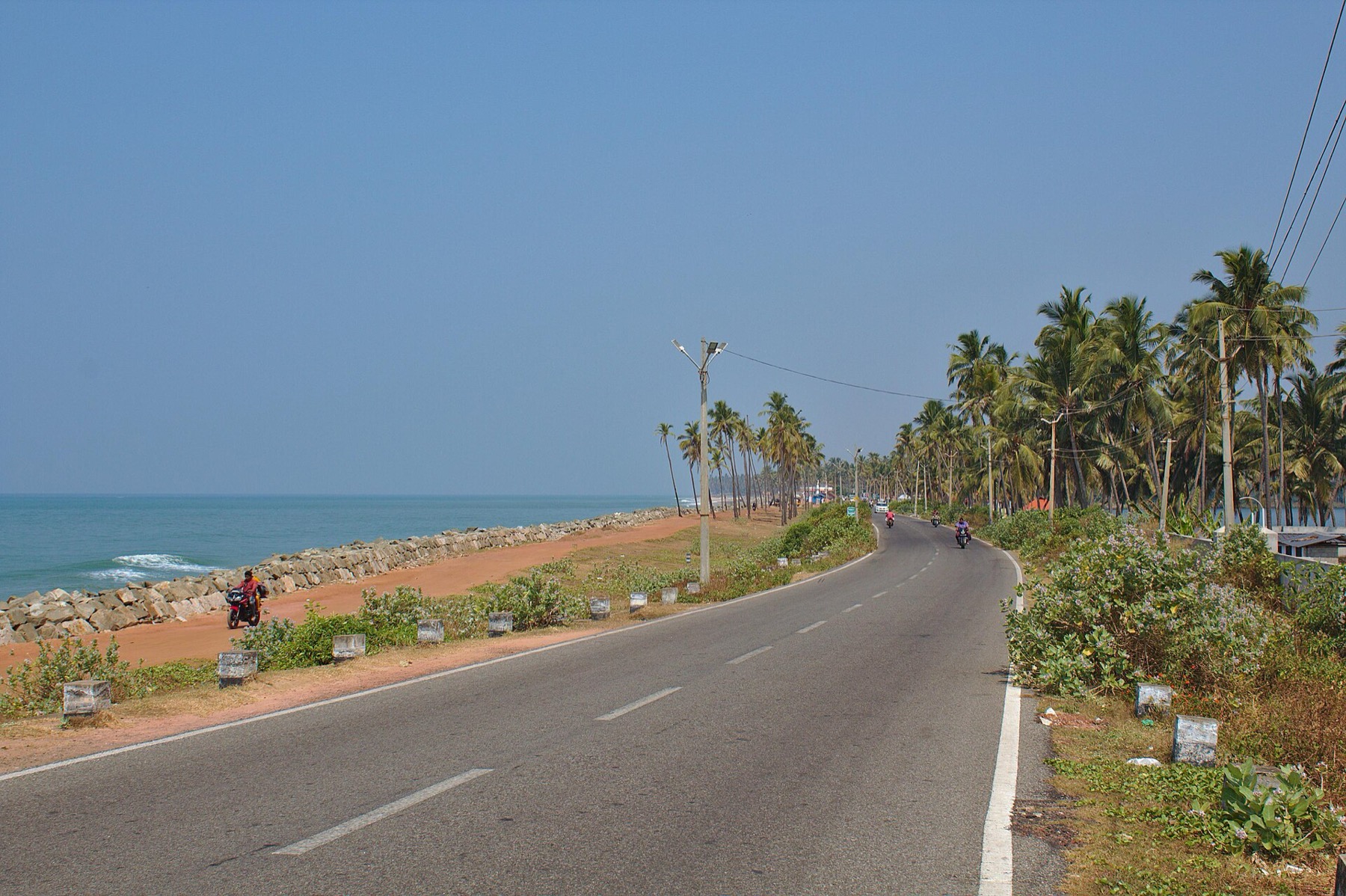
Bekal lies just off National Highway 66, about 16 km south of Kasaragod town. The nearest railhead is Bekal Fort station, just a couple of kilometres away, with Kanhangad and Kasaragod stations also close. The nearest airports are Mangalore and Kannur, each roughly 60 to 70 km away. Buses on the NH66 corridor and local autos/taxis from Kasaragod or Kanhangad reach the beach easily.
Absolutely — the fort sits on the headland right beside the beach, so most visitors do both in one outing (the fort is generally open around 8 am to 6 pm). Kappil Beach is about 6 km south, and the Nileshwar backwaters, known for houseboat cruises, are a short drive further, making an easy half- or full-day circuit.
November to February is most comfortable. Monsoon seas are dramatic but swimming conditions can be unsafe.
Entry: The beach is generally free; a small entry or parking charge may apply at the beach park. The adjacent Bekal Fort is separately ticketed — about 25 rupees for Indian/SAARC/BIMSTEC visitors and about 300 rupees for foreigners. Timings: The open beach is accessible through the day; the landscaped Bekal Beach Park typically opens from morning until evening, with illumination through dusk. Late afternoon to sunset is the prime window.
1 to 2 hours; half day with the fort.
Nearby you can pair Bekal Fort (1.0 km), Anandashram (9.5 km), Chandragiri Fort (9.9 km), Nithyanandashram (10.6 km).
Follow rough-sea warnings and avoid unsafe swimming. Stay away from isolated stretches after dark. Use known transport between fort, beach and stays.
We have not published a story about Bekal Beach itself yet. These cover Bekal and the wider district, with separate journeys between stops.
These guides explore Bekal and the surrounding area. Choose a visit that fits your interests, allowing separately for travel between stops.


Route-level itineraries and practical guides for the rest of Kerala.


Photographs: Earth-Bound Misfit, I (CC BY 2.0), Kondephy (CC BY-SA 4.0), Shubham Srivastava (CC BY-SA 3.0). Wikimedia Commons.