Madhur Temple

Madhur Temple is a major Kasaragod town-area temple, known for its distinctive Kerala temple architecture and riverside setting near the district headquarters. It works well as a focused spiritual/heritage stop while travelling between Bekal, Kasaragod and Kumbla.

Madhur Temple, Kasaragod town
Practical guide

Plan Madhur Temple

Who's going?Tailor Madhur Temple to your trip
Before you go to Madhur Temple

Check entry arrangements. Ask temple staff about visitor entry, dress requirements and access to the inner shrine before you travel, especially if you are visiting as a non-Hindu.

Dress respectfully and follow the institution’s admission and photography rules.

Typetemple
AreaKasaragod town
DistrictKasaragod
Best timeMorning or early evening is best
Time needed45 minutes to 1.5 hours
EntryEntry for darshan is generally free
Places to visit4Listed businesses8

The practical things decide this visit: what to wear, when to come, how large the festival crowds are, where to park, and what there is to eat and where to stay nearby.

The story

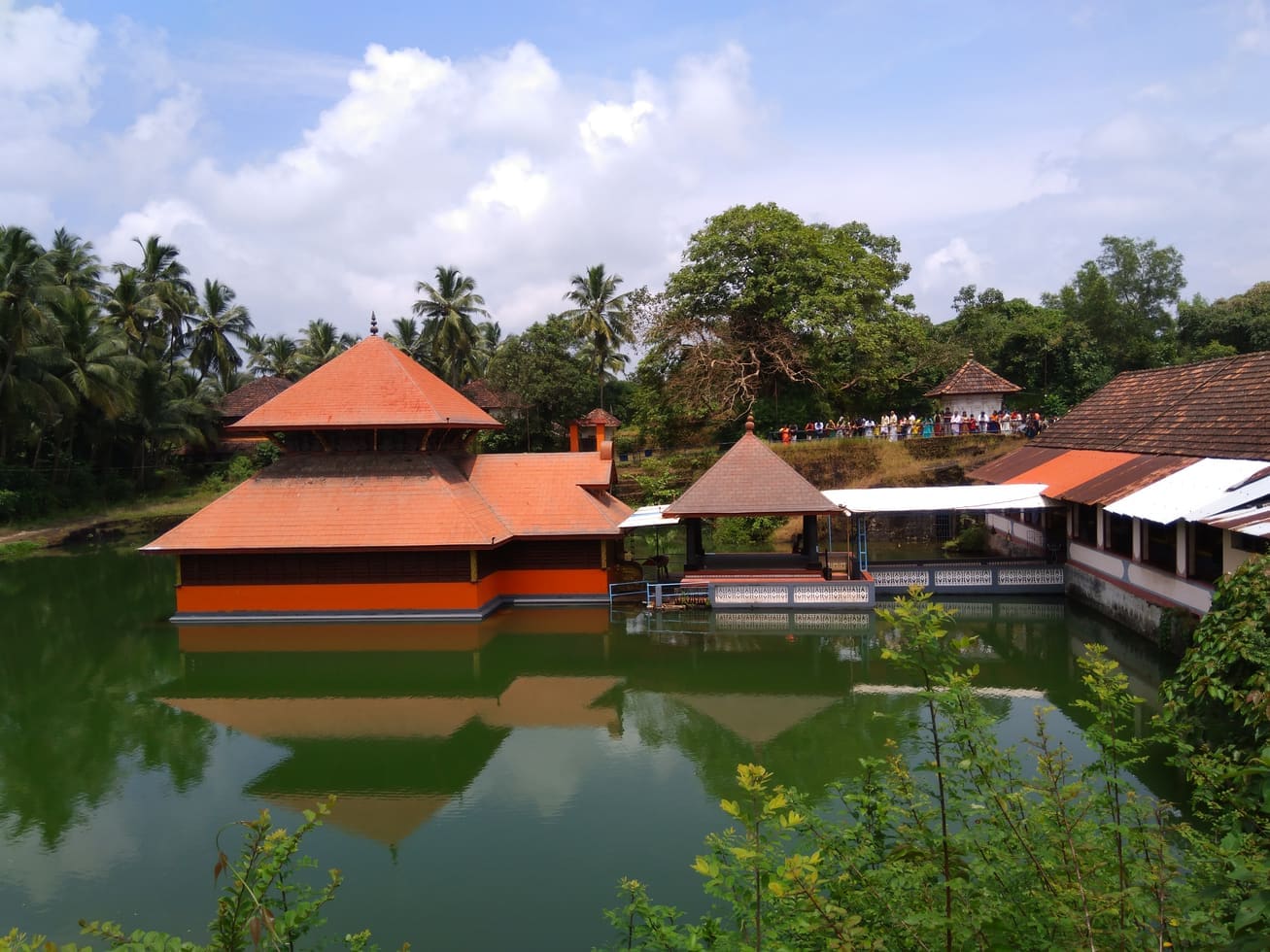
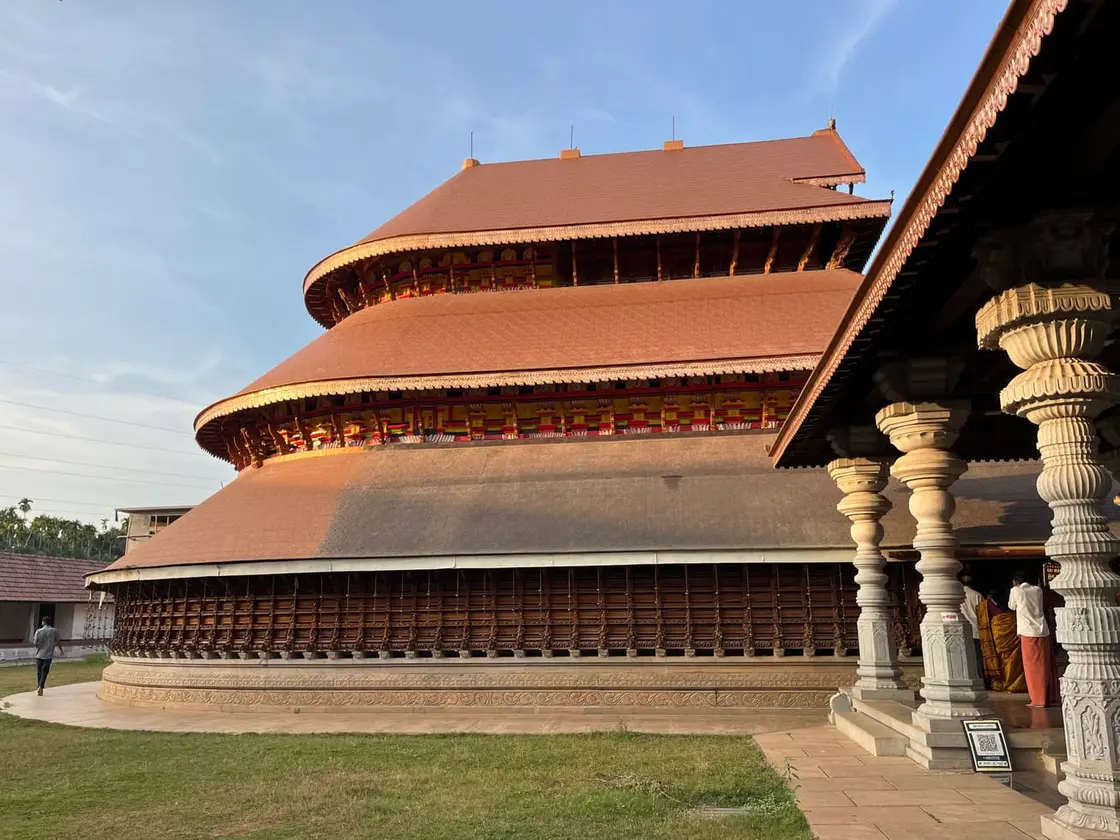
Rising in three copper-sheathed tiers above the green banks of the Madhuvahini river, Madhur Temple is where a Shiva shrine came to be ruled, in the hearts of pilgrims, by a plump little Ganapathi said to have grown out of a child’s idle wall-drawing.

The story of Madhur Temple

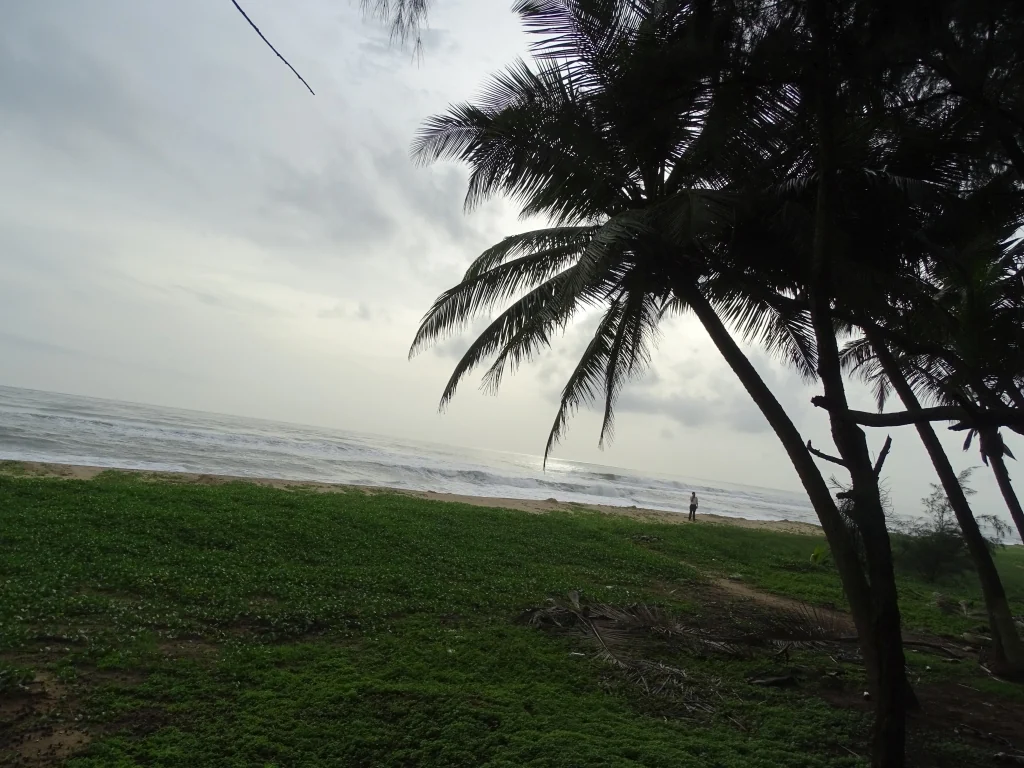
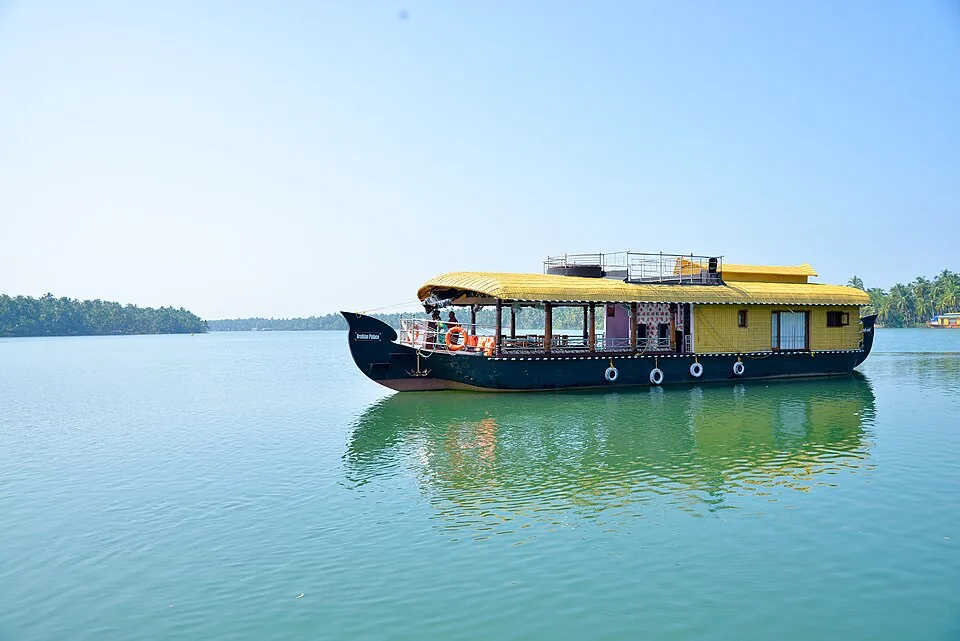
A few kilometres northeast of Kasaragod town, in the village of Madhur, the temple properly known as the Sri Madanantheswara Siddhivinayaka Temple stands on a slight rise above the Madhuvahini — a stream also called the Mogral river. The setting is quintessentially coastal Kerala: paddy and palm on the far bank, a broad temple tank, and the layered pyramid of the shrine’s roofs catching the light. Though its formal dedication is to Shiva, almost everyone who makes the journey comes to see the Ganapathi, and the temple is widely known simply as Madhur Mahaganapathi.

The presiding deity is Lord Shiva, worshipped here as Madanantheswara — a name usually read as ‘the lord who destroyed Madana (Kama)’, the god of desire. Tradition holds that the Shiva linga is an Udbhava Murti, a self-manifested image not carved by human hands, discovered long ago by a woman of the Tulu Moger community remembered as Madaru; her name is often given as the root of the place-name Madhur.

Yet it is Ganapathi who dominates the devotional life of the temple. The image sits within the main sanctum, and the daily rhythm of worship, the crowds and the most beloved offerings all circle around him. This gentle inversion — a Shiva temple famous for its elephant-headed son — is part of what gives Madhur its distinct character, and it is captured in the affectionate local name for the deity: Bodajja, the ‘big-bellied’ one.

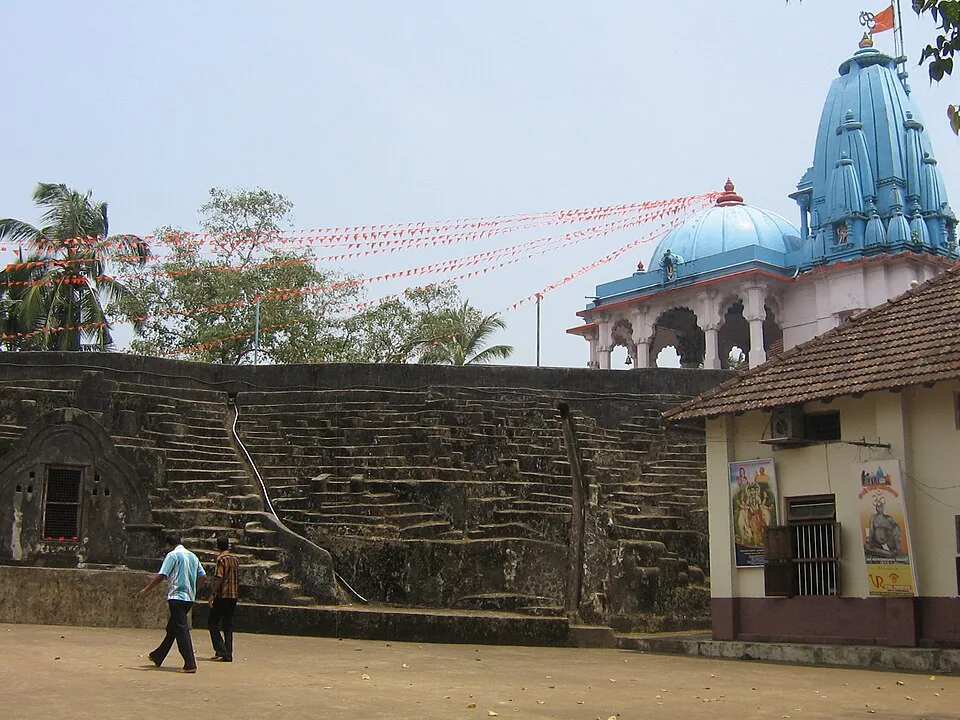
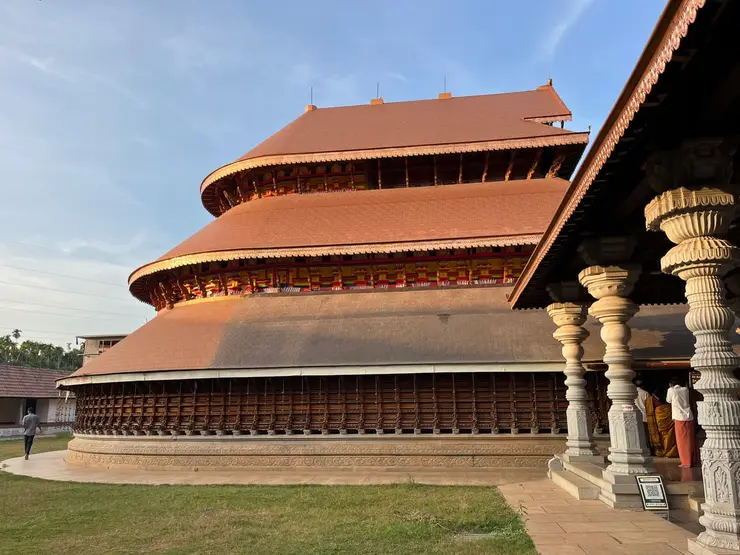
Architecturally the temple is a showpiece of the Kerala–Tulunadu tradition. Its sanctum is built in the gajaprishta plan — the apsidal, rounded form said to resemble an elephant’s back — and is crowned by a distinctive three-tiered roof, the lower tiers tiled and the whole surmounted by copper plating that gives the shrine its glinting silhouette. A cloistered courtyard, carved wooden pillars and beams, and stucco figures on the walls reflect a blend of influences often described as Hindu with Jain touches.

Inside, the Namaskara Mandapam and the sanctum walls carry a wealth of woodwork and mural detail: rows of Ganesha in varied poses along the lower walls, and carved episodes drawn from the Ramayana. Within the compound lies a deep, sacred well whose water is held to be curative and is said to lie perpetually shadowed from direct sunlight — the same well that anchors the temple’s most famous historical legend.

Madhur is counted among a small group of ancient Ganapathi shrines of the old Tulunadu region, and its river-and-roof composition has made it one of the most photographed temples of Kasaragod district. It remains an active place of worship administered as a public temple, drawing steady streams of pilgrims from Kerala and neighbouring coastal Karnataka, and swelling greatly on festival days.

Legend & myth

The best-loved story of Madhur explains why a Shiva temple is ruled by Ganapathi. As tradition tells it, a young boy — in many versions the priest’s own son — idly drew a figure of Ganapathi on the southern wall of the sanctum while at play. Day by day, to everyone’s astonishment, the drawing is said to have swelled and grown fat, until the child, half in wonder and half in affection, called it Bodajja or Bodda Ganesha, the ‘pot-bellied’ one. The Ganapathi venerated at Madhur is believed to be that self-grown image, and the belief that the deity keeps ‘growing’ underlies the temple’s signature offering, the Moodappa Seva (recounted as devotional legend, offered in faith rather than as historical fact).

The Moodappa (or Moodappam) Seva grows directly out of that legend: on the grandest occasions the entire Mahaganapathi image is ceremonially covered — ‘moodu’, to cover — in a thick coat of sweet appam made from rice, jaggery and ghee, so that the swelling god is literally clothed in his favourite food. Such a full Moodappa is held only rarely, years apart. In everyday worship the same idea lives on in the offering of appa (a sweet rice cake) as prasada, and in the celebrated Sahasrappa, the offering of a thousand appas.

The temple’s second great legend concerns Tipu Sultan. As the tradition runs, during his southern campaigns the ruler of Mysore came to Madhur intending to demolish the shrine, but after drinking water from the temple well he is said to have relented and spared it — leaving, to satisfy his soldiers and advisers, only a single cut struck with his sword on the wall by the well. A sword-mark shown to visitors near the temple well is pointed out as this very mark (related as long-standing local legend; it is not established history, and details differ between tellings).

Read the full history of Madhur Temple 396 more words

History

Madhur’s documented origins are usually placed in the medieval Tulunadu era. The shrine is commonly said to have been established by the Mayipadi (Mypadi) rulers of the Kumbla principality, with the core of the temple attributed to around the 10th century and significant renovation and expansion in the 15th century.

The temple belongs to the broader Tulu–Kerala temple culture of the far north of Kerala, a region historically linked with the Kumbla and Kasaragod chiefdoms. It is frequently counted among a set of ancient Ganapathi temples of old Tulunadu, a grouping that reflects the deep local roots of Ganesha worship along this stretch of coast.

The physical fabric visible today — the gajaprishta sanctum, the three-tiered copper-crowned roof, the wooden pillars and carved beams, the stucco and mural work — reflects successive phases of building and restoration in the characteristic Kerala style, rather than a single moment of construction. The woodwork depicting Ganesha and Ramayana scenes is among the features most often cited by heritage descriptions of the temple.

The Tipu Sultan episode situates the temple, at least in memory, within the turbulent late-18th-century history of the Mysore campaigns across Malabar and the Tulu coast, when many temples in the region were affected. At Madhur the story is preserved as one of survival rather than destruction — a narrative kept alive by the sword-mark by the well (recounted as tradition; contemporaneous documentary confirmation is lacking).

In the modern period the temple is administered as a public institution and functions as one of the principal pilgrimage and cultural landmarks of Kasaragod district, its riverside profile a recurring image in Kerala Tourism’s presentation of the Malabar and Kasaragod region.

Why visit

See the famous Bodajja Mahaganapathi and the temple whose Ganesha is said to have grown from a child’s wall-drawing.

Admire textbook Kerala temple architecture — the elephant-back gajaprishta sanctum under a three-tiered, copper-plated roof.

Take in the serene riverside setting on the banks of the Madhuvahini, with the temple tank and palm-lined far bank.

Study the woodcarvings and murals — rows of Ganesha and carved Ramayana episodes in the mandapam and along the walls.

Hear, on the spot, two of coastal Kerala’s best-known temple legends: the growing idol and the Tipu Sultan sword-mark by the sacred well.

Time a visit to a festival — especially the rare, spectacular Moodappa Seva when the whole idol is clothed in sweet appam.
What to expect

Highlights

  • Important temple near Kasaragod town with distinctive architecture.
  • Good pairing with Ananthapura Lake Temple, Bekal and Kasaragod town stays.
  • The businesses around this place are pilgrim services, vegetarian restaurants, drivers and guides.
Getting there

How to visit

  • Base in Kasaragod town, Bekal or Kumbla depending on route.
  • Check current temple timing, dress and festival arrangements before travelling.
  • Pair with nearby temple/coast stops only with realistic road buffers.

Distance by road

  • Mangaluru53 km
  • Kozhikode181 km
  • Mysuru226 km
  • Coimbatore356 km
  • Kochi358 km

Road km to Kasaragod; ghat roads and traffic vary — allow extra.

Timing

Best time

Morning or early evening is best; November to February is easiest for general travel.

Weather in Madhur TempleSeasonal guide

Live forecast loads in your browser.

Today at Madhur Temple
Sunrise6:19 am
Sunset6:29 pm
Golden hour best light5:29 pm–6:29 pm
Blue hour after sunset6:29 pm–6:54 pm
Sun sets toward compass bearingW · 272°
Moon tonight🌓 First quarter · 53%
South-west monsoon. June to September is the south-west monsoon in Kerala. Expect heavy showers, mostly in bursts rather than all day — carry rain cover, allow extra time for getting around, and note that ferries and open-air sites are the first things affected.

Sun and moon are calculated for this location and shown in IST. Photography windows are the hour around sunrise and sunset; the sunset bearing is degrees clockwise from true north. Moon phase is accurate to about half a day.

Visitor notes

  • Dress modestly and follow active-temple rules.
  • Check the exact locality, and how far it really is from the temple.
  • Festival periods can change traffic, parking and room availability.
Safety

Good to know

  • Use official counters and avoid unofficial access promises.
  • Keep valuables minimal in crowded queues.
  • Follow temple and traffic instructions during festivals.
Stay · eat · do · rent · see · shop

Stays, food & things to do near Madhur Temple

Verified hotels, homestays, restaurants, experiences, sights, shops and rentals around Madhur Temple — commission-free, with direct contact. Filter by what you need.

1 place to eat near Madhur Temple

R
Royal Dine Kasaragod
Where to eat
Top pick Verified
Town restaurant · Kasaragod town
Royal Dine Kasaragod

Town restaurant in Kasaragod town. Kasaragod town, Kerala · kasaragod-town, eat, Town restaurant.

Directions Commission-freeView details

Book with the place itself. India’s cyber-crime coordination centre warned in April 2025 that convincing copies of hotel and pilgrimage booking sites are being pushed through sponsored search and social ads, taking payment for rooms the property never hears about. Every listing here links to the business’s own contact details and its own Google or Bing profile — we take no commission and sit in nobody’s payment path. If a booking page reached you through an ad, check the address bar against the property’s own site before you pay. Fraud can be reported on cybercrime.gov.in or on 1930.

Ranked guides

Top experiences around Kasaragod town

5 more places around Kasaragod town. Open a guide to plan the visit and onward journey.

heritageChandragiri Fort

9.3 km · ~16 min by cab

A 17th-century hilltop fort above the Chandragiri river built by the Keladi Nayakas, with sweeping views of the river mouth and the Arabian Sea — good at sunset.

mosqueMalik Deenar Mosque

8.0 km · ~20 min by auto

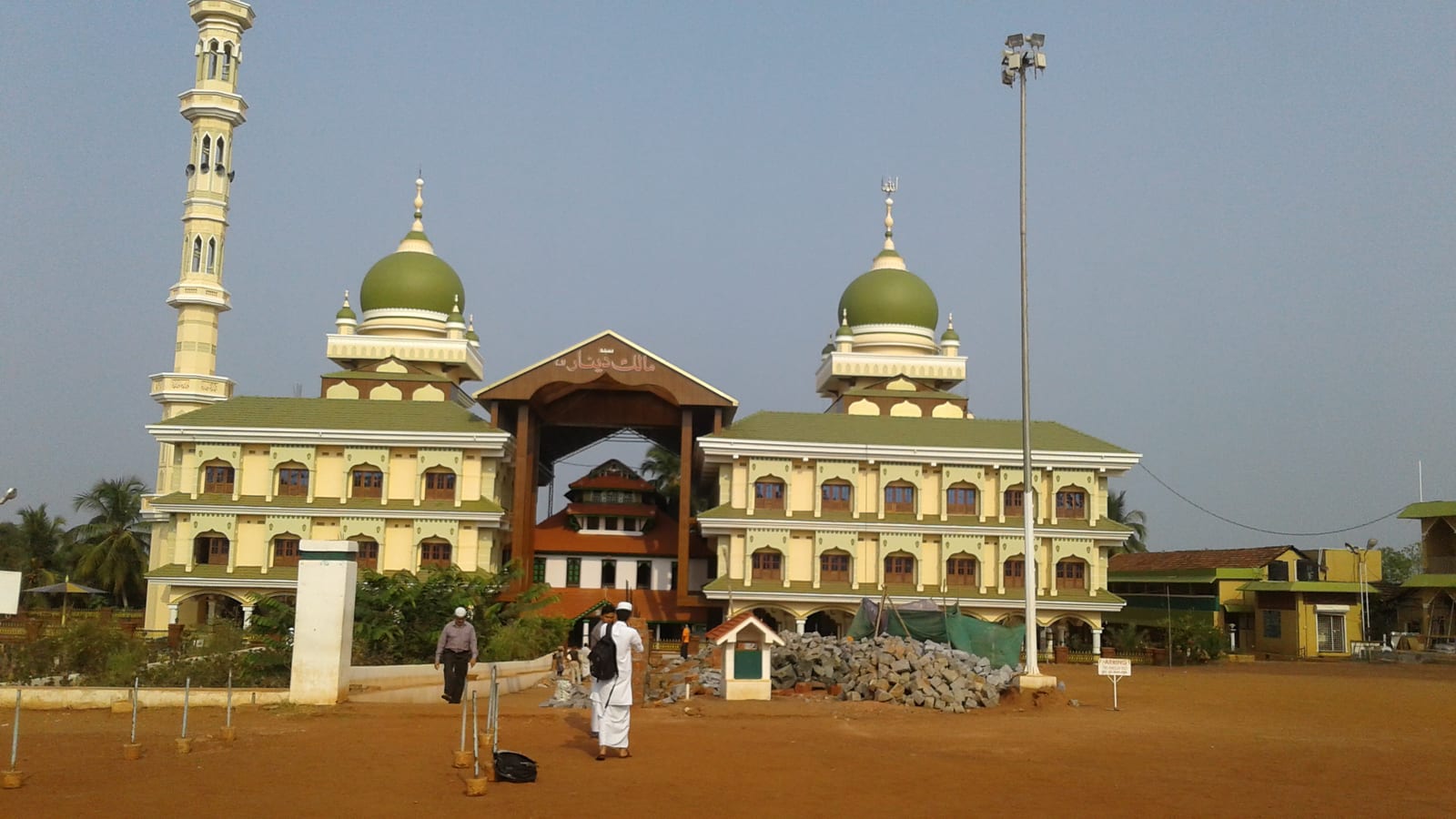
The Malik Ibn Dinar Juma Masjid in Thalankara, Kasaragod — by tradition among the oldest mosques in India, linked to the earliest arrival of Islam on the Malabar coast.

churchBela Church

4.0 km · ~10 min by auto

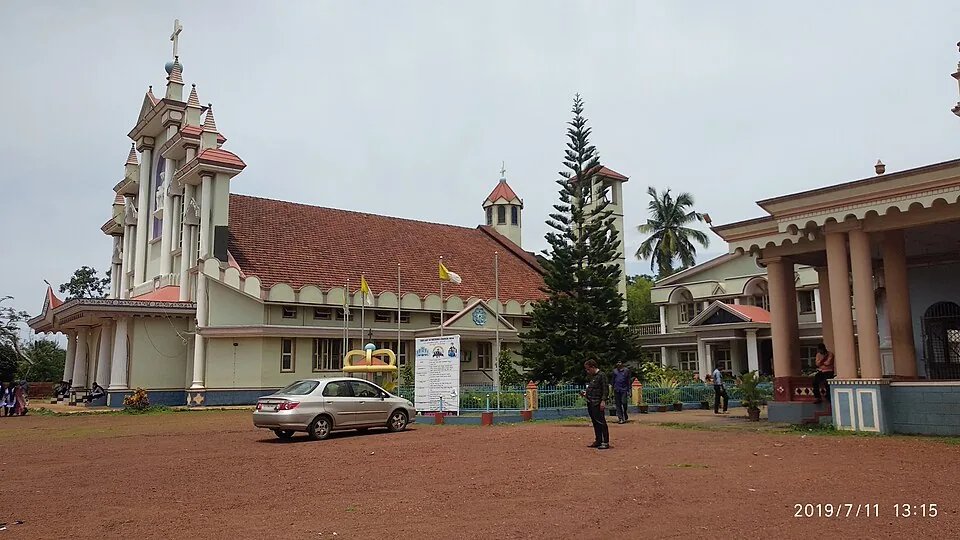
Our Lady of Sorrows (Dolours) Church at Bela near Badiadka, built in 1890 — the oldest church and parish in Kasaragod district, founded by Konkani Catholics; a Gothic Revival church known for its statue of Mother Mary.

mosqueNellikunnu Mosque

6.8 km · ~17 min by auto

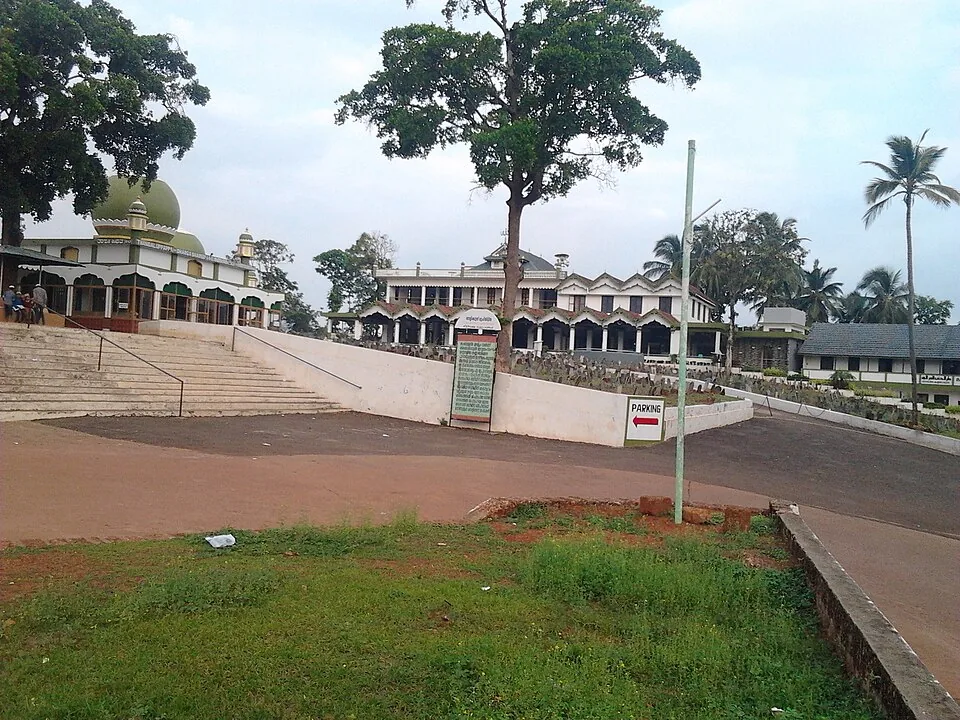
The Nellikunnu Muhyaddin Juma Masjid, a Sunni Friday mosque and dargah near the Kasaragod town beach that houses the tomb of Saint Thangal Uppapa; a local pilgrimage centre whose annual Nercha draws large crowds.

heritageAnandashram

26.3 km · ~44 min by cab

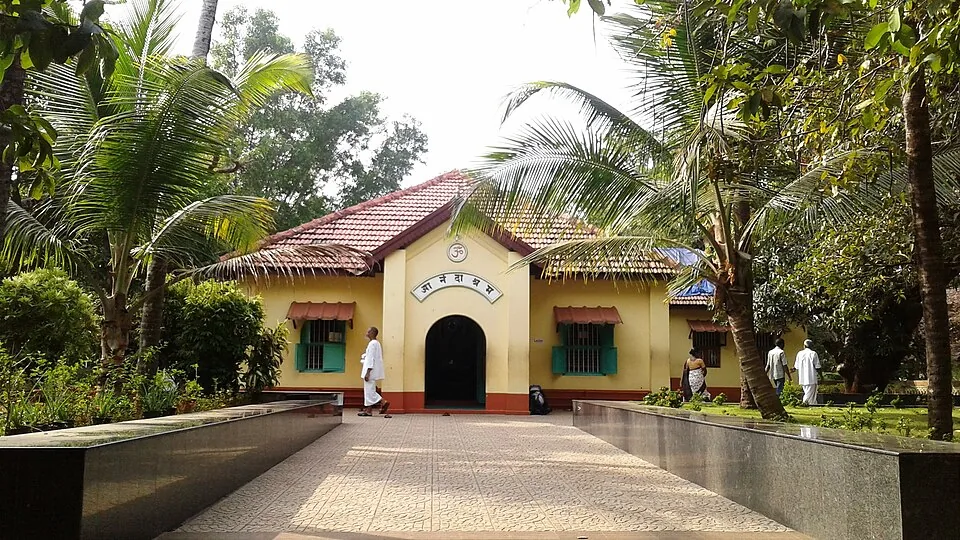
A tranquil spiritual retreat at Kanhangad founded in 1931 by Swami Ramdas (Papa) and Mother Krishnabai, set in quiet wooded grounds; open to visitors of every faith under its motto of “universal love and service”.

Roampedia is commission-free — own or know a stay, eatery, guide or shop near Madhur Temple? List it and it appears here once verified.

Add a nearby business
Before you go

Madhur Temple — at a glance

TimingsGenerally open daily for darshan with a morning session from around 5.00 am and an evening session into the night (some sources give roughly 5.00 am to 8.00 pm, often with a midday break); exact opening, closing and break times change seasonally and on festival days.
Best timeThe cooler, drier months from about October to February are the most comfortable for visiting and for enjoying the riverside setting; the monsoon (roughly June to September) is lush but wet. Early morning offers calmer darshan; festival days are vivid but crowded.

Entry: Entry for darshan is generally free. Individual sevas, poojas, abhishekams and offerings (such as archana, homam and appa/Moodappa-related sevas) carry set fees, and a small charge may apply for photography or videography where permitted.

Dress code: Traditional, modest dress is expected, in keeping with Kerala temple custom — for many shrines this means men in a mundu/dhoti (often bare-chested) and women in a saree or salwar; footwear must be removed before entering. Confirm the specific dress requirements at the temple, as they vary.

Festivals: The temple is best known for the rare and elaborate Moodappa Seva, when the whole Ganapathi image is coated in sweet appam (held only occasionally, years apart). An annual temple festival/utsavam is observed, and Ganesha-related occasions such as Vinayaka Chaturthi are important here; exact dates follow the traditional calendar and vary year to year.

Photography: Photography is typically restricted, especially inside the sanctum/around the deity, and a charge or permission may apply where it is allowed. Always ask and follow the temple’s current rules before taking photos.

Getting here

How to reach Madhur Temple

  • ✈︎ By air The nearest airport is Mangaluru (Mangalore) International Airport, roughly 50 km to the north in Karnataka; Kannur International Airport to the south is another option.
  • 🚆︎ By train Kasaragod railway station, on the coastal main line, is the nearest major station, about 7 to 8 km away, with onward auto or bus to Madhur.
  • 🚗︎ By road From Kasaragod town it is a short drive of roughly 7 to 8 km northeast to Madhur village; the temple is reached by local roads off the main highway.
  • 🚌︎ By bus Local buses and KSRTC/private services run from Kasaragod town towards Madhur; auto-rickshaws and taxis are also readily available from the town and railway station.
Getting back

If you are travelling by bus or ferry, check the return service with the operator before setting out. Leave time to reach the stop or jetty after your visit.

Ask at the bus stand for the time of the last service back, not the next one. If you miss it, an auto or app cab is the fallback — agree the fare before you get in.

Do

Things to do

  • Offer prayers before the Bodajja Mahaganapathi in the main sanctum.
  • Walk the cloistered courtyard to study the three-tiered copper-crowned gajaprishta roof from different angles.
  • Look closely at the wooden carvings of Ganesha and the Ramayana scenes in the mandapam and along the walls.
  • See the sacred temple well and the wall pointed out as bearing the Tipu Sultan sword-mark.
  • Spend a quiet moment by the temple tank and the Madhuvahini riverbank.
  • Partake of the appa prasada, the temple’s signature sweet offering, where available.
  • Time your visit, if you can, to a festival day or an announced Moodappa Seva for the fullest experience.
Getting around Madhur Temple

If you need step-free access, contact the site before travelling. Ask about a level entrance, steps along the route, the nearest drop-off point, seating and accessible toilets.

Nearby

What’s near Madhur Temple

churchBela Church

Our Lady of Sorrows (Dolours) Church at Bela near Badiadka, built in 1890 — the oldest church and parish in Kasaragod district, founded by Konkani Catholics; a Gothic Revival church known for its statue of Mother Mary.

4.0 km · ~10 min by auto · straight line
templeAnanthapura Lake Temple

Kerala’s only lake temple, near Kumbla, the moolasthanam of Ananthapadmanabha — and home by tradition to Babiya, the temple’s resident vegetarian crocodile.

4.7 km · ~12 min by auto · straight line
mosqueNellikunnu Mosque

The Nellikunnu Muhyaddin Juma Masjid, a Sunni Friday mosque and dargah near the Kasaragod town beach that houses the tomb of Saint Thangal Uppapa; a local pilgrimage centre whose annual Nercha draws large crowds.

6.8 km · ~17 min by auto · straight line
mosqueMalik Deenar Mosque

The Malik Ibn Dinar Juma Masjid in Thalankara, Kasaragod — by tradition among the oldest mosques in India, linked to the earliest arrival of Islam on the Malabar coast.

8.0 km · ~20 min by auto · straight line
heritageChandragiri Fort

A 17th-century hilltop fort above the Chandragiri river built by the Keladi Nayakas, with sweeping views of the river mouth and the Arabian Sea — good at sunset.

9.3 km · ~16 min by cab · straight line
heritageBekal Fort

Kerala’s largest fort (~40 acres), a keyhole-shaped laterite bastion jutting into the Arabian Sea, built around 1650 by the Keladi Nayakas; its observation tower once mounted cannons.

18.1 km · ~30 min by cab · straight line
beachBekal Beach

The beach stretch below Bekal Fort, with a landscaped park — famously the setting of the song “Uyire” from the film Bombay.

18.6 km · ~31 min by cab · straight line
heritageAnandashram

A tranquil spiritual retreat at Kanhangad founded in 1931 by Swami Ramdas (Papa) and Mother Krishnabai, set in quiet wooded grounds; open to visitors of every faith under its motto of “universal love and service”.

26.3 km · ~44 min by cab · straight line
heritageHosdurg Fort

The surviving laterite fort at Hosdurg in Kanhangad is associated with the Ikkeri Nayakas and recognised by its rounded bastion and broad ramp; Nithyananda Ashram is a separate neighbouring institution.

28.7 km · ~48 min by cab · straight line
heritageNithyanandashram

The hillside cave complex at Hosdurg where Bhagawan Nityananda cut meditation chambers by hand out of a single mass of laterite — 43 by the ashram’s own account — with the Nithyananda Temple built above them in 1963. Mobile phones are prohibited in the caves.

28.7 km · ~48 min by cab · straight line
beachKanhangad beach

Kanhangad Beach is the Hosdurg coastal frontage of Kanhangad in Kasaragod district, with a broad sandy shore and an established fish-landing setting. It is a beach visit from Kanhangad town, distinct from Hosdurg Fort, the town’s ashrams and the separately named beaches at Ajanur, Ozhinhavalappu and Thaikadappuram. Use the named beach approach rather than a generic Kanhangad map result. The shore’s working character is central to the visit: leave boats, nets and landing passages clear while enjoying the sea-facing sand.

29.9 km · ~50 min by cab · straight line
heritageNileshwar

The cultural capital of Kasaragod — a Theyyam and folk-arts town on the Nileshwaram backwaters, with kovilakams, kavus and a lively ritual-arts season.

35.1 km · ~59 min by cab · straight line

All 4 places to visit in Kasaragod town →

On the map

Where Madhur Temple is

Good to know

Madhur Temple — frequently asked

Which deity is Madhur Temple dedicated to — Shiva or Ganapathi?

Formally, the temple is dedicated to Lord Shiva, worshipped here as Madanantheswara (with the Shiva linga believed to be a self-manifested Udbhava Murti). In practice, though, the Ganapathi (Siddhivinayaka) installed in the sanctum is the far more famous focus of worship, which is why the temple is popularly called Madhur Mahaganapathi.

What is the Moodappa Seva?

Moodappa (or Moodappam) Seva is the temple’s signature offering, in which the Mahaganapathi image is ceremonially covered in a thick layer of sweet appam made from rice, jaggery and ghee — the word ‘moodu’ means to cover. A full Moodappa is performed only rarely, years apart. Related offerings include the daily appa prasada and the Sahasrappa (a thousand appas). Confirm whether any special seva is scheduled before planning around it.

Is the Tipu Sultan sword-mark story true?

It is a long-standing local legend rather than documented history. Tradition holds that Tipu Sultan meant to demolish the temple but relented after drinking from the well, leaving only a sword-cut on the wall by the well, which is still pointed out to visitors. Details vary between tellings and it should be treated as tradition, not established fact.

Can non-Hindus enter the temple?

Entry customs at Kerala temples vary from shrine to shrine, and some restrict entry to Hindus. It is best to confirm the current policy at the temple itself and to respect whatever access, dress and conduct rules are in force.

How far is Madhur Temple from Kasaragod town?

The temple lies roughly 7 to 8 km northeast of Kasaragod town, in Madhur village on the banks of the Madhuvahini (Mogral) river, reachable by a short drive, auto or local bus.

What is the best time to visit?

Mornings during darshan hours are pleasant and less crowded, and the cooler, drier months from around October to February suit sightseeing along the river. Festival days — and any announced Moodappa Seva — are visually spectacular but very busy.

When is the best time to visit Madhur Temple?

Morning or early evening is best; November to February is easiest for general travel.

What are the entry fee and timings at Madhur Temple?

Entry: Entry for darshan is generally free. Individual sevas, poojas, abhishekams and offerings (such as archana, homam and appa/Moodappa-related sevas) carry set fees, and a small charge may apply for photography or videography where permitted. Timings: Generally open daily for darshan with a morning session from around 5.00 am and an evening session into the night (some sources give roughly 5.00 am to 8.00 pm, often with a midday break); exact opening, closing and break times change seasonally and on festival days.

How do I reach Madhur Temple?

Base in Kasaragod town, Bekal or Kumbla depending on route. Check current temple timing, dress and festival arrangements before travelling. Pair with nearby temple/coast stops only with realistic road buffers.

How much time do I need for Madhur Temple?

45 minutes to 1.5 hours.

What else is near Madhur Temple?

Nearby you can pair Bela Church (4.0 km), Ananthapura Lake Temple (4.7 km), Nellikunnu Mosque (6.8 km), Malik Deenar Mosque (8.0 km).

What should I know before visiting Madhur Temple?

Use official counters and avoid unofficial access promises. Keep valuables minimal in crowded queues. Follow temple and traffic instructions during festivals.

Image credits

Photographs: Shantham11 (CC BY-SA 4.0), Vinayaraj (CC BY-SA 3.0), Prof tpms (CC BY-SA 4.0), ARUNKUMAR P.R (CC BY-SA 3.0). Wikimedia Commons.