What to expect
Highlights
- Temple visit at Achankovil Sastha Temple
- Kerala temple architecture and rituals
- Local food, shops and pilgrim services nearby
A forest Sastha temple on the Achankovil river where Ayyappa presides as a married householder with two consorts, Poorna and Pushkala — and where the deity is Maha Vaidya, the great physician: the bell may be rung at any hour for a snakebite and the shrine opens at night. ⚠ No timings are published by anyone. 🛑 It has no eighteen holy steps; that is Sabarimala’s.
Check entry arrangements. Ask temple staff about visitor entry, dress requirements and access to the inner shrine before you travel, especially if you are visiting as a non-Hindu.
Dress respectfully and follow the institution’s admission and photography rules.
Ring the bell at any hour of the night, if you have been bitten by a snake. That is not folklore dressed up for visitors: it is what this forest temple is for, and the Kerala government's own Sabarimala portal says so. Achankovil sits on its river eighty-five kilometres inland from Kollam, at the far end of a forest road, and the Sastha here holds sandalwood paste and holy water in his palm and is addressed as Maha Vaidya, the great physician. He is also, unusually, a married householder with two wives beside him — which is the opposite of the god eighty kilometres east at Sabarimala, and the next chapter of the god at Aryankavu, who is only just married.
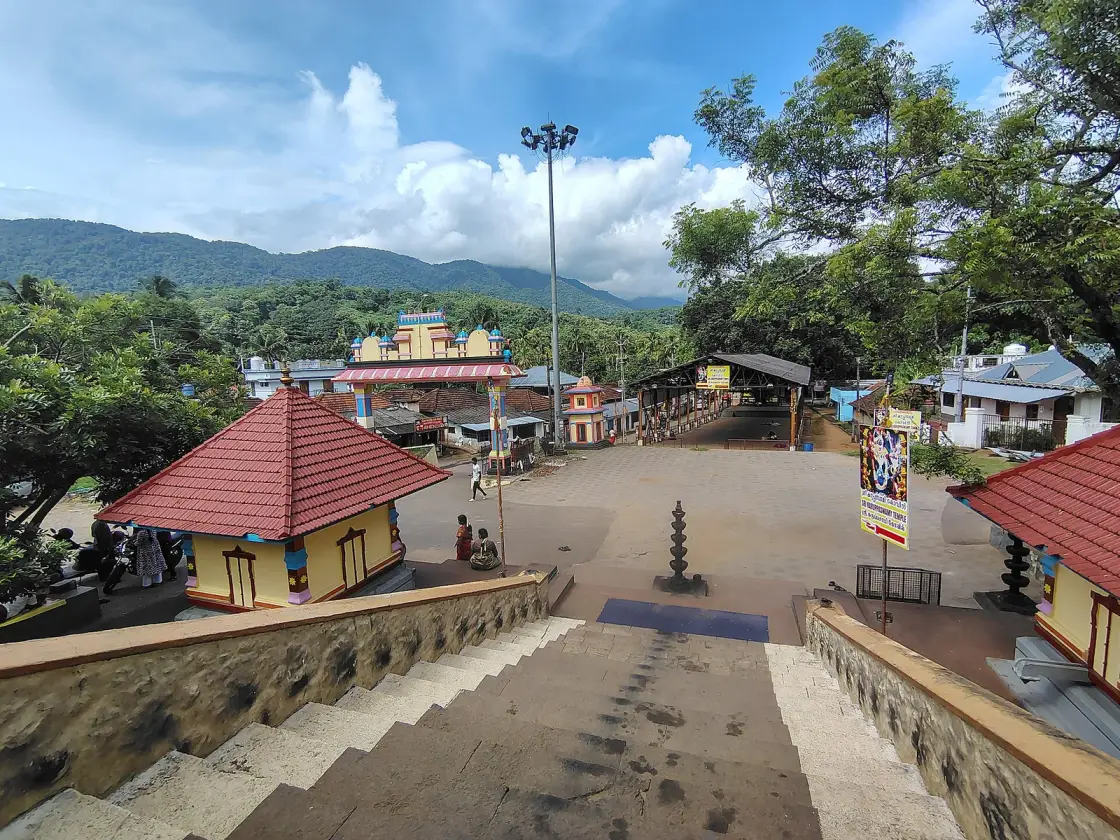
Achankovil is a small forest village in the Aryankavu grama panchayat of Punalur taluk, on the banks of the Achankovil river, at about 87 metres above sea level and roughly 50 km from Punalur and 85 km from Kollam. The road in is the one that climbs towards the Chenkottai gap and Tamil Nadu, and the setting is the point: from the temple steps you look down over a tiled village square with the wall of the Western Ghats standing directly behind it. This is not a temple you pass on the way to somewhere else. You go there because you are going there.
What makes it worth the drive is a tradition that no other temple on our Kerala pages carries. Achankovil is known for treating snakebite. The Sastha is regarded as Maha Vaidya, the great physician; his palm holds chandanam, sandalwood paste, and theertham, holy water; and both are held to have the property of neutralising the venom of poisonous snakes. The practice around that belief is specific and it is the part worth knowing. A person who has been bitten may ring the temple bell at any hour and call for help. The shrine will open at night if necessary, after the Athazha Puja, which is the last service of the day and the point at which a Kerala temple normally shuts until dawn. The sandalwood is then given as prasadam, and the patient stays three days or five, depending on how severe the poisoning is judged to be.
It should go without saying, and we will say it anyway: a snakebite in Kerala is a medical emergency and antivenom is the treatment for it. We are describing a living religious practice at a specific temple, accurately, because it is the single most distinctive thing about the place and because it explains the temple's whole character — a shrine organised around being available in the middle of the night to someone in trouble. It is not medical advice.
One detail in that description disagrees with itself across sources, and since it concerns the most photographed thing in the sanctum it is worth flagging. The Kerala government's Sabarimala page says the idol's left hand always holds the chandanam and theertham. The English Wikipedia article says the right palm. We could not find a Travancore Devaswom Board statement settling it. Both are printed here rather than one being picked.
The second distinctive thing is the form of the god, and it belongs in a sequence rather than on its own. At Sabarimala, Ayyappa is Naishtika Brahmachari, the eternal celibate, and that celibacy is the foundation of everything practised there. At Aryankavu — 25 km south-west of here as the crow flies, and a page of ours already — he is the young bridegroom with Pushkaladevi, and his wedding is re-enacted annually by the Sourashtra community. At Achankovil he is neither ascetic nor bridegroom. He presides facing east in the grihastha ashrama, the householder's stage of life, with two consorts installed on either side of him: Poorna and Pushkala. The god is not just married here. He is settled.
That sequence is the reason these temples are visited together rather than chosen between, and it is the honest version of a claim that gets overstated. Achankovil is always named among the five great Sastha temples of Kerala — but no two published lists of the five agree. The Travancore Devaswom Board's own pilgrimage circuit runs Pandalam, Kulathupuzha, Aryankavu, Achankovil and Erumeli. Devotional accounts give Kulathupuzha, Aryankavu, Achankovil, Sabarimala and Kanthamala. Others differ again. Only three names appear in every version — Kulathupuzha, Aryankavu and Achankovil — and Achankovil is one of them. That is a stronger statement than a contested number.
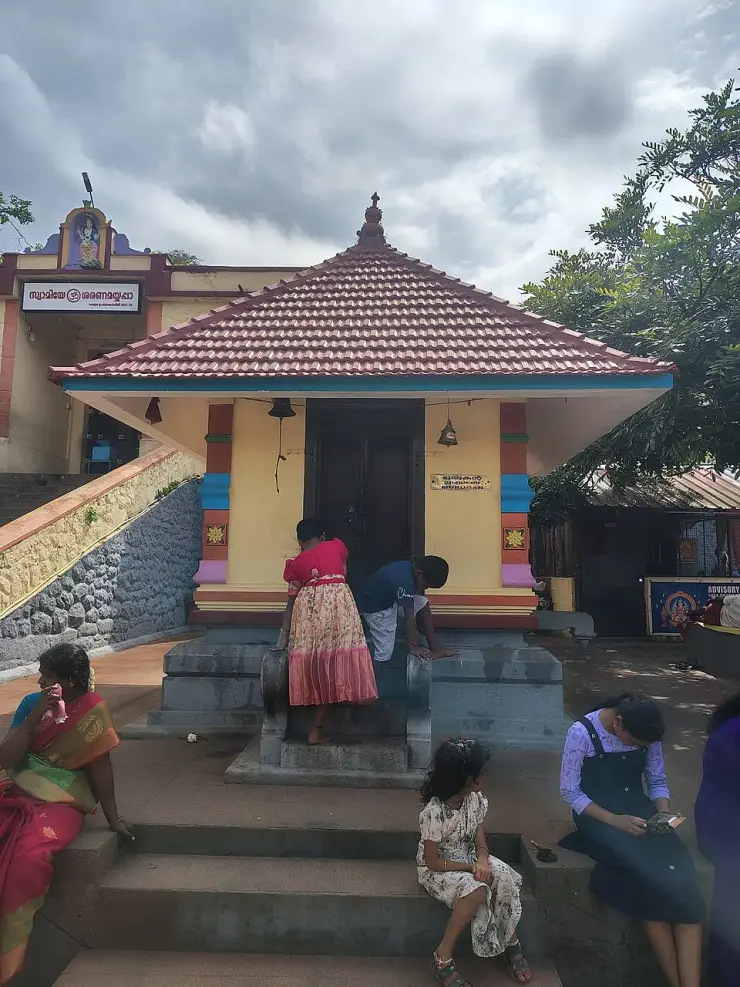
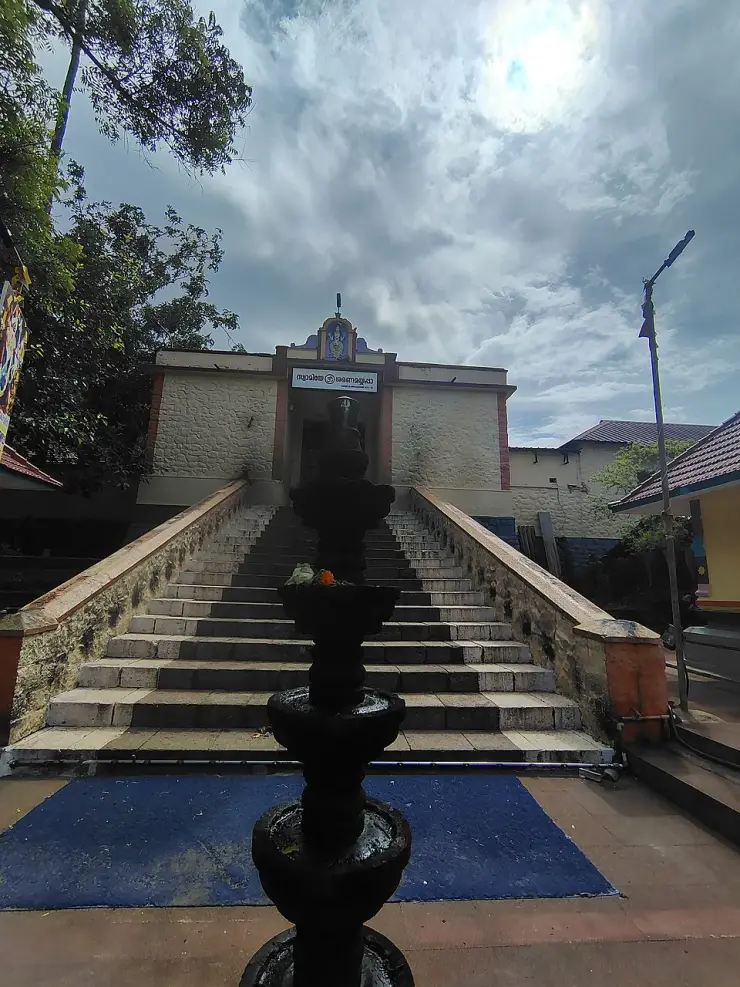
The third thing you notice is that you are close to Tamil Nadu, and the temple does not hide it. The devotional line across the main gateway arch — swamiye saranam ayyappa — is painted in Tamil script, with the temple's name in English below it as Achencovil. The pooja store outside the gate is signed in Tamil. The god's local names, Achankovil Andavan and Achankovil Arasan, are Tamil forms. And inside the compound stands a shrine to Sri Karuppaswamy, the Tamil guardian deity, its board lettered in Malayalam, English and Tamil together — which is precisely where the temple's Karuppanoottu and Karuppanthullal rituals belong. For a temple administered by the Travancore Devaswom Board, in Kollam district, that is a lot of Tamil, and it is the honest signature of a shrine that sits on a mountain road between two language countries.
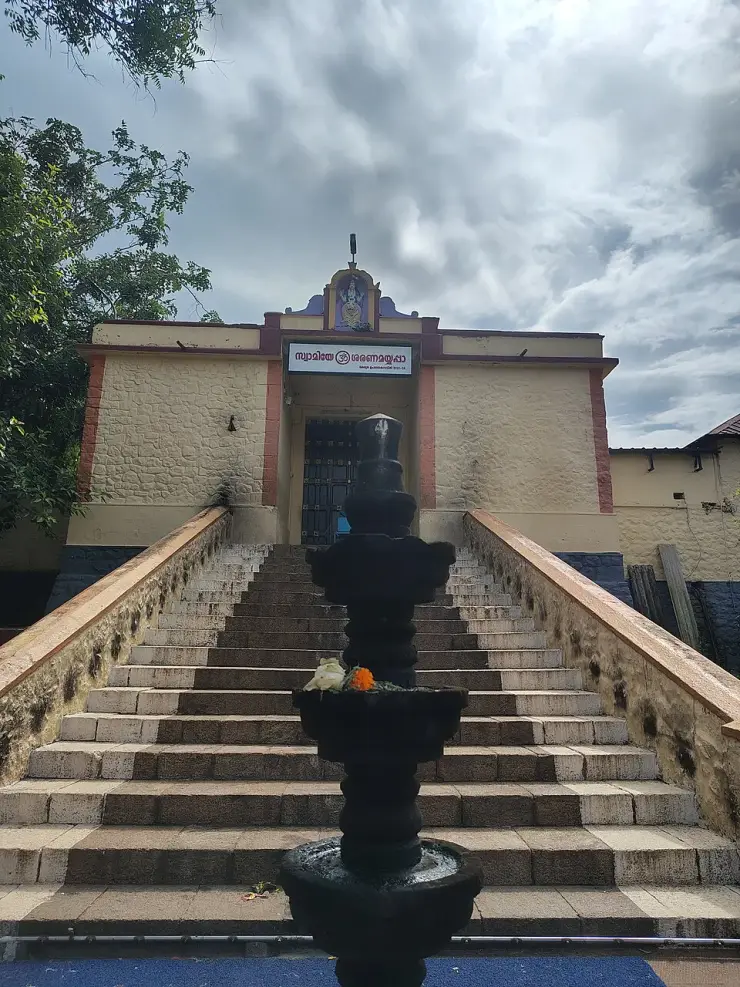
The temple is administered by the Travancore Devaswom Board, which can be said from the Board's own domain rather than from an aggregator: a 2017 e-tender of theirs covers the kuthaka at Kulathuppuzha, Achankovil and the other shrines of this circuit. Beyond the main shrine the compound holds a set of small tiled sub-shrines — Murugan and Karuppaswamy among them — a stone deepa-stambha in front of the steps, and a broad flight of steps up to the sanctum door, which stands closed through the middle of the day like every Kerala temple's.
The origin claim made for this temple is the largest one available in Kerala, and it is made by the state government itself. The idol here, says the Kerala government's Sabarimala portal, is believed to have been installed by Parashurama. Kerala Tourism's own page repeats it in warmer language: consecrated by none other than Lord Parasurama, an incarnation of Lord Vishnu himself.
It is worth understanding what that claim is and is not. Parashurama, the axe-bearing sixth avatar of Vishnu, is in Kerala tradition the maker of the land itself — he is said to have thrown his axe from Gokarnam to Kanyakumari and raised the coast out of the sea, and then to have established the temples upon it. A very large number of Kerala's older shrines carry a Parashurama consecration in their tradition. It is a statement about antiquity and legitimacy rather than a dateable event, and both official sources phrase it carefully as belief rather than record. No founding date for this temple exists anywhere we could find, and we print none.
The real mythology of Achankovil, though, is not about its founding. It is about the marriage, and it only makes sense as the third panel of a triptych.
In the tradition of this circuit, the Sastha appears at different temples at different stages of one life. At Kulathupuzha he is a child. At Aryankavu he is the youth who marries — and there the story is unusually well developed: he weds Pushkaladevi, and the Thiru Kalyanam re-enacts that wedding every year following the customs of the Sourashtra community, a Gujarat-origin people long settled in the Tamil country who hold Pushkaladevi as their own. At Achankovil he has arrived at the householder's stage, the grihastha ashrama, with Poorna on one side and Pushkala on the other. And at Sabarimala he is the eternal celibate, Naishtika Brahmachari, whose vow is the entire basis of the pilgrimage.
Set out like that, the sequence contains a contradiction that devotees have never found troubling and that visitors almost always do. The same god is simultaneously a married householder with two wives at one shrine and a lifelong celibate at another, and both are held with complete seriousness by the same tradition, often by the same pilgrims, sometimes on the same journey. It is not resolved by treating one as literal and the other as symbolic. It is a theology of aspects: what is true of the god at Achankovil is true there, and what is true of him at Sabarimala is true there, and the pilgrim who walks the circuit meets him at each stage of a life he is living all at once.
There is a practical consequence that follows from it, and here we have to be careful because published sources are poor. Because the god at Achankovil is a householder rather than a celibate, the restriction that governs Sabarimala is generally described as not applying here, and travel sites state that women may enter. We could not find any official statement of an entry rule — not from the Travancore Devaswom Board, not on the Kerala government's Sabarimala page, and not on Kerala Tourism's, all of which are silent on the question. The aggregator sites that do give an age contradict each other, one saying ten and above and another eighteen and above, which is a strong sign that none of them knows. What we can say from evidence rather than assertion is that the photographs of the temple compound show women and girls of a range of ages present and worshipping at the shrines. Treat that as the observation it is, ask at the entrance, and do not travel on the strength of a number nobody can source.
One claim we will not carry at all. Several aggregator pages describe women at Achankovil ascending the eighteen sacred steps. The pathinettam padi, the eighteen holy steps, is the defining ritual architecture of Sabarimala, and it is loaded with meaning found nowhere else. Neither Kerala Tourism, nor the Kerala government's Sabarimala portal, nor the English Wikipedia article records an eighteen-step structure at Achankovil. There is certainly a broad flight of steps up to the sanctum here, as the photographs show, and there is no evidence whatever that it is a pathinettam padi. That looks like Sabarimala's most famous feature being copied onto a temple that shares its god, and it stops here.
There is no founding date for Achankovil. There is a Parashurama tradition, recorded as belief by both the Kerala government and Kerala Tourism, and after that the written record is thin until quite recently — which is normal for a forest shrine fifty kilometres beyond the nearest town.
The temple stands in Achankovil village within Aryankavu grama panchayat — the same panchayat as Aryankavu temple, whose village lies about 50 km away by road. Aryankavu grama panchayat is in Punalur taluk, which was carved out of Pathanapuram, so older sources may file the area under either. The district is Kollam. Published coordinates place the temple at about 9°05′30″N, 77°07′17″E and 87 m elevation.
Administration is the Travancore Devaswom Board's, and that is confirmable from the Board's own domain rather than inferred: a 2017 e-tender published by the Board is headed for the kuthaka at Kulathuppuzha, Achankovil and the connected shrines. The same circuit logic governs the calendar. The most important festival is celebrated from the first to the tenth day of the Malayalam month of Dhanu, which falls across December and January — that is the Kerala government's own statement, and it is one of the few dated facts about this temple that comes from an official source rather than a devotional one. A Revathi Puja falls in Makaram, January to February, and the temple's other named observances are the Therottam chariot festival and the Karuppanoottu and Karuppanthullal associated with the Karuppaswamy shrine in the compound.
Timings are a different matter, and we are not going to invent them. Neither the Travancore Devaswom Board, nor Kerala Tourism, nor the Kerala government's Sabarimala portal publishes opening hours for Achankovil — the government page states the festival month and nothing about the daily schedule. The Kerala convention, stated as a convention and not as fact, is roughly dawn to mid-morning and again from late afternoon into the evening, with the sanctum shut through the middle of the day; the photographs of this temple show exactly that closed door in the early afternoon. Go in the morning.
The one part of the calendar that will actually change your visit is not the temple's own. This road is a Sabarimala approach, and through the pilgrimage season from roughly November to January the whole valley — Kulathupuzha, Aryankavu, Achankovil and the road between them — carries very large numbers of pilgrims. The village at other times of year is a quiet place with a handful of shops.
It is the temple where the god is a doctor. The Sastha here is Maha Vaidya, his palm holds sandalwood paste and holy water for snakebite, and the shrine will open in the middle of the night for someone who rings the bell — a practice stated on the Kerala government's own Sabarimala portal and found at no other temple on our pages.
It completes a sequence you cannot see anywhere else. Child at Kulathupuzha, bridegroom at Aryankavu, householder with two consorts here, eternal celibate at Sabarimala: one god at four stages of a life, held simultaneously and without embarrassment by the same tradition.
The setting earns the drive. It is a forest village on the Achankovil river at the end of a mountain road towards the Chenkottai gap, with the wall of the Western Ghats standing directly behind the temple square.
It is visibly a border shrine. The chant across the main gateway is painted in Tamil, the god's local names are Tamil, the pooja store is signed in Tamil, and a Sri Karuppaswamy shrine stands inside the compound with its own Karuppanoottu and Karuppanthullal rituals — in a Travancore Devaswom Board temple in Kollam district.
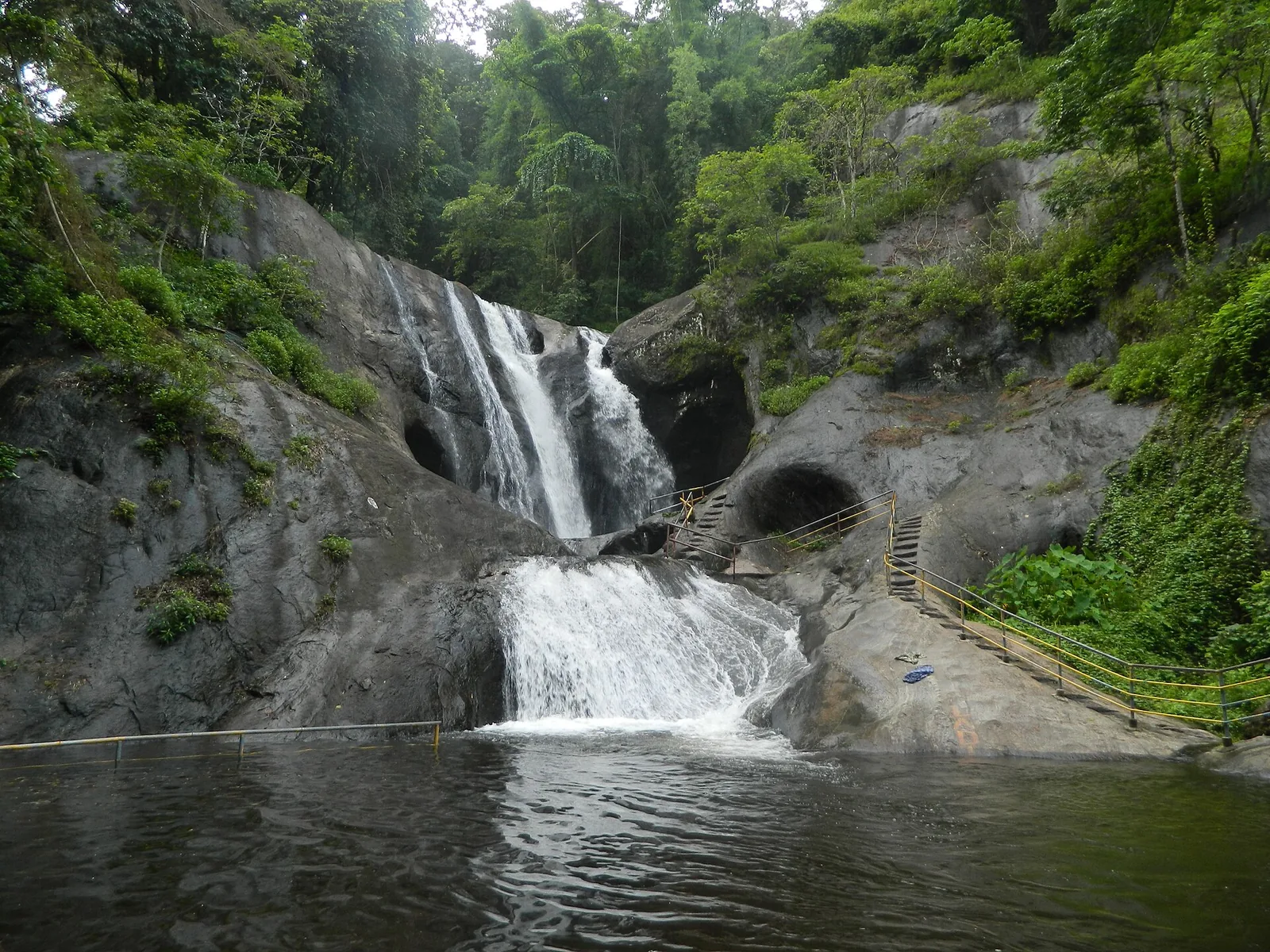
It pairs naturally with Kumbhavurutty Waterfalls, the two-tier fall on the same river run by a village forest-protection committee, which is the other reason to be on this road at all.
And it is genuinely remote in a way very little of Kerala still is — about 85 km from Kollam and 50 km from Punalur, with no through traffic and, outside the Sabarimala season, very few people.
Road km to Kollam; ghat roads and traffic vary — allow extra.
Morning or early evening is usually best; festival days can be powerful but crowded.
Live forecast loads in your browser.
Sun and moon are calculated for this location and shown in IST. Photography windows are the hour around sunrise and sunset; the sunset bearing is degrees clockwise from true north. Moon phase is accurate to about half a day.
Verified hotels, homestays, restaurants, experiences, sights, shops and rentals around Achankovil Sastha Temple — commission-free, with direct contact. Filter by what you need.
Forest Department eco-contact centre for the Kumbhavurutty and Manalar falls, run with the local Vana Samrakshana Samithy; open 8.00 am to 4.30 pm.
Kerala PWD Class II rest house at Achankovil, bookable through the state government's online rest house booking portal.
Headquarters of the Kerala Forest Department's Achencoil Forest Division, the office that controls access to the Achankovil forests.
Kerala State Road Transport Corporation buses link Achankovil with Punalur, the nearest depot, by two different routes.
India Post branch office serving Achankovil village, PIN 689696, in Pathanapuram block of Kollam district.
Book with the place itself. India’s cyber-crime coordination centre warned in April 2025 that convincing copies of hotel and pilgrimage booking sites are being pushed through sponsored search and social ads, taking payment for rooms the property never hears about. Every listing here links to the business’s own contact details and its own Google or Bing profile — we take no commission and sit in nobody’s payment path. If a booking page reached you through an ad, check the address bar against the property’s own site before you pay. Fraud can be reported on cybercrime.gov.in or on 1930.
Find food, accommodation and activities across Achankovil. Browse the guides for places to eat, stay and explore along your route.
One more place around Achankovil worth a day of its own.
5.7 km · ~14 min by auto
A two-tier waterfall on the Achankovil river, with steps cut into the rock beside the cascade, run by a village forest-protection committee under the Achenkovil Forest Division. Published heights range from 70 ft to 250 ft and none is a measurement.
Roampedia is commission-free — own or know a stay, eatery, guide or shop near Achankovil Sastha Temple? List it and it appears here once verified.
Add a nearby businessEntry: Free. Darshan carries no charge, as at Travancore Devaswom Board temples generally; vazhipadu offerings are priced at the counter. No entry fee is published by the Board, by Kerala Tourism or by the Kerala government's Sabarimala portal, and none is charged.
Dress code: Travancore Devaswom Board convention: men remove the upper garment and wear a mundu in the inner area; women in sari, set-mundu or salwar. No shorts. Shoes are left outside the compound.
Permit: None. ⚠ No official source states any entry rule for women — not the Travancore Devaswom Board, not Kerala Tourism, not the Kerala government's Sabarimala page. Travel sites assert women may enter and then contradict each other on an age (one says 10+, another 18+), which suggests none of them knows. The Sabarimala restriction is generally described as not applying here because the deity is a householder rather than a celibate, and photographs of the compound show women and girls of a range of ages worshipping. Ask at the entrance rather than travelling on a number.
If you are travelling by bus or ferry, check the return service with the operator before setting out. Leave time to reach the stop or jetty after your visit.
Ask at the bus stand for the time of the last service back, not the next one. If you miss it, an auto or app cab is the fallback — agree the fare before you get in.
If you need step-free access, contact the site before travelling. Ask about a level entrance, steps along the route, the nearest drop-off point, seating and accessible toilets.
These services are listed within about 1.2 km of Achankovil Sastha Temple. Walking distances follow mapped routes; access and opening hours can change. Other services may be closer but are not included here.
Emergency numbers are verified against official government and state tourism sources. 112 works anywhere in India.
A two-tier waterfall on the Achankovil river, with steps cut into the rock beside the cascade, run by a village forest-protection committee under the Achenkovil Forest Division. Published heights range from 70 ft to 250 ft and none is a measurement.
5.7 km · ~14 min by auto · straight line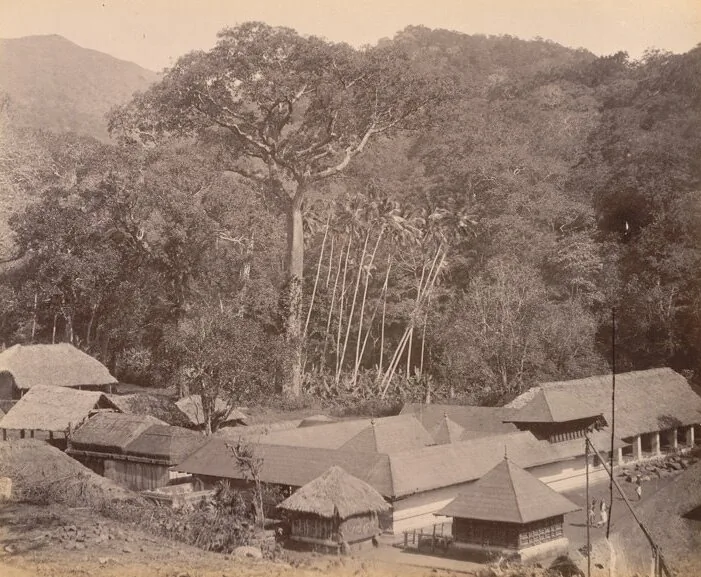
The Sastha temple on the old Kollam–Sengottai road and rail route into Tamil Nadu, where Ayyappa is worshipped married to Pushkaladevi rather than celibate — with a forest village, a railway pass and the Palaruvi road around it.
13.2 km · ~22 min by cab · straight line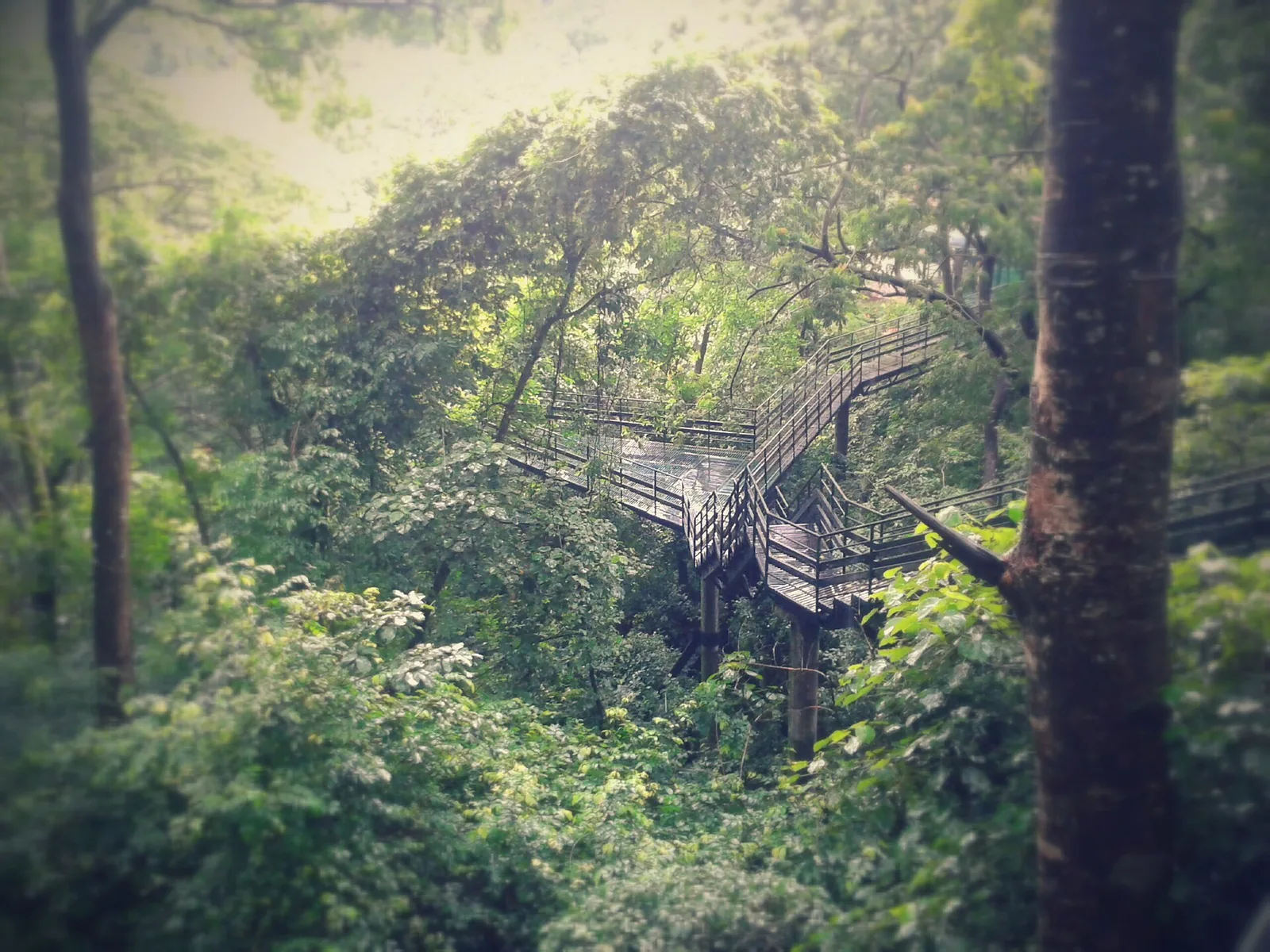
Guided trekking trails at Thenmala, billed as India’s first planned eco-tourism destination, through the Shendurney forests and dam catchment in Kollam.
15.8 km · ~26 min by cab · straight line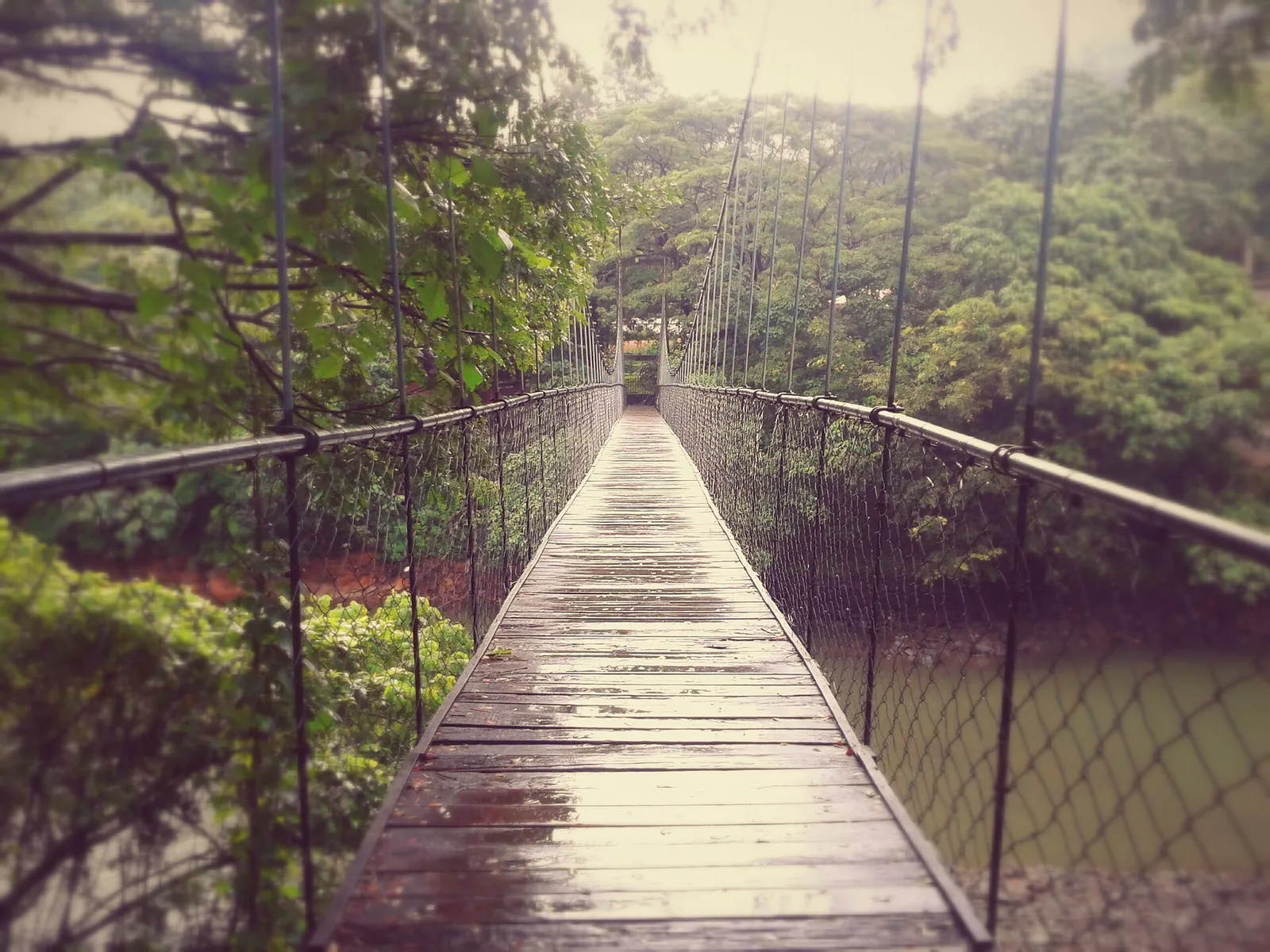
Eco-tourism area with forest walks, dam views and adventure activities.
16.0 km · ~27 min by cab · straight line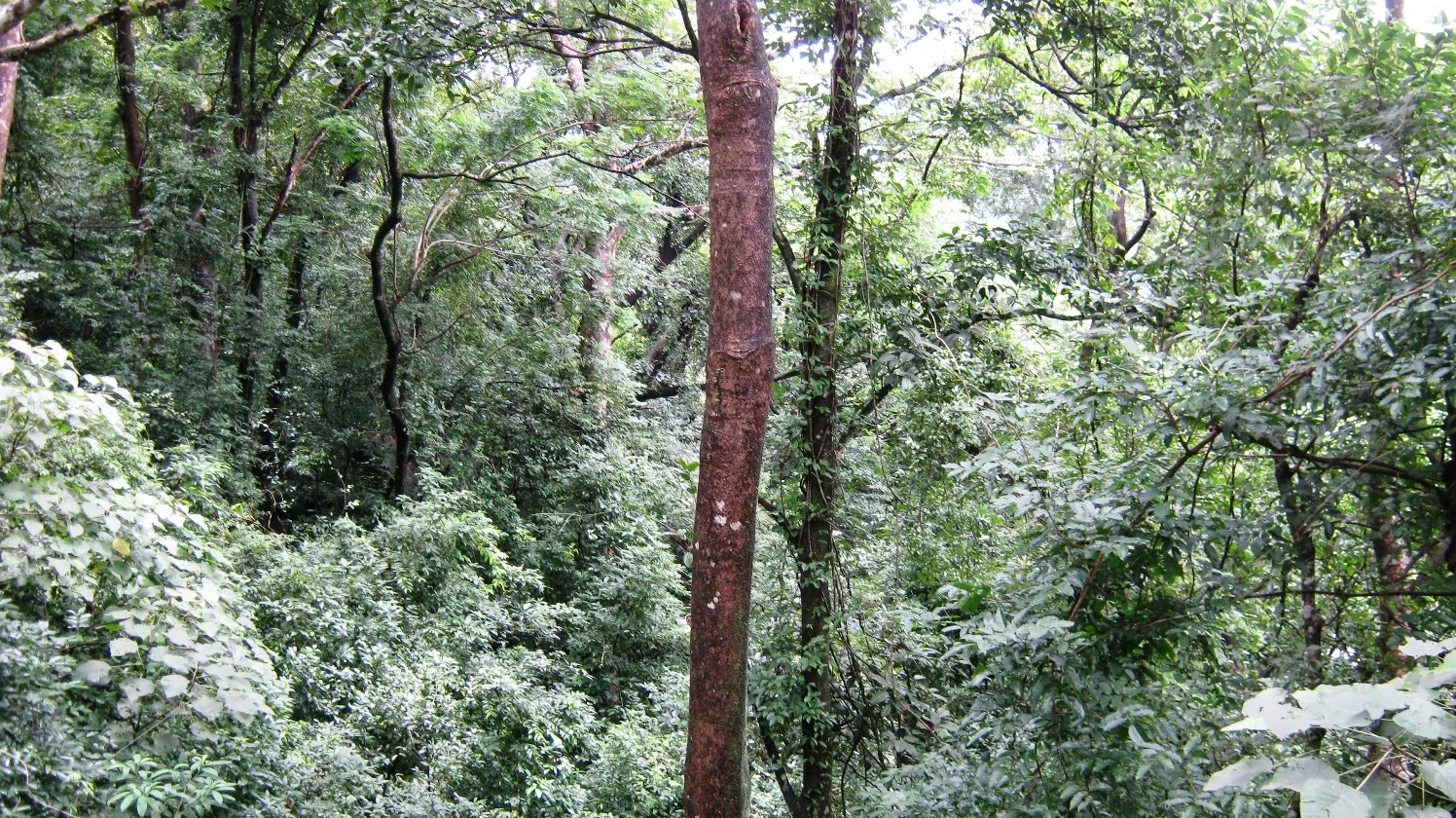
Twenty Forest Department programmes in the Shendurney Wildlife Sanctuary — walks of one to six hours, a dawn birding trail, boat and vehicle safaris and four camps — booked at the wildlife office at Thenmala. Rates are per group and include 18% GST.
16.0 km · ~27 min by cab · straight line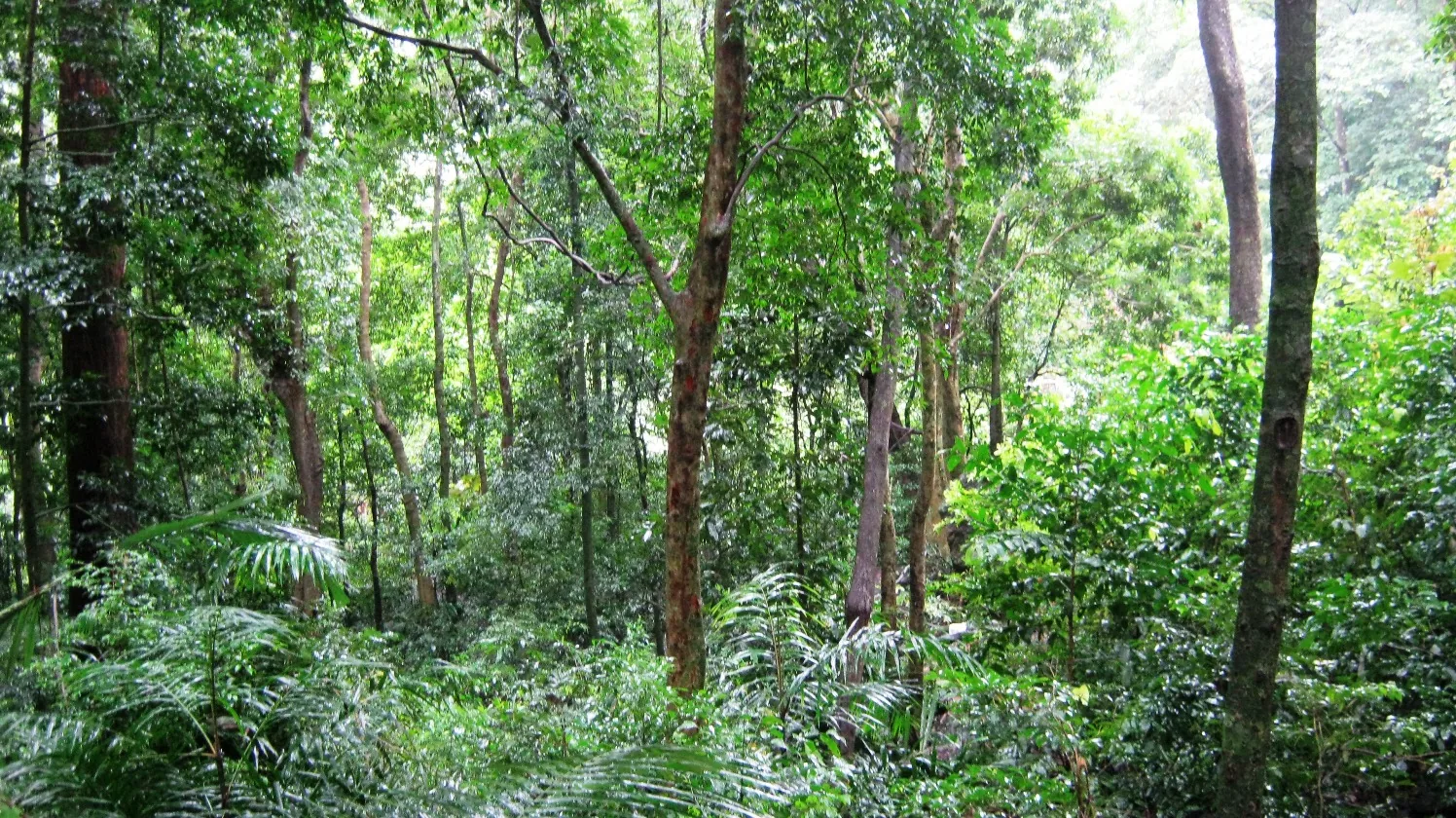
A protected evergreen forest in the Agasthyamalai Biosphere Reserve east of Thenmala, named for the Chenkurinji tree and centred on the Parappar reservoir.
16.0 km · ~27 min by cab · straight line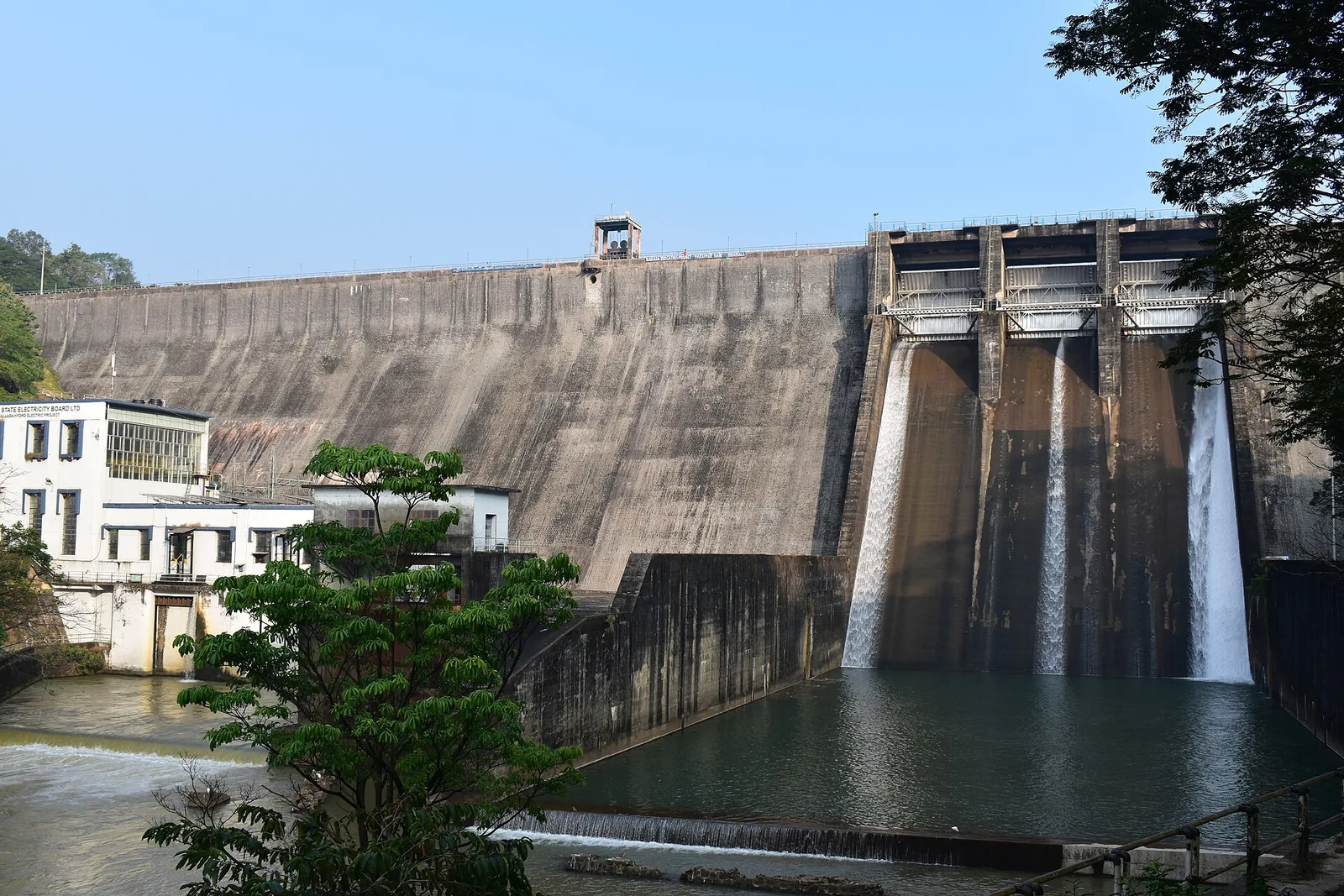
The Parappar dam across the Kallada river at Thenmala, built for irrigation — the reservoir behind it is the water the eco-tourism area is built around, and the catchment upstream is Shendurney sanctuary.
16.3 km · ~27 min by cab · straight line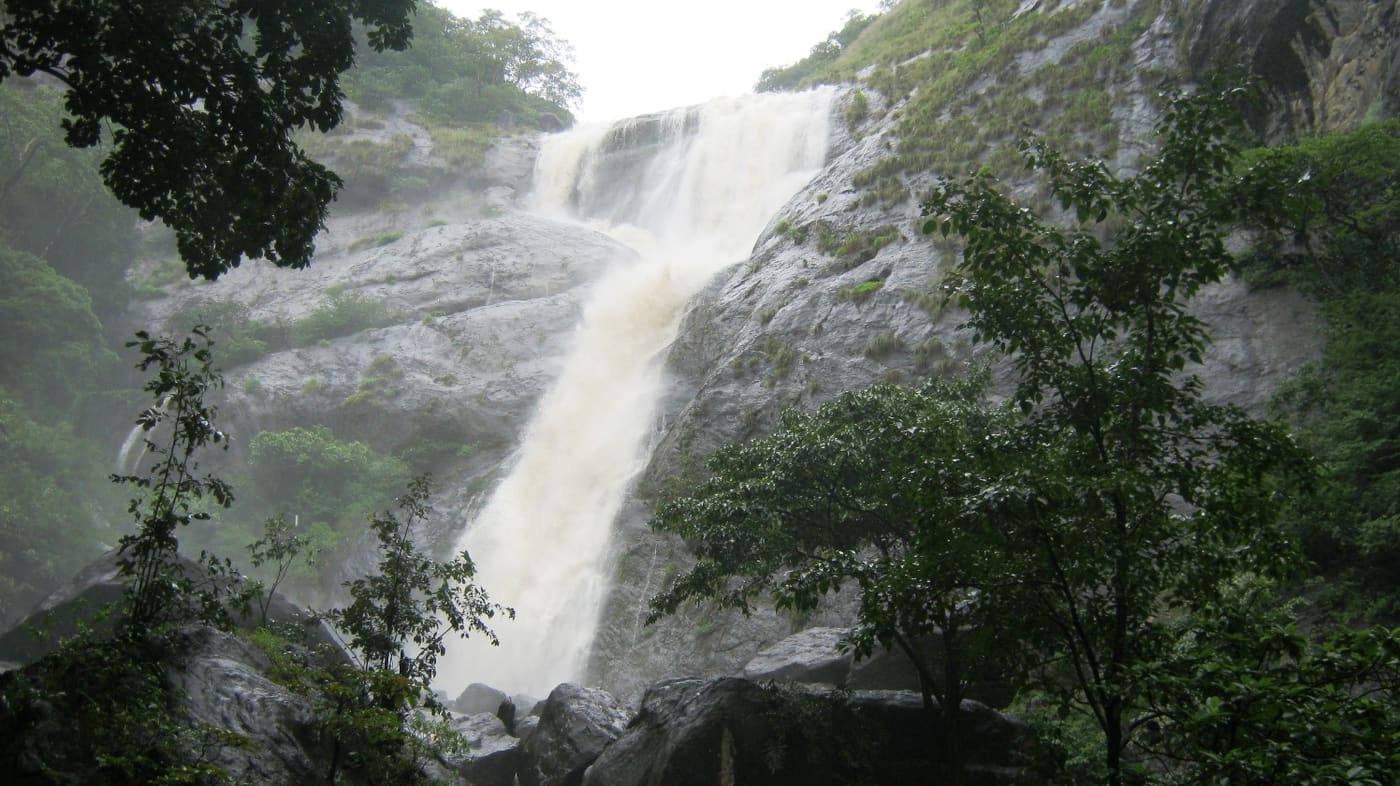
Tall forest waterfall near the Aryankavu side of the Western Ghats, reached by forest shuttle from the highway.
17.4 km · ~29 min by cab · straight line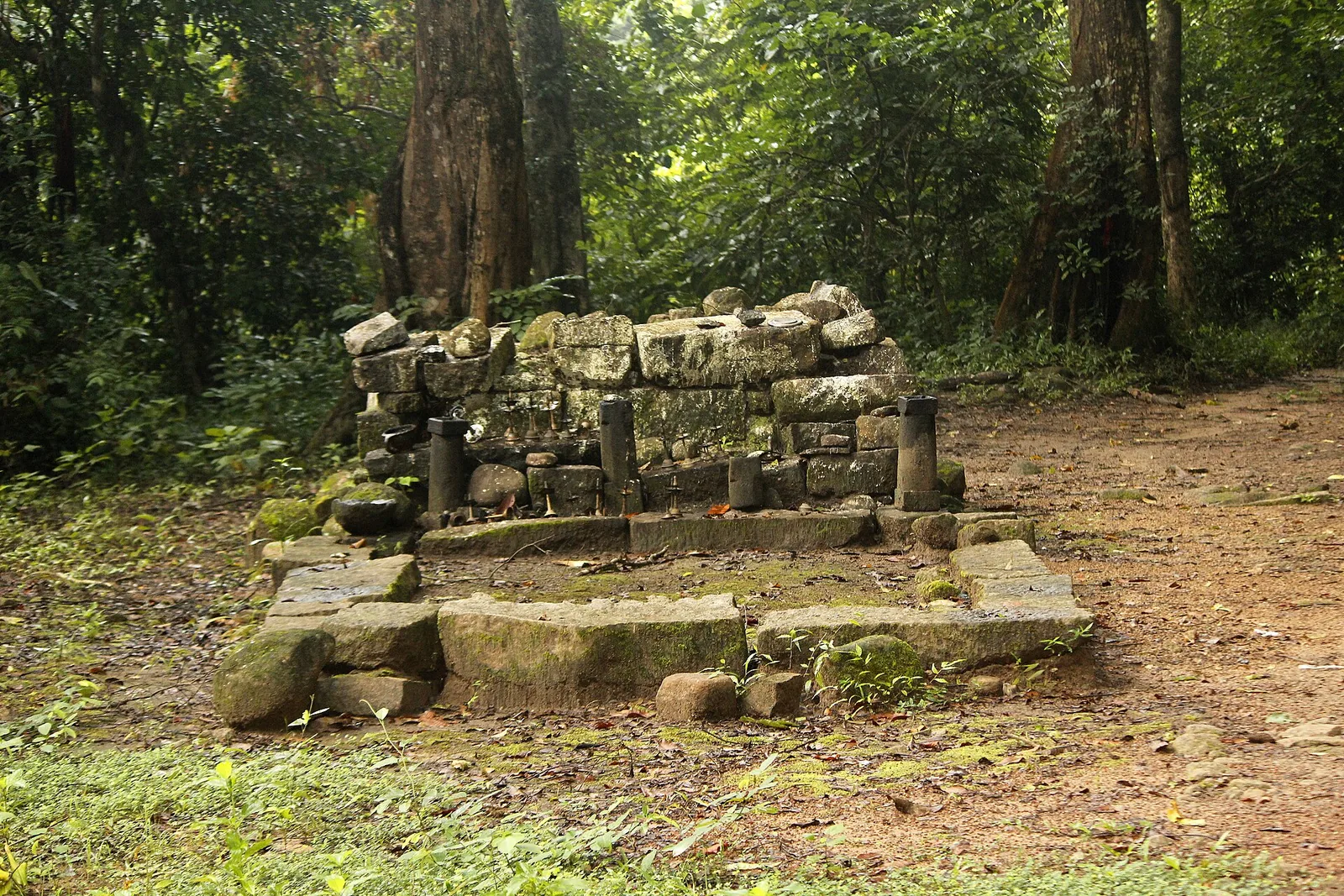
A valley settlement inside Shenduruney Wildlife Sanctuary, reached by 11–15 km of forest road from Aryankavu, with a ticketed Forest Department viewpoint, a departmental safari and guided walks beyond the village.
20.0 km · ~33 min by cab · straight line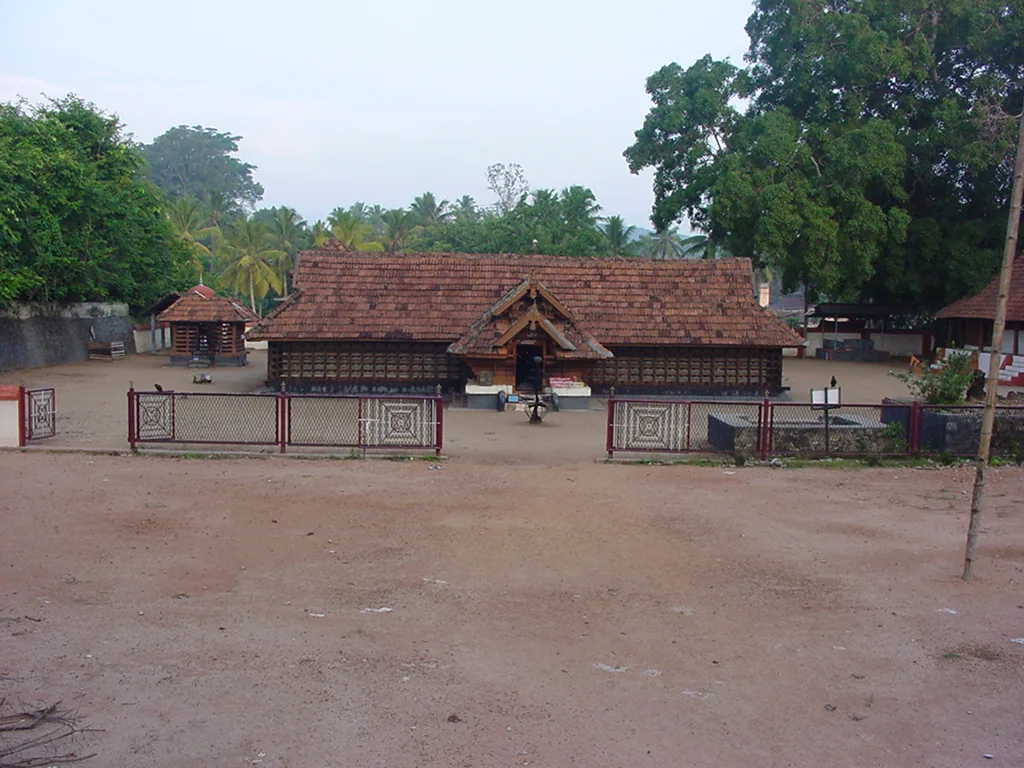
The Sastha temple on the Kollam–Shencottai road where the god is Bala Sastha, the child, and the river alongside is full of protected fish the devotees call Thirumakkal — the sacred children of the lord. Feeding them puffed rice, meenoottu, is the temple’s characteristic offering and fishing is prohibited outright; one of the two species present, Hypselobarbus thomassi, is critically endangered and endemic to the Western Ghats. Named in every published version of the Pancha Sastha. Three 15th-century sculptures from here are in the Napier Museum, Thiruvananthapuram.
22.3 km · ~37 min by cab · straight line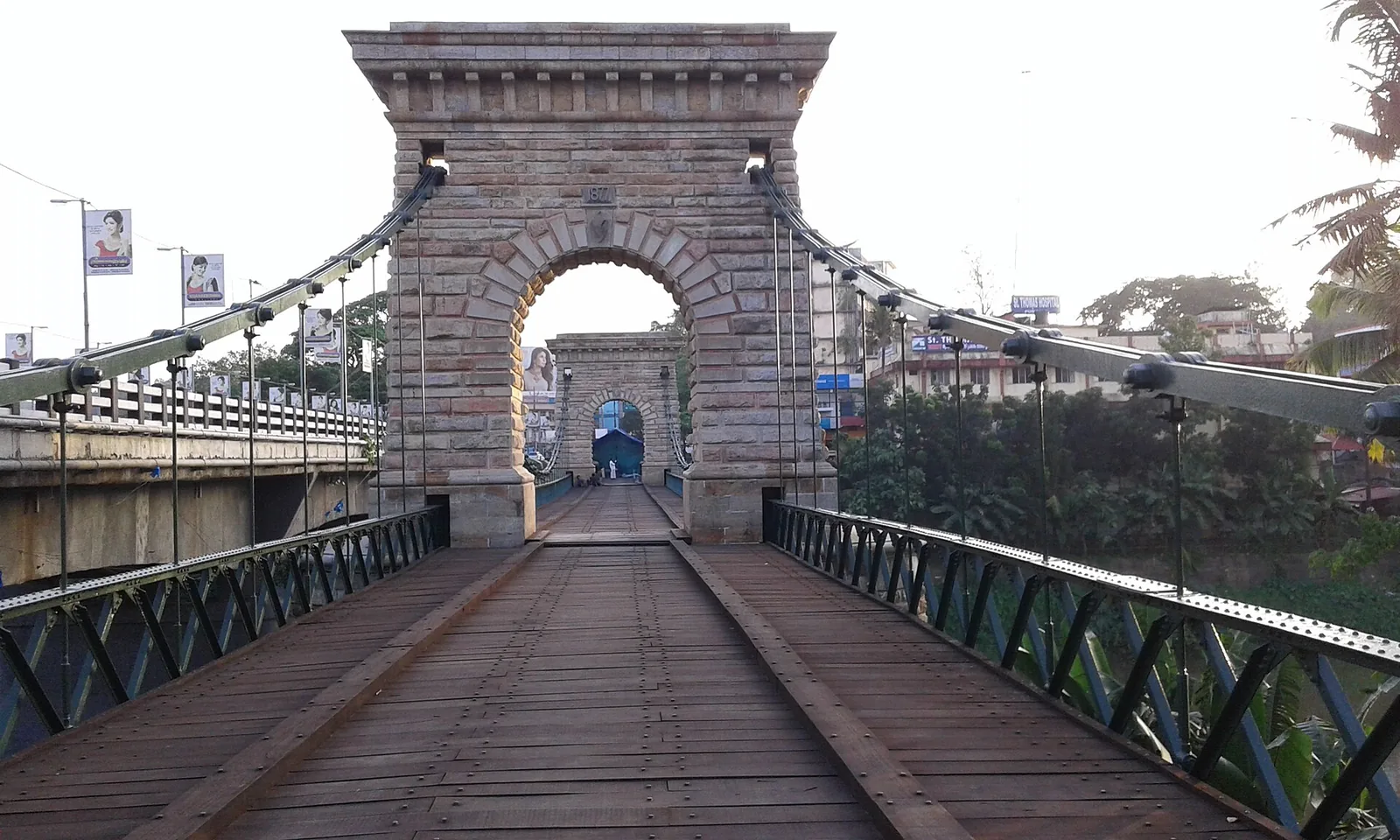
A rare 1877 Travancore-government suspension bridge over the Kallada river at Punalur, in east Kollam on the way to the ghats.
22.8 km · ~38 min by cab · straight lineA community-linked forest and wetland visitor area near Madathara, used for guided birding and nature walks rather than an unrestricted independent forest excursion.
30.2 km · ~50 min by cab · straight lineNearby toilets, pharmacies, ATMs, seating and vets are community-mapped and may be incomplete or out of date. Map data © OpenStreetMap contributors | Walking times © openrouteservice.org by HeiGIT
The Sastha here is regarded as Maha Vaidya, the great physician. The Kerala government's Sabarimala portal states that the idol's hand always holds chandanam (sandalwood paste) and theertham (holy water), and that these are considered to have the property of curing poisonous snakebites. Someone who has been bitten may ring the temple bell at any hour; the shrine opens at night if necessary after the Athazha Puja, and the sandalwood is given as prasadam over a stay of three or five days depending on severity. ⚠ This is a description of a living religious practice, not medical advice — snakebite is a medical emergency and antivenom is its treatment.
Published sources disagree. The Kerala government's Sabarimala page says the left hand; the English Wikipedia article says the right palm. No accessible Travancore Devaswom Board statement settles the discrepancy.
By the stage of life the god is in. At Sabarimala he is Naishtika Brahmachari, the eternal celibate. At Aryankavu he is the young bridegroom with Pushkaladevi, whose wedding is re-enacted each year by the Sourashtra community. At Achankovil he is in the grihastha ashrama — the settled householder, facing east, with two consorts, Poorna and Pushkala, installed on either side of him.
It is in every list, which is the honest formulation — because no two lists of the five agree. The Travancore Devaswom Board's circuit is Pandalam, Kulathupuzha, Aryankavu, Achankovil and Erumeli; devotional accounts give Kulathupuzha, Aryankavu, Achankovil, Sabarimala and Kanthamala. Only Kulathupuzha, Aryankavu and Achankovil appear in all of them.
No official source states a rule either way. The Travancore Devaswom Board, the Kerala government's Sabarimala page and Kerala Tourism are all silent on it; the travel sites that give an age contradict each other (one says 10 and above, another 18 and above), which suggests none of them knows. What is observable is that photographs of the compound show women and girls of a range of ages present and worshipping. The Sabarimala restriction is generally described as not applying here because the god is a householder rather than a celibate — but ask at the entrance rather than relying on a number.
No source we trust says so. Several aggregator pages mention women climbing “the eighteen sacred steps” here, but the pathinettam padi is Sabarimala's defining ritual architecture, and neither Kerala Tourism, nor the Kerala government's Sabarimala portal, nor the English Wikipedia article records one at Achankovil. There is a broad flight of steps up to the sanctum; that is a staircase, not a pathinettam padi.
The main festival runs from the first to the tenth day of the Malayalam month of Dhanu, which falls across December and January — that comes from the Kerala government's own page, which is unusual for this temple. A Revathi Puja falls in Makaram (January–February), and the temple also holds the Therottam chariot festival and the Karuppanoottu and Karuppanthullal. Malayalam-calendar dates shift against the Gregorian year; confirm locally before travelling for one.
None are published. We checked the Travancore Devaswom Board, Kerala Tourism and the Kerala government's Sabarimala portal, and none of the three gives daily timings for Achankovil, so we will not invent any. The Kerala convention — as a convention, not a fact — is roughly dawn to mid-morning and late afternoon into the evening, with the sanctum closed through the middle of the day. Go in the morning.
It is about 50 km from Punalur and 85 km from Kollam, on the forest road that climbs towards the Chenkottai gap into Tamil Nadu. There is no railhead near it; Punalur is the nearest useful town. Through the Sabarimala season, roughly November to January, this road carries very heavy pilgrim traffic.
Morning or early evening is usually best; festival days can be powerful but crowded.
Entry: Free. Darshan carries no charge, as at Travancore Devaswom Board temples generally; vazhipadu offerings are priced at the counter. No entry fee is published by the Board, by Kerala Tourism or by the Kerala government's Sabarimala portal, and none is charged. Timings: 🛑 UNPUBLISHED BY EVERY AUTHORITY, and we will not invent them. We checked the Travancore Devaswom Board, Kerala Tourism and the Kerala government's Sabarimala page: the last gives the festival month and says nothing about the daily schedule. The Kerala convention — stated as a convention, not as fact — is roughly dawn to mid-morning and again from late afternoon into the evening, with the sanctum shut through the middle of the day, and the photographs of this temple show exactly that closed door in the early afternoon. Go in the morning. 🔑 The one documented exception is the reason the temple is famous: for a snakebite the bell may be rung at any hour and the shrine will open at night, after the Athazha Puja.
Base yourself in Achankovil or a nearby town in Kollam, then confirm the last-mile route locally before leaving. Check temple entry customs, dress rules and festival crowd conditions before arrival. If the visit depends on forest, temple, boat, ferry, weather or seasonal access, check the official/local rule on the day before travel.
45 minutes to 2 hours, longer during festival or queue periods.
Nearby you can pair Kumbhavurutty Waterfalls (5.7 km), Aryankavu (13.2 km), Thenmala trekking (15.8 km), Thenmala (16.0 km).
Use official counters for offerings/tickets where applicable. Keep footwear and valuables secure in crowded areas.
Written about Achankovil Sastha Temple itself — its history, its legends and the arguments about them.
Route-level itineraries and practical guides for the rest of Kerala.
Photographs: Manukrishnan80 (CC BY-SA 3.0), Jaseem Hamza (CC BY 3.0), Fotokannan (CC BY-SA 3.0). Wikimedia Commons.