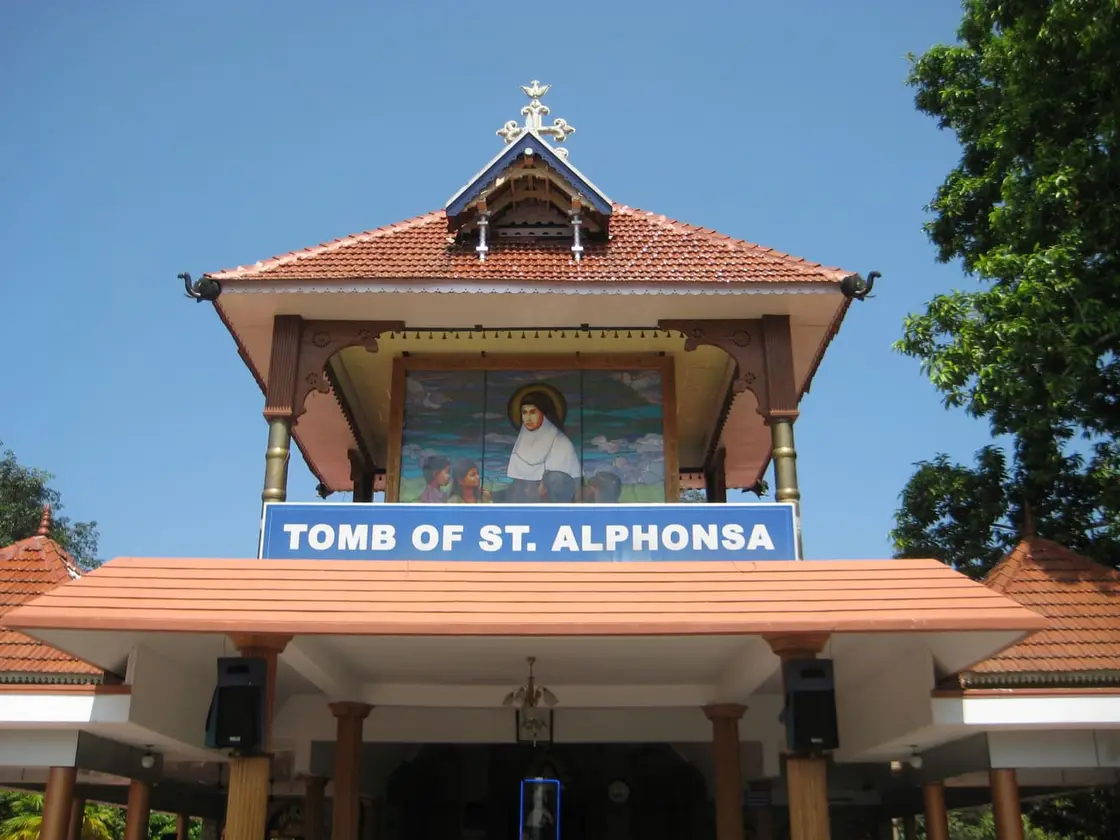
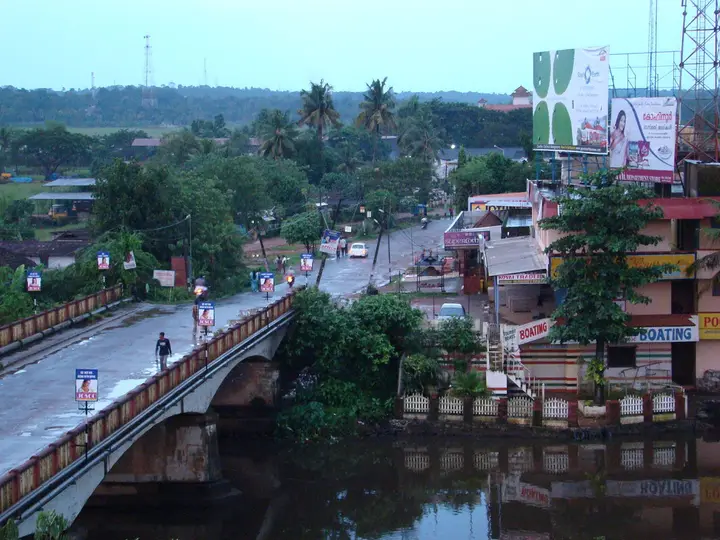
A quiet town on the banks of the Meenachil river in Kottayam district, Bharananganam is one of Kerala’s most beloved Christian pilgrimage centres — the place where St Alphonsa, India’s first canonised woman saint, lived, taught, suffered and was laid to rest at the ancient St Mary’s Forane Church.
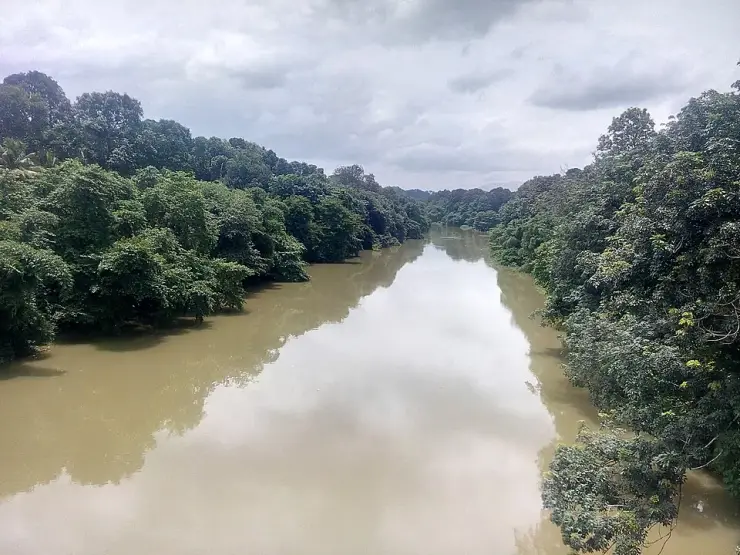
Set amid the rubber-green hills of eastern Kottayam, where the Meenachil river winds down from the Western Ghats towards Pala, Bharananganam has the unhurried feel of a Kerala hill town — until you reach the courtyard of St Mary’s Forane Church, where coaches, candle-sellers and streams of pilgrims tell you this is somewhere special. For this small town is the shrine of St Alphonsa Muttathupadathu, the first woman of Indian origin to be raised to the altars of the Catholic Church, and one of the great pilgrimage magnets of Christian Kerala.
The parish itself is very old. Local tradition and church records place the founding of St Mary’s at 1004 AD, making it one of the most ancient Christian communities in the Kottayam region and a reminder that Christianity in Kerala reaches back far earlier than the colonial centuries — to the tradition of St Thomas the Apostle and the Syro-Malabar Church that grew from it. Bharananganam is also known locally as Anakkallu, and the church belongs to the Syro-Malabar Catholic Church under the Diocese of Palai.
It was to the Franciscan Clarist convent beside this church that a frail young woman came in 1927. Born Anna Muttathupadathu — Annakutty to her family — she took the religious name Alphonsa of the Immaculate Conception, taught for a time at the local school, and spent her short adult life here in prayer and near-constant illness. She died in 1946, aged only thirty-five, and was buried in the church. Almost at once, ordinary people began to visit her grave, and reports of answered prayers and healings spread through the Meenachil valley and beyond.
Over the following decades that quiet devotion grew into an international movement. Pope John Paul II beatified Alphonsa at Kottayam in 1986, and Pope Benedict XVI canonised her at St Peter’s Square in the Vatican on 12 October 2008. With canonisation, Bharananganam changed from a much-loved local shrine into a place known across India and among the Kerala Christian diaspora worldwide, and a new St Alphonsa Church was built beside the old one to receive the crowds.
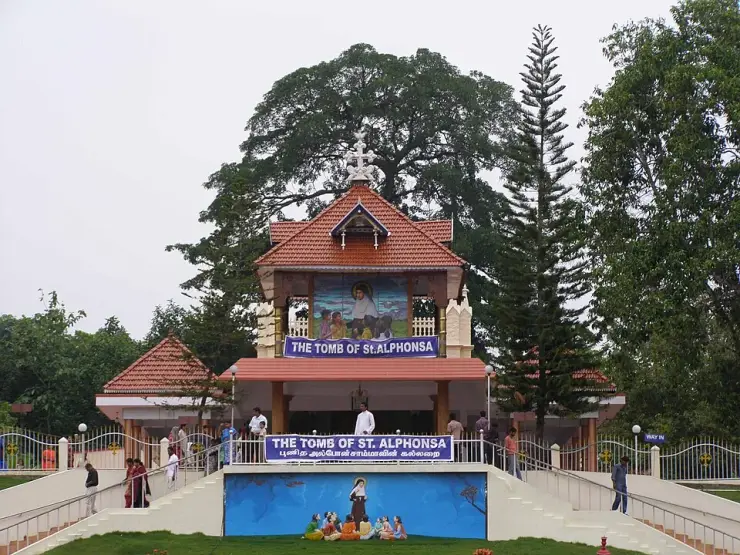
Today pilgrims of every background — Catholic, other Christian denominations, and many Hindus and Muslims who revere the saint — come to kneel at the white marble tomb, light candles, and walk the small museum that preserves her simple belongings. The atmosphere is devotional rather than grand: a modest hilltop church, a tree-shaded courtyard, and the sense of a life lived in obscurity and suffering that somehow touched millions.
The town reaches its emotional peak each July, around the anniversary of the saint’s death on 28 July, when the nine-day feast fills the streets with candle-lit processions, novena services and lamplight. For the rest of the year Bharananganam remains a calm, green, deeply Catholic corner of Kerala — an easy and moving addition to any journey through Kottayam, Pala and the highlands beyond.
Legend & myth
The devotion at Bharananganam is built on the many healings and favours that pilgrims believe they have received through St Alphonsa’s intercession. It is widely reported that hundreds of cures have been attributed to her, a striking number of them involving the straightening of clubbed feet in young children — a poignant echo, believers note, of the saint’s own crippled and scarred feet.
Two cases are especially remembered because they were examined during her path to sainthood. Devotees relate that the clubfoot of a young boy was reportedly healed through prayers to Alphonsa, and the case of a Kerala child, said to have been cured of a club foot in 1999, was accepted by the Vatican as the miracle that opened the way to her canonisation. The Church presents these as believed and investigated intercessions rather than guaranteed outcomes, and pilgrims come in that same spirit of hope and faith.
More about Bharananganam
History
Anna Muttathupadathu was born on 19 August 1910 at Kudamalur, in what was then the princely state of Travancore, and was baptised days later. She lost her mother in infancy and was raised largely by relatives in the Murickan family. As a young teenager she is said to have deliberately burned her feet in a pit of chaff in 1923 — an act traditionally understood as a way to escape an arranged marriage and preserve her wish for religious life — leaving her permanently injured.
In 1927 she entered the Franciscan Clarist convent at Bharananganam and, taking the veil, received the name Alphonsa of the Immaculate Conception. She made her novitiate here, took her first vows in 1931 and her permanent vows in 1936, and taught for periods at the local school. Her adult years were marked by an almost unbroken succession of serious illnesses — pneumonia, a traumatic intruder incident that left lasting shock, and finally severe gastric and liver disease — which she is remembered for bearing with remarkable patience and prayerfulness. She died at Bharananganam on 28 July 1946, aged thirty-five, and was buried in St Mary’s Church.
Devotion to her grew steadily after her death, and the formal Church process followed: she was declared a Servant of God in 1953 and recognised as Venerable in 1985. On 8 February 1986 Pope John Paul II beatified her at Kottayam, together with Blessed Kuriakose Elias Chavara — the first time such a ceremony had taken place on Indian soil. The podium from which the Pope spoke was preserved as a memorial.
The final step came under Pope Benedict XVI, who canonised Alphonsa at St Peter’s Square in the Vatican on 12 October 2008. She became the first woman of Indian origin, and the first saint of the Syro-Malabar Catholic Church, to be canonised. Her feast is kept on 28 July, the anniversary of her death.
The church that holds her tomb, St Mary’s Forane Church, is itself far older than the saint, its origins traditionally dated to 1004 AD, and it serves today as a forane (regional) church overseeing several surrounding parishes. To accommodate the pilgrims that canonisation brought, a separate St Alphonsa Church was built beside it in 2008, and an on-site museum now preserves hundreds of exhibits connected with her life, turning this small Meenachil-river town into a place of national religious importance.
Why visit
To pray at, or simply witness, the tomb of St Alphonsa — India’s first canonised woman saint — in the very town where she lived, taught and died, one of the most significant Christian shrines in the country.
For a moving glimpse of Kerala’s ancient Christianity: St Mary’s Forane Church traces its origins to 1004 AD, part of the deep Syro-Malabar heritage that predates European contact by centuries.
For the powerful atmosphere of devotion, especially the nine-day feast around 28 July, when candle-lit processions, novenas and lamplight fill the town and pilgrims arrive from across India and abroad.
To visit the Alphonsa Museum, which preserves the saint’s simple belongings and hundreds of exhibits tracing her short, suffering, prayer-filled life.
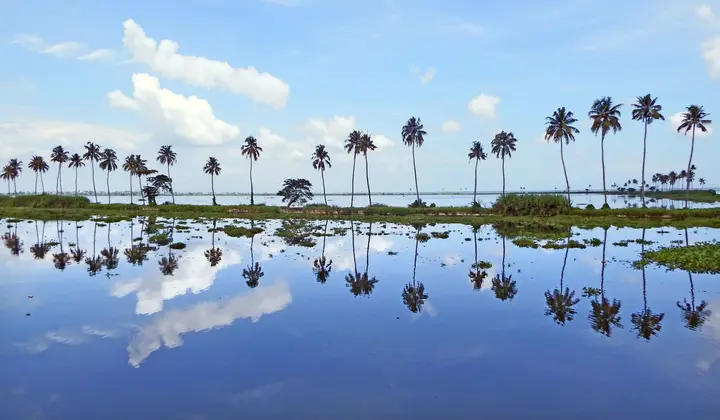
For the setting itself — a green, tranquil town on the Meenachil river in the rubber-planted hills of eastern Kottayam, close to Pala and an easy detour on any Kottayam or highland itinerary.
As a place open and welcoming to all: alongside Catholic pilgrims, many people of other faiths come here in hope and reverence, making it a quietly inclusive spot to pause and reflect.