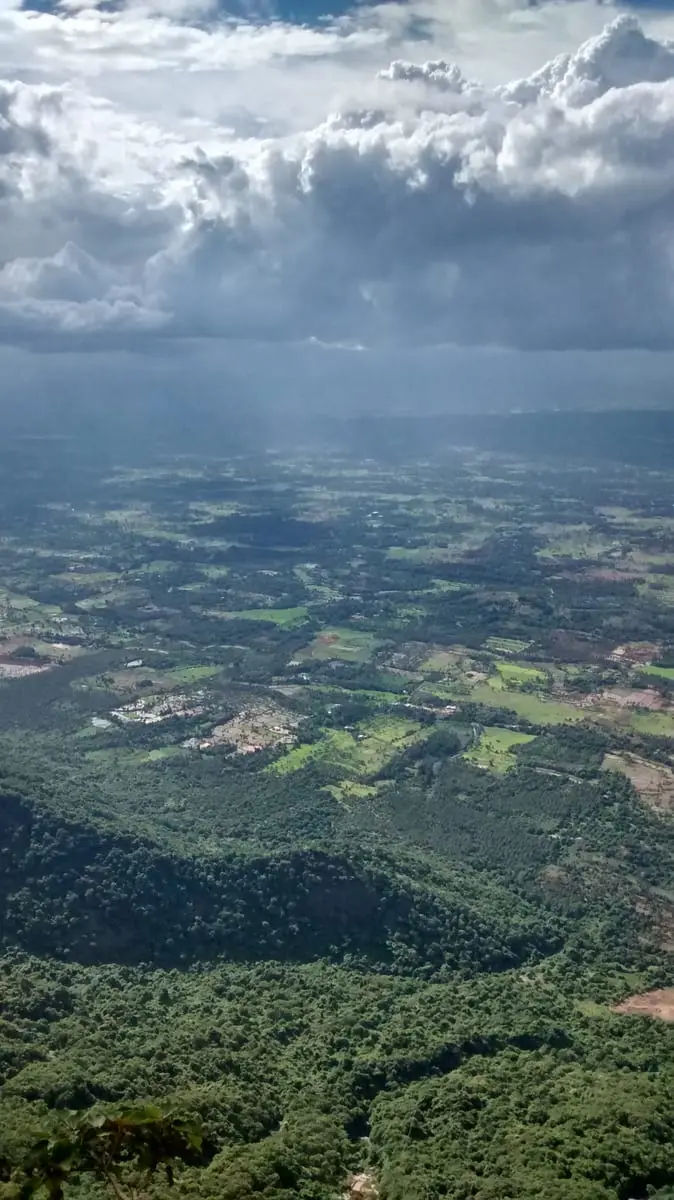
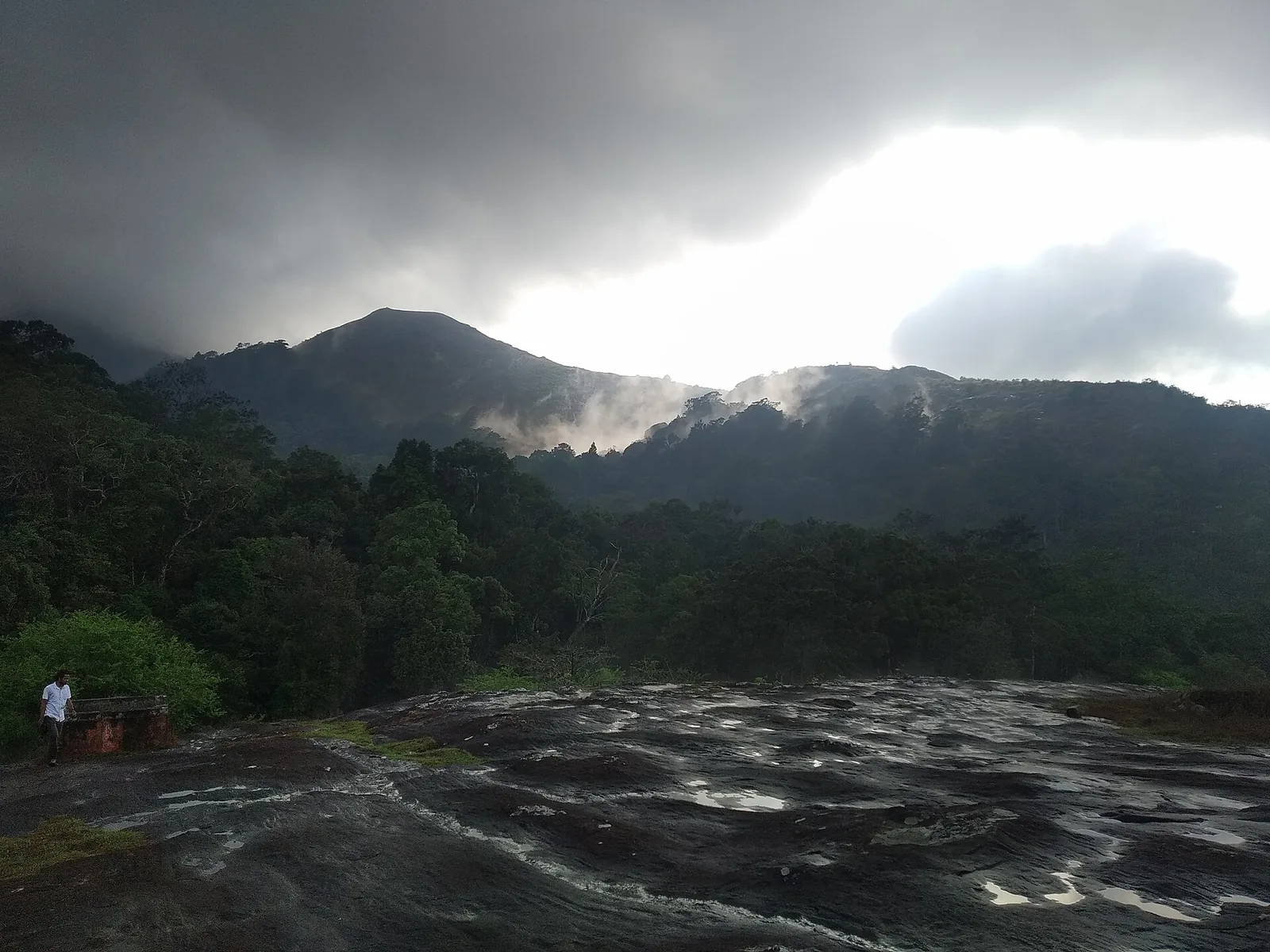
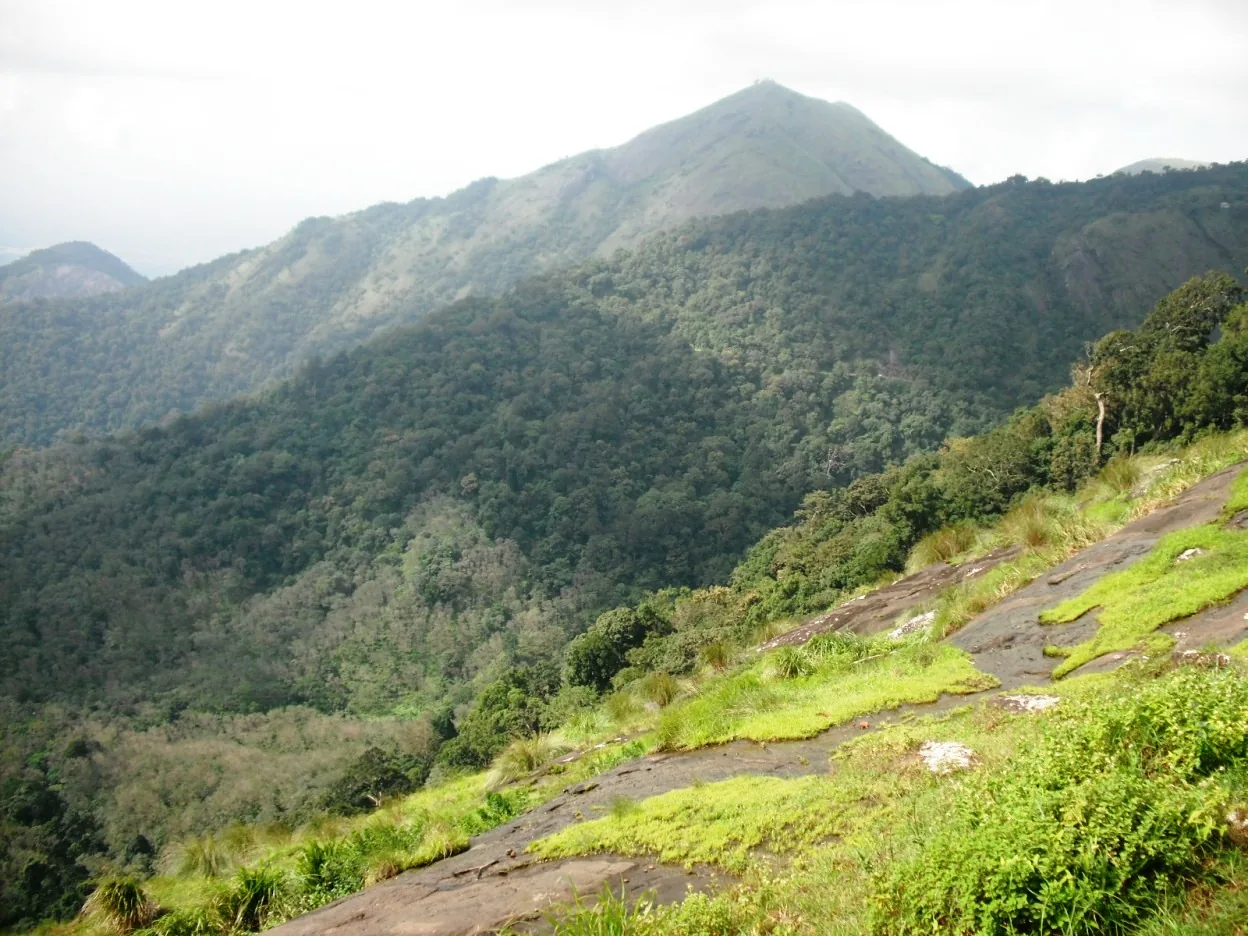
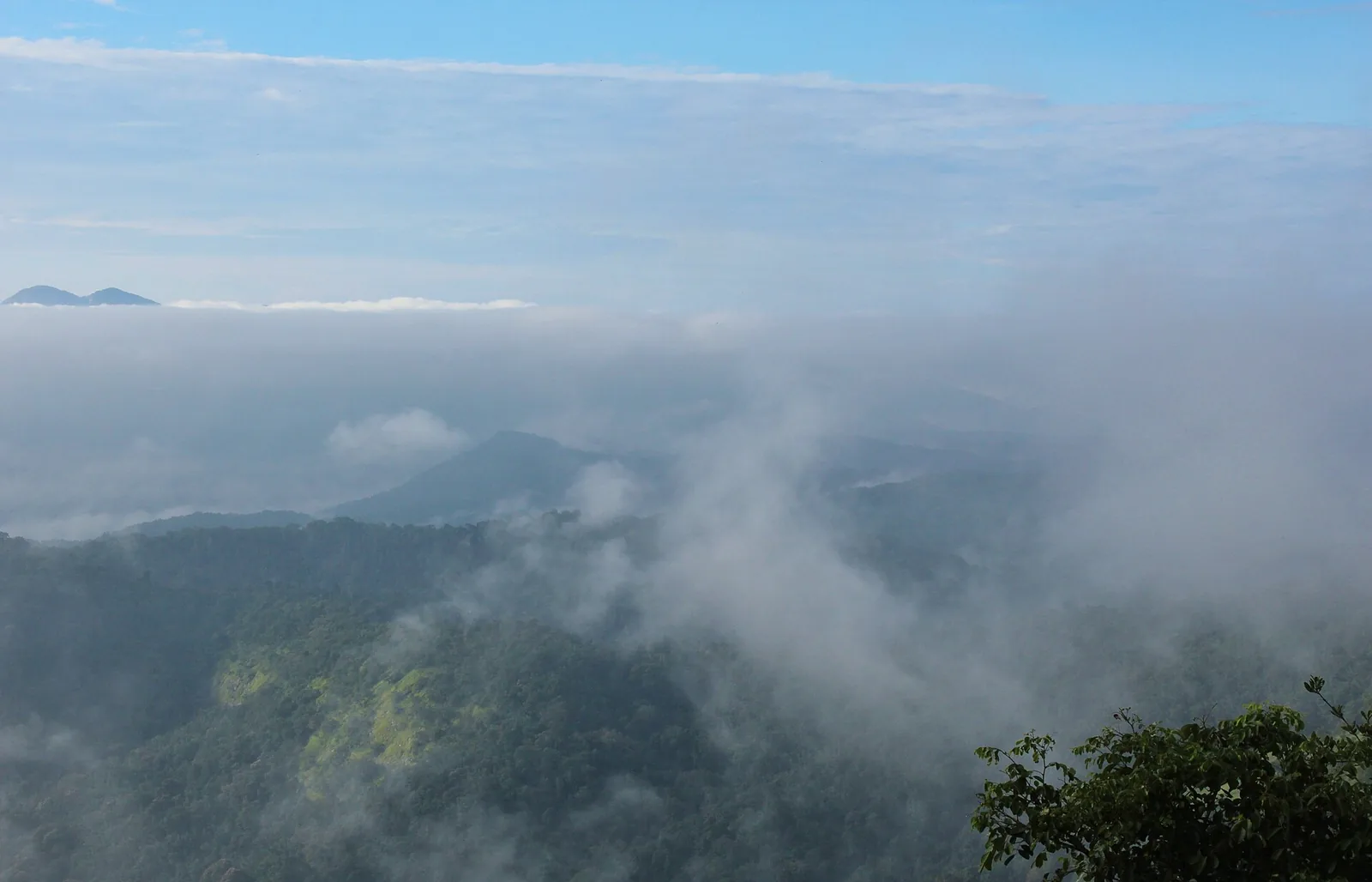
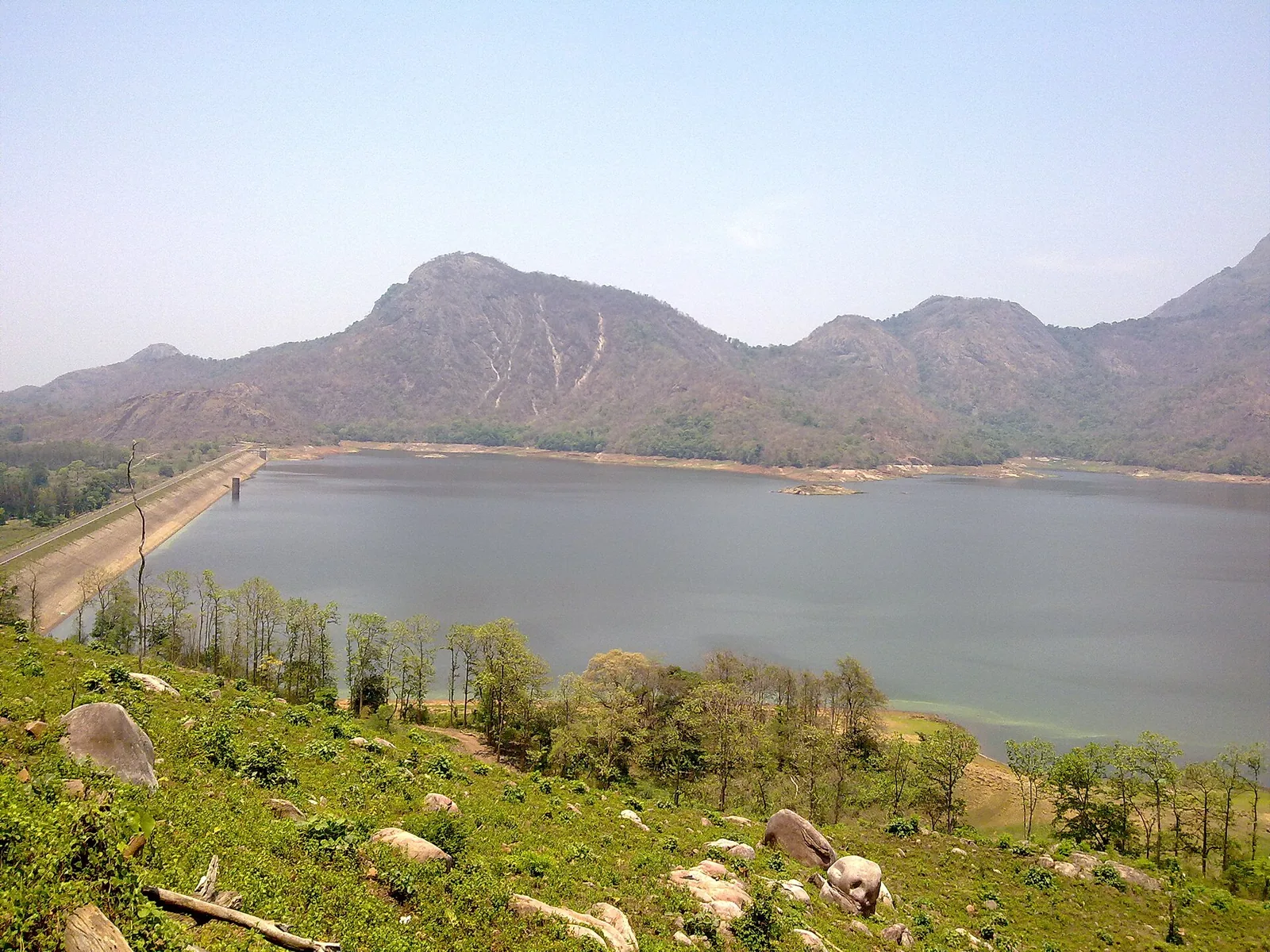
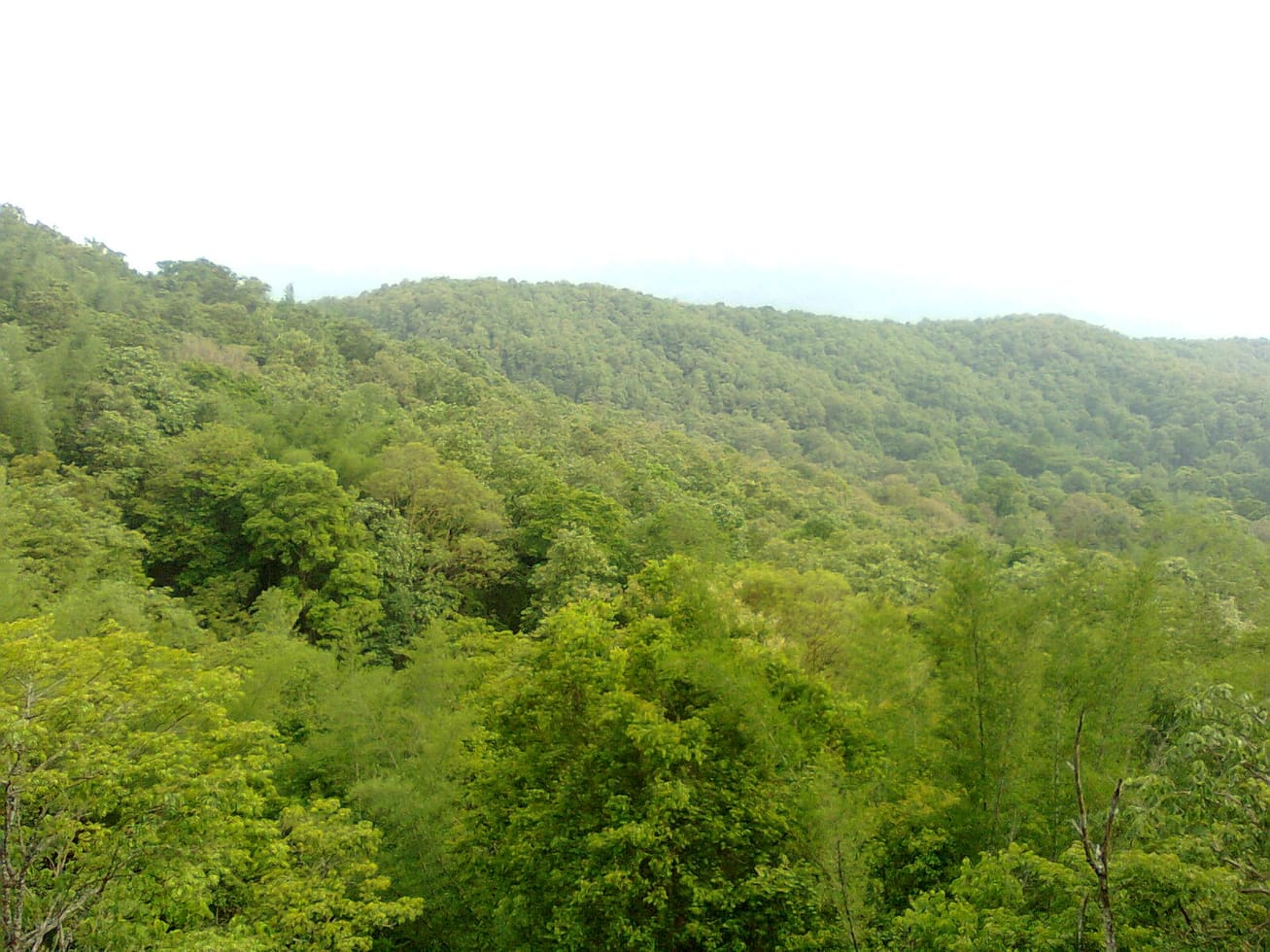
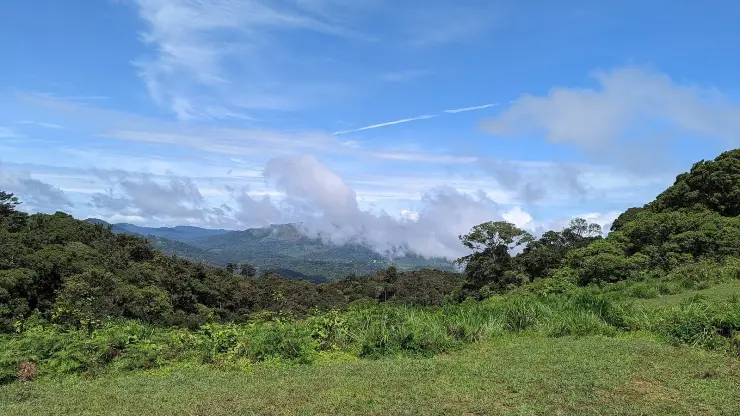
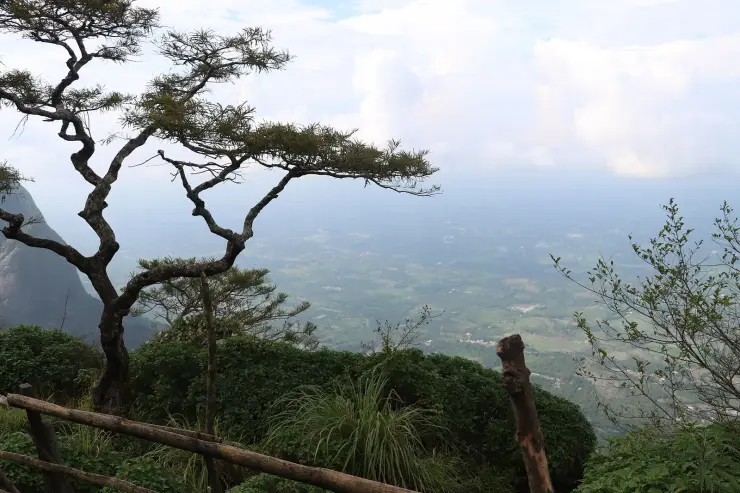
This is where the Nelliyampathy plateau stops. You drive out along a tea estate road, park, walk a few dozen metres, and the ground simply ends: a thousand metres of air, and then the Palakkad plain running flat and hazy to the horizon with the Kollengode paddy country laid out at the bottom of it. Almost everything written about Seetharkundu describes it as a trek, and from up here it is nothing of the kind — it is a place you drive to and stand at, and the honest walk to it starts on the plain below and climbs the whole escarpment.
The story of Seetharkundu viewpoint
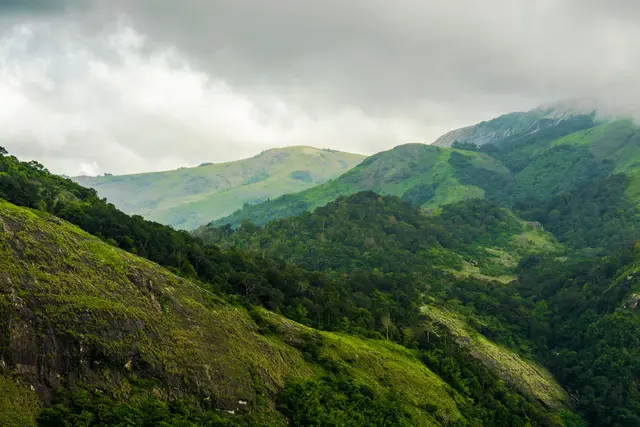
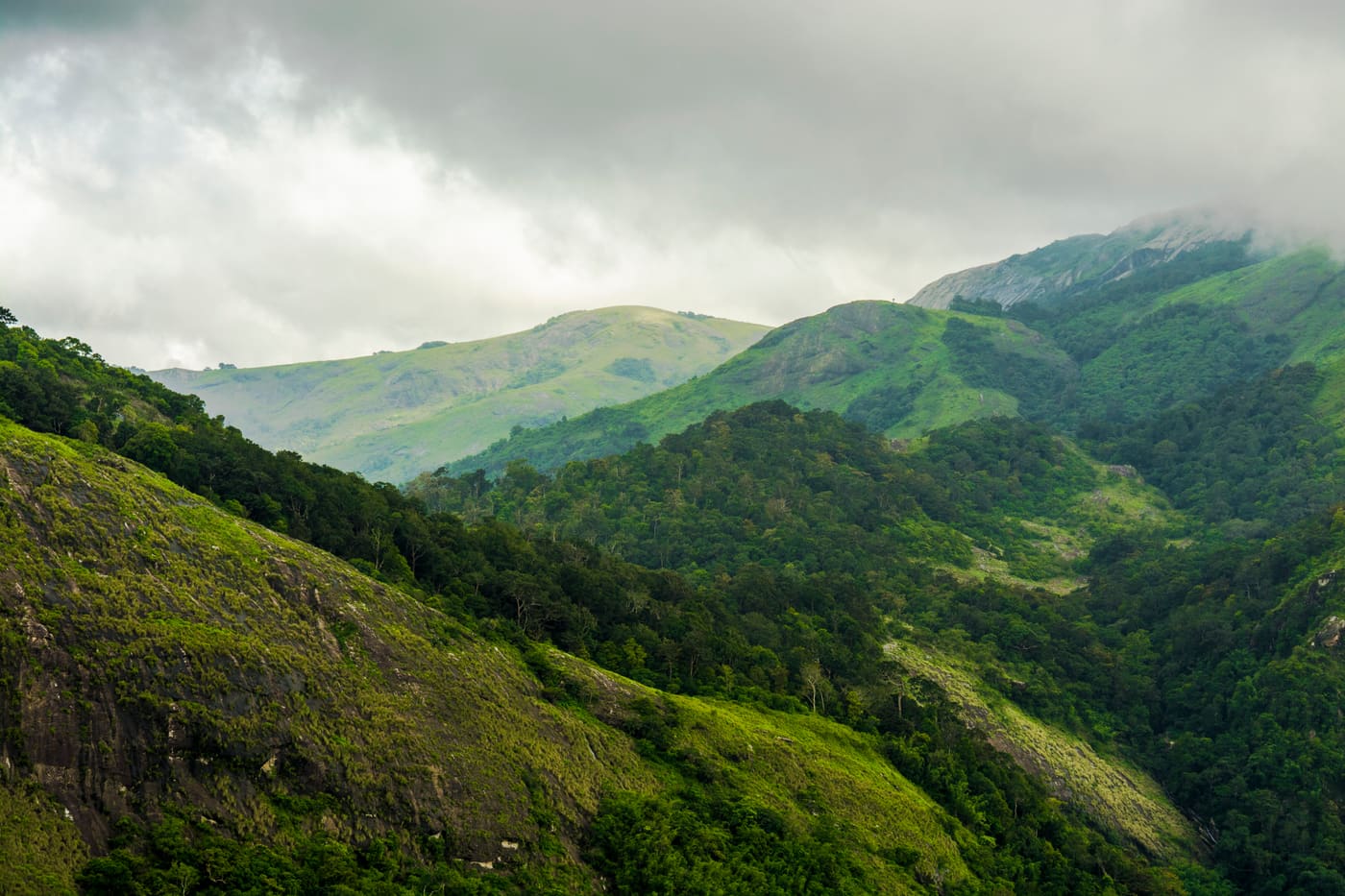
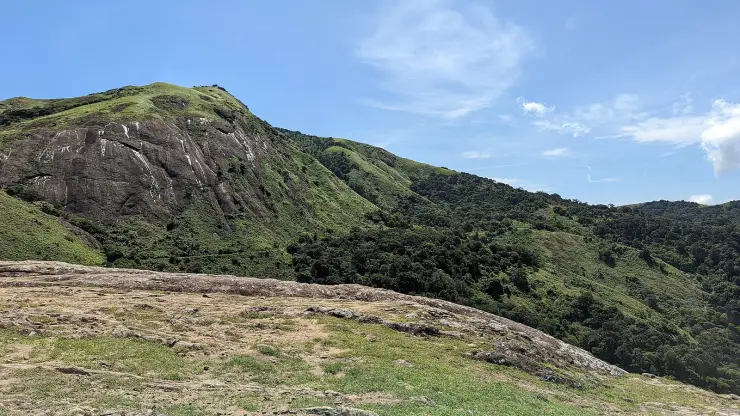
The edge itself is the attraction and it is worth understanding what you are looking at. The Nelliyampathy range is the wall between the highland plantations and the Palakkad Gap, and Seetharkundu is one of the points where that wall is sheer enough to see the entire drop at once. On a clear winter morning the plain is legible: fields, tanks, the roofs of Kollengode, the Palakkad hills across the gap. By eleven the cloud is usually coming up the face at you, and by mid-afternoon a great many visitors have stood here and seen nothing but white.
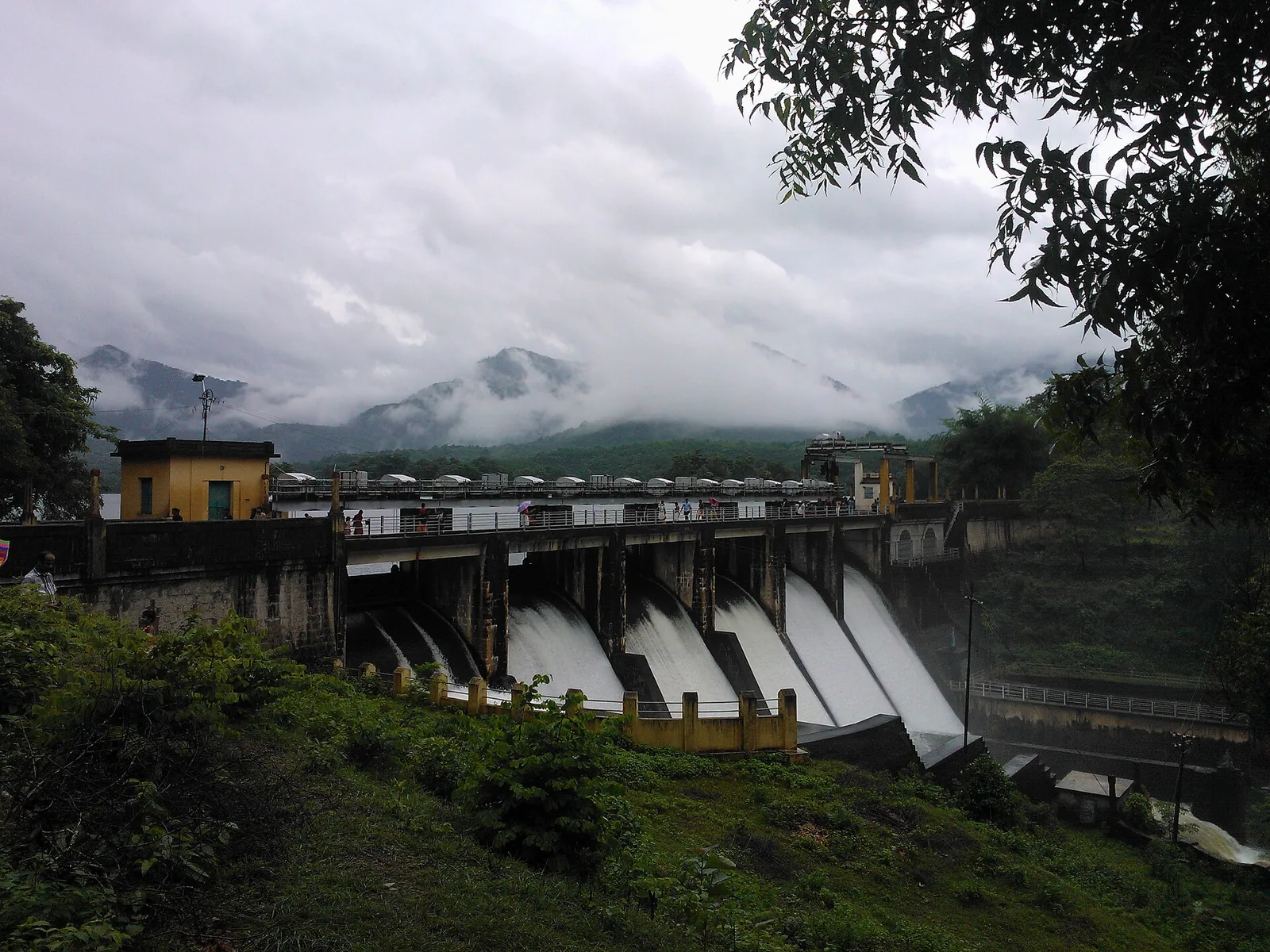
Below the lip and to one side there is a waterfall that runs hard in and after the rains and shrinks to a stain on the rock by February. It is seen from above rather than approached, which is the pattern for most water on this range.
The car park is part of the experience whether you want it to be or not. Bonnet macaques work it with complete confidence — sitting on car roofs, taking biscuits out of hands, going through an open window if you leave one. They are habituated, they are quick, and the sensible thing is to shut the vehicle and carry nothing edible in an open hand.
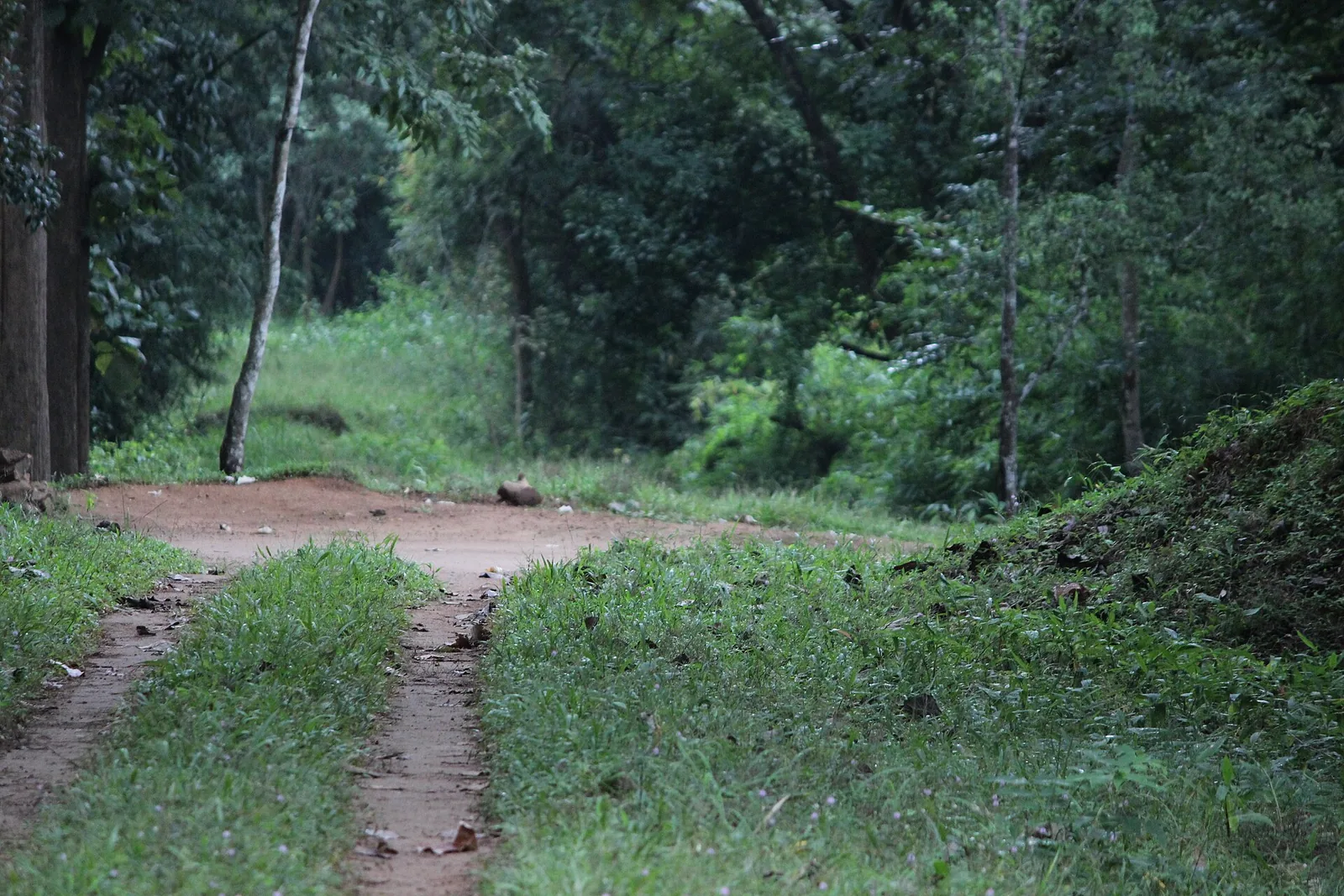
The mapped picture here is odder than the view suggests. Two viewpoints are recorded within a few hundred metres of each other, numbered one and two, and the one everybody means is the one with the car park beside it. The second is further along the escarpment and reached on foot by a narrow path through the scrub; it gives a slightly different angle down the same face and it is almost always empty.
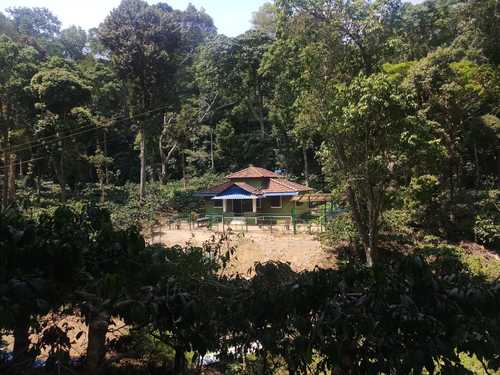
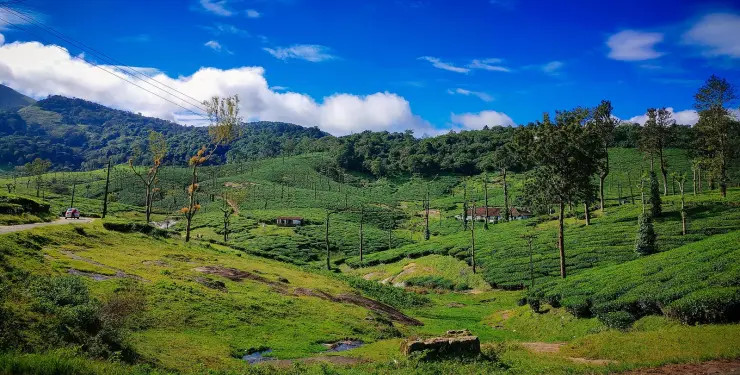
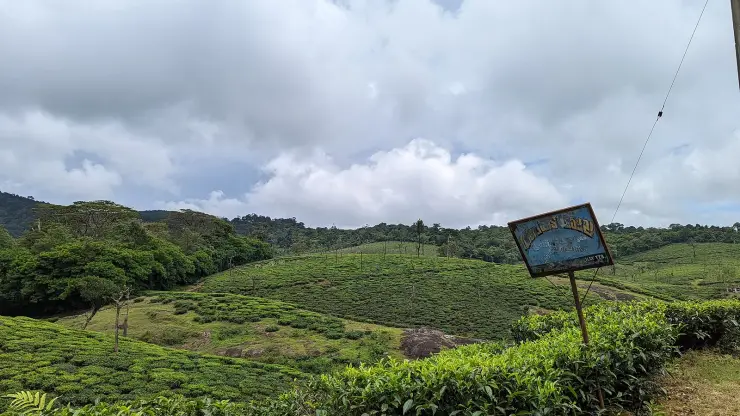
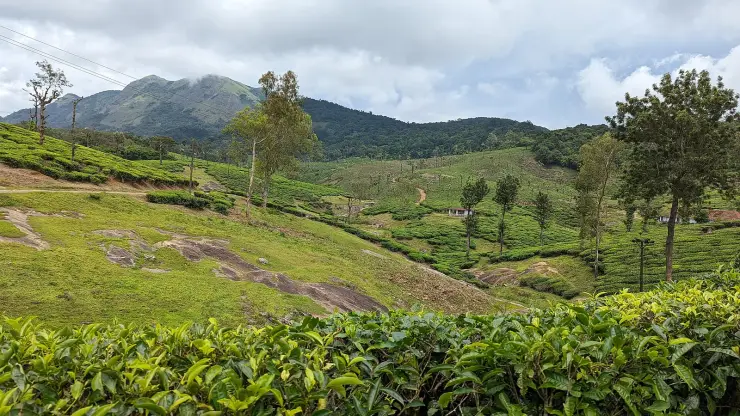
The estate immediately below takes its name from the viewpoint above it rather than the other way round. It was planted with arabica coffee, with cardamom between the rows, after the hills were leased at the end of the 1880s, went through Karuna Plantations, and passed to the Poabs group in 1988, who found it derelict, replanted it and have farmed it biodynamically since 2000. What you are looking down on from the railing is not wilderness; it is a century and a half of somebody's work.
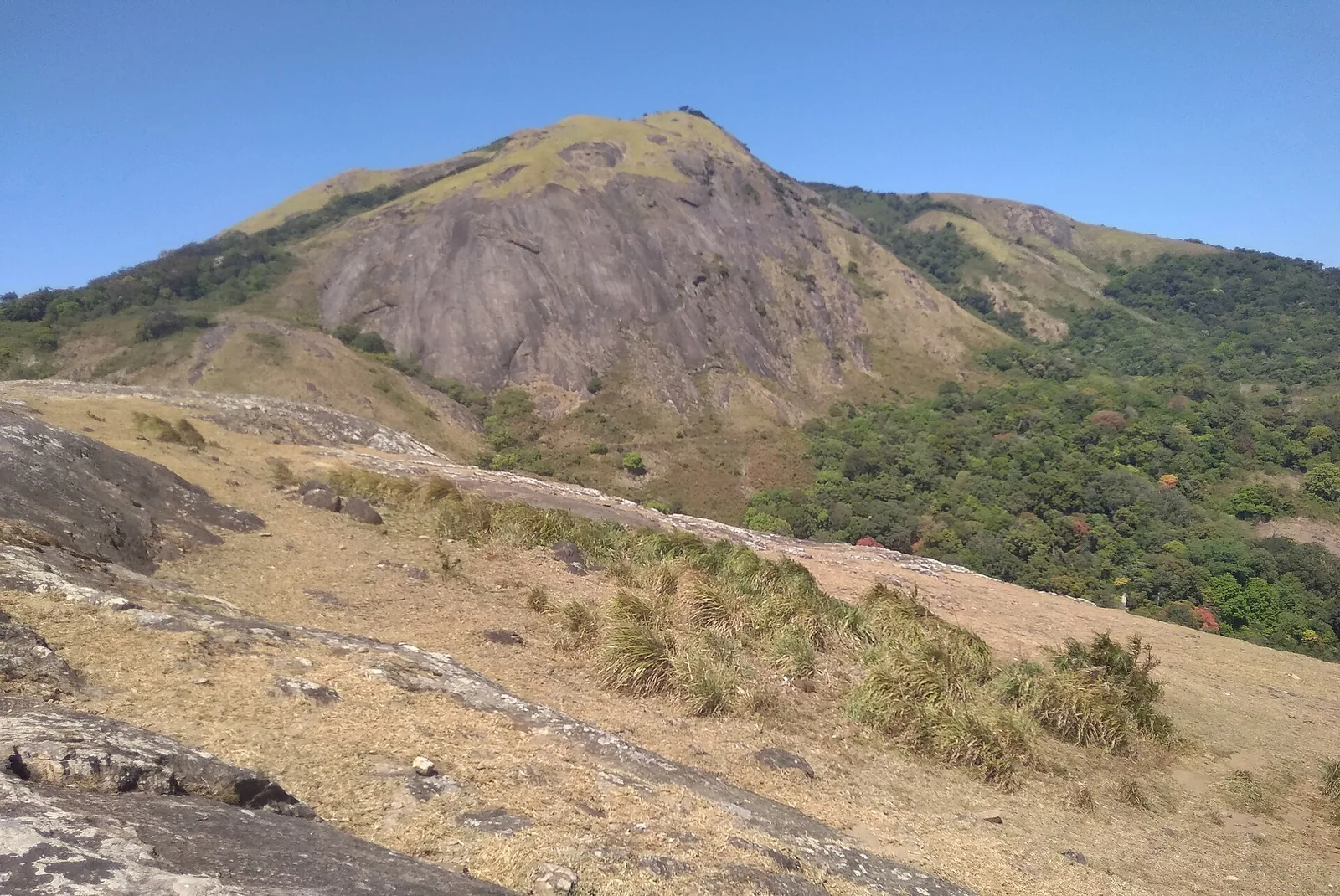
The escarpment is the reason the view exists and it is worth a moment's geology. The Palakkad Gap is the great break in the Western Ghats, some thirty kilometres of low ground where the wall of the range simply stops, and Nelliyampathy is the block of highland on its southern side. Seetharkundu stands on the northern edge of that block, looking straight out across the gap. That is why the drop is abrupt rather than gradual, why the plain below is so wide, and why the cloud behaves the way it does: warm air comes off the plain, hits the face, and rises up it, which is a view-maker in the early morning and a view-killer by eleven.
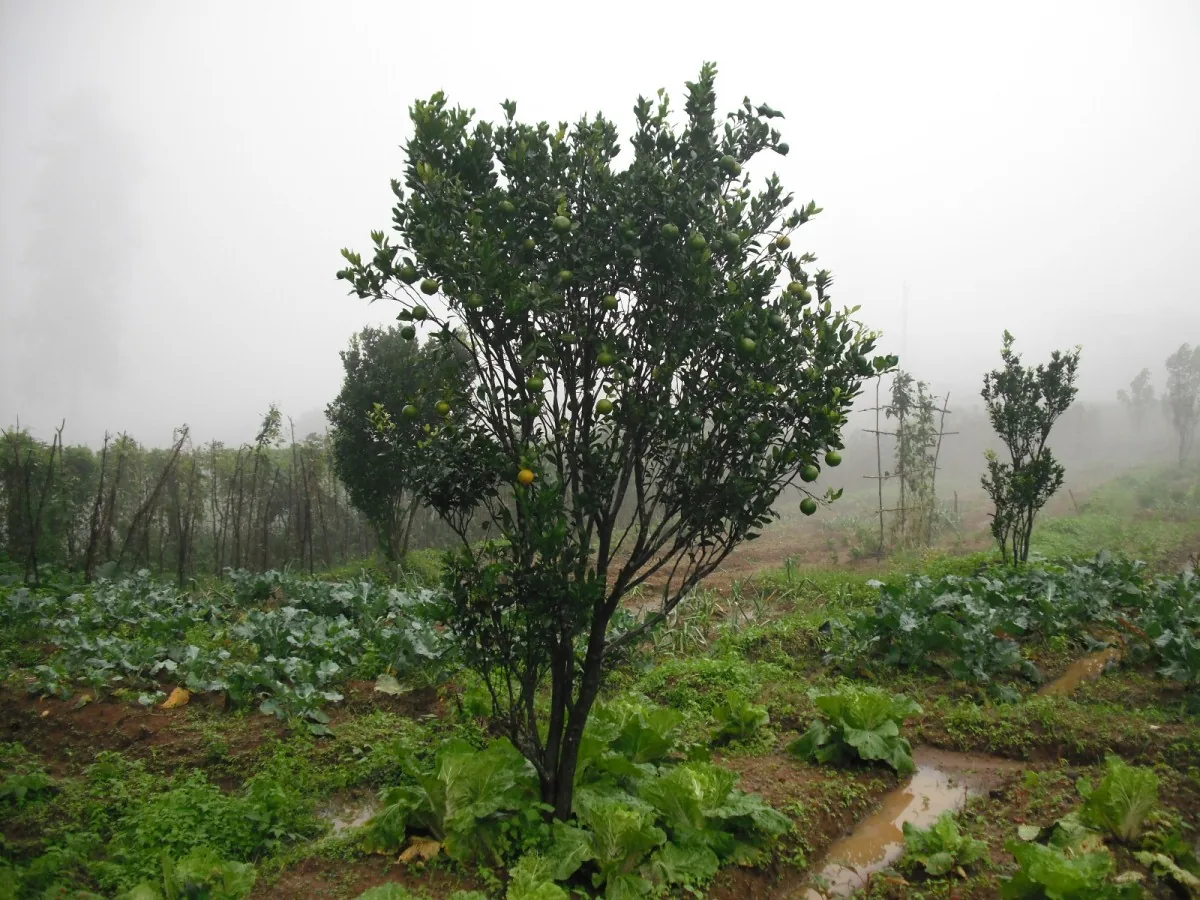
The estate directly below has a longer story than the viewpoint. Tracts of these hills were leased in 1889 to two Britons, Arthur Hall and W. R. M. McKenzie, who opened the ground for planting; the estate that took its name from the viewpoint above it was put down to arabica coffee with cardamom between the rows. It passed through several hands before the Poabs group acquired it in 1988 as their first plantation, replanting the old coffee with new varietals, adding tea, and nurturing the pepper and cardamom that were already there. It sits at around 3,500 feet and now carries arabica and robusta with pepper, orange, vanilla, cardamom and fruit grown between them.
What the estate is known for beyond Kerala is how it is farmed. Organic cultivation was brought in at the end of the 1980s and the estate is described as one of a very small number of Demeter-certified biodynamic plantations anywhere, and as the largest multi-crop organic plantation in India. Those are the estate's own claims and they are worth taking as such, but the coffee is sold under the Seethargundu name by roasters well outside India, which is unusual for a single Kerala estate and is the practical evidence behind them.
A word about the macaques, because it is not only an inconvenience. Bonnet macaques at roadside viewpoints across the Western Ghats have been fed by visitors for so long that they have stopped foraging properly; they raid vehicles, they take food aggressively, and they lose the fear that keeps wild animals alive. The traffic that makes the feeding possible also kills them. Not feeding them is the single most useful thing a visitor does here, and it is worth being firm about with anybody in your vehicle who thinks a biscuit is a kindness.
Legend & myth
The name carries a claim. Seetharkundu is traditionally held to be a place where Rama, Lakshmana and Sita rested during the years of exile, and the name is read as Sita's rock or Sita's pool. It is a legend rather than a piece of history, and it is repeated at a good many places along the Western Ghats; what makes it stick here is the shape of the ground, because a hard climb up an escarpment to a level place with water on it is exactly the sort of site a resting-place story attaches itself to.