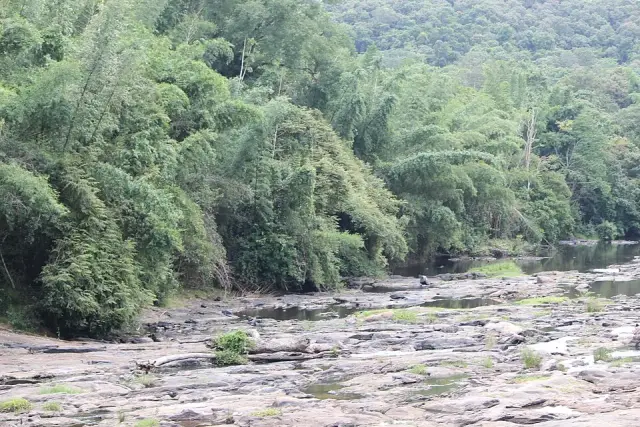
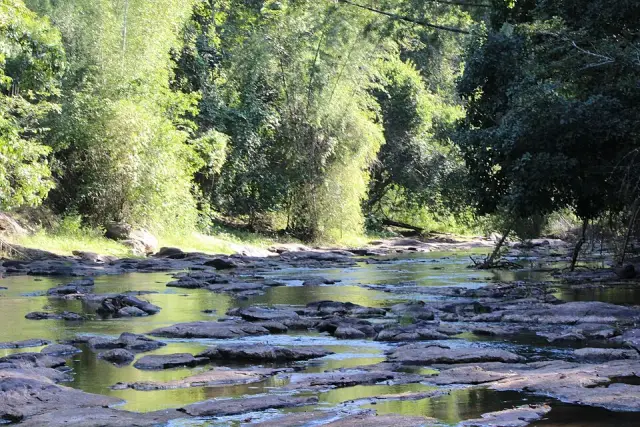
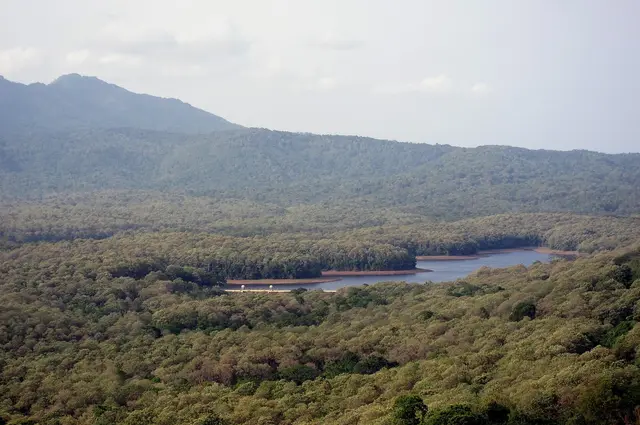
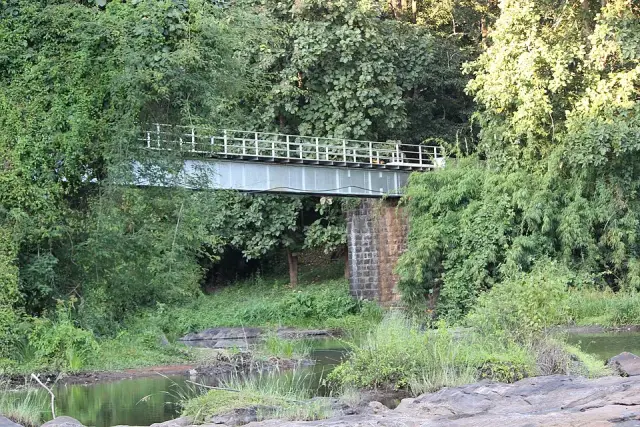
There is no single Parambikulam trek. The name covers four guided trails spread across a working tiger reserve: two short four-kilometre walks, a six-kilometre forest-and-rafting route from Anappady, and a ten-kilometre day that begins at an earth dam and threads together teak plantation, reservoir and the reserve’s most famous living tree.
The story of Parambikulam trek
Bear Path begins at Nalayiram Point and runs for four kilometres through teak and bamboo. The official route description places a grassland pond beyond the plantations and gives the trail its name from signs of sloth bear activity rather than from a promised sighting. It ends at Anappady, so the walk reads as a cross-section of the managed forest: old teak blocks first, then bamboo, open ground and the information-centre settlement.
Elephant Song is also four kilometres, but it is sold as the softer route. Its ground is made up of small evergreen patches characteristic of the Western Ghats, and the reserve positions it for a wider range of ages. The name is atmosphere, not a wildlife guarantee; no responsible guide promises an elephant encounter on foot.
Kariyanshola starts at Anappady and is six kilometres. The first part enters moist deciduous woodland; around four kilometres in, the vegetation closes into evergreen forest. The published circuit runs from the information centre by Rock Point to Kariyanshola, then back through teak plantation, and combines walking with bamboo rafting. Groups are capped at ten.
Pugmark is the long route, about ten kilometres from Peruvaripallam Earth Dam. It passes the Kannimara teak, continues towards Thunacadavu and returns to Anappady. That makes it the trail that ties together the reserve’s three dominant human-made landscapes — earth dam, teak plantation and reservoir road — while staying inside habitat used by tiger, elephant and gaur.
All four are guided reserve programmes. A path on a map is not permission to walk it, and an available room in the reserve is not proof that a particular trail will run the next morning. Anappady controls the visitor day; weather, wildlife movement and guide availability control the final answer.
The approach explains why Parambikulam feels remote even though Anappady is a road settlement. The visitor road enters from Pollachi through the Anamalai side of Tamil Nadu. The forest and reservoirs separate it from Palakkad’s plains to the west, so a place in Kerala is reached by leaving Kerala and coming back through a check post.
This is community-run ecotourism rather than a trail concession dropped into an empty forest. Guides, boat crews and watchers are drawn through the reserve’s eco-development committees, including people from the Kadar, Malasar, Muduvar and Mala Malasar settlements inside the protected area. Staying with the guide is therefore both a safety rule and the point of the programme.
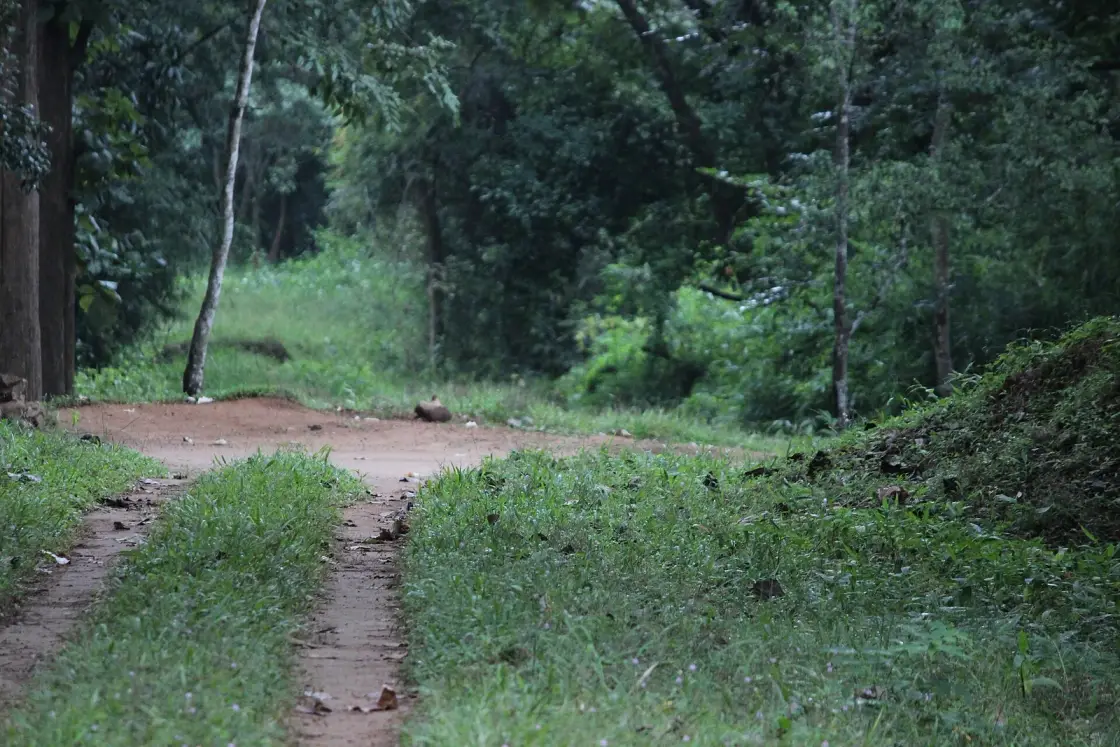
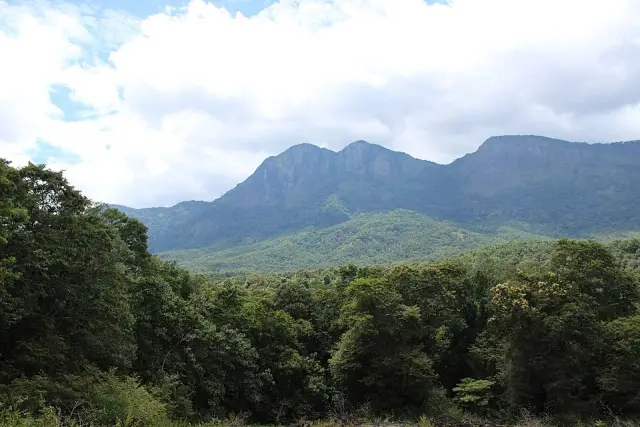
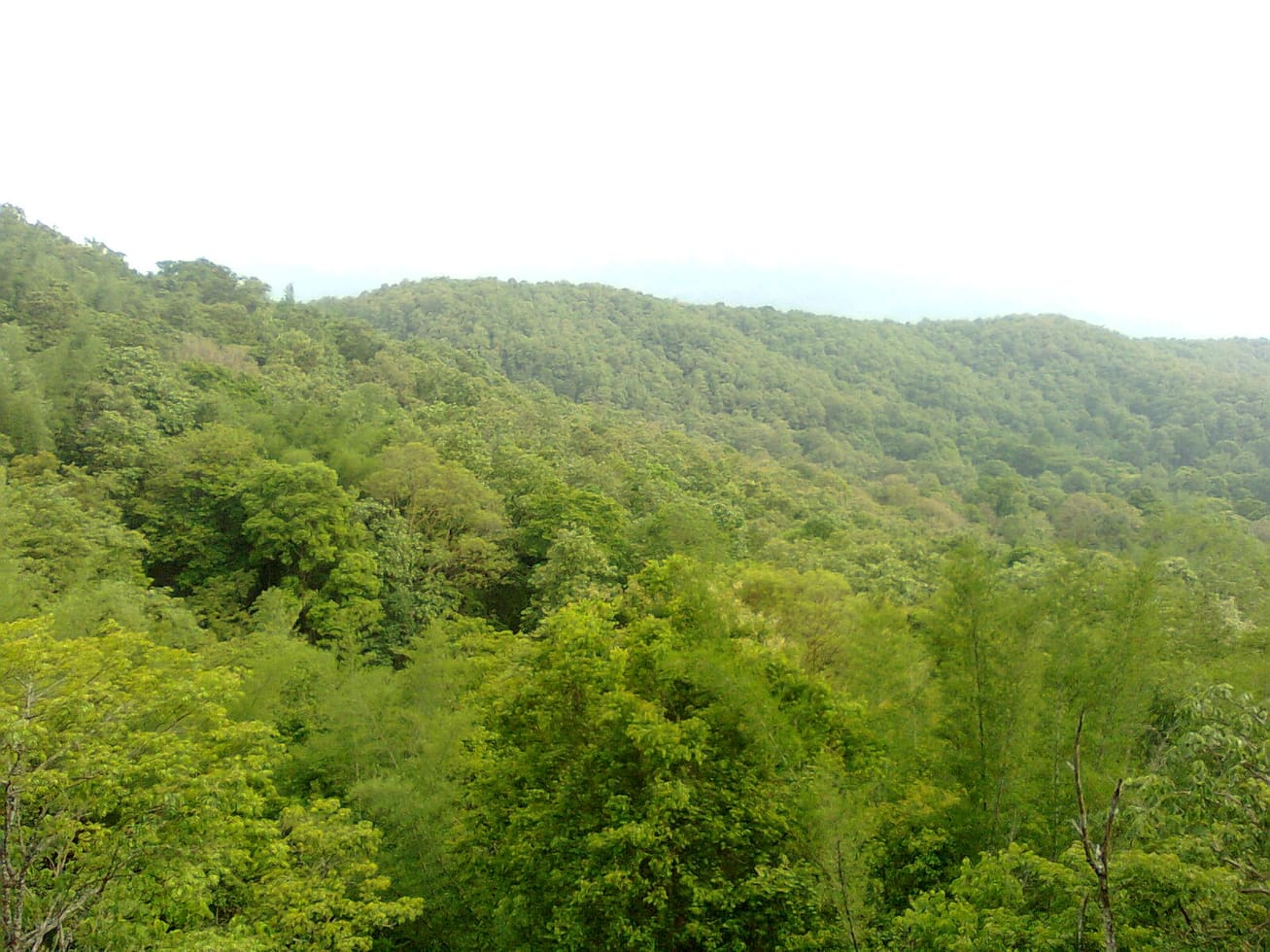
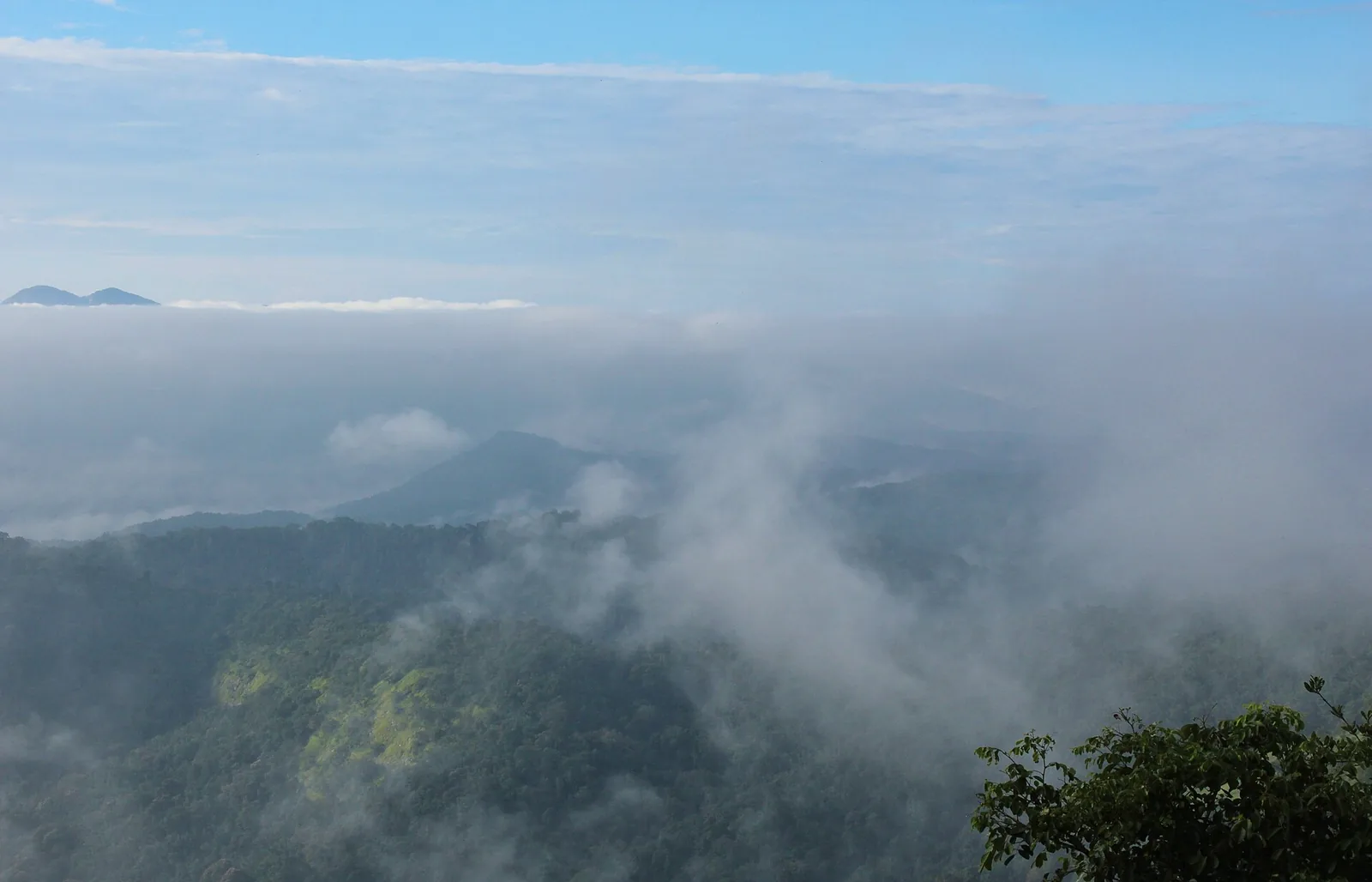
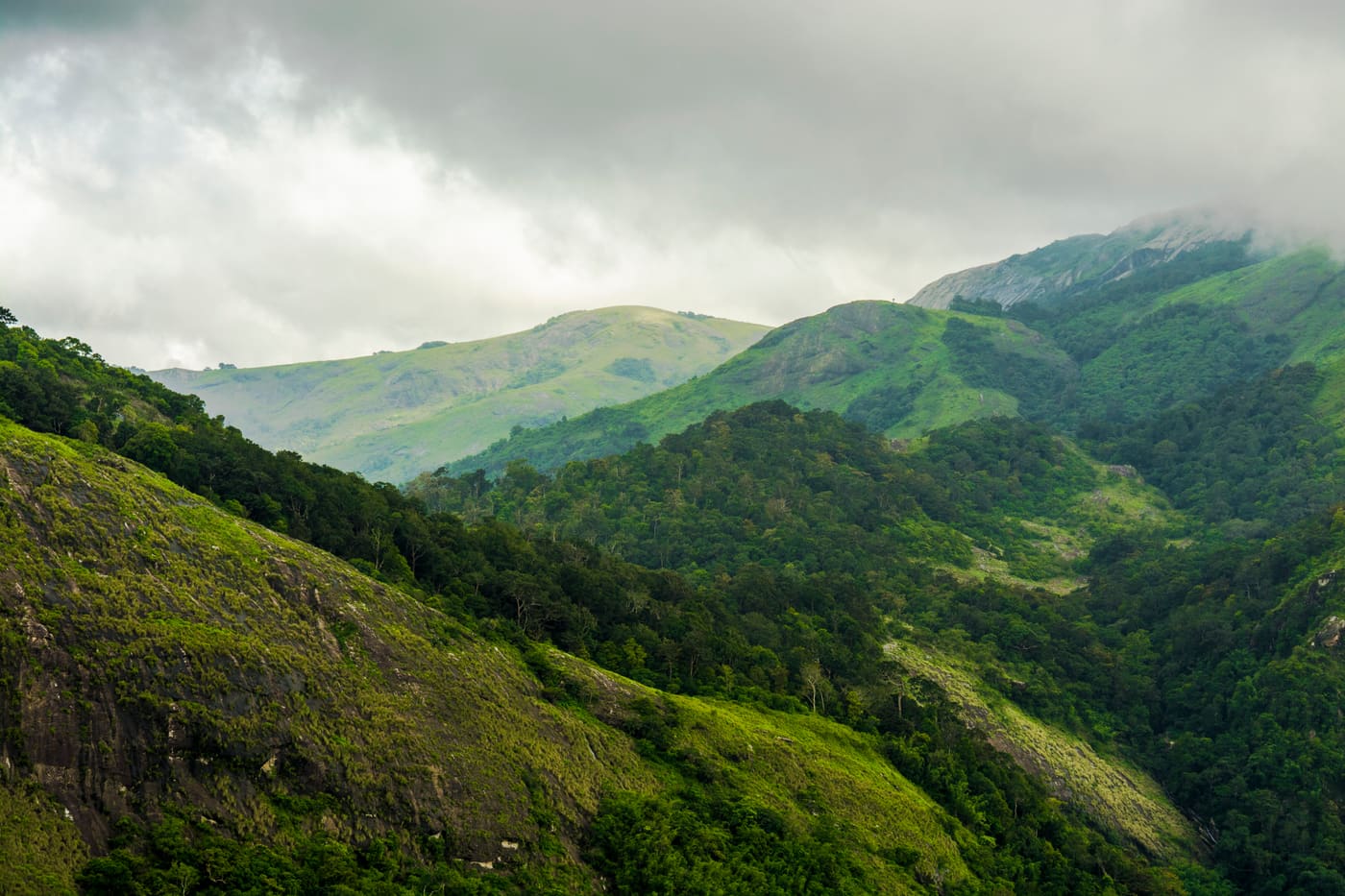
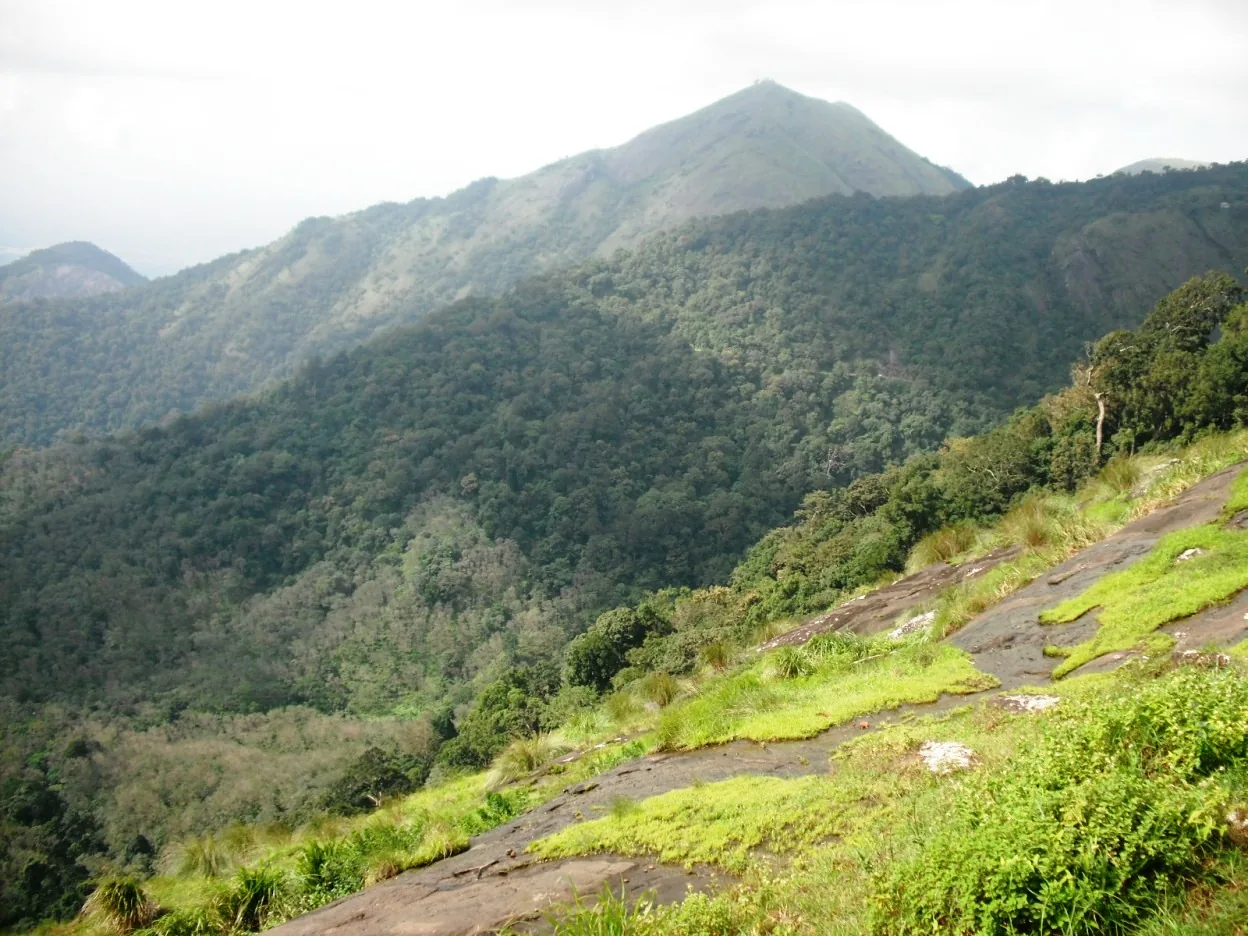
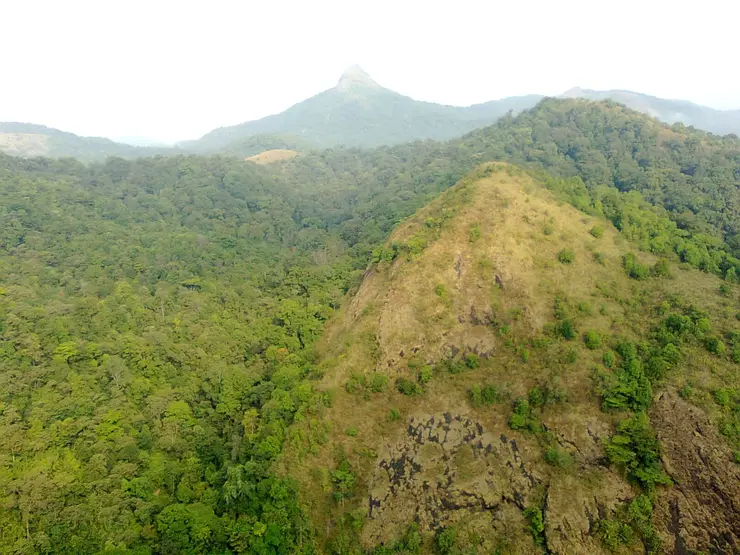
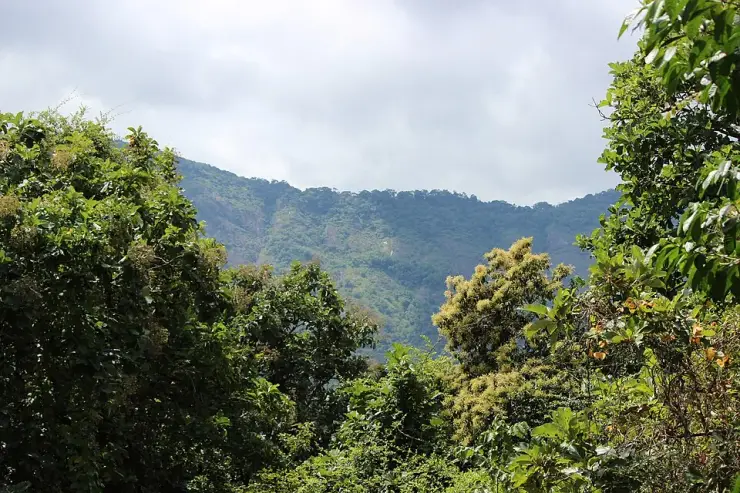
The vegetation changes are the route map. Parambikulam lies low enough for moist deciduous forest across much of the visitor zone, but folds in the hills hold evergreen woodland and old working compartments carry teak. Bamboo follows light and water. Bear Path and Kariyanshola are valuable because they cross those boundaries at walking speed: the canopy height, leaf litter, undergrowth and temperature change before any signboard announces that the forest type has changed.
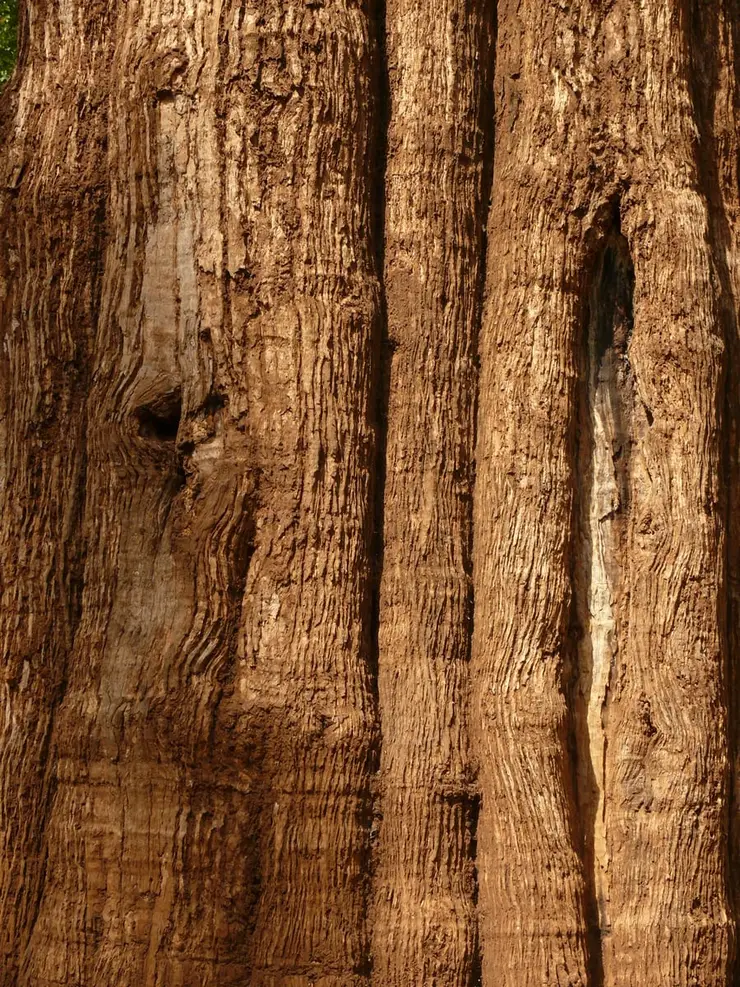
Teak here is not shorthand for wilderness. Some stands are plantations created during the long timber-working period, with trunks of similar age and spacing that can still be read from the path. Natural forest is more irregular: several layers of canopy, lianas, dead wood and seedlings competing below. A guide can show that distinction without turning the day into a botany lecture, and it changes how the famous Kannimara is understood — one very old survivor beside landscapes managed for timber.
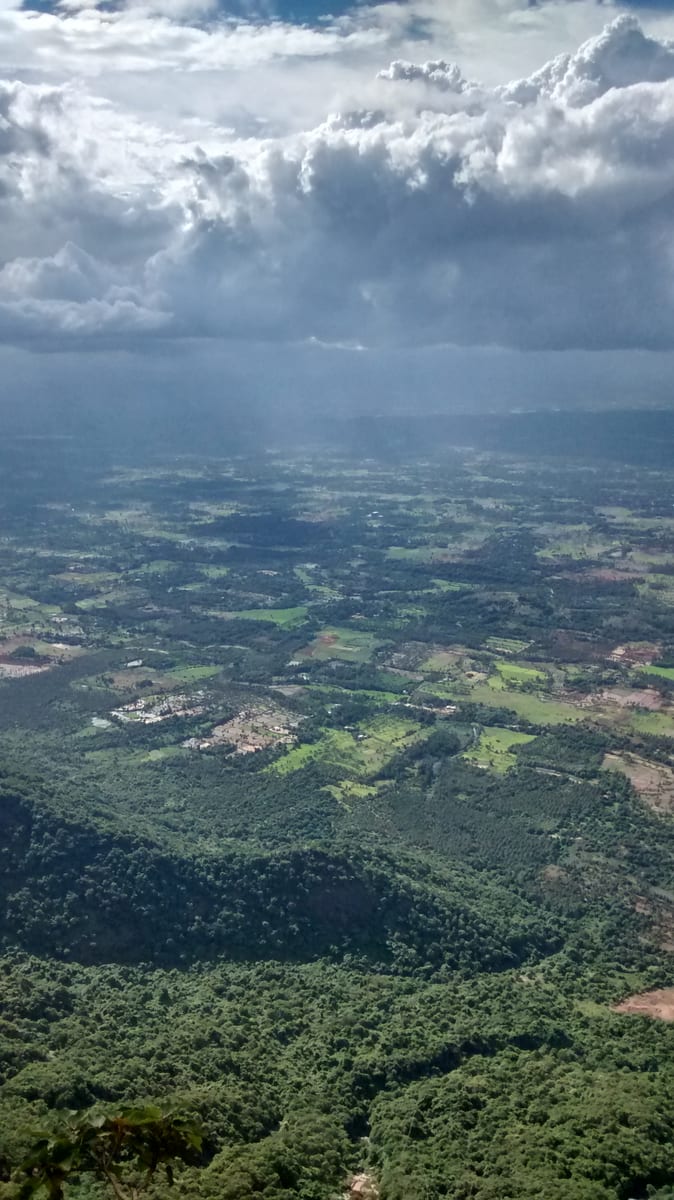
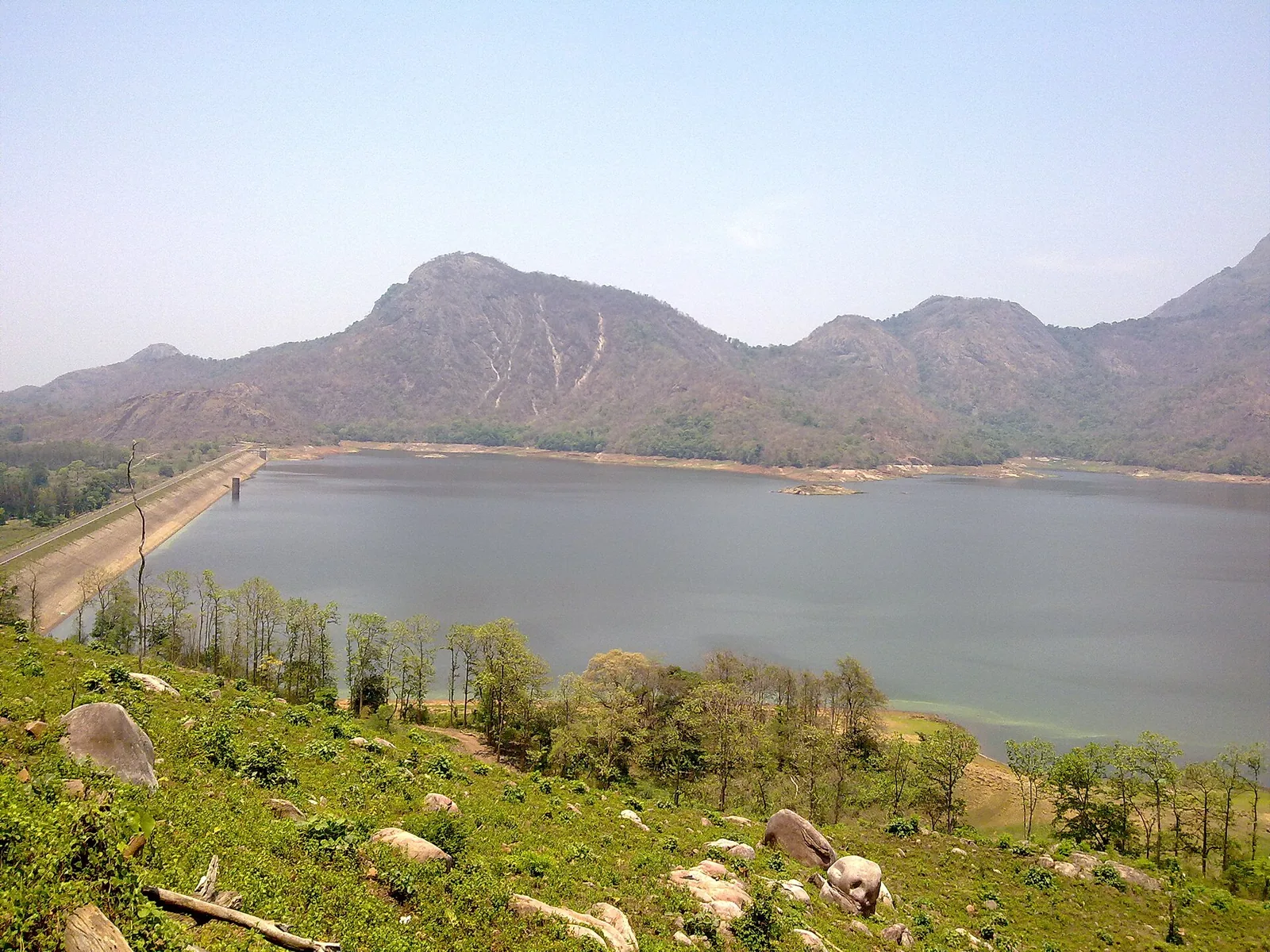
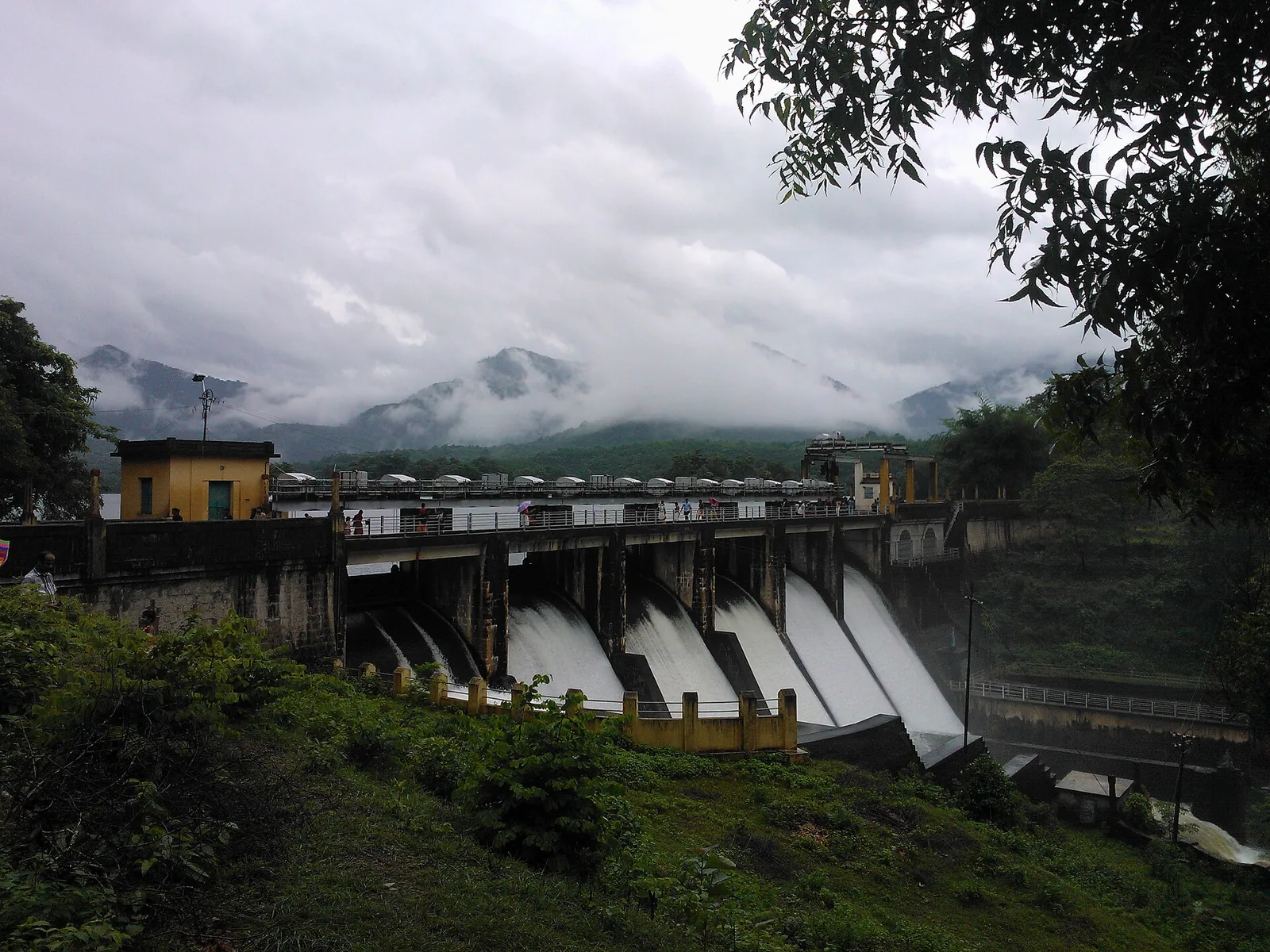
The water on these walks is engineered as well as wild. Peruvaripallam, where Pugmark begins, is an earth dam in the linked Parambikulam–Aliyar system; Thunacadavu is the balancing reservoir further along the route. The dams stand in Kerala while the inter-state project moves water east towards Tamil Nadu. The trail therefore passes working irrigation infrastructure inside a tiger reserve, an overlap more revealing than a simple ‘jungle trek’ description.
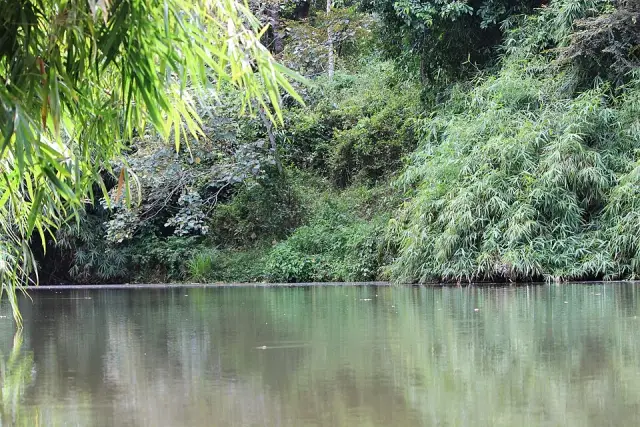
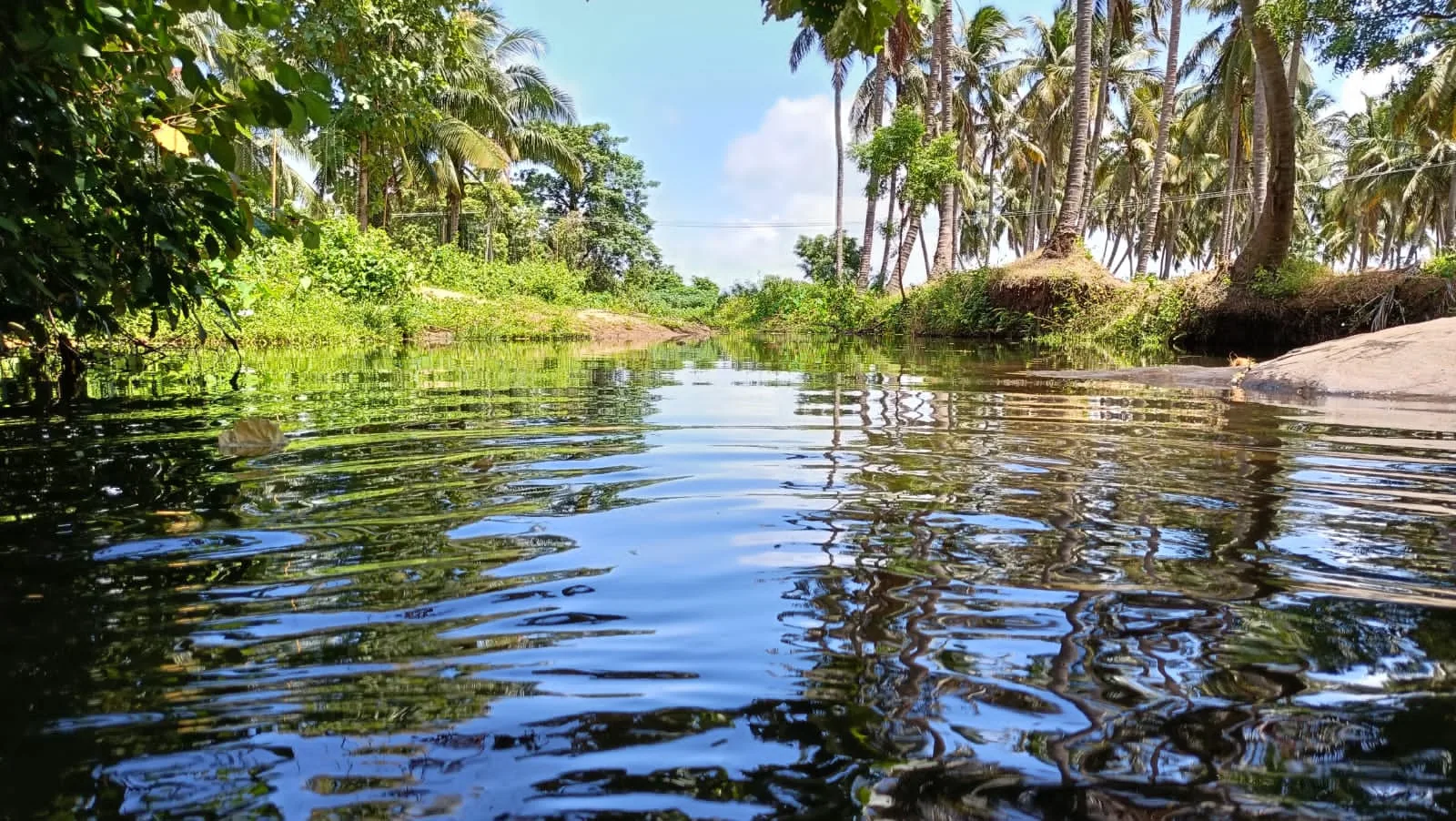
Bamboo rafting on Kariyanshola is a crossing of pace rather than an adventure ride. The raft removes the footfall and engine noise and puts the forest edge at water level, where overhanging bamboo, exposed rock and reflections do the work. Getting on and off is the awkward part: there is no jetty built to universal-access standards, which is why the programme cannot honestly be presented as a step-free alternative to walking.
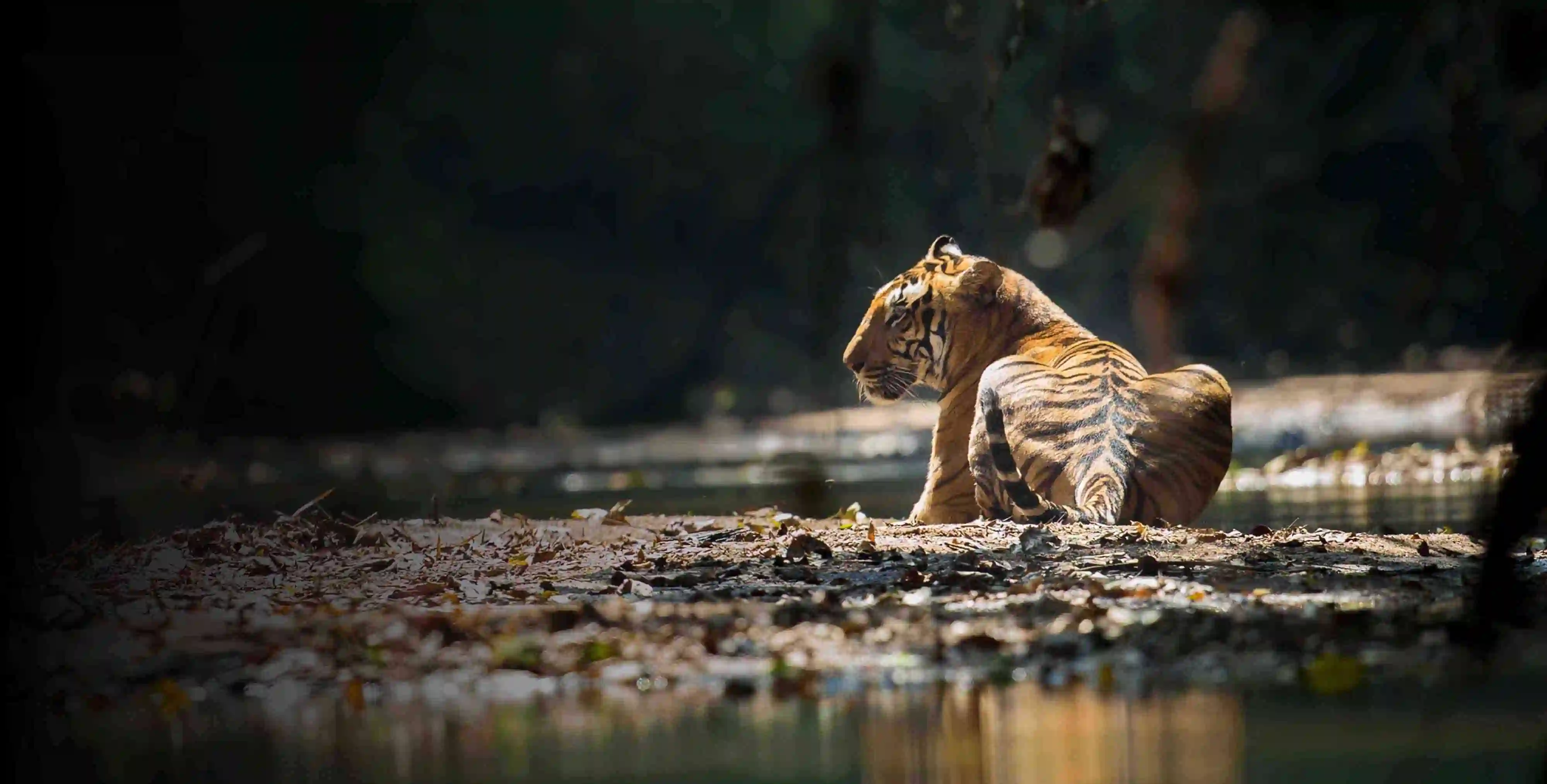
The animal names attached to the routes need restraint. Sloth-bear signs give Bear Path its name; tiger signs give Pugmark its name; Elephant Song borrows the presence of elephants in the landscape. None of those names sells a sighting. The likely encounters are smaller — birds moving through a mixed flock, giant squirrel high in the canopy, butterflies at damp ground, alarm calls carrying further than the animal that caused them.
A large-animal encounter is not a bonus to chase. Elephants and gaur use the same road-and-forest mosaic as people, and a guide may turn a group around or wait without giving visitors the dramatic reason they hoped for. That decision is the programme working correctly. The reserve’s ability to cancel or alter a route is not poor service; it is the condition under which walking is allowed in the first place.
The four distances do not translate neatly into four difficulties. Four kilometres on a shaded forest track after rain can be slower than six on firmer ground; a raft section changes the physical demands of Kariyanshola; Pugmark adds length and several landscape transitions. The route names and distances are the facts the operator publishes. A universal finishing time would be a guess, so the useful planning unit is most of a day and the useful question is what your group can comfortably walk on uneven ground.
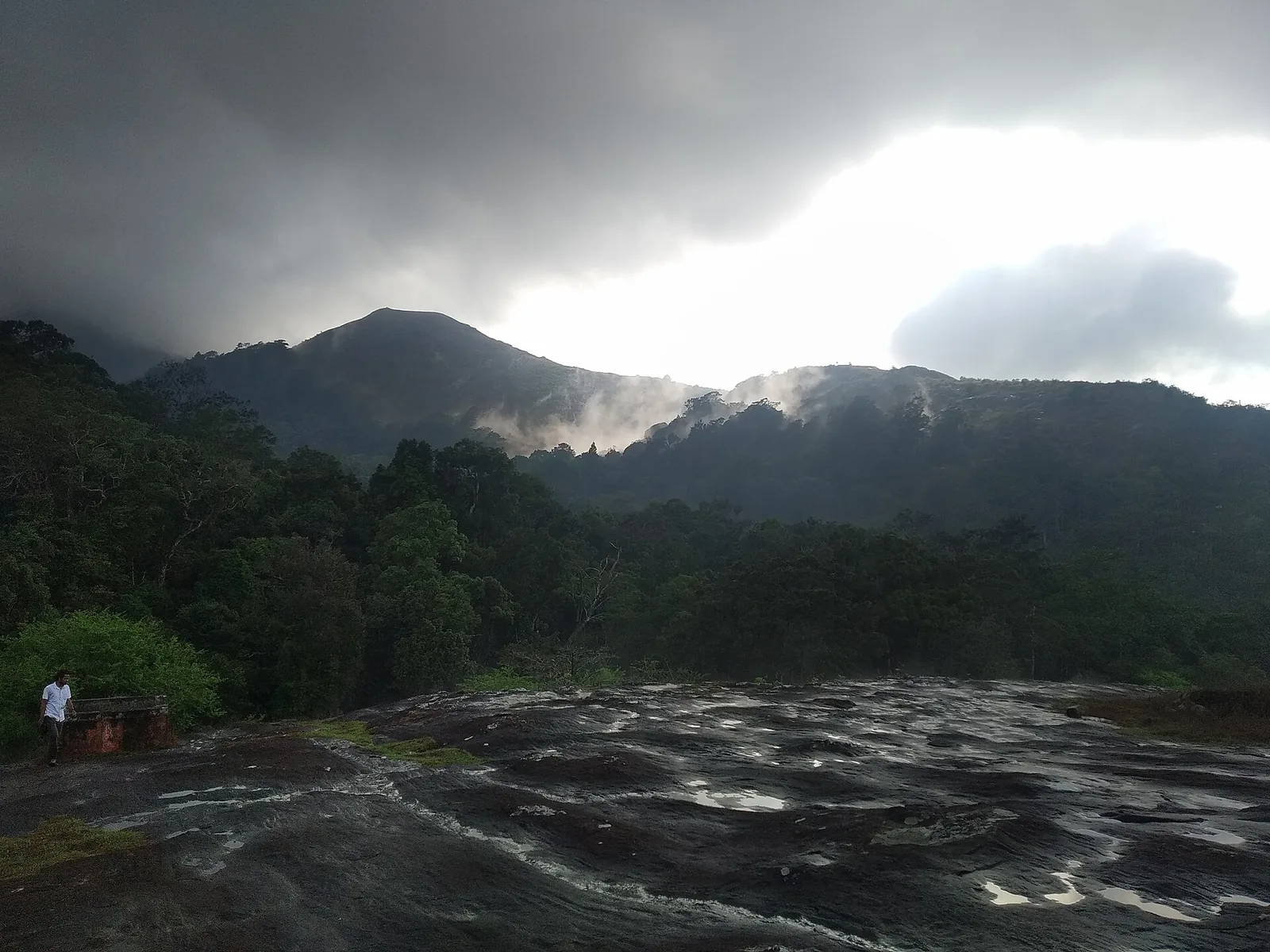
Dry-season mornings give the cleanest compromise: a firmer surface, usable light under the canopy and time to finish before the heat builds. After rain the colours deepen and the streams look better, but leeches become ordinary and roots, leaves and rock hold water. The official warning on Kariyanshola singles out leech precautions, and it is sensible to carry that advice across the other shaded routes too.
Anappady matters beyond check-in. It is where the visitor programme, information centre, contact numbers and road access meet, and it is the point from which the reserve can redirect a booking if one route is unavailable. Treat it as the beginning of the day, not an administrative obstacle between the car and the forest. Arriving early enough to listen to the briefing is part of the route.
At the end, the choice is simple. Bear Path is the compact lesson in teak, bamboo and open grassland. Elephant Song is the gentler forest walk. Kariyanshola is the mixed day, on foot and on water. Pugmark is the longer line through dam country to the Kannimara teak. Choosing between those four produces a better day than asking which one is ‘best’, because each is built around different ground.
The return to Anappady is part of three route descriptions and should shape the day. It means the walks are circuits or point-to-point programmes tied back to the information centre, not paths that deposit visitors at an isolated roadhead to arrange their own rescue. Transport, the guide and the final head count stay within one operating system. For a traveller, that is reassuring; for the reserve, it is how every person who entered the forest is accounted for before the visitor day closes.
Leave enough time after the walk to stop rather than racing the check post. The Vanasree Ecoshop at Anappady is a Forest Department outlet, and the reserve’s community model makes it the logical last part of the programme: honey, beeswax products, bamboo work and other goods move income through the same local institutions that supply guides and crews. Buying there is more direct support than adding another generic wildlife souvenir elsewhere on the road.
What the page deliberately does not offer is a species checklist disguised as an itinerary. Parambikulam protects tiger habitat, but the quality of a guided walk is in signs, sounds, vegetation and the guide’s reading of them. A claw mark, a feeding trace, a change in alarm calls or a track soft enough to hold a print is information about an animal moving through its own range. Seeing the animal is chance. Understanding why the path has its name is the dependable experience.
Legend & myth
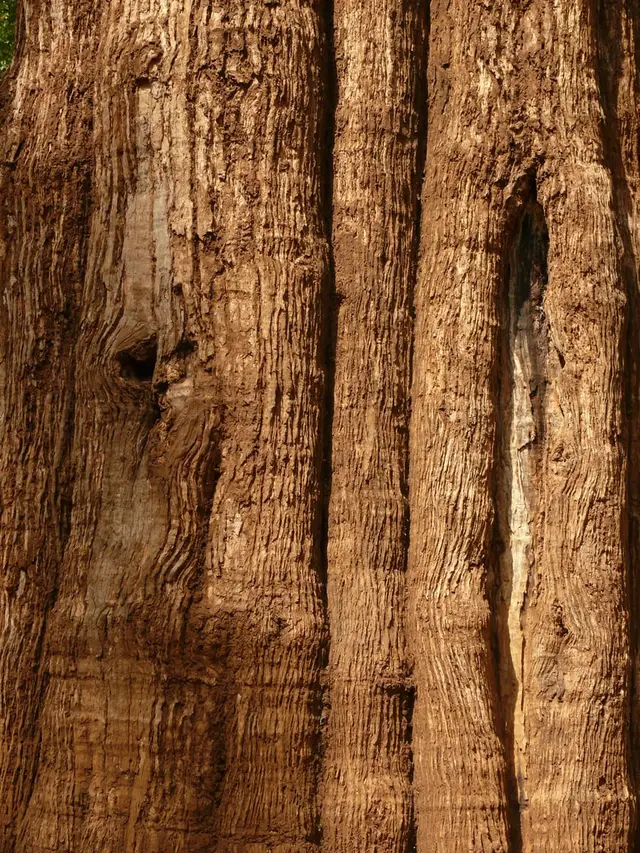
The Kannimara teak on the Pugmark route is held sacred in Kadar tradition. Its name is commonly read as ‘virgin tree’, and the best-known legend says the trunk bled when people tried to cut it, so the axe was put down and the tree was spared. The story is belief, not botany; its practical truth is visible in a giant old tree standing in a landscape logged for teak.
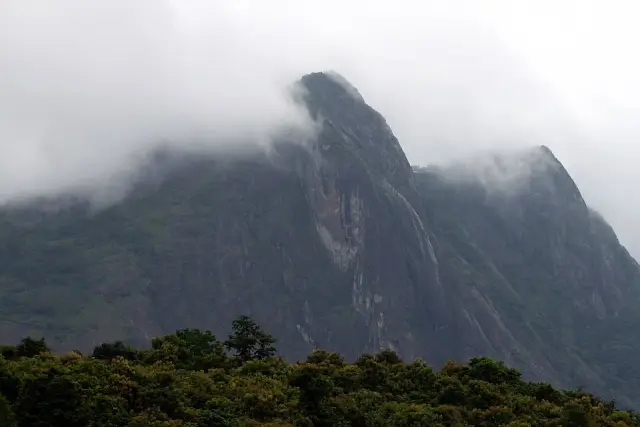
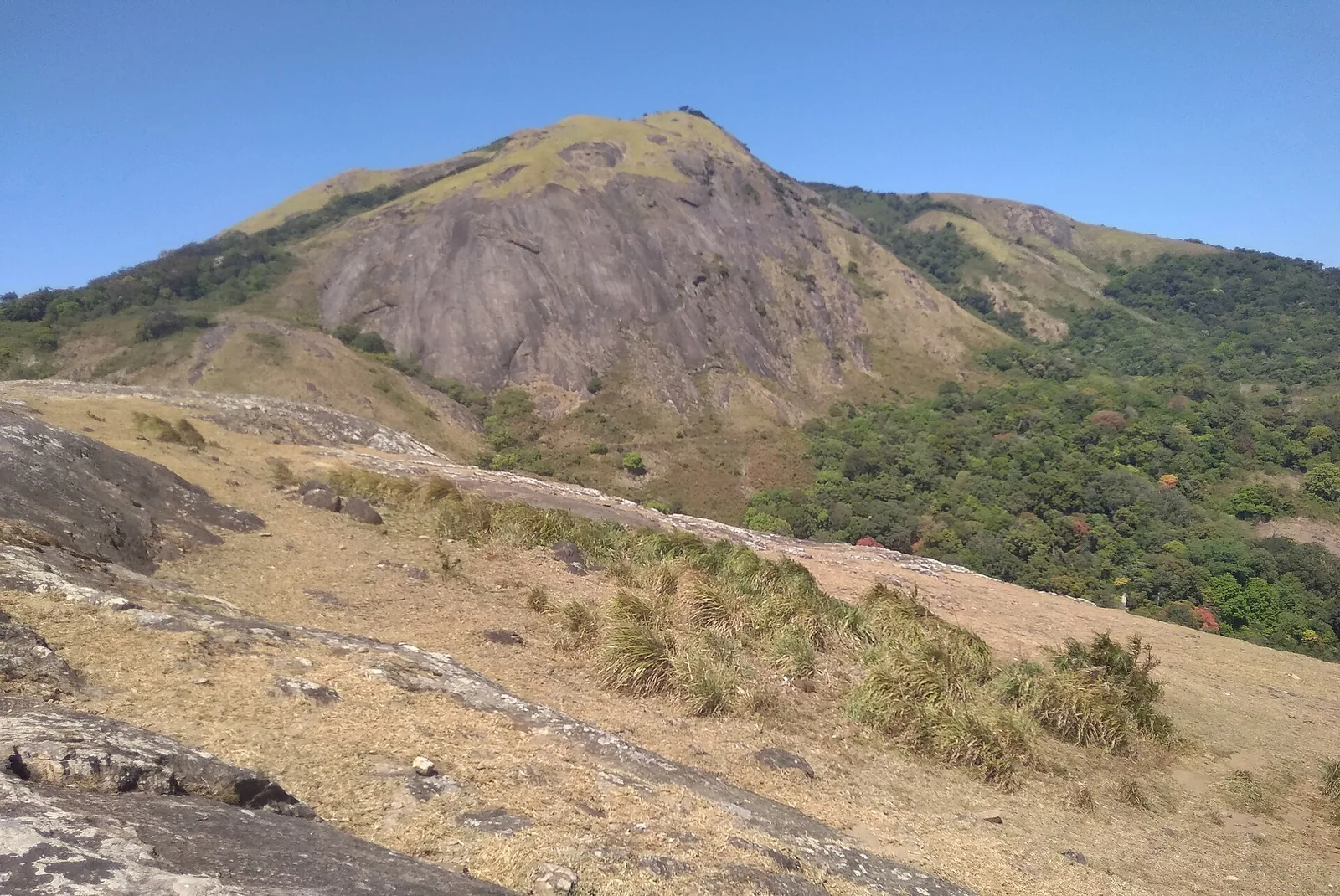
The reserve’s highest peak, Karimala Gopuram, is recorded as an important sacred mountain for the Kadar. It is not the Karimala on the Sabarimala pilgrimage route; the two hills share a Malayalam name and belong to different landscapes and traditions.