Konni is a hill town on the Achankovil in Pathanamthitta district, about ten to eleven kilometres from the district headquarters, and it is first of all an administrative place: the seat of a taluk, and the headquarters of the Konni Forest Division, which the Kerala Forest Department records as the first reserve forest declared in what is now Kerala, on 9 October 1888 under the Travancore Forest Act of 1887. Two state highways cross here — the Punalur–Pathanamthitta–Muvattupuzha road, SH-08, and the Konni–Harippad road, SH-80 — and a third runs east through Kalleli to Achankovil and over the ghats. The town is best known outside the district for its timber elephant kraal, built in 1942 and no longer used for its original purpose. It is also a rubber town, and since 2020 a medical-college town.
Konni sits where the lowlands of Pathanamthitta stop being lowlands. West of it the land runs down through Kumbazha and Mylapra to the rice country; east of it the Achankovil climbs into the Western Ghats and the reserve forests begin. The panchayat covers 41.45 square kilometres across the Konni village and parts of Konnithazham, Malayalappuzha and Airavon, and it sits on both banks of the river. Sources give different population figures for different units, which is worth stating plainly: the 2011 census figure quoted for the town is 30,299 with a literacy rate of 94.55 per cent, the panchayat article gives 27,800 from the 2001 count, and the 210,137 figure that circulates online is the taluk, not the town.
The reason Konni exists as a town of consequence is the forest behind it. The Konni Forest Division covers 331.66 square kilometres across parts of Karunagappally, Kunnathur and Pathanapuram taluks in Kollam district and Adoor, Kozhencherry and Konni taluks in Pathanamthitta, and it is run in three ranges — Konni at 62.73 square kilometres, Naduvathumoozhy at 138.93 and Mannarappara at 130.00 — with eight stations between them. Its highest point is Chelikkalkar at 997 metres, with Iruvallimala at 817 metres, Thunathumala at 721 and Kodamala at 598. The Achankovil, the Pamba Kallar and the Achankovil Kallar all rise inside it.
That division carries the largest area of teak plantation in Kerala — 8,294 hectares, a little over twenty thousand acres. Teak is not incidental here; it is the reason the Travancore government drew a boundary round these hills in the first place and the reason a Divisional Forest Office has been sitting in a small town for well over a century. Timber from the Konni and Achankovil forests went out by river and road towards Kollam, and colonial demand for teak and rosewood for shipbuilding and export sharpened the extraction through the nineteenth century. The town still runs a timber trade, and the department still runs timber sales divisions in the region.
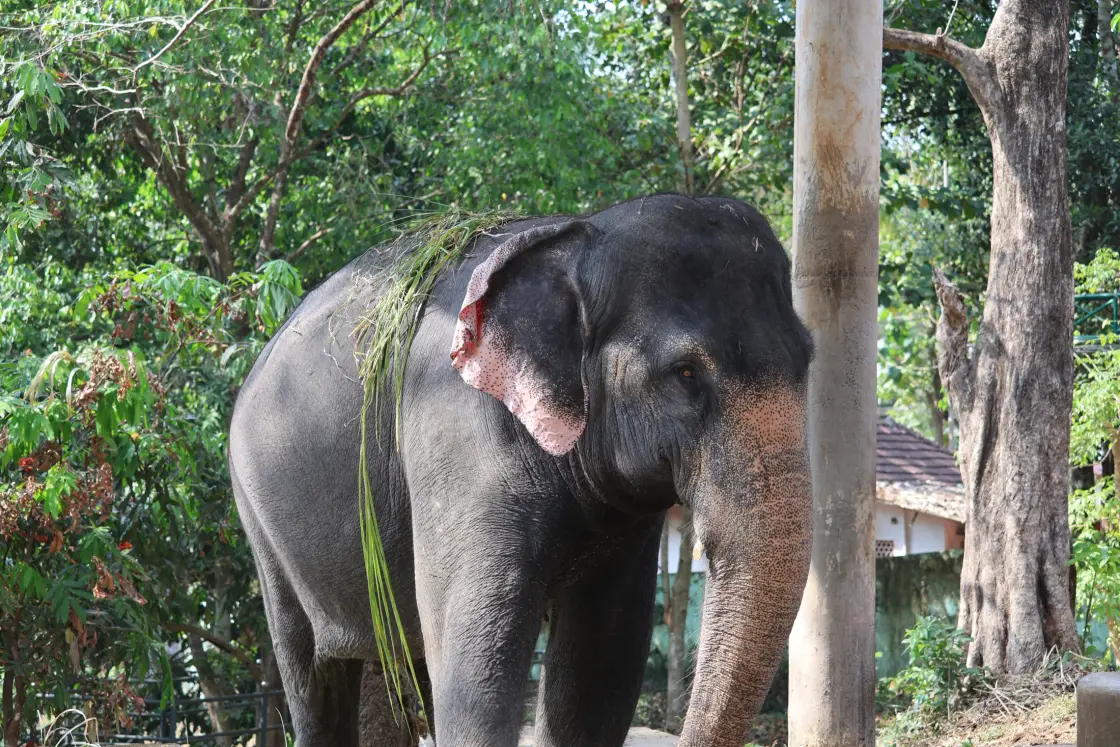
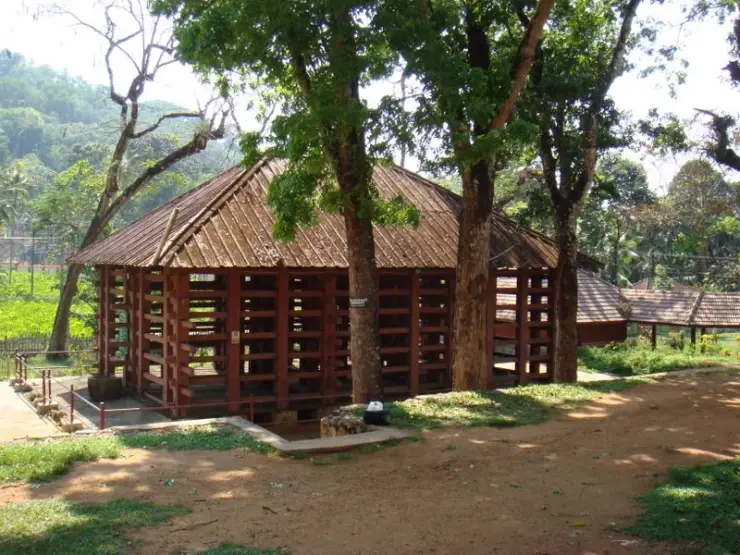
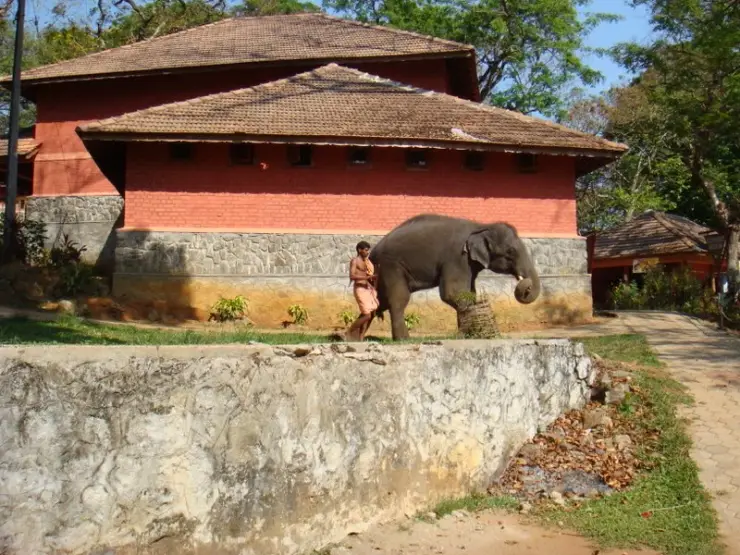
The elephant kraal belongs to the same administration, and its history should be told without softening. Elephant capture at Konni is dated to 1810. The method was the varikkuzhi — a covered pit dug on a known elephant path, into which an animal fell and from which it was hauled out, tethered and broken to work with the help of trained elephants. The main capture grounds were Mundomoozhy, Mannarappara and Thura. The kraal standing today was built in 1942 from kambakam timber, measures 12.65 by 8.60 by 7 metres, and stands in a compound of about nine acres. Sources disagree on its capacity: the Malayalam Wikipedia article says six elephants, while the Kerala Tourism ecotourism listing and the English article say three to four.
Capture ended. The Kerala Forest Department’s account, repeated on both Wikipedias, is that capturing was formally stopped in 1977 by government circular, and that in practice it had already stopped some years earlier. The date sits alongside a change in law: the Indian elephant was moved from Schedule II to Schedule I of the Wildlife (Protection) Act, 1972 in October 1977, after which taking a wild elephant became hunting under Section 9 and commercial capture was closed off. Whatever the internal reasoning at Konni, the practice the kraal was built for is now prohibited, and nothing at the site should be read as showing a live tradition.
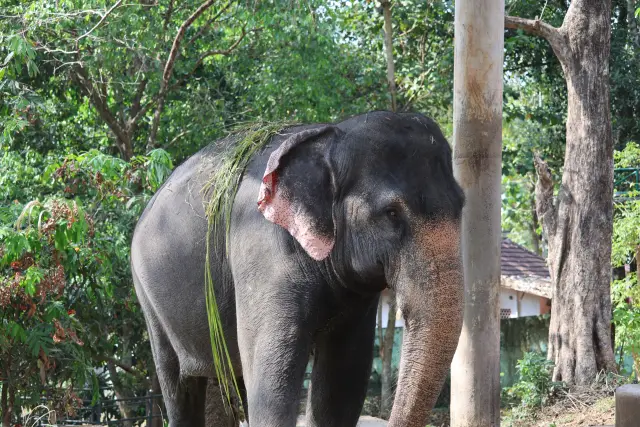
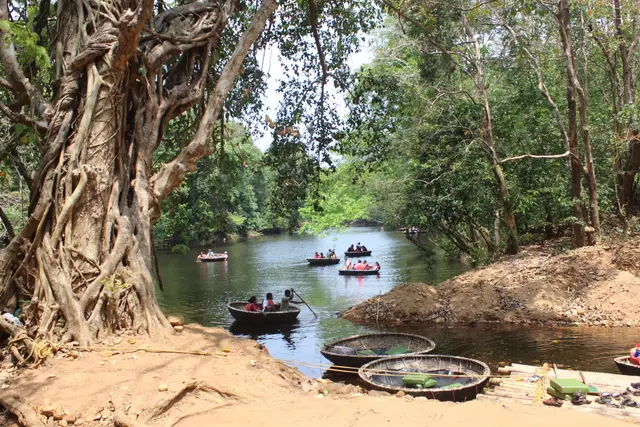
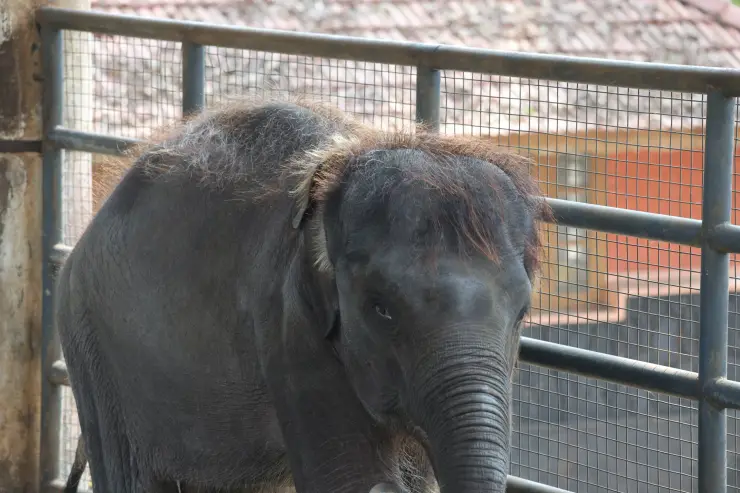
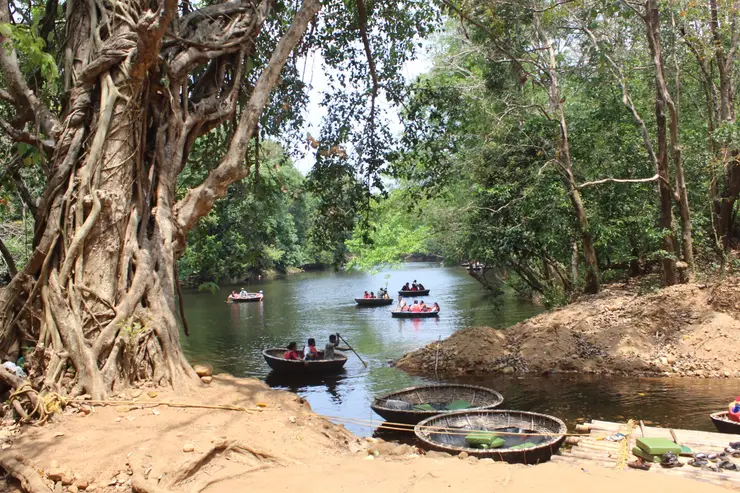
What the compound does instead is take in elephants that cannot be left where they are — calves separated from a herd, animals injured in accidents or found straying — and keep them under veterinary care. Trained elephants that once worked the captures are remembered by name in the local record: Konniyil Kochayyappan, Ranji, Padmanabhan, Balakrishnan, Soman, Venu, Rameshan and Mani. A history museum, an audio-visual room, medicinal plant beds and a small forest-produce shop were added around the kraal, and the whole thing was folded into the Konni–Adavi eco-tourism programme run by the Divisional Forest Office. Adavi itself, with its coracle stretch on the Kallar, is a separate outing about ten kilometres away and has its own page here.
Away from the forest, Konni is a rubber town. Rubber, pepper, coffee and ginger are the crops the panchayat lists, and the estates and smallholdings run right up to the reserve boundary — which is also why this stretch has a long, unresolved argument about elephants coming out of the forest into cultivation. A substantial Tamil-origin workforce lives in and around the town, a legacy of plantation and forest labour.
The roads matter more than the railways here, because there are none of the latter. SH-08 links Konni north-west to Pathanamthitta, ten kilometres away, and south to Pathanapuram, sixteen kilometres off, on the way to Punalur. SH-80 runs west to the coast at Harippad. East, the Konni–Kalleli–Achankovil road climbs to Achankovil, thirty-eight kilometres away, and on over the pass towards Tenkasi in Tamil Nadu; the Malayalam sources describe it as part of the Chittar–Achankovil road scheme and put the saving on the Sabarimala–Tenkasi run at roughly twenty-one kilometres. The nearest railway stations are Chengannur at about 34 to 35 kilometres, Tiruvalla at about 40, and Avaneeswaram at about 23 if you are heading towards Kollam.
The institutions of the town are modest and old. The Konni Public Library opened on 25 May 1940, when Sri Chithira Thirunal was on the Travancore throne, under the name Sir C. P. Shashtipoorthi Smaraka Vayanasala; after independence a general meeting renamed it the Public Library and Reading Room. It has since been graded A and holds more than twenty thousand books, with career-guidance, children’s, youth and women’s wings attached. The newest institution is much larger: the Government Medical College at Konni, whose hospital was inaugurated on 14 September 2020, with the college itself following.
Legend & myth
The oldest story in Konni is the town’s own name. The Konni grama panchayat’s official account, reproduced on the Malayalam Wikipedia, says that Konni was formerly Konniyur, and that Konniyur is a contraction of the Tamil kōn-ti-ūr — the village where the king stays. The same account ties the early history of the place inseparably to Pandalam and to the Pandalam royal house. So the name itself is a claim: that before Konni was a forest office and a rubber town, it was somebody’s seat.
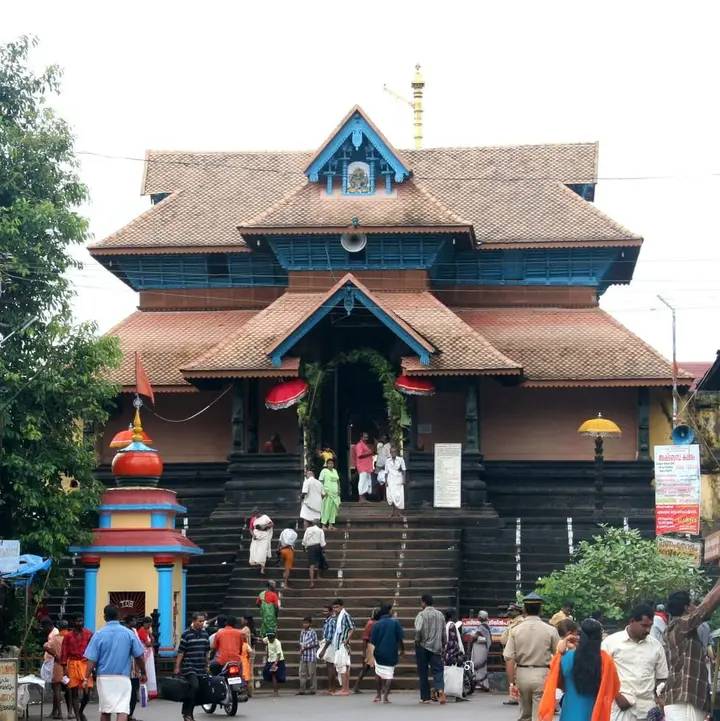
The tradition behind that runs as follows. The Chembazhannur branch of the Pandalam family is said to have moved westwards through Achankovil, Aryankavu and Kulathupuzha and to have settled at Konni around 79 ME, and to have built a Shiva shrine here for their daily worship — the Muringamangalam Sreemahadevar temple, half a kilometre from Konni junction, described as more than a thousand years old, the biggest Shiva temple in Pathanamthitta district and formerly the family’s property. A full kingdom is dated to about 370 ME, roughly 1194 CE, on land obtained from a local landholder; Chola pressure is then said to have forced the family out of Konni to Pandalam, which became the permanent capital. These are the dynasty’s own traditional dates, not documented history, and we print them as tradition.
It is tempting, from there, to reach for Ayyappa. We refuse it. The Manikandan story — the boy who returns from the forest with a tigress, is recognised as divine by the king and the court, and asks for a temple on the hill — belongs to Pandalam and to Sabarimala, not to Konni, and the fact that the family is said to have passed through here first does not transfer the legend. For the same reason this page does not take the Achankovil Sastha, the Maha Vaidya whose sandalwood paste is held against snake venom and whose temple will open in the night for someone who rings the bell. That is Achankovil’s, thirty-eight kilometres up the ghat road in Kollam district, and we tell it there.
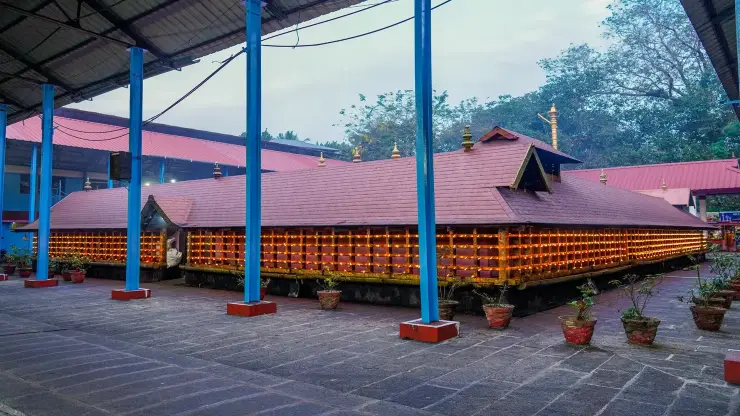
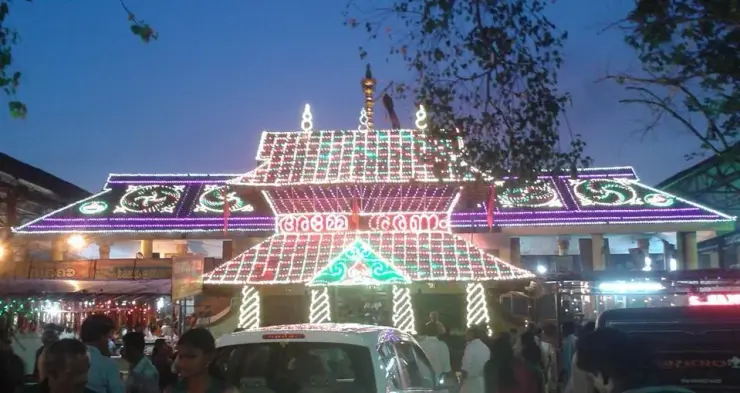
The living tradition that is genuinely Konni’s is at Kallely, nine kilometres from the town in Aruvappulam panchayat, on the bank of the Achankovil beside the forest road: the Sree Kallely Oorali Appooppan Kavu. The presiding figure, Oorali Appooppan — also called Kallely Appooppan — is worshipped as the lord of 999 hill deities, with Oorali Ammoomma venerated as his mother. Around them stand a crowd of subsidiary presences that reads like an inventory of southern Kerala’s non-Brahminical religion: Vadakkanchery Valyachan, Ganapathi, Parashakti, Yakshiyamma, Nagaraja and Naga Yakshi, Rakthrakshas and Kuttichathan, Kochukunju Arukala, Bharatha Poonkuravan and Poonkurathi, and Harinarayana Thampuran.
The kavu is explicitly not a Vedic temple, and this is the point of it. The ritual is described as descending from early Dravidian and Naga forest practice and as differing entirely from the tantric pooja followed in ordinary Kerala temples; the officiants are called Ooralimar, and the shrine’s own website credits the Kuravan community with keeping the observances by oral transmission. There is no Sanskrit liturgy. Betel leaf, not mantra, takes the central place in the ceremonies, and the shrine claims something almost no Indian temple claims — that it is open for darshan around the clock, every hour of the day.
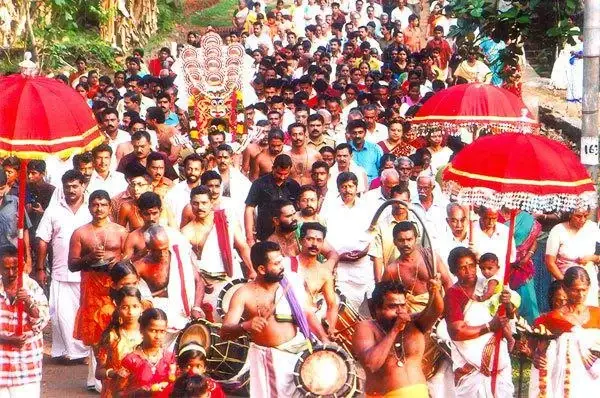
The observances are worth naming individually because several of them exist nowhere else. Aazhi pooja is a fire ritual fed with twenty-one kinds of forest wood. Vellamkudi nivedyam is a water offering made to ancestral and family deities. Anayoottu, vanarayoottu and meenoottu are the feeding of elephants, monkeys and fish. Karkidaka vavu bali, the new-moon offering to the dead in the Malayalam month of Karkidakam, is kept here as a major day. Bharathakkali, thalayattam kali, padayani and mudiyattam are performed on occasion. On kumbhappattu the sources disagree, and we say so: a Manorama account calls it a song cycle in praise of the deity and the 999 hills, while the shrine’s own site describes it as a bamboo-tube percussion ritual struck against river stones and performed only here. The main festival is the ten-day Pathamudaya Mahotsavam in Medam, beginning on Vishu and closing on Pathamudaya day with the Aditya Pongala; the Mandala–Makaravilakku season from Vrischikam into Makaram is the other big stretch, and the annual round of rituals is timed to follow the close of the Sabarimala season.
There is one more story here that we cannot tell properly, and it is more honest to say so than to fill the gap. At Kokkathodu, a few kilometres from Konni, a mass of exposed rock called Kattathipara returns a call three times over, and Kerala Tourism’s own page for the site says the echo and the rock have attached themselves to local narratives about a hunter and his companion. It does not say who the hunter was, what he did there, or how the story ends, and we could find no version of it in print in English or in Malayalam. So: there is a story at Kattathipara, and we do not know it.
The last body of lore in Konni is not religious at all. It is the naming of elephants. The trained animals used in the captures are remembered individually and by full name — Konniyil Kochayyappan, Ranji, Padmanabhan, Balakrishnan, Soman — in the way villages elsewhere remember people, and the Malayalam panchayat record claims that elephant rearing and training went on at Konni since before recorded history, of which the old kraal survives as the remnant. That last claim is the panchayat’s, not ours, and we have found nothing that dates the practice earlier than the 1810 capture period. What is documented is narrower and stranger: that Konni was one of the two principal elephant-capture centres in Kerala, the other being Kodanad, and that a town of thirty thousand people organised a working life around an animal it is now unlawful to take.
More about Konni
History
Konni’s recorded institutional history starts with a boundary rather than a settlement. The Travancore Forest Act was passed in 1887, and on 9 October 1888 the Konni forest was declared a reserve — the first in what is now Kerala. A competing account, also in circulation, says the Konni and Achencoil reserve forests were constituted by the Maharaja of Travancore in 1897 and 1901 respectively. The two do not agree, and we have not been able to reconcile them from an accessible primary source; the Forest Department’s own history page, which is the origin of the 1888 date, has been moved and now returns a 404.
Elephant capture at Konni is dated to 1810, well before the reserve was drawn. Animals were taken in pits at Mundomoozhy, Mannarappara and Thura, then trained on site. The wooden kraal that survives was built in 1942 in kambakam, one of the heavy Western Ghats hardwoods, on the Adoor road about a kilometre from the town junction. Capture was formally ended by government circular in 1977 — the same year the Indian elephant was moved to Schedule I of the Wildlife (Protection) Act, 1972 — though the practice is reported to have lapsed earlier.
The reorganisation into a public-facing site came much later. The kraal compound acquired a history museum, an audio-visual room, medicinal plant beds and a forest-produce shop, and was absorbed into the Konni–Adavi eco-tourism programme operated by the Divisional Forest Office, Konni, alongside the Adavi coracle stretch on the Kallar and the long forest-bus route towards Gavi. The site is a place where an obsolete institution is displayed, not a place where it continues.
The town’s civil history is shorter to tell. The Konni Public Library was founded on 25 May 1940 under a Travancore-era name and renamed after independence. Pathanamthitta district was created on 1 November 1982 from 54 villages taken out of the Quilon, Alleppey and Idukki districts, with five taluks at the start — Thiruvalla, Mallappally, Ranni, Kozhencherry and Adoor. Konni was not one of them. The district now has six taluks including Konni, but we could not establish from an official source when Konni taluk was constituted, and we do not repeat the common online claim that it came across from Kollam in 1982, because the district’s own history page contradicts it.
In 2012 the Konni Forest Division became part of the Western Ghats serial property inscribed by UNESCO as a World Heritage Site. In 2020 the town gained a Government Medical College, its hospital inaugurated on 14 September that year. For a settlement whose economy was built on taking things out of a forest, those two dates are a reasonable summary of the direction of travel.
Why visit
It is the working headquarters of the oldest reserve forest in Kerala, and the Divisional Forest Office here is where forest permissions and programmes for this stretch of the Ghats are actually issued.
The 1942 timber kraal is a rare surviving piece of the machinery of elephant capture, kept as a museum piece rather than as a working facility.
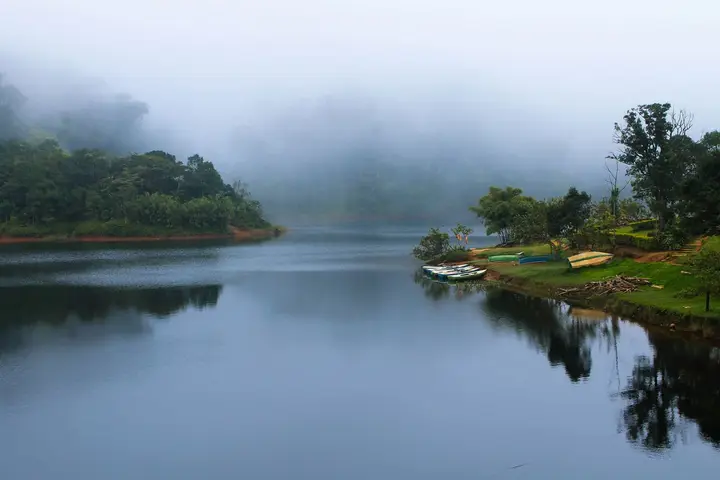
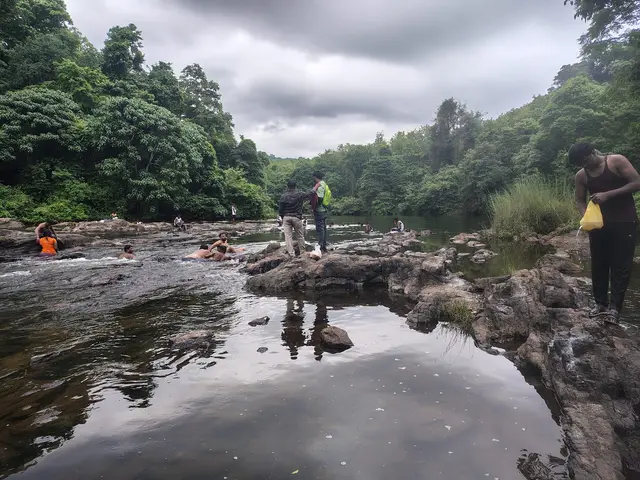
The Achankovil runs through the middle of the town, with broad sand beds in the dry months and a genuine ghat river above.
Kallely, nine kilometres out, holds one of the few non-Vedic forest shrines in Kerala that is open around the clock and keeps rituals — aazhi pooja, kumbhappattu, vellamkudi nivedyam — found almost nowhere else.
It is the practical staging point for Adavi on the Kallar, for the Kokkathodu rock country, and for the long road east to Achankovil and the Tamil Nadu border.
It is a real small town rather than a resort — a junction, a market, a library, a taluk office and a medical college — and the surrounding rubber and teak country explains how the district earns its living.