What to expect
Highlights
- Temple visit at Thiruvanchikulam Mahadeva Temple
- Kerala temple architecture and rituals
- Local food, shops and pilgrim services nearby
Ancient Shiva temple at Kodungallur linked with the old Chera capital of Mahodayapuram. This temple guide is organized from Thrissur city in Thrissur district, with practical planning for routes, timing, nearby stays, food, operators and direct local inventory. Use it to compare what to see, how long to spend, when to go and which pilgrim stays, respectful local guides, food stops, shops, transport and verified visitor support should be verified around Thiruvanchikulam Mahadeva Temple.

Entry rules not verified for this temple. Some Hindu temples admit only Hindus, and most enforce a dress code at the door. We have not verified the rule for this particular temple, so please check before you travel — especially if you are not Hindu or are visiting from outside India.
We report each site's own published rules neutrally, and only where we can source them.
Thiruvanchikulam Mahadeva Temple belongs under Thrissur city, one of the practical travel bases in Thrissur district. Use Thrissur city for stays, food, local transport and operators, then plan this place as a focused stop rather than an isolated pin.
On the low, palm-shaded plain near Kodungallur — the ancient port-city that historians identify with the old Chera capital of Mahodayapuram — stands one of Kerala’s most historically loaded Shiva shrines: the Thiruvanchikulam Mahadeva Temple. It is quiet and unhurried today, but it carries an outsized place in the devotional map of South India, for it is widely held to be the only temple in Kerala counted among the Paadal Petra Sthalams — the Shiva shrines hymned by the Tamil Nayanar saints in the Tevaram. Here Shiva is worshipped as Mahadeva with his consort Parvati as Umadevi, and the very stones are tied to two of the sixty-three Nayanars: the poet-saint Sundarar and his royal friend, the Chera king-saint Cheraman Perumal Nayanar.
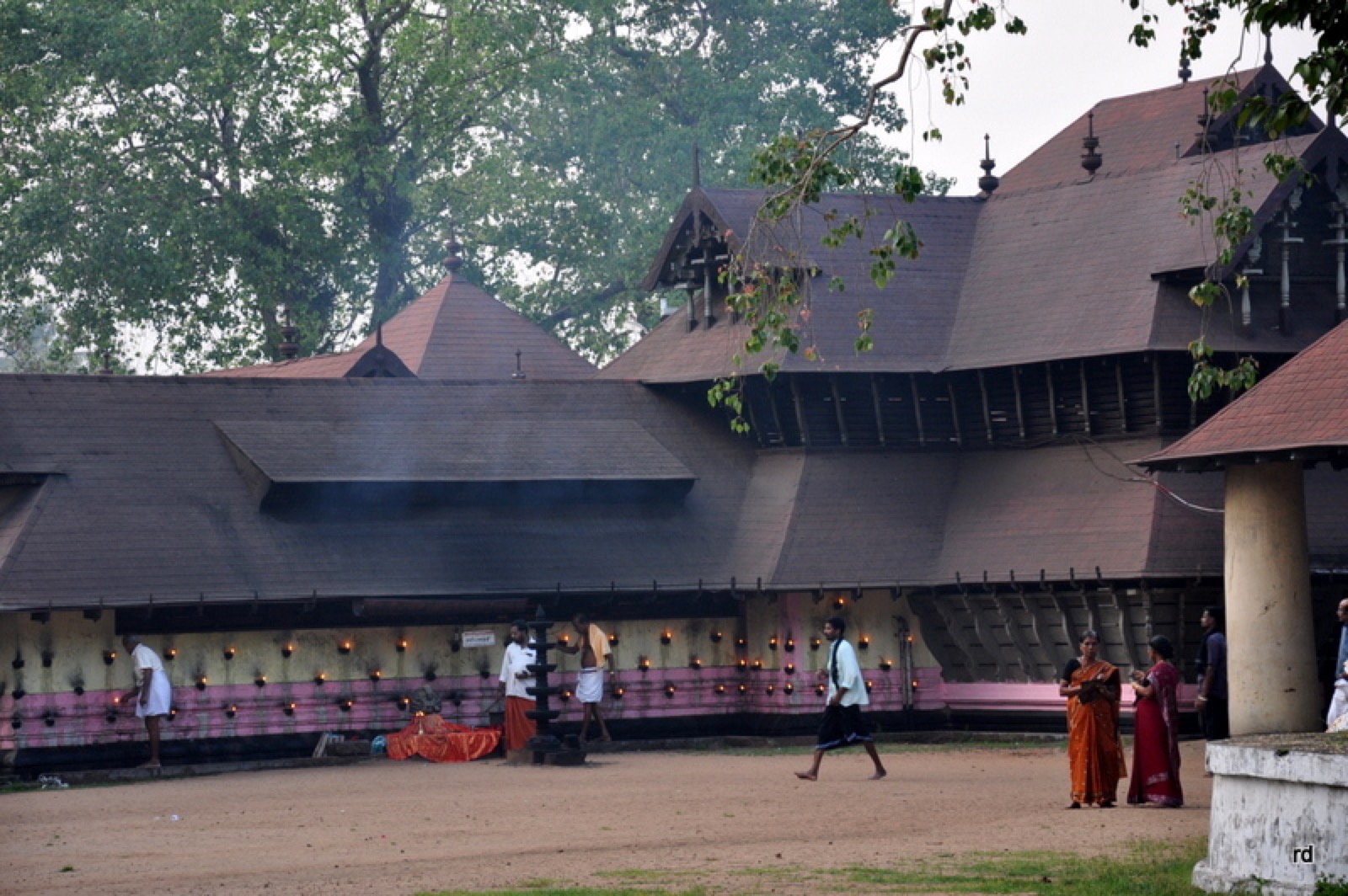
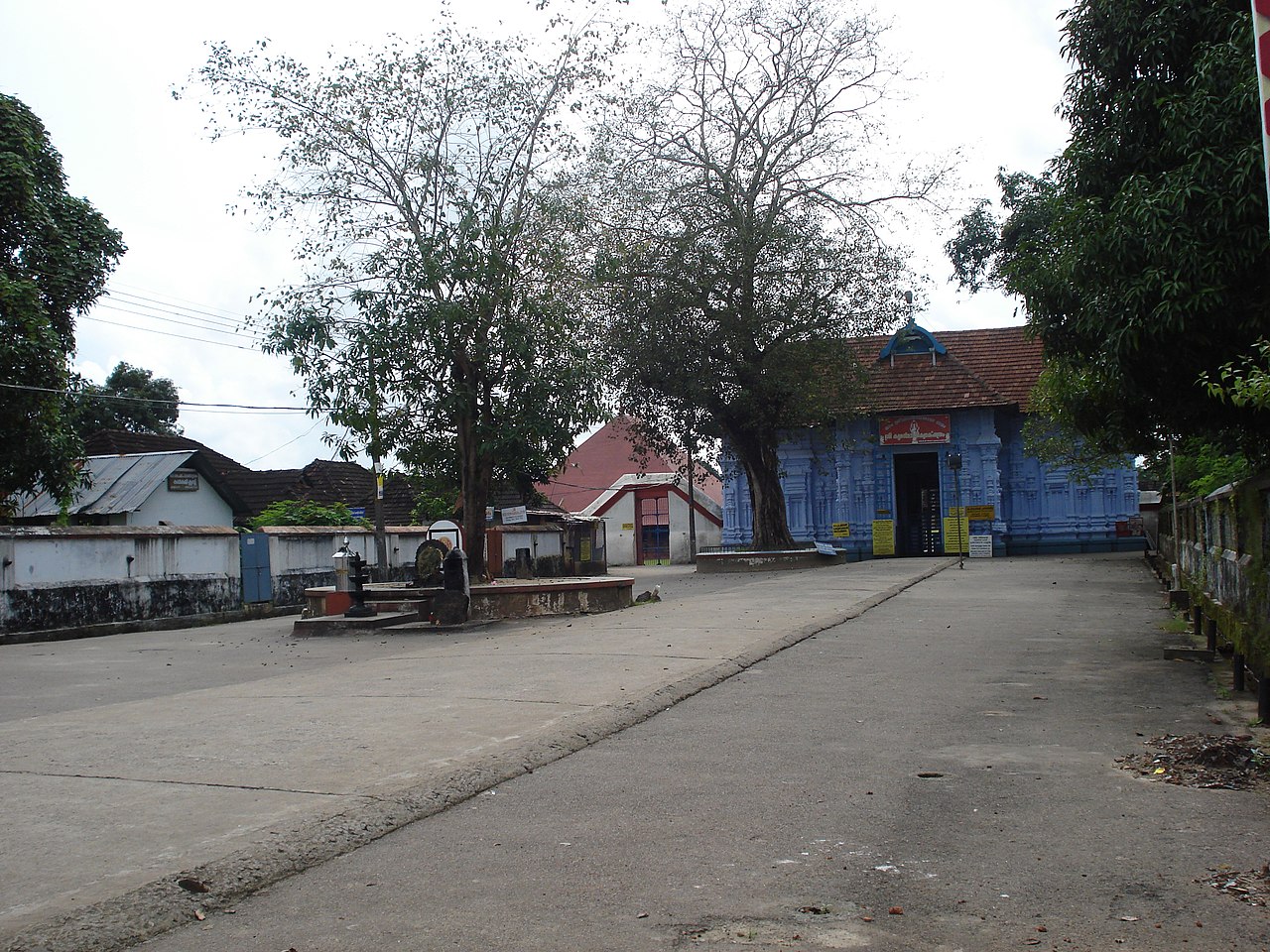
Thiruvanchikulam does not announce itself the way Kerala’s grand devaswom temples do. There is no towering gopuram-crowded skyline, no crush of buses; there is a walled compound in the Kerala style, entrances on the four sides, a fortified central sanctum, a copper-clad flagstaff, and the lamp-blackened calm of a place that has simply been prayed in for a very long time. Yet for anyone who knows the Tamil Shaiva tradition, this modest shrine near Kodungallur is a giant — the western outpost of the Nayanar world, the one Kerala temple that Tamil saints walked to and sang about.
The presiding deity is Shiva as Mahadeva, a Shivalinga in the innermost sanctum, worshipped alongside Parvati as Umadevi. What sets the temple apart from most Kerala shrines is the sheer density of its sub-shrines: local tradition counts an unusually large number of sub-deities within the compound — often cited as the highest concentration of upa-devatas in any Kerala temple (indicative — devotees and guides give slightly varying counts). To walk the compound is to move past shrine after shrine, each with its own lamp and its own small circle of the faithful.
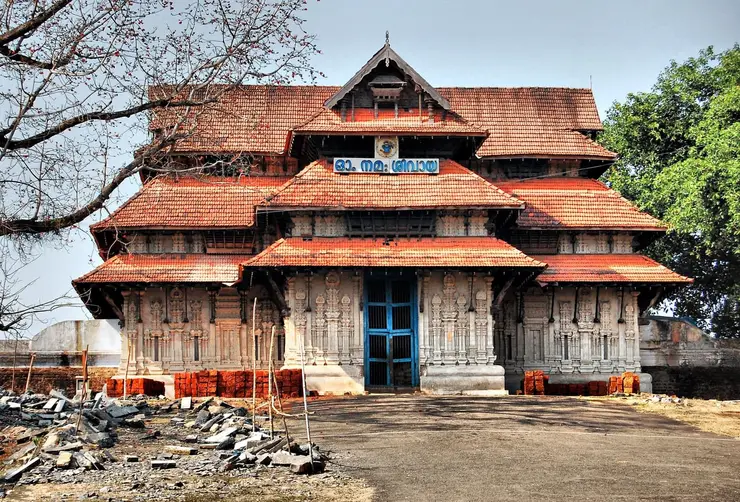
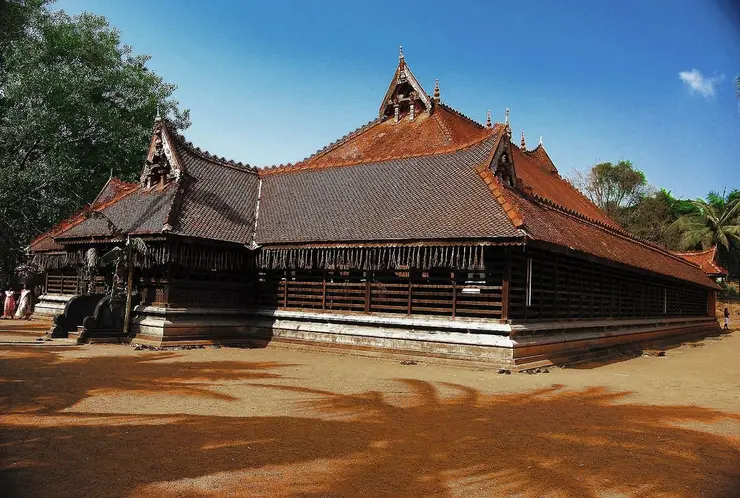
The temple is built in the classic Kerala idiom — a square, near-fortress sanctum, sloping tiled roofs, granite base courses, and the dim, incense-thick interior that Kerala temple architecture makes so well. Older accounts speak of murals and fine granite work; parts of the structure have been rebuilt over the centuries after damage, so what a visitor sees today is a layered fabric of ancient foundations and later restoration rather than a single frozen moment.
But it is the human story that fills this place. Thiruvanchikulam is bound up with Sundarar (Sundaramurthy Nayanar), one of the four great saint-poets whose hymns make up the Tevaram, and with Cheraman Perumal Nayanar, the Chera monarch remembered as Kazharittarivar who set aside his crown for devotion. The two are remembered as inseparable friends — king and poet — who worshipped Shiva here, and the temple guards the memory of their extraordinary departure from the world, a story the tradition tells as sacred legend rather than history.
For pilgrims travelling the Nayanar and Tevaram circuit, reaching Thiruvanchikulam is a kind of completion: it is the one node of that vast Tamil devotional network that lies west of the ghats, in Malayalam country. Standing before the sanctum, a visitor is standing where the Chera kingdom’s sacred heart is said to have beaten, in a corner of Kerala that was, a thousand years and more ago, a cosmopolitan port humming with merchants, monks and poets.
Today the temple sits within easy reach of Kodungallur’s dense cluster of heritage — the famous Kodungallur Bhagavathy Temple, the Cheraman Juma Masjid revered as one of the oldest mosques in the subcontinent, and the archaeological trail of ancient Muziris. That setting makes Thiruvanchikulam less a solitary stop than one stone in a mosaic of faiths and centuries, all packed into a small, green stretch of the Thrissur coast.
The best-loved legend of Thiruvanchikulam is the story of how two saints left the earth together. As the tradition tells it, the poet-saint Sundarar and the Chera king-saint Cheraman Perumal Nayanar were bound by a friendship deeper than that of king and subject — they were companions in devotion to Shiva. When the time came for Sundarar to be released from the world, it is said that Shiva himself sent a white elephant to carry him to Kailash, the god’s abode. Sundarar mounted the elephant and began his ascent; and Cheraman Perumal, unwilling to be parted from his friend, is believed to have followed on a swift white horse, spurring it heavenward by the power of a sacred hymn until he too reached Shiva’s presence.
The tradition places the departure from the precincts of Thiruvanchikulam, and links it to the Adi-Swati asterism in the Tamil month of Adi (around July–August), which is why the temple’s association with the two saints is remembered so vividly here. All of this is devotional legend as preserved in the Periya Puranam and in local memory — recounted here as sacred story, not as documented event — but it is the beating heart of why pilgrims come: to stand at the spot where, they believe, a poet and a king rode off to Kailash side by side.
A second strand of legend explains the temple’s pull for Tamil devotees: Sundarar is remembered as having composed and sung Tevaram hymns in praise of the Mahadeva of Thiruvanchikulam, so that the very verses of the Tamil Shaiva canon reach across the mountains to name this Kerala shrine. To sing those hymns before this sanctum is, for the faithful, to close a loop that the saint himself opened more than a millennium ago.
Thiruvanchikulam’s importance is inseparable from the history of the Cheras. Kodungallur and its surroundings are widely identified with Mahodayapuram, the capital of the later Chera or Kulasekhara dynasty that ruled much of present-day Kerala through the early medieval centuries. As the sacred temple of that capital region, Thiruvanchikulam stood close to the centre of Chera political and religious life, and the temple is generally dated to the Chera period, with foundations often placed around the 8th–9th centuries CE (indicative — scholars debate exact dating).
The temple’s deepest claim to fame lies in the Tevaram — the body of Tamil Shaiva devotional hymns composed by the Nayanar saints in and around the 7th century. Shrines praised in these hymns are honoured as Paadal Petra Sthalams, traditionally numbered at 276. Thiruvanchikulam is widely described as the only Paadal Petra Sthalam in Kerala — the sole shrine of that great Tamil devotional network to lie west of the Western Ghats (this ‘only in Kerala’ status is the standard tradition, but is best treated as the received claim rather than an undisputed fact).
The temple is tied above all to Sundarar (Sundaramurthy Nayanar), remembered as one of the four principal Nayanar acharyas whose hymns form the core of the Tevaram, and to Cheraman Perumal Nayanar, the Chera king numbered among the sixty-three Nayanars. That a reigning Chera monarch is himself counted a saint, and that the greatest of the Tamil hymnodists sang here, gives Thiruvanchikulam a doubled significance — political and devotional — that few Kerala temples can match.
Like much of coastal Kerala’s heritage, the temple has weathered turbulent centuries. Tradition holds that it suffered damage during the 18th-century invasions of the region and was subsequently restored under local chieftains and patrons; what stands today reflects that long history of injury and repair rather than an unbroken ancient fabric. The shrine is administered as a Devaswom temple and is recognised for its heritage value, sitting within the wider archaeological landscape of ancient Muziris and Chera Kodungallur.
For the historian and the pilgrim alike, then, Thiruvanchikulam is a doorway into a lost golden age: the Chera capital of Mahodayapuram, a port-country open to Roman, Arab, Chinese and Jewish traders, where a Tamil poet and a Malayali king could be remembered forever as brothers in devotion beneath the same Shaiva sky.
It is widely regarded as the only Paadal Petra Sthalam in Kerala — the one shrine of the great Tamil Tevaram network to lie west of the ghats — which makes it a bucket-list stop for anyone following the Nayanar pilgrimage trail.
The temple is the sacred heart of the old Chera capital region of Mahodayapuram near Kodungallur, so a visit is as much a walk into Kerala’s early-medieval history as it is an act of worship.
Its bond with two of the sixty-three Nayanars — the poet-saint Sundarar and the king-saint Cheraman Perumal Nayanar — and the beloved legend of their ride to Kailash give the shrine a story-richness that lingers long after you leave.
The classic Kerala-style architecture — walled compound, four-sided entrances, fortress-like sanctum, copper flagstaff and lamp-blackened interiors — offers a quieter, more contemplative temple experience than Kerala’s busier pilgrimage giants.
The unusually large cluster of sub-shrines within the compound, often described as the highest number of sub-deities in any Kerala temple, makes even a slow circuit of the grounds absorbing.
Its position inside Kodungallur’s dense heritage cluster — the Kodungallur Bhagavathy Temple, the ancient Cheraman Juma Masjid and the Muziris archaeological circuit — lets you fold Thiruvanchikulam into one of the most layered half-day heritage trails in Kerala.
Road km to Thrissur; ghat roads and traffic vary — allow extra.
Morning or early evening is usually best; festival days can be powerful but crowded.
Live forecast loads in your browser.
Sun and moon are calculated for this location and shown in IST. Photography windows are the hour around sunrise and sunset; the sunset bearing is degrees clockwise from true north. Moon phase is accurate to about half a day.
These are official or public-sector eco offerings that match this place, town or forest destination. Confirm availability, permits, tariffs and reporting times with the official operator before travel.
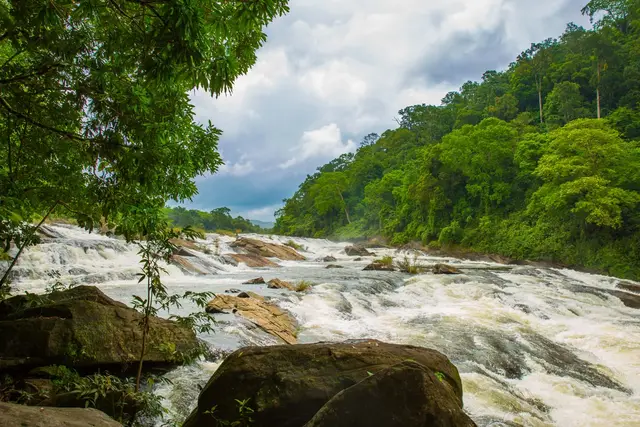
Dam, forest and sanctuary-side weekend eco destination near Thrissur.
Official source →Quiet green dam and forest-side outing in Thrissur district, listed by Kerala Tourism as an ecotourism destination.
Official source →Verified hotels, homestays, restaurants, experiences, sights, shops and rentals around Thiruvanchikulam Mahadeva Temple — commission-free, with direct contact. Filter by what you need.
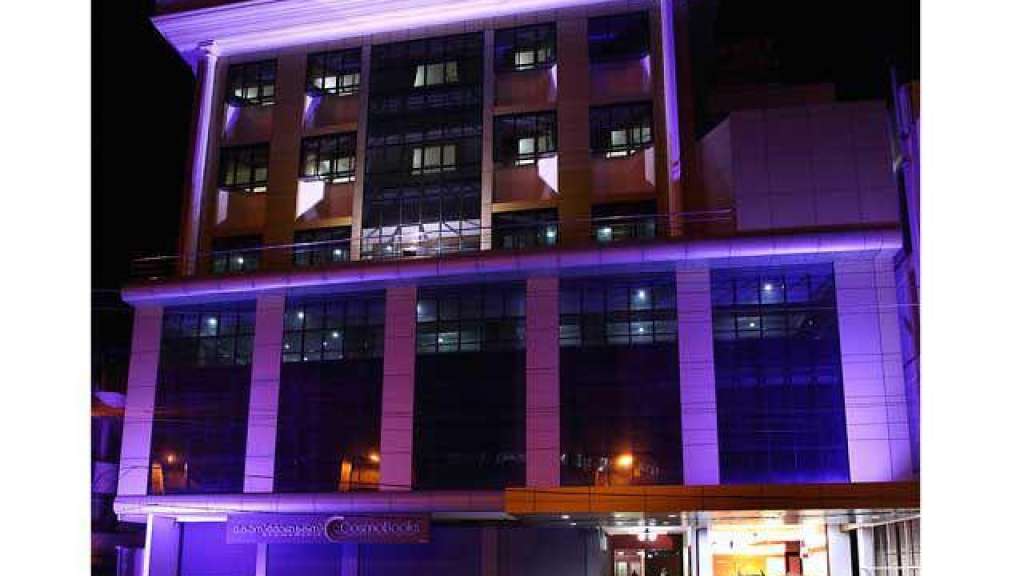
Four-star hotel on Paliyam Road near the North (Vadakke) bus stand in central Thrissur, with air-conditioned rooms, a restaurant and banquet facilities. Its Kerala Tourism provider record classifies it as a four-star property, a convenient upper-tier city base for Thrissur Pooram and business visitors.
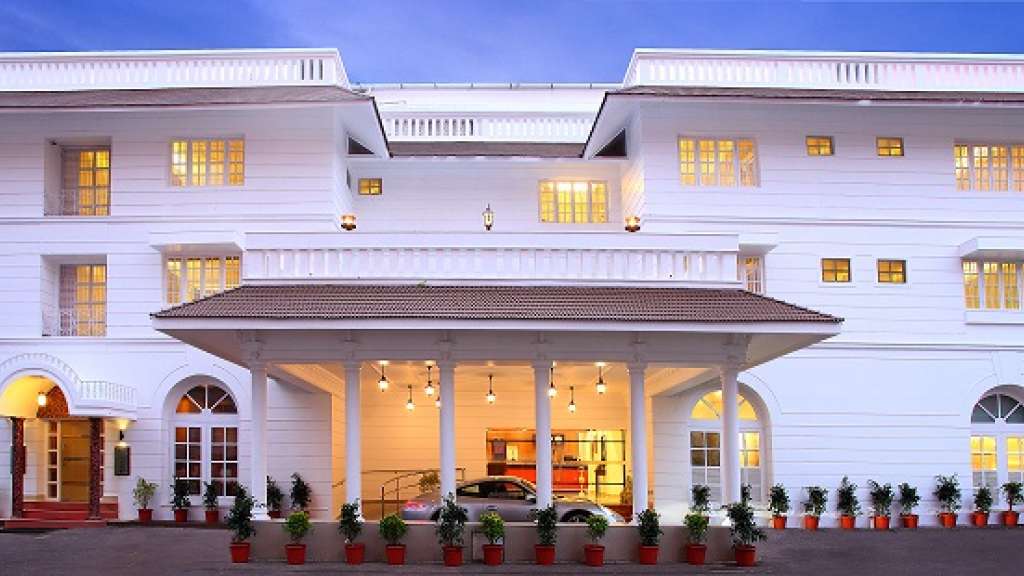
Long-running three-star hotel on Marar Road in the heart of Thrissur city, operating since 1984 with air-conditioned deluxe rooms, suites and double rooms. Its Kerala Tourism provider record and own website list a central location near the railway station with a restaurant and event facilities, making it a dependable mid-range city base.
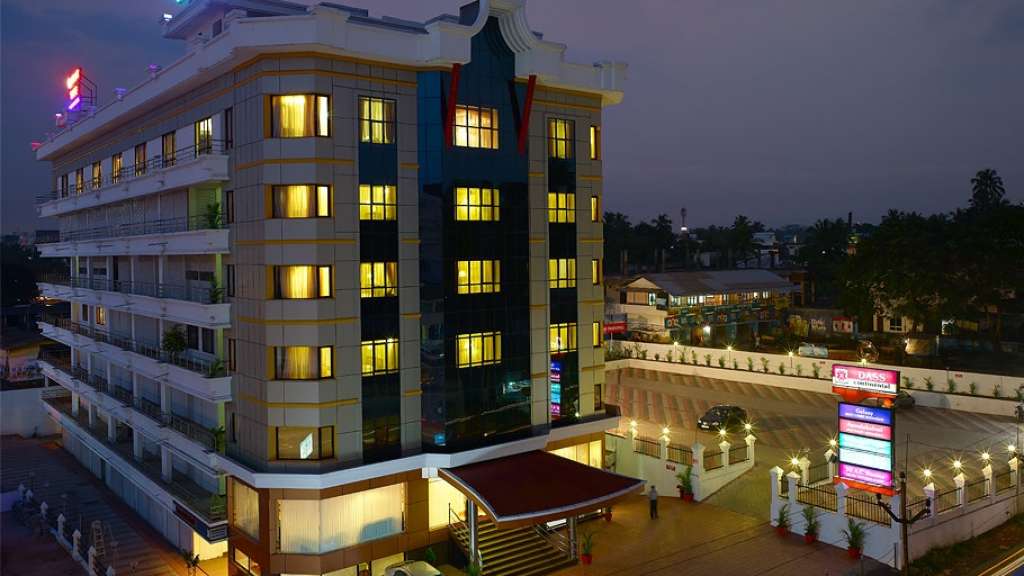
Sakthan Nagar city hotel with direct contact page and restaurant/spa facilities. Contact direct · Thrissur city, Sakthan Nagar, Hotel.

Thrissur city hotel near T.B. Road with official and Kerala Tourism contact evidence. Contact direct · Thrissur city, Hotel, T.B. Road.
Five-star business hotel near the Sakthan bus stand in Thrissur city. It has a multi-cuisine restaurant, spa and pool, on TB Road at Kokkalai.
Hotel near Thrissur Railway Station on T.B. Road, established 1980, with multi-cuisine restaurant and banquet halls.
Heritage hotel at Chembukavu in Thrissur city, established 1936. It offers rooms and an on-site family restaurant.
KTDC government-run budget hotel near the Indoor Stadium in central Thrissur. It has a restaurant and conference rooms.
Convention centre with hotel rooms at Puzhakkal, Thrissur, offering banquet halls, restaurant and business facilities.
Budget business hotel opposite the railway station on Poothole Road, Thrissur. It offers rooms and a multi-cuisine restaurant.
Four-star hotel on Kanjany Road, Olarikkara, in Thrissur. It has luxury rooms, a restaurant and banquet facilities.
Hotel in Thrissur city operating since 2003. It has a multi-cuisine air-conditioned restaurant plus banquet and conference halls.
Boutique hotel at Round North in central Thrissur. It has rooms, a multi-cuisine restaurant, a coffee shop and a spa.
Hotel near the North Bus Stand at Patturaikkal in Thrissur city. It has been run by the Koolas KPT group since 1978.
Four-star business-class hotel on Marar Road in central Thrissur, running for over 40 years. It offers multi-cuisine dining on site.
Tourism Department-approved Ramanilayam government guest house in Thrissur. Check official tariff · Thrissur stay, Government guest house, Ramanilayam.
International-brand hotel on Civil Lines Road with official Hyatt contact evidence. 5-star luxury hotel · Thrissur city, Hotel, Hyatt.
Book with the place itself. India’s cyber-crime coordination centre warned in April 2025 that convincing copies of hotel and pilgrimage booking sites are being pushed through sponsored search and social ads, taking payment for rooms the property never hears about. Every listing here links to the business’s own contact details and its own Google or Bing profile — we take no commission and sit in nobody’s payment path. If a booking page reached you through an ad, check the address bar against the property’s own site before you pay. Fraud can be reported on cybercrime.gov.in or on 1930.
Thiruvanchikulam Mahadeva Temple sits in Thrissur city, and these rank everything verified across the town rather than this one spot — built from the same listings shown above, ordered by the strength of the source evidence behind each entry rather than by anyone's star score. Every card shows how many places are really on it. Nobody pays to appear.
10 more Thrissur city experiences worth building a day around, each with a full guide, how to reach it and what sits next to it. Thiruvanchikulam Mahadeva Temple is left off — you are already on it — and so is anything already shown in the nearby list further down, so nothing here repeats.
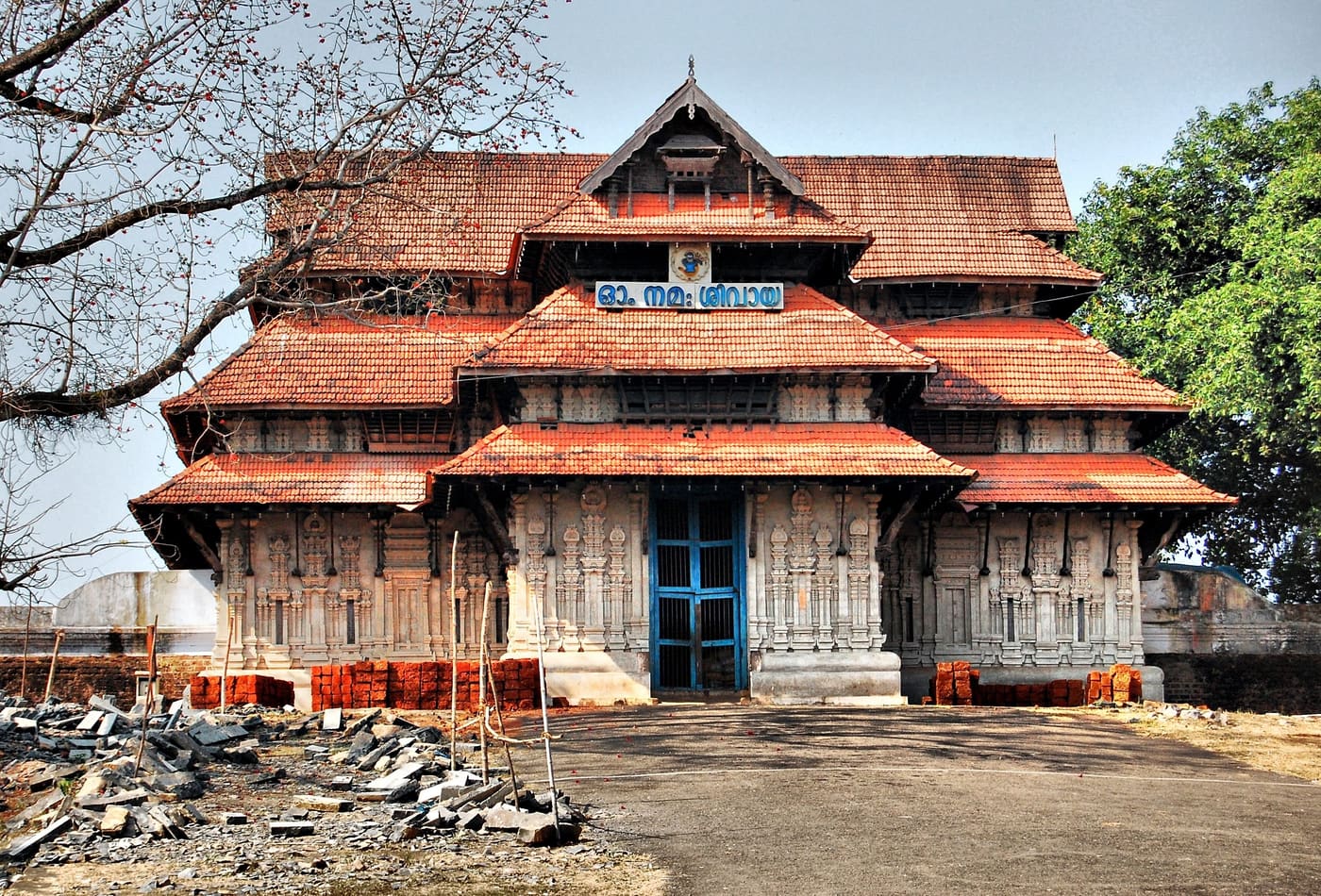
Ancient temple at the centre of Thrissur’s round, associated with Thrissur Pooram.

Guided five-kilometre forest trek (Virakuthodu to Choorathala) inside the Chimmony Wildlife Sanctuary east of Thrissur, with soft, half-day and full-day options.

Forest trekking in the Peechi-Vazhani Wildlife Sanctuary, Kerala’s second-oldest sanctuary, about 24 km east of Thrissur.
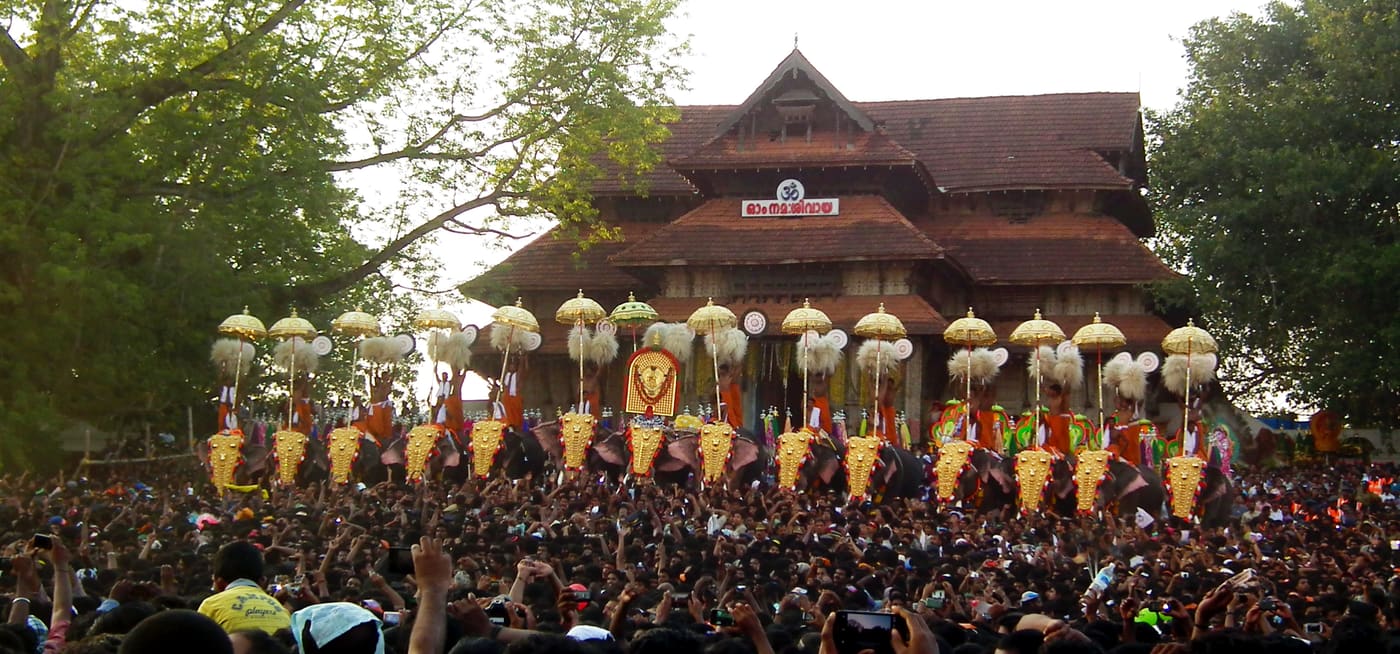
Kerala’s most famous temple festival, held around April/May at the Thekkinkadu ground around Vadakkunnathan.

Restored palace and archaeological museum in Thrissur city, built by Raja Rama Varma Sakthan Thampuran.

The “Puthan Pally” basilica in Thrissur, known for its Bible Tower — among the tallest church towers in Asia.

State museum, art gallery and natural-history collection at Chembukkavu; the zoo animals moved to the new zoological park at Puthur, open since February 2026.
Reservoir and garden at the edge of the Peechi-Vazhani sanctuary, with boating, about 20 km east of Thrissur.

A low hill and park on the edge of Thrissur city, popular for sunset views and morning walks.

A check dam, hanging garden and butterfly garden on the Chalakudy river near Athirappilly, a popular picnic and day-trip stop.
Roampedia is commission-free — own or know a stay, eatery, guide or shop near Thiruvanchikulam Mahadeva Temple? List it and it appears here once verified.
Add a nearby businessEntry: No entry fee — darshan is free; you may wish to carry small change for offerings, lamps or specific poojas (indicative — confirm locally).
Dress code: Traditional Kerala temple dress applies. Men are customarily expected to remove upper garments and enter bare-chested in a mundu or dhoti; women should wear a saree, or a long skirt-and-blouse or salwar-kameez, with modest, conservative dress. Entry to the inner precincts is generally reserved for Hindus (confirm current rules locally).
Festivals: The temple’s main annual festival falls in the Malayalam month of Kumbham (around February–March), an eight-day celebration beginning with flag-hoisting (kodiyettu) and ending with the Arattu procession; Maha Shivaratri is observed with special fervour, and full-moon Palliyara poojas, Thiruvathira and Navaratri are also marked. The saints’ association is remembered around the Adi-Swati day (around July–August). (Indicative — festival dates follow the Malayalam/Tamil calendars and vary year to year; confirm locally.)
Photography: Photography of the sanctum and inner precincts is usually restricted, as at most Kerala temples; mobile phones and cameras may need to be left outside or used only in outer areas. Ask temple staff and respect any posted restrictions before photographing (indicative — confirm locally).
Work out your return before you settle in for the sunset. Public transport here thins out sharply in the evening, and Thiruvanchikulam Mahadeva Temple is easier to reach than to leave. We do not publish departure times: there is no official live feed we are permitted to republish, and a wrong time here would strand you. Check the operator directly on the day.
Ask at the bus stand for the time of the last service back, not the next one. If you miss it, an auto or app cab is the fallback — agree the fare before you get in.
We have not assessed physical access at this place yet. Across India, step-free routes, handrails and accessible toilets are the exception rather than the rule, and pavements are often interrupted — if step-free access matters to you, contact the site or a local operator before committing to the trip.
Charge cap and free-transaction limits: Reserve Bank of India, in force since 1 May 2025.
Mapped within about 1.2 km of Thiruvanchikulam Mahadeva Temple, with real walking routes rather than straight-line distances. Community-mapped data: opening hours are shown only where they are recorded, and this is not a complete list — something unmapped may well be closer. Please confirm on the ground.
Emergency numbers are verified against official government and state tourism sources. 112 works anywhere in India.


Nearby toilets, pharmacies, ATMs, seating and vets are community-mapped and may be incomplete or out of date. Map data © OpenStreetMap contributors | Walking times © openrouteservice.org by HeiGIT
It is widely held to be the only temple in Kerala counted among the Paadal Petra Sthalams — the 276 Shiva shrines sung by the Tamil Nayanar saints in the Tevaram. That makes it the sole node of the great Tamil Shaiva pilgrimage network lying west of the Western Ghats, and a magnet for devotees following the Nayanar trail (this ‘only in Kerala’ status is the traditional claim; treat it as the received tradition).
Both are among the sixty-three revered Nayanar saints of Tamil Shaivism. Sundarar (Sundaramurthy Nayanar) is one of the four great hymnodists whose verses form the Tevaram, and he is said to have sung in praise of the Mahadeva of Thiruvanchikulam. Cheraman Perumal Nayanar was a Chera king remembered as his close friend and fellow devotee. The temple is bound up with the legend of the two of them departing together for Shiva’s abode.
As sacred legend tells it, when Sundarar was to be released from the world, Shiva sent a white elephant to carry him to Kailash from Thiruvanchikulam; his friend Cheraman Perumal, unwilling to be parted, is believed to have followed on a white horse, reaching Shiva’s presence by the power of a hymn. It is recounted as devotional story rather than documented history.
Yes. Kodungallur and its surroundings are widely identified with Mahodayapuram, capital of the later Chera or Kulasekhara dynasty, and Thiruvanchikulam is regarded as the sacred temple of that capital region. The shrine is generally dated to the Chera period, around the 8th–9th centuries CE (indicative — the exact dating is debated).
As with most traditional Kerala Hindu temples, entry to the inner precincts is generally reserved for Hindus, and a traditional dress code applies. Visitors of all backgrounds can, however, take in the setting and the wider Kodungallur heritage cluster nearby (confirm current rules locally before visiting).
Thiruvanchikulam sits within Kodungallur’s remarkable heritage cluster. Pair it with the famous Kodungallur Bhagavathy Temple, the ancient Cheraman Juma Masjid — revered as one of the subcontinent’s oldest mosques — and the Muziris Heritage archaeological circuit for a rich half-day of history and faith.
Morning or early evening is usually best; festival days can be powerful but crowded.
Entry: No entry fee — darshan is free; you may wish to carry small change for offerings, lamps or specific poojas (indicative — confirm locally).. Timings: Typically open in the morning from around 4.00–5.00 am to about noon, and again in the evening from around 5.00 pm to 8.00–8.30 pm, with darshan paused during the midday closure (indicative — timings shift with festivals and ritual schedules, so confirm locally before visiting).. Fees and timings are indicative — confirm on site before you travel.
Base yourself in Thrissur city or a nearby town in Thrissur, then confirm the last-mile route locally before leaving. Check temple entry customs, dress rules and festival crowd conditions before arrival. If the visit depends on forest, temple, boat, ferry, weather or seasonal access, check the official/local rule on the day before travel.
45 minutes to 2 hours, longer during festival or queue periods.
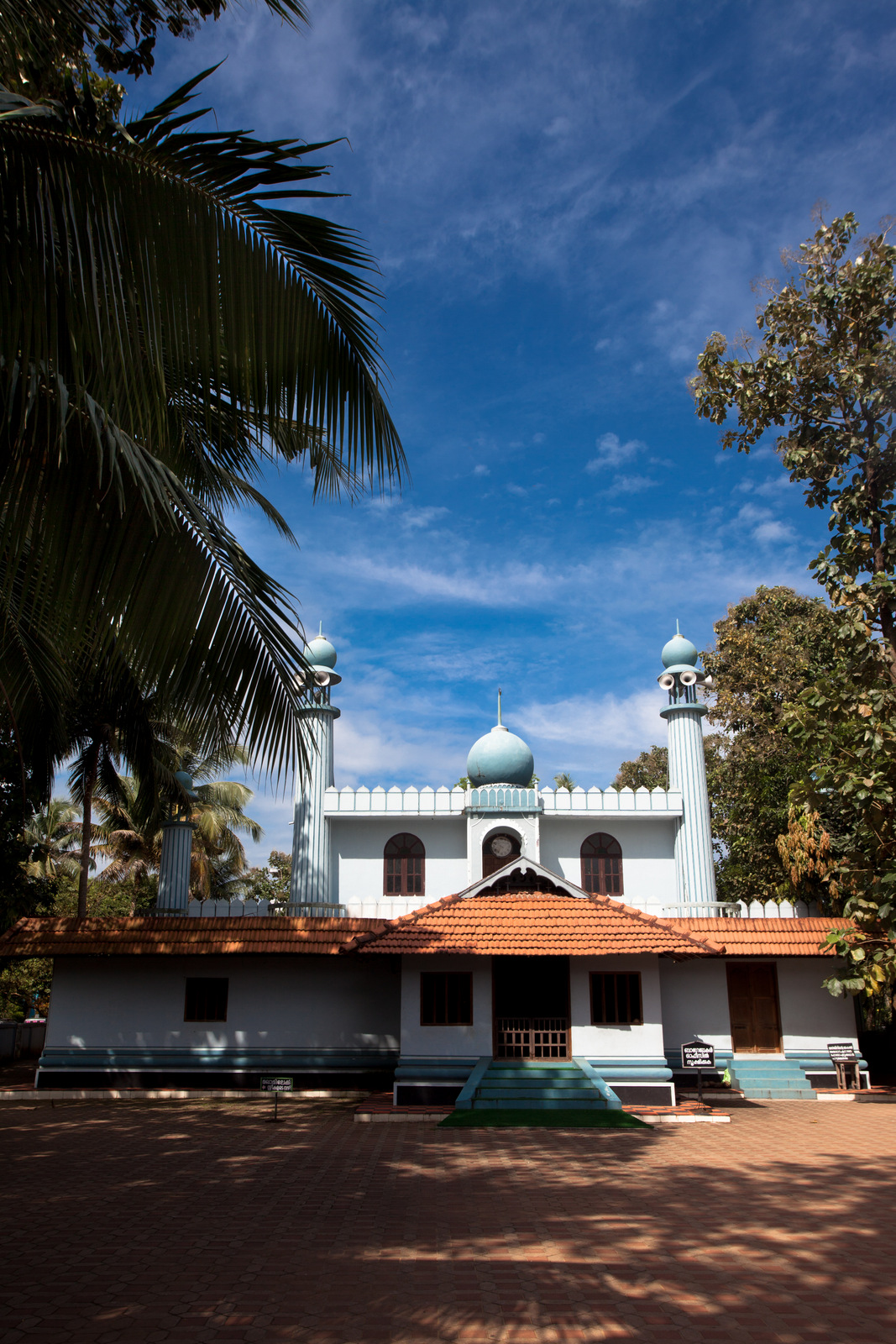
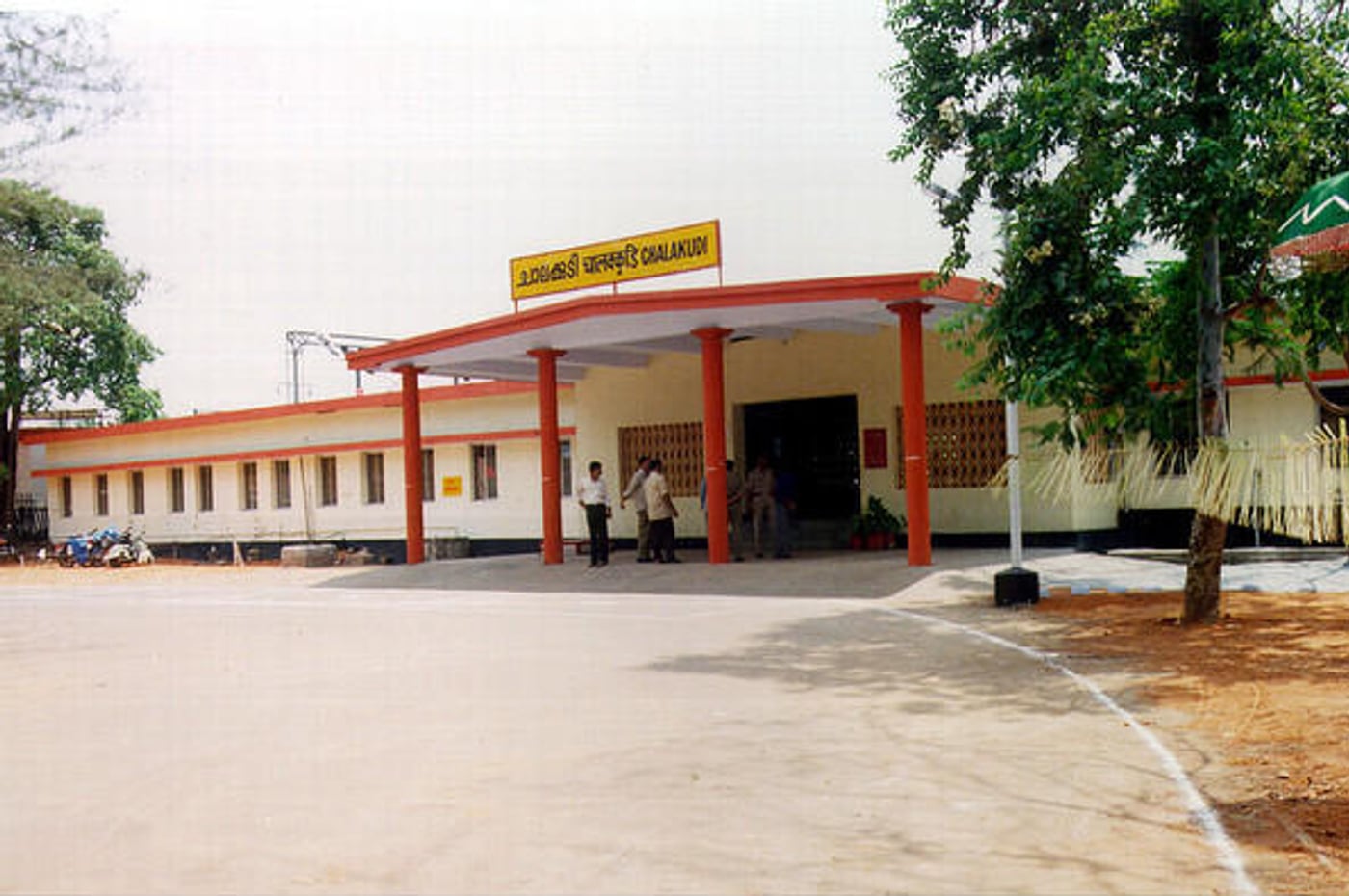
Nearby you can pair Cheraman Juma Masjid (570 m), Kodungallur Bhagavathy Temple (2.0 km), Koodalmanikyam Temple (15.1 km), Chalakkudy railway station (16.2 km).
Use official counters for offerings/tickets where applicable. Keep footwear and valuables secure in crowded areas.
We have not published a story about Thiruvanchikulam Mahadeva Temple itself yet. These cover Thrissur city, the town it sits in, and the wider district.
Route-level itineraries and practical guides for the rest of Kerala.