Tiger Cave

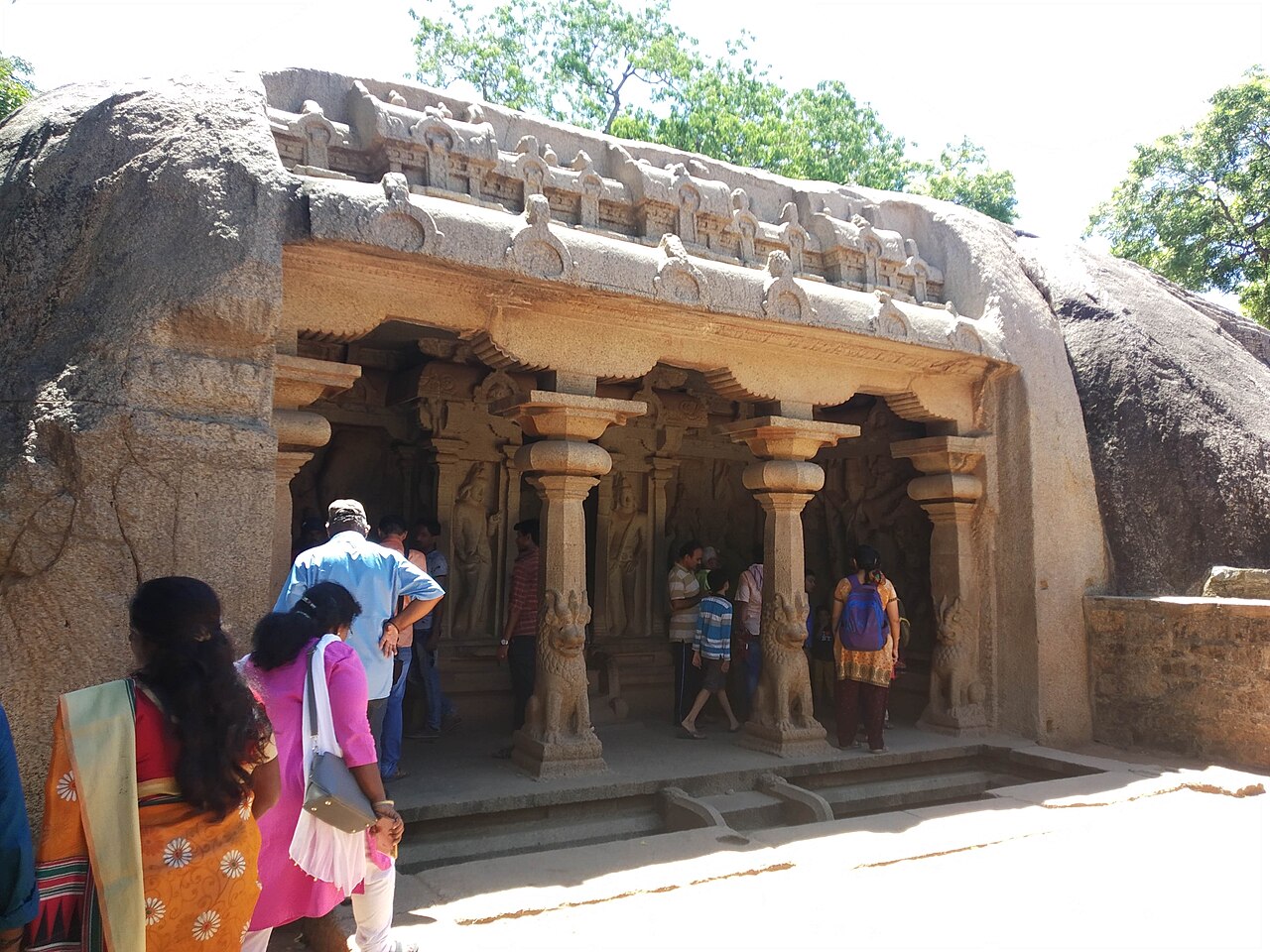
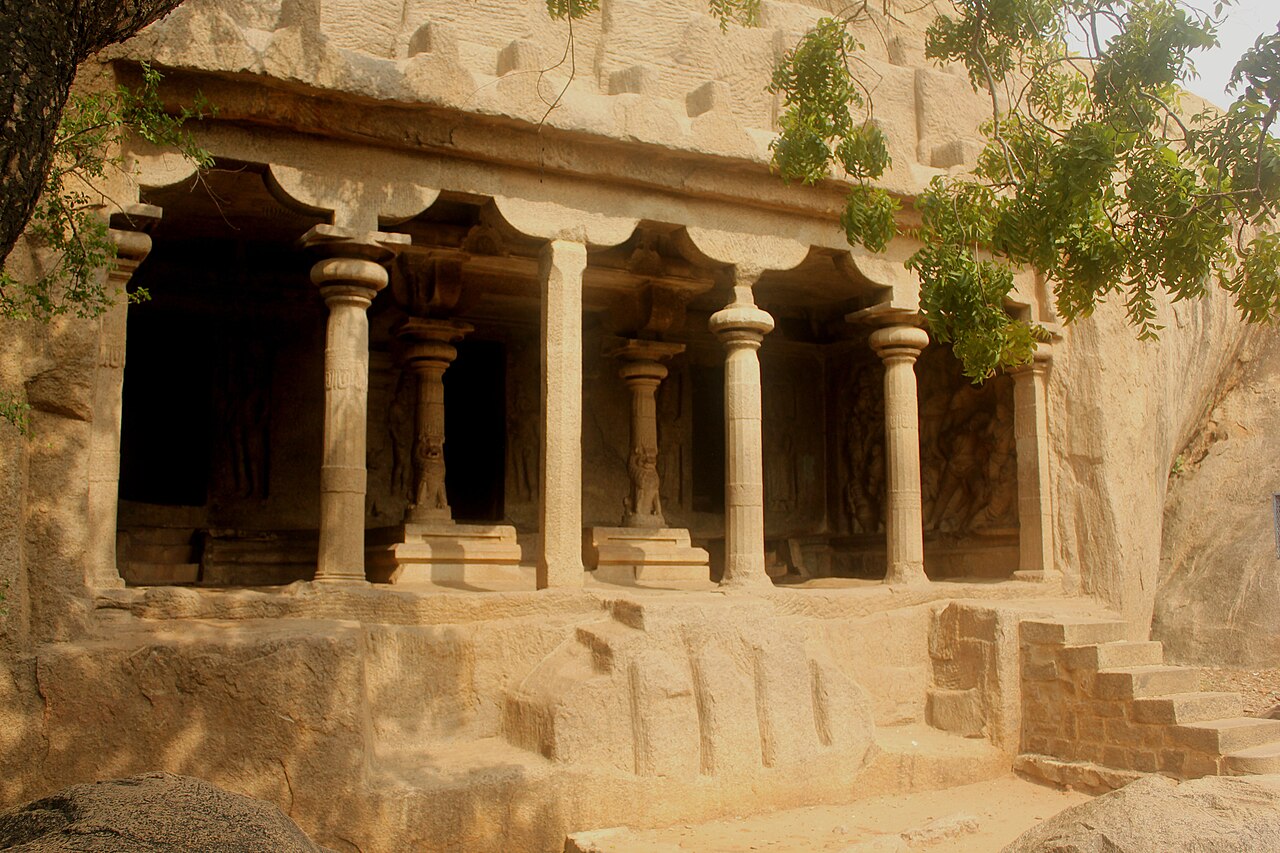
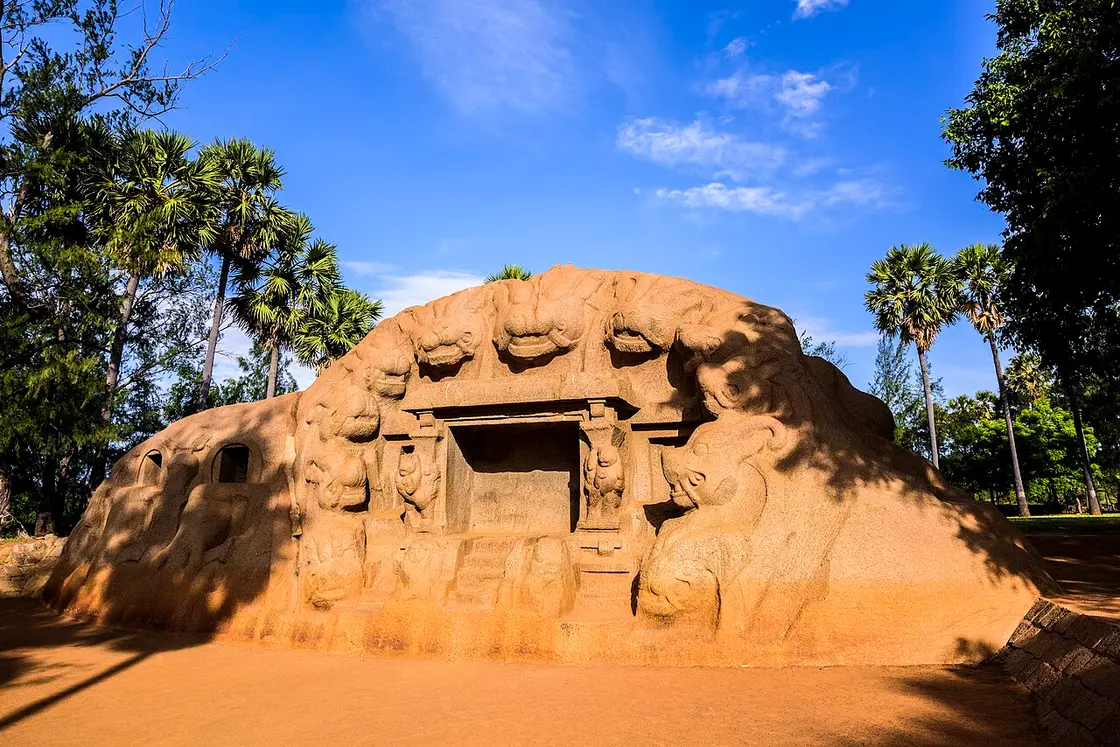
The Tiger Cave, locally the Yali Mandapam, is an 8th-century Pallava rock-cut monument at Saluvankuppam, carved into a granite outcrop in a quiet grove near the Bay of Bengal. Its signature feature is a shallow pavilion whose opening is ringed by a crown of sculpted yali heads, mythical creatures with tiger-like faces that give the site its popular name.

Tiger Cave, Mamallapuram
Practical guide

Plan Tiger Cave

Who's going?Tailor Tiger Cave to your trip
Typeheritage
Nearest baseMamallapuram
DistrictChengalpattu
Best timeThe cooler, drier stretch from November…
Time neededAround 30 to 45 minutes is enough to see…
EntryOpen-access site with no ticket counter
Places to visit28Listed businesses3

Part of the wider Mamallapuram cultural landscape shaped under the Pallavas and associated with the reign of Rajasimha (Narasimhavarman II), the site is maintained by the Archaeological Survey of India. In 2005 an inscription found here led to the excavation of an early Murugan shrine nearby, deepening the site's archaeological importance.

The story

Tiger Cave is worth visiting for a quiet Pallava rock-cut pavilion framed by yali heads at Saluvankuppam.

The story of Tiger Cave

Study the yali-framed mandapa, open grove and nearby excavated remains as a compact archaeological stop north of central Mamallapuram.

The monument is associated with the eighth-century reign of Rajasimha; excavations after the 2004 tsunami revealed remains of an earlier Subrahmanya temple nearby.

Confirm ASI access after storms; do not climb carvings or approach rough surf.

Tiger Cave deserves time for the details identified above rather than a rushed photograph. At Tiger Cave, use the named visitor approach, check the current public boundary on arrival and concentrate on the feature that makes this place distinct within its town. For Tiger Cave, any closure, worship restriction or safety barrier takes precedence over an older itinerary.

Legend & myth

Its tiger name comes from the fierce yali faces around the pavilion, a popular description rather than zoological identification.
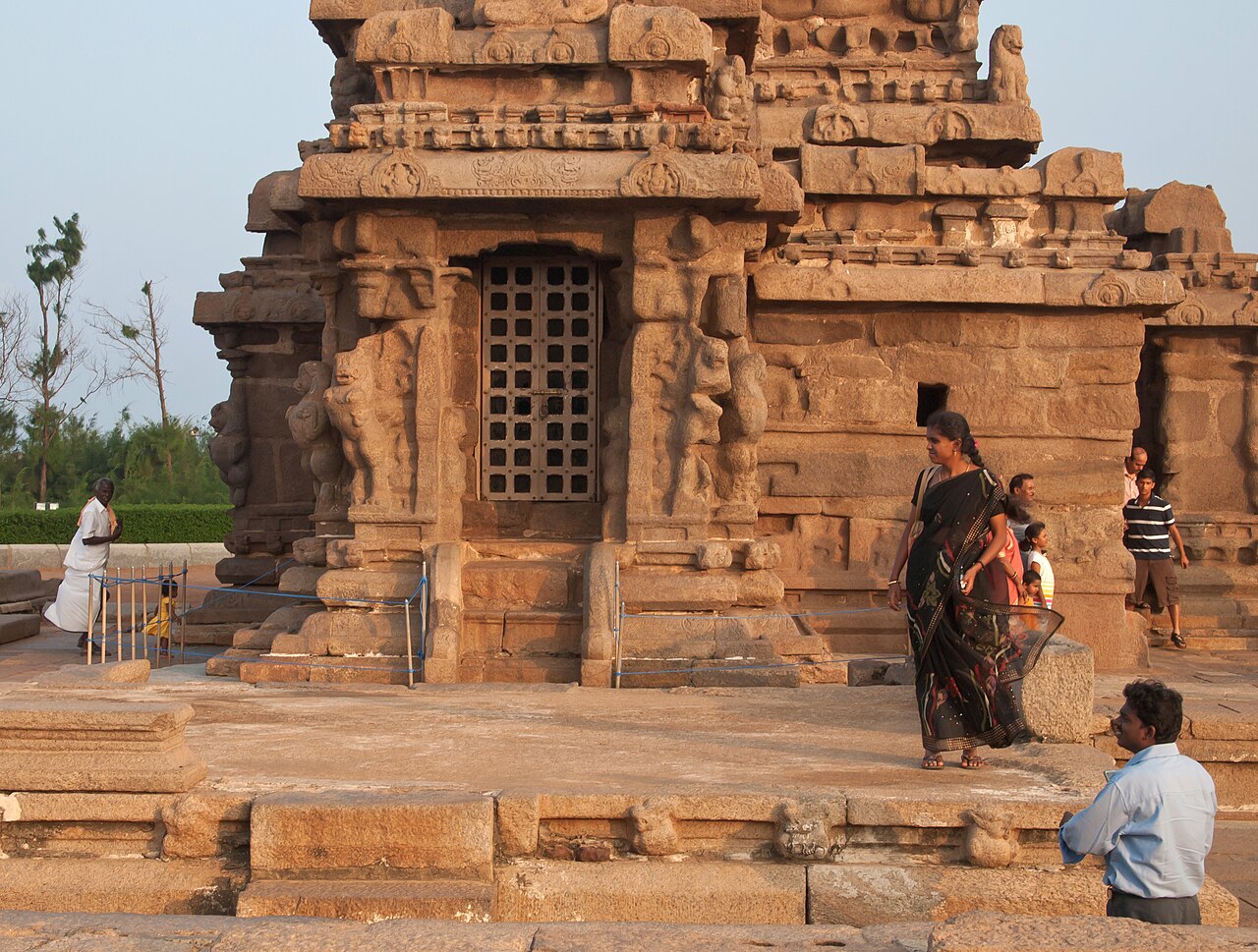
Read the full history of Tiger Cave 39 more words

History

The monument is associated with the eighth-century reign of Rajasimha; excavations after the 2004 tsunami revealed remains of an earlier Subrahmanya temple nearby.

Why visit

Experience a quiet Pallava rock-cut pavilion framed by yali heads at Saluvankuppam in its real setting.

What to expect

Highlights

  • The fan of carved yali heads framing the main pavilion, the detail that gives the Tiger Cave its name
  • Flanking rampant-animal pilasters and additional rock-cut cells, including carved elephant motifs
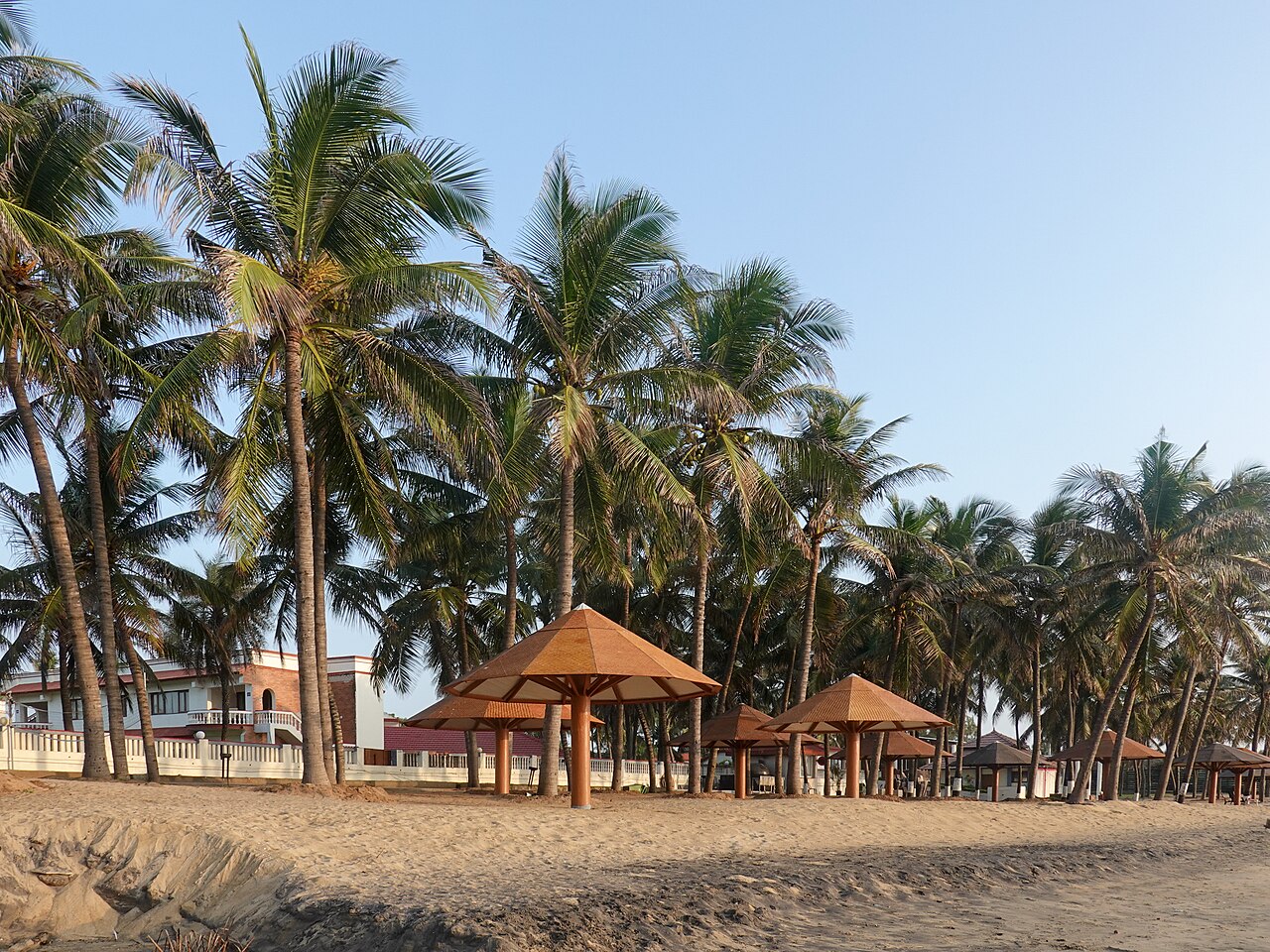
  • The peaceful casuarina grove and beach setting just off the ECR, a contrast to the busier Mamallapuram core
Getting there

How to visit

  • Approach from the ECR and follow the short path into the grove to reach the main carved pavilion
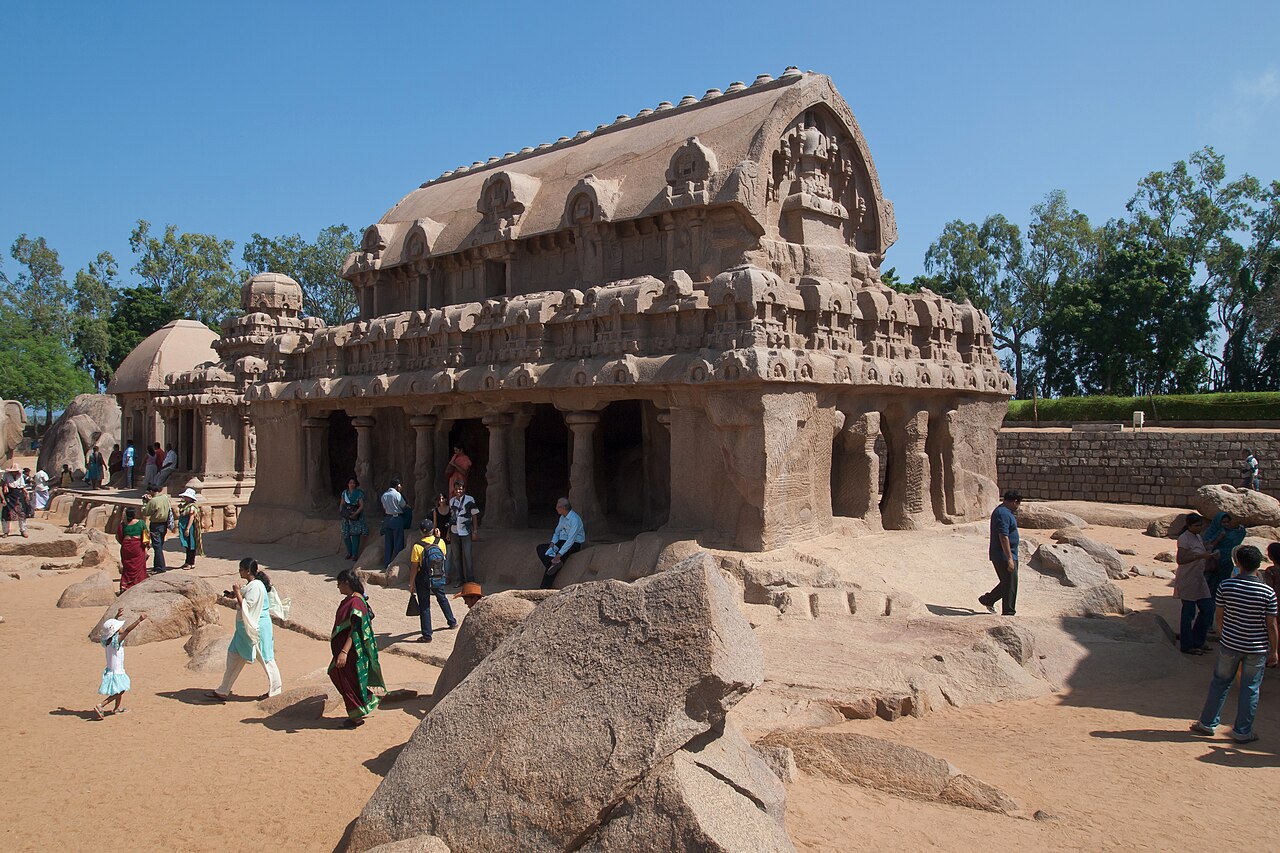
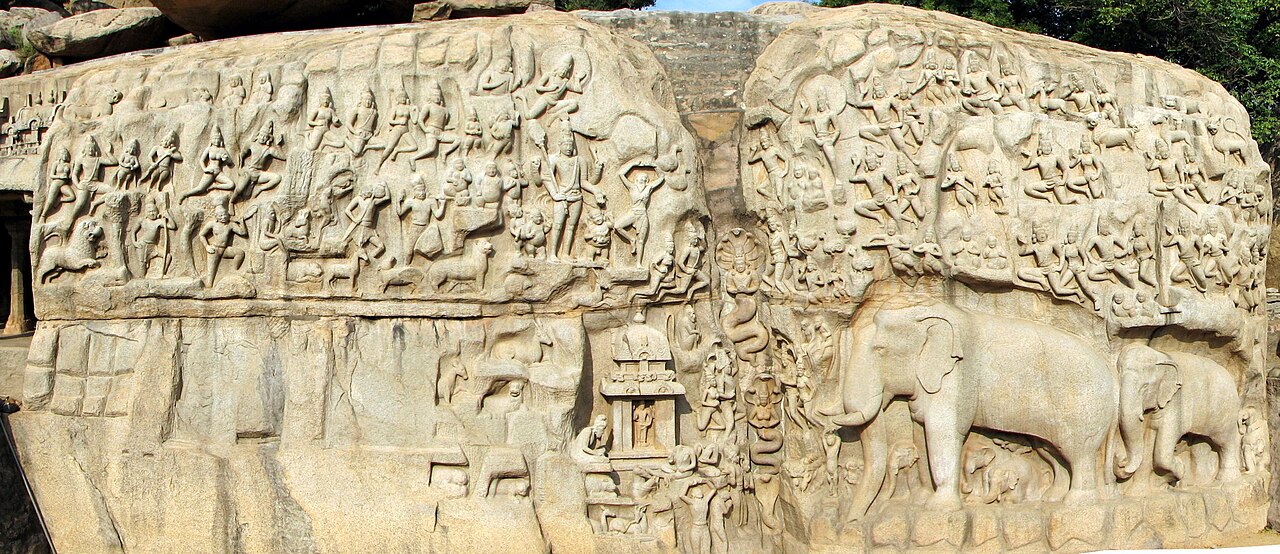
  • Pair the visit with the Shore Temple, Pancha Rathas, and Arjuna's Penance in Mamallapuram, about 5 km south
  • Walk down to the adjacent beach, but treat the surf as a scenic view rather than a swimming spot

Distance by road

  • Chennai55 km
  • Kanchipuram65 km
  • Puducherry95 km
  • Chengalpattu (town)30 km
  • Vellore130 km

Road km to Chengalpattu; ghat roads and traffic vary — allow extra.

Timing

Best time

The cooler, drier stretch from November to February is most comfortable, with early morning or late afternoon offering the softest light.

Weather in Tiger CaveSeasonal guide

Live forecast loads in your browser.

Today at Tiger Cave
Sunrise5:59 am
Sunset5:50 pm
Golden hour best light4:50 pm–5:50 pm
Blue hour after sunset5:50 pm–6:15 pm
Sun sets toward compass bearingW · 261°
Moon tonight🌒 Waxing crescent · 24%

Sun and moon are calculated for this location and shown in IST. Photography windows are the hour around sunrise and sunset; the sunset bearing is degrees clockwise from true north. Moon phase is accurate to about half a day.

Visitor notes

  • This is an open, unstaffed monument with little shade or facilities, so bring water and sun protection
  • The carvings are ancient and fragile; look but avoid climbing on them
Safety

Good to know

  • The nearby beach has open sea with no lifeguards, so avoid entering the water
Stay · eat · do · rent · see · shop

Stays, food & things to do near Tiger Cave

Verified hotels, homestays, restaurants, experiences, sights, shops and rentals around Tiger Cave — commission-free, with direct contact. Filter by what you need.

3 places to stay near Tiger Cave

Top pick
Hotel
Hotel Mamalla Heritage

A hotel on East Raja Street in Fisherman Colony, off the East Coast Road. It is one of the older established houses in the town.

Directions Commission-freeView details
Top pick
Guest house
Vilasam Rooms

Budget rooms on South Mada Street, in the temple quarter. Its own site sells rooms rather than packages.

Directions Commission-freeView details
Top pick
Hotel
Baylinz

A hotel on Othavadai Street, the traveller street a block back from the beach. It advertises a lift, which is unusual on that street.

Directions Commission-freeView details

Book with the place itself. India’s cyber-crime coordination centre warned in April 2025 that convincing copies of hotel and pilgrimage booking sites are being pushed through sponsored search and social ads, taking payment for rooms the property never hears about. Every listing here links to the business’s own contact details and its own Google or Bing profile — we take no commission and sit in nobody’s payment path. If a booking page reached you through an ad, check the address bar against the property’s own site before you pay. Fraud can be reported on cybercrime.gov.in or on 1930.

Ranked

More ways to explore Mamallapuram

Find food, accommodation and activities across Mamallapuram. Browse the guides for places to eat, stay and explore along your route.

Across the whole of Mamallapuram

Ranked guides

Top experiences around Mamallapuram

27 more places around Mamallapuram. Open a guide to plan the visit and onward journey.

templeShore Temple

4.6 km · ~12 min by auto

The flagship of Mahabalipuram's UNESCO ensemble: an early-8th-century Pallava structural granite temple rising right beside the Bay of Bengal, built under Narasimhavarman II (Rajasimha).

heritagePancha Rathas

Five monolithic 7th-century Pallava temples, each hewn from a single granite boulder and named for the Pandava brothers and Draupadi; a highlight of Mahabalipuram's UNESCO ensemble.

heritageArjuna's Penance

4.7 km · ~12 min by auto

Also called the Descent of the Ganges, this giant 7th-century Pallava open-air bas-relief, among the largest in the world, is carved across two adjoining boulders crowded with gods, sages, and life-size elephants.

heritageKrishna's Butterball

4.6 km · ~11 min by auto

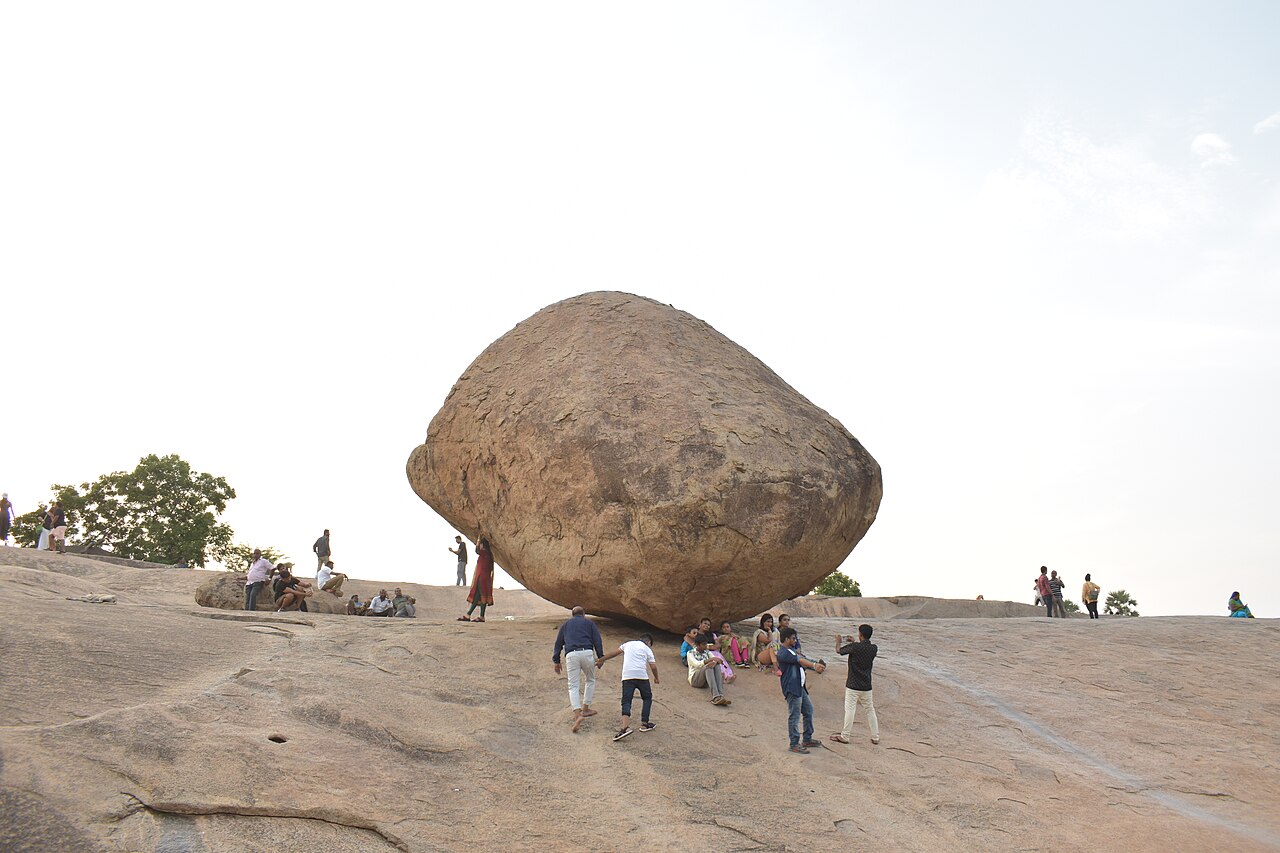
Known in Tamil as Vaan Irai Kal, this enormous natural boulder rests improbably on a smooth slope of the Mamallapuram hill, a beloved landmark beside the town's Pallava monuments.

heritageGanesha Ratha

4.7 km · ~12 min by auto

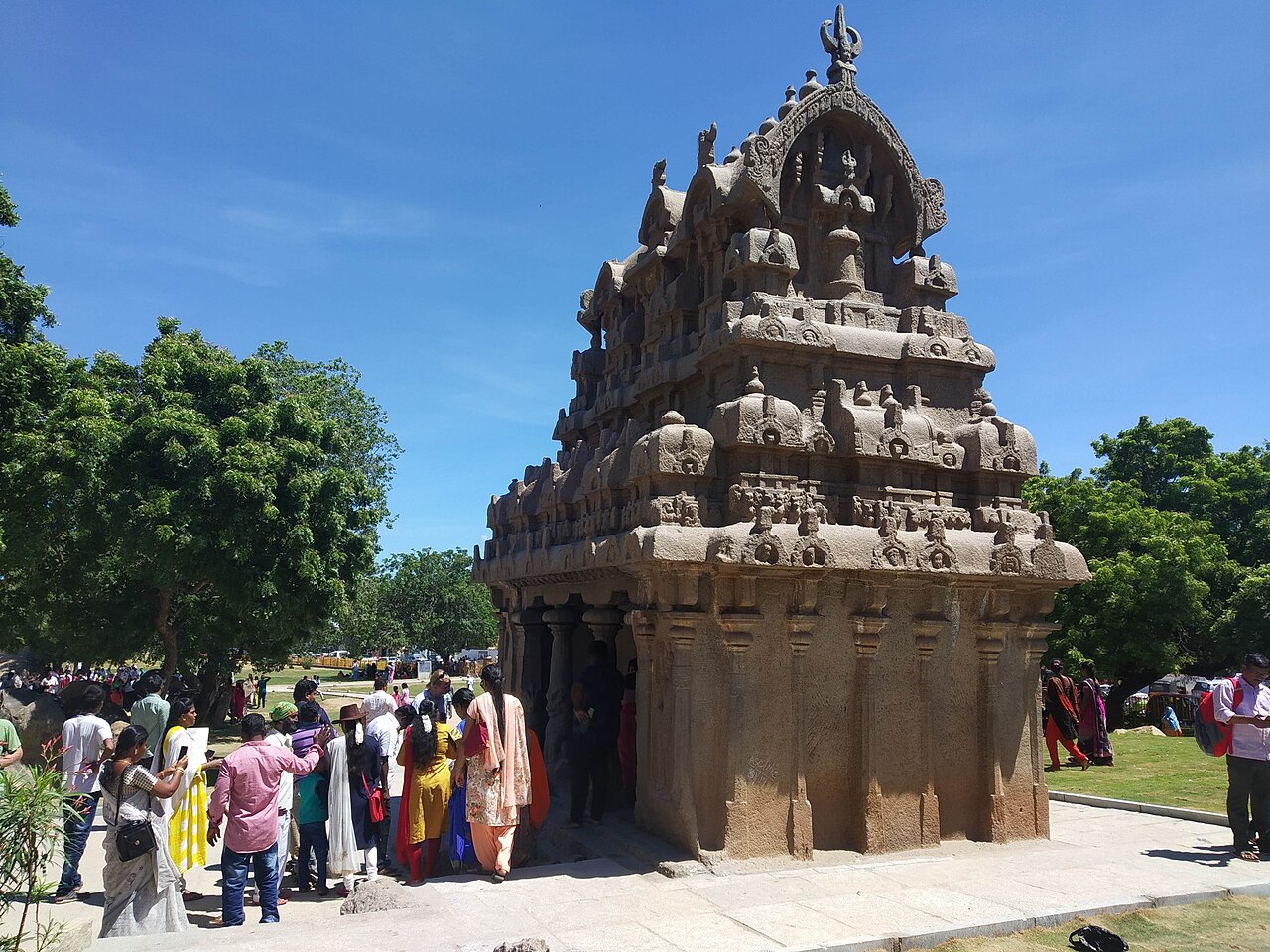
A single-block Pallava rock-cut shrine from the 7th century, carved in the chariot form of the Pancha Rathas and later dedicated to Ganesha. It sits just behind Arjuna's Penance within the UNESCO monument cluster.

heritageMahabalipuram Lighthouse

An early-1900s working lighthouse on the Mamallapuram hill, standing beside the ancient Olakkannesvara temple, the Pallava-era "Old Lighthouse." Climbing it opens sweeping views over the coast and the monument town.

beachMahabalipuram Beach

The Bay of Bengal shoreline running alongside Mahabalipuram's monuments and fishing hamlets. Come for sunrise, colourful fishing boats and simple seafood shacks by the sand.

wildlifeMadras Crocodile Bank Trust

A reptile conservation park and research station on the ECR, founded in 1976 by Romulus Whitaker. It holds thousands of crocodiles and alligators across many species, runs a snake venom-extraction programme and works with the Irula tribal cooperative.

heritageDakshinaChitra

A living-history museum on the ECR at Muttukadu, opened in 1996 by the Madras Craft Foundation, with relocated and reconstructed traditional South Indian houses, craft demonstrations and folk performances.

wildlifeVedanthangal Bird Sanctuary

One of India's oldest water-bird sanctuaries, protected since the 18th century and declared an official sanctuary in 1936. This wetland southwest of Chennai draws thousands of migratory birds that nest here, with the peak from November to March.

templeVedagiriswarar Temple, Thirukazhukundram

A hilltop Shiva temple, Vedagiriswarar, reached by a climb of roughly 500 stone steps at Thirukazhukundram, long known as Pakshi Tirtham. In tradition two eagles or kites once came daily to the summit, while the Bhaktavatsaleswarar temple sits at the base of the hill.

beachCovelong Beach

The beach at Kovalam or Covelong on the ECR, roughly 40 km south of Chennai, on the site of an old Dutch and Nawab-era port. Today it is known for its fishing village, a heritage beach resort set in a former Nawab's fort and a well-known surf school.

heritageSadras Dutch Fort

A weathered 17th-18th century Dutch East India Company fort at Sadras (Sadurangapattinam) on the Coromandel coast, with brick ramparts, sea-facing bastions and a small Dutch cemetery of carved tombstones. It is an ASI-protected ruin standing quietly by the Bay of Bengal.

heritageAlamparai Fort

A ruined 18th-century fort at Alamparai (Alamparai Kottai) on the coast near Kadapakkam, built in the Nawab era as a busy trading port. Its broken ramparts run out towards a backwater estuary where the water meets the sea, making it one of the ECR's most atmospheric ASI ruins.

activityMuttukadu Boat House

A TTDC boating centre on the Muttukadu backwater lagoon along the ECR, about 36 km from Chennai. It offers rowboats, motorboats, kayaking and windsurfing on calm water, and serves as the venue for a backwater festival.

heritageVaraha Cave Temple

4.7 km · ~12 min by auto

Often called the earliest monument at Mamallapuram, this 7th-century Pallava rock-cut mandapa (the Adivaraha Cave) is celebrated for four naturalistic wall panels including Vishnu as the boar Varaha lifting the earth goddess.

heritageMahishasuramardini Cave

A late-7th-century Pallava rock-cut mandapa on the Mamallapuram hill, famed for its dynamic relief of the goddess Durga slaying the buffalo-demon Mahishasura and, on the facing wall, a serene reclining Vishnu, with the later Olakkannesvara temple perched on the rock above.

heritageTrimurti Cave Temple

4.5 km · ~11 min by auto

A 7th-century Pallava rock-cut shrine at Mamallapuram carved as three adjacent cells honouring the Hindu trinity, Brahma, Vishnu and Shiva, with the central Shiva shrine given prominence and a striking Durga figure carved on the outer rock.

heritageKrishna Mandapa

4.8 km · ~12 min by auto

A rock-cut mandapa at Mamallapuram whose great mid-7th-century Pallava bas-relief shows Krishna raising Mount Govardhana on one hand to shelter the cowherds and their cattle from the storm.

heritagePanchapandava Cave Temple

4.7 km · ~12 min by auto

The largest cave temple at Mamallapuram, a spacious but deliberately unfinished late-7th-century Pallava rock-cut mandapa popularly named for the five Pandava brothers of the Mahabharata.

heritageOlakkannesvara Temple

A ruined early-8th-century Pallava structural Shiva temple perched on the hilltop above the Mahishasuramardini cave, long known as the 'Old Lighthouse' of Mamallapuram and commanding sweeping views over the town and Bay of Bengal.

templeSthalasayana Perumal Temple

4.7 km · ~12 min by auto

The living Vishnu temple in Mamallapuram town, one of the 108 Divya Desams, where the deity Sthalasayana Perumal is worshipped in a reclining, ground-resting form and which tradition links to the Alvar saint Bhutathazhwar.

templeThiruporur Kandaswamy Temple

A working Murugan temple at Thiruporur in inland Chengalpattu, worshipping the god as Kandaswamy and closely tied to the 17th-century saint Chidambara Swamigal, with a tall five-tiered gopuram over a granite sanctum.

M
Mukundanayanar Temple
Place
heritageMukundanayanar Temple

4.0 km · ~10 min by auto

A small, elegant structural Shiva temple in the Mamallapuram group, built in the early 8th century during the reign of Rajasimha Pallava. It stands apart on the northern edge of the town. The shrine shows the transition from rock-cut to structural architecture that later produced the Shore Temple.

heritageRayar Gopuram

4.7 km · ~12 min by auto

An unfinished Pallava monument of massive pillars and beams, believed to be an incomplete gateway (gopuram) abandoned mid-construction. The exposed, half-carved columns give a rare glimpse into how Mamallapuram's monolithic structures were quarried and shaped in stages.

V
Valaiyankuttai and Pidari Rathas
Place
heritageValaiyankuttai and Pidari Rathas

A set of outlying monolithic chariot-shrines carved from single boulders, sculpted like the more famous Pancha Rathas but set apart to the north near a tank. Part of the UNESCO Group of Monuments, they show the same 7th-century Pallava rock-cutting tradition in a less-visited setting.

G
Government College of Architecture and Sculpture
Place
heritageGovernment College of Architecture and Sculpture

A specialised institution at Mamallapuram that trains sthapatis (temple architects) and stone sculptors in the traditional Shilpa Shastra, keeping alive the craft that produced the town's Pallava monuments. Visitors can watch students carving granite deities and reliefs by hand.

Roampedia is commission-free — own or know a stay, eatery, guide or shop near Tiger Cave? List it and it appears here once verified.

Add a nearby business
Before you go

Tiger Cave — at a glance

TimingsBest visited in daylight hours from around sunrise to sunset (indicative)
Best timeCooler, drier months from roughly November to February; early morning or late afternoon for soft coastal light (indicative)

Entry: Open-access site with no ticket counter; entry is generally free (indicative)

Getting here

How to reach Tiger Cave

Saluvankuppam lies about 5 km north of Mamallapuram just off the East Coast Road (ECR), roughly 55-60 km south of Chennai; reach it by taxi, app cab, or ECR bus, then a short walk from the road (indicative)

Getting around Tiger Cave

If you need step-free access, contact the site before travelling. Ask about a level entrance, steps along the route, the nearest drop-off point, seating and accessible toilets.

If you need help at Tiger Cave
112All emergencies (police · fire · medical)The single number to call in any emergency (ERSS).

Emergency numbers are verified against official government and state tourism sources. 112 works anywhere in India.

Nearby

What’s near Tiger Cave

A
Atiranachandeswara Cave Temple
Place
caveAtiranachandeswara Cave Temple

A Pallava rock-cut cave temple near Saluvankuppam dedicated to Shiva, notable for its Somaskanda relief panels and inscriptions in Pallava-Grantha and Nagari scripts praising the king Atiranachanda. It sits close to the Tiger Cave and the excavated Subrahmanya shrine.

1.8 km · 22 min walk · straight line
M
Mukundanayanar Temple
Place
heritageMukundanayanar Temple

A small, elegant structural Shiva temple in the Mamallapuram group, built in the early 8th century during the reign of Rajasimha Pallava. It stands apart on the northern edge of the town. The shrine shows the transition from rock-cut to structural architecture that later produced the Shore Temple.

4.0 km · ~10 min by auto · straight line
heritageTrimurti Cave Temple

A 7th-century Pallava rock-cut shrine at Mamallapuram carved as three adjacent cells honouring the Hindu trinity, Brahma, Vishnu and Shiva, with the central Shiva shrine given prominence and a striking Durga figure carved on the outer rock.

4.5 km · ~11 min by auto · straight line
heritageKrishna's Butterball

Known in Tamil as Vaan Irai Kal, this enormous natural boulder rests improbably on a smooth slope of the Mamallapuram hill, a beloved landmark beside the town's Pallava monuments.

4.6 km · ~11 min by auto · straight line
templeShore Temple

The flagship of Mahabalipuram's UNESCO ensemble: an early-8th-century Pallava structural granite temple rising right beside the Bay of Bengal, built under Narasimhavarman II (Rajasimha).

4.6 km · ~12 min by auto · straight line
heritageGanesha Ratha

A single-block Pallava rock-cut shrine from the 7th century, carved in the chariot form of the Pancha Rathas and later dedicated to Ganesha. It sits just behind Arjuna's Penance within the UNESCO monument cluster.

4.7 km · ~12 min by auto · straight line
heritageArjuna's Penance

Also called the Descent of the Ganges, this giant 7th-century Pallava open-air bas-relief, among the largest in the world, is carved across two adjoining boulders crowded with gods, sages, and life-size elephants.

4.7 km · ~12 min by auto · straight line
heritageVaraha Cave Temple

Often called the earliest monument at Mamallapuram, this 7th-century Pallava rock-cut mandapa (the Adivaraha Cave) is celebrated for four naturalistic wall panels including Vishnu as the boar Varaha lifting the earth goddess.

4.7 km · ~12 min by auto · straight line
heritageRayar Gopuram

An unfinished Pallava monument of massive pillars and beams, believed to be an incomplete gateway (gopuram) abandoned mid-construction. The exposed, half-carved columns give a rare glimpse into how Mamallapuram's monolithic structures were quarried and shaped in stages.

4.7 km · ~12 min by auto · straight line
heritagePanchapandava Cave Temple

The largest cave temple at Mamallapuram, a spacious but deliberately unfinished late-7th-century Pallava rock-cut mandapa popularly named for the five Pandava brothers of the Mahabharata.

4.7 km · ~12 min by auto · straight line
templeSthalasayana Perumal Temple

The living Vishnu temple in Mamallapuram town, one of the 108 Divya Desams, where the deity Sthalasayana Perumal is worshipped in a reclining, ground-resting form and which tradition links to the Alvar saint Bhutathazhwar.

4.7 km · ~12 min by auto · straight line
heritageKrishna Mandapa

A rock-cut mandapa at Mamallapuram whose great mid-7th-century Pallava bas-relief shows Krishna raising Mount Govardhana on one hand to shelter the cowherds and their cattle from the storm.

4.8 km · ~12 min by auto · straight line

All 28 places to visit in Mamallapuram →

On the map

Where Tiger Cave is

Good to know

Tiger Cave — frequently asked

How long should I allow?

Allow about two hours for Tiger Cave, adding time for queues, worship, birding, weather or closures.

Where do the directions lead?

The Directions link leads to the practical visitor entrance for Tiger Cave; follow current signs for parking, tickets and permitted entry.

When should I visit?

Confirm ASI access after storms; do not climb carvings or approach rough surf.

When is the best time to visit Tiger Cave?

The cooler, drier stretch from November to February is most comfortable, with early morning or late afternoon offering the softest light.

What are the entry fee and timings at Tiger Cave?

Entry: Open-access site with no ticket counter; entry is generally free (indicative). Timings: Best visited in daylight hours from around sunrise to sunset (indicative).

How do I reach Tiger Cave?

Approach from the ECR and follow the short path into the grove to reach the main carved pavilion Pair the visit with the Shore Temple, Pancha Rathas, and Arjuna's Penance in Mamallapuram, about 5 km south Walk down to the adjacent beach, but treat the surf as a scenic view rather than a swimming spot

How much time do I need for Tiger Cave?

Around 30 to 45 minutes is enough to see the pavilion, cells, and grove.

What else is near Tiger Cave?

Nearby you can pair Atiranachandeswara Cave Temple (1.8 km), Mukundanayanar Temple (4.0 km), Trimurti Cave Temple (4.5 km), Krishna's Butterball (4.6 km).

What should I know before visiting Tiger Cave?

The nearby beach has open sea with no lifeguards, so avoid entering the water

Read before you go

Tiger Cave guides, stories & itineraries

We have not published a story about Tiger Cave itself yet. These cover Mamallapuram and the wider district, with separate journeys between stops.

Around Mamallapuram

These guides explore Mamallapuram and the surrounding area. Choose a visit that fits your interests, allowing separately for travel between stops.

Tamil Nadu-wide guides & itineraries

Route-level itineraries and practical guides for the rest of Tamil Nadu.

See all 42 Chengalpattu guides & stories →

Image credits

Photographs: Rvk1982 (CC BY-SA 4.0), Sichu7 (CC BY-SA 4.0), Gautamoncloud9 (CC BY-SA 3.0). Wikimedia Commons.