Places to Visit in Chengannur

Rail and pilgrim town on the Pampa in eastern Alappuzha, carrying two crowds. It starts the Pancha Pandava circuit of five Divya Desams, and it is the railhead most Sabarimala pilgrims arrive at.

Chengannur
Practical guide

Plan Chengannur

Who's going?Tailor Chengannur to your trip
DistrictAlappuzha
RolePampa-side temple base
Time neededA full day to do the Pancha Pandava…
Places to visit3Listed businesses4

Chengannur is a small rail and pilgrim town on the Pampa in eastern Alappuzha carrying two separate reputations. It is the traditional starting point of the Pancha Pandava circuit — five Vishnu temples along the river, one for each brother, all of them Divya Desams — and it is the railhead most Sabarimala pilgrims arrive at.

That second role shapes any visit: in the pilgrimage season, roughly mid-November to mid-January, the station, the buses and every room in town fill. The circuit itself crosses three districts and needs a full day of driving, and it does not begin at the town’s own famous Mahadeva temple, which is a Shiva shrine and not one of the five.

What to expect

Highlights

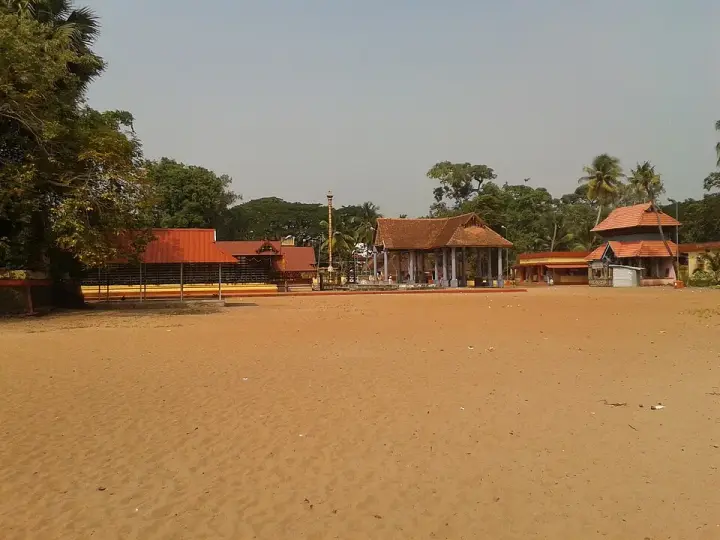
  • Chakkulathukavu Bhagavathy Temple — A prominent Bhagavathy pilgrimage temple at Neerattupuram, especially associated with the women-led Pongala; ordinary worship and festival-day planning differ substantially.
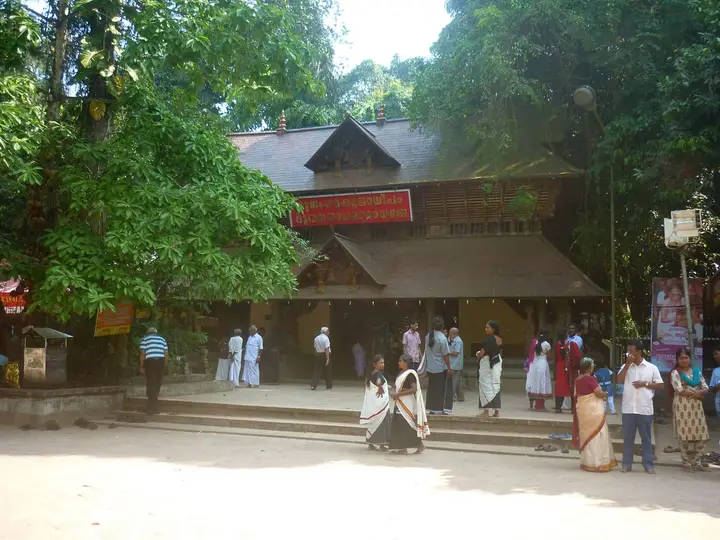
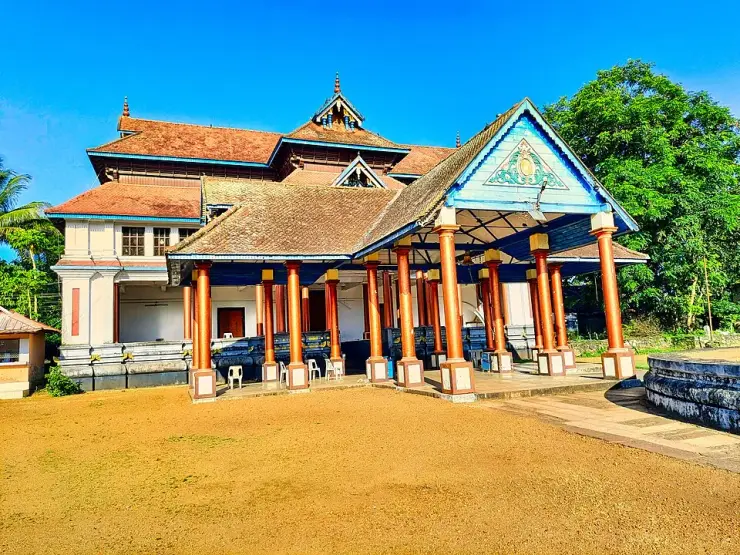
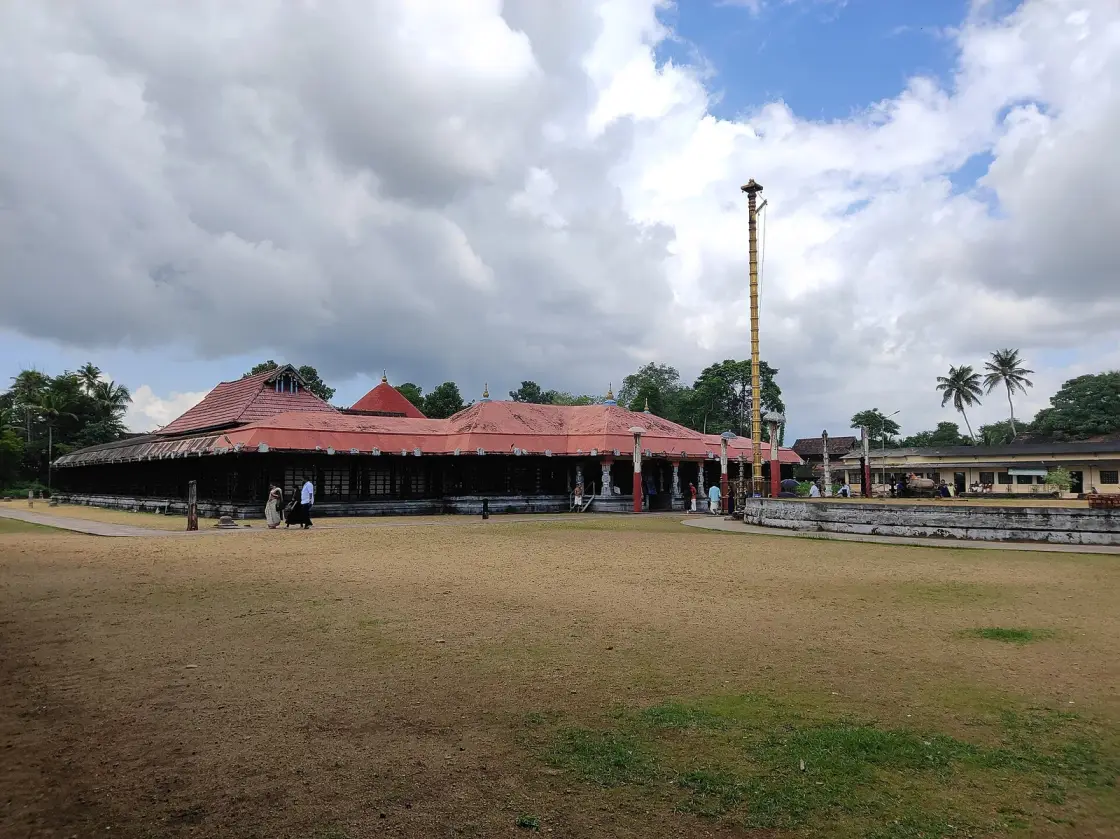
  • Chengannur Mahadeva Temple — The great Shiva–Parvati temple of Chengannur, where the goddess is held to menstruate and the Thripputhaarattu is observed — one of the 108 Shivalayas, and the temple where the Thazhamon Madom tantris perform their first puja before they may officiate at Sabarimala.
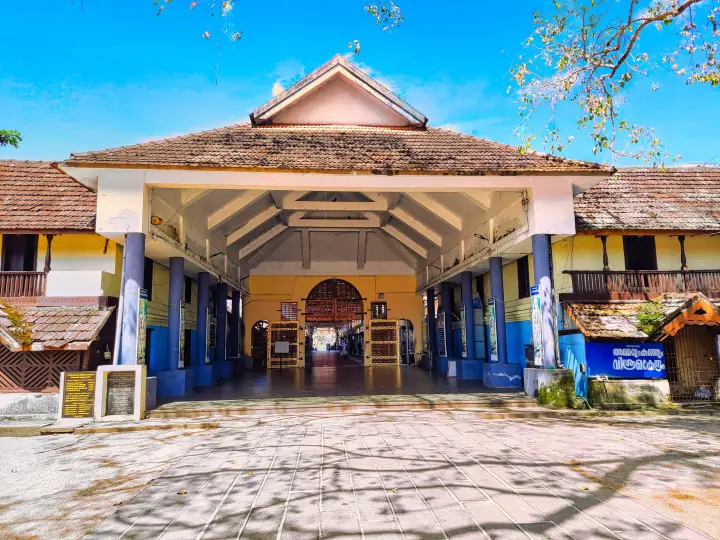
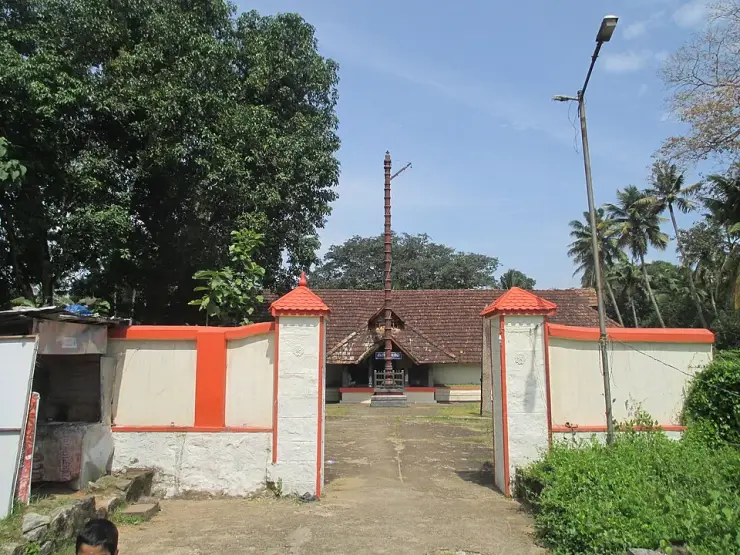
  • Thrichittatt Maha Vishnu Temple — The Yudhishthira temple of the five Pancha Pandava shrines around Chengannur and one of the 108 Divya Desams, at Mundankavu — where the god is Imayavarappan, “lord of those who came before”, and darshan is held incomplete until you have also worshipped at the Shankha Theertham tank.
Getting there

How to visit

  • Nearest airport: Cochin (COK), ~86 km
  • Rail gateway: Alappuzha (coastal line)
Timing

Best time to visit Chengannur

October–February. 🛑 Check the Sabarimala calendar first — Chengannur is a principal railhead for that pilgrimage and in season the town is saturated. Aranmula's snake-boat regatta falls around Onam (August–September).

Weather in ChengannurSeasonal guide

Live forecast loads in your browser.

Today at Chengannur
Sunrise6:12 am
Sunset6:14 pm
Golden hour best light5:14 pm–6:14 pm
Blue hour after sunset6:14 pm–6:39 pm
Sun sets toward compass bearingW · 266°
Moon tonight🌖 Waning gibbous · 60%

Sun and moon are calculated for this location and shown in IST. Photography windows are the hour around sunrise and sunset; the sunset bearing is degrees clockwise from true north. Moon phase is accurate to about half a day.

The story

The story of Chengannur

The temple town on the Pamba in eastern Alappuzha that anchors the Pancha Pandava circuit — five Vishnu temples along the river, one for each of the five brothers, all of them Divya Desams, traditionally visited in a fixed order that starts here. It is also the railhead most Sabarimala pilgrims arrive at, which gives a small town two very different kinds of crowd.

Chengannur sits on the Pamba in the eastern, inland part of Alappuzha district, where the land begins to rise towards the Pathanamthitta hills. It is a modest town with a railway station, a bus stand and a great deal of religious traffic passing through it, and its importance is entirely a function of what is around it rather than what is in it.

The first thing around it is a circuit. Five ancient Vishnu temples stand along the banks of the Pamba in and near Chengannur, and tradition assigns one to each of the five Pandava brothers, built by them during their exile. Thrichittatt is Yudhishthira's; Puliyoor is Bhima's; Aranmula is Arjuna's; Thiruvanvandoor is Nakula's; and Thrikodithanam is Sahadeva's. All five are counted among the 108 Divya Desams, the temples praised in the hymns of the Tamil Alvars — which is a considerable concentration of that status in one river valley.

What makes the circuit unusual is that it is a circuit, with an order. The pilgrimage is traditionally made in sequence and the sequence begins at Chengannur: Thrichittatt first, then Thiruppuliyoor, then Thiruvaranmula, then Thiruvanvandoor, and finally Thrikodithanam. Making all five in that order is held to be especially meritorious. It is one of the few places in Kerala where a set of temples is designed to be walked as a route rather than visited individually, and it is the reason Chengannur functions as a base.

We have a full page for Thrichittatt Maha Vishnu Temple, the first stop; Aranmula, the third, is a destination in its own right for the snake-boat regatta and the metal mirrors, and has its own pages. Puliyoor and Thiruvanvandoor are on our build list and do not have pages yet, which is why they are named here but not linked.

The second thing around Chengannur is Sabarimala, and it changes the character of the town completely for part of the year. Chengannur is one of the principal railheads for the pilgrimage, and during the season the station and the roads out towards Pamba carry an extraordinary volume of pilgrims in black. This is not a background detail: it determines whether a visit here is quiet or overwhelming, and anyone planning to see the Pandava temples in peace should know the season before booking.

The town's own temple is the Chengannur Mahadeva Temple, which is not part of the Pandava five and is important for entirely separate reasons — it has its own page, and its own remarkable ritual, and we would rather send you there than summarise it badly here.

The Pamba itself is the thread through all of this. It is the river of Sabarimala, the river the five temples stand on, and the river of the Aranmula boat race. In an Indian landscape where a sacred river usually means the Ganga or the Yamuna, the Pamba is doing that work at a regional scale, and Chengannur sits in the middle of its temple stretch.

As a place to be, Chengannur is a working small town: shops, the station, buses, traffic, and the river beyond. It has no old quarter to walk and no viewpoint. Its value to a traveller is entirely positional — it is where you sleep, eat and start from if you want to do the five temples properly, and it is where you arrive if you are going up to Sabarimala.

Legend & myth

The Pandava attribution is the whole frame here, and it deserves to be described accurately as tradition rather than either endorsed or sneered at. The five temples are held to have been built by the five brothers during their exile — Yudhishthira at Thrichittatt, Bhima at Puliyoor, Arjuna at Aranmula, Nakula at Thiruvanvandoor and Sahadeva at Thrikodithanam. That is a consistent, well-attested tradition, recorded the same way across sources, and it is the organising idea of the whole circuit. It is not an archaeological claim about who laid the foundations, and nobody local presents it as one.

What is independently verifiable is more interesting than the legend anyway. All five are Divya Desams — among the 108 temples praised by the Alvars in the Tamil Vaishnava canon. That is a documentary fact about a body of devotional poetry, and it establishes that these five were significant Vishnu sites well before any modern account of them. Five Divya Desams within one short stretch of one river is genuinely unusual, and it is the reason the circuit exists at all.

The second thing to hold clearly is which temples are and are not in the circuit. The Chengannur Mahadeva Temple, the town's own famous temple, is a Shiva temple and is not one of the Pandava five. Visitors regularly conflate them, partly because the town's name attaches to both. If you are doing the Pandava route you will not start at the Mahadeva temple; you will start at Thrichittatt.

The third is the order, which is easy to treat as a nicety and is not. The prescribed sequence — Thrichittatt, Thiruppuliyoor, Thiruvaranmula, Thiruvanvandoor, Thrikodithanam, beginning from Chengannur — is part of what makes the pilgrimage what it is. Guides and itineraries that reorder the five for driving convenience are offering something different from the tradition, which is fine as long as you know that is what is happening.

The fourth is a practical warning that overwhelms everything else at the wrong time of year. Chengannur is a major railhead for Sabarimala. During the pilgrimage season the town's transport, accommodation and roads are saturated by a flow of pilgrims heading for Pamba, and a visitor who has come for quiet riverside temples will find neither quiet nor easy transport. This is not a reason to avoid Chengannur; it is a reason to check the Sabarimala calendar before you plan, which is advice we would give for nowhere else in Alappuzha district.

The fifth is about our own coverage, stated so you are not misled by what is missing. Two of the five temples — Puliyoor and Thiruvanvandoor — do not yet have pages on this site, and we have deliberately not linked their names above to pages that do not exist. They are researched and on the build list. Their absence here reflects our coverage, not their importance; both are Divya Desams and both are integral to the circuit.

The sixth is a caution about the district line, which trips people up on the ground. Chengannur is in Alappuzha district, but the circuit does not respect the boundary: Aranmula is in Pathanamthitta, and Thrikodithanam is in Kottayam district near Changanassery. A route sold as "the Chengannur temples" crosses three districts, which matters for planning distances and for understanding why different official tourism sites each list only part of the set.

More about Chengannur

History

Chengannur stands on the Pamba river in the eastern part of Alappuzha district, at the point where the Kerala lowlands begin to rise towards the Pathanamthitta highlands.

Its principal significance is as the anchor of the Pancha Pandava temples — five ancient Vishnu shrines along the Pamba, held by tradition to have been founded by the five Pandava brothers during their exile: Thrichittatt Maha Vishnu Temple (Yudhishthira), Thiruppuliyoor or Puliyoor Mahavishnu Temple (Bhima), Aranmula Parthasarathy Temple (Arjuna), Thiruvanvandoor Mahavishnu Temple (Nakula) and Thrikodithanam Mahavishnu Temple (Sahadeva). All five are counted among the 108 Divya Desams of the Tamil Vaishnava canon.

The pilgrimage to the five is traditionally performed in a prescribed order beginning at Chengannur — Thrichittatt, then Thiruppuliyoor, then Thiruvaranmula, then Thiruvanvandoor, then Thrikodithanam — and completing the sequence is held to be especially meritorious. The five lie across three modern districts: Alappuzha, Pathanamthitta and Kottayam.

The town's own major shrine, the Chengannur Mahadeva Temple, is a Shiva temple and is not part of the Pandava group.

Chengannur is also one of the principal railheads for the Sabarimala pilgrimage, and during the season it carries very heavy pilgrim traffic bound for Pamba, which dominates the town's transport and accommodation for that period.

Why visit

To walk the Pancha Pandava circuit from its traditional starting point — five Vishnu temples on the Pamba, one for each brother, all five Divya Desams, in the prescribed order.

For Thrichittatt Maha Vishnu Temple, the first of the five and the place the sequence begins.

For the Chengannur Mahadeva Temple, the town's own Shiva temple, which is famous for reasons entirely separate from the Pandava circuit.

For the Pamba itself — the river of Sabarimala, of the Aranmula regatta and of all five Pandava temples, in its temple stretch.

As the practical base for this whole corner of eastern Alappuzha and western Pathanamthitta, with a railway station and road links in every direction.

As a Sabarimala railhead, if that is your pilgrimage — with the caveat that in season the town belongs to it entirely.
Before you go

Chengannur — at a glance

Getting here

How to reach Chengannur

  • ✈︎ By air Trivandrum international airport is roughly 115 km south; Cochin international is comparable to the north.
  • 🚆︎ By train Chengannur (CNGR) is on the main Kollam–Kottayam–Ernakulam line and is the usual way in.
  • 🚗︎ By road Inland from the NH-66, connected to Alappuzha, Kottayam, Pathanamthitta and Kayamkulam.
  • 🚌︎ By bus KSRTC and private services in every direction; heavy pilgrim traffic towards Pamba in the Sabarimala season.
Getting back

Check your return bus or ferry with the operator before setting out. Leave time to reach the stop or jetty after your visit, and arrange a return vehicle in advance for a remote outing.

Ask at the jetty or the stand for the time of the last service back, not the next one. If you miss it, an auto or a taxi is the fallback — agree the fare before you get in.

Getting around Chengannur

If you need step-free access, contact the site before travelling. Ask about a level entrance, steps along the route, the nearest drop-off point, seating and accessible toilets.

Practical things near Chengannur
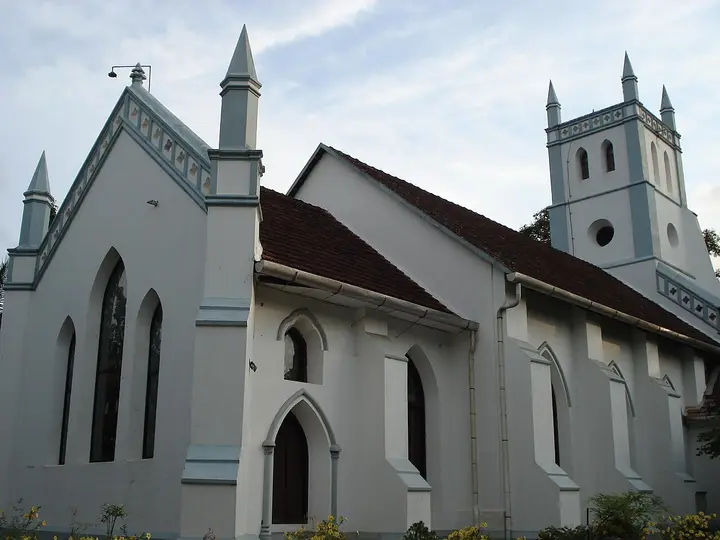
Drinking waterDrinking water 71 m · 1 min walkMapped Jul 2026DirectionsBus stopsChengannur Private Bus Stand 611 m · 7 min walkMapped Apr 2020DirectionsTaxi & auto standsAuto Stand 1.1 km · 13 min walkMapped Jan 2021DirectionsFuelHindustan Pump Fuel station1.1 km · 13 min walkMapped Jan 2021DirectionsHospitalMammen Memorial Hospital, Chengannur 997 m · 12 min walkMapped Nov 2020DirectionsClinicDiabetic Health Care Centre Clinic1.3 km · 15 min walkMapped Jul 2020DirectionsATMATM 1.1 km · 13 min walkMapped Jan 2021DirectionsBankState Bank of India 1.2 km · 14 min walkMapped Apr 2020DirectionsWater & snacksMulti Purpose Stall Convenience shop56 m · 1 min walkMapped Jul 2026DirectionsGroceries & bakeryBakery 669 m · 8 min walkSurveyed Jun 2021DirectionsBookshopGalaxy Books Bookshop1.3 km · 15 min walkMapped May 2021DirectionsPost officePost Office 1.1 km · 13 min walkMapped Jun 2021DirectionsSomewhere to prayTown AG Church Chengannur 478 m · 6 min walkOpen 24 hoursMapped Sept 2020Directions
What the cash actually costs
  • Withdrawing from a bank that is not your own is free for a set number of times a month, then costs up to ₹23 plus GST — about ₹27 a withdrawal. This is not one of the RBI’s six metro centres, so the allowance here is the higher one: at least five free other-bank withdrawals a month, and at least five at your own bank.
  • That free allowance belongs to Indian bank accounts. On a card issued abroad your own bank’s international withdrawal and exchange charges apply instead. If the machine offers to bill you in your home currency, choose rupees — the conversion rate on that offer is set by the machine, not by your bank.
  • Choose a well-lit ATM, preferably at a bank branch. Shield your PIN, avoid help from strangers and use your bank’s support number if a withdrawal fails or the machine retains your card.

Charge cap and free-transaction limits: Reserve Bank of India, in force since 1 May 2025.

These services are listed within about 1.2 km of Chengannur. Walking distances follow mapped routes; access and opening hours can change. Other services may be closer but are not included here.

In the district

Where Chengannur sits in Alappuzha district

District HQAlappuzha
LandscapeBackwaters & coastal Kuttanad

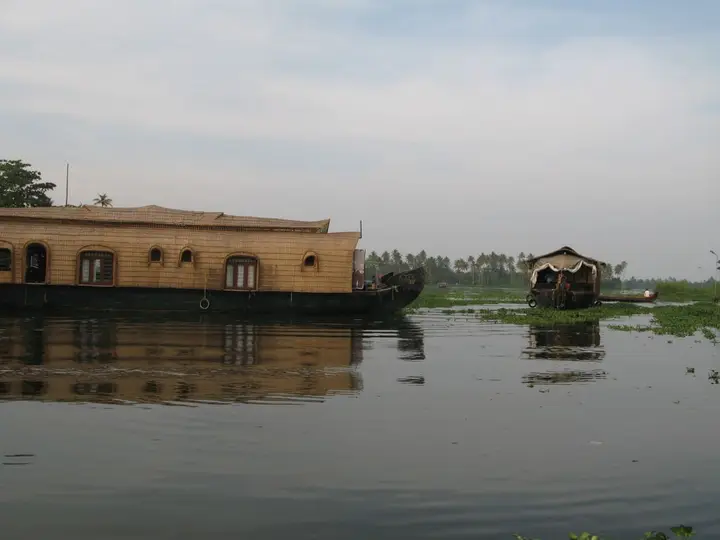
Alappuzha district is known for: The Alleppey backwaters, houseboats and the Nehru Trophy Boat Race.

Houseboat cruisesAlleppey Beach & pierKuttanad — farming below sea level
Stay · eat · do · rent · see · shop

Places in Chengannur

Every verified place in Chengannur — filter by what you’re after.

3 places to stay in Chengannur

Hotel · Chengannur
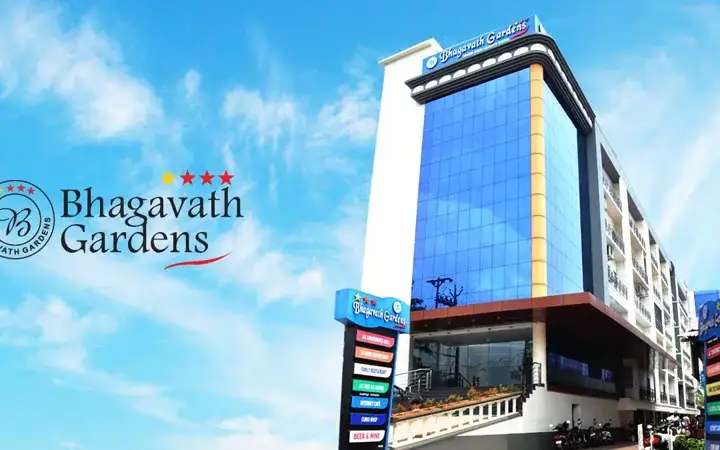
Hotel Bhagavath Gardens

A Market Road hotel in Chengannur town, with restaurants and meeting spaces described in its property listing. Its town location is the main reason to compare it with a more distant resort. Confirm the room category, current dining service and your arrival arrangements directly.

Directions Commission-freeView details
Hotel · Chengannur
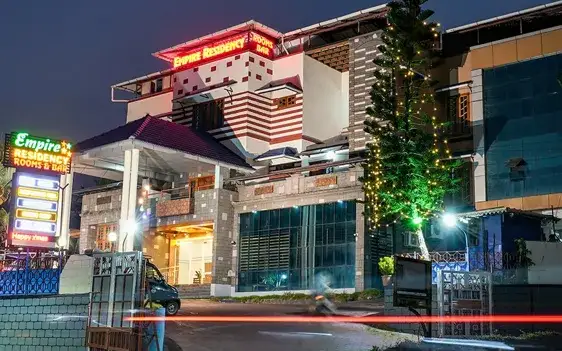
Empire Residency

Empire Residency is at Angadikkal, Puthenkavu, in Chengannur. Use its actual address when comparing it with hotels on Market Road or near the railway station. Before reserving, request the room category, meal plan and travel time to your next Chengannur stop.

Directions Commission-freeView details
Hotel · Chengannur
Hotel Priya

Two-star hotel near the Head Post Office, working since 1981. Near Head Post Office, Chengannur, Kerala 689121.

Directions Commission-freeView details

Book with the place itself. India’s cyber-crime coordination centre warned in April 2025 that convincing copies of hotel and pilgrimage booking sites are being pushed through sponsored search and social ads, taking payment for rooms the property never hears about. Every listing here links to the business’s own contact details and its own Google or Bing profile — we take no commission and sit in nobody’s payment path. If a booking page reached you through an ad, check the address bar against the property’s own site before you pay. Fraud can be reported on cybercrime.gov.in or on 1930.

For hotels, homestays and local businesses

Get listed in Chengannur for free

Roampedia is commission-free. Travellers discover your business, book directly and contact you through official details. Basic listings are free, while Gold and Platinum package upgrades can be requested from the owner dashboard after approval.

List your business — free
Read before you go

Chengannur guides, stories & itineraries

Stories & history of Chengannur

Written about Chengannur itself — its history, its legends and the arguments about them.

Around Chengannur

The town itself and the places around it — each written about one subject rather than as a general guide.

Planning a trip to Chengannur

The practical half — what is actually here, in what order to see it, and how to arrive.

Kerala-wide guides & itineraries

Route-level itineraries and practical guides for the rest of the state.

See all 100 Alappuzha guides & stories →

Map

Where things are in Chengannur

FAQ

Chengannur travel FAQs

What are the Pancha Pandava temples?

Five ancient Vishnu temples along the Pamba in and around Chengannur, held by tradition to have been founded by the five Pandava brothers: Thrichittatt (Yudhishthira), Thiruppuliyoor (Bhima), Aranmula Parthasarathy (Arjuna), Thiruvanvandoor (Nakula) and Thrikodithanam (Sahadeva). All five are among the 108 Divya Desams of the Tamil Vaishnava canon.

In what order should the five temples be visited?

Tradition prescribes a sequence beginning at Chengannur: Thrichittatt first, then Thiruppuliyoor, then Thiruvaranmula (Aranmula), then Thiruvanvandoor, and finally Thrikodithanam. Completing all five in that order is held to be especially meritorious.

Is the Chengannur Mahadeva Temple one of the Pandava five?

No. It is a Shiva temple and is not part of the group, though it is the town's best-known temple and is frequently confused with the circuit. The Pandava route starts at Thrichittatt.

Are all five temples in Alappuzha district?

No, and this catches people out. Chengannur, Thrichittatt and Thiruvanvandoor are in the Chengannur area of Alappuzha district; Aranmula is in Pathanamthitta district; and Thrikodithanam is in Kottayam district near Changanassery. The circuit crosses three districts.

Why is Chengannur busy with Sabarimala pilgrims?

It is one of the main railheads for the Sabarimala pilgrimage, and during the season very large numbers of pilgrims pass through on their way to Pamba. Transport and accommodation are saturated at that time, so check the pilgrimage calendar before planning a visit for the temples.

How do I reach Chengannur?

Chengannur has a railway station on the main Kollam–Kottayam–Ernakulam line, which is the usual way in. By road it is inland from the NH-66, connected to Alappuzha, Kottayam, Pathanamthitta and Kayamkulam. Trivandrum and Cochin airports are both reachable.

What are the best places to visit in Chengannur?

Top places to visit in Chengannur include Chengannur Mahadeva Temple, Thrichittatt Maha Vishnu Temple, Chakkulathukavu Bhagavathy Temple — each has a full guide with how to reach it and what to see nearby on this page.

What is the best time to visit Chengannur?

October to March is the driest and most comfortable season to visit Chengannur and the rest of Kerala. The June–September monsoon is lush and green but wet, and often brings lower low-season prices.

Photographs: Unknown author (Public domain), Jean G Tom (CC BY-SA 4.0), Sujithcnr (Public domain). Wikimedia Commons.

Image credits