The temple town on the Pamba in eastern Alappuzha that anchors the Pancha Pandava circuit — five Vishnu temples along the river, one for each of the five brothers, all of them Divya Desams, traditionally visited in a fixed order that starts here. It is also the railhead most Sabarimala pilgrims arrive at, which gives a small town two very different kinds of crowd.
Chengannur sits on the Pamba in the eastern, inland part of Alappuzha district, where the land begins to rise towards the Pathanamthitta hills. It is a modest town with a railway station, a bus stand and a great deal of religious traffic passing through it, and its importance is entirely a function of what is around it rather than what is in it.
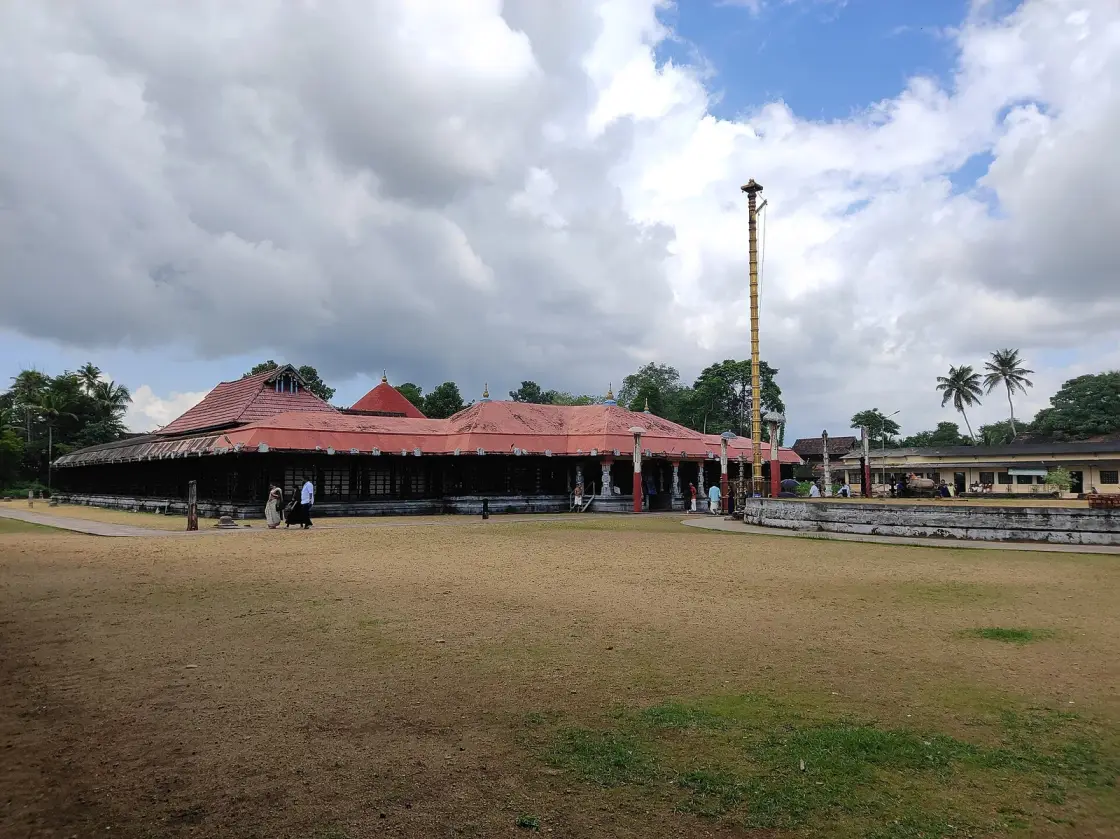
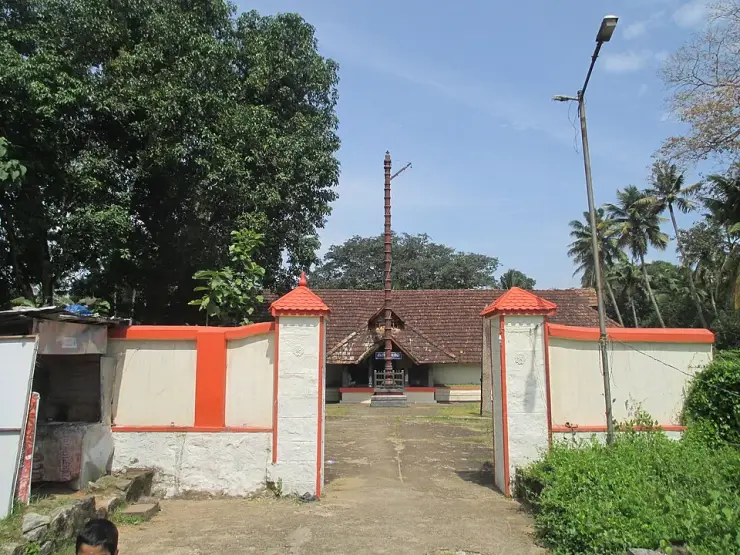
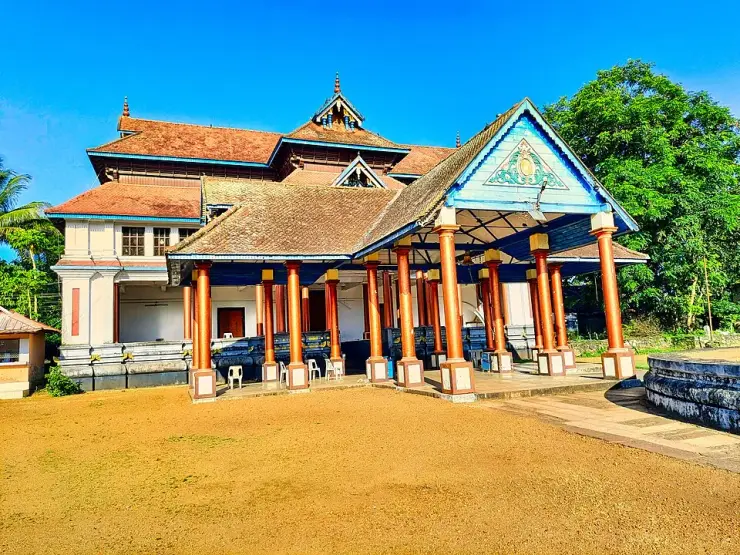
The first thing around it is a circuit. Five ancient Vishnu temples stand along the banks of the Pamba in and near Chengannur, and tradition assigns one to each of the five Pandava brothers, built by them during their exile. Thrichittatt is Yudhishthira's; Puliyoor is Bhima's; Aranmula is Arjuna's; Thiruvanvandoor is Nakula's; and Thrikodithanam is Sahadeva's. All five are counted among the 108 Divya Desams, the temples praised in the hymns of the Tamil Alvars — which is a considerable concentration of that status in one river valley.
What makes the circuit unusual is that it is a circuit, with an order. The pilgrimage is traditionally made in sequence and the sequence begins at Chengannur: Thrichittatt first, then Thiruppuliyoor, then Thiruvaranmula, then Thiruvanvandoor, and finally Thrikodithanam. Making all five in that order is held to be especially meritorious. It is one of the few places in Kerala where a set of temples is designed to be walked as a route rather than visited individually, and it is the reason Chengannur functions as a base.
We have a full page for Thrichittatt Maha Vishnu Temple, the first stop; Aranmula, the third, is a destination in its own right for the snake-boat regatta and the metal mirrors, and has its own pages. Puliyoor and Thiruvanvandoor are on our build list and do not have pages yet, which is why they are named here but not linked.
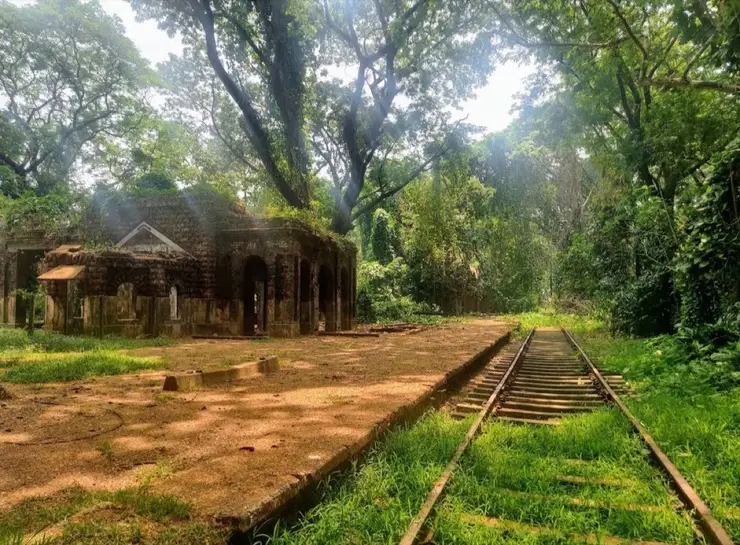
The second thing around Chengannur is Sabarimala, and it changes the character of the town completely for part of the year. Chengannur is one of the principal railheads for the pilgrimage, and during the season the station and the roads out towards Pamba carry an extraordinary volume of pilgrims in black. This is not a background detail: it determines whether a visit here is quiet or overwhelming, and anyone planning to see the Pandava temples in peace should know the season before booking.
The town's own temple is the Chengannur Mahadeva Temple, which is not part of the Pandava five and is important for entirely separate reasons — it has its own page, and its own remarkable ritual, and we would rather send you there than summarise it badly here.
The Pamba itself is the thread through all of this. It is the river of Sabarimala, the river the five temples stand on, and the river of the Aranmula boat race. In an Indian landscape where a sacred river usually means the Ganga or the Yamuna, the Pamba is doing that work at a regional scale, and Chengannur sits in the middle of its temple stretch.
As a place to be, Chengannur is a working small town: shops, the station, buses, traffic, and the river beyond. It has no old quarter to walk and no viewpoint. Its value to a traveller is entirely positional — it is where you sleep, eat and start from if you want to do the five temples properly, and it is where you arrive if you are going up to Sabarimala.
Legend & myth
The Pandava attribution is the whole frame here, and it deserves to be described accurately as tradition rather than either endorsed or sneered at. The five temples are held to have been built by the five brothers during their exile — Yudhishthira at Thrichittatt, Bhima at Puliyoor, Arjuna at Aranmula, Nakula at Thiruvanvandoor and Sahadeva at Thrikodithanam. That is a consistent, well-attested tradition, recorded the same way across sources, and it is the organising idea of the whole circuit. It is not an archaeological claim about who laid the foundations, and nobody local presents it as one.
What is independently verifiable is more interesting than the legend anyway. All five are Divya Desams — among the 108 temples praised by the Alvars in the Tamil Vaishnava canon. That is a documentary fact about a body of devotional poetry, and it establishes that these five were significant Vishnu sites well before any modern account of them. Five Divya Desams within one short stretch of one river is genuinely unusual, and it is the reason the circuit exists at all.
The second thing to hold clearly is which temples are and are not in the circuit. The Chengannur Mahadeva Temple, the town's own famous temple, is a Shiva temple and is not one of the Pandava five. Visitors regularly conflate them, partly because the town's name attaches to both. If you are doing the Pandava route you will not start at the Mahadeva temple; you will start at Thrichittatt.
The third is the order, which is easy to treat as a nicety and is not. The prescribed sequence — Thrichittatt, Thiruppuliyoor, Thiruvaranmula, Thiruvanvandoor, Thrikodithanam, beginning from Chengannur — is part of what makes the pilgrimage what it is. Guides and itineraries that reorder the five for driving convenience are offering something different from the tradition, which is fine as long as you know that is what is happening.
The fourth is a practical warning that overwhelms everything else at the wrong time of year. Chengannur is a major railhead for Sabarimala. During the pilgrimage season the town's transport, accommodation and roads are saturated by a flow of pilgrims heading for Pamba, and a visitor who has come for quiet riverside temples will find neither quiet nor easy transport. This is not a reason to avoid Chengannur; it is a reason to check the Sabarimala calendar before you plan, which is advice we would give for nowhere else in Alappuzha district.
The fifth is about our own coverage, stated so you are not misled by what is missing. Two of the five temples — Puliyoor and Thiruvanvandoor — do not yet have pages on this site, and we have deliberately not linked their names above to pages that do not exist. They are researched and on the build list. Their absence here reflects our coverage, not their importance; both are Divya Desams and both are integral to the circuit.
The sixth is a caution about the district line, which trips people up on the ground. Chengannur is in Alappuzha district, but the circuit does not respect the boundary: Aranmula is in Pathanamthitta, and Thrikodithanam is in Kottayam district near Changanassery. A route sold as "the Chengannur temples" crosses three districts, which matters for planning distances and for understanding why different official tourism sites each list only part of the set.
More about Chengannur
History
Chengannur stands on the Pamba river in the eastern part of Alappuzha district, at the point where the Kerala lowlands begin to rise towards the Pathanamthitta highlands.
Its principal significance is as the anchor of the Pancha Pandava temples — five ancient Vishnu shrines along the Pamba, held by tradition to have been founded by the five Pandava brothers during their exile: Thrichittatt Maha Vishnu Temple (Yudhishthira), Thiruppuliyoor or Puliyoor Mahavishnu Temple (Bhima), Aranmula Parthasarathy Temple (Arjuna), Thiruvanvandoor Mahavishnu Temple (Nakula) and Thrikodithanam Mahavishnu Temple (Sahadeva). All five are counted among the 108 Divya Desams of the Tamil Vaishnava canon.
The pilgrimage to the five is traditionally performed in a prescribed order beginning at Chengannur — Thrichittatt, then Thiruppuliyoor, then Thiruvaranmula, then Thiruvanvandoor, then Thrikodithanam — and completing the sequence is held to be especially meritorious. The five lie across three modern districts: Alappuzha, Pathanamthitta and Kottayam.
The town's own major shrine, the Chengannur Mahadeva Temple, is a Shiva temple and is not part of the Pandava group.
Chengannur is also one of the principal railheads for the Sabarimala pilgrimage, and during the season it carries very heavy pilgrim traffic bound for Pamba, which dominates the town's transport and accommodation for that period.
Why visit
To walk the Pancha Pandava circuit from its traditional starting point — five Vishnu temples on the Pamba, one for each brother, all five Divya Desams, in the prescribed order.
For Thrichittatt Maha Vishnu Temple, the first of the five and the place the sequence begins.
For the Chengannur Mahadeva Temple, the town's own Shiva temple, which is famous for reasons entirely separate from the Pandava circuit.
For the Pamba itself — the river of Sabarimala, of the Aranmula regatta and of all five Pandava temples, in its temple stretch.
As the practical base for this whole corner of eastern Alappuzha and western Pathanamthitta, with a railway station and road links in every direction.
As a Sabarimala railhead, if that is your pilgrimage — with the caveat that in season the town belongs to it entirely.