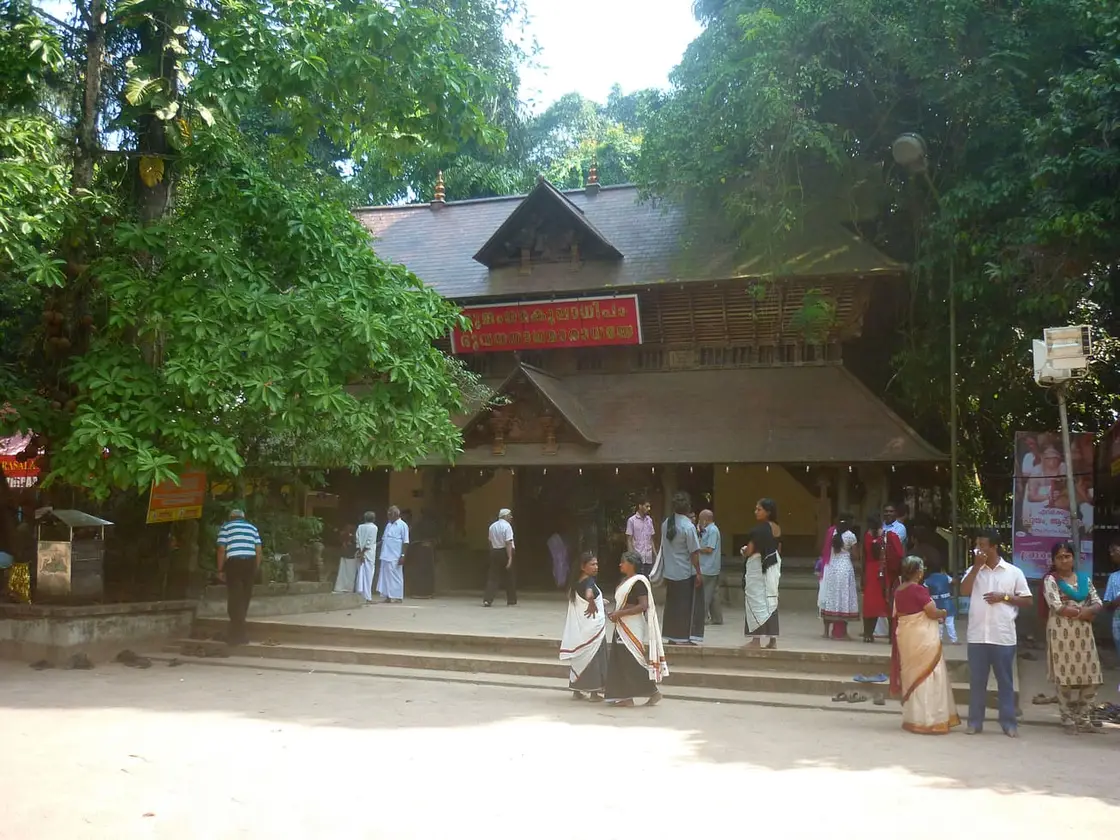
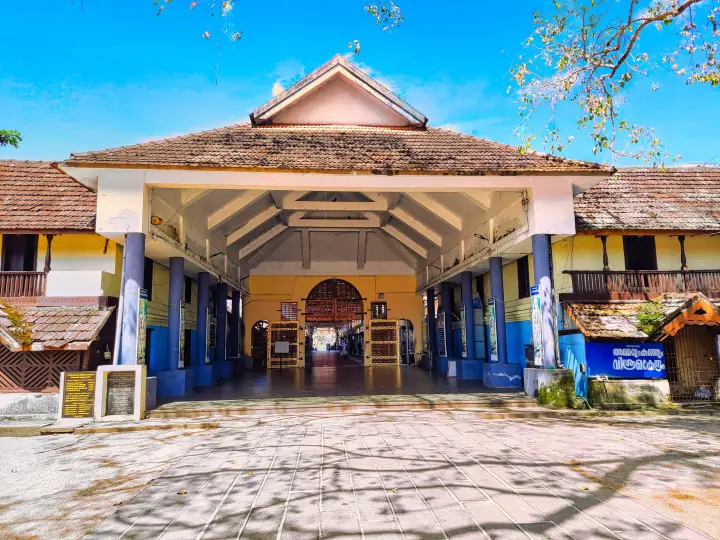
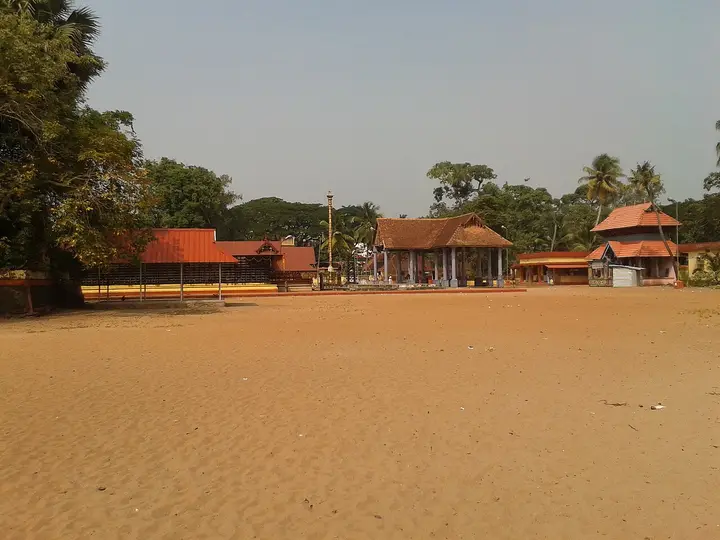
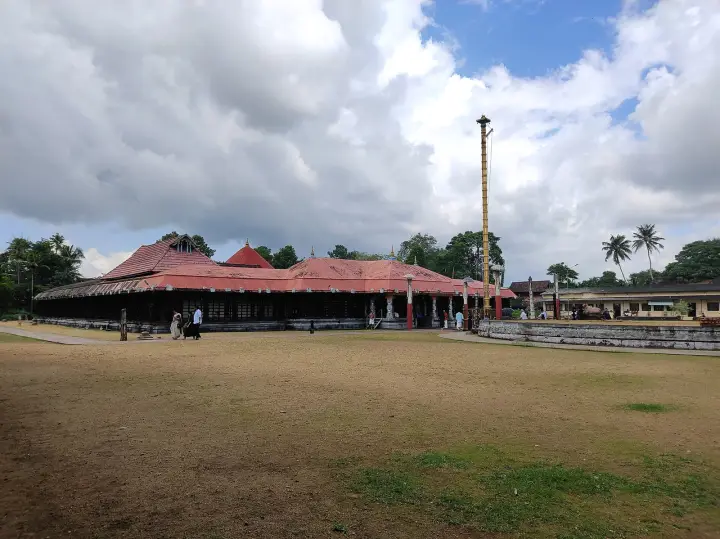
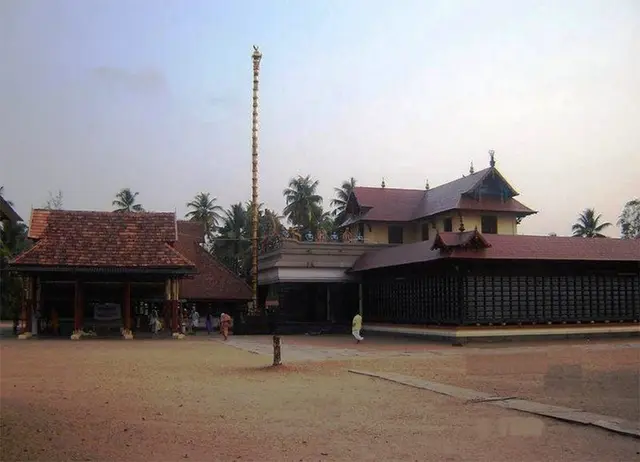
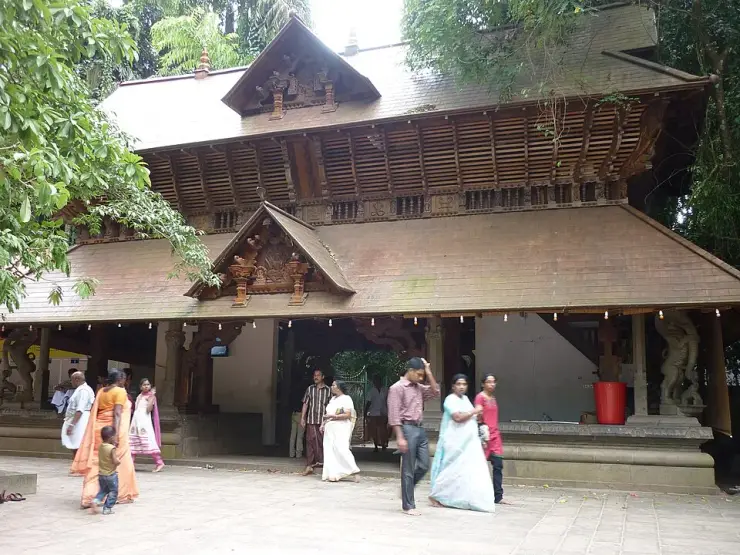
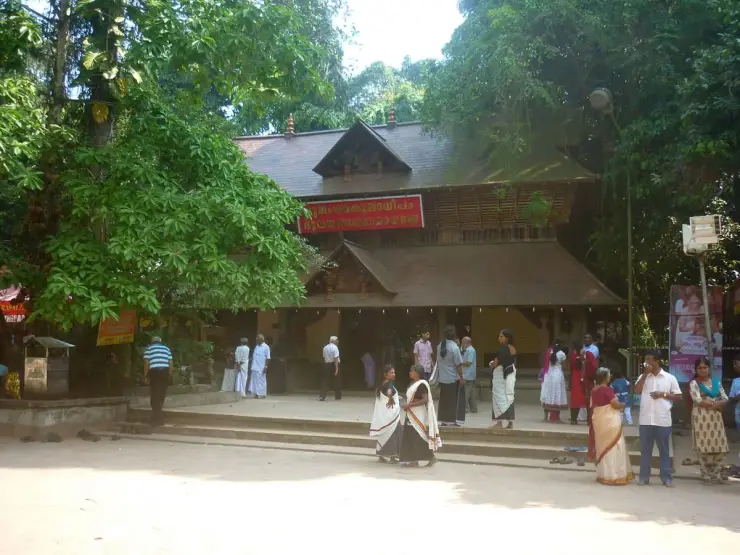
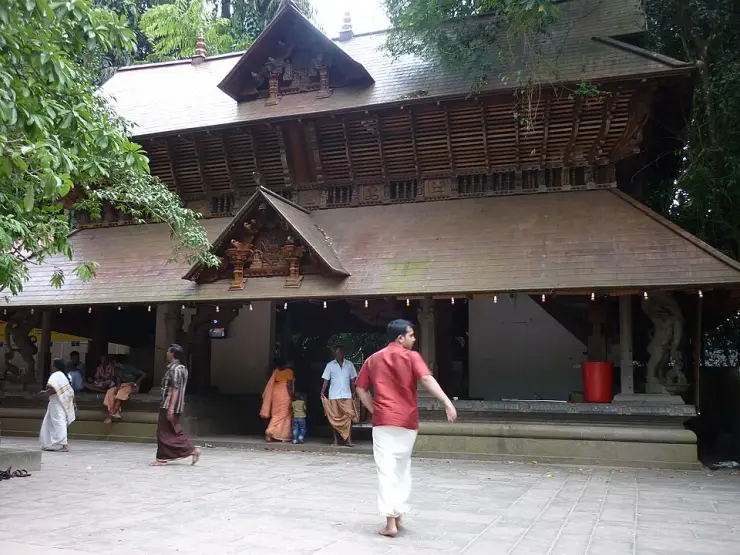
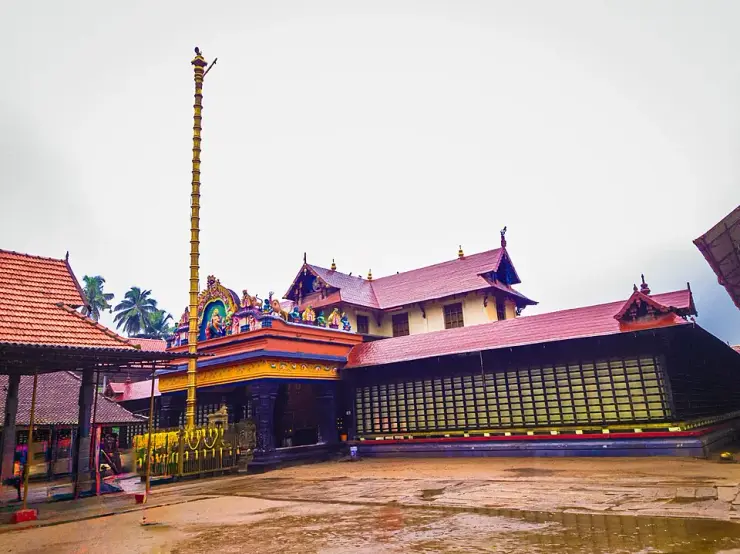
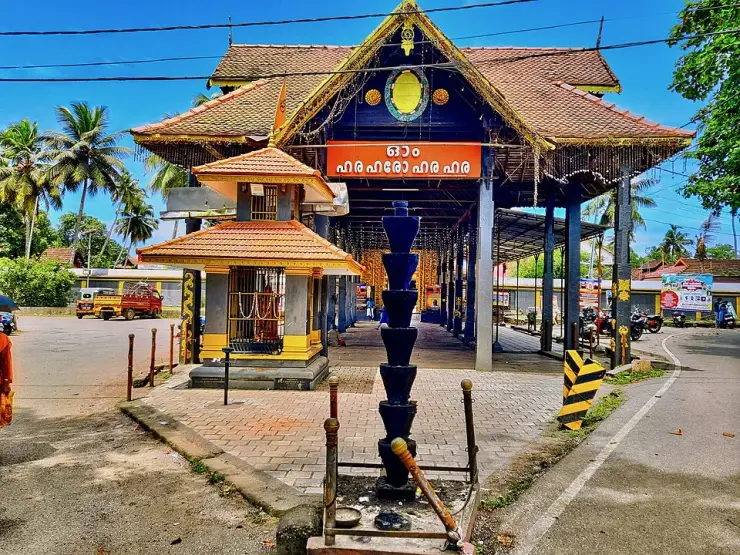
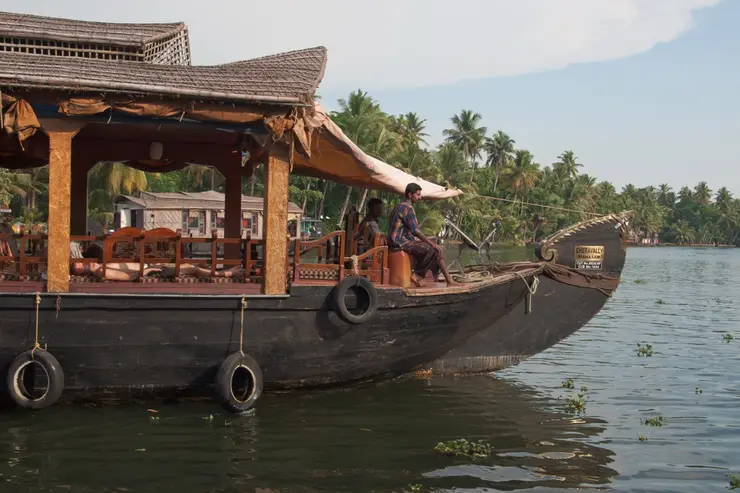
Haripad calls itself Kshetranagari, the town of temples, and the claim is not modest boasting — the Malayalam account counts something like a hundred shrines large and small across the town and its ring of villages, from Mannarasala in its grove to the great Subrahmanya temple on the main road. But the town is more than the sum of its sanctums. It is the headquarters of Karthikappally taluk, an eighteen-village administrative block on the Onattukara flat between the Kayamkulam kayal and the Achankovil; it is the place a Travancore prince consort was locked up for four years and wrote a poem about a peacock; and it is, by its own reckoning and by the count of chundan vallams moored in its outskirts, the heartland of the Kerala snake boat. Every August the Payippad Jalotsavam turns three days of the Onam week into a re-enactment of the journey the town’s god is said to have made by water.
Haripad sits on National Highway 66 between Alappuzha and Kollam, at roughly 9°18′ north and 76°28′ east, about thirteen metres above sea level — which in this part of Kerala counts as high ground. The municipality covers 19.24 square kilometres with a recorded population of 30,977. Wikipedia does not state the census year for that figure, and since Haripad was only restored to municipal status in 2015 it is presumably the 2011 count for the area now inside the boundary; treat it as an order of magnitude rather than a headcount. The town is the headquarters of Karthikappally taluk, which takes in eighteen villages, and it is bordered by Pallippad to the east, Veeyapuram and Karuvatta to the north, Kumarapuram and Karthikappally to the west and Cheppad to the south.
The name Kshetranagari — town of temples — comes from the Malayalam encyclopaedia entry, and the reason it is used is arithmetic rather than rhetoric. The count of roughly a hundred shrines is taken across Haripad together with its ring of outlying settlements: Nangyarkulangara, Cheppad, Chingoli, Pallippad, Kumarapuram, Karthikappally, Karichal, Anari, Cheruthana, Vellamkulangara, Pilappuzha, Payippad and Mannarasala. That list is worth reading slowly, because five of those names will turn up again below as boat villages. In Haripad the temple and the boat shed are usually the same institution seen from two angles.
Alongside the temples the town is unusually thick with old households. The Malayalam account names four Kshatriya kovilakams — Ananthapuram, Karthikappally, Chembroth and Karippolil — and three senior Namboothiri illams, Pullamvazhi, Karingaman and Chengarappally, along with Moosad mathams at Puthiyil and Karikkamadam and whole streets of Varier, Marar and Nair houses attached to temple service. A town that maintains a hundred shrines needs a hundred shrines’ worth of hereditary staff, and that is the shape Haripad grew into.
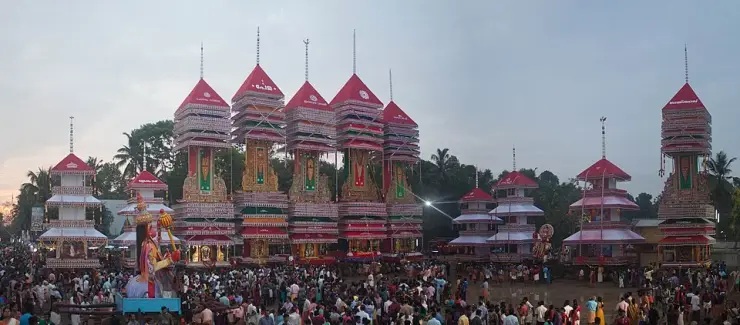
The Payippad Jalotsavam is held on the Payippad stretch of the Achankovil, about four kilometres from the Subrahmanya temple, and it runs for three days rather than the single afternoon that most Kerala races get. The days are fixed to the Malayalam calendar — Thiruvonam, Avittam and Chathayam in the month of Chingam — which puts it in late August or September, inside the Onam week. On the first day the chundan vallams muster at Aranazhika Nelpurakadavu and move up towards the temple singing vanchipattu, with racing in the afternoon. The second day is given over to decorated water floats and processions. The third is the race proper.
Kerala Tourism’s District Tourism Promotion Council sheet for the festival records attendance of above one lakh and around twenty boats entered across the categories, and the Travancore Devaswom Board as organiser. The classes on the water are the chundan — the hundred-foot snake boat — and the smaller indigenous hulls: veppu, iruttukuthi and churulan. Kerala Tourism describes Payippad as fielding the largest number of traditional snake boats of any Kerala race except the Nehru Trophy, which is a more useful thing to know than any claim about which race is oldest.
The reason the boats are here is that the villages around Haripad own them. The Malayalam account is blunt about it: the largest number of boat races and the largest number of chundan vallams in Kerala belong to Haripad’s outskirts, and it names them — Anari Chundan, Cheruthana, Payippad, Ayaparambu, Vellamkulangara, Karuvatta Sri Ganesh and Thrikkunnappuzha Devas, plus a great many churulan boats. The published Payippad results bear this out. Between 2004 and 2025 the winners are almost entirely local hulls: Karichal Chundan six times, Payippadan Chundan six, Anary Chundan twice, with Veeyapuram Chundan taking the last few years under different clubs.
The other thing Haripad owns is a poem. Kerala Varma Valiya Koil Thampuran — consort of the Senior Rani of Travancore, translator of Kalidasa, the man Malayalam calls its Kalidasa — was confined at Haripad in 1875 after falling foul of Maharaja Ayilyam Thirunal. His family had already settled at the Ananthapuram Palace at Kumarapuram, and it was there, in the upper room by the tank called the Kulappuramalika, that he served four years of solitary confinement. He was permitted one thing: darshan at the Haripad Subrahmanya temple. The temple kept peacocks in a mayilsala inside its wall, and those birds became the messenger of Mayura Sandesam, the sandesa kavya in which a caged husband sends word to a wife two hundred kilometres away in Thiruvananthapuram. The road the peacock is told to fly is described stage by stage, which makes the poem a topographical record of the route south from Haripad as well as a love letter.
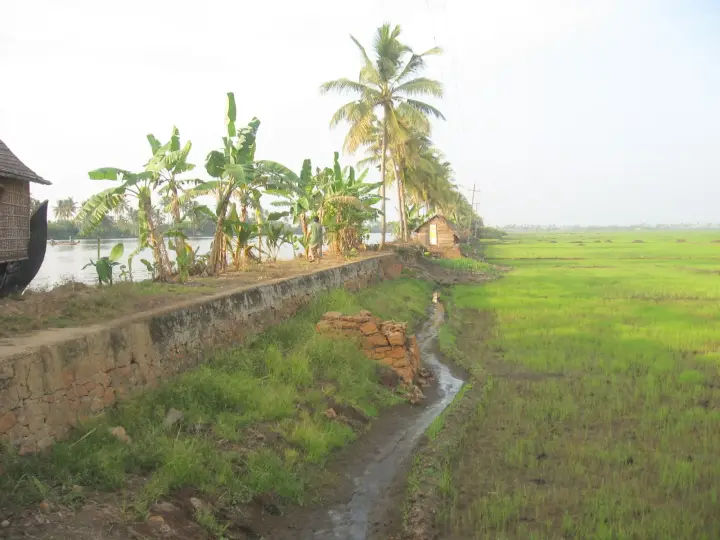
Onattukara around the town is sesame and paddy country, and since 17 December 2022 that has been formally recognised: Onattukara Ellu, the local sesame, holds a Geographical Indication registration, one of five Kerala agricultural products granted GI status on the same day. It is grown on well under a thousand hectares across local bodies in Alappuzha, Kollam and Pathanamthitta, which makes it a genuinely small-batch crop rather than a marketing region.
For a small town Haripad has an implausible cinema and music roll-call. The screenwriter and director P. Padmarajan, the director K. Madhu, the cinematographer Shivan and his sons Santosh, Sangeeth and Sanjeev Sivan, the composer M. G. Radhakrishnan and the singer M. G. Sreekumar, the lyricist Sreekumaran Thampi, the poet Anil Panachooran, the actor Navya Nair and the screenwriter Madhu Muttam — whose Manichitrathazhu drew on a real killing in the Alummoottil family near here — are all associated with the town. The Kathakali performer Haripad Ramakrishnan carries the place-name in his stage name, which in Kerala is the surest sign that a town is taken seriously as a source of artists.
On an ordinary day none of this is on display. Haripad is a highway town: buses pulling into a brick-paved KSRTC yard under an Indian Oil canopy, a railway platform with a trilingual board, shophouses along the main road, the temple wall behind. The interest is in knowing what the ordinary things are attached to.
Legend & myth
The founding legend of Haripad is the property of its temple, and this record leaves it there. What belongs here is the second half — the part that happens on the water, that nobody at the temple can show you, and that the town re-enacts for three days every Chingam.
The tradition is that after the idol of Subrahmanya was recovered from the Kayamkulam lake it was not carried home. It was brought back by boat, in a ceremonial procession, one vessel bearing the god and a great many others escorting it, rowed by the villages. The Payippad Jalotsavam exists to remember that flotilla. This is a genuinely unusual thing for a Kerala boat race to be. The Nehru Trophy commemorates a visit by a prime minister in 1952. Aranmula and Champakulam are tied to temple festival days. Payippad is a re-enactment of a specific voyage, with a specific cargo, along a specific stretch of water — and the boats still muster at Aranazhika Nelpurakadavu, the landing place named in the legend as where the idol came ashore. The race has a start line because the story has one.
Who had the dream is where the accounts part company, and there is no polite way to reconcile them. Our own temple record follows the version in which the leading families of the old town all dreamed the same dream on the same night. Kerala Tourism’s official festival sheet for Payippad is more specific: it names the Ooranma families who then controlled the temple — Chengarappally, Thazhoor, Kizhikulam and twenty other Karanma families — and says it was the elder members of those households who saw the dream together, and that the sreekovil of the new temple was built by the Ambakkattu family of Karichal village. Kerala Tourism’s own Champions Boat League page tells it differently again: there it is a single man, the priest of a Muruga shrine called Keezhthrikkovil in Haripad, who dreamt it alone. A collective dream, a dream shared by a named group of landholding families, and one priest’s dream are three different stories with three different politics, and the same tourism department publishes two of them. We print all three and pick none.
There is one detail in the boat-race telling that the temple telling drops, and it is the best thing in the legend. The people of Haripad, in this version, had not set out to build a Subrahmanya temple at all. They had decided to build a temple to Ayyappan. It was only before the installation that the dream came and told them there was a Subrahmanya idol lying under a whirlpool in the Kayamkulam river, and they went and got it. So the founding story of Haripad is not a story about a god being discovered. It is a story about a congregation being overruled — a village that had settled on one deity and had another delivered to it by water. Kerala’s temple legends are full of divine arrivals; very few of them are also a cancelled plan.
The ritual that opens the race preserves the link and is worth watching for. Before the competition begins, the crews come to the Haripad Subrahmanya temple, make obeisance, and receive flowers and a garland, which they carry back and fasten to their boats. Only then do they row. It is a small ceremony and it does a large amount of work: it makes the race a temple observance rather than a sporting fixture, and it keeps the boats formally in the service of the god whose journey they are repeating.
The town’s older names carry their own claims, and they should be separated carefully because two of them are already spoken for. The temple record owns the devotional derivation of Haripad — Hari, meaning Vishnu, and padam, the foot. The town’s own English article offers a flatly unromantic alternative: that the place was earlier called Arippatt, that the name Haripad only came into general use in the twentieth century, and that some scholars read it as simply meaning a place beside water, from ari, near, and pat, place. The Malayalam article adds a third: that the Harigeethapuram mentioned in Kerala’s histories is the same place, later shortened. And a fourth name survives as a living address. Both the Kerala Tourism sheet and the town’s own account hold that the oldest shrine here enshrined a Skandakumara, from which the locality took the name Kumarapuram — and Kumarapuram is still what part of Haripad is called, and still where the Ananthapuram Palace stands. That last one is the strongest kind of evidence a place-name legend can have, because you can post a letter to it.
Two temptations should be refused outright. The first is the Ekachakra claim — the tradition that Haripad is the city of the Mahabharata where the Pandavas hid and Bhima killed Bakasura. It is genuinely recorded in the town’s own Malayalam article and it is genuinely part of local tradition, but it is already told on our Haripad temple page and it is not a Payippad story; we note it and move on. The second is a confusion of names that will bite anybody researching this town. There are two Payippads in Kerala. The one with the boat race is a village on the Achankovil in Haripad’s ring of settlements, in Alappuzha. The other is a grama panchayat in Changanassery taluk, Kottayam district, seven kilometres from Changanassery town, whose own history is about the Naalukodi junction on the medieval royal road and a Chetti trading settlement mentioned in the fourteenth-century Unnuneeli Sandesam. That Payippad has nothing to do with this festival, and the Malayalam Wikipedia article titled simply പായിപ്പാട് is about the Kottayam one.
Finally, two figures that circulate with the legend and should not be laundered. The Kerala Tourism sheet states that the oldest temple here was about five thousand years old, and that the boat race carries over five hundred years of tradition. Neither is evidence of anything; the five-thousand-year figure is a devotional formula rather than a date, and the five-hundred-year one appears on a promotional page with no source attached. They are printed here as claims made by the state tourism department, which is what they are, and not as history.
More about Haripad and Mannarasala
History
Before Travancore, this coast was not Travancore. The Dutch governor Gollanez, writing of the seaboard between Quilon and Purakkad which the Dutch called Martha, described the Karthikappally region as consisting of two polities — Karnoppally, which is present-day Karunagappally, and Karimpali. Haripad lay in Karimpali, also called Vettimana, the tract between Kayamkulam and Purakkad. It came under Travancore by conquest under Anizham Thirunal Marthanda Varma, and our two sources disagree on when: the town’s English article gives 1742 for the defeat of the Karthikappally region, while Kerala Tourism’s festival sheet says 1734 for the absorption of Kayamkulam and Chempakassery. Neither is a primary source and we do not adjudicate between them; what is not in dispute is that the Haripad temple passed under Travancore control at that point.
Haripad’s own municipal history is a see-saw and it explains why the town feels bigger than its paperwork. It was granted municipal town status in 1921. It was downgraded to a non-municipal town in 1941. It was converted into a panchayat in 1954. And it was upgraded to a municipality again in 2015, with Prof. Sudha Suseelan as first chairperson. Ninety-four years elapsed between the first grant and its restoration, and for sixty-one of those years the town of a hundred temples was administratively a village.
The best-documented episode in the town’s modern history is a punishment. Kerala Varma Valiya Koil Thampuran, born at Changanassery in 1845 and married in 1859 to Bharani Thirunal Lakshmi Bayi, the adopted niece of Uthram Thirunal and later Senior Rani, fell out with Maharaja Ayilyam Thirunal. Palace intrigue and personal disaffection led to his forcible confinement at Haripad in 1875. On 26 January 1877 he wrote an apology admitting a remarkable list of charges: being in league with the future Visakham Thirunal, writing to the diwan and then lying about having written, an attraction to Christianity and an addiction to bhang. He was released in 1880 by Visakham Thirunal and reunited with his wife. He was made a Companion of the Order of the Star of India in 1885.
The manuscript settles a question that the popular version gets wrong, and it is worth stating plainly because our own research nearly repeated the error. The Malayalam Wikipedia article on Haripad says Kerala Varma wrote Mayura Sandesam while living at the Ananthapuram Palace, and that is what most accounts say. The article on the poem itself says otherwise: that his confinement supplied the situation and the Haripad peacocks the idea, but that he wrote the poem after his release, sitting in the palace at Thiruvananthapuram. It cites the manuscript, which is preserved at the Ananthapuram Palace at Haripad and carries the date he began — Medam 1 of Malayalam year 1069, corresponding to April 1894 — and records that he finished on Mithunam 5. That is fourteen years after he walked out of the Kulappuramalika. (The Malayalam article glosses ME 1069 as 1895; the conversion is 1894, and the English article gives 1894.) The poem is a Haripad poem in every sense except the one everybody assumes. His last night was also spent at Haripad. In September 1914 he was travelling back from the Vaikom Mahadeva temple with his nephew and pupil A. R. Raja Raja Varma, and stopped at the Ananthapuram Palace. Setting out for Thiruvananthapuram the next day, his car crashed; he died of his injuries two days later and was cremated with state honours at Changanassery. It is often described as the first death in a road accident in India — a claim we have not been able to test, and one that is very hard to prove — but the itinerary itself is not in doubt.
The boat race has a documented modern record that begins abruptly. Pacha Chundan of the Payippad Boat Club won in 1967 and 1968; no race was held in 1969; and then the published results simply stop until 2004, with the note that other race details are not available. From 2004 the ledger is continuous, and it also records the interruptions: the 2018 edition was cancelled because of the floods, and 2020 and 2021 because of COVID-19. A century-old festival that lost three of four years to a flood and a pandemic within living memory is a useful corrective to the language of unbroken tradition.
The most recent thing to happen to the country around the town is bureaucratic and, for once, good news. On 17 December 2022 Onattukara Ellu was granted Geographical Indication status alongside four other Kerala agricultural products — Attappady Attukombu Avara, Attappady Thuvara, Kanthalloor-Vattavada Veluthulli and Kodungalloor Pottuvellari. The registration attaches a legal name to a crop that Onattukara had been growing and selling under that name for a very long time without one.
Why visit
Three days of chundan vallam racing on the Achankovil in the Onam week, with the boats mustering at the landing place named in the town’s own founding legend.
A town that maintains something close to a hundred shrines across its ring of villages, which is a different kind of sightseeing from ticking off two famous ones.
The Ananthapuram Palace at Kumarapuram, where a Travancore prince consort served four years of solitary confinement and where the manuscript of Mayura Sandesam is still kept.
Two of Kerala’s most distinct temples, a serpent grove and a Devaswom Board shrine, two kilometres apart and nothing like each other.
Onattukara sesame country, GI-registered since December 2022 and grown on a genuinely small acreage across three districts.
A working highway and railway town on NH66 that makes an unfussy base for south Alappuzha rather than a set-piece.