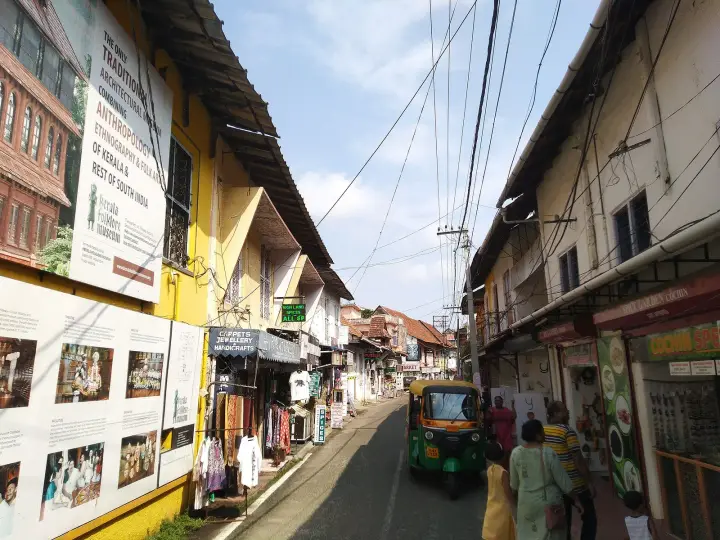
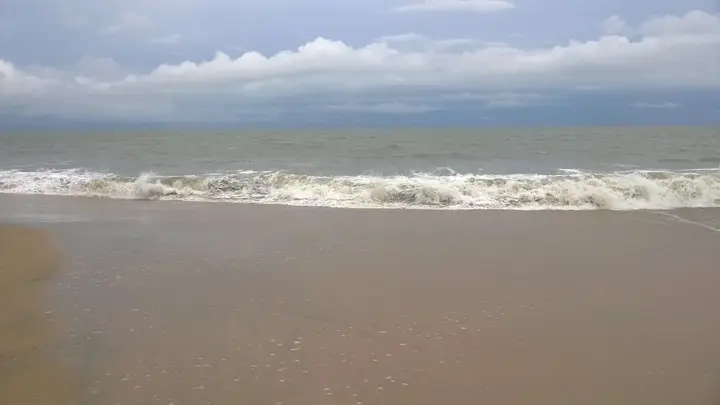
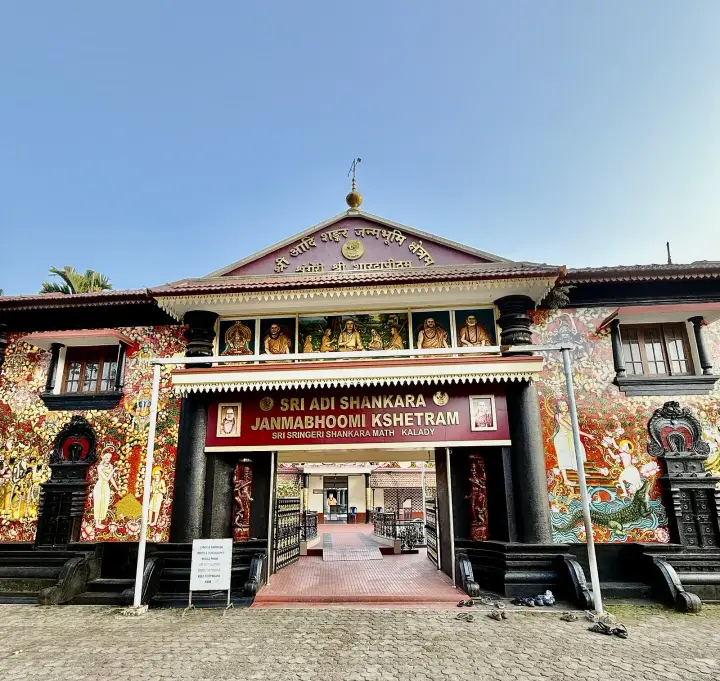
Places to Visit in Kumbalangi

Backwater village known for fishing and local experiences.

Kumbalangi
Practical guide

Plan Kumbalangi

Who's going?Tailor Kumbalangi to your trip
DistrictErnakulam
RoleVillage tourism base
Time neededHalf a day is the honest minimum, and it…
Places to visit4Listed businesses3
What to expect

Highlights

  • Kumbalangi — Model tourism village known for backwater life, fishing and village experiences.
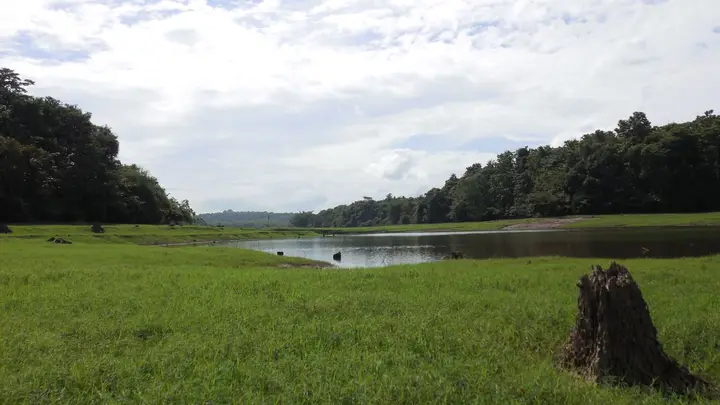
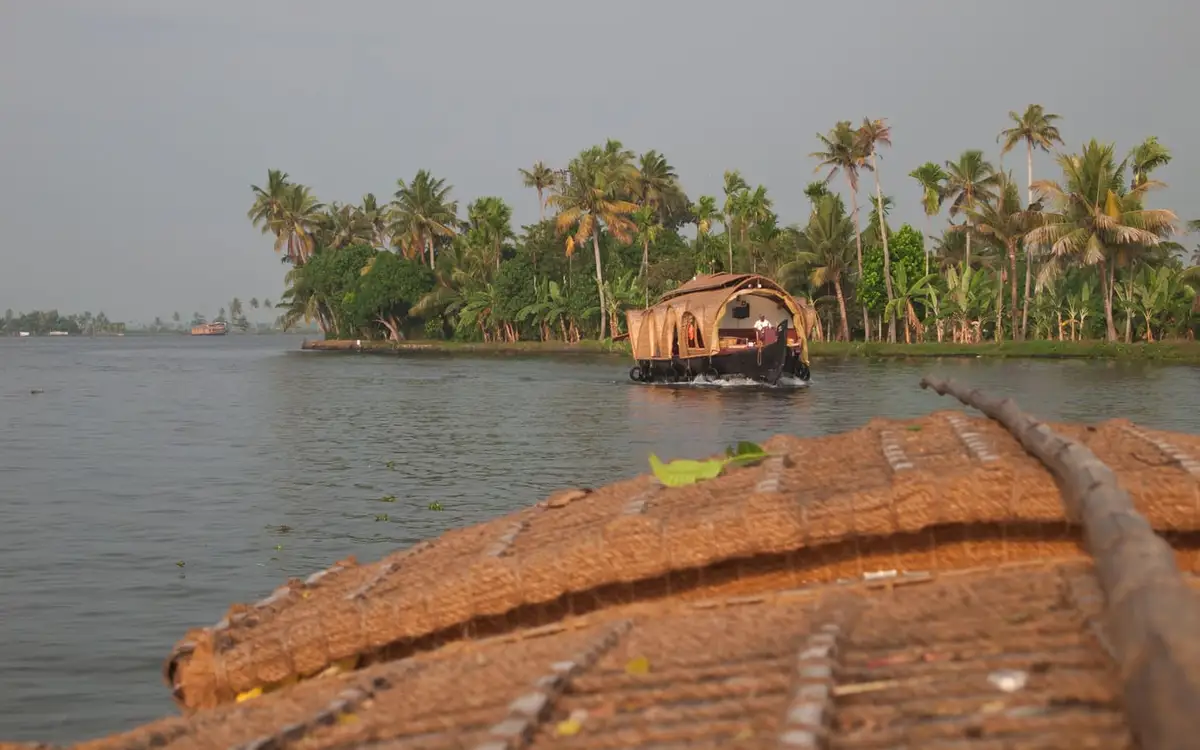
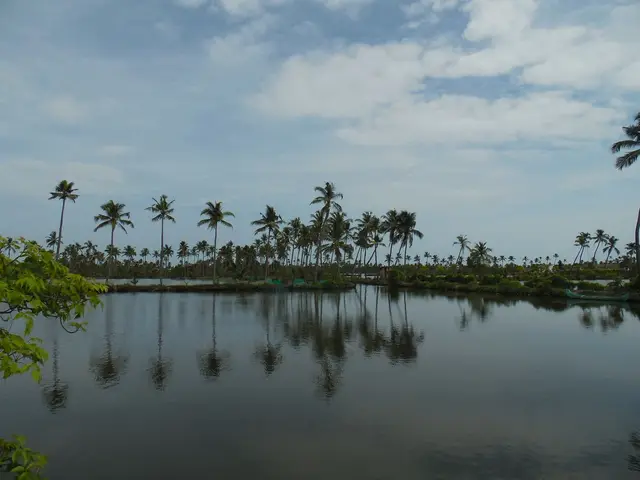
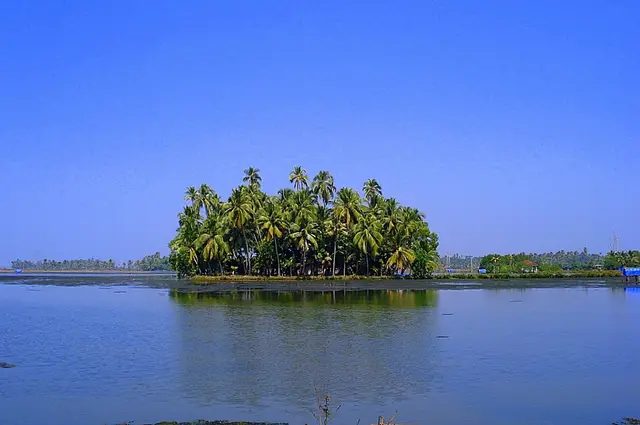
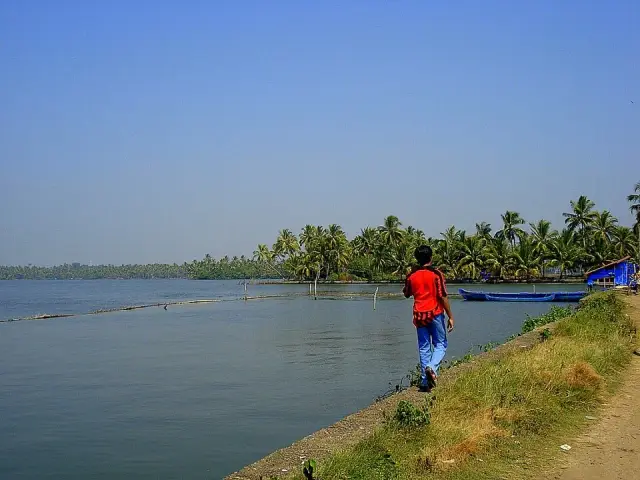
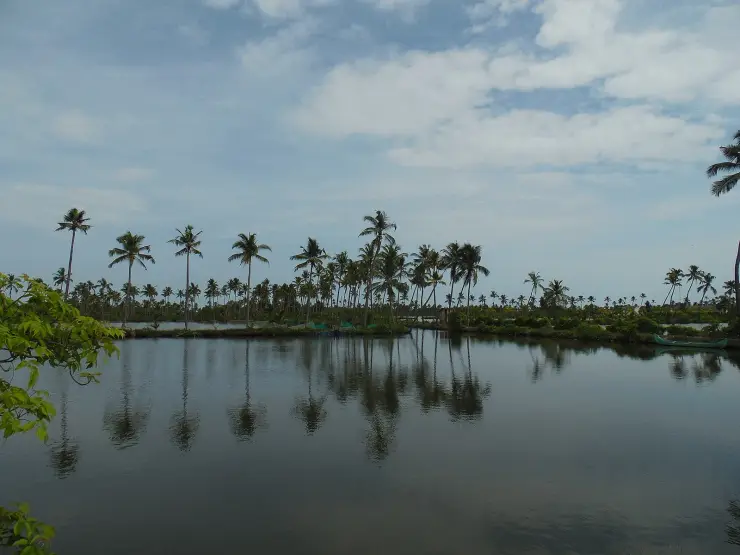
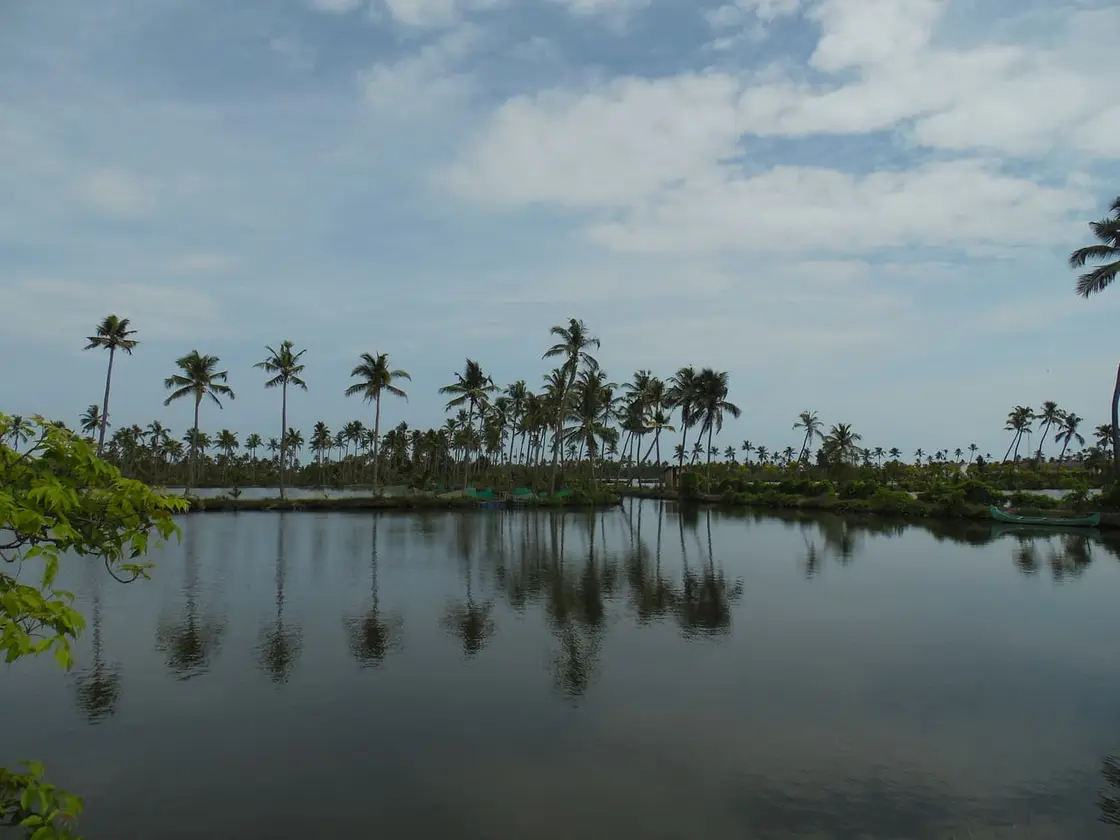
  • Kumbalangi backwaters — The tidal creeks and pokkali fields that wrap Kumbalangi island — canoe and country-boat water, worked for clam, prawn and crab rather than laid out for houseboats, and calm enough that the far bank mirrors in it at first light.
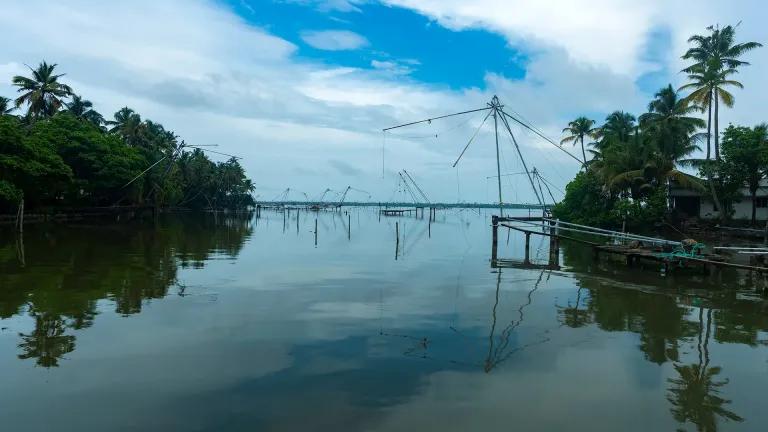
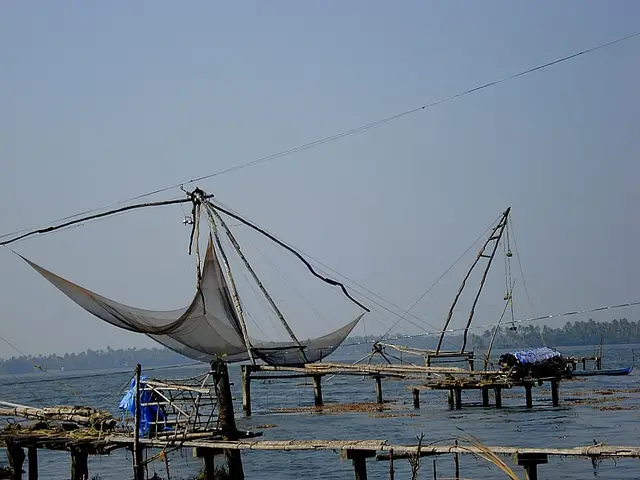
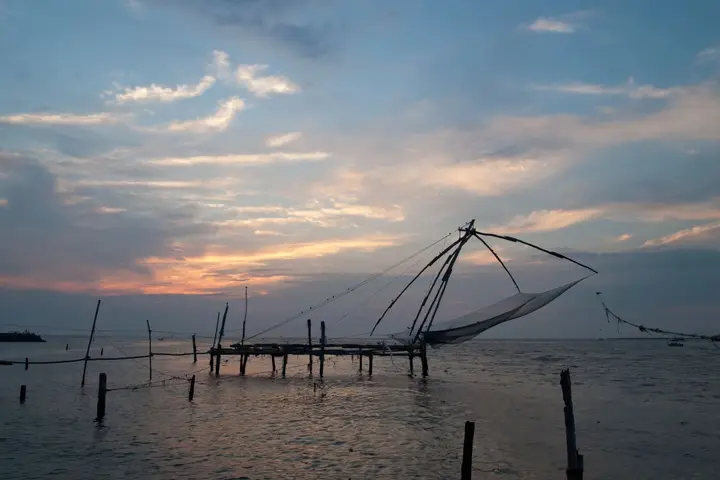
  • Chinese nets — Kumbalangi’s own cantilevered cheena vala, worked on a village creek instead of a tourist seafront — fewer, quieter and still fished for a living, which is the whole difference from the Fort Kochi row.
  • Village walks — Guided walking routes through Kumbalangi’s lanes and working yards — coir twisting, toddy tapping, clam-shell collecting, prawn-filtration ponds and crab farms — run by the village’s own hosts rather than by an outside operator.
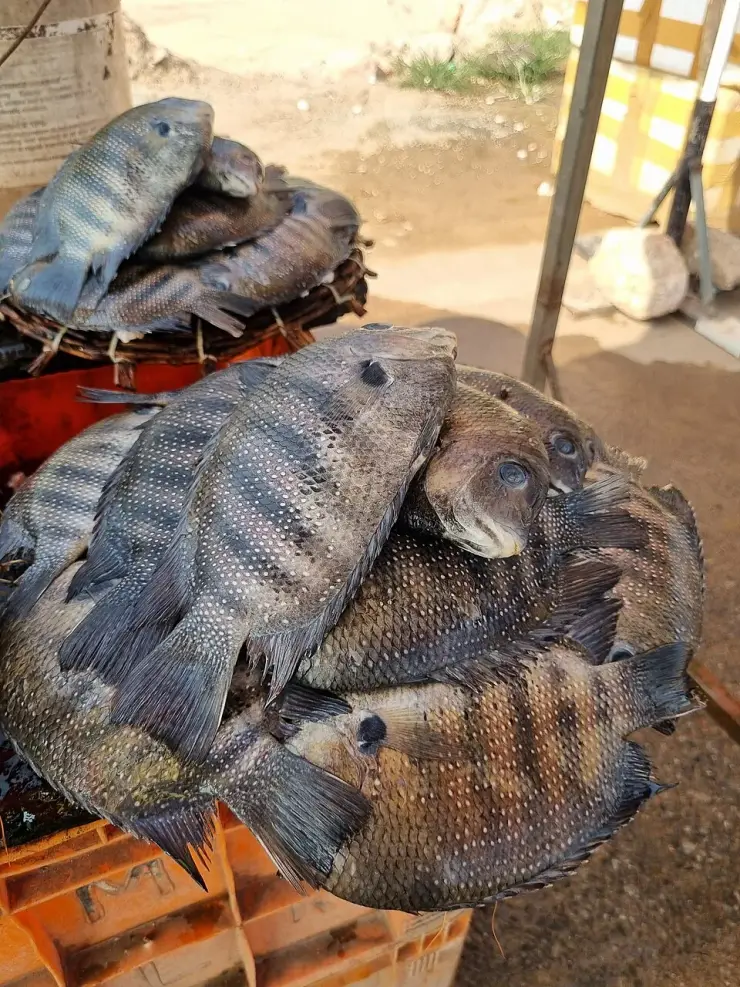
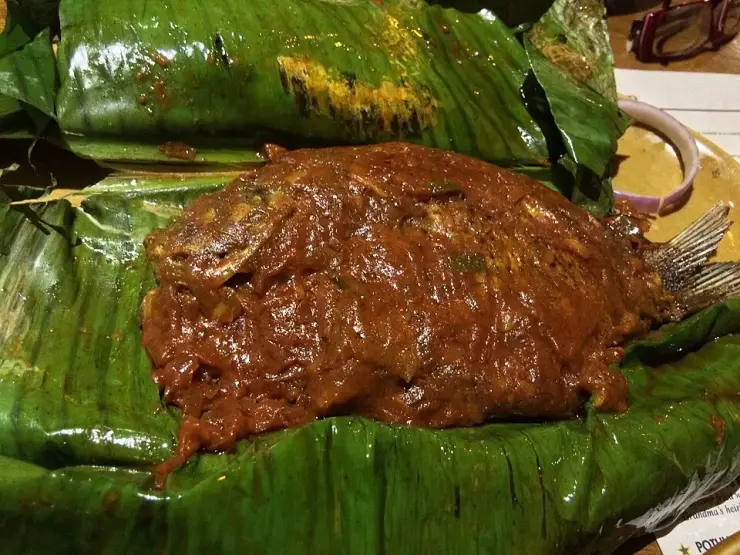
  • Seafood homestays — The North Kumbalangi homestay belt, where the draw is eating karimeen, clam and crab cooked in a family kitchen from that morning’s catch — the food is the reason to stay, not an amenity attached to the room.
Getting there

How to visit

  • Nearest airport: Cochin (COK), in-district
  • Rail gateway: Ernakulam Junction (ERS)
Timing

Best time to visit Kumbalangi

November to February is the comfortable season. March to May is hot but is also the bioluminescence window. June to September brings the south-west monsoon: the creeks run high and brown, canoe trips get cancelled, and the pokkali fields are at their most photogenic and least accessible.

Weather in KumbalangiSeasonal guide

Live forecast loads in your browser.

Today at Kumbalangi
Sunrise6:14 am
Sunset6:23 pm
Golden hour best light5:23 pm–6:23 pm
Blue hour after sunset6:23 pm–6:48 pm
Sun sets toward compass bearingW · 272°
Moon tonight🌓 First quarter · 51%
South-west monsoon. June to September is the south-west monsoon in Kerala. Expect heavy showers, mostly in bursts rather than all day — carry rain cover, allow extra time for getting around, and note that ferries and open-air sites are the first things affected.

Sun and moon are calculated for this location and shown in IST. Photography windows are the hour around sunrise and sunset; the sunset bearing is degrees clockwise from true north. Moon phase is accurate to about half a day.

The story

The story of Kumbalangi

Twelve kilometres south-west of Kochi, past the fish market at Thoppumpady and over a bridge, the traffic stops mattering. Kumbalangi is an island panchayat of about 16 km² and forty thousand people, ringed by tidal creeks and held together by mangrove. In 2003 it was declared India's first model tourism village — the plan was that visitors would come to a working village and the money would reach the households doing the working, and that nobody would build a resort. Two decades on, roughly a sixth of that plan has been built. What survives is the part that mattered: it is still a village.

The first thing to understand about Kumbalangi is that it is not a resort strip with a village attached. It is a panchayat — a unit of local government — with schools, churches, a bus stand, a veterinary dispensary and about 42,000 residents, roughly three-quarters of them Latin Catholic, and a literacy rate north of 95 per cent. Tourism happens inside that, in people's front rooms and on their jetties, rather than in a zone set aside for it. When you walk here you are walking through somebody's morning.

The work is water work. The creeks that wrap the island are farmed as much as fished: prawn and clam and mud crab from the shallows, karimeen from the quieter water, and the pokkali system on the low fields, where the same ground grows a salt-tolerant rice through the low-salinity months and then, when the tide pushes salt back in, is flooded and given over to prawns. It is one of the oldest genuinely rotational aquaculture systems anywhere, and it works because the sluice gates are opened and shut by people who have been reading that water their whole lives.

Over a hundred cheena vala — the cantilevered Chinese lift nets — stand on the water facing the shore. They are not lined up for photographs the way Fort Kochi's are; they are spread along the creeks where the fish are, and they are worked at the tide rather than at sunset for an audience. That difference is the reason a lot of people who have already seen the Fort Kochi row come out here anyway.

The other thing Kumbalangi is now famous for is the water lighting up. Between about March and May, on dark nights, disturbed water in the creeks and the pokkali fields glows blue. Malayalam calls it kavaru. Almost nobody outside Kerala had heard of it until the 2019 film Kumbalangi Nights put it on screen, and Kumbalangi has been dealing with the consequences ever since — more visitors, more cars down lanes built for handcarts, and a rising number of people who arrive at eleven at night expecting a light show that may simply not be there.

The response to all this has been unusually restrained. Plastic is discouraged across the panchayat. There are no purpose-built tourist structures — no resorts, no cottage complexes — so people stay in and beside existing homes, which caps the numbers automatically and keeps the money local. The panchayat installed something like 600 household biogas plants, reported as the first such scheme by any panchayat in Kerala. Whether you find the place charming or merely ordinary depends largely on whether you understand that the ordinariness is the achievement.

Legend & myth

Start with the name, because the obvious reading is wrong and the real one is better. Kumbalanga is the Malayalam word for ash gourd, and visitors are regularly told the name comes from the vegetable. It is not. The accepted derivation is Kumbalam Vilangi — the island lying off Kumbalam — which describes exactly what you are standing on: a piece of ground separated from the mainland settlement of Kumbalam by water, on one side, and from the sea on the other. Kumbalam Vilangi wore down over generations into Kumbalangi. Kumbalangi is named for its own geography, which for an island of tidal creeks is about as honest as a place name gets.

The second claim is on every signboard. The date is 2003, when the Kerala government designated Kumbalangi under the Kumbalangi Integrated Tourism Village project, and the ambition was genuinely radical for its time — visitors would come to a working village rather than to something built for them, the money would reach the households doing the working, plastic would be discouraged across the panchayat, and nobody would put up a resort.

How much of it was built is the honest question, and the answer is: some. Reporting describes a project a long way short of its plan, with real ecosystem pressure on the creeks and the mangroves underneath the tourism. But the part that mattered held. There are still no purpose-built tourist structures. The nets are still worked by households. You are still walking through somebody's actual home ground rather than a reconstruction of one, and in an industry that specialises in building fake versions of exactly this, that is not a small thing to have kept.

It is worth noticing that the place is sold under two different firsts, and they are not the same claim. The signboards and most write-ups date that first to the 2003 designation. Kerala Tourism's own material calls it the first eco-tourism village in India. Both get repeated as though they were one settled fact, and neither comes with a definition attached. The practical version — a village that took visitors without building anything for them — is true and is more interesting than either slogan. It is also worth knowing what the 2003 plan promised that you will not find: among the unbuilt components was a kalagraamam, an artists' village on four acres, intended to display traditional fishing gear and regional handicraft. On a project reported at roughly 15 per cent complete after two decades, a good deal of what is advertised in old material simply is not here, and it is better to arrive expecting Kumbalangi than the brochure.

Then in 2019 a film changed the traffic. Kumbalangi Nights was set here, was very good, and put both the island and its bioluminescent water in front of a national audience. Film fame is a mixed inheritance for a place this small — it fills the creeks at weekends, it brings income that the tourism project never quite delivered, and it brings people looking for a location rather than a home. The name on the poster is doing more for the local economy than the government designation ever managed, which is either encouraging or bleak depending on where you sit.

The thing to know about that film, and the reason it does not feel like a set, is that it was not one. Shooting began in September 2018 and was done entirely on location here, in houses that were already standing — including the half-ruined one at the centre of the story. The director, Madhu C. Narayanan, is reported to have spent a year in Kumbalangi before filming started, simply learning how the place worked. So the resemblance between the film and the place runs in the honest direction: the film looks like Kumbalangi because it was made inside it. The corollary is one visitors regularly get wrong. The famous house is not a monument and not an exhibit; it is a real property on a real lane, and people turn up to photograph it the way they would a set. Look from the road if you must, and do not walk into anyone's yard.

More about Kumbalangi

History

Kumbalangi was a fishing and pokkali-farming settlement long before anyone thought of it as a destination, part of the belt of low islands where the Vembanad system meets the Kochi harbour mouth. Its economy was the creek: nets, clams, coir from the husk, lime burnt from shell, and rice from ground that spends part of every year under brackish water.

In 2003 the panchayat, under its president M C Sivadathan, and with financial assistance from the state government, launched the project that made the village's name: an attempt to turn Kumbalangi into a model fishing village and tourism spot — the first of its kind in India. The design principle was that tourism should not displace the work being visited. Roads and canals were strengthened, lighting installed and the biogas programme rolled out.

The rest of it has largely not happened. Reporting in 2025 put the project at roughly 15 per cent complete, twenty-two years on, with several components still unrealised. In the same period the underlying economy shifted: pokkali farming has been widely abandoned because fishing pays better, farms have been leased out for commercial fish culture, and agricultural land, trees and water bodies have been lost in the process.

It helps to know which parts of the 2003 plan actually got built, because the built list is short and specific. Roads and canals were strengthened. Street lighting went in. Around 600 household biogas plants were installed — the first panchayat in Kerala to handle domestic waste that way — and a small visitor park was made. The accommodation side stayed deliberately tiny: the project's own framing was a handful of households, on the order of ten, taking guests into their homes to fish, canoe and see the farms, rather than any built capacity. What did not get made is longer, and includes the four-acre kalagraamam artists' village that appears in most descriptions of the scheme. Two decades on, the honest summary is that the cheap, useful, unglamorous components were delivered and the showpieces were not.

The 2019 Malayalam film Kumbalangi Nights — set here, and the reason a large share of today's visitors know the name — changed Kumbalangi's profile far faster than the project ever did. It is a fair summary of Kumbalangi's last two decades that a film did more for its visibility than two decades of official development, and that people here are still arguing about whether that was good for them.

Why visit

It is the least performed village experience within easy reach of Kochi. Nothing is staged for a bus schedule, because there is no bus schedule — you are watching people work at the time they work.

Everything is within a short ride of Fort Kochi. Twelve kilometres from the Chinese fishing nets you can be on a canoe in a creek with nobody else on the water.

The food is the reason to stay overnight rather than visit. Karimeen, clam and mud crab cooked in a family kitchen from that morning's catch is not the same dish you get in a Fort Kochi restaurant.

It answers the backwater question honestly. If you came to Kerala for backwaters but do not want a houseboat convoy, this is the alternative: narrow water, a country canoe and a boatman who lives here.

In March, April and May there is a chance of seeing the water glow on a moonless night — and it is worth knowing what causes it, which makes it a stranger and more interesting thing to have seen.

It rewards a slow visitor and punishes a fast one, which is a useful filter. If you have half a day and a checklist, Kumbalangi will look like nothing much.
Before you go

Kumbalangi — at a glance

HoursKumbalangi keeps working hours rather than visiting hours. Nets are lifted and canoes go out around first light; the middle of the day is hot and quiet; the second working spell and the best light run from about four o'clock to sunset. Nothing closes, but there is nothing staged to arrive for either.

Entry: Free. Kumbalangi is a working panchayat, not a ticketed attraction — there is no gate and no entry counter. What you pay for is somebody's time: a guided village walk, a canoe with a boatman, a meal in a family kitchen. Those are agreed household by household and are not published rates, so settle the price before you start, not after.

Photography: People live and work here; it is not a set. Ask before photographing anyone at a net, in a yard or in their own doorway, and accept a refusal. Drones over homes and over working water are intrusive and are resented.

Getting here

How to reach Kumbalangi

  • ✈︎ By air Cochin International Airport (COK) at Nedumbassery is roughly 45–50 km; about 1.5–2 hours by taxi or app cab depending on traffic.
  • 🚆︎ By train Ernakulam Junction (South) is about 15 km; continue by autorickshaw, app cab or bus via Thoppumpady and Perumpadappu, roughly 40–50 minutes.
  • 🚗︎ By road From Fort Kochi it is about 12 km via Thoppumpady and Perumpadappu; from NH 66 the Aroor side approaches over the Kumbalangi bridges.
  • 🚌︎ By bus Local buses run from Ernakulam and Thoppumpady towards Kumbalangi and terminate near the Kumbalangi bus stand at the southern end.
  • ⛴︎ By boat Country boats and canoes work the creeks, but there is no scheduled passenger ferry from Ernakulam — arrive by road and take to the water once you are here.
Getting back

Check your return bus or ferry with the operator before setting out. Leave time to reach the stop or jetty after your visit, and arrange a return vehicle in advance for a remote outing.

Ask at the jetty or the stand for the time of the last service back, not the next one. If you miss it, an auto or a taxi is the fallback — agree the fare before you get in.

Do

Things to do in Kumbalangi

  • Watch a cheena vala worked at dawn or dusk — four men, a counterweight of stones, and a net that comes up mostly empty most of the time.
  • Take a canoe through the narrow creeks rather than a motorboat; the whole appeal is the silence.
  • Watch clam collectors work the shallows with their feet, and see the shell mounds that become lime.
  • Look at a pokkali plot and get the alternation explained — rice in the low-salinity months, prawns when the salt comes in.
  • Eat karimeen, clam or crab in a homestay kitchen rather than a restaurant.
  • Come back after dark in March–May, on a moonless night, for the kavaru.
Plan

Good to know

  • Agree the price of a walk, a canoe or a meal before it starts. Nothing here is on a published tariff.
  • Book a homestay meal ahead. Family kitchens buy for the people they expect, and a walk-in at eight o'clock can genuinely leave you unfed.
  • Plastic is discouraged across the panchayat — carry a bottle you refill rather than buy.
  • Kumbalangi is spread over 16 km²; do not plan to walk between the northern homestay belt and the southern bus stand.
  • This is not a backwater cruise destination. If you want a houseboat, you want Alappuzha; Kumbalangi is canoes and narrow water.
Stay safe

Safety

  • The creek banks are soft mud and the pokkali bunds are narrow and slippery — walk them in shoes you can lose, and not after rain.
  • Wear the life jacket on a canoe. The water is shallower than it looks in places and much deeper in others.
  • Tidal flow through the creeks is real and changes direction; do not swim in the channels.
Getting around Kumbalangi

If you need step-free access, contact the site before travelling. Ask about a level entrance, steps along the route, the nearest drop-off point, seating and accessible toilets.

In the district

Where Kumbalangi sits in Ernakulam district

District HQKakkanad (Kochi)
LandscapeCoastal commercial heartland

Ernakulam district is known for: Kochi — heritage Fort Kochi, the port city and backwater gateway.

Fort Kochi & Chinese fishing netsMarine DriveCherai Beach
Stay · eat · do · rent · see · shop

Places in Kumbalangi

Every verified place in Kumbalangi — filter by what you’re after.

Vembanad Lake — Waterfront in Kumbalangi
Top pick Historic
Waterfront · Kumbalangi
Vembanad Lake

The great backwater lake system Kochi’s harbour opens from — this record marks the water itself; boat trips from the Fort Kochi and Mattancherry jetties are the way onto it.

DirectionsView guide
Kumbalangi Village Seafood Lunch — Village seafood meal in Kumbalangi
Verified
Village seafood meal · Kumbalangi
Kumbalangi Village Seafood Lunch

Kumbalangi village seafood lunch experience for backwater and responsible-tourism visitors. Kumbalangi, eat, Village seafood meal.

Directions Commission-freeView details
Kumbalangi Tourist Village — Village experience in Kumbalangi
Verified
Village experience · Kumbalangi
Kumbalangi Tourist Village

Kerala Tourism destination record for Kumbalangi’s village and backwater experience. Depends on booked activity; confirm with provider · Kumbalangi, Village tourism, Backwaters.

Directions Commission-freeView details
Aquatic Floating Resort — Resort in Kumbalangi
Verified
Resort · Kumbalangi
Aquatic Floating Resort

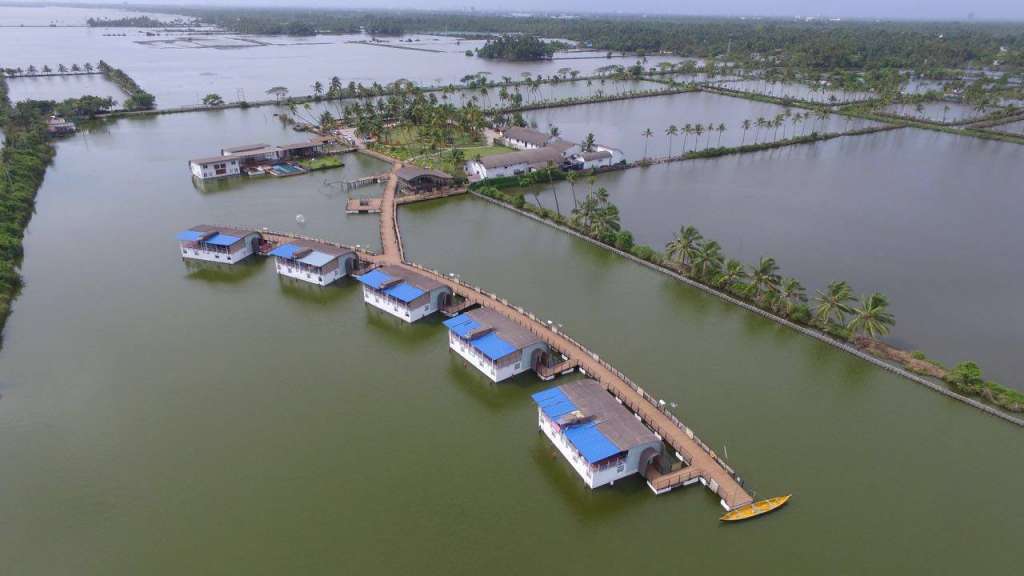
Kerala Tourism-listed floating resort at Puthankary, Kumbalangi. Kumbalangi, Floating resort, Backwaters.

Directions Commission-freeView details
A
Aroor Church
Sight
Top pick Historic
Church · Kumbalangi
Aroor Church

Church in Kumbalangi.

DirectionsView guide
I
Illickal Temple
Sight
Top pick Historic
Temple · Kumbalangi
Illickal Temple

Temple in Kumbalangi.

DirectionsView guide
S
St George Church
Sight
Top pick Historic
Church · Kumbalangi
St George Church

Kumbalangi church record near the island village; verify the exact parish, visitor access and service timing locally before routing travellers there.

DirectionsView guide
S
St Joseph Chapel
Sight
Top pick Historic
Church · Kumbalangi
St Joseph Chapel

Church in Kumbalangi.

DirectionsView guide

Book with the place itself. India’s cyber-crime coordination centre warned in April 2025 that convincing copies of hotel and pilgrimage booking sites are being pushed through sponsored search and social ads, taking payment for rooms the property never hears about. Every listing here links to the business’s own contact details and its own Google or Bing profile — we take no commission and sit in nobody’s payment path. If a booking page reached you through an ad, check the address bar against the property’s own site before you pay. Fraud can be reported on cybercrime.gov.in or on 1930.

For hotels, homestays and local businesses

Get listed in Kumbalangi for free

Roampedia is commission-free. Travellers discover your business, book directly and contact you through official details. Basic listings are free, while Gold and Platinum package upgrades can be requested from the owner dashboard after approval.

List your business — free
Read before you go

Kumbalangi guides, stories & itineraries

Around Kumbalangi

The town itself and the places around it — each written about one subject rather than as a general guide.

Kerala-wide guides & itineraries

Route-level itineraries and practical guides for the rest of the state.

See all 172 Ernakulam guides & stories →

Map

Where things are in Kumbalangi

FAQ

Kumbalangi travel FAQs

Is Kumbalangi worth visiting if I have already seen Fort Kochi?

Yes, and arguably more so. Fort Kochi is a heritage quarter that has been receiving visitors for decades; Kumbalangi is a working village twelve kilometres away that decided not to become one. The Chinese nets here are fished for a living rather than demonstrated, the water is narrow creek rather than harbour, and the food is cooked in homes. It is a genuinely different day, not a smaller version of the same one.

How long should I stay?

A night, if you can. Half a day gets you the scenery and misses the two things the place is actually good at — the water at dawn and dusk, and dinner in a homestay kitchen. Day visitors from Kochi routinely arrive at eleven in the morning, which is the emptiest and hottest part of the day here, and leave unimpressed.

Can I definitely see the bioluminescence?

No, and be sceptical of anyone who promises it. The glow — kavaru — appears roughly between March and May, needs a dark moonless night and disturbed water, and does not happen on demand. Plenty of people make the trip and see nothing. If it matters to you, plan several nights in the season rather than one, and treat seeing it as luck rather than as an itinerary item.

Is there an entry fee?

No. Kumbalangi is a panchayat, not an attraction — there is no gate and no ticket. What costs money is somebody's time: a guided walk, a canoe with a boatman, a meal, a room. Those are set household by household rather than published, so agree the price before you start.

Is it suitable for children or older visitors?

Mostly yes, with caveats. The lanes are flat and easy, and the food and boats are a good day out for children. But the creek banks are soft mud, the field bunds between pokkali plots are narrow and slippery, the net platforms are unrailed timber over water, and canoes are small and unstable. Life jackets on the water, and keep children off the net platforms entirely.

Did the project actually work?

Partly, and it is more honest to say so. The parts that shaped it are real — no resorts, plastic discouraged, around 600 household biogas plants, and tourism income reaching households rather than an operator. The infrastructure programme largely did not get built: reporting in 2025 put it at about 15 per cent complete after 22 years. Meanwhile pokkali farming has declined sharply because fishing pays better. Come for a village that made an unusual choice, not for a finished eco-tourism showpiece.

What are the best places to visit in Kumbalangi?

Top places to visit in Kumbalangi include Kumbalangi backwaters, Chinese nets, Village walks, Seafood homestays — each has a full guide with how to reach it and what to see nearby on this page.

How do I reach Kumbalangi?

The nearest airport to Kumbalangi is Cochin (COK), in-district. The rail gateway is Ernakulam Junction (ERS).

What is the best time to visit Kumbalangi?

October to March is the driest and most comfortable season to visit Kumbalangi and the rest of Kerala. The June–September monsoon is lush and green but wet, and often brings lower low-season prices.

Photographs: Solowomanwalks (CC BY-SA 3.0), Aruna at Malayalam Wikipedia (CC BY-SA 3.0), Aruna (CC BY-SA 3.0), Ganesh Mohan T (CC BY-SA 4.0), ranjith k r (CC BY 2.0), Francisdianish (CC BY-SA 4.0), Nikhil Sadanandan (CC BY-SA 4.0), Navaneeth Krishnan S (CC BY-SA 4.0). Wikimedia Commons.

Image credits