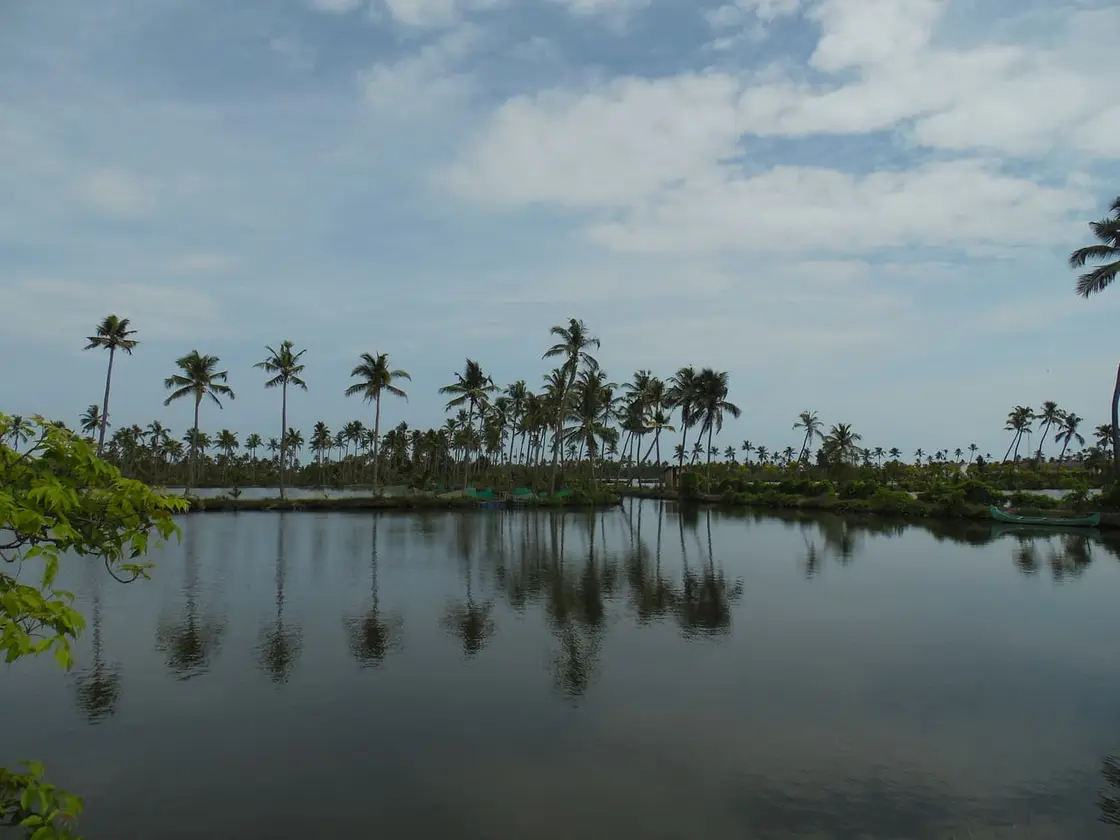
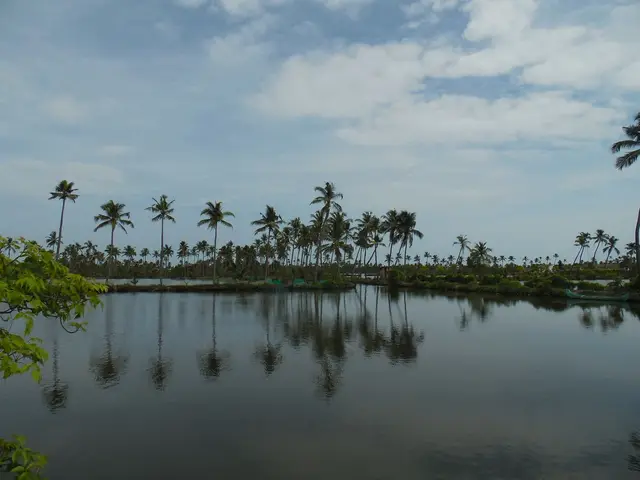
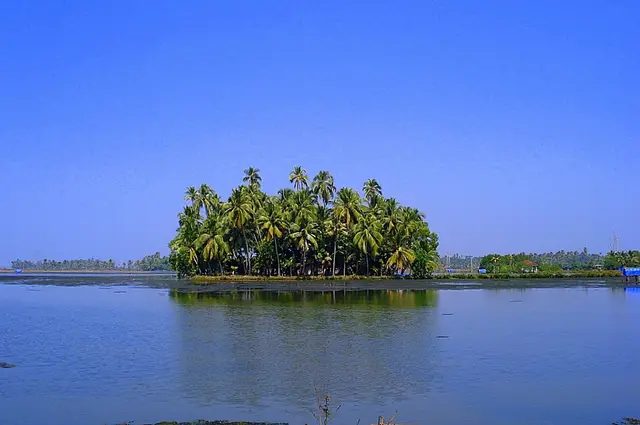
Twelve kilometres south-west of Kochi, past the fish market at Thoppumpady and over a bridge, the traffic stops mattering. Kumbalangi is an island panchayat of about 16 km² and forty thousand people, ringed by tidal creeks and held together by mangrove. In 2003 it was declared India's first model tourism village — the plan was that visitors would come to a working village and the money would reach the households doing the working, and that nobody would build a resort. Two decades on, roughly a sixth of that plan has been built. What survives is the part that mattered: it is still a village.
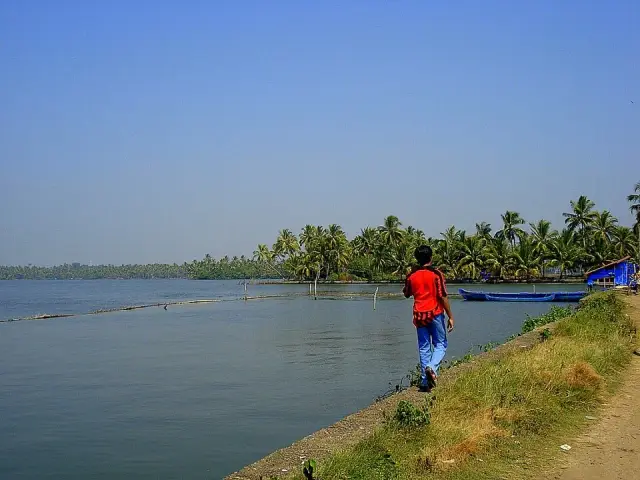
The first thing to understand about Kumbalangi is that it is not a resort strip with a village attached. It is a panchayat — a unit of local government — with schools, churches, a bus stand, a veterinary dispensary and about 42,000 residents, roughly three-quarters of them Latin Catholic, and a literacy rate north of 95 per cent. Tourism happens inside that, in people's front rooms and on their jetties, rather than in a zone set aside for it. When you walk here you are walking through somebody's morning.
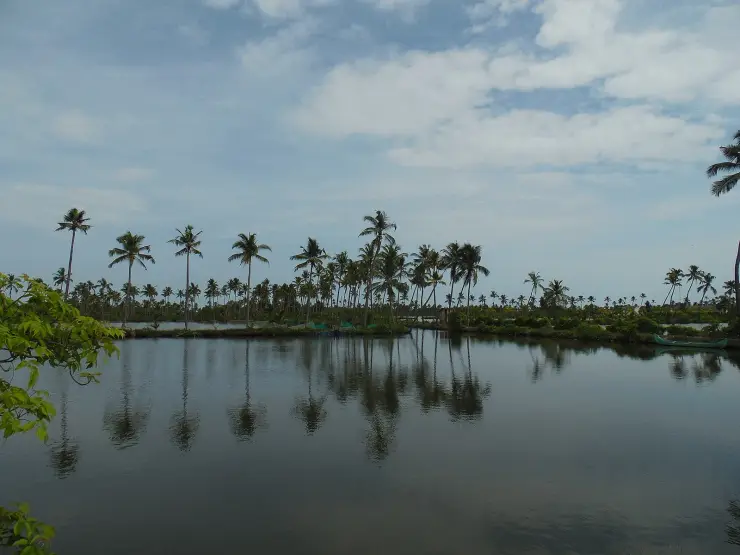
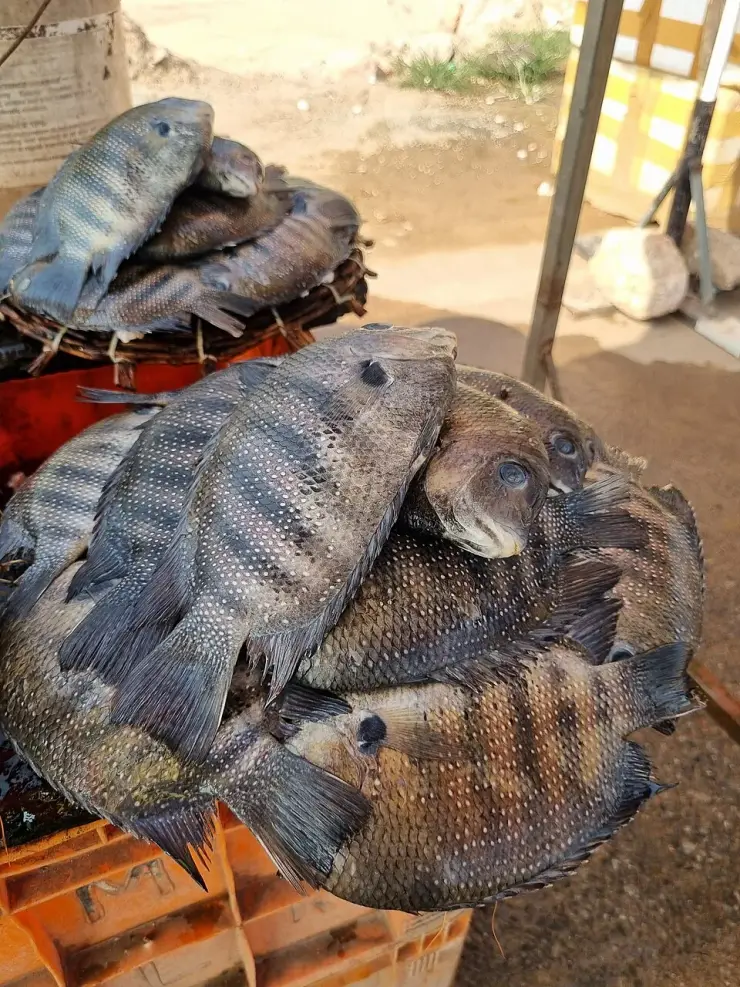
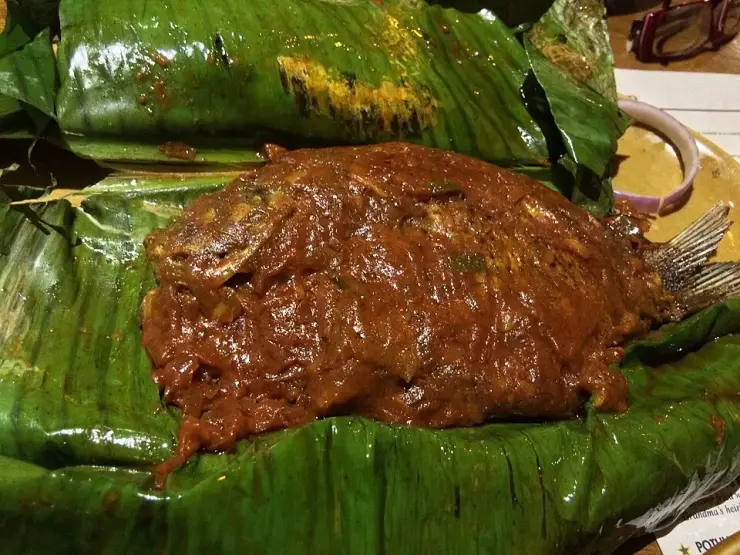
The work is water work. The creeks that wrap the island are farmed as much as fished: prawn and clam and mud crab from the shallows, karimeen from the quieter water, and the pokkali system on the low fields, where the same ground grows a salt-tolerant rice through the low-salinity months and then, when the tide pushes salt back in, is flooded and given over to prawns. It is one of the oldest genuinely rotational aquaculture systems anywhere, and it works because the sluice gates are opened and shut by people who have been reading that water their whole lives.
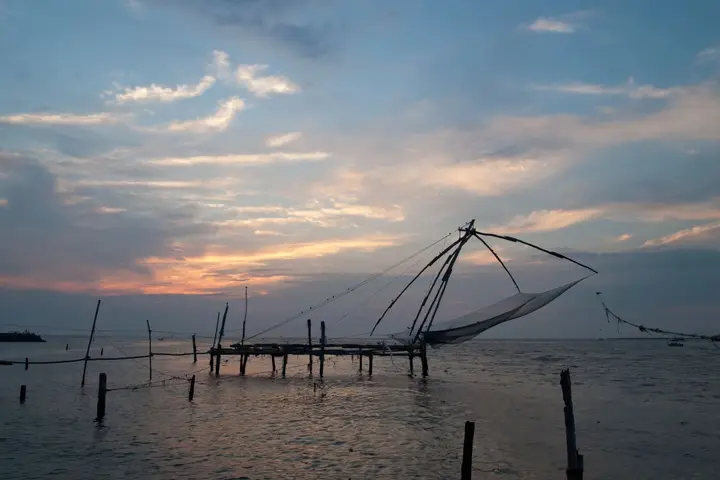
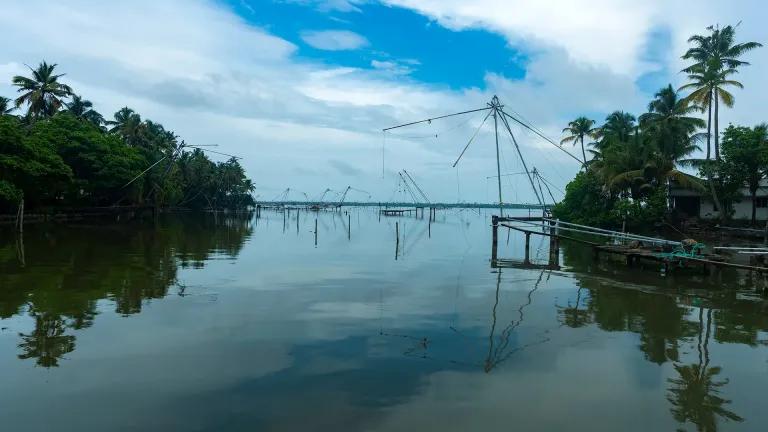
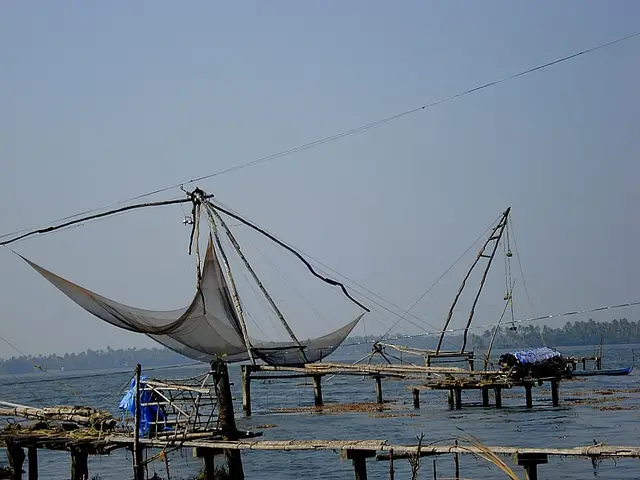
Over a hundred cheena vala — the cantilevered Chinese lift nets — stand on the water facing the shore. They are not lined up for photographs the way Fort Kochi's are; they are spread along the creeks where the fish are, and they are worked at the tide rather than at sunset for an audience. That difference is the reason a lot of people who have already seen the Fort Kochi row come out here anyway.
The other thing Kumbalangi is now famous for is the water lighting up. Between about March and May, on dark nights, disturbed water in the creeks and the pokkali fields glows blue. Malayalam calls it kavaru. Almost nobody outside Kerala had heard of it until the 2019 film Kumbalangi Nights put it on screen, and Kumbalangi has been dealing with the consequences ever since — more visitors, more cars down lanes built for handcarts, and a rising number of people who arrive at eleven at night expecting a light show that may simply not be there.
The response to all this has been unusually restrained. Plastic is discouraged across the panchayat. There are no purpose-built tourist structures — no resorts, no cottage complexes — so people stay in and beside existing homes, which caps the numbers automatically and keeps the money local. The panchayat installed something like 600 household biogas plants, reported as the first such scheme by any panchayat in Kerala. Whether you find the place charming or merely ordinary depends largely on whether you understand that the ordinariness is the achievement.
Legend & myth
Start with the name, because the obvious reading is wrong and the real one is better. Kumbalanga is the Malayalam word for ash gourd, and visitors are regularly told the name comes from the vegetable. It is not. The accepted derivation is Kumbalam Vilangi — the island lying off Kumbalam — which describes exactly what you are standing on: a piece of ground separated from the mainland settlement of Kumbalam by water, on one side, and from the sea on the other. Kumbalam Vilangi wore down over generations into Kumbalangi. Kumbalangi is named for its own geography, which for an island of tidal creeks is about as honest as a place name gets.
The second claim is on every signboard. The date is 2003, when the Kerala government designated Kumbalangi under the Kumbalangi Integrated Tourism Village project, and the ambition was genuinely radical for its time — visitors would come to a working village rather than to something built for them, the money would reach the households doing the working, plastic would be discouraged across the panchayat, and nobody would put up a resort.
How much of it was built is the honest question, and the answer is: some. Reporting describes a project a long way short of its plan, with real ecosystem pressure on the creeks and the mangroves underneath the tourism. But the part that mattered held. There are still no purpose-built tourist structures. The nets are still worked by households. You are still walking through somebody's actual home ground rather than a reconstruction of one, and in an industry that specialises in building fake versions of exactly this, that is not a small thing to have kept.
It is worth noticing that the place is sold under two different firsts, and they are not the same claim. The signboards and most write-ups date that first to the 2003 designation. Kerala Tourism's own material calls it the first eco-tourism village in India. Both get repeated as though they were one settled fact, and neither comes with a definition attached. The practical version — a village that took visitors without building anything for them — is true and is more interesting than either slogan. It is also worth knowing what the 2003 plan promised that you will not find: among the unbuilt components was a kalagraamam, an artists' village on four acres, intended to display traditional fishing gear and regional handicraft. On a project reported at roughly 15 per cent complete after two decades, a good deal of what is advertised in old material simply is not here, and it is better to arrive expecting Kumbalangi than the brochure.
Then in 2019 a film changed the traffic. Kumbalangi Nights was set here, was very good, and put both the island and its bioluminescent water in front of a national audience. Film fame is a mixed inheritance for a place this small — it fills the creeks at weekends, it brings income that the tourism project never quite delivered, and it brings people looking for a location rather than a home. The name on the poster is doing more for the local economy than the government designation ever managed, which is either encouraging or bleak depending on where you sit.
The thing to know about that film, and the reason it does not feel like a set, is that it was not one. Shooting began in September 2018 and was done entirely on location here, in houses that were already standing — including the half-ruined one at the centre of the story. The director, Madhu C. Narayanan, is reported to have spent a year in Kumbalangi before filming started, simply learning how the place worked. So the resemblance between the film and the place runs in the honest direction: the film looks like Kumbalangi because it was made inside it. The corollary is one visitors regularly get wrong. The famous house is not a monument and not an exhibit; it is a real property on a real lane, and people turn up to photograph it the way they would a set. Look from the road if you must, and do not walk into anyone's yard.
More about Kumbalangi
History
Kumbalangi was a fishing and pokkali-farming settlement long before anyone thought of it as a destination, part of the belt of low islands where the Vembanad system meets the Kochi harbour mouth. Its economy was the creek: nets, clams, coir from the husk, lime burnt from shell, and rice from ground that spends part of every year under brackish water.
In 2003 the panchayat, under its president M C Sivadathan, and with financial assistance from the state government, launched the project that made the village's name: an attempt to turn Kumbalangi into a model fishing village and tourism spot — the first of its kind in India. The design principle was that tourism should not displace the work being visited. Roads and canals were strengthened, lighting installed and the biogas programme rolled out.
The rest of it has largely not happened. Reporting in 2025 put the project at roughly 15 per cent complete, twenty-two years on, with several components still unrealised. In the same period the underlying economy shifted: pokkali farming has been widely abandoned because fishing pays better, farms have been leased out for commercial fish culture, and agricultural land, trees and water bodies have been lost in the process.
It helps to know which parts of the 2003 plan actually got built, because the built list is short and specific. Roads and canals were strengthened. Street lighting went in. Around 600 household biogas plants were installed — the first panchayat in Kerala to handle domestic waste that way — and a small visitor park was made. The accommodation side stayed deliberately tiny: the project's own framing was a handful of households, on the order of ten, taking guests into their homes to fish, canoe and see the farms, rather than any built capacity. What did not get made is longer, and includes the four-acre kalagraamam artists' village that appears in most descriptions of the scheme. Two decades on, the honest summary is that the cheap, useful, unglamorous components were delivered and the showpieces were not.
The 2019 Malayalam film Kumbalangi Nights — set here, and the reason a large share of today's visitors know the name — changed Kumbalangi's profile far faster than the project ever did. It is a fair summary of Kumbalangi's last two decades that a film did more for its visibility than two decades of official development, and that people here are still arguing about whether that was good for them.
Why visit
It is the least performed village experience within easy reach of Kochi. Nothing is staged for a bus schedule, because there is no bus schedule — you are watching people work at the time they work.
Everything is within a short ride of Fort Kochi. Twelve kilometres from the Chinese fishing nets you can be on a canoe in a creek with nobody else on the water.
The food is the reason to stay overnight rather than visit. Karimeen, clam and mud crab cooked in a family kitchen from that morning's catch is not the same dish you get in a Fort Kochi restaurant.
It answers the backwater question honestly. If you came to Kerala for backwaters but do not want a houseboat convoy, this is the alternative: narrow water, a country canoe and a boatman who lives here.
In March, April and May there is a chance of seeing the water glow on a moonless night — and it is worth knowing what causes it, which makes it a stranger and more interesting thing to have seen.
It rewards a slow visitor and punishes a fast one, which is a useful filter. If you have half a day and a checklist, Kumbalangi will look like nothing much.