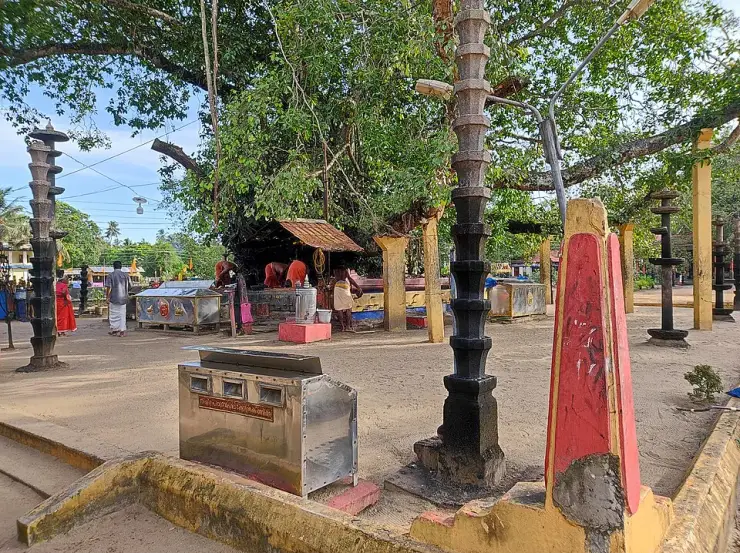
A taluk town on the MC Road 27 km east of Kollam whose name means, literally, the land of palaces — and which has almost no palaces left. Kottarakkara was the seat of Ilayidathu Swaroopam, a principality that was extinguished in the 1740s in a succession fight involving a dispossessed queen, the Dutch East India Company and Marthanda Varma of Travancore. What survives of it is a name, some remnants, a temple famous for a sweet, and a claim on the birth of Kathakali.
Kottarakkara is one of those Kerala place names that tells you exactly what used to be there and nothing about what is there now. It is built from kottaram, palace, and kara, land or tract: the land of palaces. The name is not decorative. This was the capital of a real principality, and the plural is doing real work — remnants of something like seven palace sites from the Ilayidathu Swaroopam period have been recorded around the town, and the earliest palace construction here is dated to the fourteenth century.
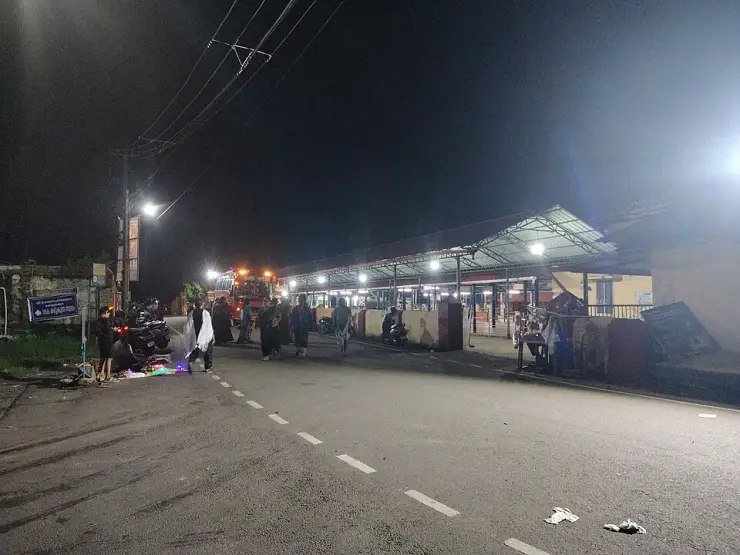
What you arrive at today is a busy taluk headquarters of about thirty thousand people, spread over some seventeen square kilometres, sitting at a junction on the Main Central Road with a bus stand, a taluk office, a market and a great deal of through traffic. It is not a heritage town in the way Fort Kochi or Thalassery are heritage towns. There is no preserved quarter, no palace museum on the site of the old court, no signposted trail. The principality is present mainly as an absence, and the interesting question is how a capital becomes an absence.
The answer is a specific, well-documented and rather brutal piece of eighteenth-century politics. Ilayidathu Swaroopam — the name is also written Elayadathu — was ruled by a branch of the same family as Venad, the house that became Travancore. In 1739 the chief of Kottarakkara died. Under the matrilineal succession customary in these houses, the claim passed to the senior female member of the family. Marthanda Varma, then in the middle of welding the scattered chiefdoms of southern Kerala into a single kingdom, refused to recognise her claim.
She fled — first to Thekkumkur, whose chief gave her asylum. And at exactly this moment the Dutch East India Company saw an opening. Gustaaf Willem van Imhoff, the Dutch governor of Ceylon, arrived at Kochi in 1739, took up the cause of the displaced Rani of Kottarakkara and protested formally against Travancore's annexation of the chiefdom. A local succession dispute had acquired a European sponsor, which is precisely how a great many small Indian polities ended in that century.
In 1741 the Dutch went further than protest and reinstated her by force. Marthanda Varma attacked, defeated the combined Kottarakkara and Dutch forces, and annexed the chiefdom outright. The Rani fled again, this time to Cochin, and Ilayidathu Swaroopam ceased to exist as a state. This is the same year, and the same confrontation with the same Company, that produced the Battle of Colachel — the engagement in which Travancore broke Dutch military ambitions on this coast altogether. Kottarakkara is a footnote to that war in most accounts. Standing in the town, it is the other way round.
By 1835 the place had been folded into the administrative machinery of Travancore as part of Kollam, and it has been a taluk town ever since — today one of Kollam district's six taluks, alongside Kollam, Pathanapuram, Karunagappally, Kunnathur and Punalur, with twenty-seven revenue villages under it.
The town's second claim is on the history of Indian classical dance, and it is a large one: Kottarakkara is very widely described as the birthplace of Kathakali. The seventeenth-century ruler remembered as the Kottarakkara Thampuran composed Ramanattam, a cycle of eight plays on the life of Rama, and Kathakali is generally held to descend from it. We set that story out properly, with its evidence and its considerable folklore, on the page for the Kottarakkara Sree Mahaganapathi Temple, because that is where the tradition attaches it. Two things are worth knowing before you go looking for it here: the composition is credited to a court rather than to a building, and the famous explanation for it — a snub from the Zamorin of Calicut — is tradition rather than record.
If the arts connection is what brings you, the honest address for it is the Kottarakkara Thampuran Memorial Museum of Classical Arts, which is a real, mapped institution in the town holding exhibits on the performing traditions the Thampuran is remembered for. It is a more solid destination than the banyan tree of the legend.
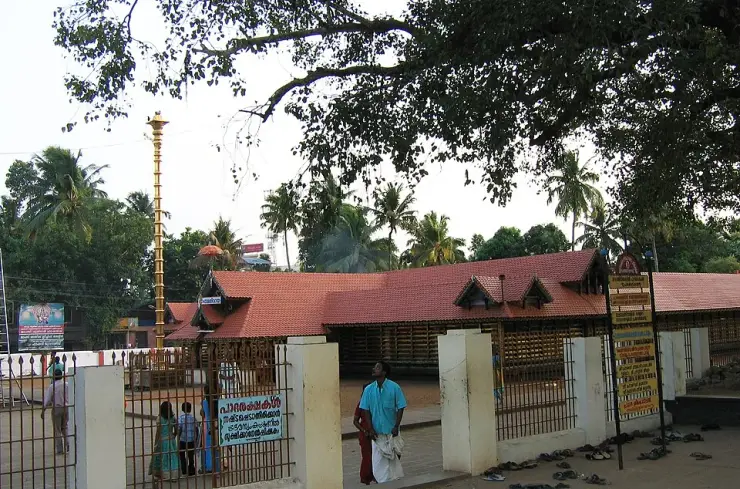
And the thing most Malayalis actually associate with the name is neither palaces nor Kathakali but a sweet. The temple at the centre of town — Shiva's, despite everybody calling it the Ganapathi temple — makes unniyappam in quantity as its offering, and Kottarakkara and unniyappam travel together in the Kerala imagination as a fixed pair. It is one of very few temple offerings anywhere in the state to have become a regional food in its own right.
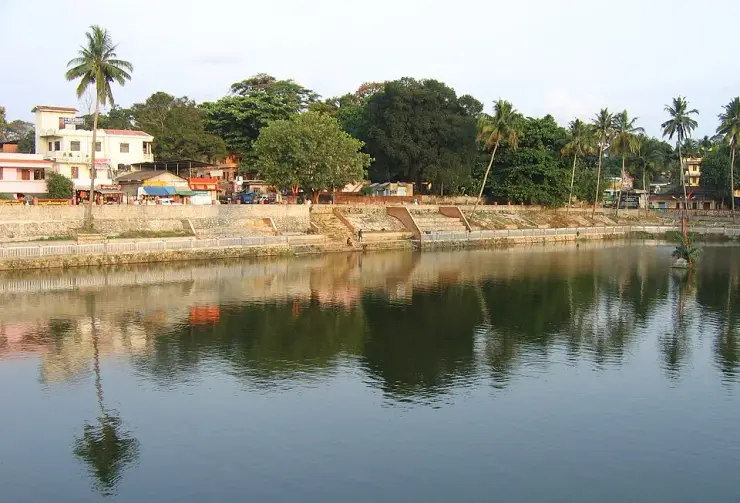
So the town reads as three layers that barely touch. A vanished principality that gave it its name and left almost nothing above ground. A court that may or may not have invented Kathakali under a tree. And a working junction town whose most famous export is a fried rice-and-jaggery sweet handed out beside a temple tank. Kottarakkara is worth an hour rather than a day, and it rewards knowing what you are looking at, because very little of it announces itself.
Legend & myth
The first thing to hold lightly is the name itself. Kottarakkara means the land of palaces, and it is tempting to read that as a promise — that somewhere behind the bus stand there is a palace to visit. There is not, in any developed sense. What has been recorded are remnants and sites associated with the Ilayidathu Swaroopam period, something on the order of seven of them, along with a fourteenth-century date for the earliest palace building here. Remnants and sites are not the same as standing, visitable palaces, and travel writing about the town slides between the two constantly. If you come expecting a palace town in the sense that Padmanabhapuram is a palace town, you will be disappointed, and it will be the phrasing that misled you rather than the place.
The second is the story of the Rani, which is genuinely documented but is often told with the drama turned up and the dates run together. The sequence that the sources support is: the chief of Kottarakkara died in 1739; Marthanda Varma declined to recognise the succession of the senior female member of the house; she took refuge at Thekkumkur; the Dutch governor van Imhoff arrived at Kochi that same year and made her cause his own; in 1741 the Dutch reinstated her; Travancore attacked, beat the combined force, annexed the chiefdom, and she fled to Cochin. Accounts that give only 1739, or only 1741, are compressing that sequence rather than contradicting each other — the two years measure different events, and neither is wrong. It is worth saying plainly because a reader who meets both dates in two places will otherwise assume one source is unreliable.
The third is the temptation to make Kottarakkara the cause of the Battle of Colachel. The annexation quarrel and the battle belong to the same year and the same war between Travancore and the Dutch East India Company, and it is fair to say the Kottarakkara succession was one of the occasions of that conflict. It is not fair to say the battle was fought over Kottarakkara. Colachel was fought on the coast far to the south and turned on much larger ambitions. The honest formulation is that a small principality's disputed inheritance became one of the levers by which a European company tried to intervene in Kerala, and that the attempt failed comprehensively within two years.
The fourth is the Kathakali claim, which is the one most often overstated in both directions. To say flatly that Kathakali was born in this town runs together two separate propositions. One is that the Kottarakkara Thampuran composed Ramanattam, a cycle of eight Rama plays, in the seventeenth century, and that Kathakali descends from it — widely held, and not seriously disputed. The other is that he did so at the temple here, beneath a banyan in its grounds — which is tradition and nothing more. A raja's literary project belongs to his court before it belongs to his temple, and the two claims get printed as though the second followed from the first.
The fifth follows from that and is worth knowing before you argue with anybody about it. Our own record for the temple notes that Kerala Tourism's page for the site does not make the Kathakali connection at all — it covers the Shiva dedication, the Ganesha sub-shrine, the unniyappam and the location, and says nothing about Kathakali, Ramanattam, the Thampuran or Perumthachan. The state tourism department, writing about the temple, simply does not advance the claim. That does not make the tradition false. It does mean it is a tradition rather than an official history, and the distinction is one a reader is entitled to.
The sixth is the celebrated origin anecdote, which we decline to certify. The story runs that the Zamorin of Calicut had composed Krishnanattam, that the Kottarakkara ruler asked to borrow his performers, and that the Zamorin refused with a remark about the Kottarakkara court being incapable of appreciating them — whereupon Kottarakkara wrote his own cycle, on Rama instead of Krishna and in Malayalam instead of Sanskrit. The ingredients are real: both cycles existed, and the language and subject really did differ that way. The insult is the kind of neat causal spark that oral tradition is extremely good at manufacturing after the fact, and the evidence for the exchange is thin. Enjoy it as the frame the tradition chose for itself.
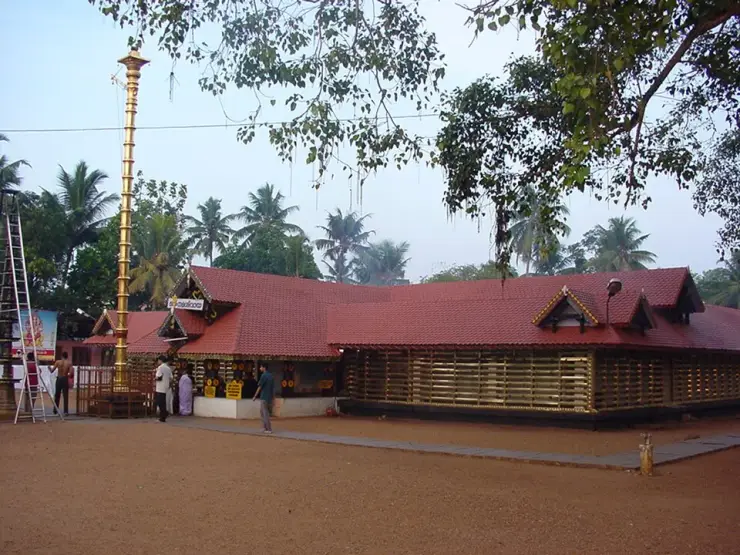
The seventh is a small practical one. The town's famous temple is a Shiva temple, whatever the signs and everybody's habit say, with a Ganapathi sub-shrine that has comprehensively out-famed the main sanctum. Its own foundation legend predicted exactly that. Go in expecting the elephant-headed god in the central sanctum and you will misread the building.
More about Kottarakkara
History
Kottarakkara takes its name from kottaram, palace, and kara, tract of land: the land of palaces. The earliest palace construction recorded here dates to the fourteenth century, in the period when Chera Udaya Marthanda Varma ruled Venad, and archaeological remnants of something like seven palace sites of the Ilayidathu Swaroopam period have been reported around the town.
Ilayidathu Swaroopam — also written Elayadathu — was a principality ruled by a branch of the house that became the Travancore royal family. Its independent existence ended in the 1740s. The chief of Kottarakkara died in 1739 and Marthanda Varma of Travancore, then consolidating the fragmented chiefdoms of Venad into a single kingdom, refused to recognise the succession of the senior female member of the family. She took asylum with the chief of Thekkumkur.
The Dutch East India Company took up her cause. Gustaaf Willem van Imhoff, governor of Dutch Ceylon, arrived at Kochi in 1739 and protested against Travancore's annexation of the chiefdom. In 1741 the Dutch reinstated the Rani against Marthanda Varma's wishes; Travancore attacked, defeated the combined Kottarakkara and Dutch forces, and annexed the chiefdom outright. The Rani fled to Cochin. The episode belongs to the same year and the same conflict as the Battle of Colachel, in which Travancore ended Dutch military ambitions on the Malabar coast.
In the seventeenth century, before that collapse, a ruler of Kottarakkara remembered as the Kottarakkara Thampuran composed Ramanattam, a cycle of eight plays on the life of Rama, in Malayalam. Ramanattam is widely held to be the immediate ancestor of Kathakali, and it is on this that the town's description as the birthplace of the form rests. The claim is set out with its evidence and its folklore on the page for the Kottarakkara Sree Mahaganapathi Temple; the composition is credited to the court, and the tradition that places it beneath a banyan at the temple is tradition only.
By 1835 Kottarakkara had been absorbed into the administration of Travancore as part of Kollam. It is today a municipality and a taluk headquarters of Kollam district — one of six taluks with Kollam, Pathanapuram, Karunagappally, Kunnathur and Punalur — with twenty-seven revenue villages, a population of about 29,788 and an area of roughly 17.4 square kilometres. The town holds the Kottarakkara Thampuran Memorial Museum of Classical Arts, and its temple, dedicated to Shiva but universally known for its Ganapathi sub-shrine, is famous across Kerala for the unniyappam offered there.
Why visit
To stand in the capital of a principality that lost a succession war to Marthanda Varma and the Dutch in the 1740s and effectively vanished — a name meaning the land of palaces, with the palaces gone.
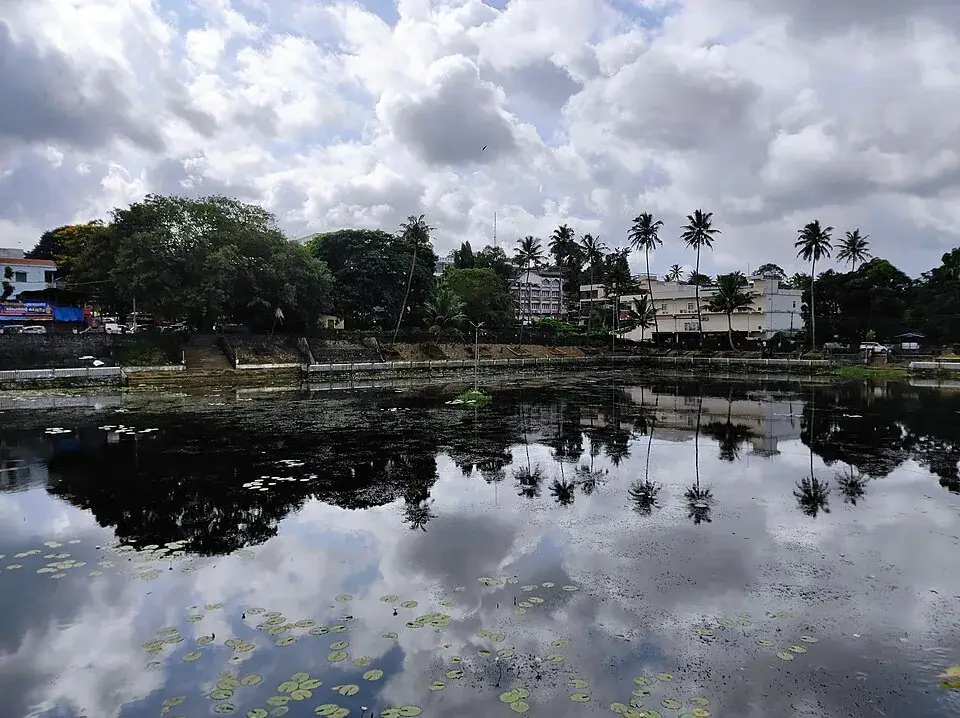
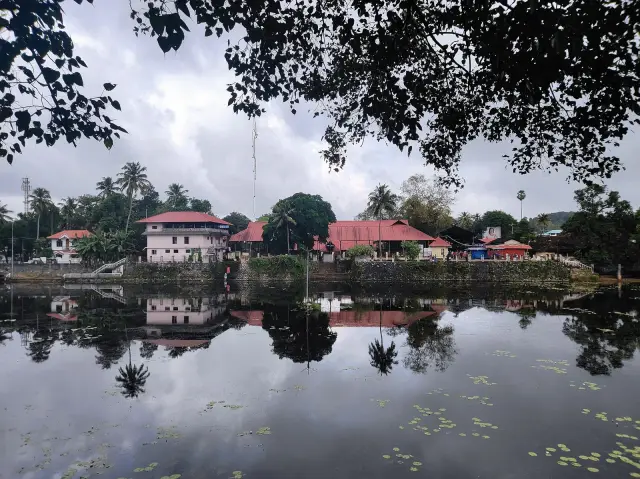
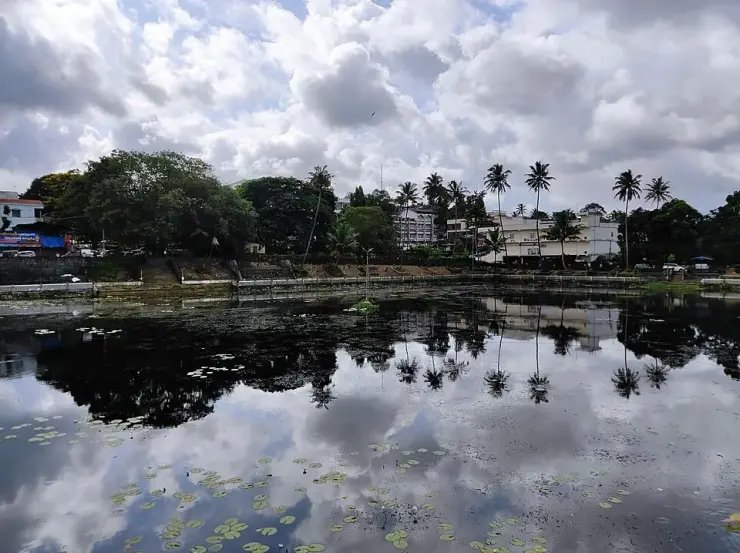
For the Kottarakkara Sree Mahaganapathi Temple beside its big rectangular tank: a Shiva temple universally known by its Ganapathi sub-shrine, and the source of the unniyappam that Kerala associates with this town's name.
For the Kottarakkara Thampuran Memorial Museum of Classical Arts — the checkable, visitable version of the town's claim on the birth of Kathakali.
As the natural inland stop on the MC Road between Kollam and the Pathanamthitta highlands, 27 km from Kollam and an easy pause rather than a destination in itself.
For a case study in how a small Kerala polity ended: a matrilineal succession refused, a queen in exile, a European company taking up her cause, and annexation within two years.
For the plain pleasure of a working Kerala taluk town — bus stand, market, taluk office and temple tank — that carries far more history than it advertises.