A cluster of little islands loosely stitched to the eastern shore of Vembanad, Kerala’s largest lake, Kumarakom is the backwaters at their most unhurried — palm-fringed canals, gliding kettuvallam houseboats, a famous bird sanctuary once tended by a colonial planter, and the drowsy green world Arundhati Roy immortalised in ‘The God of Small Things’.
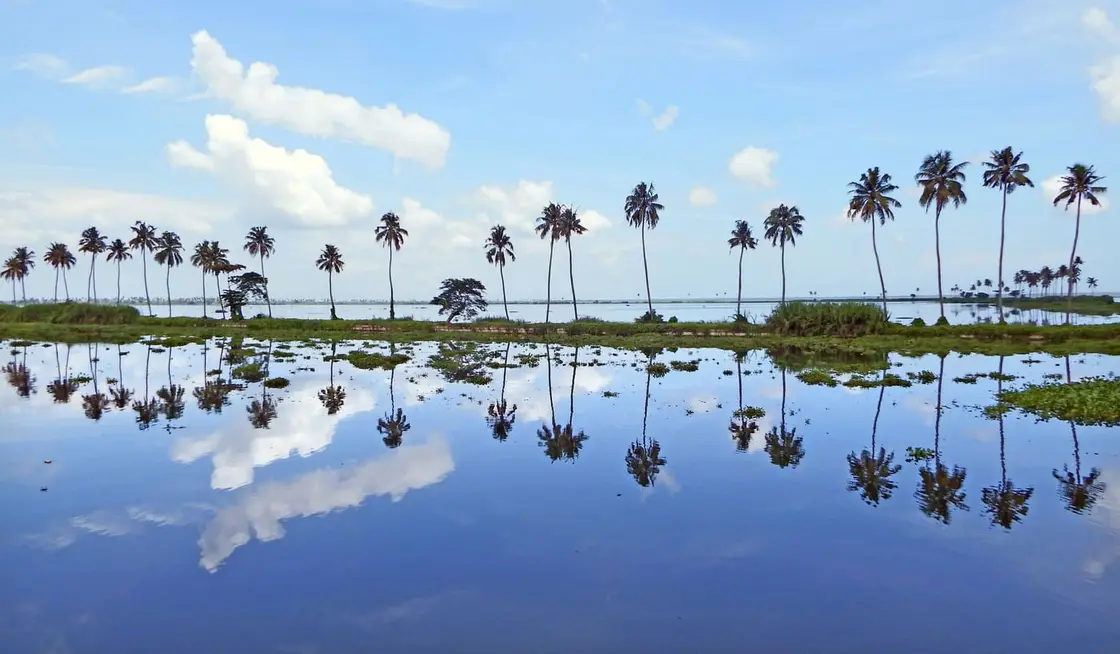
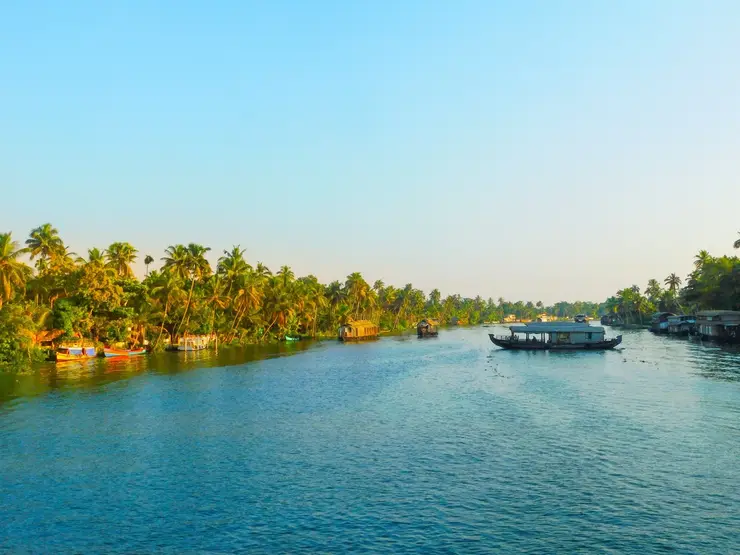
There is a particular hour at Kumarakom, just before dusk, when the whole of Vembanad seems to hold its breath. The lake — a vast, brackish sheet spread across more than a thousand square kilometres between Alappuzha and Kottayam — turns the colour of hammered copper, then rose, then smoke. Coconut palms lean over the water in silhouette, a lone fisherman poles his canoe home, and the low chug of a returning houseboat carries impossibly far across the stillness. Sunset over Vembanad is the image every visitor takes away, and no photograph quite holds it.
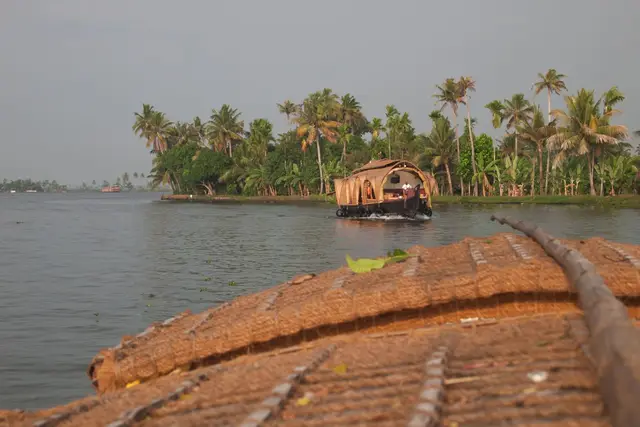
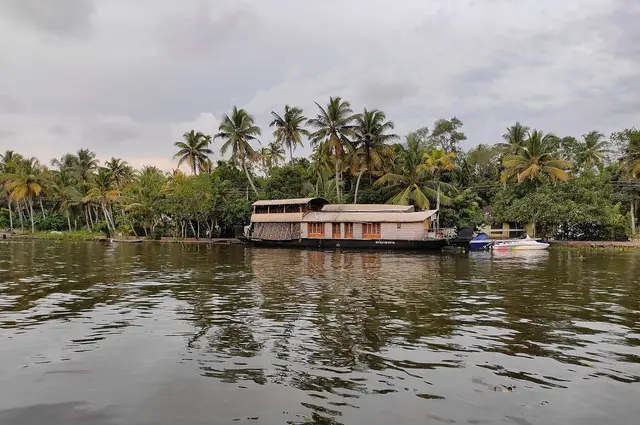
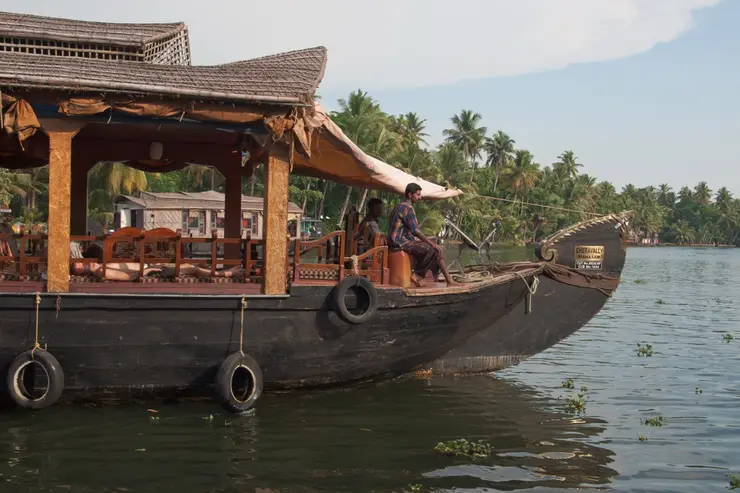
The signature way to meet these waters is aboard a kettuvallam, the traditional Kerala houseboat. Once these were working cargo barges — the word means ‘tied boat’, their long jackwood hulls lashed together with coir rope and not a single nail — that hauled rice and spices along the backwater trade routes before roads reached the interior. Today they drift slowly, arched roofs of woven palm and bamboo overhead, ferrying travellers past paddy fields that lie below the waterline, past toddy shops and duck flocks and villages where life still turns to the rhythm of the tide. A night moored on the lake, with dinner of karimeen (pearl-spot fish) grilled in banana leaf and the water lapping at the hull, is the classic Kumarakom experience.
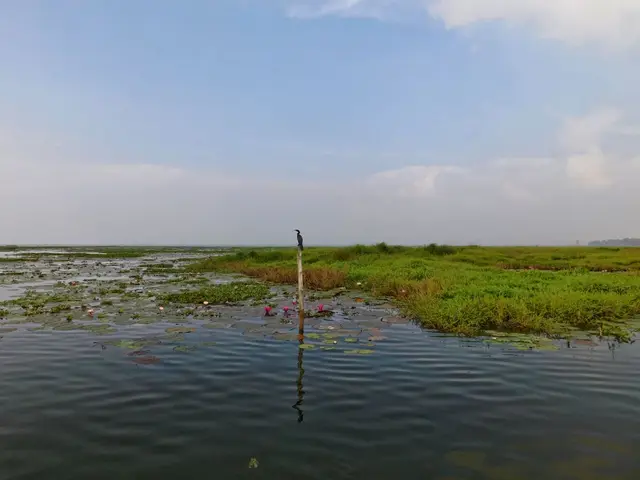
Kumarakom’s other great draw is its birdlife. The Kumarakom Bird Sanctuary, some fourteen hectares of mangrove, marsh and paddy on the eastern bank of the lake, is one of the most celebrated birding spots in South India, home to around 180 recorded species. From roughly November to February the wetlands fill with migrants that have flown down from the Himalayas and, some of them, from as far as Siberia — teal, wild duck and other waterfowl joining resident egrets, herons, darters, cormorants, kingfishers, the Indian cuckoo and the wandering water hen. Vembanad as a whole shelters one of India’s largest wintering populations of waterfowl, tens of thousands strong. Dawn, walked slowly along the sanctuary’s trails or watched from a canoe, is the time to go.
Away from the water the village keeps its own unhurried texture: narrow lanes between garden plots heavy with pepper, banana and jackfruit; small churches and temples; the smell of frying tapioca; the sweet, slightly sour tang of freshly tapped toddy from the coconut palms. Kumarakom’s kitchens lean hard on the lake and the paddy that surrounds it — the beloved karimeen pollichathu, duck roast with appam, prawns and clams from the estuary, all warmed with black pepper, coconut and curry leaf. It is unfussy, deeply regional food, and eating it here, within sight of where it was caught, is part of the pleasure.
This is also, unmistakably, literary country. A short way inland lies the village of Aymanam — the ‘Ayemenem’ of Arundhati Roy’s Booker Prize-winning ‘The God of Small Things’ (1997). Roy grew up in and around here, and the novel’s drowsy, rain-soaked landscape of the swelling Meenachil river, the pickle factory, the old family house and the encroaching backwater is drawn directly from this stretch of Kottayam. Readers who arrive already half in love with that world find its light, its greenness and its melancholy waiting almost exactly as described.
For all the luxury lake resorts that now line its shores, Kumarakom rewards the traveller who slows to its pace. Take a shikara or country canoe into the narrow canals the big houseboats cannot reach; watch a coir-maker twist rope on a verandah; sit still while a purple heron stalks the shallows. The village’s gift is not spectacle but atmosphere — a green, watery, slow-breathing corner of Kerala that lodges in the memory long after the boat has been tied up.
Legend & myth
Local tradition holds that the village takes its name from a settler or devotee called Kumaran, ‘Kumarakom’ being read as ‘the place of Kumaran’ — a folk etymology repeated in the area, though not firmly documented. As across the backwaters, older residents also keep alive quieter beliefs about the lake itself: that Vembanad both gives and takes, provider of fish and paddy yet not to be taken lightly, a respect woven into the fishing and farming rhythms of generations here.
More about Kumarakom
History
Much of the land around Kumarakom is not natural ground at all but backwater reclaimed from Vembanad. From the mid-19th century onwards, low-lying tracts of the lake were painstakingly diked and drained to create the paddy fields and garden plots that define Kuttanad and its fringes — a landscape famous for farming below sea level, the water held back by earthen bunds.
The bird sanctuary’s origins trace to a single colonial family. From around 1847 an Englishman, Alfred George Baker — descended from the missionary Henry Baker Sr, who had settled near Kottayam earlier in the century — began reclaiming and developing a large estate on the lake’s edge, planting mangroves along the Kavanar river and, it is credited, pioneering rubber cultivation on man-made embankments here. Undisturbed, the wooded, watery estate drew resident and migratory birds, and ‘Baker’s Estate’ gradually became known as a haven for them.
Four generations of the Baker family are said to have lived on the estate until the 1960s. The old Baker bungalow later fell into ruin before being restored as a heritage hotel, while the surrounding wetland was protected as the Kumarakom Bird Sanctuary — often described as among the earliest such sanctuaries in the region, developed specifically for its birdlife.
The wider ecological importance of the area won international recognition in 2002, when the Vembanad-Kol wetland system was designated a Ramsar Site of International Importance (listed 19 August 2002) — one of the largest such sites in India. The designation reflects the lake’s role as a vast estuarine system spanning several districts and a critical wintering ground for waterfowl.
Kumarakom’s emergence as a marquee tourism destination is comparatively recent, riding the boom in Kerala backwater tourism from the 1990s onward. The conversion of redundant cargo kettuvallams into cruising houseboats, the arrival of lake-facing luxury resorts, and the fame carried by ‘The God of Small Things’ combined to turn a quiet farming-and-fishing village into one of the state’s best-known getaways — a status Kerala Tourism has actively promoted through its Kumarakom backwater branding.
Why visit
Sunset over Vembanad, Kerala’s largest lake — the definitive backwater view.
An overnight kettuvallam houseboat cruise, the classic slow way to see the waters.
The Kumarakom Bird Sanctuary and its winter migrants from the Himalayas and Siberia.
‘The God of Small Things’ country — the drowsy Aymanam landscape near by.
Lake-fresh Kerala cuisine: karimeen pollichathu, duck roast, prawns and toddy.
A genuinely unhurried village atmosphere of canals, coir, paddy and palm.