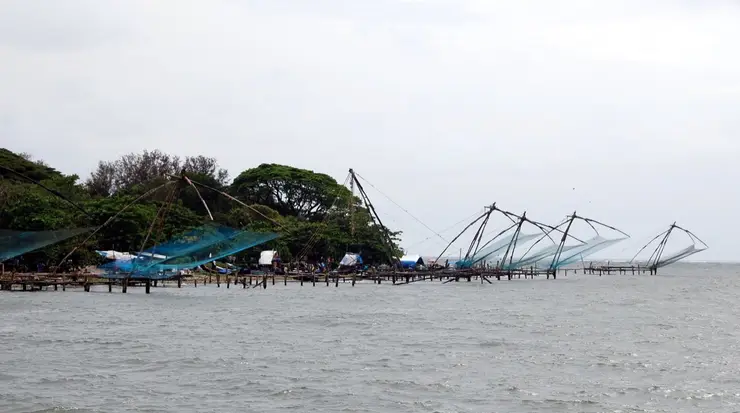
Places to Visit in Kumarakom

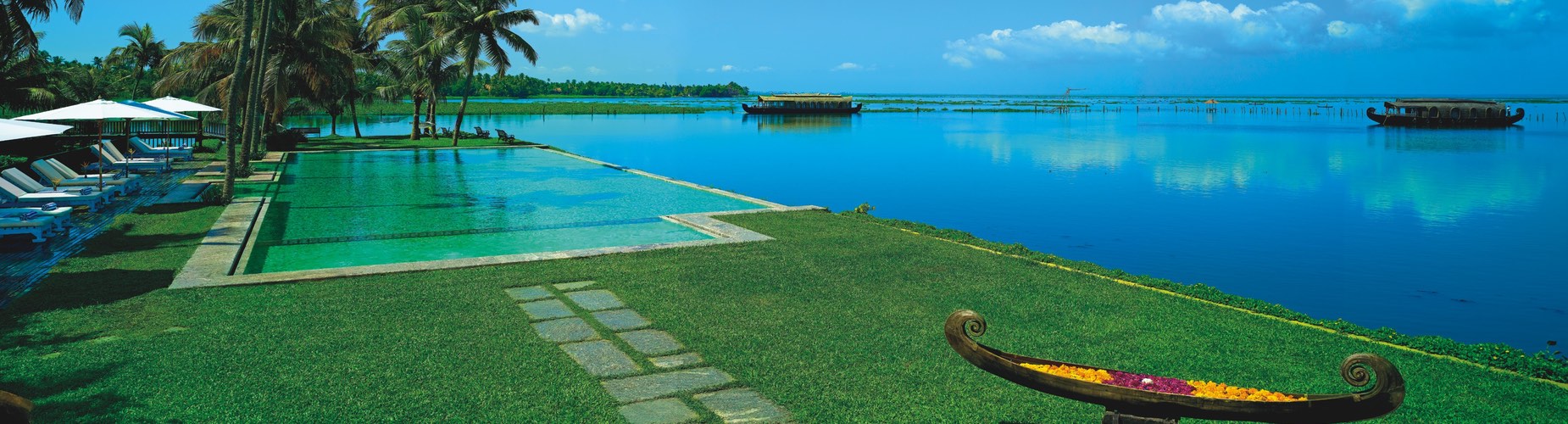
Bird sanctuary, backwaters & lakefront resorts on Vembanad.

Kumarakom
Practical guide

Plan Kumarakom

Who's going?Tailor Kumarakom to your trip
DistrictKottayam
RoleLake base
Time neededTwo nights is right
Places to visit3Listed businesses25
What to expect

Highlights

  • Kumarakom — Lakefront village on Vembanad known for bird sanctuary, resorts and houseboat cruises.
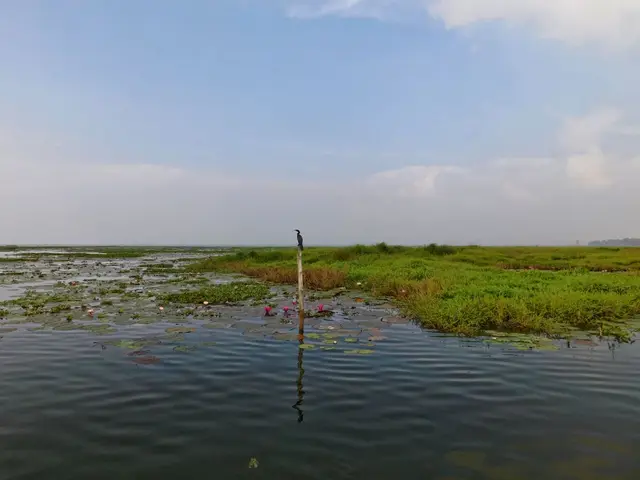
  • Kumarakom Bird Sanctuary — Wetland birding area on the Vembanad shore.
  • Vembanad Lake — Kerala’s largest lake, shared with Alappuzha and Ernakulam districts.
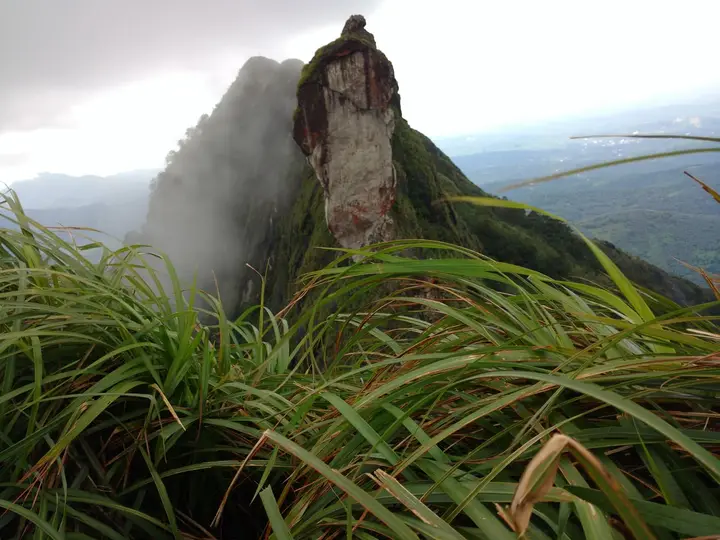
  • Aruvikkuzhi Waterfall — A five-step waterfall in the rubber-growing countryside near Pallickathode, east of Kottayam; this is the Kottayam Aruvikkuzhi, not the similarly named Pathanamthitta falls.
Getting there

How to visit

  • Nearest airport: Cochin (COK), ~75–80 km
  • Rail gateway: Kottayam (KTYM)

Distance by road

  • Kochi53 km
  • Thiruvananthapuram155 km
  • Coimbatore228 km
  • Kozhikode236 km
  • Madurai262 km
  • Mysuru386 km

Road distances measured on real routed roads to Kumarakom itself, not to the district headquarters, on 22 August 2026. Driving time is deliberately not published: free-flow routing badly understates a Kerala ghat road, so allow more than the distance suggests.

Timing

Best time to visit Kumarakom

Best overall from about September to March, when the weather is dry and pleasant. November to February is peak migratory-bird season; June to August brings lush green scenery and local birds but heavier monsoon rain.

Weather in KumarakomSeasonal guide

Live forecast loads in your browser.

Today at Kumarakom
Sunrise6:14 am
Sunset6:23 pm
Golden hour best light5:23 pm–6:23 pm
Blue hour after sunset6:23 pm–6:48 pm
Sun sets toward compass bearingW · 272°
Moon tonight🌒 Waxing crescent · 41%
South-west monsoon. June to September is the south-west monsoon in Kerala. Expect heavy showers, mostly in bursts rather than all day — carry rain cover, allow extra time for getting around, and note that ferries and open-air sites are the first things affected.

Sun and moon are calculated for this location and shown in IST. Photography windows are the hour around sunrise and sunset; the sunset bearing is degrees clockwise from true north. Moon phase is accurate to about half a day.

Visitor notes

  • Kumarakom is a lakeside strip, not a town with a middle. Fix which jetty or which resort road you are aiming for before you leave Kottayam — “Kumarakom” on its own is about ten kilometres long.
  • The bird sanctuary is a dawn visit or it is not worth the ticket. Six to eight in the morning is when the herons, egrets and darters are working; by mid-morning you are walking a quiet path.
  • Houseboat rates are quoted per boat, per night, and change with bedrooms, air-conditioning, meals and the week you ask. Get the inclusions in writing before you pay a deposit.
The story

The story of Kumarakom

A cluster of little islands loosely stitched to the eastern shore of Vembanad, Kerala’s largest lake, Kumarakom is the backwaters at their most unhurried — palm-fringed canals, gliding kettuvallam houseboats, a famous bird sanctuary once tended by a colonial planter, and the drowsy green world Arundhati Roy immortalised in ‘The God of Small Things’.

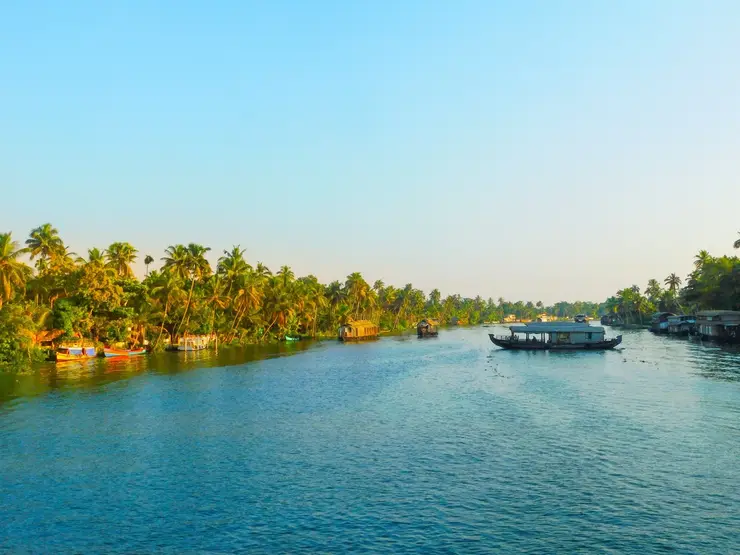
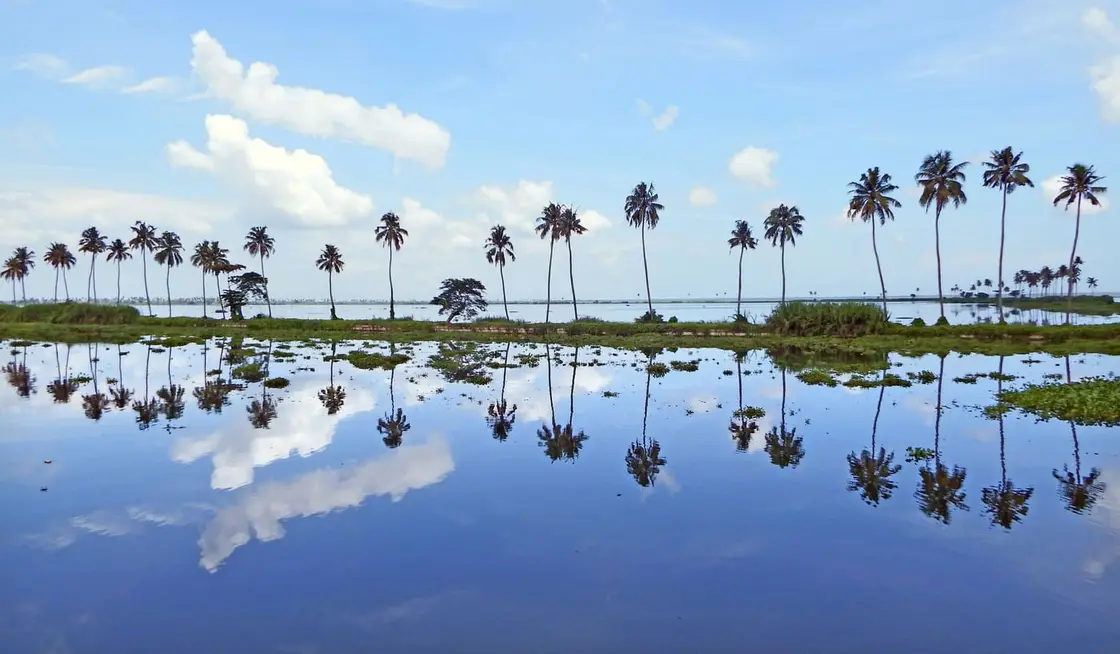
There is a particular hour at Kumarakom, just before dusk, when the whole of Vembanad seems to hold its breath. The lake — a vast, brackish sheet spread across more than a thousand square kilometres between Alappuzha and Kottayam — turns the colour of hammered copper, then rose, then smoke. Coconut palms lean over the water in silhouette, a lone fisherman poles his canoe home, and the low chug of a returning houseboat carries impossibly far across the stillness. Sunset over Vembanad is the image every visitor takes away, and no photograph quite holds it.

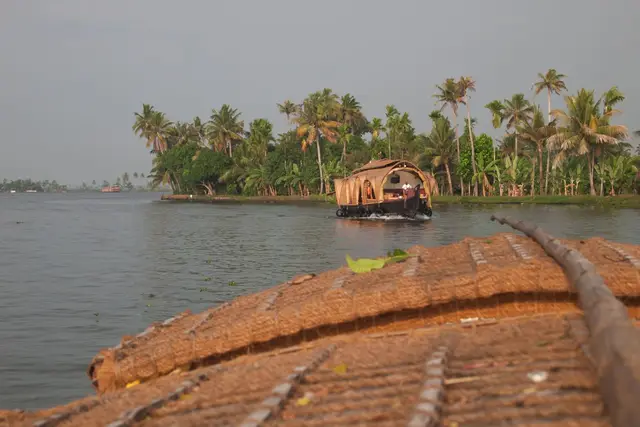
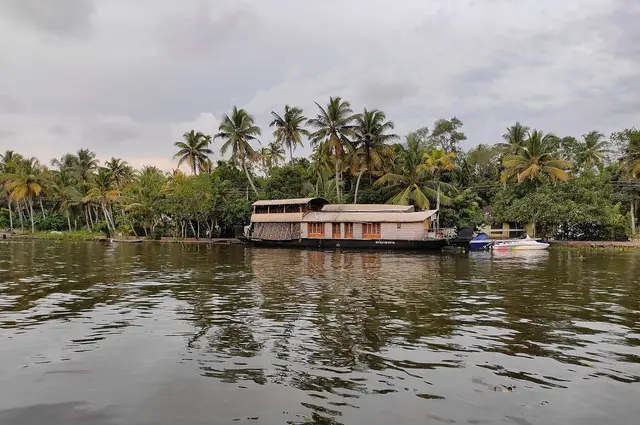
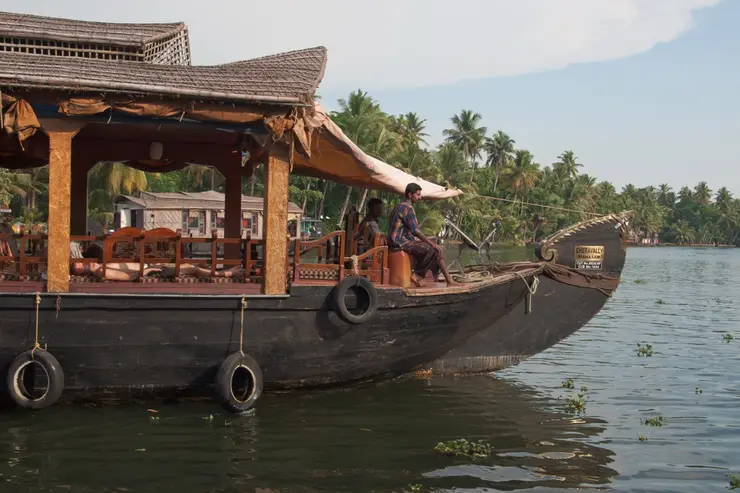
The signature way to meet these waters is aboard a kettuvallam, the traditional Kerala houseboat. Once these were working cargo barges — the word means ‘tied boat’, their long jackwood hulls lashed together with coir rope and not a single nail — that hauled rice and spices along the backwater trade routes before roads reached the interior. Today they drift slowly, arched roofs of woven palm and bamboo overhead, ferrying travellers past paddy fields that lie below the waterline, past toddy shops and duck flocks and villages where life still turns to the rhythm of the tide. A night moored on the lake, with dinner of karimeen (pearl-spot fish) grilled in banana leaf and the water lapping at the hull, is the classic Kumarakom experience.

Kumarakom’s other great draw is its birdlife. The Kumarakom Bird Sanctuary, some fourteen hectares of mangrove, marsh and paddy on the eastern bank of the lake, is one of the most celebrated birding spots in South India, home to around 180 recorded species. From roughly November to February the wetlands fill with migrants that have flown down from the Himalayas and, some of them, from as far as Siberia — teal, wild duck and other waterfowl joining resident egrets, herons, darters, cormorants, kingfishers, the Indian cuckoo and the wandering water hen. Vembanad as a whole shelters one of India’s largest wintering populations of waterfowl, tens of thousands strong. Dawn, walked slowly along the sanctuary’s trails or watched from a canoe, is the time to go.

Away from the water the village keeps its own unhurried texture: narrow lanes between garden plots heavy with pepper, banana and jackfruit; small churches and temples; the smell of frying tapioca; the sweet, slightly sour tang of freshly tapped toddy from the coconut palms. Kumarakom’s kitchens lean hard on the lake and the paddy that surrounds it — the beloved karimeen pollichathu, duck roast with appam, prawns and clams from the estuary, all warmed with black pepper, coconut and curry leaf. It is unfussy, deeply regional food, and eating it here, within sight of where it was caught, is part of the pleasure.

This is also, unmistakably, literary country. A short way inland lies the village of Aymanam — the ‘Ayemenem’ of Arundhati Roy’s Booker Prize-winning ‘The God of Small Things’ (1997). Roy grew up in and around here, and the novel’s drowsy, rain-soaked landscape of the swelling Meenachil river, the pickle factory, the old family house and the encroaching backwater is drawn directly from this stretch of Kottayam. Readers who arrive already half in love with that world find its light, its greenness and its melancholy waiting almost exactly as described.

For all the luxury lake resorts that now line its shores, Kumarakom rewards the traveller who slows to its pace. Take a shikara or country canoe into the narrow canals the big houseboats cannot reach; watch a coir-maker twist rope on a verandah; sit still while a purple heron stalks the shallows. The village’s gift is not spectacle but atmosphere — a green, watery, slow-breathing corner of Kerala that lodges in the memory long after the boat has been tied up.

Legend & myth

Local tradition holds that the village takes its name from a settler or devotee called Kumaran, ‘Kumarakom’ being read as ‘the place of Kumaran’ — a folk etymology repeated in the area, though not firmly documented. As across the backwaters, older residents also keep alive quieter beliefs about the lake itself: that Vembanad both gives and takes, provider of fish and paddy yet not to be taken lightly, a respect woven into the fishing and farming rhythms of generations here.

More about Kumarakom

History

Much of the land around Kumarakom is not natural ground at all but backwater reclaimed from Vembanad. From the mid-19th century onwards, low-lying tracts of the lake were painstakingly diked and drained to create the paddy fields and garden plots that define Kuttanad and its fringes — a landscape famous for farming below sea level, the water held back by earthen bunds.

The bird sanctuary’s origins trace to a single colonial family. From around 1847 an Englishman, Alfred George Baker — descended from the missionary Henry Baker Sr, who had settled near Kottayam earlier in the century — began reclaiming and developing a large estate on the lake’s edge, planting mangroves along the Kavanar river and, it is credited, pioneering rubber cultivation on man-made embankments here. Undisturbed, the wooded, watery estate drew resident and migratory birds, and ‘Baker’s Estate’ gradually became known as a haven for them.

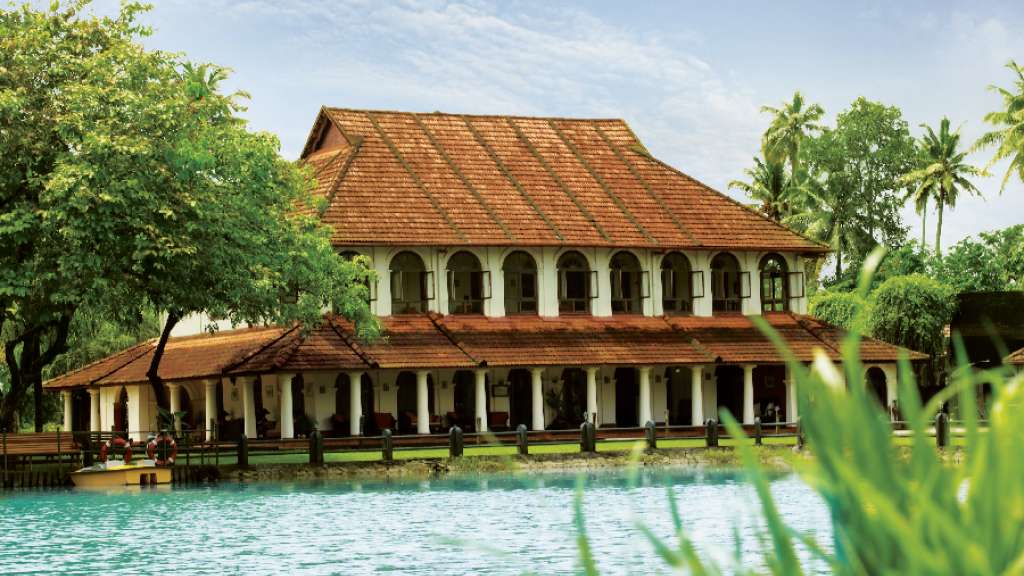
Four generations of the Baker family are said to have lived on the estate until the 1960s. The old Baker bungalow later fell into ruin before being restored as a heritage hotel, while the surrounding wetland was protected as the Kumarakom Bird Sanctuary — often described as among the earliest such sanctuaries in the region, developed specifically for its birdlife.

The wider ecological importance of the area won international recognition in 2002, when the Vembanad-Kol wetland system was designated a Ramsar Site of International Importance (listed 19 August 2002) — one of the largest such sites in India. The designation reflects the lake’s role as a vast estuarine system spanning several districts and a critical wintering ground for waterfowl.

Kumarakom’s emergence as a marquee tourism destination is comparatively recent, riding the boom in Kerala backwater tourism from the 1990s onward. The conversion of redundant cargo kettuvallams into cruising houseboats, the arrival of lake-facing luxury resorts, and the fame carried by ‘The God of Small Things’ combined to turn a quiet farming-and-fishing village into one of the state’s best-known getaways — a status Kerala Tourism has actively promoted through its Kumarakom backwater branding.

Why visit

Sunset over Vembanad, Kerala’s largest lake — the definitive backwater view.

An overnight kettuvallam houseboat cruise, the classic slow way to see the waters.

The Kumarakom Bird Sanctuary and its winter migrants from the Himalayas and Siberia.

‘The God of Small Things’ country — the drowsy Aymanam landscape near by.

Lake-fresh Kerala cuisine: karimeen pollichathu, duck roast, prawns and toddy.

A genuinely unhurried village atmosphere of canals, coir, paddy and palm.
Before you go

Kumarakom — at a glance

HoursKumarakom Bird Sanctuary is generally open daily, about 6:00 am to 6:00 pm; early morning (6–8 am) offers the best birdwatching. Day houseboat cruises typically run late morning to evening; overnight houseboats board around midday and moor by evening.

Entry: Bird sanctuary entry is commonly around ₹100 for Indian adults, roughly ₹50 for children (5–12) and about ₹250 for foreign nationals, plus separate camera/boat charges. Houseboats are the main cost: day cruises from roughly ₹6,000–₹9,000, and one-bedroom overnight cruises (meals included) from around ₹10,000, rising with more bedrooms and AC.

Photography: Golden dawn and dusk light over Vembanad is superb for houseboats, canoes and reflections. A telephoto lens helps with birds at the sanctuary; move slowly and quietly, and expect a separate camera fee at the sanctuary gate. Sunset from a lakeside jetty or boat deck is the money shot.

Getting here

How to reach Kumarakom

  • ✈︎ By air Cochin International (COK) is 80 km north, about eighty-five minutes on the measured routed road. Thiruvananthapuram International (TRV) is 164 km and is only worth it on fare.
  • 🚆︎ By train Kottayam (station code KTYM) is 13 km away, about seventeen minutes by road, on the Thiruvananthapuram–Ernakulam main line. Kumaranalloor (KFQ) at 14 km, Chingavanam (CGV) at 17.6 km and Ettumanoor (ETM) at 20.4 km are halts on the same line rather than alternatives. There is no station at Kumarakom itself.
  • 🚗︎ By road Kochi is 53 km and Thiruvananthapuram 155 km, both measured routed distances. The village strings out along one lakeside road rather than gathering round a centre, so the last two kilometres to a particular resort or jetty matter more here than the fifty before them.
  • 🚌︎ By bus The Kumarakom bus stand is 900 m from the centre and Attipeedika 2.9 km, both served from Kottayam. Beyond that, buses thin out quickly — Thiruvarpu is 7.2 km and Parippu 9.3 km, and neither is walking distance from anywhere you are likely to be staying.
  • ⛴︎ By boat The Kumarakom boat jetty is 100 m from the centre — this is one of the few places in Kerala where the water is genuinely the front door. Country boats and houseboats work Vembanad from here, the house-boat terminal at Naalupanku is 4.4 km round the shore, and Cheepunkal jetty is 4.8 km. We publish no timings or fares: houseboat pricing moves with the season and the day, and there is no ferry feed we are permitted to republish.
Getting around

Getting around Kumarakom

Kumarakom is a strung-out lakeside village, not a walking town — the bird sanctuary, the jetties and the resorts sit along one shore road. Autos cover the strip, resorts run their own boats and cars, and buses along the Kottayam road link the village to the town.

  • 🚕︎ Online taxis A backup, not a plan. Uber and Ola coverage in Kumarakom is limited — a pre-booked app car from Kochi or Kottayam will get you here, but hailing one locally rarely works. Move around by auto, your resort’s boat or car, or a taxi arranged through your stay. Where an app does respond, the price is set in-app; we print no fares.

Full guide: Getting around Kumarakom — autos, boats and the apps worth having, with download links.

Getting back

Work out your return before you settle into the day. Services in Kerala thin out sharply in the evening, and Kumarakom is easier to reach than to leave once the last long-distance bus has gone. We do not publish departure times: there is no official live feed we are permitted to republish, and a wrong time here would strand you. Check the operator directly on the day.

Ask at the jetty or the stand for the time of the last service back, not the next one. If you miss it, an auto or a taxi is the fallback — agree the fare before you get in.

Do

Things to do in Kumarakom

  • Walk the bird sanctuary's 14 hectares of mangrove, marsh and paddy on the lake shore. The shallow, weed-rich water between here and Pathiramanal island opposite is one of the famous bird haunts of the lake, at its busiest with winter migrants from November to February.
  • Take a shikara or a punted country canoe into the narrow canals — channels a full-size houseboat physically cannot enter — past coir work, garden plots and people's back steps, at a speed that lets you see them.
  • Spend a night on a kettuvallam houseboat on the open water. The hulls are converted cargo barges — jackwood planks stitched with coir, no nails — that carried rice and spice until roads made them redundant.
  • Watch the sunset over open water. Vembanad is India's longest lake, 96.5 kilometres end to end, and this is the best-placed shore on it for the last hour of light.
  • Ask a boatman about Pathiramanal, the uninhabited island off the sanctuary shore — a green stepping-stone with its own recorded roll of birds, butterflies and flowering plants.
  • Go to Aymanam, ten kilometres away on the Meenachil river — the real village behind The God of Small Things — for the paddy, the river and a canoe arrival if you can arrange one. Go for the village, not the addresses: the Ayemenem House and the pickle factory are the novel's, not the map's.
  • Drive up to the Thanneermukkom bund, the 1,400-metre barrier that cuts Vembanad in half — the largest mud regulator in India, working since 1976, and the single biggest reason the water in front of your houseboat looks the way it does.
  • Eat karimeen — pearl spot, the lake's own fish — grilled in a banana leaf, with prawns and toddy-shop fare for the rest of the table.
  • Visit Aruvikkuzhi waterfall, a rubber-plantation cascade a few kilometres inland where the water drops about a hundred feet — the one outing here that is not about the lake.
Plan

Good to know

  • Something over 600 houseboats work Vembanad and roughly 100 hold a valid Pollution Control Certificate — the certificate a boat can only get with onboard sewage treatment. Ask for the certificate, not the assurance; if a boat claims the Green Palm grade, ask which year, because classifications are renewed. The High Court has directed that boats which do not treat their waste must not operate on the lake from April 2026. Paying slightly more for a boat that treats its sewage is the single most useful thing a visitor here can do.
  • A day cruise plus a night ashore is often the better trip than the overnight boat — day boats generate far less waste, and you sleep in a real bed.
  • The calendar here is one system. November to February is dry, comfortable and migratory-bird season — and it is also when the Thanneermukkom shutters are closed, so the upper lake sits still and the water hyacinth is at its worst. The monsoon, June to August, is the reverse trade: wet, beautiful and cheap, best enjoyed from a veranda booked with that in mind.
  • Book boats and rooms well ahead for November to February and holiday weekends. Kumarakom is the most expensive stretch of backwater in Kerala — the strip was built for the top end. Alappuzha has the volume and the price competition, Kollam is the cheapest and quietest, and the three are strung along one lake system a couple of hours apart.
  • Kumarakom has no beach — this is a lake shore, not a coast — no market street, no restaurant row, no monuments and no nightlife. If you are not eating at your resort you will be getting in a vehicle. It is a place to be on the water, not a place with things in it.
  • The real Kottayam story behind The God of Small Things is legal, not architectural. Mary Roy's litigation ended in the 1986 Supreme Court ruling on the inheritance rights of Syrian Christian women — it happened in this district, and it is a better thing to carry into Aymanam than any address.
  • The lake you are on is a third smaller than it was a century ago — about 290 square kilometres of water spread in 1917, about 213 by 1990 — and silted from roughly 8.5 metres of average depth in the 1930s to under three in places. The Ramsar listing of 19 August 2002 covers 151,250 hectares of the Vembanad-Kol wetland; the paperwork protection has run a long way behind the physical decline.
  • Treat Kottayam as the front door. The station is there, the buses come from there, and there is nothing to be gained hunting a more direct way in — everything at Kumarakom is reached through it or across the water.
  • The bird sanctuary is walked, not driven or boated — expect paths and wet ground, and bring binoculars, which do more than a camera here.
  • Aymanam pairs with Kottayam, eight kilometres apart, rather than being a separate expedition. Do both in one morning out.
  • The lake is one water with three names — Vembanad at this end, Punnamada off Alappuzha, the Kochi lake downstream — which is why a boat from Alappuzha can reach Kumarakom, and why the same houseboat fleet works all of it.
Facilities

On site

  • Kumarakom is an open village — the lakeside road, the canals and the jetties cost nothing. The bird sanctuary is ticketed and charges separately for a camera; every boat is a private arrangement priced by its operator.
  • The practical-things list further down this page is OpenStreetMap data routed on foot from the village centre — what is mapped, not a survey. This is a thinly mapped stretch of Kerala, so absence here means considerably less than it would in a city.
  • Not verified and deliberately not guessed: current houseboat and shikara rates, sanctuary timings and camera fees, and whether any particular jetty has drinking water or a toilet. Prices here move faster than a page can.
  • We have not re-surveyed step-free access at any jetty or on any boat. Boarding a kettuvallam means a plank and a step down; any step-free figure below is routed over OpenStreetMap’s sparse network and says nothing about getting onto a boat.
Stay safe

Safety

  • Vembanad is open water and houseboats are private hire rather than a regulated attraction. Check that life jackets are actually aboard before you board, and do not take an unlicensed boat because it is cheaper.
  • Cruising is restricted after dark and in heavy monsoon, and those restrictions exist because the lake is large and the weather here turns fast. A booked boat is not a guarantee it will run.
  • Mosquitoes are a genuine nuisance on the backwaters at dusk rather than a theoretical one. Carry repellent; a lakeside evening without it is not a pleasant one.
  • The canals run through people’s gardens and yards. A country-boat ride passes within a few metres of houses — ask before photographing, and keep your voice down at dawn.
  • Do not swim in the upper lake. North of the Thanneermukkom bund the water sits still for the six closed months of the year, the hyacinth mats are thickest in exactly the dry season you are likely to visit, and the state pollution board has the lake under stress from sewage, runoff and plastic. It is a lake to be on, not in.
Getting around Kumarakom

If you need step-free access, contact the site before travelling. Ask about a level entrance, steps along the route, the nearest drop-off point, seating and accessible toilets.

Practical things near Kumarakom
Bus stopsKumarakom Jetty 28 m · under a minute walkMapped Jan 2024DirectionsFerry jettiesKumarakam Boat Jetty 60 m · 1 min walkMapped Apr 2024DirectionsPharmacyBhartiya Jan Aushadhi kendra Pharmacy1.5 km · 18 min walkMapped May 2021DirectionsHospitalHealth Sub Centre Hospital1.1 km · 13 min walkMapped Sept 2020DirectionsATMATM 1.9 km · 23 min walkMapped May 2021DirectionsBankSBI Kumarakom Bank454 m · 5 min walkMapped Mar 2021DirectionsWater & snacksWe One store 773 m · 9 min walkMapped Jun 2023DirectionsGroceries & bakeryLittle bites Bakery1.6 km · 19 min walkMapped Sept 2021DirectionsBarber & salonHairdresser 1.6 km · 20 min walkMapped May 2020DirectionsSomewhere to prayGuru Mandiram Place of worship1.8 km · 21 min walkMapped Jan 2019Directions
What the cash actually costs
  • Withdrawing from a bank that is not your own is free for a set number of times a month, then costs up to ₹23 plus GST — about ₹27 a withdrawal. This is not one of the RBI’s six metro centres, so the allowance here is the higher one: at least five free other-bank withdrawals a month, and at least five at your own bank.
  • That free allowance belongs to Indian bank accounts. On a card issued abroad your own bank’s international withdrawal and exchange charges apply instead. If the machine offers to bill you in your home currency, choose rupees — the conversion rate on that offer is set by the machine, not by your bank.
  • Given a choice, use an ATM inside or attached to a branch: it sits in view of staff and cameras, and there is someone to ask if the machine keeps your card. A machine standing alone on a tourist street is the one to be wary of. Banks are listed here alongside the ATMs, but the map data does not record which ATMs sit inside a branch — check when you get there.

Charge cap and free-transaction limits: Reserve Bank of India, in force since 1 May 2025.

These services are listed within about 1.2 km of Kumarakom. Walking distances follow mapped routes; access and opening hours can change. Other services may be closer but are not included here.

In the district

Where Kumarakom sits in Kottayam district

District HQKottayam
LandscapeBackwaters & rubber midlands

Kottayam district is known for: Kumarakom on Vembanad Lake — birdlife and lakefront stays.

Kumarakom Bird SanctuaryVembanad LakeBackwater village life
Stay · eat · do · rent · see · shop

Places in Kumarakom

Every verified place in Kumarakom — filter by what you’re after.

20 places to stay in Kumarakom

Kumarakom Houseboat Club — Houseboat operator in Kumarakom
Verified
Houseboat operator · Kumarakom
Kumarakom Houseboat Club

Direct-source Kumarakom houseboat operator with Cheepunkal boarding point. Contact direct · Kumarakom, Houseboat, Cheepunkal Jetty.

Directions Commission-freeView details
Kumarakom Castle Houseboats — Houseboat operator in Kumarakom
Verified
Houseboat operator · Kumarakom
Kumarakom Castle Houseboats

Direct-source Kumarakom houseboat operator based at Chakranpady. Contact direct · Kumarakom, Houseboat, Chakranpady.

Directions Commission-freeView details
KTDC Waterscapes Kumarakom — Government hotel in Kumarakom
Verified
Government hotel · Kumarakom
KTDC Waterscapes Kumarakom

KTDC Kumarakom property with district tourism contact evidence. Contact KTDC · Kumarakom, KTDC, Government hotel.

Directions Commission-freeView details
Abad Whispering Palms — Resort in Kumarakom
Verified
Resort · Kumarakom
Abad Whispering Palms

Abad-managed backwater resort with lakeside cottages and villas overlooking Vembanad Lake at Kumarakom.

Directions Commission-freeView details
The Zuri Kumarakom Resort & Spa — Resort in Kumarakom
Verified
Resort · Kumarakom
The Zuri Kumarakom Resort & Spa

Resort in Kumarakom. 5-star luxury resort and spa · Kumarakom, Karottukayal, Zuri.

Directions Commission-freeView details
Taj Kumarakom Resort & Spa — Hotel in Kumarakom
Verified
Hotel · Kumarakom
Taj Kumarakom Resort & Spa

Taj hotel at Kavanattinkara, Kumarakom with Kerala Tourism-listed contacts. 5-star luxury lake resort and spa · Kumarakom, Taj, Kavanattinkara.

Directions Commission-freeView details
Kumarakom Lake Resort — Resort in Kumarakom
Verified
Resort · Kumarakom
Kumarakom Lake Resort

Luxury heritage backwater resort set on the banks of Vembanad Lake at Kumarakom, Kerala. Kumarakom Lake Resort, Kumarakom North Post, Kottayam, Kerala 686563 · 5-star luxury heritage resort with private villa cottages · Kumarakom, Vembanad Lake, Luxury resort.

Directions Commission-freeView details
C
Coconut Lagoon
Place to stay
Top pick
Hotel
Coconut Lagoon

Heritage island backwater resort by CGH Earth on Vembanad Lake at Kumarakom. The property lies in Kottayam district and is reached by boat.

Directions Commission-freeView details
W
Waterscapes (KTDC)
Place to stay
Top pick
Hotel
Waterscapes (KTDC)

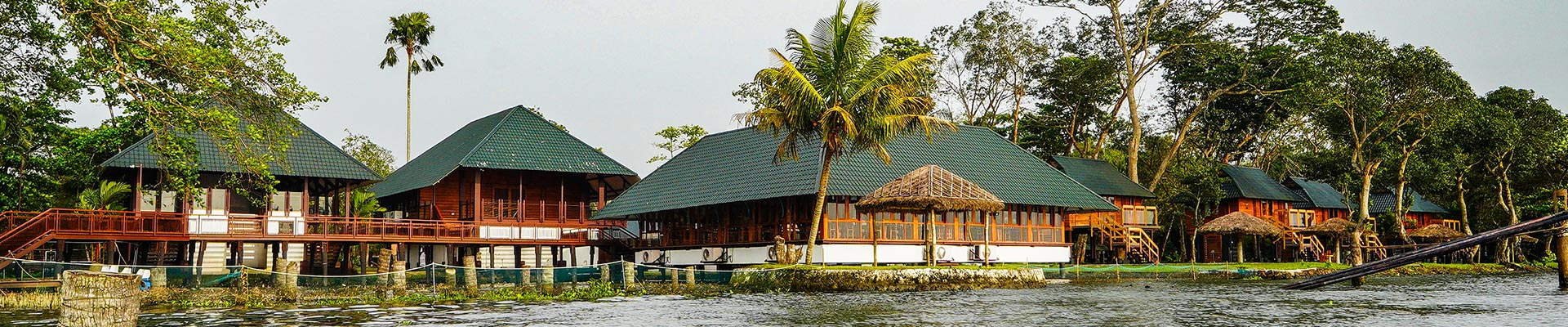
KTDC-run premium backwater resort with stilted cottages inside Kumarakom Bird Sanctuary on Vembanad Lake.

Directions Commission-freeView details
B
Backwater Ripples
Place to stay
Hotel
Backwater Ripples

Lakeside resort on the banks of Vembanad Lake at Kumarakom, offering backwater cruises and a spa. It stands on Nazerath Church Road in Kottayam district.

Directions Commission-freeView details
I
Illikkalam Lakeside Cottages
Place to stay
Hotel
Illikkalam Lakeside Cottages

Family-run lakefront cottages on the shores of Vembanad Lake at Kumarakom. They are located at Ammankary, Nazareth Road, in Kottayam district.

Directions Commission-freeView details
K
Kumarakom Tharavadu
Place to stay
Hotel
Kumarakom Tharavadu

Restored 1870s heritage bungalow hotel on the banks of Vembanad Lake at Kumarakom.

Directions Commission-freeView details
E
Eastend Lakesong
Place to stay
Hotel
Eastend Lakesong

Eastend-group backwater resort on the banks of Vembanad Lake at Kumarakom. It sits on the Vembanad shore in Kottayam district, Kerala.

Directions Commission-freeView details
T
The Zuri Kumarakom
Place to stay
Hotel
The Zuri Kumarakom

Five-star lakefront resort and spa on the shores of Vembanad Lake at Kumarakom. It is set on the Vembanad backwaters in Kottayam district, Kerala.

Directions Commission-freeView details
C
Cocobay Resort
Place to stay
Hotel
Cocobay Resort

Boutique backwater resort fronting Vembanad Lake at Kumarakom, accessible by water. Kumarakom North, Kottayam, Kerala 686563.

Directions Commission-freeView details
K
Karma Chakra
Place to stay
Hotel
Karma Chakra

24-room boutique resort with lake-view rooms on the shores of Vembanad Lake at Kumarakom. Near Nazreth Church, Kumarakom P.O., Kottayam, Kerala 686563.

Directions Commission-freeView details
C
Coconut Palms Village Homestay
Place to stay
Verified
Homestay · Kumarakom
Coconut Palms Village Homestay

Coconut Palms is a Kerala Tourism-classified family homestay in Kumarakom, a short walk from the Vembanad backwaters and bird sanctuary. It offers en-suite rooms in a traditional-style house with home-cooked Kerala meals and direct booking.

Directions Commission-freeView details
B
Backwater Ripples Kumarakom
Place to stay
Verified
Resort · Kumarakom
Backwater Ripples Kumarakom

Kumarakom resort on Nazerath Church Road with official reservation contacts. Contact direct · Kumarakom, Nazerath Church Road, Backwater resort.

Directions Commission-freeView details
R
Rhythm Kumarakom
Place to stay
Verified
Resort · Kumarakom
Rhythm Kumarakom

Lakefront resort (formerly Aveda) on Vembanad Lake at Kumarakom with a long outdoor pool and Ayurveda spa.

Directions Commission-freeView details
C
Coconut Lagoon CGH Earth
Place to stay
Verified
Resort · Kumarakom
Coconut Lagoon CGH Earth

CGH Earth backwater resort in Kumarakom with direct fact-sheet contacts. Contact direct · Kumarakom, CGH Earth, Vembanad Lake.

Directions Commission-freeView details

Book with the place itself. India’s cyber-crime coordination centre warned in April 2025 that convincing copies of hotel and pilgrimage booking sites are being pushed through sponsored search and social ads, taking payment for rooms the property never hears about. Every listing here links to the business’s own contact details and its own Google or Bing profile — we take no commission and sit in nobody’s payment path. If a booking page reached you through an ad, check the address bar against the property’s own site before you pay. Fraud can be reported on cybercrime.gov.in or on 1930.

Ranked

The best of Kumarakom, ranked

Nearest to the centre of Kumarakom, on foot

Ordered by a real routed walk from the town centre — a different question, and the one that decides what you can do before lunch. Straight-line distance understates a real walk by about half again, so these are walking-network figures, not lines on a map.

Everything around Kumarakom, by distance

Every place we hold for Kumarakom, ordered by a real routed drive from the town centre. Times are free-flow and a real road rarely is, so read them as the floor rather than the estimate — anything that routed over ninety minutes is left out rather than published as a number we do not trust.

For hotels, homestays and local businesses

Get listed in Kumarakom for free

Roampedia is commission-free. Travellers discover your business, book directly and contact you through official details. Basic listings are free, while Gold and Platinum package upgrades can be requested from the owner dashboard after approval.

List your business — free
Read before you go

Kumarakom guides, stories & itineraries

Stories & history of Kumarakom

Written about Kumarakom itself — its history, its legends and the arguments about them.

Around Kumarakom

The town itself and the places around it — each written about one subject rather than as a general guide.

Planning a trip to Kumarakom

The practical half — what is actually here, in what order to see it, and how to arrive.

Kerala-wide guides & itineraries

Route-level itineraries and practical guides for the rest of the state.

See all 35 Kottayam guides & stories →

Map

Where things are in Kumarakom

FAQ

Kumarakom travel FAQs

What is Kumarakom best known for?

The backwaters of Vembanad Lake — houseboat (kettuvallam) cruises, luxury lake resorts and the Kumarakom Bird Sanctuary. It is also celebrated as the landscape behind Arundhati Roy’s novel ‘The God of Small Things’, set in near-by Aymanam.

When is the best time to visit Kumarakom?

The cooler, drier months of roughly November to February are ideal, with pleasant weather and peak migratory birdlife at the sanctuary. The monsoon (June–September) brings lush green scenery and fewer crowds but heavy rain.

Is Kumarakom a lake or a river?

Kumarakom sits on the eastern shore of Vembanad, a large brackish backwater lake — Kerala’s biggest — fed by several rivers including the Meenachil. The village itself is a cluster of small islands and reclaimed land laced with canals.

What can you see at the Kumarakom Bird Sanctuary?

Around 180 recorded species across roughly 14 hectares of mangrove and marsh — resident egrets, herons, darters, cormorants, kingfishers and cuckoos, plus winter migrants such as teal and other waterfowl from the Himalayas and Siberia. Early morning is best for sightings.

How long should I spend in Kumarakom?

One to two nights suits most visitors — enough for a houseboat cruise, an early-morning visit to the bird sanctuary and time to slow down by the lake. It also pairs easily with Alappuzha and Kottayam near by.

What is the connection to ‘The God of Small Things’?

Arundhati Roy grew up in this part of Kottayam, and her 1997 Booker Prize-winning novel is set in ‘Ayemenem’ — the village of Aymanam, a short distance inland from Kumarakom, on the Meenachil river. The book’s watery, green backdrop is drawn directly from here.

What are the best places to visit in Kumarakom?

Top places to visit in Kumarakom include Kumarakom Bird Sanctuary, Vembanad Lake, Houseboat cruises — each has a full guide with how to reach it and what to see nearby on this page.

How do I reach Kumarakom?

The nearest airport to Kumarakom is Cochin (COK), ~75–80 km. The rail gateway is Kottayam (KTYM).

Photographs: Jigyasu (CC BY-SA 4.0), Vis M (CC BY-SA 4.0), Ganesh Mohan T (CC BY-SA 4.0). Wikimedia Commons.

Image credits