Thunchan Parambu

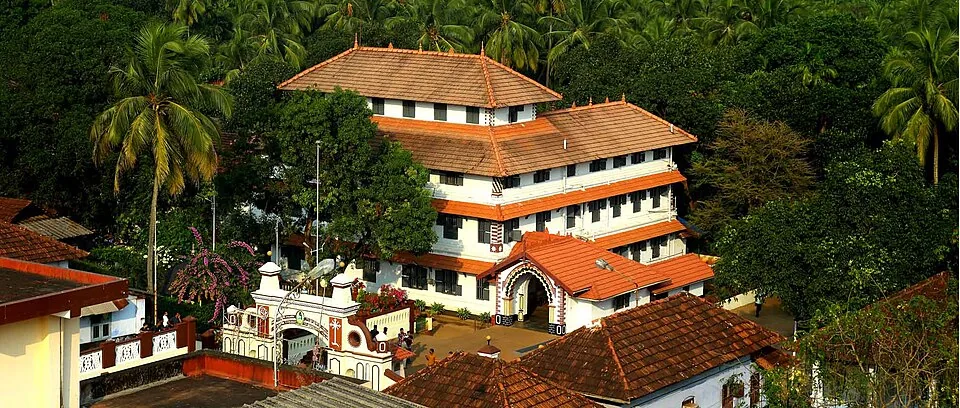
Thunchan Parambu is the plot of ground at Trikkandiyoor in Tirur held to be the home of Thunchath Ezhuthachan, the sixteenth-century poet remembered as the father of the Malayalam language. It is not a monument to walk round in ten minutes. Four acres of it are a working literary institution — a literature museum, a research library, a manuscript store, a granite pavilion, an auditorium and a book house — run by the Thunchan Memorial Trust.

Thunchan Parambu, Tirur
Practical guide

Plan Thunchan Parambu

Who's going?Tailor Thunchan Parambu to your trip
Typeheritage
AreaTirur
DistrictMalappuram
Best timeThe grounds are shaded and usable in any…
Time neededAn hour and a half to two hours for the…
Entry₹20
Places to visit8Listed businesses5

Two things bring people rather than the buildings. One is a kanjira tree, under which the poet is said to have taught. The other is the sand, in which small children are brought to write their first Malayalam letters at Vijayadashami. On an ordinary weekday the Trust counts a few hundred students through the museum; at Vidyarambham the ground fills.

The story

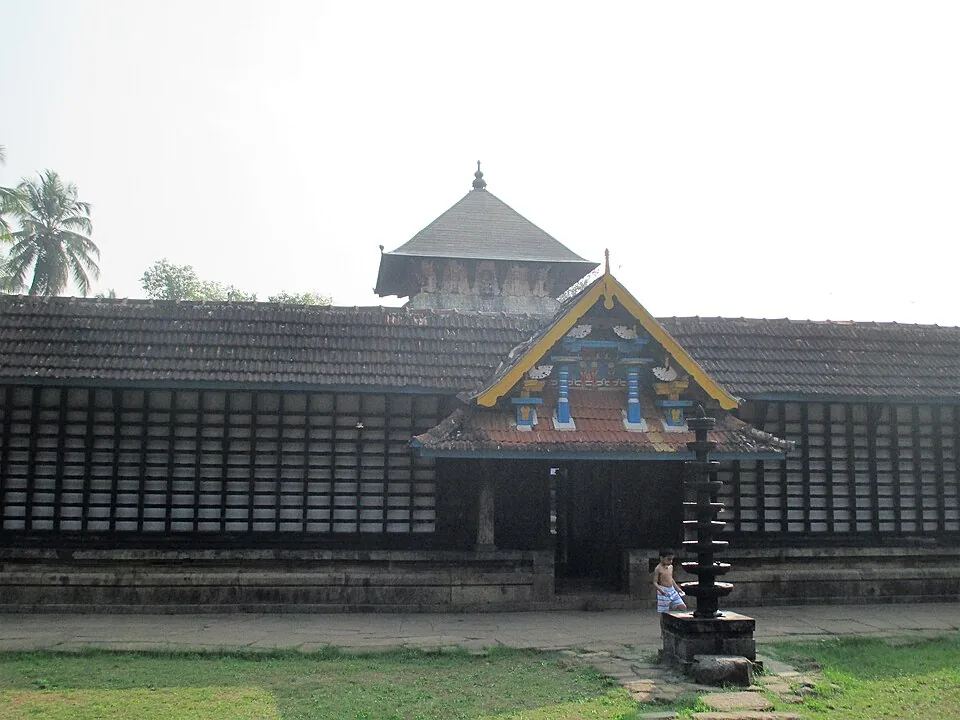
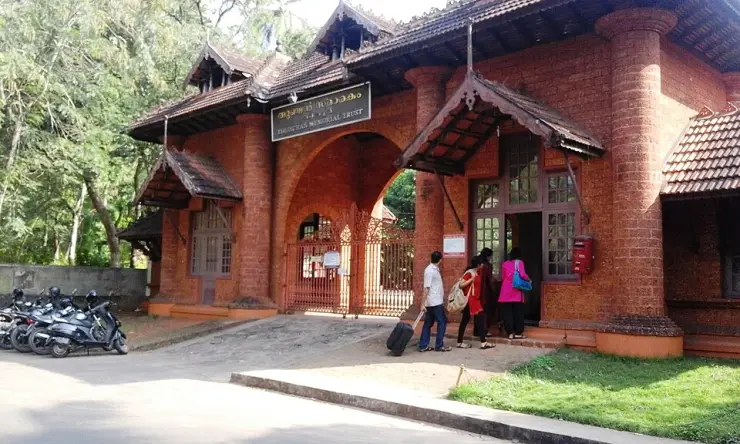
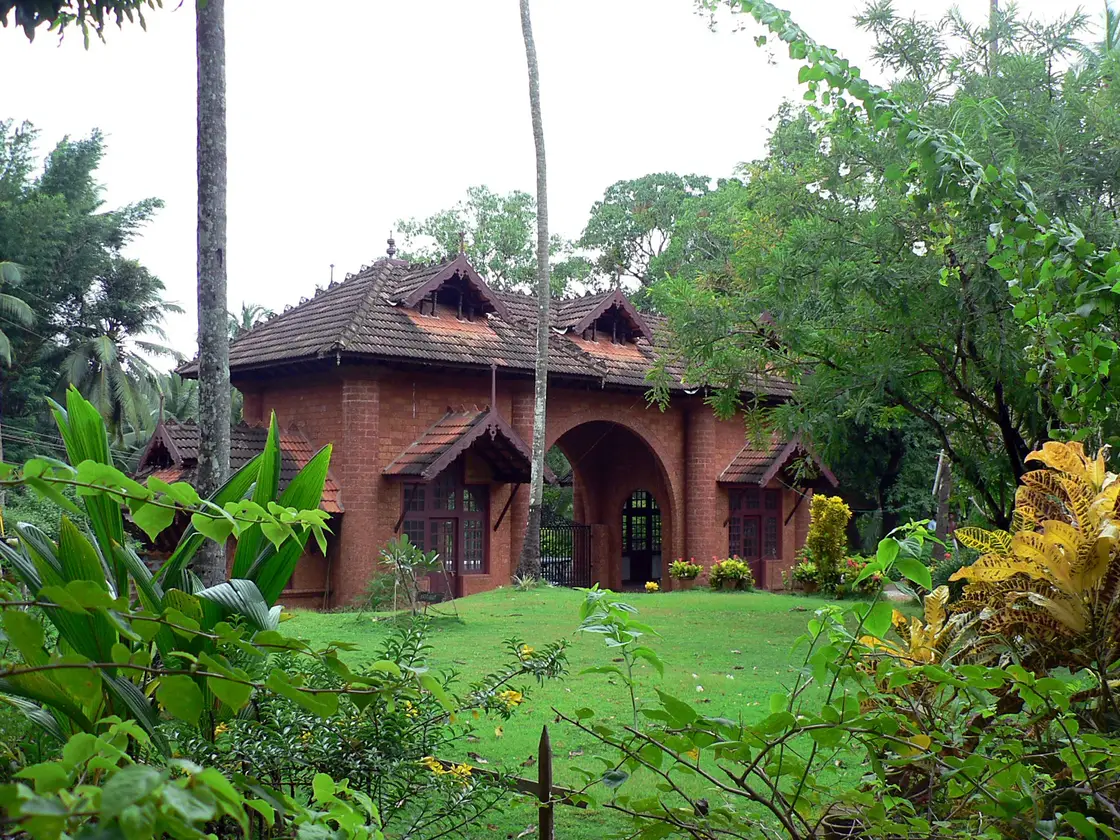
You come in under a laterite gateway with three tiled gables and a sign in Malayalam and English, off a road that carries the ordinary traffic of a market town. Behind it the noise stops. The ground is sand and shade — old trees, red-brick buildings with tiled roofs set back among them, a tank on one side, granite underfoot where the paths have been laid. This is four acres of Trikkandiyoor held to be the plot where Thunchath Ezhuthachan lived and taught, and the quietest thing about it is that it is still in use.

The story of Thunchan Parambu

What Ezhuthachan did is easier to see than to say. Malayalam before him was written in Vatteluttu, a script that had no comfortable way of carrying Sanskrit sounds. He wrote in the Grantha-derived alphabet instead — the one Malayalam still uses — and in doing so made it possible to write the language and the Sanskrit vocabulary it was absorbing with the same set of letters. That is the concrete content of the title he is given. He is the father of the language in the sense that the letters on a Kerala shopfront today are the letters he settled on.

The poems are the other half of it. His Adhyatma Ramayanam and his Mahabharatam are kilippattu — parrot-songs — a form in which the poet does not narrate but asks a bird to, and each section opens by calling the parrot and asking it to tell the story. He took the convention from older Tamil verse and turned it on the epics, in Malayalam grammar carrying Sanskrit words. Scholars agree he wrote those two. A shelf of others long attributed to him — the Brahmanda Puranam, the Uttara Ramayanam, the Devi Mahatmyam, the Harinama Kirtanam — are still argued over.

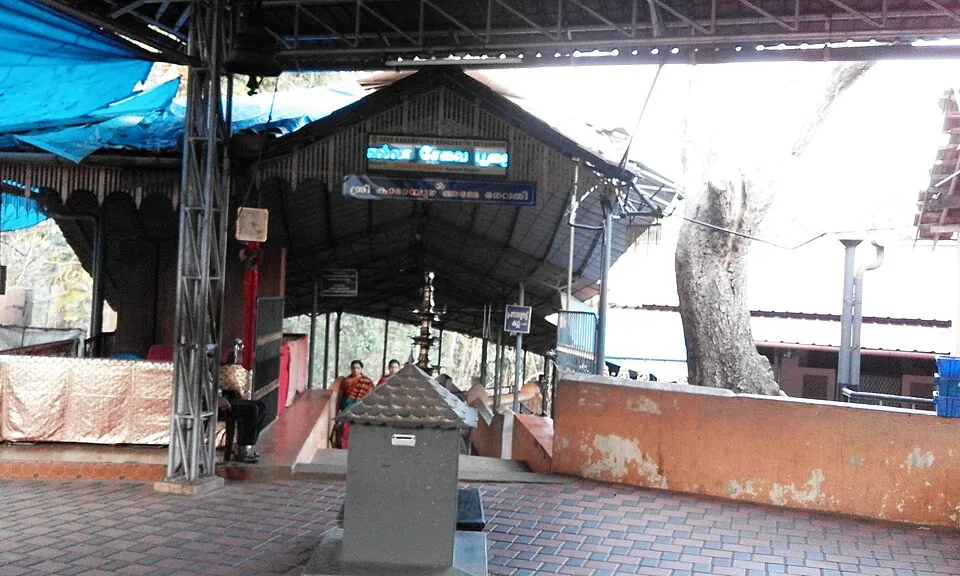
A stone parrot stands on a plinth under a canopy of its own on the grounds, large enough that a grown adult reaches its shoulder. Near it is the Saraswathi Mandapam, a granite pavilion on a raised platform with carved pillars and an open floor, which is the formal set-piece of the place and the one most photographs are taken of.

The rooms are the reason to give it two hours rather than twenty minutes. The literature museum lays out the growth of the language in clips, soundtracks, paintings and photographs, with cases of objects belonging to Kerala writers. The research library holds about fifteen thousand books and a hundred and twenty manuscripts and is recognised by the University of Calicut; the Grandhapura beside it is where the palm-leaf manuscripts are kept. A copy of the Adhyatma Ramayanam Kilippattu on palm leaf, with the iron stylus that scored it, is among the things on show — which is a useful thing to look at, because it explains why the letters of Malayalam are round: a straight stroke splits a palm leaf along its grain.

There is also a book house, the Pusthakapura, which sells the Trust's own publications and other publishers' Malayalam titles, and an auditorium and a mini hall that the Trust lets out. Guest rooms, a children's library and a conference room fill the rest of the four acres. The Trust reckons about three hundred students and two hundred other visitors come through on an ordinary day.

The iron stylus said to be the poet's own is kept here and does not stay in its case all year. At the Thunchan festival it is carried out in procession, and the festival around it runs to readings, seminars, music and dance across several days. The date is not fixed: the Trust held it on 27 February in 2025 and on 2 January in 2026.

The manuscript work is the part of this that nobody visiting for the tree would guess at. The National Mission for Manuscripts designated the Trust one of its Manuscript Resource Centres, and the centre began operating in June 2004 with a brief covering the manuscripts of north Kerala — finding them, describing them and getting them into electronic form. It has run 274 surveys across six districts and documented some 131,700 records, all of them also converted to digital. That is a working archive programme housed on a plot of ground remembered for a tree.

The rest of the four acres is arranged to be used rather than looked at. There is an auditorium seating about five hundred and an open-air stage, a conference room and a mini hall, cottages for guests and a dormitory, a dining hall, a children's library, and two ponds under the trees at the edge of the compound. The Trust lets the hall and the auditorium out under conditions. None of it is grand and all of it is in use, which is why the place reads as an institution having a working day rather than as a monument being visited.

Legend & myth

The tree is the first thing anyone tells you about. Ezhuthachan is said to have taught and composed under a kanjira — Strychnos nux-vomica, the strychnine tree, whose every part is bitter and poisonous, and which in Malayalam carries bitterness the way a stock phrase carries it in English. The tradition at Tirur is that this particular kanjira lost its bitterness, and that its leaves have been sweet ever since. Read as botany it is false and dangerous. Read as what it is, it is exact: the bitterest tree in the language stands over the man who made the language sweet, and the story simply refuses to let the two of them share a yard unchanged.

The sand is the second, and it is the one that fills the ground. By long tradition children are brought here at Vijayadashami, at the end of Navratri, for the Vidyarambham — the beginning of learning — and the letters are written in the sand of the compound rather than in a tray of rice. The sand is treated as sacred, and pilgrims walk round the kanjira once the writing is done. The local saying holds that a child who traced its Harisri in that sand went on to be somebody.

The act itself is small and very old. The child sits in an adult's lap; the adult's hand closes over the child's index finger and guides it to write ഹരിശ്രീ, Harisri, in the ground. The same word is then traced on the child's tongue with a gold ring. Ezhuthiniruthu is the other name for it — the seating for writing — and the age is usually about three. What makes it a public occasion here rather than a domestic one is that the guiding hand is often a writer's or a public figure's, invited for the morning.

The man himself is where the legend has done most of its work, and the disagreement starts at his name. Thunchan means the youngest; Ramanujan and Krishnan are both given as the name it was attached to. His community is claimed three ways, between the Ezhuthachan scribe caste, the Kaniyar astrologer-teachers and a Chakkala Nair family. His century is put anywhere from the fifteenth to the seventeenth, with 1495 to 1575 the estimate most often quoted. The Aithihyamala carries a story that he was a gandharva cursed into a low birth as the price of spreading the Adhyatma Ramayanam — a tale that reads as a later attempt to raise his ritual standing rather than as a memory of anything.

One thing this ground does not have is his grave. Ezhuthachan is held to have founded a hermitage at Chittur in Palakkad and to have died there, and his samadhi is on the bank of the Shokanashini a hundred and forty kilometres east of here. Tirur has the beginning of the life and the ground he worked on.

Read the full history of Thunchan Parambu 562 more words

History

The memorial as a built thing is younger than most visitors assume, and its dates are on its own walls. Two marble tablets inside record that the Chief Minister of Kerala, Pattom Thanu Pillai, laid the foundation stone on 29 December 1961, and that the memorial was opened on 15 January 1964 by Pattom A. Thanu Pillai — the same man, who by then had left Kerala and was Governor of Punjab. It is not often that the two ends of a building project are held by one person in two jobs.

That year the government put a twelve-member committee in charge of the ground. What the committee turned into over the next three decades was a cultural institution rather than a caretaking body, and the physical proof of the change is a second pair of dated stones. The foundation of the Thunchan Memorial Research Centre was laid on 24 October 1993 by E. T. Muhammed Basheer as Minister for Education, and the centre was opened on 24 May 1998 by Chief Minister E. K. Nayanar, with Muhammed Basheer — by then the local member of the legislative assembly — in the chair.

The novelist M. T. Vasudevan Nair became chairman in 1993, the year the research centre was begun, and the expansion of the grounds since then belongs to that tenure. In 2001 the government converted the committee into a trust with substantial autonomous rights, which is the body that runs the place now. The literature museum followed, opening in October 2008.

The poet's name has since been attached to two things beyond this ground. The Ezhuthachan Puraskaram, Kerala's highest literary award, was first given in 1993 to Sooranad Kunjan Pillai. And the Thunchath Ezhuthachan Malayalam University, inaugurated on 1 November 2012, teaches from a campus at Vakkad about four kilometres west of here.

The result of sixty years of that is a place with an odd double character. It is a pilgrimage — several thousand families a year bring a child here for one morning and think of it as sacred ground — and it is also an ordinary working institution with a payroll, a lettings policy and a digitisation programme. The Trust counts roughly three hundred students and two hundred other visitors on a normal day. Both halves are real, and a visitor who arrives expecting only one of them tends to be surprised by the other.

Why visit

It is the ground on which the Malayalam alphabet in use today was settled on, and it is still an institution rather than a monument.

The literature museum is the only museum of its kind for any Indian language, by Kerala Tourism's account, and it is built round the growth of a language rather than round objects.

A palm-leaf copy of the Adhyatma Ramayanam Kilippattu and the iron stylus that wrote in it are both here, and between them they explain the shape of the letters.

The kanjira tree and the sand under it carry two of the most-told stories in Malayalam, and one of them is acted out by several thousand families every Vijayadashami.

A research library of fifteen thousand books and a hundred and twenty manuscripts is open to readers, not sealed behind glass.

The Trikkandiyoor Mahadeva temple is a kilometre away and Tirur station a little under two, which makes the whole of it a morning without a car.
What to expect

Highlights

  • A literature museum opened in October 2008 that sets out the growth of Malayalam in clips, soundtracks, paintings and photographs — Kerala Tourism claims it as the only museum of its kind for any Indian language.
  • A research library of about 15,000 books and 120 manuscripts, and the Grandhapura where the palm-leaf manuscripts are kept.
  • The kanjira tree, the sand of the Vidyarambham ceremony, and the iron stylus that is carried out in procession at the Thunchan festival.
Getting there

How to visit

  • Come from Tirur station, which is 1.7 km away by road — three or four minutes in an auto, and walkable if you do not mind the traffic on the way out of town.
  • Give it two hours if you want the museum and the library rather than the grounds alone; the museum and the grounds keep the same hours but the library does not.
  • The one date that changes the place completely is Vijayadashami, at the end of Navratri in September or October, when the first-letters ceremony is held. Expect crowds and an early start.
  • The Trikkandiyoor Mahadeva temple is 1.2 km away, which makes the pair of them a straightforward morning on foot or in one auto.

Distance by road

  • Kozhikode49 km
  • Coimbatore133 km
  • Kochi168 km
  • Mysuru192 km
  • Mangaluru277 km

Road km to Malappuram; ghat roads and traffic vary — allow extra.

Timing

Best time

The grounds are shaded and usable in any dry month; November to February is the comfortable half of the year. Vijayadashami, in September or October, is when the Vidyarambham ceremony is held and the ground is at its fullest. The Thunchan festival is the other date, and it moves — the Trust ran it on 27 February in 2025 and on 2 January in 2026, so take the date from the Trust rather than from a calendar.

Weather in Thunchan ParambuSeasonal guide

Live forecast loads in your browser.

Today at Thunchan Parambu
Sunrise6:15 am
Sunset6:20 pm
Golden hour best light5:20 pm–6:20 pm
Blue hour after sunset6:20 pm–6:45 pm
Sun sets toward compass bearingW · 269°
Moon tonight🌔 Waxing gibbous · 100%
South-west monsoon. June to September is the south-west monsoon in Kerala. Expect heavy showers, mostly in bursts rather than all day — carry rain cover, allow extra time for getting around, and note that ferries and open-air sites are the first things affected.

Sun and moon are calculated for this location and shown in IST. Photography windows are the hour around sunrise and sunset; the sunset bearing is degrees clockwise from true north. Moon phase is accurate to about half a day.

Visitor notes

  • The Trust posts its own rules at the gate and they are worth knowing before you arrive. Gatherings of any kind — business meetings, classes, get-togethers, school and college groups — need the Trust’s permission in advance.
  • You may not climb or sit on the mandapams, and the auditorium verandah and the rest places under the trees are not for lying down in.
  • Food waste and plastic are not to be left on the ground, and vehicles are not to be parked in front of the gate.
  • The mini hall and the auditorium are let out under conditions; the office takes those enquiries.
  • The grounds are under camera surveillance, which the Trust states on the same board.
Safety

Good to know

  • Do not taste the kanjira leaf. The tree is Strychnos nux-vomica, the strychnine tree, and every part of it is toxic. The tradition that this particular tree lost its bitterness is a story told about the poet, not a fact about the plant, and it is not an invitation to test it.
  • This is an institution in the middle of a working town, not a protected site with wardens. The traffic is on the road immediately outside the gate.
Stay · eat · do · rent · see · shop

Stays, food & things to do near Thunchan Parambu

Verified hotels, homestays, restaurants, experiences, sights, shops and rentals around Thunchan Parambu — commission-free, with direct contact. Filter by what you need.

2 places to stay near Thunchan Parambu

Grace Residency Tirur — Direct Tirur city hotel in Tirur
Top pick Verified
Direct Tirur city hotel · Tirur
Grace Residency Tirur

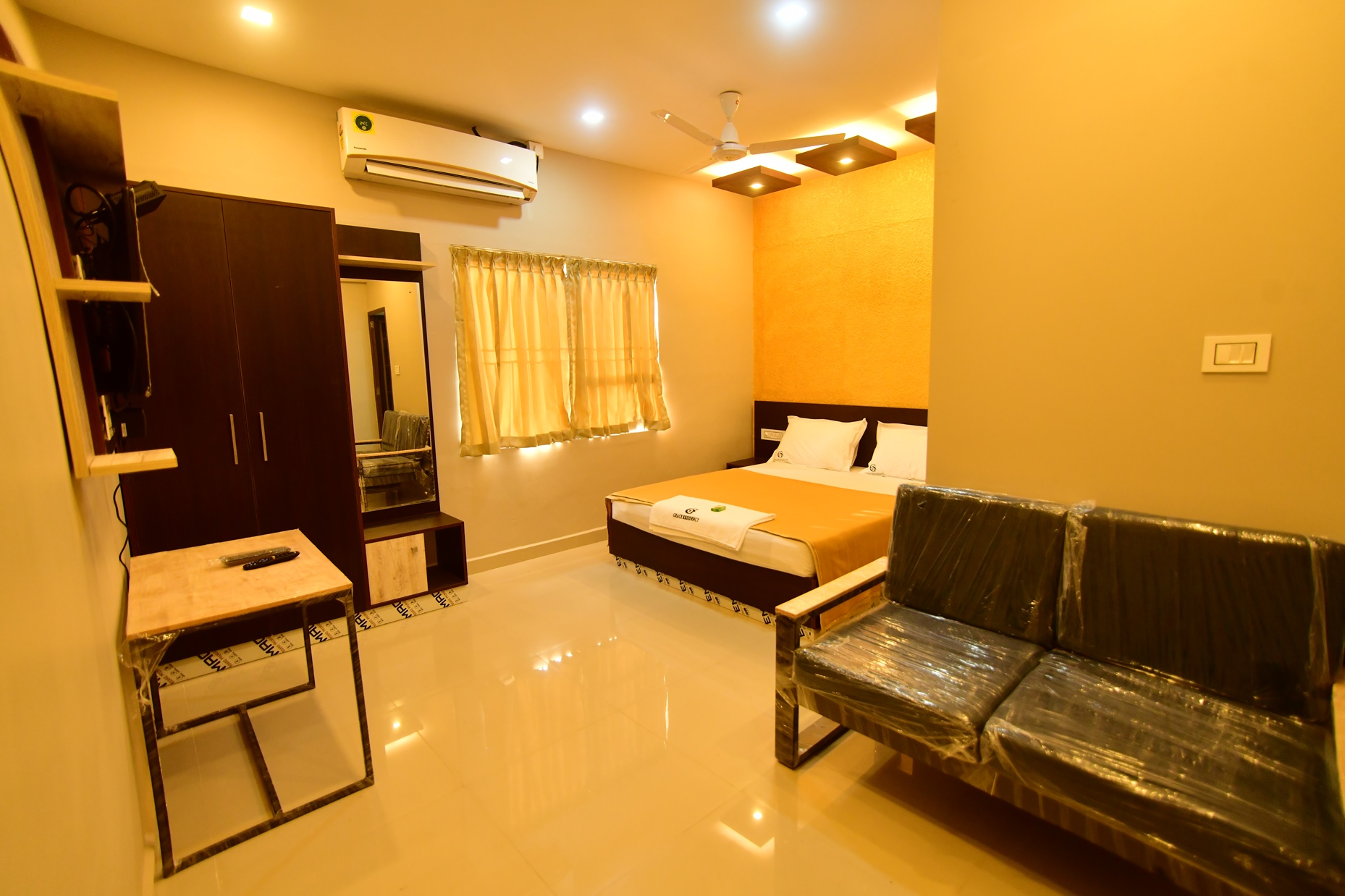
A budget-friendly hotel in the heart of Tirur town with AC suites and deluxe rooms. It sits within walking distance of Thunchan Parambu.

Directions Commission-freeView details
Top pick
Hotel · Tirur
Prosland Hotel

A contemporary hotel at B.P Angadi in central Tirur with suites and a party hall. Its kitchen serves regional and global cuisine, plus spa services.

Directions Commission-freeView details

Book with the place itself. India’s cyber-crime coordination centre warned in April 2025 that convincing copies of hotel and pilgrimage booking sites are being pushed through sponsored search and social ads, taking payment for rooms the property never hears about. Every listing here links to the business’s own contact details and its own Google or Bing profile — we take no commission and sit in nobody’s payment path. If a booking page reached you through an ad, check the address bar against the property’s own site before you pay. Fraud can be reported on cybercrime.gov.in or on 1930.

Ranked

More ways to explore Tirur

Find food, accommodation and activities across Tirur. Browse the guides for places to eat, stay and explore along your route.

Across the whole of Tirur

Ranked guides

Top experiences around Tirur

7 more places around Tirur. Open a guide to plan the visit and onward journey.

G
Garuda Temple, Triprangode
Place
templeGaruda Temple, Triprangode

The rare Garuda shrine in the Triprangode temple landscape near Tirur, visited as a living place of worship with local ritual rules respected.

templeThirunavaya Nava Mukunda Temple

8.1 km · ~13 min by cab

An ancient Vishnu temple on the Bharathapuzha at Thirunavaya, near the historic Mamankam fair-ground and a major venue for ancestral (bali/shraddha) rites.

templeAlathiyur Hanuman Temple

4.7 km · ~12 min by auto

The Alathiyur Perumthrikkovil near Tirur, where the sanctum holds Sri Rama alone and the Hanuman carved outside it — leaning, caught in the act of listening to his orders — is the figure the crowds come for.

templeTrikkandiyoor Mahadeva Temple

870 m · 11 min walk

One of the hundred and eight Shiva temples of Kerala, a kilometre from Thunchan Parambu — an apsidal ninth-century shrine that opens at half past two in the morning because the god here was installed at dusk.

templeTriprangode Maha Shiva Temple

6.8 km · ~17 min by auto

A west-facing Shiva temple south of Tirur, nine shrines inside six acres, built around the moment Shiva came out of the linga to stop Death taking the boy Markandeya.

heritageWagon Tragedy Memorial

900 m · 11 min walk

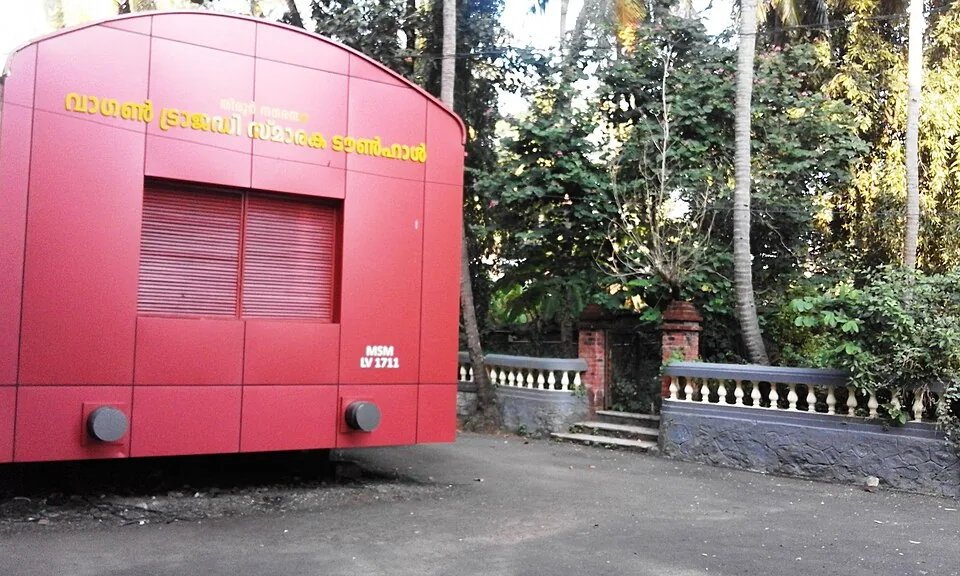
Tirur's town hall, built as a full-size railway goods wagon in signal red and lettered MSM LV 1711 — the memorial to the hundred prisoners shut into wagon 1711 at the station down the road on 19 November 1921.

heritageThunchath Ezhuthachan Malayalam University

3.6 km · ~9 min by auto

The state university at Vakkad, four kilometres west of Thunchan Parambu, founded in 2012 to teach the humanities and social sciences through Malayalam rather than English.

Roampedia is commission-free — own or know a stay, eatery, guide or shop near Thunchan Parambu? List it and it appears here once verified.

Add a nearby business
Before you go

Thunchan Parambu — at a glance

TimingsThe grounds and the literature museum are open every day from 9.30 in the morning to 5.30 in the evening. The library keeps its own hours — 10 to 5, every day except Monday — so a Monday visit gets the ground and the museum but not the reading room.
Entry price
Indian adult
₹20

Government monuments, museums and forest reserves in India often charge foreign visitors more. We have not verified whether this site does — ask at the counter.

Fees change without notice. Check the current rate at the counter.

Entry: There is no charge to walk in. The literature museum is ticketed at ₹20 for adults and ₹10 for children. Photography is charged separately and the rates are posted at the gate: ₹50 for a still camera or a mobile phone, ₹200 for two hours of mobile video, and ₹500 for a two-hour photo shoot, with ₹200 for each additional hour. The mini hall and the auditorium are let out on application to the office.

Photography: The frames the place gives you are the laterite gateway from the road, the granite pavilion on its platform, the stone parrot under its canopy, and the kanjira with the sand around it. Photography is charged and the rates are posted — a phone counts as a still camera for the purpose.

Parking: There is no dedicated visitor car park, and the Trust's own board asks that vehicles are not parked in front of the gate. Most people arrive by auto from the station or the bus stand, which is the simpler arrangement in a town centre.

Getting here

How to reach Thunchan Parambu

  • ✈︎ By air Calicut International Airport at Karipur is 34.6 km by road, about 35 minutes. The district tourism council gives it as roughly 36 km, which is the same journey.
  • 🚆︎ By train Tirur station is 1.7 km by road, three or four minutes by auto. It is the nearest station and by some distance the easiest way in — Tirur is a major halt on the coastal line and the memorial is a short hop from the platform.
  • 🚗︎ By road The approach is off the Paravanna–Poongottukulam road, and the gate opens directly onto it. Tirur town centre is a kilometre and a half away; Malappuram town is about 26 km east and Kozhikode about 52 km north.
  • 🚌︎ By bus Tirur bus stand is 2.1 km away, roughly three minutes by auto. Buses of every kind terminate there and autos wait outside.
Getting back

If you are travelling by bus or ferry, check the return service with the operator before setting out. Leave time to reach the stop or jetty after your visit.

Ask at the bus stand for the time of the last service back, not the next one. If you miss it, an auto or app cab is the fallback — agree the fare before you get in.

Do

Things to do

  • Go through the literature museum first, while you still have the patience for reading — it is the part of the visit that repays attention rather than a walk-through.
  • Find the kanjira and stand under it, which is what almost everybody comes for.
  • Look at the palm-leaf manuscript and the stylus beside each other, then look again at any Malayalam sign on the way out.
  • Sit on the steps of the granite pavilion — not on the pavilion, which the Trust asks you not to climb.
  • Ask at the book house for the Trust's own publications; it stocks other Malayalam publishers too.
  • Walk the kilometre to the Trikkandiyoor Mahadeva temple, which is the other half of what this locality is known for.
Plan

Good to know

  • Ring the Trust before bringing any group. Gatherings — school and college parties, classes, meetings — need permission in advance, and turning up with a bus is the way to be turned away.
  • Come on a day that is not Monday if the library is part of why you are coming.
  • Carry cash for the museum ticket and the camera charge; neither is a card transaction.
  • Vijayadashami is the one day the ground is crowded rather than quiet. If you want the museum and the library in peace, come on any other day.
  • Park away from the gate. The Trust asks specifically that vehicles are not left in front of it, and the road outside is a working one.
  • Tirur is not Tirurangadi and Trikkandiyoor is not Thirunavaya; all three appear in directions to this place and only one of them is right.
Facilities

On site

  • Rest rooms, seating in the shade and open ground; guest rooms and a children's library are on the same four acres.
  • The office handles enquiries about the halls and about group visits, and it is the number to ring before bringing a group.
  • Food and cash are in Tirur town, a kilometre and a half away, rather than on the grounds.
Getting around Thunchan ParambuPartly wheelchair accessible
Terrain
Mostly flat
From the entrance
The gate opens straight off the Paravanna–Poongottukulam road, on level ground, so the drop-off is at the entrance rather than a walk from it. Inside, the compound is flat. The surfaces are mixed: laid granite and paved paths between the buildings, and open sand and earth across the rest of the ground and under the trees. Nothing on the site involves a climb, and the buildings are single-storey apart from the research block.
Step-free access
The paved paths between the gate, the museum and the library are level and firm, which covers most of what a visitor comes for. The open sand — including the ground around the kanjira, which is the part people most want to reach — is loose and unedged. The Saraswathi Mandapam stands on a raised granite platform reached by steps, and the Trust asks that nobody climbs on the mandapams in any case. No accessible toilet, ramp or lift is recorded here by the Trust or by any tourism authority, and none is assumed.
Prams
A pram is fine on the paved paths and around the buildings. It will not run easily on the open sand, which is where the tree and the ceremony ground are.

Rest rooms on the grounds; the Trust lists them among its own facilities.Seating in the shade under the trees, and an auditorium verandah — the Trust asks that neither is used for lying down.A book house at the gate and a children's library on the grounds.A ticket counter for the literature museum; the grounds themselves have no gate charge.No accessible toilet, ramp, lift or wheelchair loan is recorded in any published source.No dedicated visitor car park is published, and the Trust asks that vehicles are not left in front of the gate.

  • Do not taste any part of the kanjira. Strychnos nux-vomica is toxic in every part, and the tradition that this tree lost its bitterness is a story about the poet rather than a fact about the plant.
  • The road immediately outside the gate is a working town road with no separated footway at the entrance.
  • The library is closed on Mondays while the rest of the grounds is open, which is the difference most likely to catch a visitor out.
  • On Vijayadashami the compound is crowded rather than quiet, and the crowd is largely small children.

Checked 1 September 2026 against source 1source 2source 3source 4. Conditions change and surfaces vary with weather — if step-free access is essential, confirm with the site before you travel.

Practical things near Thunchan Parambu

These services are listed within about 1.2 km of Thunchan Parambu. Walking distances follow mapped routes; access and opening hours can change. Other services may be closer but are not included here.

Nearby

What’s near Thunchan Parambu

templeTrikkandiyoor Mahadeva Temple

One of the hundred and eight Shiva temples of Kerala, a kilometre from Thunchan Parambu — an apsidal ninth-century shrine that opens at half past two in the morning because the god here was installed at dusk.

870 m · 11 min walk · straight line
heritageWagon Tragedy Memorial

Tirur's town hall, built as a full-size railway goods wagon in signal red and lettered MSM LV 1711 — the memorial to the hundred prisoners shut into wagon 1711 at the station down the road on 19 November 1921.

900 m · 11 min walk · straight line
heritageThunchath Ezhuthachan Malayalam University

The state university at Vakkad, four kilometres west of Thunchan Parambu, founded in 2012 to teach the humanities and social sciences through Malayalam rather than English.

3.6 km · ~9 min by auto · straight line
templeAlathiyur Hanuman Temple

The Alathiyur Perumthrikkovil near Tirur, where the sanctum holds Sri Rama alone and the Hanuman carved outside it — leaning, caught in the act of listening to his orders — is the figure the crowds come for.

4.7 km · ~12 min by auto · straight line
templeTriprangode Maha Shiva Temple

A west-facing Shiva temple south of Tirur, nine shrines inside six acres, built around the moment Shiva came out of the linga to stop Death taking the boy Markandeya.

6.8 km · ~17 min by auto · straight line
templeThirunavaya Nava Mukunda Temple

An ancient Vishnu temple on the Bharathapuzha at Thirunavaya, near the historic Mamankam fair-ground and a major venue for ancestral (bali/shraddha) rites.

8.1 km · ~13 min by cab · straight line
beachPadinjarekara Beach

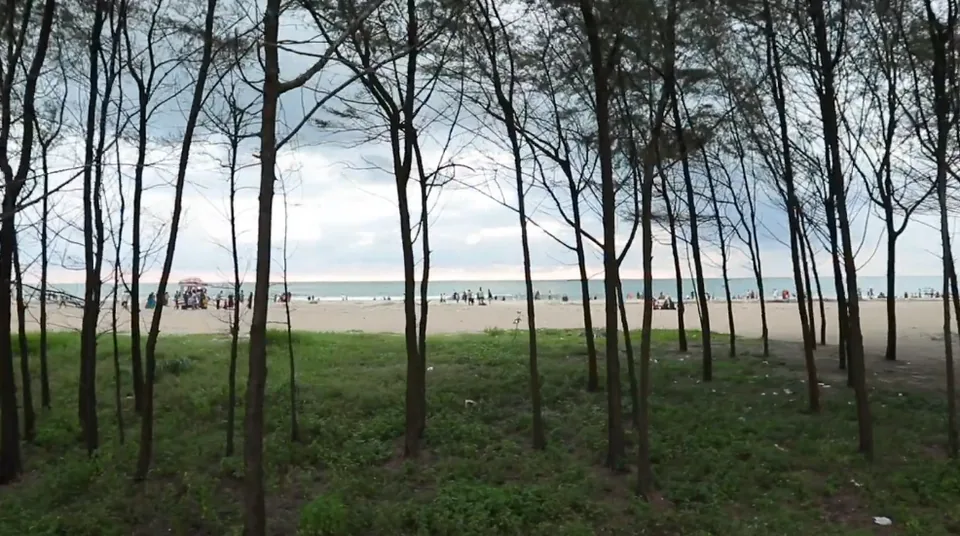
The sea-facing beach on the Padinjarekkara sandspit, with a casuarina belt behind the sand and a government park at the end of Tipu Sultan Road.

13.0 km · ~22 min by cab · straight line
backwaterBharathapuzha estuary

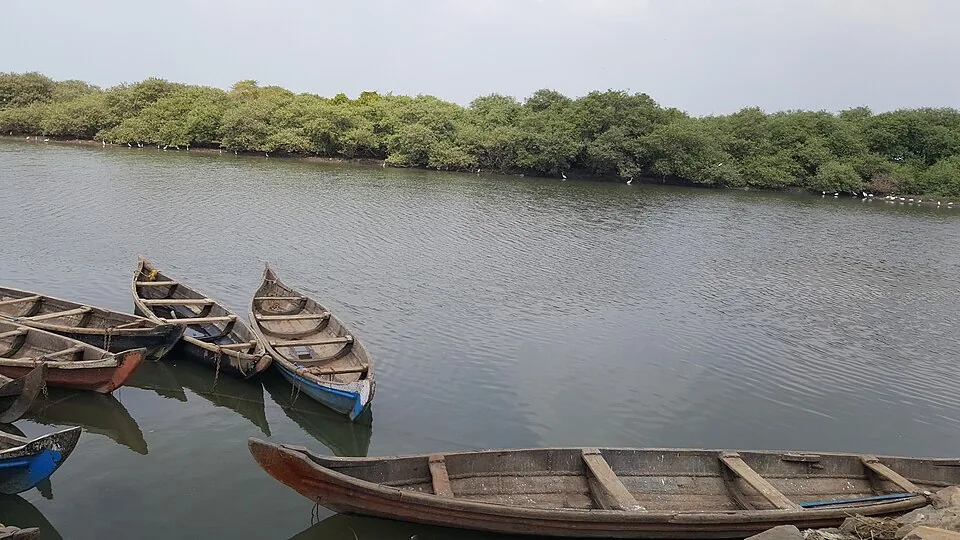
The mouth of the Bharathapuzha (Nila), Kerala’s second-longest river — which reaches the sea here together with the Tirur Puzha, between Ponnani on the south bank and Padinjarekkara on the north.

13.4 km · ~22 min by cab · straight line
heritageKottakkal Arya Vaidya Sala

The famous Ayurveda institution at Kottakkal, founded in 1902 by Vaidyaratnam P.S. Varier — hospital, medicine-making, herb gardens and the PSV Natyasangham Kathakali academy.

14.2 km · ~24 min by cab · straight line
heritagePonnani

Historic coastal town known for mosque traditions and Bharathapuzha estuary.

14.2 km · ~24 min by cab · straight line
mosquePonnani Juma Masjid

The great Juma Masjid of Ponnani, a centuries-old centre of Islamic learning on the Malabar coast, long called the “Mecca of Malabar”.

14.4 km · ~24 min by cab · straight line
templeKadampuzha Devi Temple

A revered Devi temple near Vettichira with no idol — the goddess is worshipped in a natural rock fissure; devotees offer the poomoodal and muri-pooja. Founded by legend of Adi Shankara.

14.5 km · ~24 min by cab · straight line

All 8 places to visit in Tirur →

Nearby toilets, pharmacies, ATMs, seating and vets are community-mapped and may be incomplete or out of date. Map data © OpenStreetMap contributors | Walking times © openrouteservice.org by HeiGIT

On the map

Where Thunchan Parambu is

Good to know

Thunchan Parambu — frequently asked

What is Thunchan Parambu?

The four-acre plot at Trikkandiyoor in Tirur held to be where Thunchath Ezhuthachan lived and taught, now run by the Thunchan Memorial Trust as a literature museum, a research library and manuscript store, a granite pavilion, an auditorium and a book house.

Can anyone read in the library?

It is a research library rather than a lending one, open to readers on the premises. It holds about fifteen thousand books and a hundred and twenty manuscripts and is recognised by the University of Calicut, and it keeps different hours from the rest of the grounds — it closes on Mondays, when everything else is open.

When is the Vidyarambham ceremony held?

On Vijayadashami, the last day of Navratri, which falls in September or October and moves each year with the traditional calendar. It is the busiest day of the year here, and children are brought to write their first letters in the sand of the compound.

Can you really eat the leaves of the kanjira tree?

No. The tree is Strychnos nux-vomica and every part of it is toxic. The story that this particular tree lost its bitterness is a piece of local tradition about the poet and not a claim about the plant.

When is the Thunchan festival?

It is usually described as a February event, but the date moves and is worth confirming with the Trust — the 2025 festival was held on 27 February and the 2026 festival on 2 January. The iron stylus is carried in procession and the programme runs to readings, seminars and performance.

Is Thunchan Parambu the same as the Malayalam University?

No. The Thunchath Ezhuthachan Malayalam University is a separate institution named after the same poet, inaugurated in 2012, on a campus at Vakkad about four kilometres west. Thunchan Parambu is the memorial ground itself, run by its own trust.

How far is it from Tirur railway station?

1.7 km by road, three or four minutes by auto. The bus stand is 2.1 km and Calicut International Airport at Karipur is 34.6 km, about 35 minutes.

What is actually in the literature museum?

The growth of the Malayalam language, set out in visual clips, soundtracks, paintings and photographs, with cases of objects belonging to Kerala writers. It opened in October 2008 and Kerala Tourism describes it as the only museum of its kind for any Indian language.

Does the Trust do anything besides run the memorial?

Yes. It is a Manuscript Resource Centre of the National Mission for Manuscripts, working on the manuscripts of north Kerala since June 2004 — 274 surveys across six districts and about 131,700 records documented and digitised. It also runs the February literary festival, lets its halls, and publishes books.

How much of the day does it need?

An hour and a half to two hours covers the grounds, the museum and the pavilion. It is short enough to fit between trains, which is what most people passing through Tirur do with it.

When is the best time to visit Thunchan Parambu?

The grounds are shaded and usable in any dry month; November to February is the comfortable half of the year. Vijayadashami, in September or October, is when the Vidyarambham ceremony is held and the ground is at its fullest. The Thunchan festival is the other date, and it moves — the Trust ran it on 27 February in 2025 and on 2 January in 2026, so take the date from the Trust rather than from a calendar.

What are the entry fee and timings at Thunchan Parambu?

Entry: There is no charge to walk in. The literature museum is ticketed at ₹20 for adults and ₹10 for children. Photography is charged separately and the rates are posted at the gate: ₹50 for a still camera or a mobile phone, ₹200 for two hours of mobile video, and ₹500 for a two-hour photo shoot, with ₹200 for each additional hour. The mini hall and the auditorium are let out on application to the office. Timings: The grounds and the literature museum are open every day from 9.30 in the morning to 5.30 in the evening. The library keeps its own hours — 10 to 5, every day except Monday — so a Monday visit gets the ground and the museum but not the reading room. The rupee figure quoted is the Indian adult rate. Government monuments, museums and forest reserves in India often charge foreign visitors more, and we have not verified whether this site does.

How do I reach Thunchan Parambu?

Come from Tirur station, which is 1.7 km away by road — three or four minutes in an auto, and walkable if you do not mind the traffic on the way out of town. Give it two hours if you want the museum and the library rather than the grounds alone; the museum and the grounds keep the same hours but the library does not. The one date that changes the place completely is Vijayadashami, at the end of Navratri in September or October, when the first-letters ceremony is held. Expect crowds and an early start. The Trikkandiyoor Mahadeva temple is 1.2 km away, which makes the pair of them a straightforward morning on foot or in one auto.

How much time do I need for Thunchan Parambu?

An hour and a half to two hours for the grounds, the museum and the pavilion. Longer if you read in the library.

What else is near Thunchan Parambu?

Nearby you can pair Trikkandiyoor Mahadeva Temple (870 m), Wagon Tragedy Memorial (900 m), Thunchath Ezhuthachan Malayalam University (3.6 km), Alathiyur Hanuman Temple (4.7 km).

What should I know before visiting Thunchan Parambu?

Do not taste the kanjira leaf. The tree is Strychnos nux-vomica, the strychnine tree, and every part of it is toxic. The tradition that this particular tree lost its bitterness is a story told about the poet, not a fact about the plant, and it is not an invitation to test it. This is an institution in the middle of a working town, not a protected site with wardens. The traffic is on the road immediately outside the gate.

Image credits

Photographs: Vicharam (CC BY-SA 4.0), Shahinmusthafa at English Wikipedia (Public domain), Prof tpms (CC BY-SA 4.0), Navaneeth Krishnan S (CC BY-SA 3.0), AjayPayattuparambil (CC BY-SA 4.0), Vinayaraj (CC BY-SA 4.0), Vijayakumarblathur (CC BY-SA 3.0). Wikimedia Commons.