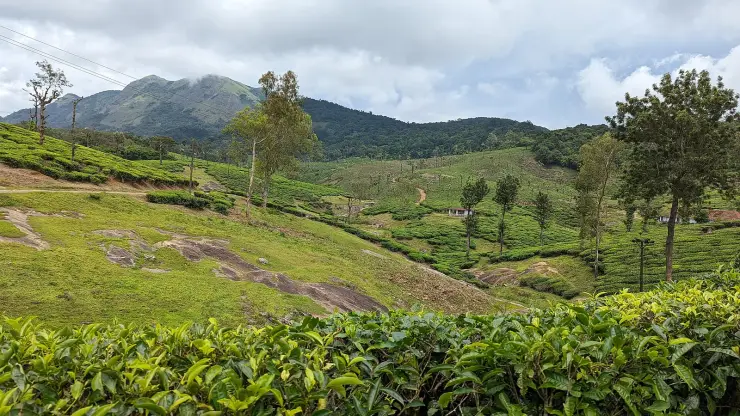
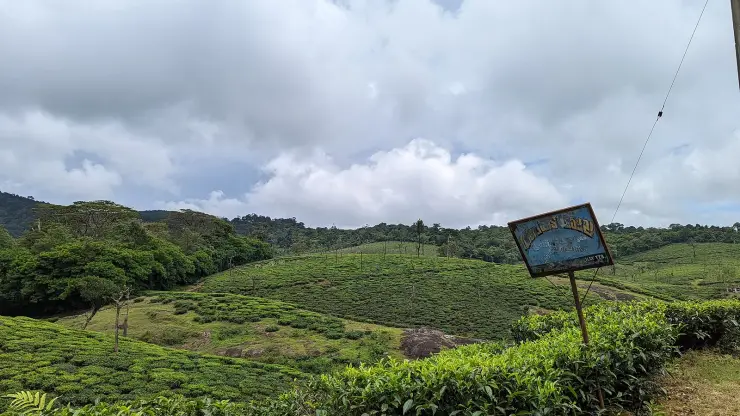
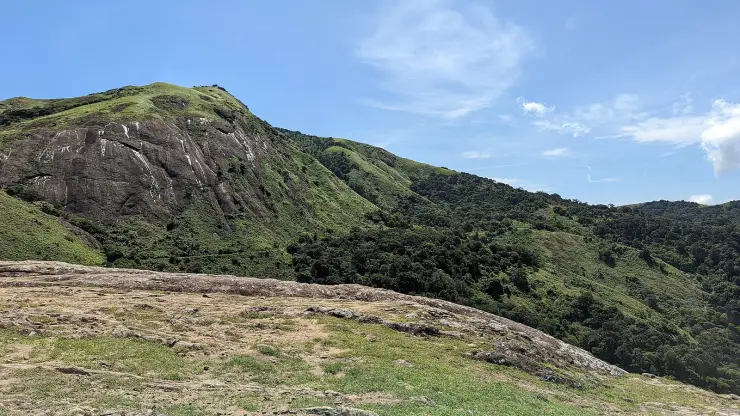
Nelliyampathy is sold on oranges and almost nobody who comes up for them can tell you where they grow. They grow here, on a state farm a few hundred metres below the settlement, in seven acres of mandarin trees that are only a fraction of what the place actually does. The rest is stranger and better: twenty-seven acres of passion fruit with a small factory attached to turn it into squash and jam, ten hectares of cabbages, broccoli and Brussels sprouts of the kind that will not grow anywhere else in Kerala, and a planted fruit forest of fifty different kinds of tree, from lychee and rambutan to the velvet apple and the milk fruit.
The story of Government Orange and Vegetable Farm
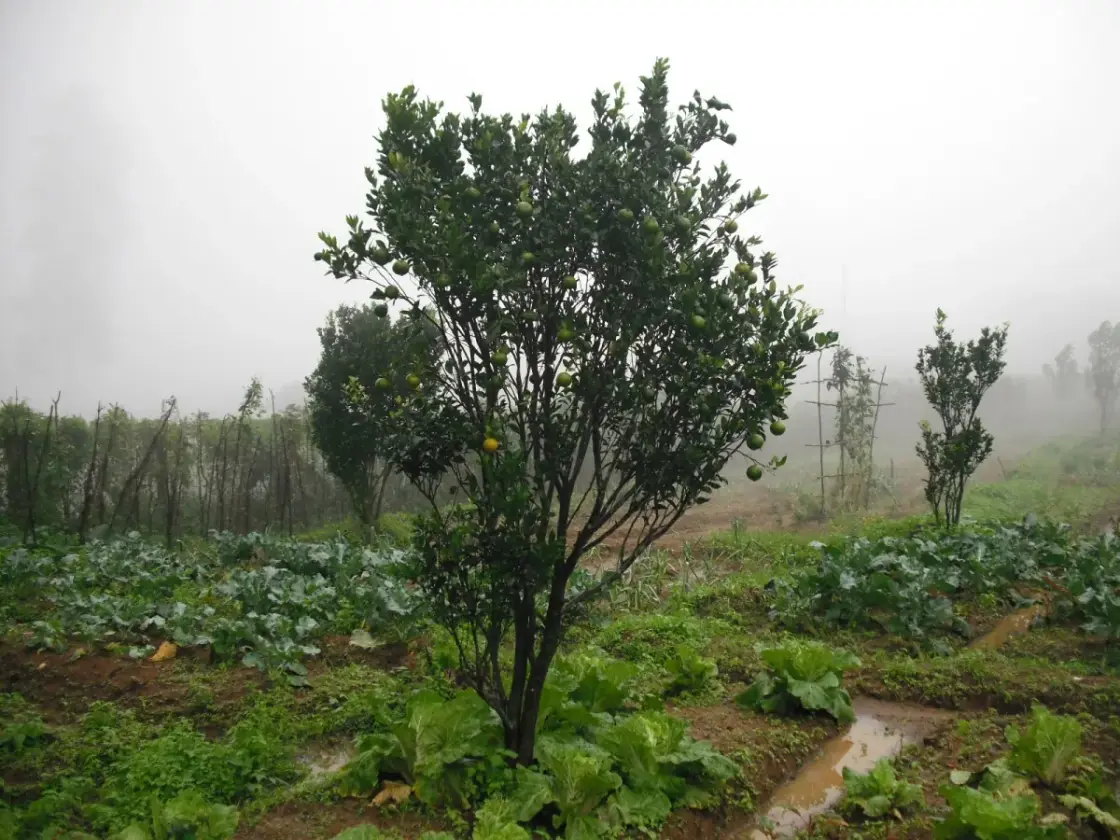
The working shape of the place is easiest to understand from one photograph taken in the mist: a mandarin tree in fruit standing in the middle of a vegetable bed, cabbages and mustard greens at its feet, bean poles behind it. That is not a picturesque accident. An orange and vegetable farm is a single agricultural idea — the orange trees are widely spaced and slow, the ground between them is good for a season of winter vegetables, and the same watering and the same labour serve both. Elsewhere on the plateau you can see the same logic scaled up: rows of raised beds edged with timber and fed by drip lines under a polythene house, with gerberas in red and pink and yellow growing between the greens.
The vegetables are the part a visitor from the plains finds hardest to believe. Cabbage, violet cabbage, cauliflower, broccoli, Brussels sprouts, radish, carrot, beetroot, lettuce, Chinese cabbage, capsicum, beans, green peas and butter bean, and Kashmiri garlic, all of them growing in Palakkad district. They grow because the plateau sits high enough to hold a real winter, and because ten hectares of them are raised by precision farming rather than by broadcasting seed and hoping.
Passion fruit is the crop that turned the farm's fortunes, and it takes up more ground than the oranges do — twenty-seven acres against seven. The reason it matters is the processing unit at the far end of the site, which takes the fruit and makes squash, jam, jelly, pickle and ready-to-drink bottles out of it. The jelly is made from the tough outer rind that would otherwise be waste. A farm that only sells fruit is at the mercy of the day's price; a farm with a small factory on it is not, and that is most of the difference between what this place was thirty years ago and what it is now.
The fruit forest is the section that surprises people who came for a bag of oranges. Fifty kinds of fruit tree are planted here, native and exotic together: guava, water apple, surinam cherry, mango, kattunelli and arinelli beside lychee, avocado, longan, rambutan, loquat, milk fruit and velvet apple, with musambi, jackfruit, dragon fruit and strawberry elsewhere on the farm. It is a collection as much as an orchard, and it is the clearest sign that the place is a research and demonstration farm and not simply a commercial one.
There is a nursery house too, easy to miss and worth finding: hundreds of black pots in ranks under shade netting, with orchids hanging above them in coconut-husk baskets from wires strung the length of the roof. It is a working propagation shed rather than a display, and it is the one part of the farm where you can watch the actual craft of the thing happening.
What draws the crowds now is none of the above on its own but the fact that all of it is on one site and open. In February the farm runs an agricultural festival, Natura, and a hill station with fewer than ten thousand residents pulled tens of thousands of visitors to it. Farm tourism arrived here before the term did.
Read the full history of Government Orange and Vegetable Farm 276 more words
History
The land was the Poliya estate of the Kingdom of Cochin, and it became a farm in 1943, in the middle of the war and the food shortages that came with it. It was reorganised as an orange and vegetable farm in 1956, the year the state of Kerala was formed, and it has been in government hands throughout.
The middle of that history was not comfortable. There were decades when the fruit trees withered, labour was hard to hold on a plateau three hours from anywhere, wild elephants raided the crop and the ownership of parts of the land was disputed. The recovery came from changing what the farm was for — planting the passion fruit, building the processing unit, putting in the fruit forest and the precision beds, and then letting people in to look at it.
Why visit
It is where Nelliyampathy's oranges actually come from, and seven acres of mandarin trees in fruit are worth the short drive down from the settlement.
A planted fruit forest of fifty varieties, including lychee, rambutan, longan, loquat, avocado, velvet apple and milk fruit growing in Kerala.
Ten hectares of winter vegetables — broccoli, Brussels sprouts, lettuce, Kashmiri garlic — that will not grow at sea level in this state.
A working processing unit that turns the passion-fruit crop into squash, jam, jelly, pickle and bottled drinks, with produce sold at the farm.
An orchid and plant nursery under shade net, which is the part of the site where you can watch the work being done.
The Natura agricultural festival in February, which brings tens of thousands of people up to a hill station of under ten thousand.