Palakkad Fort

Palakkad Fort is the heritage anchor of Palakkad town, a well-preserved fort associated with Hyder Ali, Tipu Sultan and the Palakkad Gap's strategic history. It is a compact, central stop that works well with Kalpathy, town food and Malampuzha.

Palakkad Fort, Palakkad town
Practical guide

Plan Palakkad Fort

Who's going?Tailor Palakkad Fort to your trip
Typeheritage
AreaPalakkad town
DistrictPalakkad
Best timeNovember to February is comfortable
Time needed45 minutes to 1.5 hours
Places to visit6Listed businesses27

Use Palakkad town as the base it is. The fort itself is easy, but the district's bigger nature trips each need their own early start and their own transport.

The story

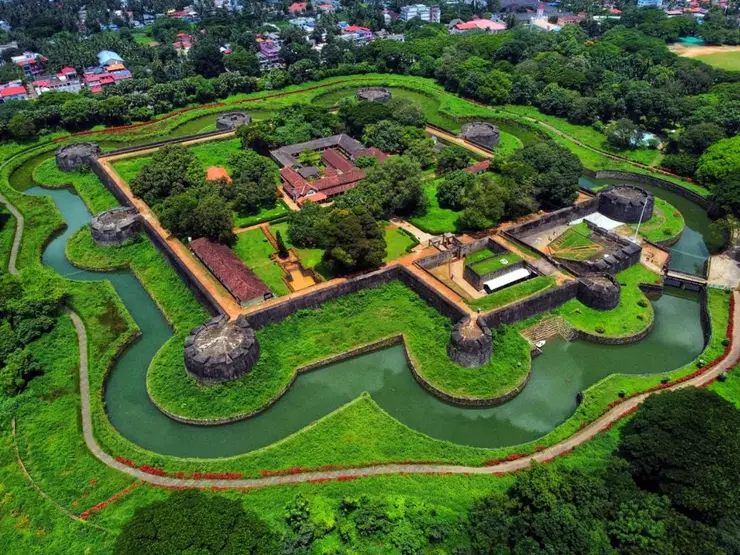
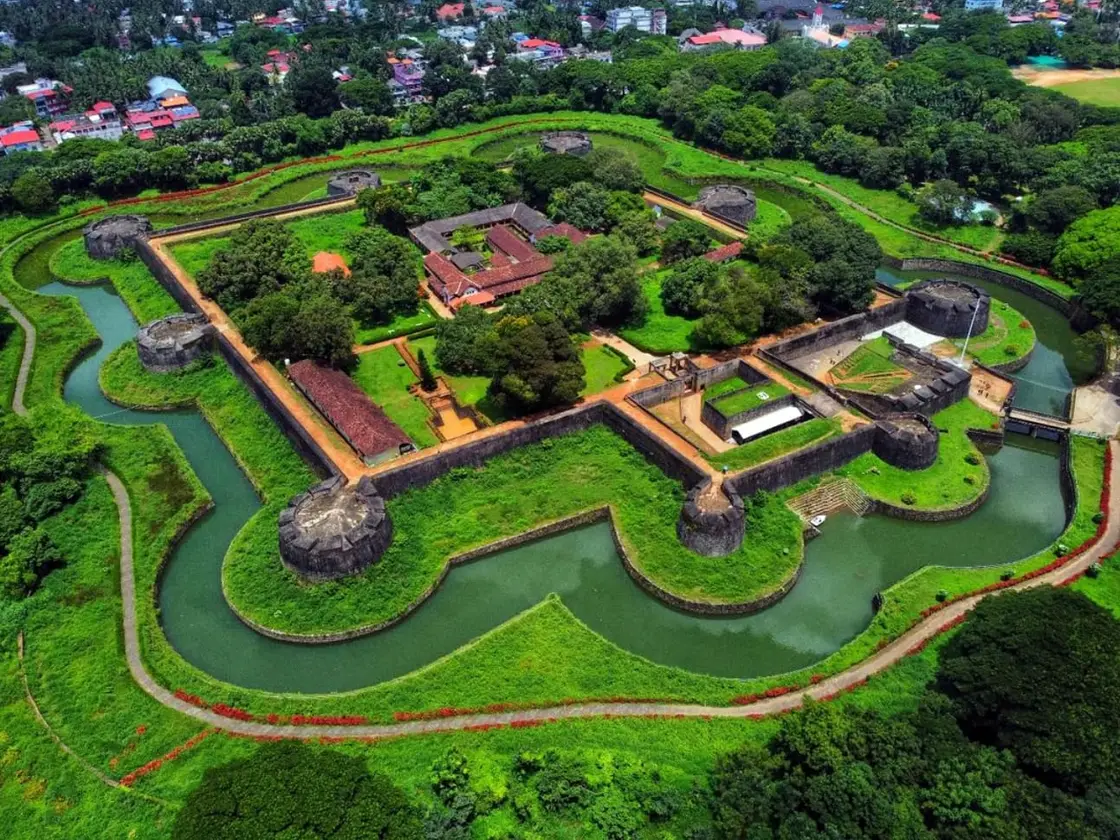
In the very heart of Palakkad town, ringed by lawns and rain-trees, stands one of Kerala’s best-preserved forts — a squat, square citadel of granite and laterite raised by Hyder Ali of Mysore in 1766 to lock down the Palghat Gap, the one great pass through the Western Ghats. Locals still call it Tipu’s Fort, after Hyder Ali’s son Tipu Sultan, and today it is an Archaeological Survey of India monument wrapped in a green civic park.

The story of Palakkad Fort

Walk in through the gateway and the first thing you notice is how solid everything is. The walls are built of massive granite blocks and laterite, laid up with such care that the fort has shrugged off two and a half centuries of monsoons and sieges. This is no romantic ruin — it is a working piece of eighteenth-century military engineering, square in plan, with squat bastions thrusting out at each corner and a broad moat (now mostly dry) tracing the perimeter, and it remains one of the best-kept forts anywhere in Kerala.

The reason this particular patch of ground was worth fortifying lies just to the east: the Palghat Gap. The Western Ghats run almost unbroken for hundreds of kilometres, walling Kerala off from the Tamil country — except here, where a gap roughly thirty to forty kilometres wide slices clean through the range. Every army, every merchant caravan, every trade route between the Malabar coast and the Mysore plateau had to funnel through it. Hold Palakkad and you held the door between two worlds. Hyder Ali understood that perfectly, which is why he planted his citadel exactly where the road narrows.

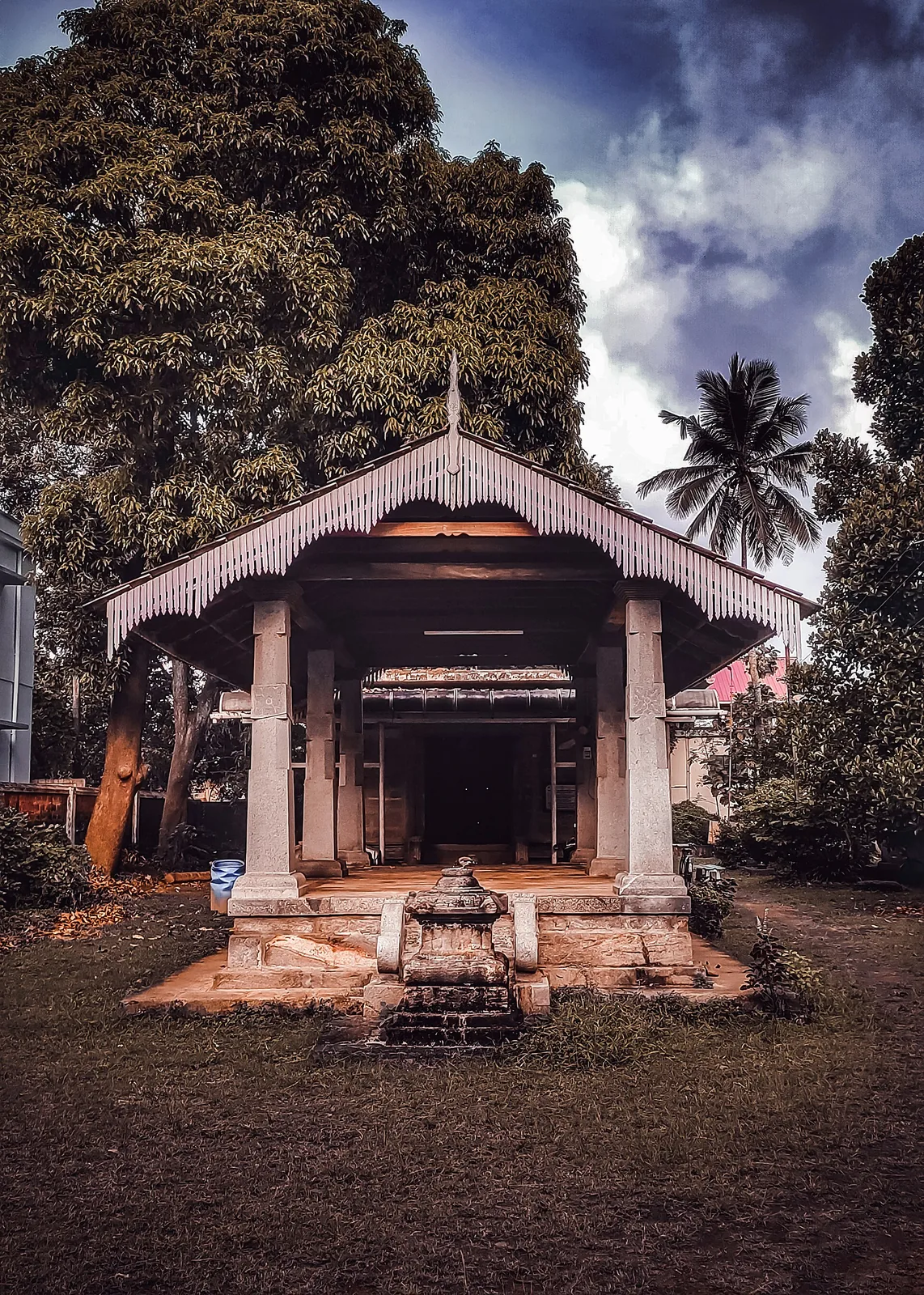
The fort you see is best explored slowly, on foot. You can climb the ramparts and walk the walls, looking down into the moat and out over the town; you can trace the thick curtain walls between the corner bastions and imagine cannon trained on the approaches. Inside the enclosure sits a Hanuman temple, the Anjaneya Swamy shrine often called the Kota Ambalam (the temple of the fort), where townspeople still come to pray — a reminder that the fort has never really stopped being part of everyday Palakkad life.

Around and within the walls, the ASI and the town have made the fort a genuine green lung for a busy junction town. There is a children’s park known as Vatika with a garden and play equipment, shaded lawns where families spread out in the evenings, and the nearby open-air auditorium called Rappadi, which hosts cultural performances against the backdrop of the old ramparts. Morning walkers, courting couples, school groups and history-minded travellers all share the same grassy glacis.

Come at the right hour and the fort turns golden. Late afternoon light rakes across the granite and the laterite glows warm-red; the moat greens over, egrets pick through the grass, and the bastions throw long shadows across the lawns. It is an easy, unhurried place — no long queues, no steep climbs — and one of those rare monuments where the history is grand but the visit is gentle, folded into the ordinary rhythm of a Kerala market town.

Read the full history of Palakkad Fort 605 more words

History

The story begins not with Hyder Ali but with the rivalries of eighteenth-century Malabar. Palakkad was ruled by its own line of rajas — the Palghat Achan — who found themselves squeezed by the powerful Zamorin (Samuthiri) of Kozhikode. When the Zamorin pressed down on Palakkad, the local raja looked north-east for a stronger ally and appealed to Hyder Ali, the rising military strongman of Mysore, for help. It was an invitation that would change the region forever.

Hyder Ali obliged, drove back the Zamorin’s forces, and then did what ambitious powers tend to do — he stayed. Having overrun the territories the Zamorin had held and asserted Mysore’s grip over Malabar, in 1766 he raised (or substantially rebuilt) the fort at Palakkad to consolidate that hold and to command the strategic Palghat Gap. The citadel became the nerve-centre of Mysore power on the Malabar side of the Ghats, first under Hyder Ali and then under his son Tipu Sultan.

The fort then changed hands repeatedly against the backdrop of the Anglo-Mysore Wars. The British first took it in 1768, when Colonel Wood seized it during operations against Hyder Ali’s strongholds, only for Hyder to recapture it within months. It was besieged again and taken by Colonel Fullarton in 1783 after a siege lasting some eleven days, but abandoned the following year. The back-and-forth mirrored the wider struggle between Mysore and the English East India Company (often in alliance with the Zamorin and other local powers) for control of the peninsula’s trade corridors.

The fort finally passed to the British in 1790, during the Third Anglo-Mysore War, and it was under British hands that it took much of its present form. With Mysore’s power in Malabar broken and Tipu Sultan later killed at Seringapatam in 1799, Palakkad Fort lost its front-line military role and settled into the long quiet of a garrison relic and administrative site.

In the modern era the fort has been protected as a monument of national importance under the Archaeological Survey of India, which maintains the walls, bastions and grounds. That stewardship is why it survives so intact — a granite-and-laterite record of the moment Mysore, the Zamorin and the British all fought for the key to the Palghat Gap, sitting today at the calm centre of the town that grew up around it.

Why visit

It is one of the best-preserved forts in Kerala — genuinely intact granite-and-laterite walls, corner bastions and a moat, not a scatter of ruins — and an ASI-protected monument of national importance.

The history is unusually rich and tangible: a fort built by Hyder Ali of Mysore, held by Tipu Sultan, and fought over by the British and the Zamorin across the Anglo-Mysore Wars, all readable in the stones you walk on.

You can actually explore it — climb the ramparts, walk the curtain walls between the bastions, and look down into the moat — which makes it far more engaging than a monument you can only view from outside.

The setting is a green civic park in the middle of town: shaded lawns, rain-trees and the Vatika children’s park, so it works as a family outing and an evening stroll as much as a heritage visit.

Layers of living culture sit inside and beside the walls — the Hanuman (Anjaneya Swamy) temple within the enclosure and the Rappadi open-air auditorium nearby, which stages performances against the ramparts.

It stands at the Palghat Gap, the single great pass through the Western Ghats between Kerala and Tamil Nadu — so a visit doubles as a lesson in why this town has mattered to armies and traders for centuries.
What to expect

Highlights

  • Historic town fort, moat setting and central Palakkad heritage context.
  • Pairs with Kalpathy, Malampuzha, town food and railway/road logistics.
  • The businesses around this place are city hotels, guides, restaurants, autos/taxis and family stops.
Getting there

How to visit

  • Base in Palakkad town and visit the fort early or late to avoid heat.
  • Check current access and maintenance rules before planning photography-heavy visits.
  • Pair with Kalpathy or Malampuzha depending on available time.

Distance by road

  • Coimbatore54 km
  • Kozhikode127 km
  • Kochi143 km
  • Madurai224 km
  • Mysuru251 km

Road km to Palakkad; ghat roads and traffic vary — allow extra.

Timing

Best time

November to February is comfortable; mornings and evenings are better year-round.

Weather in Palakkad FortSeasonal guide

Live forecast loads in your browser.

Today at Palakkad Fort
Sunrise6:13 am
Sunset6:22 pm
Golden hour best light5:22 pm–6:22 pm
Blue hour after sunset6:22 pm–6:47 pm
Sun sets toward compass bearingW · 272°
Moon tonight🌓 First quarter · 53%
South-west monsoon. June to September is the south-west monsoon in Kerala. Expect heavy showers, mostly in bursts rather than all day — carry rain cover, allow extra time for getting around, and note that ferries and open-air sites are the first things affected.

Sun and moon are calculated for this location and shown in IST. Photography windows are the hour around sunrise and sunset; the sunset bearing is degrees clockwise from true north. Moon phase is accurate to about half a day.

Visitor notes

  • This is a town heritage stop, not a full-day monument.
  • Shade and heat vary by season; carry water.
  • Palakkad town, Malampuzha, Mannarkkad and Nelliyampathy are separate bases. Check which one a stay is in.
Safety

Good to know

  • Stay off restricted walls and unsafe edges.
  • Use marked crossings around busy town roads.
  • Respect protected-site rules and local worship spaces nearby.
Official eco & forest programmes

Experiences around Palakkad Fort

These are official or public-sector eco offerings that match this place, town or forest destination. Confirm availability, permits, tariffs and reporting times with the official operator before travel.

Dhoni Waterfalls, Palakkad Fort
trekwaterfall

Dhoni Waterfalls guided trek

Popular guided waterfall trek near Palakkad, listed by Kerala Tourism’s ecotourism programme pages.

Kerala Forest Department
Official source →
Stay · eat · do · rent · see · shop

Stays, food & things to do near Palakkad Fort

Verified hotels, homestays, restaurants, experiences, sights, shops and rentals around Palakkad Fort — commission-free, with direct contact. Filter by what you need.

7 things to do near Palakkad Fort

Rajah Healthy Acres Palakkad — Ayurveda hospital in Palakkad town
Verified
Ayurveda hospital · Palakkad town
Rajah Healthy Acres Palakkad
61.3 km · ~102 min by cab

Rajah Healthy Acres is a Palakkad district Ayurveda hospital and treatment-stay centre at Perumanoor, Chalissery, useful for wellness itineraries that need explicit medical-treatment context. Ayurveda, Chalissery, Treatment stay.

Directions Commission-freeView details
Kalari Kovilakom CGH Earth Ayurveda — Ayurveda hospital in Palakkad town
Verified
Ayurveda hospital · Palakkad town
Kalari Kovilakom CGH Earth Ayurveda
17.3 km · ~29 min by cab

CGH Earth Ayurveda hospital at Kollengode with direct admissions evidence. Ayurveda, Kollengode, CGH Earth.

Directions Commission-freeView details
Kairali Ayurvedic Healing Village Palakkad — Ayurveda centre in Palakkad town
Verified
Ayurveda centre · Palakkad town
Kairali Ayurvedic Healing Village Palakkad
7.0 km · ~18 min by auto

Kerala Tourism-listed Ayur Diamond wellness retreat at Olassery, Kodumbu. Ayurveda, Wellness, Olassery.

Directions Commission-freeView details
Palakkad Fort District Source — Fort in Palakkad town
Verified
Fort · Palakkad town
Palakkad Fort District Source
660 m · 8 min walk

Palakkad district administration source for Palakkad Fort contact and visitor context. Palakkad Fort, Tipu Fort, Heritage.

Directions Commission-freeView details
P
Palakkad Taxi Royal Travels
Things to do
Verified
Taxi service · Palakkad town
Palakkad Taxi Royal Travels

Taxi service in Palakkad town. Palakkad, Kerala · Taxi, Royal Travels, Outstation cab.

Directions Commission-freeView details
A
Anand Travels Palakkad
Things to do
Verified
Taxi service · Palakkad town
Anand Travels Palakkad
830 m · 10 min walk

Anand Travels Palakkad is a local taxi and travel agency for railway-station pickups, airport transfers, intercity cabs and Palakkad local sightseeing routes. Taxi, Palakkad transfers, Railway station.

Directions Commission-freeView details
S
SN Tours and Cabs Palakkad
Things to do
Verified
Taxi service · Palakkad town
SN Tours and Cabs Palakkad
830 m · 10 min walk

Palakkad taxi and tour operator with direct contact and office address. Palakkad taxi, Transport, English Church Road.

Directions Commission-freeView details

Book with the place itself. India’s cyber-crime coordination centre warned in April 2025 that convincing copies of hotel and pilgrimage booking sites are being pushed through sponsored search and social ads, taking payment for rooms the property never hears about. Every listing here links to the business’s own contact details and its own Google or Bing profile — we take no commission and sit in nobody’s payment path. If a booking page reached you through an ad, check the address bar against the property’s own site before you pay. Fraud can be reported on cybercrime.gov.in or on 1930.

Ranked guides

Top experiences around Palakkad town

13 more places around Palakkad town. Open a guide to plan the visit and onward journey.

B
British Bridge, Karingarapully
Place
heritageBritish Bridge, Karingarapully

A colonial-era masonry aqueduct and river crossing near Karingarapully, read as working water-history infrastructure rather than a conventional staffed monument.

K
Kunchan Smarakam, Killikkurissimangalam
Place
museumKunchan Smarakam, Killikkurissimangalam

The memorial and cultural centre at the birthplace associated with Kunchan Nambiar, presenting the poet and the Ottan Thullal performance tradition.

heritageKalpathy Heritage Village

5.6 km · ~14 min by auto

Kerala’s first heritage village, ~3 km from Palakkad town, built around the Sri Viswanatha Swamy temple on the Kalpathy river — a Tamil-Brahmin agraharam known as the “Kashi of the South” and for its November Ratholsavam chariot festival.

jainJainimedu Jain Temple

2.9 km · ~7 min by auto

A ~15th-century Jain temple on the western edge of Palakkad town, one of the few surviving traces of Jainism in Kerala, with images of the Thirthankaras and Yakshinis.

damKanjirapuzha Dam

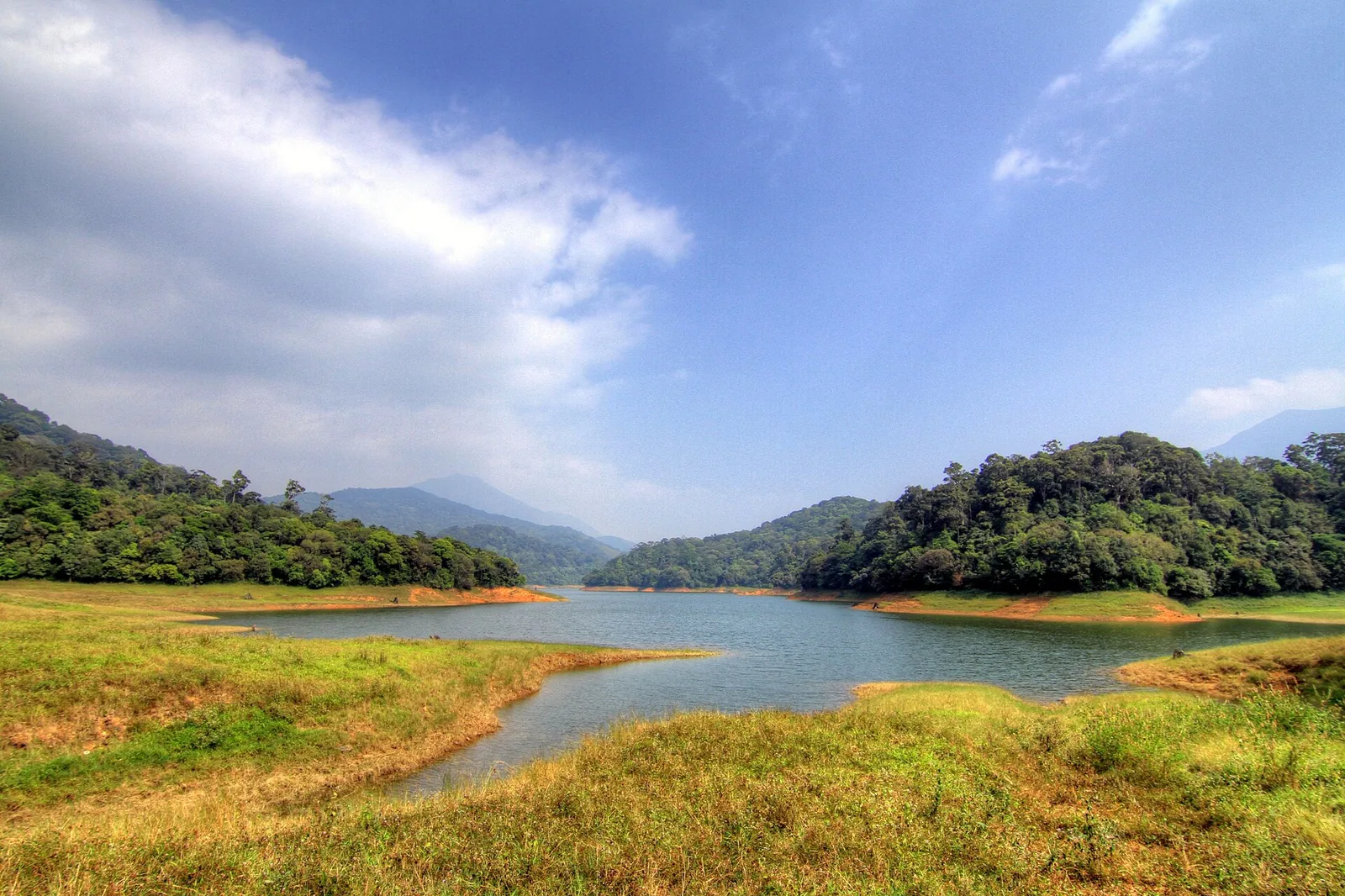
A calm reservoir and garden set among hills in the Mannarkkad side of Palakkad, a quieter alternative to Malampuzha.

damMangalam Dam

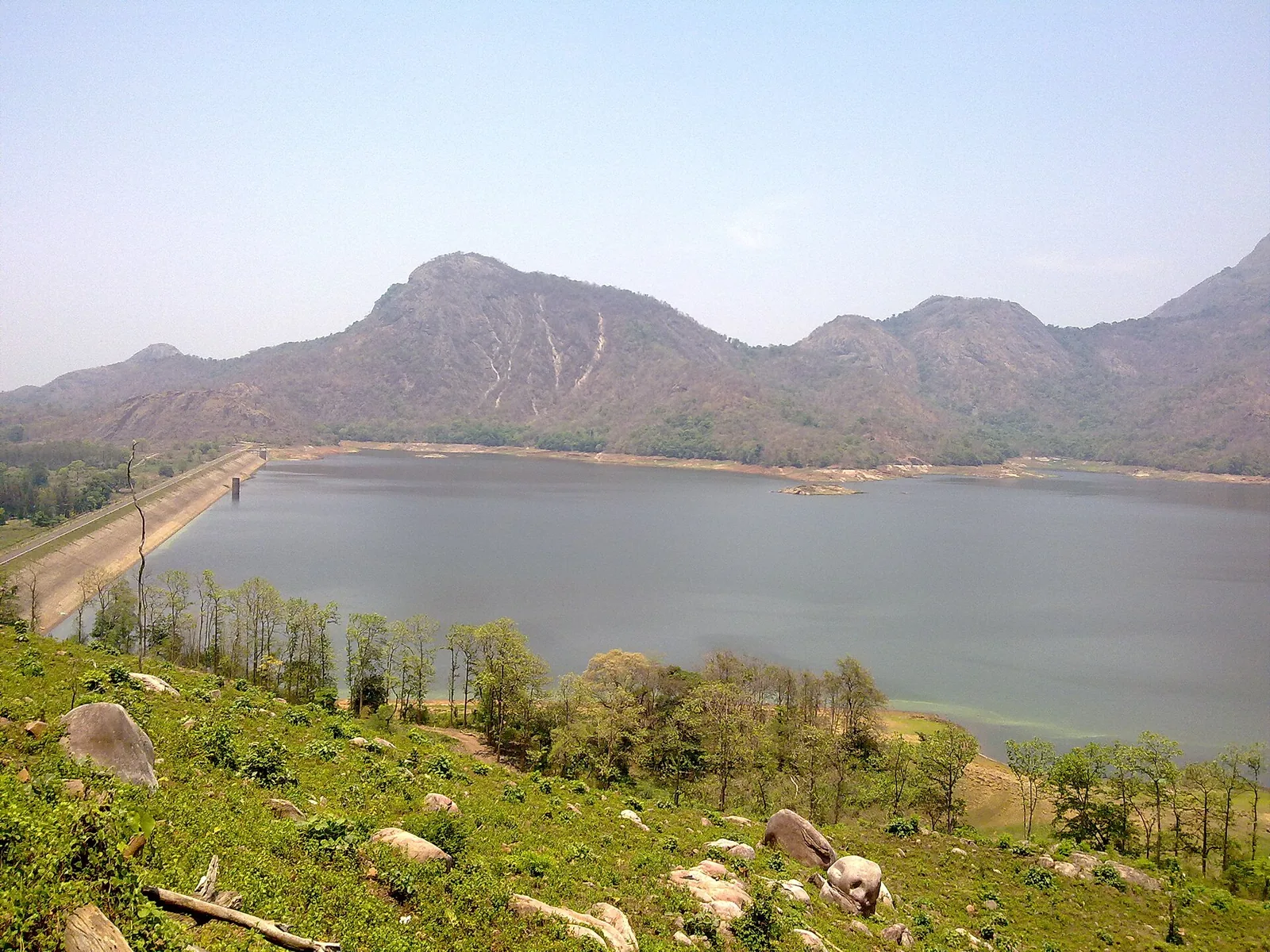
A quiet reservoir among wooded hills near Alathur, south-west of Palakkad town — good for a peaceful drive and picnic.

heritageKollengode

17.7 km · ~29 min by cab

A rural village ~19 km south of Palakkad below the Nelliampathy hills, known for its palace, the Vishnu temple, paddy landscapes and old Tamil-Brahmin heritage.

damPothundi Dam

25.2 km · ~42 min by cab

A 19th-century irrigation dam near Nemmara — one of the oldest in India, its core wall built with a jaggery-and-lime mix — with a scenic reservoir, gardens and boating.

wildlifeChoolannur Peafowl Sanctuary

21.5 km · ~36 min by cab

A peafowl sanctuary at Mayiladumpara (“the rock where peacocks dance”) near Alathur, home to 200-plus free-roaming peacocks and over 100 bird species; best at dawn and dusk.

templeThiruvegappura Temple

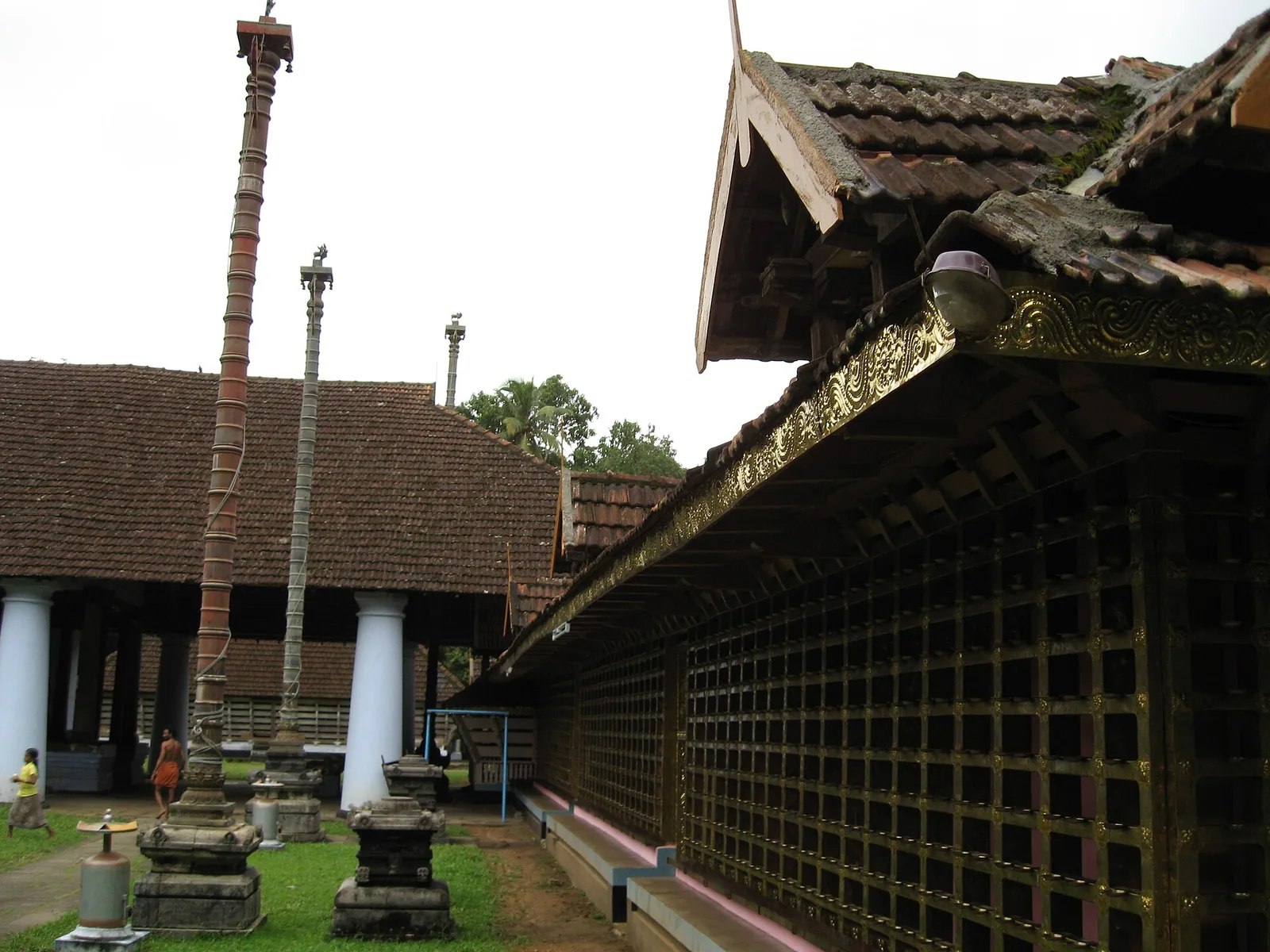
The Thiruvegappura Sankaranarayana Temple near Ottapalam, admired for its Kerala architecture, a fine 15th–16th-century Koothambalam (temple theatre) and three sreekovils with separate flag masts.

trekSiruvani trek

25.5 km · ~42 min by cab

A Forest Department safari and walk into the closed Siruvani reserve, starting at the Inchikunnu check post: about 10 km of escorted rainforest road to the dam that supplies Coimbatore’s drinking water, then an hour on foot up to the Keralamedu grasslands on the Kerala–Tamil Nadu border.

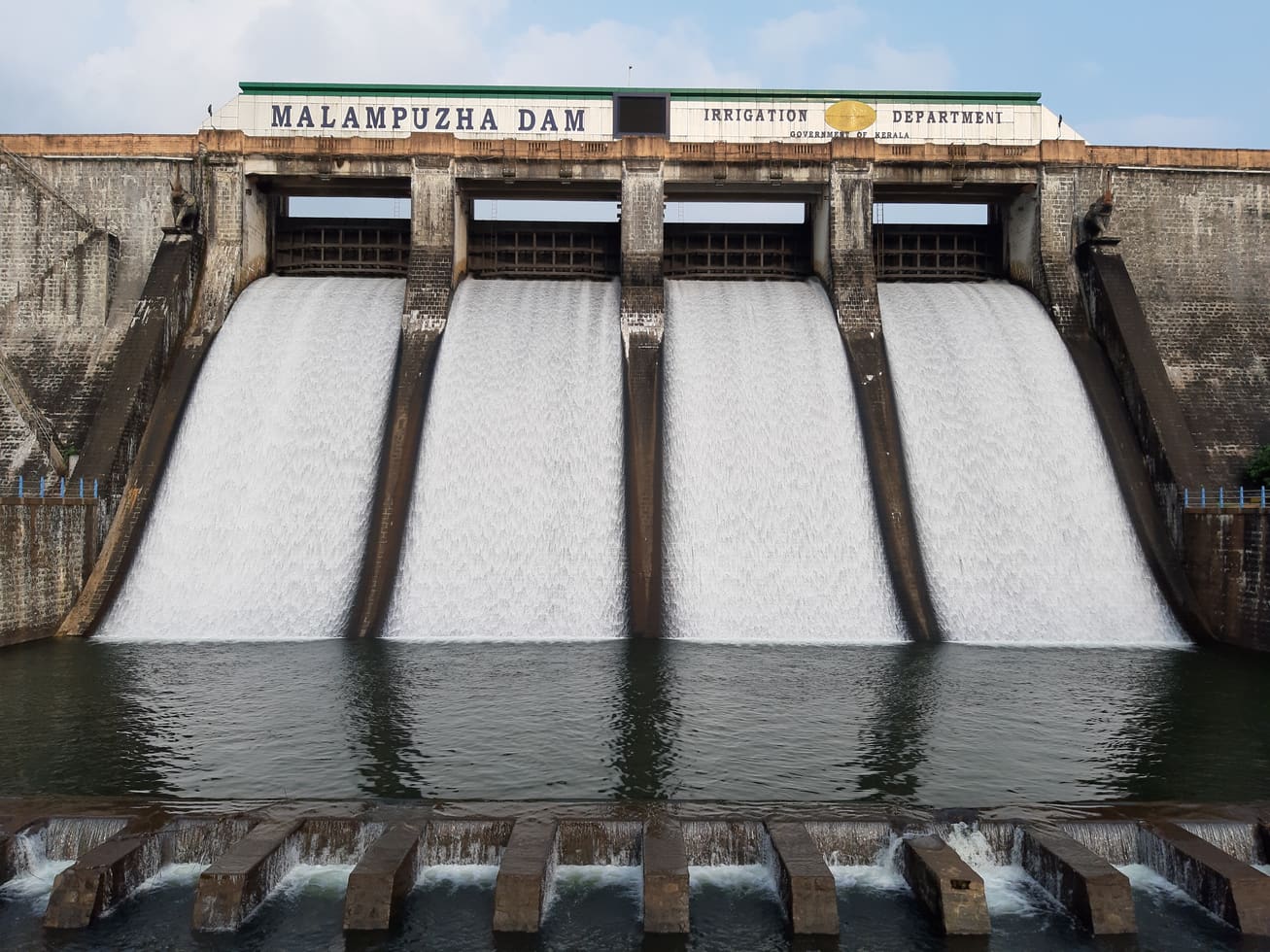
damMalampuzha Dam & Garden

7.4 km · ~19 min by auto

Reservoir and garden area near Palakkad town.

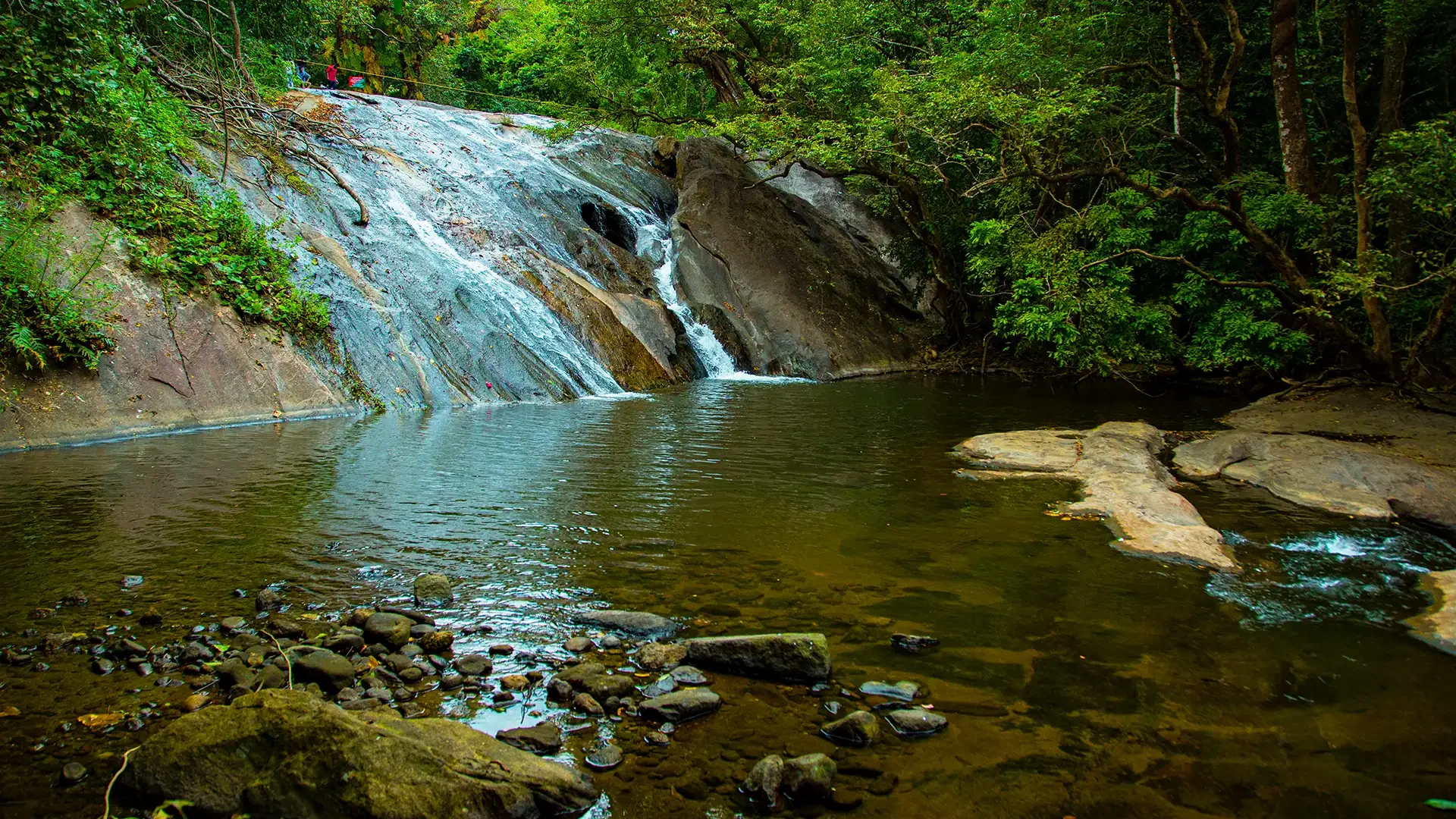
trekDhoni Waterfalls trek

11.0 km · ~18 min by cab

A Forest Department controlled walk from Dhoni’s forest-office base to a cascade in the Palakkad foothills, with offline admission and a Monday closure.

Roampedia is commission-free — own or know a stay, eatery, guide or shop near Palakkad Fort? List it and it appears here once verified.

Add a nearby business
Before you go

Palakkad Fort — at a glance

TimingsOpen daily, roughly 8:00 am to around 5:30 pm. As an ASI-maintained open monument, the grounds are usually accessible through the day; timings can change, so verify before visiting.
Best timeOctober to February, when Palakkad’s heat eases and skies are clear, is the most comfortable time to visit. Early morning and late afternoon are ideal for walking the ramparts and photography. Palakkad summers (March–May) are notably hot; the monsoon (June–September) brings lush greenery but heavy rain.

Entry: No entry fee is published for the fort grounds, and published accounts disagree over whether the fort is ticketed at all. A camera fee is commonly reported for still and video cameras.

Dress code: No formal dress code for the fort. Modest, comfortable clothing and good walking shoes are sensible, especially if you plan to climb the ramparts. If you enter the Hanuman temple inside, dress respectfully as at any Kerala shrine.

Festivals: The Rappadi open-air auditorium beside the fort hosts cultural performances and events through the year, and the fort grounds are used for civic and cultural gatherings. Programmes vary by season.

Photography: Photography is popular and generally allowed on the grounds; a small still- or video-camera fee may apply. Late-afternoon light on the granite and laterite walls is especially good.

Getting here

How to reach Palakkad Fort

  • ✈︎ By air The nearest major airport is Coimbatore International Airport (CJB) in Tamil Nadu, about 55 km away; Cochin International Airport (COK) is another option, roughly 130–160 km away. From either, taxis and buses run to Palakkad.
  • 🚆︎ By train Palakkad Junction (Palghat Junction) and Palakkad Town railway stations serve the district and are well connected; the fort is a short ride from the stations.
  • 🚗︎ By road Palakkad is a major road junction near the Kerala–Tamil Nadu border, well linked by NH roads to Coimbatore, Thrissur and Kochi; the fort is signposted in the heart of town.
  • 🚌︎ By bus Frequent KSRTC and private buses serve Palakkad from across Kerala and from Coimbatore; from the central bus stand the fort is a short autorickshaw or town-bus hop.
Getting back

If you are travelling by bus or ferry, check the return service with the operator before setting out. Leave time to reach the stop or jetty after your visit.

Ask at the bus stand for the time of the last service back, not the next one. If you miss it, an auto or app cab is the fallback — agree the fare before you get in.

Do

Things to do

  • Walk the ramparts and thick curtain walls and look down into the surrounding moat
  • See the squat corner bastions and the granite-and-laterite masonry up close
  • Visit the Hanuman (Anjaneya Swamy) temple, the Kota Ambalam, inside the fort
  • Relax on the lawns and gardens and let children use the Vatika park
  • Catch a performance or event at the nearby Rappadi open-air auditorium
  • Photograph the warm-lit walls in the late afternoon
Getting around Palakkad Fort

If you need step-free access, contact the site before travelling. Ask about a level entrance, steps along the route, the nearest drop-off point, seating and accessible toilets.

Practical things near Palakkad Fort
What the cash actually costs
  • Withdrawing from a bank that is not your own is free for a set number of times a month, then costs up to ₹23 plus GST — about ₹27 a withdrawal. This is not one of the RBI’s six metro centres, so the allowance here is the higher one: at least five free other-bank withdrawals a month, and at least five at your own bank.
  • That free allowance belongs to Indian bank accounts. On a card issued abroad your own bank’s international withdrawal and exchange charges apply instead. If the machine offers to bill you in your home currency, choose rupees — the conversion rate on that offer is set by the machine, not by your bank.
  • Choose a well-lit ATM, preferably at a bank branch. Shield your PIN, avoid help from strangers and use your bank’s support number if a withdrawal fails or the machine retains your card.

Charge cap and free-transaction limits: Reserve Bank of India, in force since 1 May 2025.

These services are listed within about 1.2 km of Palakkad Fort. Walking distances follow mapped routes; access and opening hours can change. Other services may be closer but are not included here.

Nearby

What’s near Palakkad Fort

jainJainimedu Jain Temple

A ~15th-century Jain temple on the western edge of Palakkad town, one of the few surviving traces of Jainism in Kerala, with images of the Thirthankaras and Yakshinis.

2.9 km · ~7 min by auto · straight line
heritageKalpathy Heritage Village

Kerala’s first heritage village, ~3 km from Palakkad town, built around the Sri Viswanatha Swamy temple on the Kalpathy river — a Tamil-Brahmin agraharam known as the “Kashi of the South” and for its November Ratholsavam chariot festival.

5.6 km · ~14 min by auto · straight line
damMalampuzha Dam & Garden

Reservoir and garden area near Palakkad town.

7.4 km · ~19 min by auto · straight line
trekDhoni Waterfalls trek

A Forest Department controlled walk from Dhoni’s forest-office base to a cascade in the Palakkad foothills, with offline admission and a Monday closure.

11.0 km · ~18 min by cab · straight line
heritageKollengode

A rural village ~19 km south of Palakkad below the Nelliampathy hills, known for its palace, the Vishnu temple, paddy landscapes and old Tamil-Brahmin heritage.

17.7 km · ~29 min by cab · straight line
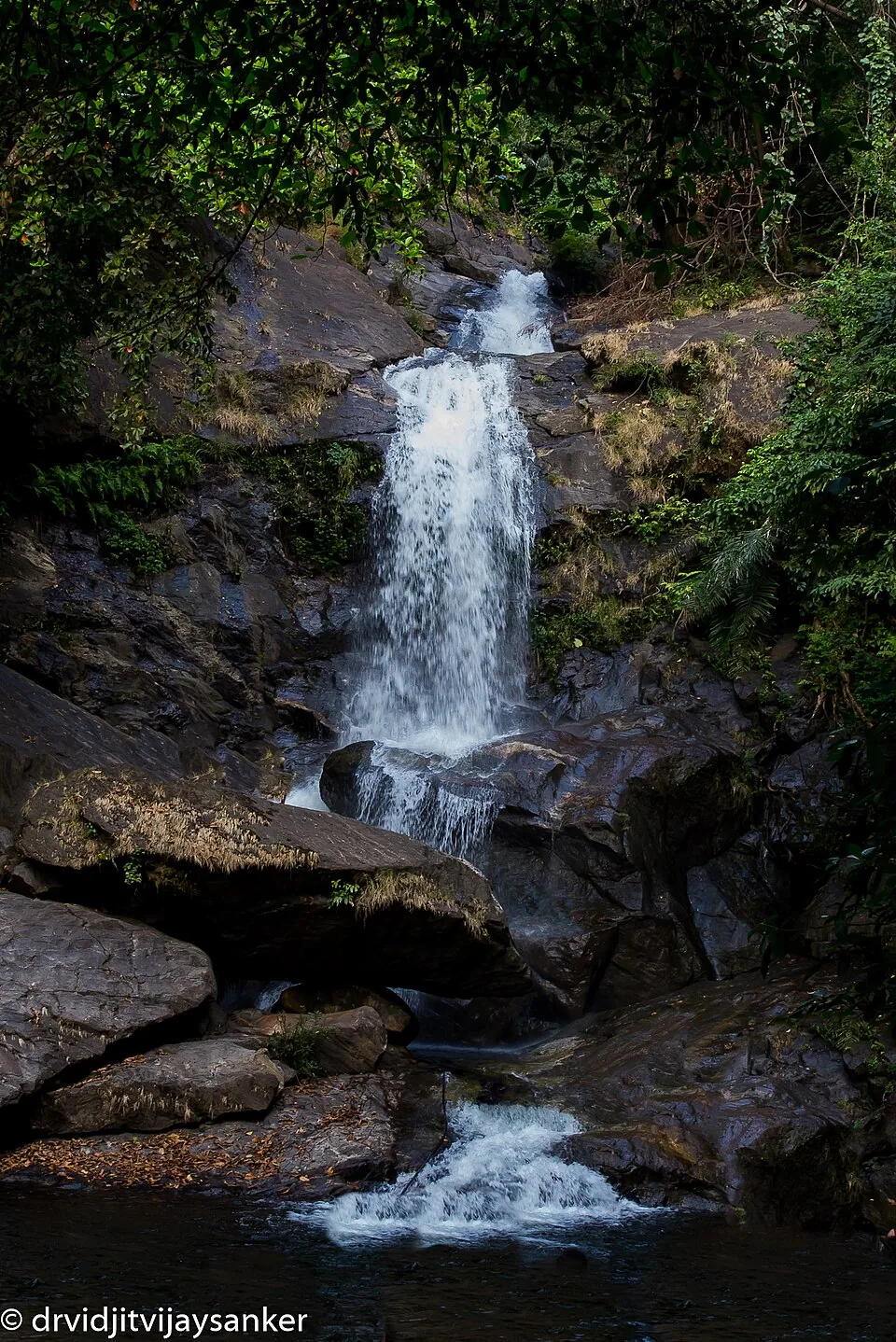
waterfallMeenvallam Waterfalls

A step waterfall on the Thuppanadu river in the Western Ghats near Thuppanad on the Palakkad–Mannarkkad road, reached by a short forest trek that crosses the river.

20.7 km · ~35 min by cab · straight line
wildlifeChoolannur Peafowl Sanctuary

A peafowl sanctuary at Mayiladumpara (“the rock where peacocks dance”) near Alathur, home to 200-plus free-roaming peacocks and over 100 bird species; best at dawn and dusk.

21.5 km · ~36 min by cab · straight line
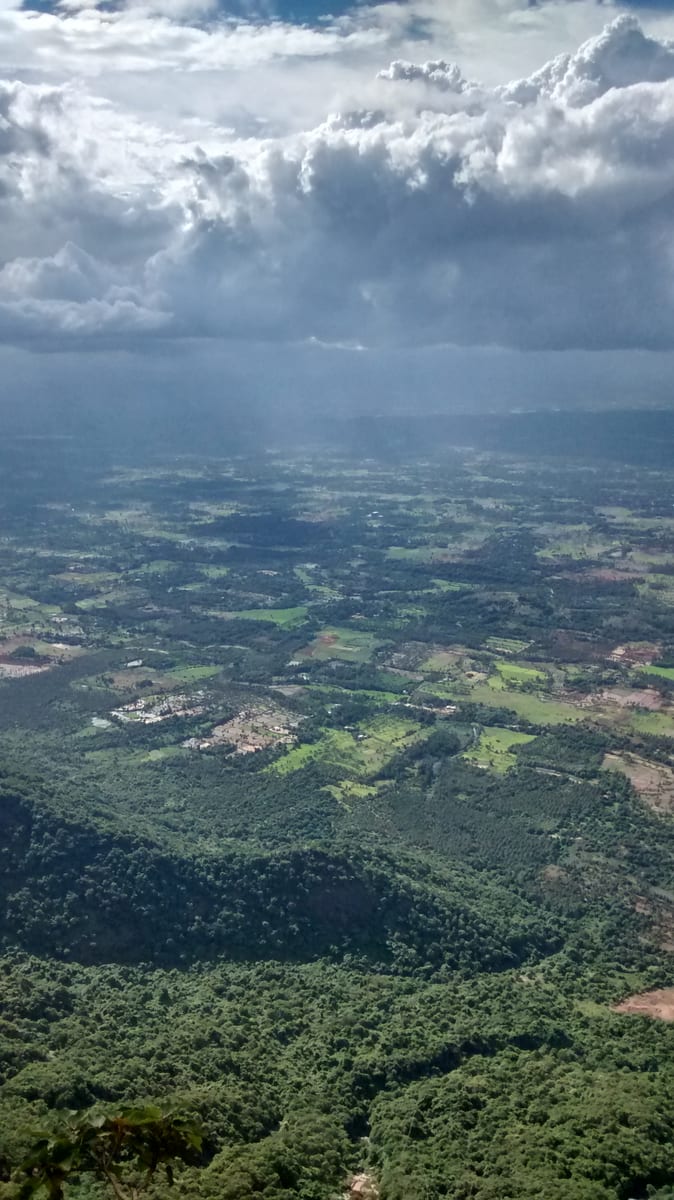
viewpointSeetharkundu viewpoint

The edge of the Nelliyampathy escarpment, where the plateau stops and the Palakkad plain opens out a thousand metres below — a place you drive to and stand at, with a seasonal waterfall below the lip and a car park full of bold macaques.

24.3 km · ~40 min by cab · straight line
damPothundi Dam

A 19th-century irrigation dam near Nemmara — one of the oldest in India, its core wall built with a jaggery-and-lime mix — with a scenic reservoir, gardens and boating.

25.2 km · ~42 min by cab · straight line
trekSiruvani trek

A Forest Department safari and walk into the closed Siruvani reserve, starting at the Inchikunnu check post: about 10 km of escorted rainforest road to the dam that supplies Coimbatore’s drinking water, then an hour on foot up to the Keralamedu grasslands on the Kerala–Tamil Nadu border.

25.5 km · ~42 min by cab · straight line
activityGovernment Orange and Vegetable Farm

A state farm at Kaikatty growing mandarin oranges, winter vegetables and a fruit forest of fifty varieties on the Nelliyampathy plateau — the Kingdom of Cochin's Poliya estate, a farm since 1943 and an orange and vegetable farm since 1956, with a passion-fruit processing unit and a published ticket.

25.9 km · ~43 min by cab · straight line
trekNelliyampathy trek

Walking routes off the Nelliyampathy plantation plateau: an evergreen-forest footpath to the bare granite of Kesavan Para, longer forest-division routes to Hill Top, Karassuri and over the ridge to Parambikulam, and a four-wheel-drive climb to Manpara and the ruined Victoria Church.

26.0 km · ~43 min by cab · straight line

All 6 places to visit in Palakkad town →

Nearby toilets, pharmacies, ATMs, seating and vets are community-mapped and may be incomplete or out of date. Map data © OpenStreetMap contributors | Walking times © openrouteservice.org by HeiGIT

On the map

Where Palakkad Fort is

Good to know

Palakkad Fort — frequently asked

Who built Palakkad Fort and when?

It was built by Hyder Ali of Mysore in 1766 (some accounts describe it as a rebuilding of an earlier structure). He raised it to consolidate Mysore’s control over Malabar and to command the strategic Palghat Gap. It is popularly called Tipu’s Fort after his son, Tipu Sultan.

Why is it called Tipu’s Fort?

After Hyder Ali’s death the fort passed to his son, Tipu Sultan, under whom it remained a key Mysore stronghold in Malabar. Locals have long associated the fort with Tipu, so the name Tipu Sultan Fort or Tipu’s Fort stuck alongside the name Palakkad Fort.

Is there an entry fee, and what are the timings?

Entry to the fort grounds is generally free or nominal, as it is an Archaeological Survey of India monument, and it is typically open through the daytime, roughly 8:00 am to around 5:30 pm. A small camera charge may apply. Timings and any fees can change, so it is best to check before you go.

What is there to see inside the fort?

You can walk the ramparts and thick walls, see the corner bastions and the moat, and visit the Hanuman (Anjaneya Swamy) temple, sometimes called the Kota Ambalam, within the enclosure. Around it are lawns and gardens, the Vatika children’s park, and the nearby Rappadi open-air auditorium.

How long does a visit take?

Most visitors spend around one to one and a half hours — enough to walk the walls and bastions, look into the moat, see the temple and relax on the lawns. Families who use the park and children’s area often stay longer, especially in the cooler evening hours.

How do I reach Palakkad Fort?

The fort is right in the heart of Palakkad town, so it is easy to reach by autorickshaw, taxi or town bus from the KSRTC bus stand and the railway stations. Palakkad Junction and Palakkad Town railway stations serve the district, and the nearest major airport is Coimbatore (CJB) in Tamil Nadu, roughly 55 km away.

When is the best time to visit Palakkad Fort?

November to February is comfortable; mornings and evenings are better year-round.

What are the entry fee and timings at Palakkad Fort?

Entry: No entry fee is published for the fort grounds, and published accounts disagree over whether the fort is ticketed at all. A camera fee is commonly reported for still and video cameras. Timings: Open daily, roughly 8:00 am to around 5:30 pm. As an ASI-maintained open monument, the grounds are usually accessible through the day; timings can change, so verify before visiting.

How much time do I need for Palakkad Fort?

45 minutes to 1.5 hours; half day with town stops.

What else is near Palakkad Fort?

Nearby you can pair Jainimedu Jain Temple (2.9 km), Kalpathy Heritage Village (5.6 km), Malampuzha Dam & Garden (7.4 km), Dhoni Waterfalls trek (11.0 km).

What should I know before visiting Palakkad Fort?

Stay off restricted walls and unsafe edges. Use marked crossings around busy town roads. Respect protected-site rules and local worship spaces nearby.

Image credits

Photographs: Shafeeq basheer (CC BY-SA 4.0), Me haridas (CC BY-SA 4.0), Ssriram mt (CC BY-SA 4.0), Abhishek Jacob (CC BY-SA 3.0). Wikimedia Commons.