What to expect
Highlights
- Heritage experience at Sabarimala Temple
- Architecture, local stories and old trade/cultural routes
- Good fit for guided walks and nearby cafes/shops
Sabarimala Temple is one of the guidebook places to plan around Sabarimala and Pamba, with practical planning organized from the nearest town/base and verified local listings when available.

High in the forested Western Ghats of Pathanamthitta, wrapped in the Periyar Tiger Reserve and reachable only on foot, Sabarimala is the hilltop shrine of Lord Ayyappa — and the stage for one of the largest annual human gatherings on Earth. In the Mandala–Makaravilakku season, millions of black-clad pilgrims chant ‘Swamiye Saranam Ayyappa’ up the trek from Pamba, an irumudikettu balanced on the head, to climb the sacred eighteen golden steps into the sanctum.
Sabarimala is not a place you casually ‘tour’ — it is a vow you complete. The temple sits at roughly 468 metres on a hill named for Sabari, the tribal devotee of the Ramayana, deep inside dense forest that is open to pilgrims only during defined seasons. There is no motorable road to the sanctum itself; every devotee, from labourer to chief minister, arrives on foot, and that shared hardship is the whole point.
The journey begins long before the hill. A devotee undertakes a 41-day vratham — a period of austerity in which he wears black or dark-blue clothing, goes barefoot, abstains from meat, alcohol, tobacco and sexual activity, keeps clean living and daily prayer, and addresses fellow pilgrims as ‘Ayyappa’ or ‘Swami’, dissolving caste and rank into a single brotherhood. Through this fast the pilgrim is meant to become, in spirit, Ayyappa himself.
At the end of the vratham comes the kettunira — the ceremonial filling of the irumudikettu, a two-pouch cloth bundle carried on the head. The front pouch holds offerings for the deity, chiefly the ghee-filled coconut (neyy thengaa) that will be poured over the idol as abhishekam; the rear pouch holds the pilgrim’s own provisions for the road. Only one who carries the irumudi is permitted to ascend the eighteen holy steps — so the bundle is both luggage and passport.
The classic devotional route runs through Erumeli, where pilgrims first pay respects at the Vavar mosque and the Sree Dharmasastha temple, many performing the exuberant, painted ‘Petta Thullal’ dance, before setting out on the long forest path via Azhutha, Karimala and other rises to Pamba. Most modern pilgrims instead drive to Pamba, the base by the river of the same name, bathe there, and undertake the shorter but steep climb up Neelimala to Sannidhanam, the temple complex.
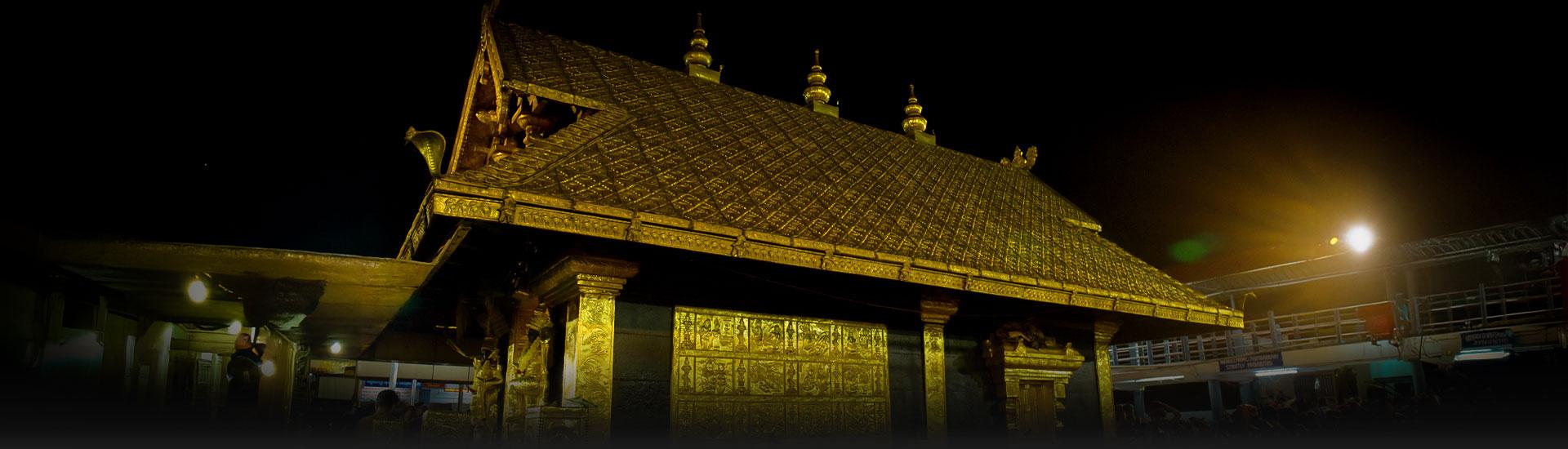
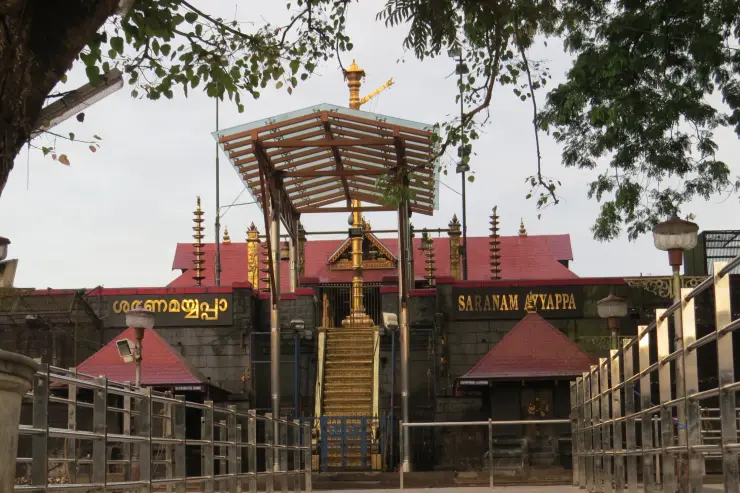
The climax of the ascent is the Pathinettam Padi — the eighteen steps — clad since 1985 in panchaloha, an alloy of five metals. Only irumudi-bearers may climb them, and they are climbed with reverence, often after breaking a coconut. Beyond the steps waits the small sanctum where Ayyappa sits in the yogic ‘veerasana’ posture, hands on knees, eternally youthful — the god who, in legend, was a prince who came to the forest and never left.
Above all Sabarimala is famous for Makaravilakku — the night in mid-January when, as the Makara Jyothi star is sighted, a distant light called the Makaravilakku appears three times on the far Ponnambalamedu hill and a vast crowd erupts in ‘Saranam’ chants. Temple authorities have publicly acknowledged that the Makaravilakku flame is a human-lit ritual fire, a candour that has only deepened, rather than diminished, the devotion of those who make the journey.
The central legend tells of Manikandan, a radiant infant found on the banks of the Pampa by the childless king of Pandalam, who raised him as his own. The boy was in truth an incarnation of Dharma Sastha — born, in the Puranic account, of the union of Vishnu in his enchantress form Mohini and Shiva, and therefore called Hariharaputra, the son of both. When a younger prince was later born, a scheming minister and the queen conspired to remove Manikandan, and the queen feigned an illness that, she declared, could be cured only by the milk of a tigress.
The boy volunteered to fetch it. He crossed the forest, subdued the demoness Mahishi — a buffalo-headed she-demon whom the gods could not otherwise kill — in a great dance-battle on the banks of the Azhutha, and returned riding a tigress with tiger cubs in tow. The terrified court realised his divinity; the king begged forgiveness. Manikandan revealed his true nature, asked that a shrine be built where his arrow fell — Sabarimala — and instructed that pilgrims come to him only after the vratham and along the forest path, carrying the irumudi.
Woven into the story is Vavar — remembered as a Muslim warrior (variously an Arab traveller or a defeated adversary turned devoted friend) whom Ayyappa vanquished and then embraced as a companion. It is why the pilgrimage honours the Vavar mosque at Erumeli alongside the temple, and why the Ayyappa tradition is cherished as a living emblem of Hindu–Muslim amity. This is legend, not documented history, but it is legend the pilgrimage enacts every single year.
The antiquity of a shrine at Sabarimala is genuinely old but hard to date precisely; tradition links it to the erstwhile Pandalam royal house, and the deity Dharma Sastha (Ayyappa) has been worshipped across the Western Ghats for centuries. The forest setting, the tribal association with Sabari, and the Sastha cult all point to deep roots predating written record.
A pivotal modern chapter is the fire of 1950, when the shrine was damaged in an arson attack; the rebuilt sanctum and the consecration of a new idol shaped the temple seen today. Through the 20th century the pilgrimage grew from a regional forest devotion into a pan-Indian mass movement, drawing devotees from Tamil Nadu, Andhra Pradesh, Karnataka and far beyond, and today it is counted among the world’s largest annual pilgrimages.
The shrine is administered by the Travancore Devaswom Board, which manages the seasonal openings, the Pamba and Sannidhanam infrastructure, crowd control, virtual queue booking and the Makaravilakku arrangements. The sheer scale — tens of millions across a season — has made logistics, safety and sanitation in a protected tiger reserve a continuing challenge, and stampede tragedies in past decades have driven major crowd-management reforms.
The temple’s traditional restriction on the entry of women of menstruating age — customarily described as roughly 10 to 50 — is tied to the belief that the deity is an eternal celibate (Naishtika Brahmachari), and it became the subject of a landmark legal contest. On 28 September 2018 a Supreme Court Constitution bench, by majority, held the restriction unconstitutional and permitted women of all ages to enter; the ruling was met with large-scale protests in Kerala and remained deeply contested on the ground.
Review petitions against that judgment were subsequently referred to a larger bench, and the underlying questions have been taken up by a nine-judge Constitution bench; as of 2026 the matter remained under hearing, with the traditional restriction argued by many as an essential religious practice and denominational right. Because the legal and practical position has shifted more than once and is still evolving, any prospective visitor should confirm the current position locally before planning a visit.
To witness — or to make — one of the world’s great pilgrimages. The scale is staggering: a river of black-clad devotees, barefoot, calm and disciplined, chanting ‘Swamiye Saranam Ayyappa’ up a forest mountain. Even as an observer it is one of the most moving mass expressions of faith you can encounter in India.
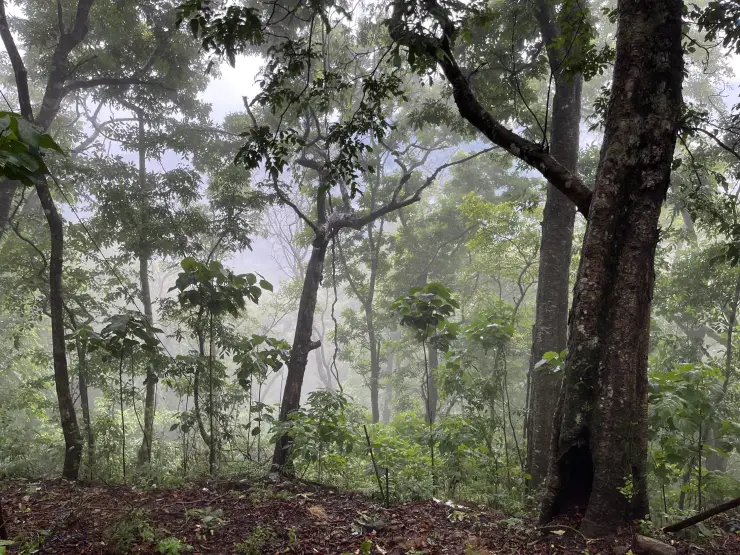
For the trek itself. The climb from Pamba up Neelimala to Sannidhanam winds through the Periyar Tiger Reserve, with forest air, hill views and the electric hum of thousands of pilgrims — a rare pairing of pristine Western Ghats wilderness and total human devotion in one path.
For the eighteen golden steps. The Pathinettam Padi, clad in five-metal panchaloha, is one of the most iconic sacred stairways in the Hindu world, each step read as a spiritual layer — the senses, the emotions, the gunas, knowledge and ignorance — to be transcended on the way to the sanctum.
For the story of amity. The Ayyappa–Vavar friendship, honoured at the Erumeli mosque on the traditional route, makes this a pilgrimage that deliberately reveres a Muslim companion alongside a Hindu god — a living, walking symbol of shared devotion that is increasingly rare and worth understanding.
For Makaravilakku. To stand in the crowd at Sannidhanam on the Makaravilakku night as the Makara Jyothi is sighted and the distant hill-light appears, amid a roar of ‘Saranam’, is an unforgettable sensory and spiritual crescendo — the emotional peak of the entire season.
And for what the vratham does to the pilgrim. Unlike most sights you simply arrive at, Sabarimala asks something of you first — weeks of austerity, barefoot walking, plain living — so that reaching the sanctum feels earned rather than bought. That transformation, more than the shrine, is what devotees return for.
Road km to Pathanamthitta; ghat roads and traffic vary — allow extra.
November to February and early mornings are best for walking; avoid midday heat where possible.
Verified hotels, homestays, restaurants, experiences, sights, shops and rentals around Sabarimala Temple — commission-free, with direct contact. Filter by what you need.
Pilgrim guest-house contact record for Sabarimala accommodation checks through official/temple contact sources.
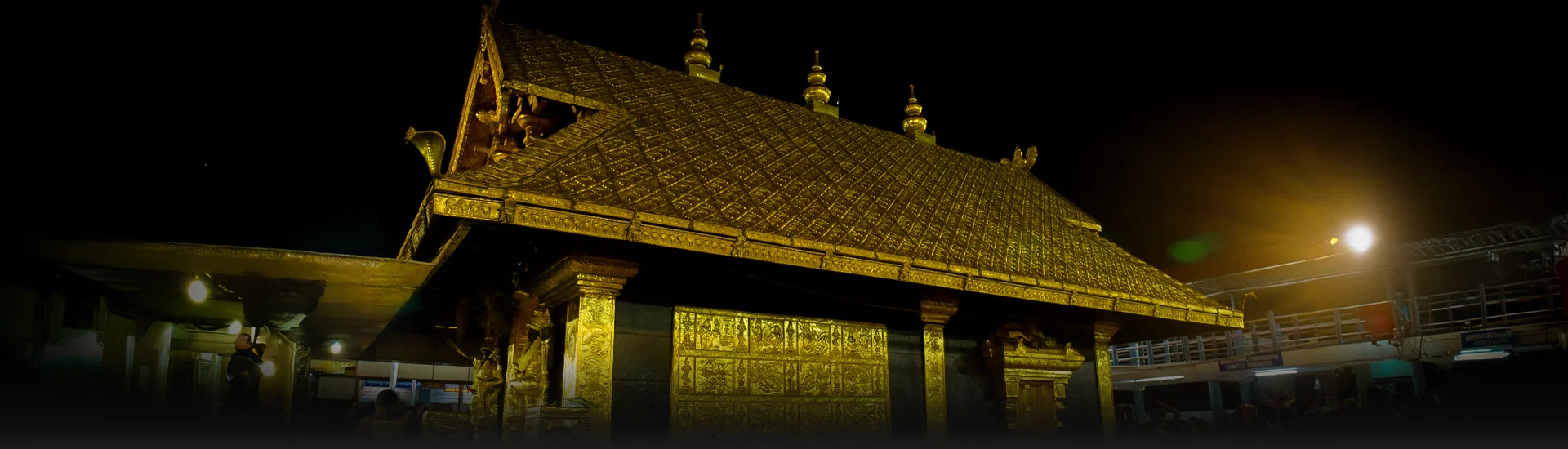
Visitor information in Sabarimala and Pamba. Sabarimala and Pamba, Pathanamthitta district, Kerala · Travancore, sabarimala-and-pamba.
Book with the place itself. India’s cyber-crime coordination centre warned in April 2025 that convincing copies of hotel and pilgrimage booking sites are being pushed through sponsored search and social ads, taking payment for rooms the property never hears about. Every listing here links to the business’s own contact details and its own Google or Bing profile — we take no commission and sit in nobody’s payment path. If a booking page reached you through an ad, check the address bar against the property’s own site before you pay. Fraud can be reported on cybercrime.gov.in or on 1930.
3 more places around Sabarimala and Pamba. Open a guide to plan the visit and onward journey.
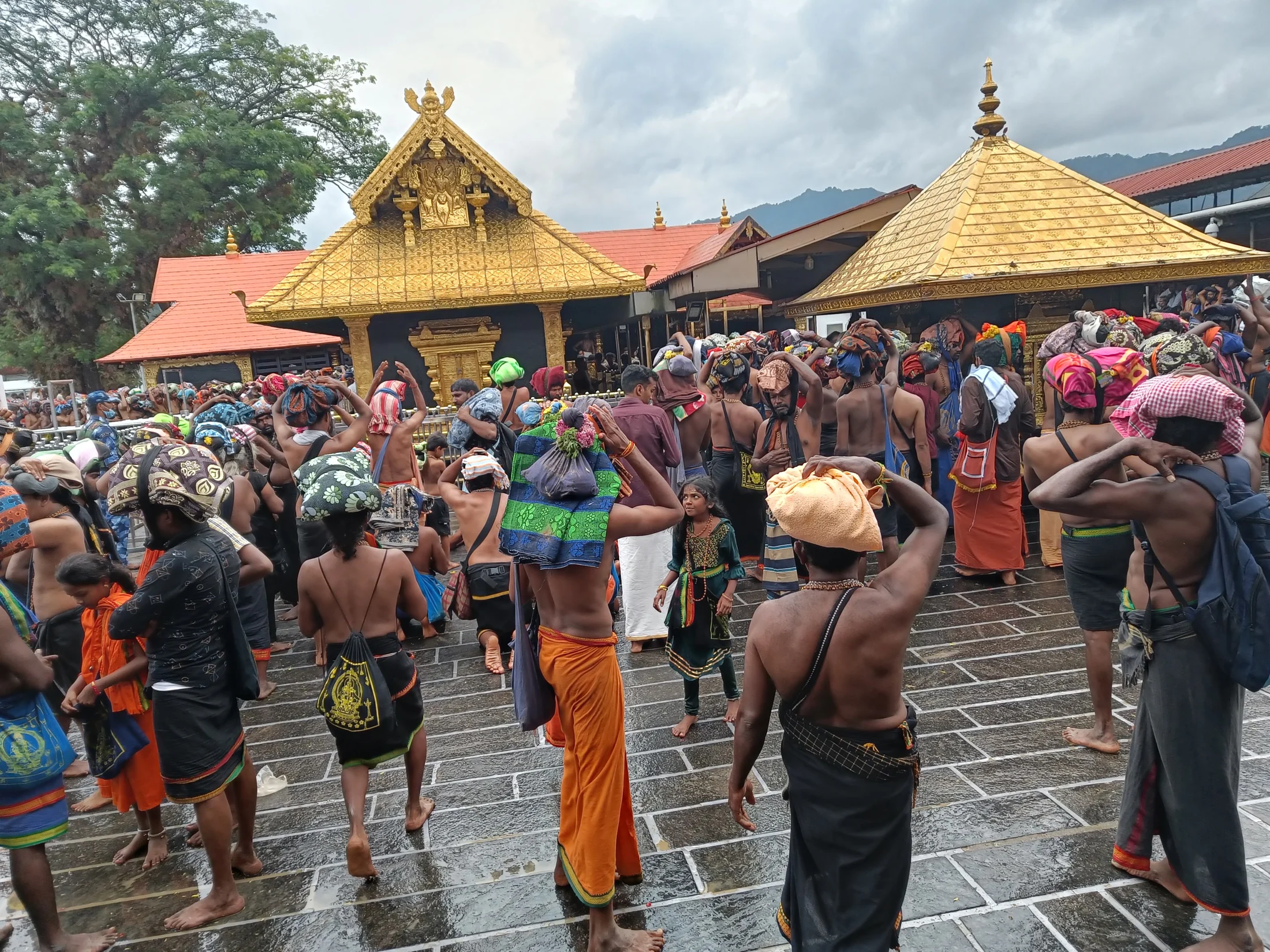
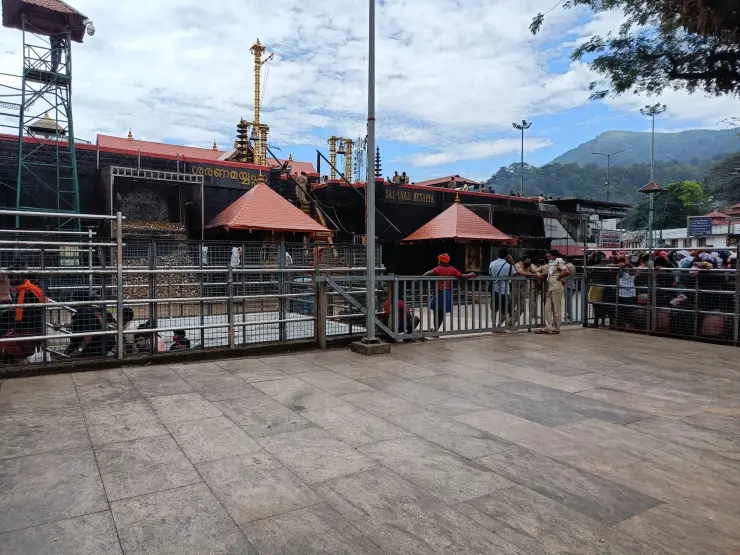
Sabarimala Sree Dharma Sastha Temple is the Ayyappa hill shrine in Pathanamthitta district, reached on foot from the Pamba pilgrimage base under the season’s access arrangements. Sannidhanam is the temple precinct on the hill; Pamba is the road-to-foot transfer area; Nilackal is the principal vehicle holding and bus-transfer base. The temple opens for specified periods, including the Mandala–Makaravilakku season and monthly poojas. Plan from the official opening calendar and Virtual Q instructions before arranging transport, accommodation or the ascent.
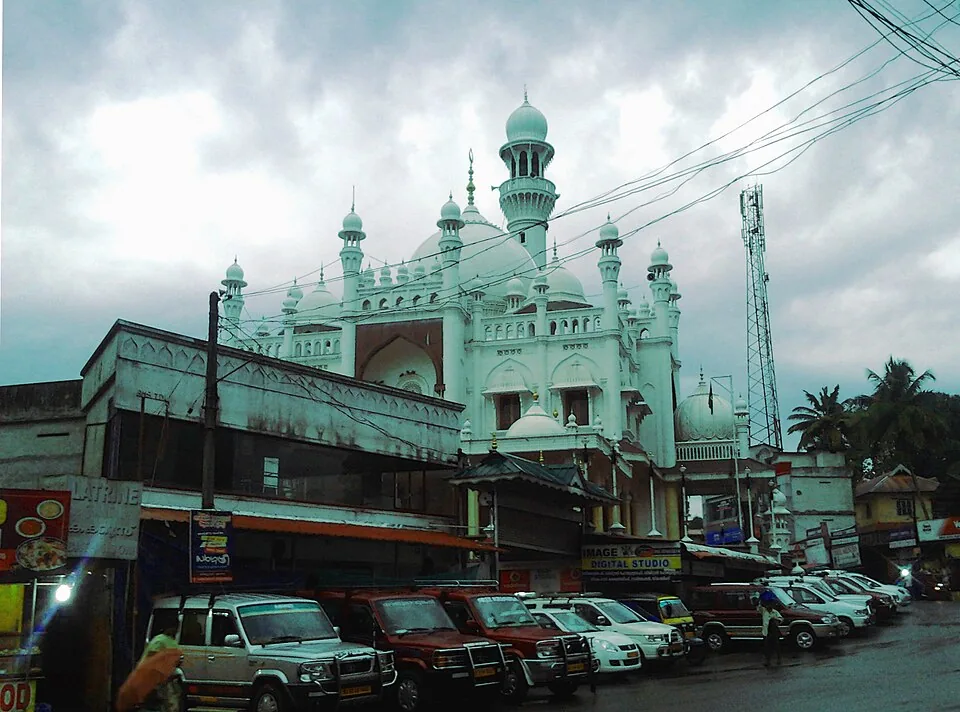
Where the traditional pilgrimage begins, on the Kottayam border rather than in Pathanamthitta. The Vavar mosque stands beside the Sastha temple here and pilgrims visit both, and it is where the petta thullal is danced through the town before the forest route is walked. It is a real town with its own life the rest of the year.
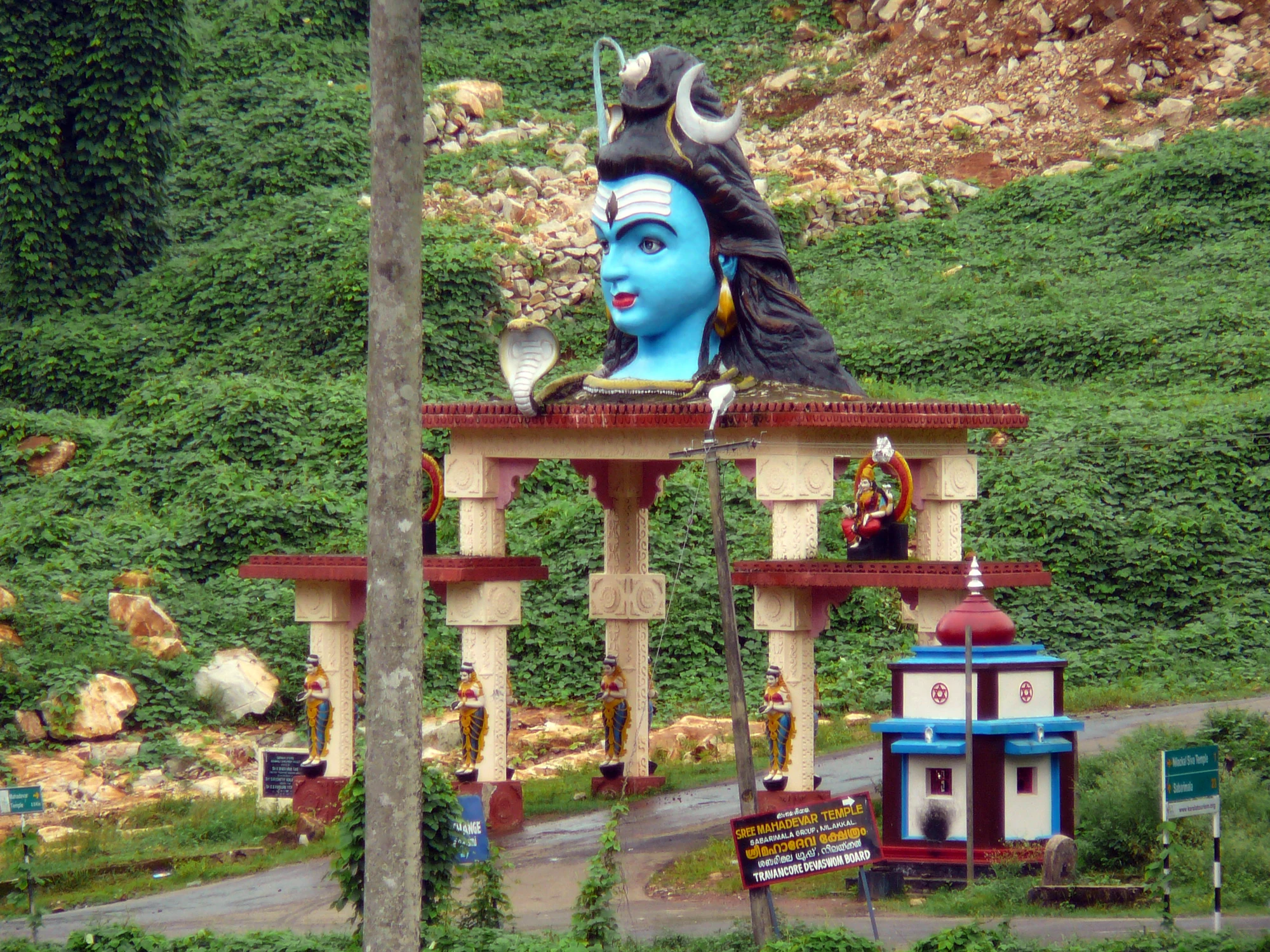
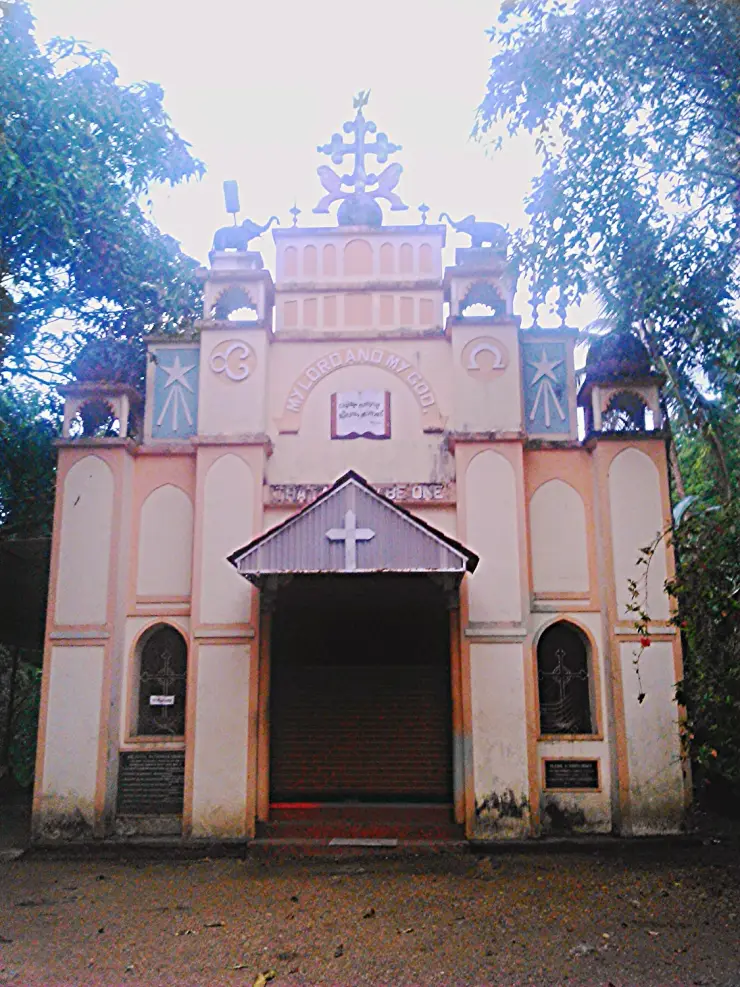
The Nilackal sacred landscape on the Pathanamthitta–Pamba road: Mahadeva Temple, the separate St Thomas Ecumenical Centre and the pilgrimage setting; Nilakkal is an alternative spelling.
Roampedia is commission-free — own or know a stay, eatery, guide or shop near Sabarimala Temple? List it and it appears here once verified.
Add a nearby businessEntry: No entry fee for darshan, but pilgrimage involves costs — virtual queue/booking, Pamba and Sannidhanam facilities, special darshan and vehicle/parking charges may apply during the season.
Dress code: Traditional, modest and austere: pilgrims wear black, dark-blue or saffron and go barefoot, observing the vratham. Simple, respectful attire is expected of all visitors; leather goods and immodest dress are inappropriate at the shrine.
Festivals: Mandala Pooja and Makaravilakku are the great annual events, with Makaravilakku (around Makara Sankranti, ~14 January) the emotional peak when the Makara Jyothi is sighted and the hill-light appears. Other observances include monthly poojas and the Vishu season in April; the Petta Thullal at Erumeli is a vivid pre-trek ritual dance.
Photography: Photography restrictions apply at the sanctum and around the sacred eighteen steps, and phones/cameras may be limited in queue and darshan areas; be discreet and respectful, and always follow signage and staff instructions.
If you are travelling by bus or ferry, check the return service with the operator before setting out. Leave time to reach the stop or jetty after your visit.
Ask at the bus stand for the time of the last service back, not the next one. If you miss it, an auto or app cab is the fallback — agree the fare before you get in.
If you need step-free access, contact the site before travelling. Ask about a level entrance, steps along the route, the nearest drop-off point, seating and accessible toilets.
Emergency numbers are verified against official government and state tourism sources. 112 works anywhere in India.
By tradition the temple restricts entry of women of menstruating age (customarily described as roughly 10 to 50), tied to the belief in Ayyappa as an eternal celibate; younger girls, older women and men of all ages have traditionally been welcome. A 2018 Supreme Court judgment held the restriction unconstitutional, this was met with large protests, review petitions were referred to a larger bench, and as of 2026 the matter is still before a nine-judge Constitution bench. Because the legal and practical position has changed more than once and remains contested, please confirm the current position locally before planning a visit.
Traditionally, yes — a devotee observes a 41-day vratham of austerity (dark clothing, barefoot, vegetarian, abstaining from alcohol, tobacco and other indulgences, daily prayer) and carries an irumudikettu, and only an irumudi-bearer may climb the eighteen holy steps into the sanctum. Many complete a shorter observance, but the full vratham is the orthodox practice; arrangements and requirements should be confirmed locally.
It is a two-pouch cloth bundle carried on the head. The front pouch holds offerings for the deity — above all the ghee-filled coconut for the abhishekam — and the rear pouch holds the pilgrim’s own provisions. It is filled in a ceremony called kettunira at the end of the vratham, and it is effectively the permit to climb the eighteen steps.
The main season is Mandala–Makaravilakku, roughly mid-November to mid/late January, with the Makaravilakku falling around 14 January (Makara Sankranti). The shrine also opens for monthly Malayalam-month poojas and for Vishu in April. It is not open continuously through the year.
There is no road to the sanctum; every pilgrim walks. The common route is to drive to Pamba, bathe in the river, then climb the steep Neelimala path of a few kilometres to Sannidhanam. The traditional longer route begins at Erumeli and crosses many kilometres of forest via Azhutha and Karimala. Basic fitness, water and time are essential, and the path can be crowded and slow in peak season.
No. The Makara Jyothi is a star/celestial sighting in the sky, while the Makaravilakku is a light that appears on the distant Ponnambalamedu hill. Temple authorities have publicly acknowledged that the Makaravilakku is a human-lit ritual fire rather than a spontaneous divine flame; for devotees its ritual and spiritual meaning remains undiminished.
November to February and early mornings are best for walking; avoid midday heat where possible.
Entry: No entry fee for darshan, but pilgrimage involves costs — virtual queue/booking, Pamba and Sannidhanam facilities, special darshan and vehicle/parking charges may apply during the season. Timings: Open only during defined seasons, not year-round. During the Mandala–Makaravilakku season the shrine typically opens in the early morning and again in the evening for darshan, with long queues; it also opens for monthly Malayalam-month poojas and Vishu.
Base yourself in Sabarimala and Pamba or a nearby town in Pathanamthitta, then confirm the last-mile route locally before leaving. Walkable heritage areas are best done slowly; combine nearby streets, museums, markets and food stops. If the visit depends on forest, temple, boat, ferry, weather or seasonal access, check the official/local rule on the day before travel.
1 to 3 hours.
Watch traffic on narrow heritage streets. Keep valuables close in crowded markets.
We have not published a story about Sabarimala Temple itself yet. These cover Sabarimala and Pamba and the wider district, with separate journeys between stops.
These guides explore Sabarimala and Pamba and the surrounding area. Choose a visit that fits your interests, allowing separately for travel between stops.
Route-level itineraries and practical guides for the rest of Kerala.
Photographs: Sailesh (CC BY-SA 3.0). Wikimedia Commons.