What to expect
Highlights
- Temple visit at Chettikulangara Devi Temple
- Kerala temple architecture and rituals
- Local food, shops and pilgrim services nearby
Major Bhagavathy temple near Mavelikkara, famous for its Kettukazhcha and Kumbha Bharani festivals.
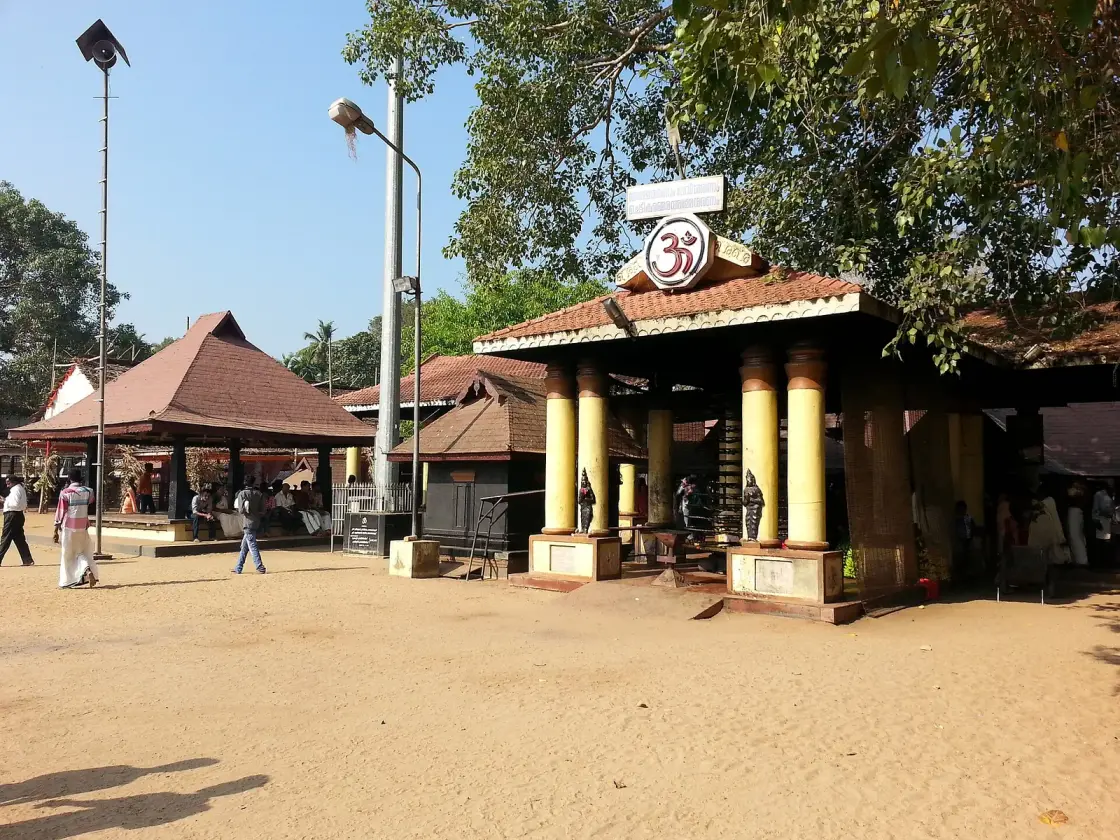
Check entry arrangements. Ask temple staff about visitor entry, dress requirements and access to the inner shrine before you travel, especially if you are visiting as a non-Hindu.
Dress respectfully and follow the institution’s admission and photography rules.
Rising from the paddy-flat heart of Onattukara near Mavelikkara, the Chettikulangara Sree Bhagavathy Temple is reckoned among the most renowned and richest Devi shrines in Kerala — a place where the Goddess is worshipped in three shifting faces through a single day, and where, once a year, whole villages raise towering horse and chariot edifices taller than the trees to lay before her.
Chettikulangara sits about four kilometres west of Mavelikkara town in Alappuzha district, on the old Kayamkulam–Thiruvalla road, ringed by the thirteen karas (village territories) that have served the Goddess for centuries. To pilgrims across central Travancore she is simply Amma — the mother — and this is one of the great Bhagavathy temples of the coast, spoken of in the same breath as Kodungallur and Chottanikkara.
The presiding deity is Sree Bhadrakali, the fierce protective form of the Goddess born, in the tradition, from the third eye of Shiva to destroy the demon Daruka. Yet at Chettikulangara she is never worshipped as a single fixed face. The temple is famous for the belief that the Goddess reveals herself in three aspects across the day — as Maha Saraswati, giver of learning, in the morning; as Maha Lakshmi, giver of abundance, at noon; and as Maha Kali, the fierce destroyer of evil, in the evening. Devotees time their prayers to the boon they seek.
Because she is honoured as goddess of knowledge, wealth and power in turn, students, householders and those seeking protection all find their hour here. Traditional offerings and the lighting of lamps fill the sanctum, and the temple’s reputation as one of the wealthiest under the Travancore Devaswom Board — second in income only to Sabarimala, by common repute — speaks to the depth of devotion it commands.
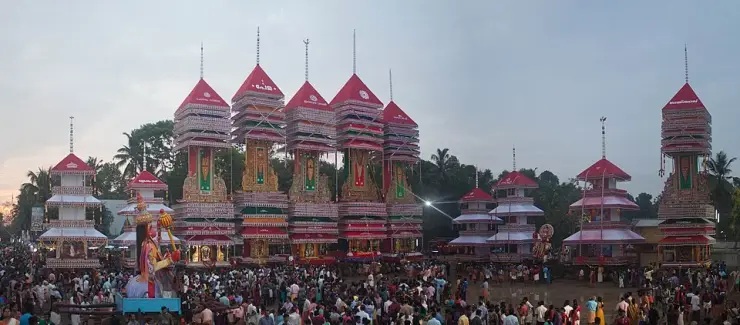
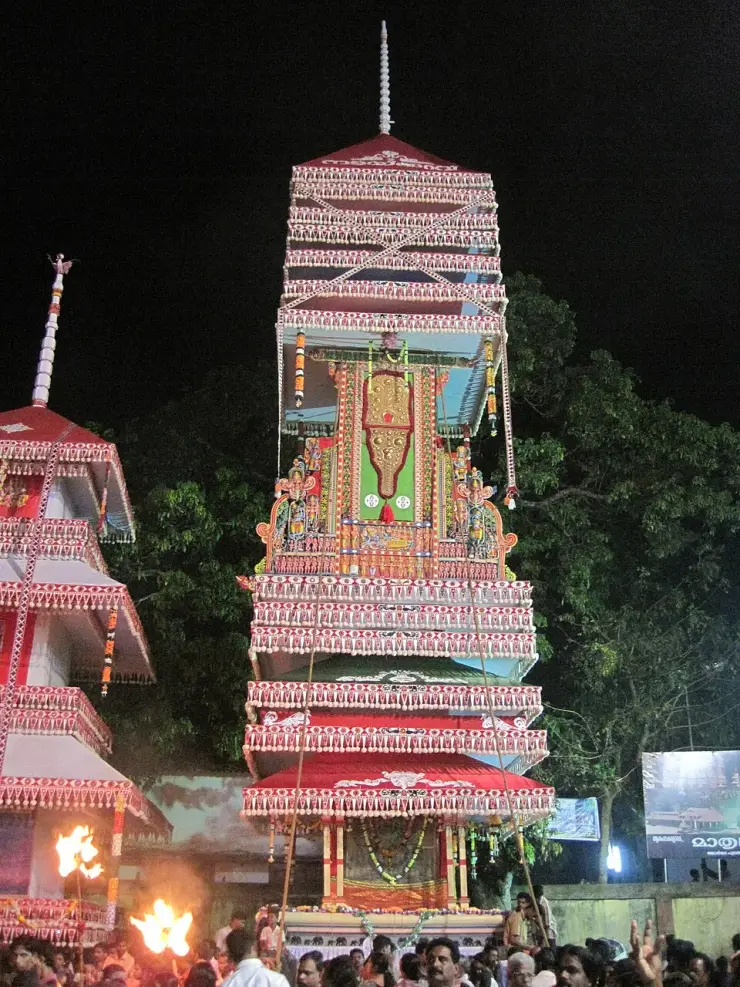
The temple’s true fame, though, is its festival life. For one incandescent night each year around the Kumbha Bharani, the surrounding fields fill with the Kettukazhcha — gigantic horse effigies called Kuthira and pagoda-like temple cars called Theru, built by the karas over weeks and raised to dizzying heights of cloth, timber and gilt. Nothing else in Kerala looks quite like it.
Around this spectacle turns a whole calendar of ritual: the months-long Parayeduppu when the Goddess tours her lands, the ancient Kuthiyottam vow performed by young boys, the thirteen-day Ethirelpu festival, and the closing Aswathi procession that carries her, in belief, back towards her mother-shrine at Kodungallur. Chettikulangara is a temple that lives loudest not inside its walls but out in the fields and lanes of its villages.
Set amid green Onattukara paddy and coconut groves, easy to reach from Mavelikkara, Haripad and Kayamkulam, it rewards the ordinary-day visitor with calm and the festival-season visitor with one of the most staggering folk spectacles in South India.
Legend traces the Goddess of Chettikulangara back to Kodungallur, the great mother-shrine of Kerala’s Bhagavathy worship. In the telling handed down here, the chieftains and people of these thirteen karas longed for the Goddess’s protection and set out to seek the blessings of Kodungallur Bhagavathy, praying that her power might come to dwell among them (recounted as legend).
The Malayalam telling is far more particular than the English one, and the particulars are the point. The ferryman has a name — Eenashu, which is a Christian name, and the source passes over that without remark. An old woman asked him at dusk to take her across the Karippuzha and on towards Sreshthikulangara. He rested her under an anjili tree at Puthussery and fetched her water and a cloth from the Pathiyar house. He dozed; she was gone. The next day she appeared at the Thazhavana Illam during a re-thatching, asked for food, and was served kanji, muthirapuzhukku and astram on a leaf. She washed her face in the pond to the north, moved north again, and vanished in a blaze of light. The antharjanam who watched her go fainted.
🔑 That story left four things you can still be shown, and one of them is not an object but a job. The place she rested is now the Puthussery temple. The pond she washed her face in still exists. The spot where she vanished is the temple's moolasthanam. And the Pathiyar house that gave her water is the Chalukoyikkal Pathiyar house — a family granted, in memory of that cup of water, THE HEREDITARY RIGHT TO WASH THE GODDESS'S SACRED ROBES, for which the temple pays them dakshina to this day. A legend that terminates in a standing office held by a named household is a different order of evidence from a legend that terminates in a moral.
The account continues into administration, which is unusual for a founding story. The goddess's assent was conveyed at Kodungallur by the velichappadu, who gave the delegation her sword and anklet. Confirmation came by prashnam from the astrologer Mankuzhi Kaniyar. Construction was ordered by Iravi Marthanda Varman of Odanad from the Nariyangamannur palace. And after the Meenam Aswathi the karanathans still make the pilgrimage to Kodungallur in memory of the original journey.
One version speaks of a boatman who ferried a mysterious elderly woman across the Karippuzha river, only for her to vanish on the far bank. In another strand of the same story a Brahmin household, busy preparing the midday meal, beheld an old lady appear and then dissolve into thin air in a burst of bright light — a sign, the elders held, that the Goddess herself had chosen to settle in their midst. From that presence, the tradition says, the shrine at Chettikulangara grew.
The belief that the Devi shows three faces through the day — Saraswati at dawn, Lakshmi at noon, Kali at dusk — is woven into this same devotional imagination: that the single Goddess contains creation, sustenance and destruction, and turns each face to her children as the hours turn. ⚠ We should be straight about the standing of this one. It is printed very widely on devotional and travel sites, and it is genuinely part of how people here speak about the Devi, but we could not trace it to an institutional source, and it does not appear in the standard encyclopedic account of the temple. We keep it because it is a living belief; we no longer build the whole page on it.
⚠ One note on the demon, because it is the Punnapra problem in mirror image. English accounts of this temple sometimes name Darika. In the Malayalam, Darika appears only inside a quoted pan-Kerala passage from the Devi Bhagavata — the local legend of Chettikulangara has no demon in it at all. It is a story about a delegation, a ferryman and a household, not about a slaying. Do not import the demon to tidy it up.
The Goddess here is Bhadrakali, and the tradition of her origin is the fierce one: she is held to be an incarnation of Mahakali, born from the third eye of Shiva. She is addressed as creator, protector and destroyer at once — nature, power, and Kundalini Shakthi. That matters for understanding the festival, because a Bhadrakali shrine's great day is not a gentle affair. Kumbha Bharani is loud, crowded, torchlit and physically enormous, and it is meant to be.
The temple's own foundation tradition is more precise than most and more disputed than most. It holds that the shrine was consecrated by Padmapadacharyar — a disciple of Adi Shankara — on the Uthrittathi day of the month of Makaram in the year 823 CE. Historians dispute it, and we pass that on rather than quietly adopting the date. What is not in dispute is that the present sanctum was substantially rebuilt in 1540 CE, and that the chuttambalam, the surrounding cloister, is not more than about two centuries old.
There is one more thing to say about legend at Chettikulangara, and it concerns the festival rather than the Goddess. It is tempting to describe the Kettukazhcha as an immemorial custom, and this page did — “craft traditions kept alive across centuries when such folk arts have faded elsewhere”. The sourced position is narrower and more interesting: the Kettukazhcha in its present form is reckoned to be not more than a hundred and eighty to two hundred years old. That is old, but it is not ancient, and it places the invention of these towers in roughly the same period as the chuttambalam. A community did not merely inherit this. Within a traceable span, it built it.
By tradition the temple is around twelve hundred years old, and one account holds that it was consecrated by the sage Padmapadacharya on the Uthrittathi day of the Makara month in 823 CE — a date honoured in local memory though debated by scholars.
The visible shrine is younger than the legend. Historians place the present temple structure at roughly four and a half to five centuries old, with the main hall understood to have been rebuilt around 1540 CE. What endures unbroken, more than any single wall, is the institution of the thirteen karas — the village territories, the oldest four clustered nearest the sanctum, that between them shoulder the temple’s ritual and its festivals.
The thirteen karas are worth naming, because a list of villages is the most concrete thing on this page. The four innermost are Erezha South, Erezha North, Kaitha South and Kaitha North. The remaining nine are Kannamangalam South, Kannamangalam North, Pela, Kadavoor, Anjilipra, Mattam North, Mattam South, Menampally and Nadakkavu. Between them they raise six Kuthiras and five Therus, along with colossal figures of Bhima and Hanuman — a giant standing figure, variously identified as Bhima or as Panchali, appears in the panoramas — and the edifices run from roughly seventy to a hundred and five feet.
What a kara actually does is more than turn up. It finances the build, it holds the craft knowledge, it assembles the frame over weeks, it decorates it, and on the day it supplies the manpower to raise the thing upright and haul it to the temple. There is a photographic set on Wikimedia Commons with a separate image for each kara's edifice, which tells you something in itself: these are not thirteen contributions to one festival, they are thirteen productions judged against each other. The competition is the mechanism, and it is why the craft has not decayed.
That kara system is the engine of Chettikulangara’s civic and religious life. Each kara competes, generation after generation, to build the grandest Kuthira or Theru and to mount the finest processions — a rivalry that has kept craft traditions of bamboo-lashing, timber-framing and cloth-and-tinsel decoration alive across centuries when such folk arts have faded elsewhere.
Today the temple is administered by the Travancore Devaswom Board, the statutory body that manages many of the region’s major shrines, and it stands among the board’s highest revenue-earning temples. Its wealth, its scale of festival and its living community structure together make it not merely a place of worship but a repository of Onattukara’s cultural heritage.
The datable fabric tells a story of its own, and it is a more modest one than the founding tradition. The sanctum was substantially rebuilt in 1540 CE. The chuttambalam, the cloister that rings it, is reckoned at not more than two centuries old. And the Kettukazhcha in its present form — the towers, the thirteen-way competition, the scale — is put at not more than a hundred and eighty to two hundred years. So the physical and ceremonial apparatus that draws the crowds today largely dates from the eighteenth and nineteenth centuries, on a site whose worship is far older. That is worth stating plainly, because the temptation with a festival this spectacular is to describe it as timeless, and it isn't.
Successive renovations, the steady growth of the Bharani and Kettukazhcha as a mass pilgrimage draw, and the endurance of the Kuthiyottam vow have carried Chettikulangara from a village shrine to one of the best-known Devi temples in Kerala, without ever losing its rootedness in the thirteen karas that made it.
To stand before a Goddess worshipped in three forms in a single day — Saraswati, Lakshmi and Kali — a devotional idea unusual even among Kerala’s many Bhagavathy temples, and to time your own prayer to the face of the Devi you seek.
To witness the Kettukazhcha, if you can come at Kumbha Bharani: towering Kuthira and Theru edifices rising many storeys over the paddy fields. ⚠ Do not expect horses — despite the name, the Kuthira is a tall, narrow, multi-tiered tower of cloth, tinsel and timber with a spire finial, and the Theru is a shorter, broader tiered canopy. We opened photographs of both. This page called them “horse-effigies” until August 2026, built and pulled by whole villages — one of the most breathtaking folk spectacles anywhere in South India.
To feel the intensity of the Kuthiyottam vow and the days of Parayeduppu, Ethirelpu and the Aswathi farewell procession, when the temple’s life spills out across lanes, fields and thirteen villages in a way few shrines still manage.
To visit one of the richest and most renowned Devi temples under the Travancore Devaswom Board, second in repute only to Sabarimala, yet set in green, unhurried Onattukara countryside rather than a crowded pilgrim town.
To pair it easily with the wider Haripad–Mannarasala circuit — the great Nagaraja serpent temple at Mannarasala and the Subrahmanya temple at Haripad lie within an easy drive, making a rich half-day of Alappuzha’s inland shrines.
To experience a temple where centuries-old craft traditions of building the giant effigies survive as a living, competitive village art, not a museum piece — heritage you can watch being made.
Road km to Alappuzha; ghat roads and traffic vary — allow extra.
Morning or early evening is usually best; festival days can be powerful but crowded.
Live forecast loads in your browser.
Sun and moon are calculated for this location and shown in IST. Photography windows are the hour around sunrise and sunset; the sunset bearing is degrees clockwise from true north. Moon phase is accurate to about half a day.
Browse listed stays, food, activities, sights, shops and rentals around Chettikulangara Devi Temple. Check each listing’s locality and contact the business directly for current arrangements.
Resort and activity stay in Haripad and Mannarasala. Erickav, Haripad, Alappuzha, Kerala 690516 · Haripad, Erickav, Resort.
Temple guest house in Haripad and Mannarasala. Mannarasala P.O., Haripad, Alappuzha, Kerala 690514 · Contact temple guest house · Mannarasala, Guest house, Pilgrimage stay.
Book with the place itself. India’s cyber-crime coordination centre warned in April 2025 that convincing copies of hotel and pilgrimage booking sites are being pushed through sponsored search and social ads, taking payment for rooms the property never hears about. Use the contact and source details on each profile to confirm the exact business and booking channel. A directory entry or map pin alone does not establish an operator’s identity or current availability. Roampedia takes no commission and does not collect booking payments. If a booking page reached you through an ad, check the address bar against the property’s own site before you pay. Fraud can be reported on cybercrime.gov.in or on 1930.
Find food, accommodation and activities across Haripad and Mannarasala. Browse the guides for places to eat, stay and explore along your route.
3 more places around Haripad and Mannarasala. Open a guide to plan the visit and onward journey.
10.5 km · straight line
Major serpent shrine set in a sacred grove.
8.6 km · straight line
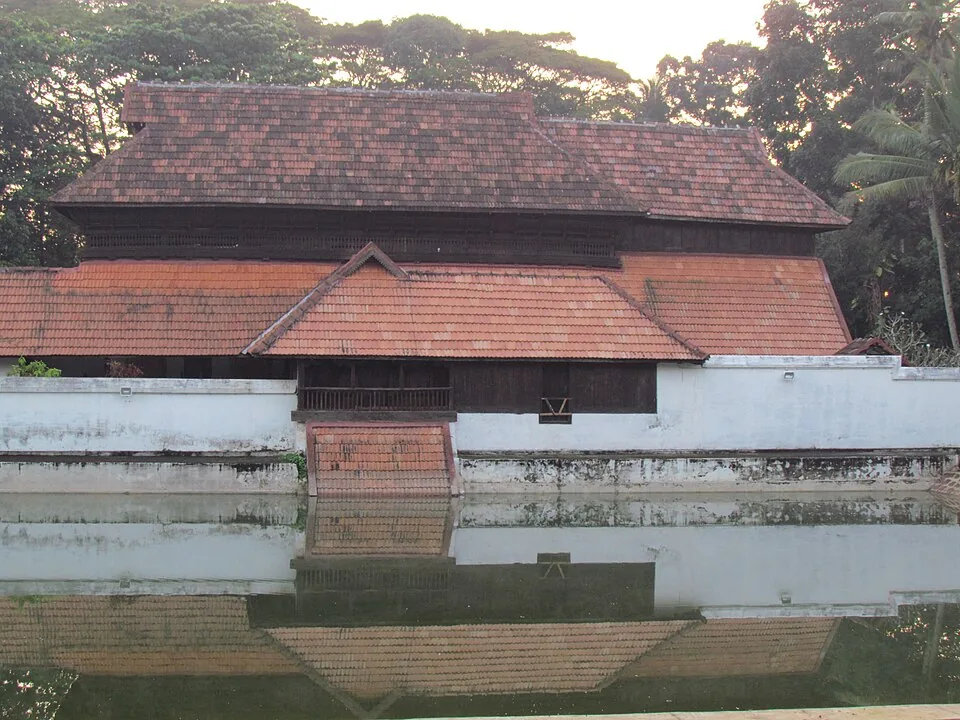
Restored 18th-century Travancore palace at Kayamkulam, home to the huge Gajendra Moksha mural.
9.5 km · straight line
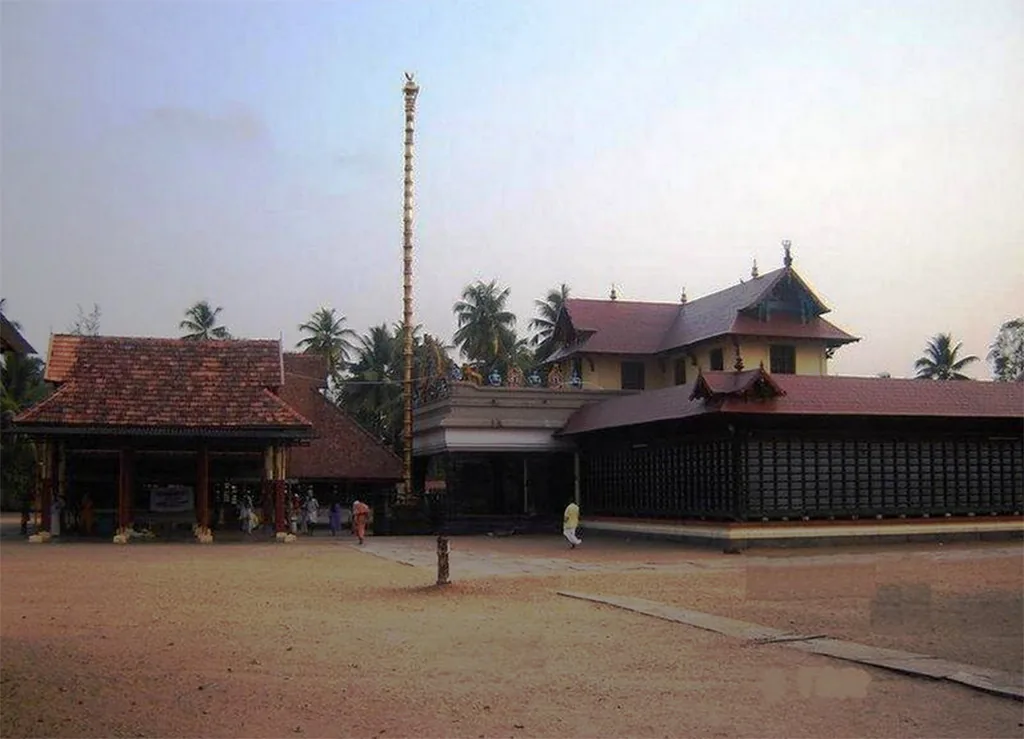
One of Kerala’s oldest Subramanya (Murugan) temples, in the south-Alappuzha town of Haripad.
Roampedia is commission-free — own or know a stay, eatery, guide or shop near Chettikulangara Devi Temple? Submit public business details for review.
Add a nearby businessEntry: Free entry is typical for darshan; specific offerings, poojas and vazhipadu are paid separately at the temple counter.
Dress code: Traditional Kerala temple dress is expected — men generally in a mundu (often bare-chested or in modest upper cloth as is custom), women in saree, set-mundu, salwar or other modest attire covering shoulders and legs.
Festivals: The headline events are the Chettikulangara Kumbha Bharani (Feb–March) and its Kettukazhcha of giant Kuthira and Theru edifices raised by the thirteen karas (⚠ the Kuthira is a tiered tower, not a horse effigy, despite the name); the ancient Kuthiyottam vow performed by young boys; the months-long Parayeduppu procession; the thirteen-day Ethirelpu festival; and the closing Aswathi procession honouring the link with Kodungallur.
Photography: Photography is generally welcomed in the outer precincts and is a highlight during the Kettukazhcha, but the inner sanctum and some rituals may be restricted — always check and ask permission before photographing inside or during ceremonies.
If you are travelling by bus or ferry, check the return service with the operator before setting out. Leave time to reach the stop or jetty after your visit.
Ask at the bus stand for the time of the last service back, not the next one. If you miss it, an auto or app cab is the fallback — agree the fare before you get in.
If you need step-free access, contact the site before travelling. Ask about a level entrance, steps along the route, the nearest drop-off point, seating and accessible toilets.
Charge cap and free-transaction limits: Reserve Bank of India, ATM FAQ updated 4 July 2025; checked 4 October 2026.
These services are listed within about 1.2 km of Chettikulangara Devi Temple. Walking distances follow mapped routes; access and opening hours can change. Other services may be closer but are not included here.
Published emergency and visitor-assistance contacts. For an immediate emergency, call 112. Shared Kerala contact sources checked 4 October 2026; publication does not establish a tested live response.
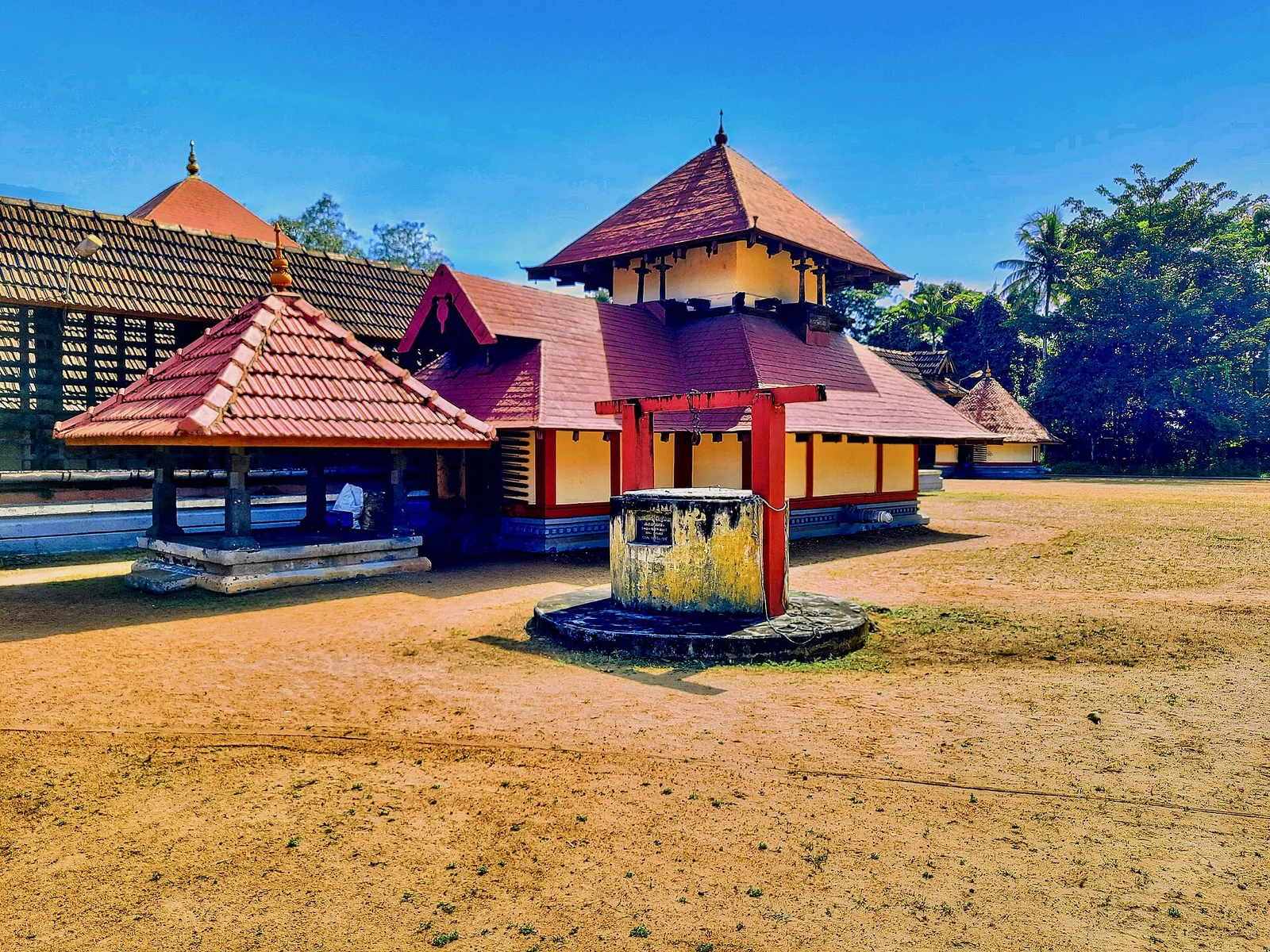
The Shiva temple west of Mavelikkara whose 823 AD epigraph makes it the earliest Kerala temple with a dated inscription about its own origin — Shiva in the kirata hunter form, once the capital shrine of Odanad, and the richest single record of devadasi authority in this region.
3.2 km · straight lineRestored 18th-century Travancore palace at Kayamkulam, home to the huge Gajendra Moksha mural.
8.6 km · straight lineOne of Kerala’s oldest Subramanya (Murugan) temples, in the south-Alappuzha town of Haripad.
9.5 km · straight lineMajor serpent shrine set in a sacred grove.
10.5 km · straight line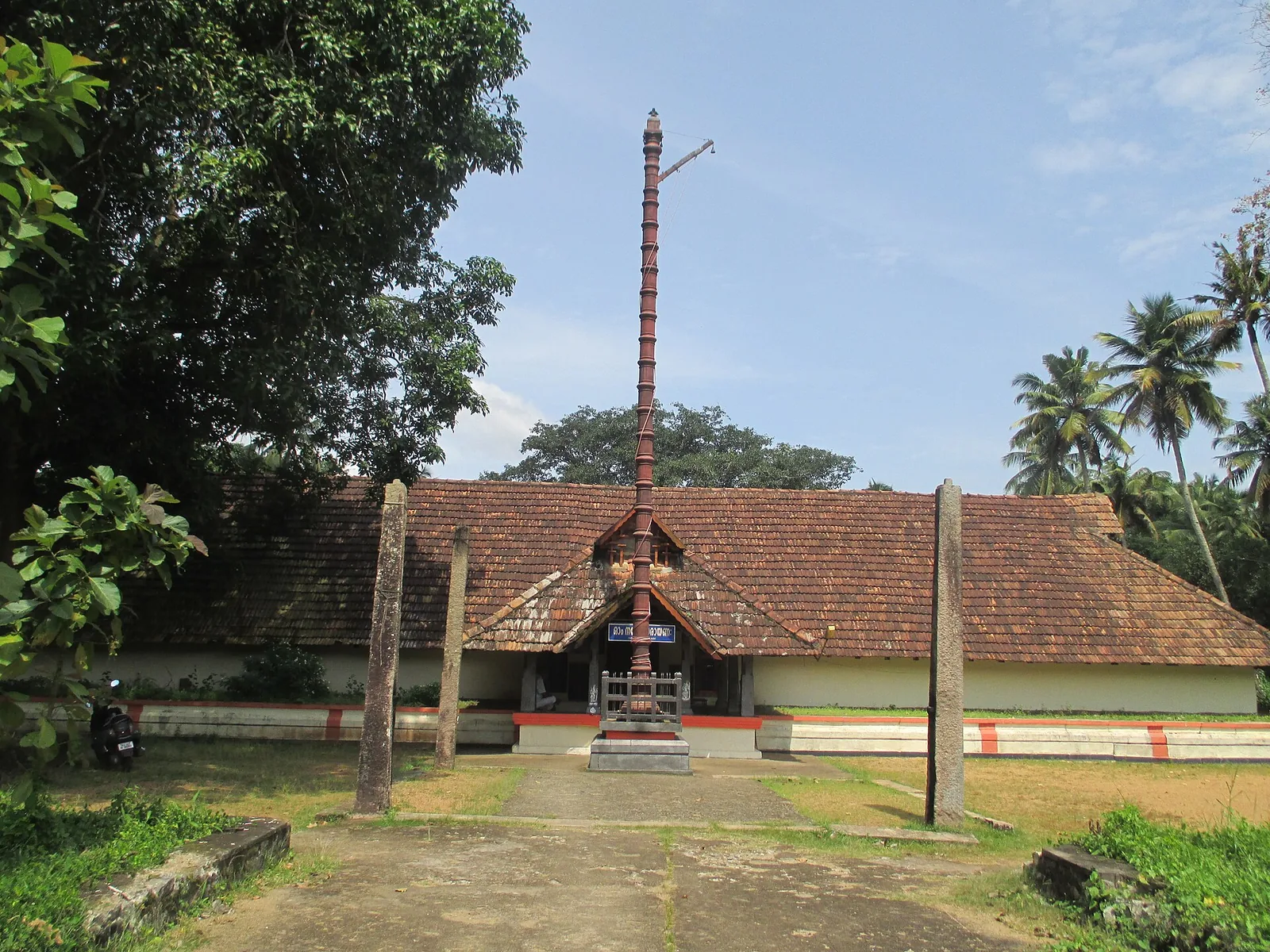
The Yudhishthira temple of the five Pancha Pandava shrines around Chengannur and one of the 108 Divya Desams, at Mundankavu — where the god is Imayavarappan, “lord of those who came before”, and darshan is held incomplete until you have also worshipped at the Shankha Theertham tank.
14.6 km · straight line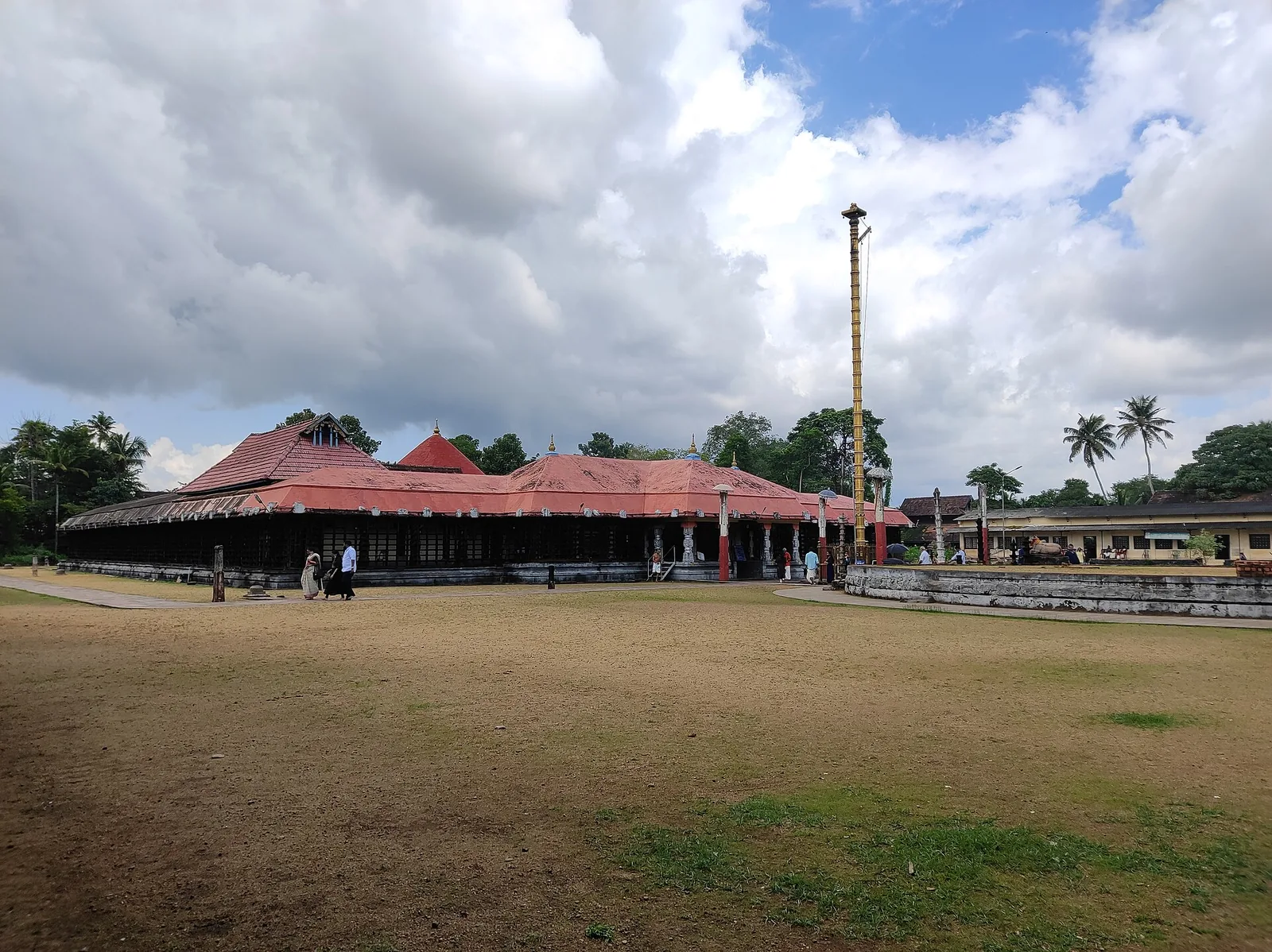
The great Shiva–Parvati temple of Chengannur, where the goddess is held to menstruate and the Thripputhaarattu is observed — one of the 108 Shivalayas, and the temple where the Thazhamon Madom tantris perform their first puja before they may officiate at Sabarimala.
14.9 km · straight line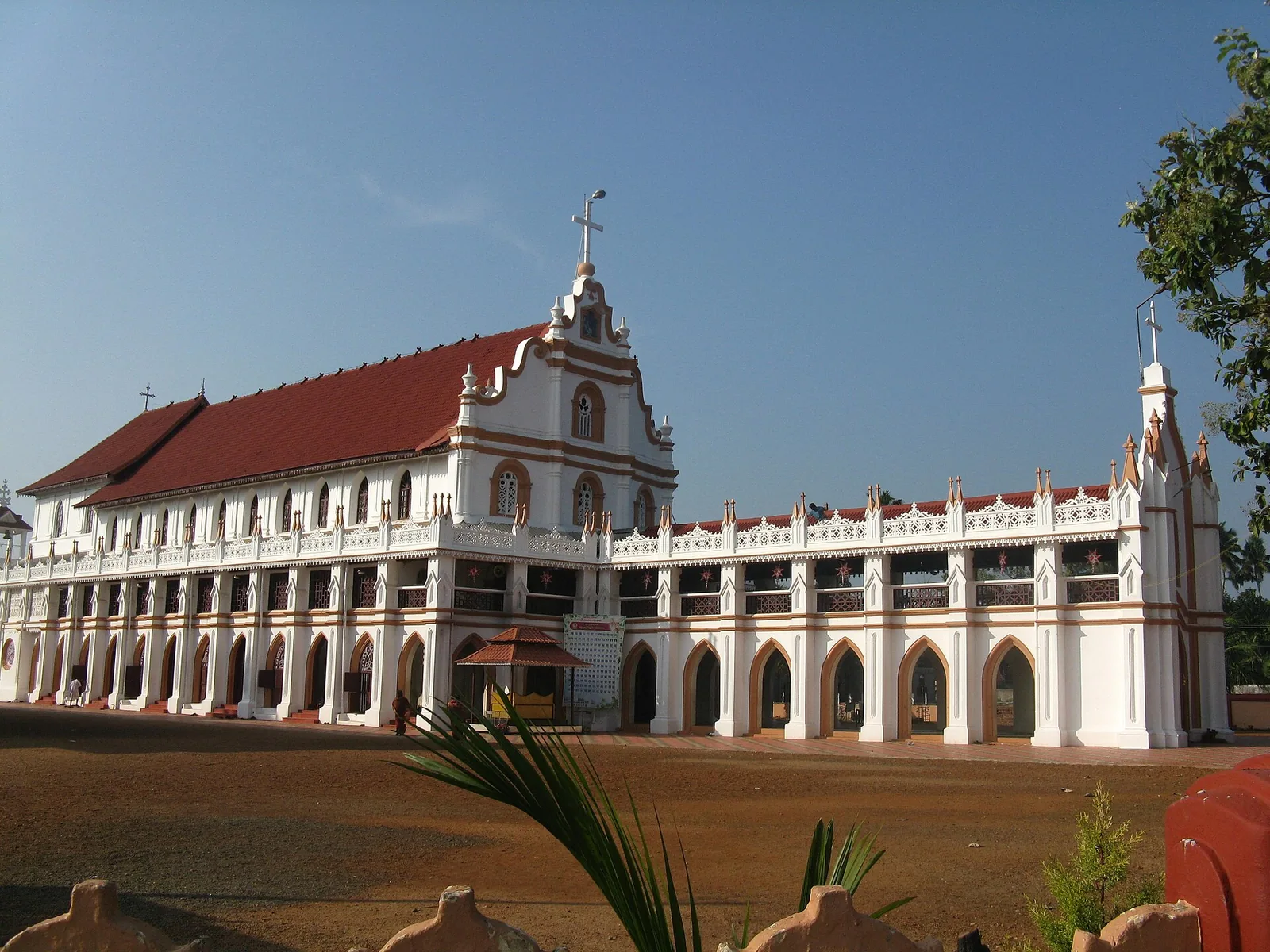
St George Forane Church at Edathua in Kuttanad, known for its large annual pilgrimage feast.
16.2 km · straight line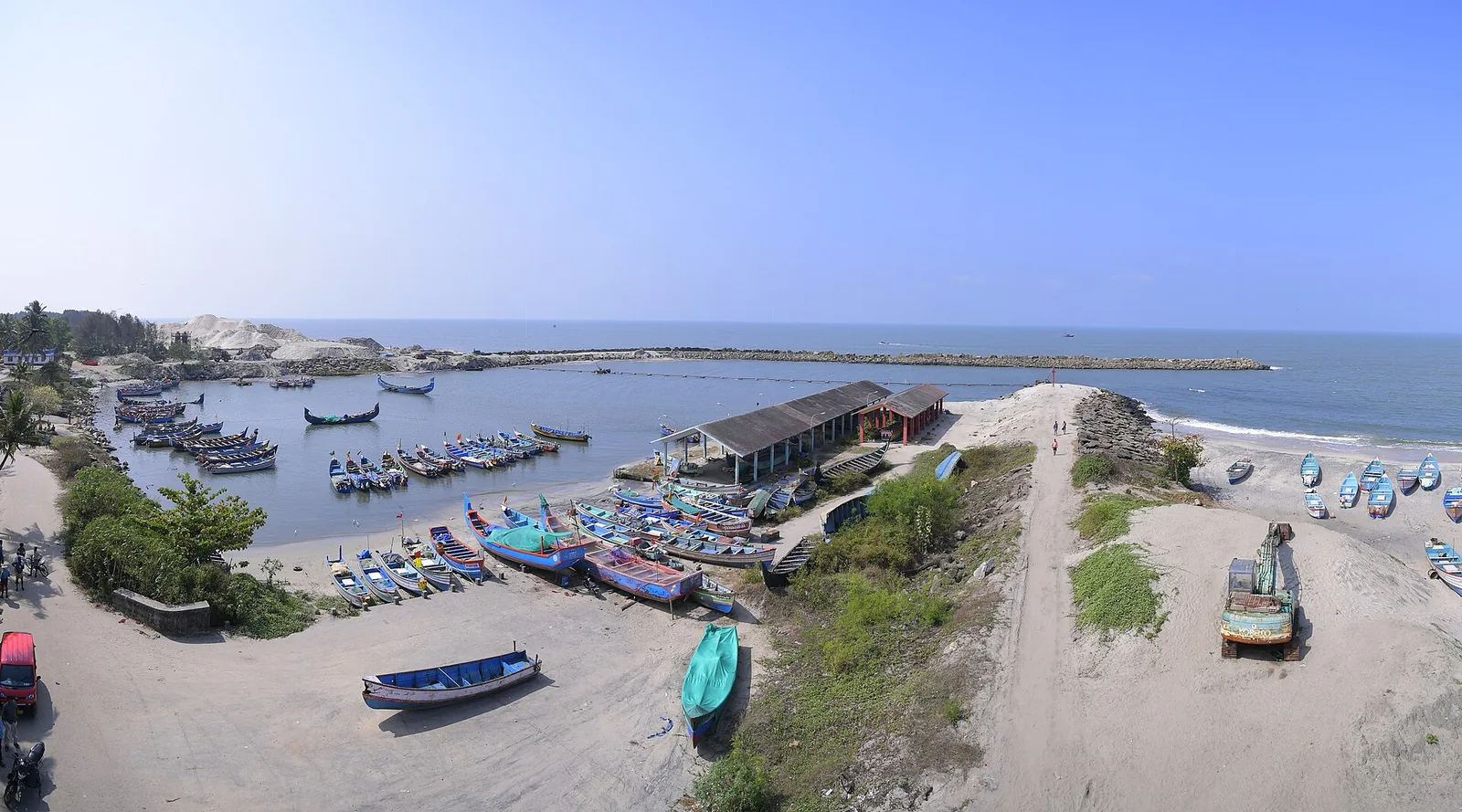
Working fishing harbour and 1955 flood spillway where the Thottappally leading channel meets the sea, south of Ambalappuzha — a painted fleet, two breakwaters and heaps of titanium-bearing black sand, rather than a quiet beach.
18.0 km · straight line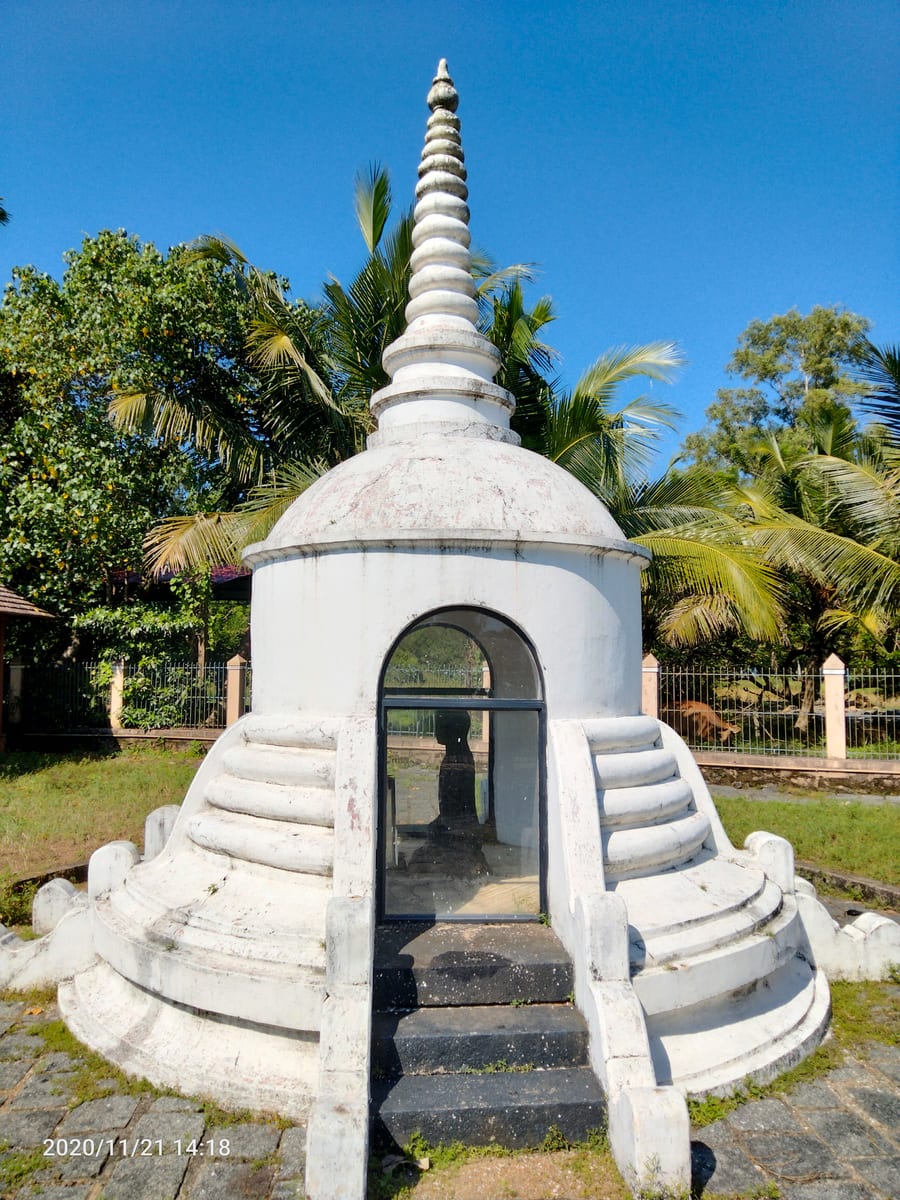
Ancient black-granite Buddha statue at Karumadi near Ambalappuzha, a relic of Kerala’s Buddhist past.
22.2 km · straight line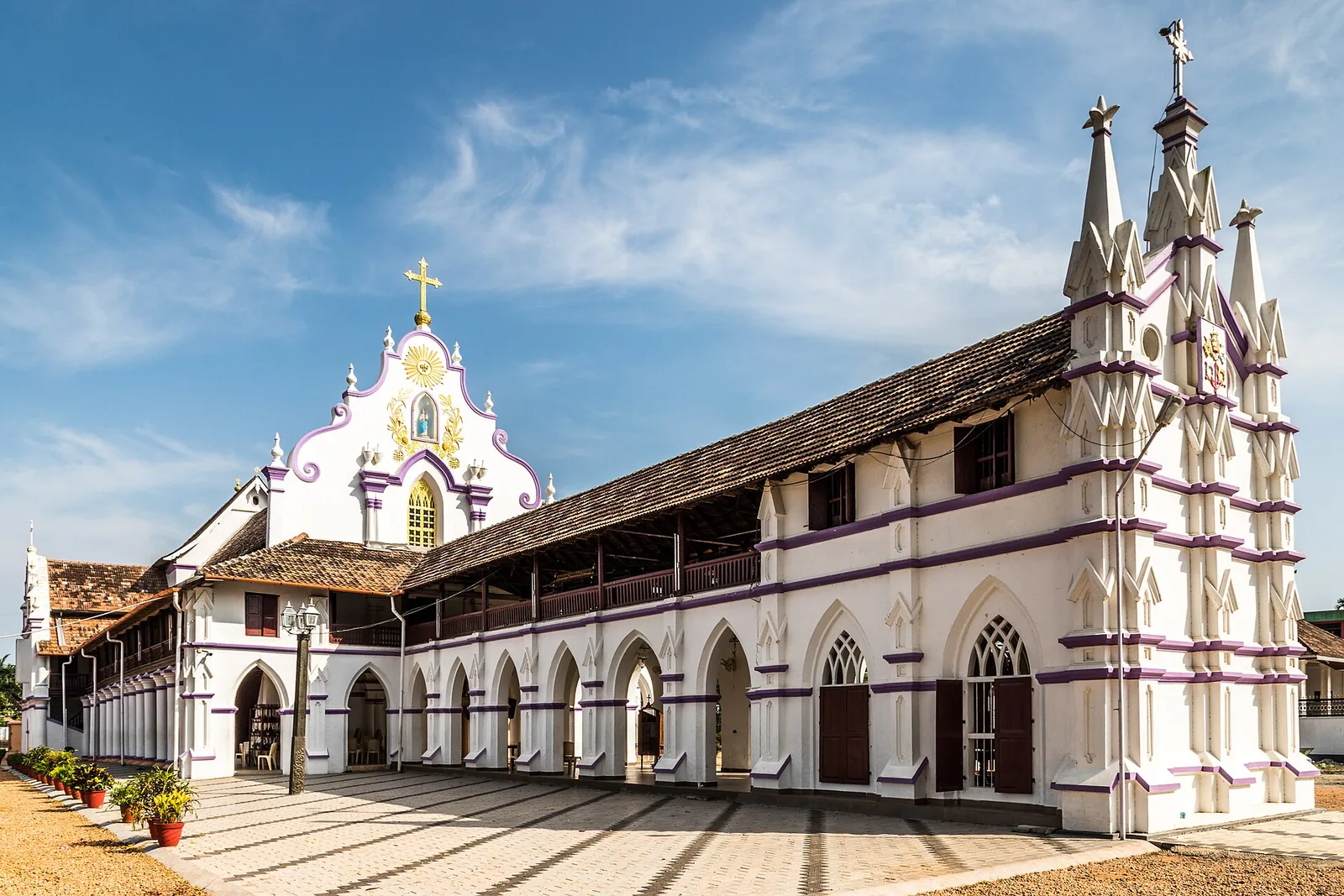
Kuttanad village on the Pamba known for the Champakulam Moolam snake-boat race and Kalloorkad St Mary’s Basilica.
23.2 km · straight line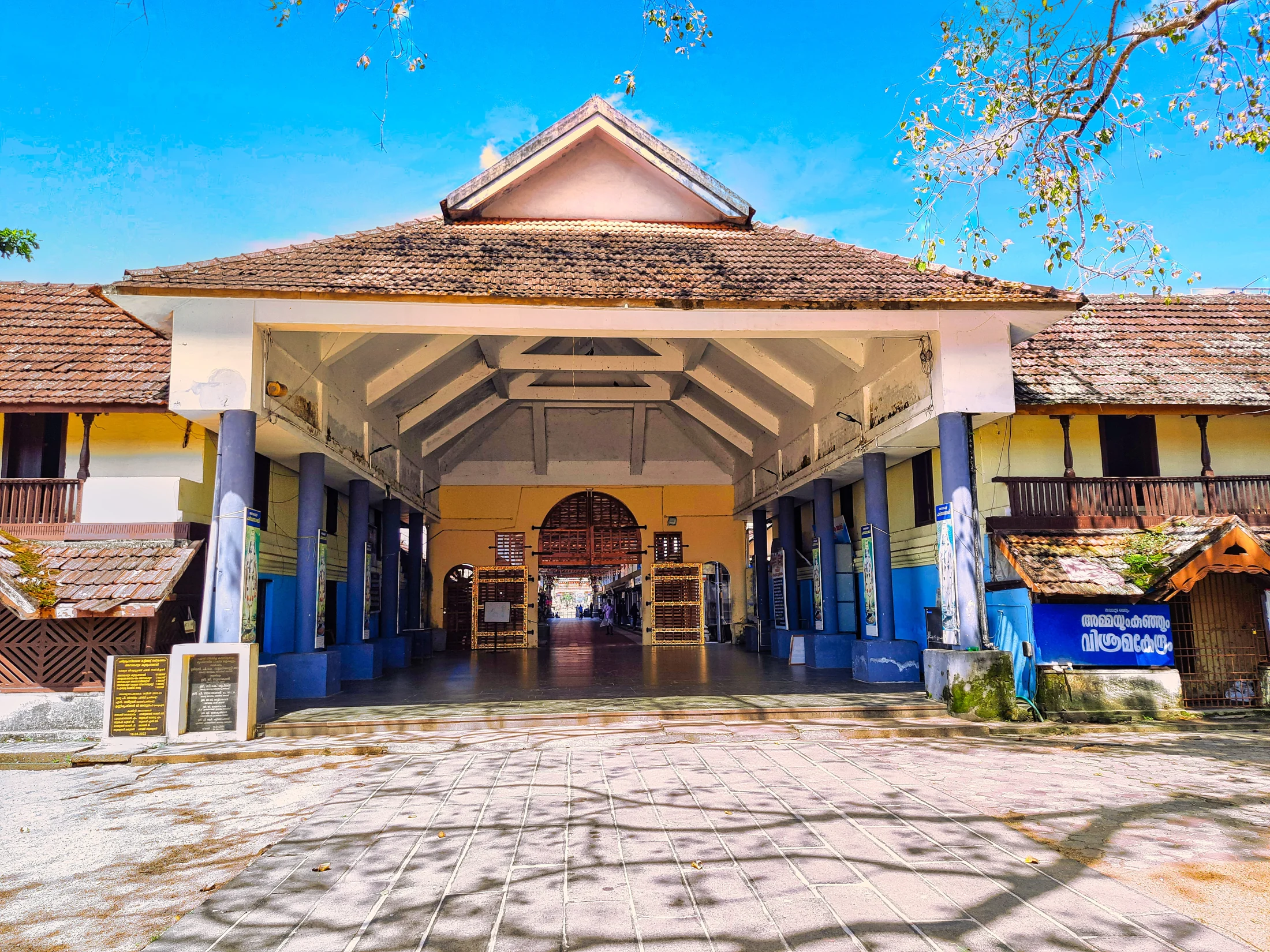
Ambalappuzha Sree Krishna Temple is an active temple in Ambalappuzha town, south of Alappuzha, administered by the Travancore Devaswom Board. Krishna is worshipped here as Parthasarathy, Arjuna’s charioteer. The temple combines a broad tank, tiled courtyards and painted ritual spaces with two enduring cultural associations: Palpayasam offered to the deity, and Kunchan Nambiar’s creation of Thullal. A visit works best when darshan, the permitted exterior spaces and any offering collection are planned around the temple’s morning or evening opening.
23.8 km · straight line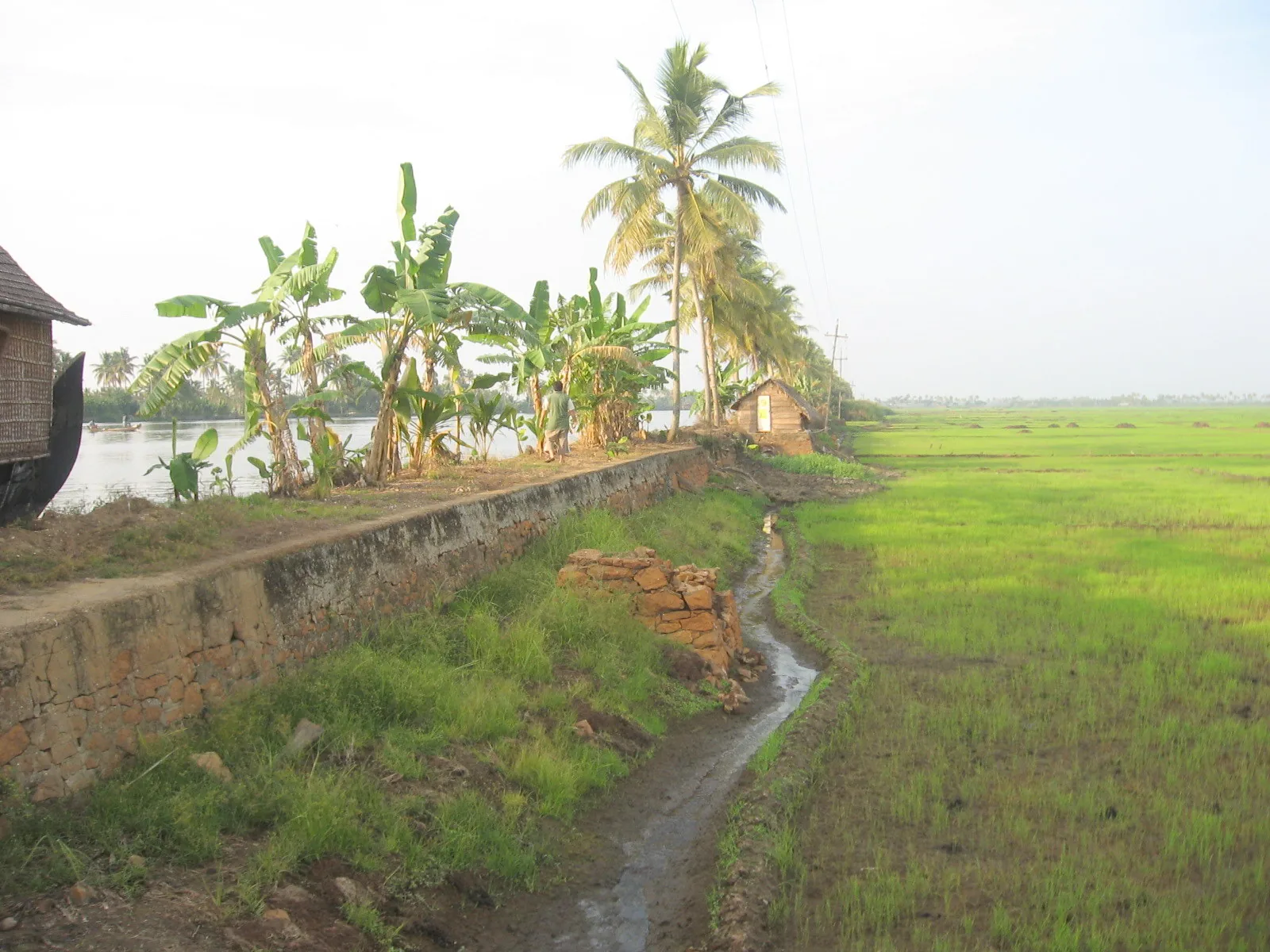
Low-lying paddy and canal region known as Kerala’s rice bowl.
26.6 km · straight lineNearby toilets, pharmacies, ATMs, seating and vets are community-mapped and may be incomplete or out of date. Map data © OpenStreetMap contributors | Walking times © openrouteservice.org by HeiGIT
It is one of the most renowned and richest Devi temples in Kerala, dedicated to Sree Bhadrakali (Bhagavathy), and celebrated above all for the Chettikulangara Kumbha Bharani festival and its spectacular Kettukazhcha — gigantic Kuthira (horse) and Theru (chariot) effigies built by thirteen villages and paraded to the temple.
By tradition the Devi is worshipped in three aspects through the day — Maha Saraswati (knowledge) in the morning, Maha Lakshmi (wealth) at noon, and Maha Kali (power) in the evening. Many devotees time their darshan to the form connected with the blessing they seek.
The Kumbha Bharani falls on the Bharani star in the Malayalam month of Kumbham, corresponding to February–March. The Kettukazhcha spectacle, when the giant Kuthira and Theru are raised in the fields and drawn to the temple, is the marquee event of this season.
First, a correction to what is usually written: the Kuthira is not a horse effigy. The word is traditional but the form is architectural — a tall, narrow, multi-tiered tower of cloth, tinsel and timber, with a painted central panel, flanking painted deity figures and a spire finial. The Theru is the shorter, broader tiered canopy form. Photographs of both show it, and our Kadakkal page makes the same point about its Kuthirayeduppu. On height: the figures commonly given run from about 70 to 105 feet, with the Theru temple-cars somewhat smaller. Alongside them are colossal wooden figures of Bhima, Hanuman and Panchali.
The temple is administered by the Travancore Devaswom Board. Tradition dates it to around 1,200 years, with the present shrine structure understood to be roughly four to five centuries old and the main hall rebuilt around 1540 CE.
It lies about 4 to 5 km west of Mavelikkara town in Alappuzha district. The nearest railway station is Mavelikkara (about 5 km), Haripad station is also close by, and the nearest airports are at Kochi (Cochin) and Thiruvananthapuram, each roughly 100–115 km away.
Morning or early evening is usually best; festival days can be powerful but crowded.
Entry: Free entry is typical for darshan; specific offerings, poojas and vazhipadu are paid separately at the temple counter. Timings: Typically open in the morning and again in the evening — commonly around 5.00 am to 11.00 am and 5.00 pm to 8.00 pm.
45 minutes to 2 hours, longer during festival or queue periods.
Nearby you can pair Kandiyoor Sree Mahadeva Temple (3.2 km, approximate straight-line separation), Krishnapuram Palace (8.6 km, approximate straight-line separation), Haripad Sree Subramanya Swamy Temple (9.5 km, approximate straight-line separation), Mannarasala Sree Nagaraja Temple (10.5 km, approximate straight-line separation).
Use official counters for offerings/tickets where applicable. Keep footwear and valuables secure in crowded areas.
Written about Chettikulangara Devi Temple itself — its history, its legends and the arguments about them.
Route-level itineraries and practical guides for the rest of Kerala.
Photographs: RajeshUnuppally (CC BY-SA 3.0), Hellblazzer (CC BY-SA 4.0), Dvellakat (CC BY-SA 3.0), Catverine (CC BY-SA 3.0). Wikimedia Commons.