What to expect
Highlights
- Heritage experience at Krishnapuram Palace
- Architecture, local stories and old trade/cultural routes
- Good fit for guided walks and nearby cafes/shops
Restored 18th-century Travancore palace at Kayamkulam, home to the huge Gajendra Moksha mural.
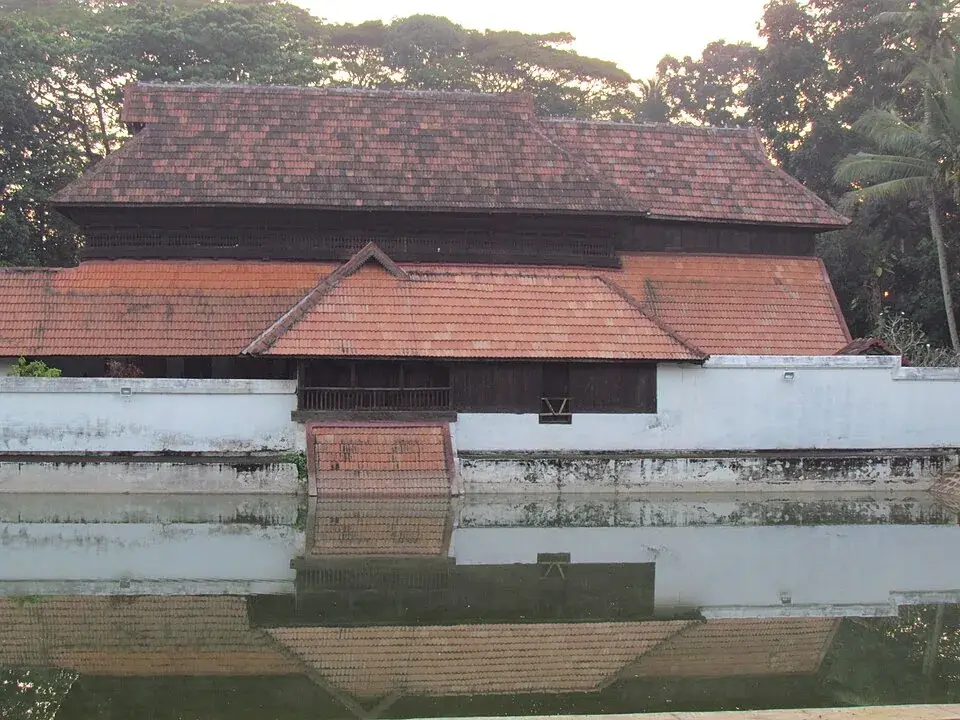
Behind a laterite gateway near Kayamkulam stands an 18th-century Travancore palace built by the king who had just destroyed the kingdom it sits in. Its stairwell holds the Gajendra Moksham mural — a rescued elephant caught mid-prayer to a descending god — and its museum displays the sword of the dynasty the builder conquered.
Krishnapuram Palace sits just off the coastal highway near Kayamkulam, a short hop from Haripad in Alappuzha district, and it rewards the traveller who slows down for it. From the road it reads as a modest tiled Kerala mansion, but step through the gate and you enter a two-storeyed maze of gabled roofs, low doorways, narrow corridors and dormer windows — the same austere, timber-and-laterite idiom that makes the far more famous Padmanabhapuram Palace so atmospheric. The building is built low and cool, teak and rosewood underfoot, Mangalore tiles overhead, laid out around courtyards that channel light and monsoon breeze in equal measure.
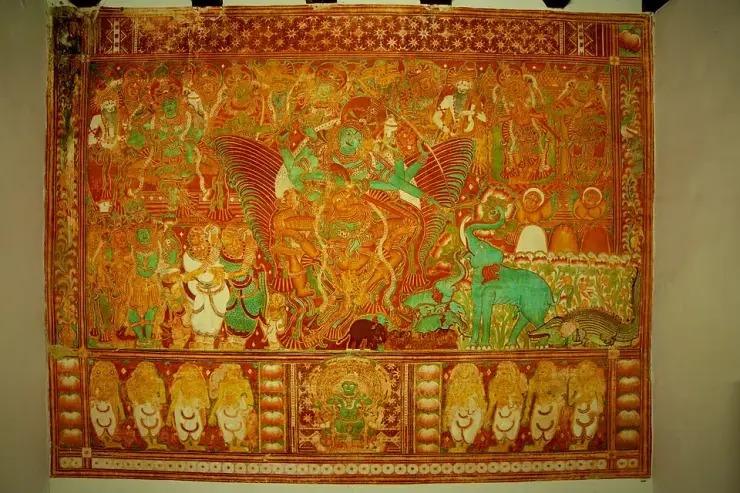
The palace is best known today as an archaeological museum run by Kerala’s Department of Archaeology, and its single most celebrated possession is the Gajendra Moksham mural. Painted directly onto a wall beside the staircase, it is widely described as the largest single-band mural painting so far discovered in Kerala — roughly fourteen feet by eleven, a little over 150 square feet. Up close it is a dense, glowing tangle of ochre, green and earth-red pigment: the great elephant king at the centre, Vishnu sweeping down on Garuda to save him, and a crowd of lesser gods, sages and forest creatures pressing in at the edges.
By tradition the mural was set here deliberately, near the tank, so that the Travancore kings could offer worship to the deity after their morning bath — art and ritual folded into the architecture rather than hung on a wall as decoration. That intimacy is part of the visit: you do not view the Gajendra Moksham across a rope in a grand hall, you meet it in a dim, human-scaled stairwell where the paint has survived two and a half centuries of coastal humidity.
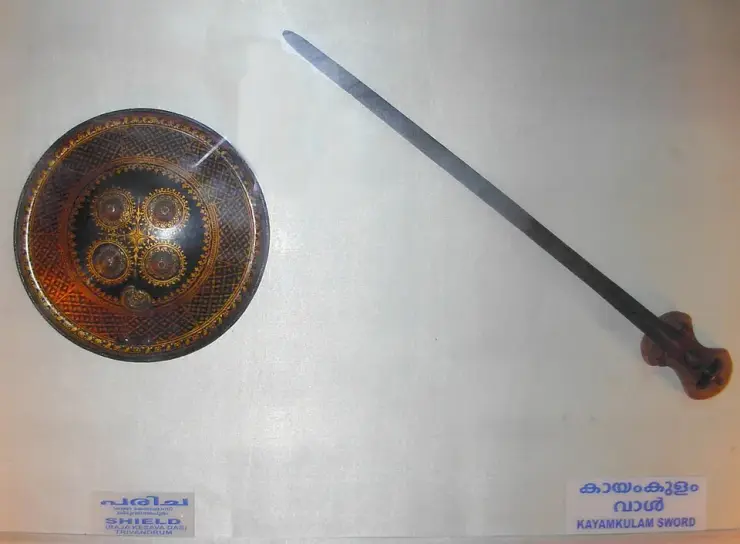
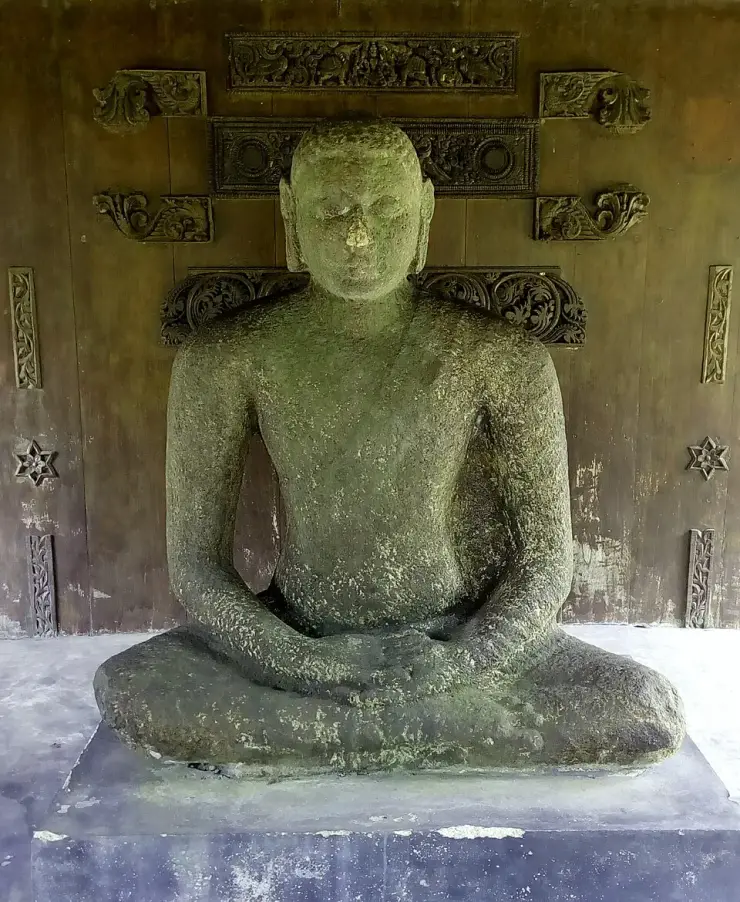
Beyond the mural, the rooms and grounds are a genuine treasure-box. There is a serene tenth-century stone Buddha, carved from a single block and housed in its own small mandapam — one of a handful of early Buddhist images recovered from around Alappuzha, and a reminder of a Buddhist past most visitors to Kerala never hear about. There is the celebrated Kayamkulam Vaal, a distinctive double-edged sword tied to the Kayamkulam rajas; an old stone horse trough; ceremonial vessels; antique bronzes and Panchaloha figures; coins; megalithic relics; and stone and wood sculpture gathered from across the region.
The garden itself is a quiet pleasure. A stepped bathing tank fed by a spring sits within the compound, its stone steps descending into still green water, and the surrounding lawns and old trees make the grounds a cool place to linger after the museum rooms. It is the kind of site where twenty minutes with a good guide turns an unassuming building into a layered story of dynasties, faiths and craftsmanship.
For a place of such historical weight, Krishnapuram Palace remains refreshingly uncrowded — a detour more than a set-piece, easily paired with the Mannarasala serpent temple, the temples of Haripad, or a break on the long drive between Kollam and Alappuzha. Come for the mural, but leave time for the Buddha, the sword and the tank; together they sketch the whole tangled history of this stretch of the Kerala coast.
The mural takes its name from one of the best-loved stories in Hindu tradition, the Gajendra Moksha — the liberation of Gajendra, king of the elephants. Legend holds that Gajendra went down to a lake to bathe and was seized by the leg by a powerful crocodile lurking in the water. For a very long time the two struggled, neither able to win, until at last the exhausted elephant, sensing his strength failing, plucked a lotus with his trunk, raised it skyward and surrendered himself utterly to Vishnu.
By tradition, Vishnu heard the cry and came at once, riding the great bird Garuda, and with his discus he struck down the crocodile and drew Gajendra free — granting the elephant not merely rescue but moksha, release. The tale is read as a parable of total surrender: that liberation comes the moment the devotee stops relying on his own strength and calls out in complete trust. It is this instant of divine descent and deliverance that the palace mural freezes in pigment.
It is worth saying what the Gajendra Moksham story actually is, because the mural assumes you know. Gajendra was the king of elephants. Bathing in a lake, he was seized by the foot by a crocodile — in the tellings, a gandharva under a curse — and the two struggled for an age, neither able to win. At the end of his strength, the elephant lifted a lotus in his trunk and called on Vishnu. Vishnu came, descending on Garuda, and released him. The theology of it is direct: the moment that saves Gajendra is not his strength, which had already failed, but the surrender of it.
That is what you are looking at on the staircase wall. Vishnu on Garuda at the centre, the green elephant and the crocodile at the right, and around them a crowd of gods and sages watching. There is a separate register of seated figures along the bottom, inside a decorated border, and there is visible damage to the wall at the upper left. It is painted in ochre, green and earth red in natural pigment, and it is very large — about three metres high, whatever one concludes about the disputed area figures.
The Gajendra Moksham is one of the most widely painted subjects in Kerala mural art, and the reason is partly formal rather than theological: it gives a painter an enormous animal, a water monster, a flying mount, a god in descent and a crowd of onlookers, all in one composition, which is a great deal to work with on a large wall. What is unusual here is the scale it is given and the position it occupies. Most Kerala murals of this subject are inside temples. This one is in a palace, on a staircase, in a secular building put up by a king.
A tradition attaches to where it was put. The mural sits beside the staircase near the palace tank, and the explanation given locally is that it was placed there so that the Travancore kings could make their devotions to it after their morning bath. Whether or not that is the reason, it is a good description of how the painting works: it is on a route, not in a shrine — something you pass and stop at rather than something you enter.
The palace stands near Kayamkulam, once the seat of an independent kingdom (Odanad) before Travancore’s Marthanda Varma annexed it, and local lore still gathers around relics such as the Kayamkulam Vaal, the sword linked by tradition to the Kayamkulam rajas and their fierce martial reputation. Such stories are best enjoyed as legend rather than documented history — colour woven into a place whose verified past is remarkable enough on its own.
The thing to understand about Krishnapuram is that it is a victory monument. Anizham Thirunal Marthanda Varma, who reigned from 1729 to 1758 and is reckoned the founder of modern Travancore, spent his reign absorbing the small kingdoms of the region. Odanad, with its seat at Kayamkulam, was annexed in the mid-1740s. This palace was built after that, in the territory he had just taken, near the Krishnaswamy temple at Krishnapuram — and Kerala Tourism's account that it underwent significant renovation in the eighteenth century implies he was working on or beside something that was already there.
The museum makes the point sharper than any plaque could. Among its holdings is the Kayamkulam Vaal — the sword of the Kayamkulam raja, the ruler of the kingdom this palace commemorates the destruction of. A conquered dynasty's regalia, curated by the successor state of its conqueror, in a building that conqueror put up on the conquered ground. Very few heritage sites in Kerala are as politically legible as this one, and almost nothing written about the palace mentions it, because the mural takes all the attention.
The rest of the collection is a good regional archaeology museum rather than a palace treasury: a tenth-century stone Buddha, a Saptamatrika panel, bronzes and panchaloha figures, coins, megalithic relics, stone and wood sculpture, an old stone horse trough, and a Travancore Anchal box — the state post box of the princely postal service, which is exactly the sort of ordinary object that vanishes and then turns out to be rare. In the compound there is a spring-fed stepped bathing tank.
⚠ A word on the Buddha, because two of our pages could otherwise blur into each other. The Krishnapuram Buddha is a complete seated figure, both hands in dhyana mudra in the lap, in grey lichen-stained stone, displayed in a mandapam against a carved timber backdrop. It is not the Karumadikuttan, the famous mutilated black Buddha, which is a separate object at Karumadi in Ambalappuzha taluk and has its own page. Both are evidence of Buddhism in this region; they are not the same statue and should never be described as though they were.
The palace as it stands was raised in the 18th century by Anizham Thirunal Marthanda Varma (reigned 1729–1758), the ruler who forged the modern kingdom of Travancore. He built it after defeating and absorbing the neighbouring kingdom of Odanad, of which Kayamkulam was the centre, in the Odanad–Travancore war of the mid-1740s. The present structure is understood to have replaced an earlier palace on or near the site associated with the Odanad rulers.
Architecturally it belongs to the classic Kerala palace tradition and is repeatedly compared to Padmanabhapuram Palace, the grander Travancore royal seat. Both share the same vocabulary — steep gabled roofs, dormer windows, thick timber-framed doors, narrow stairways and shaded courtyards — and both were built largely of laterite, teak, rosewood and local hardwoods under tiled roofs, designed for the heat and heavy monsoons of the Malabar–Travancore coast.
The Gajendra Moksham mural is dated to the same broad period as the palace and is regarded by art historians as one of the outstanding surviving examples of Kerala’s indigenous mural tradition — the same lineage seen at temples and palaces across the region, worked in natural mineral and vegetable pigments. Its scale, filling a single band on the staircase wall, is what sets it apart and earns it the frequent description as the largest such mural yet found in Kerala.
The tenth-century Buddha image held here is historically significant in its own right. It is counted among a small group of early Buddhist sculptures unearthed in the Alappuzha region, testifying to a period when Buddhism had a real presence along the Kerala coast — long before the temples and dynasties that dominate the area’s later history.
Today the complex is maintained as a protected archaeological museum by the Government of Kerala’s Department of Archaeology, which has conserved the mural and gathered into its rooms a wide collection of coins, inscriptions, megalithic remains, sculpture in stone, wood and bronze, and everyday and ceremonial objects — turning the old royal residence into a compact record of the region’s dynastic, artistic and religious past.
Stand before the Gajendra Moksham, painted in glowing natural pigments and about three metres high. ⚠ You will see it called the largest single-panel mural in Kerala, the largest single band discovered in Kerala, and India’s largest mural painting — the last by Kerala Tourism itself. None of these rests on a comparative survey and they cannot all be true, so we give the height, which everybody agrees on, and leave the superlatives to those making them.
Walk inside a genuine 18th-century Travancore palace built in the same style as Padmanabhapuram.
Meet a serene tenth-century stone Buddha carved from a single block — a glimpse of Kerala’s Buddhist past.
See the storied Kayamkulam Vaal sword and antique bronzes, coins and sculptures under one roof.
Wander a peaceful compound with a spring-fed stepped bathing tank and shaded old gardens.
Enjoy a rich, uncrowded heritage stop that pairs easily with Mannarasala and Haripad’s temples.
Road km to Alappuzha; ghat roads and traffic vary — allow extra.
November to February and early mornings are best for walking; avoid midday heat where possible.
Live forecast loads in your browser.
Sun and moon are calculated for this location and shown in IST. Photography windows are the hour around sunrise and sunset; the sunset bearing is degrees clockwise from true north. Moon phase is accurate to about half a day.
Browse listed stays, food, activities, sights, shops and rentals around Krishnapuram Palace. Check each listing’s locality and contact the business directly for current arrangements.
Resort and activity stay in Haripad and Mannarasala. Erickav, Haripad, Alappuzha, Kerala 690516 · Haripad, Erickav, Resort.
Temple guest house in Haripad and Mannarasala. Mannarasala P.O., Haripad, Alappuzha, Kerala 690514 · Contact temple guest house · Mannarasala, Guest house, Pilgrimage stay.
Book with the place itself. India’s cyber-crime coordination centre warned in April 2025 that convincing copies of hotel and pilgrimage booking sites are being pushed through sponsored search and social ads, taking payment for rooms the property never hears about. Use the contact and source details on each profile to confirm the exact business and booking channel. A directory entry or map pin alone does not establish an operator’s identity or current availability. Roampedia takes no commission and does not collect booking payments. If a booking page reached you through an ad, check the address bar against the property’s own site before you pay. Fraud can be reported on cybercrime.gov.in or on 1930.
Find food, accommodation and activities across Haripad and Mannarasala. Browse the guides for places to eat, stay and explore along your route.
3 more places around Haripad and Mannarasala. Open a guide to plan the visit and onward journey.
17.0 km · straight line
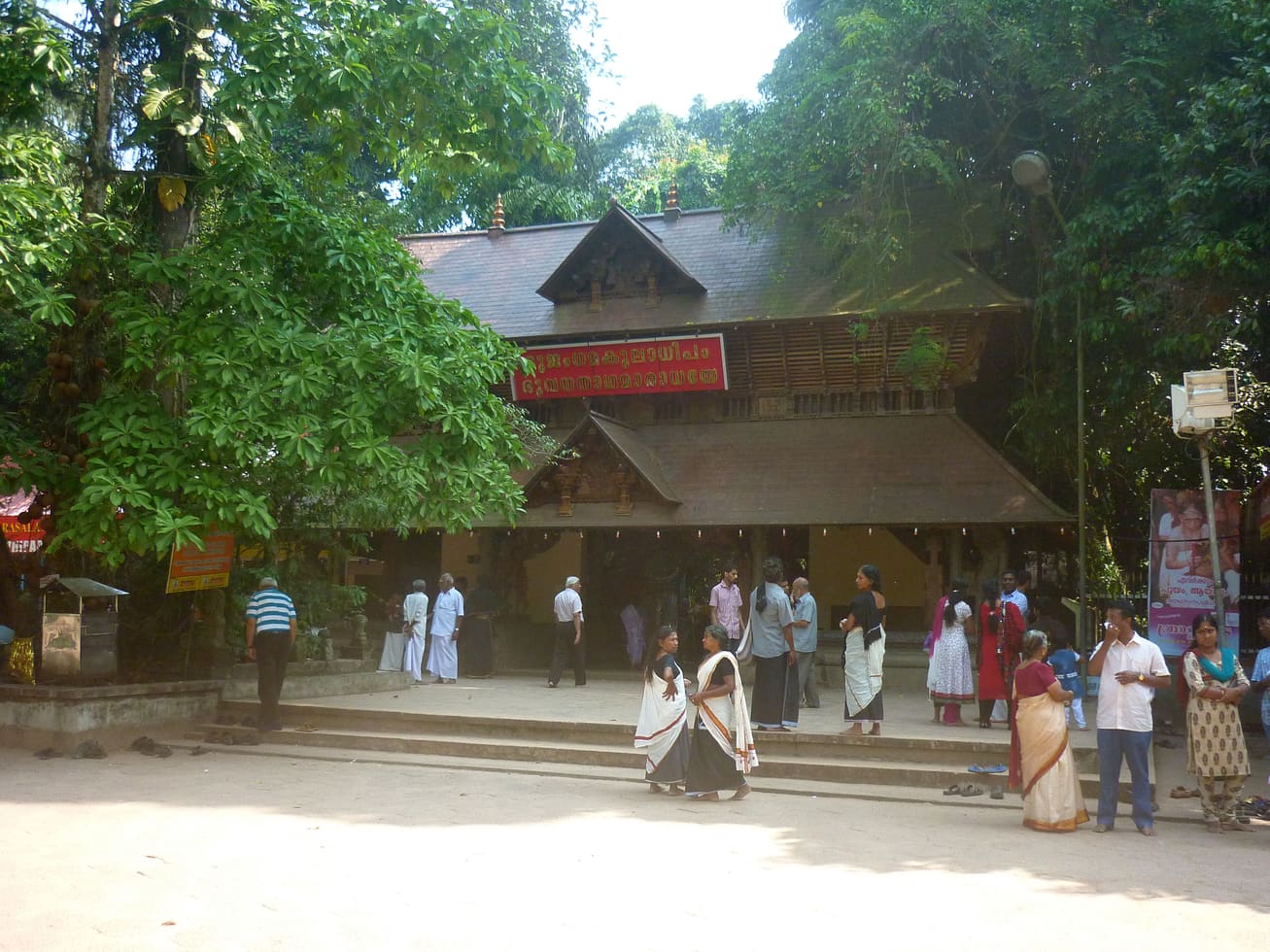
Major serpent shrine set in a sacred grove.
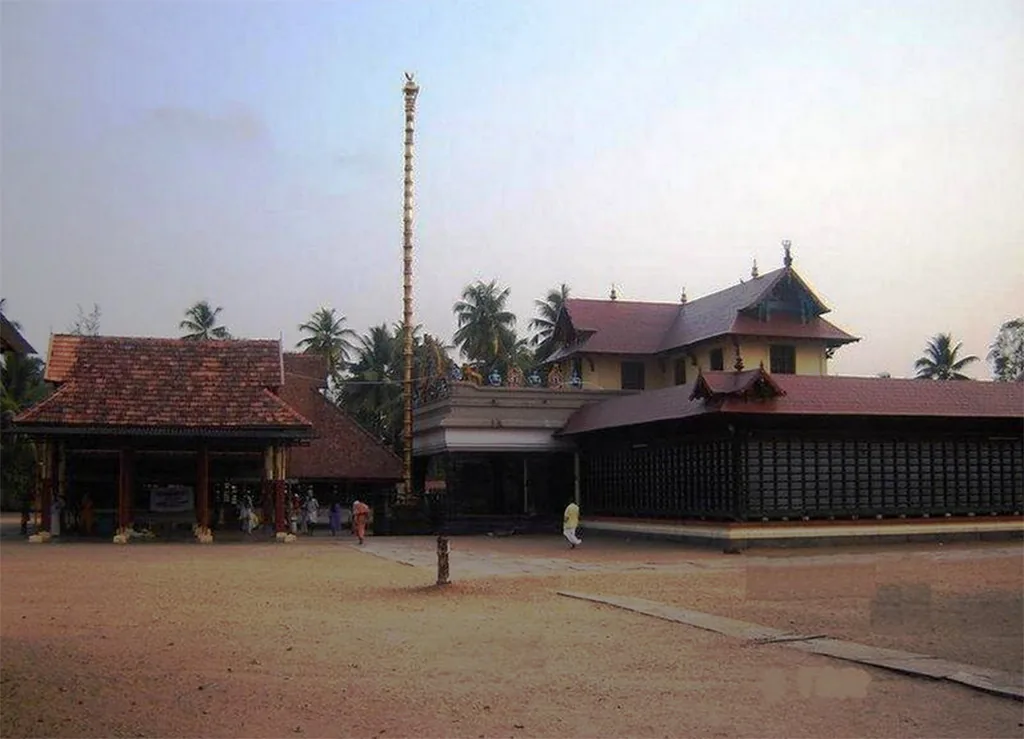
16.0 km · straight line
One of Kerala’s oldest Subramanya (Murugan) temples, in the south-Alappuzha town of Haripad.
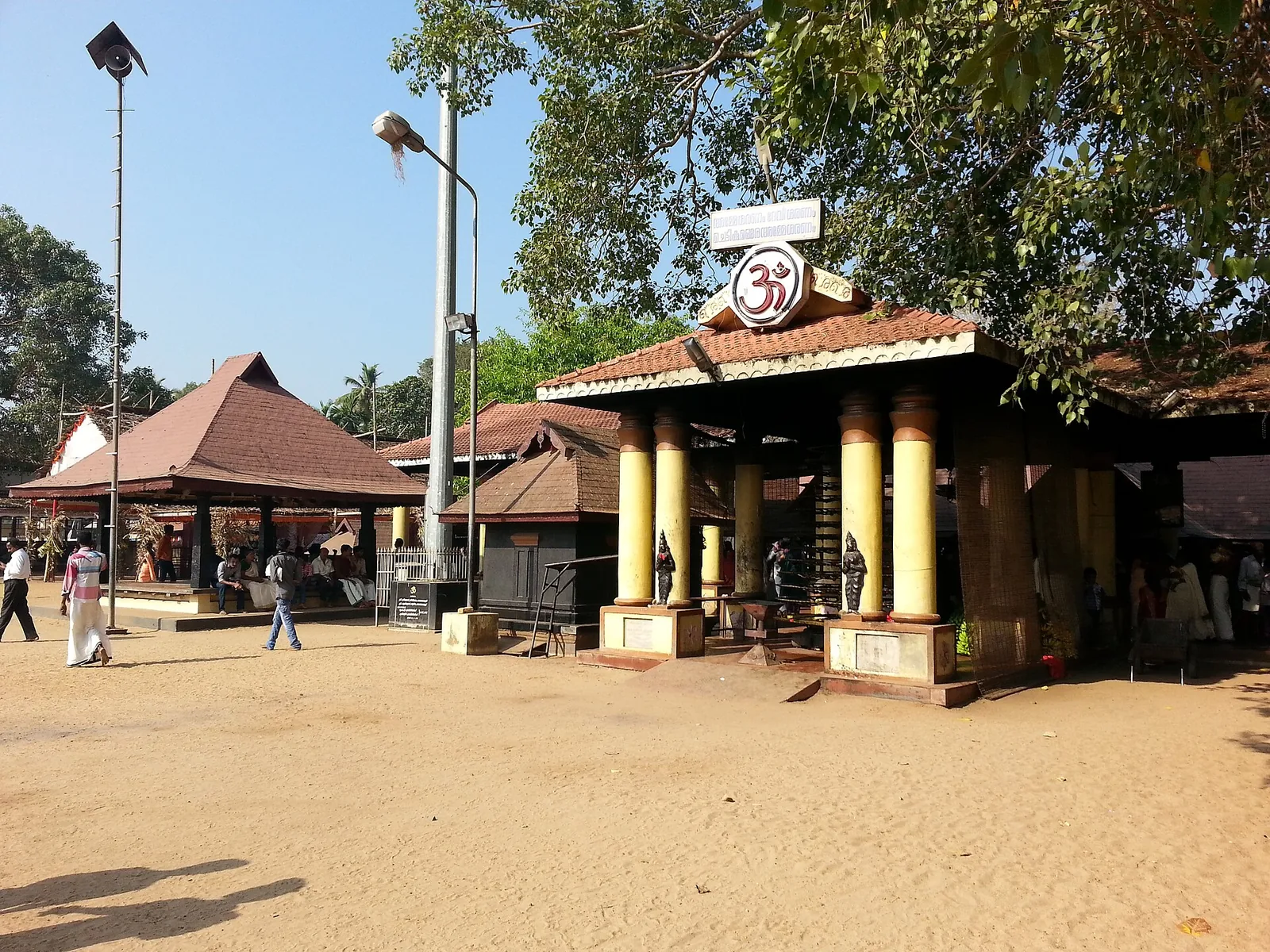
8.6 km · straight line
Major Bhagavathy temple near Mavelikkara, famous for its Kettukazhcha and Kumbha Bharani festivals.
Roampedia is commission-free — own or know a stay, eatery, guide or shop near Krishnapuram Palace? Submit public business details for review.
Add a nearby businessGovernment monuments, museums and forest reserves in India often charge foreign visitors more. We have not verified whether this site does — ask at the counter.
Fees change without notice. Check the current rate at the counter.
Entry: Published tariff from the Kerala State Department of Archaeology, which administers the palace: adults ₹25, children ₹5, mobile camera ₹20, still camera ₹50, mobile video ₹420, video ₹1,550, documentary ₹10,500, feature film ₹26,500. ⚠ Travel listings commonly print ₹20 adult / ₹10 child / ₹40 camera — those are not the department's figures.
Photography: Still photography is usually allowed for a modest extra fee, with higher separate charges for video and for any commercial, documentary or feature-film shooting. Flash and tripods may be restricted around the Gajendra Moksham mural to help preserve it — check with staff.
If you are travelling by bus or ferry, check the return service with the operator before setting out. Leave time to reach the stop or jetty after your visit.
Ask at the bus stand for the time of the last service back, not the next one. If you miss it, an auto or app cab is the fallback — agree the fare before you get in.
If you need step-free access, contact the site before travelling. Ask about a level entrance, steps along the route, the nearest drop-off point, seating and accessible toilets.
These services are listed within about 1.2 km of Krishnapuram Palace. Walking distances follow mapped routes; access and opening hours can change. Other services may be closer but are not included here.
Published emergency and visitor-assistance contacts. For an immediate emergency, call 112. Shared Kerala contact sources checked 4 October 2026; publication does not establish a tested live response.
Major Bhagavathy temple near Mavelikkara, famous for its Kettukazhcha and Kumbha Bharani festivals.
8.6 km · straight line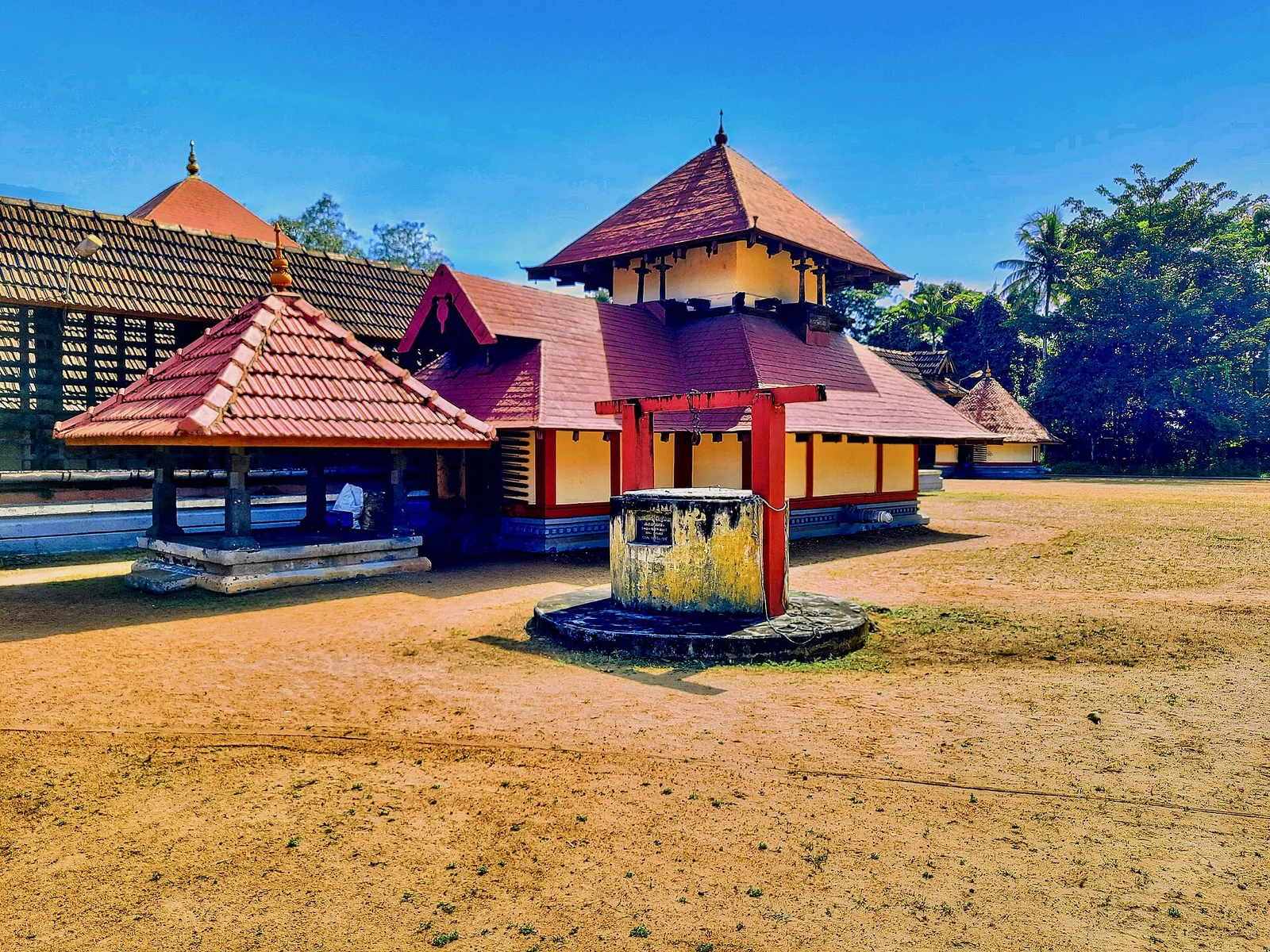
The Shiva temple west of Mavelikkara whose 823 AD epigraph makes it the earliest Kerala temple with a dated inscription about its own origin — Shiva in the kirata hunter form, once the capital shrine of Odanad, and the richest single record of devadasi authority in this region.
11.7 km · straight lineOne of Kerala’s oldest Subramanya (Murugan) temples, in the south-Alappuzha town of Haripad.
16.0 km · straight lineMajor serpent shrine set in a sacred grove.
17.0 km · straight line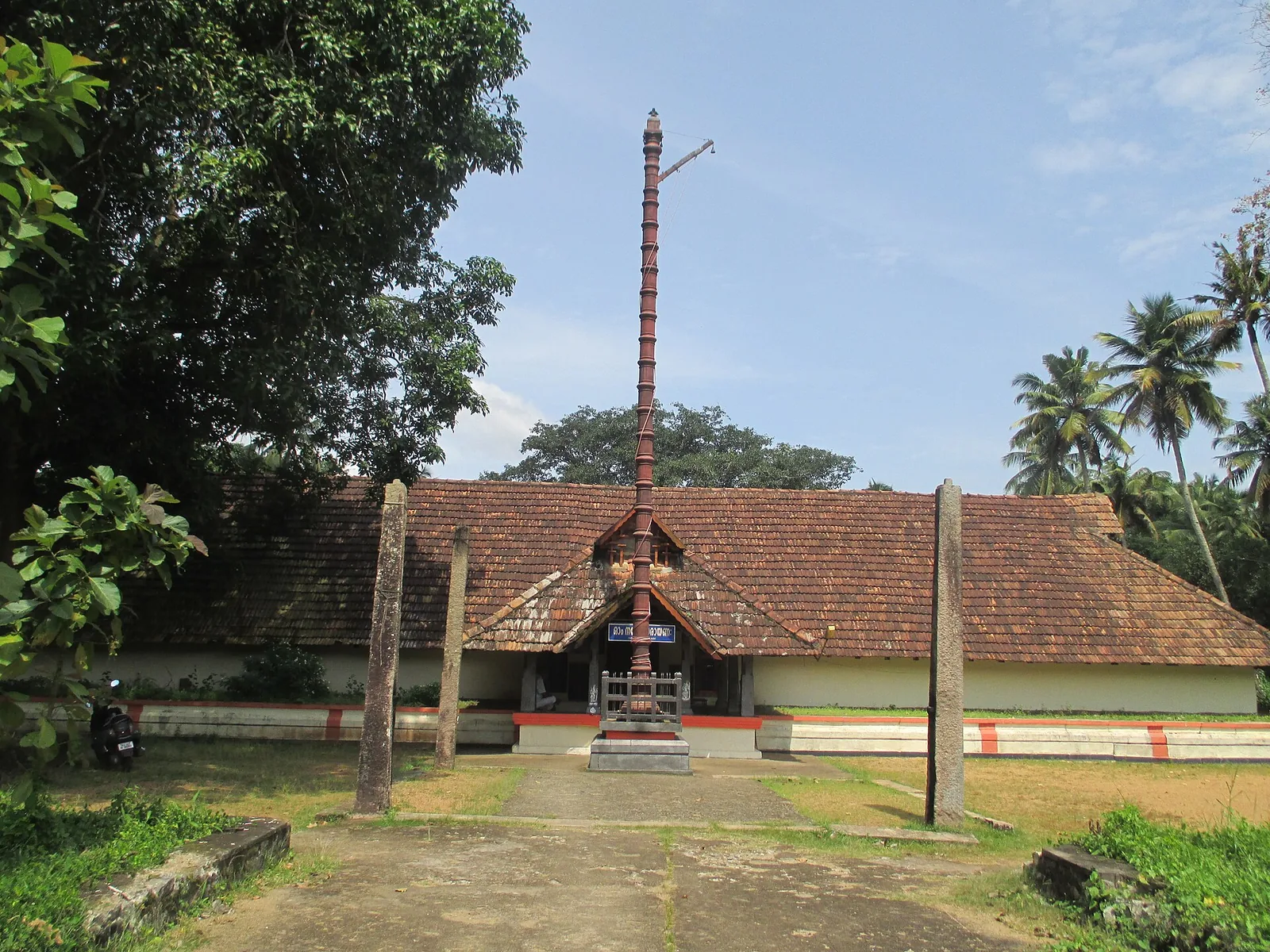
The Yudhishthira temple of the five Pancha Pandava shrines around Chengannur and one of the 108 Divya Desams, at Mundankavu — where the god is Imayavarappan, “lord of those who came before”, and darshan is held incomplete until you have also worshipped at the Shankha Theertham tank.
22.2 km · straight line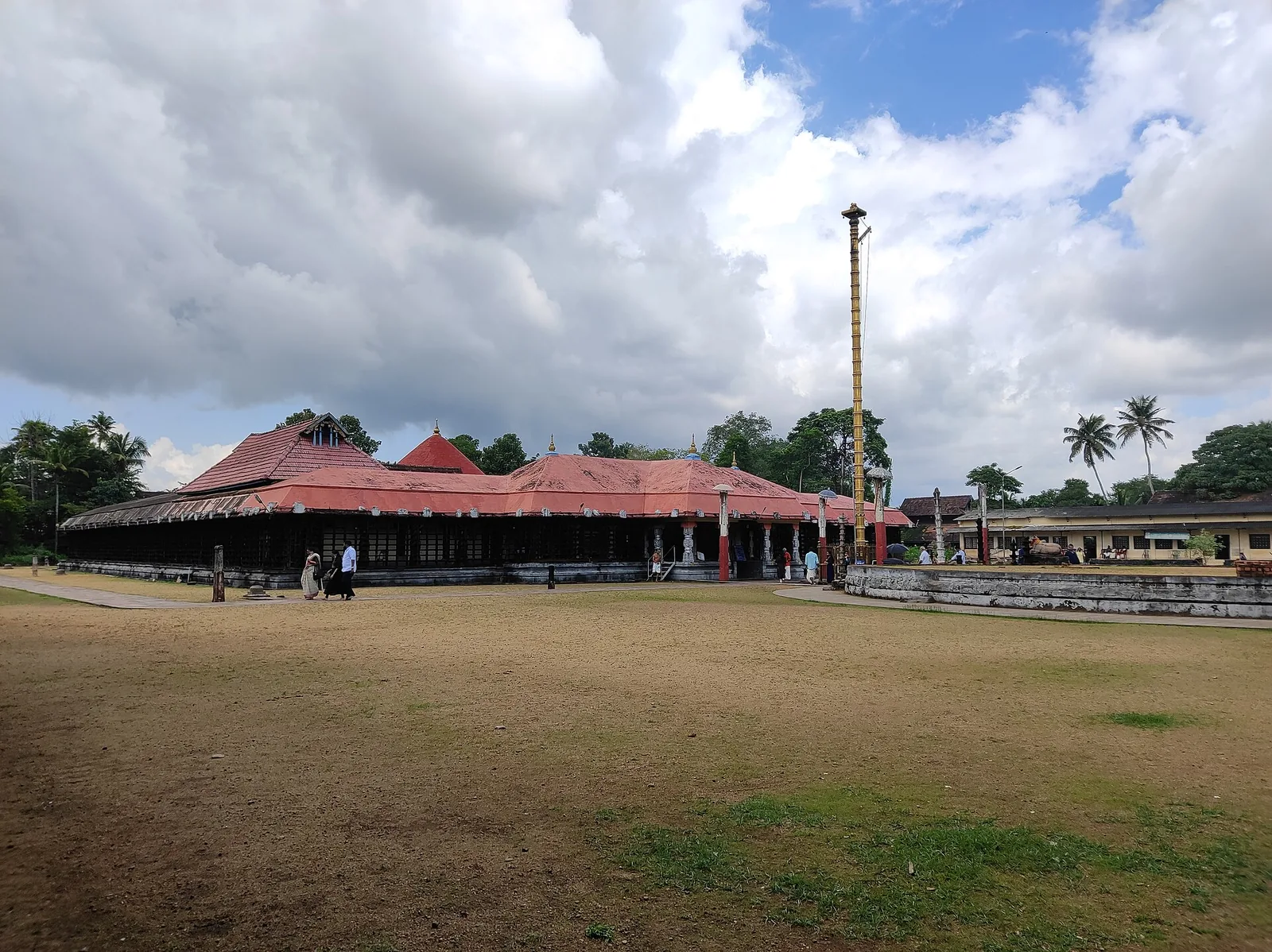
The great Shiva–Parvati temple of Chengannur, where the goddess is held to menstruate and the Thripputhaarattu is observed — one of the 108 Shivalayas, and the temple where the Thazhamon Madom tantris perform their first puja before they may officiate at Sabarimala.
22.4 km · straight line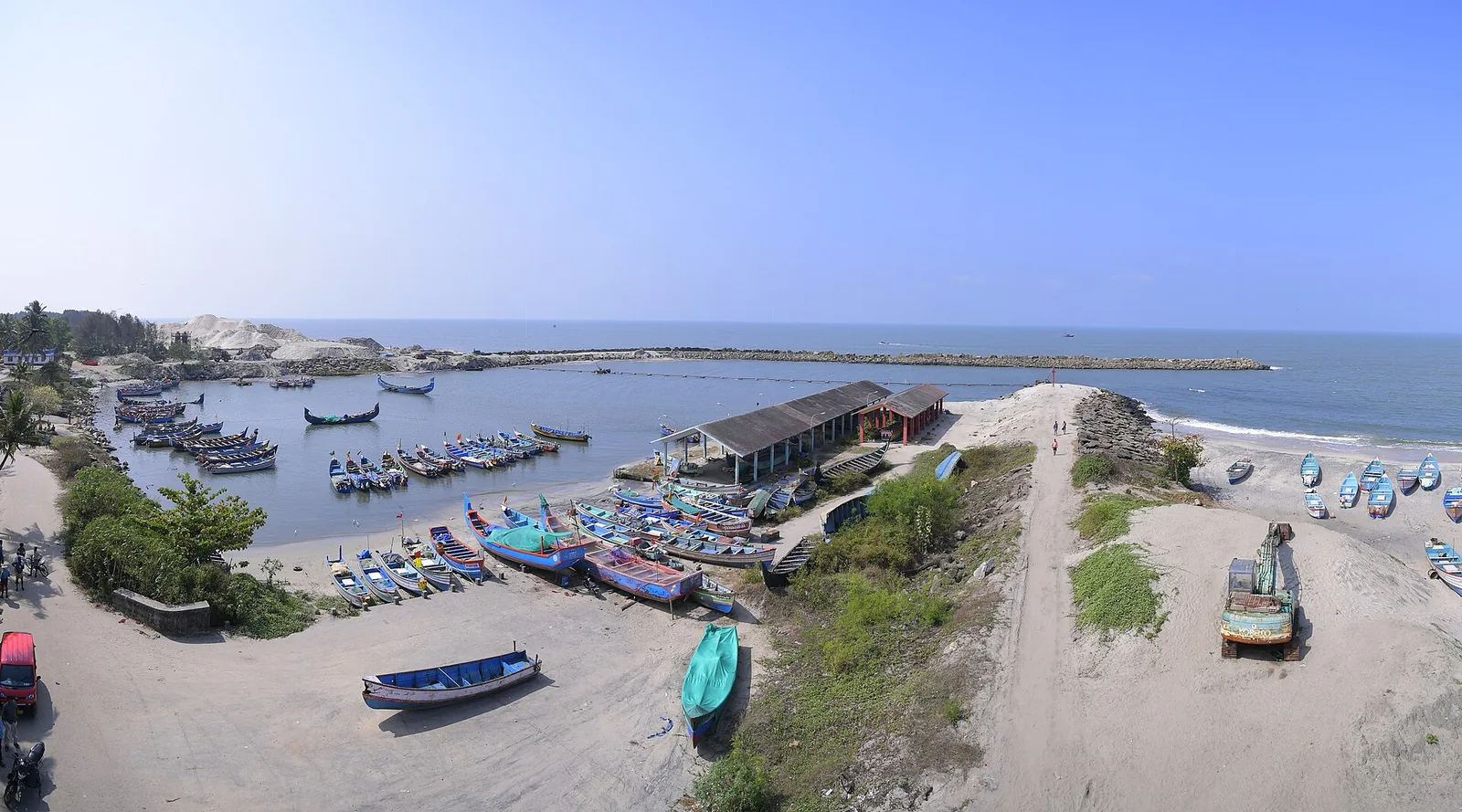
Working fishing harbour and 1955 flood spillway where the Thottappally leading channel meets the sea, south of Ambalappuzha — a painted fleet, two breakwaters and heaps of titanium-bearing black sand, rather than a quiet beach.
23.2 km · straight line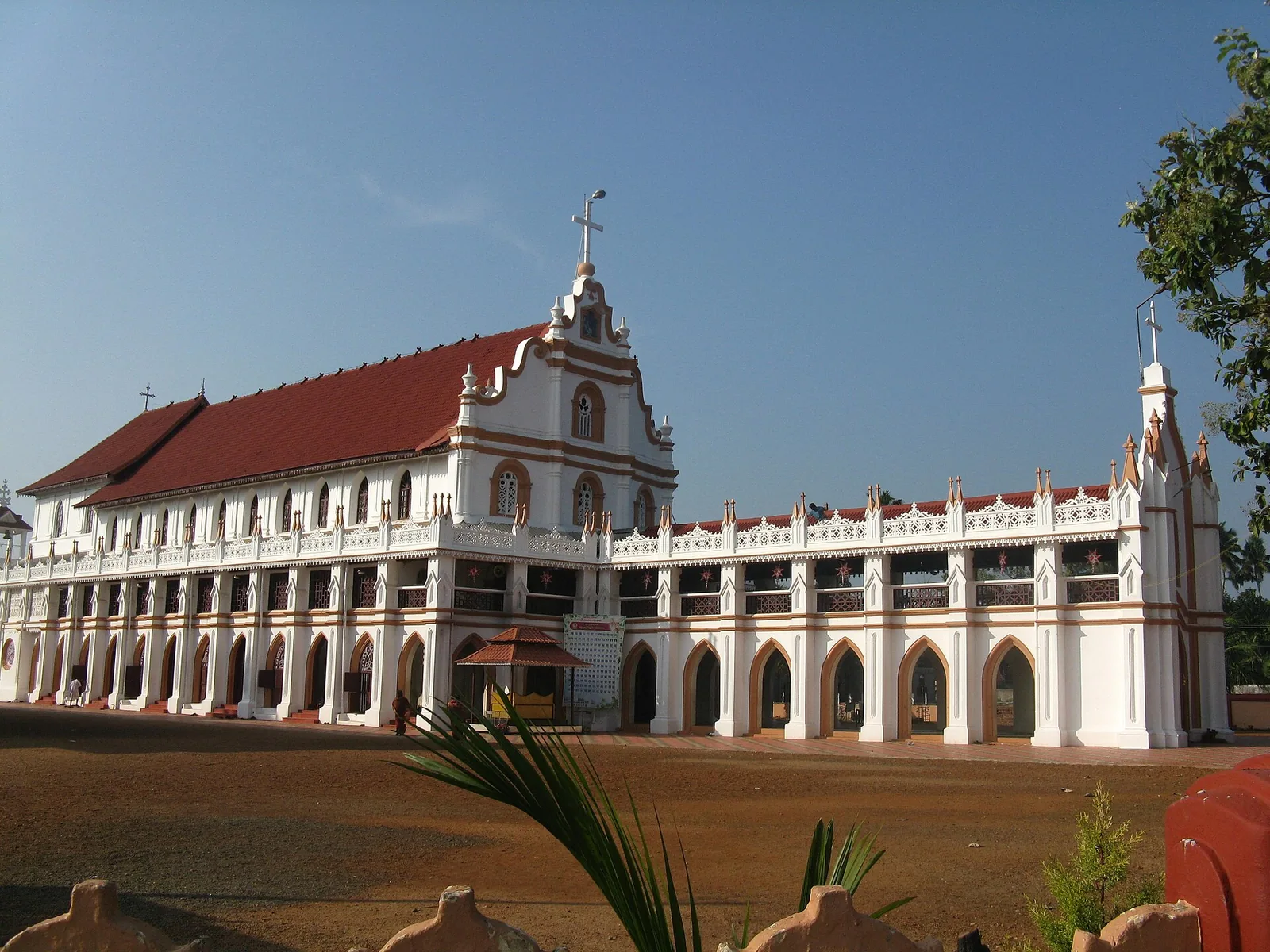
St George Forane Church at Edathua in Kuttanad, known for its large annual pilgrimage feast.
24.4 km · straight line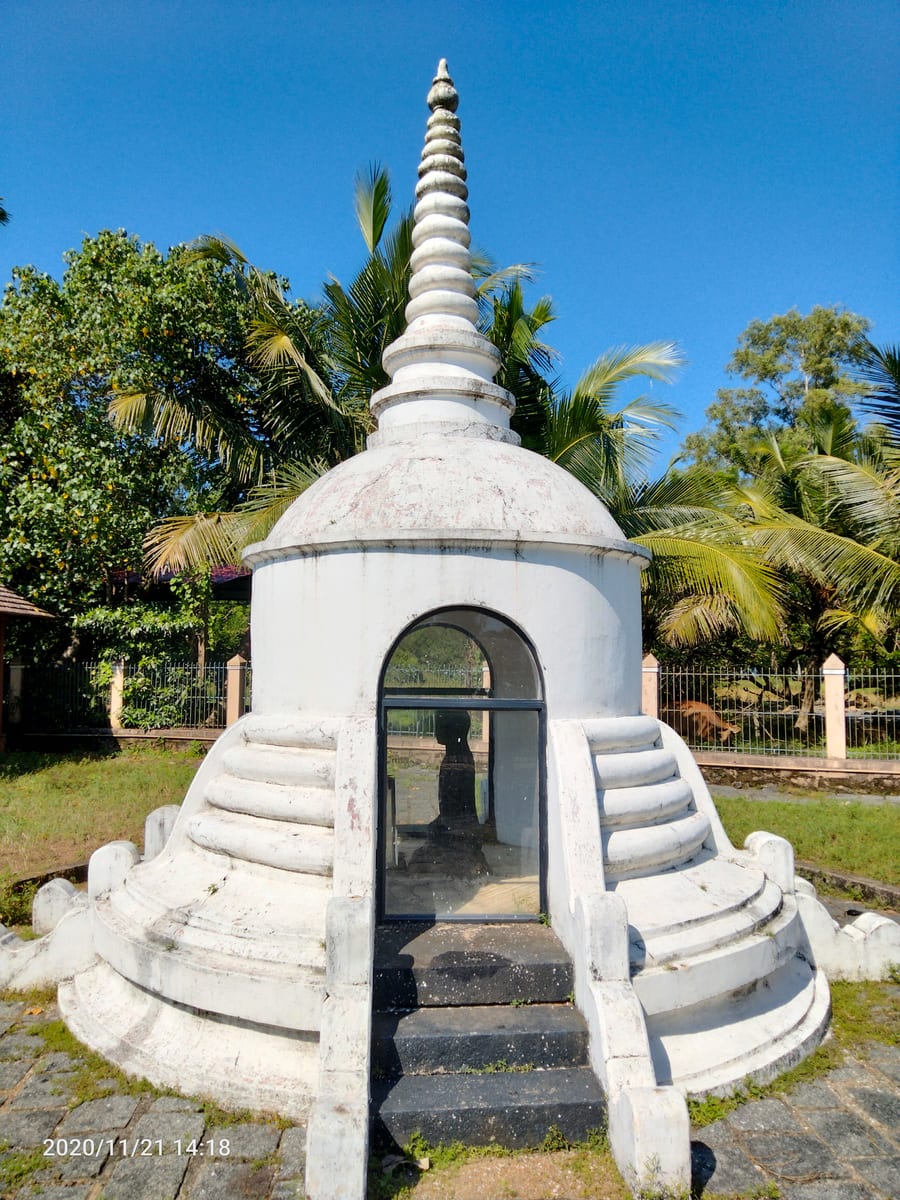
Ancient black-granite Buddha statue at Karumadi near Ambalappuzha, a relic of Kerala’s Buddhist past.
28.9 km · straight line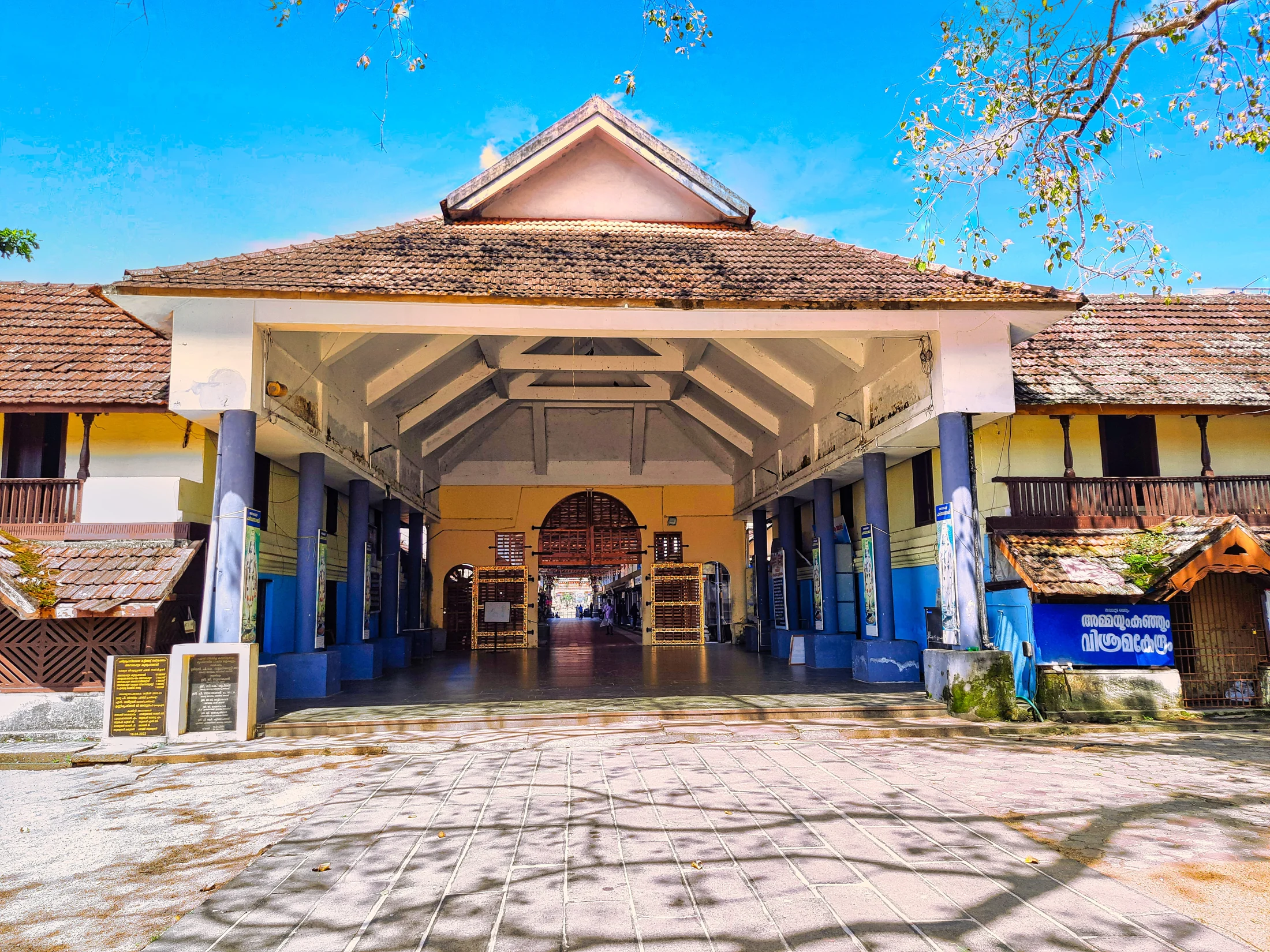
Ambalappuzha Sree Krishna Temple is an active temple in Ambalappuzha town, south of Alappuzha, administered by the Travancore Devaswom Board. Krishna is worshipped here as Parthasarathy, Arjuna’s charioteer. The temple combines a broad tank, tiled courtyards and painted ritual spaces with two enduring cultural associations: Palpayasam offered to the deity, and Kunchan Nambiar’s creation of Thullal. A visit works best when darshan, the permitted exterior spaces and any offering collection are planned around the temple’s morning or evening opening.
30.1 km · straight line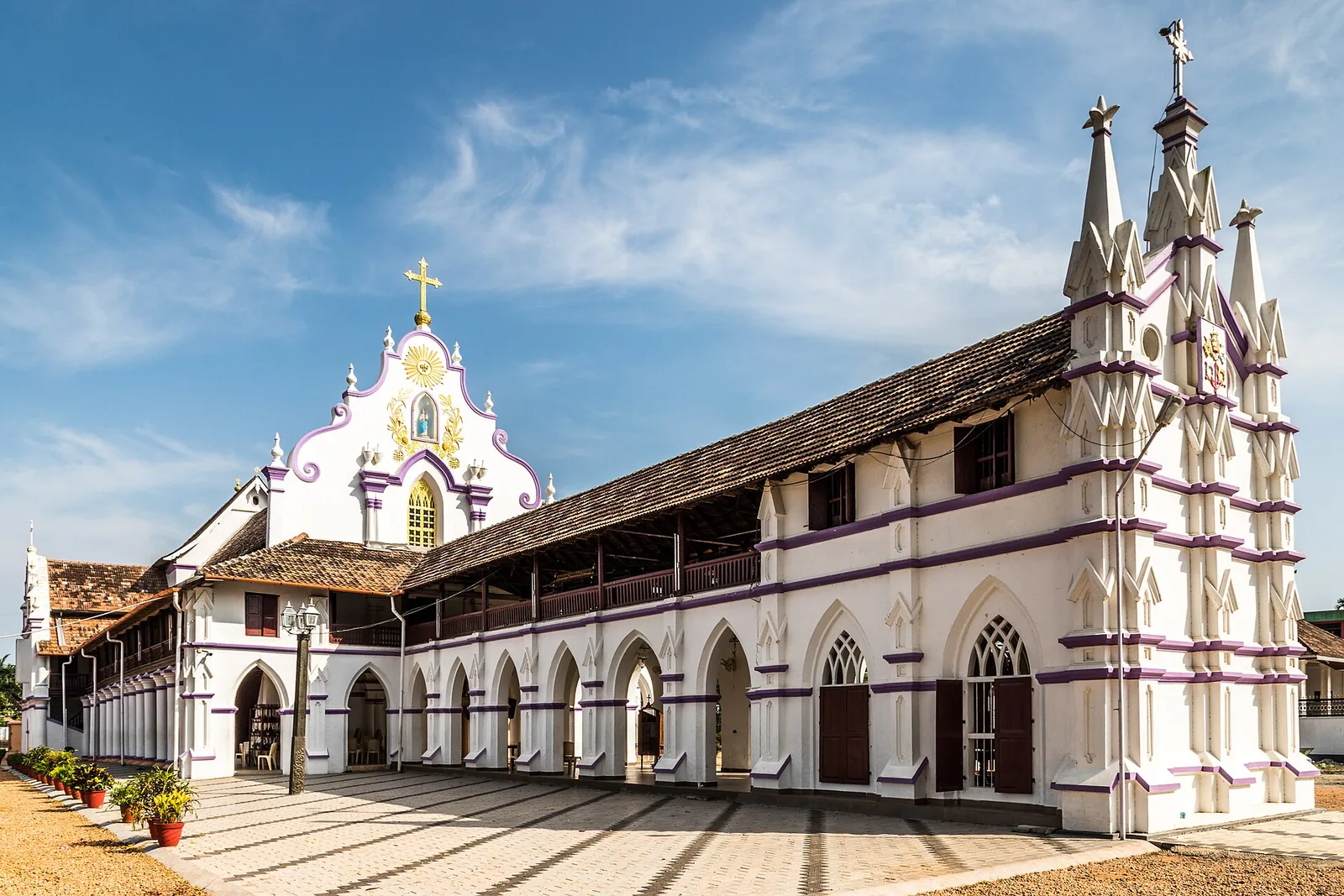
Kuttanad village on the Pamba known for the Champakulam Moolam snake-boat race and Kalloorkad St Mary’s Basilica.
30.6 km · straight line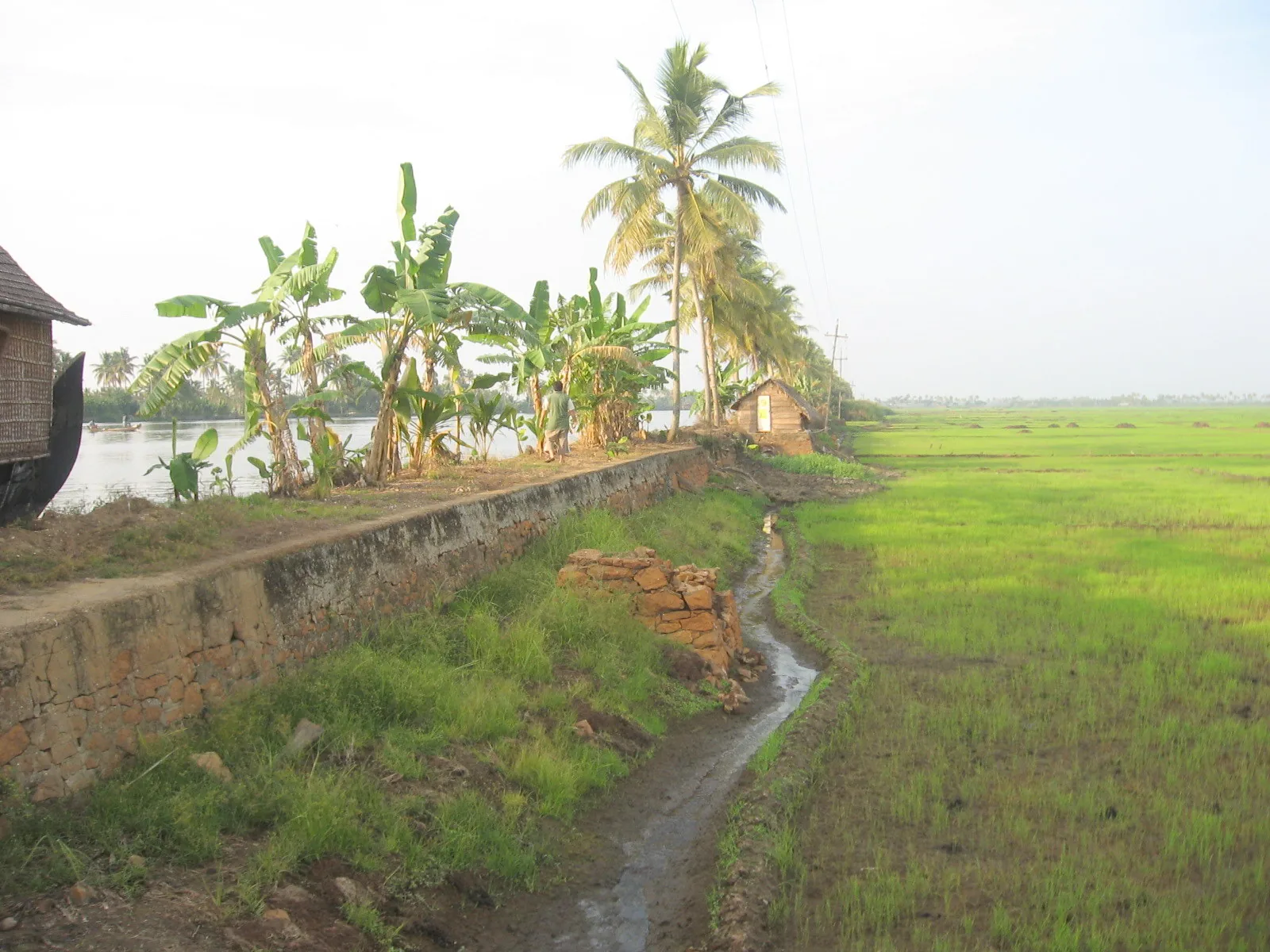
Low-lying paddy and canal region known as Kerala’s rice bowl.
34.5 km · straight lineNearby toilets, pharmacies, ATMs, seating and vets are community-mapped and may be incomplete or out of date. Map data © OpenStreetMap contributors | Walking times © openrouteservice.org by HeiGIT
It is best known for the Gajendra Moksham mural — variously described as the largest single-band mural painting yet discovered in Kerala, the largest single-panel mural in the state, and (by Kerala Tourism) India’s largest mural painting, none of which rests on a comparative survey, depicting Vishnu descending on Garuda to liberate the elephant king Gajendra. The palace itself, an 18th-century Travancore building now run as an archaeological museum, is also prized for its Kerala-style architecture and its collection of antiquities.
It was built in the 18th century by Marthanda Varma of Travancore (reigned 1729–1758), after he defeated and annexed the kingdom of Odanad centred on Kayamkulam. It is often likened to the grander Padmanabhapuram Palace and shares its gabled-roof, dormer-window Kerala style.
About three metres high — that is the one figure every source agrees on, including Kerala Tourism. The area is a mess, and we would rather show you the mess than pick from it. Roughly fourteen feet by eleven, a little over 150 square feet, is one figure in circulation. Kerala Tourism calls it an expansive masterpiece spanning 49 square metres, which is about 527 square feet. Other travel sources print 53 square feet. Those figures differ by an order of magnitude in both directions, and part of the reason is visible in the painting itself: it has a large main panel plus a distinct lower frieze register of seated figures inside a decorated border, so what counts as the mural depends on where you stop measuring. Take the height as reliable and treat any area figure with suspicion.
Highlights include a tenth-century stone Buddha in its own mandapam, the Kayamkulam Vaal (a double-edged sword linked to the Kayamkulam rajas), an old stone horse trough, a spring-fed stepped bathing tank, and collections of bronzes, coins, megalithic relics, and stone and wood sculpture — plus the shaded palace grounds.
Photography is generally permitted for a small extra charge on top of the entry ticket, with separate (higher) fees for video and any commercial or film shooting. Flash and tripods may be restricted near the mural to protect it, so it is best to ask staff at the ticket counter.
Most visitors find around one to one and a half hours enough to see the mural, the museum rooms and the grounds at a relaxed pace. A knowledgeable local guide, where available, greatly enriches the visit.
November to February and early mornings are best for walking; avoid midday heat where possible.
Entry: Published tariff from the Kerala State Department of Archaeology, which administers the palace: adults ₹25, children ₹5, mobile camera ₹20, still camera ₹50, mobile video ₹420, video ₹1,550, documentary ₹10,500, feature film ₹26,500. ⚠ Travel listings commonly print ₹20 adult / ₹10 child / ₹40 camera — those are not the department's figures. Timings: 9.00 to 13.00 and 14.00 to 16.30, closed Mondays and national holidays — the Kerala State Department of Archaeology's own published timings. ⚠ Almost every travel listing, and until now both of our own records, give the opening as 9.30; the department says 9.00. The rupee figure quoted is the Indian adult rate. Government monuments, museums and forest reserves in India often charge foreign visitors more, and we have not verified whether this site does.
Base yourself in Haripad and Mannarasala or a nearby town in Alappuzha, then confirm the last-mile route locally before leaving. Walkable heritage areas are best done slowly; combine nearby streets, museums, markets and food stops. If the visit depends on forest, temple, boat, ferry, weather or seasonal access, check the official/local rule on the day before travel.
1 to 3 hours.
Nearby you can pair Chettikulangara Devi Temple (8.6 km, approximate straight-line separation), Kandiyoor Sree Mahadeva Temple (11.7 km, approximate straight-line separation), Haripad Sree Subramanya Swamy Temple (16.0 km, approximate straight-line separation), Mannarasala Sree Nagaraja Temple (17.0 km, approximate straight-line separation).
Watch traffic on narrow heritage streets. Keep valuables close in crowded markets.
Written about Krishnapuram Palace itself — its history, its legends and the arguments about them.
Route-level itineraries and practical guides for the rest of Kerala.
Photographs: Noeljoe85 (CC BY-SA 3.0), Essarpee1 (CC BY-SA 3.0), Akhilan (CC BY-SA 3.0), Bobinson (CC BY-SA 4.0), Onmyway22 at English Wikipedia (CC BY-SA 4.0), Noblevmy at Malayalam Wikipedia (CC BY-SA 3.0), Noblevmy (CC BY-SA 3.0), Noblevmy at Malayalam Wikipedia. (CC BY 3.0), Original uploaded by Noblevmy. (CC BY 3.0). Wikimedia Commons.