What to expect
Highlights
- Wildlife or forest landscape around Periyar Tiger Reserve
- Official eco-tourism activities where available
- Nature guides, birding and forest-edge stays
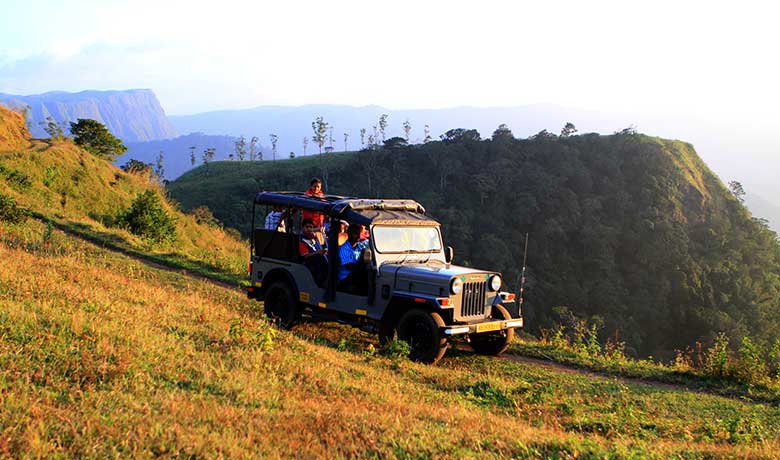
Official tiger reserve landscape around Thekkady, with forest-controlled activities and boating.
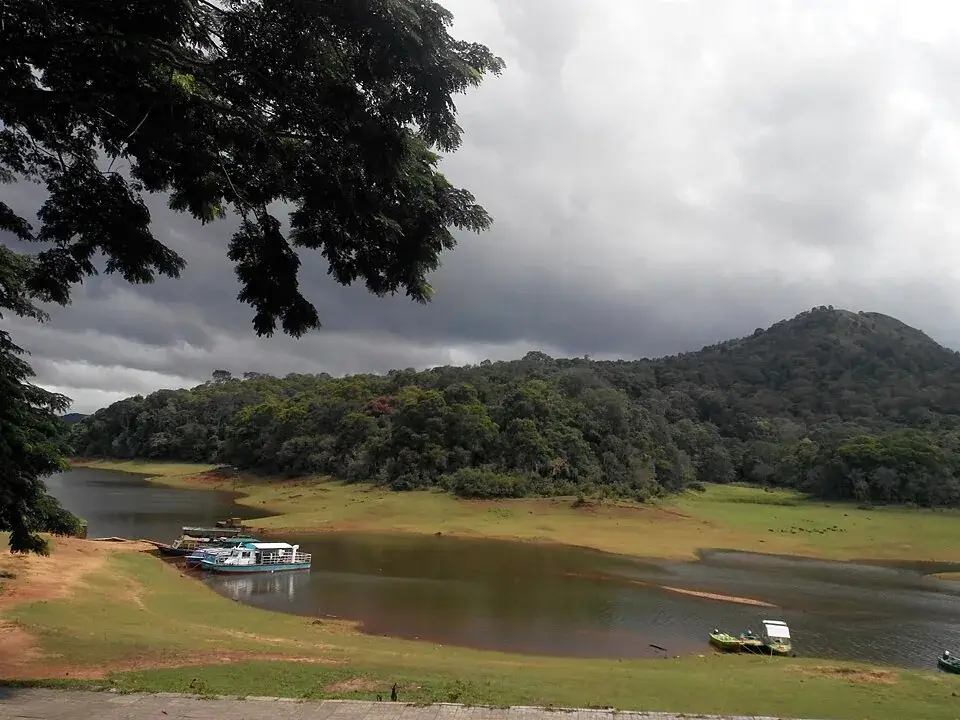
Wrapped around a shimmering lake high in the Cardamom Hills of the Western Ghats, Periyar Tiger Reserve at Thekkady is one of India’s most-loved wildlife destinations — a place where you glide silently past herds of elephants, watch the drowned forest’s leafless stumps rise from the water, and step into misty jungle trails guided by former poachers turned protectors.
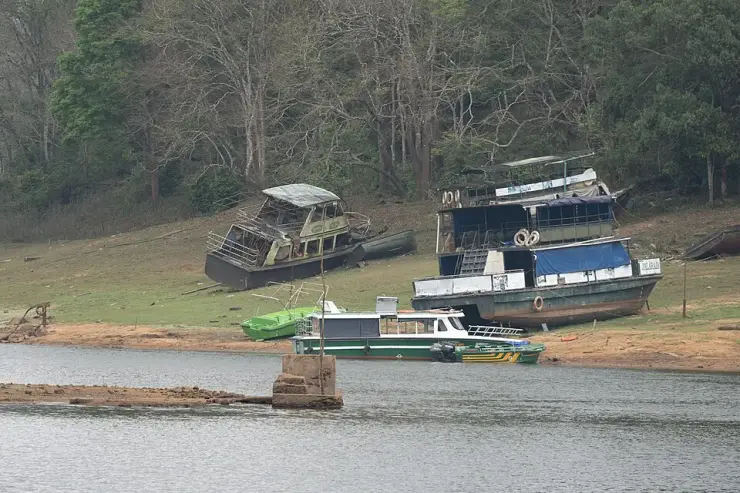
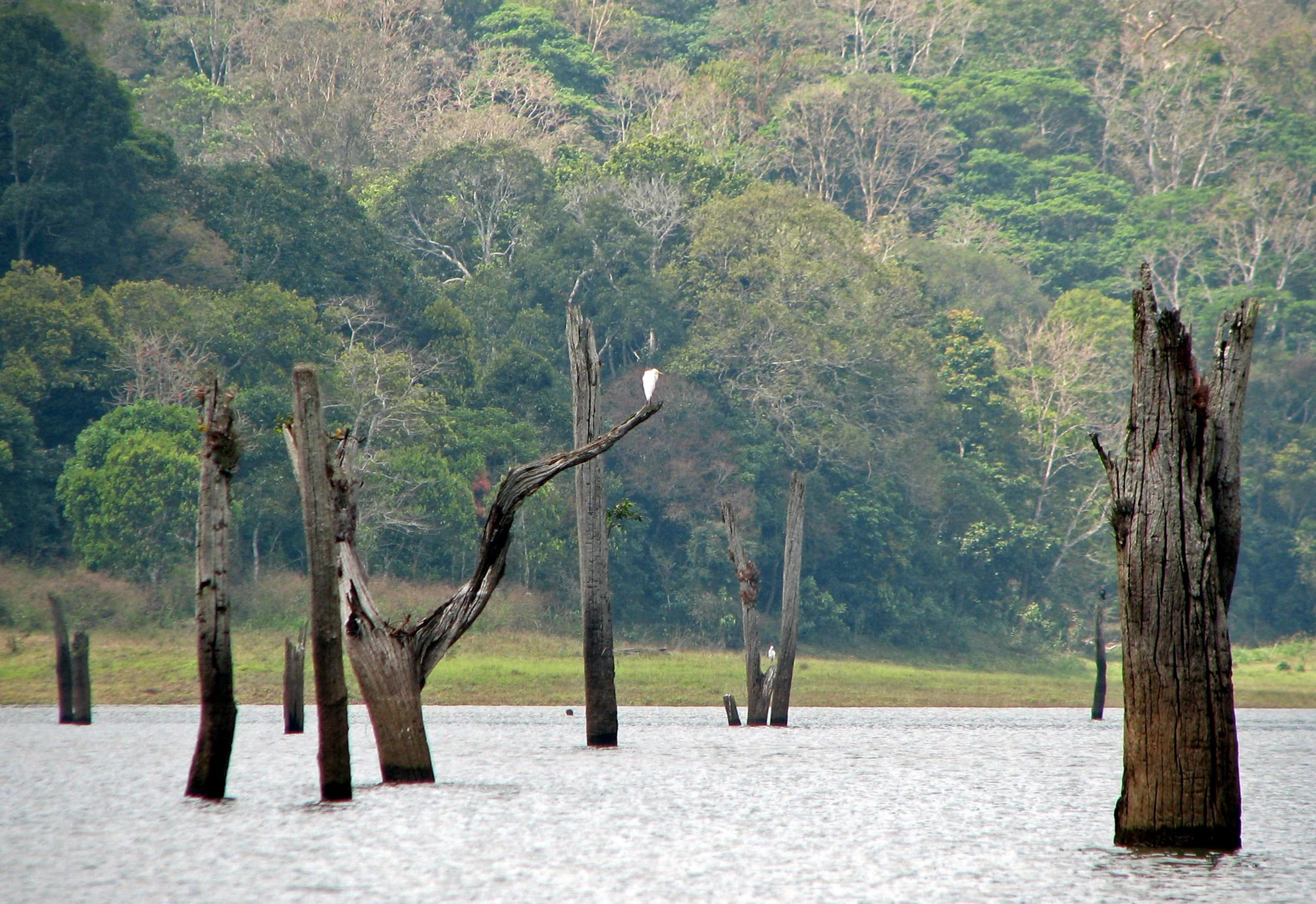
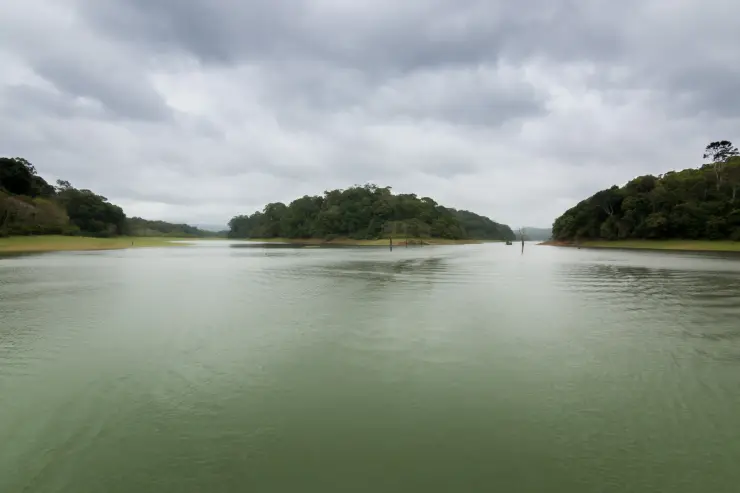
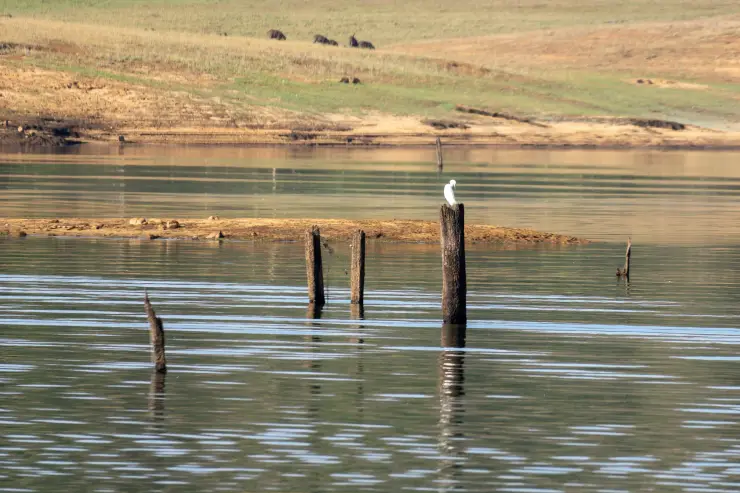
The heart of Periyar is its lake, and the lake itself is a beautiful accident of engineering. It did not exist until 1895, when British engineers dammed the west-flowing Periyar river to divert its waters east into the rain-shadowed plains of Tamil Nadu. As the reservoir filled behind the Mullaperiyar Dam, it drowned a swathe of forested valley — and the tallest trees never fully vanished. Their bleached, skeletal trunks still stand in the shallows today, a ghostly drowned forest that gives the lake its haunting, unmistakable character and doubles as favourite perches for cormorants and darters.
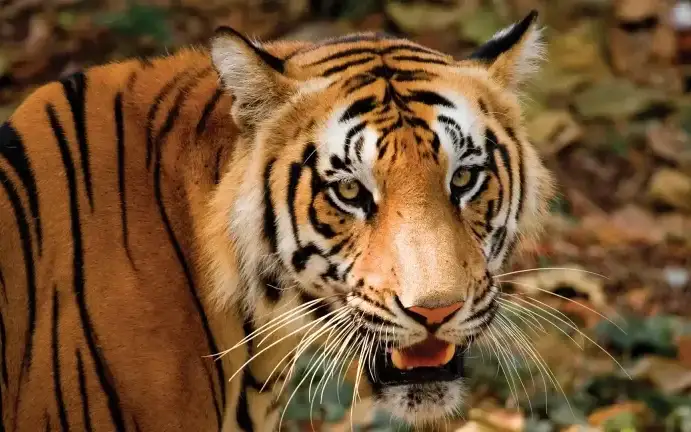
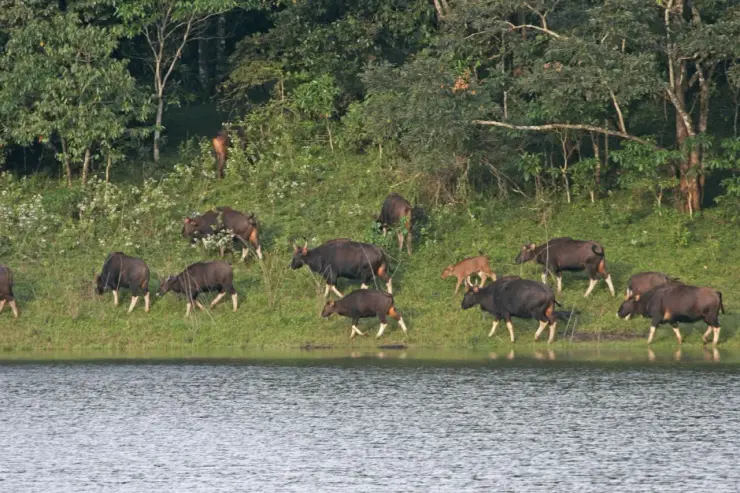
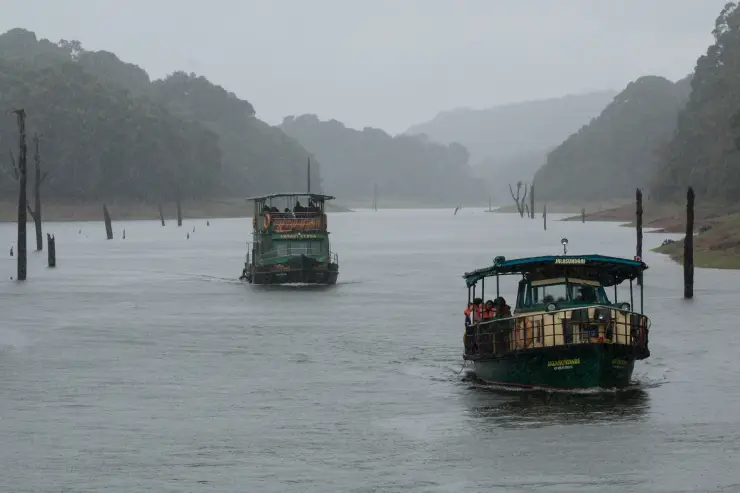
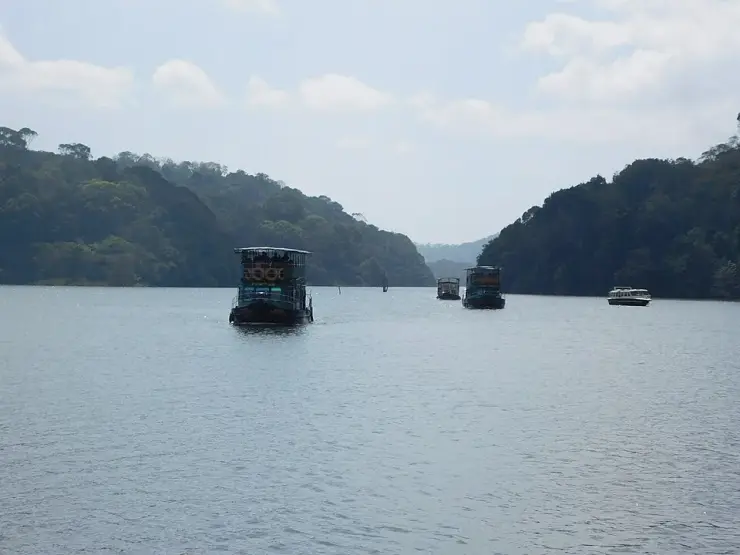
The classic Periyar experience is the boat cruise. For roughly ninety minutes a launch tracks the fingers and inlets of the lake, and the show is the shoreline: elephants padding down to drink and bathe, gaur grazing on open grass banks, sambar deer stepping warily to the water, wild boar rooting in the mud, and otters slipping between the stumps. Tigers give the reserve its name but are famously elusive — Periyar is far more reliably an elephant sanctuary than a big-cat safari, and most visitors treasure it for that quieter, water-level intimacy with wildlife rather than a guaranteed roar.
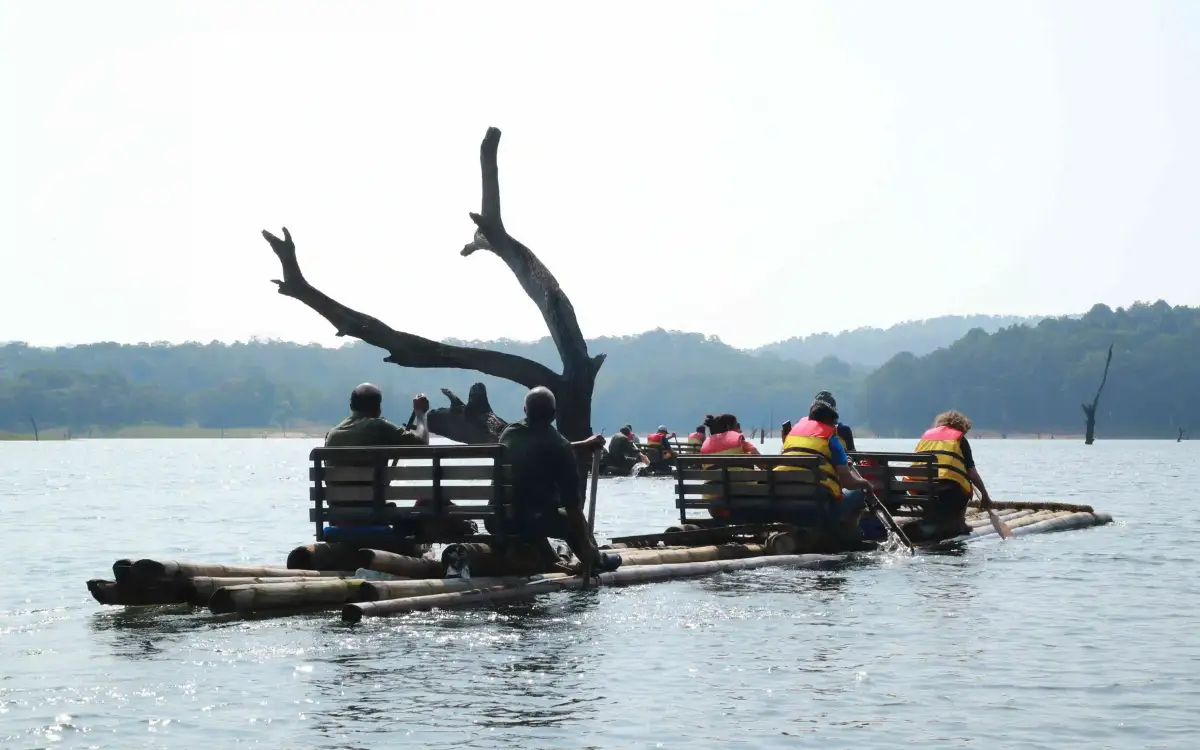
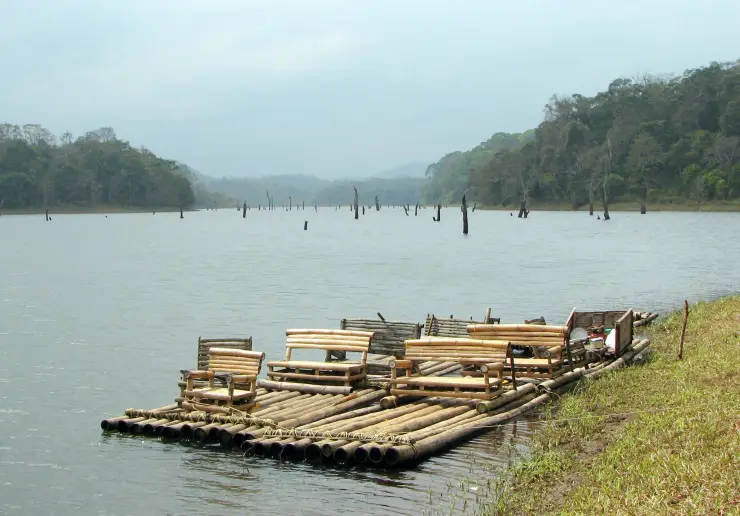
Away from the boats, Periyar has quietly become a model for community-based ecotourism. Some of its most memorable programmes — dawn border hikes, the Tiger Trail trek, jungle patrols and the celebrated bamboo rafting — are led by guides drawn from the reserve’s own tribal communities, and many were once poachers and sandalwood smugglers who now earn their living protecting the forest they once plundered. Walking a jungle path behind an armed forest guard and a guide who can read every track and alarm call is a very different thrill from the deck of a boat.
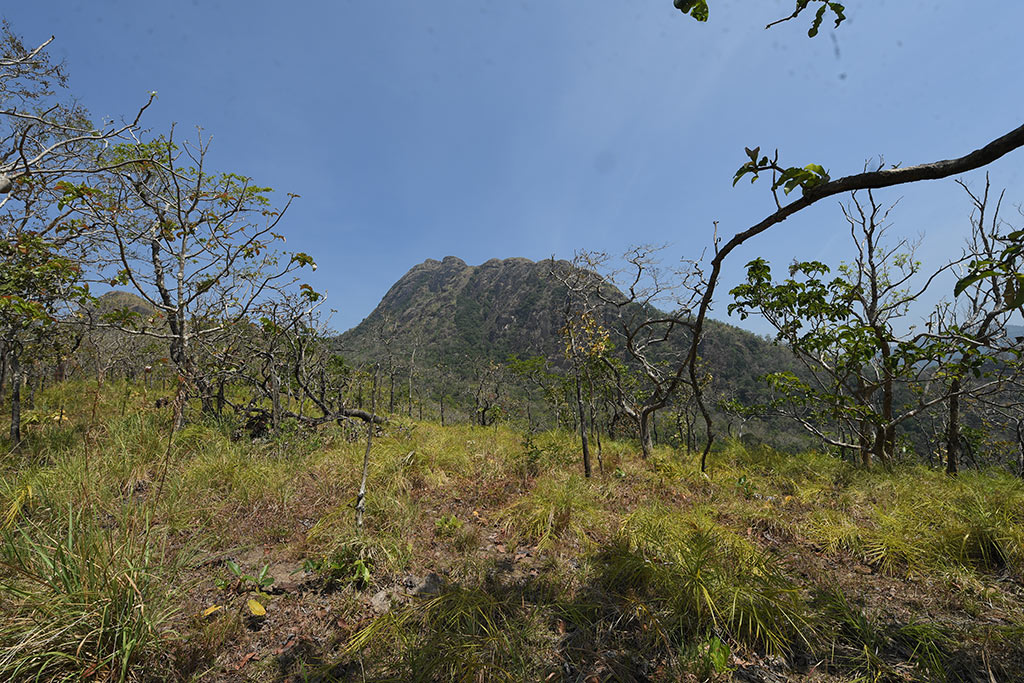
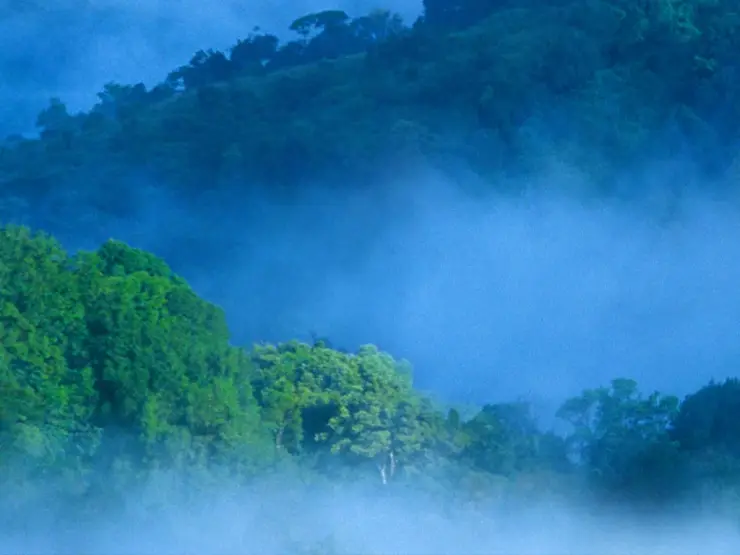
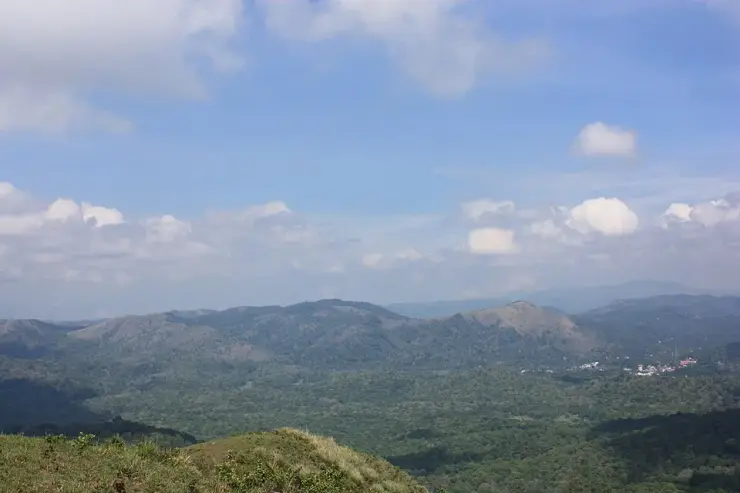
The forest around the water is classic Western Ghats country — moist evergreen and semi-evergreen jungle threaded with grasslands, laced with the scent of the cardamom, pepper and coffee plantations that ring the reserve. This is prime habitat for rarities: the lion-tailed macaque with its silver mane, the glossy black Nilgiri langur, the Malabar giant squirrel, and more than 260 species of bird from the great hornbill to kingfishers and the endemic Nilgiri wood pigeon.
The gateway to it all is Kumily, a lively spice-market town just outside the reserve boundary, with Thekkady — the lake and jungle zone — lying a few kilometres inside. Between the boat landing, the plantation walks, the ayurvedic spas, the Kathakali and Kalari shows and the pepper-scented shops of Kumily, Periyar rewards a stay of a couple of days rather than a rushed day trip.
High in the reserve, near the Tamil Nadu border, sits the remote hilltop shrine of Mangala Devi (Mangaladevi Kannagi Temple), and it carries one of South India’s most powerful legends. The goddess here is identified with Kannagi, the wronged heroine of the ancient Tamil epic Silappadikaram. When her husband Kovalan was falsely accused of theft and executed by the king of Madurai, Kannagi — so the legend runs — tore off her breast and flung it at the city, cursing it to burn, before wandering into these very hills where she was deified as Mangala Devi.
The ancient granite temple is said to date back many centuries and lies deep inside the tiger reserve, so it opens to pilgrims only once a year, on the full-moon day of Chithra Pournami (April–May), when devotees from both Kerala and Tamil Nadu climb up for worship. Visiting at other times requires special permission from the forest authorities.
The story of the modern reserve begins with water. In 1895 the Mullaperiyar Dam was completed across the Periyar river as a British-era irrigation project, and the reservoir it created — the Periyar Lake — flooded the valley floor and became, unexpectedly, the nucleus of what is now one of India’s finest wildlife landscapes.
Formal protection followed the water. The forests around the new lake were declared a reserve forest in 1899, and in the 1930s the tract was set aside as a game sanctuary (the Nellikkampatty Game Sanctuary) under the Maharaja of Travancore, chiefly as a private shooting and hunting preserve for the ruling house and its guests.
In 1950, after Indian independence, the area was reconstituted and enlarged as the Periyar Wildlife Sanctuary, shifting the emphasis decisively from hunting to conservation. The lake, the drowned forest and the surrounding evergreen jungle were now managed to protect their wildlife rather than provide sport.
The reserve’s defining moment came in 1978, when Periyar was brought under the Central Government’s Project Tiger scheme and declared a Tiger Reserve — among the earliest in the country. A core national-park zone was later notified in the early 1980s, and the reserve was also folded into Project Elephant, reflecting its outstanding importance as an elephant habitat within the Cardamom Hills of the Western Ghats.
Running through all of this is a human history often overlooked by visitors. Several indigenous communities — among them the Mannan, Paliyan, Malampandaram, Urali and Ulladan — have lived in and around these hills for generations, and in recent decades the reserve’s pioneering community-based ecotourism has turned local knowledge, and even former poachers, into the backbone of its protection and its guided programmes.
The lake boat cruise is unlike any other Indian safari — you watch elephants, gaur, sambar and otters from the water rather than a jeep, drifting silently past a drowned forest of standing tree stumps that makes the scenery genuinely unforgettable.
It is one of the most reliable places in India to see wild elephants in a natural setting, with herds regularly coming down to the lake shore to drink and bathe, especially in the dry months.
Periyar is a birdwatcher’s paradise, home to more than 260 recorded species including the great hornbill, kingfishers, darters and Western Ghats endemics, all easily observed along the water’s edge.
Its community-based ecotourism is a rare feel-good story in wildlife tourism — hikes, jungle patrols and bamboo-rafting trips led by tribal guides, many of them reformed poachers now protecting the forest, offer a deeper, on-foot experience than the boat alone.
The reserve sits amid the fragrant spice country of the Cardamom Hills, so a visit pairs jungle and lake with plantation walks through cardamom, pepper and coffee, plus the buzzing spice bazaar of Kumily just outside the gate.
As a flagship Project Tiger and Project Elephant reserve in the Western Ghats — a UNESCO-recognised global biodiversity hotspot — Periyar lets you experience a landscape of real conservation significance while still being an easy, family-friendly destination.
Road km to Idukki; ghat roads and traffic vary — allow extra.
Dryer months are easier for wildlife access; monsoon access depends on local rules.
Live forecast loads in your browser.
Check the official alert before you travel. Kerala’s beaches, waterfalls and trekking routes close at short notice during heavy rain, and district alert levels change day to day. We do not publish an alert level of our own — read it from the state authority: Kerala State Disaster Management Authority, or the district control room on 1077.
Sun and moon are calculated for this location and shown in IST. Photography windows are the hour around sunrise and sunset; the sunset bearing is degrees clockwise from true north. Moon phase is accurate to about half a day.
These are official or public-sector eco offerings that match this place, town or forest destination. Confirm availability, permits, tariffs and reporting times with the official operator before travel.
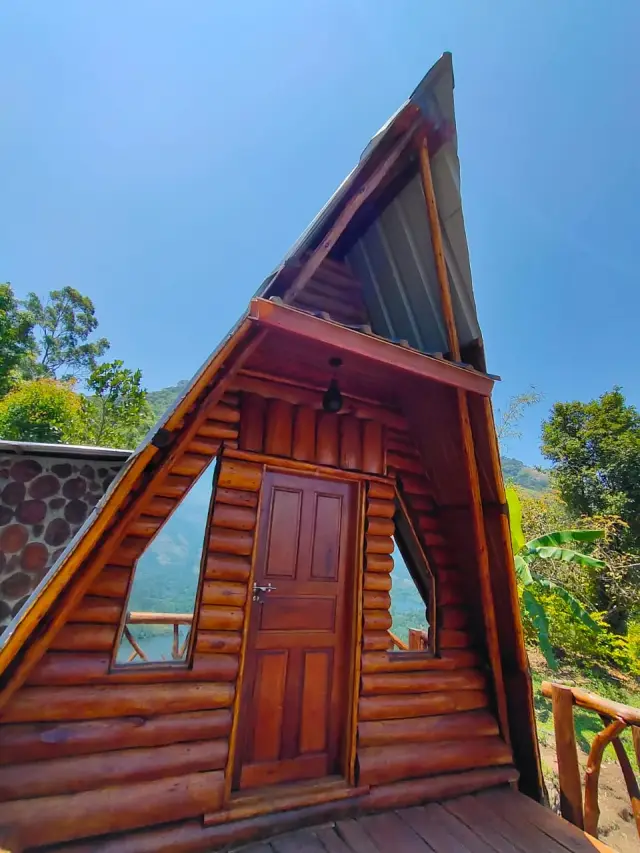
Shola forest landscape in Idukki listed in Kerala Tourism’s ecotourism inventory.
Official source →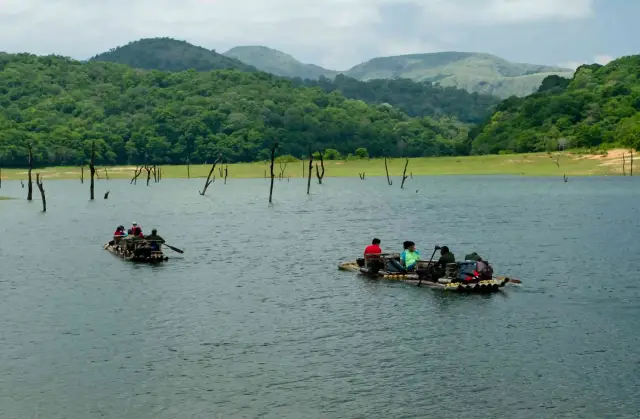
Day-long or half-day rafting-plus-trekking programme through Periyar Tiger Reserve, with small raft groups and forest guide support.
Official source →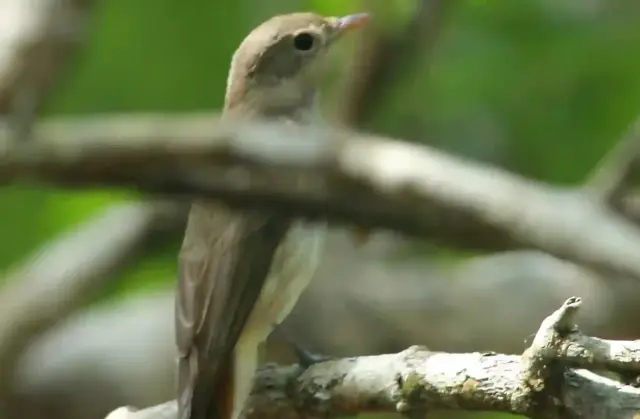
Guided 4-5 km interpretive walk through Periyar’s mixed habitats, offered in multiple daily slots.
Official source →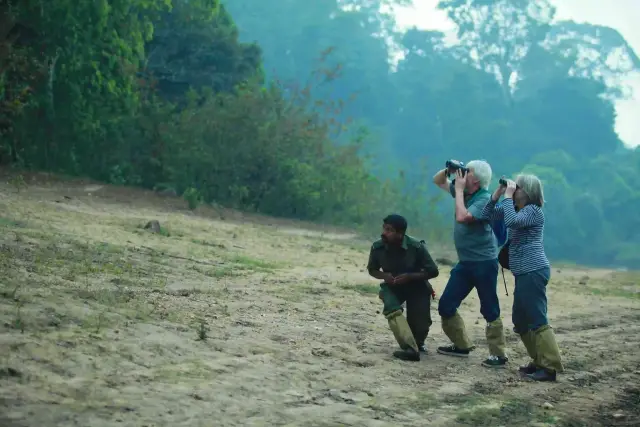
Guided interpretive walk through Periyar’s trails with trained tribal guide support and small group limits.
Official source →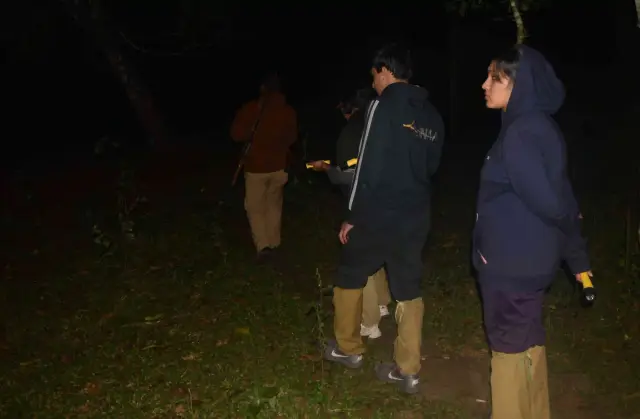
Guided night trekking programme in the periphery of Periyar’s eco-development zone with armed guard support.
Official source →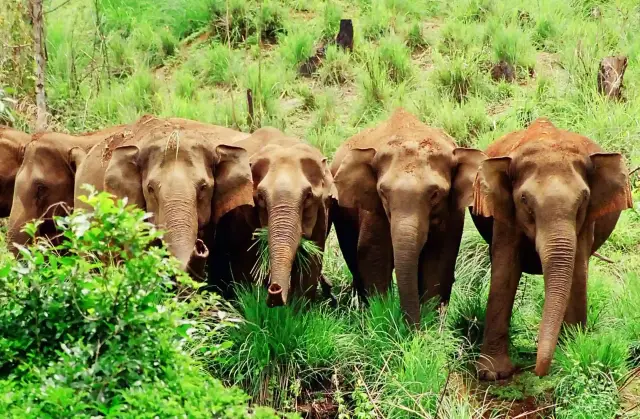
Day-long hiking programme through Periyar’s undulating forest terrain, with guide support and food included in the official listing.
Official source →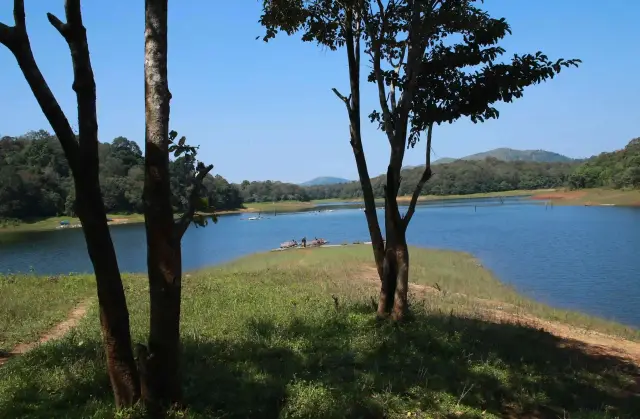
Multi-day guided trekking and camping programme inside Periyar, with tent stay and meals; prior booking is needed.
Official source →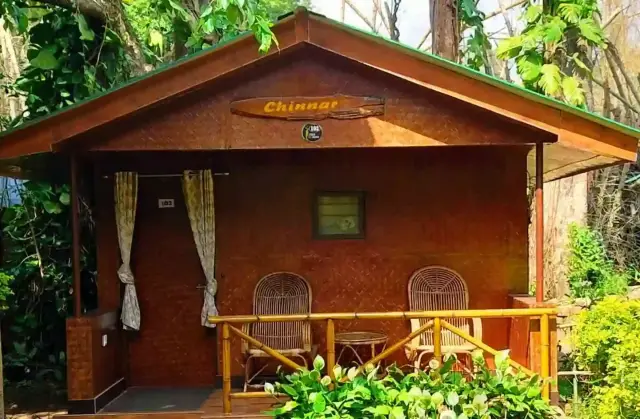
Eco-lodge accommodation in bamboo thickets with orientation, tribal-colony visit, wildlife film, birdwatching, trekking and boat ride.
Official source →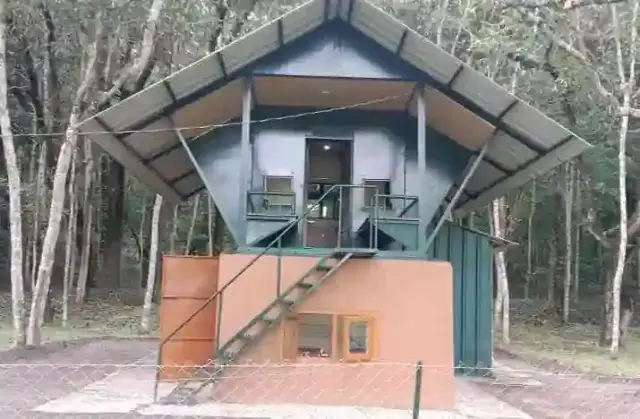
Forest cottage/watchtower-style stay at Kokkara, about an hour’s walk from the forest checkpost.
Official source →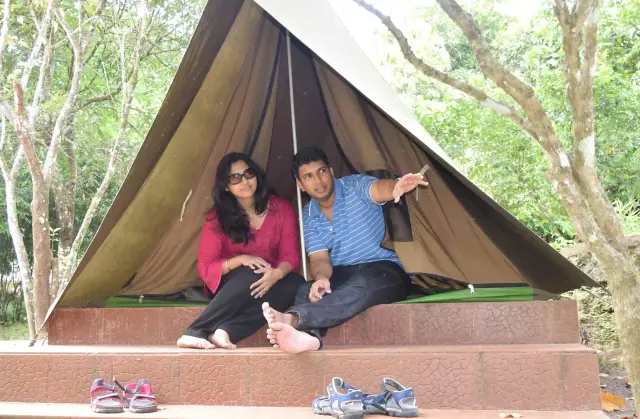
Tented camping near the Periyar River with meals, birdwatching, Gavi safari and optional Periyar Lake boat ride in the official listing.
Official source →Verified hotels, homestays, restaurants, experiences, sights, shops and rentals around Periyar Tiger Reserve — commission-free, with direct contact. Filter by what you need.
The reserve’s own booking office, online — entry, boats, treks and camps all go through this official channel, and it is the one to trust over any reseller; one lookalike domain now serves gambling.
The official counter for the lake boats — current slots, prices and availability live here, not with agents; the first slots of the morning are the wildlife ones.
Official booking for the reserve’s overnight walking programme — reporting times, guide requirements and availability are all set by the forest department, nowhere else.
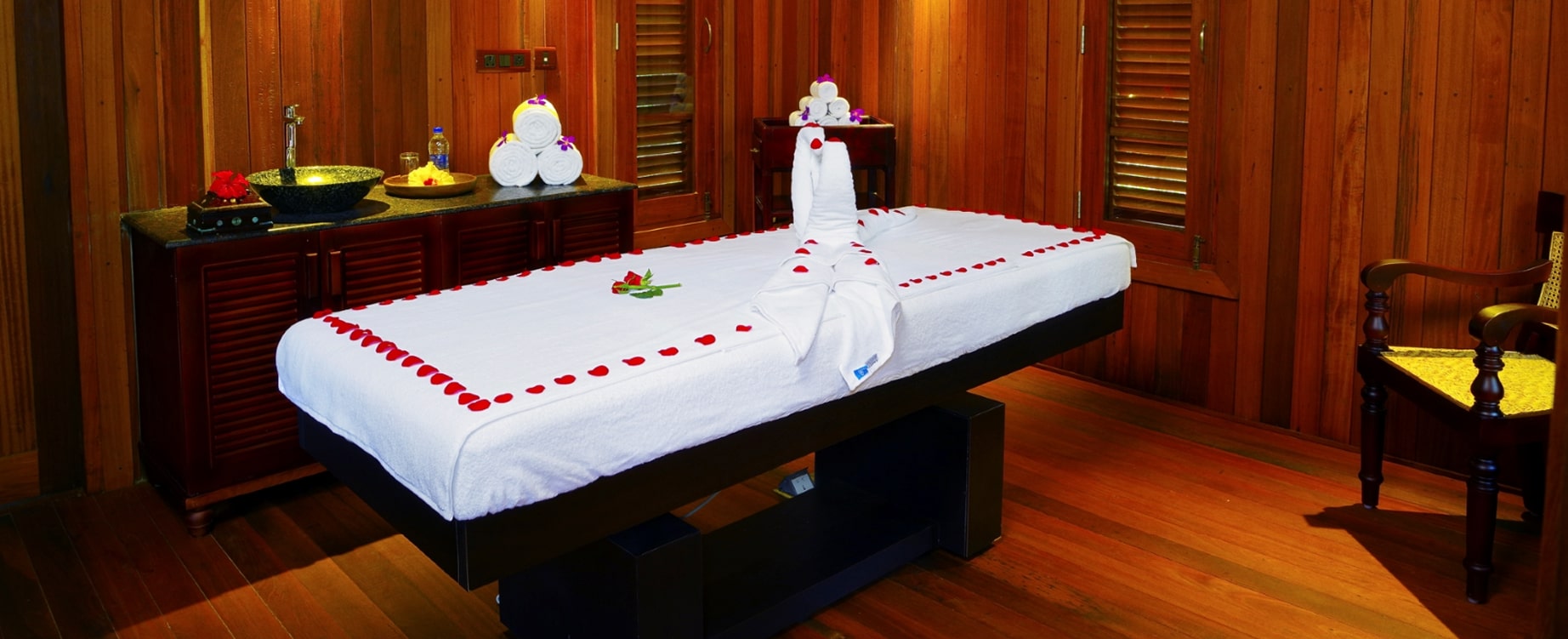
The spa at Niraamaya’s Cardamom Club retreat, out at the 66th Mile estates — Ayurveda programmes alongside international therapies.
Kumily operator for 4x4 days — Gavi jungle safaris, off-road routes and local packages, booked direct by phone or WhatsApp; confirm the route and permits before a forest-edge trip.
Sterling Thekkady’s in-house spa — traditional treatments on the resort’s amenity list; confirm therapies and appointments with the resort directly.
Inboundtrip Thekkady taxi page for 24/7 city taxis, airport transfers, outstation trips and day tours.
Local taxi and tour-cab operator at Pappis Tower, Thekkady — 24/7 phone and WhatsApp booking, airport pickups and Periyar transfers; the kind of pre-booked car this app-cab-free town runs on.
Full-day guided forest walk and bamboo rafting from Periyar’s boat landing. Check the exact programme, live notice, child eligibility and entry/bus charges on the official site before arranging the day.
Ayurveda wing at The Elephant Court — Swedana, Shirodhara and Shila Abhyanga are on the official treatment list; book ahead for current availability.
Book with the place itself. India’s cyber-crime coordination centre warned in April 2025 that convincing copies of hotel and pilgrimage booking sites are being pushed through sponsored search and social ads, taking payment for rooms the property never hears about. Every listing here links to the business’s own contact details and its own Google or Bing profile — we take no commission and sit in nobody’s payment path. If a booking page reached you through an ad, check the address bar against the property’s own site before you pay. Fraud can be reported on cybercrime.gov.in or on 1930.
Browse food, accommodation and activities across Thekkady and Kumily. Check each address and journey before adding it to your day; these selections are not all beside Periyar Tiger Reserve.
11 more places around Thekkady and Kumily. Open a guide to plan the visit and onward journey.
16.6 km · ~28 min by cab
The forest gate and boat landing beyond Kumily town — Thekkady is the reserve’s front door, not a town: the ticket counters, the eco-tourism programmes and the lake jetty are what stand here, under a name that comes from thekku, the teak that was cut on this ridge.
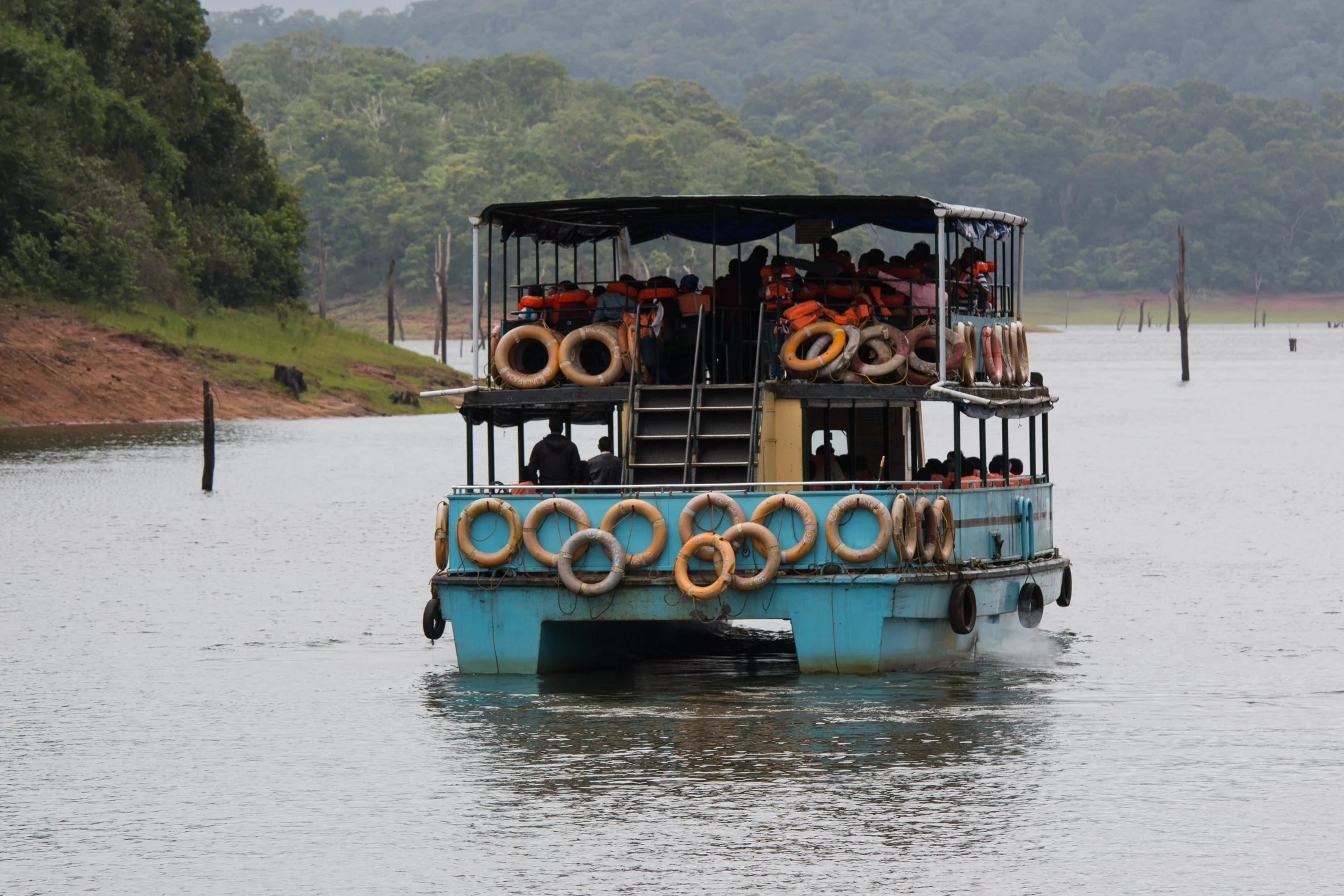
16.6 km · ~28 min by cab
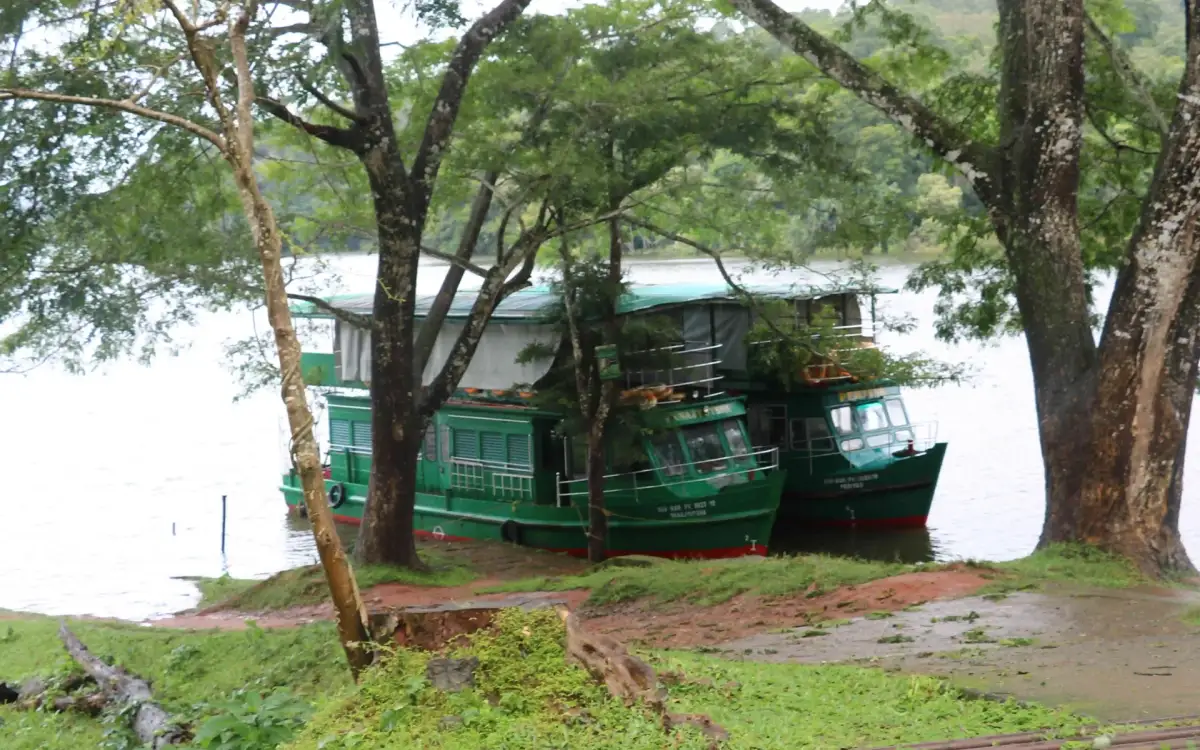
The classic Periyar outing: forest-department and KTDC boats out over the drowned valley from the Thekkady landing, in fixed slots from early morning — the first slot is the wildlife slot. Wear the life jacket without argument; the 2009 Jalakanyaka capsize off Manakkavala is why the crews insist.
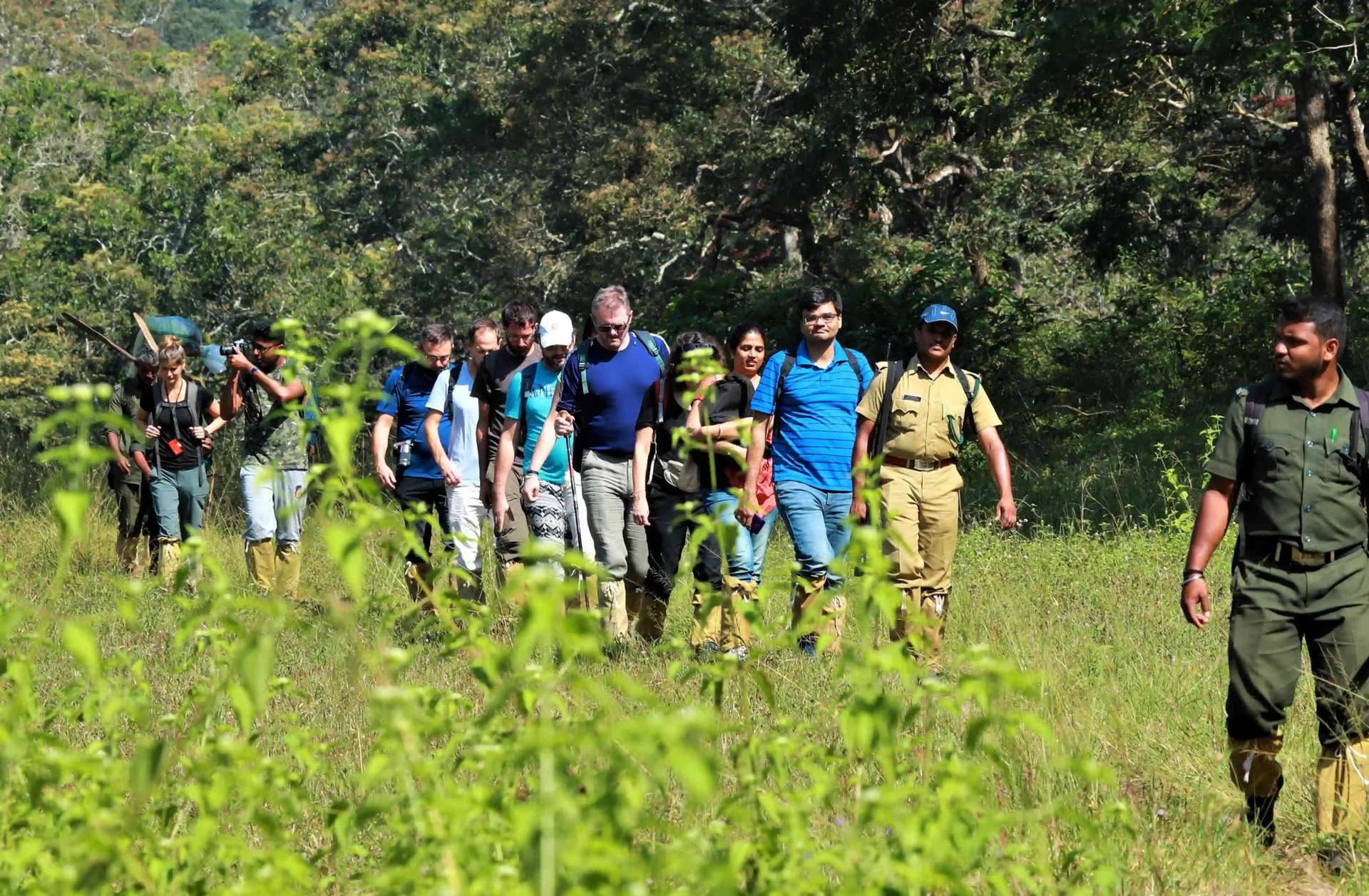
16.4 km · ~27 min by cab
A full-day guided hike across Periyar’s forest and grass-covered ridges, with separate Brandipara and Thondiyar products and reporting offices.
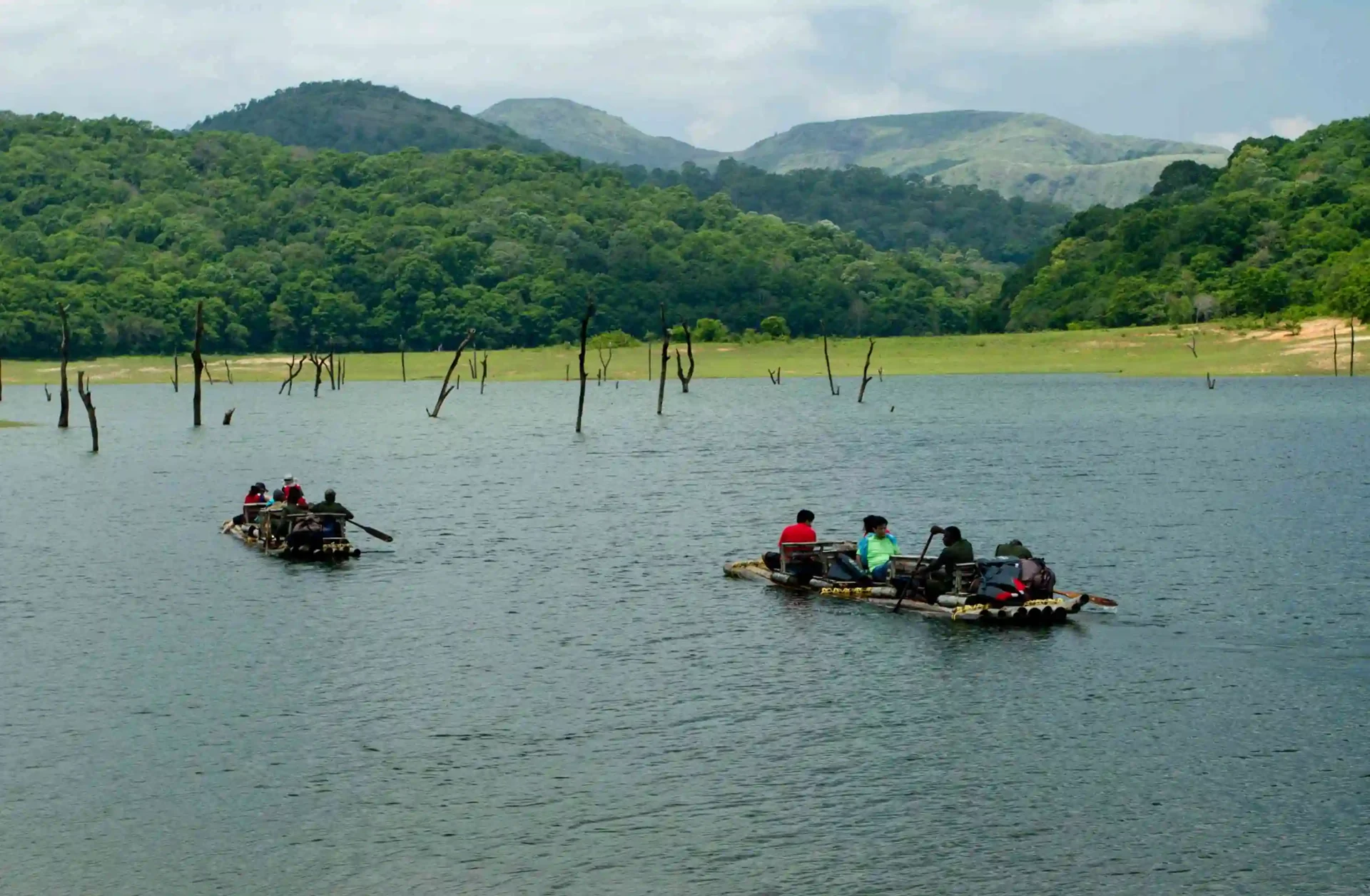
13.6 km · ~23 min by cab
Half in the forest, half on the water: a guided day that walks the lake edge and crosses it on bamboo rafts, run by the reserve’s eco-development crews — many of them former poachers turned guides, which is the programme’s real story.
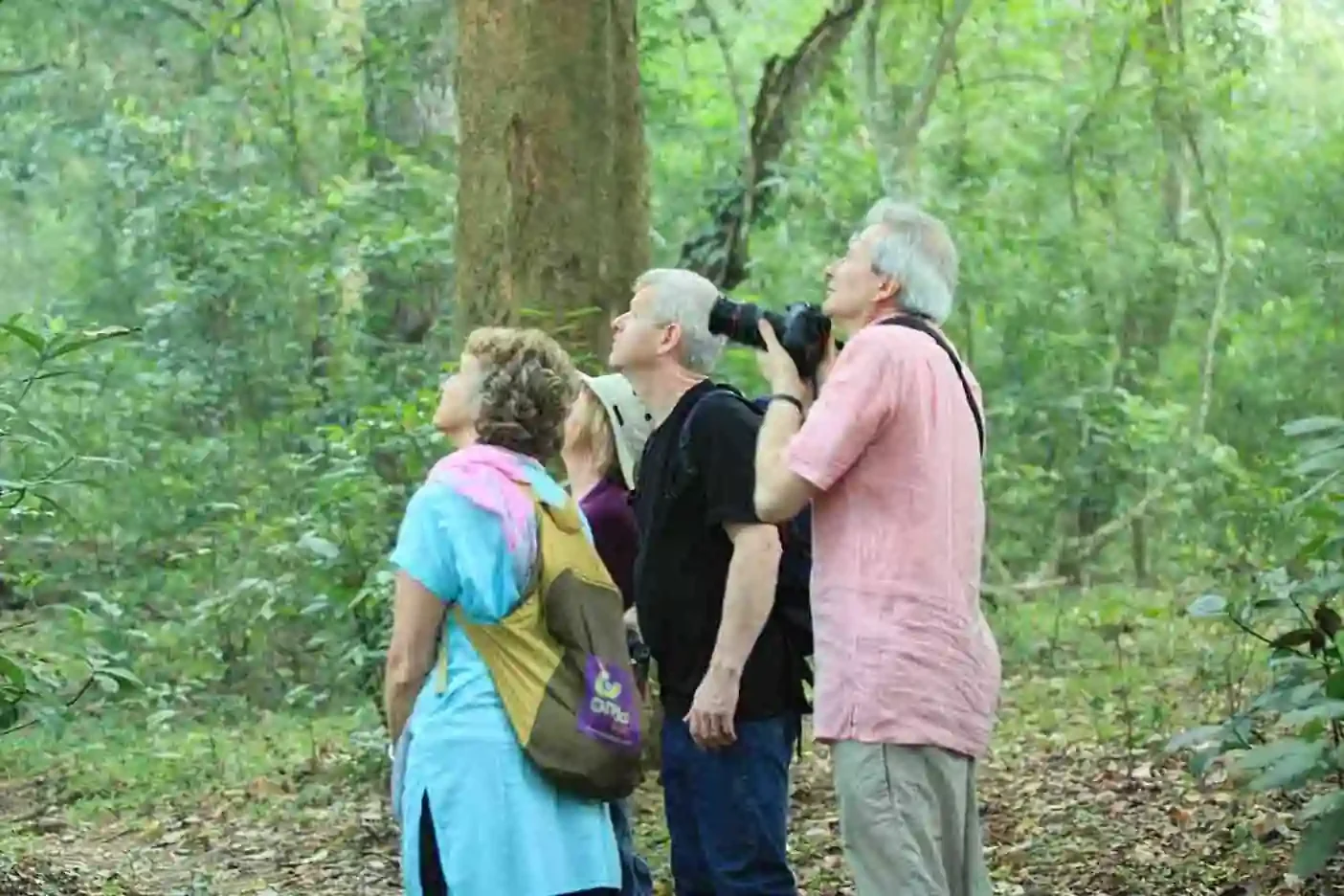
13.6 km · ~23 min by cab
A small-group, 2.5-hour interpreted forest walk from Boat Landing in Periyar Tiger Reserve, with several daily trails and a minimum four-person booking charge.
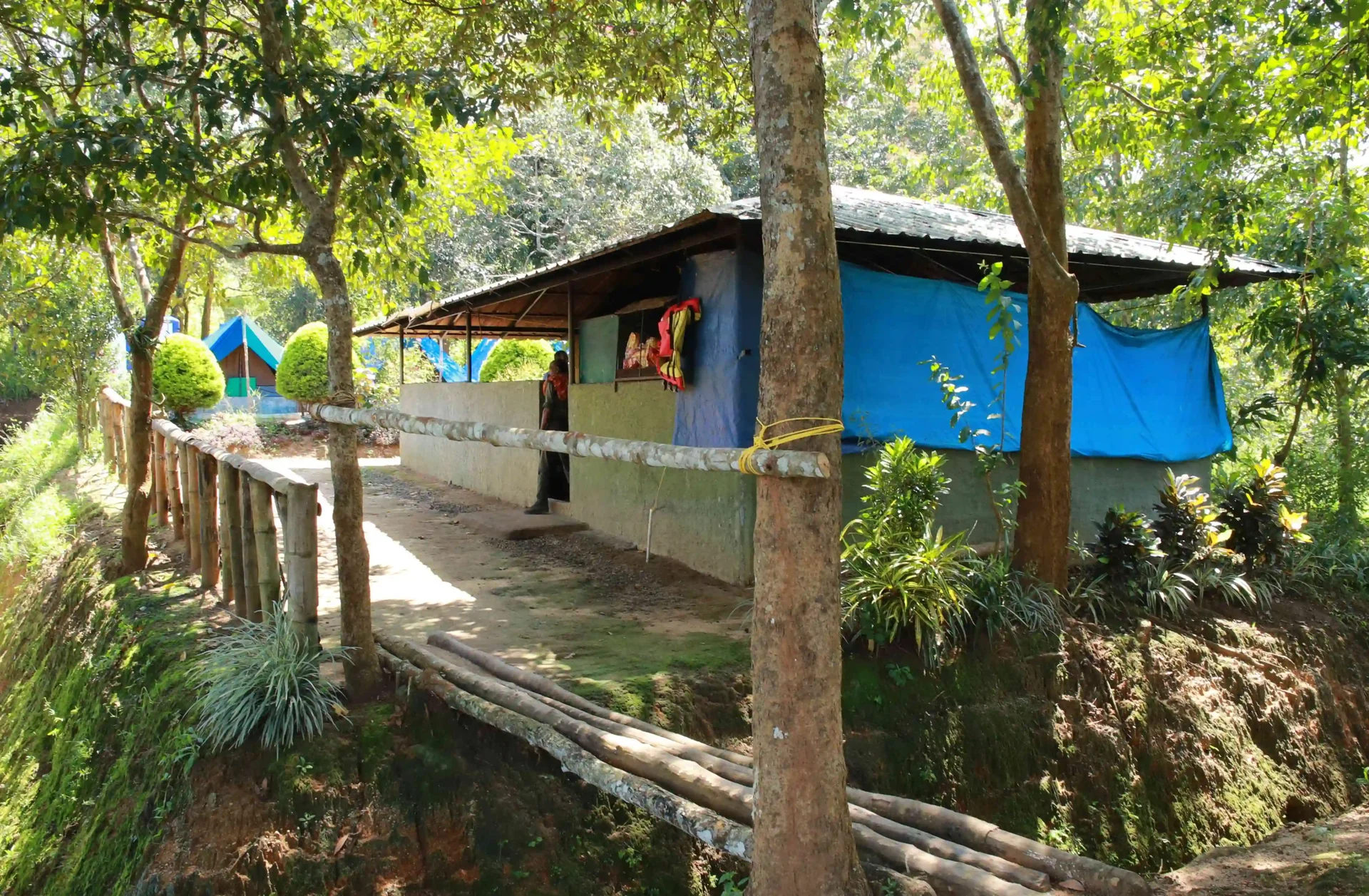
16.4 km · ~27 min by cab
Periyar Tiger Reserve’s guided trekking-and-camping programme, offered as one night/two days or two nights/three days, with reporting at the Forest Check Post Ex Vayana EDC office.
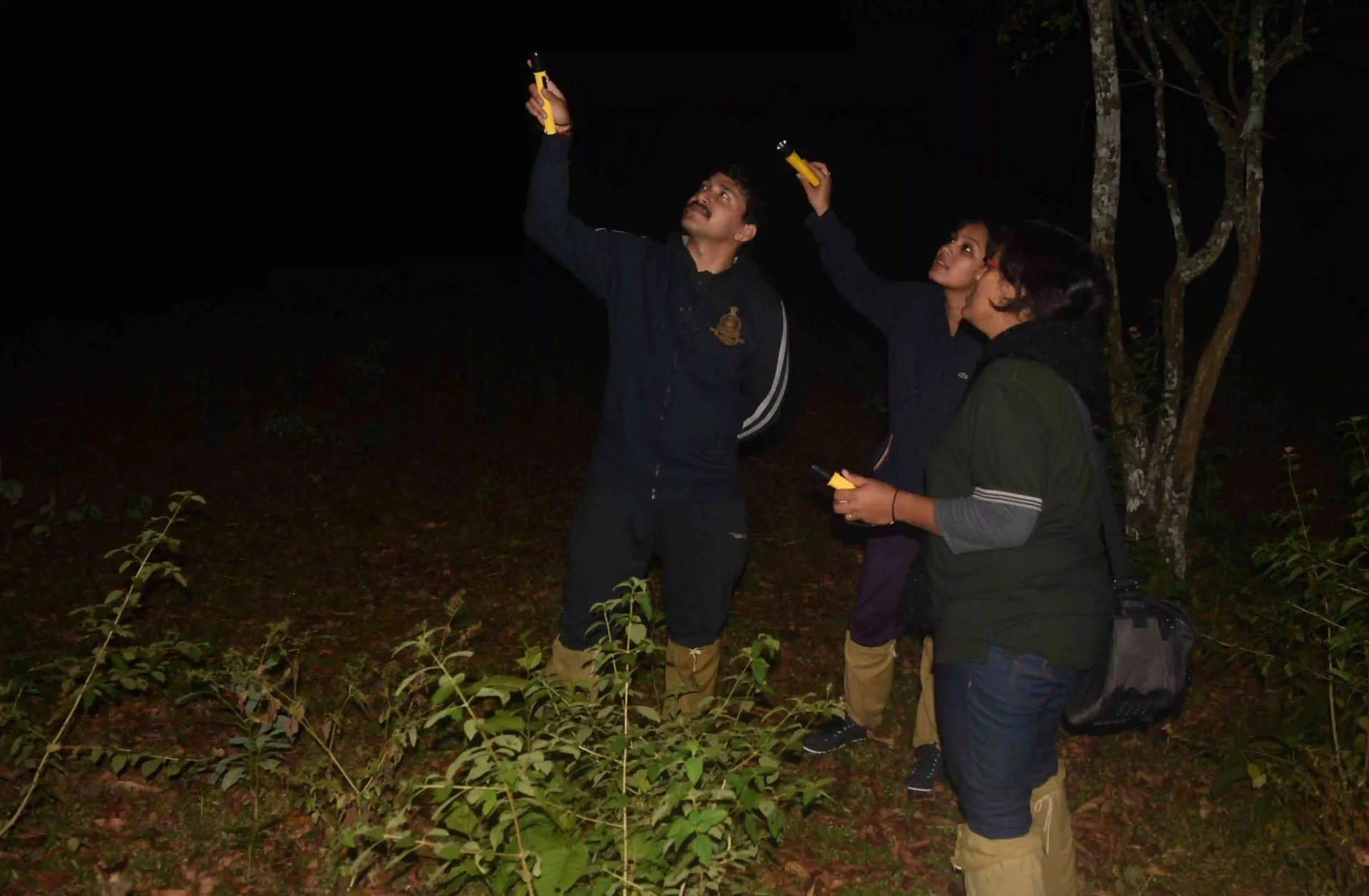
16.4 km · ~27 min by cab
Periyar’s guided night walk, currently booked as Jungle Scout, with separate Forest Check Post and Bamboo Grove departures. This is a walking programme, not a jeep safari.
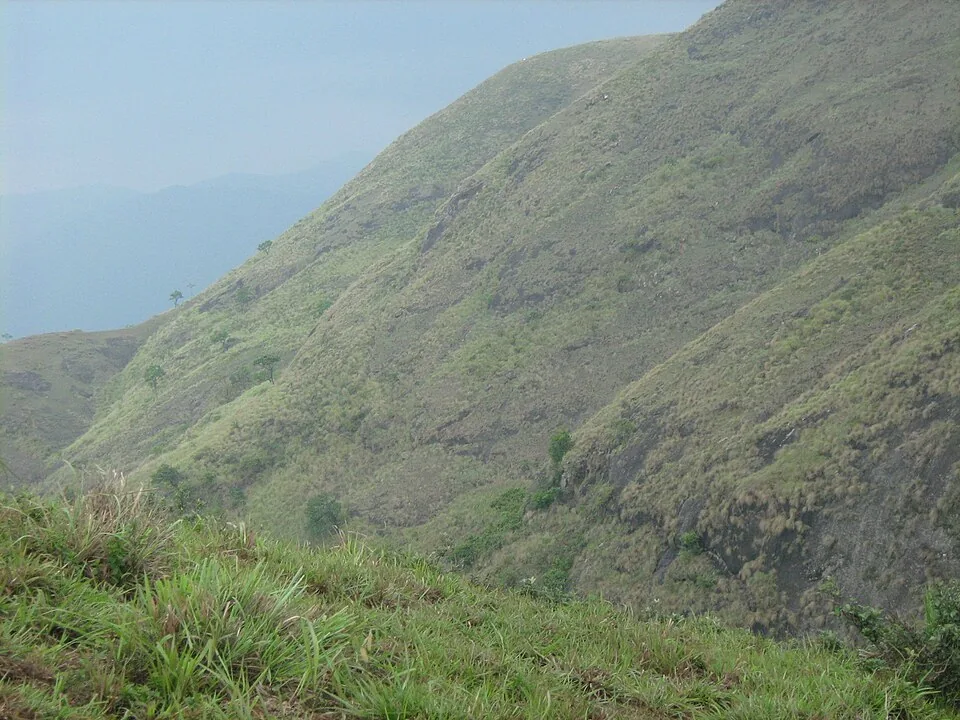
14.6 km · ~24 min by cab
A gated forest track climbs about fourteen kilometres to the ruined Mangala Devi Kannagi temple on the border ridge — open to visitors essentially one day a year, around Chithra Pournami, when pilgrims from both states arrive at once. The rest of the year the gate is shut; plan around the festival or not at all.
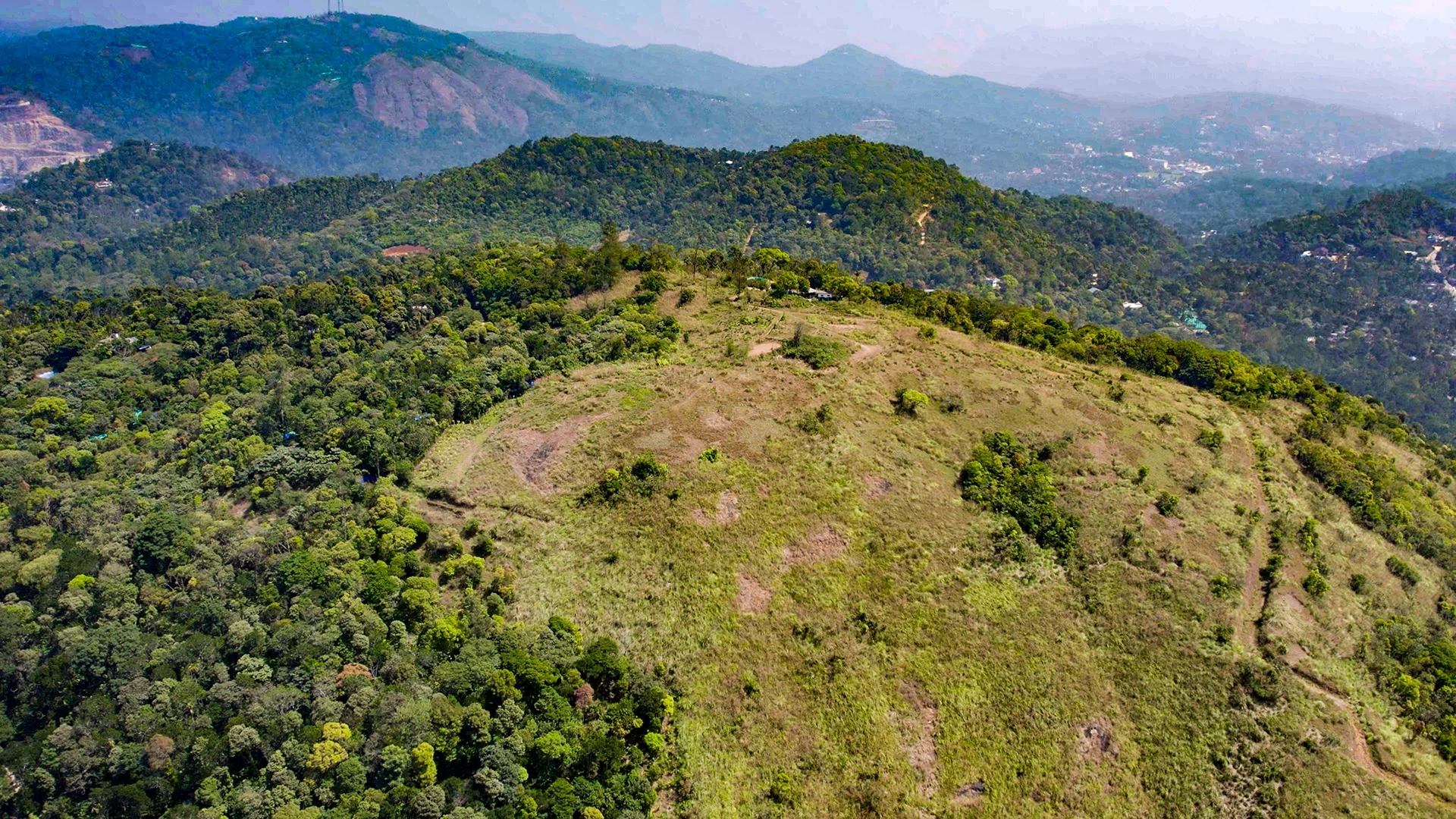
19.7 km · ~33 min by cab
Cardamom, pepper and coffee country starting five kilometres out of Kumily — Murikkady is where the spice-garden visits actually happen, plot after plot along the road, with the St George church spire in the middle of it.
21.1 km · ~35 min by cab
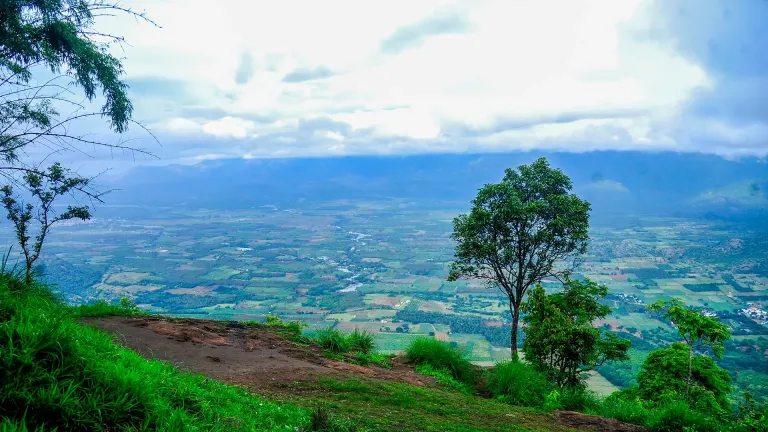
A stream-and-rock hollow eight and a half kilometres out on the Chellarkovil road — a local picnic spot with a small waterfall in season rather than a headline sight; pair it with Chellarkovil’s plains-edge viewpoint.
23.1 km · ~38 min by cab
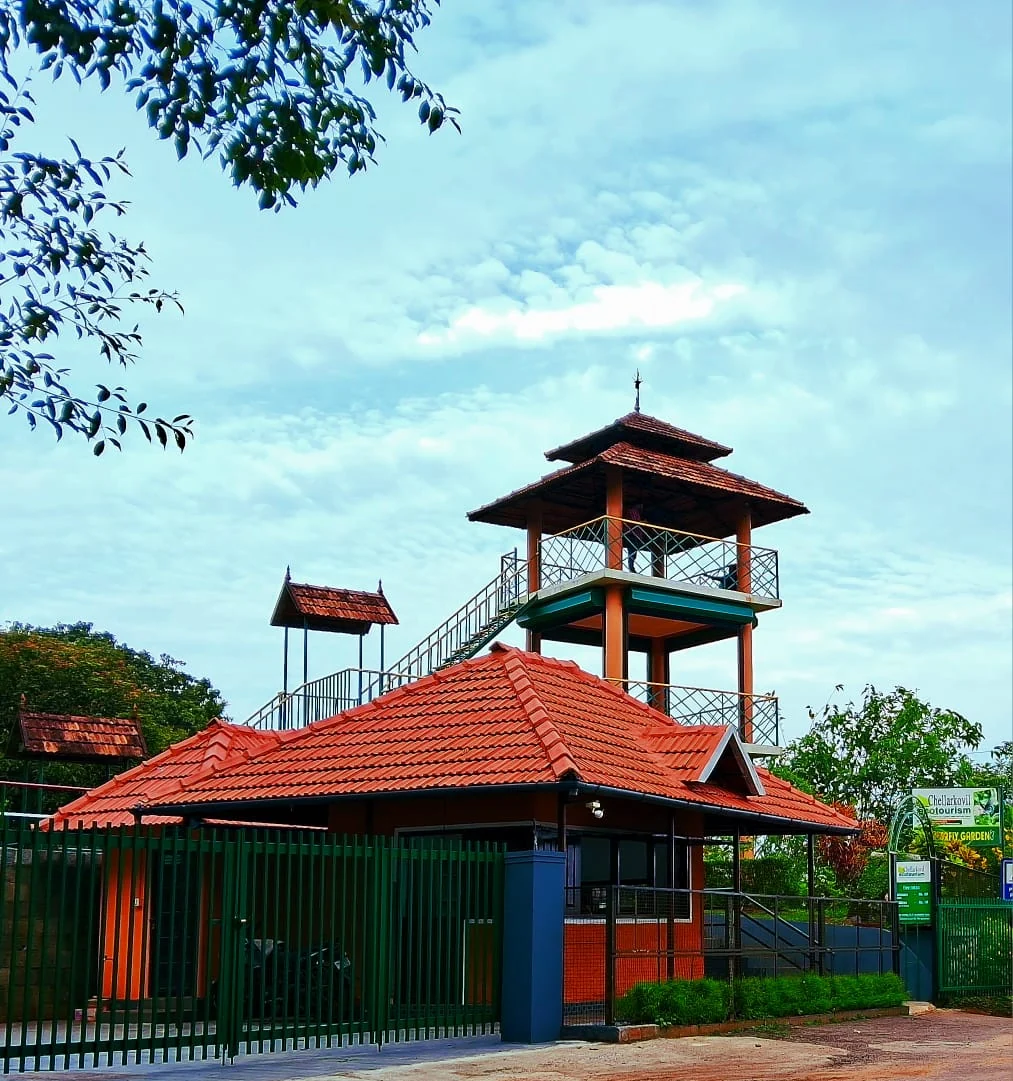
Thirteen kilometres north of Kumily the hills simply stop: Chellarkovil’s terrace looks off the edge of the Ghats onto the Tamil plains at Cumbum — a sheer green drop, with waterfalls in the monsoon and coconut groves at your back.
Roampedia is commission-free — own or know a stay, eatery, guide or shop near Periyar Tiger Reserve? List it and it appears here once verified.
Add a nearby businessEntry: A modest reserve entry fee applies — around ₹45 for Indian adults and around ₹500 for foreign adults, with lower rates for children. The boat cruise is charged separately (around ₹470 per seat for Indian nationals and around ₹1,130 for foreign nationals), and other activities such as bamboo rafting, treks and jungle patrols have their own charges. Boat tickets frequently sell out, so book ahead; life jackets are compulsory on the cruise following the 2009 boat tragedy.
Dress code: No formal dress code, but wear neutral, earth-toned clothing and comfortable walking shoes for wildlife viewing; carry a light jacket for cool mornings. For treks and rafting, long trousers and leech protection are advisable in wet months.
Festivals: Wildlife Week (early October) is marked at the reserve; the remote Mangaladevi Kannagi Temple inside the reserve opens to pilgrims only once a year for the Chithra Pournami festival (April–May); the wider Kumily–Thekkady area shares Kerala’s festival calendar including Onam.
Photography: Still photography is generally permitted and hugely rewarding — bring a zoom lens and binoculars for wildlife on the far shore. Professional or video/drone shoots may require prior permission and fees.
If you are travelling by bus or ferry, check the return service with the operator before setting out. Leave time to reach the stop or jetty after your visit.
Ask at the bus stand for the time of the last service back, not the next one. If you miss it, an auto or app cab is the fallback — agree the fare before you get in.
If you need step-free access, contact the site before travelling. Ask about a level entrance, steps along the route, the nearest drop-off point, seating and accessible toilets.
Emergency numbers are verified against official government and state tourism sources. 112 works anywhere in India.
Forest Department guided trekking and bamboo rafting in Periyar Tiger Reserve, with separate full-day and half-day programmes and reporting points. Full-day rafting is closed 5–30 September 2026 for raft maintenance.
13.6 km · ~23 min by cab · straight lineA small-group, 2.5-hour interpreted forest walk from Boat Landing in Periyar Tiger Reserve, with several daily trails and a minimum four-person booking charge.
13.6 km · ~23 min by cab · straight lineSeasonal forest trek from Thekkady to the ancient hilltop Mangaladevi Kannaki Temple near the Kerala-Tamil Nadu border, opened by the forest department mainly around Chithra Pournami.
14.6 km · ~24 min by cab · straight lineA full-day guided hike across Periyar’s forest and grass-covered ridges, with separate Brandipara and Thondiyar products and reporting offices.
16.4 km · ~27 min by cab · straight linePeriyar Tiger Reserve’s guided trekking-and-camping programme, offered as one night/two days or two nights/three days, with reporting at the Forest Check Post Ex Vayana EDC office.
16.4 km · ~27 min by cab · straight linePeriyar’s guided night walk, currently booked as Jungle Scout, with separate Forest Check Post and Bamboo Grove departures. This is a walking programme, not a jeep safari.
16.4 km · ~27 min by cab · straight lineThe Thekkady visitor gateway to Periyar Tiger Reserve, with Kumily as the road, bus and stay base; plan the Anavachal arrival, lake outing or guided forest programme as distinct stages.
16.6 km · ~28 min by cab · straight lineA scheduled passenger-boat trip on Periyar Lake, with reporting at Anavachal and a reserve-bus transfer to the Thekkady boat landing.
16.6 km · ~28 min by cab · straight lineMurikkady, also mapped as Murickady, is a plantation settlement near Kumily in Idukki. Use the village as an orientation base and a separately confirmed estate entrance for a spice or plantation visit.
19.7 km · ~33 min by cab · straight lineThekkady-side valley and stream landscape on the Kerala-Tamil Nadu edge.
21.1 km · ~35 min by cab · straight lineThe Kerala Forest Department ecotourism centre at Chellarkovil, with a watchtower, botanical and butterfly gardens and views towards the Tamil Nadu plains. Private resort viewpoints and waterfall approaches are separate visits.
23.1 km · ~38 min by cab · straight line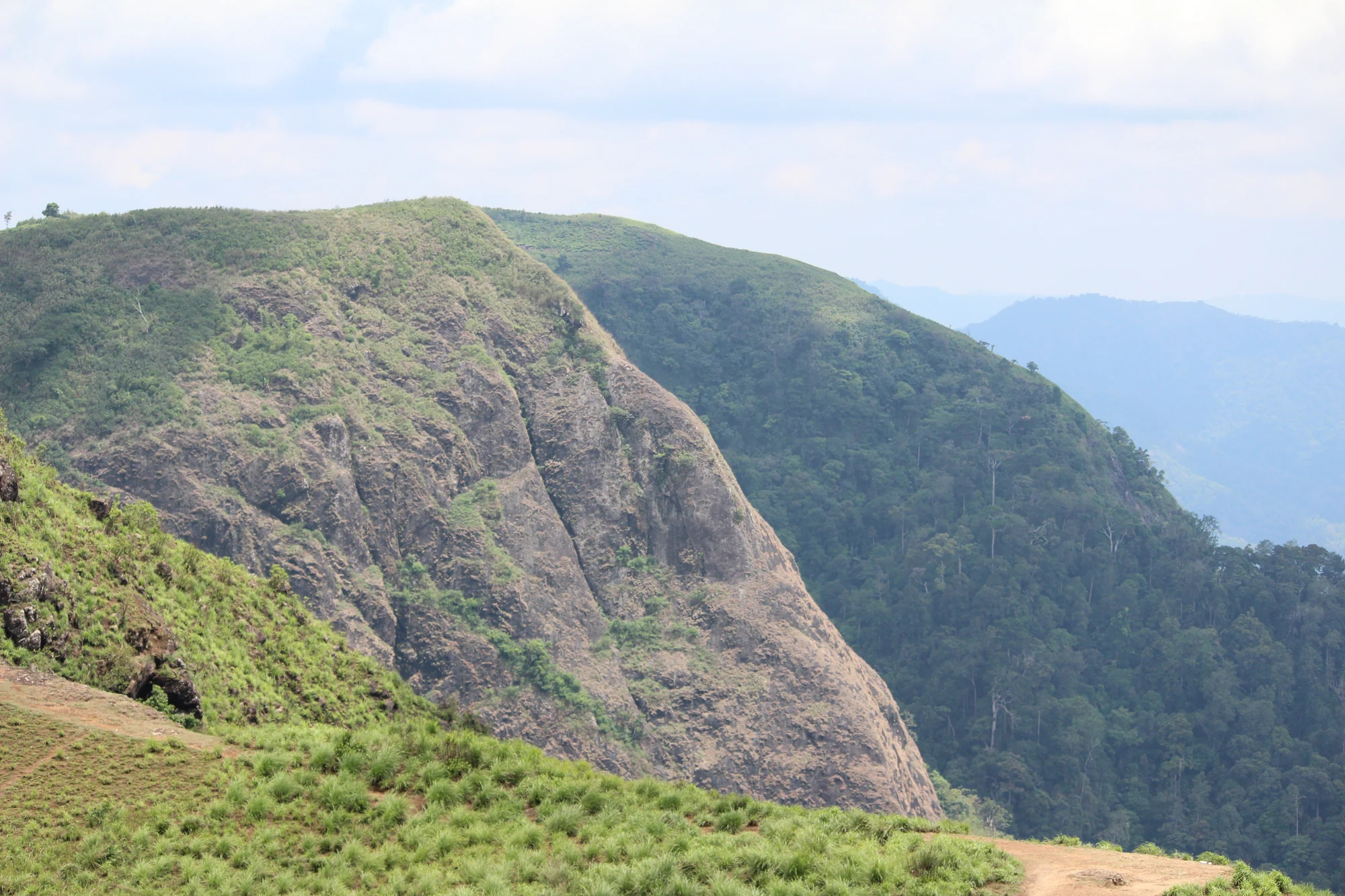
A rock-and-grass viewpoint near Peermade on the Pambanar side of Idukki, overlooking steep wooded ravines; known as Eagle Rock and for the profile-like Tagore Rock formation.
24.0 km · ~40 min by cab · straight lineAlmost certainly not — despite the name, tigers here are very few and extremely elusive, and sightings are rare even for regular visitors. Come instead for the near-guaranteed elephants, plus gaur, sambar, wild boar, otters, giant squirrels and a wealth of birds. Think of Periyar as a superb elephant-and-lake reserve rather than a big-cat safari.
Yes, the boat cruises sell out fast, especially the early-morning slots and on weekends and holidays during the October–March peak. Book online in advance through the Forest Department / KTDC or buy at the boat-landing counter early; a portion of seats is released online and the rest at the counter. Arriving without a booking on a busy day can mean a long wait or no seat.
After the 2009 Thekkady boat tragedy, in which an overloaded double-decker capsized with heavy loss of life, safety was overhauled: life jackets are now compulsory and boats are regulated for capacity. Always wear the life jacket provided, stay seated, and never rush to one side of the boat to see wildlife — the herd will still be there when the boat turns.
Plenty. The reserve runs guided nature walks and green walks, the longer Periyar Tiger Trail trek, border hiking, jungle patrol, night-time jungle camps and the popular bamboo-rafting programme — most led by trained local tribal guides. Outside the reserve, Kumily offers spice-plantation tours, ayurvedic spas, and Kathakali and Kalaripayattu performances.
Wear neutral, earth-toned clothing, comfortable walking shoes, and carry a light jacket for cool early mornings on the water. Binoculars, sunscreen, a hat and drinking water are useful. For treks and rafting, leech socks or salt are wise in the monsoon and wet months, and long trousers are recommended.
October to March, the cool, dry season, is the most comfortable and popular time for boat cruises and treks. The hotter months from around April to June can actually be excellent for wildlife, as animals gather at the shrinking lake to drink, though it is warmer. The southwest monsoon (roughly June–August) brings heavy rain and lush green forest but can disrupt boating.
Dryer months are easier for wildlife access; monsoon access depends on local rules.
Entry: A modest reserve entry fee applies — around ₹45 for Indian adults and around ₹500 for foreign adults, with lower rates for children. The boat cruise is charged separately (around ₹470 per seat for Indian nationals and around ₹1,130 for foreign nationals), and other activities such as bamboo rafting, treks and jungle patrols have their own charges. Boat tickets frequently sell out, so book ahead; life jackets are compulsory on the cruise following the 2009 boat tragedy. Timings: Reserve and boat-landing area generally open around 6:00 am to about 6:00 pm; boat cruises run in fixed slots through the day, with the first departing about 7:15–7:30 am and the last around 4:00 pm.
Base yourself in Thekkady and Kumily or a nearby town in Idukki, then confirm the last-mile route locally before leaving. Book official entry, safari, boat or eco-tourism slots first, then plan transport and stay. If the visit depends on forest, temple, boat, ferry, weather or seasonal access, check the official/local rule on the day before travel.
Half day to full day.
Nearby you can pair Periyar Bamboo Rafting (13.6 km), Periyar Nature Walk (13.6 km), Mangaladevi Temple trek (14.6 km), Periyar Border Hiking (16.4 km).
Do not feed or approach wildlife. Use official routes and approved operators only.
Written about Periyar Tiger Reserve itself — its history, its legends and the arguments about them.
These guides explore Thekkady and Kumily and the surrounding area. Choose a visit that fits your interests, allowing separately for travel between stops.
Written about Thekkady and Kumily as a whole rather than about Periyar Tiger Reserve — its history, its streets, and how to spend a day in it.
Route-level itineraries and practical guides for the rest of Kerala.
Photographs: Ardra Balakrishnan (CC BY-SA 4.0), Mike Prince from Bangalore, India (CC BY 2.0), Harvinder Chandigarh (CC BY-SA 4.0), Bernard Gagnon (CC BY-SA 3.0), Kerala Forest and Wildlife Department (© Kerala Forest and Wildlife Department), Periyar Tiger Reserve / Periyar Tiger Conservation Foundation (© Periyar Tiger Reserve / Periyar Tiger Conservation Foundation), Periyar Tiger Reserve (© Periyar Tiger Reserve; official programme photograph), Jacob Thapovanam (© Periyar Tiger Reserve; official programme photograph), Sali Palode (© Periyar Tiger Reserve; official programme photograph). Wikimedia Commons.