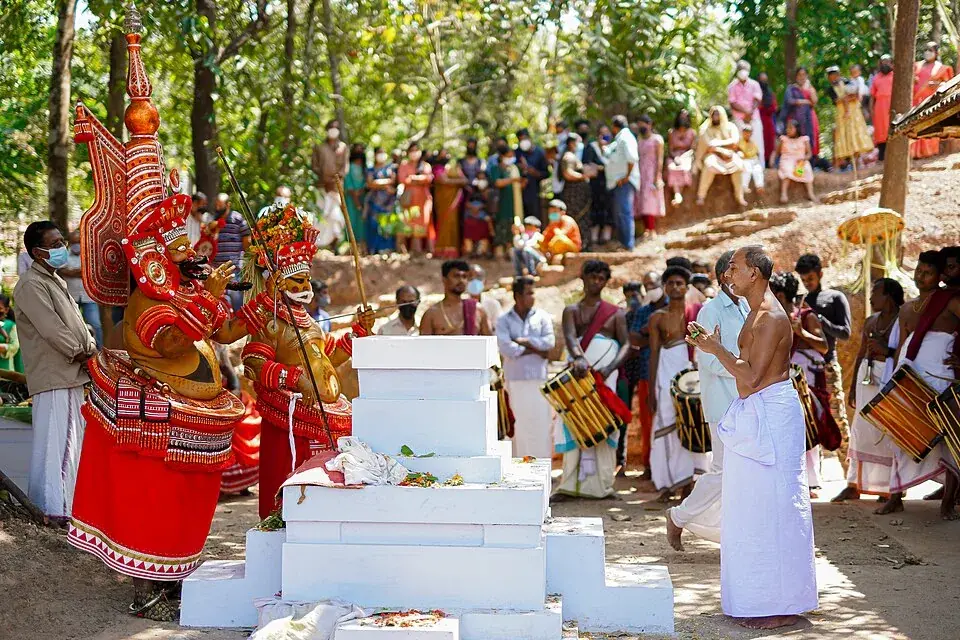
Theyyam is not a dance that represents a god. For the hours the headdress is on, the shrine, the village and the man himself take it that the god is present and the man is not, and people bring him the things they would not say aloud to anyone — a debt, an illness, a son who has stopped speaking to them — and he answers them by name. Then it comes off. What makes this the most extraordinary thing to see in north Kerala is not the fire or the costume; it is that the person the whole village kneels to is, an hour later, someone most of them would not have eaten beside within living memory.
The story of Theyyam performances
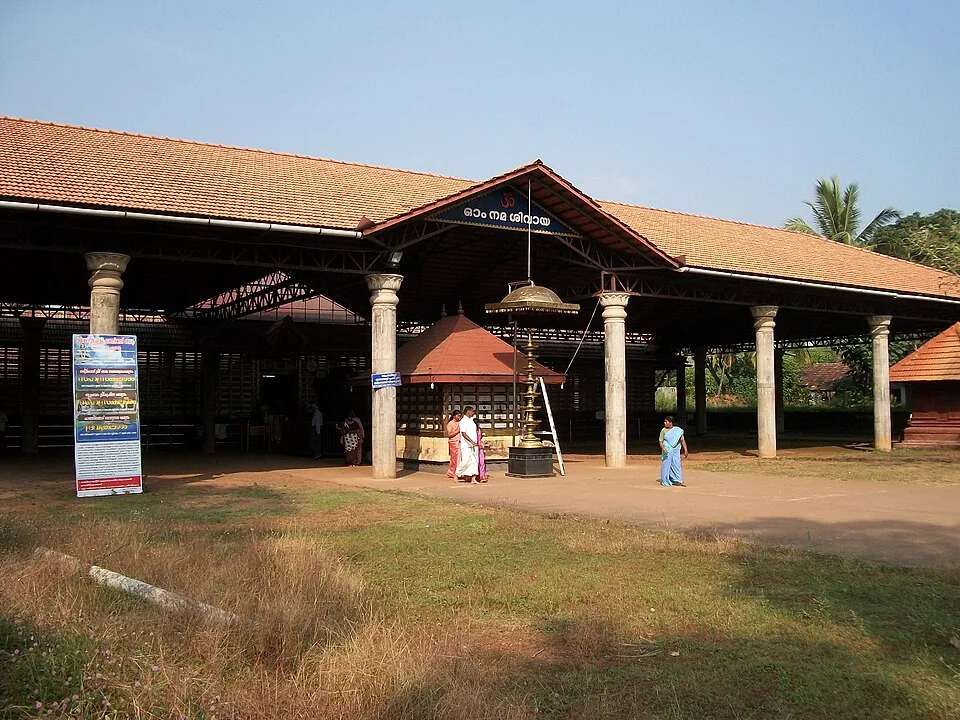
It runs on the Malayalam calendar, not on yours. The season opens on the tenth day of Thulam, around the third week of October, at Kolacheri east of Kannur, and closes seven and a half months later around the middle of Edavam at Kalarivathukkal by the Valapattanam river, 7.63 km from Kannur railway station. In between it moves from kavu to kavu across Kannur and Kasaragod on a rota no single authority sets: each shrine has its own days, fixed by its own reckoning, and the villages around it have known them since long before anyone thought to write them down for visitors.
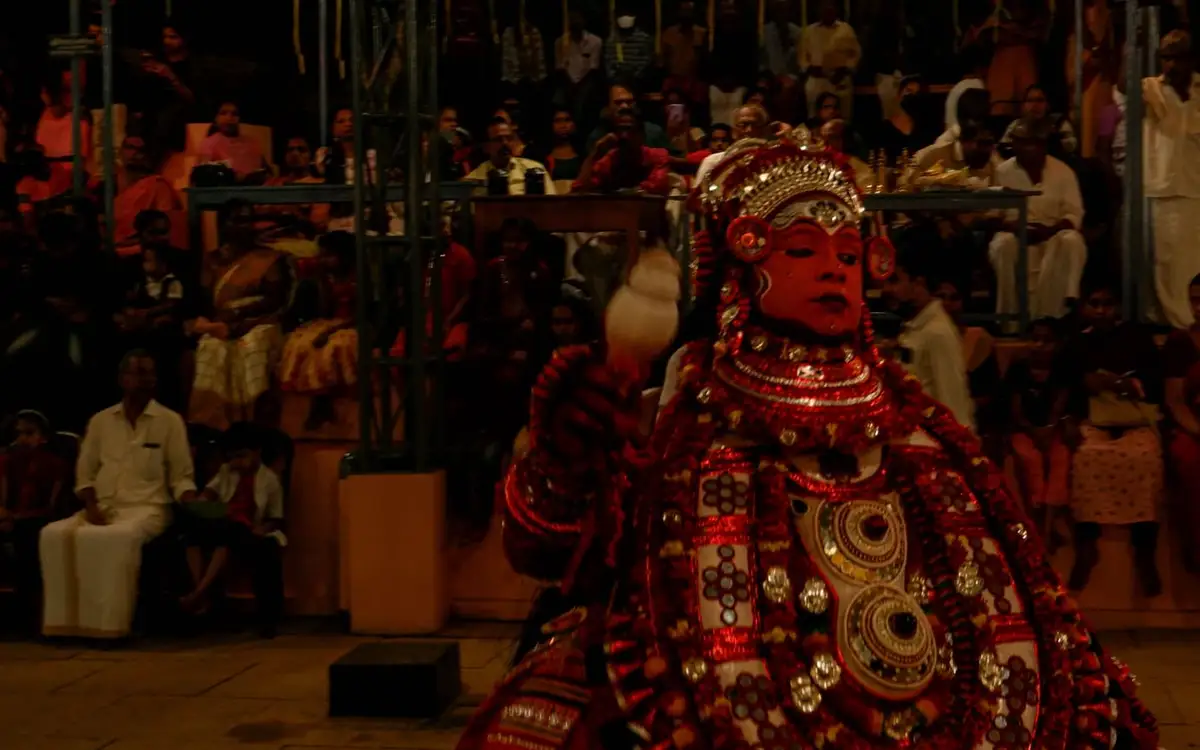
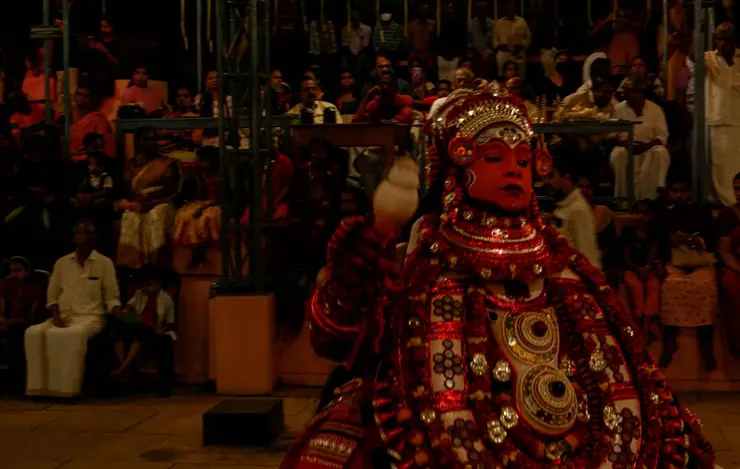
A kaliyattam is a night, not an hour. The performer eats little and keeps a period of ritual discipline beforehand; on the day he is painted freehand in patterns that have their own names, in rice flour, turmeric and charcoal ground into coconut oil, and the face alone can take most of an afternoon. Around the painting the costume is built on the ground out of split palm leaf, cloth, lacquered wood and silver — a heap of components with a knife lying beside it. The mudi, the headdress, can stand taller than the man who will carry it. First he dances the vellattam, in a small red head-cloth and no great costume, while the thottam songs tell the deity’s story to the drums. Then the mudi is fitted, and from that moment nobody in the courtyard addresses him as himself.
The costume is worth more than most of the men wearing it earn in a season. A single headdress, or a set of silver anklets, runs to twenty-eight or thirty thousand rupees, and the performing family buys and keeps it. Against that: a performer interviewed about a day in 2018 was paid a thousand rupees for three Theyyams; another, for three in 2016, two and a half thousand, divided among five to eight assistants. Drummers take a thousand to fifteen hundred for the day. A survey of two hundred performers found most owned under five cents of land and had no social security of any kind, and the state pension attached to the senior artists among them stood at seven hundred rupees a year.
The right to perform is hereditary, and it is territorial. Nine communities hold it — the Vannan and Malayan above all, with the Velan, Pulayan, Mavilan, Anjoottan, Munnoottan, Koppalan and others — and every one of them is a Scheduled Caste or Scheduled Tribe. A family’s right attaches to particular shrines and does not travel; performing outside them is not done. Which makes the sanction available to a shrine that falls out with its performer close to total, and it has been used: a man barred at Pappinisseri in 1986 over money and replaced by another community’s performer, another banned outright at Annur in 2006 after a disagreement about ritual. In 1932 at Mattul, a performer’s father and two relatives lost their rights for bathing in a pond a higher-caste community reserved for itself.
The reversal at the end of the night is the part nobody photographs. The same man who has been touched, embraced and asked for blessings by the whole village goes back to where caste puts him. In April 2021 at Kunhimangalam in this district, a Theyyam performer receiving an award was the one man on the platform the officiating priest would not drape with the honorary shawl by hand. At some shrines, performers from the Nalkadaya, Mavilan and Velan communities still dance outside the courtyard at a set distance from it — and the performers themselves say there is no basis for the distance.
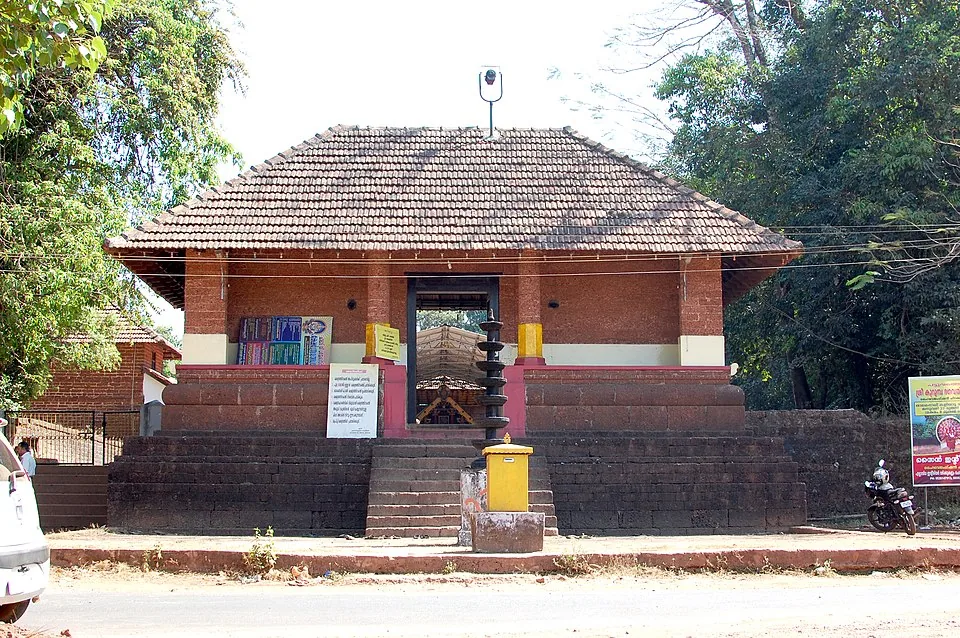
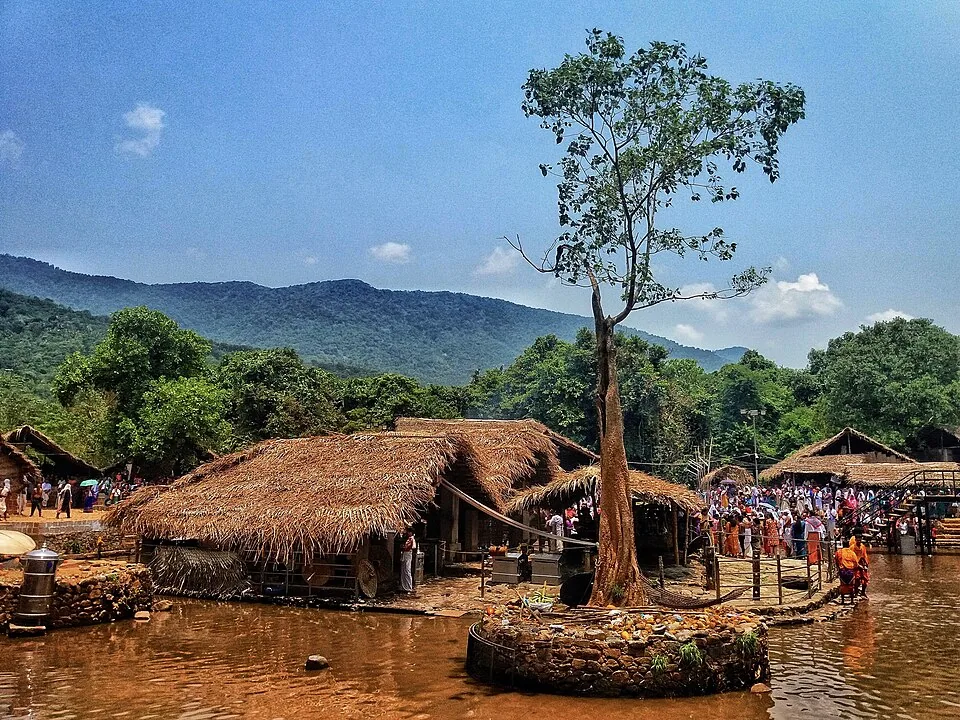
The exception to all of it stands 18.33 km north of Kannur station at Parassinikkadavu, on the west bank of the Valapattanam. There, Theyyam is not a festival event but the ordinary daily form of worship: Muthappan is performed morning and evening, by men of the Vannan community, on nearly every day of the year, and the temple admits everybody regardless of caste or religion. Muthappan is offered dried fish, toddy, boiled black gram and tea, and the first share of what is handed out goes to a dog before any person gets it, because the god is said to keep one. It is the answer for anyone whose dates will not fall — and, being a shrine with a calendar of its own, it has one catch of its own.
Legend & myth
Muthappan was not born grand. The story told at Parassinikkadavu makes him a foundling raised in the Mannanar house at Eruvessi, a boy who would not behave as a boy of that household should: he hunted, he ate meat and fish, he drank toddy, he kept the company of people the house did not keep company with. When his mother Padikkutty Amma challenged him he showed her, for a moment, what he actually was, and she let him go. The shrines that took him in are Madappuras rather than temples — which is why his worship still has fish and toddy in it, and why it never acquired the rules that would have kept most of his devotees outside.
Pottan Theyyam is an argument rather than a story. Shiva, in the form of a Pulaya — a man of a community treated as untouchable — stands in the way of the philosopher Adi Shankara on a narrow mountain path and will not stand aside. He asks what makes the two of them different, and puts it in terms nobody can dodge: if you cut me and you cut yourself, is the blood a different colour? The Theyyam that performs this is danced by a man from one of the communities the question is about, in front of villages built on the answer being no in principle and yes in practice.
Kathivanoor Veeran was a man before he was a deity, and not a distinguished one. Mandappan of the Thiyya community quarrelled with his family, left for Coorg, and was killed in a fight far from home; his wife followed him onto the pyre. He is one of the Hero Theyyams — ordinary people raised to godhood for the manner of their living and dying rather than for anything cosmic — and women in this part of Kannur have asked him for a good husband ever since.
Devakkoothu is the exception that shows how firmly the rest is held. At the Koolom Thazhekkavu shrine on Thekkumbad, near Cherukunnu, one Theyyam and only one is performed by a woman: the goddess Valliyamma, who is said to have wandered into a flowering thicket and lost her way until the sage Narada found her. It comes round once every two years, in the Malayalam month of Dhanu, which falls in December.
Read the full history of Theyyam performances 449 more words
History
Older than the records. Kerala Tourism dates the ritual to more than eight centuries, which is a floor rather than a measurement. What is not in doubt is that it belongs to the religious world of north Malabar that predates the temple orthodoxy layered over it, and that its deities are heroes, ancestors, snakes, smallpox and the dead at least as often as they are anything out of a Sanskrit text.
How many there are is genuinely disputed, and the disagreement is between official sources rather than between an official and a rumour. Kerala Tourism says nearly four hundred; the district tourism council says over four hundred; English Wikipedia says about four hundred and fifty-six, of which a hundred and twelve are well known; the Malayalam article says around five hundred exist and about a hundred and twenty are performed with any regularity. All four are set down here because no census of a living ritual spread across two districts has ever actually been taken.
The rare form is the Perumkaliyattam, which a shrine holds not annually but once in twelve years, or twenty-five, or longer, and which the villages around it spend a great deal of money and a year of preparation on. Most people living beside a kavu will see a handful in a lifetime. Some will see one.
The state took an interest late and unevenly. The Kerala Folklore Academy has sat at Chirakkal in this city since it was established to document and support the folk arts, and its fellowship is the closest thing to formal recognition a Theyyam artist receives — the 2015 fellow, P P Kunhiraman Peruvannan, is among the senior practitioners of the Vannan community. The pension that went with that recognition was seven hundred rupees a year.
Why visit
The season’s two ends are both here. It opens at Kolacheri and closes at Kalarivathukkal, and no other district can say that.
It is unstaged. Nobody sells a ticket, nobody sets a start time to suit an audience, and the people standing beside you are there to be blessed rather than entertained.
The god answers. A Theyyam speaks to individual people at length, by name, about their own circumstances — which is not something you can watch anywhere else in the country.
Kannur is where the season begins and where it ends, and both bookend shrines are a short drive from the city.
Parassinikkadavu removes the one thing that usually defeats a visitor, the calendar, by performing on a fixed daily schedule and admitting everybody.
The craft alone would carry the trip: the mudi, the mukhathezhuthu drawn freehand, the poykkannu, the chilampu — made or fitted by the performing family rather than bought in.