What to expect
Highlights
- Heritage experience at Nileshwar
- Architecture, local stories and old trade/cultural routes
- Good fit for guided walks and nearby cafes/shops
The cultural capital of Kasaragod — a Theyyam and folk-arts town on the Nileshwaram backwaters, with kovilakams, kavus and a lively ritual-arts season.
On the northern Malabar coast of Kasaragod district, Nileshwar — also spelt Nileshwaram — is a heritage town long regarded as the cultural capital of Kasaragod, where the drums of Theyyam still summon gods into the bodies of men, old royal kovilakoms shelter woodcarvings and folklore, and the Valiyaparamba estuary threads its islands just to the south.
Nileshwar wears its name like a blessing. It is said to derive from Neelakanteshwaran — the Blue-throated One, an epithet of Shiva who drank the world’s poison to save creation — and a town that carries a god’s name in its very syllables has never quite let go of the sacred. Walk its lanes in the cool months and you will hear, somewhere beyond the coconut palms, the tightening rhythm of a chenda drum. That sound is the town’s heartbeat, and it belongs to Theyyam.
For much of the year Nileshwar can feel like an unhurried coastal settlement of tiled roofs, temple tanks and river ferries. But from roughly December into April the town transforms. In the sacred groves and family shrines called kavus, and in the courtyards of ancient temples, performers spend the night becoming deities — faces painted in vivid ochre and vermilion, headdresses towering many feet high, skirts of coconut fronds catching the torchlight. When the transformation is complete the villagers no longer address a dancer; they address the god, and the god answers, blesses and admonishes in turn.
This is a place where the past has never been fully paved over. Nileshwar was one of the seats of the Nileshwar Rajas, a lineage tied to the powerful Kolathiri house of north Malabar, and the town is dense with the physical memory of that rule — palaces known as kovilakoms, temple tanks, and an unusual abundance of serpent groves, the small forested shrines where snake deities are honoured and where, almost by accident, patches of ancient biodiversity have been preserved for centuries.
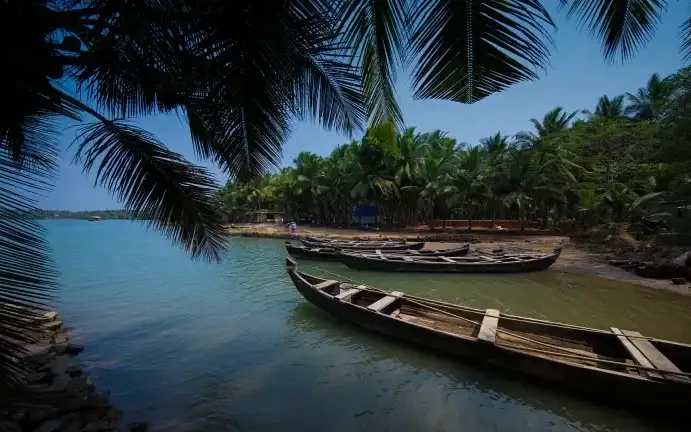
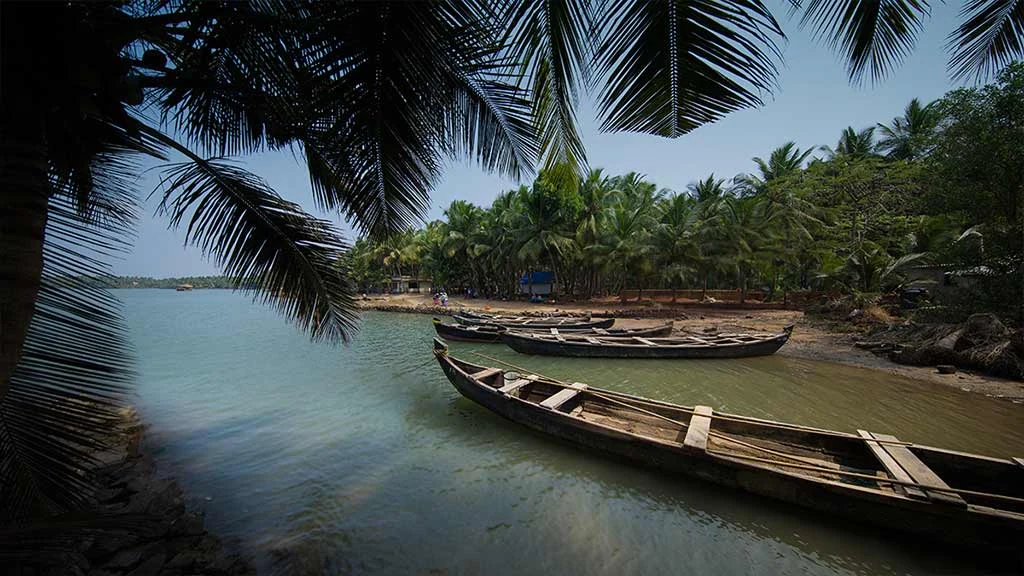
The landscape helped shape the culture. Nileshwar sits where river, backwater and sea meet. Just to the south, the broad Valiyaparamba estuary — sometimes called the Kottapuram or Kottappuram backwaters — spreads into a maze of palm-fringed islands, the largest of them Valiyaparamba itself, hemmed by the Arabian Sea on one flank. Fishing hamlets, ferry jetties and green paddy-fringed banks give the town a gentler, watery character that stands in contrast to the fierce theatre of its ritual nights.
For the traveller, Nileshwar offers something increasingly rare: a living tradition that has not been staged for tourism. The Theyyam here is performed for the community, at the community’s temples, on the community’s calendar. Visitors are welcomed as respectful witnesses rather than paying spectators, and the experience — an all-night vigil, the smell of camphor and burning coconut husk, the sudden appearance of a towering, fire-lit deity — tends to stay with people long after the beaches and backwaters blur together.
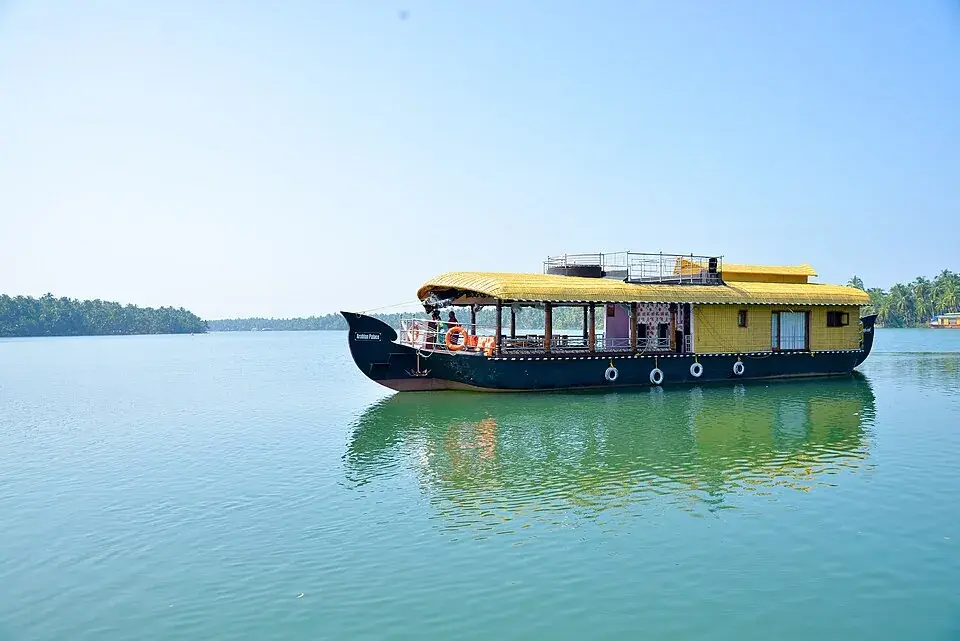
Add to this a clutch of old temples, the folklore centre housed in the former royal palace, quiet beaches, and houseboat cruises through the Valiyaparamba waters, and Nileshwar rewards the sort of traveller who prefers atmosphere and authenticity to checklists. It is not a resort town; it is a town where the gods still come to dance.
The origin of Theyyam itself is wrapped in legend. In the folklore of north Malabar it is said that Parashurama, the axe-bearing avatar of Vishnu who — as the story goes — reclaimed Kerala from the sea, entrusted the people of this coast with sacred performances such as Theyyam and Kaliyattam, so that the divine might be worshipped in living, dancing form. Whether one takes this as history or holy poetry, it captures a truth the region feels deeply: here, worship is embodied.
Among the many deities who descend as Theyyam, one of the most beloved in these parts is said to be Muthappan, whom devotees revere as a form of Shiva and Vishnu combined. In the traditional telling, Muthappan was found as an infant by a childless couple and grew into a wild, boundary-crossing figure — a hunter and protector who moved among the poor and the outcast, and who is worshipped, unusually, with offerings that break Brahminical convention. As legend has it, Muthappan is a god who prefers the company of ordinary people, and his Theyyam is honoured across north Malabar.
Perhaps the most philosophically striking of the local Theyyams is Pottan Theyyam, whose legend is beloved in Kasaragod and Kannur. In the popular version, Shiva is said to have taken the form of a Pulaya man — a person of the so-called lower castes — to test the great sage Adi Shankaracharya. When the sage ordered the man out of his path, the disguised god is said to have replied that the same red blood flows from Brahmin and outcaste alike when either is cut. Framed as legend, the story is remarkable: a folk deity delivering a message of human equality centuries before such ideas became common currency. When Pottan Theyyam even walks through fire, devotees see not spectacle but a god insisting that all people are one.
These stories are told as sacred legend, not documented fact, and the communities who keep them regard the performances as genuine visitations of the divine rather than as drama. Travellers who understand them this way — as living faith rather than folklore for entertainment — find the experience far richer, and far more respectful of the people whose tradition it is.
Nileshwar’s recorded importance flows from the sea-facing kingdoms of north Malabar. For centuries this coast lay within the sphere of the Kolathiri (or Kolathunad) royal house, one of the great powers of medieval Kerala, and Nileshwar emerged as an important centre associated with a branch of that lineage — the Nileshwar Rajas. Local tradition holds that the ruling family migrated to Nileshwaram several centuries ago, establishing the town as one of their capitals and endowing it with temples, palaces and patronage of the arts.
The Rajas built and maintained a cluster of palaces known as kovilakoms — among them names still remembered locally such as the Thekke Kovilakom and Kinavoor Kovilakom, along with royal tanks and the principal Nileshwaram Palace itself. These two-storeyed structures, prized for their woodwork and sculpture, are today regarded as heritage monuments; the main palace has been used as a folklore and cultural centre under the state archaeology and cultural authorities, preserving the memory of courtly north Malabar.
Like much of the coast, Nileshwar was drawn into the turbulence of the later medieval and early modern centuries, including conflict associated with the Nayaka rulers of Bednore (Ikkeri) to the north, whose expansion pressed on the small principalities of Kasaragod. This borderland position — between Kerala’s Malayalam-speaking south and the Tulu- and Kannada-speaking country to the north — gave Kasaragod, and Nileshwar within it, a distinctive layered culture that endures in its languages, cuisine and rituals.
Through all these political changes, the town’s deepest continuity has been ritual. Theyyam — a tradition many scholars trace back many centuries, rooted in older Dravidian and tribal worship — became central to community life, performed in the kavus and temples by hereditary performer communities. The patronage of temples and shrines, the maintenance of serpent groves, and the annual Kaliyattam festivals wove the sacred calendar tightly into the social fabric, and it is this, more than any monument, that earned Nileshwar its reputation as the cultural capital of Kasaragod.
In the modern era Nileshwar became a municipal town with its own railway station on the coastal line, a market centre for the surrounding farming and fishing villages, and a gateway to the Valiyaparamba backwaters. Yet its identity remains anchored in heritage: the palaces, the temples, the sacred groves and, above all, the Theyyam season that still draws devotees and, increasingly, respectful visitors from far away.
To witness Theyyam where it truly lives — not a staged show but an all-night ritual in a village kavu or temple, where performers become gods before your eyes. For many travellers this is the single most powerful cultural experience in all of Kerala.
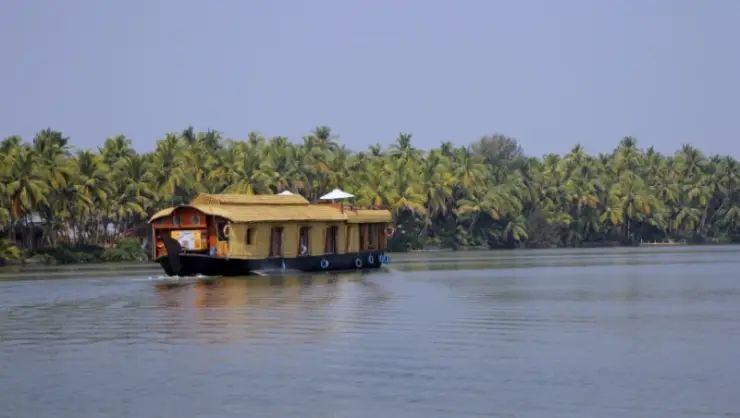
For the Valiyaparamba backwaters just to the south, a serene maze of palm-fringed islands, lagoons and fishing hamlets that can be explored by houseboat or local ferry, far quieter and less commercialised than Kerala’s southern backwaters.
For living heritage: the old royal kovilakoms and the Nileshwaram Palace, now a folklore centre, together with ancient temples and an unusual density of serpent groves that double as tiny preserves of old-growth greenery.
For its layered, borderland culture — a meeting point of Malayali north Malabar and the Tulu-Kannada country of northern Kasaragod, reflected in the town’s temples, festivals, food and folk arts.
For unhurried coastal calm: quiet beaches, river-and-sea confluences and a small-town pace that make Nileshwar a restful base rather than a crowded resort strip.
For travellers who value authenticity over polish — Nileshwar offers a rare chance to encounter a sacred tradition on its own terms, in its own season, among the community that keeps it alive.
Road km to Kasaragod; ghat roads and traffic vary — allow extra.
November to February and early mornings are best for walking; avoid midday heat where possible.
Live forecast loads in your browser.
Sun and moon are calculated for this location and shown in IST. Photography windows are the hour around sunrise and sunset; the sunset bearing is degrees clockwise from true north. Moon phase is accurate to about half a day.
These are official or public-sector eco offerings that match this place, town or forest destination. Confirm availability, permits, tariffs and reporting times with the official operator before travel.
A separately arranged outing through Valiyaparamba’s inhabited backwaters. Establish the operator, departure jetty and return before travelling.
Official source →Browse listed stays, food, activities, sights, shops and rentals around Nileshwar. Check each listing’s locality and contact the business directly for current arrangements.
Houseboat operator in Valiyaparamba. Kerala Tourism Houseboat, Nileshwar and Alleppey, Kerala, India · Valiyaparamba houseboat, Nileshwar, Kottappuram.
Valiyaparamba Backwaters is Kasaragod north-backwater route with islands, mangroves, birdlife and official Kerala Tourism context, useful for planning boat routes from Ayitti, Edayilakkad, Cheruvathur or nearby bases. Public destination; confirm boat/operator pricing · Backwaters, Ayitti, Edayilakkad.
Book with the place itself. India’s cyber-crime coordination centre warned in April 2025 that convincing copies of hotel and pilgrimage booking sites are being pushed through sponsored search and social ads, taking payment for rooms the property never hears about. Use the contact and source details on each profile to confirm the exact business and booking channel. A directory entry or map pin alone does not establish an operator’s identity or current availability. Roampedia takes no commission and does not collect booking payments. If a booking page reached you through an ad, check the address bar against the property’s own site before you pay. Fraud can be reported on cybercrime.gov.in or on 1930.
Find food, accommodation and activities across Valiyaparamba. Browse the guides for places to eat, stay and explore along your route.
One more place around Valiyaparamba worth a day of its own.
13.0 km · straight line
An inhabited coastal backwater landscape in southern Kasaragod, with fishing shores, coconut groves and island settlements. The map uses the Valiyaparamba village jetty as a shoreline orientation base.
Roampedia is commission-free — own or know a stay, eatery, guide or shop near Nileshwar? Submit public business details for review.
Add a nearby businessEntry: There is no entry fee to visit the town or to witness Theyyam at community temples, though offerings are customary and welcome. Houseboat and ferry cruises on the Valiyaparamba backwaters are charged separately, and rates vary by operator and season.
Festivals: The great annual events are the temple Kaliyattam festivals at which Theyyam is performed, held mainly between about December and April (with the wider season roughly October to May). Each temple and kavu fixes its own dates by ritual tradition, so exact timings must be checked locally before you travel.
Photography: Ordinary photography of the town, temples and backwaters is generally fine. Theyyam is a sacred ritual, however — always ask permission before photographing performers or ceremonies, avoid flash and never obstruct the ritual, and respect any request not to photograph a particular deity or moment.
If you are travelling by bus or ferry, check the return service with the operator before setting out. Leave time to reach the stop or jetty after your visit.
Ask at the bus stand for the time of the last service back, not the next one. If you miss it, an auto or app cab is the fallback — agree the fare before you get in.
A working small town with shops, banks, ATMs and pharmacies on the main road.No accessible toilet or wheelchair provision is advertised at any of the kavus.
Checked 21 August 2026 against source 1source 2. Conditions change and surfaces vary with weather — if step-free access is essential, confirm with the site before you travel.
Charge cap and free-transaction limits: Reserve Bank of India, ATM FAQ updated 4 July 2025; checked 4 October 2026.
These services are listed within about 1.2 km of Nileshwar. Walking distances follow mapped routes; access and opening hours can change. Other services may be closer but are not included here.
Published emergency and visitor-assistance contacts. For an immediate emergency, call 112. Shared Kerala contact sources checked 4 October 2026; publication does not establish a tested live response.
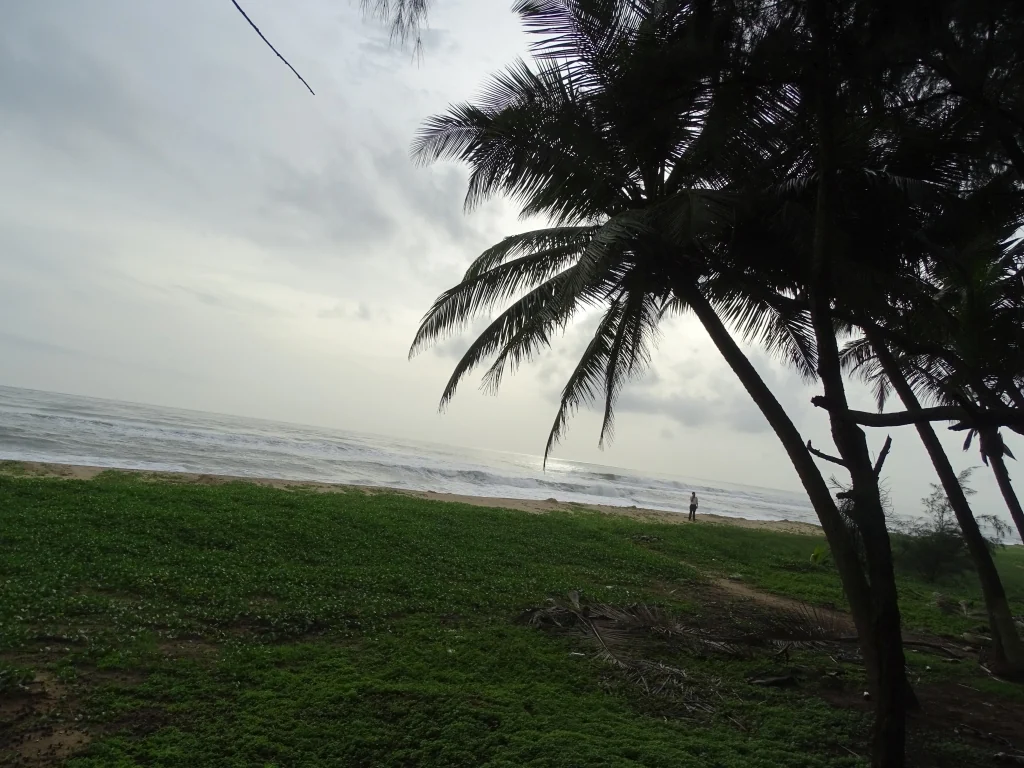
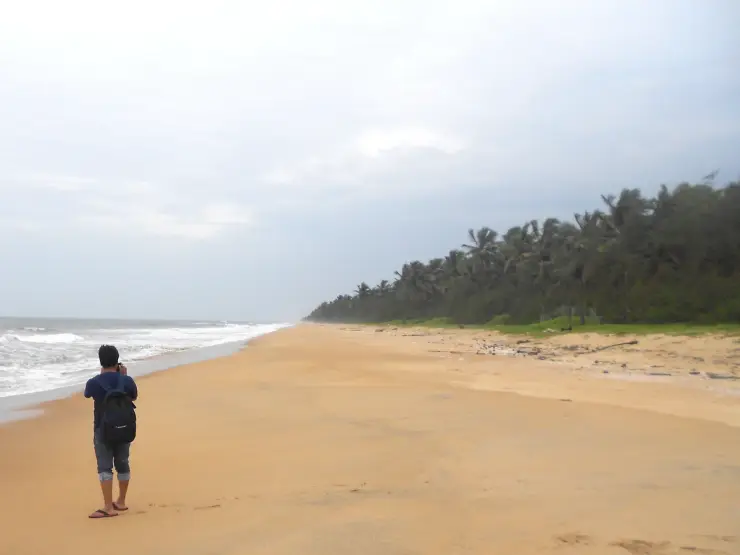
Kanhangad Beach is the Hosdurg coastal frontage of Kanhangad in Kasaragod district, with a broad sandy shore and an established fish-landing setting. It is a beach visit from Kanhangad town, distinct from Hosdurg Fort, the town’s ashrams and the separately named beaches at Ajanur, Ozhinhavalappu and Thaikadappuram. Use the named beach approach rather than a generic Kanhangad map result. The shore’s working character is central to the visit: leave boats, nets and landing passages clear while enjoying the sea-facing sand.
6.3 km · straight line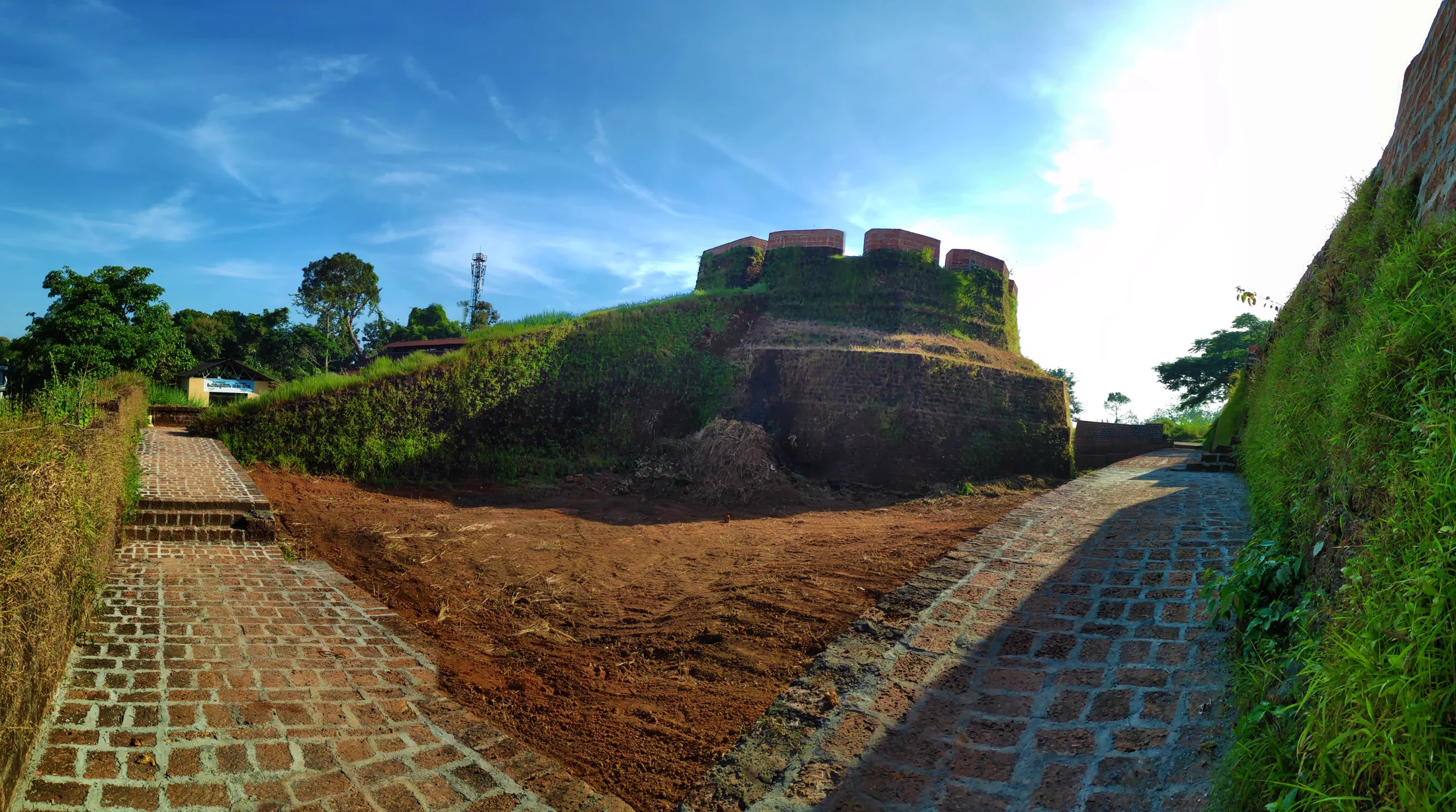
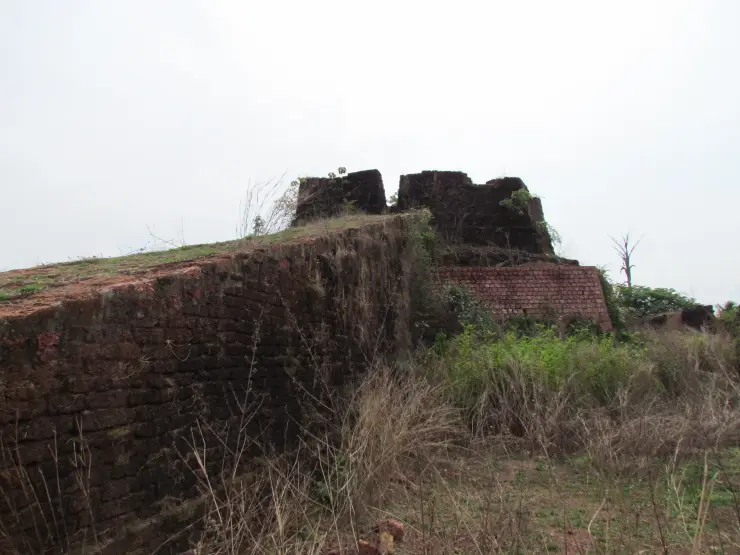
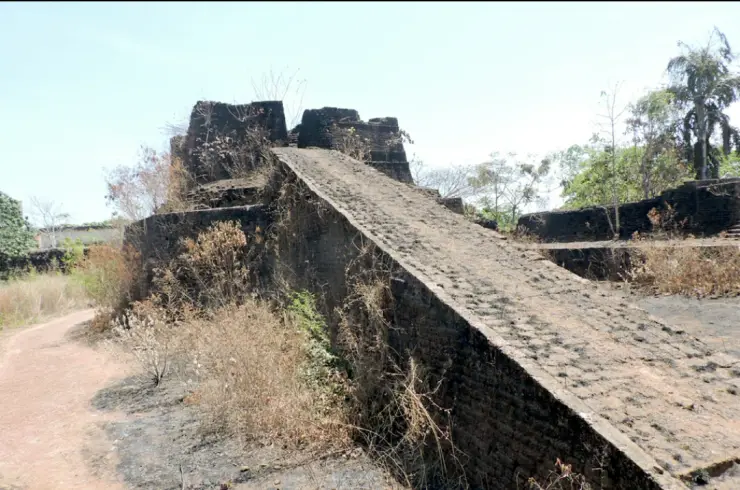
The surviving laterite fort at Hosdurg in Kanhangad is associated with the Ikkeri Nayakas and recognised by its rounded bastion and broad ramp; Nithyananda Ashram is a separate neighbouring institution.
6.6 km · straight line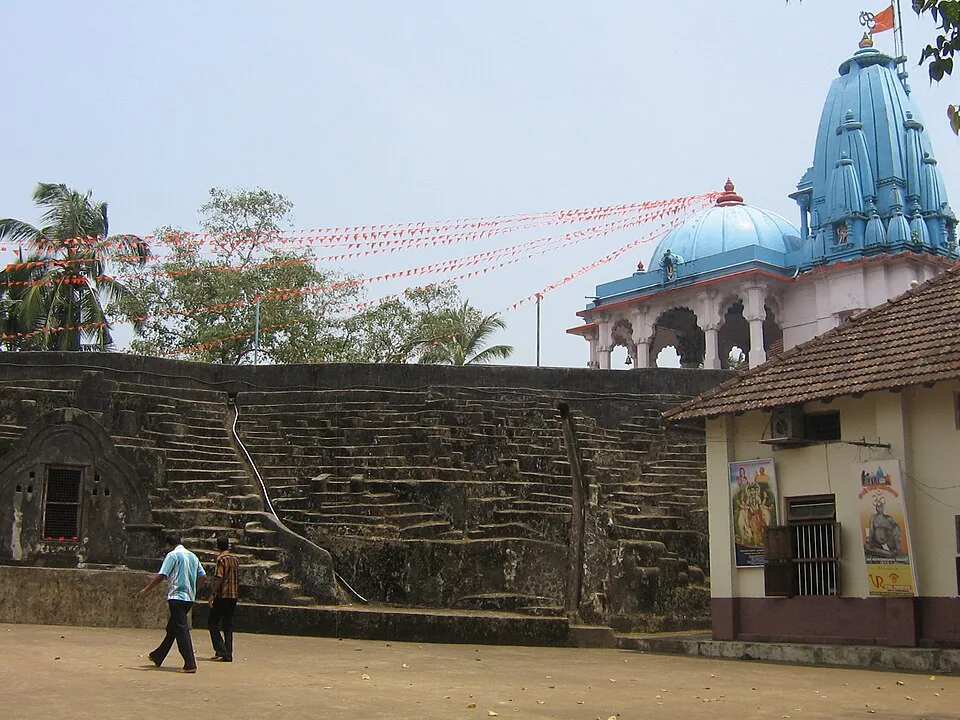
The hillside cave complex at Hosdurg where Bhagawan Nityananda cut meditation chambers by hand out of a single mass of laterite — 43 by the ashram’s own account — with the Nithyananda Temple built above them in 1963. Mobile phones are prohibited in the caves.
6.8 km · straight line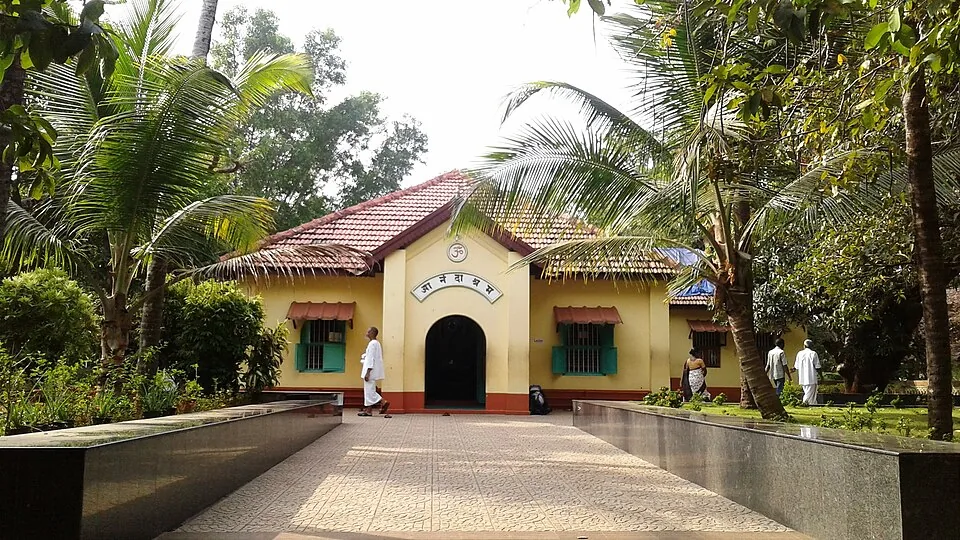
A tranquil spiritual retreat at Kanhangad founded in 1931 by Swami Ramdas (Papa) and Mother Krishnabai, set in quiet wooded grounds; open to visitors of every faith under its motto of “universal love and service”.
9.0 km · straight lineAn inhabited coastal backwater landscape in southern Kasaragod, with fishing shores, coconut groves and island settlements. The map uses the Valiyaparamba village jetty as a shoreline orientation base.
13.0 km · straight line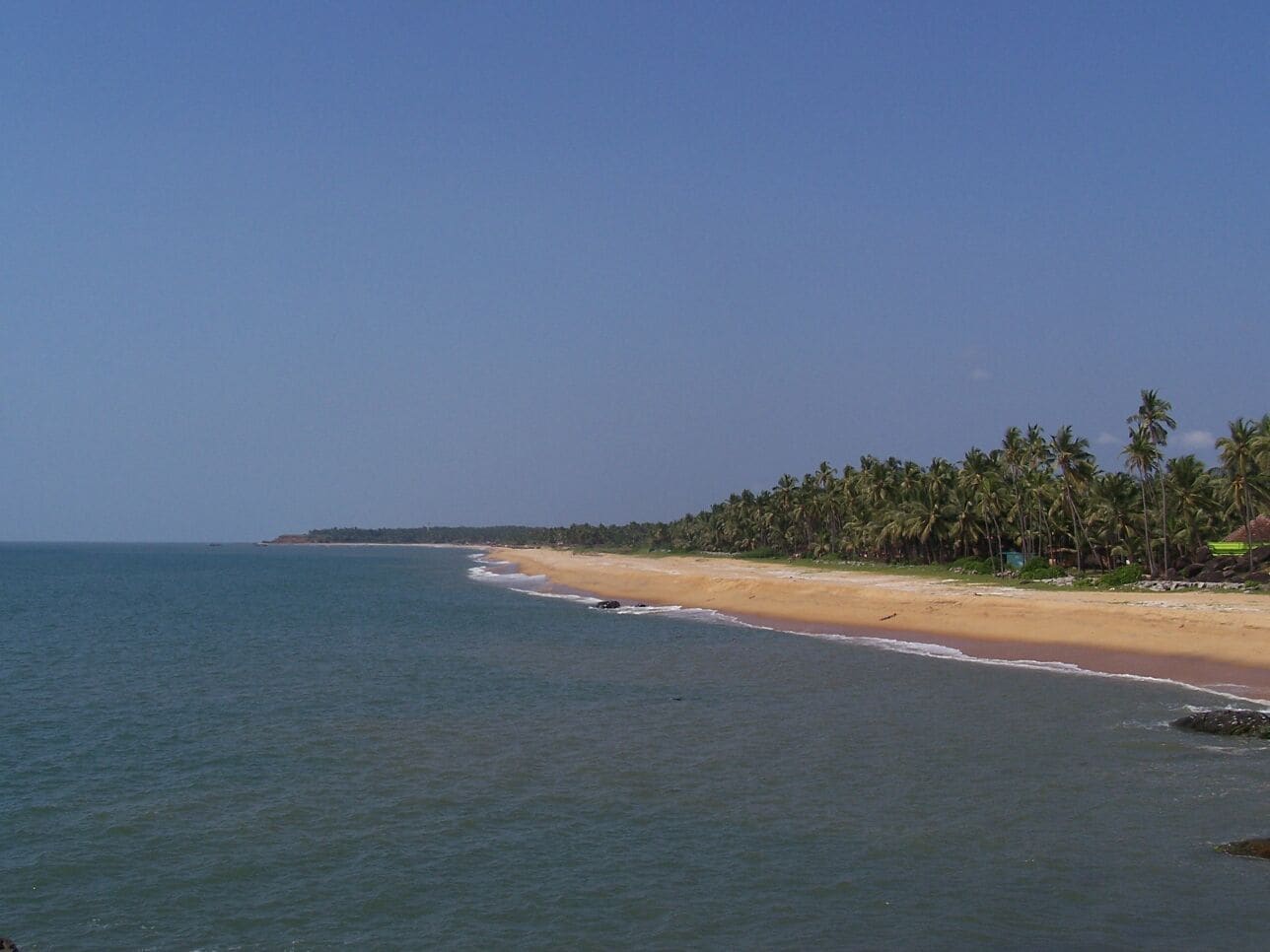
The beach stretch below Bekal Fort, with a landscaped park — famously the setting of the song “Uyire” from the film Bombay.
17.3 km · straight line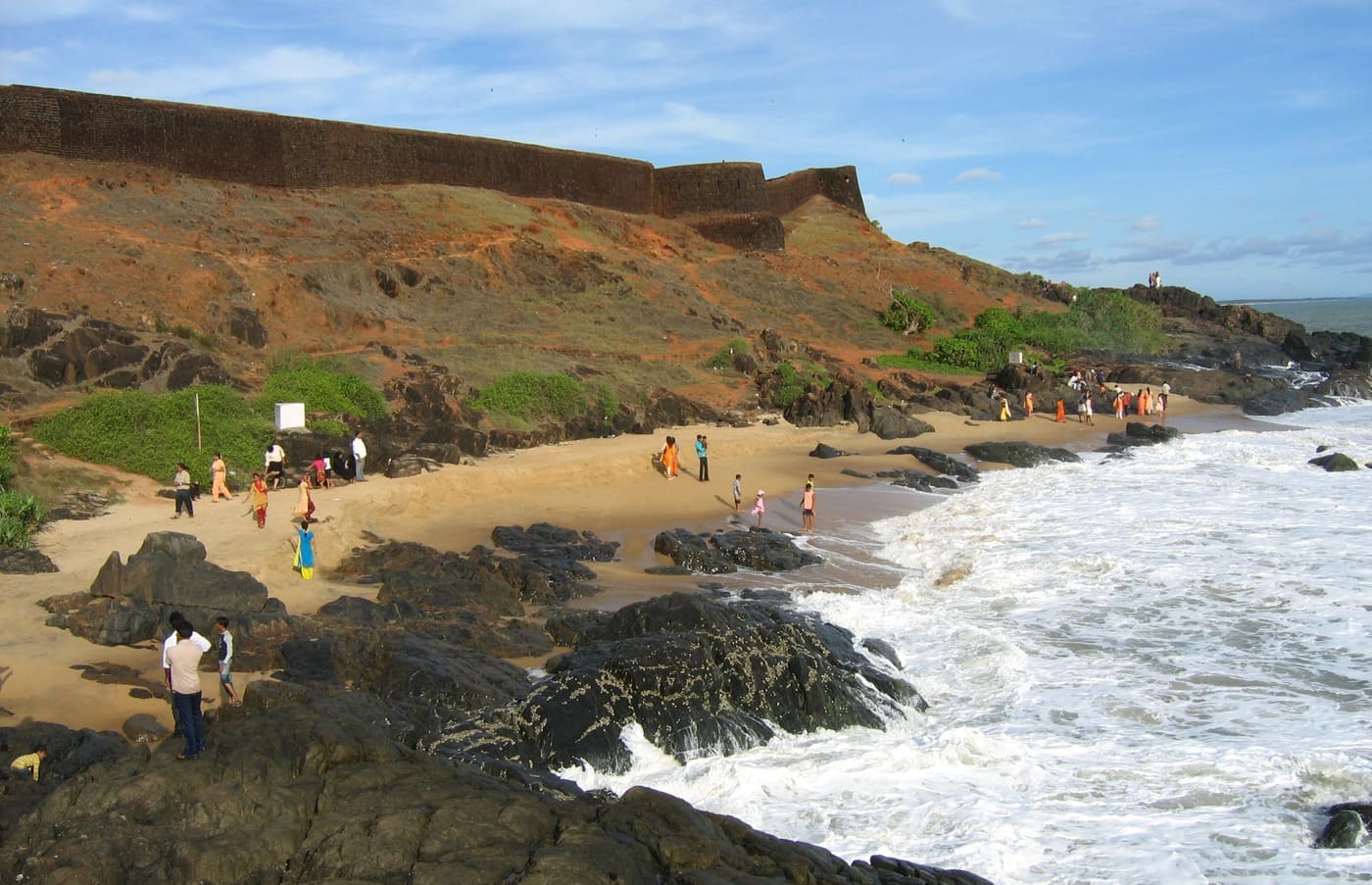
Kerala’s largest fort (~40 acres), a keyhole-shaped laterite bastion jutting into the Arabian Sea, built around 1650 by the Keladi Nayakas; its observation tower once mounted cannons.
18.1 km · straight line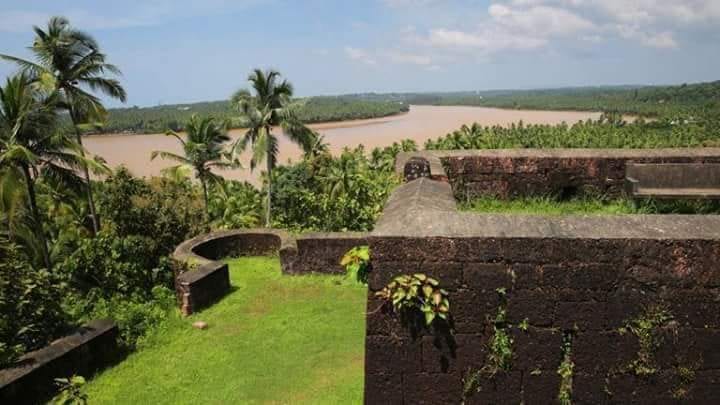
A 17th-century hilltop fort above the Chandragiri river built by the Keladi Nayakas, with sweeping views of the river mouth and the Arabian Sea — good at sunset.
27.1 km · straight line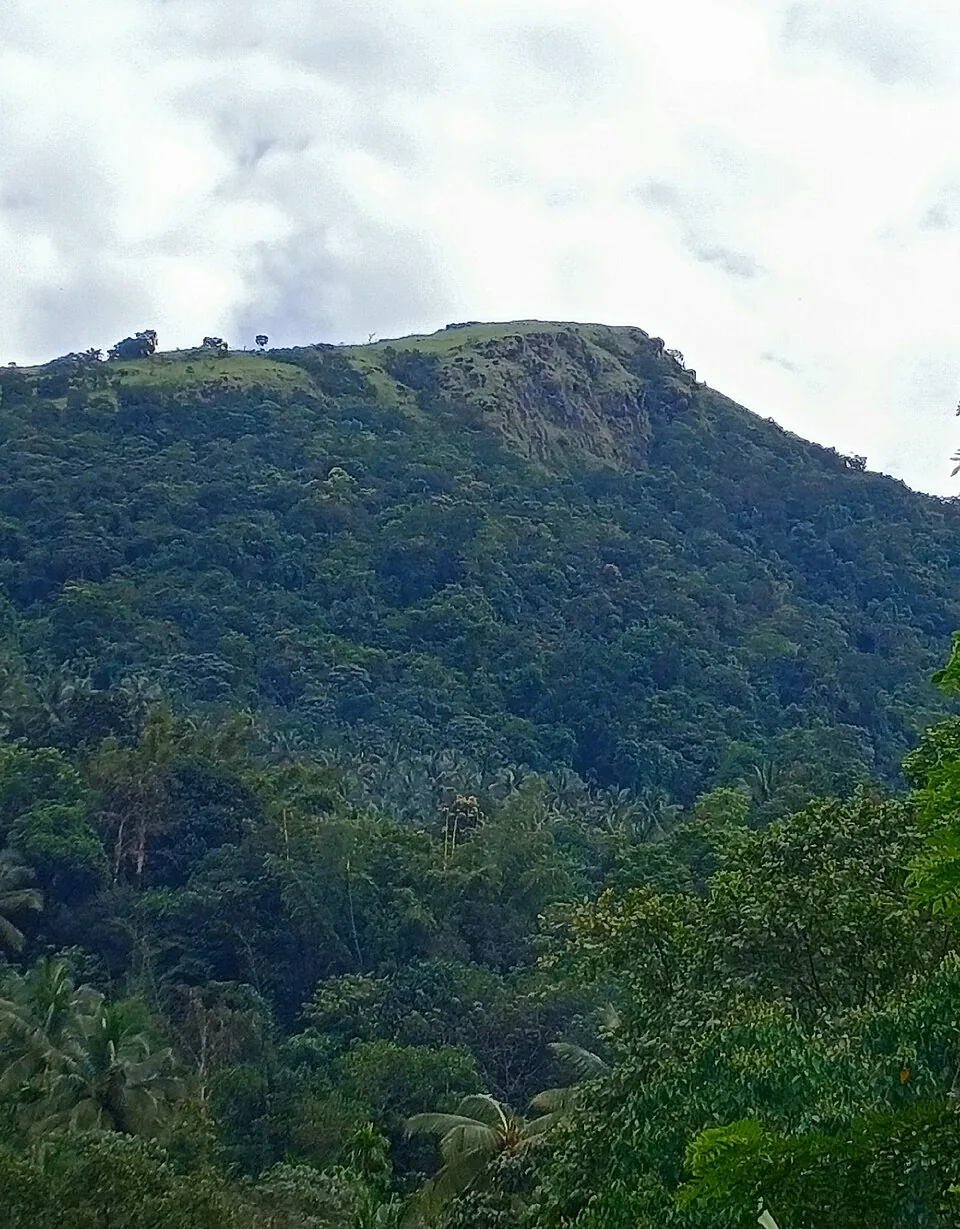
Rainforest walking in the Kottancheri hills above Konnakad — four hills standing in a ring like a fort wall, reached on foot from the village and quite separate from the ticketed hill at Ranipuram.
29.0 km · straight line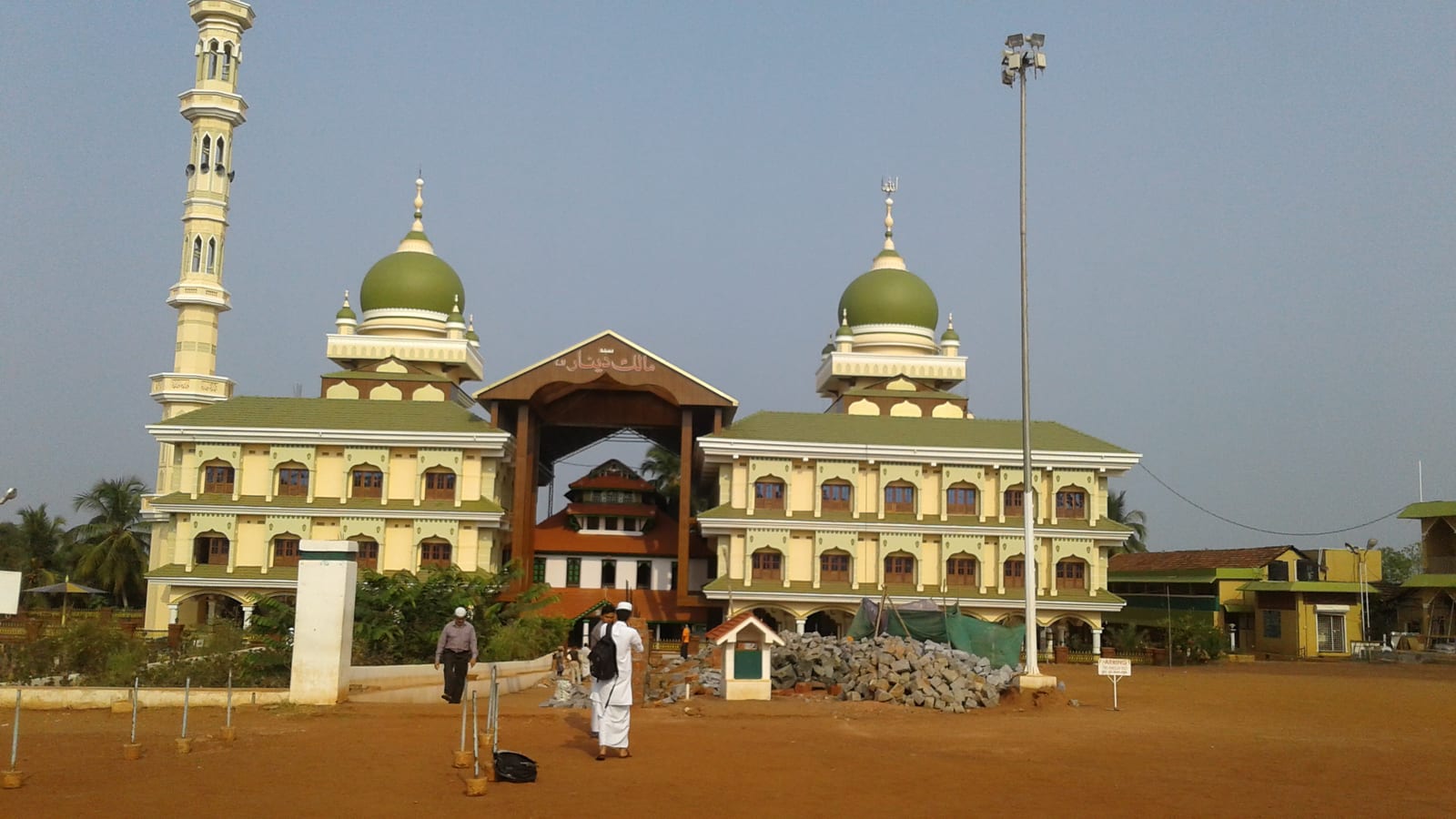
The Malik Ibn Dinar Juma Masjid in Thalankara, Kasaragod — by tradition among the oldest mosques in India, linked to the earliest arrival of Islam on the Malabar coast.
29.3 km · straight line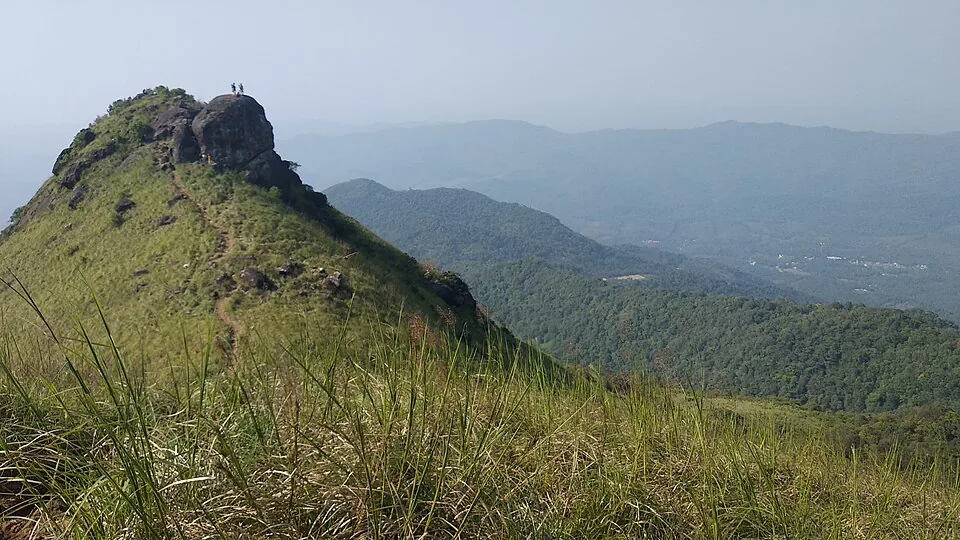
A grassland-and-shola hill topping out at 1,049 m, the “Ooty of Kerala”, with easy treks and montane forest on the Western Ghats edge.
29.9 km · straight line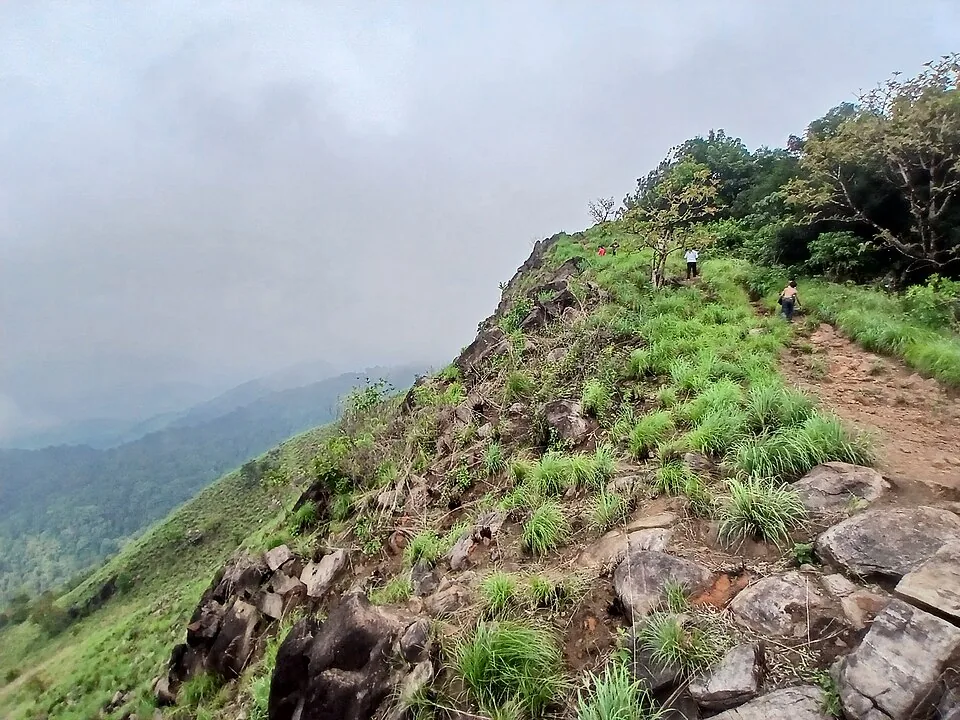
The ticketed walk up Kasaragod’s highest hill — a tarred road to a counter at about 780 m, then two kilometres on foot through shola forest into open grassland and up to the rock at 1,049 m.
30.8 km · straight lineNearby toilets, pharmacies, ATMs, seating and vets are community-mapped and may be incomplete or out of date. Map data © OpenStreetMap contributors | Walking times © openrouteservice.org by HeiGIT
Nileshwar is best known as a centre of Theyyam, the ritual art of north Malabar in which performers embody deities through elaborate costume, painting and trance. It is often called the cultural capital of Kasaragod, and is also a gateway to the nearby Valiyaparamba backwaters.
The main Theyyam and Kaliyattam season in north Malabar runs roughly from December to April, with performances at various temples and kavus generally between about October and May. Dates are fixed by each temple’s ritual calendar, so it is best to enquire locally or through a reputable guide before planning a visit around a specific Theyyam.
It is a genuine religious ritual, not a performance staged for tourists. The communities who keep it believe the deity truly descends into the performer. Visitors are usually welcome as respectful witnesses, but should dress modestly, follow local guidance, ask before photographing, and remember they are guests at a sacred event.
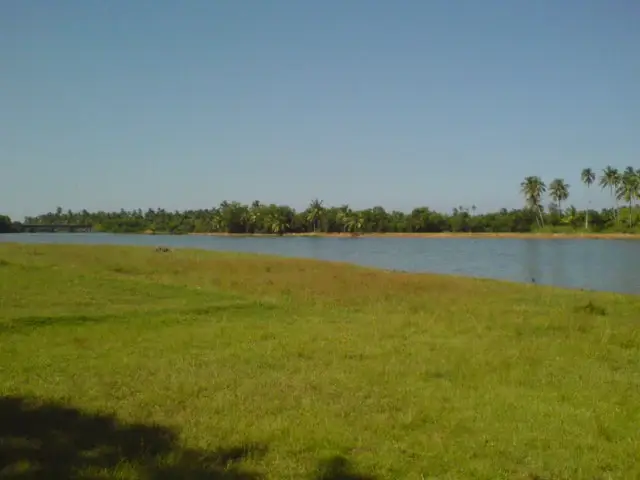
Valiyaparamba — also called the Kottapuram or Kottappuram backwaters — is a broad estuary of palm-fringed islands just south of Nileshwar, bordered by the Arabian Sea. It can be explored by houseboat or by inexpensive local ferries, and is known for its calm waters, birdlife and fishing villages.
Nileshwar has its own railway station (Nileshwar/Nileswaram) on the coastal line between Mangaluru and Kannur, so trains are the easiest option. The nearest airports are Kannur and Mangaluru, both roughly one and a half to two hours away by road. Buses and taxis connect the town to Kasaragod, Kanhangad and Kannur.
One to two days is enough to see the town, its temples and palace and take a backwater cruise. If you are timing your visit around a specific Theyyam — which typically unfolds through the night — allow an extra day and expect a late night or a pre-dawn start.
November to February and early mornings are best for walking; avoid midday heat where possible.
Entry: There is no entry fee to visit the town or to witness Theyyam at community temples, though offerings are customary and welcome. Houseboat and ferry cruises on the Valiyaparamba backwaters are charged separately, and rates vary by operator and season. Timings: Nileshwar is an open town rather than a single ticketed site; its lanes, riverfront and market are accessible at any time. Individual temples follow their own morning and evening darshan hours, and Theyyam rituals are held on fixed festival dates, often overnight.
1 to 3 hours.
Nearby you can pair Kanhangad beach (6.3 km, approximate straight-line separation), Hosdurg Fort (6.6 km, approximate straight-line separation), Nithyanandashram (6.8 km, approximate straight-line separation), Anandashram (9.0 km, approximate straight-line separation).
Watch traffic on narrow heritage streets. Keep valuables close in crowded markets.
We have not published a story about Nileshwar itself yet. These cover Valiyaparamba and the wider district, with separate journeys between stops.
These guides explore Valiyaparamba and the surrounding area. Choose a visit that fits your interests, allowing separately for travel between stops.
Route-level itineraries and practical guides for the rest of Kerala.
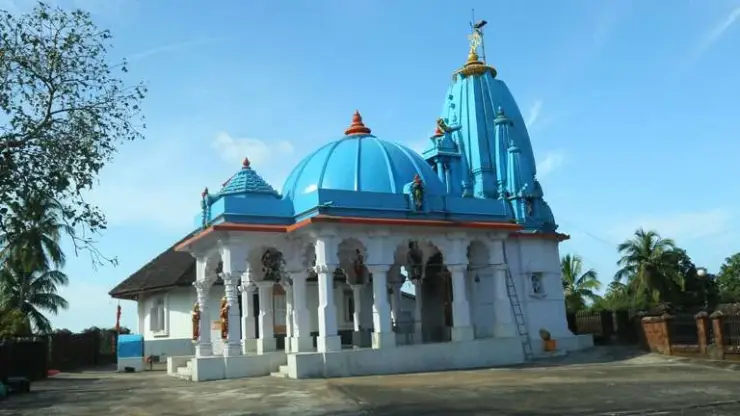
Photographs: Rajeshodayanchal (CC BY-SA 4.0), Ajeeshkumar4u (CC BY-SA 4.0), Manojk (CC BY-SA 4.0), Devanandnlr (CC BY-SA 3.0), Prof tpms (CC0), Shareef Taliparamba (CC BY-SA 2.0), Vijayanrajapuram (CC BY-SA 4.0), Bekal Resorts Development Corporation (© Bekal Resorts Development Corporation; official source photograph). Wikimedia Commons.