What to expect
Highlights
- Temple visit at Local temple trails
- Kerala temple architecture and rituals
- Local food, shops and pilgrim services nearby
A short drive linking the named temples around Chadayamangalam: the Kottukkal rock-cut cave, the four-temple complex around one pond at Kadakkal, and the sacred groves, serpent shrine and kalari shrine of the surrounding belt.
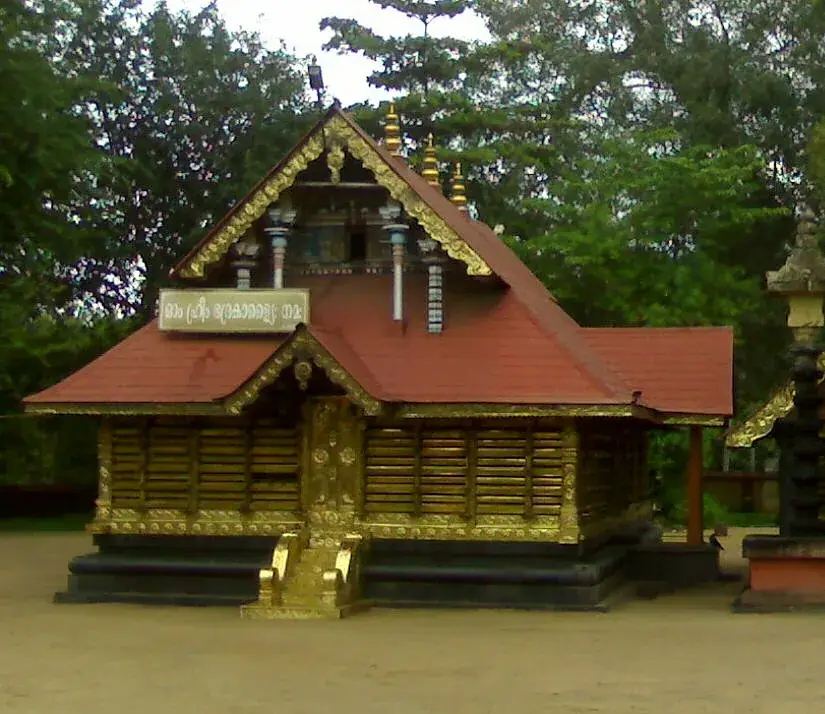
Check entry arrangements. Ask temple staff about visitor entry, dress requirements and access to the inner shrine before you travel, especially if you are visiting as a non-Hindu.
Dress respectfully and follow the institution’s admission and photography rules.
Not a Jatayu trail and not a walk. Within about seven kilometres of Chadayamangalam there is a rock-cut Shaiva cave of the eighth or ninth century, a Devi temple with no idol and no permanent priest, five sacred groves, a serpent shrine and a kalari shrine — and over all of it, the Travancore Devaswom Board, a 1936 proclamation and a village that seceded for eight days in 1938.
Take the drive first. Advice to park once and go on foot between the shrines would strand you. The Kottukkal cave temple is 4.4 km from Chadayamangalam and the Kadakkal complex is 6.5 km, which puts them 11 km apart from each other. This is a short drive with proper walking at each stop, not a village stroll.
The anchor is Kottukkal, and it is the oldest datable human act in this landscape. Someone took a single laterite outcrop and cut two rooms into it — subtractive architecture, the same class as Vizhinjam and Kaviyoor. The Kerala Department of Archaeology, which has protected it since 1966, dates it to the eighth or ninth century CE; Wikipedia and most tourism copy say sixth to eighth, some narrowing to the seventh. Those ranges do not overlap at one end and we are not going to pretend they do. Either way it precedes the sculpture on the hill by well over a thousand years. Its Malayalam name, Kaltrikkovil, means the carved-rock shrine, and Kottukkal itself means carved rock: the place is named for the act.
Inside, both caves face east and hold a monolithic Nandi and a Sivalinga. The larger has a four-sided garbhagriha, an ardhamandapa and a pillared façade, with two pillars cut from the living rock and a Ganapathi figure on a wall. In a niche of the smaller cave stands a Hanuman, hand on hip, carved in relief on a dressed panel beside a wooden door — and the Department of Archaeology reads it not as a Ramayana site-claim but as the Nandi-Vanara episode of the Puranas. That is a far more specific reading than the travel copy offers, and it comes from the body that protects the monument. We have a dedicated page for Kottukkal; treat this one as the belt it sits in.
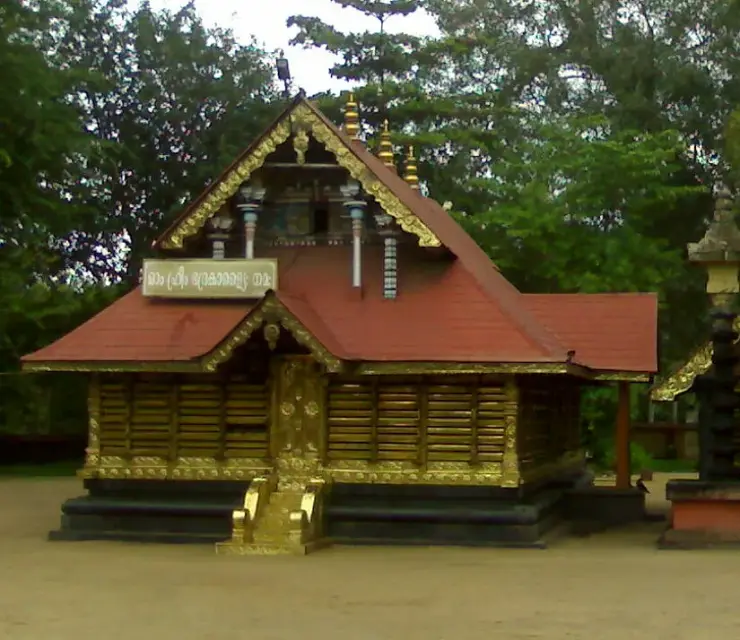
Six and a half kilometres the other way is Kadakkal, and it is the stranger place. Four temples stand equidistant around one temple pond — the Devi temple, the Siva temple, the Thaliyil Mahavishnu temple and Kilimarathukavu — and all four are separately mapped, with Kilimarathukavu carrying the only structured record in the whole belt. The Devi temple has no idol and no permanent priest. Its sanctum holds a wooden peedika. For a major Kerala temple that is genuinely unusual, and it is the single best fact anyone has recorded about this landscape.
The tradition explains the arrangement. The Devi is said to have come from Tamil country with four sisters, killed a trader named Panayappan who had exploited her family, and settled in the peedika. The Nettur Kurup, who witnessed it, received her permission to perform the pooja — which is to say the worship right at Kadakkal descends from an eyewitness rather than from priestly lineage. Whatever you make of the story, it is a different theory of religious authority from the one operating at Guruvayur.
Then the pattern nobody has written down. Within about nine kilometres there are at least five kavus — Kilimarathukavu, Bharanikavu, Meeyana Nagayakshi Kavu, Appupankavu and Perootukavu. A kavu is a sacred grove: worship in a stand of uncut forest, older in form than the Brahminical temple, and historically the shrine type that non-Brahmin communities kept. There is a nagayakshi serpent shrine at Meeyana and a kalari temple at Kadayattu, attached to the martial tradition. And there is a dense scatter of Sastha and Ayyappan shrines, which is what you would expect on the western approach to the Sabarimala forest country. That is a specific religious geography. It is not a generic one, and it is a better reason to come than the Jatayu thread most accounts run on.
Kilimarathukavu is the whole argument compressed into one compound: a kavu — a grove — that is nonetheless one of the four temples of a Devaswom Board complex. The older layer did not get demolished here. It got absorbed, and it kept its name.
Two things to get right before you go. These are not unadministered folk shrines: Kottukkal and the Kadakkal four are Travancore Devaswom Board temples, which means sanctum entry is restricted to Hindus as a matter of Board practice, and it means there is an institution to ask rather than nobody. And no operator publishes opening hours for any of them — not the Department of Archaeology, not Kerala Tourism, not the district tourism council. We will give you the Kerala convention and tell you plainly that it is a convention.
The claim this page was built on was that the shrines around Chadayamangalam are tied to the Jatayu story. We made it eight times — in the intro, twice in the body, twice here, in the history, in the reasons to visit and in two FAQs — and it was the page's entire stated reason to exist. We could not find a single named temple in this belt, other than the one standing on the rock itself, whose own tradition attaches it to Jatayu.
What is true is that the Jatayu tradition here is real and old enough to have shaped the place-name: Chadayamangalam is popularly read from Chatayan, the Malayalam form of Jatayu. And there is a Jatayu temple — the Sree Kodanda Rama temple on Jatayupara, with the Rama Padam footprint in the rock, reconsecrated in the 1970s. So a reader told the story lives here is not being misled.
What is false is the load-bearing half. The tradition attaches to one rock and one temple on top of it, not to a scatter of village shrines. The named temples of this belt are dedicated to Shiva at Kottukkal, at the Kadakkal Siva temple and at Njaravattathu; to Bhadrakali and Bhagavathy at Kadakkal; to Vishnu at Thaliyil and Pullunni; to Sastha and Ayyappan; to Ganapathi; to a nagayakshi; and to a kalari. Not one of them is a Jatayu shrine. Kadakkal's own origin story is about a Tamil trader, not a vulture. And calling Kottukkal part of a Jatayu trail misdescribes the only monument in this part of the district that carries a documented date.
The second myth is one of scale, and it was also ours. We printed that these are shrines maintained locally, without the administrative scale of Kerala's major temples, with no ticket, no guide, no interpretation panel and frequently nobody to ask. Kottukkal has been a protected monument of the Kerala Department of Archaeology since 1966 and has an information board on site — there is a photograph of the board. Kottukkal and the Kadakkal four are Travancore Devaswom Board temples, a state statutory body. In March 2025 the Kerala High Court publicly reprimanded the Board over the conduct of the Kadakkal festival, after film songs and political flags appeared at it. This is not an unadministered folk landscape. It is administered by two arms of the state and litigated in the High Court, and we told readers the opposite.
A third correction, smaller but worth making because it is copied everywhere. A great deal of writing places Kottukkal in 'Ittiva village, Chadayamangalam taluk'. Kollam district has six taluks — Kollam, Kottarakkara, Pathanapuram, Karunagappally, Kunnathur and Punalur — and Chadayamangalam is not one of them. It is a village, a block panchayat, a grama panchayat and an assembly constituency, all under Kottarakkara taluk, which is also the taluk the Department of Archaeology records for Kottukkal.
A small Mahadeva temple stands nearby, but the label ‘Major Mahadeva Temple’ appears to be a transcription artefact rather than a documented proper name. Ask locally for the temple’s current name instead of using that label for navigation.
So what replaces the Jatayu thread? Not a myth-cycle but a stratigraphy. A twelve-hundred-year-old Shaiva cave cut into rock; a Devi temple with an empty sanctum whose worship right came from a bystander; five sacred groves; a serpent shrine; a kalari shrine; and over the top of all of it the Travancore Devaswom Board, the Temple Entry Proclamation of 1936 and the eight days in 1938 when this village stopped being part of Travancore. Every element of that is checkable, which is the main thing the old version of this page was not.
Chadayamangalam sits on the MC Road between Kollam and Thiruvananthapuram, about 45 km from Kollam. It is a village, block panchayat, grama panchayat and assembly constituency in Kottarakkara taluk — not a taluk itself, though a great deal of published writing says so.
The Kottukkal rock-cut cave temple, 4.4 km ENE, was declared a protected monument by the Kerala Department of Archaeology in 1966 under the code S-KL-26. The leading S denotes a State monument: it is not an ASI monument, though several aggregators say it is. The Department dates it to the 8th–9th centuries CE; other sources say 6th–8th.
It consists of two east-facing caves excavated from a single rock, each roughly 10 by 8 feet, both holding a monolithic Nandi and a Sivalinga, with a Ganapathi figure on a wall and a standing Hanuman in a niche of the smaller cave. Daily ritual is conducted under the Travancore Devaswom Board — the fabric protected by one state body, the worship run by another.
At Kadakkal, 6.5 km SSE, four temples stand equidistant around a central pond: the Devi temple, the Siva temple, the Thaliyil Mahavishnu temple and Kilimarathukavu. The Devi temple has no idol and no permanent priest; its sanctum holds a wooden peedika. The complex is administered by the Travancore Devaswom Board.
The Temple Entry Proclamation was issued in Travancore on 12 November 1936, opening state-controlled temples to all Hindus regardless of caste. Two years later, between 26 September and 5 October 1938, the Kadakkal Revolt declared the surrounding pakuthi independent for eight days, with a Dalit man of the Kurava community as its Janakiya Manthri. The Ministry of Home Affairs recognises the revolt under the Swatantrata Sainik Samman Yojana of 1980.
The wider belt holds at least five kavus (sacred groves), a nagayakshi serpent shrine at Meeyana, a kalari temple at Kadayattu, and a concentration of Sastha and Ayyappan shrines reflecting the western approach to the Sabarimala forest country.
Kottukkal is subtractive architecture — two rooms cut into a single rock rather than built on it — and it is the oldest datable thing in this landscape by a margin of more than a millennium.
The Hanuman in the smaller cave is read by the Department of Archaeology as the Nandi-Vanara episode of the Puranas, not as a Ramayana site-claim.
Kadakkal's Devi temple has no idol and no permanent priest, which for a major Kerala temple is genuinely rare.
Four temples around one pond, one of which is a kavu — a sacred grove absorbed into a Devaswom Board complex rather than replaced by it.
The Kadakkal Thiruvathira in Kumbham, with Pongala from about 05:30 on the first day, the towering Kuthirayeduppu edifices and Guruthi from midnight to dawn.
And the Thirumudi Ezhunnellathu, which happens once every twelve years — held in 2002 and 2015, and next due in 2027.
Road km to Kollam; ghat roads and traffic vary — allow extra.
Morning or early evening is usually best; festival days can be powerful but crowded.
Live forecast loads in your browser.
Sun and moon are calculated for this location and shown in IST. Photography windows are the hour around sunrise and sunset; the sunset bearing is degrees clockwise from true north. Moon phase is accurate to about half a day.
Verified hotels, homestays, restaurants, experiences, sights, shops and rentals around Local temple trails — commission-free, with direct contact. Filter by what you need.
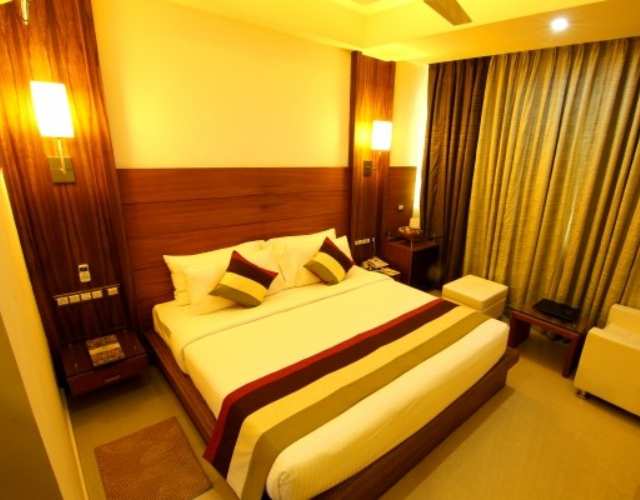
Hotel beside the Chadayamangalam/Jatayu route on State Highway 1 with restaurant and road-trip access.
Book with the place itself. India’s cyber-crime coordination centre warned in April 2025 that convincing copies of hotel and pilgrimage booking sites are being pushed through sponsored search and social ads, taking payment for rooms the property never hears about. Every listing here links to the business’s own contact details and its own Google or Bing profile — we take no commission and sit in nobody’s payment path. If a booking page reached you through an ad, check the address bar against the property’s own site before you pay. Fraud can be reported on cybercrime.gov.in or on 1930.
Find food, accommodation and activities across Chadayamangalam. Browse the guides for places to eat, stay and explore along your route.
3 more places around Chadayamangalam. Open a guide to plan the visit and onward journey.
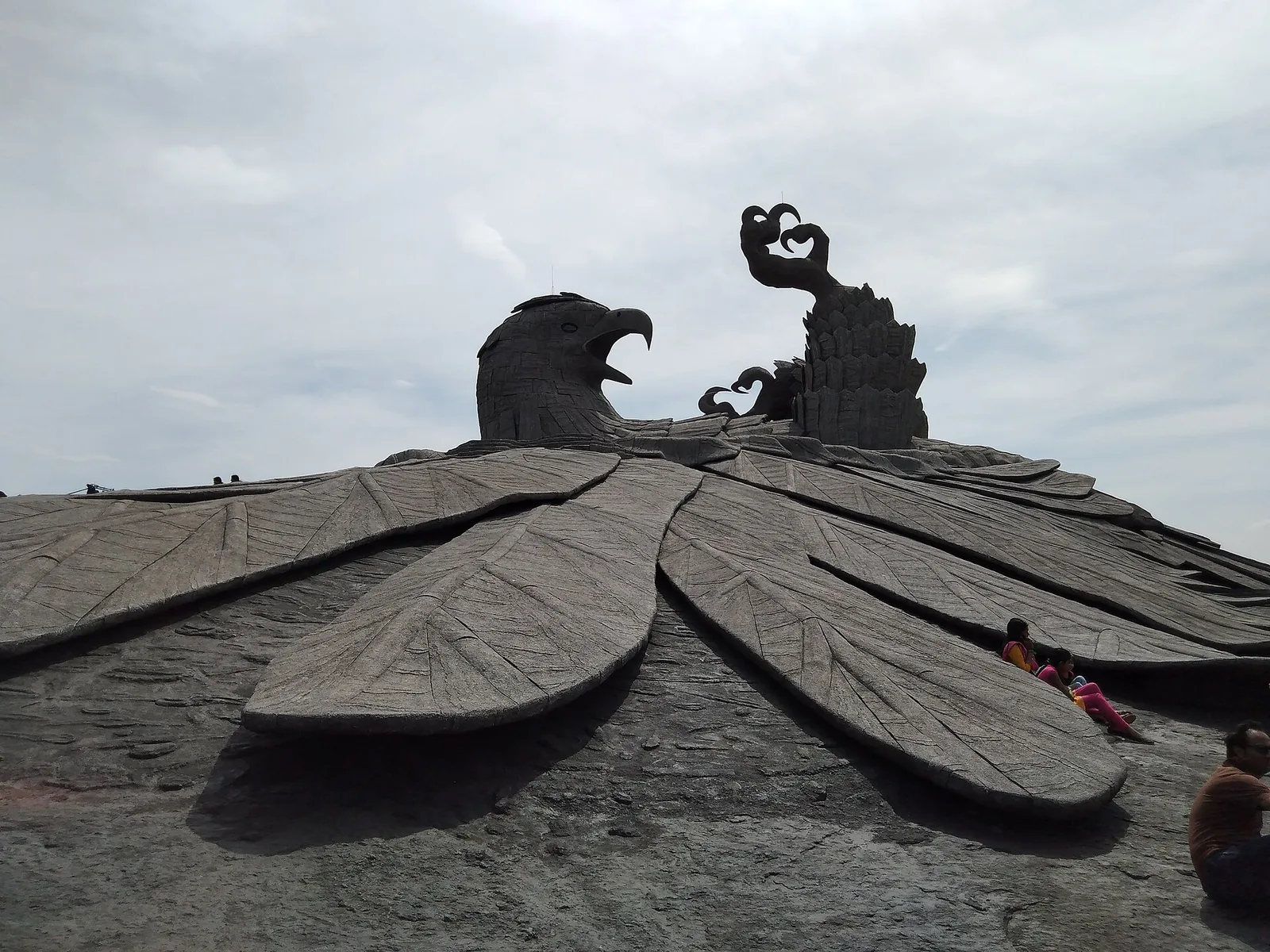
2.0 km · 24 min walk
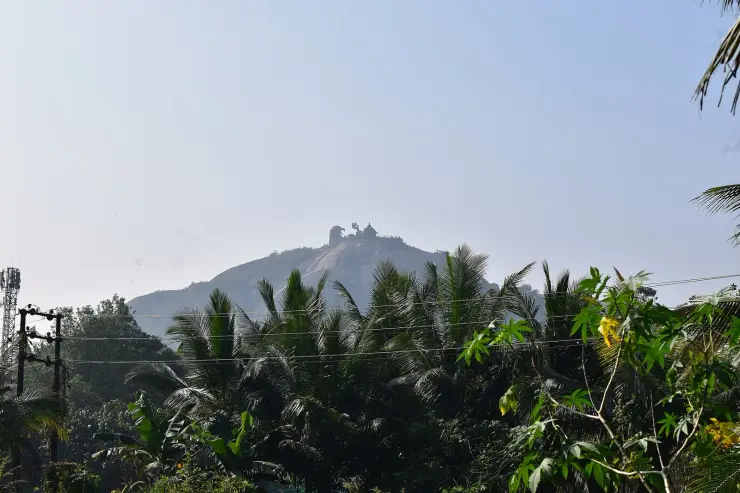
Hilltop sculpture park and viewpoint at Chadayamangalam, home to the world’s largest bird sculpture, reached by cable car.
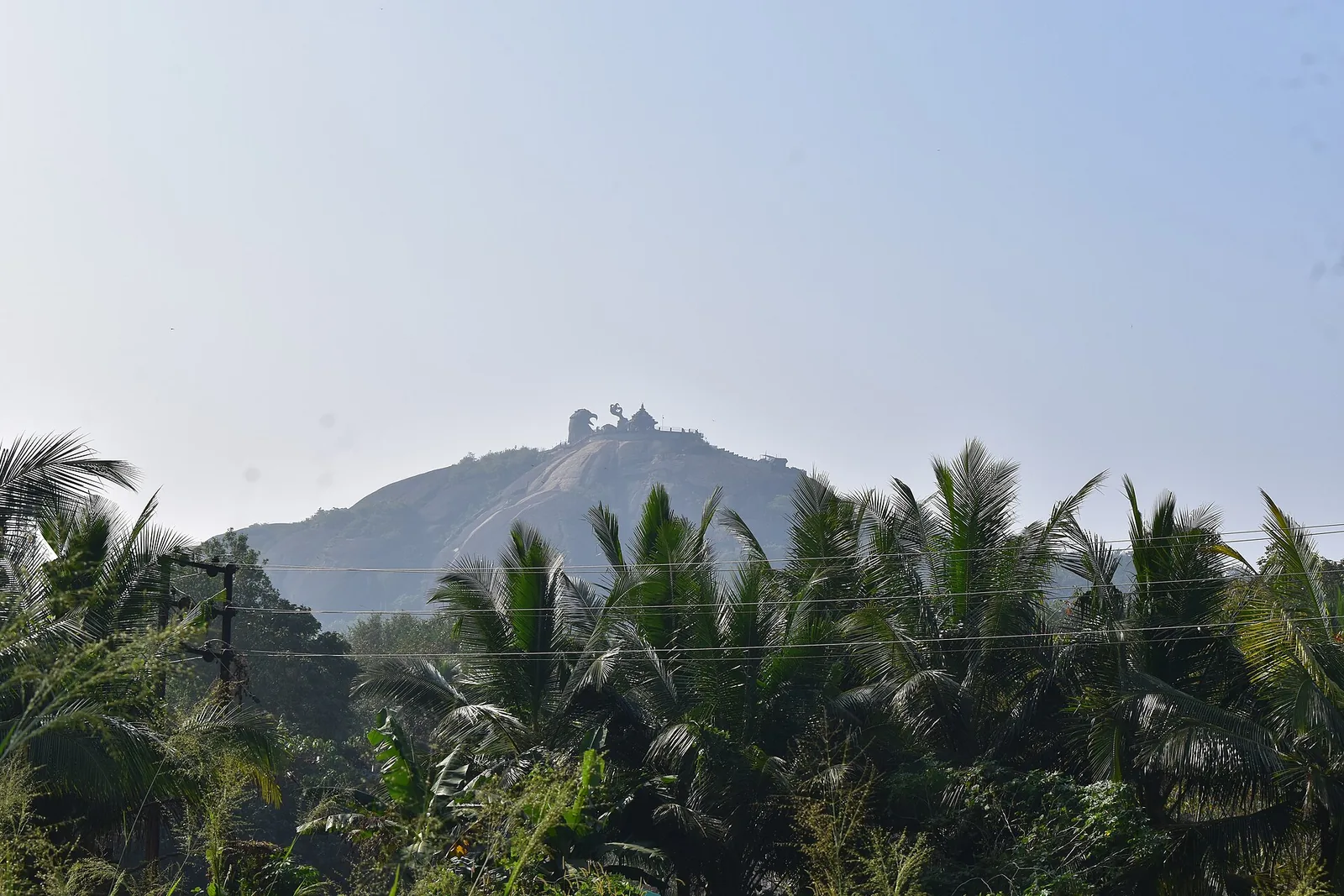
1.9 km · 23 min walk
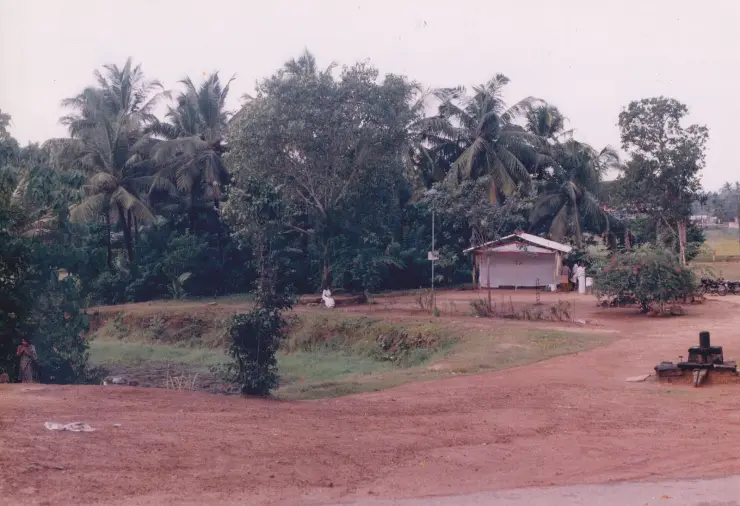
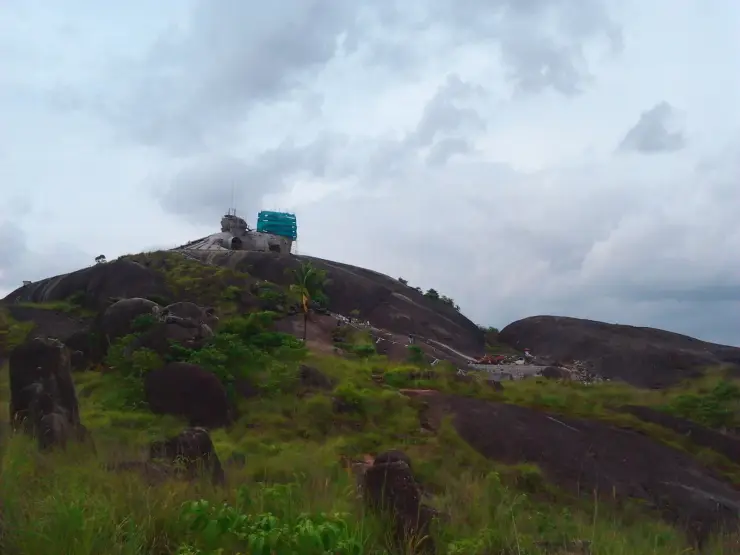
The rock outcrops and open high ground around Chadayamangalam, looking over the country between Kollam and the ghats — the landscape the Jatayu sculpture sits in, seen from ground level and without a ticket. The bare domes here are crystalline basement rock, not the laterite that mantles the ground between them.
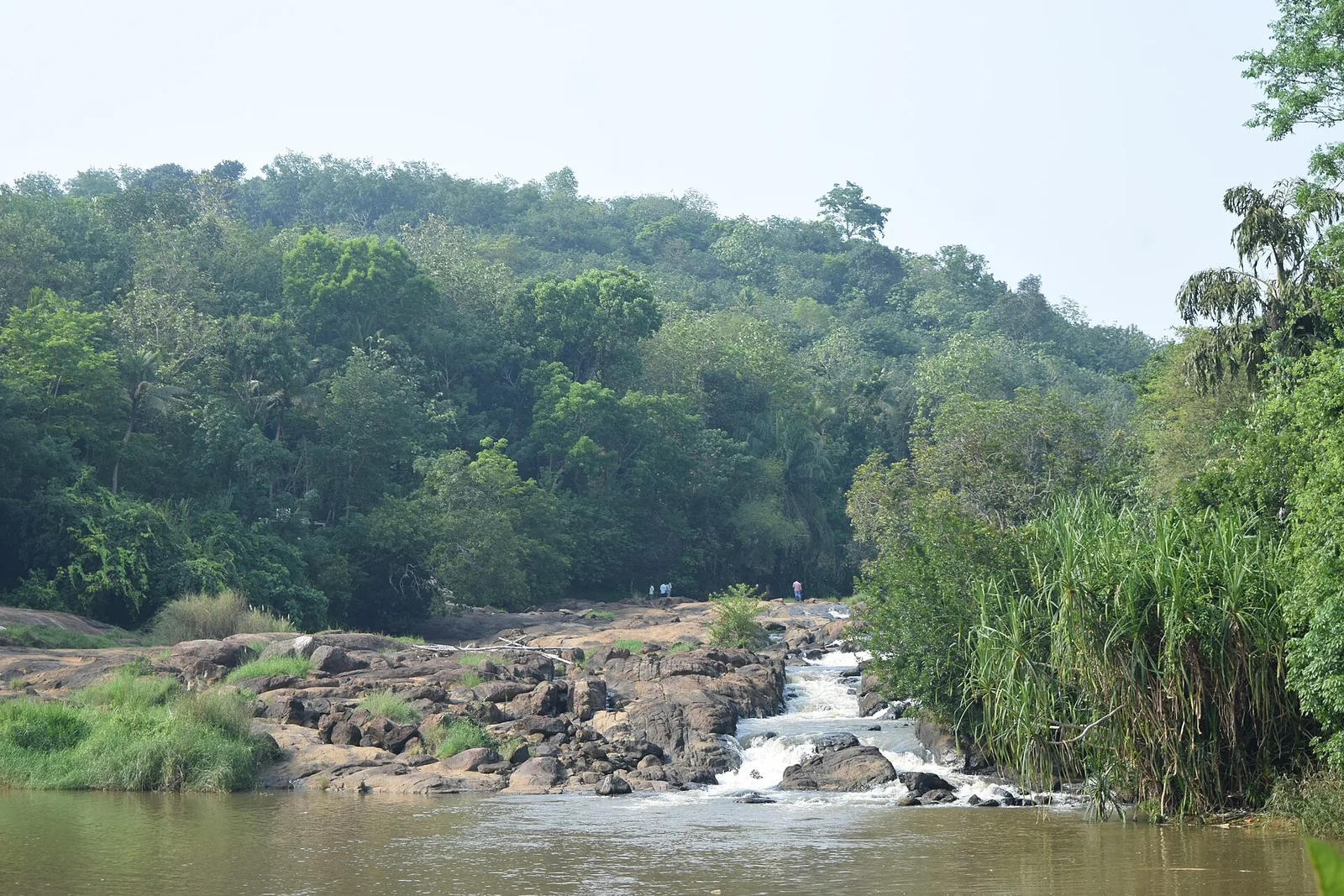
5.1 km · ~13 min by auto
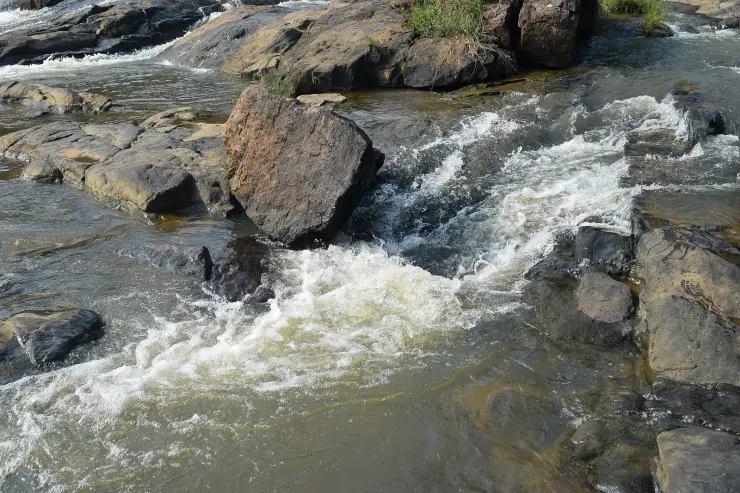
A wide rock apron on the Ithikkara near Kalladathanni, where the river slides and braids rather than plunges — DTPC Kollam’s own description is “a small waterfall that does not particularly fall”. Free, unstaffed and unsigned, about 200 m on foot through a rubber estate. ⚠ No lifeguard and no railings; the local name Vattakayam means the round deep pool.
Roampedia is commission-free — own or know a stay, eatery, guide or shop near Local temple trails? List it and it appears here once verified.
Add a nearby businessEntry: Free, and free in two different senses worth separating. Kottukkal is a Kerala State protected monument in active worship — a public monument with no ticket, not a village shrine that happens not to charge. The Kadakkal temples take no entry charge either. Offerings and vazhipadu are priced separately at the temple office. ⚠ No fee schedule is published by the Department of Archaeology or DTPC Kollam for any of these (observed 15 Aug 2026). Do not confuse this with the Jatayu park nearby, which is ticketed at ₹450 plus ~19% tax.
Dress code: Travancore Devaswom Board convention, not local improvisation: men remove the upper garment and wear a mundu in the inner area; women in sari, set-mundu or salwar. No shorts. This is the statewide TDB standard and it is what applies at these temples.
Permit: None. But sanctum entry at Kottukkal and the Kadakkal four is restricted to Hindus as a matter of Travancore Devaswom Board practice, and boards to that effect are standard. Kottukkal is a dual case: the monument is publicly protected, the shrine within it is in TDB worship.
If you are travelling by bus or ferry, check the return service with the operator before setting out. Leave time to reach the stop or jetty after your visit.
Ask at the bus stand for the time of the last service back, not the next one. If you miss it, an auto or app cab is the fallback — agree the fare before you get in.
If you need step-free access, contact the site before travelling. Ask about a level entrance, steps along the route, the nearest drop-off point, seating and accessible toilets.
Charge cap and free-transaction limits: Reserve Bank of India, in force since 1 May 2025.
These services are listed within about 1.2 km of Local temple trails. Walking distances follow mapped routes; access and opening hours can change. Other services may be closer but are not included here.
Emergency numbers are verified against official government and state tourism sources. 112 works anywhere in India.
The rock outcrops and open high ground around Chadayamangalam, looking over the country between Kollam and the ghats — the landscape the Jatayu sculpture sits in, seen from ground level and without a ticket. The bare domes here are crystalline basement rock, not the laterite that mantles the ground between them.
1.9 km · 23 min walkHilltop sculpture park and viewpoint at Chadayamangalam, home to the world’s largest bird sculpture, reached by cable car.
2.0 km · 24 min walk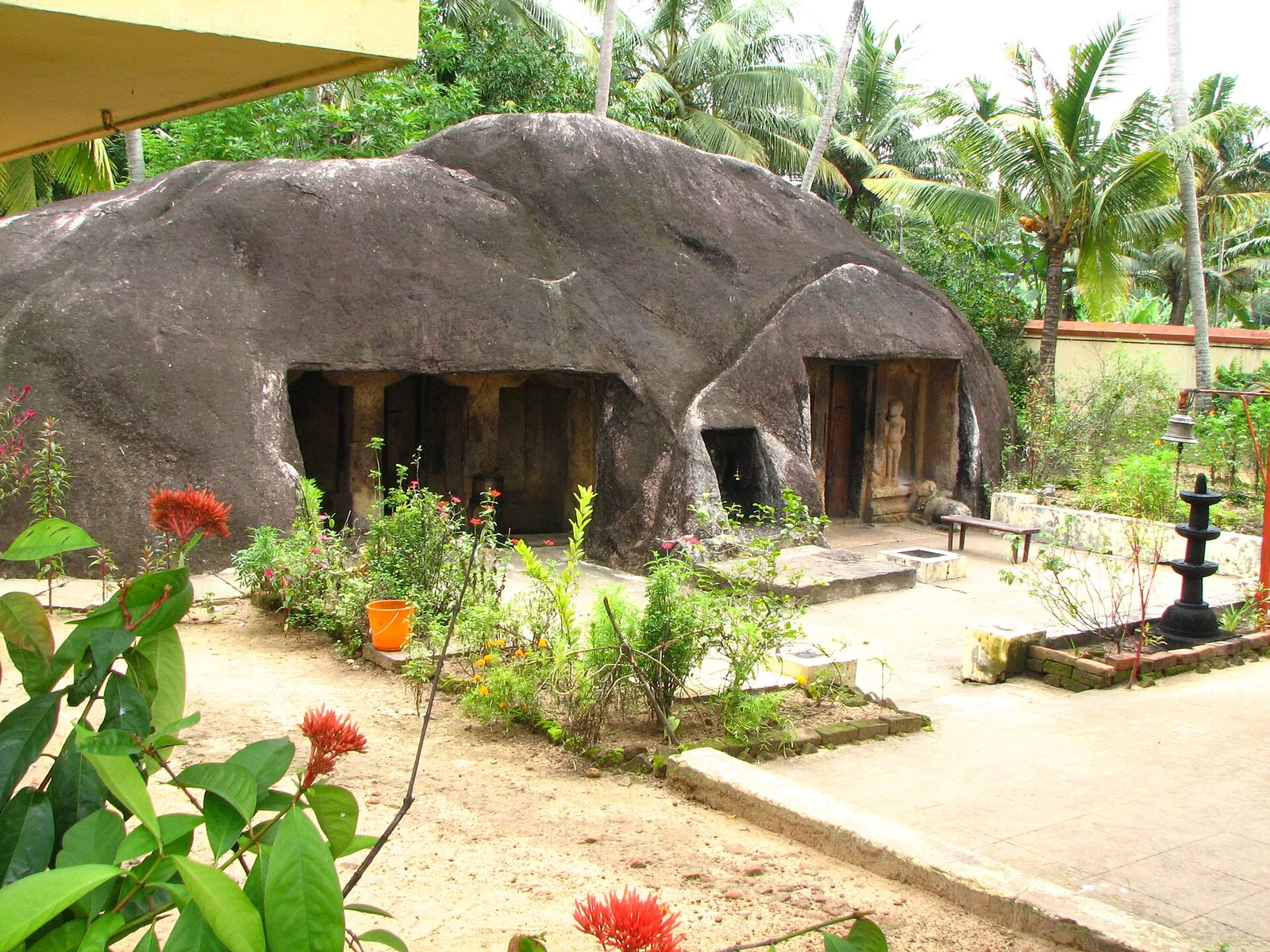
A monolithic rock-cut cave temple near Anchal/Kadakkal in south Kollam, carved with a Shiva shrine.
4.4 km · ~11 min by auto · straight lineA wide rock apron on the Ithikkara near Kalladathanni, where the river slides and braids rather than plunges — DTPC Kollam’s own description is “a small waterfall that does not particularly fall”. Free, unstaffed and unsigned, about 200 m on foot through a rubber estate. ⚠ No lifeguard and no railings; the local name Vattakayam means the round deep pool.
5.1 km · ~13 min by auto · straight line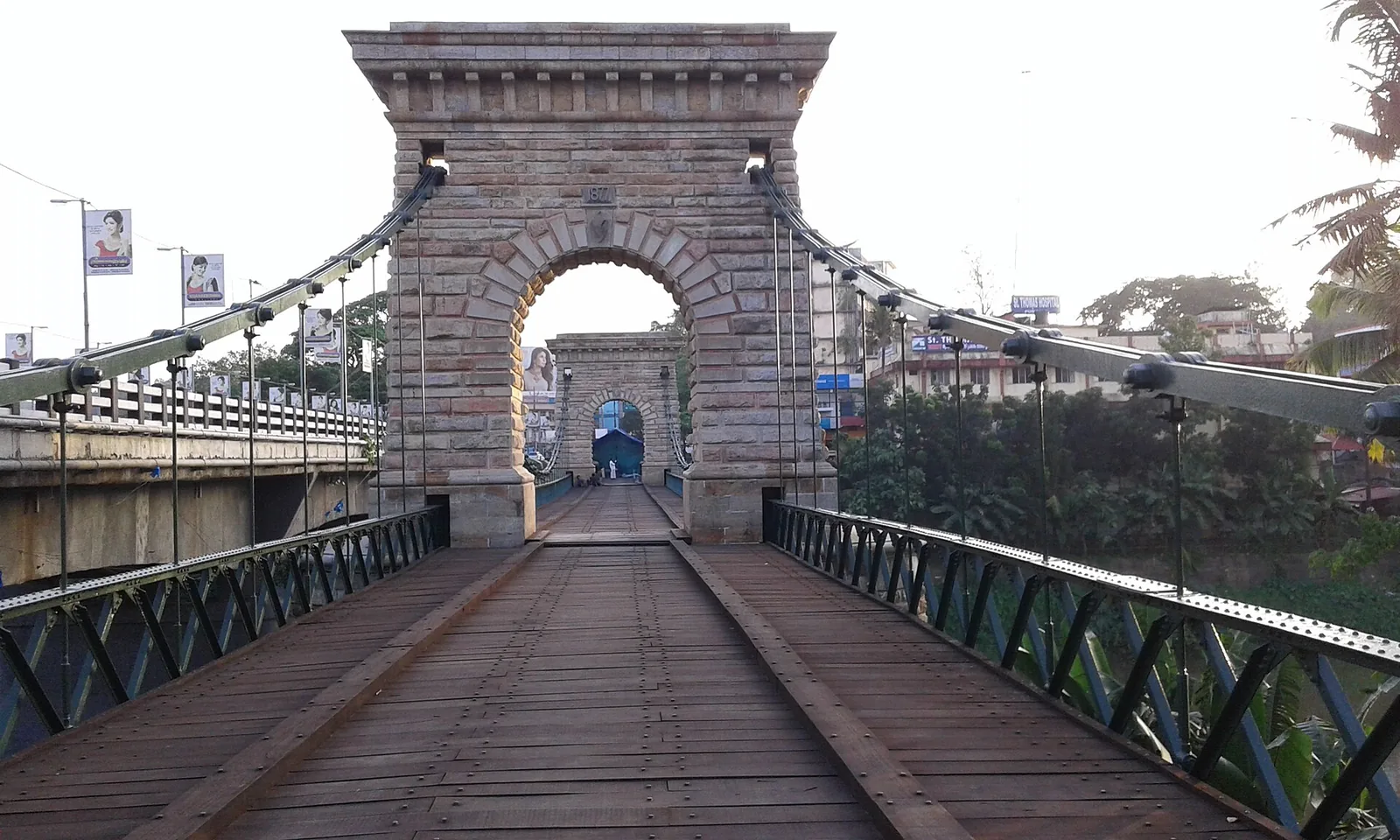
A rare 1877 Travancore-government suspension bridge over the Kallada river at Punalur, in east Kollam on the way to the ghats.
17.5 km · ~29 min by cab · straight line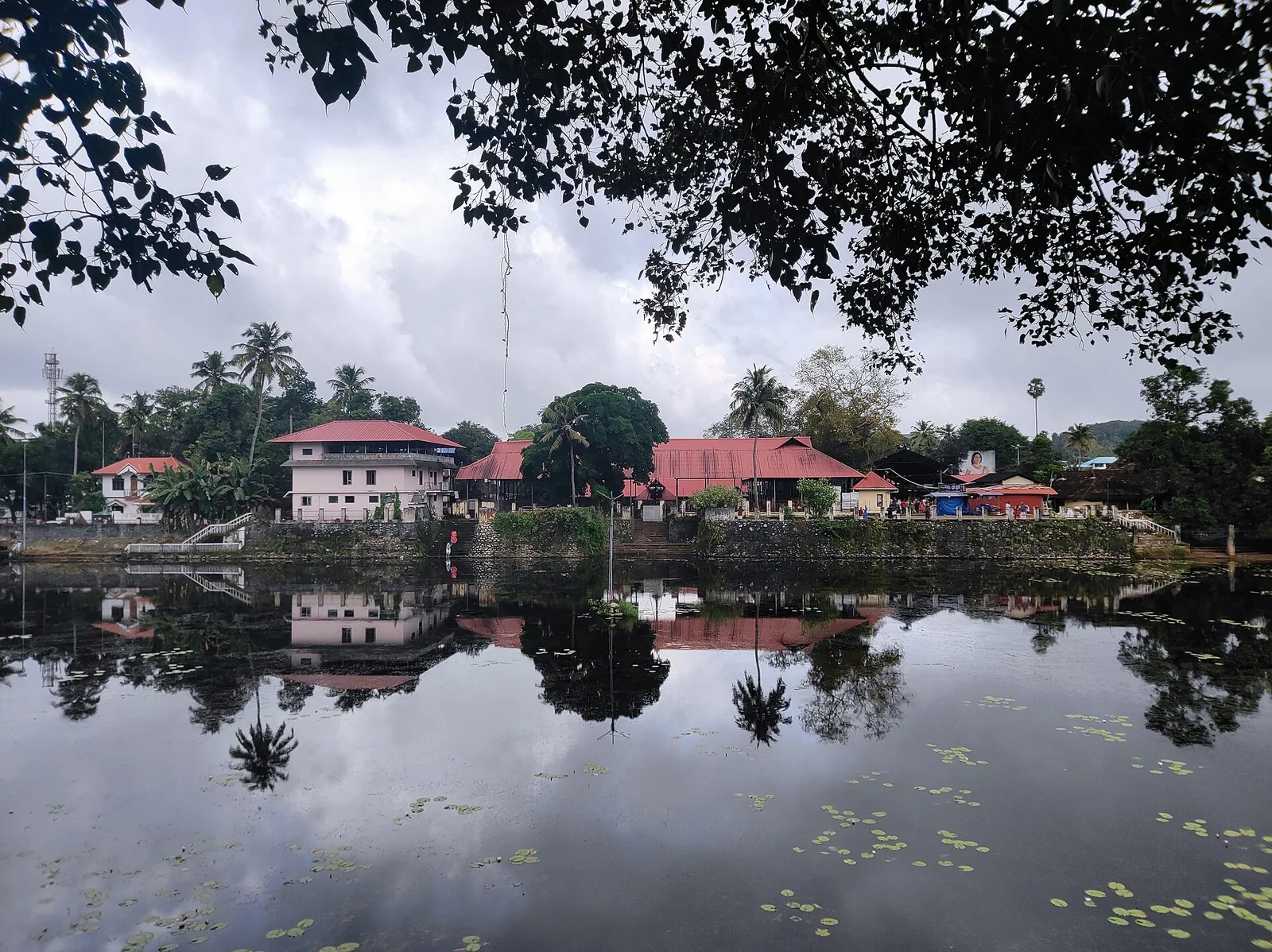
A large temple beside its own tank at Kottarakkara, where the central deity is Shiva but the sub-shrine to his son gives the place its name and its fame; the offering is unniyappam. The Kottarakkara Thampuran credited with Ramanattam, the immediate ancestor of Kathakali, is memorialised in the same town.
18.0 km · ~30 min by cab · straight lineA community-linked forest and wetland visitor area near Madathara, used for guided birding and nature walks rather than an unrestricted independent forest excursion.
18.1 km · ~30 min by cab · straight line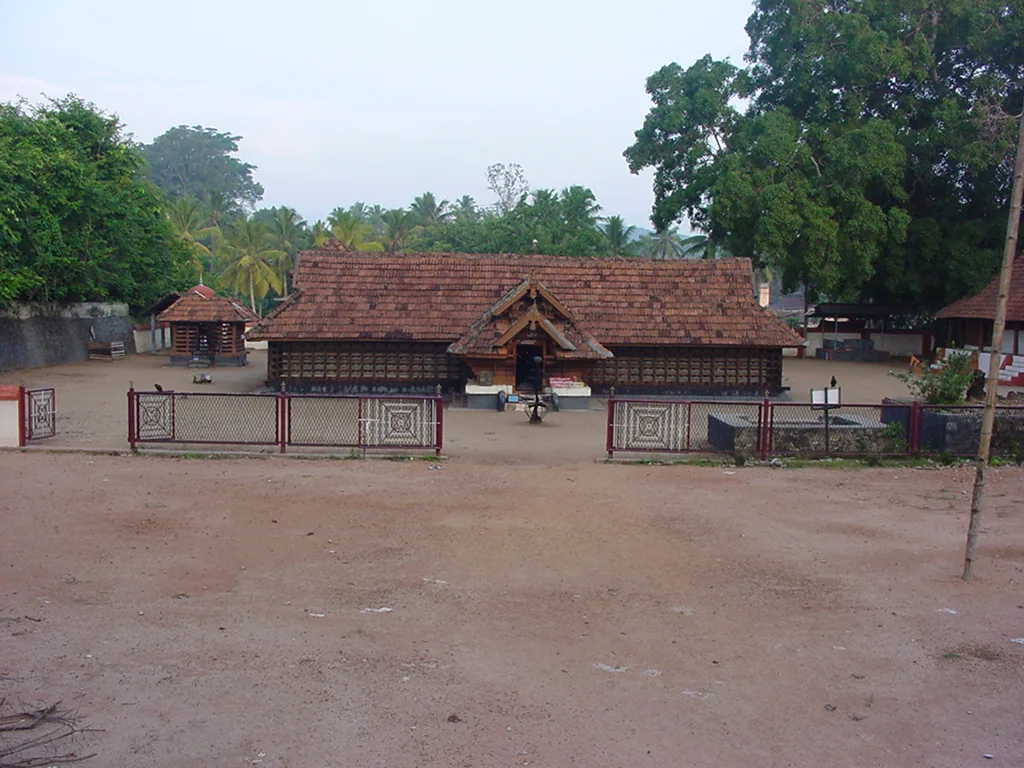
The Sastha temple on the Kollam–Shencottai road where the god is Bala Sastha, the child, and the river alongside is full of protected fish the devotees call Thirumakkal — the sacred children of the lord. Feeding them puffed rice, meenoottu, is the temple’s characteristic offering and fishing is prohibited outright; one of the two species present, Hypselobarbus thomassi, is critically endangered and endemic to the Western Ghats. Named in every published version of the Pancha Sastha. Three 15th-century sculptures from here are in the Napier Museum, Thiruvananthapuram.
21.1 km · ~35 min by cab · straight line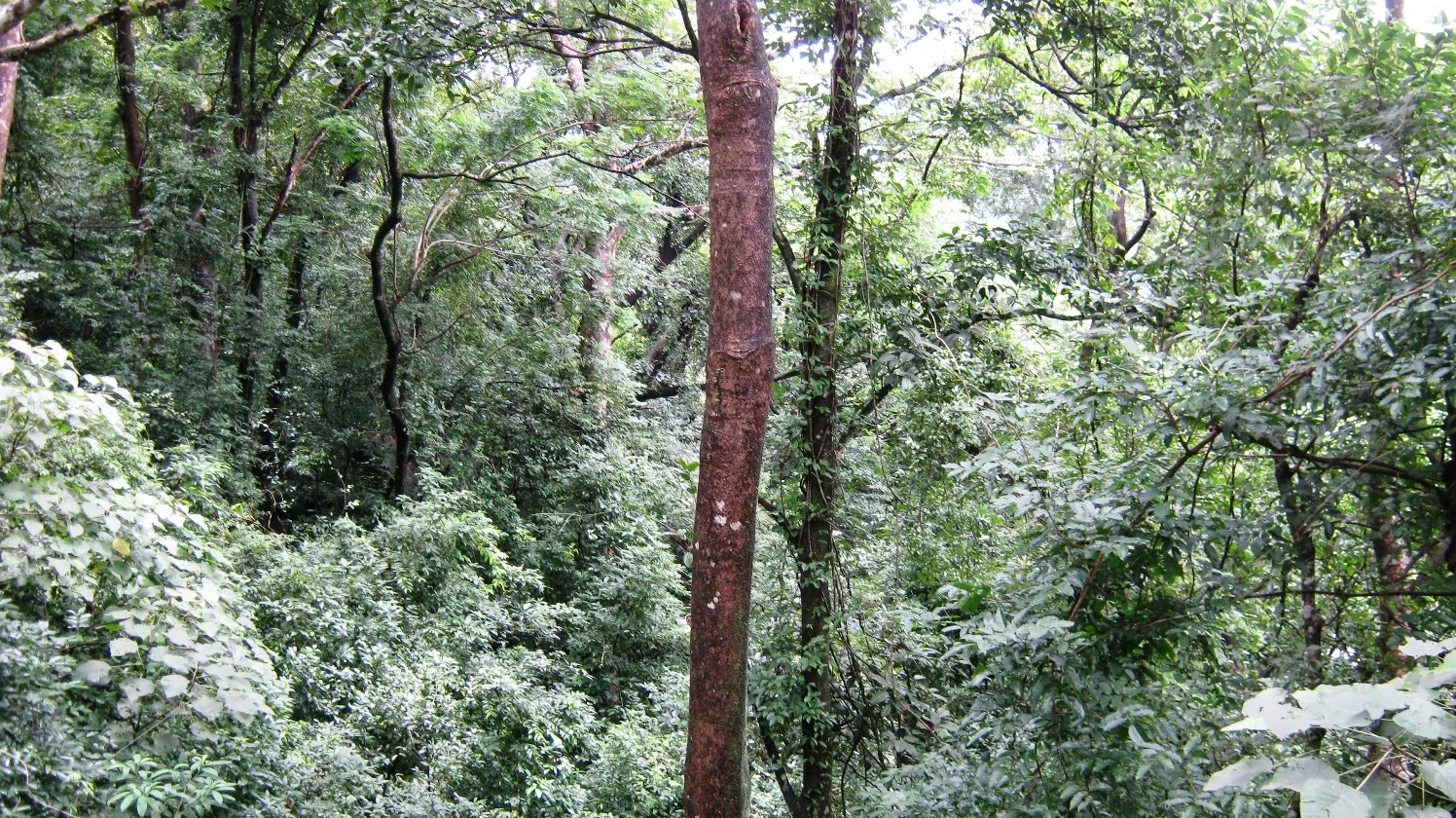
Twenty Forest Department programmes in the Shendurney Wildlife Sanctuary — walks of one to six hours, a dawn birding trail, boat and vehicle safaris and four camps — booked at the wildlife office at Thenmala. Rates are per group and include 18% GST.
23.3 km · ~39 min by cab · straight line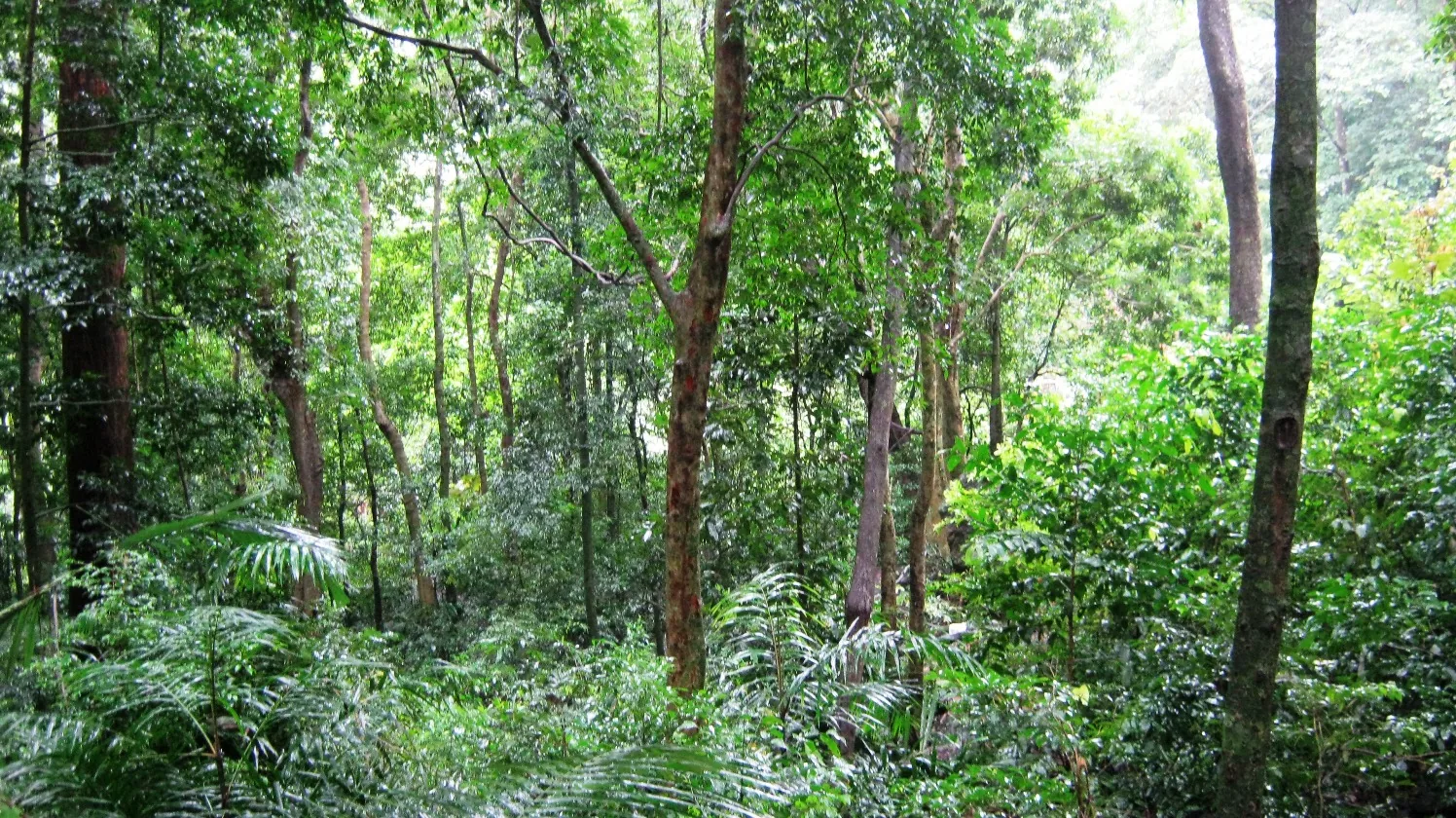
A protected evergreen forest in the Agasthyamalai Biosphere Reserve east of Thenmala, named for the Chenkurinji tree and centred on the Parappar reservoir.
23.3 km · ~39 min by cab · straight line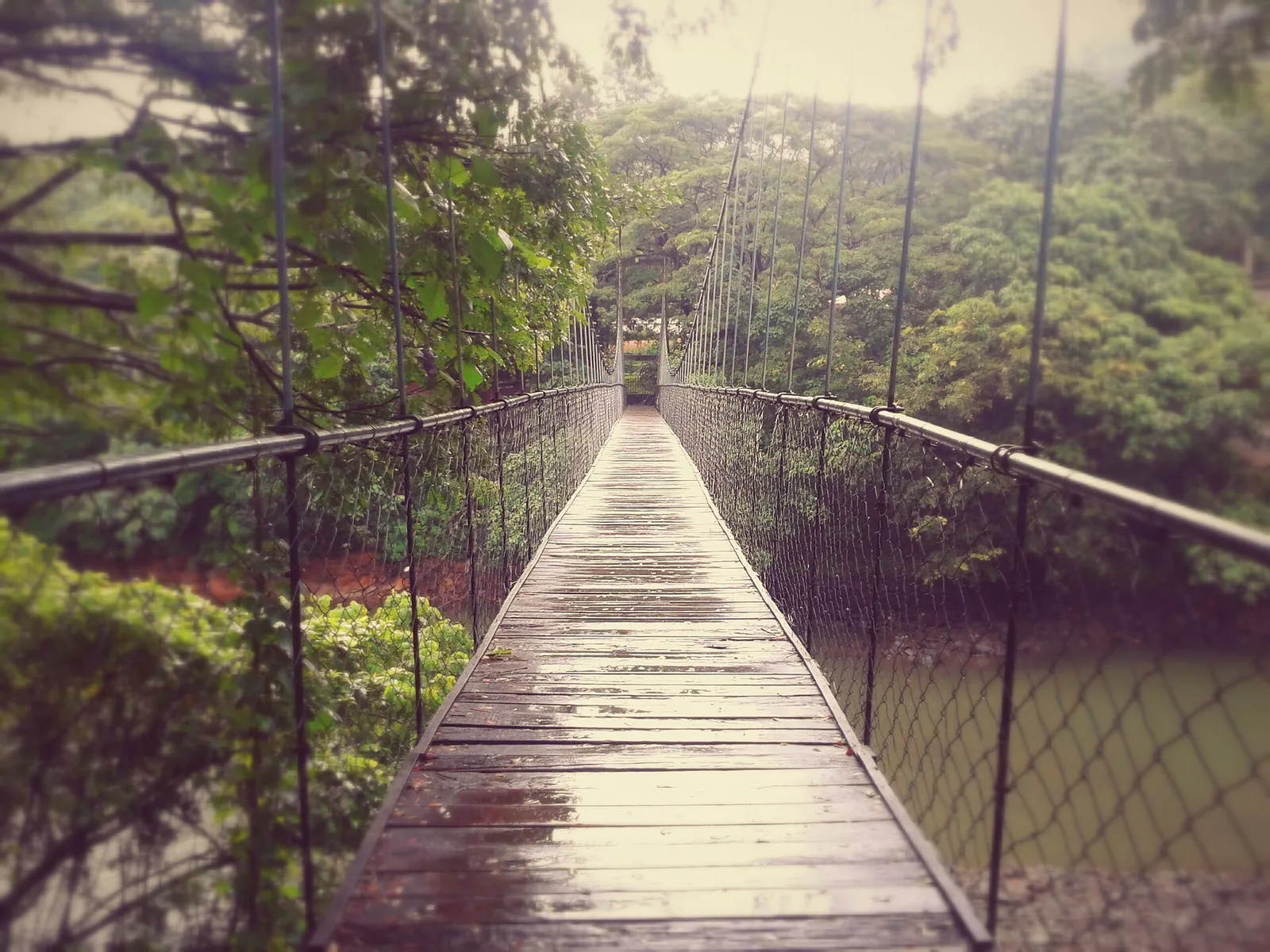
Eco-tourism area with forest walks, dam views and adventure activities.
23.4 km · ~39 min by cab · straight line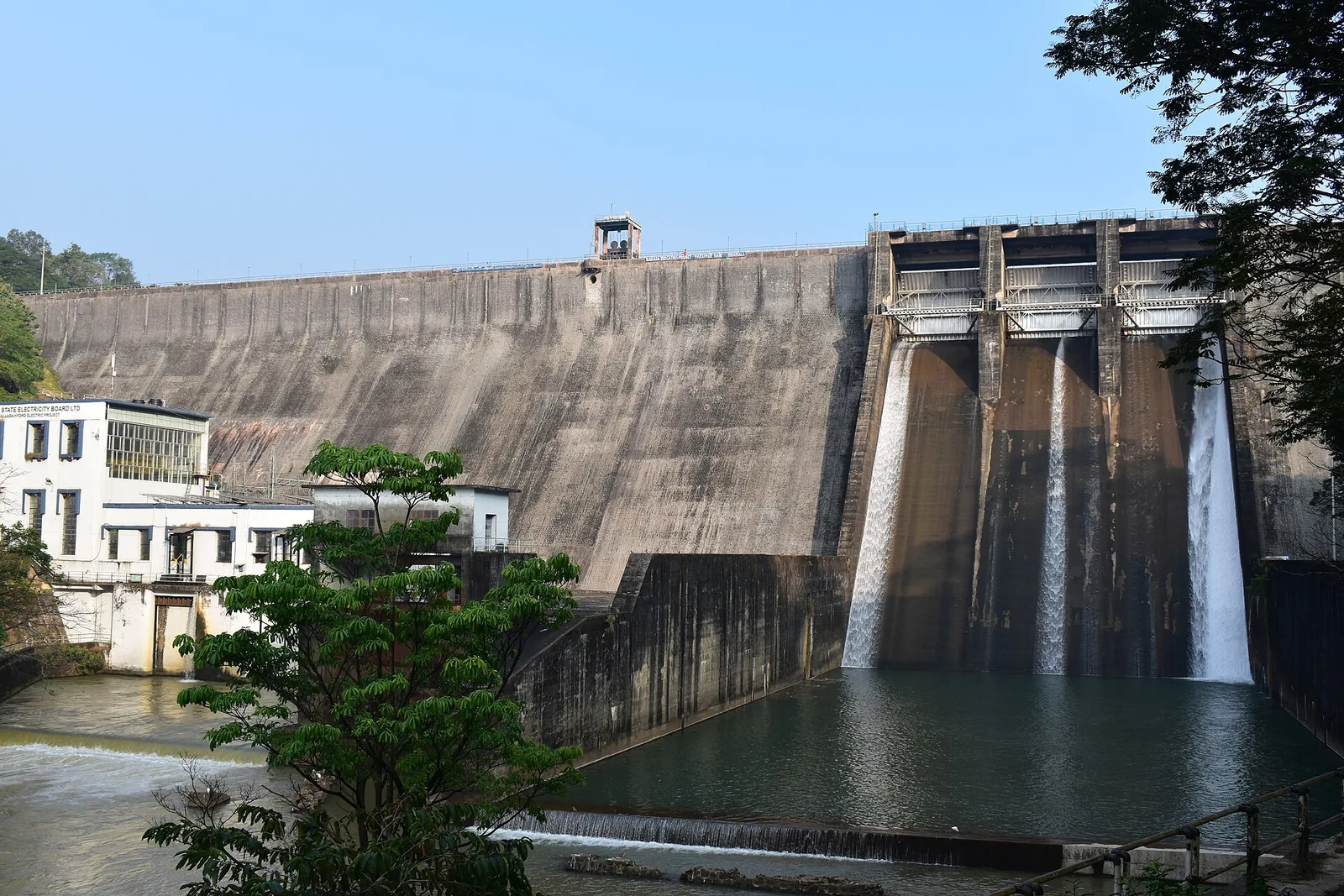
The Parappar dam across the Kallada river at Thenmala, built for irrigation — the reservoir behind it is the water the eco-tourism area is built around, and the catchment upstream is Shendurney sanctuary.
23.9 km · ~40 min by cab · straight lineWalking and driving times are real routed distances, except the few marked “straight line”, which are direct-line estimates and will read short. Fare figures are estimates from Kerala’s notified auto/taxi tariff and exclude waiting and night charges. Routing: © openrouteservice.org by HeiGIT | Map data © OpenStreetMap contributors
Nearby toilets, pharmacies, ATMs, seating and vets are community-mapped and may be incomplete or out of date. Map data © OpenStreetMap contributors | Walking times © openrouteservice.org by HeiGIT
No, despite what is often written. Kottukkal is 4.4 km from Chadayamangalam and Kadakkal is 6.5 km, putting them about 11 km apart from each other. It is a short drive with real walking at each stop. Following our previous advice would have left someone stranded on a road in the middle of the day.
Almost none of them, despite how often the link is asserted. The Jatayu tradition here attaches to the rock and to the place-name, and there is a Kodanda Rama temple on Jatayupara itself. The named temples of the surrounding belt are dedicated to Shiva, Bhadrakali, Vishnu, Sastha, Ganapathi, a nagayakshi and a kalari. Kadakkal's own origin story is about a Tamil trader called Panayappan.
The Kerala Department of Archaeology, which protects it, says the 8th–9th centuries CE. English Wikipedia and most tourism copy say 6th–8th, with some sources narrowing to the 7th. Those ranges do not overlap at one end, so we give both and say who says which rather than picking.
No. It is a Kerala State protected monument, declared in 1966, code S-KL-26 — the leading S means State. Several aggregator sites present that code as an ASI monument number; ASI codes in Kerala begin N-KL. This matters because it tells you which authority is responsible for it.
Kottukkal and the Kadakkal four are Travancore Devaswom Board temples, and TDB practice restricts sanctum entry to Hindus; boards to that effect are standard. Kottukkal is a dual case worth understanding: the monument is a publicly protected one and the shrine inside it is in Board worship. The rules are often said to be set entirely locally, with nobody to ask; that is simply wrong for a Devaswom Board temple.
Nobody publishes them. Not the Department of Archaeology, not Kerala Tourism, not the district tourism council — we checked all three and found no timings for any of these temples, so we are not going to invent any. The Kerala convention is roughly dawn to mid-morning and again from late afternoon to about 20:00, with the sanctum closed in the middle of the day. Treat that as convention, not as published fact.
No fee is published for any of them, including Kottukkal — it is a protected monument in active worship rather than a ticketed site. Note the difference from the Jatayu park nearby, which is ticketed and interpreted; these are not.
A sacred grove — worship conducted in a stand of uncut forest rather than in a built temple. It is an older shrine form than the Brahminical temple and historically the type that non-Brahmin communities kept. There are at least five within about nine kilometres here, and Kilimarathukavu is one of the four temples of the Kadakkal complex, which is that whole history compressed into one site.
Kadakkal Thiruvathira runs ten days in Kumbham (February–March), on the Devi's birth nakshatra. Day one is Pongala, with thousands of women cooking on the temple ground from around 05:30; the festival opens with the Kuthirayeduppu procession and Kuthiyottam and closes with Guruthi, from midnight to dawn. Dates move with the Malayalam calendar, so check the year you are travelling.
A procession carrying the Devi's sacred circlet to a sister temple at Anchal, held once every twelve years. It took place in 2002 and 2015, which puts the next one in 2027 — inside most readers' planning horizon, and something almost no English-language page will tell you.
Morning or early evening is usually best; festival days can be powerful but crowded.
Entry: Free, and free in two different senses worth separating. Kottukkal is a Kerala State protected monument in active worship — a public monument with no ticket, not a village shrine that happens not to charge. The Kadakkal temples take no entry charge either. Offerings and vazhipadu are priced separately at the temple office. ⚠ No fee schedule is published by the Department of Archaeology or DTPC Kollam for any of these (observed 15 Aug 2026). Do not confuse this with the Jatayu park nearby, which is ticketed at ₹450 plus ~19% tax. Timings: 🛑 UNPUBLISHED BY EVERY OPERATOR, and we will not invent them. We checked the Department of Archaeology, Kerala Tourism and DTPC Kollam and none of the three gives timings for these temples. The Kerala convention — stated as a convention, not as fact — is roughly dawn to mid-morning and again from late afternoon to about 20:00, with the sanctum shut through the middle of the day. Go early.
Base yourself in Chadayamangalam or a nearby town in Kollam, then confirm the last-mile route locally before leaving. Check temple entry customs, dress rules and festival crowd conditions before arrival. If the visit depends on forest, temple, boat, ferry, weather or seasonal access, check the official/local rule on the day before travel.
45 minutes to 2 hours, longer during festival or queue periods.
Nearby you can pair Chadayamangalam hill views (1.9 km), Jatayu Earth’s Center (2.0 km), Kottukal Cave Temple (4.4 km), Vattathil Waterfalls (5.1 km).
Use official counters for offerings/tickets where applicable. Keep footwear and valuables secure in crowded areas.
Written about Local temple trails itself — its history, its legends and the arguments about them.
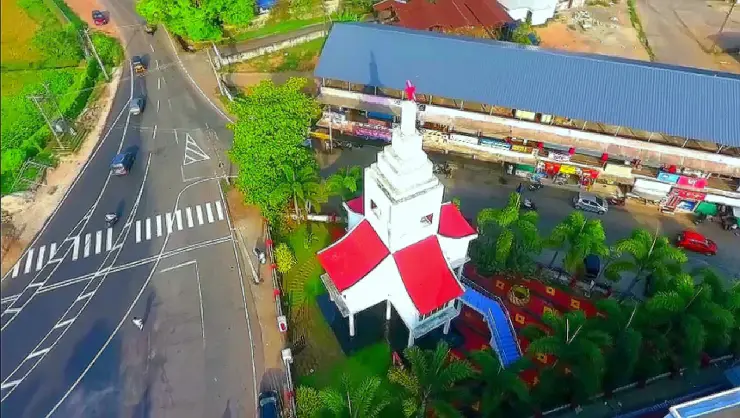
These guides explore Chadayamangalam and the surrounding area. Choose a visit that fits your interests, allowing separately for travel between stops.
Route-level itineraries and practical guides for the rest of Kerala.
Photographs: Adithyan p lal (Public domain), Kannanshanmugam, Kollam (CC BY-SA 3.0), Fotokannan / Kannanshanmugam (CC BY-SA 3.0), Achusp123 (CC BY-SA 4.0), Jithutvm (CC BY-SA 4.0). Wikimedia Commons.