What to expect
Highlights
- Heritage experience at Mananchira
- Architecture, local stories and old trade/cultural routes
- Good fit for guided walks and nearby cafes/shops
Mananchira is one of the guidebook places to plan around Kozhikode city, with practical planning organized from the nearest town/base and nearby business listings when available.
In the very heart of Kozhikode, ringed by the roar of traffic and the buzz of SM Street, lies a great sheet of still water and a green civic square that locals call the lungs of the city. Mananchira is a centuries-old freshwater tank once dug for the Zamorins of Calicut, and Mananchira Square is the landscaped park that now wraps around it — an open-air stage, a musical fountain, avenues of old trees and heritage buildings that together form the beating cultural heart of the town.
Arrive at Mananchira in the late afternoon and the mood of the place reveals itself slowly. The rectangular tank sits like a mirror at the centre of the city, its laterite embankments dark with age, its surface catching the last gold of the Malabar sun. Around it the modern square unfurls — lawns and flowering shrubs, a small artificial hill and rivulet, rows of ornamental lamp posts and shaded pathways where families, students and office-goers drift in as the heat softens.
The tank itself is the oldest thing here, and the most quietly astonishing. It is roughly 130 metres long and a little over 100 metres wide, fed not by pipes but by a natural spring welling up from below, which is why its water has stayed sweet across the centuries. For generations it supplied the drinking water of the town, and municipal rules from the late nineteenth century have long forbidden bathing or washing in it — a rare thing, a royal pond that became a public utility and then a public treasure.
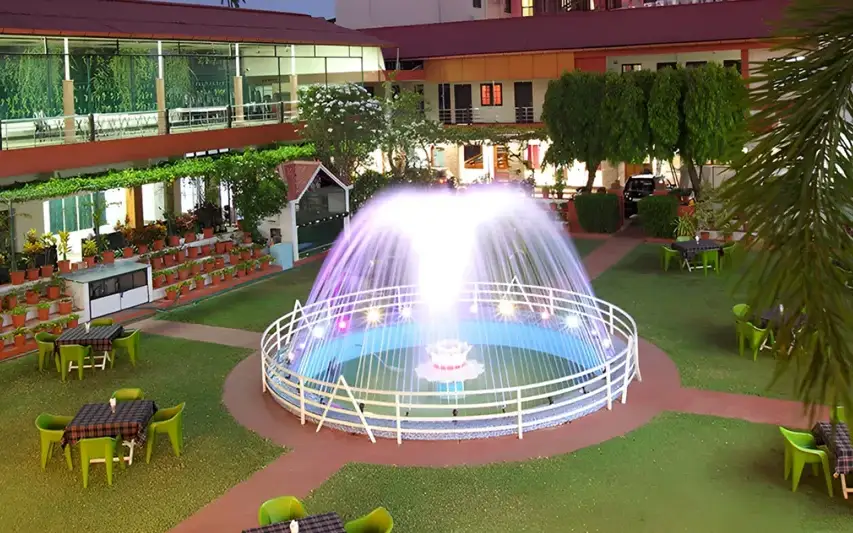
By evening the square transforms. The musical fountain comes alive, jets of water rising and falling in time to Malayalam film songs and light classical tunes, coloured beams catching the spray while children press against the railings. On the open-air stage nearby there may be a dance recital, a music performance or a poetry reading, for this is where much of Kozhikode gathers to celebrate. Statues of beloved Malayalam writers stand among the greenery, a reminder that Kozhikode wears its title as a UNESCO City of Literature with real pride.
Walk the perimeter and the history of the whole city presses in from every side. On the surrounding streets stand the old Commonwealth Trust weaving works, the Town Hall, an art gallery, a public library, and some of the most storied mosques in Kerala. Within a short stroll are the ancient Jama-at and Muchundi mosques, layered temples, and the famous SM Street with its sweets, spices and halwa shops. Few urban parks in India carry so much living heritage on their doorstep.
What makes Mananchira special is precisely this doubleness — it is both intensely historic and thoroughly everyday. Grandparents bring toddlers to watch the fountain, couples find a quiet bench, joggers loop the paths at dawn, and on festival evenings the whole square glitters with lights and crowds. It is not a monument you tick off and leave; it is a place the city actually uses, a green pause in the middle of one of Kerala oldest port towns.
Give yourself an unhurried hour or two, ideally around sunset when the light is kindest and the fountain is due to play. Sit by the water, let the noise of the surrounding streets fall away, and it is easy to imagine the Zamorins bathing here six hundred years ago — the same spring still rising, the same tank still holding the memory of Calicut at the centre of the spice-trade world.
One practical consequence of all this is that Mananchira rewards two visits at different hours rather than one long one. Come in the early morning and it is a walking track: the water flat, the light low across it, the surrounding buildings legible before the traffic builds, and enough quiet to make sense of the old city pressing in from the perimeter. Come back after dark and it is an entirely different institution — the fountain running, the stage often in use, families out in numbers, and the pond reduced to a black rectangle reflecting the lit facades. Neither visit gives you the other, and the square is small enough that doing both costs very little.
Mananchira is one of those places where almost everyone quietly misdates what they are standing on. The tank is genuinely medieval. The square is not. It opened to the public on 9 November 1994, and it was assembled rather than built — created by annexing two existing public gardens, Tagore Park and Ansari Park, together with the maidan and the pond, and landscaping the whole into a single civic space. The lawns, the open-air stage, the sculptures, the artificial stream and even the small hill are all part of that 1990s design. When people call Mananchira a six-hundred-year-old square, they are describing the water and crediting the park.
The name is also more literal than visitors expect. It is not a poetic compound about the mind or the sand. Mananchira is a possessive: the chira — the tank — of Mana Vikrama, the Zamorin traditionally credited with having it dug around the fourteenth century. Manavikraman’s chira, worn down by six centuries of ordinary speech into Mananchira. The city has been saying a dead king’s name every day for six hundred years without particularly noticing, which is a more durable memorial than most monarchs manage.
Knowing that the landscape is designed takes nothing away from it, but it does change how you look. The stream that appears to wander is routed. The hill is placed. The trees that read as ancient are, in many cases, part of a scheme drawn up in the early 1990s to give a dense and noisy city centre a piece of open ground it could actually use. That was a good decision, and the proof is that it worked — the square is genuinely full every evening, which is not true of most civic landscaping anywhere in the world.
The one thing that is exactly as old as it looks is the water. The tank is fed from below, its supply has outlasted the palace it was dug for, and for centuries it was not scenery at all but the drinking supply of the town — which is why it is fenced, why bathing in it is prohibited, and why the water is the one element of the composition that was never available to the designers to move. Everything visible around the pond has been arranged at least once. The pond itself sets the terms.
The survival is the part that should genuinely surprise you, because tanks like this one mostly did not survive. Across Indian towns, the large public water tanks that had served for centuries were filled in through the twentieth century and built over — for bus stands, markets, municipal offices, car parks. Open water in a dense city centre is enormously valuable land, and almost everywhere the land argument won. Mananchira came through because it was never merely ornamental: it remained the town’s drinking supply, and the municipal rules that forbade bathing and washing in it from the late nineteenth century onwards gave it a legal status that a decorative pond would never have had. The thing that now looks like landscaping was protected because it was infrastructure.
It is worth knowing, too, what the lawns replaced. Part of the ground the square now covers was maidan — the plain open field that sits at the centre of a great many Indian towns and does duty as cricket pitch, meeting ground, fairground and rally site, depending on the week. Maidans are unglamorous and enormously useful, and they tend to vanish the moment a city decides to beautify itself. Some of that function moved into the square’s open-air stage and lawns, and some of it simply went. Whether the trade was worth making is a fair question to turn over while you are sitting there, and the crowds on any given evening are a reasonable argument for the answer being yes.
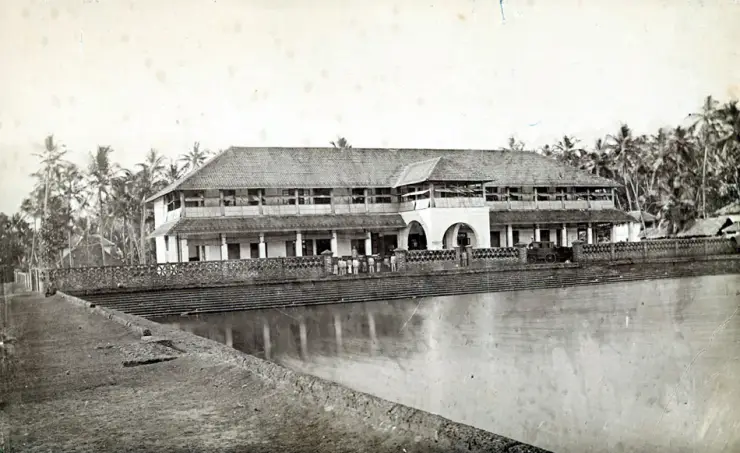
Mananchira was created around the fourteenth century as a bathing tank for the Zamorins, the ruling dynasty of Calicut (Kozhikode). It is named after the ruler Mana Vikrama — Mana, shortened, giving the tank its name, chira meaning pond or tank in Malayalam. According to tradition the laterite quarried while excavating the great pond was itself used to build two palaces flanking the water, so that the tank and the royal residences rose together.
For centuries the pond stood at the literal and symbolic centre of the Zamorins city. Calicut was one of the richest ports on the Malabar Coast, the place where Vasco da Gama landed in 1498 and where Arab, Chinese and later European traders converged for pepper and spices. The palace precinct around Mananchira — its courtyards, administrative buildings and the tank that supplied and sanctified it — sat at the core of that cosmopolitan medieval city.
Through the colonial era the pond kept its role as a vital source of drinking water for the growing town, and by the late nineteenth century the municipality had passed regulations protecting it from bathing, washing and pollution. The open ground beside it, long known as the Mananchira Maidan, served the townspeople as a playground and gathering place, hosting football tournaments, public meetings and religious functions.
The square as visitors know it today was created in 1994, when the maidan and its surroundings were redeveloped into a landscaped urban park. The project — carried out during the tenure of the district collector Amitabh Kant — closed adjoining roads to enlarge the public space and added lawns, an artificial hill and rivulet, an open-air theatre, a musical fountain, ornamental lamp posts and statues of Malayalam literary figures, turning a plain ground into a designed civic square.
Since then Mananchira Square has become the recognised cultural heart of Kozhikode, the venue for festivals, performances and everyday recreation, while the ancient tank at its centre continues to be fed by its natural spring. It stands surrounded by heritage buildings — the Commonwealth Trust works, the Town Hall, art gallery, library and historic mosques — a rare place where the medieval, colonial and modern city meet around a single sheet of water.
It is the green civic heart of Kozhikode — a rare open, tree-shaded square in the middle of a dense old city, perfect for a relaxed evening stroll away from the traffic.
The historic Mananchira tank, a six-centuries-old spring-fed pond dug for the Zamorins, gives the square a genuine sense of depth and story that few urban parks can match.
The evening musical fountain, with its coloured jets set to music, is a simple delight and a favourite with families and children.
An open-air stage regularly hosts music, dance and cultural performances, so on many evenings there is something live to watch — fitting for a UNESCO City of Literature.
It sits right beside the famous SM Street and the old bazaar quarter, making it an ideal starting point for a heritage walk through mosques, markets and colonial-era buildings.
Entry is free and it is walkably close to the railway station and the city centre, so it slots easily into any Kozhikode itinerary.
Road km to Kozhikode; ghat roads and traffic vary — allow extra.
November to February and early mornings are best for walking; avoid midday heat where possible.
Browse listed stays, food, activities, sights, shops and rentals around Mananchira. Check each listing’s locality and contact the business directly for current arrangements.
The Regional Science Centre near the new bus stand — galleries, a science park and 3D shows, open all seven days. The planetarium dome itself has been suspended; phone ahead rather than plan around it.
Victorian-era heritage hotel steps from Kozhikode Beach. The 1890 Malabar-club building became a hotel in the 1930s and keeps its period architecture.
Third-generation family-run hotel in central Palayam, near Calicut railway station. Established in 1958, it offers multi-cuisine dining and banquet halls.
Sweet Meat Street itself — SM Street — the bazaar spine of the city and the home of Kozhikode halwa. The name was never about meat: sweetmeat is plain old English for confectionery.
The city’s evening room rather than a swimming beach — food stalls, families, and the two ruined piers that carried the pepper trade standing out in the water.
The Zamorins’ palace tank itself — the protected water body at the centre of the square, the reason the square exists. A thing to sit beside, not a boating lake.
The temple tank beside Thali — a ritual water body in active use. Look from the edge; bathing and conduct rules are the temple’s.
The square around the Zamorins’ palace tank, the point to read the old city outward from — the bazaar east, Kuttichira south, the beach west.
The Zamorins’ Shiva temple, where the Revathi Pattathanam scholarship assembly has been held since the fourteenth century. An active temple with its own access customs; visit outside puja times.
Kerala Tourism-classified Ayurveda and panchakarma hospital at Azhiyur in Kozhikode district, with 16 treatment rooms and full-time physicians. It runs panchakarma, classical treatments and Ayurveda, yoga and marma study courses over more than two decades.
Green Leaf-accredited Ayurveda and yoga retreat set in a 170-year-old heritage homestead at Bilathikkulam in Kozhikode. It offers physician-led panchakarma, classical treatments and yoga in a family-run heritage setting rather than a hotel spa.
Five-star riverside resort of The Raviz group on the banks of the Chaliyar near Kozhikode, with an Ayurveda spa, pools and river-view rooms. It is one of the district’s flagship luxury resorts, positioned for wellness and destination stays.
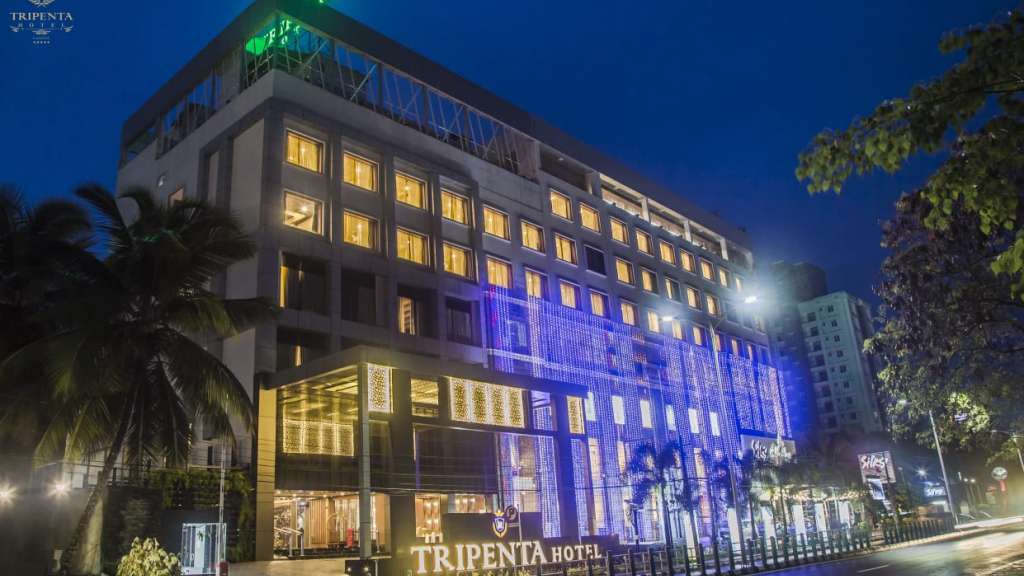
Five-star hotel opposite Sarovaram Bio Park on the Mini Bypass Road in Kozhikode, with a swimming pool, spa, health club and multi-cuisine dining. Its Kerala Tourism provider record classifies it as a five-star facility, one of the city’s top luxury business hotels.
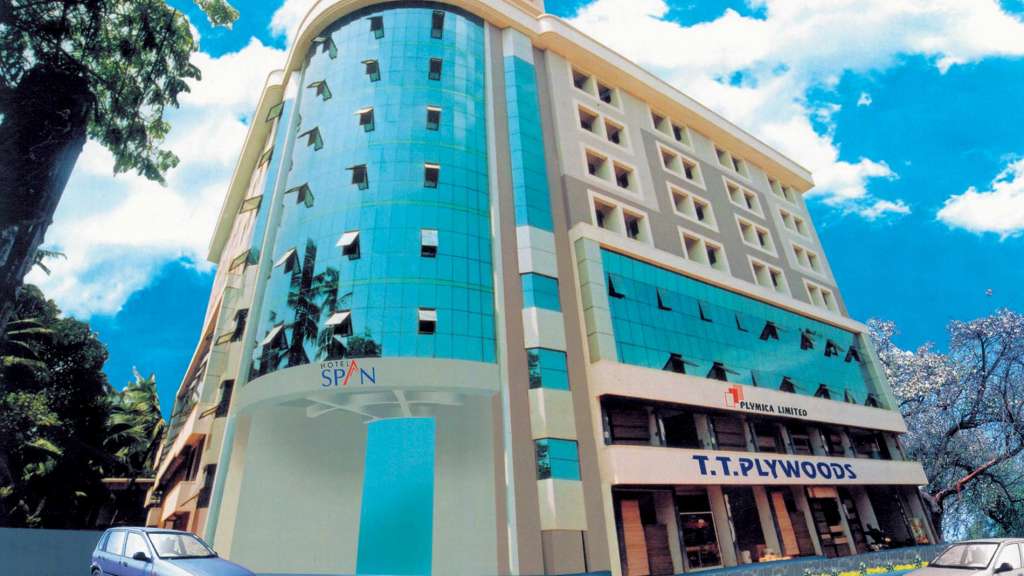
City hotel in the Markaz Complex on Mavoor Road, near the new bus stand. It offers air-conditioned rooms in several categories with an in-house restaurant.
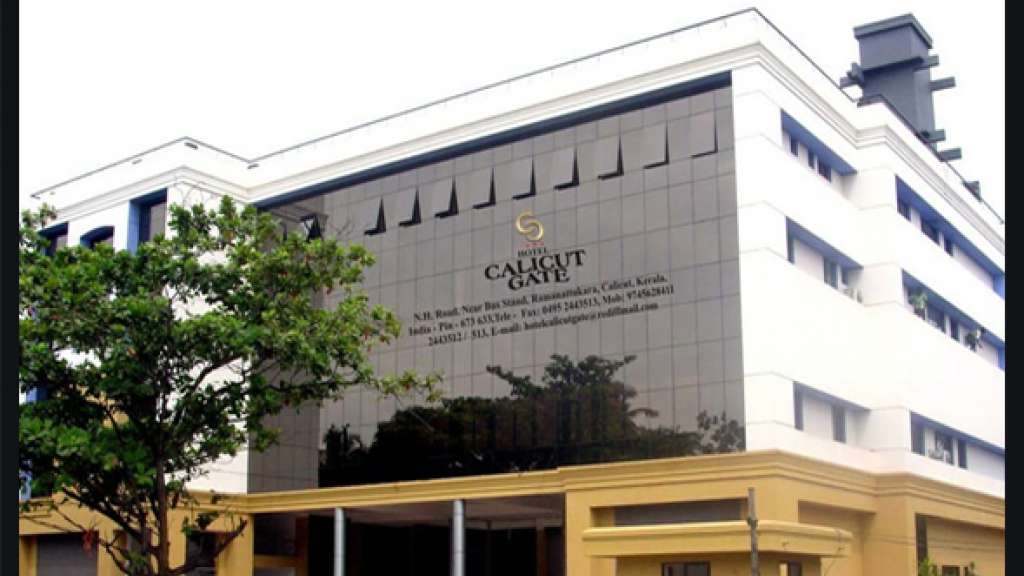
Affordable hotel on the N.H. road at Ramanattukara on the southern approach to Kozhikode, with 15 air-conditioned and non-air-conditioned rooms. Its Kerala Tourism provider record lists it as a budget-friendly option with quality service near the highway and bus stand.
Budget-class business hotel on Mavoor Road, behind Kalyan Jewellery, about 1.5 km from Kozhikode railway station. Its Kerala Tourism provider record lists air-conditioned rooms with high-speed Wi-Fi and LED TVs at affordable rates for corporate and transit travellers.
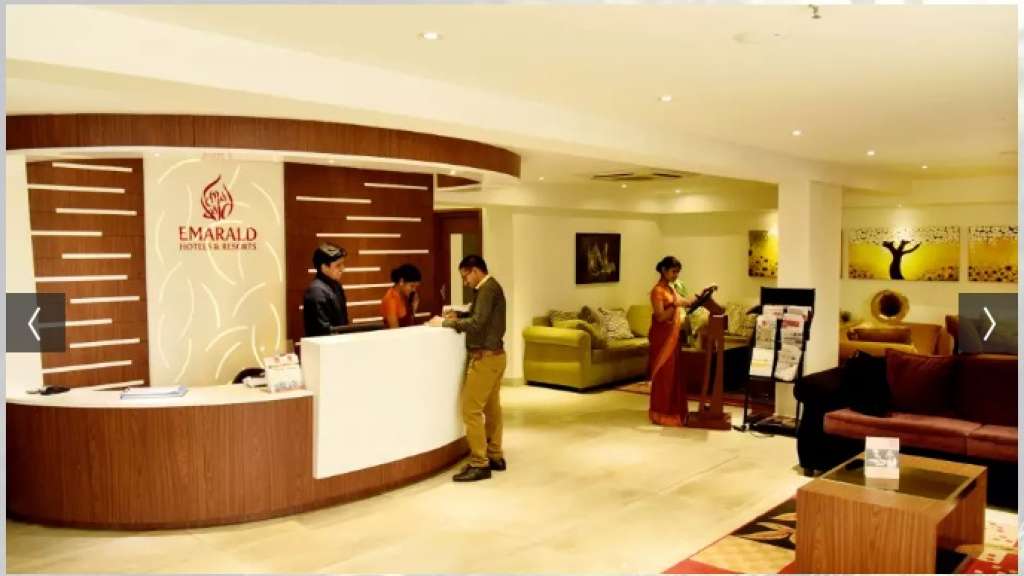
Three-star business hotel on Mavoor Road at Arayidathupalam, close to Kozhikode (Calicut) railway station, with air-conditioned rooms and a restaurant. Part of the Emarald Hotels & Resorts group, it is a convenient mid-range city base near transport.
Large three-star business hotel on Jail Road, Puthiyara, in central Kozhikode, with air-conditioned rooms, a restaurant and event facilities. Its Kerala Tourism provider record lists it as a full-service city hotel, a practical mid-range base for Malabar city trips.
Government-of-India-approved three-star business hotel on the Mini Bypass opposite Aster MIMS in Kozhikode, with 27 standard, deluxe and suite rooms and a multi-cuisine restaurant. Its own website presents it as a dependable mid-range city base for business and hospital-side visitors.
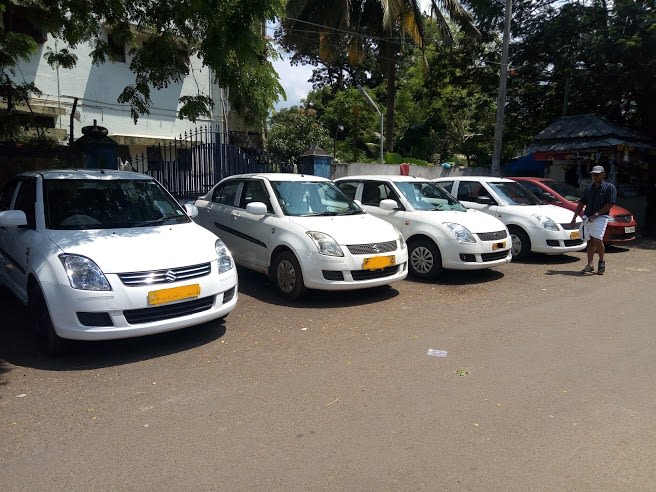
Calicut taxi provider with direct address, phones and email. Bank Road, Calicut Town, Kerala 673006 · Calicut taxi, Airport transfer, Outstation cab.
Kerala Tourism-listed Kalaripayattu and Ayurveda centre at Puthiyara. Kalaripayattu, Hindustan Kalari, Puthiyara.
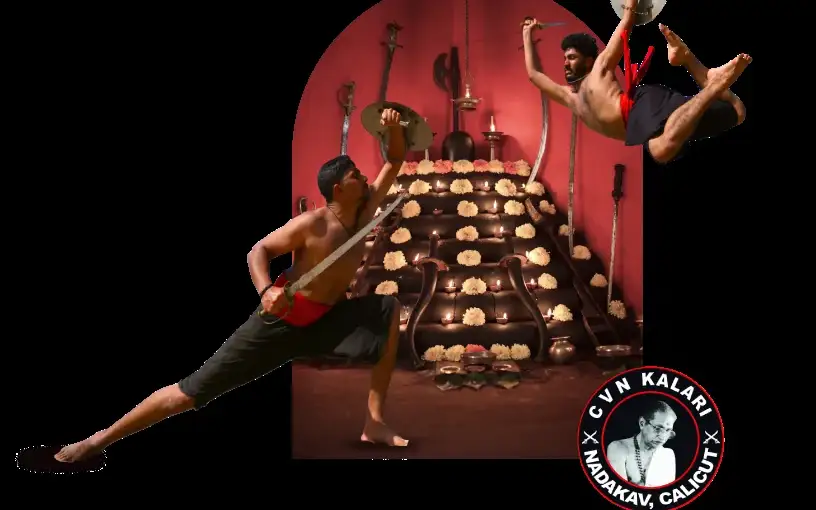
Kerala Tourism-listed Kalaripayattu training and Kalari Marma centre in Nadakkavu. Kalaripayattu, CVN Kalari, Nadakkavu.
Mayukaha Taxi Calicut Cabs is a local Kozhikode taxi service for airport, railway and city pickups, useful as a direct-contact transport option when app cabs are not enough. Kozhikode taxi, Calicut cabs, Airport taxi.
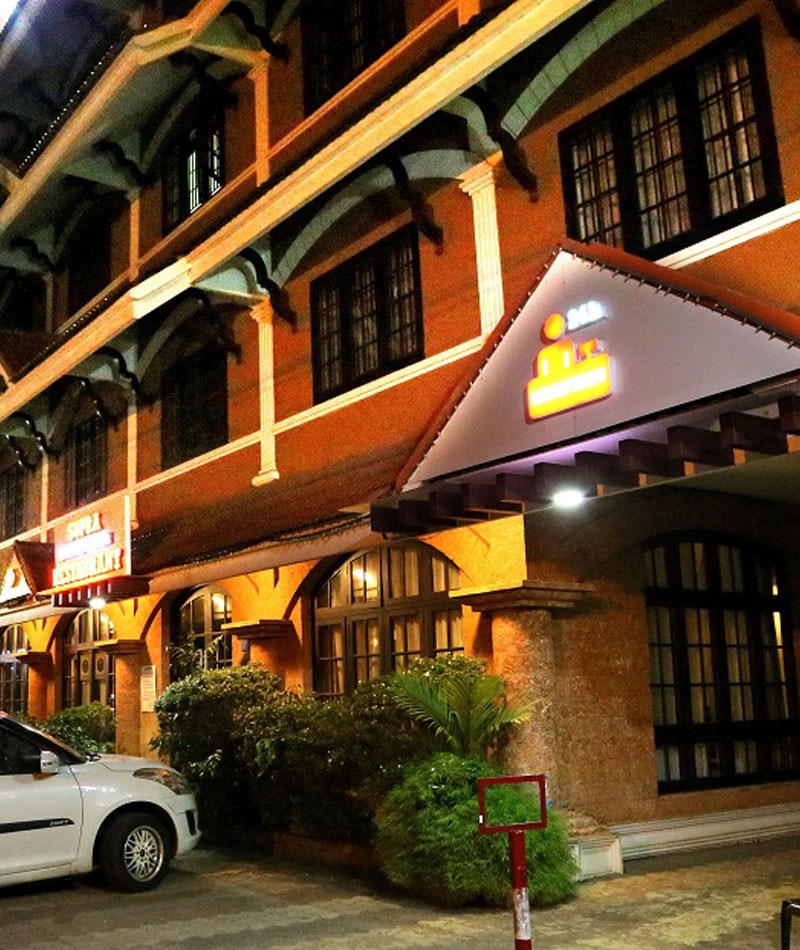
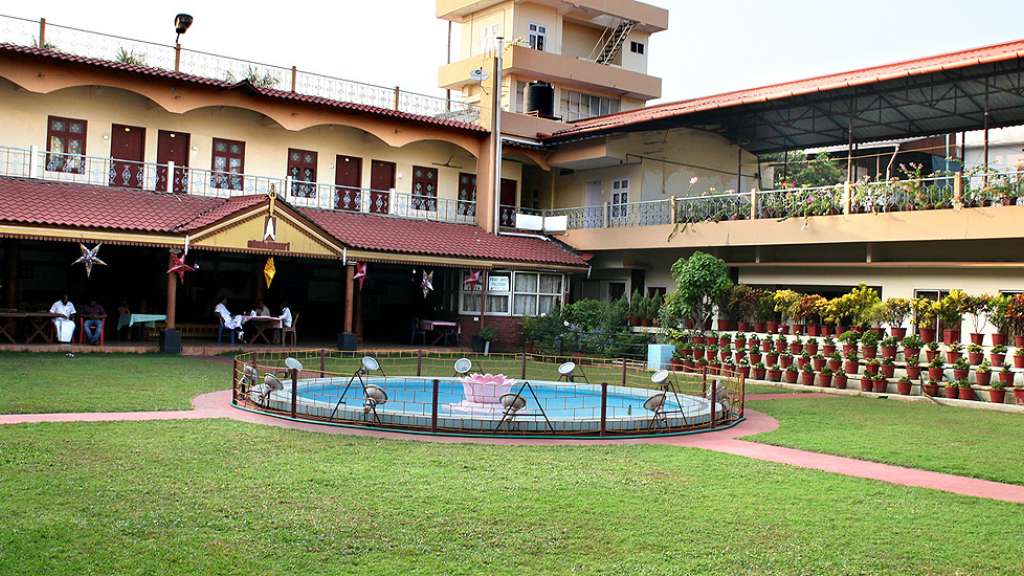
Kerala Tourism-listed three-star hotel on M. M. Ali Road, Kozhikode. Alakapuri Hotels, Kozhikode hotel, M M Ali Road.
Book with the place itself. India’s cyber-crime coordination centre warned in April 2025 that convincing copies of hotel and pilgrimage booking sites are being pushed through sponsored search and social ads, taking payment for rooms the property never hears about. Use the contact and source details on each profile to confirm the exact business and booking channel. A directory entry or map pin alone does not establish an operator’s identity or current availability. Roampedia takes no commission and does not collect booking payments. If a booking page reached you through an ad, check the address bar against the property’s own site before you pay. Fraud can be reported on cybercrime.gov.in or on 1930.
Find food, accommodation and activities across Kozhikode city. Browse the guides for places to eat, stay and explore along your route.
10 more places around Kozhikode city. Open a guide to plan the visit and onward journey.
A small historic mosque in Kuttichira with an important early Malayalam-Arabic inscription, distinct from the nearby and much larger Mishkal Mosque.
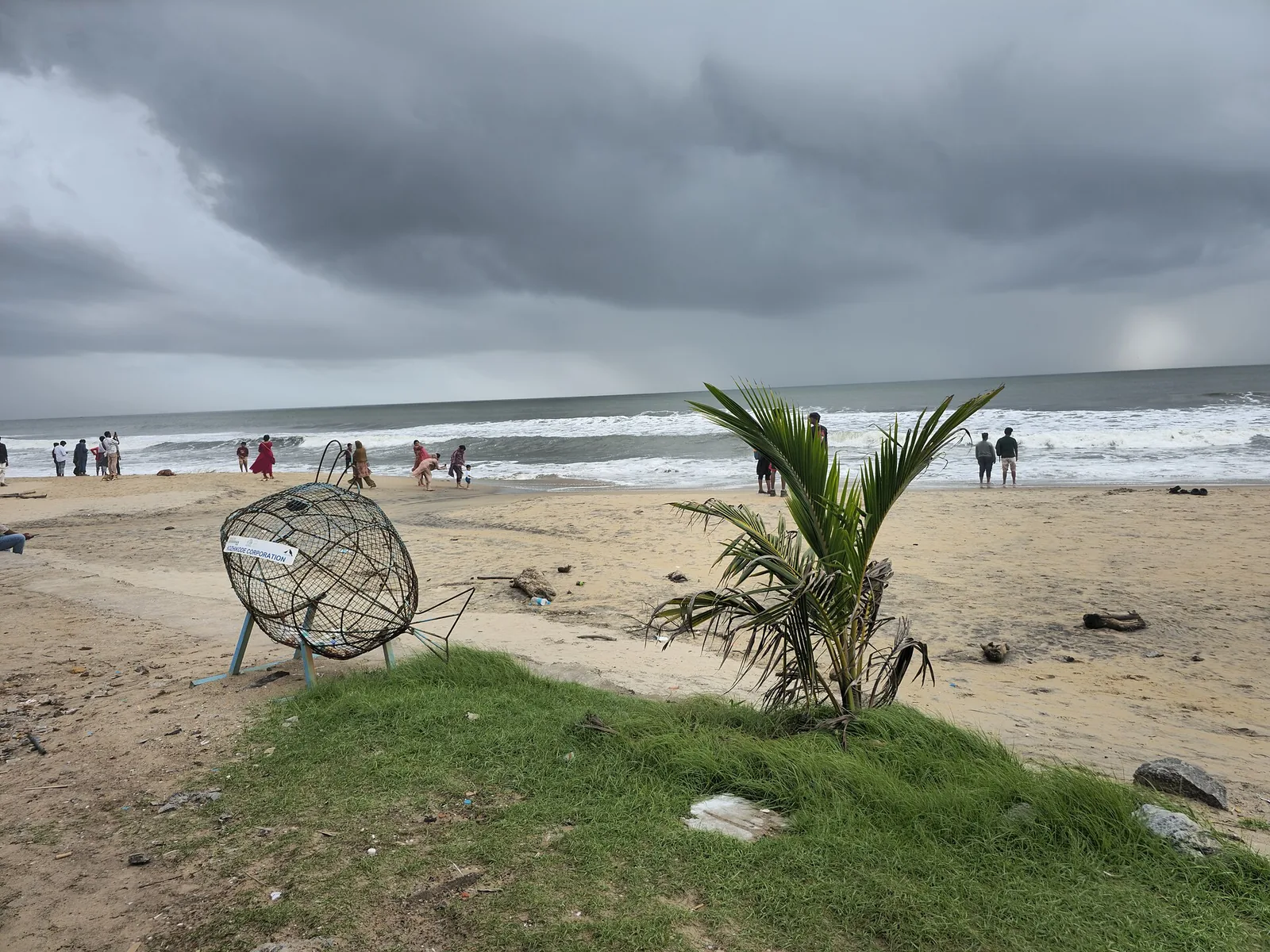
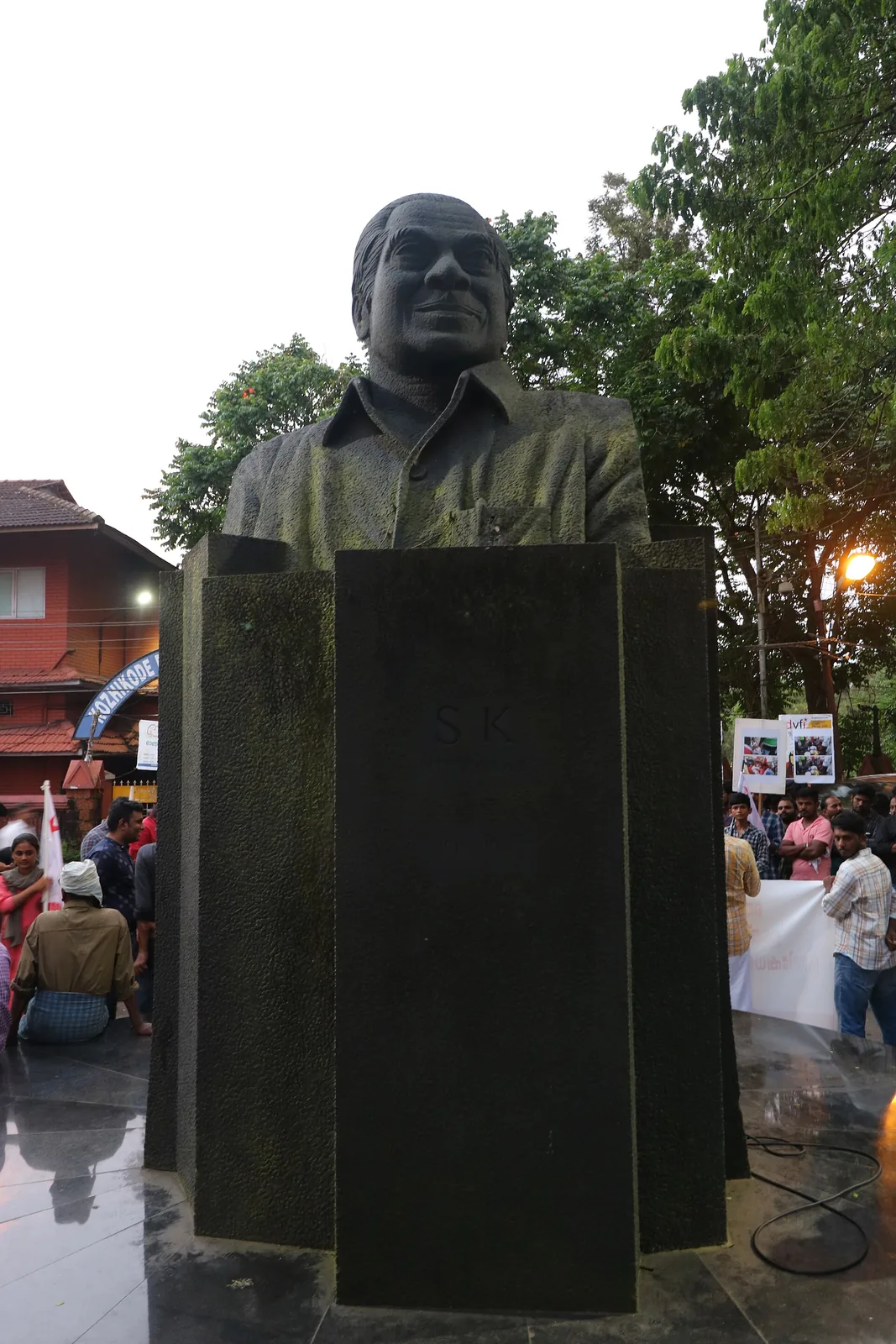
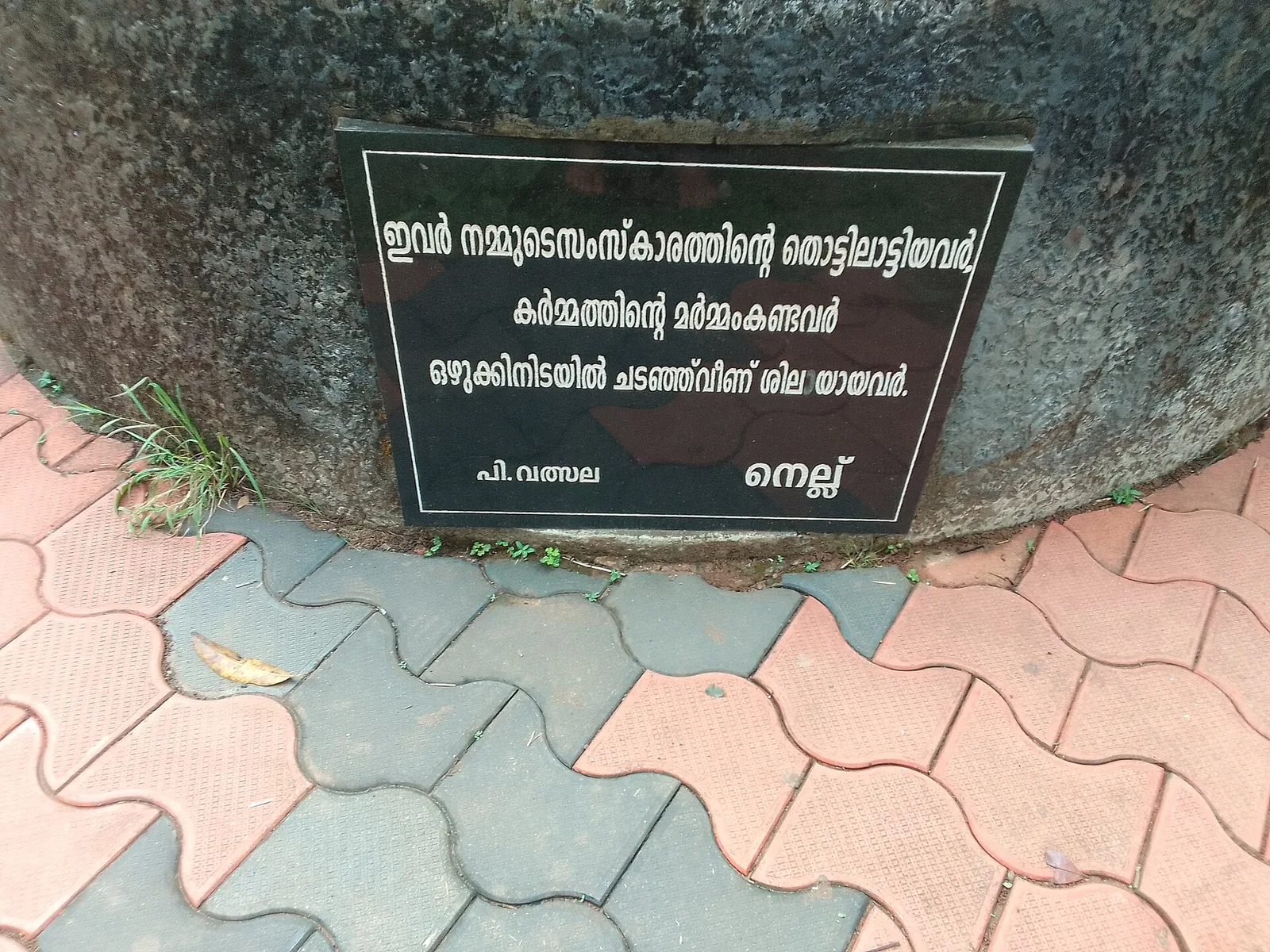
Landmark park in the city centre on the old Zamorin palace grounds, around the Mananchira tank, with a musical fountain.
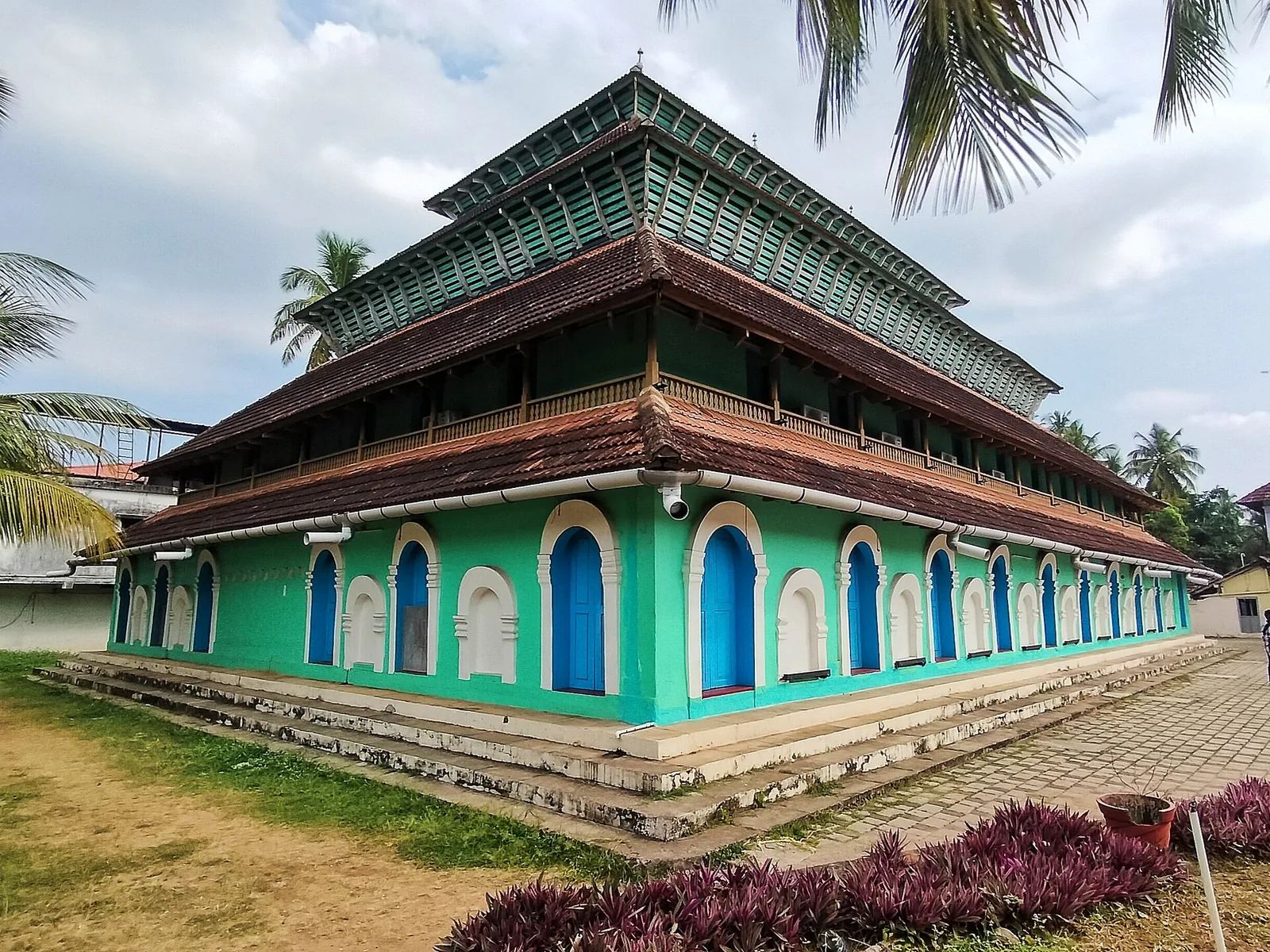
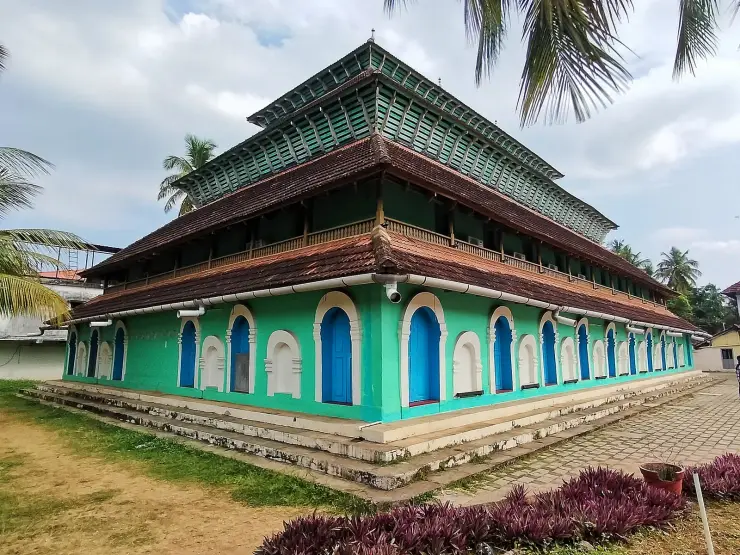
Historic timber mosque at Kuttichira built by a 14th-century Yemeni trader, once five storeys, burned by the Portuguese in 1510 and rebuilt.
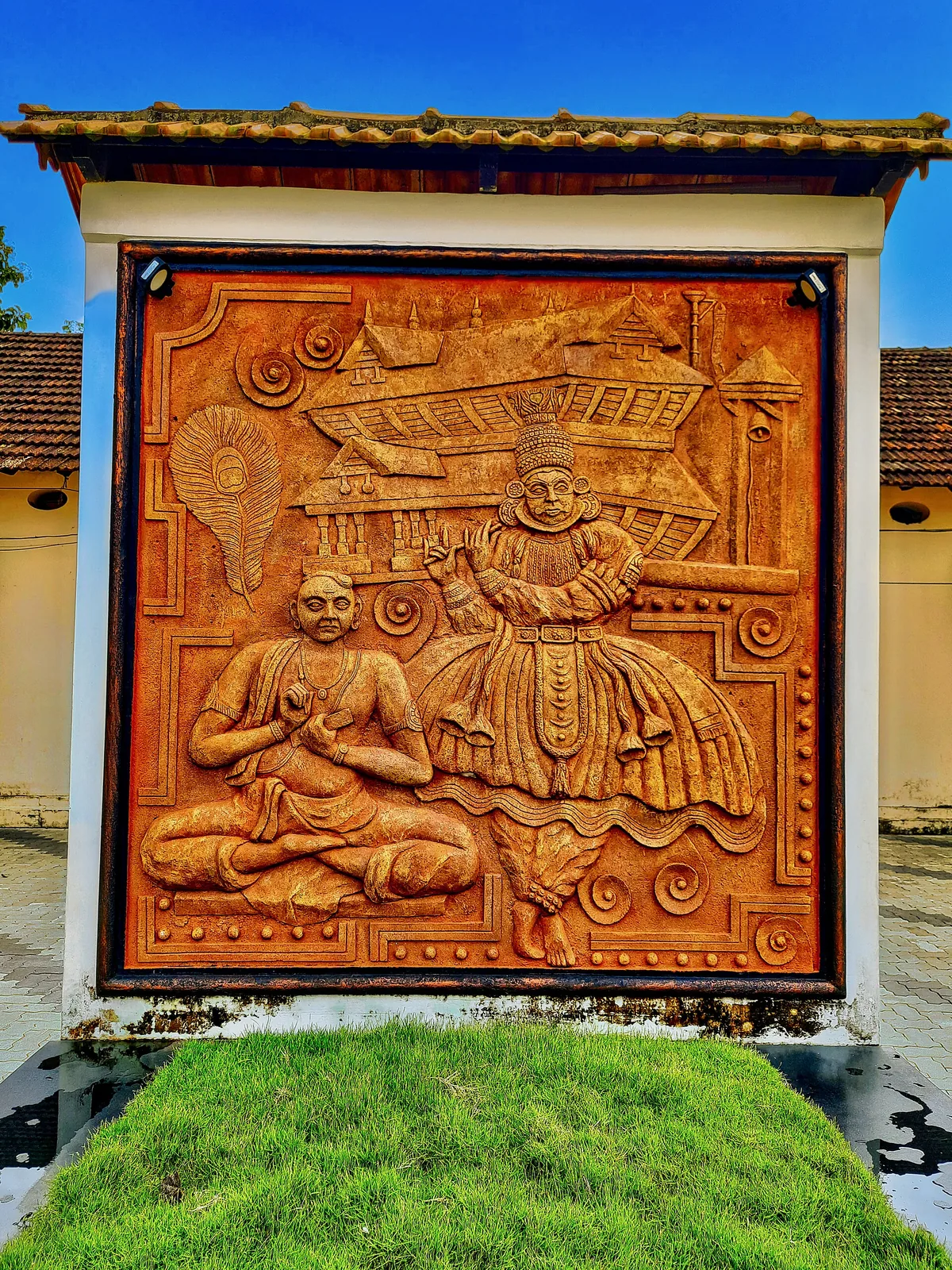
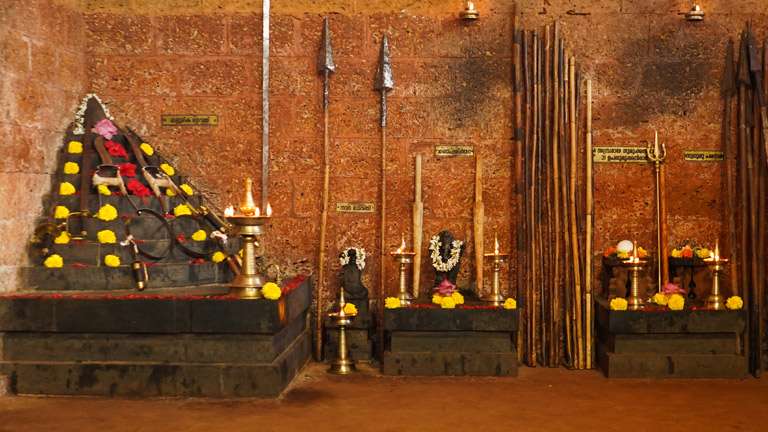
One of Kozhikode’s oldest temples, a laterite-and-timber Shiva shrine near Mananchira long patronised by the Zamorins.
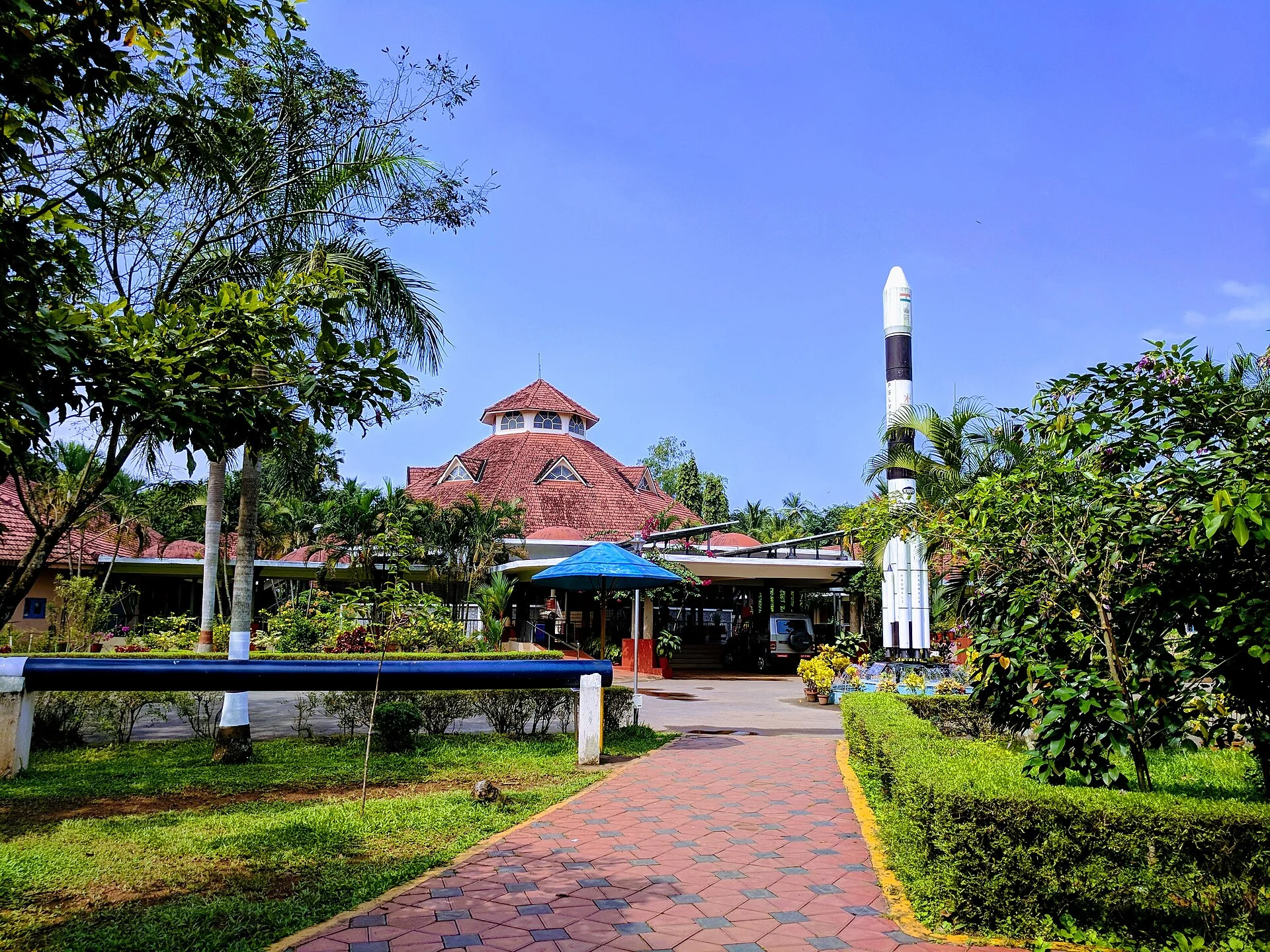
Check the planetarium before you plan an afternoon around it: it has been shut since 13 July 2026 for a full projector replacement and no reopening date has been announced. The rest of the centre — a National Council of Science Museums site in central Kozhikode — is working: five galleries, a 3D theatre and an outdoor science park that is the real draw for children.
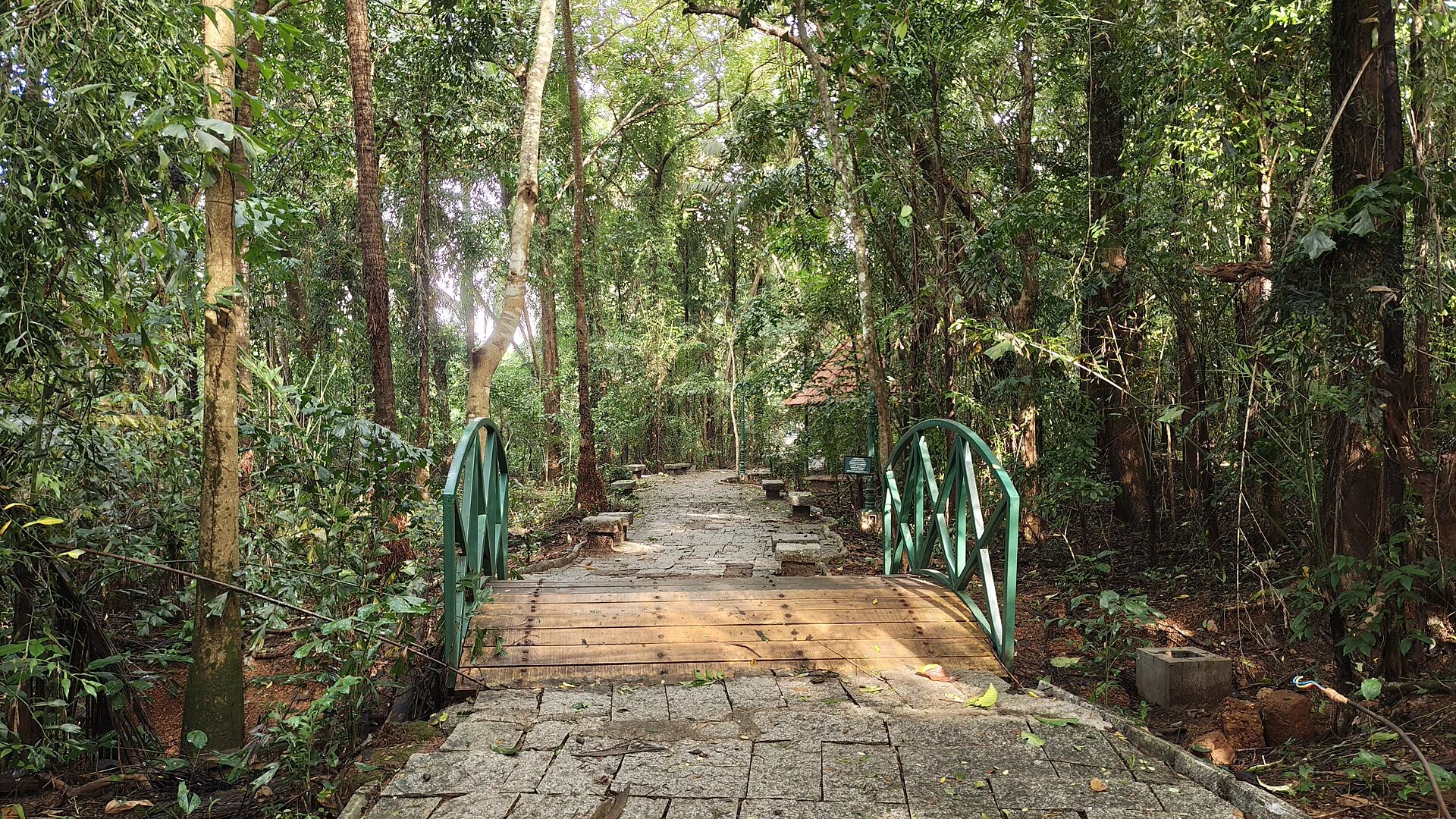
A 98-acre public eco-park on the Conolly Canal in central Kozhikode, the developed part of the Kottooli wetland — mature urban woodland and mangrove-fringed water, mid-renovation and partly not operating.
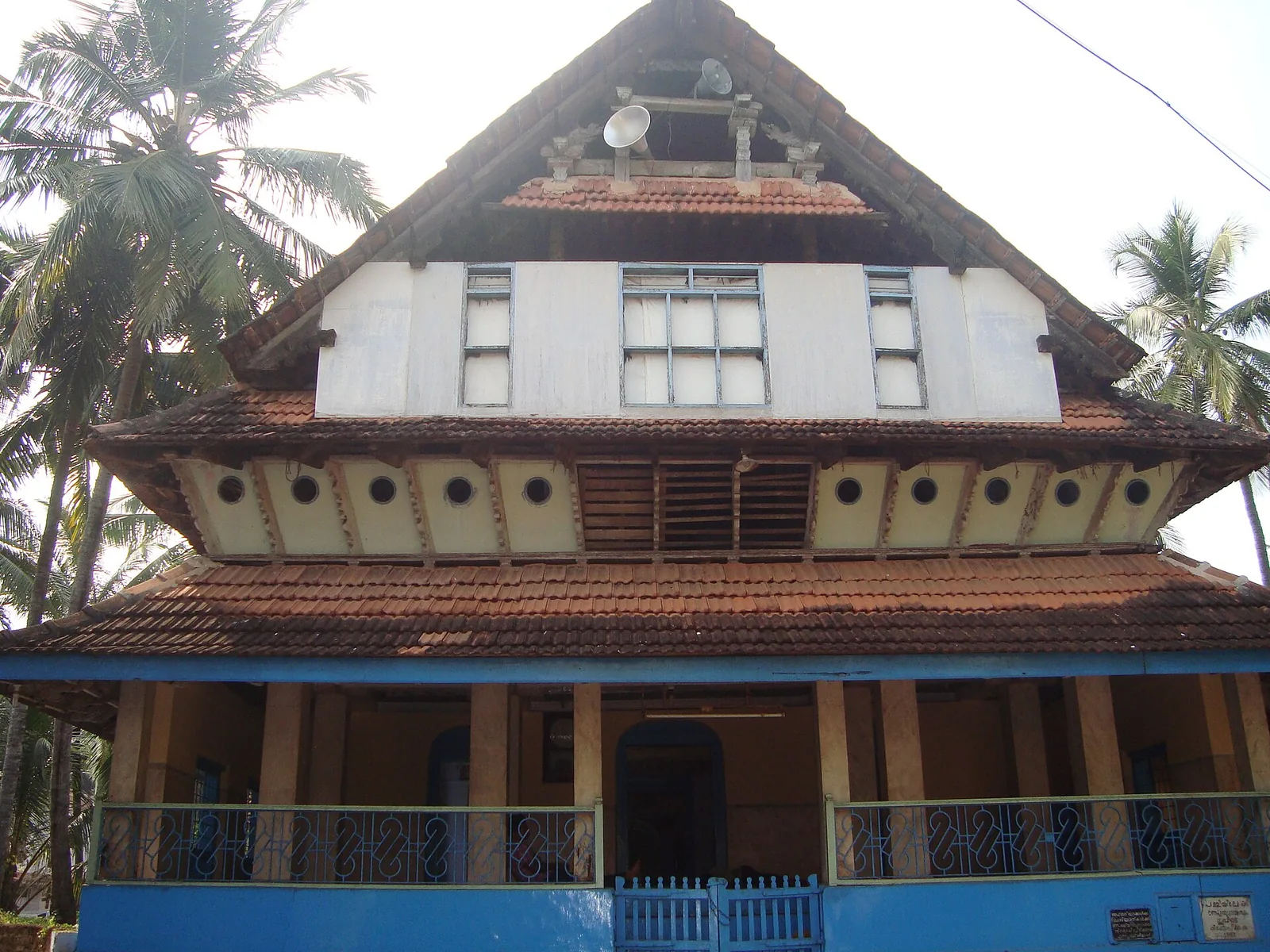
Kuttichira mosque built by a freed slave and endowed by the Zamorin, holding a 13th-century bilingual Vattezhuthu–Arabic inscription; it has no minbar and holds no Friday prayers.
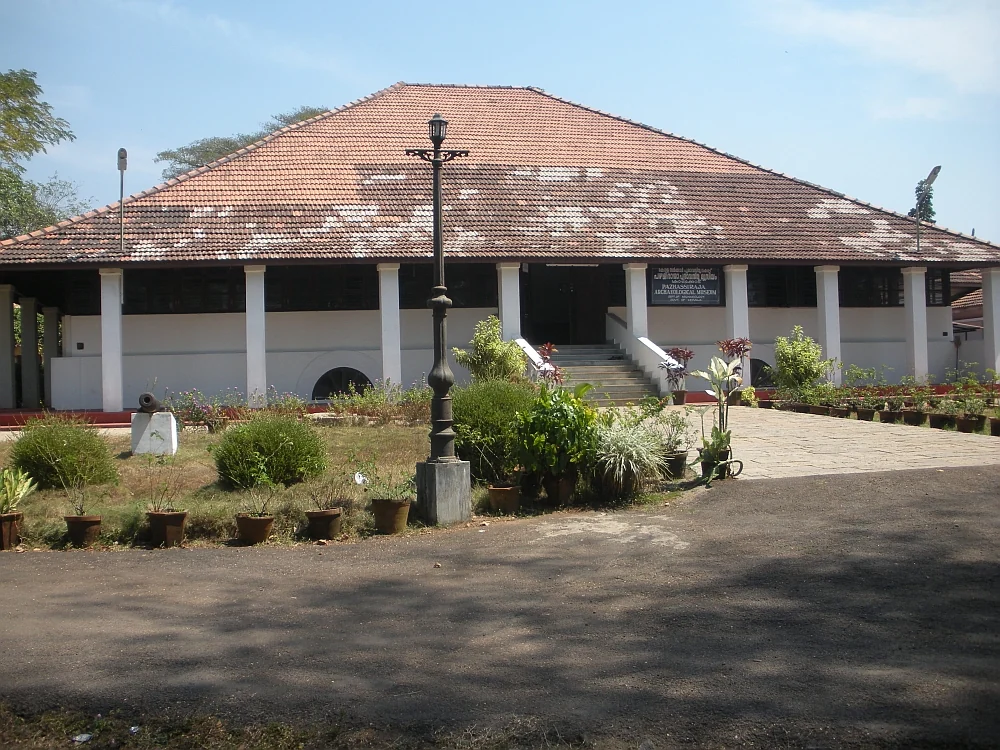
State archaeology museum at East Hill in an 1812 bungalow, with murals, bronzes, coins and megalithic monuments.
Roampedia is commission-free — own or know a stay, eatery, guide or shop near Mananchira? Submit public business details for review.
Add a nearby businessEntry: Free entry; there is no ticket to enter the square. Specific ticketed cultural events on the open-air stage may charge separately.
Festivals: The open-air stage hosts music, dance, theatre and literary events through the year, and the square is a focal point for city festivals and cultural celebrations; Kozhikode is a UNESCO City of Literature, so book fairs and literary gatherings are common.
Photography: Photography is freely enjoyed by visitors; the tank, fountain and lamp-lit paths are especially photogenic at dusk. Be considerate of families and any performances in progress.
If you are travelling by bus or ferry, check the return service with the operator before setting out. Leave time to reach the stop or jetty after your visit.
Ask at the bus stand for the time of the last service back, not the next one. If you miss it, an auto or app cab is the fallback — agree the fare before you get in.
If you need step-free access, contact the site before travelling. Ask about a level entrance, steps along the route, the nearest drop-off point, seating and accessible toilets.
Published emergency and visitor-assistance contacts. For an immediate emergency, call 112. Shared Kerala contact sources checked 4 October 2026; publication does not establish a tested live response.
The square itself is modern: it was opened to the public on 9 November 1994, created by combining two earlier parks — Tagore Park and Ansari Park — with the maidan and the tank, and landscaping them into one civic space with lawns, an open-air stage, sculptures and an artificial stream. The tank at its centre is far older, traditionally dug for the Zamorins around the fourteenth century, so the water is medieval while the park around it is a product of the 1990s.
It is generally explained as the chira — the tank or pond — of Mana Vikrama, the Zamorin traditionally credited with having it dug. Manavikraman’s chira contracted over the centuries into Mananchira, so the name is essentially a possessive carrying a medieval king’s name rather than a descriptive term.
Mananchira is a large, roughly rectangular freshwater tank in the centre of Kozhikode, dug around the fourteenth century as a bathing pond for the Zamorins. Mananchira Square is the landscaped public park built around it in 1994, with lawns, a musical fountain and an open-air stage.
No. Mananchira Square is a public park and entry is free. There may be separate ticketing for specific ticketed events held on the open-air stage.
The musical fountain typically plays in the evening, and the square is at its liveliest and best-lit after sunset. Timings can change, so it is worth checking on the day if the fountain is your main reason to visit.
Around one to two hours is enough to stroll the square, sit by the tank and catch the fountain or a performance. It pairs naturally with a walk to nearby SM Street, so you can easily extend it into a half-day.
No. The tank is a protected drinking-water source and bathing, washing and swimming have long been prohibited under municipal rules. It is meant to be enjoyed from the surrounding square, not entered.
The square is ringed by heritage buildings and landmarks — the Commonwealth Trust works, the Town Hall, an art gallery and public library, and some of Kerala oldest mosques such as the Jama-at and Muchundi mosques. The bustling SM Street bazaar is a short walk away.
November to February and early mornings are best for walking; avoid midday heat where possible.
Entry: Free entry; there is no ticket to enter the square. Specific ticketed cultural events on the open-air stage may charge separately. Timings: Mananchira Square is a public park generally open through the day into the evening; it is busiest and best-lit around and after sunset, when the musical fountain plays.
Base yourself in Kozhikode city or a nearby town in Kozhikode, then confirm the last-mile route locally before leaving. Walkable heritage areas are best done slowly; combine nearby streets, museums, markets and food stops. If the visit depends on forest, temple, boat, ferry, weather or seasonal access, check the official/local rule on the day before travel.
1 to 3 hours.
Watch traffic on narrow heritage streets. Keep valuables close in crowded markets.
Written about Mananchira itself — its history, its legends and the arguments about them.
Route-level itineraries and practical guides for the rest of Kerala.
Photographs: Prof tpms (CC BY-SA 4.0). Wikimedia Commons.