Mittayi Theruvu — Sweetmeat Street, SM Street to everyone who uses it — is a narrow, roofed-in commercial artery running for something over two kilometres through the middle of Kozhikode, and it has been the city’s shopping street for around five hundred years. It began, by tradition, when the Zamorin invited Gujarati sweetmeat makers to set up outside his palace walls; it is still where Kozhikode buys its halwa, its banana chips, its cloth and its gold. Pedestrianised, jammed, loud and entirely unpolished, it is the least monumental and most useful piece of heritage in the city.
The story of SM Street / Mittayi Theruvu
The first thing to understand about SM Street is that it is a working street rather than a heritage attraction, and that nobody has tidied it up for you. It runs roughly 2.1 kilometres through the commercial heart of Kozhikode, and along its length the shopfronts are stacked tight, the signage is competitive, and the goods spill out to the edge of the walkway. There is no curated frontage and no restored facade. What there is instead is five centuries of continuous trading, still going on at volume.
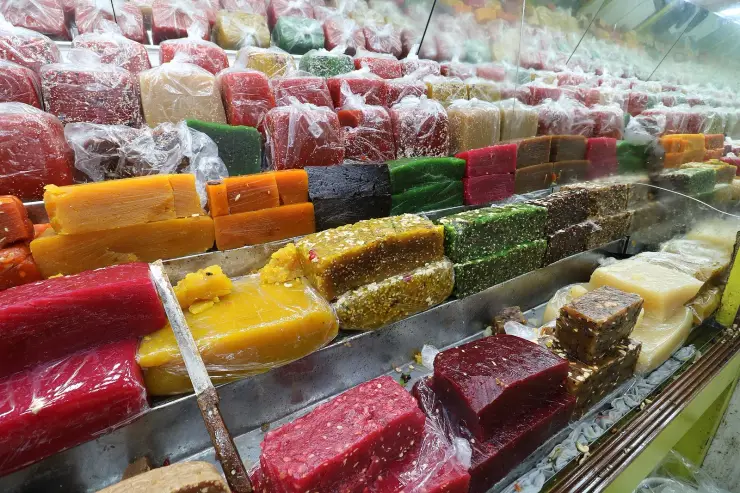
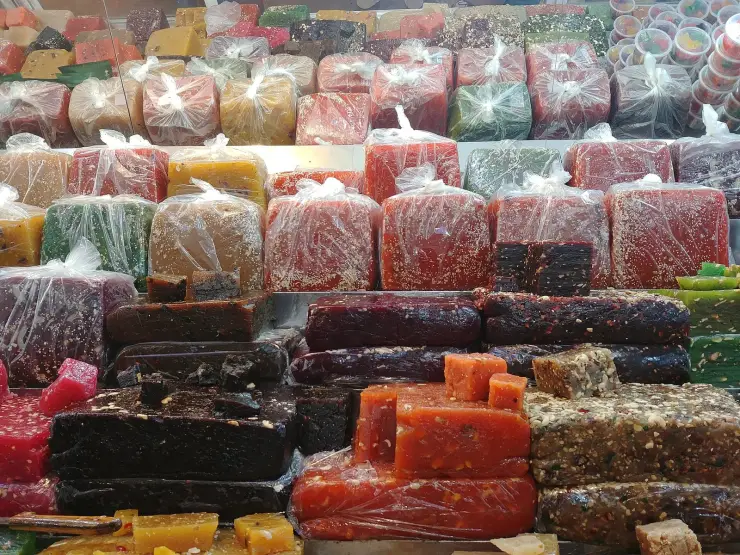
The sweets are the reason for the name and remain the reason many people come. Kozhikodan halwa is the local institution — a dense, glossy, ghee-rich confection set in slabs and cut to order, made in a range of colours and flavours, and displayed in trays that turn a shopfront into something closer to a jeweller's window. It is nothing like the semolina halwa served across much of India. The texture is chewier and heavier, closer to a firm jelly, and a small piece goes a long way.
Buying it properly is part of the pleasure. The established shops expect you to taste before you commit, and will cut slivers from several trays without any obligation attached. Take them up on it. The differences between one maker and the next are real, and the varieties — coconut, wheat, tender coconut, black, and a range of fruit versions — are not interchangeable. Buy by weight, ask for it cut fresh from the slab rather than pre-packed if you plan to eat it soon, and be aware that it travels extremely well, which is why every Malayali returning from Kozhikode carries a box.
Banana chips are the other local staple and are made to a standard that makes the supermarket version elsewhere hard to go back to. The good ones are fried in coconut oil, salted while hot, and sold from open tins by weight. Look for shops where the frying is happening on the premises. Alongside these sit the whole apparatus of an Indian bazaar street — textiles and readymades, gold, luggage, footwear, hardware, stationery, spices — and the mix is genuinely local rather than assembled for visitors.
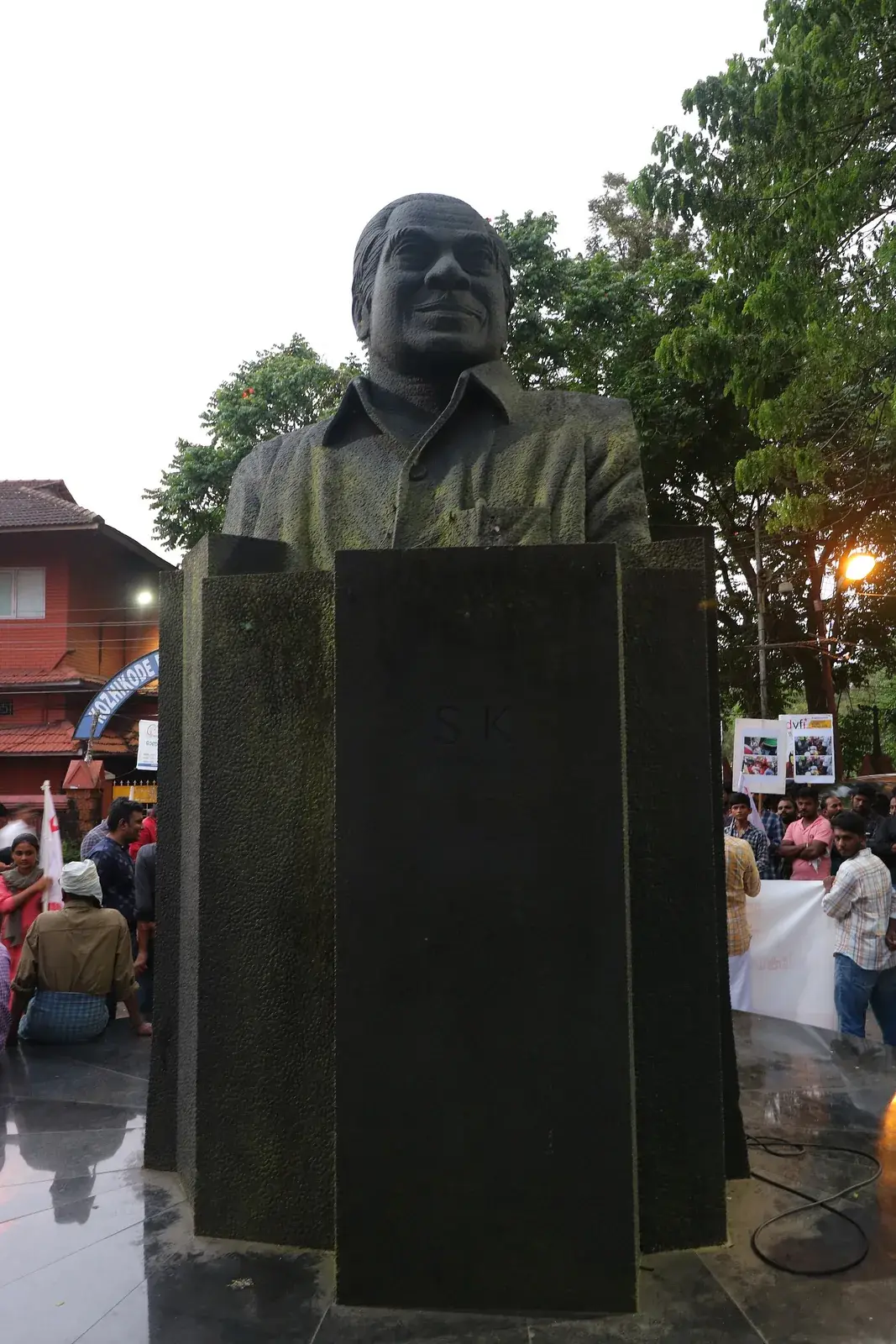
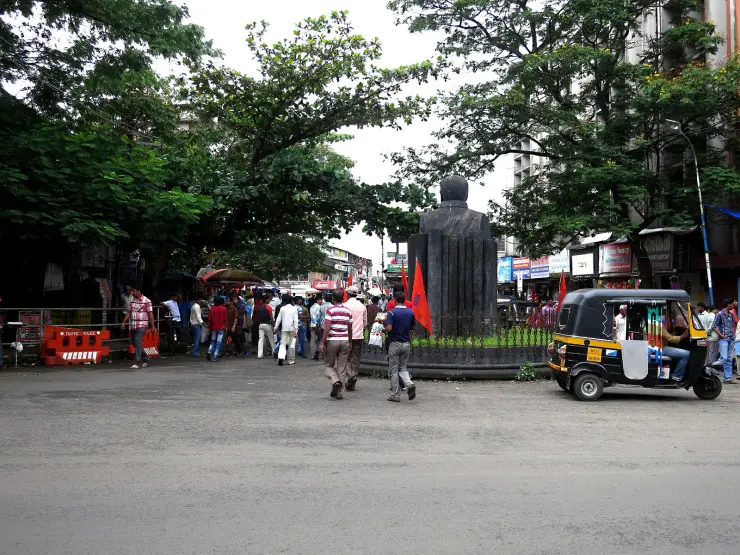
The street has a literary presence that is unusual for a shopping district. S. K. Pottekkatt, one of the major Malayalam writers of the twentieth century and a son of this city, wrote an award-winning novel about this street, and his statue now stands facing it. That a bazaar has produced a canonical work of literature and put up a monument to its author says a good deal about what SM Street means to Kozhikode: it is not merely where people shop, it is where a large part of the city's memory of itself is stored.
Practically, it is a place to walk. The main stretch is pedestrianised, which makes it a rarity in urban India and a considerable relief. Evenings are when it is fullest and most enjoyable, though it is busy from mid-morning. Give it an hour and a half at minimum, expect to be jostled, keep your bag in front of you as you would in any dense market anywhere, and do not attempt it in a hurry — the pace is set by the crowd, and the crowd is not going anywhere quickly.
Legend & myth
The name is where almost everyone goes wrong, and the popular explanation is itself the error. The story told on the street, in guidebooks and in a good deal of published writing is that the British, seeing slabs of dark red ghee halwa laid out in the shopfronts, mistook them for cuts of meat and christened the place Sweet Meat Street — a colonial misunderstanding, fossilised into an official name and now worn with some affection.
It is a lovely story and it is almost certainly backwards. Sweetmeat is a perfectly ordinary English word, in use for centuries, and it means a confection — a candied fruit, a sugared nut, a piece of preserved sweet. It has never meant meat. The word is a compound of sweet and the old sense of meat as food in general, the same sense preserved in the word mincemeat, which likewise contains no meat. A nineteenth-century English speaker walking down a street of confectioners would have called it a sweetmeat street without hesitating, because that is simply what the shops were selling.
So the name records no confusion at all on the part of the people who coined it. The confusion is entirely ours, and it is recent: sweetmeat has fallen out of everyday English, leaving modern readers to parse it as two words and reach for an explanation involving meat. The folk etymology is then supplied to resolve a problem that did not exist until the vocabulary changed underneath the name. This is an extremely common way for origin stories to be manufactured, and it is worth recognising because the manufactured version is now told far more often than the plain one.
The Malayalam name confirms it. Mittayi Theruvu means, straightforwardly, sweet street or candy street — mittayi being the sweet, theruvu the street. The two names are not in conflict and never were. They are the same description in two languages, and the English one only looks strange because English moved on.
There is a second and better-founded surprise in the street's origins, which is that the sweets are not indigenous to Malabar. The tradition, repeated in the standard accounts, is that the trade began when the Zamorin invited Gujarati sweetmeat makers to settle and set up shop, and their premises were established just outside the palace walls. Kozhikodan halwa — about as emblematic of this city as anything could be — therefore arrives as an import, brought by a merchant community from the other end of the Indian coast at the invitation of a ruler who wanted them here. Parsi traders had also established themselves in Kozhikode before the Gujarati confectioners came.
It is worth adding what halwa itself is carrying. The word is Arabic, and the family of confections it names travelled with Arab and Persian trade across an enormous span of the world — which is precisely the network that made Calicut rich. Whether the Gujarati confectioners brought a western Indian tradition, or a version already shaped by centuries of Arab contact, or both at once, the sweet in the shop window is a product of exactly the same long-distance exchange as the pepper that once crossed the beach a few hundred metres away. The street is not a curiosity attached to the port city. It is the port city, still trading, in miniature.
This is a fair summary of what the whole street is. A Malabar landmark, named in English after a word most English speakers no longer know, selling a sweet introduced by western Indian migrants under royal invitation, to a Kerala city grown wealthy on selling pepper to Arabs. Nothing about SM Street is local in the narrow sense, and that is exactly why it belongs to Kozhikode, which has never in its history been a place that produced its own culture in isolation.
Read the full history of SM Street / Mittayi Theruvu 510 more words
History
The street's history is generally traced to the era of the Zamorins, the dynasty that made Calicut the pre-eminent trading port of the Malabar coast, and it is commonly described as around five hundred years old. Its origin is attributed to the Zamorin's invitation to Gujarati sweetmeat makers, who were given premises immediately outside the palace precinct — a placement that tells you the trade was regarded as worth having close at hand.
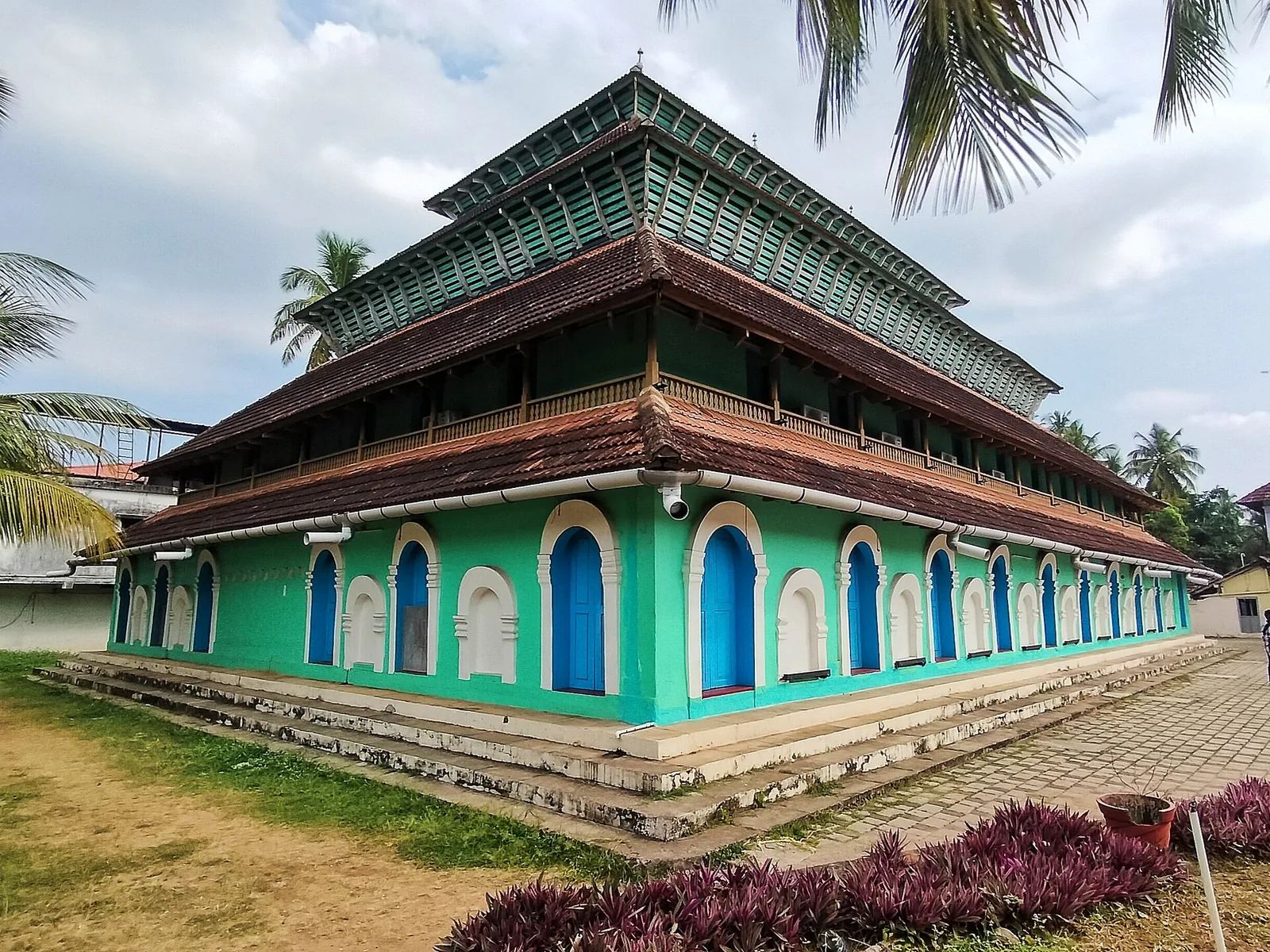
That invitation fits a wider and well-documented pattern in the Zamorin's statecraft. Calicut's rulers actively recruited and protected merchant communities from elsewhere: Arab traders whose ships carried the pepper trade, and whose mosques still stand in Kuttichira; Gujarati and Parsi merchants from western India; and later Chinese and European traders. The city's prosperity was built on being a place that outsiders found it safe and profitable to work in, and the confectioners of Mittayi Theruvu are a small piece of that policy.
Under British Malabar the street became the commercial spine of the colonial town, acquiring its English name and, in time, the range of trades it still carries. Its position — running between the old bazaar quarter and the civic centre around Mananchira — kept it at the middle of whatever the city was doing, through the decline of the port, the growth of the modern town and the emergence of Kozhikode as a regional commercial centre in independent Kerala.
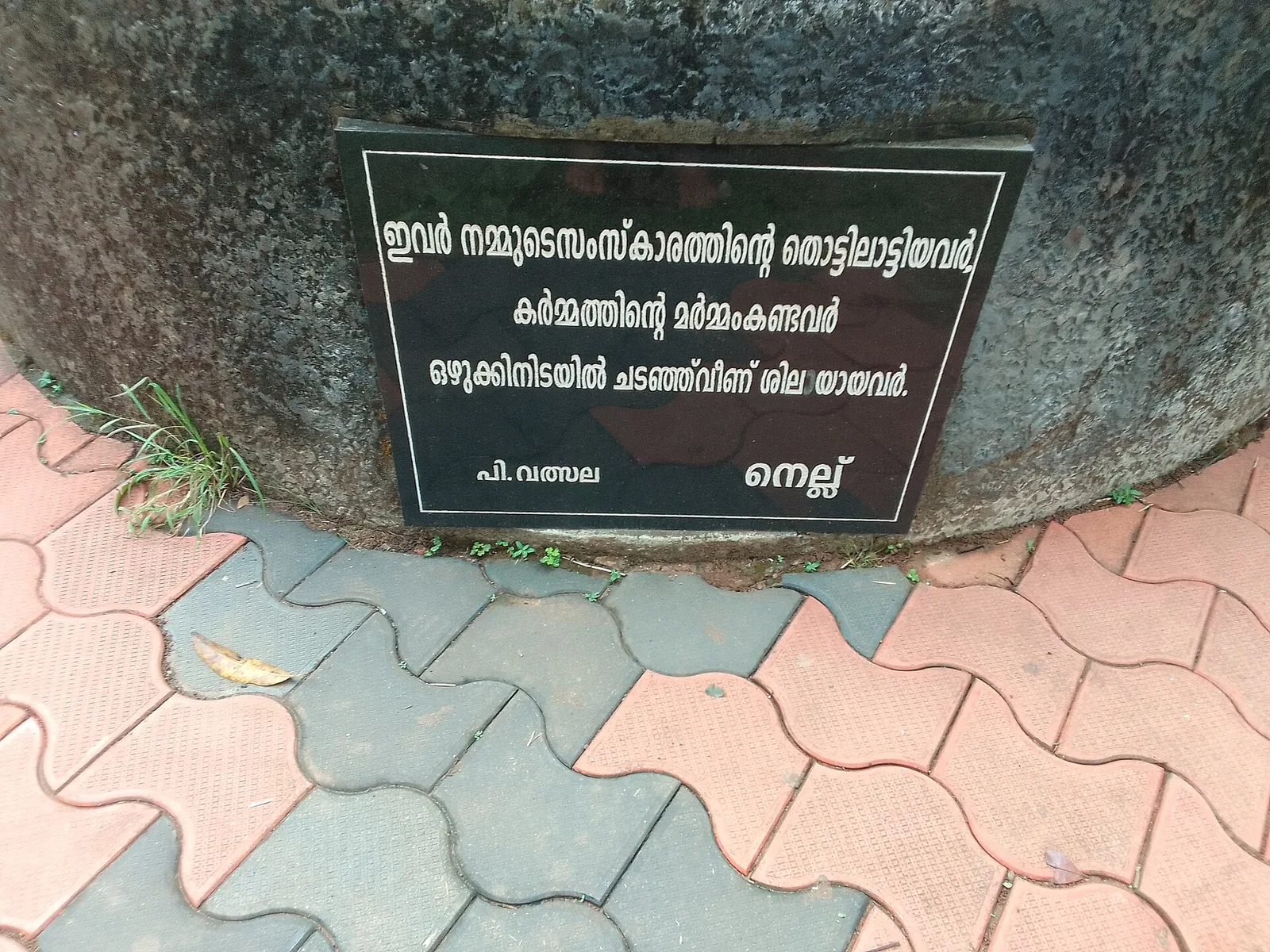
The twentieth century gave the street its literary status. S. K. Pottekkatt, born in Kozhikode in 1913 and one of the foremost Malayalam novelists and travel writers of his generation, made this street the subject of a novel that won the Kerala Sahitya Akademi Award. His statue now stands facing the street he wrote about. A commercial thoroughfare that has been rendered as serious literature and then monumentalised is not a common thing, and it is the clearest evidence of the hold the place has on the city.
In recent decades the main stretch has been pedestrianised, which has preserved its character as a walking bazaar at a time when comparable streets in many Indian cities have been surrendered to traffic. It remains, by common description, the busiest street in Kozhikode — not a preserved heritage precinct but a functioning market that happens to be five centuries old.
Why visit
Kozhikodan halwa bought at the source, cut fresh from the slab, with the shops expecting you to taste several varieties before choosing.
Banana chips fried in coconut oil on the premises — a genuinely different product from the packaged version sold elsewhere.
A pedestrianised bazaar street around five hundred years old, still the busiest shopping street in the city rather than a restored heritage set-piece.
The statue of S. K. Pottekkatt, and the rare experience of walking a street that has been the subject of an award-winning novel.
A completely local retail mix — textiles, gold, spices, hardware and household goods sold to residents, not adapted for visitors.
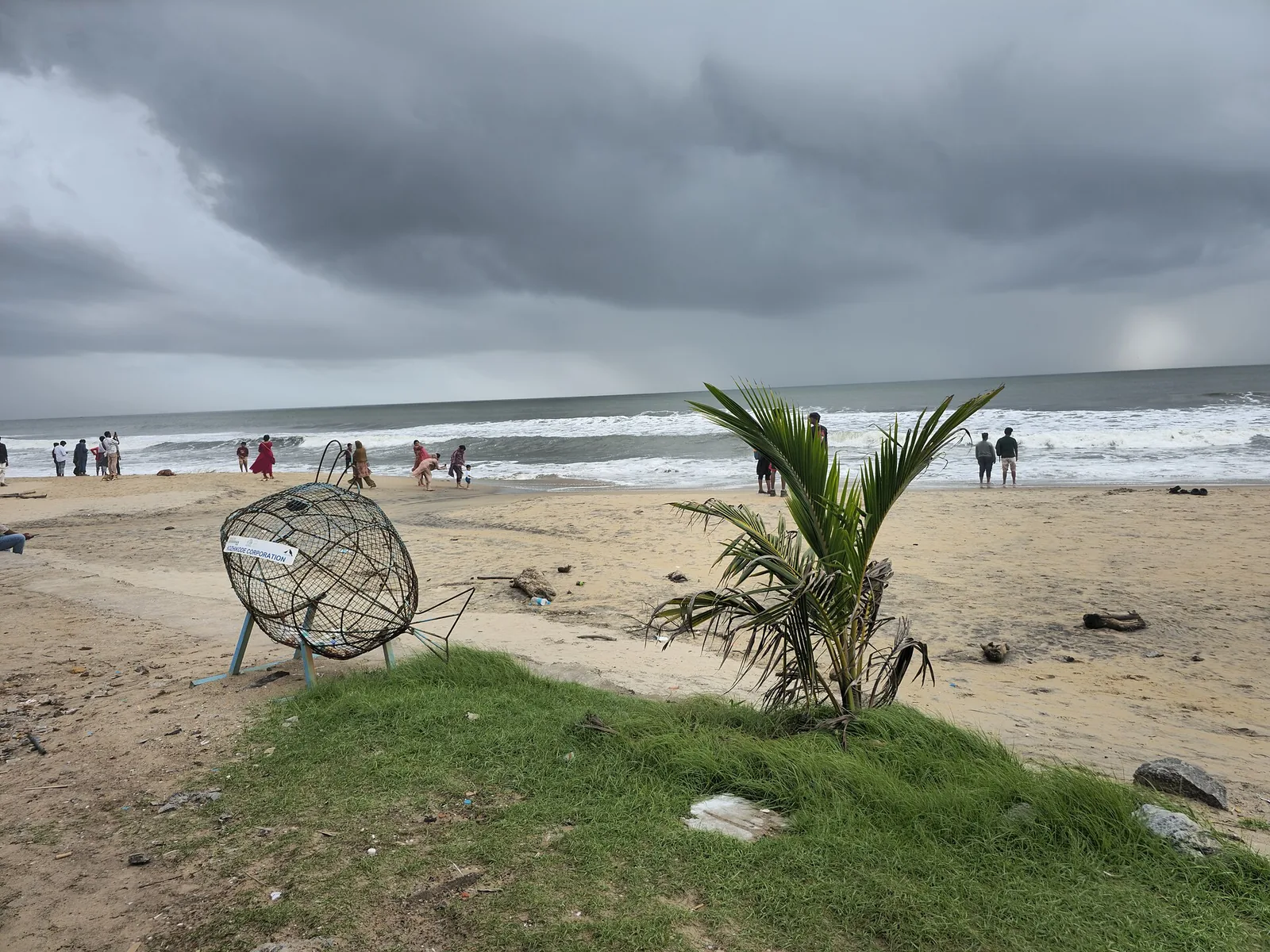
Its position in the middle of old Kozhikode, a short walk from Mananchira Square, the beach and the Kuttichira mosques.