What to expect
Highlights
- Waterfall viewpoint at Keralamkundu Waterfalls
- Forest-edge scenery
- Short walks, food stops or nearby viewpoints where available
A high forest waterfall on the Western Ghat edge near Karuvarakundu/Kalikavu, dropping into a clear pool — remote and scenic; slippery rocks demand care.
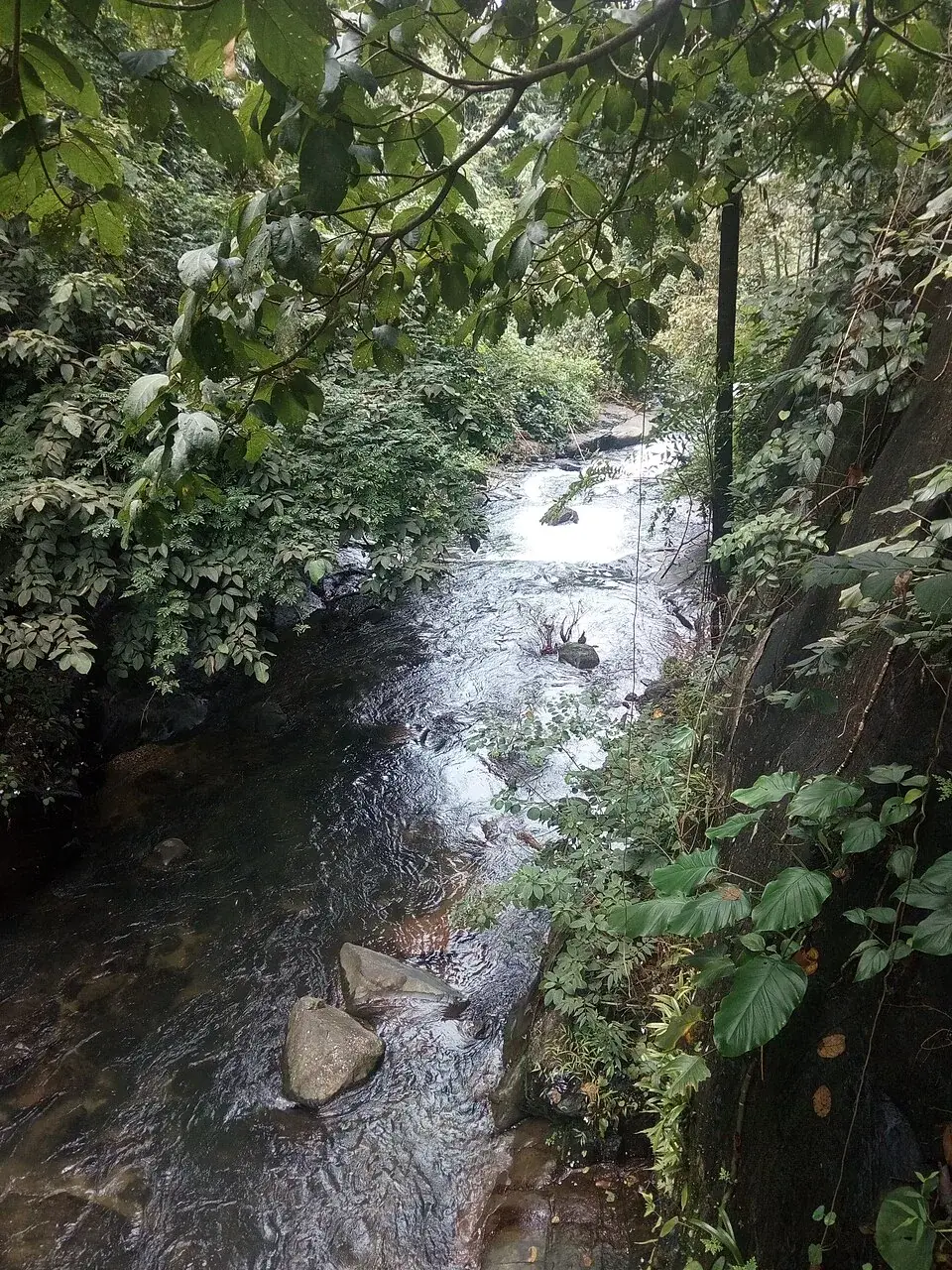
A 150-foot curtain of white water spilling off the Kumpan mountain into a clear rock pool, Keralamkundu is one of Malappuram's most spectacular and least-crowded cascades, hidden in the Western Ghats forests near the Silent Valley on the district's north-eastern edge.
Some places announce themselves; Keralamkundu makes you earn it. The falls sit high above the little hill town of Karuvarakundu, reached by a jolting off-road climb and then a short walk through forest, so the first sight of the cascade — a tall, ribbon-like drop of around 150 feet plunging off a rock face — arrives all at once, framed by green ridges on every side.
The water gathers from streams and tributaries running off the higher slopes of the Kumpan mountain, threading through thick Western Ghats jungle before it launches over the cliff. At the base it collects in a broad, remarkably clear pool that mirrors the sky, then slides on downhill over rounded boulders. Even in the dry months locals say the flow rarely stops entirely, though it is at its thundering best after the rains.
This is teak-and-hill country on the fringe of the Silent Valley belt, sitting roughly 1,500 feet above sea level, so the air is noticeably cooler and fresher than the plains below. Mist often hangs in the folds of the hills in the early morning, and the soundtrack is water, birdsong and wind in the canopy rather than traffic.
For a long time Keralamkundu was known mainly to nearby villagers and the odd wandering trekker. That changed in 2016, when it became the first tourism site in Malappuram district to be added to India's national adventure-tourism map — recognition of the off-road ride, the forest walk and the raw, unmanicured feel of the place.
The District Tourism Promotion Council (DTPC) later put in basic infrastructure — a ticket point, parking, changing and locker facilities and a fixed rope to help visitors reach the falls. It remains a low-key, back-of-beyond destination rather than a polished resort, which is precisely its charm; you are far more likely to share it with a few families than with a crowd.
Come for a half-day and you get the whole Malabar hill experience in miniature: the bumpy plantation-and-forest approach, the anticipation of the walk, the cool shock of the pool, and the long green views back over the Western Ghats. It is the kind of offbeat, slightly wild spot that rewards those who like their waterfalls without a queue.
Keralamkundu lies above the hill panchayat of Karuvarakundu, in the north-eastern corner of Malappuram district where the land rises steeply towards the Nilgiri ridge and the Silent Valley National Park. This is the eastern high country of Malabar — a landscape of teak, plantations and remnant Western Ghats rainforest rather than the coconut-lined lowlands nearer the coast.
The falls themselves are a Western Ghats feature in the classic sense: monsoon-fed streams cutting through hard rock over geological time, then dropping off the shoulder of the Kumpan mountain in a single long cascade of roughly 150 feet. The water is formed by the confluence of several tributaries flowing down the mountain, which is why the flow holds up better through the year than many smaller seasonal falls.
The surrounding forest is rich in biodiversity, home to a variety of Western Ghats flora and fauna, and the slopes carry medicinal, aromatic and traditional herbs typical of these hills — one reason the pool water is locally believed to have healing, medicinal properties (a local belief rather than a documented fact). The cooler upland climate and the proximity to the protected Silent Valley belt underline how ecologically sensitive this pocket of Malabar is.
In tourism terms Keralamkundu is a relatively recent discovery. Its 2016 inclusion on the national adventure-tourism map — as the first such site in Malappuram — marked the point when the district began actively promoting it, and the DTPC subsequently added the ticketed entry, parking and safety infrastructure that visitors find today.
That said, the site has had a chequered maintenance record, and parts of the infrastructure have at times fallen into disrepair; the terrain around the falls has also seen fatal accidents, so it carries a genuine reputation as a place to treat with respect. Visitors should regard it as a wild forest waterfall with basic facilities, not a fully engineered tourist park.
The headline sight: a dramatic single-drop cascade of about 150 feet tumbling off the Kumpan mountain into a clear natural pool — one of the tallest and most photogenic falls in Malappuram.
The adventure of getting there: a bumpy off-road hill ride through plantations and forest followed by a short walk, which is half the fun and the reason it made the national adventure-tourism map.
Genuine offbeat character: far fewer crowds than Kerala's marquee falls, with a raw, back-of-beyond feel set deep in the Western Ghats near the Silent Valley belt.
Cool, clean hill air and sweeping green views over the ridges — a refreshing escape from the heat and bustle of the plains, roughly 1,500 feet up.
Rich forest surroundings: a biodiversity-rich pocket of Western Ghats flora and fauna, with medicinal and aromatic herbs and abundant birdlife along the approach.
A rewarding half-day trip that can be paired with the wider Nilambur and eastern-Malappuram hill country, including nearby valleys and plantations.
Road km to Malappuram; ghat roads and traffic vary — allow extra.
Post-monsoon is usually strongest; dry months are easier for access but water volume may be lower.
Live forecast loads in your browser.
Sun and moon are calculated for this location and shown in IST. Photography windows are the hour around sunrise and sunset; the sunset bearing is degrees clockwise from true north. Moon phase is accurate to about half a day.
These are official or public-sector eco offerings that match this place, town or forest destination. Confirm availability, permits, tariffs and reporting times with the official operator before travel.

Teak-country forest trail and river landscape in Nilambur, listed by Kerala Tourism as an ecotourism destination and programme.
Official source →Browse listed stays, food, activities, sights, shops and rentals around Keralamkundu Waterfalls. Check each listing’s locality and contact the business directly for current arrangements.
Hotel restaurant in Nilambur. Rose International Hotel, Nilambur, Malappuram district, Kerala · Hotel restaurant.
Book with the place itself. India’s cyber-crime coordination centre warned in April 2025 that convincing copies of hotel and pilgrimage booking sites are being pushed through sponsored search and social ads, taking payment for rooms the property never hears about. Use the contact and source details on each profile to confirm the exact business and booking channel. A directory entry or map pin alone does not establish an operator’s identity or current availability. Roampedia takes no commission and does not collect booking payments. If a booking page reached you through an ad, check the address bar against the property’s own site before you pay. Fraud can be reported on cybercrime.gov.in or on 1930.
Find food, accommodation and activities across Nilambur. Browse the guides for places to eat, stay and explore along your route.
5 more places around Nilambur. Open a guide to plan the visit and onward journey.
A seasonal inland Malappuram cascade whose final approach, water level and safe viewing ground should be checked locally before departure.
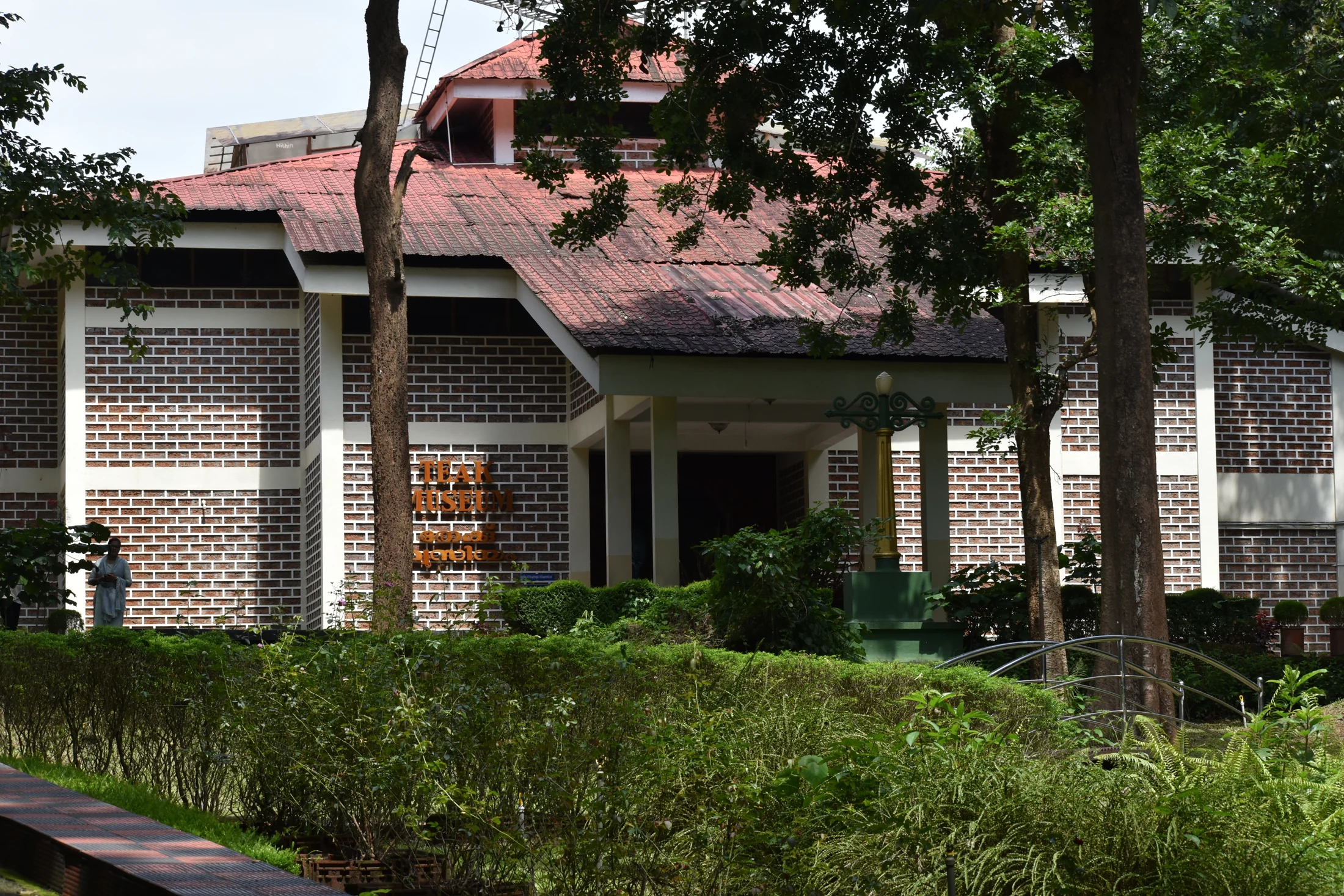
24.0 km · straight line
A museum devoted to teak at KFRI’s Chandakkunnu campus, with an adjoining Bioresources Nature Park.
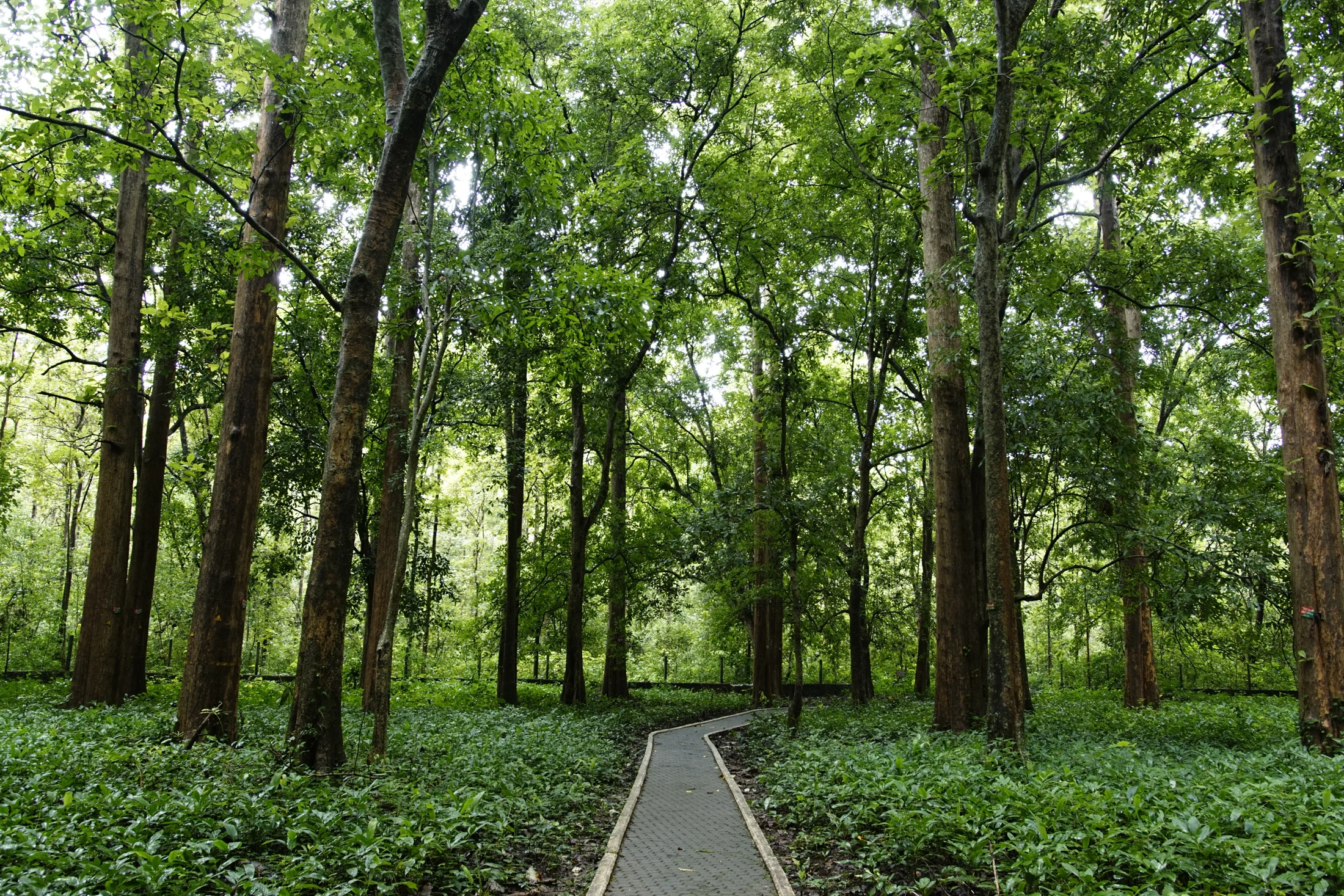
24.8 km · straight line
The preserved teak plantation and Forest Department ecotourism centre near Nilambur, associated with H. V. Conolly and Chathu Menon. Keep the historic plot, present visitor gardens and river crossing distinct.
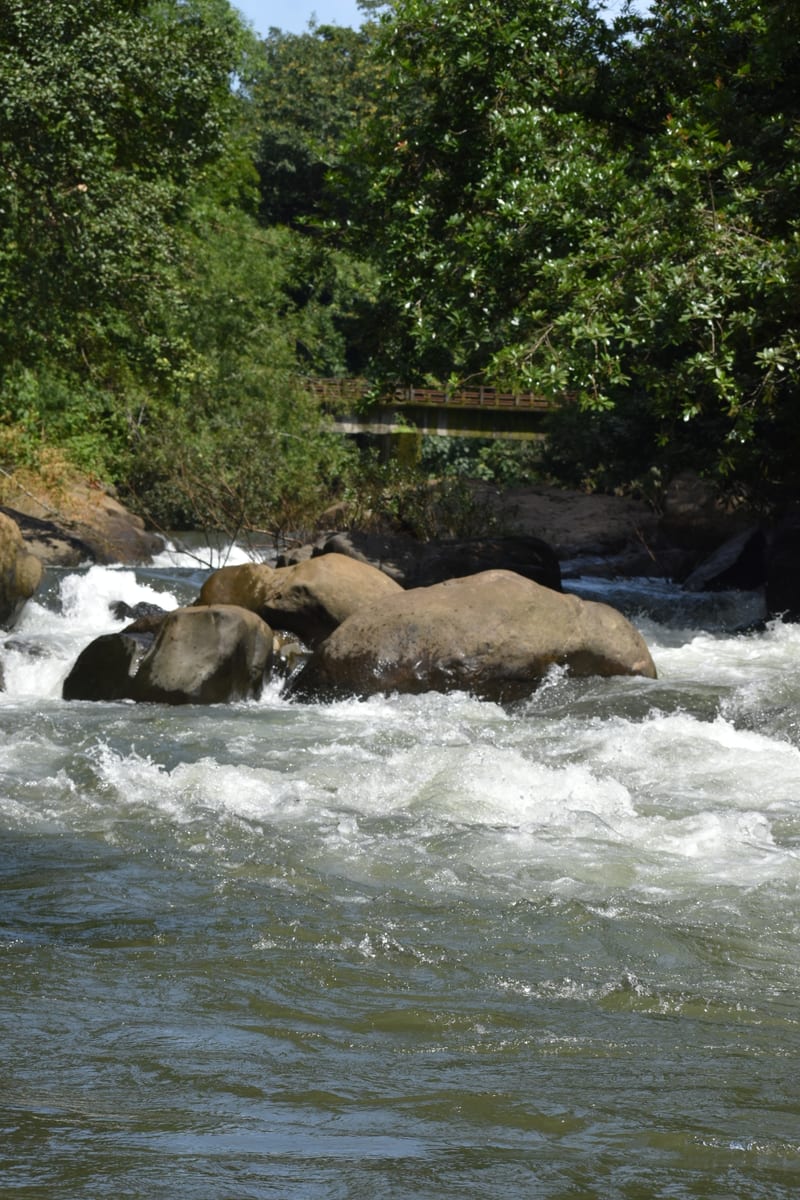
31.8 km · straight line
A forest waterfall near Nilambur (Kurumbalangode/Kalikavu side), with cascades over granite among evergreen jungle; slippery rocks, so keep well back in and after the monsoon.
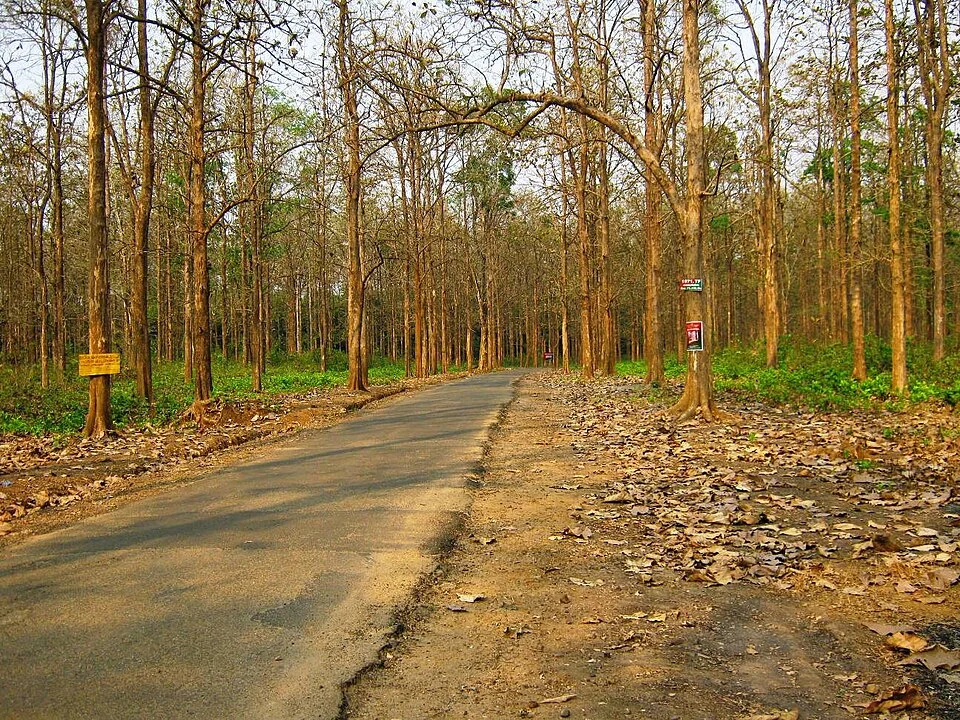
18.5 km · straight line
A Forest Department sightseeing visit through the Nedumkayam forest and Karimpuzha riverside near Karulai; longer forest treks require their own permission.
Roampedia is commission-free — own or know a stay, eatery, guide or shop near Keralamkundu Waterfalls? Submit public business details for review.
Add a nearby businessEntry: Around ₹10 to ₹20 per person; carry cash as UPI/card may not be accepted.
Dress code: No formal dress code; wear light, quick-drying clothing and sturdy, non-slip footwear for the steep, rocky final approach. Carry a change of clothes if you plan to get wet.
Photography: Photography is freely allowed and the tall cascade and forest views are highly photogenic; protect gear from spray and keep well back from slippery edges when shooting.
If you are travelling by bus or ferry, check the return service with the operator before setting out. Leave time to reach the stop or jetty after your visit.
Ask at the bus stand for the time of the last service back, not the next one. If you miss it, an auto or app cab is the fallback — agree the fare before you get in.
If you need step-free access, contact the site before travelling. Ask about a level entrance, steps along the route, the nearest drop-off point, seating and accessible toilets.
Published emergency and visitor-assistance contacts. For an immediate emergency, call 112. Shared Kerala contact sources checked 4 October 2026; publication does not establish a tested live response.
A Forest Department sightseeing visit through the Nedumkayam forest and Karimpuzha riverside near Karulai; longer forest treks require their own permission.
18.5 km · straight line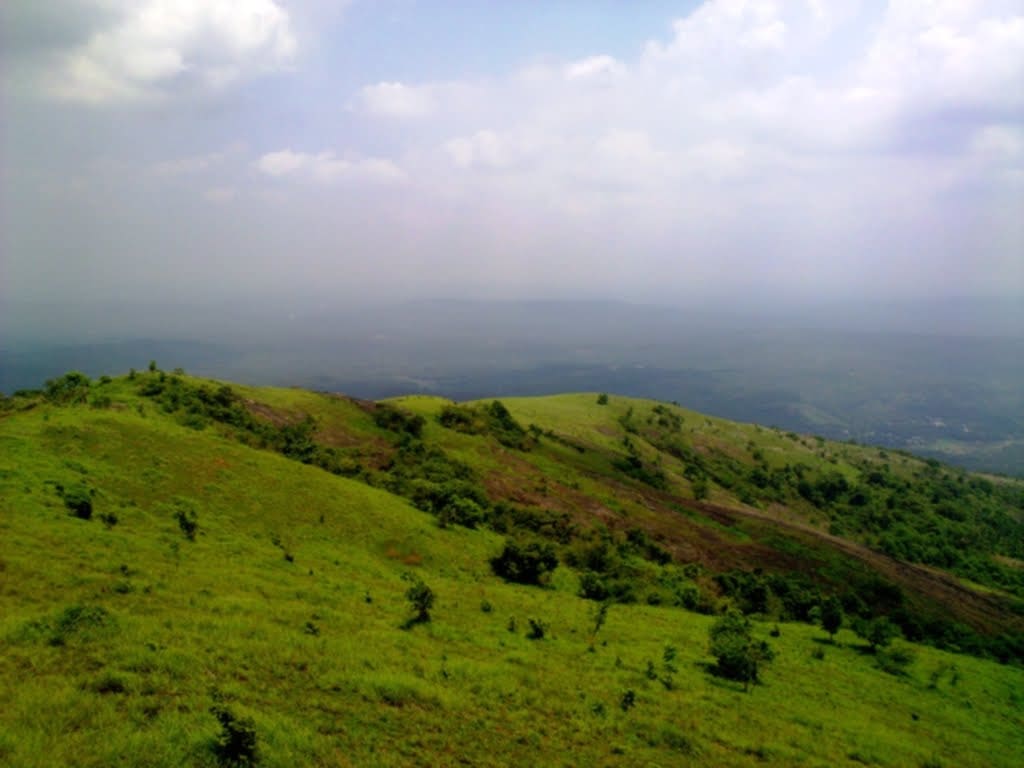
The “Ooty of Malappuram” — a breezy hill viewpoint about 11 km from Perinthalmanna, good for sunrise, sunset and paragliding views.
19.9 km · straight lineA museum devoted to teak at KFRI’s Chandakkunnu campus, with an adjoining Bioresources Nature Park.
24.0 km · straight lineThe preserved teak plantation and Forest Department ecotourism centre near Nilambur, associated with H. V. Conolly and Chathu Menon. Keep the historic plot, present visitor gardens and river crossing distinct.
24.8 km · straight line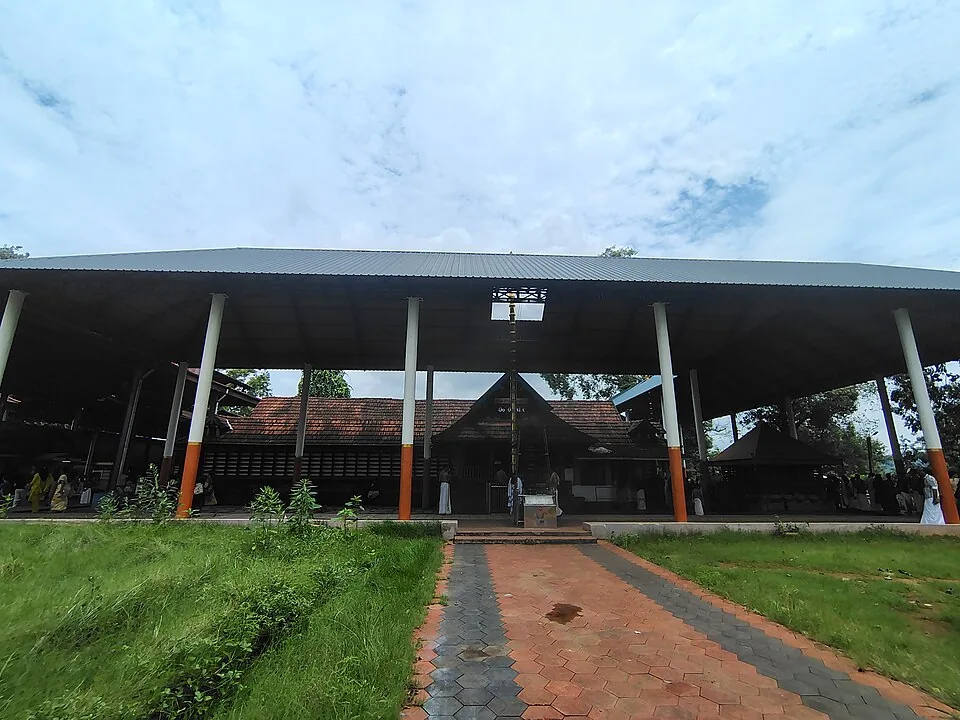
The Thirumandhamkunnu Bhagavathy (Durga) temple at Angadipuram — a major Devi pilgrimage and the paradevata shrine of the old Valluvanad rajas, famous for its Pooram festival.
26.4 km · straight lineA forest waterfall near Nilambur (Kurumbalangode/Kalikavu side), with cascades over granite among evergreen jungle; slippery rocks, so keep well back in and after the monsoon.
31.8 km · straight line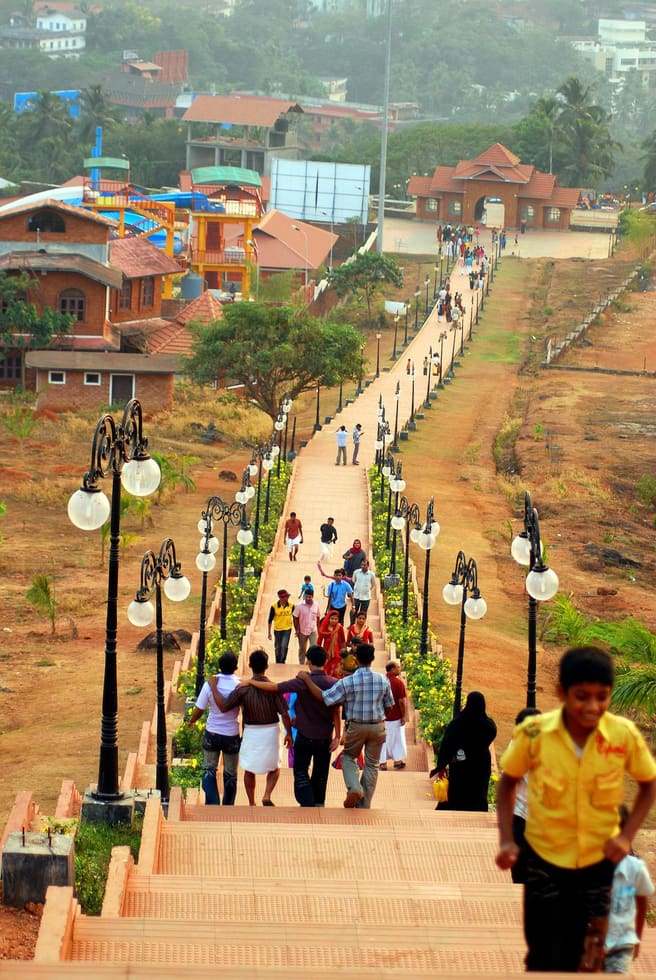
A hill garden and cultural park in Malappuram town, with an art gallery, open-air theatre and amusement attractions — a popular family picnic spot.
34.4 km · straight line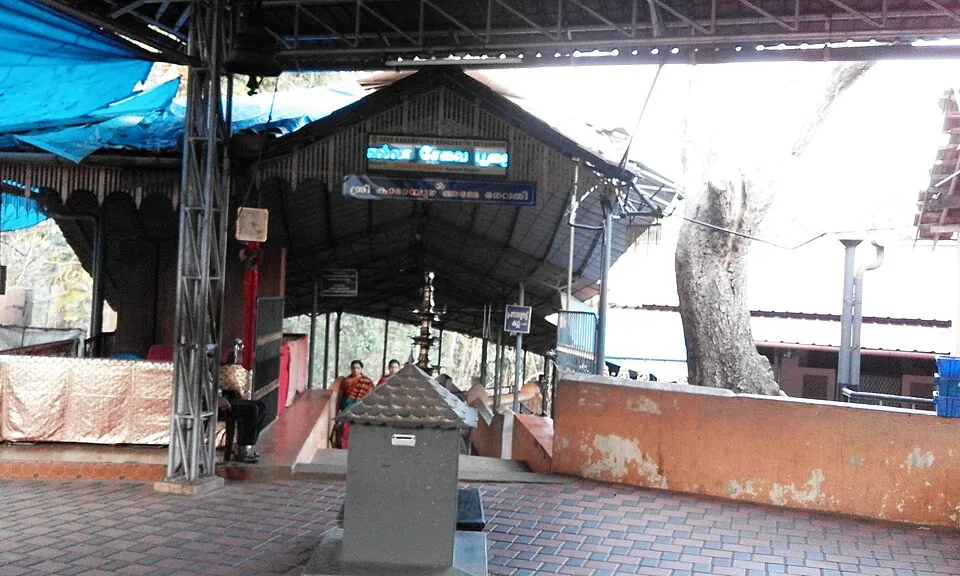
A revered Devi temple near Vettichira with no idol — the goddess is worshipped in a natural rock fissure; devotees offer the poomoodal and muri-pooja. Founded by legend of Adi Shankara.
42.9 km · straight line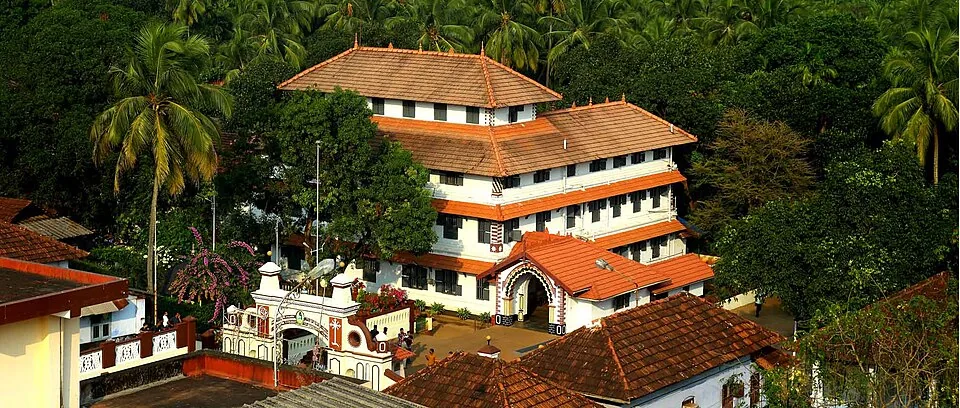
The famous Ayurveda institution at Kottakkal, founded in 1902 by Vaidyaratnam P.S. Varier — hospital, medicine-making, herb gardens and the PSV Natyasangham Kathakali academy.
43.9 km · straight line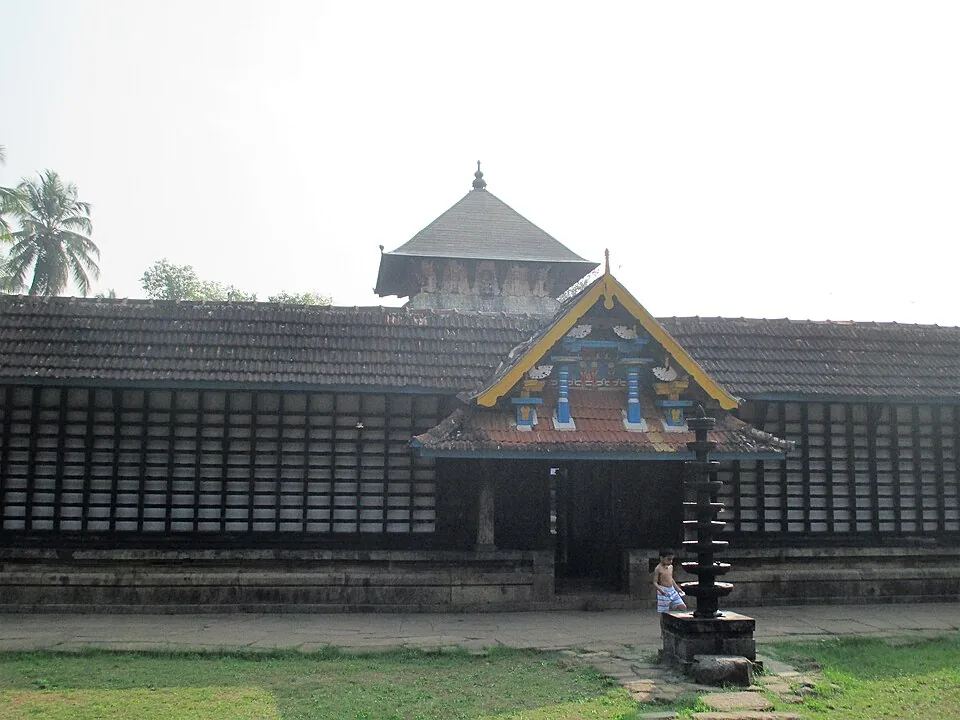
An ancient Vishnu temple on the Bharathapuzha at Thirunavaya, near the historic Mamankam fair-ground and a major venue for ancestral (bali/shraddha) rites.
51.3 km · straight line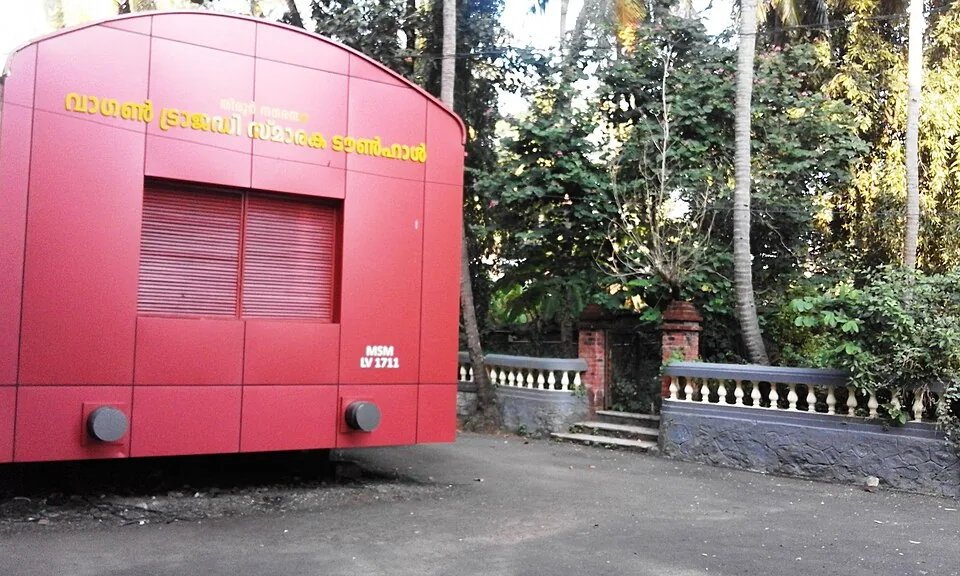
Tirur's town hall, built as a full-size railway goods wagon in signal red and lettered MSM LV 1711 — the memorial to the hundred prisoners shut into wagon 1711 at the station down the road on 19 November 1921.
56.3 km · straight line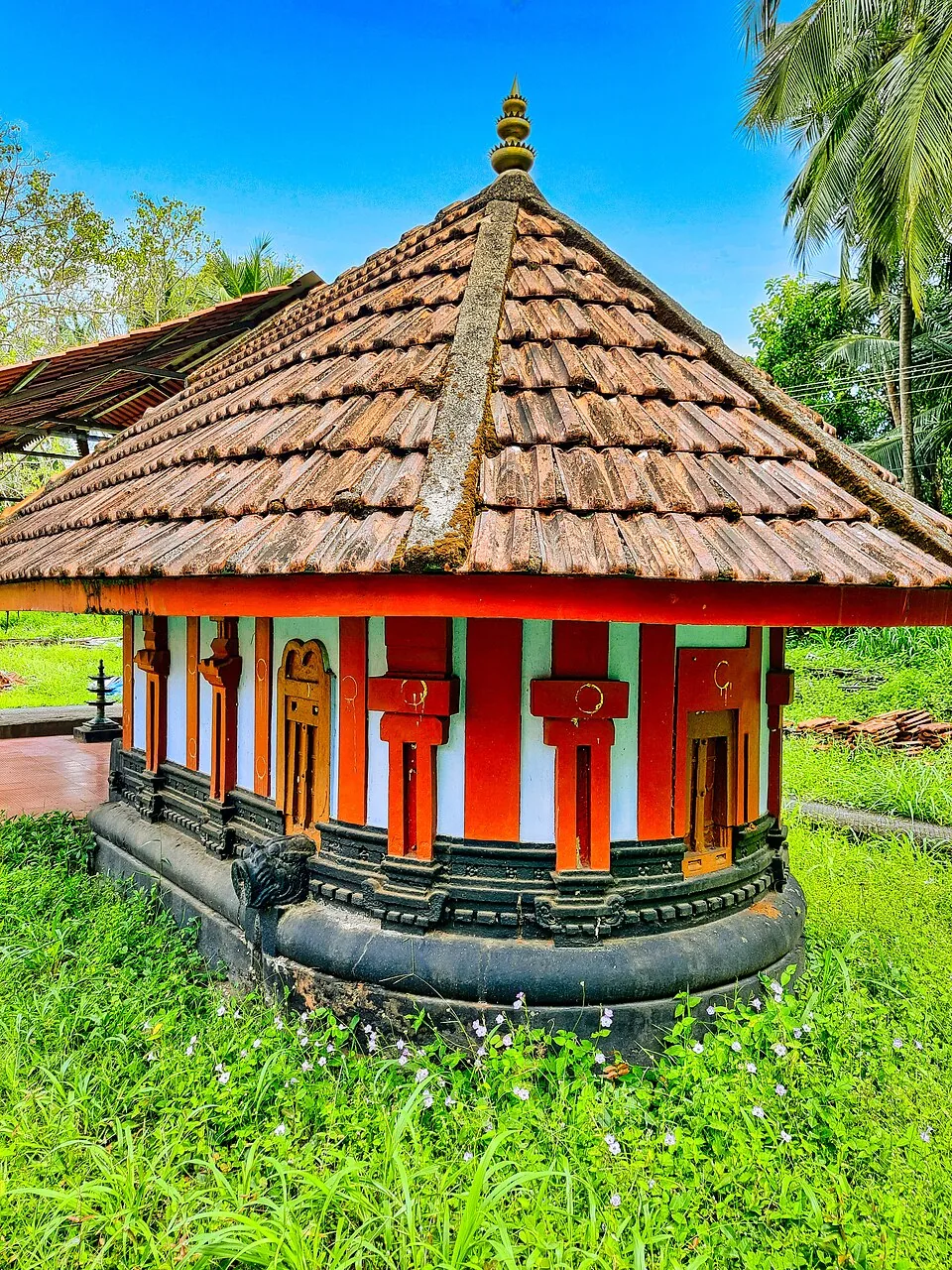
One of the hundred and eight Shiva temples of Kerala, a kilometre from Thunchan Parambu — an apsidal ninth-century shrine that opens at half past two in the morning because the god here was installed at dusk.
56.5 km · straight lineThe post-monsoon and winter window of roughly November to February is the most comfortable, with strong-but-safe flow, pleasant weather and less-slippery paths. The falls are fullest during and just after the monsoon (June to September), but the approach and rocks are far more slippery and dangerous then, so extra caution is essential.
Yes — there is a small ticket charge, generally reported at around ₹10 to ₹20 per person. The site is typically open daily in the daytime, with reported hours of roughly 8:30 am to 6 pm or 9 am to 5 pm. Carry cash, as digital or UPI payment may not be accepted and mobile connectivity is limited.
No special advance permit is generally required beyond the ticket at the entry point; however, this is forest-fringe terrain near the Silent Valley belt, so follow any Forest Department or DTPC instructions on site. The trek itself is short — around a 15 to 20 minute walk from the vehicle drop after an off-road ride — but the final approach is steep and rocky, with a fixed rope to help you reach the falls.
There is a natural pool at the base, but caution is strongly advised. The area has a reputation as a danger zone and has seen fatal accidents, the rocks are slippery — especially in and after the monsoon — and there are no lifeguards. Stay well away from the edge and the top of the falls, keep children close, and avoid deep or fast-moving water.
Make your way to Karuvarakundu town in eastern Malappuram, well connected by road to Manjeri, Perinthalmanna and Nilambur. From there it is a short off-road drive of about 15 minutes up into the hills followed by a walk to the falls. A vehicle suited to rough tracks, or a local jeep, is recommended for the final approach.
Basic facilities have been provided by the DTPC, reported to include a ticket counter, car parking, and changing/locker rooms. There are limited food and toilet facilities. Note that infrastructure has suffered from maintenance issues at times, mobile signal is patchy, and there are no ATMs nearby — so bring cash, water and sturdy footwear.
Post-monsoon is usually strongest; dry months are easier for access but water volume may be lower.
Entry: Around ₹10 to ₹20 per person; carry cash as UPI/card may not be accepted. Timings: Open daily, roughly 8:30 am to 6 pm (some sources report 9 am to 5 pm).
1 to 3 hours.
Nearby you can pair Nedumkayam rainforest trek (18.5 km, approximate straight-line separation), Kodikuthimala (19.9 km, approximate straight-line separation), Nilambur Teak Museum (24.0 km, approximate straight-line separation), Conolly’s Plot (24.8 km, approximate straight-line separation).
Do not enter restricted pools or climb wet rocks. Flash-flood risk rises during heavy rain.
We have not published a story about Keralamkundu Waterfalls itself yet. These cover Nilambur and the wider district, with separate journeys between stops.
These guides explore Nilambur and the surrounding area. Choose a visit that fits your interests, allowing separately for travel between stops.


Route-level itineraries and practical guides for the rest of Kerala.
Photographs: Dvellakat (CC BY-SA 4.0), Jaseem Hamza (CC BY 3.0). Wikimedia Commons.