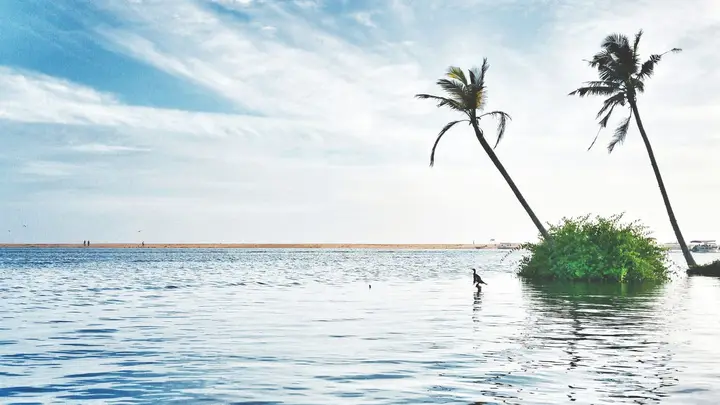
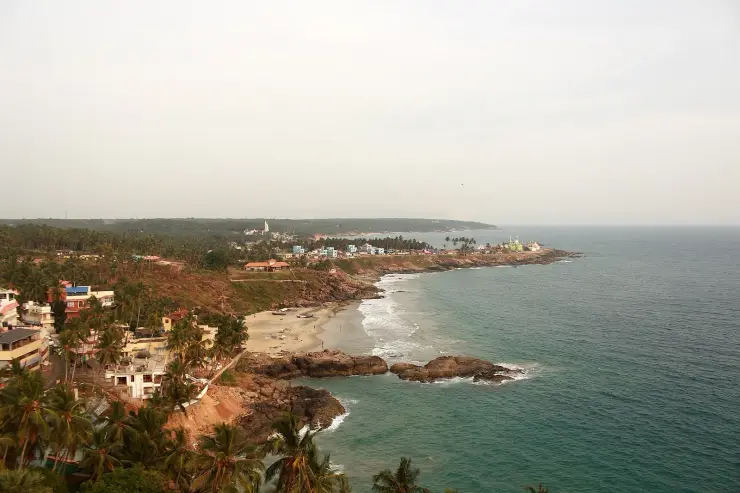
Varkala is the one place on Kerala's long, flat coast where the land rises up to meet the sea. A wall of red laterite runs for kilometres above Papanasam Beach, and along its rim sits a ribbon of cafés, sunset-facing terraces and yoga shalas looking straight out over the Arabian Sea. It is at once a Hindu pilgrim town of ancient temples and holy springs, and one of India's best-loved backpacker beaches — a rare combination that gives Varkala its particular, slightly bohemian charm.
The rock face is the thing you remember. Nowhere else on Kerala's coastline does the shore climb into a sheer, rust-red escarpment tumbling down to the sand, and standing on its edge with the whole Arabian Sea spread out below is the defining Varkala experience. The laterite glows deepest orange in the low light of morning and evening, streaked with bands of white and ochre sandstone, and a paved path runs the length of the rim so you can walk the entire rim from end to end.
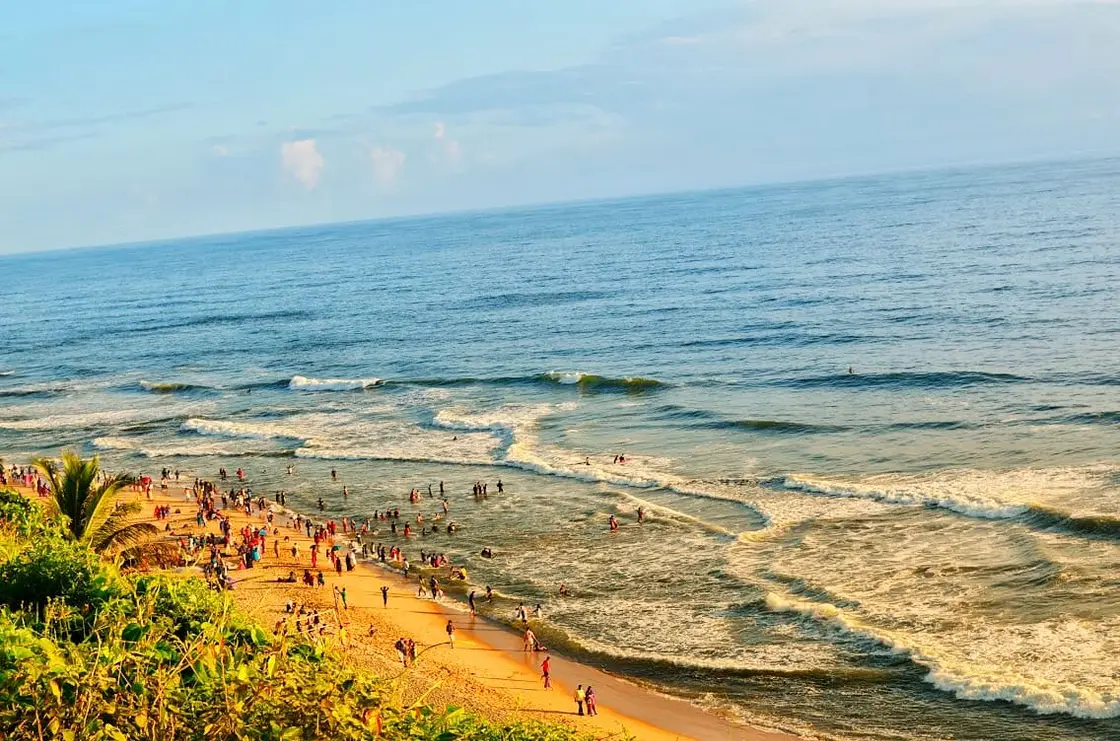
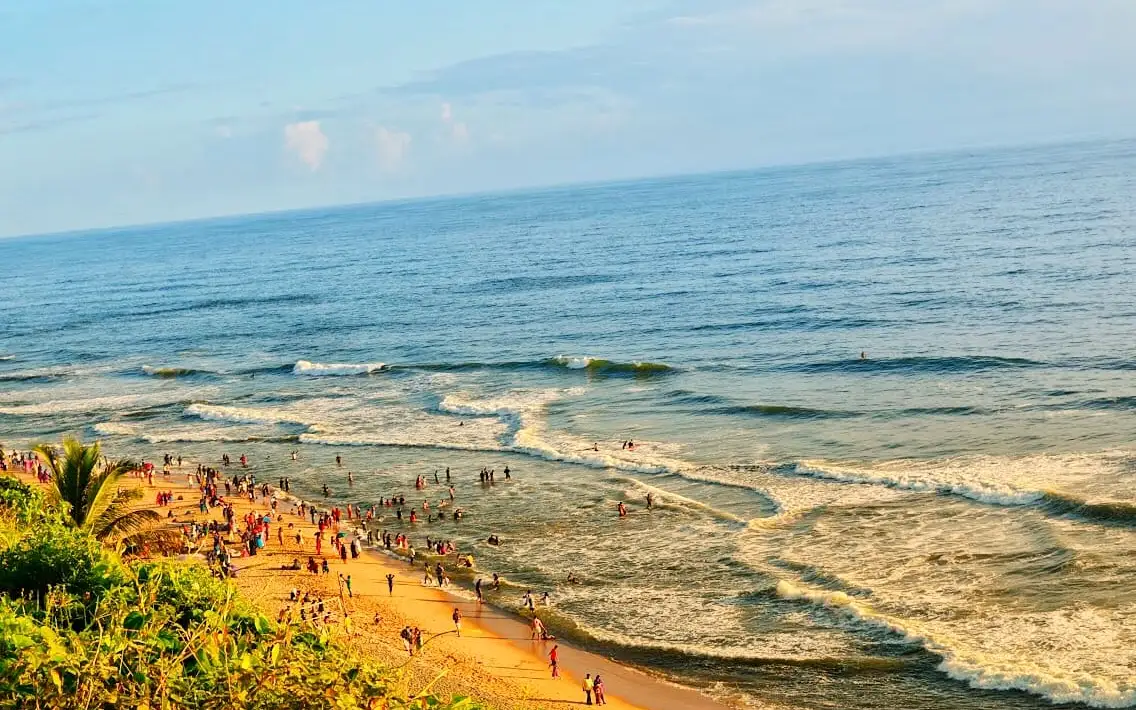
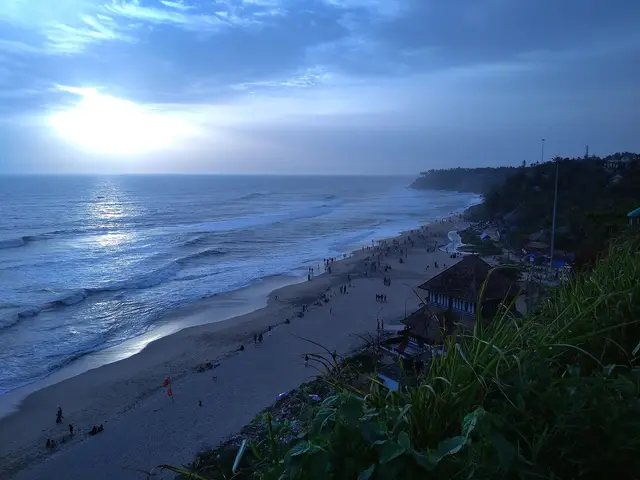
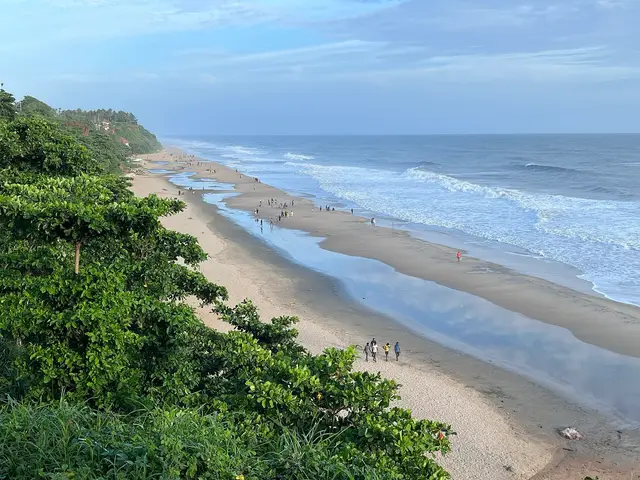
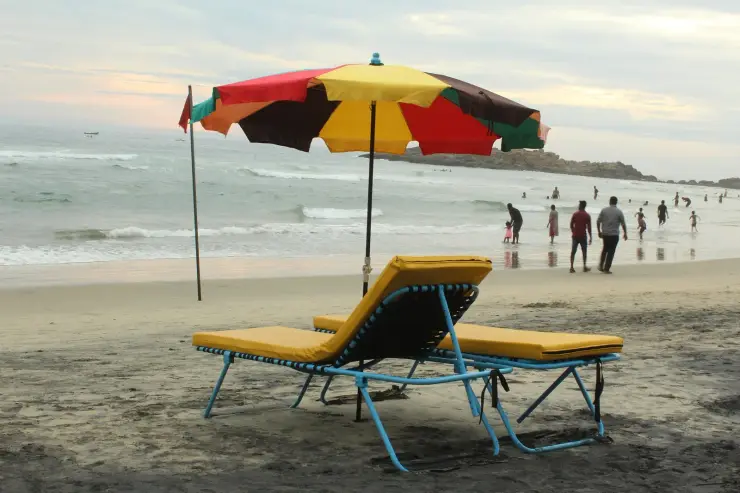
At its foot lies Papanasam Beach, reached by steep flights of steps cut into the rock. This is the working heart of Varkala's shoreline — a broad crescent of pale sand where pilgrims perform rituals in the surf, families paddle in the shallows, and sunbathers stretch out through the long afternoon. The waves here can be strong and the currents lively, so most swimmers stay close to shore and heed the lifeguards; the beach is as much a place to sit and watch as to bathe.
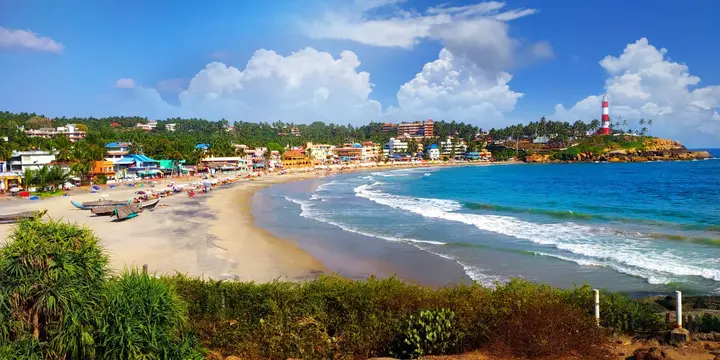
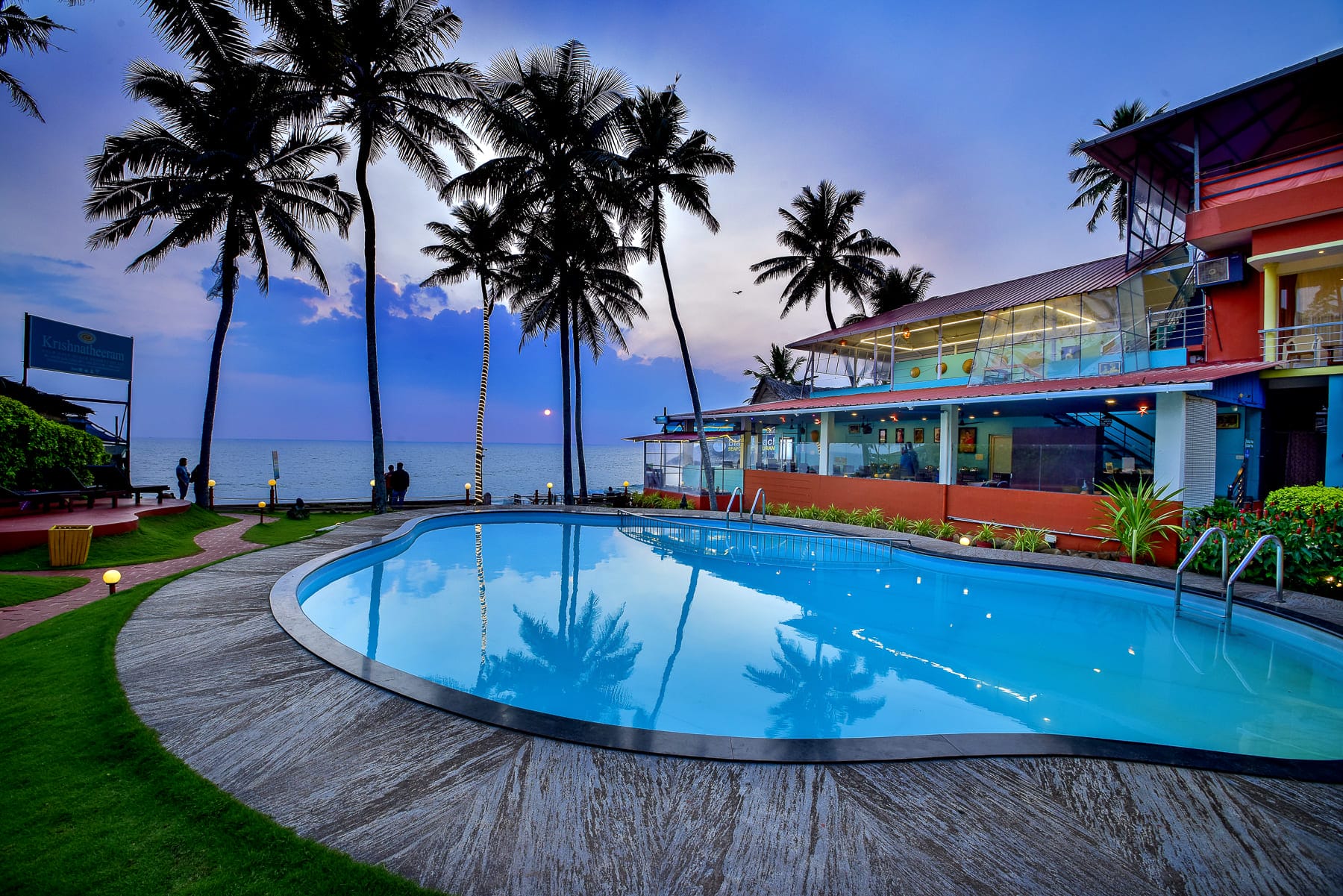
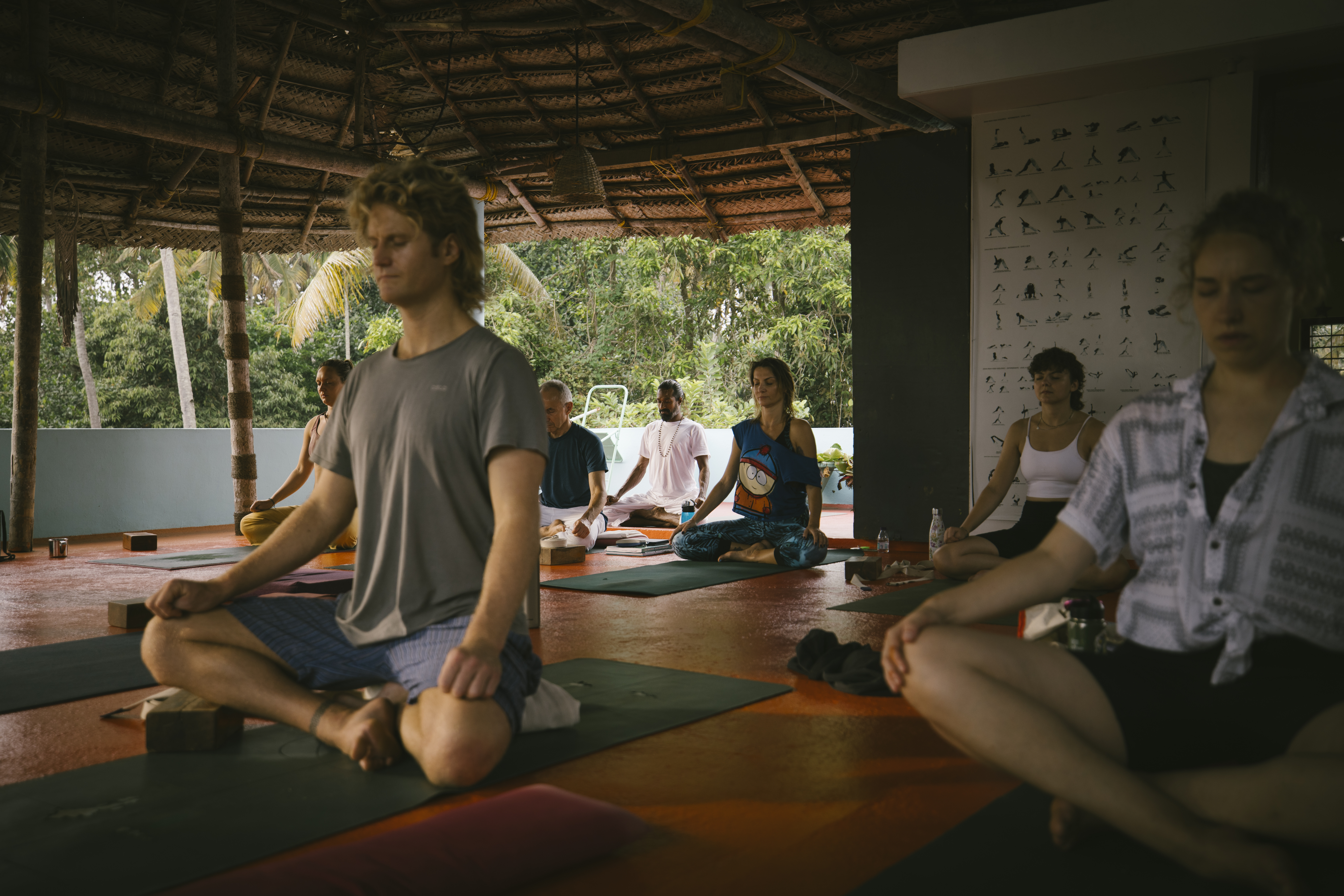
The clifftop strip is where Varkala earns its reputation as a traveller haven. A near-continuous line of open-fronted cafés, seafood shacks, craft stalls and guesthouses hugs the edge, tables angled so every seat has the sea in view. Days drift by over long breakfasts, Ayurvedic massages, drum circles and browsing for silver jewellery and printed cottons; the pace is unhurried and the mood distinctly laid-back, a little world of its own perched above the water.
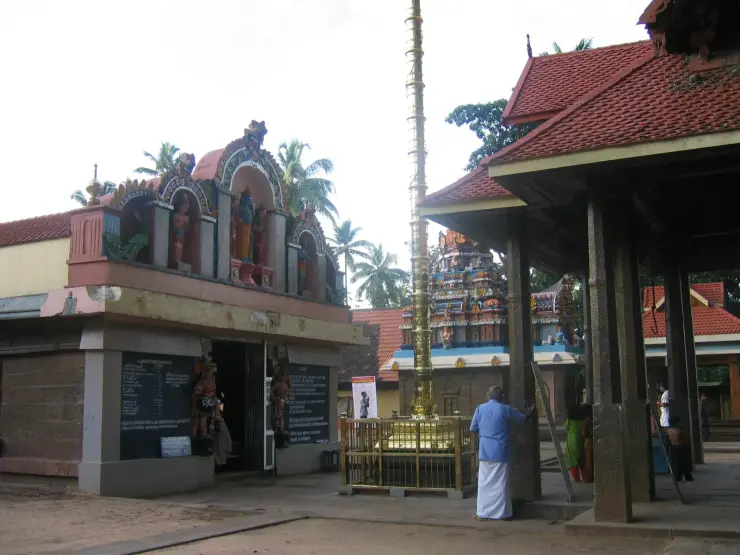
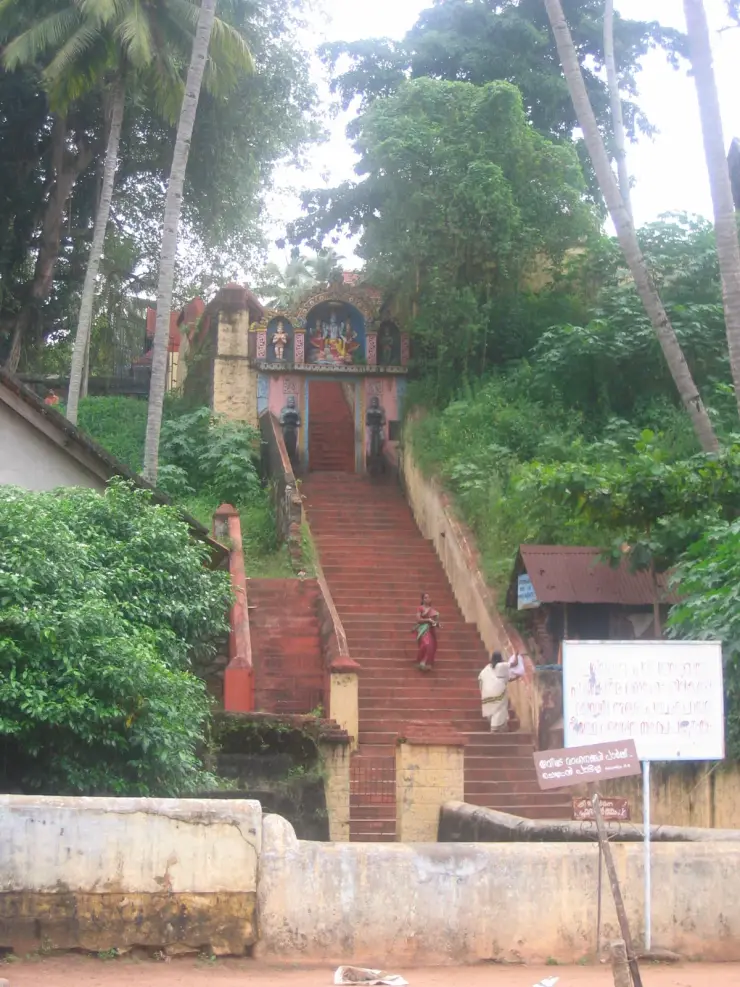
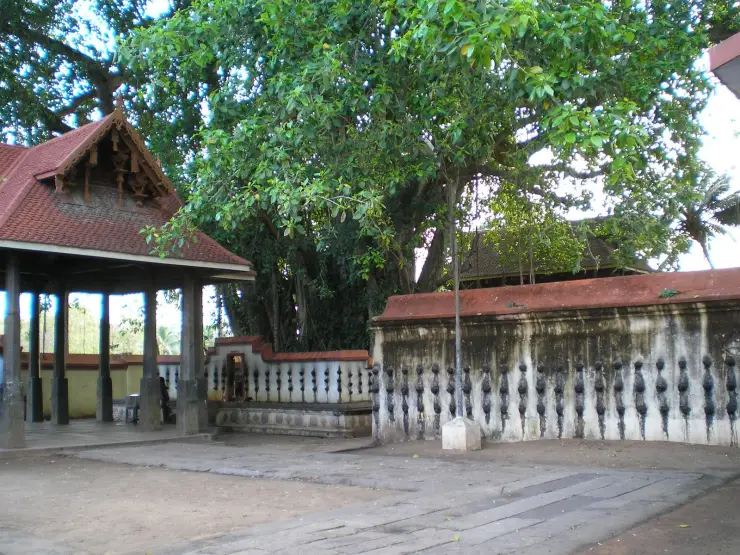
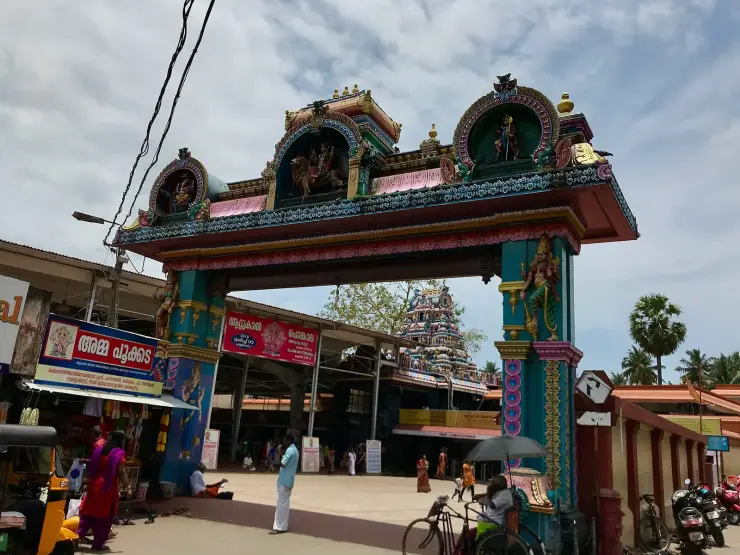
For all the beach culture, this is first and foremost a sacred town. The Janardanaswamy Temple crowns a rise above the shore, drawing a steady flow of devotees, and Papanasam has been a place of ritual bathing for many centuries — the name itself carries the promise of washing away sin. A short way inland, the white terraces of the Sivagiri Mutt mark the resting place of the great social reformer Sree Narayana Guru, making Varkala one of the most significant pilgrimage centres in southern Kerala.
Threading through it all are the springs. Fresh mineral water seeps from the base of the laterite at Papanasam and gathers in bathing spots long held to have healing, therapeutic qualities. Pilgrims and visitors alike dip in these natural springs, and their presence — water emerging from stone at the sea's edge — is part of what has drawn people to Varkala since long before the cafés arrived.
And then, every evening, the town turns to face the horizon. Because the rim looks due west over open ocean, Varkala serves up some of the finest sunsets in Kerala, the sky flaring pink and gold as the sun sinks into the Arabian Sea. The rim fills, cameras come out, and for a few minutes the whole strip falls quiet — a nightly ritual as reliable as the temple bells, and one nobody who stays here seems to tire of.
Legend & myth
Papanasam Beach takes its name from the Sanskrit for 'destroyer of sin' — papa, sin, and nasam, destruction — and legend holds that a dip in its waters washes away the sins of a lifetime. Devotees come to perform last rites and ancestral offerings on the sand, believing the sea here purifies both the living and the departed.
One legend tied to the Janardanaswamy Temple tells that pilgrims who could not make the long journey to Varanasi were promised equal spiritual merit by bathing at Papanasam and worshipping at Varkala instead — earning the town its old epithet as the 'Kashi of the South'. These stories are told as devotional legend rather than documented history, and are shared here in that spirit.
The name Varkala is usually explained through the same story: that a sage's staff, or in other versions the hand of Brahma, tore open the ridge to make a bathing place, varkala being read as the place where the cut was made. The more prosaic derivation runs through valkalam — bark cloth, the garment of an ascetic — and it is worth flagging that Kerala Tourism's own page renders valkalam as cloth made of deer's skin. That is a different garment entirely. A valkalam is bark; the ascetic's deerskin is the krishnajina. The bark reading is the one the etymology depends on, and the official source has it wrong.
Two modern claims about Varkala circulate more widely than any of the legends, and both are wrong. The first is that Varkala is a UNESCO geopark, or India's first geopark. It holds no geopark status of any kind. What it does hold is a Geological Survey of India notification from 2014 making the Varkala Cliff Section the country's 27th National Geological Monument, one of only two in Kerala alongside the laterite section at Angadipuram. Separately, on 27 August 2025 the Natural Heritage of Varkala was entered on India's UNESCO World Heritage Tentative List. A tentative listing is a declared intention to nominate. It is not an award, and it is not a geopark.
The second is the size of the cliff itself, and this site had it wrong too. Tourism copy — including, until recently, our own — describes an escarpment running about two kilometres along the shore. The geological literature puts it at roughly 6.1 to 7.5 kilometres, standing between about 10 and 46 metres high; the 25 to 30 metres usually quoted belongs to the central section. The two-kilometre figure describes the built-up stretch with the cafés on it, which is the part visitors walk, and it has quietly been repeated as though it were the whole formation. The difference matters, because a cliff of the real length has several named beaches at its foot rather than one, and because the protected monument is the whole exposure, not the promenade.
A third thing worth unlearning: the cliff is not a laterite cliff, despite being described as one everywhere including on its own signage. The laterite is a cap a few metres thick. Almost all of the exposed height is soft Mio-Pliocene sandstone, and that distinction is the whole reason clifftop drainage and construction destabilise it so readily. Similarly, the springs at the foot are not mineral springs in the sense the word implies — they are fresh groundwater emerging where a bed of carbonaceous clay stops it sinking further, carrying some dissolved iron from the sandstone it passed through. The therapeutic reputation is old and genuine as belief; it has no published analysis behind it.
More about Varkala
History
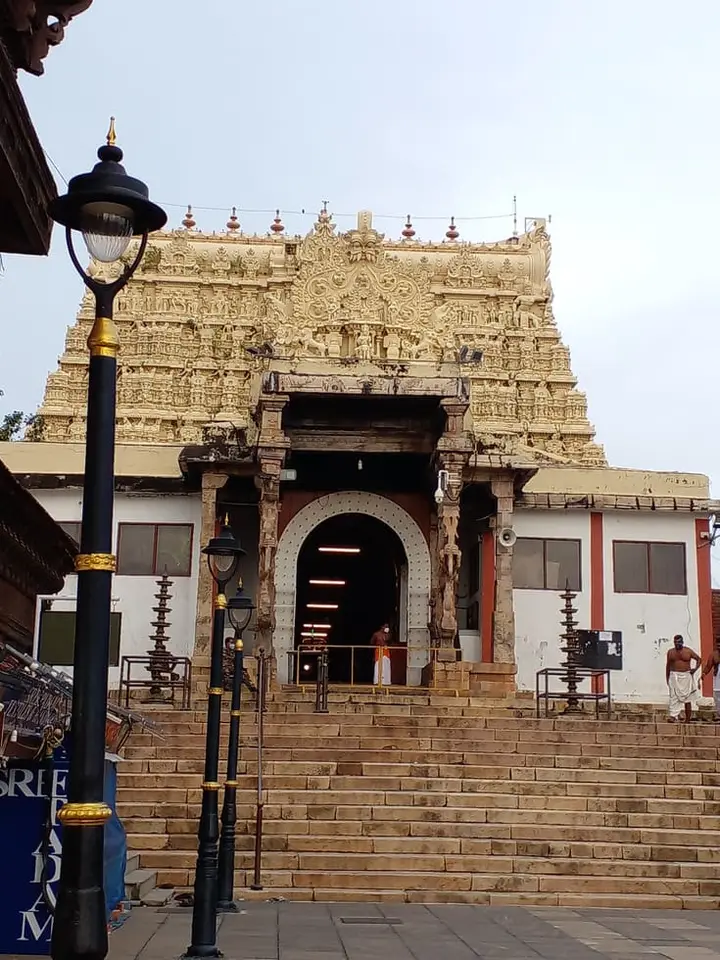
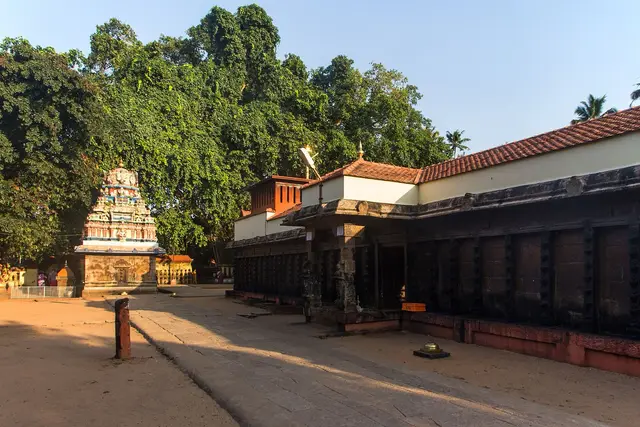
The Janardanaswamy Temple, dedicated to Lord Vishnu, is the historic anchor of the town. Inscriptions and tradition credit it with an age of some 2,000 years, though the present structure is generally dated much later, to around the medieval period, with significant renovation associated with Umayamma Rani, who ruled the region in the late 17th century. Its circular sanctum, copper-sheathed conical dome and mandapa ceiling carved with the Navagrahas reflect classical Kerala temple architecture.
The town's second great landmark is more recent. In 1904 the philosopher and social reformer Sree Narayana Guru, drawn by the calm and beauty of the hill, established a hermitage on Sivagiri; the Travancore state later granted him the hill and it grew into the Sivagiri Mutt, headquarters of the Sree Narayana Dharma Sangham. The Guru attained samadhi on 20 September 1928 and his resting place here became a major pilgrimage site. The annual Sivagiri Theerthadanam, held from 30 December to 1 January, brings pilgrims in yellow robes flocking to the Mutt. It is worth being clear that this pilgrimage is not the Guru's birth anniversary, as is often written: his Jayanti falls in the Malayalam month of Chingam, around August or September. The Guru himself approved the pilgrimage and laid down how it should be observed in early 1928, but it was not held until 1933, after his death.
Papanasam's springs and sacred bathing tradition made Varkala a pilgrim destination for centuries before it was ever a beach resort. Its transformation into a traveller hub is a much more recent story, gathering pace from the late 20th century as backpackers discovered the cliff and its west-facing sunsets, and the ribbon of cliff-top cafés and guesthouses grew up to serve them.
In geological terms Varkala is exceptional. The cliff exposes the Mio-Pliocene sediments of the Warkalli (Varkala) Formation — beds of red and white sandstone, lignite and lateritic cap laid down over roughly the last 20-odd million years — and Varkala is the designated type area for this formation, one of the few places on India's west coast where sediments of this age are exposed at the surface.
In recognition of this the Geological Survey of India notified the site in 2014 as a National Geological Monument — the 27th in the country, on a roster that now stands at 34, and the second in Kerala after the Angadipuram laterite section. Its official name is the unglamorous ‘Varkala Cliff Section’. Wider recognition followed on 27 August 2025, when ‘Natural Heritage of Varkala’ was entered on India’s UNESCO World Heritage Tentative List among seven natural sites added together, taking India from 62 tentative entries to 69. One thing to discount as you read around the subject: Varkala is repeatedly described as a UNESCO geopark or ‘India’s first geopark’, and it is neither. A tentative listing is a declared intention to nominate, and it is not the same award.
Why visit
The dramatic red laterite cliff — the only stretch of Kerala's coast where the shore rises into a sheer sea-facing escarpment.
Papanasam Beach at the cliff's foot, a sacred bathing shore and a fine place to swim, sunbathe and people-watch.
The cliff-top café strip: open-air restaurants, seafood shacks, Ayurveda and yoga, all angled at the sea.
Sunsets over the Arabian Sea, among the best on the whole Kerala coast, watched nightly from the cliff edge.
A living pilgrim town — the ancient Janardanaswamy Temple, the natural mineral springs, and the Sivagiri Mutt of Sree Narayana Guru.
A geological wonder underfoot: the Warkalli Formation cliff, a National Geological Monument millions of years in the making.